


Abstract
Rhodopes Mountain is ethnobotanically poorly studied, but our preliminary observation in a number of settlements revealed that even nowadays, the local population relies solely on previously collected medicinal plants. We aimed to assess the contemporary use of medicinal plants in the Central and East Rhodopes and the health conditions that local communities address with them. The ethnobotanical field data were collected through an in-depth method in combination with semi-structured face-to-face interviews, adapted with modifications to the objectives of this study. The following quantitative ethnobotanical indices were used in this study: informant consensus factor (ICF), fidelity level (FL), and Jaccard similarity coefficient or Jaccard index (JI). Data analyses from our field research showed that 92 informants mentioned the utilization of a total of 114 plant species. The results of this study reveal that in both regions of the Rhodopes, medicinal plants are mentioned most often in relation to diseases affecting nervous, respiratory, digestive, and cardiovascular systems, followed by reproductive, urinary, immune, and musculoskeletal. The risk of disruption or loss of traditional knowledge of medicinal plants is expected in the condition of cultural globalization. However, there is no metrified data about the use of medicinal plants in the Rhodopes from the past. The application of statistical indices in this research will make such assessment and monitoring possible in the future.
1. Introduction
Studies during the last decades show that in Bulgaria [1,2,3,4,5,6,7,8,9,10,11], as well as in other Balkan countries [12,13,14,15,16,17,18,19,20,21], the traditional application of wild plant species by local people for medical purposes is well preserved and vivid. Such traditional application of medicinal plants for various health conditions is documented in Turkey [22,23,24,25,26,27,28,29,30]. This wide use of medicinal plants in remote areas could be explained by the limited access to medical care and pharmaceutical services [27]. The lack of pharmacies in some distant regions is identified as a main problem, especially in Bulgaria, which stimulates the traditional use of plants to treat and prevent disease [31,32]. A Greek study highlights that despite the access of locals to modern therapies, herbal remedies are still applied by many people for treatment. Herbal remedies represent an alternative to pharmacological treatment due to their availability, affordability, lower costs, and a lower rate of adverse reactions [33,34,35,36]. The high price of modern medicines, limited patient access to conventional medicines, and the disillusion of some people in modern healthcare make natural medications a preferable option to the extent of even satisfying unmet medical needs [37,38,39,40,41,42]. The wide application of local flora is also a crucial factor for the preservation of cultural specifics and knowledge about medicinal plants.
The Rhodope Mountains territory has been poorly studied and remained so far out of the ethnobotanical research scope [1,2,3,4,5,6,7,8,9,10,11]. One valuable study of this area collected and evaluated data on non-timber forest resources (medicinal plants, mushrooms) and their cultural and economic importance, as well as the dynamics of their consumption against a backdrop of recent changes in the Bulgarian economy [43]. In this study, residents of the Municipality of Garmen (Western Rhodopes) were surveyed, and some were interviewed. A great deal of information was obtained about the history, geography, and demographic composition of this area and the nation in general during this period of economic upheaval. Moreover, a high degree of authenticity was conserved with respect to the traditional methods of medicinal plant use due to the relative isolation of the area. Despite the relative geographical uniformity of the study area, significant phyto-climatic and ecological differences were also found therein [44,45].
The Rhodope Mountains are ideal for conducting ethnobotanical field research. There are several advantages to studying Mountain Rhodope’s traditional use of medicinal plants. From our preliminary observations in remote villages, we found that even today, the population relies exclusively on the medicinal plants collected during the summer. This is particularly valid in winter when the thick snow cover cuts off the communities from remote villages of the Municipality of Smolyan from pharmacy store access for a few days. At the same time, a study shows that the average lifespan of respondents conducted with long-living people and centenarians in the Municipality of Smolyan is 93.7 [46]. Additionally, considerable authenticity is retained about the traditional methods of medicinal plant use because the population of the area is relatively isolated. The biodiversity of plants and habitats is well preserved [44,45].
One fundamental challenge with such kinds of studies is the discrepancy between the perceived diagnosis and what would have been diagnosed provided the patient was diagnosed by an institutional doctor. Traditional healers do not possess expertise in human physiology in the way we understand it, i.e., they operate with different interpretations of the human body. We do not have much doubt about obvious conditions such as wounds, hemorroides, or bites of venomous creatures. However, most of the traditional cures are centered around symptoms which, from the point of view of modern institutional medicine, may have very different causes and would be treated in very different ways. For example, traditional Bulgarian healers from the distant past seemed to express no clear distinction between the heart and stomach. In fact, what they call “heart pain” seems to have been a stomach ache [47]. In other situations, the modern diagnosis was too recently established. A traditional healer could not possibly have a concept about a condition such as arterial hypertension because no traditional method of measuring blood pressure existed. Thus, most of the “diagnoses” are, in fact, symptoms. By means of careful research and critical evaluation, these traditional practices can provide us with valuable insight into the properties of medicinal plants.
Fortunately, ethnobotanical research has provided quantitative indices, such as use value (UV), which quantitatively presents the relative importance of the plant species used for medicinal purposes. The fidelity level (FL) is defined as the percentage of informants who mentioned the uses of certain plant species to treat a particular disease, or points to the most popular plants. Another quantitative index is the informant consensus factor (ICF) used to measure the knowledge exchange among informants [17,48,49,50,51]. They facilitate comparison of the results obtained, And this reveals the most popular medicinal plants. For instance, in the region of Suva Planina in South-Eastern Serbia, G. cruciate, which is a relatively popular plant (UV = 0.227), has the highest number of phytotherapeutic uses (14), but G. lutea is among the most popular plants (UV = 1) together with Achillea millefolium, Hypericum perforatum, Juglans regia, Matricaria chamomilla, Mentha piperita, Plantago lanceolata, Plantago major, and Salvia officinalis [17].
We aimed to assess the contemporary use of medicinal plants in the Central and East Rhodopes and the health conditions that local communities address with them. For that purpose we applied statistical methods such as the informant consensus factor (ICF), fidelity level (Fl), and Jaccard similarity coefficient or Jaccard index (JI). This study is the second part of a more complex ethnopharmacological and ethnobotanical research project conducted among the rural population of the Rhodope Mts. The first part of the research focused on the diversity of medicinal plants evaluated by the quantitative ethnobotanical index use value (UV), and it showed that 92 informants mentioned the utilization of a total of 114 plant species belonging to 52 families and 110 genera. The most common plants were from the families Asteraceae (16.7%), Lamiaceae (12.3%), Rosaceae (9.6%), and Amrillydaceae (3.5%), followed by Crassulaceae, Plantaginacea, Oleaceae, and Solanaceae. The data presented in six nomograms revealed the most popular plants, the way of application, the corresponding medical indications in Central and East Rhodopes, and the differences between the two sub-regions [52]. The emphasis in this second part of the study falls on the diseases and organ systems treated with medicinal plants nowadays following traditional knowledge.
2. Materials and Methods
2.1. Study Sites, Data Collection, and Pre-Processing
This ethnobotanical survey was conducted among 29 settlements from 7 municipalities in the Rhodopes (Figure 1, details are presented in the previous publication of ours [52], located in the territory of four administrative districts (Plovdiv, Smolyan, Kardzhali, and Haskovo), namely in Central Rhodopes, 12 settlements (11 villages and 1 city) and in East Rhodopes, 16 settlements (13 villages and 3 cities). The settlements of the study were selected to fit into the two floristic sub-regions of the Rhodopes, Central (700–1000 m) and East (altitude 0–500 m) [52].
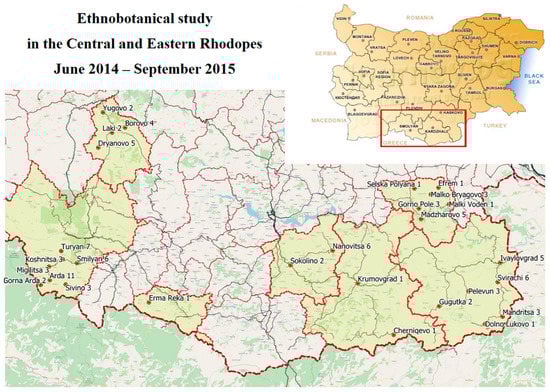
Figure 1.
Settlements of the survey in the Rhodope Mountain and the number of informants.
Residents of the Rhodope Mountains of age over 18 years were interviewed after prior consent was obtained. Ethnobotanical information on medicinal plants was collected among 92 informants, and their socio-demographic characteristics are described in detail in the first part of this research [52]. The informants were selected according to the “snowball” method: the first informant in the village is randomly appointed, and the following ones are recruited on the basis of information and contacts provided by the first informant. The “snowball” technique provides an opportunity to study the lifestyles and attitudes of hard-to-reach groups of society, which usually stay aside from sociological studies. The ethnobotanical field data were collected through an in-depth method in combination with a semi-structured face-to-face interview, adapted with modifications to the objectives of this study. The semi-structured interview has a lower degree of structuring, which provides a higher intensity of communication with the informants. This way of information gathering allows us to examine the specifics and diversity of the context to which the information relates in detail. The in-depth interview had a drilling, expert character and was conducted in preparation for a quantitative, representative study. The interview followed a set of questions tested in previous field studies. The questionnaire pointed to broad organ- and therapy-based use categories but was generally based on the International Classification of Diseases of the World Health Organization (WHO, 2018). Diseases, symptoms, or conditions reported by informants were as follows: abscess, warts, skin inflammation, wounds, vision, ear pain, gastritis, ulcer, diarrhoea, biliary inflammation, jaundice, vomiting, headache, relaxing, cough, sinusitis, low stamina, diabetes, anaemia, high blood pressure, “blood purification”, anticoagulant, varicose veins, cardiac diseases, haemorrhoids, cancer, breast cancer, cervical cancer, low back pain, joint pain, trauma, abortion, childlessness, “women’s diseases”, mastitis, potency (sexual), hormonal imbalance, renal diseases, enuresis, prostatic adenoma, cystitis, fever, cold, toothache, hair strengthening, hernia, etc.
The questions used in the interviews were of the type: disease/condition–plant used. These are so-called “open-ended” questions with no fixed answers. This allows the informants to prioritize the important plant species for him/her. The diseases were named in a way that was understandable by the informants. For example, “What used to treat high blood pressure?” instead of “What used to treat arterial hypertension?”. Informants were asked about the source of knowledge, and only authentic use of medicinal plants was recorded. The data were organized in spreadsheets (Microsoft Excel, 14.0. 7261.5000, 2010). Details are presented in our previous publication [52].
2.2. Analysis of Ethnobotanical Data
The nomograms of plants used for medicinal purposes (both therapeutic and prophylactic) in the Central and East Rhodopes contain processed field data from the ethnobotanical survey. They are presented in their full version in the previous first part study published earlier [52]. Field data were analyzed by calculating ethnobotanical indices for each of the study areas. Ethnobotanical indices (or factors) are increasingly used in ethnobotany as they allow in-depth analysis and ensure comparability of the results.
Data Processing
The research questions we aimed to answer were: What is the relative importance of the plant species used for medicinal purposes? What are the most popular plants used to treat a particular disease? What is the degree of agreement among the informant’s knowledge? The following quantitative ethnobotanical indices were used in this study: use value (UV), informant consensus factor (ICF), fidelity level (FL), and Jaccard similarity coefficient or Jaccard index (JI).
The index use value (UV) is a quantitative characteristic of the relative importance of the plant species that the informant community knows and uses [53]. This value is calculated using the following formula:
where: U is the number of references to a particular plant species; n is the total number of informants.
UV = ΣU/n,
In the case of many references to the utilization of a plant, the UV index is high. It tends to zero when there are few references. UV does not differentiate, however, whether the plant is used for one or more than one disease [54,55].
The other index applied to analyze the collected information is the fidelity level (FL) [56]. The methodology developed by Bhatia and co-authors [55] and Heinrich and co-authors [56] is used to specify the most popular plants for the treatment of certain diseases, classified in organ-system categories.
The informant consensus factor (ICF) is a quantitative analytical parameter to evaluate the degree of agreement among the informant’s knowledge. It is calculated through the following formula:
where: nur is the total number of use reports for each disease cluster; nt is the total number of species used for that cluster.
ICF = (nur − nt)/(nur − 1),
The ICF values are close to zero when there is so-called low homogeneity, i.e., the plants are reported randomly, or no exchange of information for their usage among the community exists. Its values are equal or close to 1 when there is a well-defined selection criterion for a given plant species in the community and/or informants share knowledge among themselves [57,58].
Usually, more than one plant species is mentioned for a particular disease. Hence, the confidence level index FL is presented in percentages [59]. Through the fidelity level (Fl), the preferred plant species for the treatment of a given disease are identified [54]. Before calculating the FL, all diseases mentioned by the informants are grouped into several categories. FL is calculated for each category using the following formula:
where: Np is the total number of reports for each medicinal plant for a specific disease; N is the total number of diseases reported for a specific medicinal plant.
FL [%] = Np × 100/N,
A high value for FL is possible for those species whose reports are for the same disease category, while low values are found in the case of species used for more than 1 disease [54].
The Jaccard similarity coefficient or Jaccard index (JI) is used when the level of similarity between two groups of elements should be identified [60]. JI is calculated using the following formula:
where: NA is the number of elements in group A; NB is the number of elements in group B; NAB is the number of elements available in both groups.
JI [%] = NAB × 100/(NA + NB − NAB),
This formula could be used to identify the similarity between the species identified in both analyzed regions: Central and East Rodopes. Thus, the following modified formula is applied:
where: NA′ = NA − NAB is the number of species identified only in region A; NB′ = NB − NAB is the number of species identified only in region B; NAB is the number of species identified in both regions.
JI [%] = NAB × 100/(NA′ + NB′ + NAB),
3. Results
Informants in the surveyed settlements in the Central Rhodopes reported the utilization of 114 plant taxa in relation to human health (for treatment and/or prophylactics). Additionally, some plants were mentioned for veterinary applications. Most plants were common species with wide distribution. Others were cultivated in the informants’ kitchen gardens. Attention during the interview process was paid to some rare plants such as “salep” orchids, Haberlea rhodopensis Friv., and Lilium rhodopaeum Delip. (Table 1), but the informants responded that they did not use them.

Table 1.
Plant species reported for human health usage in Central and East Rhodopes—UV (%) values for therapeutic or prophylactic purposes and conservation status; Legend: MOEW Ministry of Environment and Waters, RDB—Red Data Book of Bulgaria, EN—Endangered, CR—Critically endangered, BDA—Biodiversity Act of Bulgaria, Bal—Balkan endemic. Note: most of the listed plants are common with wide distribution; R. fruticosus does not occur in Bulgaria, but since this is the name coined in pharmaceutical practice, we used it to mark all Rubus species with black fruits reported by informants.
3.1. Central Rhodopes
3.1.1. Relative Importance of the Plant Species Used for Medicinal Purposes
Informants mentioned the use of 91 plant species for human medicine in Central Rhodopes. UV values in Central Rhodopes ranged from 0.02 to 0.67, regarding those with the highest degree of use. The most frequently mentioned were Plantago major L. (0.67), Sambucus nigra L. (0.60), Hypericum perforatum L. (0.46), Thymus spp. (0.46), Sempervivum tectorum L. (0.42), Teucrium chamaedrys L. (0.40), Tussilago farfara L. (0.33), Achillea millefolium L. (0.31), and Origanum vulgare L. subsp. vulgare (0.29) (Table 1, Details [52]: Figures 8 and S1).
3.1.2. Disease Categories Treated with Medicinal Plants
In order to ascertain the conditions for which the plant species are applied, all mentions by the informants for human-medical application were segregated into nine categories of diseases. The higher number of mentions in a category indicated its importance to the informants. The number of mentions ranged from 28 to 125 (Figure 2). The diseases with the highest number of ΣU mentions were those affecting the nervous (125), respiratory (112), and digestive (102) systems. The number of reports for diseases of the cardiovascular system (44) was significantly lower.
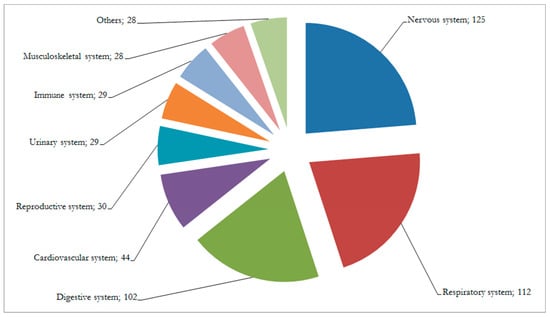
Figure 2.
Factor diagram of disease categories in the Central Rhodopes, according to the number of mentions ΣU.
3.1.3. Degree of Agreement among Informant’s Knowledge
ICF values in most categories exceeded 0.50, indicating a relatively high similarity of the mentioned species in the respective category. The exception is the category ‘other’ with an ICF value equal to 0.33. Categories with a high informant consensus factor were diseases affecting digestive (0.74), nervous (0.72), and respiratory (0.70) systems. In the nervous system diseases category, 125 mentions of 9 plant species provided an ICF value of 0.72, while the digestive system diseases category had a similar index value (0.74), indicating high homogeneity despite mentions (102) of a larger number of plant species (27). The ICF score for the respiratory system diseases category was similar, with a relatively high degree of homogeneity (0.70) using a large number of plant species (26). The results further confirmed the importance of the disease categories considered in the study area (Table 2).
Table 2.
ICF factor by diseases categories for Central Rhodopes.
3.1.4. Most Popular Plants for Treatment of Certain Diseases
The fidelity level (FL) by disease categories in the Central Rhodopes is presented in Table 3. Five plant species had an FL level equal to 100%: Mentha spicata L. (against vomiting) and Cichorium intybus L. (for gallbladder inflammation), Tussilago farfara (affecting cough), Geranium macrorrhizum L. (affecting high blood pressure), and Sambucus ebulus L. (for increasing immunity). High values of the level of reliability in the digestive system category also referred to Teucrium chamaedrys (94.7% for influencing gastritis and diarrhoea), Centaurium erythraea Rafn. (83.3% for influencing gastritis and ulcer), and Agrimonia eupatoria L. (75% for influencing gastritis, ulcer, diarrhea, and gallbladder inflammation), and Tilia cordata Mill. (83.3%) in the respiratory system category (83.3% for influencing cough). Four plant taxa were used in more than one disease category in the Central Rhodopes: Sambucus nigra, Thymus spp., and Achillea millefolium, Primula veris L. (Table 3).
Table 3.
FL by diseases categories for Central Rhodopes (number of reports > 4).
3.2. East Rhodopes
3.2.1. Relative Importance of the Plant Species used for Medicinal Purposes
Informants mentioned the use of 68 plant species for human medicine in East Rhodopes. Cotinus coggygria Scop. (0.42), Teucrium polium L. (0.26), Sambucus nigra (0.23), Chelidonium majus L. (0.21), Matricaria chamomilla L. (0.21), Paliurus spina-christi Mill. (0.21), Plantago major (0.19), and Urtica spp. (0.19) had the highest UV values. The lower values of popular plant species in the East Rhodopes were due to the lower total number (68) of species mentioned in this area compared with the total number (91) of species mentioned in Central Rhodopes (Table 1) [52]: Supplementary Figures S1 and S2.
3.2.2. Disease Categories Treated with Medicinal Plants
Figure 3 presents the diseases categories in the East Rhodopes, according to the number of mentions ΣU. Application of medicinal plants to treat diseases affecting the nervous (59), respiratory (48), digestive (38), cardiovascular (35), genital (29), and musculoskeletal (20) systems are with the highest number of mentions, respectively, with greater importance for informants in the East Rhodopes (Figure 3).
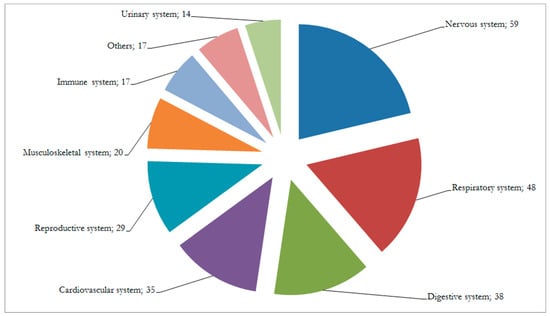
Figure 3.
Factor diagram of disease categories in the East Rhodopes, according to the number of mentions ΣU.
3.2.3. Degree of Agreement among Informant’s Knowledge
Table 4 shows the ICF values for the East Rhodopes. The values range from 0 (in the nervous system diseases category) to 0.59 (digestive system diseases). The highest value was in the digestive system category (0.59). Other important categories with high informants’ consensus factors were diseases of the immune system (0.56), respiratory system (0.53), cardiovascular system (0.47), and musculoskeletal system (0.47). The diseases with a high number of mentioned species, and therefore, with higher importance on diseases for the informants from the East Rhodopes, were cardiovascular (19 plant species and 35 mentions), respiratory (18 plant species and 37 mentions), and genital (17 plant species and 28 mentions) diseases.
Table 4.
ICF factor by diseases categories for East Rhodopes.
3.2.4. Most Popular Plants for Treatment of Certain Diseases
Four plant species used in the East Rhodopes with FL equal to 100% were identified as: Cichorium intybus, Cornus mas, Tussilago farfara, and Achillea millefolium. Other species with a high FL index value were Prunus spinosa (85.7%), Ecballium elaterium. (80%), Allium cepa (71.4%), and Potentilla reptans (71.4%) (Table 5).
Table 5.
FL by diseases categories for East Rhodopes (number of reports > 3).
3.3. Comparision between East and Central Rhodopes
3.3.1. Similarity between Central and East Rodopes with Regard to Medicinal Plant Usage
The number of plant species arranged according to their categories of use (for use in human medicine, for prophylactic purposes, and for veterinary use) in the two analyzed areas is shown in Figure 4. The number (n = 101) of species with application in human medicine was the highest.
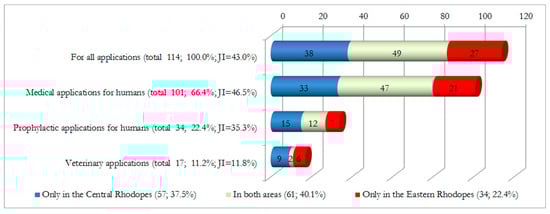
Figure 4.
Total number of identified plant species by application and region.
The geographical and floristic features of the analyzed areas determine the relatively high number of species used by communities: 47 species for use in human medicine and 12 species with prophylactic application. At the same time, a large number of species is used in only one of the regions: 33 species for use in human medicine in the Central Rhodopes and 21 species in the East Rhodopes, respectively (Figure 4). There is a trend for a relatively higher number of medicinal plant species used among the population of the Central Rhodopes compared to the East Rhodopes in all three categories.
Based on the number of plant species identified in the two regions, the similarity coefficient JI was calculated for each of the groups. They ranged from 46.5% (in human medicine) to 11.8% (in veterinary practice). The overall similarity coefficient JI with respect to all species for both regions is 43.0%.
3.3.2. Relative Importance of the Plant Species Used for Medicinal Purposes
Plantago major is the most used plant species with human-medicinal use in the Central Rhodopes (0.67), while the same has a lower degree of use in the East Rhodopes (0.19). Sambucus nigra, has the second highest degree of use in the Central Rhodopes (0.60) and a lower degree of use in the East Rhodopes (0.23). Teucrium chamaedris and T. polium are used in both study areas (Table 1). Both species are found throughout the Rhodopes. However, T. chamaedris (0.40) is applied for diarrhea in the Central Rhodopes, while T. polium (0.26) is used for the same indication in the East Rhodopes (Figure 5).
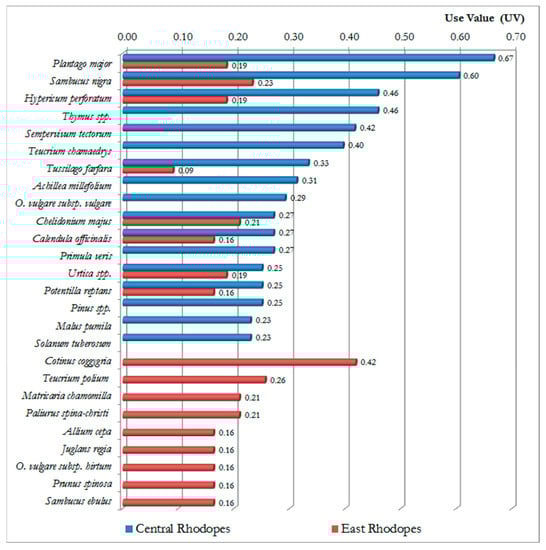
Figure 5.
Comparison of plant species by UV index.
3.3.3. Disease Categories Treated with Medicinal Plants
A trend for a higher number of reports in all disease categories for the Central Rhodopes compared to the East Rhodopes was identified, which was determined by the higher number of reports overall for the region, 527 in the Central Rhodopes compared to 277 in the East Rhodopes. The four most important disease categories, according to the number of mentions in both regions, are those of the nervous, respiratory, digestive, and cardiovascular systems, followed by the reproductive, urinary, and immune systems (Figure 6).
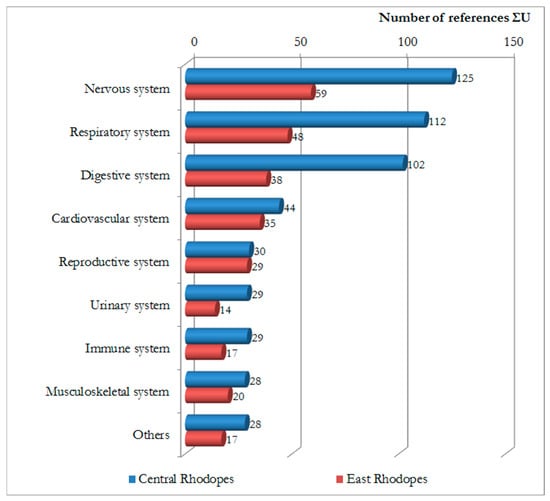
Figure 6.
Comparison of different disease categories treated with medicinal plants by ΣU values.
3.3.4. Degree of Agreement among Informant’s Knowledge
The informant consensus factor was higher in the Central Rhodopes in most categories (around and above 0.60) compared to the East Rhodopes. The informants from the East Rhodopes reported different plant species for the treatment of most disease categories. This might be explained by the low level of knowledge sharing about medicinal plants in East Rhodopes. The category “Other diseases” had a higher ICF factor for East Rhodopes compared to Central Rhodopes. This category includes treatment of toothache as there was a relatively high number of reports of Cotinus coggygria infusion for toothache treatment by informants in the East Rhodopes compared to the total number of reports, resulting in a high consensus factor for this category. The category of urinary tract healing showed the largest disparity in the informants’ consensus factor for both regions: 0.50 for Central and 0.23 for East Rhodopes (Figure 7).
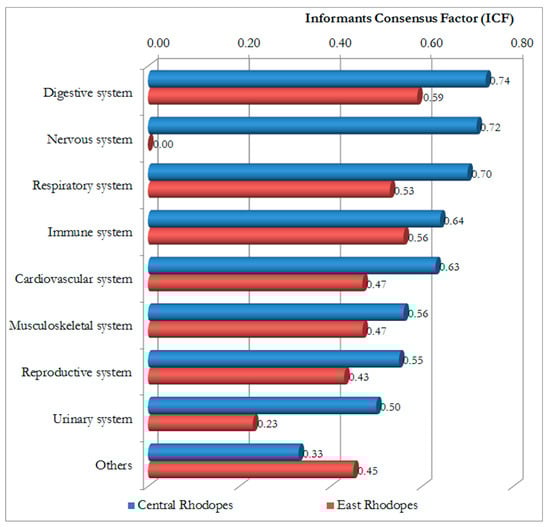
Figure 7.
Comparison of different disease categories by ICF values.
3.3.5. Most Popular Plants for Treatment of Certain Diseases
The FL value was only 100% in both analyzed regions for two plants, Cichorium intybus (for treatment of diseases affecting the digestive system) and Tussilago farfara (for treatment of diseases affecting the respiratory system) (Figure 8).
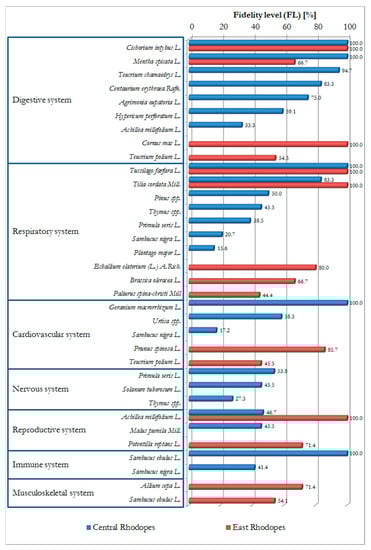
Figure 8.
Comparision of different diseases categories by FL index.
Tilia cordata had high levels of reliability in Central (83.3%) and East Rhodopes (100%), indicating the preference of informants to treat respiratory system diseases with this plant. Additionally, digestive system diseases are treated with Mentha spicata in the Central Rhodopes (100%) and East Rhodopes (66.7%) (Figure 8).
Achillea millefolium had an FL value equal to 100% for the East Rhodopes and only 46.7% for the Central Rhodopes in the female reproductive system treatment category. This indicates that all informants who reported A. millefolium in the East Rhodopes mentioned the use of the species only in the category of treatment of the female reproductive system. We can conclude that in the East Rhodopes, A. millefolium is a known medicinal plant for the treatment of diseases affecting the female reproductive system. In the Central Rhodopes, A. millefolium was mentioned with the highest frequency in the same category, and at the same time, it is used to treat a wide range of diseases: gastritis and ulcer, inflammation of bile, treatment of abscesses, haemorrhoids, etc. (Figure 8).
Plantago major had a level of reliability for skin diseases (treatment of abscesses and wounds) with similar values for both regions (68.8% and 62.5%). Chelidonium majus is predominantly used for skin diseases in the Central Rhodopes (61.5%), while for the East Rhodopes, it is used in other categories (Figure 8).
3.4. Ethnobotanical Indices for Assessment of the Sustainable Use of Medicinal Plants
Figure 9 presents a chart of the most often mentioned species for most applications according to ΣU. The plant species with conservation status are marked, respectively (Figure 9, Table 1), as they require special attention. Origanum vulgare subsp. hirtum is under a regime of restriction for trade purposes collection. It appears to be highly popular among the rural population of East Rhodopes. It is collected from the wild populations [52] (Supplementary Figure S1), but informants reported mainly domestic collection and use (6th position with 23 mentionings for use and collection). The other species with the same regime of protection is Sideritis scardica (24th position with 13 mentionings for use and collection, with a few of these cases for illegal trade as the plant is vastly cultivated in plantations and kitchen gardens). Primula veris is another plant species that should be treated with caution (Figure 9, Table 1). According to the ΣU, P. veris is listed 11th with 19 mentionings, but again for domestic use by informants. Micromeria dalmatica is a Balkan endemic with restricted distribution and density of populations [61] (Figure 9, Table 1). It takes 15th position with 17 mentionings, only in Central Rhodopes where it occurs. Of all plant species with different conservation statuses (Table 1), this is the one at the highest risk. It is not included in the Red Data List and has no protection. The informants rarely reported trade purpose collection for this species. However, harvest for trade obviously occurs, as the plant is offered commercially (Figure 10). Many of the informants shared their observations of wild resource decrease in the last decade.
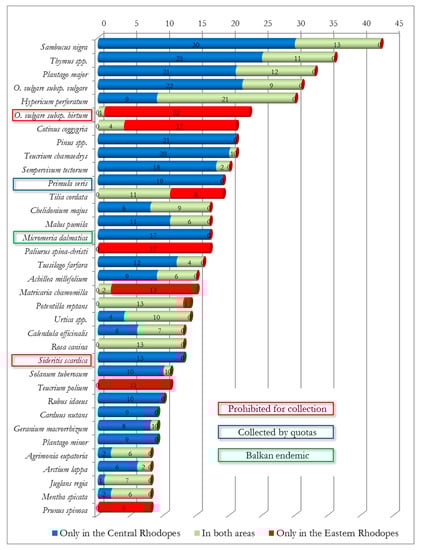
Figure 9.
Most often mentioned species for most applications according to ΣU.
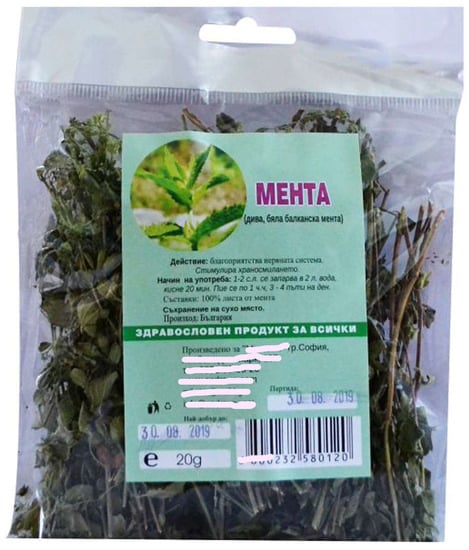
Figure 10.
Micromeria dalmatica, the most often mentioned species for most applications according to ΣU in Central Rhodopes.
3.5. New Records for Plant Names and Application
Two plant species, namely Crepis zacintha (L.) and Sedum album L. (Figure 11) were first documented for the treatment of warts. They both were mentioned under the name “брадавичнo биле”, meaning “wart-wort”. Centaurea diffusa Lam. (Figure 12) is used to cure diarrhoea.
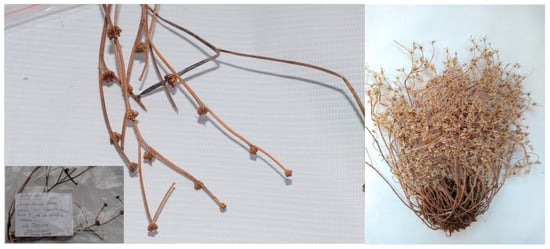
Figure 11.
“Брадавичнo биле” Crepis zacintha (L.) Babc. and Sedum album L.
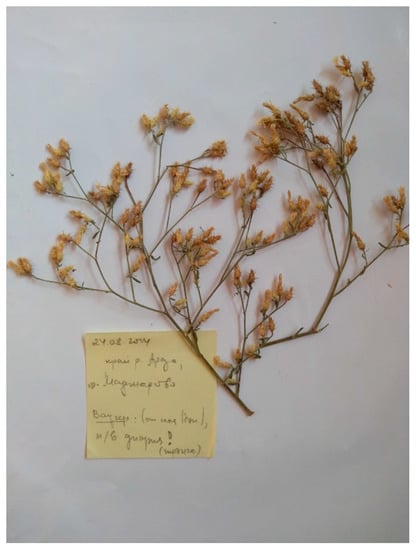
Figure 12.
Centaurea diffusa Lam., Трънче.
4. Discussion
The results of this study reveal that in both regions of the Rhodopes, medicinal plants are mentioned most often in relation to diseases affecting nervous, respiratory, digestive, and cardiovascular systems, followed by reproductive, urinary, immune, and musculoskeletal systems (in Central Rhodopes the first three categories were dominant). The results from previous studies on different parts of the territory of Bulgaria show that medicinal plants are most commonly used to treat diseases of the central nervous and musculoskeletal systems, skin, gastrointestinal, and respiratory systems [4,6]. Interestingly for the leading category, diseases affecting the nervous system, the ICF value in the Central Rhodopes is 0.72, while in the East Rhodopes, the ICF value is 0. In general, the ICF is higher in the Central Rhodopes in most categories (around and above 0.60) compared to the East Rhodopes.
The ethnobotanical survey carried out in the Rhodopes revealed the use of 114 plant species in relation to human health ([52]: Supplement Figures S1 and S2). Thus, the results demonstrate the use of a larger number of medicinal plants in the Rhodope Mountains compared to other regions of the country [1,5,10,62]. This can be explained by the relatively richer species diversity and the mountainous appearance of the study area, as well as the preserved traditions in the use of medicinal plants. Additionally, ethnobotanical data on medicinal plants that have not been documented in the literature are still being recorded in this study and in future studies [4,6].
The ethnobotanical analysis found that the most commonly used species in the Rhodopes are Sambucus nigra, Thymus spp., Plantago major, Origanum vulgare subsp. vulgare, Hypericum perforatum, Origanum vulgare subsp. hirtum, Cotinus coggigria, Pinus spp., Teucrium chamaedris, and Sempervivum tectorum, but the highest Fl (100%) was calculated for plant species which are not so often mentioned, such as Cichorium intybus (for treatment of diseases affecting the digestive system and Tussilago farfara (for treatment of diseases affecting the respiratory system) in both analyzed regions, as well as Mentha spicata (for treatment of respiratory diseases in Central Rhodopes), Geranium macrorrhizum (for treatment of diseases of the cardiovascular system in Central Rhodopes), Tilia cordata (for treatment respiratory system diseases in East Rhodopes), and Achillea millefolium(for female reproductive system treatment in East Rhodopes). The results concerning the most commonly used herbs are consistent with the data presented by Ploetz and Orr for the Rhodopes, e.g., Thymus spp., Origanum vulgare subsp. Hirtum, etc. [2,3]. The plants listed for Rhodopes are similar to the plants listed for other regions in Bulgaria, but they show some rating differences. According to Kozhuharova and co-authors [5], the most popular medicinal plants in Bulgaria are Hypericum perforatum, Cotinus coggygria, Plantago major, Sempervivum spp., Calendula officinalis, Melissa officinalis, Aesculus hippocastanum, and Matricaria chamomilla. A comparison with other Balkan regions also shows that Hypericum perforatum is one of the most important medicinal plants for the rural populations in the Suva planina Mts in South East Serbia [17] and the Mersin province in Turkey [63]. Hypericum perforatum is also commonly reported as one of the main herbs used in Central Macedonia, the province of Greece [19]. While the respondents from Turkey use oleate of Hypericum species for external wound treatment [63], the rural population of Central Rhodopes applies it for digestive problems [52]: Supplementary Figure S1 shows the internal application of this plant by the population of the Suva Planina Mts [17]. Another Turkish study reveals that medicinal plants are used mainly for digestive, respiratory, cardiovascular, urinary, and skin disorders [64]. This is partially similar to our results, as medicinal plants in the Rhodope Mountains are most commonly used for nervous, respiratory, digestive, and cardiovascular system disorders. As shown recently, the reasons for which plants are valued or important to people are rather complex; therefore, ethnobotanical indices cannot fully reveal the importance of plant use. For instance, the exclusiveness of therapeutical applications (FL) does not serve as a proxy for effectiveness. It is necessary to use and understand the contextualized primary data [65]. Additionally, as was mentioned above, most of the traditional cures are centered around symptoms which, from the point of view of modern institutional medicine, may have very different causes and would be treated in very different ways. An additional difficulty is due to the fact that the perception of traditional medical practice is dualistic, natural and preternatural, which does not correspond well with the scientific monistic approach [66]. However, ethnobotanical research is still a valuable source of information. Even though ethnobotanical indices cannot pinpoint plant substances for drug discovery, primary data provides knowledge about the cultural value and importance of plants [65], including conservation issues.
Davidov and co-authors listed 15 common names for Sedum album, but none were related to warts [67]. Crepis zacintha was not known as a medicinal plant when the aforementioned study was conducted. The use of Centaurea diffusa to cure diarrhoea was also a new record as this plant was not known as medicinal. Other species of Centaurea were mentioned in relation to diarrhoea cures [68].
5. Conclusions
Traditional knowledge about medicinal plants is preserved to a considerable extent and is currently actively used among the population in the Rhodope Mountains. The locals in the Rhodopes rely on plants to treat various health problems. Comparative statistical analysis showed that the rural populations in both study areas, Central and East Rhodopes, apply plant substances for diseases affecting nervous, respiratory, digestive, and cardiovascular systems, followed by reproductive, urinary, immune, and musculoskeletal systems (the first three categories were dominant but in the Central Rhodopes, the rating order was nervous, respiratory, and digestive systems while in the East Rhodops, it was digestive, nervous, and respiratory systems). They use different species of medicinal plants to treat the same health conditions in these regions. For instance, in the category of respiratory health problems (cough—infusion, inhalation, compress, syrup), the utilization of 27 plants was reported. Among them, seven taxa were mentioned most often by the informants in the Central Rhodopes (Tussilago farfara, Tillia cordata, Pinus spp. Thymus spp., Primula veris, Sambucus nigra, and Plantago major). In the same category, informants in the East Rhodopes mentioned 16 plant species, of which, four taxa (T. farfara, T. cordata, Brassica oleraceae, and Paliuris spina-christi) are used most often. Only a few of them were mentioned in both regions, e.g., T. farfara, T. cordata, Hypericum perforatum, and Juglans regia. For a few plants, the ICF was 100%, and they were not the most often mentioned ones. It seems that ethnobotanical cultural diversity is higher in the East Rhodopes as the ICF was lower. The differences in the use of medicinal plants in the Central and East Rhodopes were determined by the floristic characteristics in the two study areas. We attributed the difference to phytoclimatic and ecological as well as cultural and historical features. The risk of disruption or loss of traditional knowledge of medicinal plants is expected in the condition of cultural globalization. However, there are no metrified data about the use of medicinal plants in the Rhodopes from the past. The application of statistical indices in this research will make possible such assessment and monitoring in the future.
Bulgaria is one the richest countries in Europe in terms of biodiversity (number of species per territory) and is home to numerous local and Balkan endemic and relict species. This is particularly valid for the Rhodopes too. Ethnobotanical studies provide valuable data for sustainable development and biodiversity conservation. This research reveals alarming facts about the overcollection of Micromeria dalmatica, which motivates its introduction in cultivation. Implications for future research include developing cultivation protocols for M. dalmatica and establishing good practices in local communities for the sustainable use of medicinal plants.
Author Contributions
Conceptualization, I.M. and E.K.; methodology, I.M., C.R. and E.K.; validation, I.M., L.R., I.A., Z.N., N.N. and E.K.; formal analysis, I.M., C.R. and E.K.; investigation, I.M.; writing—original draft preparation, I.M. and M.K.; writing, review, and editing, E.K., M.K., Z.N., I.A., N.N. and L.R.; visualization, I.M., C.R. and E.K.; supervision, E.K.; project administration, I.A. All authors have read and agreed to the published version of the manuscript.
Funding
This research was funded by the European Union—NextGenerationEU, through the National Recovery and Resilience Plan of the Republic of Bulgaria, Project № BG-RRP-2.004-0004-C01.
Institutional Review Board Statement
Not applicable.
Data Availability Statement
Experimental data are available from the corresponding author upon reasonable written request.
Conflicts of Interest
The authors declare no conflict of interest.
References
- Ivancheva, S.; Stantcheva, B. Ethnobotanical inventory of medicinal plants in Bulgaria. J. Ethnopharmacol. 2000, 69, 165–172. [Google Scholar] [CrossRef] [PubMed]
- Ploetz, K.L. An Ethnobotanical Study of Wild Herb Use in Bulgaria. Master’s Thesis, Michigan Technolocical University, Houghton, MI, USA, 2000. [Google Scholar]
- Ploetz, K.; Orr, B. Wild herbs use in Bulgaria. Econ. Bot. 2004, 58, 231–241. [Google Scholar] [CrossRef]
- Kozuharova, E.; Benbassat, N.; Napier, J. New records of the remedial properties of vascular plants, some traditionally accepted as medicinal plants and some less familiar to ethnobotanists. Phytol. Balc. 2012, 18, 323–332. [Google Scholar]
- Kozuharova, E.; Lebanova, H.; Getov, I.; Benbassat, N.; Napier, J. Descriptive study of contemporary status of the traditional knowledge on medicinal plants in Bulgaria. Afr. J. Pharm. Pharmacol. 2013, 7, 185–198. [Google Scholar] [CrossRef]
- Kozuharova, E.; Benbassat, N.; Getov, I. Ethnobotanical records of not yet documented therapeutic effects of some popular Bulgarian medicinal plants. Emir. J. Food Agric. 2014, 26, 647–651. [Google Scholar] [CrossRef]
- Markova, N.V.; Batovska, D.I.; Kozuharova, E.K.; Enchev, V.G. Anti-conjunctivitis effect of fresh juice of xGraptoveria (Crassulaceae): A phytochemical and ethnobotanical study. J. Intercult. Ethnopharmacol. 2015, 4, 24–28. [Google Scholar] [CrossRef]
- Dragoeva, A.P.; Koleva, V.P.; Nanova, Z.D.; Koynova, T.V.; Jordanova, P.K. A study on current status of herbal utilization in Bulgaria: Part 1-Application of herbal medicines. Sci. Res. Essays 2015, 10, 168–176. [Google Scholar]
- Koleva, V.; Dragoeva, A.; Stoyanova, Z.; Koynova, T. A study on current status of herbal utilization in Bulgaria. Part 2: Safety concerns. J. Ethnopharmacol. 2016, 183, 123–127. [Google Scholar] [CrossRef]
- Boycheva, P.; Kosev, K. Ethnobotany of medicinal plants used in some parts of the Northern Black sea coast region (Bulgaria). In Annuaire de l’Université de Sofia “St. Kliment Ohridski”; Annuaire de l’Université de Sofia: Sofia, Bulgaria, 2017; Volume 102, pp. 233–247. [Google Scholar]
- Cherneva, D.; Yaneva, G.; Ivanov, D. Ethnobotanical study of the attitudes towards herbal remedies and conventional medicines among local population of the north Black Sea coast. Scr. Sci. Pharm. 2017, 4, 29–32. [Google Scholar] [CrossRef]
- Redžić, S. The ecological aspect of ethnobotany and ethnopharmacology of population in Bosnia and Herzegovina. Coll. Antropol. 2007, 31, 869–890. [Google Scholar]
- Redzic, S. Wild medicinal plants and their usage in traditional human therapy (Southern Bosnia and Herzegovina, W. Balkan). J. Med. Plants Res. 2010, 4, 1003–1027. Available online: https://www.bastabalkana.com/wp-content/uploads/2012/11/Sulejman-Red%C5%BEic-Wild-medicinal-plants-and-their-usage-in-traditional.pdf (accessed on 11 September 2022).
- Menković, N.; Šavikin, K.; Tasić, S.; Zdunić, G.; Stešević, D.; Milosavljević, S.; Vincek, D. Ethnobotanical study on traditional uses of wild medicinal plants in Prokletije Mountains (Montenegro). J. Ethnopharmacol. 2011, 133, 97–107. [Google Scholar] [CrossRef]
- Šarić-Kundalić, B.; Dobeš, C.; Klatte-Asselmeyer, V.; Saukel, J. Ethnobotanical survey of traditionally used plants in human therapy of east, north and north-east Bosnia and Herzegovina. J. Ethnopharmacol. 2011, 133, 1051–1076. [Google Scholar] [CrossRef] [PubMed]
- Popović, Z.; Smiljanić, M.; Kostić, M.; Nikić, P.; Janković, S. Wild flora and its usage in traditional phytotherapy (Deliblato Sands, Serbia, South East Europe). IJTK 2014, 13, 9–35. [Google Scholar]
- Jarić, S.; Mačukanović-Jocić, M.; Djurdjević, L.; Mitrović, M.; Kostić, O.; Karadžić, B.; Pavlović, P. An ethnobotanical survey of traditionally used plants on Suva planina mountain (south-eastern Serbia). J. Ethnopharmacol. 2015, 175, 93–108. [Google Scholar] [CrossRef] [PubMed]
- Jarić, S.; Kostić, O.; Mataruga, Z.; Pavlović, D.; Pavlović, M.; Mitrović, M.; Pavlović, P. Traditional wound-healing plants used in the Balkan region (Southeast Europe). J. Ethnopharmacol. 2018, 211, 311–328. [Google Scholar] [CrossRef]
- Tsioutsiou, E.E.; Giordani, P.; Hanlidou, E.; Biagi, M.; De Feo, V.; Cornara, L. Ethnobotanical Study of Medicinal Plants Used in Central Macedonia, Greece. Evid. Based Complement. Altern. Med. 2019, 2019, 4513792. [Google Scholar] [CrossRef] [PubMed]
- Živković, J.; Ilić, M.; Šavikin, K.; Zdunić, G.; Ilić, A.; Stojković, D. Traditional use of medicinal plants in South-Eastern Serbia (Pčinja District): Ethnopharmacological investigation on the current status and comparison with half a century old data. Front. Pharmacol. 2020, 11, 1020. [Google Scholar] [CrossRef]
- Marković, M.; Pljevljakušić, D.; Menković, N.; Matejić, J.; Papović, O.; Jovanović, V.S. Traditional knowledge on the medicinal use of plants from genus Gentiana in the Pirot County (Serbia). Lek. Sirovine 2021, 41, 46–53. [Google Scholar] [CrossRef]
- Ozturk, N.; Korkmaz, S.; Ozturk, Y.; Baser, K.H. Effects of gentiopicroside, sweroside and swertiamarine, secoiridoids from gentian (Gentiana lutea ssp. symphyandra), on cultured chicken embryonic fibroblasts. Planta Med. 2006, 72, 289–294. [Google Scholar] [CrossRef]
- Yesilada, E. Natural remedies from Turkey: Perspectives of safety and efficacy. In Evaluation of Herbal Medicinal Products; Perspective of Quality, Safety and Efficacy; Houghton, P., Mukherjee, P.K., Eds.; The Pharmaceutical Press: London, UK, 2009; pp. 28–41. [Google Scholar]
- Güneş, F.; Özhatay, N. An ethnobotanical study from Kars Eastern Turkey. Biyol. Çeşitlilik ve Koruma 2011, 4, 30–41. [Google Scholar]
- Özgen, U.; Kaya, Y.; Houghton, P. Folk medicines in the villages of Ilıca District (Erzurum, Turkey). Turk. J. Biol. 2012, 36, 93–106. [Google Scholar] [CrossRef]
- Kaval, I.; Behçet, L.; Cakilcioglu, U. Ethnobotanical study on medicinal plants in Geçitli and its surrounding (Hakkari-Turkey). J. Ethnopharmacol. 2014, 155, 171–184. [Google Scholar] [CrossRef]
- Karakaya, S.; Polat, A.; Aksakal, Ö.; Sümbüllü, Y.Z.; Incekara, Ü. Ethnobotanical Study of Medicinal Plants in Aziziye District (Erzurum, Turkey). Turk. J. Pharm. Sci. 2020, 17, 211–220. [Google Scholar] [CrossRef]
- Akgul, A.; Akgul, A.; Senol, S.G.; Yildirim, H.; Secmen, O.; Dogan, Y. An ethnobotanical study in Midyat (Turkey), a city on the silk road where cultures meet. J. Ethnobiol. Ethnomed. 2018, 14, 12. [Google Scholar] [CrossRef]
- Kazancı, C.; Oruç, S.; Mosulishvili, M. Medicinal ethnobotany of wild plants: A cross-cultural comparison around Georgia-Turkey border, the Western Lesser Caucasus. J. Ethnobiol. Ethnomed. 2020, 16, 1–20. [Google Scholar] [CrossRef]
- Görhan, K.Ö.; Öztürk, F. Ethnopharmacological survey of medicinal and foods plants in Derecik (Hakkari-Turkey). IJTK 2021, 20, 416–425. [Google Scholar]
- Naydenov, T. Review of Inequities in Provision of Medicines and Pharmaceutical Care in Bulgaria. 2015. Available online: https://nuph.edu.ua/wp-content/uploads/2015/04/Naydenov-T.G.pdf (accessed on 11 September 2022).
- Petkova, V.; Atkinson, J. Pharmacy Practice and Education in Bulgaria. Pharmacy 2017, 5, 35. [Google Scholar] [CrossRef]
- Moghadam, E.T.; Yazdanian, M.; Tahmasebi, E.; Tebyanian, H.; Ranjbar, R.; Yazdanian, A.; Seifalian, A.; Tafazoli, A. Current herbal medicine as an alternative treatment in dentistry: In vitro, in vivo and clinical studies. Eur. J. Pharmacol. 2020, 889, 173665. [Google Scholar] [CrossRef]
- Аxiotis, E.; Halabalaki, M.; Skaltsounis, L.A. An Ethnobotanical Study of Medicinal Plants in the Greek Islands of North Aegean Region. Front. Pharmacol. 2018, 9, 409. [Google Scholar] [CrossRef]
- Abu-Odeh, A.M.; Talib, W.H. Middle East Medicinal Plants in the Treatment of Diabetes: A Review. Molecules 2021, 26, 742. [Google Scholar] [CrossRef] [PubMed]
- Barreto, G.E.; Avila-Rodriguez, M.; Foitzick, M.; Aliev, G.; Echeverria, V. Advances in Medicinal Plants with Effects on Anxiety Behavior Associated to Mental and Health Conditions. Curr. Med. Chem. 2017, 24, 411–423. [Google Scholar] [CrossRef]
- Appendino, G.; Minassi, A.; Taglialatela-Scafati, O. Recreational drug discovery: Natural products as lead structures for the synthesis of smart drugs. Nat. Prod. Rep. 2014, 31, 880–904. [Google Scholar] [CrossRef] [PubMed]
- Anand, U.; Jacobo-Herrera, N.; Altemimi, A.; Lakhssassi, N. A Comprehensive Review on Medicinal Plants as Antimicrobial Therapeutics: Potential Avenues of Biocompatible Drug Discovery. Metabolites 2019, 9, 258. [Google Scholar] [CrossRef]
- Sen, S.; Chakraborty, R. Toward the integration and advancement of herbal medicine: A focus on traditional Indian medicine. Bot. Targets Ther. 2015, 5, 33–44. [Google Scholar] [CrossRef]
- Hosseinzadeh, S.; Jafarikukhdan, A.; Hosseini, A.; Armand, R. The Application of Medicinal Plants in Traditional and Modern Medicine: A Review of Thymus vulgaris. Int. J. Clin. Med. 2015, 6, 635–642. [Google Scholar] [CrossRef]
- Seitaridou, Y.; Tsekov, I.; Kamusheva, М.; Dimitrova, М.; Petrova, G. Analysis of patients’ access to reimbursed biotechnological medicines for multiple sclerosis in Bulgaria and Greece. Expert Rev. Pharmacoecon. Outcomes Res. 2022, 22, 241–246. [Google Scholar] [CrossRef]
- Pharmaceutical Strategy for Europe. Communication from the Commission to the European Parliament, the Council, the European Economic and Social Committee and the Committee of the Regions COM/2020/761 Final. Available online: https://health.ec.europa.eu/medicinal-products/pharmaceutical-strategy-europe_en (accessed on 20 March 2023).
- Bertsch, C.A. An Ethnobotanical Survey of the Economic and Cultural Significance of Non-Timber Forest Products in the Southwest Rhodope Mountain Region of Bulgaria. Master’s Thesis, School of Forest Resources and Environmental Science, Michigan Technological University, Houghton, MI, USA, 2011. [Google Scholar]
- Assenov, A. Environmental Protection and Political Borders: NATURA 2000 in the Rhodope Mountains; Ankara Üniversitesi Çevrebilimleri Dergisi: Yenimahalle, Turkey; Ankara, Turkey, 2013; Volume 5, pp. 49–60. [Google Scholar]
- Assenov, A.; Vassilev, K.; Padeshenko, H.; Koulov, B.; Ivanova, E.; Borisova, B. Research of the Biotope Diversity for the Purposes of Economic Valuation of Ecosystem Services in Chepelare Municipality (The Rhodopes Region of Bulgaria). EJOSD 2016, 5, 409. [Google Scholar] [CrossRef]
- Ignatov, I. Studying of the factors of longevity in Smolyan municipality, Rhodope mountains, Bulgaria as area of oxidant/antioxidant balance. Bulg. J. Public Health 2018, 10, 34–50. [Google Scholar]
- Ginchev, T. Something on Bulgarian Folk Medicine. Collection of Folk Wisdom, Science and Scriptures 2; Ministry of Education: Sofia, Bulgaria, 1890; pp. 70–136. (In Bulgarian) [Google Scholar]
- Leto, C.; Tuttolomondo, T.; La Bella, S.; Licata, M. Ethnobotanical study in the Madonie Regional Park (Central Sicily, Italy)—Medicinal use of wild shrub and herbaceous plant species. J. Ethnopharmacol. 2013, 146, 90–112. [Google Scholar] [CrossRef]
- Conde, B.E.; Rogerio, I.T.S.; de Siqueira, A.M.; Ferreira, M.Q.; Chedier, L.M.; Pimenta, D.S. Ethnopharmacology in the vicinity of the Botanical Garden of the Federal University of Juiz de Fora, Brazil. Ethnobot. Res. Appl. 2014, 12, 091–111. [Google Scholar]
- Kumar, K.; Sharma, Y.P.; Manhas, R.K.; Bhatia, H. Ethnomedicinal plants of Shankaracharya Hill, Srinagar, J&K, India. J. Ethnopharmacol. 2015, 170, 255–274. [Google Scholar] [PubMed]
- Samoisy, A.K.; Mahomoodally, M.F. Ethnopharmacological analysis of medicinal plants used against non-communicable diseases in Rodrigues Island, Indian Ocean. J. Ethnopharmacol. 2015, 173, 20–38. [Google Scholar] [CrossRef] [PubMed]
- Mincheva, I.; Naychov, Z.; Radev, C.; Aneva, I.; Rastrelli, L.; Kozuharova, E. Ethnobotanical and Ethnopharmacological Study in the Bulgarian Rhodopes Mountains—Part_I. Diversity 2022, 14, 686. [Google Scholar] [CrossRef]
- Phillips, O.; Gentry, A.H.; Reynel, C.; Wilkin, P.; Gálvez-Durand, B.C. Quantitative ethnobotany and Amazonian conservation. Biol. Conserv. 1994, 8, 225–248. [Google Scholar] [CrossRef]
- Musa, M.S.; Abdelrasool, F.E.; Elsheikh, E.A.; Ahmed, L.A.; Mahmoud, A.L.E.; Yagi, S.M. Ethnobotanical study of medicinal plants in the Blue Nile State, South-eastern Sudan. J. Med. Plant Res. 2011, 5, 4287–4297. [Google Scholar]
- Bhatia, H.; Sharma, Y.P.; Manhas, R.K.; Kumar, K. Ethnomedicinal plants used by the villagers of district Udhampur, J&K, India. J. Ethnopharmacol. 2014, 151, 1005–1018. [Google Scholar]
- Heinrich, M.; Ankli, A.; Frei, B.; Weimann, C.; Sticher, O. Medicinal plants in Mexico: Healers’ consensus and cultural importance. Soc. Sci. Med. 1998, 47, 1859–1871. [Google Scholar] [CrossRef]
- Gazzaneo, L.R.S.; De Lucena, R.F.P.; de Albuquerque, U.P. Knowledge and use of medicinal plants by local specialists in an region of Atlantic Forest in the state of Pernambuco (Northeastern Brazil). J. Ethnobiol. Ethnomed. 2005, 1, 9. [Google Scholar] [CrossRef]
- Sharma, R.; Manhas, R.K.; Magotra, R. Ethnoveterinary remedies of diseases among milk yielding animals in Kathua, Jammu and Kashmir, India. J. Ethnopharmacol. 2012, 141, 265–272. [Google Scholar] [CrossRef]
- Friedman, J.; Yaniv, Z.; Dafni, A.; Palewitch, D. A preliminary classification of the healing potential of medicinal plants, based on a rational analysis of an ethnopharmacological field survey among Bedouins in the Negev Desert, Israel. J. Ethnopharmacol. 1986, 16, 275–287. [Google Scholar] [CrossRef] [PubMed]
- Kayani, S.; Ahmad, M.; Sultana, S.; Shinwari, Z.K.; Zafar, M.; Yaseen, G.; Bibi, T. Ethnobotany of medicinal plants among the communities of Alpine and Sub-alpine regions of Pakistan. J. Ethnopharmacol. 2015, 164, 186–202. [Google Scholar] [CrossRef]
- Ancev, M. Genus Micromeria. In Flora of PR Bulgaria; Velchev, V., Ed.; BAS Publ. House: Sofia, Bulgaria, 1989; Volume 9, pp. 356–362. (In Bulgarian) [Google Scholar]
- Kültür, Ş.; Semra, S.A.M.İ. An ethnobotanical study from Isperih (Razgrad-Bulgaria). J. Fac. Pharm. İst. Univ. 2008, 40, 11–18. [Google Scholar]
- Emre, G.; Dogan, A.; Haznedaroglu, M.Z.; Senkardes, I.; Ulger, M.; Satiroglu, A.; Can Emmez, B.; Tugay, O. An Ethnobotanical Study of Medicinal Plants in Mersin (Turkey). Front Pharmacol. 2021, 12, 664500. [Google Scholar] [CrossRef] [PubMed]
- Everest, A.; Ozturk, E. Focusing on the ethnobotanical uses of plants in Mersin and Adana provinces (Turkey). J. Ethnobiol Ethnomed. 2005, 1, 6. [Google Scholar] [CrossRef] [PubMed]
- Leonti, M. The relevance of quantitative ethnobotanical indices for ethnopharmacology and ethnobotany. J. Ethnopharmacol. 2022, 288, 115008. [Google Scholar] [CrossRef]
- Georgiev, M. Bulgarian Traditional Medicine; Prof. Marin Drinov Publishing House of BAS: Sofia, Bulgaria, 2018; p. 646. (In Bulgarian) [Google Scholar]
- Davidov, B.; Javašev, A.; Achtarov, B. Materials for Bulgarian Botany-Dictionary; Royal Publ. House: Sofia, Bulgaria, 1939; p. 350. [Google Scholar]
- Reda, E.H.; Shakour, Z.T.A.; El-Halawany, A.M.; El-Kashoury, E.S.A.; Shams, K.A.; Mohamed, T.A.; Hegazy, M.E.F. Comparative study on the essential oils from five wild Egyptian Centaurea species: Effective extraction techniques, antimicrobial activity and in-silico analyses. Antibiotics 2021, 10, 252. [Google Scholar] [CrossRef]
Disclaimer/Publisher’s Note: The statements, opinions and data contained in all publications are solely those of the individual author(s) and contributor(s) and not of MDPI and/or the editor(s). MDPI and/or the editor(s) disclaim responsibility for any injury to people or property resulting from any ideas, methods, instructions or products referred to in the content. |
© 2023 by the authors. Licensee MDPI, Basel, Switzerland. This article is an open access article distributed under the terms and conditions of the Creative Commons Attribution (CC BY) license (https://creativecommons.org/licenses/by/4.0/).