Composition of Human Meibomian Gland Secretions: Insights from TOF-SIMS Analysis


Abstract
1. Introduction
1.1. Clinical Relevance of Meibum
1.2. Current Understanding Meibum Composition
1.3. TOF-SIMS as a New Tool for Meibum Characterization
2. Results and Discussion
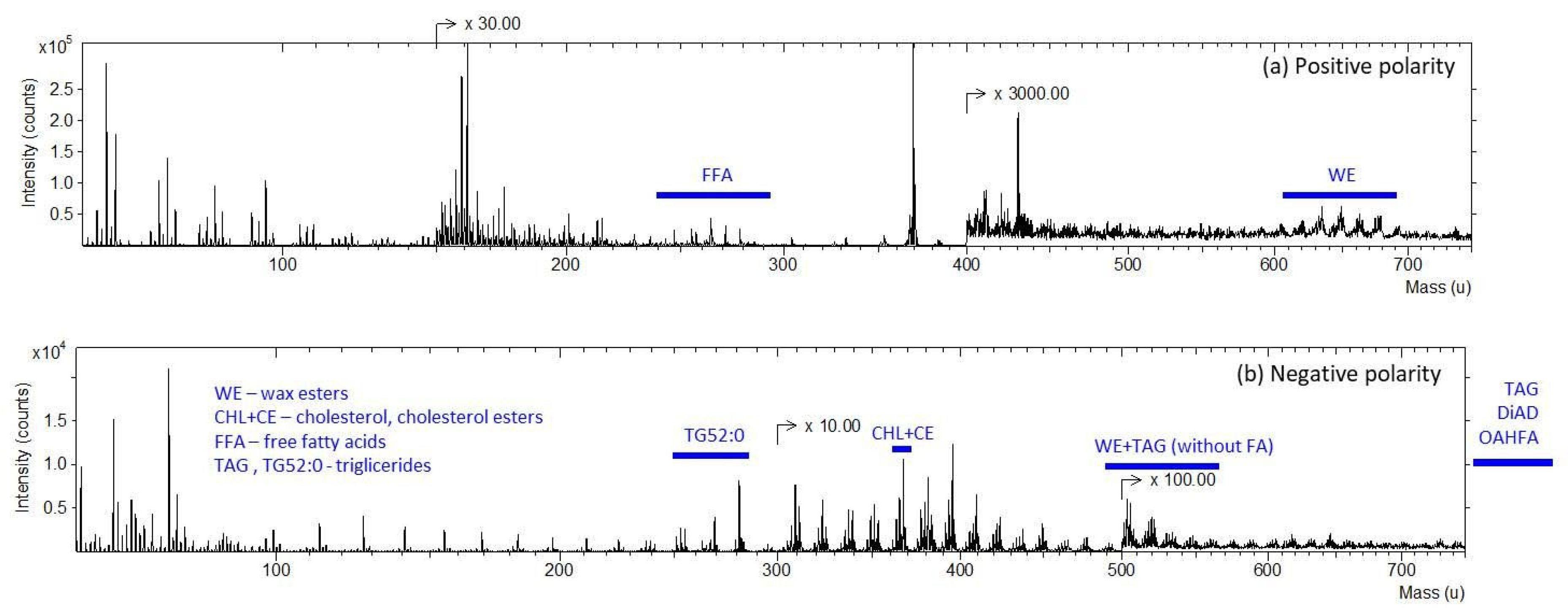
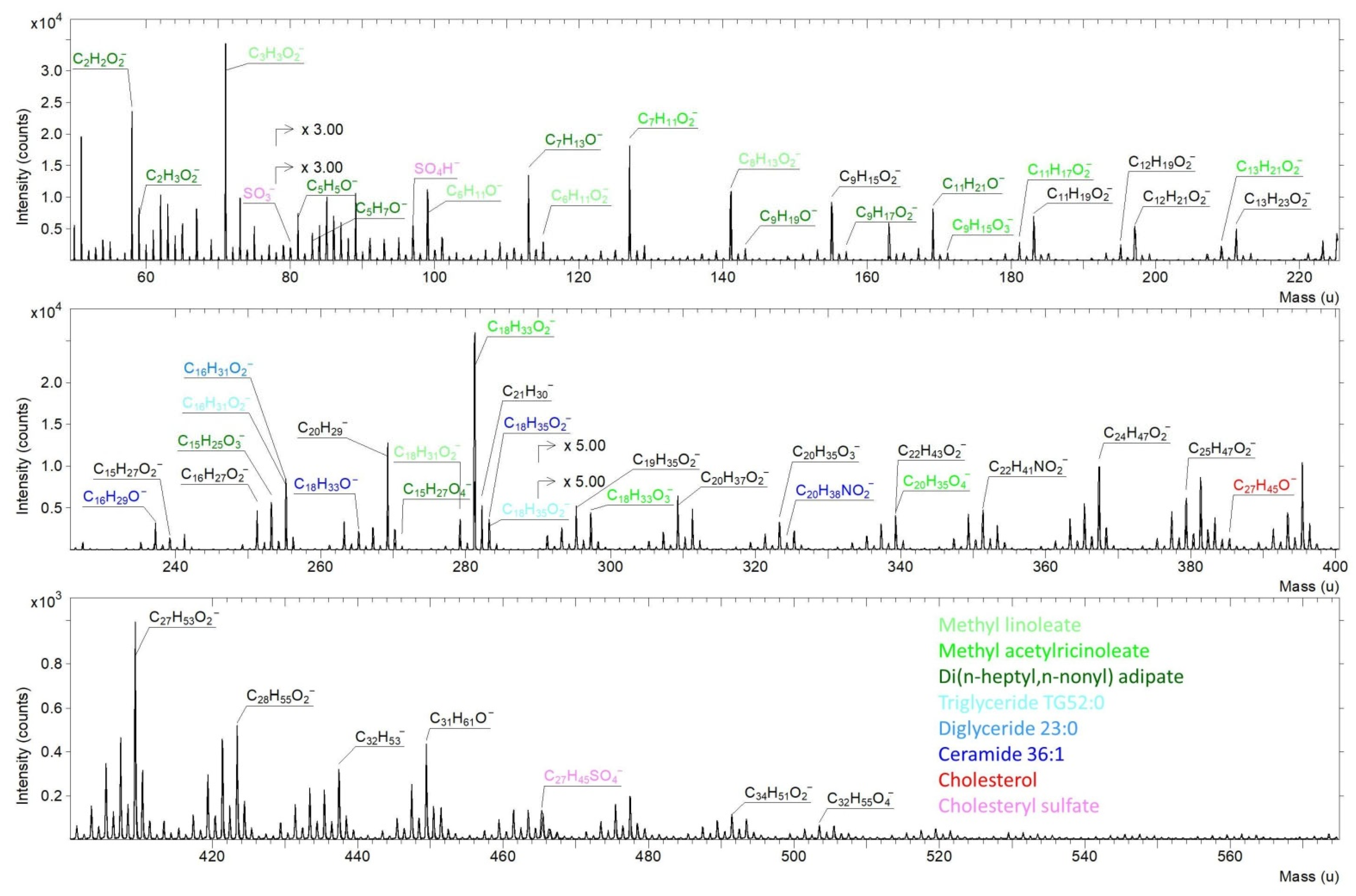
2.1. Compositional Analysis of Human Meibum
2.2. Inter-Individual Variability in Meibum Composition
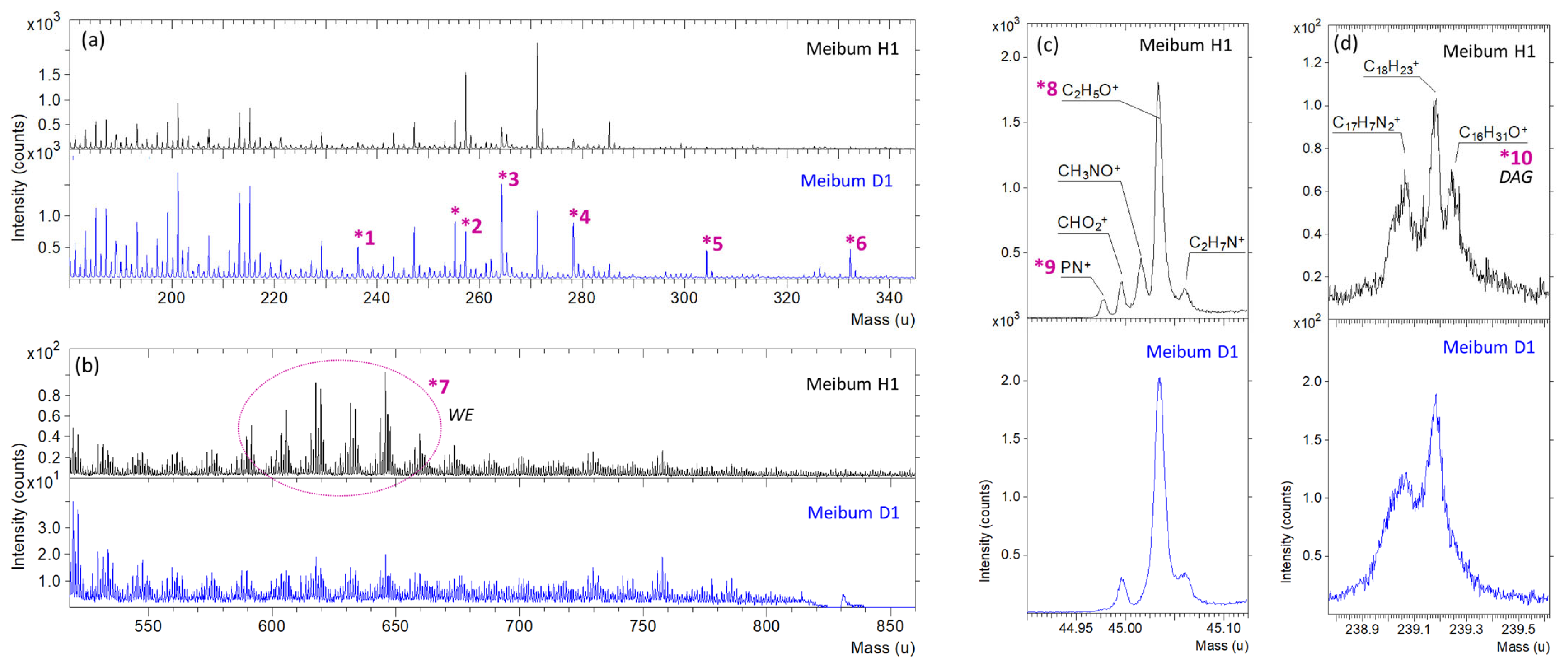
2.2.1. Detailed Spectral Analysis of Representative Samples
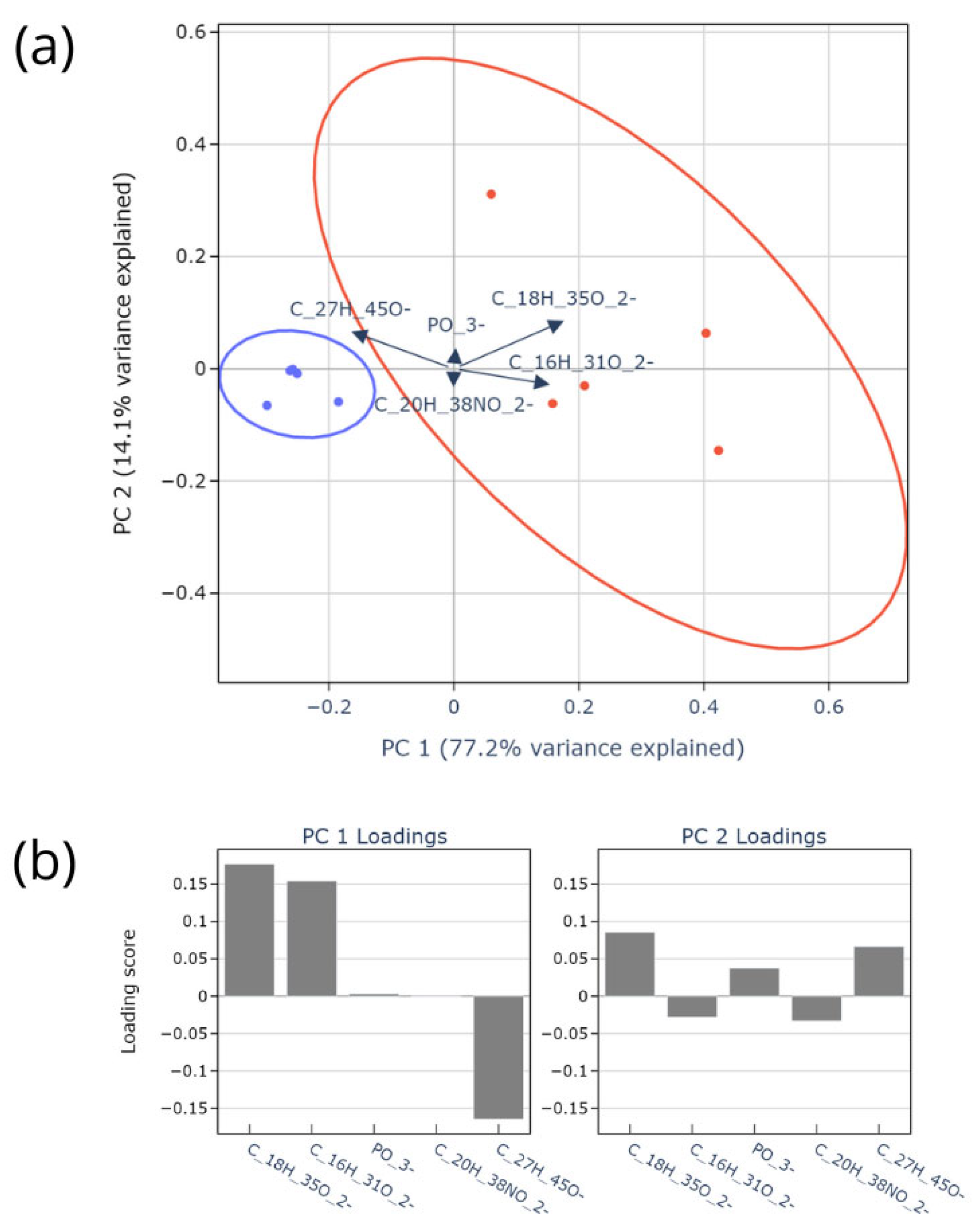
2.2.2. Principal Component Analysis of the Expanded Cohort
3. Materials and Methods
3.1. Participant Selection and Clinical Characteristics
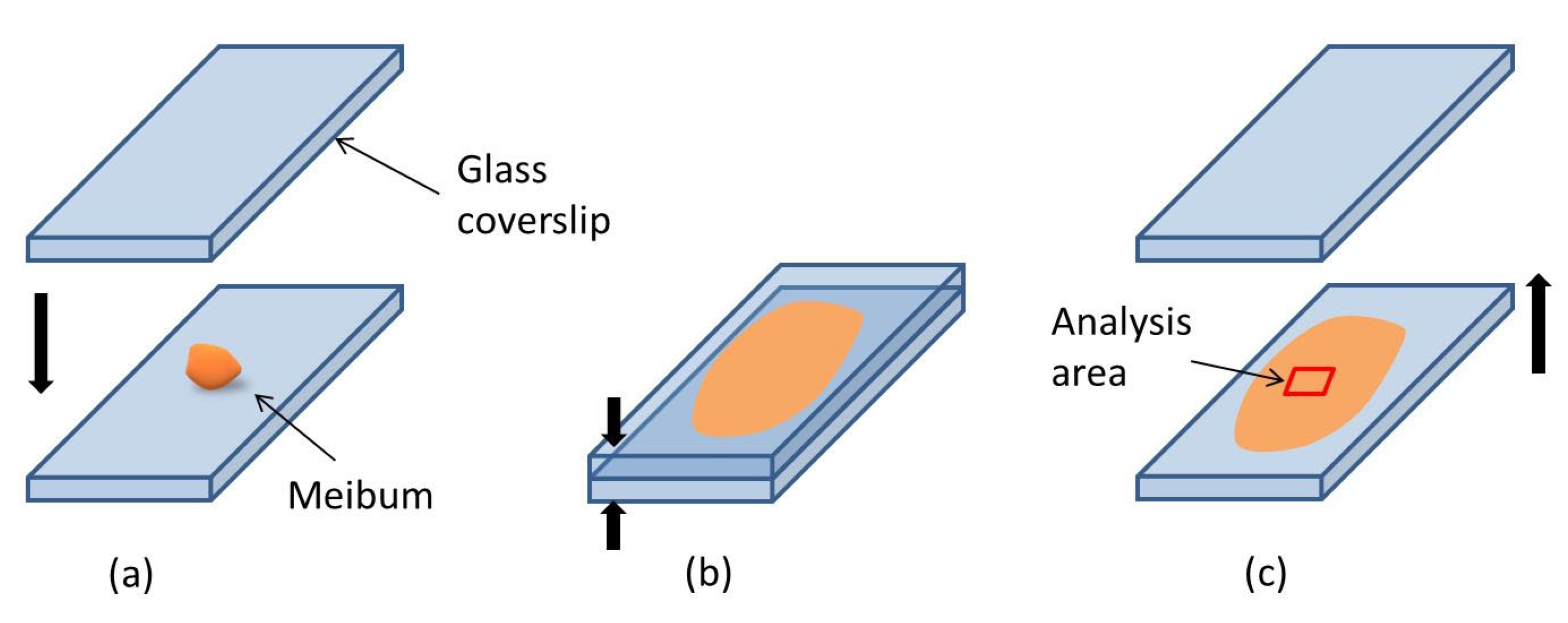
3.2. Collection and Processing of Human Meibum
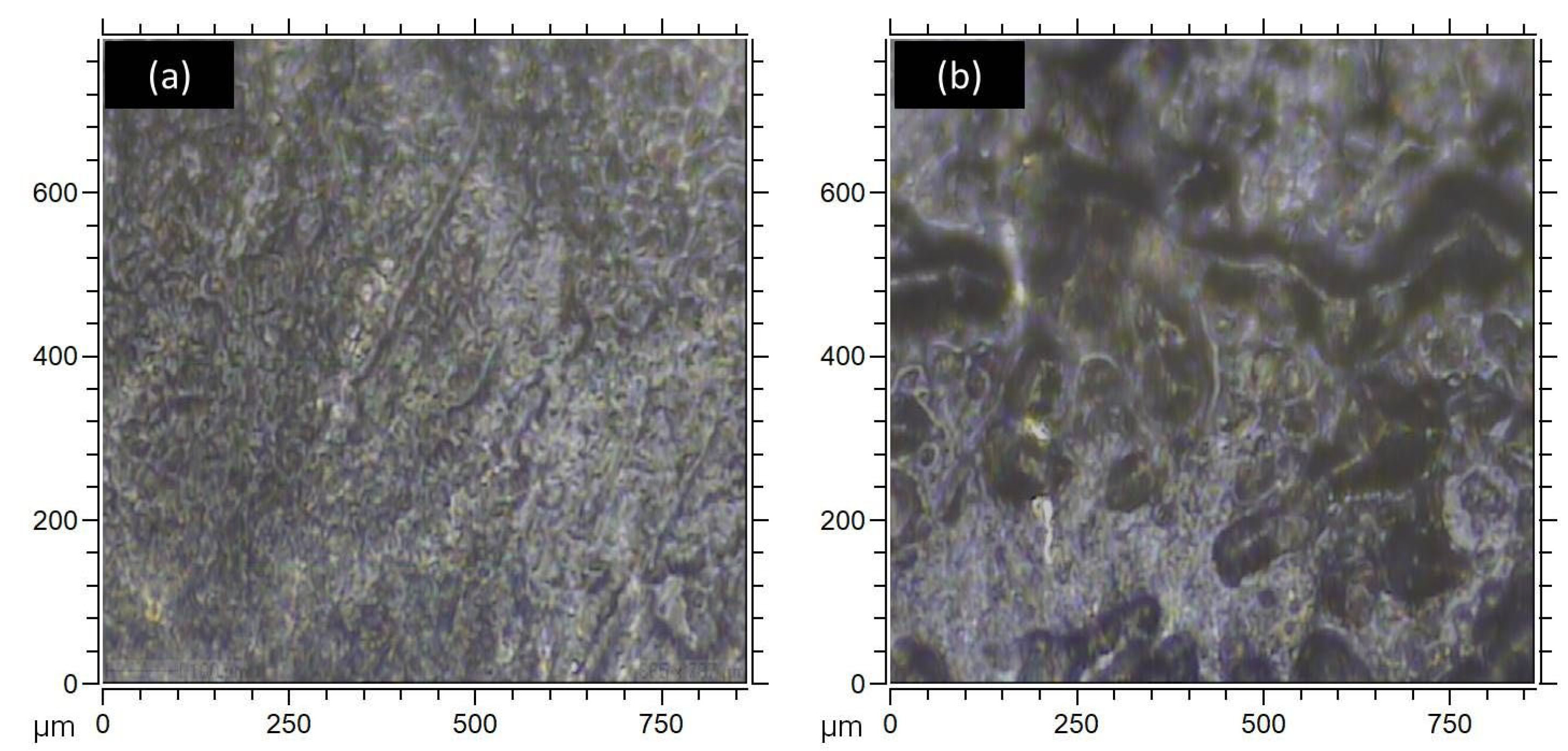
3.3. Time of Flight Secondary Ion Mass Spectrometry
3.4. Statistical Analysis
4. Conclusions
Supplementary Materials
Author Contributions
Funding
Institutional Review Board Statement
Informed Consent Statement
Data Availability Statement
Conflicts of Interest
References
- Jester, J.V.; Nicolaides, N.; Smith, R.E. Meibomian Gland Studies: Histologic and Ultrastructural Investigations. Invest. Ophthalmol. Vis. Sci. 1981, 20, 537–547. [Google Scholar]
- Knop, E.; Knop, N.; Millar, T.; Obata, H.; Sullivan, D.A. The International Workshop on Meibomian Gland Dysfunction: Report of the Subcommittee on Anatomy, Physiology, and Pathophysiology of the Meibomian Gland. Invest. Ophthalmol. Vis. Sci. 2011, 52, 1938–1978. [Google Scholar] [CrossRef]
- Craig, J.P.; Tomlinson, A. Importance of the Lipid Layer in Human Tear Film Stability and Evaporation. Optom. Vis. Sci. 1997, 74, 8–13. [Google Scholar] [CrossRef]
- Bron, A.J.; Tiffany, J.M.; Gouveia, S.M.; Yokoi, N.; Voon, L.W. Functional Aspects of the Tear Film Lipid Layer. Exp. Eye Res. 2004, 78, 347–360. [Google Scholar] [CrossRef]
- Jones, M.B.; McElwain, D.L.; Fulford, G.R.; Collins, M.J.; Roberts, A.P. The Effect of the Lipid Layer on Tear Film Behavior. Bull. Math. Biol. 2006, 68, 1355–1381. [Google Scholar] [CrossRef]
- Willcox, M.D.P.; Argüeso, P.; Georgiev, G.A.; Holopainen, J.M.; Laurie, G.W.; Millar, T.J.; Papas, E.B.; Rolland, J.P.; Schmidt, T.A.; Stahl, U.; et al. TFOS DEWS II Tear Film Report. Ocul. Surf. 2017, 15, 366–403. [Google Scholar] [CrossRef] [PubMed]
- Mathers, W.D. Ocular Evaporation in Meibomian Gland Dysfunction and Dry Eye. Ophthalmology 1993, 100, 347–351. [Google Scholar] [CrossRef] [PubMed]
- Shimazaki, J.; Sakata, M.; Tsubota, K. Ocular Surface Changes and Discomfort in Patients with Meibomian Gland Dysfunction. Arch. Ophthalmol. 1995, 113, 1266–1270. [Google Scholar] [CrossRef] [PubMed]
- Foulks, G.N.; Bron, A.J. Meibomian Gland Dysfunction: A Clinical Scheme for Description, Diagnosis, Classification, and Grading. Ocul. Surf. 2003, 1, 107–126. [Google Scholar] [CrossRef]
- Tomlinson, A.; Bron, A.J.; Korb, D.R.; Amano, S.; Paugh, J.R.; Pearce, E.I.; Yee, R.; Yokoi, N.; Arita, R.; Dogru, M. The International Workshop on Meibomian Gland Dysfunction: Report of the Diagnosis Subcommittee. Invest. Ophthalmol. Vis. Sci. 2011, 52, 2006–2049. [Google Scholar] [CrossRef]
- Nichols, K.K.; Foulks, G.N.; Bron, A.J.; Glasgow, B.J.; Dogru, M.; Tsubota, K.; Lemp, M.A.; Sullivan, D.A. The International Workshop on Meibomian Gland Dysfunction: Executive Summary. Invest. Ophthalmol. Vis. Sci. 2011, 52, 1922–1929. [Google Scholar] [CrossRef] [PubMed]
- Nguyen Pham, K.T.; Miyake, T.; Suzuki, T.; Kinoshita, S.; Hamada, Y.; Uehara, H.; Machida, M.; Nakajima, T.; Hasegawa, E.; Doi, M. Identification of Meibomian Gland Testosterone Metabolites Produced by Tissue-Intrinsic Intracrine Deactivation Activity. iScience 2025, 28, 111808. [Google Scholar] [CrossRef] [PubMed]
- Nguyen, A.; Naidoo, K.K.; Ajouz, L.; Xu, X.; Zhao, C.; Robinson, M.R.; Borchman, D. Changes in Human Meibum Lipid Composition Related to the Presence and Severity of Meibomian Gland Dysfunction. J. Ocul. Pharmacol. Ther. 2024, 40, 562–570. [Google Scholar] [CrossRef] [PubMed]
- Arita, R.; Mori, N.; Shirakawa, R.; Asai, K.; Imanaka, T.; Fukano, Y.; Nakamura, M. Linoleic Acid Content of Human Meibum Is Associated with Telangiectasia and Plugging of Gland Orifices in Meibomian Gland Dysfunction. Exp. Eye Res. 2016, 145, 359–362. [Google Scholar] [CrossRef]
- Ewurum, A.; Veligandla, S.R.; Swindle, J.S.; Clark, J.D.; Borchman, D. A Spectroscopic Approach to Measuring Meibum Lipid Composition and Conformation in Donors with Sjӧgren’s Syndrome. Exp. Eye Res. 2021, 210, 108713. [Google Scholar] [CrossRef]
- Yang, Q.; Li, B.; Sheng, M. Meibum Lipid Composition in Type 2 Diabetics with Dry Eye. Exp. Eye Res. 2021, 206, 108522. [Google Scholar] [CrossRef]
- Chen, J.; Panthi, S. Lipidomic Analysis of Meibomian Gland Secretions from the Tree Shrew: Identification of Candidate Tear Lipids Critical for Reducing Evaporation. Chem. Phys. Lipids 2019, 220, 36–48. [Google Scholar] [CrossRef]
- Ou, S.; Jeyalatha, M.V.; Mao, Y.; Wang, J.; Chen, C.; Zhang, M.; Liu, X.; Liang, M.; Lin, S.; Wu, Y.; et al. The Role of Ectodysplasin A on the Ocular Surface Homeostasis. Int. J. Mol. Sci. 2022, 23, 15700. [Google Scholar] [CrossRef]
- Liu, Y.; Butovich, I.A.; Garreis, F.; Zahn, I.; Scholz, M.; Gaffling, S.; Jabari, S.; Dietrich, J.; Paulsen, F. Comparative Characterization of Human Meibomian Glands, Free Sebaceous Glands, and Hair-Associated Sebaceous Glands Based on Biomarkers, Analysis of Secretion Composition, and Gland Morphology. Int. J. Mol. Sci. 2024, 25, 3109. [Google Scholar] [CrossRef]
- Wang, J.; Kang, H.; Huang, X.; Liu, Y.; He, Y.; Jie, Y. Identification of Microplastics in Human Tear Fluid and Meibum: Implications for Dry Eye Disease Pathogenesis. J. Hazard. Mater. 2025, 48, 137635. [Google Scholar] [CrossRef]
- Butovich, I.A.; Suzuki, T.; Wojtowicz, J.; Bhat, N.; Yuksel, S. Comprehensive Profiling of Asian and Caucasian Meibomian Gland Secretions Reveals Similar Lipidomic Signatures Regardless of Ethnicity. Sci. Rep. 2020, 10, 14510. [Google Scholar] [CrossRef]
- Ewurum, A.; Ankem, A.; Georgiev, G.; Borchman, D. A Spectroscopic Study of the Composition and Conformation of Cholesteryl and Wax Esters Purified from Meibum. Chem. Phys. Lipids 2021, 238, 105088. [Google Scholar] [CrossRef]
- Butovich, I.A. Meibomian Glands, Meibum, and Meibogenesis. Exp. Eye Res. 2017, 163, 2–16. [Google Scholar] [CrossRef]
- Schnetler, R.; Gillan, W.D.H.; Koorsen, G. Lipid Composition of Human Meibum. Afr. Vis. Eye Health 2013, 72, 86–93. [Google Scholar] [CrossRef]
- Butovich, I.A. The Meibomian Puzzle: Combining Pieces Together. Prog. Retin. Eye Res. 2009, 28, 483–498. [Google Scholar] [CrossRef] [PubMed]
- Butovich, I.A. Lipidomics of Human Meibomian Gland Secretions: Chemistry, Biophysics, and Physiological Role of Meibomian Lipids. Prog. Lipid Res. 2011, 50, 278–301. [Google Scholar] [CrossRef] [PubMed]
- Robosky, L.C.; Wade, K.; Woolson, D.; Baker, J.D.; Manning, M.L.; Gage, D.A.; Reily, M.D. Quantitative Evaluation of Sebum Lipid Components with Nuclear Magnetic Resonance. J. Lipid Res. 2008, 49, 686–692. [Google Scholar] [CrossRef]
- Borchman, D.; Ramasubramanian, A. Human Meibum Chain Branching Variability with Age, Gender and Meibomian Gland Dysfunction. Ocul. Surf. 2019, 17, 327–335. [Google Scholar] [CrossRef]
- Haworth, K.M.; Nichols, J.J.; Thangavelu, M.; Sinnott, L.T.; Nichols, K.K. Examination of Human Meibum Collection and Extraction Techniques. Optom. Vis. Sci. 2011, 88, 525–533. [Google Scholar] [CrossRef]
- Chen, J. Mass Spectrometric Analysis of Meibomian Gland Lipids. Methods Mol. Biol. 2021, 2306, 157–170. [Google Scholar]
- Garcia-Queiruga, J.; Pena-Verdeal, H.; Sabucedo-Villamarin, B.; Paz-Tarrio, M.; Guitian-Fernandez, E.; Garcia-Resua, C.; Yebra-Pimentel, E.; Giraldez, M.J. Meibum Lipidomic Analysis in Evaporative Dry Eye Subjects. Int. J. Mol. Sci. 2024, 25, 4782. [Google Scholar] [CrossRef]
- Butovich, I.A.; Uchiyama, E.; McCulley, J.P. Lipids of Human Meibum: Mass-Spectrometric Analysis and Structural Elucidation. J. Lipid Res. 2007, 48, 2220–2235. [Google Scholar] [CrossRef]
- Shine, W.E.; McCulley, J.P. Meibomianitis: Polar Lipid Abnormalities. Cornea 2004, 23, 781–783. [Google Scholar] [CrossRef] [PubMed]
- Shine, W.E.; McCulley, J.P. Polar Lipids in Human Meibomian Gland Secretions. Curr. Eye Res. 2003, 26, 89–94. [Google Scholar] [CrossRef] [PubMed]
- Oshima, Y.; Sato, H.; Zaghloul, A.; Foulks, G.N.; Yappert, M.C.; Borchman, D. Characterization of Human Meibum Lipid Using Raman Spectroscopy. Curr. Eye Res. 2009, 34, 824–835. [Google Scholar] [CrossRef] [PubMed]
- Butovich, I.A. On the Lipid Composition of Human Meibum and Tears: Comparative Analysis of Nonpolar Lipids. Invest. Ophthalmol. Vis. Sci. 2008, 49, 3779–3789. [Google Scholar] [CrossRef]
- Gulin, A.A.; Pavlyukov, M.S.; Gusev, S.A.; Malakhova, Y.N.; Buzin, A.I.; Chvalun, S.N.; Aldarov, K.G.; Klinov, D.V.; Gularyan, S.K.; Nadtochenko, V.A. Applicability of TOF-SIMS for the Assessment of Lipid Composition of Cell Membrane Structures. Biochem. Suppl. Ser. A Membr. Cell Biol. 2017, 11, 144–150. [Google Scholar] [CrossRef]
- Dowlatshahi Pour, M.; Jennische, E.; Lange, S.; Ewing, A.G.; Malmberg, P. Food-Induced Changes of Lipids in Rat Neuronal Tissue Visualized by ToF-SIMS Imaging. Sci. Rep. 2016, 6, 32797. [Google Scholar] [CrossRef]
- Shi, X.; Li, X.; Li, Q.; Qi, C.; Xia, M.; Wang, Z.; Chen, Y.; Zhou, Z.; Wang, Z.; Abliz, Z. A ToF-SIMS Methodology for Analyzing Inter-Tissue Lipid Distribution Variations and Intra-Tissue Multilevel Mass Spectrometry Imaging within a Single Rat. Microchem. J. 2024, 200, 110235. [Google Scholar] [CrossRef]
- Park, J.W.; Jeong, H.; Kang, B. Multi-Dimensional TOF-SIMS Analysis for Effective Profiling of Disease-Related Ions from the Tissue Surface. Sci. Rep. 2015, 5, 11077. [Google Scholar] [CrossRef]
- Denbigh, J.L.; Lockyer, N.P. ToF-SIMS as a Tool for Profiling Lipids in Cancer and Other Diseases. Mater. Sci. Technol. 2015, 31, 137–147. [Google Scholar] [CrossRef]
- Touboul, D.; Roy, S.; Germain, D.P.; Chaminade, P.; Brunelle, A.; Laprévote, O. MALDI-TOF and Cluster-TOF-SIMS Imaging of Fabry Disease Biomarkers. Int. J. Mass Spectrom. 2007, 260, 158–165. [Google Scholar] [CrossRef]
- Almstrand, A.C.; Josefson, M.; Bredberg, A.; Lausmaa, J.; Sjövall, P.; Larsson, P.; Olin, A.C. TOF-SIMS Analysis of Exhaled Particles from Patients with Asthma and Healthy Controls. Eur. Respir. J. 2012, 39, 59–66. [Google Scholar] [CrossRef] [PubMed]
- Neittaanmäki, N.; Zaar, O.; Sjögren, K.; Kelly, C.; Nilsson, D.; Katsarelias, D.; Bagge, R.O.; Paoli, J.; Fletcher, J.S.; Dimovska, K.; et al. ToF-SIMS Imaging Reveals Changes in Tumor Cell Lipids during Metastatic Progression of Melanoma. Pigment. Cell Melanoma Res. 2024, 37, 793–800. [Google Scholar] [CrossRef] [PubMed]
- Zhao, W.; Yang, J.; Liao, Y.; Yang, B.; Lin, S.; Liu, R.; Liang, L. Alteration of Meibum Lipidomics Profiling in Patients With Chronic Ocular Graft-Versus-Host Disease. Invest. Ophthalmol. Vis. Sci. 2023, 64, 35. [Google Scholar] [CrossRef]
- Suzuki, T.; Kitazawa, K.; Cho, Y.; Yoshida, M.; Okumura, T.; Sato, A.; Kinoshita, S. Alteration in Meibum Lipid Composition and Subjective Symptoms Due to Aging and Meibomian Gland Dysfunction. Ocul. Surf. 2022, 26, 310–317. [Google Scholar] [CrossRef]
- Nagar, S.; Ajouz, L.; Nichols, K.K.; Kumar, S.; Zhao, C.; Naidoo, K.K.; Robinson, M.R.; Borchman, D. Relationship between human meibum lipid composition and the severity of meibomian gland dysfunction: A spectroscopic analysis. Invest. Ophthalmol. Vis. Sci. 2023, 64, 22. [Google Scholar] [CrossRef]
- Mathebula, S.D. Latest Developments on Meibomian Gland Dysfunction: Diagnosis, Treatment and Management. Afr. Vis. Eye Heal. 2022, 81, 713. [Google Scholar] [CrossRef]
- Sabeti, S.; Kheirkhah, A.; Yin, J.; Dana, R. Management of Meibomian Gland Dysfunction: A Review. Surv. Ophthalmol. 2020, 65, 205–217. [Google Scholar] [CrossRef]
- Tao, J.P.; Shen, J.F.; Aakalu, V.K.; Foster, J.A.; Freitag, S.K.; McCulley, T.J.; Vagefi, M.R.; Kim, S.J.; Wladis, E.J. Thermal Pulsation in the Management of Meibomian Gland Dysfunction and Dry Eye: A Report by the American Academy of Ophthalmology. Ophthalmology 2023, 130, 1336–1341. [Google Scholar] [CrossRef]
- Sawilowsky, S.S. New Effect Size Rules of Thumb. J. Mod. Appl. Stat. Methods 2009, 8, 467–474. [Google Scholar] [CrossRef]
- Lam, S.M.; Tong, L.; Yong, S.S.; Li, B.; Chaurasia, S.S.; Shui, G.; Wenk, M.R. Meibum Lipid Composition in Asians with Dry Eye Disease. PLoS ONE 2011, 6, e24339. [Google Scholar] [CrossRef] [PubMed]
- Wojtowicz, J.C.; Butovich, I.A.; McCulley, J.P. Historical Brief on Composition of Human Meibum Lipids. Ocul. Surf. 2009, 7, 145–153. [Google Scholar] [CrossRef] [PubMed]
- Ou, S.; Zhang, L.; Wu, Y.; Yang, D.; Jiang, N.; Mao, T.; Zheng, X.; Gu, H.; Zhang, L. Alterations in the Composition of Meibomian Gland Secretions in Patients with Meibomian Gland Dysfunction Based on Raman Spectroscopy. Front. Med. 2025, 12, 1717118. [Google Scholar] [CrossRef]
- Arita, R.; Mori, N.; Shirakawa, R.; Asai, K.; Imanaka, T.; Fukano, Y.; Nakamura, M.; Amano, S. Meibum Color and Free Fatty Acid Composition in Patients With Meibomian Gland Dysfunction. Invest. Ophthalmol. Vis. Sci. 2015, 56, 4403–4412. [Google Scholar] [CrossRef]
- Suzuki, T.; Fujiwara, S.; Kinoshita, S.; Butovich, I.A. Cyclic Change of Fatty Acid Composition in Meibum during the Menstrual Cycle. Invest. Ophthalmol. Vis. Sci. 2019, 60, 1724–1733. [Google Scholar] [CrossRef]
- Suzuki, T.; Minami, Y.; Komuro, A.; Yokoi, N.; Kinoshita, S. Meibomian Gland Physiology in Pre- and Postmenopausal Women. Invest. Ophthalmol. Vis. Sci. 2017, 58, 763–771. [Google Scholar] [CrossRef][Green Version]
- Fearn, S. An Introduction to Time-of-Flight Secondary Ion Mass Spectrometry (ToF-SIMS) and Its Application to Materials Science; Morgan & Claypool Publishers: San Rafael, CA, USA, 2015; pp. 1–67. [Google Scholar]
- Anderson, M.J. A new method for non-parametric multivariate analysis of variance. Austral Ecol. 2001, 26, 32–46. [Google Scholar]
- Gretton, A.; Borgwardt, K.M.; Rasch, M.J.; Schölkopf, B.; Smola, A. A Kernel Two-Sample Test. J. Mach. Learn. Res. 2012, 25, 723–773. [Google Scholar]
- Welch, B.L. The Generalization of Student’s Problem when Several Different Population Variances are Involved. Biometrika 1947, 34, 28–35. [Google Scholar] [CrossRef]
- Cohen, J. Statistical Power Analysis for the Behavioral Sciences; Routhledge: London, UK, 1988; p. 567. [Google Scholar]
- Pearson, K. On lines and planes of closest fit to systems of points in space. Lond. Edinb. Dublin Philos. Mag. J. Sci. 1901, 2, 559–572. [Google Scholar] [CrossRef]
- Steinhaus, H. Sur la division des corps matériels en parties. Bull. L’Académie Pol. Des Sci. 1957, 4, 801–804. [Google Scholar]



| Ion | p-Value | Effect Size |
|---|---|---|
| C2H5O+ | 0.170690 | 2.659686 |
| CHO2+ | 0.175155 | 1.803090 |
| C18H23+ | 0.175155 | −1.737394 |
| C2H7N+ | 0.175155 | 1.700526 |
| C16H33O2+ | 0.328902 | 1.192288 |
| C16H31O+ | 0.328902 | 1.190528 |
| C17H7N2+ | 0.351117 | −0.976241 |
| PN+ | 0.484294 | 0.790003 |
| C15H27O+ | 0.632202 | 0.593808 |
| CH3NO+ | 0.703237 | 0.457285 |
| C18H32O+ | 0.703237 | 0.449847 |
| C16H28O+ | 0.776160 | 0.320658 |
| C21H38N+ | 0.776160 | 0.280560 |
| C24H44+ | 0.822646 | 0.174471 |
| C20H38+ | 0.822646 | 0.149186 |
| Subject ID | Group | Meibum Expressibility (0–3) | Meibum Quality (0–3) | Age (Years) | MGD Severity (TFOS) |
|---|---|---|---|---|---|
| H1 | Healthy | 0 | 0 | 43 | None |
| H2 | Healthy | 0 | 0 | 32 | None |
| H3 | Healthy | 0 | 0 | 29 | None |
| H4 | Healthy | 0 | 0 | 41 | None |
| H5 | Healthy | 0 | 0 | 35 | None |
| D1 | MGD | 1 | 1 | 46 | Mild |
| D2 | MGD | 1 | 2 | 31 | Mild-to-Moderate |
| D3 | MGD | 2 | 1 | 36 | Mild-to-Moderate |
| D4 | MGD | 2 | 2 | 42 | Moderate |
| D5 | MGD | 2 | 2 | 28 | Moderate |
Disclaimer/Publisher’s Note: The statements, opinions and data contained in all publications are solely those of the individual author(s) and contributor(s) and not of MDPI and/or the editor(s). MDPI and/or the editor(s) disclaim responsibility for any injury to people or property resulting from any ideas, methods, instructions or products referred to in the content. |
© 2026 by the authors. Licensee MDPI, Basel, Switzerland. This article is an open access article distributed under the terms and conditions of the Creative Commons Attribution (CC BY) license.
Share and Cite
Balin, K.; Węglarz, B.; Dobiczek, K.; Tarnawska, D. Composition of Human Meibomian Gland Secretions: Insights from TOF-SIMS Analysis. Int. J. Mol. Sci. 2026, 27, 1590. https://doi.org/10.3390/ijms27031590
Balin K, Węglarz B, Dobiczek K, Tarnawska D. Composition of Human Meibomian Gland Secretions: Insights from TOF-SIMS Analysis. International Journal of Molecular Sciences. 2026; 27(3):1590. https://doi.org/10.3390/ijms27031590
Chicago/Turabian StyleBalin, Katarzyna, Beata Węglarz, Karol Dobiczek, and Dorota Tarnawska. 2026. "Composition of Human Meibomian Gland Secretions: Insights from TOF-SIMS Analysis" International Journal of Molecular Sciences 27, no. 3: 1590. https://doi.org/10.3390/ijms27031590
APA StyleBalin, K., Węglarz, B., Dobiczek, K., & Tarnawska, D. (2026). Composition of Human Meibomian Gland Secretions: Insights from TOF-SIMS Analysis. International Journal of Molecular Sciences, 27(3), 1590. https://doi.org/10.3390/ijms27031590