1. Introduction
Advanced prostate cancer is initially responsive to androgen deprivation therapy; however, within 12–18 months, most tumors progress to castration-resistant prostate cancer (CRPC). Once CRPC develops, the prognosis is poor, with a median survival of approximately two years and only palliative options available [
1]. Conventional chemotherapy has limited efficacy in this setting, as dose intensification is restricted by severe systemic toxicity. To overcome these challenges, gene-directed enzyme prodrug therapy (GDEPT) has emerged as an attractive strategy. In this approach, a prodrug-activating enzyme is selectively delivered to tumor cells, where it converts a nontoxic prodrug into a cytotoxic drug, achieving localized therapeutic effects while reducing systemic toxicity. One of the most studied enzymes in GDEPT is cytosine deaminase (CD), a bacterial enzyme that converts 5-fluorocytosine (5-FC) into the chemotherapeutic 5-fluorouracil (5-FU) [
2,
3]. This system allows high local concentrations of 5-FU in the tumor microenvironment while minimizing systemic exposure.
Efficient gene delivery to tumors remains a key challenge for cancer gene therapy. Mesenchymal stem cells (MSCs), including adipose-derived stem cells (ADSCs), exhibit natural tumor-tropic properties and are promising vehicles for delivering suicide genes [
4,
5,
6,
7,
8,
9]. Previous studies have demonstrated that stem cell-mediated CD/5-FC therapy can inhibit tumor growth [
10,
11]. For example, prostate cancer cells engineered with a CD–uracil phosphoribosyltransferase (UPRT) fusion gene showed markedly reduced growth following 5-FC treatment [
12,
13,
14]. Similarly, we have shown that human neural stem cells expressing CD (HB1.F3.CD) migrated to prostate tumors and, when combined with systemic 5-FC, significantly suppressed tumor volumes in mice [
15]. However, the use of neural stem cells faces practical and ethical barriers, including challenges in procurement, reproducibility, and clinical translation.
ADSCs represent an advantageous alternative for clinical applications. They can be isolated from patients with minimal invasiveness, expanded ex vivo to therapeutic numbers, genetically modified efficiently, and are free from ethical concerns [
16]. Building on these advantages, a tumor-targeted gene therapy platform was developed using ADSCs as delivery vehicles [
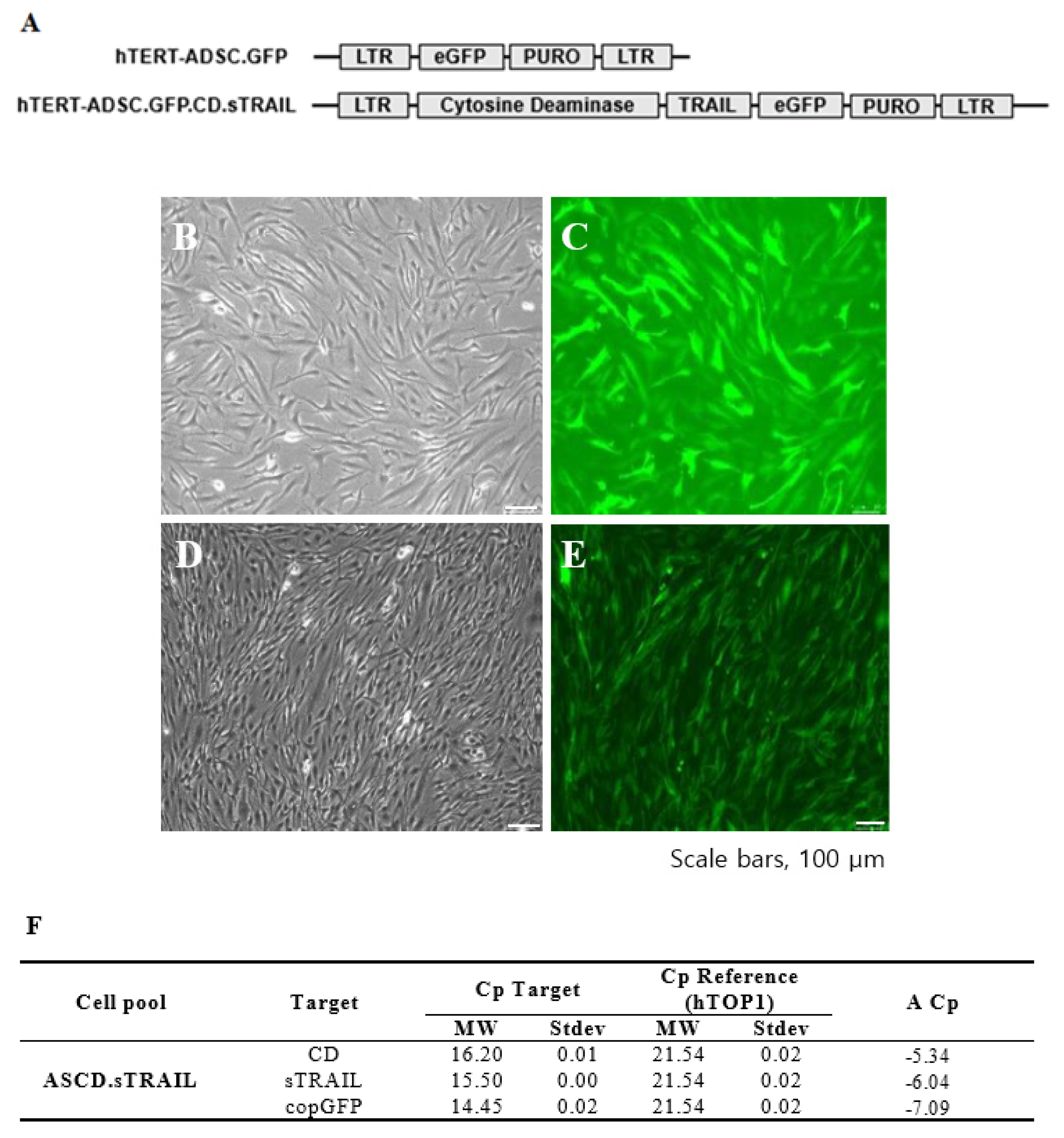
17]. In this strategy, human telomerase reverse transcriptase (hTERT)-immortalized ADSCs were engineered to stably express both CD and soluble TRAIL (sTRAIL), creating ADSC.CD.sTRAIL cells. TRAIL is a cytokine that selectively induces apoptosis in malignant cells with minimal toxicity to normal tissues [
18,
19]. Modified soluble trimeric TRAIL proteins, designed with a secretion signal, a trimerization domain, and the receptor-binding region, have been shown to enhance apoptotic activity compared with conventional TRAIL proteins [
20]. Importantly, combining TRAIL with 5-FU has demonstrated synergistic antitumor effects in several malignancies, including prostate cancer [
21,
22]. This suggests that a combined CD/5-FC plus TRAIL approach may maximize tumor cell death without exacerbating systemic toxicity.
Building on our prior stem cell-based CD/5-FC approach [
11,
13], here we introduce TRAIL into the same platform to engage the extrinsic (death receptor-mediated) pathway of apoptosis in addition to the intrinsic pathway triggered by 5-FU. We anticipated that incorporating TRAIL would provide direct pro-apoptotic activity against cancer cells (via caspase-8 activation) alongside the bystander killing by 5-FU, leading to more effective tumor cell death without added systemic toxicity. We hypothesized that ADSC.CD.sTRAIL cells would migrate to prostate tumors, convert 5-FC to 5-FU in the tumor microenvironment, continuously secrete TRAIL, and thereby induce apoptosis in tumor cells while minimizing side effects.
This study is a proof-of-concept investigation to evaluate whether hTERT-immortalized ADSCs overexpressing CD and sTRAIL, combined with 5-FC treatment, can inhibit the growth of CRPC in a mouse model while maintaining safety.
3. Discussion
In this proof-of-concept study, we demonstrate that genetically engineered human ADSCs delivering a combinatorial gene therapy (CD + sTRAIL) can inhibit the growth of castration-resistant prostate tumors in mice when coupled with the prodrug 5-FC. Our findings support the concept that a dual-mechanism approach—inducing cancer cell death through both 5-FU chemotherapy (via CD/5-FC conversion) and TRAIL-mediated apoptosis—yields enhanced antitumor efficacy compared to a single-mechanism (CD/5-FC alone) strategy.
We utilized an hTERT-immortalized ADSC line (ASC52-Telo) as the cellular vehicle. The hTERT immortalization circumvents the issue of primary MSC senescence, enabling the generation of a stable, clonal cell line that can be expanded to therapeutic quantities. A concern with any immortalized cell line is potential malignant transformation. We did not observe any transformation signs in vitro: our hTERT-ADSC.CD.sTRAIL cells maintained normal MSC morphology, surface marker expression. They required attachment for growth and did not form colonies in soft agar, suggesting they did not acquire anchorage-independent growth, a hallmark of tumorigenicity. This is consistent with the literature reporting that hTERT alone does not induce a tumorigenic conversion of MSCs. Telomerized adipose MSCs retained a normal karyotype and phenotype over extended culture. However, rare instances of late-onset transformation have been documented in telomerase-immortalized fibroblasts under certain conditions [
23,
24], underscoring the need for careful safety evaluation. In our case, we chose an ATCC-registered hTERT-MSC line and further engineered it; while we have not performed in vivo tumorigenicity assays of these cells yet, we did not observe tumor formation or ectopic tissue masses in any treated mice up to 4–6 weeks. Moving forward, we plan to conduct long-term safety studies: injecting the engineered ADSCs into immunodeficient mice without 5-FC to confirm that they do not form tumors or other lesions over several months. Additionally, we will perform karyotype or SNP-array analysis on early vs. late-passage cells to ensure genomic stability. These steps will be essential before clinical translation, given that an hTERT-immortalized cell therapy must be proven safe.
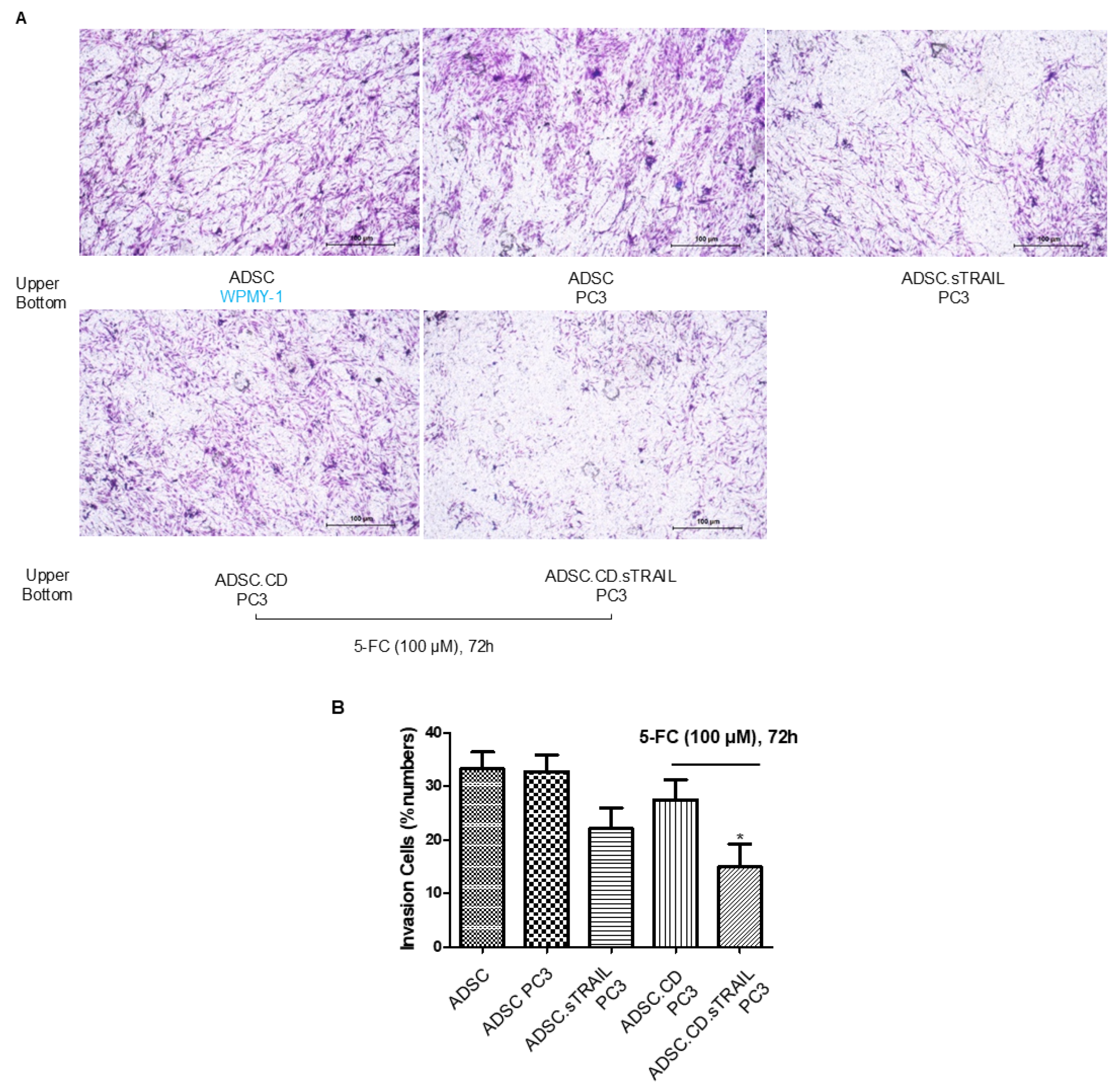
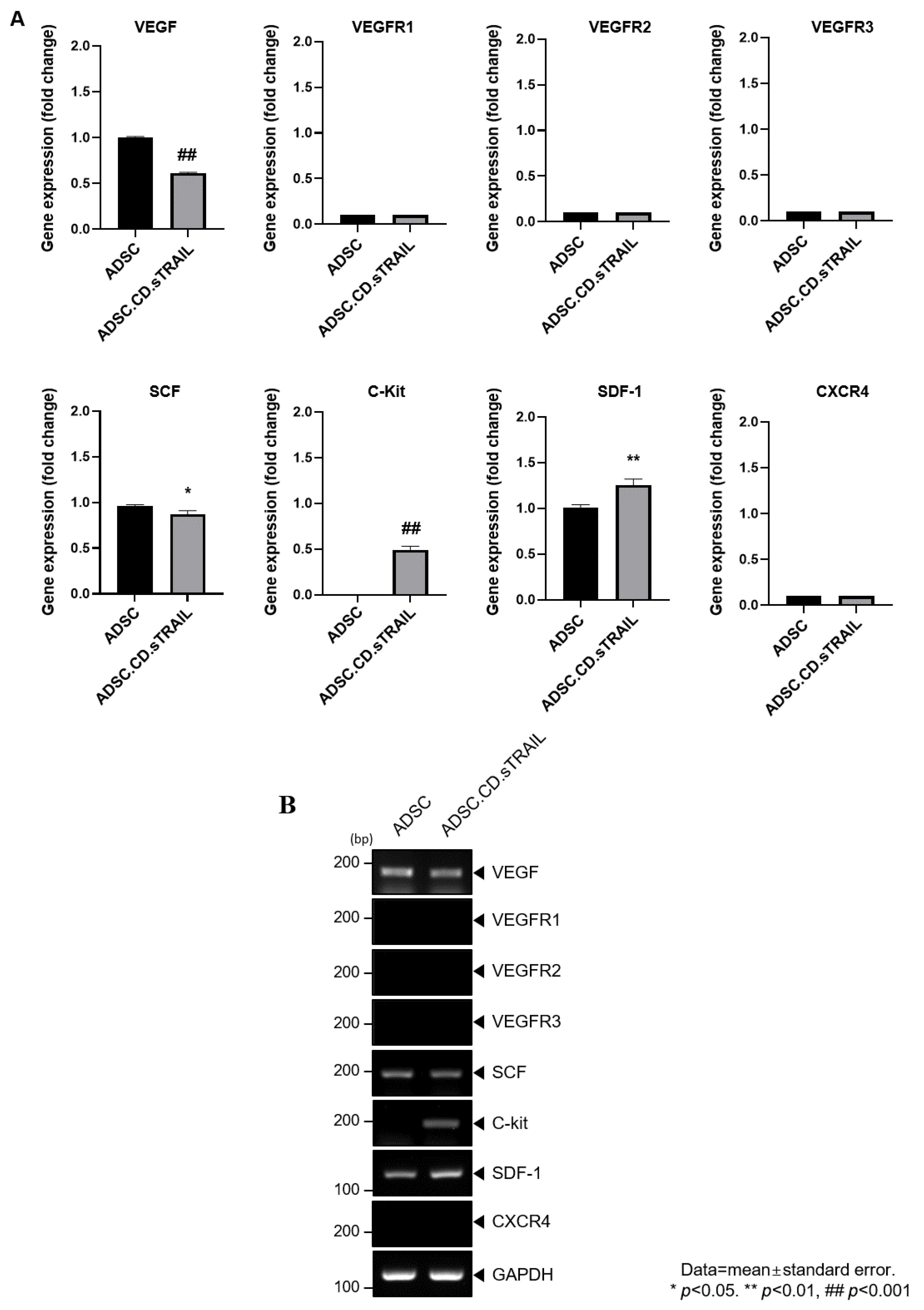
Tumor tropism and homing: The ability of MSCs to home tumors is a cornerstone of our delivery strategy. Our in vitro migration assays showed that ADSC.CD.sTRAIL cells actively migrate toward PC3 tumor-conditioned signals, similar to unmodified ADSCs. We observed the upregulation of SDF-1 and c-Kit in the engineered ADSCs, which may enhance homing since SDF-1/CXCR4 and SCF/c-Kit axes are known to mediate MSC tropism and tumor–stroma interactions [
25,
26,
27,
28,
29]. In vivo, we delivered the cells via intracardiac (left ventricular) injection to disseminate them systemically and allow homing via the arterial circulation, because this route bypasses immediate lung entrapment that occurs with intravenous injection [
8,
9,
11,
21,
25,
26]. Although we did not directly track the ADSCs in vivo using optical imaging or cell-specific qPCR, the therapeutic outcome strongly implies that the cells reached the tumors, as significant tumor suppression was observed only in cell-injected groups. It is well-established that systemically injected MSCs can home to tumors; for instance, Hung et al. used PET imaging to show MSCs localizing to microscopic tumor foci in vivo [
5]. Nevertheless, our evidence of homing is indirect. In future experiments, we will incorporate a cell-tracking modality (luciferase-expressing ADSCs for bioluminescence imaging, or labeling cells with iron nanoparticles for MRI) to directly visualize and quantify engraftment of therapeutic cells in the tumor versus other organs. We will also assess the biodistribution of cells by quantitative PCR for a human-specific gene in various organs. These studies will answer where the ADSCs go after intracardiac injection and how long they survive. It is worth noting that even if only a small fraction of injected ADSCs reach the tumor, that may suffice, as they can locally convert 5-FC to 5-FU and secrete TRAIL in situ, amplifying an apoptotic signal within the tumor microenvironment.
In our treated mice, we did not detect overt cell trapping pathology in lungs or elsewhere and no respiratory distress or organ enlargement was noted. But more sensitive detection such as histology for human vimentin-positive cells, will be performed to confirm minimal off-tumor lodging. Immune clearance of human ADSCs in nude mice which lack T cells but have NK cells is another factor. ADSCs likely persisted for some days to exert effect but may not survive long-term. This transient persistence could actually be a safety advantage.
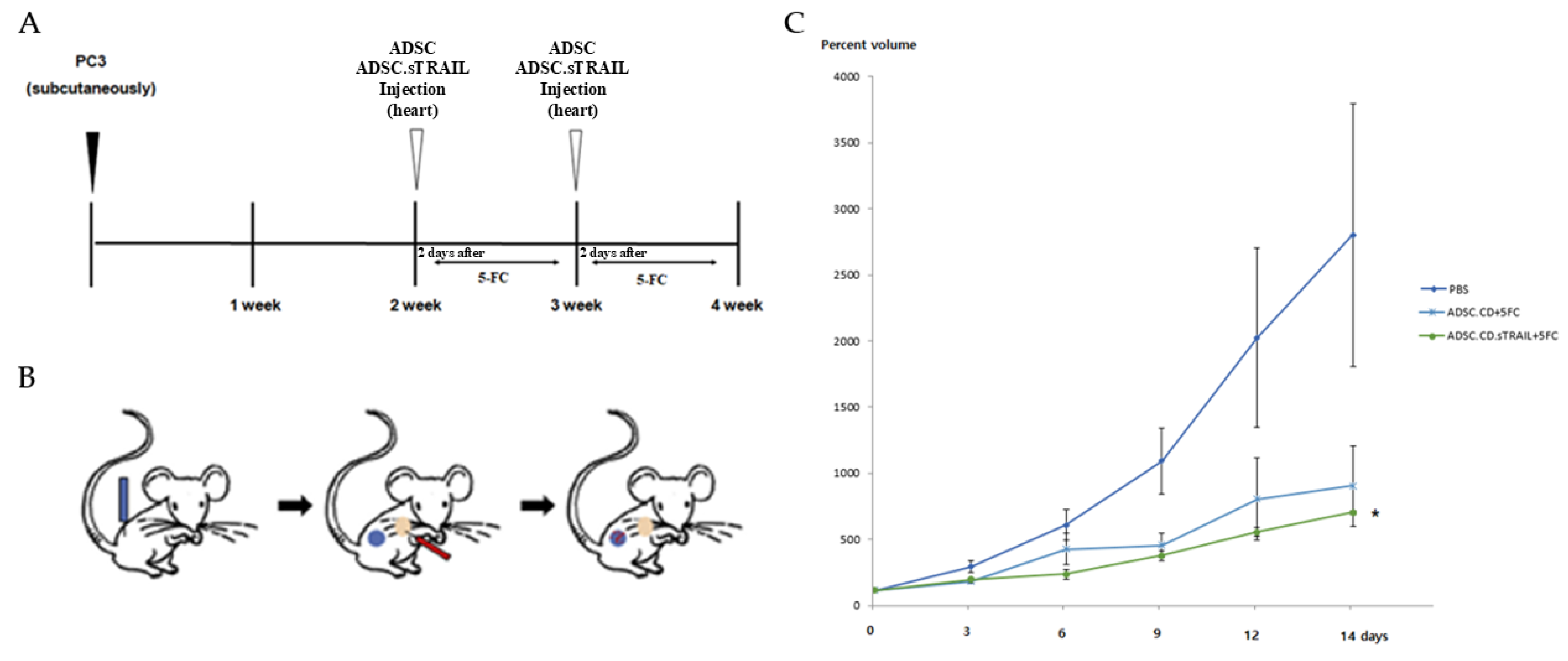
Our approach harnesses a two-pronged mechanism. Local chemotherapy from CD/5-FC and induction of apoptosis via TRAIL. The data support that both mechanisms were at play: In vivo, the ADSC.CD + 5-FC group (without TRAIL) did show tumor growth delay compared to control, confirming that 5-FU was being produced in tumors and had an effect. However, the ADSC.CD.sTRAIL + 5-FC group showed greater tumor regression, indicating an additional contribution from TRAIL-induced apoptosis. The 5-FC dosing regimen (500 mg/kg IP daily) we used has been reported in prior studies to achieve plasma 5-FC levels in the 0.1–0.3 mM range [
11,
13], which, in the presence of CD-expressing cells, can yield micromolar levels of 5-FU locally.
We did not measure intratumoral 5-FU concentration in this study, which is a limitation. However, 5-FU is a diffusible drug and likely acted on neighboring tumor cells once produced. In future, we will perform HPLC or LC-MS on tumor extracts to quantify 5-FU. We acknowledge in the text that the mechanism of action is presumed: we presume that tumor-localized conversion of 5-FC to 5-FU occurred and was sufficient to kill cancer cells, and that TRAIL was secreted and induced apoptosis in a paracrine fashion. The evidence for this presumption includes the in vitro HPLC and apoptosis assays, and the known synergy between 5-FU and TRAIL reported in the literature. Li et al. showed 5-FU sensitizes gastric cancer cells to TRAIL by downregulating anti-apoptotic signals [
20].
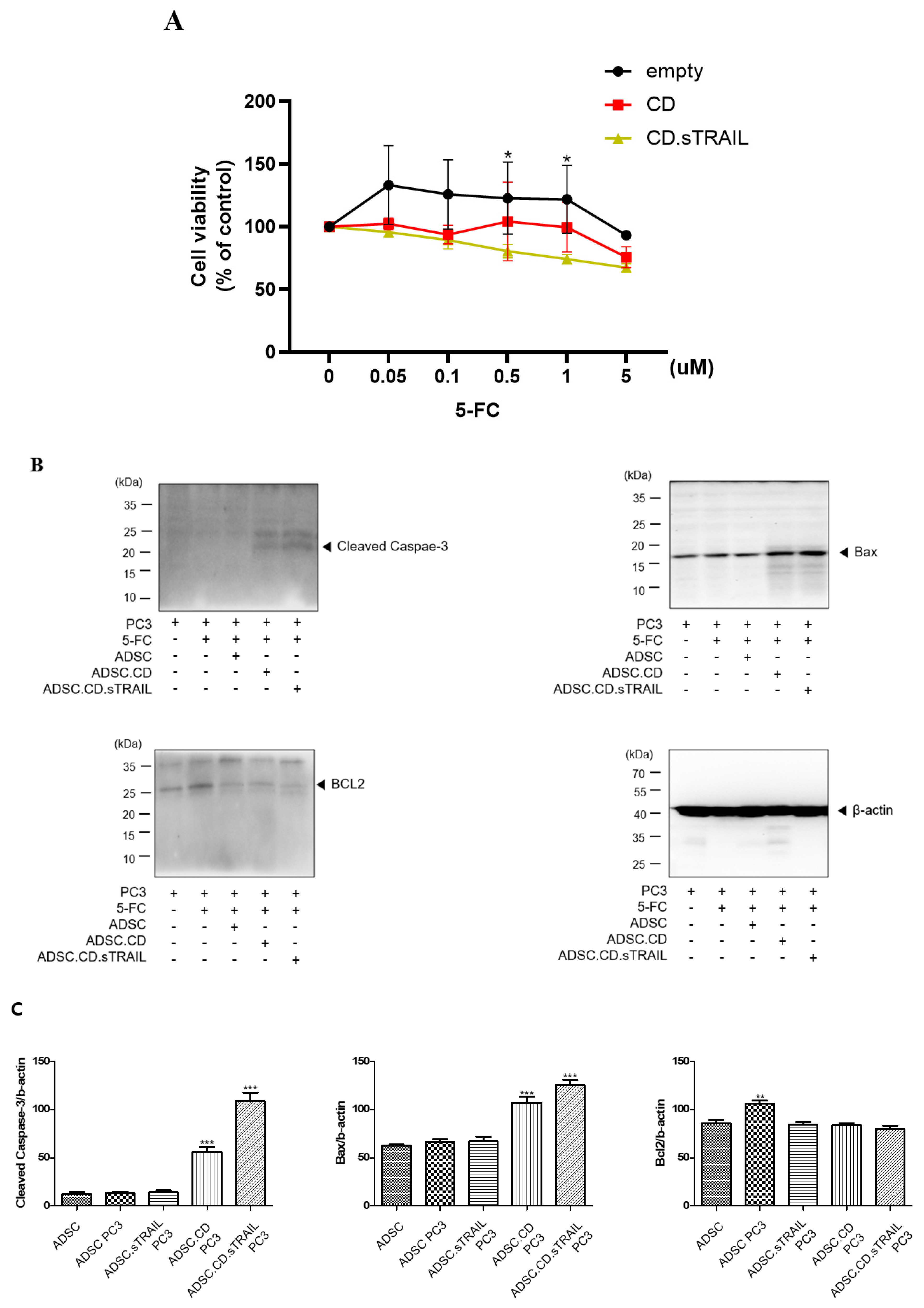
On a molecular level, 5-FU primarily triggers intrinsic apoptosis (mitochondrial pathway) by causing DNA damage and p53 activation, which upregulates pro-apoptotic BAX and downregulates BCL-2. TRAIL triggers the extrinsic pathway by binding death receptors (DR4/DR5) and activating caspase-8, which then cleaves downstream caspases (and can also cleave BID to connect to the intrinsic pathway). We saw evidence of the intrinsic pathway (increase BAX, decreased BCL-2 in tumors and co-cultures). We attempted to detect caspase-3 activation as a common downstream marker; while results were inconclusive due to technical issues, it is reasonable to assume caspases were activated. We plan to use a cleaved caspase-3 specific antibody in the future to confirm. We also did not directly assess DR4/DR5 levels or other TRAIL pathway indicators in vivo. This can be done via immunohistochemistry on tumor sections in follow-up studies. The combination of mechanisms might also help circumvent resistance: many CRPC cells, including PC3, can be somewhat resistant to TRAIL alone (due to high BCL-2 or mutations in death receptor pathways), but 5-FU can lower that threshold by upregulating DR5 or downregulating FLIP, as noted in prior studies [
21,
22]. By delivering both agents together, we aimed to ensure that if a tumor cell resisted one mode of killing, the other would still affect it. The net result in our study was a potent anticancer effect.
The magnitude of tumor inhibition observed with ADSC.CD.sTRAIL + 5-FC in our model was substantial. Tumors regressed in size in most treated mice. This is encouraging for a first demonstration. However, we must consider the context: subcutaneous tumor xenografts are easier to treat than diffuse metastases, and PC3 cells lack functional androgen receptor (AR), representing only one subset of CRPC (AR-independent). We have now tempered the efficacy to clarify that this is a preclinical proof of concept. We do not claim that the treatment would definitively work in all CRPC patients without further evidence. Instead, our results warrant further investigation in more clinically relevant models. Specifically, we have added text outlining plans to test the approach in: Bone metastatic CRPC models. Injecting PC3 or other prostate cancer cells into the left cardiac ventricle or tibia of mice to generate bone lesions, which more closely mimic human CRPC metastasis. We will evaluate if the ADSC therapy can home to bone and inhibit tumor growth in that microenvironment. Homing to bone might involve additional factors. We have the plan for AR-positive models using LNCaP-derived C4-2B cells which metastasize to bone and are castration-resistant but AR-positive or Enzalutamide-resistant variants of LNCaP. These models will test if our therapy is effective when androgen receptor signaling is present. TRAIL and 5-FU should theoretically work irrespective of AR status, but AR-positive tumors might have different apoptosis profiles. It will be important to show broad efficacy.
On the safety side, 5-FC is generally well-tolerated; it can cause gut microbiota changes or mild reversible bone marrow suppression at high doses, but our mice showed no illness. We did not perform blood tests in mice, which is a limitation. We clarify that no “overt toxicity” means no deaths and we acknowledge that a detailed toxicological assessment, such as histopathology of organs, and blood work was not done. Before clinical translation, such studies would be needed, of course.
Comparison to other approaches: Our strategy is related to other cell-based gene therapies. Kucerova et al. in 2007 used human adipose MSCs with a yeast CD/UPRT gene for colon cancer [
13]; Kim et al. (2021) used TRAIL-expressing ADSCs with the chemotherapeutic irinotecan in a CRPC model [
21]. Our contribution is in combining the prodrug/enzyme therapy with TRAIL in one platform. To our knowledge, this specific combination (CD/5-FC + TRAIL via ADSCs) has not been reported before for prostate cancer. This study has the novelty of combining these modalities. Furthermore, our use of hTERT-immortalized ADSCs as a consistent cell source is aimed to facilitate eventual clinical development, since primary MSCs vary donor-to-donor. We stress, however, that extensive safety testing and possibly insertion of a “kill switch” (such as an inducible caspase or suicide gene to eliminate the therapeutic cells if needed) might be necessary if using an immortalized cell line in humans.
We used one cell line (PC3) in nude mice with a small n = 5 per group. This yields preliminary data but not definitive proof of efficacy across the heterogeneous spectrum of CRPC. We mention the need to validate in additional models and to increase sample sizes for statistical power. We also did not perform a power calculation prior to the experiment. We now explicitly acknowledge that and have in fact performed a post hoc power analysis indicating that, with the variance observed, more mice per group would be needed to robustly confirm the ADSC.CD effect vs. control. Our study endpoint was 2 weeks of treatment. We do not know if tumors would regrow after that, or if any delayed toxicities could occur. We plan longer-term studies (monitoring mice for 1–2 months, performing repeat dosing cycles, etc.) to see if we can achieve complete remissions or if tumors eventually escape. We did not measure intratumoral drug levels or do detailed apoptosis pathway analysis in vivo. Our model was immunodeficient (nude mice). In an immunocompetent host, human ADSCs would be xenogeneic and likely rejected; even autologous or allogeneic human ADSCs might interact with the immune system. We note that in clinical scenarios, if using allogeneic ADSCs, immune compatibility and persistence is an issue to consider. In future, either of the autologous patient-derived MSCs could be used.
In conclusion, our study provides a proof of concept that hTERT-immortalized ADSCs can serve as effective carriers of a dual therapeutic gene payload (CD and TRAIL) to combat prostate cancer. We demonstrated efficient tumor targeting, potent cytotoxic effects on cancer cells in vitro, and significant tumor growth inhibition in vivo when combined with 5-FC prodrug administration. This combined gene therapy strategy leverages the localized activation of chemotherapy (5-FU from 5-FC) and the induction of apoptosis via TRAIL, achieving enhanced antitumor efficacy with no observed systemic toxicity in our model. The results highlight the potential of CD/sTRAIL-expressing ADSCs as an innovative cell-based treatment for castration-resistant prostate cancer.
However, we emphasize that these findings are preliminary. The therapeutic benefit was shown in a controlled small-animal setting; hence, further studies are needed to translate this approach. We have now bounded our conclusions to reflect that this is an early-stage investigation. We outlined the next steps, including testing in bone metastasis models and AR-positive tumors, performing more comprehensive safety profiling, and eventually moving toward clinical trial design considerations. Ultimately, this approach could pave the way for a new therapeutic avenue in advanced prostate cancer that capitalizes on the tumor-homing ability of stem cells to deliver combination gene therapy directly to tumor sites.
4. Materials and Methods
4.1. Cell Lines and Culture Conditions
Human castration-resistant prostate cancer PC3 cells (Korean Cell Line Bank, Seoul, Republic of Korea) and hTERT-immortalized human adipose-derived mesenchymal stem cells (hTERT-ADSCs; ASC52-Telo, ATCC SCRC-4000) were used. PC3 and hTERT-ADSCs were maintained in Dulbecco’s Modified Eagle Medium (DMEM; Gibco, Seoul, Republic of Korea) supplemented with 10% heat-inactivated fetal bovine serum (FBS; Gibco), 2 mM L-glutamine, 100 U/mL penicillin, and 100 µg/mL streptomycin. Cultures were incubated at 37 °C in a humidified atmosphere of 5% CO2. Cells were passaged with trypsin-EDTA upon reaching ~80–90% confluence. All cell lines were periodically tested to confirm the absence of mycoplasma contamination.
4.2. Generation of hTERT-ADSC.CD.sTRAIL Cells
To engineer ADSCs co-expressing CD and sTRAIL, we employed lentiviral gene transduction. A lentiviral transfer plasmid (CLV-Ubic) encoding the E. coli CD gene (cytosine deaminase, Gene ID: 3096544) was used to produce CD-expressing virus. Separately, a lentiviral vector encoding the human sTRAIL gene under a ubiquitous promoter was prepared. Recombinant lentiviruses were generated by transient transfection of 293T packaging cells using calcium-phosphate co-precipitation. Viral supernatants were harvested 16–20 h post-transfection and filtered to create high-titer stocks.
hTERT-ADSCs were first transduced with the CD lentivirus in growth medium containing 8 µg/mL polybrene (Sigma, Seoul, Republic of Korea) to enhance infection. After 4–6 h, the medium was replaced with fresh complete medium and cells were incubated for 48 h. Transduced cells were selected by adding 3 µg/mL puromycin (Sigma) for 7 days, yielding a stable CD-expressing ADSC line (hTERT-ADSC.CD). To introduce the sTRAIL gene, hTERT-ADSC.CD cells were subsequently infected with the sTRAIL lentivirus (also in 8 µg/mL polybrene) and selected in 5 µg/mL blasticidin (InvivoGen, San Diego, CA, USA) for 10 days. Resistant colonies were expanded to establish the dual gene-modified ADSC.CD.sTRAIL cell line. No luciferase or other reporter gene was incorporated for cell tracking in vivo, and thus no biodistribution imaging was performed in this study.
Integration and expression of the transgenes were confirmed at both the DNA and RNA levels (
Table 1). Quantitative real-time PCR was used to measure transcript levels of CD and sTRAIL, using GAPDH as an internal control. Precise quantification of TRAIL in conditioned media or in vivo tumor tissues was not pursued in this study (no intratumoral TRAIL levels were measured).
4.3. Phenotypic Characterization of Engineered ADSCs
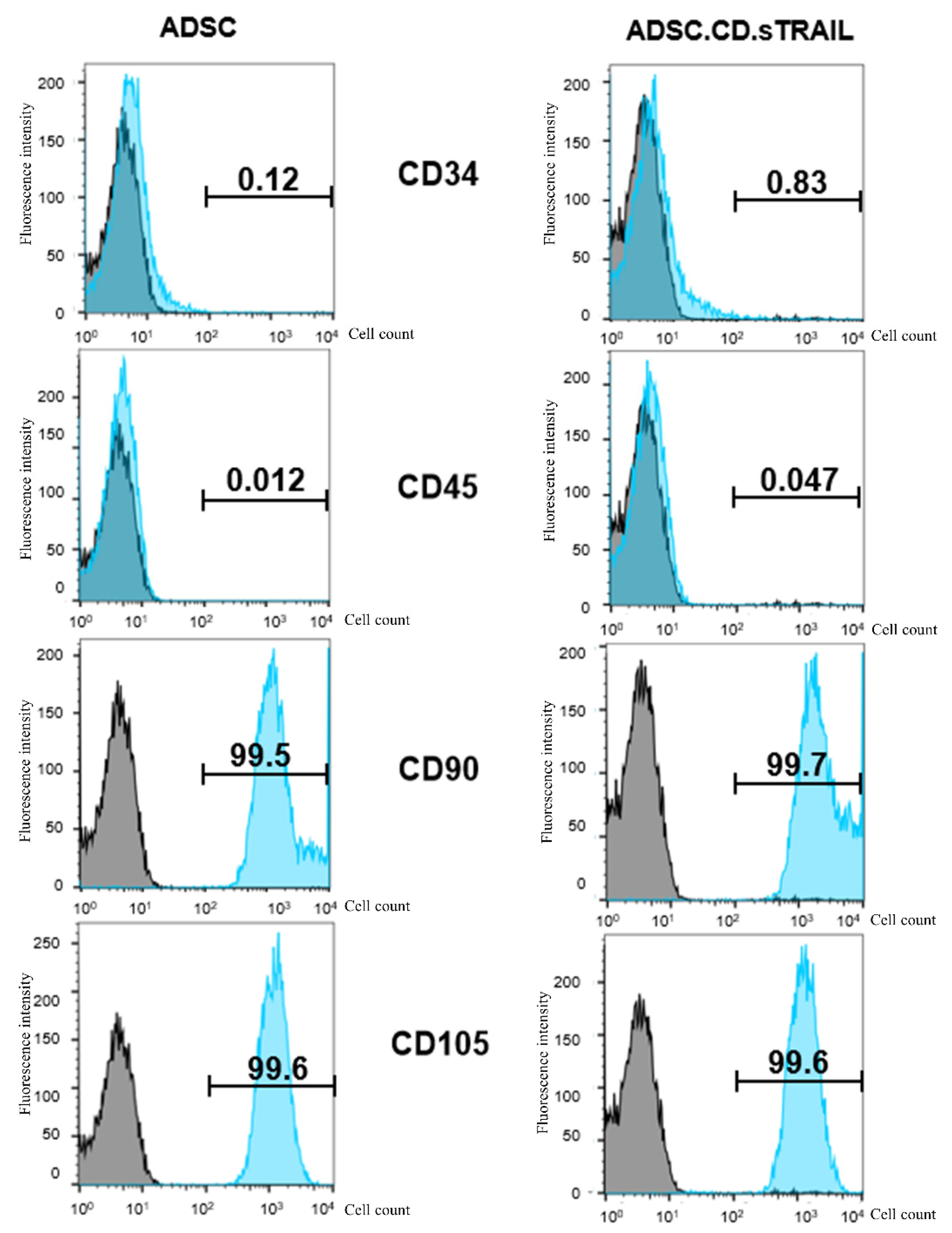
Mesenchymal Surface Markers: The parental and genetically modified ADSCs were analyzed by flow cytometry to verify retention of the mesenchymal stem cell phenotype. Cells were stained with antibodies against canonical MSC surface markers CD29, CD90, and CD105, as well as hematopoietic lineage markers CD34 and CD45 (all antibodies 1:50 dilution; Origene or Invitrogen, Rockville, MD, USA). Stained cells were acquired on a BD FACS Canto II flow cytometer and data were analyzed with FSC Express 7 software. hTERT-ADSC.CD.sTRAIL cells exhibited strong positivity for CD29, CD90, CD105 and were negative for CD34 and CD45, identical to unmodified hTERT-ADSCs, confirming a preserved MSC immunophenotype. The percentage of marker-positive cells was determined after subtracting isotype control signals.
Transgene and Pathway Protein Analysis: To verify pro-apoptotic pathway readiness, we probed for key apoptosis regulators. ADSC.CD.sTRAIL cells (with or without 5-FC exposure in vitro) were analyzed for BAX, BCL-2, and cleaved Caspase-3 protein levels by Western blot. Primary antibodies for BAX, BCL2, and cleaved Casp-3 (Santa Cruz, Dallas, TX, USA, 1:1000) were applied, followed by appropriate secondary antibodies. Enhanced BAX and cleaved caspase-3 with reduced BCL-2 in 5-FC-treated ADSC.CD.sTRAIL would indicate activation of the suicide gene pathway. Images were analyzed by densitometry to quantify relative protein expression. It should be noted that we did not perform flow cytometric Annexin V staining or caspase-9 activity assays to directly measure apoptosis, nor did we examine death receptor (DR4/DR5) expression on PC3 cells.
4.4. 5-FC to 5-FU Conversion Assay (HPLC)
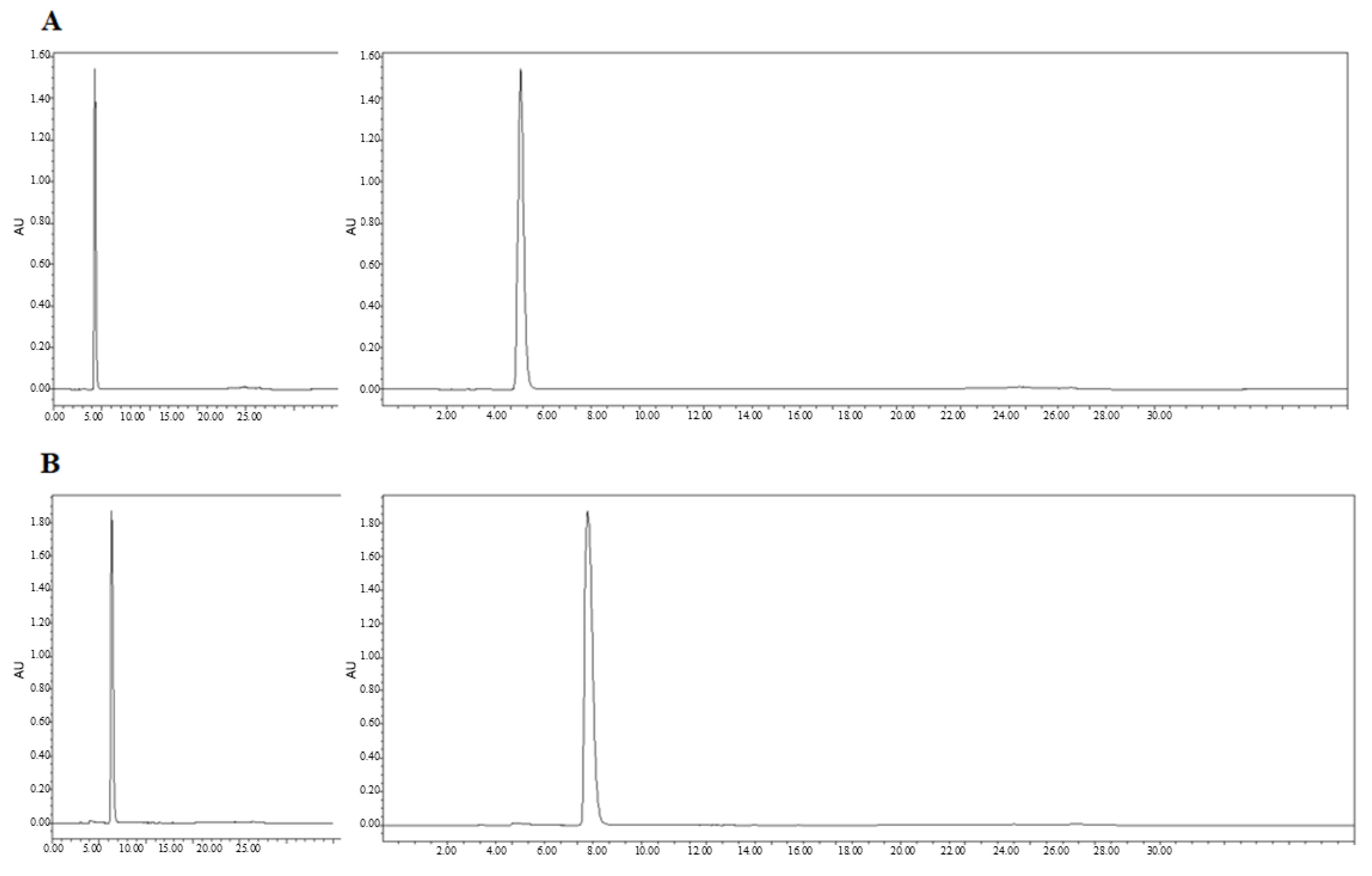
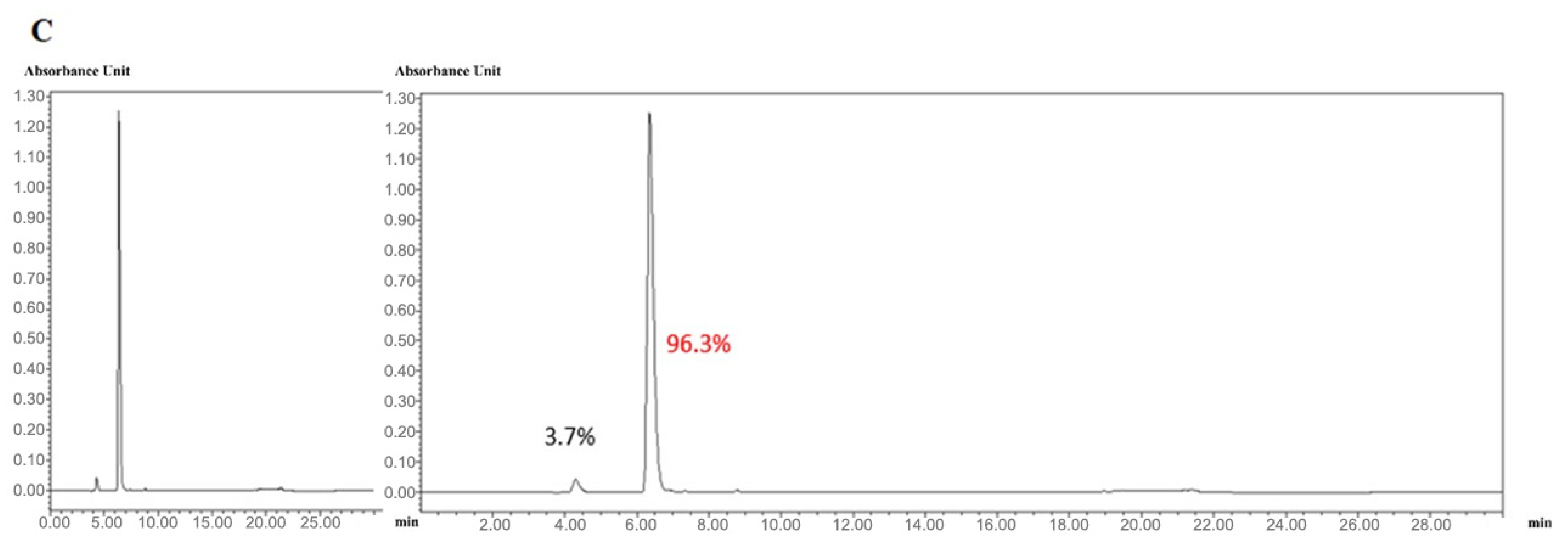
The enzymatic conversion of the prodrug 5-fluorocytosine (5-FC) to 5-fluorouracil (5-FU) by the CD-expressing ADSCs was evaluated using high performance liquid chromatography (HPLC). Briefly, ADSC.CD.sTRAIL cells (and control ADSCs) were incubated with 1 mM 5-FC for 24 h, after which the culture medium was collected and processed for HPLC analysis. The solution strengths of 5-FC and 5-FU were quantified. Prior to HPLC, molecules were transformed into a lactone form by acidification. Acidified methanol, comprising 5 μL 1 N HCI/mL methanol, was used to dilute the samples. These underwent centrifugation (14,000× g, 2 min). The resulting supernatant was passed at a flow rate of 1 mL/min through a 4 μm Nova-Pak C18 column, of dimensions 300 × 3.9 mm, for which 75 mM ammonium acetate, 25% acetonitrile (pH 4.0) had been used for equilibration. Elution of 5-FC occurred under these parameters after 4.3 min, and 5-FU, after 6.3 min. A Jasco 82 1-FP fluorescence detector was utilized for product identification, using excitation and emission wavelengths of 375 nm and 550 nm, respectively. System Gold software (32 Karat Software, version 3.0) was employed for data analysis. Detection limits were 20 pg/pA for 5-FC and 2 pg/pA for 5-FU.
4.5. In Vitro Co-Culture Cytotoxicity Assays
We assessed the therapeutic efficacy of the ADSC.CD.sTRAIL/5-FC system in vitro using prostate cancer PC3 cells as targets. Cell viability assays were performed with PC3–ADSC co-cultures. PC3 cells were seeded in 96-well plates (5 × 10³ cells per well). After 24 h, ADSCs were added to the wells at a ratio of 20:1 (PC3:ADSC; i.e., 5% the number of PC3) to mimic a minimal effector cell presence. Co-cultures included the following conditions: (1) PC3 + unmodified ADSCs, (2) PC3 + ADSC.CD.sTRAIL, and (3) PC3 alone, each set ± 5-FC treatment. 5-FC (Sigma) was added to a final concentration of 5 µM (a dose shown to affect CD-expressing cells) and incubated for 72 h. Cell viability was then measured by a modified MTT assay (CellTiter 96, Promega, Madison, WI, USA) which detects the conversion of MTT tetrazolium to formazan by mitochondrial dehydrogenases. After treatment, 10 µL of MTT reagent (5 mg/mL) was added per well and incubated for 4 h at 37 °C. Formazan crystals were solubilized with DMSO, and absorbance was measured at 570 nm using a microplate reader. Viability for each condition was calculated as a percentage of untreated control (PC3-only) wells. Each experiment was performed in quadruplicate, and data are presented as mean ± standard error (SE).
For apoptosis assessment in co-cultures, we evaluated molecular markers of apoptosis in PC3 cells. After 72 h co-culture with or without 5-FC, PC3 cells were collected and analyzed by Western blot for pro-apoptotic BAX and cleaved Caspase-3, and anti-apoptotic BCL-2. As PC3 and ADSCs are of human origin, we did not employ species-specific antibodies; instead, the mixed cell lysates were probed, and the signal largely reflected PC3 responses given their predominance in co-culture. Co-cultures with ADSC.CD.sTRAIL + 5-FC showed increased BAX and cleaved caspase-3 and decreased BCL-2 in PC3 cells compared to controls (PC3 + 5-FC alone or PC3 + parental ADSC + 5-FC). No Annexin V staining was performed on co-cultured cells, as apoptosis was inferred from these molecular markers rather than by flow cytometric quantification of apoptotic cells, which is noted as a limitation.
4.6. In Vivo CRPC Xenograft Model
All animal experiments were conducted in accordance with the National Institutes of Health Guide for the Care and Use of Laboratory Animals and were approved by the Institutional Animal Care and Use Committee (IACUC) of Soonchunhyang University Seoul Hospital (Approval No. 2019-4). Male athymic nude mice (BALB/c nu/nu, 6–8 weeks old, OrientBio, Seongnam-si, Republic of Korea) were used for tumor xenograft studies. Mice were housed in a temperature-controlled environment with a 12 h light/dark cycle and given food and water ad libitum.
To establish tumors, PC3 cells (1.0 × 10⁶ in 100 µL PBS) were injected subcutaneously into the right flank of each mouse. Tumor growth was monitored by caliper measurements, and tumor volume (mm3) was calculated as (length × width2)/2. When tumors reached ~50–100 mm3 (approximately 2 weeks post-inoculation), mice were randomly assigned to treatment groups (5 mice per group). The treatment groups were:
PBS control: no therapeutic cells, no prodrug (vehicle only).
5-FC alone: prodrug 5-FC administration without ADSC therapy.
ADSC.CD.sTRAIL alone: ADSC.CD.sTRAIL cell therapy without 5-FC (to assess the effect of TRAIL delivery alone).
Combination therapy: ADSC.CD.sTRAIL cell therapy plus 5-FC prodrug.
For groups receiving cell therapy, hTERT-ADSC.CD.sTRAIL cells were delivered systemically via intracardiac injection (1.0 × 10⁵ cells in 100 µL PBS, under isoflurane anesthesia). Intracardiac (left ventricular) injection was chosen to allow widespread distribution and tumor homing of the ADSCs. Control mice received an equal volume of PBS via intracardiac route. Following cell (or PBS) injection, the 5-FC prodrug was administered intraperitoneally at 500 µg/kg/day. A cyclical dosing regimen was used: 5 consecutive days of 5-FC injections followed by a 2-day break, then another 5-day treatment course (for a total of 10 doses over 12 days). Mice in the 5-FC alone and combination groups received 5-FC, whereas control and ADSC-only groups received sham IP injections of PBS on the same schedule. Tumor sizes were measured at the start of treatment (day 0) and then twice weekly. After 14 days from the start of therapy, mice were humanely euthanized by CO_2 asphyxiation. Tumors were harvested, measured, and weighed. No bioluminescence or fluorescent tracking of the administered ADSCs was performed in vivo (i.e., ADSCs were not luciferase-labeled), so the biodistribution and survival of injected cells were not directly monitored, which is a limitation of the present study. Additionally, intratumoral levels of 5-FU or TRAIL were not quantified; therapeutic efficacy was inferred from tumor response endpoints without measuring drug concentrations in tissues.
4.7. Statistical Analysis
Quantitative data are presented as mean ± standard error (SE) unless stated otherwise. In vitro viability comparisons between groups were analyzed by a two-tailed Mann–Whitney U test (non-parametric). For the in vivo tumor growth data, two-way analysis of variance (ANOVA) with repeated measures was used to compare tumor volume trajectories among the groups, followed by Tukey’s post hoc test for multiple comparisons. Final tumor volumes between groups were additionally compared by one-way ANOVA. A p < 0.05 was considered statistically significant. All statistical analyses were performed using SPSS 25.0 (IBM Corp., Armonk, NY, USA) or GraphPad Prism 9. Data visualization was done with GraphPad Prism.




 ,
,