The 3D World of Spheroids: Searching for an Optimal Method of Fabricating Pro-Reparative Cardiospheres

 , , , ,
  , ,
, ,  and
and
Abstract
1. Introduction
2. Results
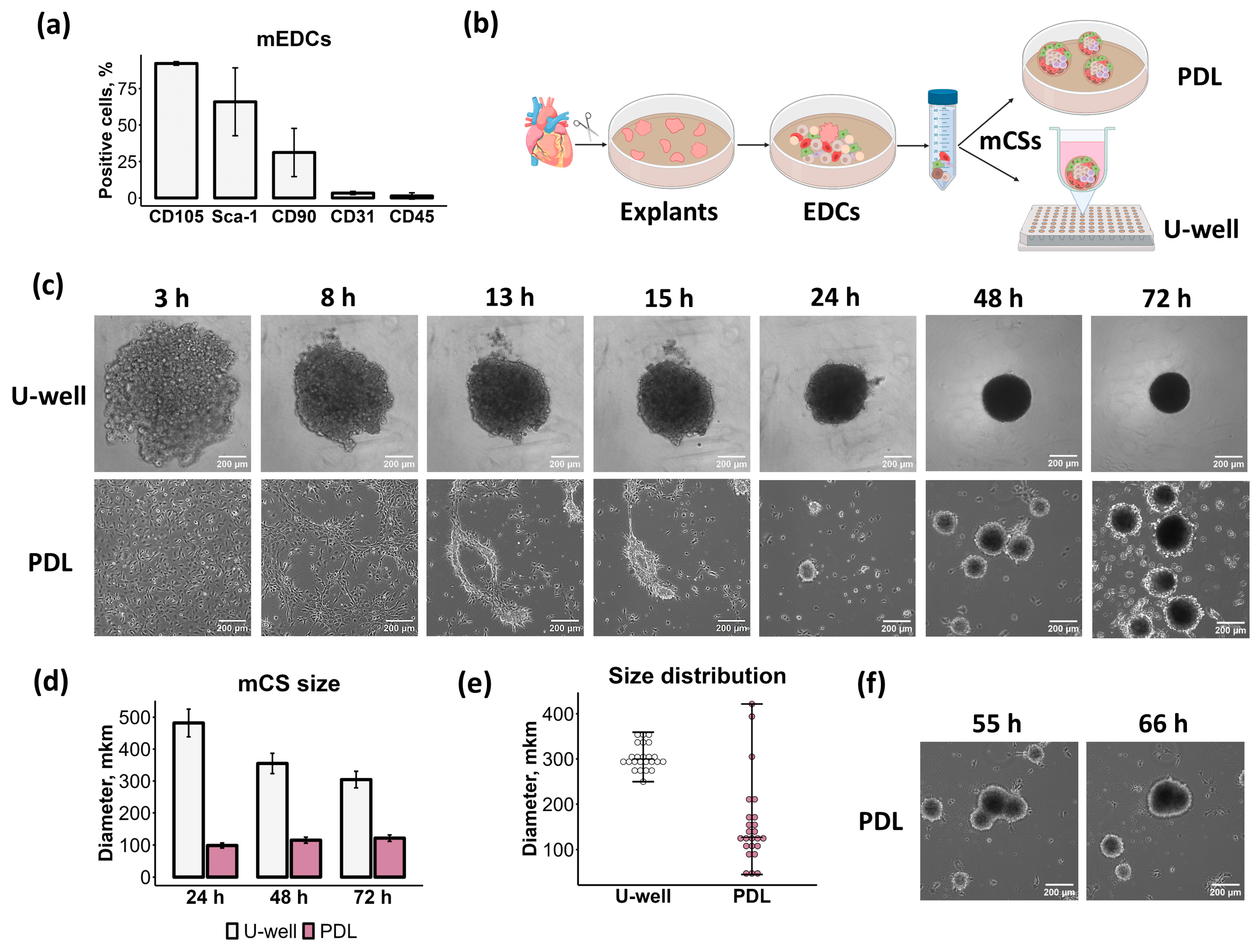
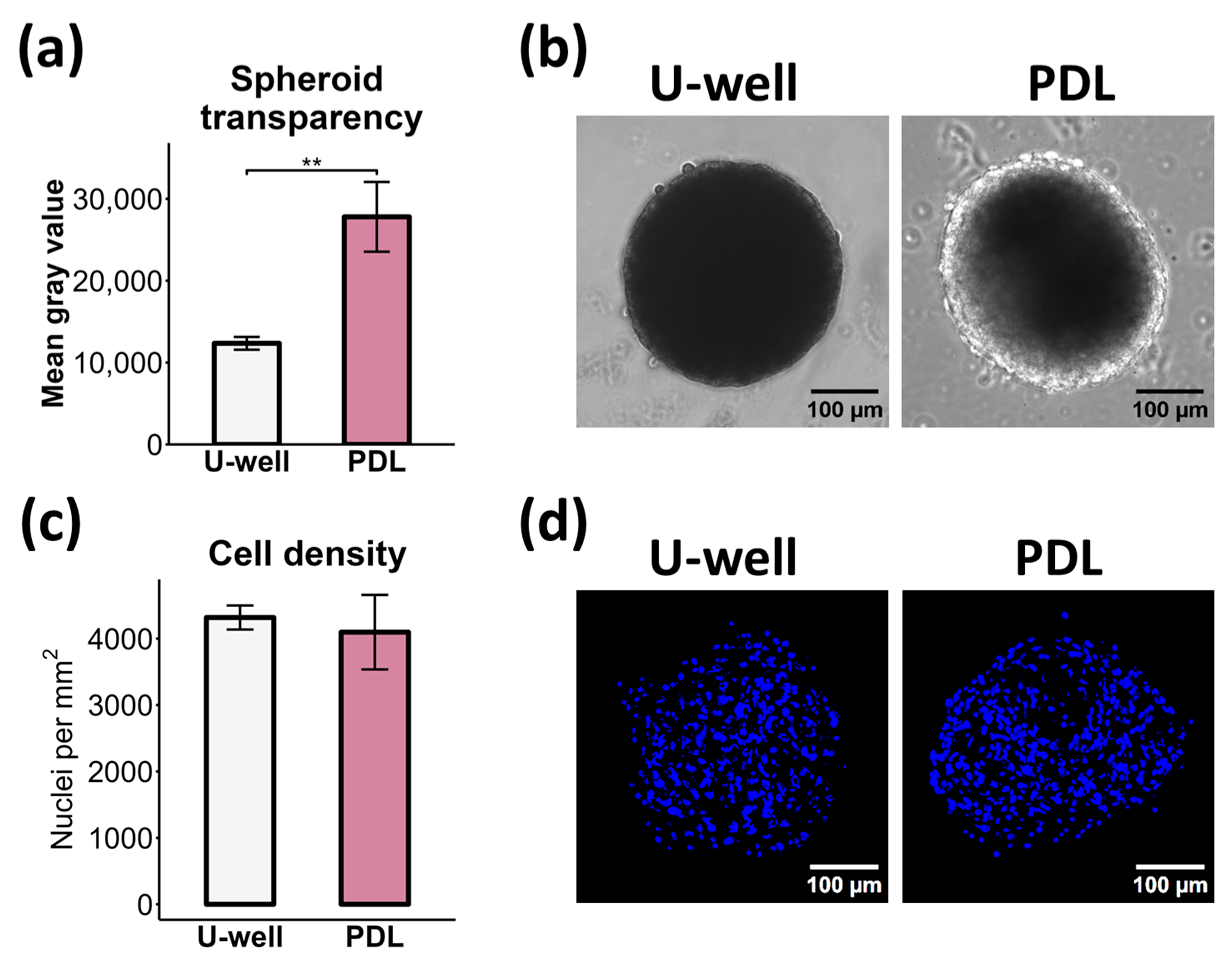
2.1. The Self-Assembly Process of CSs Demonstrates Distinct Differences Between ULA U-Well Plates and PDL-Coated Plates
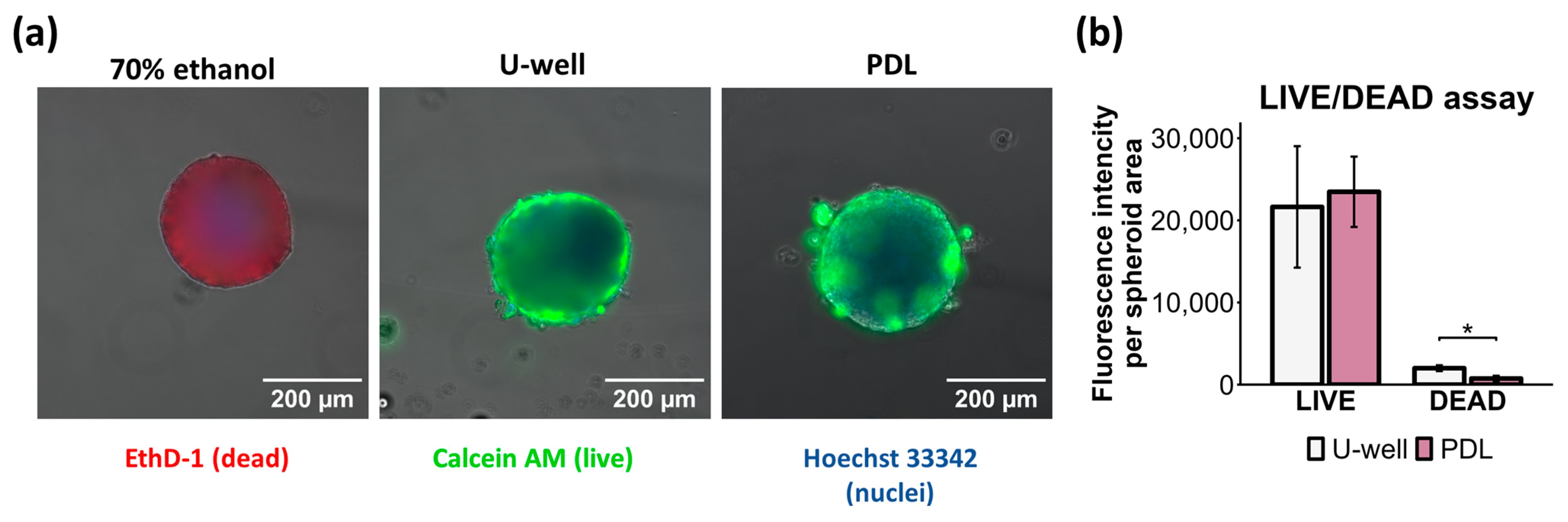
2.2. Spheroid Assembly Methods Based on ULA U-Well Plates and PDL-Coated Plates Do Not Affect Cell Viability
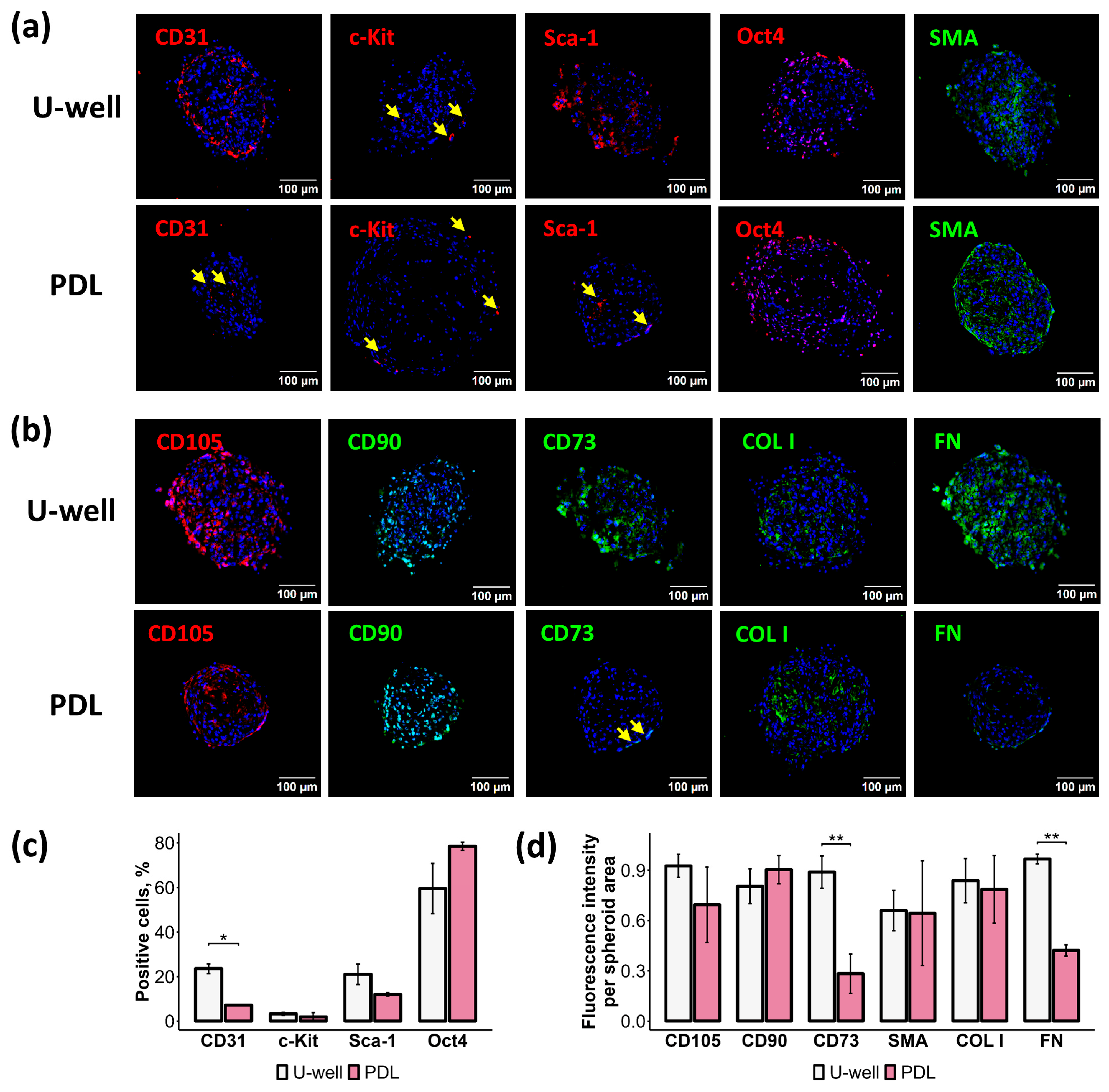
2.3. Spheroid Assembly Methods Affect Both the Cellular Composition and ECM Components
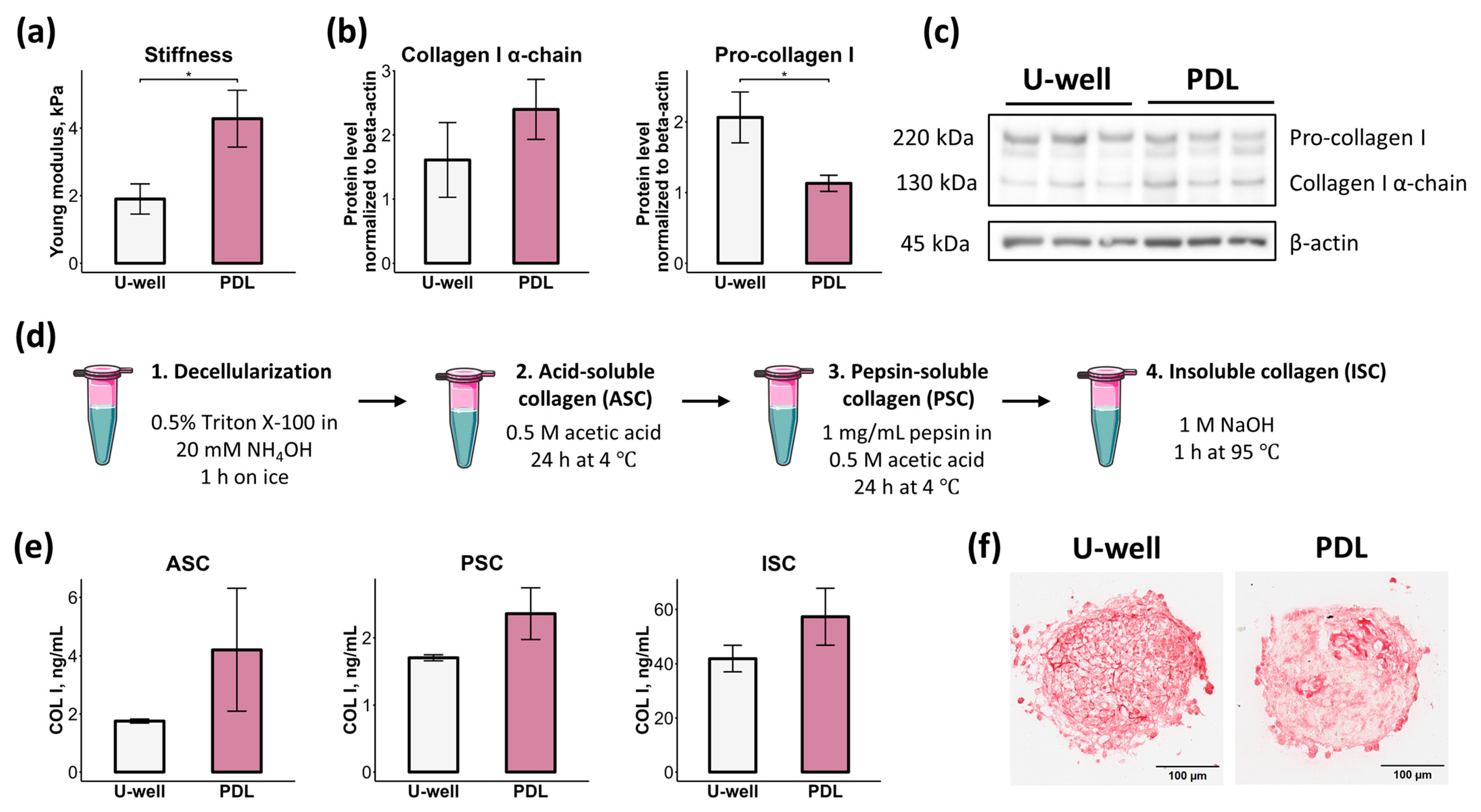
2.4. CSs Formed on PDL-Coated Plates Demonstrate Enhanced Stiffness Compared to U-Well Plates
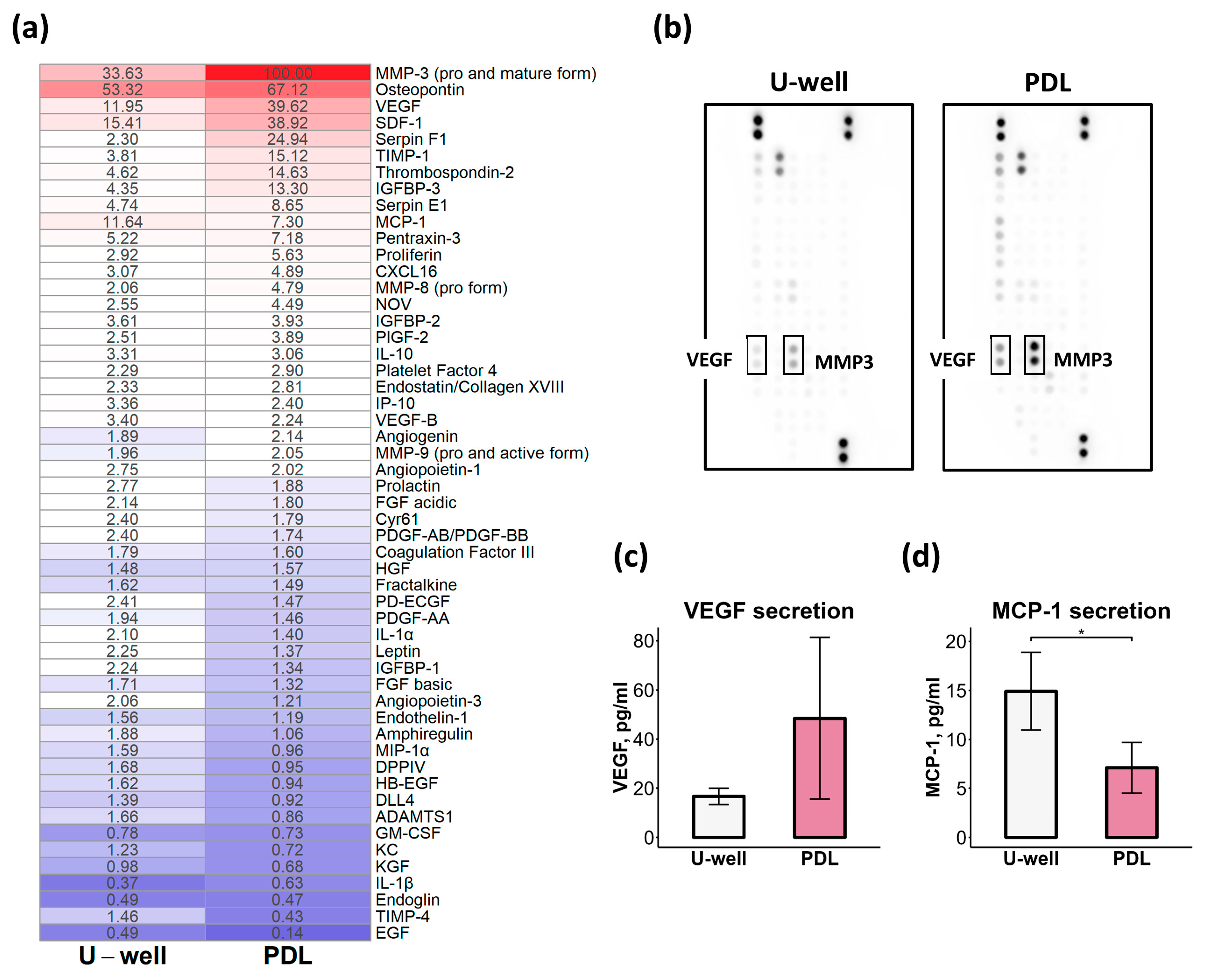
2.5. Spheroid-Forming Methods Significantly Influence the Secretome Profile of CSs
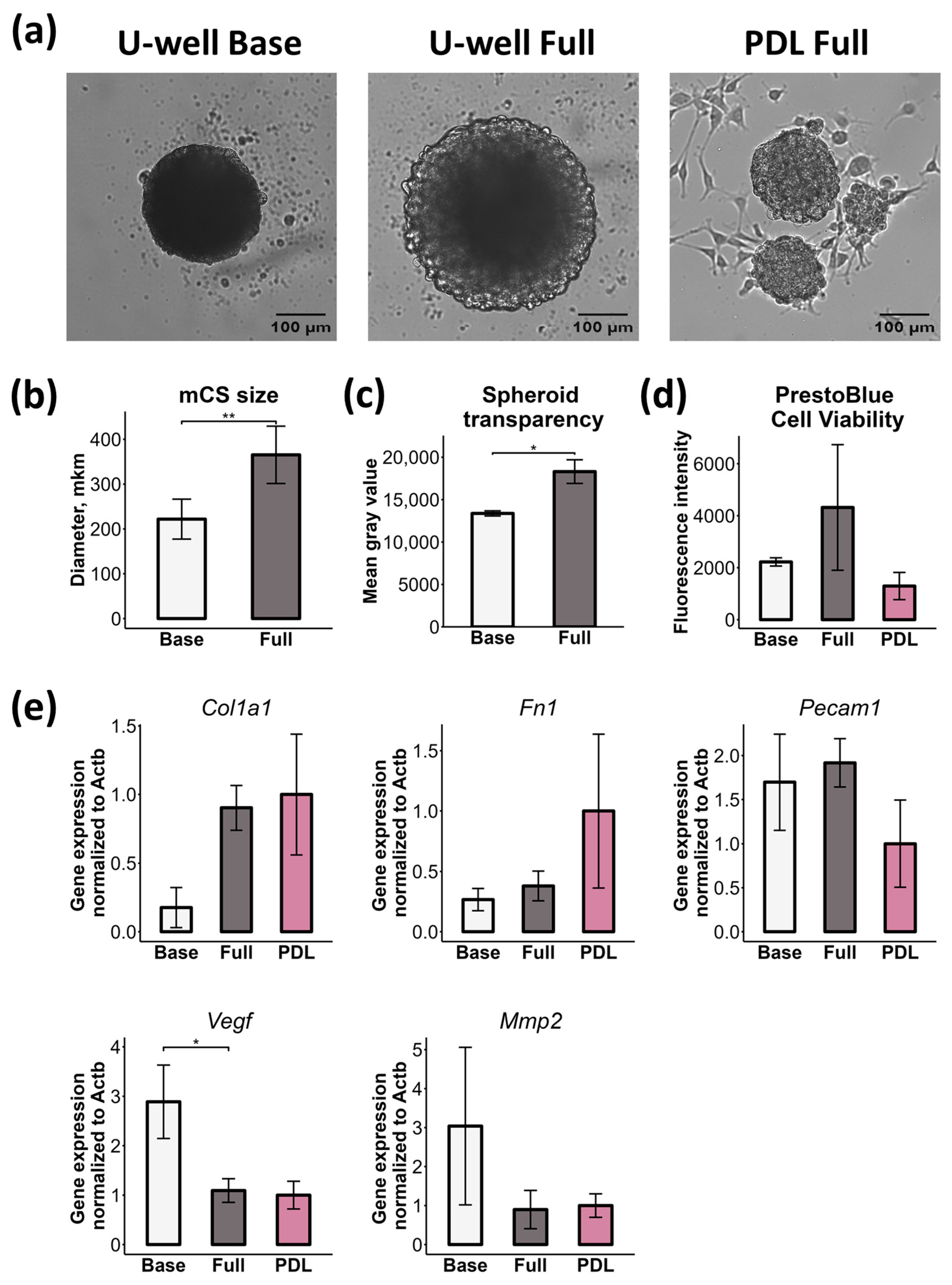
2.6. Both CS Culture Medium and Substrate Affect mCS Properties
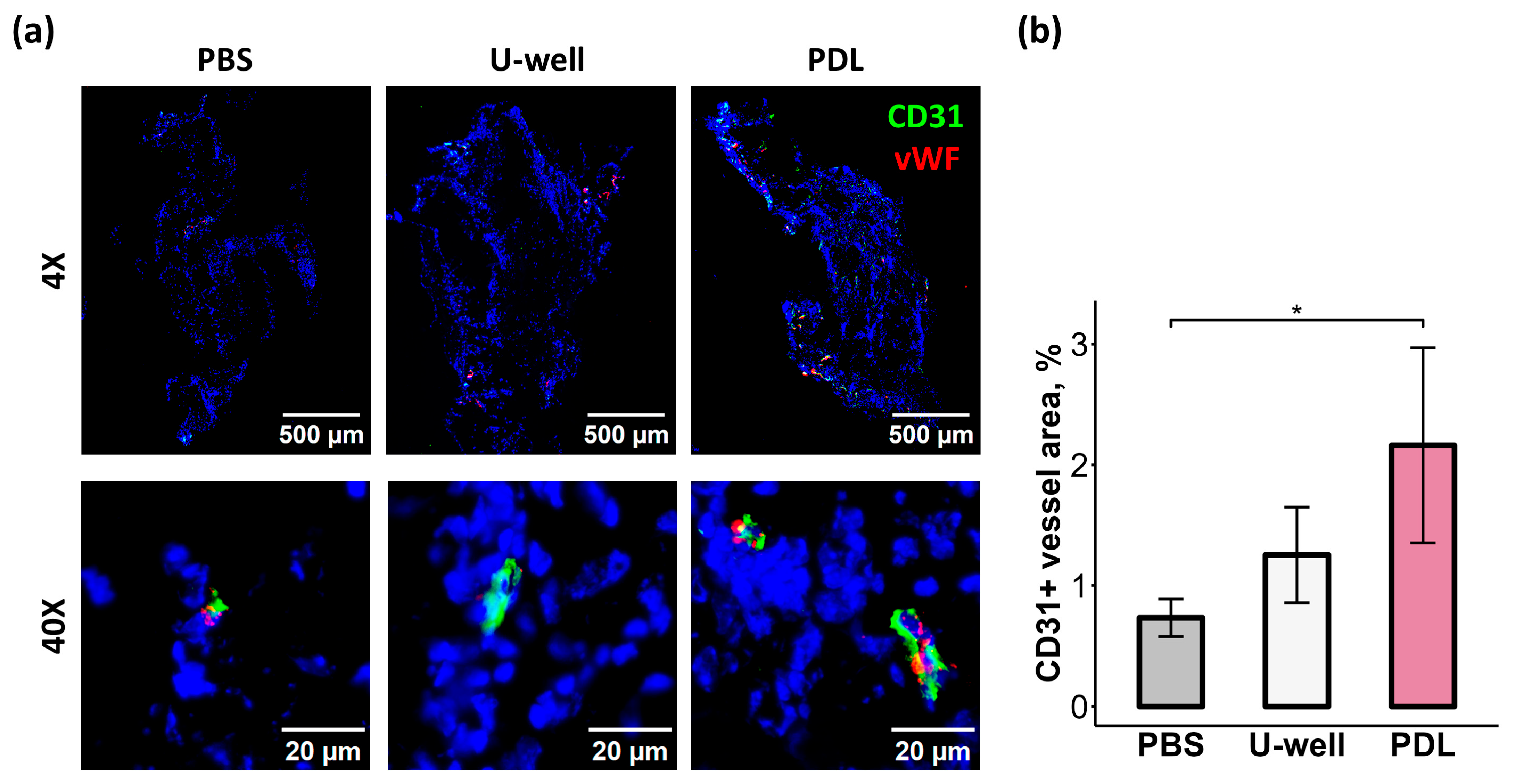
2.7. CSs Formed on PDL-Coated Plates Stimulate Angiogenesis After Transplantation In Vivo
3. Discussion
4. Materials and Methods
4.1. Animals
4.2. Culture of Explant-Derived Cells
4.3. Cardiosphere Formation
4.4. Flow Cytometry
4.5. mCS Viability Assay
4.6. Immunofluorescence Staining of Cryosections
4.7. Micro-Scale Parallel-Plate Compression Analysis of Spheroid Mechanical Properties
4.8. Western Blotting
4.9. Collagen Solubility Assay
4.10. Picro Sirius Red Staining
4.11. Collecting mCS Condition Mediums
4.12. Secretome Profiling
4.13. ELISA
4.14. RNA Isolation, Reverse Transcription, and Quantitative Real-Time PCR
4.15. Analyzing mCS Proangiogenic Properties In Vivo—Matrigel Plug Assay
4.16. Image Analysis
4.17. Statistical Analysis
5. Conclusions
Supplementary Materials
Author Contributions
Funding
Institutional Review Board Statement
Data Availability Statement
Conflicts of Interest
Abbreviations
| CSs | Cardiospheres |
| PDL | Poly-D-lysine |
| ULA | Ultra-low attachment |
| ECM | Extracellular matrix |
| EDCs | Explant-derived cells |
| CDCs | Cardiosphere-derived cells |
| ECs | Endothelial cells |
References
- Griffith, L.G.; Swartz, M.A. Capturing Complex 3D Tissue Physiology in Vitro. Nat. Rev. Mol. Cell Biol. 2006, 7, 211–224. [Google Scholar] [CrossRef]
- Lee, S.-Y.; Koo, I.-S.; Hwang, H.J.; Lee, D.W. In Vitro Three-Dimensional (3D) Cell Culture Tools for Spheroid and Organoid Models. SLAS Discov. 2023, 28, 119–137. [Google Scholar] [CrossRef] [PubMed]
- Vasilets, Y.D.; Dergilev, K.V.; Tsokolaeva, Z.I.; Parfenova, E.V. Culturing of Cardiac Cells in 3D Spheroids Modulates Their Expression Profile and Increases Secretion of Proangiogenic Growth Factors. Bull. Exp. Biol. Med. 2022, 173, 235–239. [Google Scholar] [CrossRef] [PubMed]
- Goltseva, Y.D.; Dergilev, K.V.; Boldyreva, M.A.; Parfyonova, E.V.; Beloglazova, I.B. TGFβ1 Regulates Cellular Composition of In Vitro Cardiac Perivascular Niche Based on Cardiospheres. Bull. Exp. Biol. Med. 2024, 177, 115–123. [Google Scholar] [CrossRef] [PubMed]
- Dergilev, K.V.; Guseva, A.V.; Tsokolaeva, Z.I.; Zubkova, E.S.; Goltseva, Y.D.; Beloglazova, I.B.; Men’shikov, M.Y.; Andreev, A.V.; Partigulov, S.A.; Lepilin, M.G.; et al. Secretome of Mesenchymal Stromal Cells of the Human Heart Cultured in the Form of Spheroids Is Enriched with Angiogenic Factors and Stimulates Angiogenesis in Vitro and in Vivo. Rus. Cardio. Bull. 2024, 19, 38. [Google Scholar] [CrossRef]
- Makkar, R.R.; Kereiakes, D.J.; Aguirre, F.; Kowalchuk, G.; Chakravarty, T.; Malliaras, K.; Francis, G.S.; Povsic, T.J.; Schatz, R.; Traverse, J.H.; et al. Intracoronary ALLogeneic Heart STem Cells to Achieve Myocardial Regeneration (ALLSTAR): A Randomized, Placebo-Controlled, Double-Blinded Trial. Eur. Heart J. 2020, 41, 3451–3458. [Google Scholar] [CrossRef]
- Cho, H.-J.; Lee, H.-J.; Chung, Y.-J.; Kim, J.-Y.; Cho, H.-J.; Yang, H.-M.; Kwon, Y.-W.; Lee, H.-Y.; Oh, B.-H.; Park, Y.-B.; et al. Generation of Human Secondary Cardiospheres as a Potent Cell Processing Strategy for Cell-Based Cardiac Repair. Biomaterials 2013, 34, 651–661. [Google Scholar] [CrossRef]
- Messina, E.; De Angelis, L.; Frati, G.; Morrone, S.; Chimenti, S.; Fiordaliso, F.; Salio, M.; Battaglia, M.; Latronico, M.V.G.; Coletta, M.; et al. Isolation and Expansion of Adult Cardiac Stem Cells From Human and Murine Heart. Circ. Res. 2004, 95, 911–921. [Google Scholar] [CrossRef]
- Li, T.-S.; Cheng, K.; Lee, S.-T.; Matsushita, S.; Davis, D.; Malliaras, K.; Zhang, Y.; Matsushita, N.; Smith, R.R.; Marbán, E. Cardiospheres Recapitulate a Niche-Like Microenvironment Rich in Stemness and Cell-Matrix Interactions, Rationalizing Their Enhanced Functional Potency for Myocardial Repair. Stem Cells 2010, 28, 2088–2098. [Google Scholar] [CrossRef]
- Dergilev, K.V.; Vasilets, I.D.; Tsokolaeva, Z.I.; Zubkova, E.S.; Parfenova, E.V. Perspectives of Cell Therapy for Myocardial Infarction and Heart Failure Based on Cardiosphere Cells. Ter. Arkhiv 2020, 92, 111–120. [Google Scholar] [CrossRef]
- Ostovaneh, M.R.; Makkar, R.R.; Ambale-Venkatesh, B.; Ascheim, D.; Chakravarty, T.; Henry, T.D.; Kowalchuk, G.; Aguirre, F.V.; Kereiakes, D.J.; Povsic, T.J.; et al. Effect of Cardiosphere-Derived Cells on Segmental Myocardial Function after Myocardial Infarction: ALLSTAR Randomised Clinical Trial. Open Heart 2021, 8, e001614. [Google Scholar] [CrossRef]
- Chakravarty, T.; Henry, T.D.; Kittleson, M.; Lima, J.; Siegel, R.J.; Slipczuk, L.; Pogoda, J.M.; Smith, R.R.; Malliaras, K.; Marbán, L.; et al. Allogeneic Cardiosphere-Derived Cells for the Treatment of Heart Failure with Reduced Ejection Fraction: The Dilated cardiomYopathy iNtervention with Allogeneic MyocardIally-Regenerative Cells (DYNAMIC) Trial. EuroIntervention 2020, 16, e293–e300. [Google Scholar] [CrossRef]
- Lewis, M.I.; Shapiro, S.; Oudiz, R.J.; Nakamura, M.; Geft, D.; Matusov, Y.; Hage, A.; Tapson, V.F.; Henry, T.D.; Azizad, P.; et al. The ALPHA Phase 1 Study: Pulmonary ArteriaL Hypertension Treated with CardiosPHere-Derived Allogeneic Stem Cells. eBioMedicine 2024, 100, 104900. [Google Scholar] [CrossRef] [PubMed]
- McDonald, C.M.; Marbán, E.; Hendrix, S.; Hogan, N.; Ruckdeschel Smith, R.; Eagle, M.; Finkel, R.S.; Tian, C.; Janas, J.; Harmelink, M.M.; et al. Repeated Intravenous Cardiosphere-Derived Cell Therapy in Late-Stage Duchenne Muscular Dystrophy (HOPE-2): A Multicentre, Randomised, Double-Blind, Placebo-Controlled, Phase 2 Trial. Lancet 2022, 399, 1049–1058. [Google Scholar] [CrossRef] [PubMed]
- Singh, S.; Chakravarty, T.; Chen, P.; Akhmerov, A.; Falk, J.; Friedman, O.; Zaman, T.; Ebinger, J.E.; Gheorghiu, M.; Marbán, L.; et al. Allogeneic Cardiosphere-Derived Cells (CAP-1002) in Critically Ill COVID-19 Patients: Compassionate-Use Case Series. Basic Res. Cardiol. 2020, 115, 36. [Google Scholar] [CrossRef] [PubMed]
- Chimenti, I.; Smith, R.R.; Li, T.-S.; Gerstenblith, G.; Messina, E.; Giacomello, A.; Marbán, E. Relative Roles of Direct Regeneration Versus Paracrine Effects of Human Cardiosphere-Derived Cells Transplanted Into Infarcted Mice. Circ. Res. 2010, 106, 971–980. [Google Scholar] [CrossRef]
- Hosoyama, T.; Samura, M.; Kudo, T.; Nishimoto, A.; Ueno, K.; Murata, T.; Ohama, T.; Sato, K.; Mikamo, A.; Yoshimura, K.; et al. Cardiosphere-Derived Cell Sheet Primed with Hypoxia Improves Left Ventricular Function of Chronically Infarcted Heart. Am. J. Transl. Res. 2015, 7, 2738–2751. [Google Scholar]
- Dergilev, K.; Zubkova, E.; Guseva, A.; Tsokolaeva, Z.; Goltseva, Y.; Beloglazova, I.; Ratner, E.; Andreev, A.; Partigulov, S.; Lepilin, M.; et al. Tumor Necrosis Factor-Alpha Induces Proangiogenic Profiling of Cardiosphere-Derived Cell Secretome and Increases Its Ability to Stimulate Angiogenic Properties of Endothelial Cells. Int. J. Mol. Sci. 2023, 24, 16575. [Google Scholar] [CrossRef]
- Zubkova, E.; Dergilev, K.; Beloglazova, I.; Kalinin, A.; Guseva, A.; Andreev, A.; Partigulov, S.; Lepilin, M.; Menshikov, M.; Parfyonova, Y. Paracrine Responses of Cardiosphere-Derived Cells to Cytokines and TLR Ligands: A Comparative Analysis. Int. J. Mol. Sci. 2023, 24, 17278. [Google Scholar] [CrossRef]
- Lee, H.-J.; Cho, H.-J.; Kwon, Y.-W.; Park, Y.-B.; Kim, H.-S. Phenotypic Modulation of Human Cardiospheres between Stemness and Paracrine Activity, and Implications for Combined Transplantation in Cardiovascular Regeneration. Biomaterials 2013, 34, 9819–9829. [Google Scholar] [CrossRef]
- Pagano, F.; Angelini, F.; Siciliano, C.; Tasciotti, J.; Mangino, G.; De Falco, E.; Carnevale, R.; Sciarretta, S.; Frati, G.; Chimenti, I. Beta2-Adrenergic Signaling Affects the Phenotype of Human Cardiac Progenitor Cells through EMT Modulation. Pharmacol. Res. 2018, 127, 41–48. [Google Scholar] [CrossRef] [PubMed]
- Ibrahim, A.G.E.; Li, C.; Rogers, R.; Fournier, M.; Li, L.; Vaturi, S.D.; Antes, T.; Sanchez, L.; Akhmerov, A.; Moseley, J.J.; et al. Augmenting Canonical Wnt Signalling in Therapeutically Inert Cells Converts Them into Therapeutically Potent Exosome Factories. Nat. Biomed. Eng. 2019, 3, 695–705. [Google Scholar] [CrossRef] [PubMed]
- Secco, I.; Barile, L.; Torrini, C.; Zentilin, L.; Vassalli, G.; Giacca, M.; Collesi, C. Notch Pathway Activation Enhances Cardiosphere in Vitro Expansion. J. Cell. Mol. Med. 2018, 22, 5583–5595. [Google Scholar] [CrossRef] [PubMed]
- Gallet, R.; De Couto, G.; Simsolo, E.; Valle, J.; Sun, B.; Liu, W.; Tseliou, E.; Zile, M.R.; Marbán, E. Cardiosphere-Derived Cells Reverse Heart Failure With Preserved Ejection Fraction in Rats by Decreasing Fibrosis and Inflammation. JACC Basic Transl. Sci. 2016, 1, 14–28. [Google Scholar] [CrossRef]
- Ishigami, S.; Ohtsuki, S.; Tarui, S.; Ousaka, D.; Eitoku, T.; Kondo, M.; Okuyama, M.; Kobayashi, J.; Baba, K.; Arai, S.; et al. Intracoronary Autologous Cardiac Progenitor Cell Transfer in Patients With Hypoplastic Left Heart Syndrome: The TICAP Prospective Phase 1 Controlled Trial. Circ. Res. 2015, 116, 653–664. [Google Scholar] [CrossRef]
- Vinci, M.; Gowan, S.; Boxall, F.; Patterson, L.; Zimmermann, M.; Court, W.; Lomas, C.; Mendiola, M.; Hardisson, D.; Eccles, S.A. Advances in Establishment and Analysis of Three-Dimensional Tumor Spheroid-Based Functional Assays for Target Validation and Drug Evaluation. BMC Biol. 2012, 10, 29. [Google Scholar] [CrossRef]
- Pitaktong, I.; Lui, C.; Lowenthal, J.; Mattson, G.; Jung, W.-H.; Bai, Y.; Yeung, E.; Ong, C.S.; Chen, Y.; Gerecht, S.; et al. Early Vascular Cells Improve Microvascularization Within 3D Cardiac Spheroids. Tissue Eng. Part C Methods 2020, 26, 80–90. [Google Scholar] [CrossRef]
- Fan, S.; Xiao, G.; Ni, J.; Zhao, Y.; Du, H.; Liang, Y.; Lv, M.; He, S.; Fan, G.; Zhu, Y. Guanxinning Injection Ameliorates Cardiac Remodeling in HF Mouse and 3D Heart Spheroid Models via P38/FOS/MMP1-Mediated Inhibition of Myocardial Hypertrophy and Fibrosis. Biomed. Pharmacother. 2023, 162, 114642. [Google Scholar] [CrossRef]
- Barile, L.; Gherghiceanu, M.; Popescu, L.M.; Moccetti, T.; Vassalli, G. Human Cardiospheres as a Source of Multipotent Stem and Progenitor Cells. Stem Cells Int. 2013, 2013, 916837. [Google Scholar] [CrossRef]
- Malliaras, K.; Li, T.-S.; Luthringer, D.; Terrovitis, J.; Cheng, K.; Chakravarty, T.; Galang, G.; Zhang, Y.; Schoenhoff, F.; Van Eyk, J.; et al. Safety and Efficacy of Allogeneic Cell Therapy in Infarcted Rats Transplanted With Mismatched Cardiosphere-Derived Cells. Circulation 2012, 125, 100–112. [Google Scholar] [CrossRef]
- Davis, D.R.; Zhang, Y.; Smith, R.R.; Cheng, K.; Terrovitis, J.; Malliaras, K.; Li, T.-S.; White, A.; Makkar, R.; Marbán, E. Validation of the Cardiosphere Method to Culture Cardiac Progenitor Cells from Myocardial Tissue. PLoS ONE 2009, 4, e7195. [Google Scholar] [CrossRef] [PubMed]
- Islam, S.; Parker, J.; Dash, B.C.; Hsia, H.C. Human iPSC–Vascular Smooth Muscle Cell Spheroids Demonstrate Size-dependent Alterations in Cellular Viability and Secretory Function. J. Biomed. Mater. Res. 2022, 110, 1813–1823. [Google Scholar] [CrossRef] [PubMed]
- Tan, Y.; Richards, D.; Coyle, R.C.; Yao, J.; Xu, R.; Gou, W.; Wang, H.; Menick, D.R.; Tian, B.; Mei, Y. Cell Number per Spheroid and Electrical Conductivity of Nanowires Influence the Function of Silicon Nanowired Human Cardiac Spheroids. Acta Biomater. 2017, 51, 495–504. [Google Scholar] [CrossRef] [PubMed]
- Mukomoto, R.; Nashimoto, Y.; Terai, T.; Imaizumi, T.; Hiramoto, K.; Ino, K.; Yokokawa, R.; Miura, T.; Shiku, H. Oxygen Consumption Rate of Tumour Spheroids during Necrotic-like Core Formation. Analyst 2020, 145, 6342–6348. [Google Scholar] [CrossRef]
- Paz-Artigas, L.; González-Lana, S.; Polo, N.; Vicente, P.; Montero-Calle, P.; Martínez, M.A.; Rábago, G.; Serra, M.; Prósper, F.; Mazo, M.M.; et al. Generation of Self-Induced Myocardial Ischemia in Large-Sized Cardiac Spheroids without Alteration of Environmental Conditions Recreates Fibrotic Remodeling and Tissue Stiffening Revealed by Constriction Assays. ACS Biomater. Sci. Eng. 2024, 10, 987–997. [Google Scholar] [CrossRef]
- Wearn, J.T. With the Technical Assistance of Louise J. Zschiesche. The Extent of the Capillary Bed of the Heart. J. Exp. Med. 1928, 47, 273–290. [Google Scholar] [CrossRef]
- Zhou, P.; Yu, S.; Zhang, H.; Wang, Y.; Tao, P.; Tan, Y.; Wang, H. C-kit+VEGFR-2+ Mesenchymal Stem Cells Differentiate into Cardiovascular Cells and Repair Infarcted Myocardium after Transplantation. Stem Cell Rev. Rep. 2023, 19, 230–247. [Google Scholar] [CrossRef]
- Tang, J.; Zhu, H.; Liu, S.; Wang, H.; Huang, X.; Yan, Y.; Wang, L.; Zhou, B. Sca1 Marks a Reserve Endothelial Progenitor Population That Preferentially Expand after Injury. Cell Discov. 2021, 7, 88. [Google Scholar] [CrossRef]
- Shi, G.; Jin, Y. Role of Oct4 in Maintaining and Regaining Stem Cell Pluripotency. Stem Cell Res. Ther. 2010, 1, 39. [Google Scholar] [CrossRef]
- Cai, G.; Li, X.; Lin, S.-S.; Chen, S.J.; Rodgers, N.C.; Koning, K.M.; Bi, D.; Liu, A.P. Matrix Confinement Modulates 3D Spheroid Sorting and Burst-like Collective Migration. Acta Biomater. 2024, 179, 192–206. [Google Scholar] [CrossRef]
- Kliewe, F.; Kaling, S.; Lötzsch, H.; Artelt, N.; Schindler, M.; Rogge, H.; Schröder, S.; Scharf, C.; Amann, K.; Daniel, C.; et al. Fibronectin Is Up-regulated in Podocytes by Mechanical Stress. FASEB J. 2019, 33, 14450–14460. [Google Scholar] [CrossRef]
- Ceccato, T.L.; Starbuck, R.B.; Hall, J.K.; Walker, C.J.; Brown, T.E.; Killgore, J.P.; Anseth, K.S.; Leinwand, L.A. Defining the Cardiac Fibroblast Secretome in a Fibrotic Microenvironment. J. Am. Heart Assoc. 2020, 9, e017025. [Google Scholar] [CrossRef]
- Miroshnikova, Y.A.; Jorgens, D.M.; Spirio, L.; Auer, M.; Sarang-Sieminski, A.L.; Weaver, V.M. Engineering Strategies to Recapitulate Epithelial Morphogenesis within Synthetic Three-Dimensional Extracellular Matrix with Tunable Mechanical Properties. Phys. Biol. 2011, 8, 026013. [Google Scholar] [CrossRef] [PubMed]
- Alfano, M.; Locatelli, I.; D’Arrigo, C.; Mora, M.; Vozzi, G.; De Acutis, A.; Pece, R.; Tavella, S.; Costa, D.; Poggi, A.; et al. Lysyl-Oxidase Dependent Extracellular Matrix Stiffness in Hodgkin Lymphomas: Mechanical and Topographical Evidence. Cancers 2022, 14, 259. [Google Scholar] [CrossRef] [PubMed]
- Rosell-Garcia, T.; Rodriguez-Pascual, F. Enhancement of Collagen Deposition and Cross-Linking by Coupling Lysyl Oxidase with Bone Morphogenetic Protein-1 and Its Application in Tissue Engineering. Sci. Rep. 2018, 8, 10780. [Google Scholar] [CrossRef] [PubMed]
- Ware, M.J.; Colbert, K.; Keshishian, V.; Ho, J.; Corr, S.J.; Curley, S.A.; Godin, B. Generation of Homogenous Three-Dimensional Pancreatic Cancer Cell Spheroids Using an Improved Hanging Drop Technique. Tissue Eng. Part C Methods 2016, 22, 312–321. [Google Scholar] [CrossRef]
- Gonzalez-Fernandez, T.; Tenorio, A.J.; Saiz, A.M., Jr.; Leach, J.K. Engineered Cell-Secreted Extracellular Matrix Modulates Cell Spheroid Mechanosensing and Amplifies Their Response to Inductive Cues for the Formation of Mineralized Tissues. Adv. Healthc. Mater. 2022, 11, 2102337. [Google Scholar] [CrossRef]
- Vahala, D.; Amos, S.E.; Sacchi, M.; Soliman, B.G.; Hepburn, M.S.; Mowla, A.; Li, J.; Jeong, J.H.; Astell, C.; Hwang, Y.; et al. 3D Volumetric Mechanosensation of MCF7 Breast Cancer Spheroids in a Linear Stiffness Gradient GelAGE. Adv. Healthc. Mater. 2023, 12, e2301506. [Google Scholar] [CrossRef]
- Salmenperä, P.; Kankuri, E.; Bizik, J.; Sirén, V.; Virtanen, I.; Takahashi, S.; Leiss, M.; Fässler, R.; Vaheri, A. Formation and Activation of Fibroblast Spheroids Depend on Fibronectin–Integrin Interaction. Exp. Cell Res. 2008, 314, 3444–3452. [Google Scholar] [CrossRef]
- Beloglazova, I.; Stepanova, V.; Zubkova, E.; Dergilev, K.; Koptelova, N.; Tyurin-Kuzmin, P.A.; Dyikanov, D.; Plekhanova, O.; Cines, D.B.; Mazar, A.P.; et al. Mesenchymal Stromal Cells Enhance Self-Assembly of a HUVEC Tubular Network through uPA-uPAR/VEGFR2/Integrin/NOTCH Crosstalk. Biochim. Biophys. Acta (BBA)-Mol. Cell Res. 2022, 1869, 119157. [Google Scholar] [CrossRef]
- Garoffolo, G.; Casaburo, M.; Amadeo, F.; Salvi, M.; Bernava, G.; Piacentini, L.; Chimenti, I.; Zaccagnini, G.; Milcovich, G.; Zuccolo, E.; et al. Reduction of Cardiac Fibrosis by Interference With YAP-Dependent Transactivation. Circ. Res. 2022, 131, 239–257. [Google Scholar] [CrossRef]
- Li, T.-S.; Cheng, K.; Malliaras, K.; Smith, R.R.; Zhang, Y.; Sun, B.; Matsushita, N.; Blusztajn, A.; Terrovitis, J.; Kusuoka, H.; et al. Direct Comparison of Different Stem Cell Types and Subpopulations Reveals Superior Paracrine Potency and Myocardial Repair Efficacy With Cardiosphere-Derived Cells. J. Am. Coll. Cardiol. 2012, 59, 942–953. [Google Scholar] [CrossRef]
- Walravens, A.-S.; Smolgovsky, S.; Li, L.; Kelly, L.; Antes, T.; Peck, K.; Quon, T.; Ibrahim, A.; Marbán, E.; Berman, B.; et al. Mechanistic and Therapeutic Distinctions between Cardiosphere-Derived Cell and Mesenchymal Stem Cell Extracellular Vesicle Non-Coding RNA. Sci. Rep. 2021, 11, 8666. [Google Scholar] [CrossRef] [PubMed]
- Chimenti, I.; Gaetani, R.; Barile, L.; Forte, E.; Ionta, V.; Angelini, F.; Frati, G.; Messina, E.; Giacomello, A. Isolation and Expansion of Adult Cardiac Stem/Progenitor Cells in the Form of Cardiospheres from Human Cardiac Biopsies and Murine Hearts. Methods Mol. Biol. 2012, 879, 327–338. [Google Scholar] [PubMed]
- Chimenti, I.; Gaetani, R.; Forte, E.; Angelini, F.; De Falco, E.; Zoccai, G.B.; Messina, E.; Frati, G.; Giacomello, A. Serum and Supplement Optimization for EU GMP-compliance in Cardiospheres Cell Culture. J. Cell. Mol. Med. 2014, 18, 624–634. [Google Scholar] [CrossRef] [PubMed]
- Cho, Y.; Yu, S.J.; Kim, J.; Ko, U.H.; Park, E.Y.; Choung, J.S.; Choi, G.; Kim, D.; Lee, E.; Im, S.G.; et al. Remodeling of Adhesion Network within Cancer Spheroids via Cell–Polymer Interaction. ACS Biomater. Sci. Eng. 2020, 6, 5632–5644. [Google Scholar] [CrossRef]
- Zeng, D.; Ou, D.-B.; Wei, T.; Ding, L.; Liu, X.-T.; Hu, X.-L.; Li, X.; Zheng, Q.-S. Collagen/β(1) Integrin Interaction Is Required for Embryoid Body Formation during Cardiogenesis from Murine Induced Pluripotent Stem Cells. BMC Cell Biol. 2013, 14, 5. [Google Scholar] [CrossRef]
- Cho, H.-J.; Lee, H.-J.; Youn, S.-W.; Koh, S.-J.; Won, J.-Y.; Chung, Y.-J.; Cho, H.-J.; Yoon, C.-H.; Lee, S.-W.; Lee, E.J.; et al. Secondary Sphere Formation Enhances the Functionality of Cardiac Progenitor Cells. Mol. Ther. 2012, 20, 1750–1766. [Google Scholar] [CrossRef]
- Zhu, T.; Hu, Y.; Cui, H.; Cui, H. 3D Multispheroid Assembly Strategies towards Tissue Engineering and Disease Modeling. Adv. Healthc. Mater. 2024, 13, e2400957. [Google Scholar] [CrossRef]
- Gorkun, A.A.; Revokatova, D.P.; Zurina, I.M.; Nikishin, D.A.; Bikmulina, P.Y.; Timashev, P.S.; Shpichka, A.I.; Kosheleva, N.V.; Kolokoltsova, T.D.; Saburina, I.N. The Duo of Osteogenic and Angiogenic Differentiation in ADSC-Derived Spheroids. Front. Cell Dev. Biol. 2021, 9, 572727. [Google Scholar] [CrossRef]
- Rovere, M.; Reverberi, D.; Arnaldi, P.; Palamà, M.E.F.; Gentili, C. Spheroid Size Influences Cellular Senescence and Angiogenic Potential of Mesenchymal Stromal Cell-Derived Soluble Factors and Extracellular Vesicles. Front. Bioeng. Biotechnol. 2023, 11, 1297644. [Google Scholar] [CrossRef]
- Deynoux, M.; Sunter, N.; Ducrocq, E.; Dakik, H.; Guibon, R.; Burlaud-Gaillard, J.; Brisson, L.; Rouleux-Bonnin, F.; Le Nail, L.-R.; Hérault, O.; et al. A Comparative Study of the Capacity of Mesenchymal Stromal Cell Lines to Form Spheroids. PLoS ONE 2020, 15, e0225485. [Google Scholar] [CrossRef]
- Skiles, M.L.; Sahai, S.; Rucker, L.; Blanchette, J.O. Use of Culture Geometry to Control Hypoxia-Induced Vascular Endothelial Growth Factor Secretion from Adipose-Derived Stem Cells: Optimizing a Cell-Based Approach to Drive Vascular Growth. Tissue Eng. Part A 2013, 19, 2330–2338. [Google Scholar] [CrossRef] [PubMed]
- Tsukamoto, Y.; Mano, T.; Sakata, Y.; Ohtani, T.; Takeda, Y.; Tamaki, S.; Omori, Y.; Ikeya, Y.; Saito, Y.; Ishii, R.; et al. A Novel Heart Failure Mice Model of Hypertensive Heart Disease by Angiotensin II Infusion, Nephrectomy, and Salt Loading. Am. J. Physiol. Heart Circ. Physiol. 2013, 305, H1658–H1667. [Google Scholar] [CrossRef] [PubMed]
- Muslov, S.A.; Lotkov, A.I.; Arutyunov, S.D.; Albakova, T.M. Calculation of the Parameters of Mechanical Properties of the Heart Muscle. Inorg. Mater. Appl. Res. 2021, 12, 433–440. [Google Scholar] [CrossRef]
- Van Spreeuwel, A.C.C.; Bax, N.A.M.; Van Nierop, B.J.; Aartsma-Rus, A.; Goumans, M.-J.T.H.; Bouten, C.V.C. Mimicking Cardiac Fibrosis in a Dish: Fibroblast Density Rather than Collagen Density Weakens Cardiomyocyte Function. J. Cardiovasc. Trans. Res. 2017, 10, 116–127. [Google Scholar] [CrossRef][Green Version]
- Yu, Y.; Leng, Y.; Song, X.; Mu, J.; Ma, L.; Yin, L.; Zheng, Y.; Lu, Y.; Li, Y.; Qiu, X.; et al. Extracellular Matrix Stiffness Regulates Microvascular Stability by Controlling Endothelial Paracrine Signaling to Determine Pericyte Fate. Arterioscler. Thromb. Vasc. Biol. 2023, 43, 1887–1899. [Google Scholar] [CrossRef]
- Reese, S.P.; Underwood, C.J.; Weiss, J.A. Effects of Decorin Proteoglycan on Fibrillogenesis, Ultrastructure, and Mechanics of Type I Collagen Gels. Matrix Biol. 2013, 32, 414–423. [Google Scholar] [CrossRef]
- Reddy, G.K.; Stehno-Bittel, L.; Enwemeka, C.S. Glycation-Induced Matrix Stability in the Rabbit Achilles Tendon. Arch. Biochem. Biophys. 2002, 399, 174–180. [Google Scholar] [CrossRef]
- Han, Y.L.; Ronceray, P.; Xu, G.; Malandrino, A.; Kamm, R.D.; Lenz, M.; Broedersz, C.P.; Guo, M. Cell Contraction Induces Long-Ranged Stress Stiffening in the Extracellular Matrix. Proc. Natl. Acad. Sci. USA 2018, 115, 4075–4080. [Google Scholar] [CrossRef]
- Raghavan, S.; Mehta, P.; Horst, E.N.; Ward, M.R.; Rowley, K.R.; Mehta, G. Comparative Analysis of Tumor Spheroid Generation Techniques for Differential in Vitro Drug Toxicity. Oncotarget 2016, 7, 16948–16961. [Google Scholar] [CrossRef] [PubMed]
- Pezzoli, D.; Di Paolo, J.; Kumra, H.; Fois, G.; Candiani, G.; Reinhardt, D.P.; Mantovani, D. Fibronectin Promotes Elastin Deposition, Elasticity and Mechanical Strength in Cellularised Collagen-Based Scaffolds. Biomaterials 2018, 180, 130–142. [Google Scholar] [CrossRef] [PubMed]
- Astrof, S.; Hynes, R.O. Fibronectins in Vascular Morphogenesis. Angiogenesis 2009, 12, 165–175. [Google Scholar] [CrossRef] [PubMed]
- Lee, M.; Kim, Y.; Yu, S.J.; Lee, S.Y.; Son, J.G.; Lee, T.G.; Cho, Y.; Shin, J.H.; Lee, E.; Im, S.G. Surface Hydrophobicity Modulates the Key Characteristics of Cancer Spheroids through the Interaction with the Adsorbed Proteins. Adv. Funct. Mater. 2021, 31, 2100775. [Google Scholar] [CrossRef]
- Gencoglu, M.F.; Barney, L.E.; Hall, C.L.; Brooks, E.A.; Schwartz, A.D.; Corbett, D.C.; Stevens, K.R.; Peyton, S.R. Comparative Study of Multicellular Tumor Spheroid Formation Methods and Implications for Drug Screening. ACS Biomater. Sci. Eng. 2018, 4, 410–420. [Google Scholar] [CrossRef]
- Dean, D.C.; Newby, R.F.; Bourgeois, S. Regulation of Fibronectin Biosynthesis by Dexamethasone, Transforming Growth Factor Beta, and cAMP in Human Cell Lines. J. Cell Biol. 1988, 106, 2159–2170. [Google Scholar] [CrossRef]
- Masi, I.; Ottavi, F.; Caprara, V.; Rio, D.D.; Kunkl, M.; Spadaro, F.; Licursi, V.; Tuosto, L.; Bagnato, A.; Rosano’, L. The Extracellular Matrix Protein Type I Collagen and Fibronectin Are Regulated by β-Arrestin-1/Endothelin Axis in Human Ovarian Fibroblasts. J. Exp. Clin. Cancer Res. 2025, 44, 64. [Google Scholar] [CrossRef]
- Dhanani, K.C.H.; Samson, W.J.; Edkins, A.L. Fibronectin Is a Stress Responsive Gene Regulated by HSF1 in Response to Geldanamycin. Sci. Rep. 2017, 7, 17617. [Google Scholar] [CrossRef]
- Zhang, D.; Shao, S.; Shuai, H.; Ding, Y.; Shi, W.; Wang, D.; Yu, X. SDF-1α Reduces Fibronectin Expression in Rat Mesangial Cells Induced by TGF-Β1 and High Glucose through PI3K/Akt Pathway. Exp. Cell Res. 2013, 319, 1796–1803. [Google Scholar] [CrossRef]
- Warmt, E.; Grosser, S.; Blauth, E.; Xie, X.; Kubitschke, H.; Stange, R.; Sauer, F.; Schnauß, J.; Tomm, J.M.; Von Bergen, M.; et al. Differences in Cortical Contractile Properties between Healthy Epithelial and Cancerous Mesenchymal Breast Cells. New J. Phys. 2021, 23, 103020. [Google Scholar] [CrossRef]
- Minor, M.; Alcedo, K.P.; Battaglia, R.A.; Snider, N.T. Cell Type- and Tissue-Specific Functions of Ecto-5′-Nucleotidase (CD73). Am. J. Physiol. Cell Physiol. 2019, 317, C1079–C1092. [Google Scholar] [CrossRef]
- Quast, C.; Alter, C.; Ding, Z.; Borg, N.; Schrader, J. Adenosine Formed by CD73 on T Cells Inhibits Cardiac Inflammation and Fibrosis and Preserves Contractile Function in Transverse Aortic Constriction–Induced Heart Failure. Circ. Heart Fail. 2017, 10, e003346. [Google Scholar] [CrossRef] [PubMed]
- Zernecke, A.; Bidzhekov, K.; Özüyaman, B.; Fraemohs, L.; Liehn, E.A.; Lüscher-Firzlaff, J.M.; Lüscher, B.; Schrader, J.; Weber, C. CD73/Ecto-5′-Nucleotidase Protects Against Vascular Inflammation and Neointima Formation. Circulation 2006, 113, 2120–2127. [Google Scholar] [CrossRef] [PubMed]
- Hisamatsu, D.; Itakura, N.; Mabuchi, Y.; Ozaki, R.; Suto, E.G.; Naraoka, Y.; Ikeda, A.; Ito, L.; Akazawa, C. CD73-Positive Cell Spheroid Transplantation Attenuates Colonic Atrophy. Pharmaceutics 2023, 15, 845. [Google Scholar] [CrossRef] [PubMed]
- Goloviznina, N.A.; Xie, N.; Dandapat, A.; Iaizzo, P.A.; Kyba, M. Prospective Isolation of Human Fibroadipogenic Progenitors with CD73. Heliyon 2020, 6, e04503. [Google Scholar] [CrossRef]
- Synnestvedt, K.; Furuta, G.T.; Comerford, K.M.; Louis, N.; Karhausen, J.; Eltzschig, H.K.; Hansen, K.R.; Thompson, L.F.; Colgan, S.P. Ecto-5′-Nucleotidase (CD73) Regulation by Hypoxia-Inducible Factor-1 Mediates Permeability Changes in Intestinal Epithelia. J. Clin. Investig. 2002, 110, 993–1002. [Google Scholar] [CrossRef][Green Version]
- Kahn-Krell, A.; Pretorius, D.; Guragain, B.; Lou, X.; Wei, Y.; Zhang, J.; Qiao, A.; Nakada, Y.; Kamp, T.J.; Ye, L.; et al. A Three-Dimensional Culture System for Generating Cardiac Spheroids Composed of Cardiomyocytes, Endothelial Cells, Smooth-Muscle Cells, and Cardiac Fibroblasts Derived from Human Induced-Pluripotent Stem Cells. Front. Bioeng. Biotechnol. 2022, 10, 908848. [Google Scholar] [CrossRef]
- Daly, A.C.; Davidson, M.D.; Burdick, J.A. 3D Bioprinting of High Cell-Density Heterogeneous Tissue Models through Spheroid Fusion within Self-Healing Hydrogels. Nat. Commun. 2021, 12, 753. [Google Scholar] [CrossRef]
- Chimenti, I.; Pagano, F.; Cavarretta, E.; Angelini, F.; Peruzzi, M.; Barretta, A.; Greco, E.; De Falco, E.; Marullo, A.G.M.; Sciarretta, S.; et al. Β-Blockers Treatment of Cardiac Surgery Patients Enhances Isolation and Improves Phenotype of Cardiosphere-Derived Cells. Sci. Rep. 2016, 6, 36774. [Google Scholar] [CrossRef]
- Ayan, B.; Heo, D.N.; Zhang, Z.; Dey, M.; Povilianskas, A.; Drapaca, C.; Ozbolat, I.T. Aspiration-Assisted Bioprinting for Precise Positioning of Biologics. Sci. Adv. 2020, 6, eaaw5111. [Google Scholar] [CrossRef]
- Lu, C.; Jin, A.; Liu, H.; Gao, C.; Sun, W.; Zhang, Y.; Dai, Q.; Liu, Y. Advancing Tissue Engineering through Vascularized Cell Spheroids: Building Blocks of the Future. Biomater. Sci. 2025, 13, 1901–1922. [Google Scholar] [CrossRef] [PubMed]
- Vitacolonna, M.; Bruch, R.; Schneider, R.; Jabs, J.; Hafner, M.; Reischl, M.; Rudolf, R. A Spheroid Whole Mount Drug Testing Pipeline with Machine-Learning Based Image Analysis Identifies Cell-Type Specific Differences in Drug Efficacy on a Single-Cell Level. BMC Cancer 2024, 24, 1542. [Google Scholar] [CrossRef] [PubMed]
- Dergilev, K.V.; Tsokolaeva, Z.I.; Beloglazova, I.B.; Traktuev, D.O.; Rasulova, M.T.; Parfenova, E.V. 3D Spheroids—A Cellular Model for Studying the Effects of Hypoxia on the Epicardial Microenvironment. Obŝaâ Reanimatol. 2023, 19, 43–49. [Google Scholar] [CrossRef]
- Patra, B.; Peng, C.-C.; Liao, W.-H.; Lee, C.-H.; Tung, Y.-C. Drug Testing and Flow Cytometry Analysis on a Large Number of Uniform Sized Tumor Spheroids Using a Microfluidic Device. Sci. Rep. 2016, 6, 21061. [Google Scholar] [CrossRef]
- Moldovan, N.I.; Hibino, N.; Nakayama, K. Principles of the Kenzan Method for Robotic Cell Spheroid-Based Three-Dimensional Bioprinting. Tissue Eng. Part B Rev. 2017, 23, 237–244. [Google Scholar] [CrossRef]
- Schaefer, W.; Hedemann, N.; Christmann, T.; Guledani, A.; Sebens, S.; Geisen, R.; Pirsch, M. Detection of Necrotic Cores in Tumor Spheroids Using a Live/Dead Assay and NYONE® Scientific; SYNENTEC GmbH: Elmshorn, Germany, 2023; pp. 1–6. [Google Scholar]
- Ham, S.L.; Joshi, R.; Luker, G.D.; Tavana, H. Engineered Breast Cancer Cell Spheroids Reproduce Biologic Properties of Solid Tumors. Adv. Healthc. Mater. 2016, 5, 2788–2798. [Google Scholar] [CrossRef]
- Kosheleva, N.V.; Efremov, Y.M.; Koteneva, P.I.; Ilina, I.V.; Zurina, I.M.; Bikmulina, P.Y.; Shpichka, A.I.; Timashev, P.S. Building a Tissue: Mesenchymal and Epithelial Cell Spheroids Mechanical Properties at Micro- and Nanoscale. Acta Biomater. 2023, 165, 140–152. [Google Scholar] [CrossRef]
- Lee, E.H.; Chun, S.Y.; Lee, J.N.; Yoon, B.H.; Chung, J.-W.; Han, M.-H.; Kwon, T.G.; Ha, Y.-S.; Kim, B.S. Optimized Collagen Extraction Process to Obtain High Purity and Large Quantity of Collagen from Human Perirenal Adipose Tissue. BioMed Res. Int. 2022, 2022, 3628543. [Google Scholar] [CrossRef]
- Ignat’eva, N.Y.; Danilov, N.A.; Averkiev, S.V.; Obrezkova, M.V.; Lunin, V.V.; Sobol’, E.N. Determination of Hydroxyproline in Tissues and the Evaluation of the Collagen Content of the Tissues. J. Anal. Chem. 2007, 62, 51–57. [Google Scholar] [CrossRef]
- Dergilev, K.; Beloglazova, I.; Tsokolaeva, Z.; Azimova, E.; Dolgodvorova, A.; Goltseva, Y.; Boldyreva, M.; Menshikov, M.; Penkov, D.; Parfyonova, Y. HGF Overexpression in Mesenchymal Stromal Cell-Based Cell Sheets Enhances Autophagy-Dependent Cytoprotection and Proliferation to Guard the Epicardial Mesothelium. Int. J. Mol. Sci. 2025, 26, 7298. [Google Scholar] [CrossRef]



| Gene Symbol | Forward | Reverse |
|---|---|---|
| Actb | GGCTGTATTCCCCTCCATCG | CCAGTTGGTAACAATGCCATGT |
| Col1a1 | CCGCTGGTCAAGATGGTC | CTCCAGCCTTTCCAGGTTCT |
| Fn1 | GGAATGGACCTGCAAACCTA | GTAGGGCTTTTCCCAGGTCT |
| Pecam1 | CACCTGTAGCCAACTTCACCAT | GCATTTCGCACACCTGGATC |
| Vegf | GGAGACTCTTCGAGGAGCACTT | GGCGATTTAGCAGCAGATATAAGAA |
| Mmp2 | ACCTGAACACTTTCTATGGCTG | CTTCCGCATGGTCTCGATG |
Disclaimer/Publisher’s Note: The statements, opinions and data contained in all publications are solely those of the individual author(s) and contributor(s) and not of MDPI and/or the editor(s). MDPI and/or the editor(s) disclaim responsibility for any injury to people or property resulting from any ideas, methods, instructions or products referred to in the content. |
© 2025 by the authors. Licensee MDPI, Basel, Switzerland. This article is an open access article distributed under the terms and conditions of the Creative Commons Attribution (CC BY) license (https://creativecommons.org/licenses/by/4.0/).
Share and Cite
Goltseva, Y.; Tsokolaeva, Z.; Iarushkina, I.; Beloglazova, I.; Boldyreva, M.; Ratner, E.; Parfyonova, Y.; Dergilev, K. The 3D World of Spheroids: Searching for an Optimal Method of Fabricating Pro-Reparative Cardiospheres. Int. J. Mol. Sci. 2025, 26, 12025. https://doi.org/10.3390/ijms262412025
Goltseva Y, Tsokolaeva Z, Iarushkina I, Beloglazova I, Boldyreva M, Ratner E, Parfyonova Y, Dergilev K. The 3D World of Spheroids: Searching for an Optimal Method of Fabricating Pro-Reparative Cardiospheres. International Journal of Molecular Sciences. 2025; 26(24):12025. https://doi.org/10.3390/ijms262412025
Chicago/Turabian StyleGoltseva, Yulia, Zoya Tsokolaeva, Irina Iarushkina, Irina Beloglazova, Maria Boldyreva, Elizaveta Ratner, Yelena Parfyonova, and Konstantin Dergilev. 2025. "The 3D World of Spheroids: Searching for an Optimal Method of Fabricating Pro-Reparative Cardiospheres" International Journal of Molecular Sciences 26, no. 24: 12025. https://doi.org/10.3390/ijms262412025
APA StyleGoltseva, Y., Tsokolaeva, Z., Iarushkina, I., Beloglazova, I., Boldyreva, M., Ratner, E., Parfyonova, Y., & Dergilev, K. (2025). The 3D World of Spheroids: Searching for an Optimal Method of Fabricating Pro-Reparative Cardiospheres. International Journal of Molecular Sciences, 26(24), 12025. https://doi.org/10.3390/ijms262412025