Article

The Landscape of Genetic Variation and Disease Risk in Romania: A Single-Center Study of Autosomal Recessive Carrier Frequencies and Molecular Variants


by
Miruna Gug
1,2,3,
Nicoleta Andreescu
2,4,*,
Lavinia Caba
5,*,
Tudor-Alexandru Popoiu
1,6,
Ioana Mozos
7,8 and
Cristina Gug
2,3
1
Doctoral School of Medicine, “Victor Babes” University of Medicine and Pharmacy, 300041 Timisoara, Romania
2
Department of Microscopic Morphology, Discipline of Genetics, Faculty of Medicine, “Victor Babes” University of Medicine and Pharmacy, 300041 Timisoara, Romania
3
Medical Genetics Office Doctor Gug, Timisoara 300200, Romania
4
Genomic Medicine Centre, “Victor Babes” University of Medicine and Pharmacy, 300041 Timisoara, Romania
5
Department of Medical Genetics, Faculty of Medicine, “Grigore T. Popa” University of Medicine and Pharmacy, 700115 Iasi, Romania
6
Department of Functional Sciences, Medical Information and Biostatistics Discipline, Faculty of Medicine, “Victor Babes” University of Medicine and Pharmacy, 300041 Timisoara, Romania
7
Center for Translational Research and Systems Medicine, “Victor Babes” University of Medicine and Pharmacy, 300173 Timisoara, Romania
8
Department of Functional Sciences-Pathophysiology, “Victor Babes” University of Medicine and Pharmacy, 300173 Timisoara, Romania
*
Authors to whom correspondence should be addressed.
Int. J. Mol. Sci. 2025, 26(22), 10912; https://doi.org/10.3390/ijms262210912
Submission received: 10 October 2025 / Revised: 8 November 2025 / Accepted: 10 November 2025 / Published: 11 November 2025
(This article belongs to the Special Issue Genetic Variations in Human Diseases: 2nd Edition)

Abstract

Autosomal recessive (AR) disorders represent a significant public health challenge, as asymptomatic carriers are often unaware of their reproductive risks. This study provides the first comprehensive assessment of AR gene variant frequencies and their molecular landscape in a fertile Western Romanian population. Genetic results from 604 unrelated, unaffected Caucasian individuals of reproductive age, tested at a single genetic center between 2020 and 2024, were retrospectively analyzed. Next-generation sequencing (NGS) with a multi-gene panel targeting 300 AR-associated genes was used for molecular profiling. Variants were identified in 156 genes, with 75% of individuals carrying at least one AR variant (mean 1.77 variants/person). A subgroup with >3 pathogenic variants comprised 7.5%, posing a notable risk for future offspring. The most frequent variants were detected in HFE (1:5), CFTR (1:9), BTD (1:16), GJB2 (1:17), and CYP21A2 (1:19). Four variants (HFE, c.187C>G; BTD, c.1330G>C; CFTR, c.1210-34TG[11]T[5]; GALT, c.-119_-116del) were particularly prevalent, each exceeding 3% frequency. Considerable allelic heterogeneity was observed for distrinctive variants in CFTR (14), PAH (12), USH2A (12), and ATP7B (9). Several variants were linked to severe disorders, with CFTR, GALT, ATP7B, and SMN1 identified as “red zone” genes associated with high morbidity and mortality. Low-frequency variants formed a “long tail” (83.9%), reflecting marked population heterogeneity and potential hidden disease risks. The study reveals high allelic diversity and a strong prevalence of AR variants in Western Romania. Variant-based gene classification supports population-level screening, highlighting the public health value of a national program to identify carriers and prevent severe inherited disorders.

1. Introduction

Autosomal recessive (AR) disorders represent a major health concern due to their often-severe clinical consequences and their silent mode of inheritance. While carriers of pathogenic or likely pathogenic (PLP) variants are typically asymptomatic, they can transmit these alleles to their offspring, resulting in a 25% risk of having an affected child if both parents carry variants in the same gene. Carrier frequency estimates and variant distribution are therefore essential for accurate reproductive risk assessment and for the development of preventive strategies through genetic counseling and screening programs [1,2,3].
Early estimations of AR carrier burden relied on indirect approaches. It was initially predicted that each individual carries approximately eight heterozygous deleterious variants [2]. Studies of consanguineous populations later suggested a burden of 3–5 heterozygous pathogenic variants per individual [3]. In the genomic era, population-scale sequencing has revealed even greater allelic heterogeneity, with predictions of up to 100 PLPs per individual [4]. Data from founder populations such as the Hutterites estimated that each founder carried on average 0.58 lethal AR variants [5]. More recent large-scale screening studies reported a prevalence of 0.4 lethal AR pathogenic variants per person using targeted panels, while genome-wide extrapolations suggest substantially higher burdens [6]. These discrepancies highlight the importance of population-specific studies.
Despite significant advances in next-generation sequencing (NGS) and large population-based carrier screening initiatives, there are still many European regions with limited or no genetic epidemiology data. In Romania, particularly in the Western region, no comprehensive study has previously addressed the prevalence, spectrum, and distribution of AR variants in the general population. This lack of data hampers the implementation of evidence-based carrier screening strategies and limits accurate counseling for reproductive decision-making. Carrier genetic testing provides critical information for reproductive risk assessment and family planning. Although carriers are generally unaffected, they do have a 50% chance of transmitting each pathogenic heterozygous allele to their children. If both partners are carriers of a mutation in the same gene, there is a 25% risk that their children will inherit the condition. Generating regional data is therefore crucial for improving reproductive counseling and preventive healthcare.
Carrier genetic testing, based on NGS multi-gene panels, has become a valuable tool for assessing individual and couple-based reproductive risks. Such testing not only identifies frequent pathogenic variants in well-known genes but also uncovers a wide spectrum of allelic heterogeneity in less common conditions. Understanding these regional patterns of AR variant distribution is crucial, as founder effects, consanguinity rates, and population history can significantly influence local genetic landscapes [7,8].
The present study provides the first comprehensive investigation of AR carrier frequencies and molecular variants in a fertile Western Romanian population. By analyzing 300 AR-associated genes in 604 unrelated individuals, we aimed to: (i) determine the prevalence of clinically significant variants, (ii) identify genes and disorders associated with increased genetic risk, and (iii) classify the observed variants, based on their frequency, to inform implementation of carrier screening and genetic counseling strategies in Romania.

2. Results

This retrospective study was carried out over a five-year period (January 2020–December 2024) at a single Genetics Center in Western Romania. A total of 604 unrelated, unaffected Caucasian individuals were included, comprising both males (20–54 years old) and females (19–47 years old), representing a fertile cohort. Genetic analysis was conducted using the Invitae Comprehensive Carrier Panel, which includes 300 genes associated with autosomal recessive inheritance (Figure S1). Across this cohort, pathogenic and likely pathogenic (PLP) variants were detected in 156 genes with AR variants, while the remaining 144 genes showed no detectable variants.
The data were further evaluated from multiple perspectives, including: (i) gene-specific variant frequency, (ii) types of mutations identified, (iii) allelic heterogeneity, (iv) classification of major risks according to morbidity, and (v) classification of disease risks according to mortality.

2.1. Gene Frequency

Among the 604 individuals analyzed, 453 (75%) carried at least one autosomal recessive (AR) variant classified as pathogenic or likely pathogenic (PLP), whereas 151 individuals (25%) presented no detectable variants in any of the genes included in the panel. Among participants with positive findings, the number of identified variants ranged from one to six, with an average of 1.77 variants per individual. Most carriers, 238 of 604 (39.4%), while 35.6% of participants carried variants in two to six different genes (Figure 1). Notably, two individuals carried variants in six different genes, each mapped to a separate locus.
The most frequently observed autosomal recessive (AR) genes carrying PLP variants in our cohort (HFE, CFTR, BTD, GJB2, CYP21A2, GALT, SERPINA1, PAH, SMN1, ATP7B, USH2A, and WNT10A) showed frequency patterns that differed from those reported in the pan-ethnic dataset (Table 1).
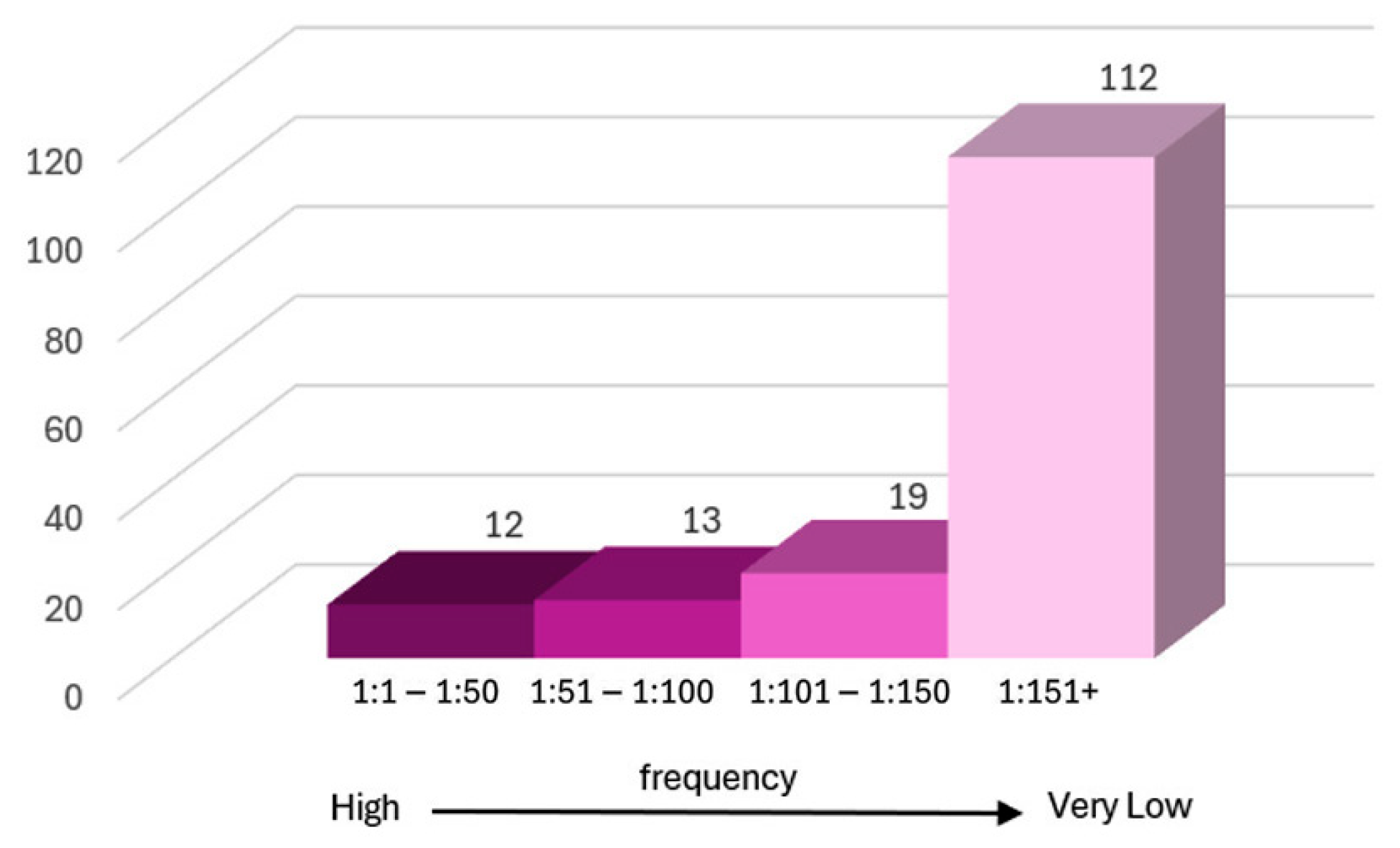
We classified the genes according to their carrier frequency (Figure 2) as follows:
  • High frequency (up to 1:50): 12 genes.
  • Moderate frequency (between 1:51 and 1:100): 13 genes.
  • Low frequency (between 1:101 and 1:150): 19 genes.
  • Very low frequency (greater than 1:151): the remaining 112 genes.
The highest carrier frequencies were observed for the following 12 genes: HFE (1:5), followed by CFTR (1:9), BTD (1:16), GJB2 (1:17), CYP21A2 (1:19), GALT (1:19), SERPINA1 (1:26), PAH (1:27), SMN1 (1:30), ATP7B (1:36), USH2A (1:43), and WNT10A (1:46).
The second category, comprising 13 genes with moderate frequency, includes 5 genes (ACADM, ALDOB, DHCR7, GAA, HBA1) with a carrier frequency of 1:60, followed by 3 genes (EVC, SLC26A2, TPP1) with a frequency of 1:86, and 5 genes (COL7A1, CYP11B2, GBA1, NEB, NR2E3) with a frequency of 1:100.
The third category, consisting of 19 genes with low frequency, includes 6 genes (ACAD9, BBS1, CAPN3, GALC, SLC12A3, SLC22A5) with a carrier frequency of 1:121, as well as 13 genes (ARSA, CPT2, CRB1, EYS, G6PD, GBE1, HEXA, LAMA2, LDLR, LIPA, MEFV, NPC1, VPS13B) with carrier frequencies ranging from 1:101 to 1:150.
The fourth category, which represents the largest group, includes 112 genes with very low carrier frequency (>1:151). Although individually rare, together they represent 71.8% and constitute a substantial portion of the genetic heterogeneity observed in the cohort.

2.2. Type of Mutated Variants Identified

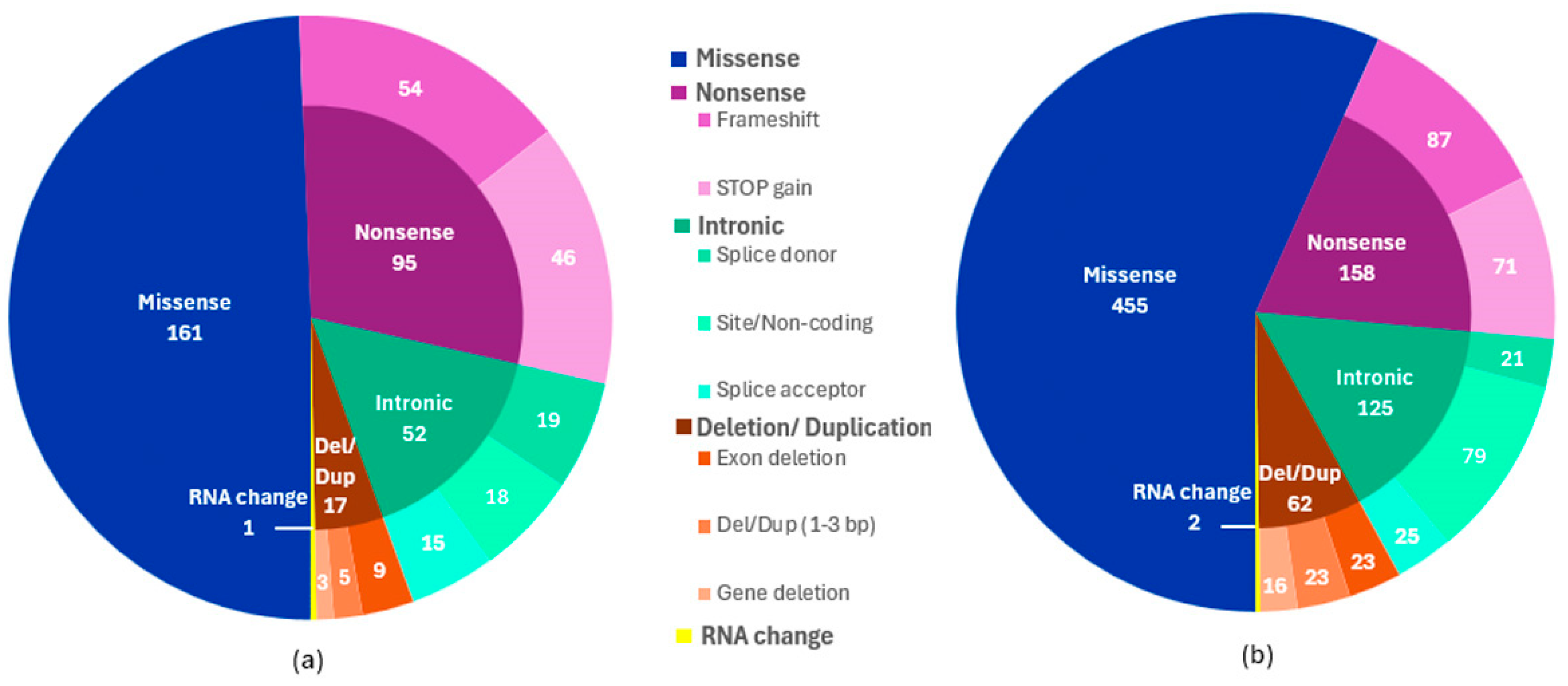
A total of 802 clinically significant PLP variants were identified in our cohort, corresponding to 326 unique variant types (Table S1). Among the 326 distinct variants, missense variants represented the largest category (49.1%, n = 160), followed by nonsense variants (29.1%, n = 95), which included 54 frameshift (16.6%) and 46 stop-gain (14.1%) variants. Intronic variants accounted for 16.0% (n = 52), comprising splice donor (5.8%), site/non-coding (5.5%), and splice acceptor (4.6%) variants. Deletions and duplications together constituted 5.2% (n = 17), including exon deletions (2.8%), small deletions/duplications of 1–3 base pairs (1.5%), and whole-gene deletions (0.9%). A single RNA change (0.3%) was also observed.
When considering the total of 802 variants identified in our cohort, missense variants again predominated (56.7%, n = 455), followed by nonsense variants (19.7%, n = 158), which comprised 87 frameshift (10.8%) and 71 stop-gain (8.9%) events. Intronic variants accounted for 15.6% (n = 125), including splice donor (2.6%), site/non-coding (9.8%), and splice acceptor (3.1%) variants. Deletions and duplications represented 7.7% (n = 62), consisting of exon deletions (2.9%), small deletions/duplications (2.9%), and gene deletions (2%). Two RNA changes (0.2%) were also detected (Figure 3).

2.3. Gene Rankings

We further classified the genes according to the frequency of identified PLP variants. Out of 802 total variants recorded, 11 variants across 9 genes exhibited a frequency > 1%. Among these, one HFE variant exceeded a frequency of 12%, a BTD variant was higher than 4%, 2 variants (one in CFTR and one GALT) were >3%, while 3 variants (one in GJB2, one in HFE, and one in CFTR) reached a frequency > 2% (Table 2). The most frequently implicated genes were HFE (2 variants), BTD, CFTR (2 variants), GALT, GJB2, SMN1, WNT10A, and CYP21A2.

2.4. Allelic Heterogeneity

In total, we identified 802 variants in 469 individuals who carried at least one clinically significant variant, corresponding to an average of 1.77 variants per individual. A high degree of allelic heterogeneity was observed in several genes. The most notable examples included CFTR (13 distinct variants in 66 carriers), PAH (12 variants in 21 carriers), USH2A (12 variants in 14 carriers), ATP7B (9 variants in 17 carriers), and CYP21A2 (7 variants in 29 carriers) (Table 3).
Most individuals carried a single heterozygous variant per gene. Exceptions were observed in a few cases: two individuals exhibited double heterozygosity across two genes (CFTR and HFE), and one individual carried six variants in the CYP21A2 gene. These instances, involving biallelic pathogenic variants, increase the likelihood of a clinical phenotype and highlight the importance of careful variant interpretation.

2.5. Classification of Diseases Risk by Morbidity and Mortality

In the analyzed cohort, autosomal recessive disease–associated genes showed variable morbidity and mortality, ranging from mild to life-threatening outcomes (Table 4).
The high-frequency group (12 genes) was mainly linked to metabolic, neuromuscular, and sensory disorders, several of which (CFTR, GALT, PAH, SMN1, ATP7B) were associated with severe or early-onset forms and high mortality if untreated. The moderate-frequency group (13 genes) included disorders with high morbidity and frequent infantile lethality, while the low-frequency group (19 genes) encompassed diverse metabolic, neuromuscular, and neurodegenerative conditions of variable severity.
Overall, the data illustrate the heterogeneity of genetic disease burden in the Western Romanian population. The actual risk for offspring depends on the carrier status of both reproductive partners, emphasizing the importance of comprehensive carrier screening in identifying couples at increased risk for severe autosomal recessive diseases.

3. Discussion

This study presents the first comprehensive characterization of autosomal recessive carrier variants across 300 genes in a Romanian cohort, providing valuable population-level genomic data from Eastern Europe (Figure S1). In contrast to previous research that focused mainly on affected individuals or newborns, our analysis of a healthy, reproductive-age population offers a more accurate depiction of carrier frequencies within the general population. These findings address a major regional knowledge gap and capture the diverse, multiethnic, and historically rich background of Western Romania.
Participants carried on average 1.77 pathogenic or likely pathogenic (PLP) variants (Figure 1), consistent with carrier loads described in European populations [1]. Such distribution patterns illustrate the genetic heterogeneity typical of mixed populations and the cumulative impact of multiple low-frequency variants. Our findings also emphasize that the regional genetic landscape has been shaped by founder effects, migration, and historical admixture, factors that collectively influence variant prevalence and distribution.
Among the 802 identified pathogenic or likely pathogenic (PLP) variants, 56.7% were missense variants, 19.7% were nonsense variants, approximately 15.6% were intronic variants, and deletions and duplications collectively accounted for 7.7% of all variants (Figure 3).
We identified eight genes—HFE (two variants), BTD, CFTR (two variants), GALT, GJB2, SMN1, WNT10A, and CYP21A2—comprising ten variants whose individual frequencies exceeded 1% in our cohort (Table 2). Among these, four variants (HFE: c.187C>G, BTD: c.1330G>C, CFTR: c.1210-34TG[11]T[5], GALT: c.-119_-116del) were particularly prevalent, each exceeding a 3% frequency. Notably, CFTR and CYP21A2 exhibited both high allelic heterogeneity and variant frequencies above 1%, emphasizing their clinical relevance in carrier screening within the Romanian population.
The genes with the highest carrier frequencies (>1:50)—HFE, CFTR, BTD, GJB2, CYP21A2, GALT, SERPINA1, PAH, SMN1, ATP7B, USH2A, and WNT10A—represent that represent the bulk of reproductive risk in our population. (Table 1). Many of these disorders are severe or life-limiting if untreated and align with ACMG and ACOG recommendations for inclusion in reproductive carrier screening [9,10]. The presence of multiple founder mutations (e.g., CFTR: p.Phe508del, GJB2: c.35delG) further highlights how population history and migration shaped these elevated carrier rates in Europe [11,12].
The high frequencies of these alleles in our population underline their potential for integration into national or regional screening programs. Notably, the pattern observed in Western Romania mirrors trends in other European cohorts [1,6], confirming the importance of local genetic mapping to refine population-specific screening strategies.
Several of these genes identified are of critical clinical importance, being associated with early-life morbidity and mortality. Variants in CFTR, GALT, ATP7B, and SMN1 fall within the so-called “red zone,” where the absence of timely diagnosis and treatment can lead to lethal neonatal or childhood outcomes (Table 4).
In Romania, the national neonatal metabolic screening program currently covers three disorders, corresponding to CFTR, PAH and hypothyroidism, together with clinical screening for deafness [13,14]. In the private healthcare sector, expanded panels—screening up to 50–100 metabolic diseases—are available on request. Early diagnosis is undoubtedly beneficial but often associated with significant psychological stress for families. By contrast, knowledge of parental carrier status can provide reassurance when no risks are identified or enable timely management through planned prenatal testing when risks are present.
Building on our results, where 156 of the 300 genes tested harbored PLP variants, we sought to better understand the distribution of carrier burden across the population. By classifying genes according to carrier frequency, we can distinguish those that pose the greatest reproductive risk from those that contribute mainly to genetic heterogeneity. When considering the distribution of carrier frequencies across the four categories, some important patterns emerge.
Metabolic disorders dominate the cohort: six high-frequency genes (HFE, CFTR, ATP7B, GALT, PAH, BTD), five medium-frequency genes (ACADM, ALDOB, DHCR7, GAA, GBA1), and six low-frequency genes (ACAD9, SLC12A3, SLC22A5, GBE1, LDLR, LIPA), collectively associated with 17 important genetic diseases for Western Romania (Table 4). Carrier screening is recognized as a primary prevention strategy for inherited metabolic disorders [12,15].
In accordance with the recommendations of the American College of Medical Genetics and Genomics (ACMG) and the American College of Obstetricians and Gynecologists (ACOG), which prioritize carrier screening for severe early-onset disorders that cause cognitive impairment, require medical or surgical intervention, impact quality of life, and have an expected carrier frequency >1:100 [9,10], our analysis focused on this subgroup. Specifically, 25 high-priority genes were examined—12 with carrier frequencies up to 1:50 and 13 with frequencies between 1:51 and 1:100 (Table 1, Figure 2).
Hereditary hemochromatosis type 1 was the most prevalent disease-associated condition in the cohort, with variants in the HFE gene occurring at a frequency of 1:5. Within the HFE gene, the two well-characterized pathogenic variants exhibited markedly different frequencies, with H63D occurring approximately five times more frequently than C282Y. All individuals carrying high-risk genotypes (homozygous or compound heterozygote) were referred for hematological and gastroenterological evaluation, given the established association with iron overload, hepatic cirrhosis, and pancreatic insufficiency. Carrier frequency for HFE varies across populations: 1:3 in Northern Europe, 1:4 in Hispanics and pan-ethnic cohorts, and 1:5 in our Western Romanian cohort—slightly lower, yet clinically important given the morbidity of hemochromatosis. The C282Y variant is frequent in Northern Europe [16], while H63D is considered a European haplotype but has also been reported in both the United States and India [17].
CFTR-related variants were the next most common. The exonic variant F508del, originating as a founder mutation, accounted for 28.79% of carriers, substantially lower than the ~80% reported in North-Western Europe [18,19], but consistent with Central and Eastern European data. The detection of both exonic and intronic variants, many absent from standard ACMG-25 or CFTR-100 panels [7], reinforces the need to adapt test designs to regional variant spectra. This observation parallels findings in other genetically diverse countries, such as Turkey and France, where high CFTR heterogeneity complicates panel standardization [20]. Globally, CFTR is among the most heterogeneous human genes, with over 2100 variants reported [21]. Genotype–phenotype correlations reinforce the clinical relevance of these findings. Severe variants are typically associated with multi-organ CF, whereas mild variants predispose to monosymptomatic or adult-onset conditions, such as male infertility, bronchiectasis, or recurrent pancreatitis [21].
BTD gene, associated with biotinidase deficiency, showed a high carrier frequency (1:16) in our cohort, compared to Non-Finnish European (NFE) population (1:25). Nearly all carriers harbored the c.1330G>C (D444H) variant, suggesting a long-standing European founder effect, only one individual had a different allele (T532M). The D444H variant has previously been reported in several European countries and the United States [22], whereas T532M was identified in Turkey [23,24].
For GJB2 gene, associated with GJB2-related conditions, the carrier frequency was 1:17, substantially higher than the NFE estimate of 1:42. Seven distinct variants were, with the frameshift mutation c.35del accounting for 60% of cases. This unexpectedly high prevalence suggests a markedly increased risk of hereditary deafness in the population of our region. The c.35delG mutation is well recognized as the most common cause of nonsyndromic hearing loss in populations of Caucasian origin. This variant, believed to have originated from a common ancestor (founder) in the Middle East or Mediterranean region and spread during Neolithic migrations [11], exemplifies the impact of ancient demographic processes on present-day carrier profiles.
GALT gene displayed a carrier frequency of 1:19 identical to that of the NFE population, with three variants identified in 32 individuals. The vast majority (78.13%) carried the non-coding intronic variant c.-119_-116del, which, when found in trans with a pathogenic allele, results in Duarte galactosemia. This mild form of galactosemia allows individuals to tolerate higher galactose levels compared with classic galactosemia. According to a recent study, based on clinical observations, it was established that carriers of Duarte galactosemia can follow unrestricted diets [25].
CYP21A2 gene, associated with congenital adrenal hyperplasia due to 21-hydroxylase deficiency, showed a lower carrier frequency of 1:19, compared with a NFE population estimate of 1:17. Eight distinct variants were detected, the most frequent being the missense c.1360C>T, present in 32.25% and previously associated with virilization in reported in Turkish patients [26].
For SERPINA1 gene, associated with alpha-1 antitrypsin deficiency, we detected carriers at a frequency of 1:26, lower than the NFE population frequency (1:18). Among the five variants, the most frequent was c.863A>T, a pathogenic missense variant identified in 30.43%, also reported in French-Canadian populations [27].
PAH gene, associated with phenylalanine hydroxylase deficiency, was observed with a frequency of 1:27. The most frequent variant in our country and globally was c.1222C>T (22.72%) which causes a severe increase in serum phenylalanine and does not comply with Phe monitoring guidelines. Given that PAH deficiency causes phenylketonuria (PKU), which is included in the Romanian neonatal screening program, these findings have direct clinical relevance.
SMN1 gene, associated with spinal muscular atrophy was identified with a carrier frequency of approximately 1:30, higher than in the Caucasian populations. PLP variants in SMN1 gene are associated with spinal muscular atrophy (SMA), recognized as the leading genetic cause of infant mortality [28]. Given the availability of effective gene therapies, identifying SMA carriers before conception can substantially improve reproductive counseling outcomes.
ATP7B gene, associated with Wilson disease, had a carrier frequency of in our cohort of 1:36, markedly higher than the NFE population rate of 1:50. Disease prevalence varies across populations, being highest in Asians [15] and Ashkenazi Jews, but lower in the UK and France [29]. In our cohort, we identified several PLP variants, of which the most frequent were two missense alleles (c.2817G>T and c.3207C>A) together accounting for 47.05% of cases. The c.3207C>A variant is a founder variant that was identified in the Roma population of Bulgaria, Romania, Hungary, Germany, and France [30].
USH2A gene was detected in carriers with a frequency of 1:43, higher than the NFE population frequency of 1:70 and is represented by 12 variants. USH2A-related conditions are associated with the clinical picture characterized by vision and hearing loss from birth.
In the Western Romanian population studied, the risk of deafness is given by pathogenic variants in 7 genes included in the panel: GJB2, USH2A, LOXHD1, SLC26A4, USH1C, COL4A4, COL4A3, present in almost 10% of the cohort, therefore representing a significant risk.
Carriers of the WNT10A gene, causing WNT10A-related conditions, were identified at a frequency of 1:46, lower than the reported NFE frequency of 1:33. All cases were represented exclusively by the missense variant c.682T>A (p.Phe228Ile), indicating a possible founder effect. This variant has previously been described in the Italian population in association with ectodermal dysplasia–related phenotypes, particularly oligodontia and hypodontia [31].
The recent publication of a Catalogue of autosomal recessive inherited disorders found among the Roma population in Europe [32] with the specification of the founder effect, allowed us to make a comparison with our data. We identified in western Romania the following genes and variants: ACADM (c.985A>G), ATP7B (c.3207C>A), CFTR (c.1624G>T), CYP21A2 (c.293-13A/C>G), SLC12A3 (c.1180+1G>T), SLC22A5 (c.844del*) of which only the first two have been reported from Romania, the rest being present in the Roma population, spread in different European countries [32].
The low-frequency (1:101–1:150) and very low-frequency (>1:151) groups, although individually rare, collectively account for the largest fraction of allelic heterogeneity. In our study, this latter group is the largest, representing 83.9% genes with PLP variants. This pattern reflects the “long tail” effect described in recent genomic studies, where the cumulative impact of rare variants contributes significantly to disease risk [12]. This highlights the need for broad genomic approaches, since panels restricted to common variants would miss a substantial number of clinically relevant findings.
From a public health perspective, these findings have several implications. First, genes with high carrier frequencies (≤1:50) should be prioritized for targeted awareness campaigns and inclusion in reproductive carrier panels. Second, moderate-frequency genes (1:51–1:100), particularly those associated with treatable metabolic or neuromuscular disorders [33], are strong candidates for integration into national newborn screening programs. Finally, rare variants emphasize the importance of broad genomic testing in clinical and reproductive medicine [7,34]. Together, these insights support the creation of tiered screening strategies tailored to the Romanian population.
The identification of multiple carriers for variants known to cause severe or lethal diseases—such as those in CFTR, GALT, SMN1, and ATP7B—underscores the critical importance of early detection. Timely carrier identification can guide reproductive decisions and prevent neonatal morbidity and mortality. While prenatal and preimplantation genetic diagnosis [34,35] remain effective preventive tools, preconception screening offers greater flexibility and lower psychosocial burden by allowing couples to consider reproductive options before pregnancy.
Romania’s national genetic screening currently remains limited in scope and accessibility. Broader implementation of carrier testing is constrained by costs, low public awareness, and limited access to high-quality genetic counseling [36]. Nevertheless, the high prevalence of actionable variants identified here provides strong justification for expanding screening efforts. Integrating carrier testing into routine reproductive health assessments would align national practices with international recommendations and significantly improve preventive healthcare outcomes.
At a broader scale, population genomics offers essential insight into disease architecture and evolution. Understanding how population history, demographic dynamics, selection pressures, and founder effects have shaped allele distributions in Eastern Europe helps interpret clinical data and supports the design of equitable, population-specific genetic testing programs [37]. Mapping hotspot recurrent pathogenic variants also facilitates differentiation between inherited and de novo mutations, improving diagnostic accuracy. As genomic data from diverse regions of the world continue to accumulate, these resources can be made accessible to researchers through publications or online databases [38].
Carrier screening thus serves not only as a reproductive health measure but also as a cornerstone of preventive genomic medicine. By clarifying the distribution of pathogenic variants in the general population, it provides a framework for risk assessment, counseling, and informed decision-making [35,36]. Implementation of such programs—supported by robust databases and public education—has the potential to reduce the burden of recessive diseases and improve genetic education in Romania.

4. Materials and Methods

4.1. Selection of Participants and Clinical Data

A retrospective study was conducted on data obtained from 604 unaffected, unrelated Caucasian individuals (274 males and 330 females; male-to-female ratio 1:1.2) of reproductive age, ranging from 20 to 54 years in men and 19 to 47 years in women. All participants were tested between 1 January 2020 and 30 December 2024 at a single private genetic center located in Western Romania.
The genetic testing panel included 302 genes, of which 300 are associated with autosomal recessive (AR) inheritance, and two genes (F5 and F2) are linked to autosomal dominant (AD) inheritance. The present analysis focused exclusively on pathogenic and likely pathogenic (PLP) variants identified in AR genes; therefore, findings related to F2 and F5 were excluded. Although not included in the main analysis, 18 individuals carried PLP variants in F2 and 33 in F5. These AD gene variants are presented in a separate section of the same table, adjacent to the section listing AR genes with PLP variants identified in this study (Table S1). For comparative purposes, carrier frequencies observed in our cohort were evaluated against the combined allele frequencies reported in gnomAD for the Caucasian population referred to as Non-Finnish European completed with Hardy-Weinberg law [39].
Variants classified as pseudodeficiency alleles—considered benign—were excluded from the analysis. The presence of a pseudodeficiency allele does not increase an individual’s carrier risk. These alleles may appear in test results because they can cause false-positive findings in certain biochemical assays, including newborn screening. However, pseudodeficiency alleles are not associated with disease causation, and carrier testing of the reproductive partner is not indicated for such variants. A list of the genes with pseudodeficiency alleles are provided in (Table S2).

4.2. Ethical Approval

The study was conducted in accordance with the Declaration of Helsinki. Ethical approval was obtained from the Ethics Committee of Scientific Research at “Victor Babeș” University of Medicine and Pharmacy, Timișoara, Romania (No. 35, 3 June 2024). Written informed consent was obtained from all participants for genetic analysis, carrier screening, and the future publication of results.

4.3. Genetic Counseling

An experienced geneticist provided counseling to all participants in two sessions. During pre-test counseling, reproductive history, age, and any known or manifested hereditary conditions in the family were recorded, and family pedigrees were constructed. After receiving carrier screening results, a second counseling session was conducted to communicate any identified reproductive risks and their implications. For high-risk cases, prenatal genetic diagnosis via amniocentesis was recommended in future pregnancies, followed by targeted verification of the identified parental mutations.

4.4. Carrier Screen Test and Panel Genes

The analysis was performed on blood samples sent to Invitae Corporation (1400 16th Street, San Francisco, CA, USA, 94103). The Invitae Comprehensive Carrier Screen assessed 302 genes (Figure S1) for clinically significant pathogenic or likely pathogenic (PLP) variants associated with inherited conditions. Genomic DNA from each sample was enriched for targeted regions using a hybridization-based protocol and sequenced on an Illumina platform. All targeted regions were sequenced at a minimum depth of 50×, with additional analyses performed where necessary.
Sequencing reads were aligned to the reference genome (GRCh37), and sequence changes were interpreted within the context of a single clinically relevant transcript. Analysis focused on coding sequences, 10 bp of flanking intronic regions, and other genomic regions known to be disease-causing at the time of assay design. Promoters, untranslated regions, and other non-coding regions were not interrogated.
Exonic deletions and duplications were identified using an in-house algorithm that compares read depth for each target with the mean read depth and distribution from a set of clinical samples. Reportable variants were confirmed based on stringent criteria established by Invitae, using validated orthogonal approaches as needed [40]. Only variants with established clinical significance for the tested conditions were reported; variants of uncertain significance, benign variants, and likely benign variants were excluded.

4.5. Statistical Analysis of Variant Frequencies

All statistical analyses were performed using JASP and Excel Softwares. Descriptive statistics were used to summarize the distribution of variants and carrier status. The number of clinically significant genes per individual was calculated, and frequencies were reported as absolute counts and percentages. Genes were further classified by cohort frequency into high (1:1–1:50), medium (1:51–1:100), low (1:101–1:150), and very low (≥1:151) categories.
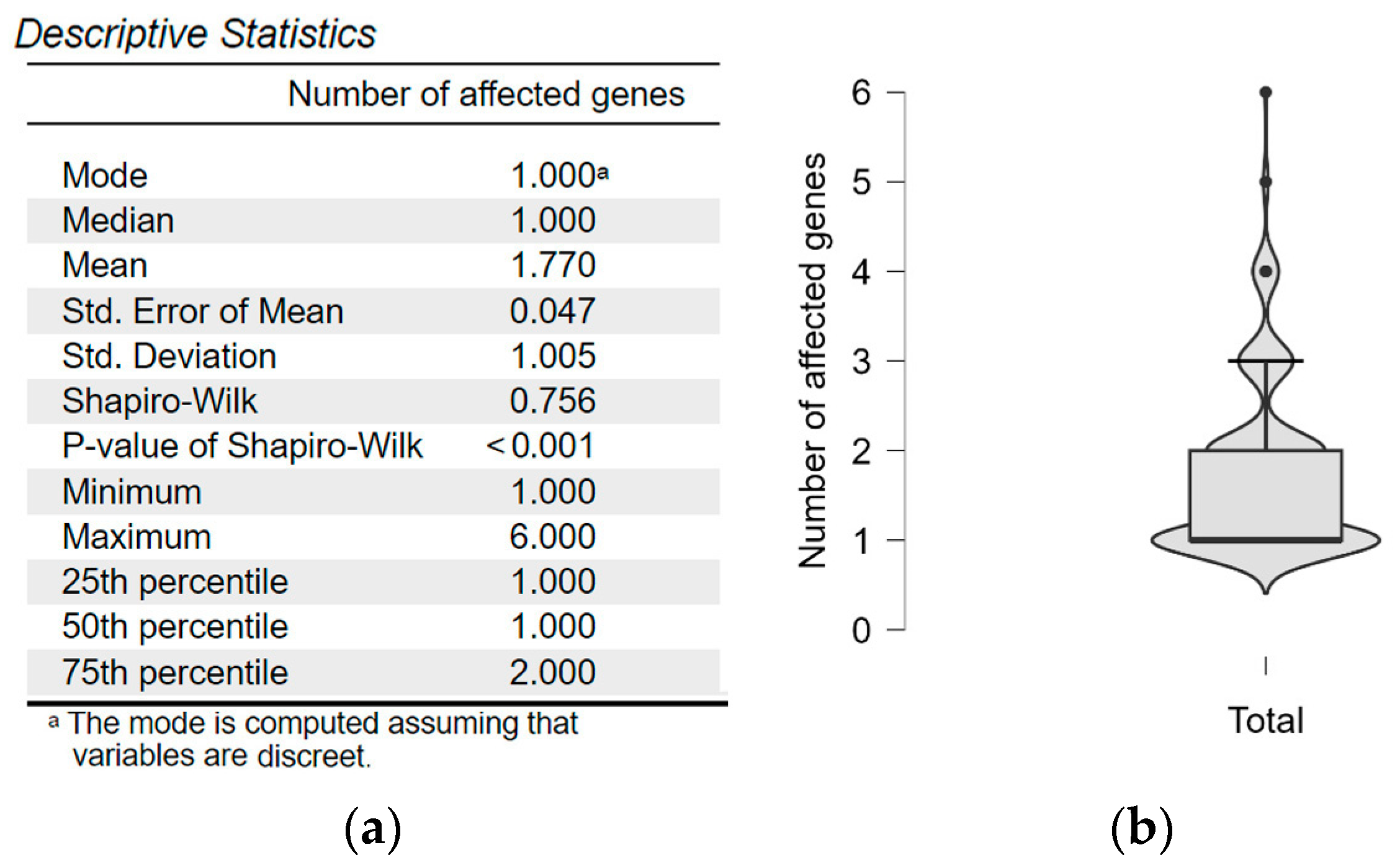
PLP variant types were grouped into nonsense, missense, intronic, and deletions/duplications, and subcategories were analyzed separately. The primary continuous variable (number of mutations/person) was the number of affected genes per individual. Descriptive statistics included mean, standard deviation (SD), median, mode, and range. Normality of distribution was assessed using the Shapiro–Wilk test, which indicated deviation from a normal distribution (p < 0.001) (Figure 4a). Consequently, results are reported as both mean ± SD and median with interquartile range (IQR) (Figure 4b).

5. Conclusions and Future Perspectives

This study represents the first comprehensive assessment of autosomal recessive (AR) carrier status within the Romanian population, identifying an average of 1.77 pathogenic variants per individual in the West region. Notably elevated carrier frequencies were observed for HFE, CFTR, BTD, GJB2, GALT, CYP21A2, SERPINA1, PAH, SMN1, ATP7B, USH2A, and WNT10A, with the greatest allelic heterogeneity detected in CFTR, PAH, USH2A, ATP7B, and CYP21A2. The most prevalent condition in this cohort was hereditary hemochromatosis, followed by cystic fibrosis, biotinidase deficiency, GJB2-related deafness, galactosemia, congenital adrenal hyperplasia, α1-antitrypsin deficiency, phenylalanine hydroxylase deficiency, spinal muscular atrophy, Wilson disease, USH2A-related disorders, and WNT10A-related conditions.
Collectively, these results define the principal genetic risks for AR disorders in Western Romania and highlight the importance of implementing carrier screening as part of preconception and prenatal care. Such integration can improve reproductive risk evaluation, guide family planning, and contribute to better clinical outcomes. Furthermore, the observed interpopulation variability in carrier frequencies underscores the relevance of these data as a resource for optimizing newborn screening programs at both regional and national levels. Ultimately, this study establishes a foundational reference for genetic counseling, as well as prenatal and preimplantation genetic diagnosis in Western Romania.
While these findings offer valuable insights into disease risk within the Romanian population, future large-scale studies employing carrier whole-exome sequencing (Carrier-WES) are expected to refine and expand our understanding of the genetic landscape and its implications for public health.

Supplementary Materials

The following supporting information can be downloaded at: https://www.mdpi.com/article/10.3390/ijms262210912/s1.

Author Contributions

Conceptualization, C.G.; Methodology, M.G.; Software, T.-A.P.; Validation, N.A.; Formal analysis, M.G., T.-A.P.; Investigation, M.G., L.C.; Resources, I.M.; Writing—original draft preparation, M.G.; Writing—review and editing, C.G., N.A.; visualization, L.C., I.M.; Supervision, N.A.; Corespondence, N.A., L.C. All authors have read and agreed to the published version of the manuscript.

Funding

This work was supported by Victor Babeș University of Medicine and Pharmacy, Timișoara. No specific grant number is associated with this funding.

Institutional Review Board Statement

The study was conducted in accordance with the Declaration of Helsinki, and approved Ethics Committee of Scientific Research from the “Victor Babes” University of Medicine and Pharmacy, Timisoara, Romania (No. 35 from 3 June 2024).

Informed Consent Statement

Informed consent was obtained from all subjects involved in the study. Written informed consent has been obtained from the patients to publish this paper.

Data Availability Statement

Data are contained within the article and in the Supplementary Materials: Figure S1, Tables S1 and S2.

Acknowledgments

We would like to acknowledge “Victor Babeș” University of Medicine and Pharmacy of Timișoara for their support in covering the costs of publication for this research paper. The authors have reviewed and edited the output and take full responsibility for the content of this publication.

Conflicts of Interest

The authors declare no conflict of interest.

Abbreviations

The following abbreviations are used in this manuscript:
ACMGAmerican College of Medical Genetics and Genomics
ACMG-2525-variant CFTR carrier panel (recommended by ACMG)
ACOGAmerican College of Obstetricians and Gynecologists
ADAutosomal dominant
ARAutosomal recessive
bpBase pairs
CAVDCongenital bilateral absence of the vas deferens
CFCystic fibrosis
CFTRCystic fibrosis transmembrane conductance regulator
CFTR-100100-variant CFTR screening panel
DNADeoxyribonucleic acid
DefDeficiency
gnomADGenome Aggregation Database
GRCh37Genome Reference Consortium Human build 37
IQRInterquartile range
NFENon-Finnish European
NMRefSeq mRNA accession prefix used in HGVS nomenclature
PAHPhenylalanine hydroxylase (gene)
PKUPhenylketonuria
PLPPathogenic or likely pathogenic
RORomania/Romanian
SDStandard deviation
SMASpinal muscular atrophy
SySyndrome
TGThymine–guanine repeat tract (CFTR intron 8 polymorphism)
UKUnited Kingdom
USUnited States
WESWhole-exome sequencing

References

  1. Fridman, H.; Yntema, H.G.; Mägi, R.; Andreson, R.; Metspalu, A.; Mezzavila, M.; Tyler-Smith, C.; Xue, Y.; Carmi, S.; Levy-Lahad, E.; et al. The landscape of autosomal-recessive pathogenic variants in European populations reveals phenotype-specific effects. Am. J. Hum. Genet. 2021, 108, 608–619. [Google Scholar] [CrossRef]
  2. Muller, H.J. Our load of mutations. Am. J. Hum. Genet. 1950, 2, 111–176. [Google Scholar]
  3. Morton, N.E.; Crow, J.F.; Muller, H.J. An estimate of the mutational damage in man from data on consanguineous marriages. Proc. Natl. Acad. Sci. USA 1956, 42, 855–863. [Google Scholar] [CrossRef]
  4. Kondrashov, A.S. Contamination of the genome by very slightly deleterious mutations: Why have we not died 100 times over? J. Theor. Biol. 1995, 175, 583–594. [Google Scholar] [CrossRef] [PubMed]
  5. Gao, Z.; Waggoner, D.; Stephens, M.; Ober, C.; Przeworski, M. An estimate of the average number of recessive lethal mutations carried by humans. Genetics 2015, 199, 1243–1254. [Google Scholar] [CrossRef] [PubMed]
  6. Lazarin, G.A.; Haque, I.S.; Nazareth, S.; Iori, K.; Patterson, A.S.; Jacobson, J.L.; Marshall, J.R.; Seltzer, W.K.; Patrizio, P.; Evans, E.A.; et al. An empirical estimate of carrier frequencies for 400+ causal Mendelian variants: Results from an ethnically diverse clinical sample of 23,453 individuals. Genet. Med. 2013, 15, 178–186. [Google Scholar] [CrossRef]
  7. Deignan, J.L.; Chung, W.K.; Kearney, H.M.; Monaghan, K.G.; Rehder, C.W.; Chao, E.C.; ACMG Laboratory Quality Assurance Committee. Points to consider in the reevaluation and reanalysis of genomic test results: A statement of the American College of Medical Genetics and Genomics (ACMG). Genet. Med. 2019, 21, 1267–1270. [Google Scholar] [CrossRef]
  8. Antonarakis, S.E.; Chakravarti, A.; Cohen, J.C.; Hardy, J. Mendelian disorders and multifactorial traits: The big divide or one for all? Nat. Rev. Genet. 2010, 11, 380–384. [Google Scholar] [CrossRef]
  9. ACOG Committee on Genetics. ACOG Committee Opinion No. 442: Preconception and prenatal carrier screening for genetic diseases in individuals of Eastern European Jewish descent. Obstet. Gynecol. 2009, 114, 950–953. [Google Scholar] [CrossRef]
  10. Grody, W.W.; Thompson, B.H.; Gregg, A.R.; Bean, L.H.; Monaghan, K.G.; Schneider, A.; Lebo, R.V. ACMG position statement on prenatal/preconception expanded carrier screening. Genet. Med. 2013, 15, 482–483. [Google Scholar] [CrossRef]
  11. Zytsar, M.V.; Barashkov, N.A.; Bady-Khoo, M.S.; Shubina-Olejnik, O.A.; Danilenko, N.G.; Bondar, A.A.; Morozov, I.V.; Solovyev, A.V.; Danilchenko, V.Y.; Maximov, V.N.; et al. Updated carrier rates for c.35delG (GJB2) associated with hearing loss in Russia and common c.35delG haplotypes in Siberia. BMC Med. Genet. 2018, 19, 138. [Google Scholar] [CrossRef] [PubMed]
  12. Waters, D.; Adeloye, D.; Woolham, D.; Wastnedge, E.; Patel, S.; Rudan, I. Global birth prevalence and mortality from inborn errors of metabolism: A systematic analysis of the evidence. J. Glob. Health 2018, 8, 021102. [Google Scholar] [CrossRef]
  13. Dima, V. Actualities in neonatal endocrine and metabolic screening. Acta Endocrinol. 2021, 17, 416–421. [Google Scholar] [CrossRef]
  14. Dima, V. Newborn Screening in Romania–Present and Future. Rom. J. Prev. Med. 2022, 1, 20–26. [Google Scholar] [CrossRef]
  15. Qiao, L.; Ge, J.; Li, C.; Liu, Y.; Hu, C.; Hu, S.; Li, W.; Li, T. Pathogenic gene variation spectrum and carrier screening for Wilson’s disease in Qingdao area. Mol. Genet. Genom. Med. 2021, 00, e1741. [Google Scholar] [CrossRef]
  16. Coppin, H.; Bensaid, M.; Fruchon, S.; Borot, N.; Blanché, H.; Roth, M.P. Longevity and carrying the C282Y mutation for haemochromatosis on the HFE gene: Case control study of 492 French centenarians. BMJ 2003, 327, 132–133. [Google Scholar] [CrossRef]
  17. Garewal, G.; Das, R.; Ahluwalia, J.; Marwaha, R.K. Prevalence of the H63D mutation of the HFE in north India: Its presence does not cause iron overload in beta thalassemia trait. Eur. J. Haematol. 2005, 74, 333–336. [Google Scholar] [CrossRef] [PubMed]
  18. De Boeck, K.; Amaral, M.D. Classification of CFTR mutation classes—Authors’ reply. Lancet Respir. Med. 2016, 4, e39. [Google Scholar] [CrossRef] [PubMed]
  19. Cutting, G. Cystic fibrosis genetics: From molecular understanding to clinical application. Nat. Rev. Genet. 2015, 16, 45–56. [Google Scholar] [CrossRef]
  20. Claustres, M.; Thèze, C.; des Georges, M.; Baux, D.; Girodon, E.; Bienvenu, T.; Audrezet, M.P.; Dugueperoux, I.; Férec, C.; Lalau, G.; et al. CFTR-France, a national relational patient database for sharing genetic and phenotypic data associated with rare CFTR variants. Hum. Mutat. 2017, 38, 1297–1315. [Google Scholar] [CrossRef]
  21. Bareil, C.; Bergougnoux, A. CFTR gene variants, epidemiology and molecular pathology. Arch. Pediatr. 2020, 27 (Suppl. 1), eS8–eS12. [Google Scholar] [CrossRef]
  22. Swango, K.L.; Demirkol, M.; Hüner, G.; Pronicka, E.; Sykut-Cegielska, J.; Schulze, A.; Mayatepek, E.; Wolf, B. Partial biotinidase deficiency is usually due to the D444H mutation in the biotinidase gene. Hum. Genet. 1998, 102, 571–575. [Google Scholar] [CrossRef]
  23. Karaca, M.; Özgül, R.K.; Ünal, Ö.; Yücel-Yılmaz, D.; Kılıç, M.; Hişmi, B.; Tokatlı, A.; Coşkun, T.; Dursun, A.; Sivri, H.S. Detection of biotinidase gene mutations in Turkish patients ascertained by newborn and family screening. Eur. J. Pediatr. 2015, 174, 1077–1084. [Google Scholar] [CrossRef]
  24. Çıkı, K.; Alavanda, C.; Ceylan, E.İ.; Tanyalçın, T.; Kılavuz, S. Comprehensive analysis of genotypic and phenotypic characteristics of biotinidase deficiency patients in the eastern region of Türkiye. Turk. J. Pediatr. 2024, 66, 608–617. [Google Scholar] [CrossRef]
  25. Almenabawy, N.; Bahl, S.; Ostlund, A.L.; Ghai-Jain, S.; Sosova, I.; Chan, A.; Mercimek-Andrews, S. Clinical and biochemical phenotypes, genotypes, and long-term outcomes of individuals with galactosemia type I from a single metabolic genetics center in Alberta. Mol. Genet. Metab. Rep. 2024, 38, 101055. [Google Scholar] [CrossRef]
  26. Baş, F.; Kayserili, H.; Darendeliler, F.; Uyguner, O.; Günöz, H.; Apak, M.Y.; Atalar, F.; Bundak, R.; Wilson, R.C.; New, M.I.; et al. CYP21A2 gene mutations in congenital adrenal hyperplasia: Genotype-phenotype correlation in Turkish children. J. Clin. Res. Pediatr. Endocrinol. 2009, 1, 116–128. [Google Scholar] [CrossRef]
  27. Robichaud, P.P.; Allain, E.P.; Belbraouet, S.; Bhérer, C.; Mamelona, J.; Harquail, J.; Crapoulet, S.; Crapoulet, N.; Bélanger, M.; Ben Amor, M. Pathogenic variants carrier screening in New Brunswick: Acadians reveal high carrier frequency for multiple genetic disorders. BMC Med. Genom. 2022, 15, 98. [Google Scholar] [CrossRef] [PubMed]
  28. Hendrickson, B.C.; Donohoe, C.; Akmaev, V.R.; Sugarman, E.A.; Labrousse, P.; Boguslavskiy, L.; Flynn, K.; Rohlfs, E.M.; Walker, A.; Allitto, B.; et al. Differences in SMN1 allele frequencies among ethnic groups within North America. J. Med. Genet. 2009, 46, 641–644. [Google Scholar] [CrossRef] [PubMed]
  29. Sandahl, T.D.; Laursen, T.L.; Munk, D.E.; Vilstrup, H.; Weiss, K.H.; Ott, P. The prevalence of Wilson’s disease: An update. Hepatology 2020, 71, 722–732. [Google Scholar] [CrossRef] [PubMed]
  30. Collet, C.; Laplanche, J.L.; Page, J.; Morel, H.; Woimant, F.; Poujois, A. High genetic carrier frequency of Wilson’s disease in France: Discrepancies with clinical prevalence. BMC Med. Genet. 2018, 19, 143. [Google Scholar] [CrossRef]
  31. Guazzarotti, L.; Tadini, G.; Mancini, G.E.; Sani, I.; Pisanelli, S.; Galderisi, F.; D’Auria, E.; Secondi, R.; Bottero, A.; Zuccotti, G.V. WNT10A gene is the second molecular candidate in a cohort of young Italian subjects with ectodermal derivative impairment (EDI). Clin. Genet. 2018, 93, 693–698. [Google Scholar] [CrossRef] [PubMed]
  32. Quinn, S.; Walsh, N.; Streata, I.; Ververi, A.; Kulshrestha, S.; Puri, R.D.; Riza, A.L.; Walsh, A.; Gorman, K.; Crushell, E.; et al. Catalogue of inherited autosomal recessive disorders found amongst the Roma population of Europe. Eur. J. Med. Genet. 2025, 73, 104989. [Google Scholar] [CrossRef] [PubMed]
  33. Karczewski, K.J.; Francioli, L.C.; Tiao, G.; Cummings, B.B.; Alföldi, J.; Wang, Q.; Collins, R.L.; Laricchia, K.M.; Ganna, A.; Birnbaum, D.P.; et al. The mutational constraint spectrum quantified from variation in 141,456 humans. Nature 2020, 581, 434–443, Correction in Nature 2021, 590, E53. [Google Scholar] [CrossRef]
  34. American College of Obstetricians and Gynecologists; American College of Medical Genetics. Preconception and Prenatal Carrier Screening for Cystic Fibrosis. Clinical and Laboratory Guidelines; American College of Obstetricians and Gynecologists: Washington, DC, USA, 2001. [Google Scholar]
  35. Gug, M.; Rațiu, A.; Andreescu, N.; Farcaș, S.; Laitin, S.; Gug, C. Approach and Management of Pregnancies with Risk Identified by Non-Invasive Prenatal Testing. J. Pers. Med. 2024, 14, 366. [Google Scholar] [CrossRef] [PubMed]
  36. Gug, C.; Mozos, I.; Ratiu, A.; Tudor, A.; Gorduza, E.V.; Caba, L.; Gug, M.; Cojocariu, C.; Furau, C.; Furau, G.; et al. Genetic Counseling and Management: The First Study to Report NIPT Findings in a Romanian Population. Medicina 2022, 58, 79. [Google Scholar] [CrossRef]
  37. Gurdasani, D.; Barroso, I.; Zeggini, E.; Sandhu, M.S. Genomics of disease risk in globally diverse populations. Nat. Rev. Genet. 2019, 20, 520–535, Erratum in Nat. Rev. Genet. 2019, 20, 562. [Google Scholar] [CrossRef]
  38. The Mediterranean Founder Mutation Database. Available online: http://mfmd.pasteur.ma/index.php?genestart=W (accessed on 9 October 2025).
  39. Available online: https://gnomad.broadinstitute.org/ (accessed on 6 November 2025).
  40. Lincoln, S.E.; Truty, R.; Lin, C.F.; Zook, J.M.; Paul, J.; Ramey, V.H.; Salit, M.; Rehm, H.L.; Nussbaum, R.L.; Lebo, M.S. A Rigorous Interlaboratory Examination of the Need to Confirm Next-Generation Sequencing-Detected Variants with an Orthogonal Method in Clinical Genetic Testing. J. Mol. Diagn. 2019, 21, 318–329. [Google Scholar] [CrossRef]
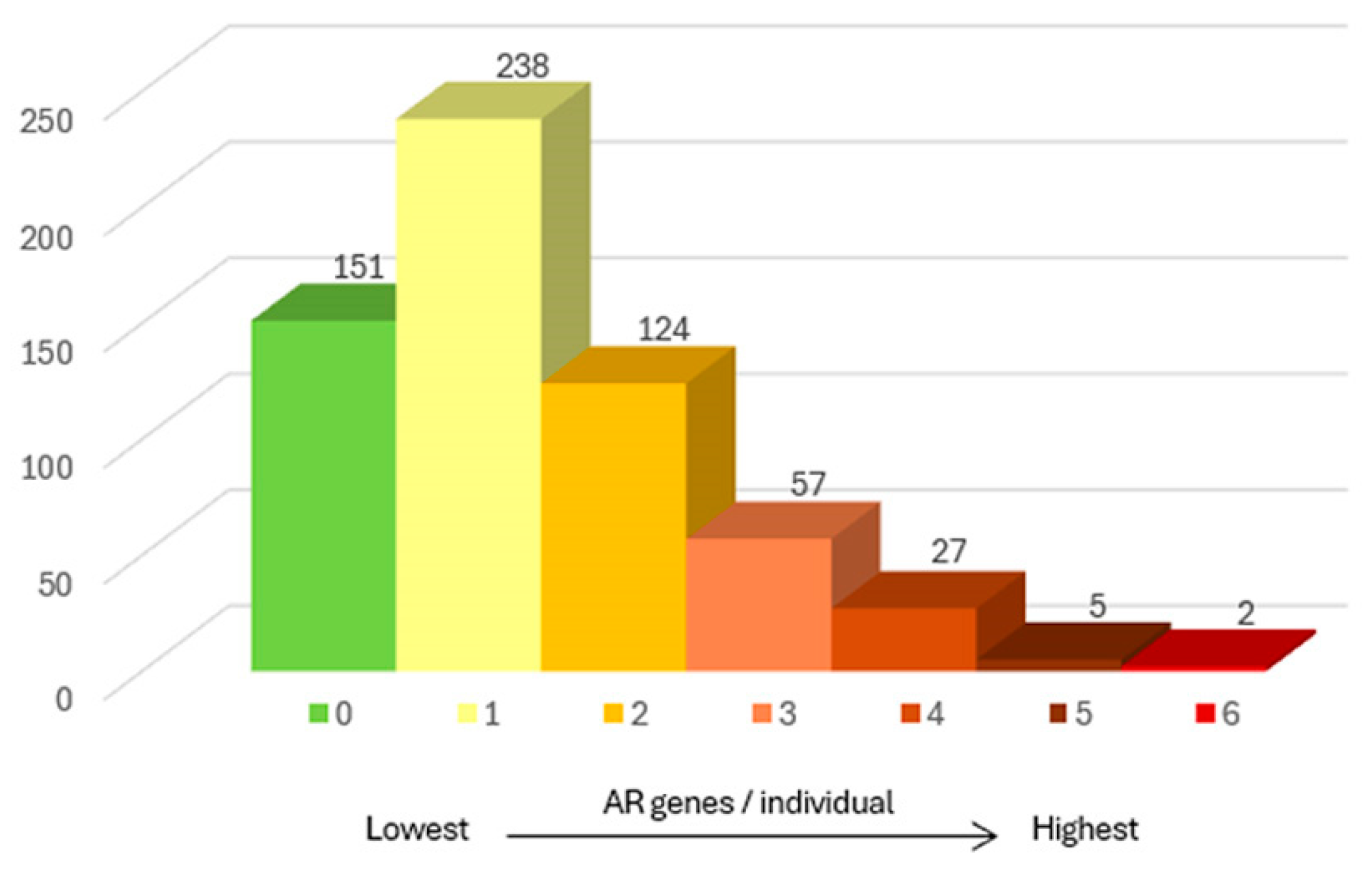
Figure 1. Number of clinically significant carrier genes among the individuals in the study.
Ijms 26 10912 g001
Figure 2. Gene groups classified by cohort frequency.
Ijms 26 10912 g002
Figure 3. Distribution of variant types identified: (a) 326 unique variant types; (b) 802 unique variant types grouped by the number of individuals carrying each variant in the cohort.
Ijms 26 10912 g003
Figure 4. (a) Descriptive statistics; (b) Distribution of the number of affected genes.
Ijms 26 10912 g004
Table 1. The most frequent autosomal recessive genes with PLP variants identified in our cohort, presented in comparison with the Caucasian population referred to as Non-Finnish European, according to the combined allele frequencies reported in gnomAD.
DisorderNomenclatureInheritanceGeneWest RO 1
Carrier
Frequency
Non-Finnish
European
Carrier
Frequency
Hereditary hemochromatosis
type 1
NM 2_000410.3AR 3HFE1:51:6
CFTR-related conditionsNM_000492.3ARCFTR1:91:9
Biotinidase deficiencyNM_000060.3ARBTD1:161: 25
GJB2-related conditionsNM_004004.5ARGJB21:171: 42
Galactosemia (GALT-related)NM_000155.3ARGALT1:191:19
Congenital adrenal hyperplasia due to 21-hydroxylase deficiencyNM_000500.7ARCYP21A21:191:17
Alpha-1 antitrypsin deficiencyNM_000295.4ARSERPINA11:261: 18
Phenylalanine hydroxylase deficiencyNM_000277.1ARPAH1:271: 50
Spinal muscular atrophyNM_000344.3ARSMN11:301: 45
Wilson disease (AR)NM_000053.3ARATP7B1:361:50
USH2A-related conditionsNM_206933.2ARUSH2A1:431: 70
WNT10A-related conditionsNM_025216.2ARWNT10A1:461:33
1 RO = Romanian population, 2 NM = nomenclature, 3 AR = autosomal recessive.
Table 2. Genes with PLP variants exceeding 1% frequency in the cohort.
GeneVariants 1Number of
Individuals
Variant Frequency in the Cohort (%)
HFEc.187C>G (p.His63Asp) (H63D)10012.47
BTDc.1330G>C (p.Asp444His)364.48
CFTRc.1210-34TG[11]T[5] (Intronic)273.37
GALTc.-119_-116del (intronic)253.12
GJB2c.35del (p.Gly12Valfs*2)212.62
HFEc.845G>A (p.Cys282Tyr) § 2 = C282Y202.49
CFTRc.1521_1523del (p.Phe508del) (F508del)192.37
SMN1Exon 7 + 8 deletion141.75
WNT1OAc.682T>A (p.Phe228Ile)131.62
CYP21A2c.1360C>T (p.Pro454Ser)101.24
HBA1Deletion (Entire coding sequence)91.12
1 Variants are presented in order of frequency, 2 § = late penetrance.
Table 3. Genes with the highest allelic heterogeneity and their variants.
GeneVariant 1Legacy NameLocationNumber of
Individuals
CFTRc.1210-34TG[11]T[5]-Intronic27
c.1521_1523del (p.Phe508del)F508delExonic19
c.1408A>G (p.Met470Val)M470VExonic5
c.1210-34TG[12]T[5]-Intronic3
c.1807G>A (p.Val603Ile)V603IExonic2
c.3472 C>G (Arg1158*)R1158XExonic2
c.3909C>G (p.Asn1303Lys)N1303KExonic2
c.377G>A (p.Gly126Asp)G126DExonic1
c.1210-7_1210-6del-Intronic1
c.1210-11delinsGTG-Intronic1
c.1624G>T (p.Gly542*)G542XExonic1
c.2813T>G (p.Val938Gly)V938GExonic1
c.3846G>A (p.Trp1282*)W1282XExonic1
PAHc.1222C>T (p.Arg408Trp)R408WExonic5
c.898G>T (p.Ala300Ser)A300SExonic4
c.143T>C (p.Leu48Ser)L48SExonic2
c.673C>A (p.Pro225Thr)P225TExonic2
c.529G>C (p.Val177Leu)V177LExonic1
c.533A>G (p.Glu178Gly)E178GExonic1
c.545A>G (p.Glu182Gly)E182GExonic1
c.734T>C (p.Val245Ala)V245AExonic1
c.844G>T (p.Val282Leu)V282LExonic1
c.1066-11G>A-Intronic1
c.1208C>T (p.Ala403Val)A403VExonic1
c.1315 + 1G>A-Intronic1
USH2Ac.11864G>A (p.Trp3955*)W3955*Exonic2
c.12332C>T (p.Ser4111Phe)S4111FExonic2
c.2296T>C (p.Cys766Arg)C766RExonic1
c.2802T>G (p.Cys934Trp)C934WExonic1
c.6937G>T (p.Gly2313Cys)G2313CExonic1
c.7524del (p.Arg2509Glyfs*19)R2509GExonic1
c.8618T>G (p.Leu2873*)L2873*Exonic1
c.8682-9A>G-Intronic1
c.10073G>A (p.Cys3358Tyr)C3358YExonic1
c.12268C>A (p.Pro4090Thr)P4090TExonic1
c.12569T>C (p.Val4190Ala)V4190AExonic1
c.14803C>T (p.Arg4935*)R4935*Exonic1
ATP7Bc.2817G>T (p.Trp939Cys)W939CExonic4
c.3207C>A (p.His1069Gln)H1069QExonic4
c.19_20del (p.Gln7Aspfs*14)Q7DExonic2
c.347T>C (p.Ile116Thr)I116TExonic2
c.1877G>C (p.Gly626Ala)G626AExonic1
c.2305A>G (p.Met769Val)M769VExonic1
c.2532delA (p.Val845Serfs*28)V845SExonic1
c.2605G>A (p.Gly869Arg)G869RExonic1
c.2906G>A (p.Arg969Gln)R969QExonic1
CYP21A2c.1360C>T (p.Pro454Ser)P454SExonic10
c.844G>T (p.Val282Leu)V282LExonic6
c.955C>T (p.Gln319*)Q319*Exonic5
c.293-13C>G-Intronic4
c.332_339del (p.Gly111Valfs*21)G111VExonic2
c.188A>T (p.His63Leu)H63LExonic1
c.1069C>T (p.Arg357Trp)R357WExonic1
1 Variants are presented in order of frequency.
Table 4. Classification of the main genetic disease risks, presented in descending order of pathological gene frequency observed in the studied cohort.
Gene Frequency
in Western
Romania
GenePhysiological
System/Type
DiseaseObservations Related to
Morbidity and Mortailty
High
frequency
HFEMetabolicHemochromatosisVariable severity;
organ damage if untreated.
CFTRMetabolic
Pulmonary
Cystic fibrosisSevere disease;
early mortality without treatment.
BTDMetabolicBiotinidase deficiencyTreatable; untreated may cause
neurological symptoms.
GJB2Sensory
(Hearing/Skin)
Vohwinkel syndrome/
Keratitis-ichthyosis-deafness
Non-fatal;
significant sensory impact.
CYP21A2EndocrineCongenital adrenal
hyperplasia
Potential neonatal mortality
without therapy.
GALTMetabolicClassical
galactosemia
Lethal in neonatal form
if untreated.
SERPINA1Liver
Lung
Alpha-1 antitrypsin
deficiency
Early emphysema or liver failure; variable course.
PAHMetabolicPhenylketonuriaNon-fatal with treatment;
untreated causes severe disability.
SMN1NeuromuscularSpinal muscular atrophyInfantile forms fatal; treatable with gene therapy.
ATB7BMetabolicWilson’s diseaseFatal disease if not diagnosed and treated
(copper accumulation in liver/brain).
USH2ASensory
(Vision/Hearing)
Usher syndrome
type II
Non-fatal;
dual sensory impairment.
WNT10ACraniodental
Skin
Ectodermal dysplasiaNon-lethal;
impacts quality of life.
Moderate
frequency
ACADMMetabolicMedium-chain acyl-CoA dehydrogenase deficiencyInfant mortality risk
if undiagnosed.
ALDOBMetabolicHereditary fructose
intolerance
Severe hypoglycemia in infancy if untreated;
treatable by dietary restriction.
DHCR7Metabolic
Developmental
Smith–Lemli–Opitz
syndrome
Lethal in severe forms;
survivable with cholesterol
supplementation.
GAAMetabolic
Neuromuscular
Pompe diseaseInfantile form lethal; treatable.
HBA1HematologicAlpha-thalassemiaHydrops fetalis is lethal;
trait forms are mild.
EVCSkeletal
Growth
Ellis–van Creveld
syndrome
Neonatal lethal forms.
SLC26A2Skeletal
Growth
Diastrophic
dysplasia
Severe skeletal dysplasia;
perinatal lethal variants exist.
TPP1NeurodegenerativeNeuronal ceroid
lipofuscinosis type 2
Early-onset neurodegeneration;
fatal in childhood.
COL7A1Skin
Connective tissue
Dystrophic epidermolysis bullosaSevere forms fatal in childhood.
CYP11B2EndocrineAldosterone synthase
deficiency
Can cause neonatal salt-wasting; treatable.
GBA1Metabolic
Lysosomal
Gaucher diseaseInfantile form lethal; chronic forms manageable.
NEBNeuromuscularNemaline
myopathy
Severe neonatal forms fatal;
variable severity.
NR2E3Sensory (Vision)Neural ceroid
lipofuscinosis
Non-lethal;
causes visual impairment.
Low
frequency
ACAD9Metabolic
Mitochondrial
ACAD9 deficiencyVariable severity;
can cause cardiomyopathy and early death if untreated.
BBS1Multisystem
Developmental
Bardet–Biedl syndromeNon-lethal;
multisystem disorder affecting
vision, obesity, and kidneys.
CAPN3NeuromuscularLimb-girdle muscular
dystrophy type 2A
Progressive; may shorten lifespan.
GALCNeurodegenerativeKrabbe diseaseInfantile form is fatal.
SLC12A3Renal
Electrolyte
Gitelman syndromeNon-lethal;
chronic electrolyte imbalance
manageable with therapy.
SLC22A5MetabolicPrimary carnitine
deficiency
Potentially fatal cardiac
involvement if untreated;
treatable with supplementation.
ARSANeurodegenerativeMetachromatic
leukodystrophy
Lethal infantile form.
CPT2Metabolic
Neuromuscular
CPT II deficiencyNeonatal form lethal; adult form benign.
CRB1Sensory
(Vision)
Retinal dystrophy
Leber congenital amaurosis
Non-fatal;
severe vision loss early in life.
EYSSensory
(Vision)
Retinitis pigmentosaNon-fatal;
progressive blindness.
G6PDMetabolic
Hematologic
G6PD deficiencyHemolytic anemia;
rarely fatal if managed.
GBE1MetabolicGlycogen storage disease type IV (Andersen disease)Hepatic and neuromuscular forms; infantile form is often fatal.
HEXANeurodegenerativeTay–Sachs diseaseFatal in childhood.
LAMA2NeuromuscularLAMA2 muscular dystrophyCongenital forms
severe and lethal.
LDLRMetabolic
Cardiovascular
Familial
hypercholesterolemia
Premature cardiovascular disease; treatable with statins.
LIPAMetabolicLysosomal acid lipase
deficiency
Wolman disease lethal in infancy.
MEFVInflammatory
Autoinflammatory
Familial
Mediterranean fever
Non-fatal with treatment;
risk of amyloidosis if untreated.
NPC1NeurodegenerativeNiemann–Pick type CInfantile forms fatal;
variable course.
VPS13BDevelopmental
Neurological
Cohen syndromeNon-fatal;
developmental delay and
visual impairment.
Disclaimer/Publisher’s Note: The statements, opinions and data contained in all publications are solely those of the individual author(s) and contributor(s) and not of MDPI and/or the editor(s). MDPI and/or the editor(s) disclaim responsibility for any injury to people or property resulting from any ideas, methods, instructions or products referred to in the content.