Article

Tau Lysine Pseudomethylation Regulates Microtubule Binding and Enhances Prion-like Tau Aggregation


1
Department of Neuroscience, College of Medicine, University of Florida, Gainesville, FL 32610, USA
2
Center for Translational Research in Neurodegenerative Disease, College of Medicine, University of Florida, Gainesville, FL 32610, USA
3
McKnight Brain Institute, College of Medicine, University of Florida, Gainesville, FL 32610, USA
*
Authors to whom correspondence should be addressed.
Int. J. Mol. Sci. 2023, 24(9), 8286; https://doi.org/10.3390/ijms24098286
Submission received: 11 April 2023 / Revised: 25 April 2023 / Accepted: 29 April 2023 / Published: 5 May 2023
(This article belongs to the Special Issue Recent Advances in Alzheimer’s Disease)

Abstract

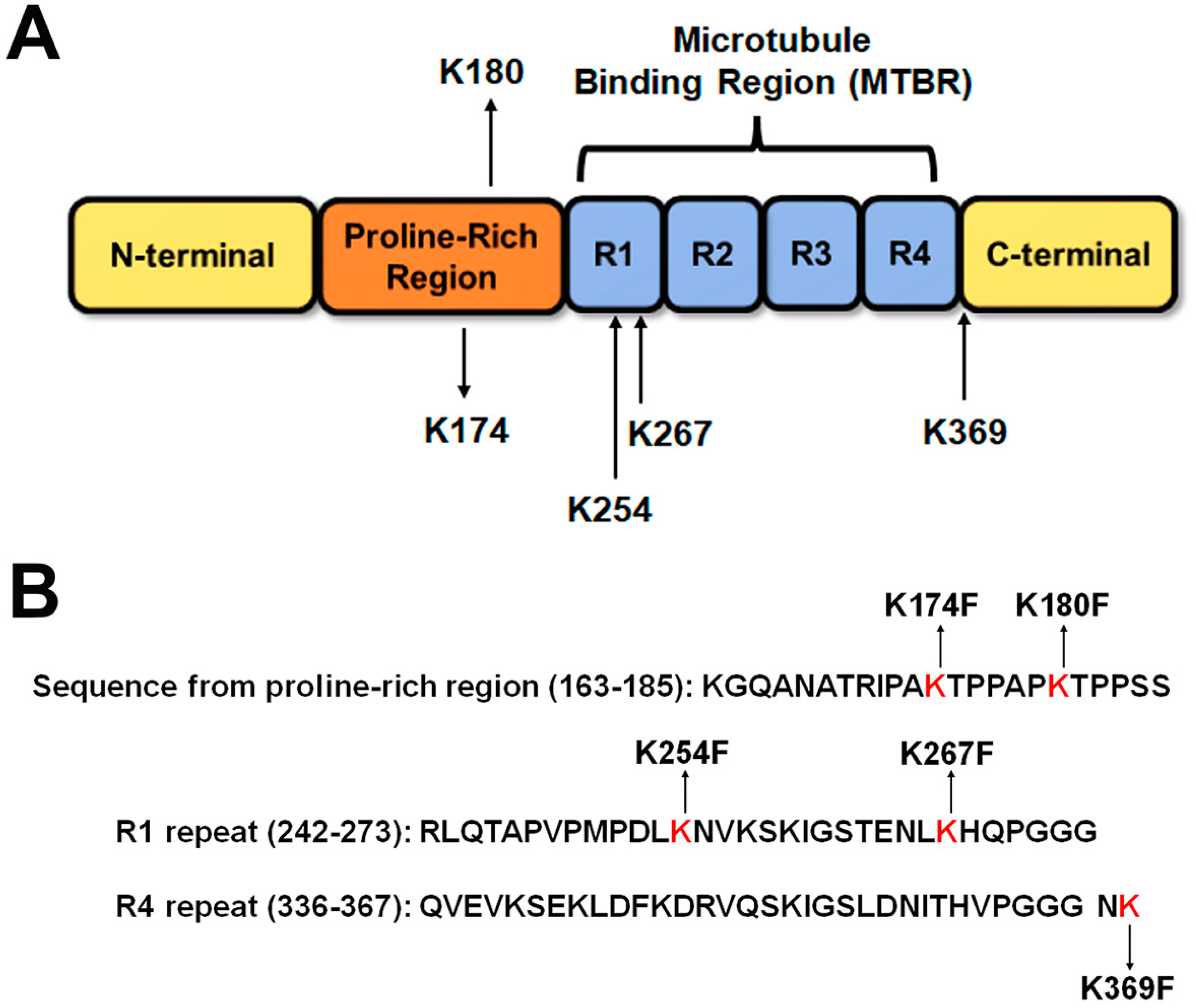
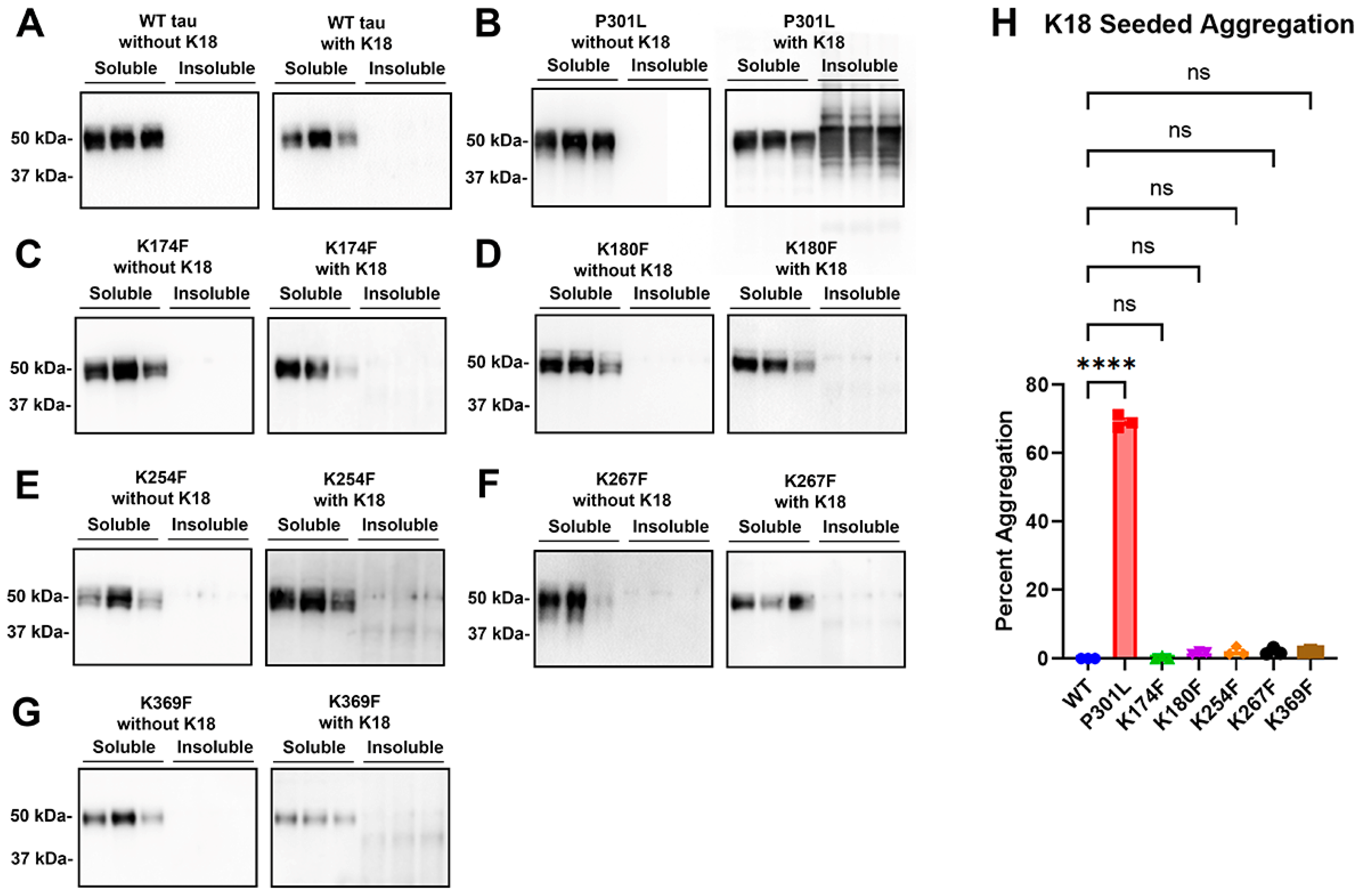
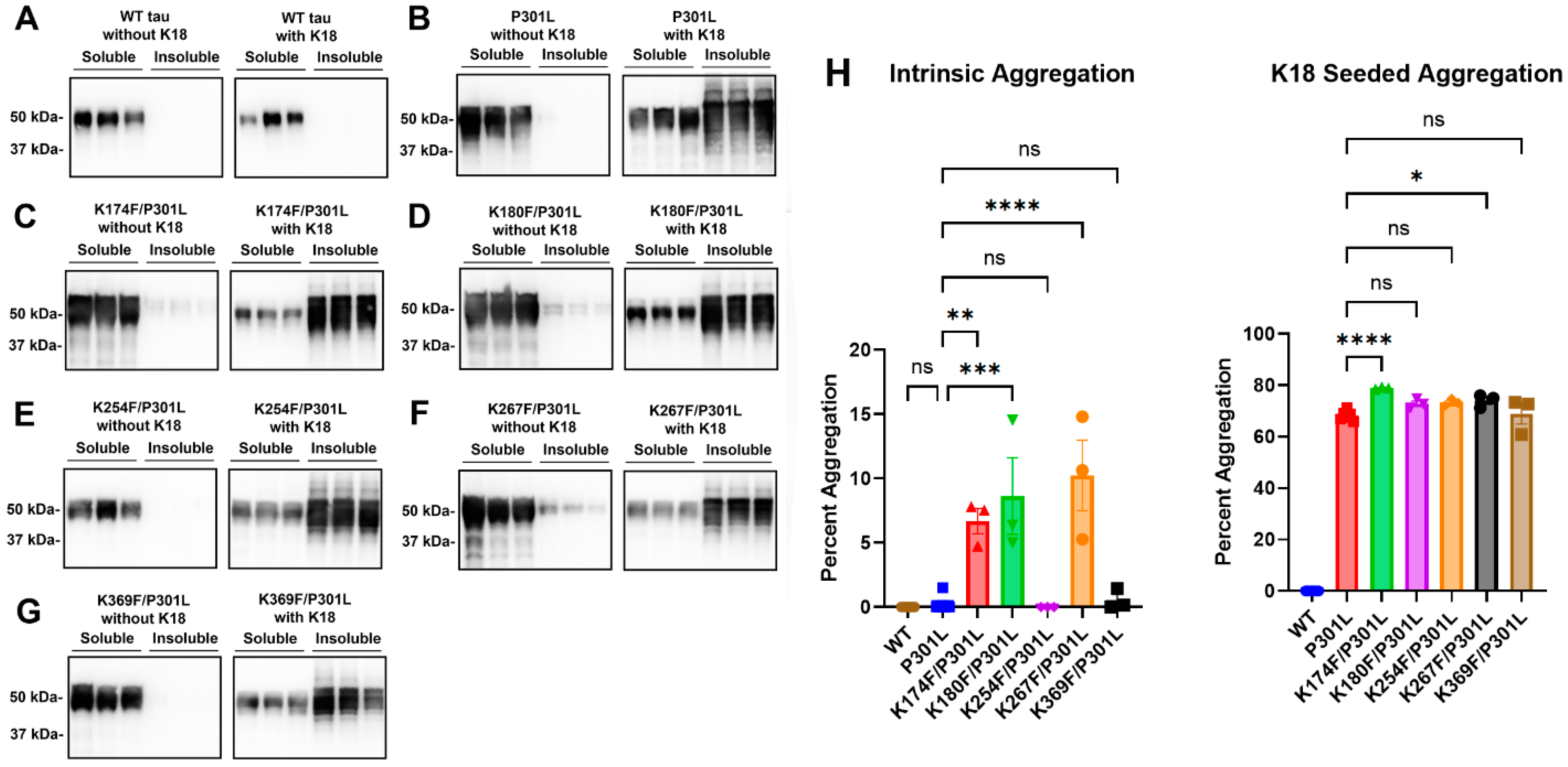
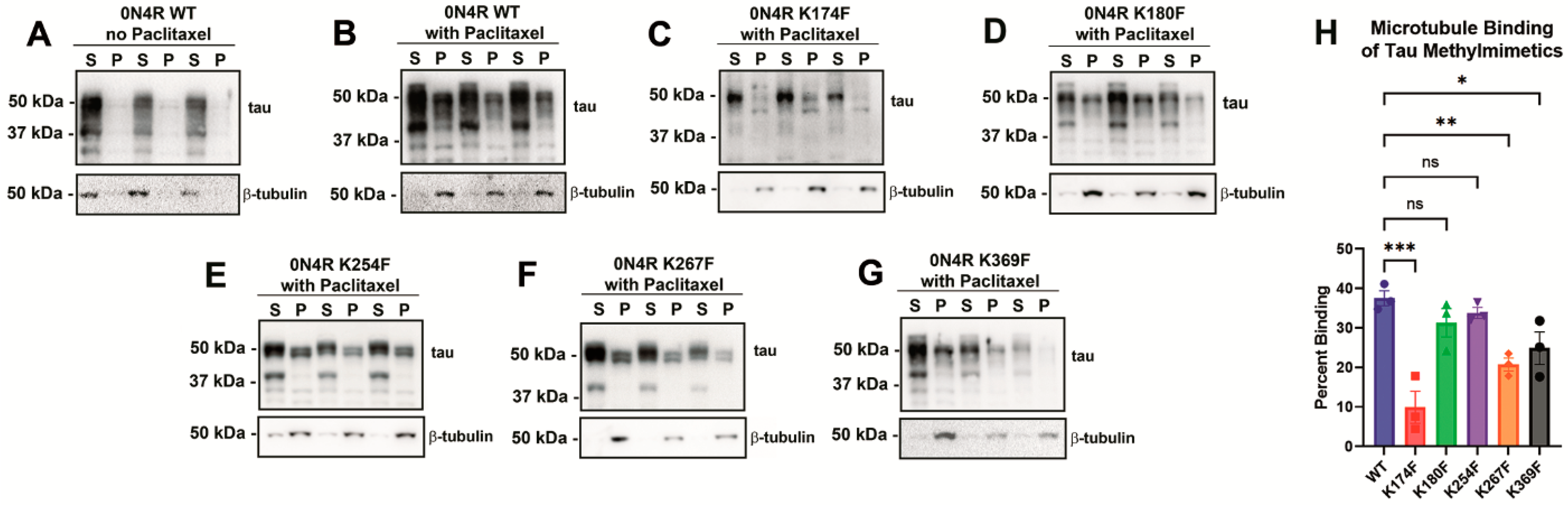
Alzheimer’s disease (AD) and frontotemporal dementia (FTD) can be classified as tauopathies, which are a group of neurodegenerative diseases that develop toxic tau aggregates in specific brain regions. These pathological tau inclusions are altered by various post-translational modifications (PTMs) that include phosphorylation, acetylation, and methylation. Tau methylation has emerged as a target of interest for its potential involvement in tau pathomechanisms. Filamentous tau aggregates isolated from patients with AD are methylated at multiple lysine residues, although the exact methyltransferases have not been identified. One strategy to study the site-specific effects of methylation is to create methylation mimetics using a KFC model, which replaces lysine (K) with a hydrophobic group such as phenylalanine (F) to approximate the effects of lysine methylation (C or methyl group). In this study, tau methylmimetics were used to model several functional aspects of tau methylation such as effects on microtubule binding and tau aggregation in cell models. Overall, several tau methylmimetics displayed impaired microtubule binding, and tau methylmimetics enhanced prion-like seeded aggregation in the context of the FTD tau mutation P301L. Like other PTMs, tau methylation is a contributing factor to tau pathogenesis and could be a potential therapeutic drug target for the treatment of different tauopathies.
Keywords: Alzheimer’s disease; frontotemporal dementia; tau protein; tauopathies; methylation; aggregation; microtubule binding; post-translational modifications; prion-like spread Alzheimer’s disease; frontotemporal dementia; tau protein; tauopathies; methylation; aggregation; microtubule binding; post-translational modifications; prion-like spread