Article

Exploring the Non-Covalent Bonding in Water Clusters

1
Grupo de Química Computacional y Teórica (QCT-UR), Escuela de Ingeniería Ciencia y Tecnología (EICT), Universidad del Rosario, Bogotá 111221, Colombia
2
Grupo de Química Computacional y Teórica (QCT-USFQ), Departamento de Ingeniería Química, Universidad San Francisco de Quito, Diego de Robles y Vía Interoceánica, Quito 17-1200-841, Ecuador
3
Laboratorio de Procesos Dinámicos en Química, Departamento de Química, Facultad de Ciencias, Universidad de Los Andes, Mérida 5101, Venezuela
4
Departamento de Química, Universidad Nacional de Colombia, Av. Cra. 30 #45-03, Bogotá 111321, Colombia
*
Author to whom correspondence should be addressed.
Int. J. Mol. Sci. 2023, 24(6), 5271; https://doi.org/10.3390/ijms24065271
Submission received: 27 January 2023 / Revised: 13 February 2023 / Accepted: 16 February 2023 / Published: 9 March 2023
(This article belongs to the Special Issue Advances in Chemical Bond and Bonding 2.0)

Abstract

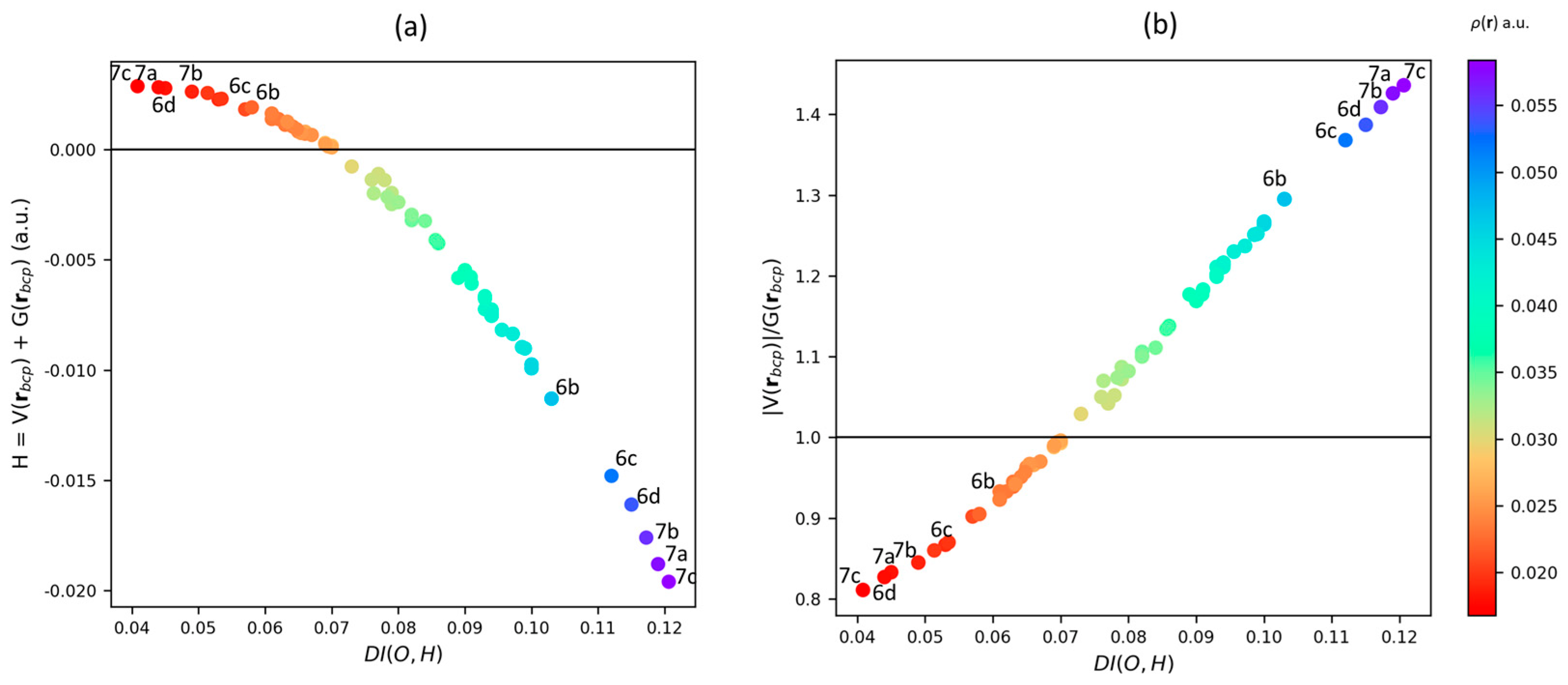
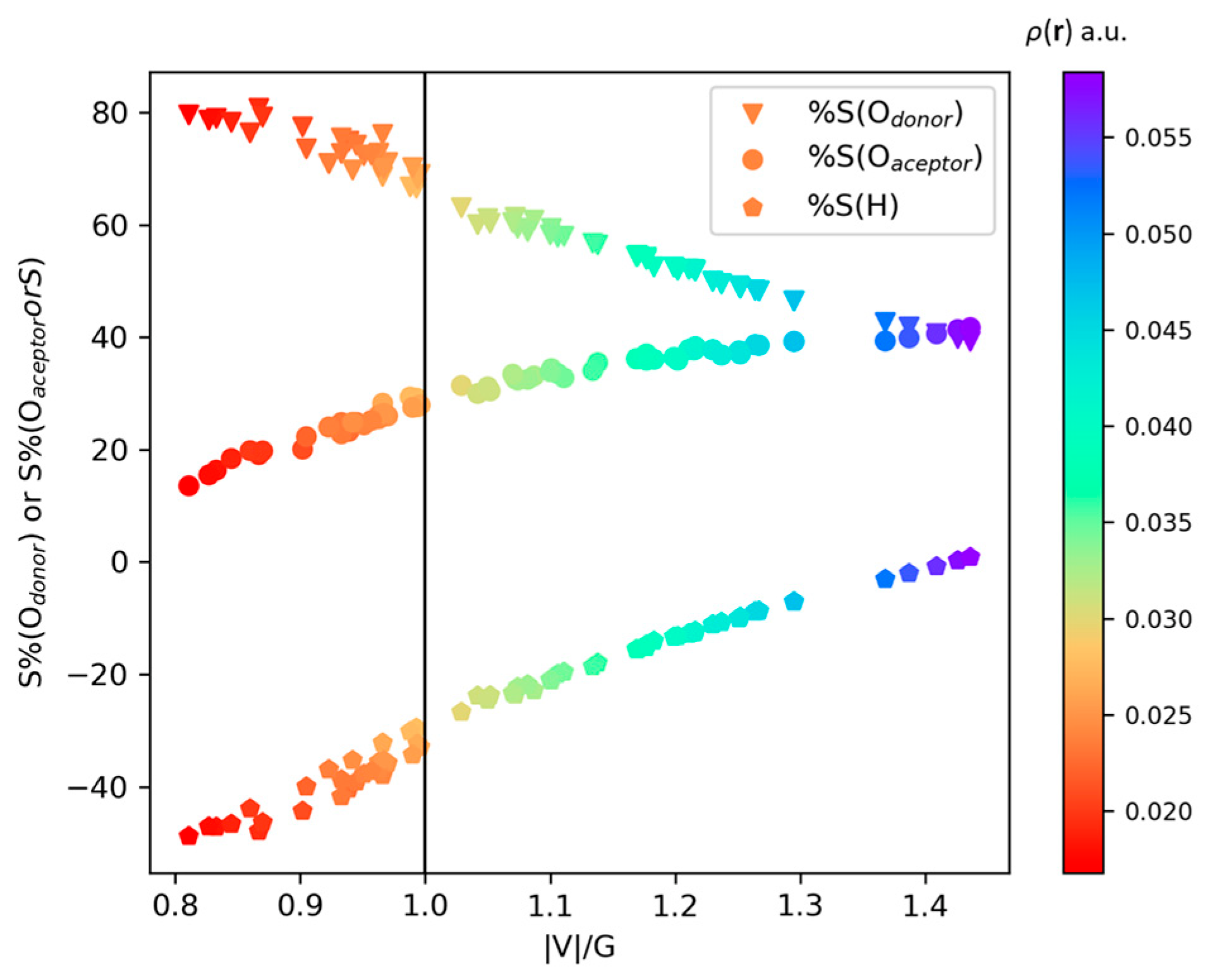
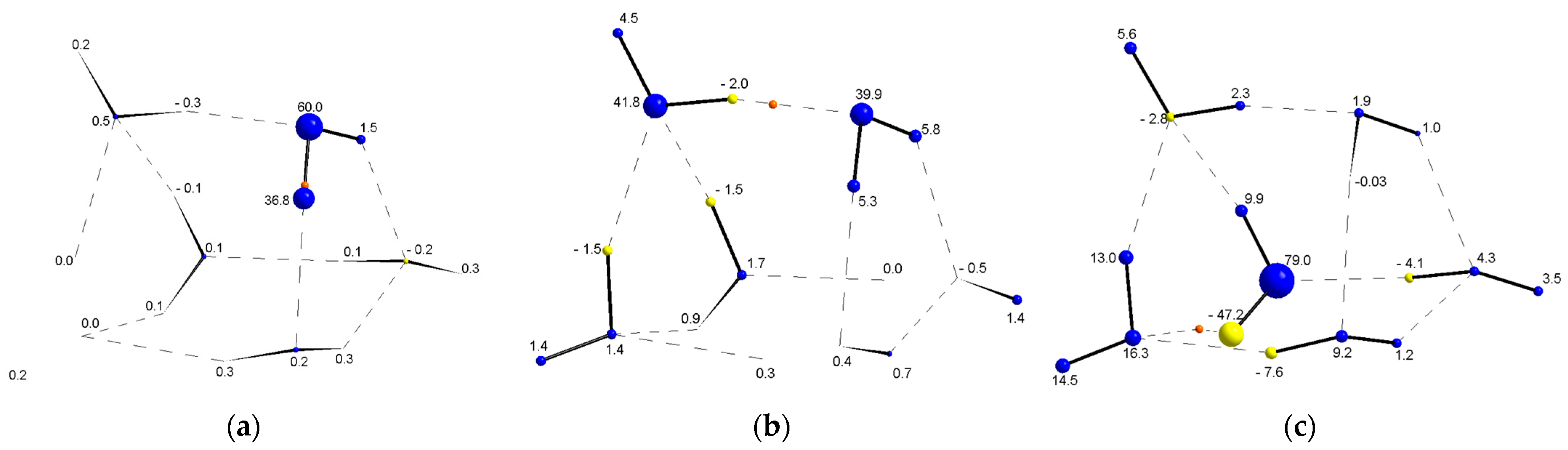
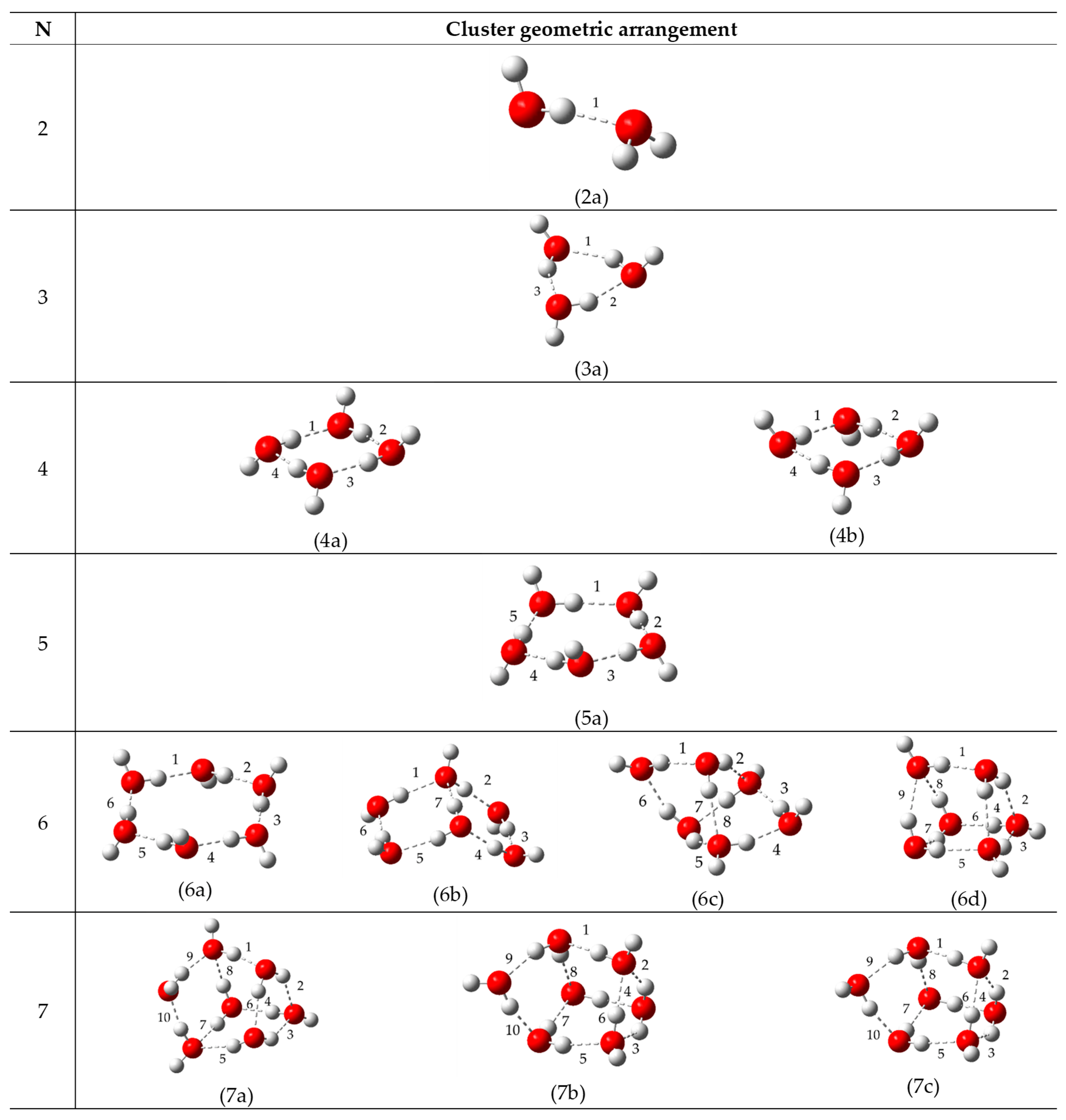
QTAIM and source function analysis were used to explore the non-covalent bonding in twelve different water clusters (H2O)n obtained by considering n = 2–7 and various geometrical arrangements. A total of seventy-seven O−H⋯O hydrogen bonds (HBs) were identified in the systems under consideration, and the examination of the electron density at the bond critical point (BCP) of these HBs revealed the existence of a great diversity of O−H⋯O interactions. Furthermore, the analysis of quantities, such as |V(r)|/G(r) and H(r), allowed a further description of the nature of analogous O−H⋯O interactions within each cluster. In the case of 2-D cyclic clusters, the HBs are nearly equivalent between them. However, significant differences among the O−H⋯O interactions were observed in 3-D clusters. The assessment of the source function (SF) confirmed these findings. Finally, the ability of SF to decompose the electron density (ρ) into atomic contributions allowed the evaluation of the localized or delocalized character of these contributions to ρ at the BCP associated to the different HBs, revealing that weak O−H⋯O interactions have a significant spread of the atomic contributions, whereas strong interactions have more localized atomic contributions. These observations suggest that the nature of the O−H⋯O hydrogen bond in water clusters is determined by the inductive effects originated by the different spatial arrangements of the water molecules in the studied clusters.
Keywords: non-covalent interactions; hydrogen bonds; QTAIM; source function non-covalent interactions; hydrogen bonds; QTAIM; source function