Polyphenols in Sugar Beet Leaves: Composition, Variability, and Valorization Opportunities




Abstract
1. Introduction
2. Results and Discussion
2.1. Selection of the Optimal Extraction Solvent
2.2. Dry Weight Content
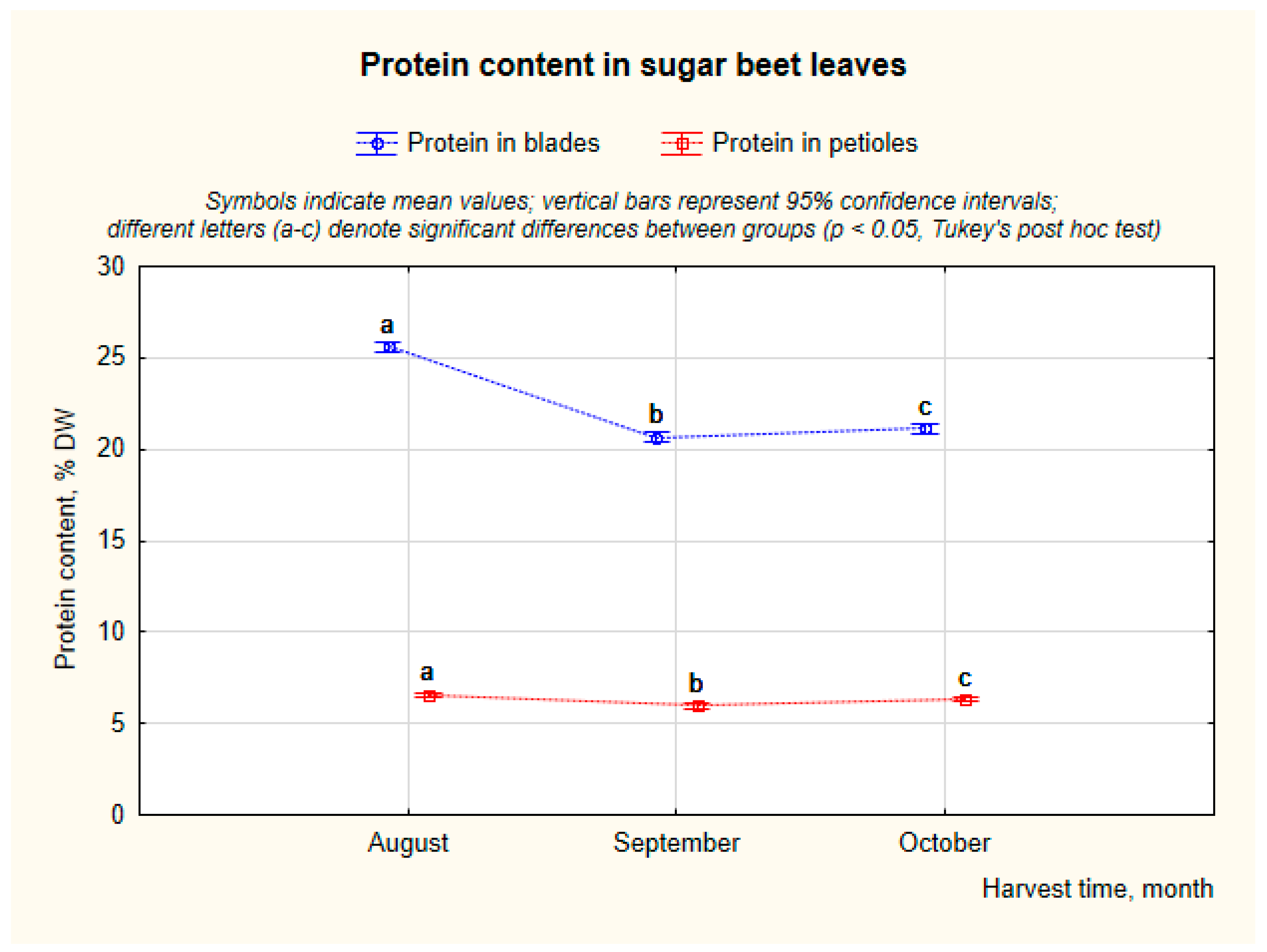
2.3. Protein Content
2.4. Polyphenols in Sugar Beet Leaves
2.4.1. Characterization of Polyphenolic Compounds Identified in SBL by LC-MS
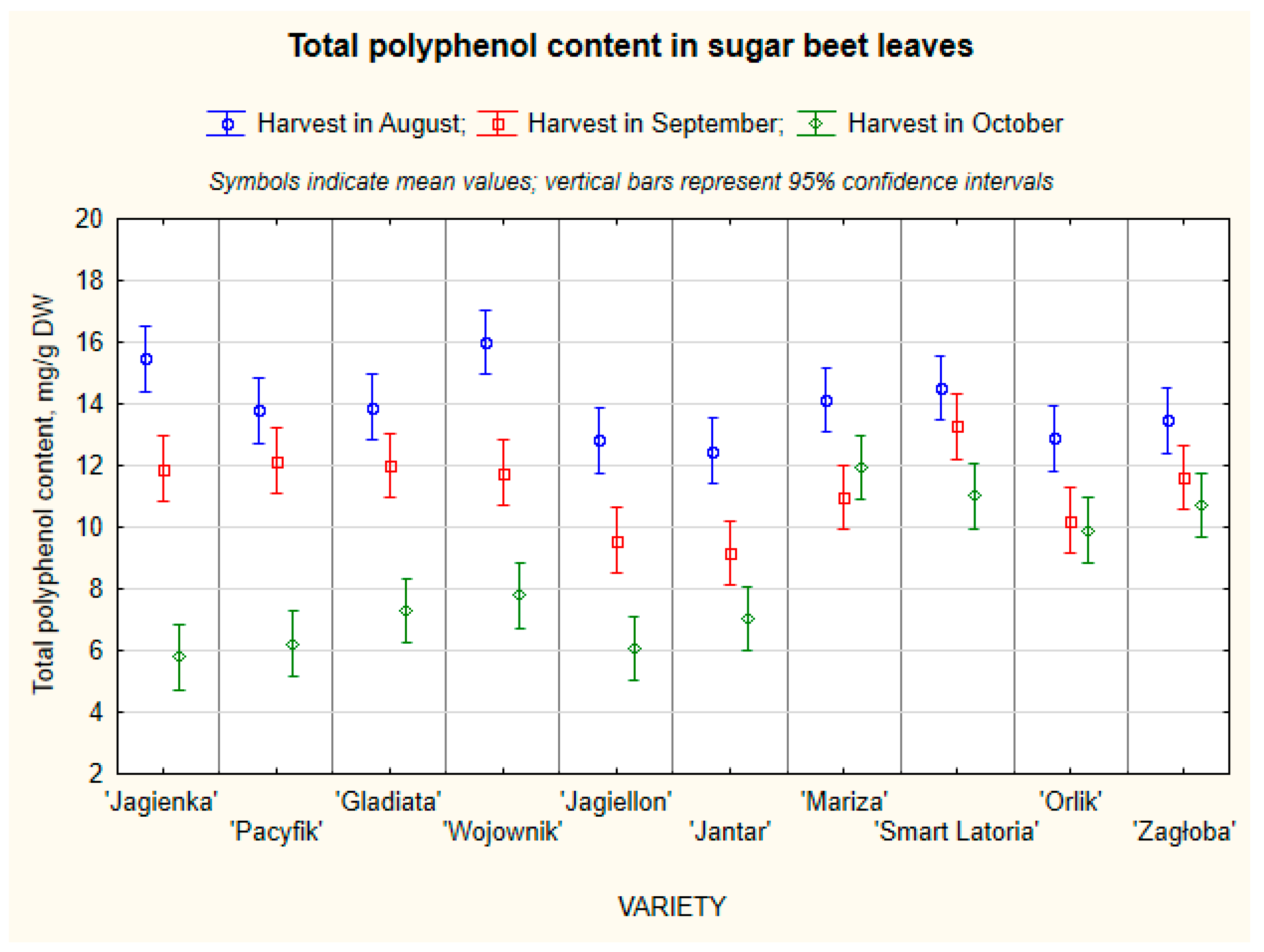
2.4.2. Total Polyphenol Content in SBL
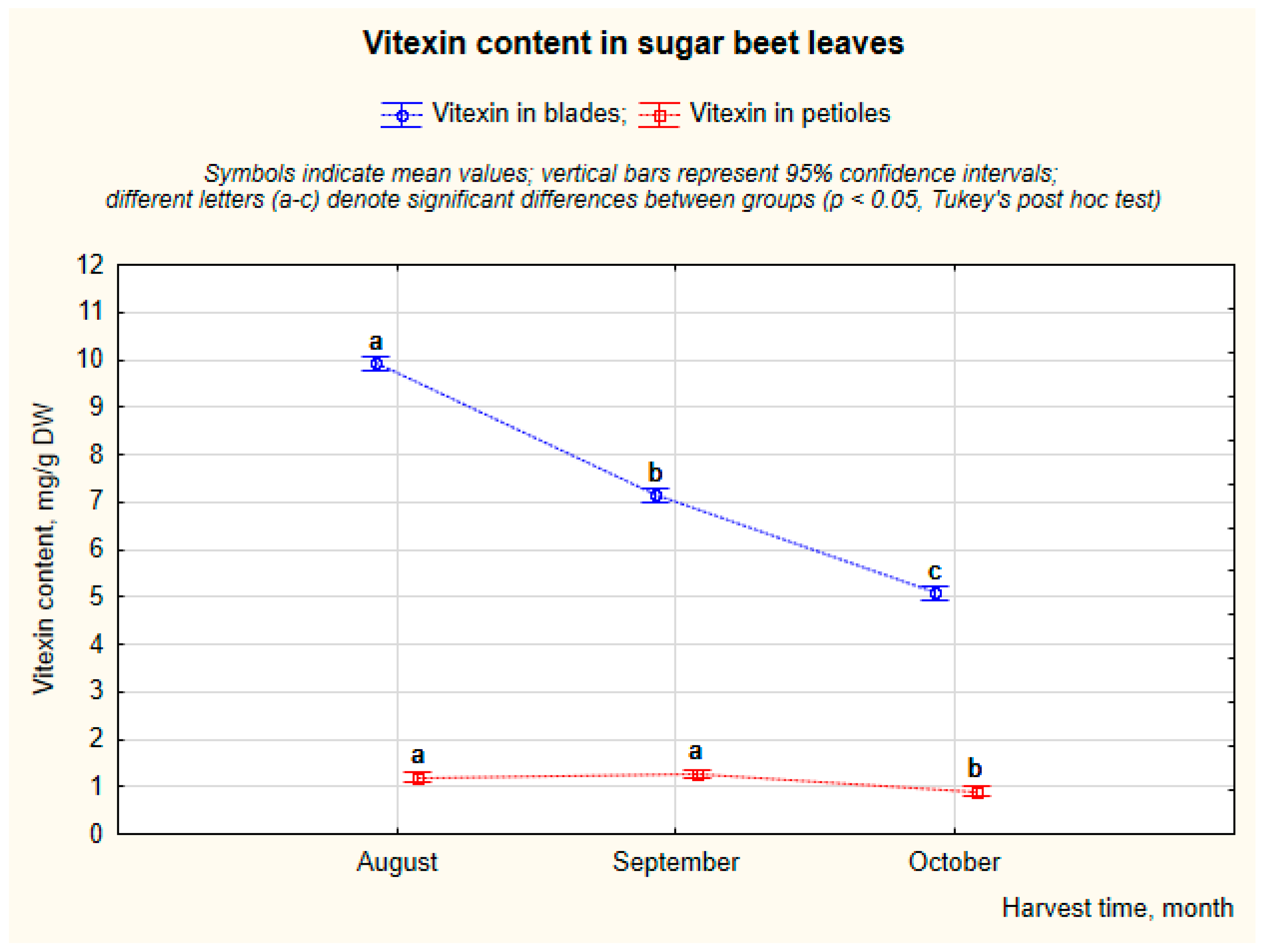
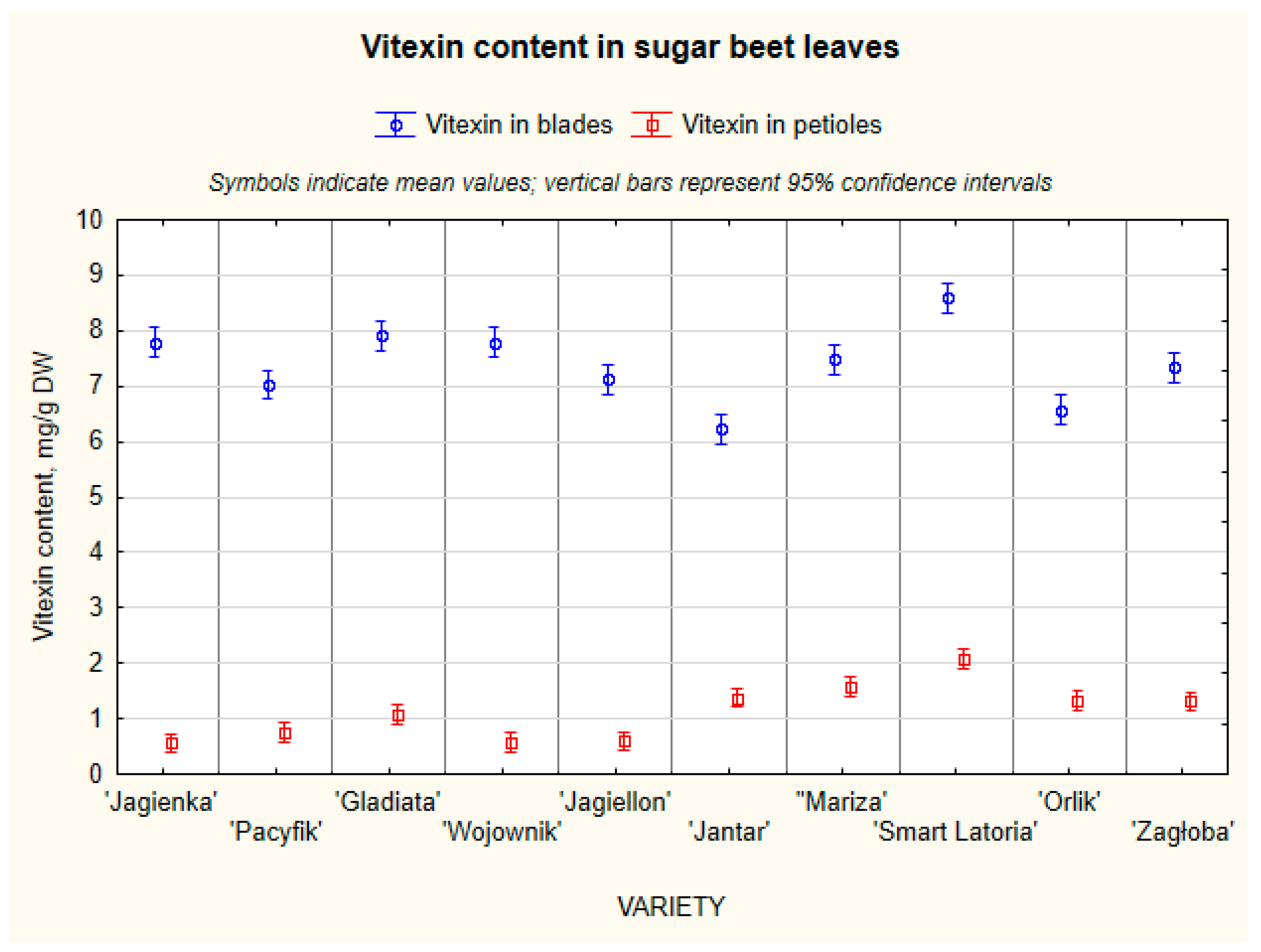
2.4.3. Vitexin and Vitexin Derivatives Content in SBL
3. Materials and Methods
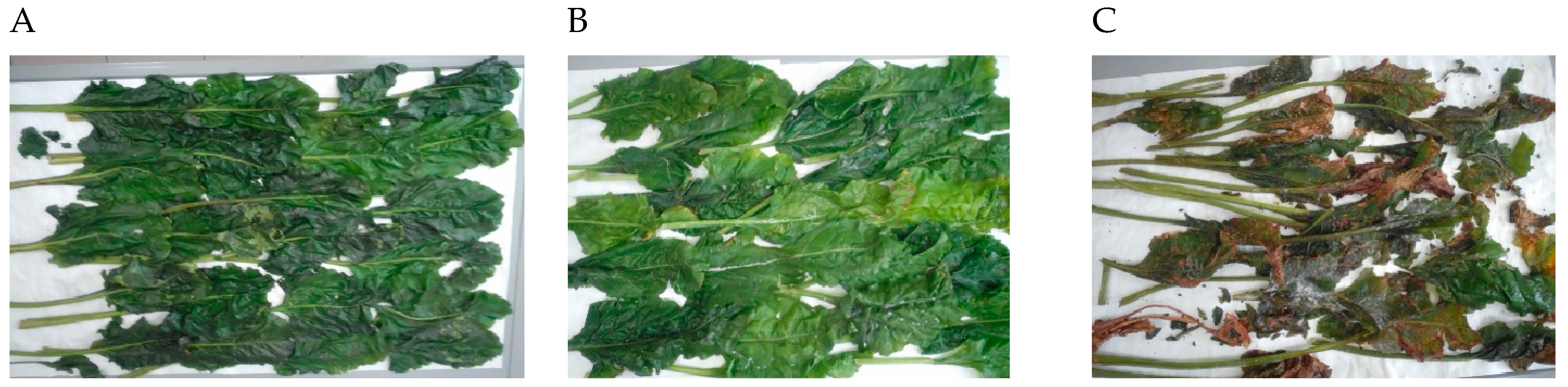
3.1. Plant Material
3.2. Extraction of Polyphenols
3.3. Chromatographic Analysis
3.4. Dry Weight
3.5. Protein
3.6. Statistical Analysis
4. Conclusions
Supplementary Materials
Author Contributions
Funding
Institutional Review Board Statement
Informed Consent Statement
Data Availability Statement
Acknowledgments
Conflicts of Interest
Abbreviations
| SBL | Sugar beet leaves |
| DW | Dry weight |
| TPC | Total polyphenol content |
| MeOH | Methanol |
| EtOH | Ethanol |
References
- Wojtczak, M. The 2024/25 Sugar Campaign in Numbers—A Summary of Production and Technological Results. Presentation Slides, 37th STC Technical–Raw Material–Analytical Conference “Sugar 4.0”, Warsaw, Poland, 22–23 May 2025; Stowarzyszenie Techników Cukrowników (STC). Available online: https://www.stc.pl/pdfy/konferencja2025/Kampania_cukrownicza_2024-25_w_cyfrach_STC2025.pdf (accessed on 22 November 2025).
- Van der Poel, P.W.; Schiweck, H.; Schwartz, T. Sugar Technology: Beet and Cane Sugar Manufacture; Verlag Dr. Albert Bartens KG: Berlin, Germany, 1998. [Google Scholar]
- Vissers, A.; Kiskini, A.; Hilgers, R.; Marinea, M.; Wierenga, P.A.; Gruppen, H.; Vincken, J.-P. Enzymatic Browning in Sugar Beet Leaves (Beta vulgaris L.): Influence of Caffeic Acid Derivatives, Oxidative Coupling, and Coupled Oxidation. J. Agric. Food Chem. 2017, 65, 4911–4920. [Google Scholar] [CrossRef] [Scilit] [PubMed]
- Ebrahimi, P.; Khamirikar, F.; Lante, A. Unlocking the Biorefinery Approaches to Valorize Sugar Beet Leaves (B. vulgaris L.) for Food Industry Applications: A Critical Review. Food Res. Int. 2024, 197, 115145. [Google Scholar] [CrossRef] [Scilit] [PubMed]
- Stoica, F.; Râpeanu, G.; Rațu, R.N.; Stănciuc, N.; Croitoru, C.; Țopa, D.; Jităreanu, G. Red Beetroot and Its By-Products: A Comprehensive Review of Phytochemicals, Extraction Methods, Health Benefits, and Applications. Agriculture 2025, 15, 270. [Google Scholar] [CrossRef] [Scilit]
- Arjeh, E.; Khodaei, S.M.; Barzegar, M.; Pirsa, S.; Karimi Sani, I.; Rahati, S.; Mohammadi, F. Phenolic Compounds of Sugar Beet (Beta vulgaris L.): Separation Method, Chemical Characterization, and Biological Properties. Food Sci. Nutr. 2022, 10, 4238–4246. [Google Scholar] [CrossRef] [Scilit]
- López-Fernández, O.; Domínguez, R.; Pateiro, M.; Munekata, P.E.S.; Rocchetti, G.; Lorenzo, J.M. Determination of Polyphenols Using Liquid Chromatography–Tandem Mass Spectrometry Technique (LC–MS/MS): A Review. Antioxidants 2020, 9, 479. [Google Scholar] [CrossRef] [Scilit]
- Mikołajczyk-Bator, K.; Błaszczyk, A.; Czyżniejewski, M.; Kachlicki, P. Identification of Saponins from Sugar Beet (Beta vulgaris) by Low and High-Resolution HPLC-MS/MS. J. Chromatogr. B 2016, 1029–1030, 36–47. [Google Scholar] [CrossRef] [Scilit]
- Mroczek, A.; Kapusta, I.; Stochmal, A.; Janiszowska, W. MS/MS and UPLC-MS Profiling of Triterpenoid Saponins from Leaves and Roots of Four Red Beet (Beta vulgaris L.) Cultivars. Phytochem. Lett. 2019, 30, 333–337. [Google Scholar] [CrossRef] [Scilit]
- Santamaría-Fernández, M.; Lübeck, M. Production of Leaf Protein Concentrates in Green Biorefineries as Alternative Feed for Monogastric Animals. Anim. Feed Sci. Technol. 2020, 268, 114605. [Google Scholar] [CrossRef] [Scilit]
- Furia, K.A.; Majzoobi, M.; Torley, P.J.; Farahnaky, A. Innovative Approaches in Leaf Protein Extraction: Advancements, Challenges, and Applications in Sustainable Food Formulation and Design. Crit. Rev. Food Sci. Nutr. 2025, 8, 1–33. [Google Scholar] [CrossRef] [Scilit]
- Ehsani, M.; Westphalen, H.; Doan, H.; Lohi, A.; Abdelrasoul, A. Advancing Faba Bean Protein Purification Using Membrane Technology: Current State and Future Perspectives. J. Compos. Sci. 2024, 8, 15. [Google Scholar] [CrossRef] [Scilit]
- Palos-Hernández, A.; González-Paramás, A.M.; Santos-Buelga, C. Latest Advances in Green Extraction of Polyphenols from Plants, Foods and Food By-Products. Molecules 2025, 30, 55. [Google Scholar] [CrossRef] [Scilit] [PubMed]
- Akyüz, A.; Tekin, İ.; Aksoy, Z.; Ersus, S. Determination of Process Parameters and Precipitation Methods for Potential Large-Scale Production of Sugar Beet Leaf Protein Concentrate. J. Sci. Food Agric. 2024, 104, 3235–3245. [Google Scholar] [CrossRef] [Scilit] [PubMed]
- Ebrahimi, P.; Mihaylova, D.; Marangon, C.M.; Grigoletto, L.; Lante, A. Impact of Sample Pretreatment and Extraction Methods on the Bioactive Compounds of Sugar Beet (Beta vulgaris L.) Leaves. Molecules 2022, 27, 8110. [Google Scholar] [CrossRef] [Scilit] [PubMed]
- Dukić, J.; Hunić, M.; Nutrizio, M.; Režek Jambrak, A. Influence of High-Power Ultrasound on Yield of Proteins and Specialized Plant Metabolites from Sugar Beet Leaves (Beta vulgaris subsp. vulgaris var. altissima). Appl. Sci. 2022, 12, 8949. [Google Scholar] [CrossRef] [Scilit]
- Kamali, H.; Zand-Parsa, S. Estimation of Sugar Beet Yield and Its Dry Matter Partitioning under Different Irrigation and Nitrogen Levels. Mod. Appl. Sci. 2016, 11, 143. [Google Scholar] [CrossRef] [Scilit]
- Xu, X.; Li, Y.; Cheng, Y.; Zhao, J.; Wang, X.; Ma, F. Effects of Irrigation and Nitrogen on Chlorophyll Content, Dry Matter and Nitrogen Accumulation in Sugar Beet (Beta vulgaris L.). Sci. Rep. 2021, 11, 95792. [Google Scholar] [CrossRef] [Scilit]
- Kim, S.; Ryu, J.; Kim, J.; Lee, H.; Lee, D.; Lee, Y. Optimizing Nitrogen Application Enhances Sugar Beet (Beta vulgaris L.) Productivity by Modulating Carbon and Nitrogen Metabolism. Agronomy 2025, 15, 1142. [Google Scholar] [CrossRef] [Scilit]
- Choluj, D.; Karwowska, R.; Jasińska, M.; Haber, G. Growth and Dry Matter Partitioning in Sugar Beet Plants (Beta vulgaris L.) under Moderate Drought. Plant Soil Environ. 2004, 50, 265–272. [Google Scholar] [CrossRef] [Scilit]
- Kaya, M.; Ergin, S. Classification of Red Beet and Sugar Beet for Drought Tolerance Using Morpho-Physiological and Stomatal Traits. PeerJ 2025, 13, e19133. [Google Scholar] [CrossRef] [Scilit]
- Akyüz, A.; Ersus, S. Optimization of Enzyme-Assisted Extraction of Protein from Sugar Beet (Beta vulgaris L.) Leaves for Alternative Plant Protein Concentrate Production. Food Chem. 2021, 335, 127673. [Google Scholar] [CrossRef] [Scilit]
- Goktayoglu, E.; Oztop, M.H.; Ozcan, S. Proteomics Approach to Differentiate Protein Extraction Methods in Sugar Beet Leaves. J. Agric. Food Chem. 2023, 71, 23. [Google Scholar] [CrossRef] [Scilit]
- Kiskini, A.; Vissers, A.; Vincken, J.-P.; Gruppen, H.; Wierenga, P.A. Effect of Plant Age on the Quantity and Quality of Proteins Extracted from Sugar Beet (Beta vulgaris L.) Leaves. J. Agric. Food Chem. 2016, 64, 8305–8314. [Google Scholar] [CrossRef] [Scilit]
- Tamayo Tenorio, A.; Schreuders, F.K.G.; Zisopoulos, F.K.; Boom, R.M.; van der Goot, A.J. Processing Concepts for the Use of Green Leaves as Raw Materials for the Food Industry. J. Clean. Prod. 2017, 164, 736–748. [Google Scholar] [CrossRef] [Scilit]
- Rijken, H.; Saleem, A.; Renedo, J.V.; Tossens, A.; Bruins, M.E.; Trindad, L.M. Genetic Determinants of Leaf Protein Content and Extractability in Sugar Beet: Opportunities for Leaf Biomass Valorisation. J. Agric. Food Res. 2025, 24, 102498. [Google Scholar] [CrossRef] [Scilit]
- Cao, J.; Yin, C.; Qin, Y.; Cheng, Z.; Chen, D. Approach to the Study of Flavone di-C-Glycosides by High-Performance Liquid Chromatography–Tandem Ion Trap Mass Spectrometry and Its Application to Characterization of Flavonoid Composition in Viola yedoensis. J. Mass Spectrom. 2014, 49, 1010–1020. [Google Scholar] [CrossRef] [Scilit] [PubMed]
- Biondo, P.B.F.; Boeing, J.S.; Barizão, É.O.; de Souza, N.E.; Matsushita, M.; de Oliveira, C.C.; Boroski, M.; Visentainer, J.V. Evaluation of Beetroot (Beta vulgaris L.) Leaves during Its Developmental Stages: A Chemical Composition Study. Food Sci. Technol. 2014, 34, 94–101. [Google Scholar] [CrossRef] [Scilit]
- Maravić, N.; Teslić, N.; Nikolić, D.; Dimić, I.; Šereš, Z.; Pavlić, B. From Agricultural Waste to Antioxidant-Rich Extracts: Green Techniques in Extraction of Polyphenols from Sugar Beet Leaves. Sustain. Chem. Pharm. 2022, 28, 100728. [Google Scholar] [CrossRef] [Scilit]
- El-Gengaihi, S.E.; Hamed, M.A.; Aboubaker, D.H.; Mossa, A.T.H. Flavonoids from Sugar Beet Leaves as Hepatoprotective Agent. Int. J. Pharm. Pharm. Sci. 2016, 8, 281–286. Available online: https://innovareacademics.in/journals/index.php/ijpps/article/view/10121/4192 (accessed on 20 December 2025).
- Ranjan, R.; Kishore, K.; Ranjan, R.; Sheikh, T.J.; Jha, A.K.; Ojha, B.K.; Kumar, S.; Kumar, R. Nutraceutical Potential of Vitexin: A Flavone Glycoside. J. Phytopharmacol. 2023, 12, 44–50. [Google Scholar] [CrossRef] [Scilit]
- Ninfali, P.; Antonini, E.; Frati, A.; Scarpa, E.S. C-Glycosyl Flavonoids from Beta vulgaris cicla and Betalains from Beta vulgaris rubra: Antioxidant, Anticancer and Antiinflammatory Activities—A Review. Phytother. Res. 2017, 31, 871–884. [Google Scholar] [CrossRef] [Scilit]
- Dong, L.; Fan, Y.; Shao, X.; Chen, Z. Vitexin Protects Against Myocardial Ischemia/Reperfusion Injury in Langendorff-Perfused Rat Hearts by Attenuating Inflammatory Response and Apoptosis. Food Chem. Toxicol. 2011, 49, 3211–3216. [Google Scholar] [CrossRef] [Scilit]
- Lima, L.K.F.; Pereira, S.K.S.; Junior, R.D.S.S.; Santos, F.P.D.S.; Nascimento, A.S.; Feitosa, C.M.; Figuerêdo, J.S.; Cavalcante, A.D.N.; Araújo, E.D.C.D.; Rai, M. A Brief Review on the Neuroprotective Mechanisms of Vitexin. BioMed Res. Int. 2018, 2018, 4785089. [Google Scholar] [CrossRef] [Scilit]
- Abdulai, I.L.; Kwofie, S.K.; Gbewonyo, W.S.; Boison, D.; Puplampu, J.B.; Adinortey, M.B. Multitargeted Effects of Vitexin and Isovitexin on Diabetes Mellitus and Its Complications. Sci. World J. 2021, 2021, 6641128. [Google Scholar] [CrossRef] [Scilit]
- Lorizola, I.M.; Furlan, C.P.B.; Portovedo, M.; Milanski, M.; Botelho, P.B.; Bezerra, R.M.N.; Sumere, B.R.; Rostagno, M.A.; Capitani, C.D. Beet Stalks and Leaves (Beta vulgaris L.) Protect Against High-Fat Diet-Induced Oxidative Damage in the Liver in Mice. Nutrients 2018, 10, 872. [Google Scholar] [CrossRef] [Scilit]
- Strieder, M.M.; de Oliveira, I.L.; Bragagnolo, F.S.; Sanches, V.L.; Pizani, R.S.; Mesquita, L.M.S.; Rostagno, M.A. Consistency of Phenolic Compounds in Plant Residues Parts: A Review of Primary Sources, Key Compounds, and Extraction Trends. J. Agric. Food Chem. 2025, 73, 11515–11534. [Google Scholar] [CrossRef] [Scilit]
- AOAC International. Official Method 2001.11: Protein (Crude) in Animal Feed, Forage (Plant Tissue), Grain, and Oilseeds; AOAC International: Gaithersburg, MD, USA, 2001. [Google Scholar]
- StatSoft, Inc. STATISTICA (Data Analysis Software System), Version 10; StatSoft, Inc.: Tulsa, OK, USA, 2011.



| Total Polyphenol Content, mg/g DW | ||||||
|---|---|---|---|---|---|---|
| MeOH 70% | MeOH 60% | MeOH 50% | EtOH 70% | EtOH 60% | EtOH 50% | |
| blades | 11.7 a ± 0.4 | 11.0 a,b ± 0.1 | 10.4 b ± 0.5 | 8.3 c ± 0.2 | 8.9 b,c ± 0.9 | 6.3 d ± 0.5 |
| petioles | 0.6 a ± 0.07 | 0.6 a ± 0.03 | 0.4 b ± 0.03 | 0.6 a ± 0.11 | 0.6 a ± 0.18 | 0.4 b ± 0.06 |
| Dry Weight, % | ||||||
|---|---|---|---|---|---|---|
| Harvest | August | September | October | |||
| Varieties | Blades | Petioles | Blades | Petioles | Blades | Petioles |
| ‘Jagienka’ | 15.3 ± 0.3 | 13.1 ± 0.2 | 16.3 ± 0.3 | 13.3 ± 0.2 | 18.9 ± 0.2 | 11.7 ± 0.3 |
| ‘Pacyfik’ | 15.6 ± 0.3 | 12.9 ± 0.3 | 18.5 ± 0.3 | 14.9 ± 0.2 | 19.7 ± 0.2 | 11.8 ± 0.2 |
| ‘Gladiata’ | 14.5 ± 0.2 | 12.4 ± 0.3 | 17.5 ± 0.3 | 18.2 ± 0.3 | 17.4 ± 0.2 | 13.1 ± 0.2 |
| ‘Wojownik’ | 15.1 ± 0.3 | 12.9 ± 0.2 | 17.6 ± 0.2 | 13.1 ± 0.2 | 16.2 ± 0.2 | 11.8 ± 0.2 |
| ‘Jagiellon’ | 15.9 ± 0.7 | 12.3 ± 0.2 | 16.7 ± 0.8 | 12.6 ± 0.2 | 16.9 ± 0.6 | 10.6 ± 0.3 |
| ‘Jantar’ | 18.8 ± 0.2 | 21.7 ± 0.1 | 22.9 ± 0.2 | 14.3 ± 0.3 | 14.8 ± 0.2 | 15.8 ± 0.2 |
| ‘Mariza’ | 20.6 ± 0.2 | 23.9 ± 0.2 | 23.9 ± 0.2 | 15.3 ± 0.3 | 15.2 ±0.2 | 16.9 ± 0.2 |
| ‘Smart Latoria’ | 20.1 ± 0.2 | 21.7 ± 0.3 | 21.0 ± 0.2 | 14.5 ± 0.2 | 15.1 ± 0.3 | 15.3 ± 0.2 |
| ‘Orlik’ | 19.4 ± 0.3 | 22.2 ± 0.2 | 22.9 ± 0.3 | 15.1 ± 0.2 | 16.8 ± 0.3 | 16.1 ± 0.3 |
| ‘Zagłoba’ | 19.2 ± 0.4 | 22.2 ± 0.3 | 22.6 ± 0.3 | 14.8 ± 0.3 | 16.2 ± 0.2 | 16.1 ± 0.2 |
| No | tR (min) | Tentative Identification | Nominal Mass (Da) | MS Data (m/z) | MS/MS Data (m/z) | UV-VIS max (nm) |
|---|---|---|---|---|---|---|
| 1 | 27.1 | apigenin dihexoside | 594 | [593]− | 473, 413, 293 | 269, 339 |
| 2 | 28.1 | apigenin hexopentoside | 564 | [563]− | 413, 293 | 269, 328 |
| 3 | 28.7 | (iso)rhamnetin hexopentoside | 610 | [609]− | 285 | 270, 336 |
| 4 | 28.8 | vitexin | 432 | [431]− | 341, 311, 283 | 269, 338 |
| 5 | 29.0 | flavonol dihexoside | 636 | [635]− | 473, 413, 311, 293 | 268, 336 |
| 6 | 29.3 | (iso)rhamnetin dihexoside | 640 | [639]− | 315 | 270, 352 |
| 7 | 29.7 | flavonol dihexoside | 636 | [635]− | 593, 575, 515, 473, 413, 311, 293 | 268, 335 |
| 8 | 30.4 | (iso)rhamnetin hexopentoside | 610 | [609]− | 315 | 254, 363 |
| 9 | 30.5 | flavonol dihexoside | 636 | [635]− | 575, 473, 455, 329, 311, 293 | 270, 335 |
| 10 | 30.9 | acylated apigenin hexopentoside | 606 | [605]− | 563, 545, 455, 433, 413, 395, 353, 311, 293 | 269, 333 |
| 11 | 31.8 | acylated apigenin hexopentoside | 606 | [605]− | 545, 455, 443, 311, 293 | 270, 335 |
| 12 | 34.1 | diferulic acid | 388 | [387]− [193]−2 | 309, 289, 96 289, 193, 96 | 270, 326 |
| VARIETY | TPC, mg/g DW Blades | TPC, mg/g DW Petioles |
|---|---|---|
| ‘Jagienka’ | 10.3 a,b ± 4.2 | 0.8 a ± 0.3 |
| ‘Pacyfik’ | 9.7 a,c ± 3.2 | 1.0 a,c ± 0.4 |
| ‘Gladiata’ | 9.7 a,c ± 2.8 | 1.4 c,d ± 0.5 |
| ‘Wojownik’ | 11.0 b ± 3.6 | 0.8 a ± 0.3 |
| ‘Jagiellon’ | 8.7 c,d ± 2.9 | 0.8 a ± 0.3 |
| ‘Jantar’ | 7.8 d ± 2.2 | 1.7 b ± 0.3 |
| ‘Mariza’ | 10.2 a,b ± 1.4 | 2.2 e ± 0.3 |
| ‘Smart Latoria’ | 10.2 a,b ± 1.9 | 2.7 f ± 0.4 |
| ‘Orlik’ | 9.1 a,c ± 1.5 | 1.8 b,e ± 0.3 |
| ‘Zagłoba’ | 10.2 a,b ± 1.0 | 1.7 b,d ± 0.5 |
| HARVEST | Average Total Polyphenol Content, mg/g DW Blades | Average Total Polyphenol Content, mg/g DW Petioles |
|---|---|---|
| August | 12.4 a ± 1.7 | 1.6 a ± 0.7 |
| September | 9.6 b ± 1.2 | 1.7 a ± 0.5 |
| October | 7.2 c ± 1.8 | 1.2 b ± 0.8 |
Disclaimer/Publisher’s Note: The statements, opinions and data contained in all publications are solely those of the individual author(s) and contributor(s) and not of MDPI and/or the editor(s). MDPI and/or the editor(s) disclaim responsibility for any injury to people or property resulting from any ideas, methods, instructions or products referred to in the content. |
© 2026 by the authors. Licensee MDPI, Basel, Switzerland. This article is an open access article distributed under the terms and conditions of the Creative Commons Attribution (CC BY) license.
Share and Cite
Antczak-Chrobot, A.; Macierzyński, J.; Wojtczak, M. Polyphenols in Sugar Beet Leaves: Composition, Variability, and Valorization Opportunities. Molecules 2026, 31, 489. https://doi.org/10.3390/molecules31030489
Antczak-Chrobot A, Macierzyński J, Wojtczak M. Polyphenols in Sugar Beet Leaves: Composition, Variability, and Valorization Opportunities. Molecules. 2026; 31(3):489. https://doi.org/10.3390/molecules31030489
Chicago/Turabian StyleAntczak-Chrobot, Aneta, Jakub Macierzyński, and Maciej Wojtczak. 2026. "Polyphenols in Sugar Beet Leaves: Composition, Variability, and Valorization Opportunities" Molecules 31, no. 3: 489. https://doi.org/10.3390/molecules31030489
APA StyleAntczak-Chrobot, A., Macierzyński, J., & Wojtczak, M. (2026). Polyphenols in Sugar Beet Leaves: Composition, Variability, and Valorization Opportunities. Molecules, 31(3), 489. https://doi.org/10.3390/molecules31030489