


Beneficial Effects of Green Tea Catechins on Female Reproductive Disorders: A Review
 ,
,
Abstract
1. Introduction
2. Methodology
3. Beneficial Effects of Green Tea Catechins on Female Reproductive Disorders
3.1. Effects of Green Tea Catechins on Endometriosis
3.2. Effects of Green Tea Catechins on PCOS
3.3. Effects of Green Tea Catechins on Dysmenorrhea
4. Conclusions
Author Contributions
Funding
Institutional Review Board Statement
Informed Consent Statement
Data Availability Statement
Acknowledgments
Conflicts of Interest
References
- Chen, D.; Dou, Q.P. Tea polyphenols and their roles in cancer prevention and chemotherapy. Int. J. Mol. Sci. 2008, 9, 1196–1206. [Google Scholar] [CrossRef]
- Siddiqui, I.A.; Afaq, F.; Adhami, V.M.; Ahmad, N.; Mukhtar, H. Antioxidants of the Beverage Tea in Promotion of Human Health. Antioxid. Redox Signal. 2004, 6, 571–582. [Google Scholar] [CrossRef] [PubMed]
- Pham, N.M.; Nanri, A.; Kurotani, K.; Kuwahara, K.; Kume, A.; Sato, M.; Hayabuchi, H.; Mizoue, T. Green tea and coffee consumption is inversely associated with depressive symptoms in a Japanese working population. Public Health Nutr. 2014, 17, 625–633. [Google Scholar] [CrossRef] [PubMed]
- Feng, L.; Yan, Z.; Sun, B.; Cai, C.; Jiang, H.; Kua, E.H.; Ng, T.P.; Qiu, C. Tea consumption and depressive symptoms in older people in rural China. J. Am. Geriatr. Soc. 2013, 61, 1943–1947. [Google Scholar] [CrossRef] [PubMed]
- Lee, B.H.; Nam, T.G.; Park, N.Y.; Chun, O.K.; Koo, S.I.; Kim, D.O. Estimated daily intake of phenolics and antioxidants from green tea consumption in the Korean diet. Int. J. Food Sci. Nutr. 2016, 67, 344–352. [Google Scholar] [CrossRef] [PubMed]
- Hakim, I.A.; Harris, R.B.; Brown, S.; Chow, H.H.; Wiseman, S.; Agarwal, S.; Talbot, W. Effect of increased tea consumption on oxidative DNA damage among smokers: A randomized controlled study. J. Nutr. 2003, 133, 3303s–3309s. [Google Scholar] [CrossRef]
- Hu, J.; Webster, D.; Cao, J.; Shao, A. The safety of green tea and green tea extract consumption in adults - Results of a systematic review. Regul. Toxicol. Pharm. 2018, 95, 412–433. [Google Scholar] [CrossRef]
- Zhang, L.; Ho, C.-T.; Zhou, J.; Santos, J.S.; Armstrong, L.; Granato, D. Chemistry and Biological Activities of Processed Camellia sinensis Teas: A Comprehensive Review. Compr. Rev. Food Sci. Food Saf. 2019, 18, 1474–1495. [Google Scholar] [CrossRef] [PubMed]
- Chan, E.W.C.; Soh, E.Y.; Tie, P.P.; Law, Y.P. Antioxidant and antibacterial properties of green, black, and herbal teas of Camellia sinensis. Pharmacogn. Res. 2011, 3, 266–272. [Google Scholar] [CrossRef] [PubMed]
- Yi, T.; Zhu, L.; Peng, W.-L.; He, X.-C.; Chen, H.-L.; Li, J.; Yu, T.; Liang, Z.-T.; Zhao, Z.-Z.; Chen, H.-B. Comparison of ten major constituents in seven types of processed tea using HPLC-DAD-MS followed by principal component and hierarchical cluster analysis. LWT Food Sci. Technol. 2015, 62, 194–201. [Google Scholar] [CrossRef]
- Wang, K.; Liu, F.; Liu, Z.; Huang, J.; Xu, Z.; Li, Y.; Chen, J.; Gong, Y.; Yang, X. Comparison of catechins and volatile compounds among different types of tea using high performance liquid chromatograph and gas chromatograph mass spectrometer. Int. J. Food Sci. Technol. 2011, 46, 1406–1412. [Google Scholar] [CrossRef]
- Lee, B.L.; Ong, C.N. Comparative analysis of tea catechins and theaflavins by high-performance liquid chromatography and capillary electrophoresis. J. Chromatogr. A 2000, 881, 439–447. [Google Scholar] [CrossRef]
- Wang, L.; Xu, R.; Hu, B.; Li, W.; Sun, Y.; Tu, Y.; Zeng, X. Analysis of free amino acids in Chinese teas and flower of tea plant by high performance liquid chromatography combined with solid-phase extraction. Food Chem. 2010, 123, 1259–1266. [Google Scholar] [CrossRef]
- Kim, Y.; Goodner, K.L.; Park, J.-D.; Choi, J.; Talcott, S.T. Changes in antioxidant phytochemicals and volatile composition of Camellia sinensis by oxidation during tea fermentation. Food Chem. 2011, 129, 1331–1342. [Google Scholar] [CrossRef]
- Chopade, V.; Phatak, A.; Upaganlawar, A.; Tankar, A. Green tea (Camellia sinensis): Chemistry, traditional, medicinal uses and its pharmacological activities - A review. Pharmacogn. Rev. 2008, 2, 157–162. [Google Scholar]
- Yang, C.S.; Maliakal, P.; Meng, X. Inhibition of Carcinogenesis by Tea. Annu. Rev. Pharmacol. Toxicol. 2002, 42, 25–54. [Google Scholar] [CrossRef]
- Zhu, O.; Chen, Z. Isolation and analysis of GTPs by HPLC. Anal. Lab. -Beijing- 1999, 18, 70–72. [Google Scholar]
- Idowu, O.O. Green tea extract and reproduction: A review. E3 J. Med. Res. 2017, 6, 001–006. [Google Scholar] [CrossRef][Green Version]
- Grzesik, M.; Naparło, K.; Bartosz, G.; Sadowska-Bartosz, I. Antioxidant properties of catechins: Comparison with other antioxidants. Food Chem. 2018, 241, 480–492. [Google Scholar] [CrossRef] [PubMed]
- Sharangi, A.B. Medicinal and therapeutic potentialities of tea (Camellia sinensis L.)—A review. Food Res. Int. 2009, 42, 529–535. [Google Scholar] [CrossRef]
- Miura, Y.; Chiba, T.; Tomita, I.; Koizumi, H.; Miura, S.; Umegaki, K.; Hara, Y.; Ikeda, M.; Tomita, T. Tea catechins prevent the development of atherosclerosis in apoprotein E-deficient mice. J. Nutr. 2001, 131, 27–32. [Google Scholar] [CrossRef] [PubMed]
- Tang, G.-Y.; Zhao, C.-N.; Xu, X.-Y.; Gan, R.-Y.; Cao, S.-Y.; Liu, Q.; Shang, A.; Mao, Q.-Q.; Li, H.-B. Phytochemical Composition and Antioxidant Capacity of 30 Chinese Teas. Antioxidants 2019, 8, 180. [Google Scholar] [CrossRef] [PubMed]
- Huang, H.-T.; Cheng, T.-L.; Lin, S.-Y.; Ho, C.-J.; Chyu, J.Y.; Yang, R.-S.; Chen, C.-H.; Shen, C.-L. Osteoprotective Roles of Green Tea Catechins. Antioxidants 2020, 9, 1136. [Google Scholar] [CrossRef] [PubMed]
- Pervin, M.; Unno, K.; Takagaki, A.; Isemura, M.; Nakamura, Y. Function of Green Tea Catechins in the Brain: Epigallocatechin Gallate and its Metabolites. Int. J. Mol. Sci. 2019, 20, 3630. [Google Scholar] [CrossRef] [PubMed]
- Guo, Y.; Zhi, F.; Chen, P.; Zhao, K.; Xiang, H.; Mao, Q.; Wang, X.; Zhang, X. Green tea and the risk of prostate cancer: A systematic review and meta-analysis. Medicine 2017, 96, e6426. [Google Scholar] [CrossRef]
- Torello, C.O.; Shiraishi, R.N.; Della Via, F.I.; Castro, T.C.L.; Longhini, A.L.; Santos, I.; Bombeiro, A.L.; Silva, C.L.A.; Queiroz, M.L.S.; Rego, E.M.; et al. Reactive oxygen species production triggers green tea-induced anti-leukaemic effects on acute promyelocytic leukaemia model. Cancer Lett 2018, 414, 116–126. [Google Scholar] [CrossRef]
- Kongchian, A.; Keawboonlert, N.; Boonrak, T.; Lookyee, S.; Buasri, K.; Surongkul, N.; Tangpong, J. Anti-Hyperlipidemia and Anti-obesity Properties of Garcinia atroviridis and Camellia sinensis Extracts in High-Fat Diet Mice. Walailak J. Sci. Technol. (WJST) 2020, 17, 1126–1138. [Google Scholar] [CrossRef]
- Ni, D.; Ai, Z.; Munoz-Sandoval, D.; Suresh, R.; Ellis, P.R.; Yuqiong, C.; Sharp, P.A.; Butterworth, P.J.; Yu, Z.; Corpe, C.P. Inhibition of the facilitative sugar transporters (GLUTs) by tea extracts and catechins. FASEB J. 2020, 34, 9995–10010. [Google Scholar] [CrossRef]
- Sha’SQªbani, N.; Miraj, S.; Rafieian-kohpayei, M.; Namjoo, A. Survey of the detoxification effect of green tea extract on the reproductive system in rats exposed to lead acetate. Adv. Biomed. Res. 2015, 4, 155. [Google Scholar] [CrossRef]
- Lee, A.H.; Su, D.; Pasalich, M.; Binns, C.W. Tea consumption reduces ovarian cancer risk. Cancer Epidemiol. 2013, 37, 54–59. [Google Scholar] [CrossRef]
- Roshdy, E.; Rajaratnam, V.; Maitra, S.; Sabry, M.; Allah, A.S.A.; Al-Hendy, A. Treatment of symptomatic uterine fibroids with green tea extract: A pilot randomized controlled clinical study. Int J. Womens Health 2013, 5, 477–486. [Google Scholar] [CrossRef] [PubMed]
- Zhang, D.; Al-Hendy, M.; Richard-Davis, G.; Montgomery-Rice, V.; Sharan, C.; Rajaratnam, V.; Khurana, A.; Al-Hendy, A. Green tea extract inhibits proliferation of uterine leiomyoma cells in vitro and in nude mice. Am. J. Obs. Gynecol. 2010, 202, 289.e1–289.e9. [Google Scholar] [CrossRef] [PubMed]
- Xu, H.; Lui, W.T.; Chu, C.Y.; Ng, P.S.; Wang, C.C.; Rogers, M.S. Anti-angiogenic effects of green tea catechin on an experimental endometriosis mouse model. Hum. Reprod. (Oxf. Engl. ) 2009, 24, 608–618. [Google Scholar] [CrossRef]
- Parasar, P.; Ozcan, P.; Terry, K.L. Endometriosis: Epidemiology, Diagnosis and Clinical Management. Curr. Obs. Gynecol. Rep. 2017, 6, 34–41. [Google Scholar] [CrossRef] [PubMed]
- Ricci, A.G.; Olivares, C.N.; Bilotas, M.A.; Bastón, J.I.; Singla, J.J.; Meresman, G.F.; Barañao, R.I. Natural therapies assessment for the treatment of endometriosis. Hum. Reprod. 2012, 28, 178–188. [Google Scholar] [CrossRef]
- Wang, C.C.; Xu, H.; Man, G.C.; Zhang, T.; Chu, K.O.; Chu, C.Y.; Cheng, J.T.; Li, G.; He, Y.X.; Qin, L.; et al. Prodrug of green tea epigallocatechin-3-gallate (Pro-EGCG) as a potent anti-angiogenesis agent for endometriosis in mice. Angiogenesis 2013, 16, 59–69. [Google Scholar] [CrossRef]
- Laschke, M.W.; Schwender, C.; Scheuer, C.; Vollmar, B.; Menger, M.D. Epigallocatechin-3-gallate inhibits estrogen-induced activation of endometrial cells in vitro and causes regression of endometriotic lesions in vivo. Hum. Reprod. 2008, 23, 2308–2318. [Google Scholar] [CrossRef] [PubMed]
- Guan, Q.-H.; Shi, W.-J.; Zhou, L.-S.; Tao, A.-L.; Li, L. Effect of epigallocatechin-3-gallate on the status of DNA methylation of E-cadherin promoter region on endometriosis mouse. J. Obstet. Gynaecol. Res. 2020, 46, 2076–2083. [Google Scholar] [CrossRef] [PubMed]
- Xu, H.; Becker, C.M.; Lui, W.T.; Chu, C.Y.; Davis, T.N.; Kung, A.L.; Birsner, A.E.; D’Amato, R.J.; Wai Man, G.C.; Wang, C.C. Green tea epigallocatechin-3-gallate inhibits angiogenesis and suppresses vascular endothelial growth factor C/vascular endothelial growth factor receptor 2 expression and signaling in experimental endometriosis in vivo. Fertil. Steril. 2011, 96, 1021–1028. [Google Scholar] [CrossRef]
- Dai, W.; Ruan, C.; Zhang, Y.; Wang, J.; Han, J.; Shao, Z.; Sun, Y.; Liang, J. Bioavailability enhancement of EGCG by structural modification and nano-delivery: A review. J. Funct. Foods 2020, 65, 103732. [Google Scholar] [CrossRef]
- Matsuzaki, S.; Darcha, C. Antifibrotic properties of epigallocatechin-3-gallate in endometriosis. Hum. Reprod. (Oxf. Engl.) 2014, 29, 1677–1687. [Google Scholar] [CrossRef]
- Teede, H.; Deeks, A.; Moran, L. Polycystic ovary syndrome: A complex condition with psychological, reproductive and metabolic manifestations that impacts on health across the lifespan. BMC Med. 2010, 8, 41. [Google Scholar] [CrossRef]
- Dumesic, D.A.; Oberfield, S.E.; Stener-Victorin, E.; Marshall, J.C.; Laven, J.S.; Legro, R.S. Scientific Statement on the Diagnostic Criteria, Epidemiology, Pathophysiology, and Molecular Genetics of Polycystic Ovary Syndrome. Endocr. Rev. 2015, 36, 487–525. [Google Scholar] [CrossRef]
- Khadilkar, S.S. Can Polycystic Ovarian Syndrome be cured? Unfolding the Concept of Secondary Polycystic Ovarian Syndrome! J. Obstet. Gynecol. India 2019, 69, 297–302. [Google Scholar] [CrossRef]
- McCartney, C.R.; Marshall, J.C. Polycystic Ovary Syndrome. N. Engl. J. Med. 2016, 375, 54–64. [Google Scholar] [CrossRef]
- Tehrani, H.G.; Allahdadian, M.; Zarre, F.; Ranjbar, H.; Allahdadian, F. Effect of green tea on metabolic and hormonal aspect of polycystic ovarian syndrome in overweight and obese women suffering from polycystic ovarian syndrome: A clinical trial. J. Educ. Health Promot. 2017, 6, 36. [Google Scholar] [CrossRef]
- Ghafurniyan, H.; Azarnia, M.; Nabiuni, M.; Karimzadeh, L. The Effect of Green Tea Extract on Reproductive Improvement in Estradiol Valerate-Induced Polycystic Ovarian Syndrome in Rat. Iran. J. Pharm. Res. 2015, 14, 1215–1233. [Google Scholar] [PubMed]
- Mombaini, E.; Jafarirad, S.; Husain, D.; Haghighizadeh, M.H.; Padfar, P. The Impact of Green Tea Supplementation on Anthropometric Indices and Inflammatory Cytokines in Women with Polycystic Ovary Syndrome. Phytother. Res. PTR 2017, 31, 747–754. [Google Scholar] [CrossRef] [PubMed]
- Chan, C.C.; Koo, M.W.; Ng, E.H.; Tang, O.S.; Yeung, W.S.; Ho, P.C. Effects of Chinese green tea on weight, and hormonal and biochemical profiles in obese patients with polycystic ovary syndrome--a randomized placebo-controlled trial. J. Soc. Gynecol. Investig. 2006, 13, 63–68. [Google Scholar] [CrossRef]
- Shorakae, S.; Teede, H.; de Courten, B.; Lambert, G.; Boyle, J.; Moran, L.J. The Emerging Role of Chronic Low-Grade Inflammation in the Pathophysiology of Polycystic Ovary Syndrome. Semin. Reprod. Med. 2015, 33, 257–269. [Google Scholar] [CrossRef] [PubMed]
- Ohishi, T.; Goto, S.; Monira, P.; Isemura, M.; Nakamura, Y. Anti-inflammatory Action of Green Tea. Anti-Inflamm. Anti-Allergy Agents Med. Chem. 2016, 15, 74–90. [Google Scholar] [CrossRef] [PubMed]
- Rosenfield, R.L.; Ehrmann, D.A. The Pathogenesis of Polycystic Ovary Syndrome (PCOS): The Hypothesis of PCOS as Functional Ovarian Hyperandrogenism Revisited. Endocr. Rev. 2016, 37, 467–520. [Google Scholar] [CrossRef] [PubMed]
- Bernardi, M.; Lazzeri, L.; Perelli, F.; Reis, F.M.; Petraglia, F. Dysmenorrhea and related disorders. F1000Reserch 2017, 6, 1645. [Google Scholar] [CrossRef] [PubMed]
- Burnett, M.; Lemyre, M. No. 345-Primary Dysmenorrhea Consensus Guideline. J. Obstet. Gynaecol. Can. JOGC 2017, 39, 585–595. [Google Scholar] [CrossRef]
- Osayande, A.S.; Mehulic, S. Diagnosis and initial management of dysmenorrhea. Am. Fam. Physician 2014, 89, 341–346. [Google Scholar]
- Latthe, P.; Latthe, M.; Say, L.; Gülmezoglu, M.; Khan, K.S. WHO systematic review of prevalence of chronic pelvic pain: A neglected reproductive health morbidity. BMC Public Health 2006, 6, 177. [Google Scholar] [CrossRef]
- Zhang, X.; Zhang, R.; Chen, D.; Huang, R.; Tian, Y.; Zhang, P.; Zhang, J. Association of tea drinking and dysmenorrhoea among reproductive-age women in Shanghai, China (2013-2015): A cross-sectional study. BMJ Open 2019, 9, e026643. [Google Scholar] [CrossRef]
- Chen, Y.; Zhu, B.; Zhang, H.; Liu, X.; Guo, S.-W. Epigallocatechin-3-gallate reduces myometrial infiltration, uterine hyperactivity, and stress levels and alleviates generalized hyperalgesia in mice induced with adenomyosis. Reprod. Sci. 2013, 20, 1478–1491. [Google Scholar] [CrossRef] [PubMed]
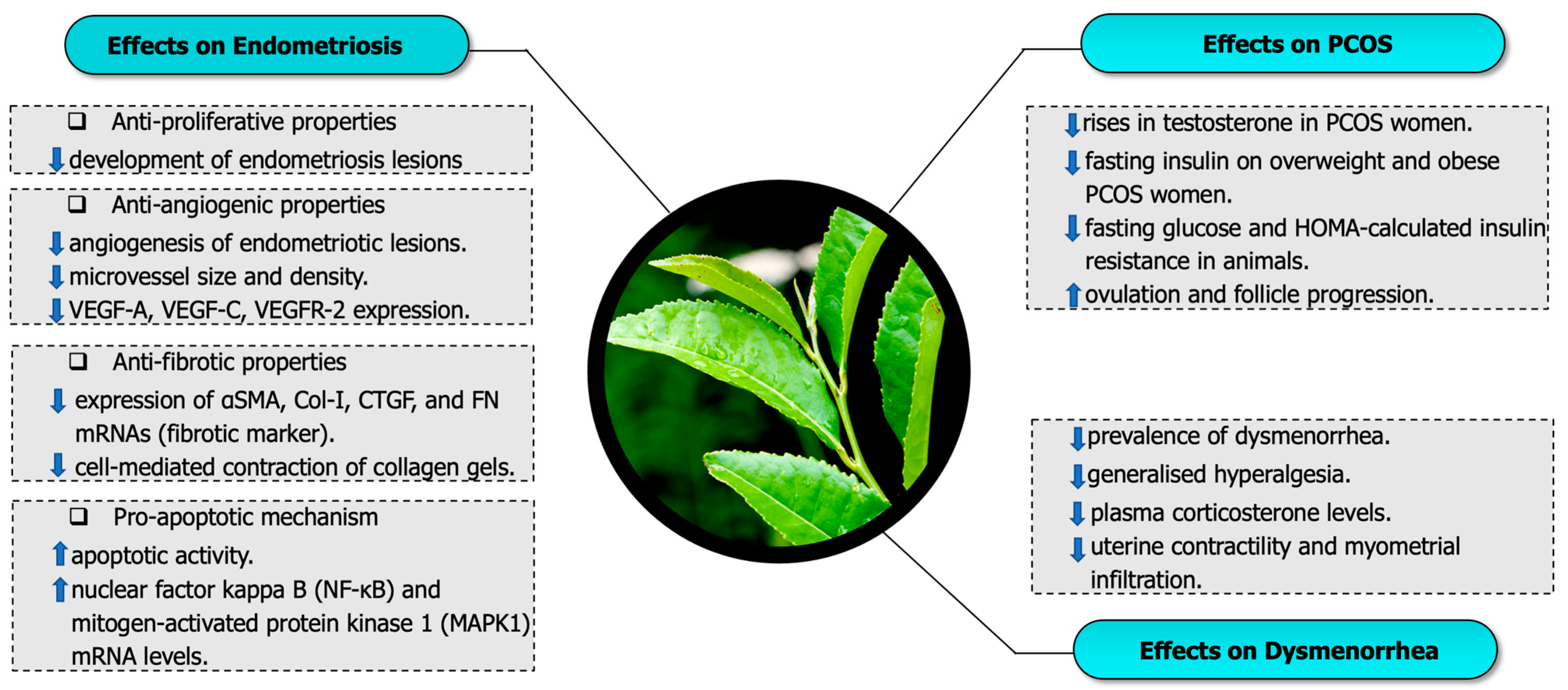
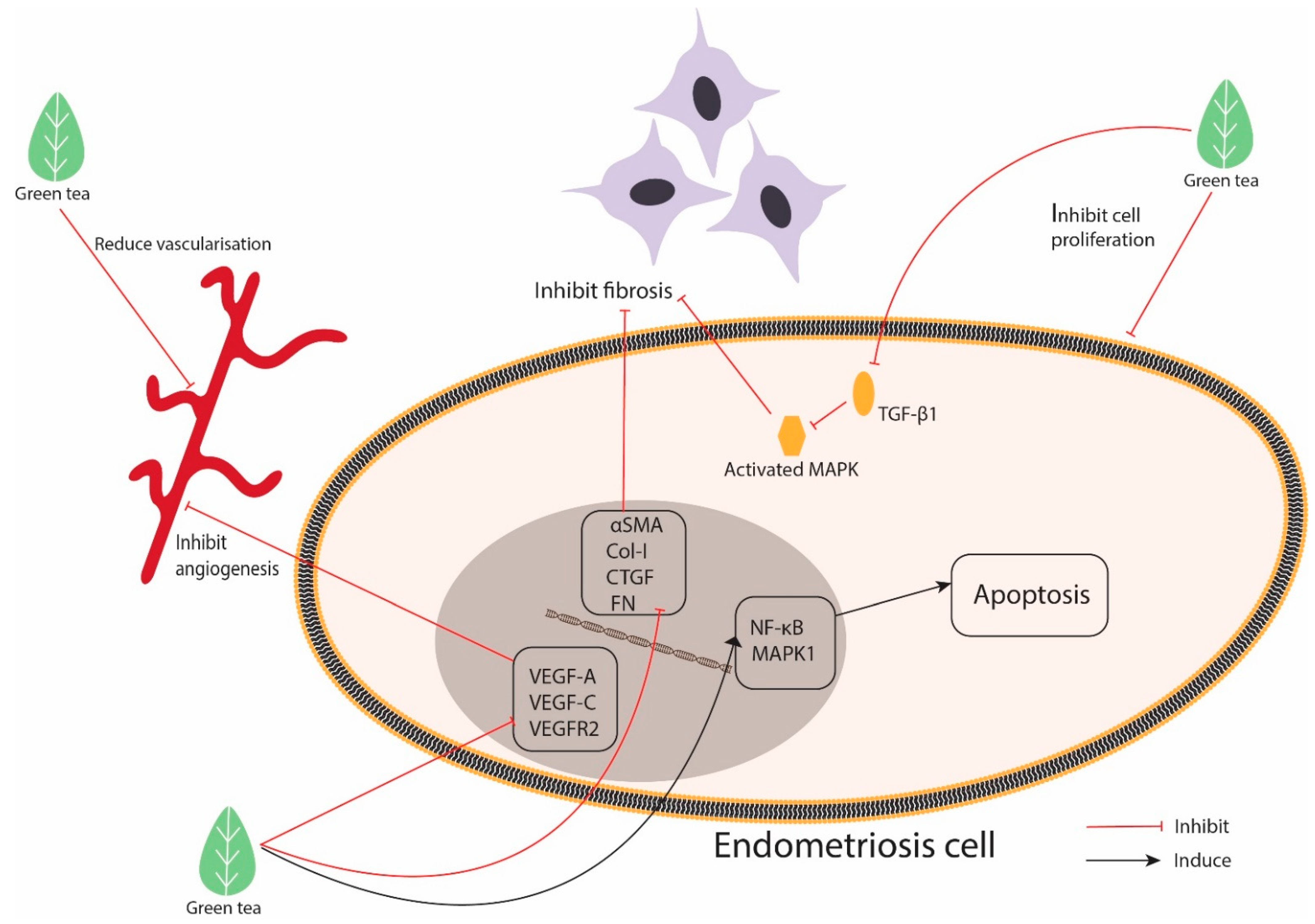

| Properties | |||
|---|---|---|---|
| Green Tea | Oolong Tea | Black Tea | |
| Consumption [8] | 20% | <2% | 75% |
| Main consumer [8] | Asian | Asian | European and North Americans |
| Preparation [9] | Non-fermented | Semi-fermented | Fully fermented |
| Characteristics [9] | Green colourRetain almost all original polyphenol contents | Combine freshness of green tea and the fragrance of black tea | Reddish black colour, mellow flavour, low bitterness and astringency |
| Chemical Profile | |||
| Caffeine (mg/g) [10] | 34.86 ± 4.32 | 19.67 ± 2.95 | 28.54 ± 3.68 |
| Total catechins (mg/g) [11] | 105.85 ± 35.69 | 86.91 ± 23.54 | 10.18 ± 6.68 |
| Epigallocatechin-3-gallate (EGCG) (mg/g) [10,11,12] | 18.10–54.06 | 7.36–38.36 | 2.19–9.18 |
| Epigallocatechin (EGC) (mg/g) [10,11,12] | 13.44–36.53 | 3.57–30.61 | 0.31–3.23 |
| Epicatechin (EC) (mg/g) [10,11,12] | 4.90–7.27 | 1.75–7.00 | 0.71–2.19 |
| Epicatechin-3-gallate (ECG) (mg/g) [10,12] | 5.34–17.10 | 3.07–5.09 | 2.65–8.92 |
| Total Theaflavins (mg/g) [12] | 0.88–5.56 | 0.66–3.63 | 10.70–17.28 |
| L-theanine (mg/g) [11,13] | 2.16–4.03 | 0.41–1.29 | 0.88–1.37 |
| Treatment | Treatment Duration | Type of Study | Findings | Conclusion | References |
|---|---|---|---|---|---|
| 1. 50 mg/kg/day green tea Epigallocatechin-3-gallate (EGCG) 2. 20 mg/kg/day vitamin E 3. Saline via intraperitoneal injection | Daily for 2 weeks. | Hetero-transplants of eutopic endometrium from patients with stage III endometriosis into severely compromised immunodeficient (SCID) mice | In the EGCG treated group: Endometriotic lesions were smaller than control. The glandular epithelium was smaller and eccentrically distributed. Angiogenesis in lesions and adjacent tissues was under-developed, and microvessel size and density were smaller than the control. mRNA for angiogenic vascular endothelial growth factor-A was significantly down-regulated. No change in mRNA level of hypoxia-inducible factor 1 and alpha subunit. Apoptosis in the lesions was obvious. Nuclear factor-kappa B and mitogen-activated protein kinase 1 mRNA levels were up-regulated. No differences were observed in all parameters with vitamin E treatment. | EGCG suppresses the development of experimental endometriosis through the anti-angiogenic mechanism. | [33] |
| 1. 50 mg/kg/day EGCG 2. 20 mg/kg/day vitamin E 3. Saline via intraperitoneal injection | Daily for 3 weeks | 1. Hetero-transplants of eutopic endometrium from patients with stage III endometriosis into severely compromised immunodeficient (SCID) ovariectomised mice 2. Mouse endometrial tissues transplanted into SCID mice | EGCG inhibited microvessel development in endometriotic implants. EGCG suppressed vascular endothelial growth factor C (VEGF-C) and tyrosine kinase receptor VEGF receptor 2 (VEGFR2) expression. EGCG down-regulated VEGFC/VEGFR2 signalling through c-JUN, interferon-γ, matrix metalloproteinase 9 and chemokine (C-X-C motif) ligand. No differences were observed in all parameters with vitamin E treatment. | EGCG inhibited angiogenesis and suppressed VEGFC/VEGFR2 expression and signalling pathway. | [39] |
| 1. EGCG 50 mg/kg/day 2. 200 mL PBS (vehicle) via intraperitoneal injection | Daily for 14 days | 1. Hetero-transplants of endometrium from patients with endometriosis into severely compromised immunodeficient (SCID) ovariectomised mice | Significant lower scores for both Sirius red and Masson trichrome staining in EGCG treated mice. Significant lower score human CD10 staining in untreated mice than in treated mice. | EGCG inhibits fibrosis in endometriosis | [41] |
| 1. 20 mg/kg EGCG 2. 100 mg/ kg EGCG 3. Resveratrol 10 mg/kg 4. Resveratrol 25 mg/kg Via oral route | Daily for 4 weeks | Transplantation of mouse uterine horns to the mouse bowel mesentery to induce endometriotic-like lesions in a BALB/c mouse model | EGCG and resveratrol significantly reduced the number and volume of endometriotic lesions. EGCG and resveratrol significantly diminished cell proliferation, reduced vascular density and increased apoptosis within the lesions. | EGCG treatment inhibits the development and reduces the size of endometriotic lesions by reducing cell proliferation and increasing apoptotic activity. | [35] |
| 1. 50 mg/kg pro-EGCG (EGCG octaacetate). 2. 50 mg/kg EGCG 3. 20 mg/kg Vitamin E via intraperitoneal injection | Daily for 4 weeks | Transplantation of endometrial tissues from transgenic luciferase expressing (CMV-Luc) mice into non-luminescent NOD-SCID mice | EGCG and pro-EGCG significantly decreased endometrial implant growth from the 2nd week to the 4th week. EGCG and pro-EGCG significantly reduced lesion size and weight, inhibited functional and structural microvessels in the lesions and enhanced apoptosis. Inhibition by pro-EGCG in all the angiogenesis parameters was significantly greater than that by EGCG. Pro-EGCG had better bioavailability and greater antioxidation and anti-angiogenesis capacities than EGCG. No differences were observed in all parameters with vitamin E treatment. | Pro-EGCG significantly inhibited the development, growth, and angiogenesis of experimental endometriosis in mice with greater efficacy, better bioavailability, and greater anti-oxidation and anti-angiogenesis capacities than EGCG. | [36] |
| 1. 65 mg/kg EGCG 2. 200 mL DMSO (vehicle) intraperitoneally | Daily for 14 days | Transplantation of endometrium and ovarian follicles to Syrian golden hamster dorsal skinfold chamber model | EGCG group had significant reduction in the number and density of microvessels development within the endometriotic lesions but not in ovarian follicles. EGCG group decreased in centerline red blood cell velocity and volumetric blood flow within the endometriotic lesions but not in ovarian follicles. EGCG treatment induced the regression of endometriotic lesions. | EGCG prevents the establishment of new endometriotic lesions. | [37] |
| 1. 8.333 mg/mL EGCG 2. 0.3 μg/μL decitabine 3. Saline Route: intraperitoneal | Once in 2 days for 16 days | Hetero-transplants of human endometrium into BALB/c female nude mice | Ectopic lesion growth: Increased from 4th to 16th day in the control group, Increased in the 0–8th day and decreased in the 8–16th day in the EGCG and decitabine group. Positive expression rate of E-cadherin: The decitabine group had a higher rate than the EGCG group, and the EGCG group had a higher rate than the control group. DNA methylation status of E-cadherin promoter region: The control group had a higher level than the EGCG group, and the EGCG group had a higher level than the decitabine group. | EGCG may inhibit the growth of the endometrial lesion, affect the expression of E-cadherin and reduce the status of DNA methylation of the E-cadherin promoter region. | [38] |
| Treatment | Treatment Duration | Type of Cell | Findings | Conclusion | References |
|---|---|---|---|---|---|
| 1. EGCG (10–50 µM) 2. Vitamin E (20 µM), | 4 h | Human microvascular endothelial cells | EGCG suppressed VEGF-C expression and reduced VEGFR-2 and ERK activation. | EGCG inhibited angiogenesis and suppressed VEGFC/VEGFR2 expression and signalling pathway | [39] |
| 1. EGCG 50 or 100 µM 2. N-acetyl-L-cysteine 5 or 100 µM | 8–24 h | Endometrial and endometriotic stromal cells | EGCG significantly inhibited cell proliferation, migration and invasion. EGCG significantly decreased the TGF-β1-dependent increase in the mRNA expression of αSMA, Col-I, CTGF and FN mRNAs (fibrotic marker). EGCG significantly attenuated the cell-mediated contraction of collagen gels at 8, 12 and 24 h. EGCG inhibited TGF-β1-stimulated activation of MAPK and Smad signalling pathways. | EGCG inhibits fibrosis in endometriosis | [41] |
| 1. EGCG (0, 20, 40, 80 and 100 µM) 2. Resveratrol (0, 25, 50 and 100 µM) | 24 h | Primary cultures of human endometrial epithelial cells from patient with endometriosis | Reduction in cell proliferation and increase in apoptosis. | EGCG treatment inhibits the development of endometriotic lesions by reducing cell proliferation and increasing apoptotic activity. | [35] |
| 1. 40 µM EGCG. 2. 1 µM 17β-estradiol 3. 40 µM EGCG + 1 µM 17β-estradiol | Isolated hamster endometrial stromal and glandular cells | EGCG suppressed E2-stimulated activation, proliferation and VEGF expression of endometrial cells. | EGCG prevents the establishment of new endometriotic lesions. | [37] |
| Treatment | Treatment Duration | Type of Study | Findings | Conclusion | References |
|---|---|---|---|---|---|
| 1. Green tea tablet with unspecified dose 2. Placebo-capsules filled with wheat flour | Daily for 12 weeks | Randomized double-blind clinical trial on 60 overweight and obese PCOS Women aged between 20 to 40 years old | Significant reduction in weight and fasting insulin and testosterone levels in the green tea treated group compared with the placebo group. | The consumption of green tea by overweight and obese women suffering from PCOS leads to weight loss, a decrease in fasting insulin, and a decrease in the level of free testosterone. | [46] |
| 1. Tablets equivalent to 500 mg green tea (C. Sinensis L.) leaf powder 2. Placebo-tablet corn starch | Daily for 45 days | Randomized double-blind placebo-controlled trial on 45 PCOS women aged 18–55 years with BMI range from 20–35 kg/m2 | No change found in height, weight, BMI, WC, HC, waist-to-hip ratio or body fat between the treated and placebo groups. Significant reduction in weight, BMI, WC and body fat percentage after 45 days in the treated group. No significant difference in inflammatory marker TNF-α, IL-6 and hs-CRP levels. Significant positive correlations of nonsignificant decrease in the levels of IL-6 after reduction in body weight, BMI, waist circumference, hip circumference and body fat percentage was reported in the treated group. | Consumption of green tea tablets did not cause any effect on inflammation biomarkers in PCOS women. However, it may be effective as a complementary treatment for weight control in PCOS women. | [48] |
| 1. Capsules containing 2% freeze-dried tea powder, equivalent to 540 mg epigallocatechin-3-gallate. 2. Placebo capsule-unspecified | Daily for three months | Randomized placebo-controlled trial on obese PCOS Women aged from 25–40 Years with BMI more than 28 kg/m2 | No significant difference in body weight, BMI and body fat content between treatment and placebo group. No significant difference in testosterone, SHBG, free androgen, androstenedione, DHEA-S, FSH and LH levels between treatment and placebo group. No significant difference in fasting insulin, fasting glucose, 2 h post-load glucose, fasting G:I ratio, fasting leptin, fasting cholesterol, fasting HDL and LDL cholesterol levels between the treatment and placebo groups. Small but significant increase in triglyceride level in the treatment group after 3 months. | Green tea supplementation did not significantly reduce body weight in obese women with PCOS, nor did it alter the glucose or lipid metabolism. | [49] |
| 1. 50,100 and 200 mg/kg body weight of hydro-alcoholic green tea extract 2. Saline | Intraperitoneally daily for 10 days | Adult female Wistar rats treated with estradiol valerate to induce PCOS | Significant decrease in the levels of LH and testosterone but no significant change in FSH level. Significant reduction in fasting glucose level. No changes in the level of insulin. Significant decrease in the HOMA-calculated insulin resistance. Significant decrease in body weight. Increase in the number of follicles and corpus luteum and reduced number of cystic follicles. | Green tea consumption causes modulating gonadotropin levels, reducing insulin resistance, losing rats’ weights and improving the ovarian morphology. | [47] |
| Treatment | Treatment Duration | Type of Study | Findings | Conclusion | References |
|---|---|---|---|---|---|
| Green tea intake | Not specified | A cross-sectional study involving reproductive age women in Shanghai, China. | Consumption of green tea was associated with a lower prevalence of dysmenorrhea. The relationship was stronger in moderate-to-severe dysmenorrhea than in mild dysmenorrhea. | Consumptions of green tea was associated with lower prevalence of dysmenorrhoea. | [57] |
| 1. 5 mg/kg EGCG 2. 50 mg/kg EGCG intraperitoneally | Daily for 3 weeks | Mice treated with 1 mg/kg tamoxifen to induce adenomyosis | EGCG treatment: Suppressed myometrial infiltration. Improved generalised hyperalgesia. Reduced uterine contractility. Lowered plasma corticosterone levels | EGCG shows a benefit in treating adenomyosis in an animal study. | [58] |
Publisher’s Note: MDPI stays neutral with regard to jurisdictional claims in published maps and institutional affiliations. |
© 2021 by the authors. Licensee MDPI, Basel, Switzerland. This article is an open access article distributed under the terms and conditions of the Creative Commons Attribution (CC BY) license (https://creativecommons.org/licenses/by/4.0/).
Share and Cite
Kamal, D.A.M.; Salamt, N.; Zaid, S.S.M.; Mokhtar, M.H. Beneficial Effects of Green Tea Catechins on Female Reproductive Disorders: A Review. Molecules 2021, 26, 2675. https://doi.org/10.3390/molecules26092675
Kamal DAM, Salamt N, Zaid SSM, Mokhtar MH. Beneficial Effects of Green Tea Catechins on Female Reproductive Disorders: A Review. Molecules. 2021; 26(9):2675. https://doi.org/10.3390/molecules26092675
Chicago/Turabian StyleKamal, Datu Agasi Mohd, Norizam Salamt, Siti Sarah Mohamad Zaid, and Mohd Helmy Mokhtar. 2021. "Beneficial Effects of Green Tea Catechins on Female Reproductive Disorders: A Review" Molecules 26, no. 9: 2675. https://doi.org/10.3390/molecules26092675
APA StyleKamal, D. A. M., Salamt, N., Zaid, S. S. M., & Mokhtar, M. H. (2021). Beneficial Effects of Green Tea Catechins on Female Reproductive Disorders: A Review. Molecules, 26(9), 2675. https://doi.org/10.3390/molecules26092675

