You are currently viewing a new version of our website. To view the old version click .
Entropy
  • Article
  • Open Access

28 April 2022

Random RotBoost: An Ensemble Classification Method Based on Rotation Forest and AdaBoost in Random Subsets and Its Application to Clinical Decision Support
,
,
,
,
,
,
,
,
and
1
Institute of Management of Technology, National Yang Ming Chiao Tung University, Hsinchu 300, Taiwan
2
Department of Computer Science, The University of Manchester, Manchester M13 9PL, UK
3
National Pilot School of Software, Yunnan University, Kunming 650504, China
4
College of Computer Science and Electronic Engineering, Hunan University, Changsha 410082, China

Abstract

In the era of bathing in big data, it is common to see enormous amounts of data generated daily. As for the medical industry, not only could we collect a large amount of data, but also see each data set with a great number of features. When the number of features is ramping up, a common dilemma is adding computational cost during inferring. To address this concern, the data rotational method by PCA in tree-based methods shows a path. This work tries to enhance this path by proposing an ensemble classification method with an AdaBoost mechanism in random, automatically generating rotation subsets termed Random RotBoost. The random rotation process has replaced the manual pre-defined number of subset features (free pre-defined process). Therefore, with the ensemble of the multiple AdaBoost-based classifier, overfitting problems can be avoided, thus reinforcing the robustness. In our experiments with real-world medical data sets, Random RotBoost reaches better classification performance when compared with existing methods. Thus, with the help from our proposed method, the quality of clinical decisions can potentially be enhanced and supported in medical tasks.

1. Introduction

According to Mitchell, T., “Machine learning is the study of computer algorithms that improves automatically through experience.” [1]. That is to say, the collected data are classified or predicted by the machine learning algorithm. As the new data are obtained, the trained model can be applied for the purpose of prediction or classification, and then applied on a range of real-world fields. One of the popular fields is the medical industry, which generates enormous amounts of data with multiple features every day. When applying a machine learning algorithm on these types of data sets, increased data numbers and the expanding dimensions of features can create an observable increase in noise and time loss. This is especially true when ensemble decision trees are applied in the medical field. More trees [2,3,4] only increase the dilemma and cloud the prediction performance. The dilemma keeps impeding professional staff from making the right decision fast.
In order to support medical decision making and keep high time cost to a minimum, one of the key aspects of this work is the Rotation Forest method, which belongs to the forest-type algorithm of the decision tree family. It has been developed in many application scenarios with excellent performances, such as hyperspectral image classification [5], identification of cell pathology [6], etc. Meanwhile, as attention on the robustness from using trees increases, one of the advantages of decision trees is that they are explainable by viewing classifying value in each tree. Another advantage is that they are able of handling various types of data. By building a Rotation Forest (RotForest) [7] based on decision trees, it not only has the aforementioned advantages, but it could also decrease expensive time cost by using PCA to reduce features. In the rotation, the features are divided into K non-overlapping subsets of equal size, and then the integrating PCA [8] rotates subsets to new subsets with pre-defined fewer features. Latterly, rotation matrix and voting scene with bagging method have involved prediction. Although there have been many works on decision trees and Rotation Forest, such as isomerous multiple classifier [9], the shortcomings still include complicated calculations and high computation cost. Particularly, RotForest requires pre-knowledge to manually pre-define the K. Therefore, this work aims to develop a RotForest-based ensemble learning algorithm without pre-defining the K and rotated features. Namely, a random K is implemented in the proposed method and randomly rotated based on the random segment K data sets. Moreover, because most of the existing methods do not connect each rotated classifier, which indicates that each classifier is independent, this work builds the connection among classifiers using AdaBoost [10]. Hence, we called the proposed method Random Rotation Boost (Random RotBoost), which inherits advantages from ensemble decision trees and RotForest with stronger robustness from the proposed random process and connection. In our simulations, Random RotBoost outshines other ensemble learning methods in terms of accuracy, recall, precision, F1-score, and speed.
The process of this research work is organized as follows. Section 1 elaborates on the research background, purpose, and motivation. Section 2 discusses the relevant literature and the background knowledge, which laid the foundation of the proposed model. Next, the proposed method and comparisons with others are presented in Section 3 and Section 4, respectively. Section 5 draws conclusions and presents future works, along with the extra materials toward this work in Appendix A.

3. Random Rotation Boosting

Based on PCA, AdaBoost, and ensemble learnings, the detail of the proposed work Random RotBoost is as follows. Before the detailed explanation, a series of primaries toward our proposed method is revealed in advance, including RotForest, AdaBoost, and RotBoost.

3.1. Prelimanries and Notations

Throughout this work, we set a binary classification training data set as L , where L = { ( x 1   ,   y 1 ) ,   ( x 2   ,   y 2 ) ,   ,   ( x N   ,   y N ) } , x i X R N , y i = { 1 , + 1 } , number of data as N , number of features as F , number of subsets as K , initial weight distribution as D ,   w h e r e   D i = ( w 1 n , w 1 N ) , iteration as i , sample as S , classifiers as t .

3.1.1. RotForest

In RotForest, for the initial S , F is randomly divided into K subsets (can be defined according to the requirement), and these subsets may be intersecting or disjointed (disjoint scenario is applied in this work). After obtaining K , each feature subset has M features, M = F / K . If the feature number cannot be divisible, the remaining features are added to the last set of features. The division of feature subsets determines the new samples generated, which affects the differences among the ensemble classifiers. Then, K samples are resampled to obtain a bootstrap sample, and PCA is applied to the sample subset of classes. PCA stores the principal component coefficients a v , j ( 1 ) , a v , j ( 2 ) , , a v , j ( M ) to preserve the important parts of the data and variability information. After performing PCA transformation processing on all K sample subsets, the K-axis rotation of the data set occurs, and all the coefficients are combined to generate a sparse rotation matrix R i that can be presented as follows:
R i = [ a v , j ( 1 ) , a v , j ( 2 ) , , a v , j ( M 1 ) [ 0 ] [ 0 ] a v , j ( 1 ) , a v , j ( 2 ) , , a v , j ( M K ) ]
where R i is rearranged according to the order of the original features to get R i a , so the new training set of the classifier is X R i a . By getting the new training set, the whole process of RotForest [7] is below.
Input: L , loss: l .
For  t = 1 , 2 , , T :
  • Split the feature set F into K subsets; each subset has M = F / K features;
  • Draw a bootstrap sample of every subset and apply PCA to get the principal component coefficients;
  • Repeat the step 1 and 2 K times and put the K principal component coefficients into the rotation matrix;
  • Rearrange the rotation matrix according to the order of the original feature set, and then the training set of the classifier G t ( x ) is X R t a ;
  • Get the classification result of G t ( x ) .
Output:
The final classifier is as follows:
G ( x ) = 1 M t = 1 T G t ( x )
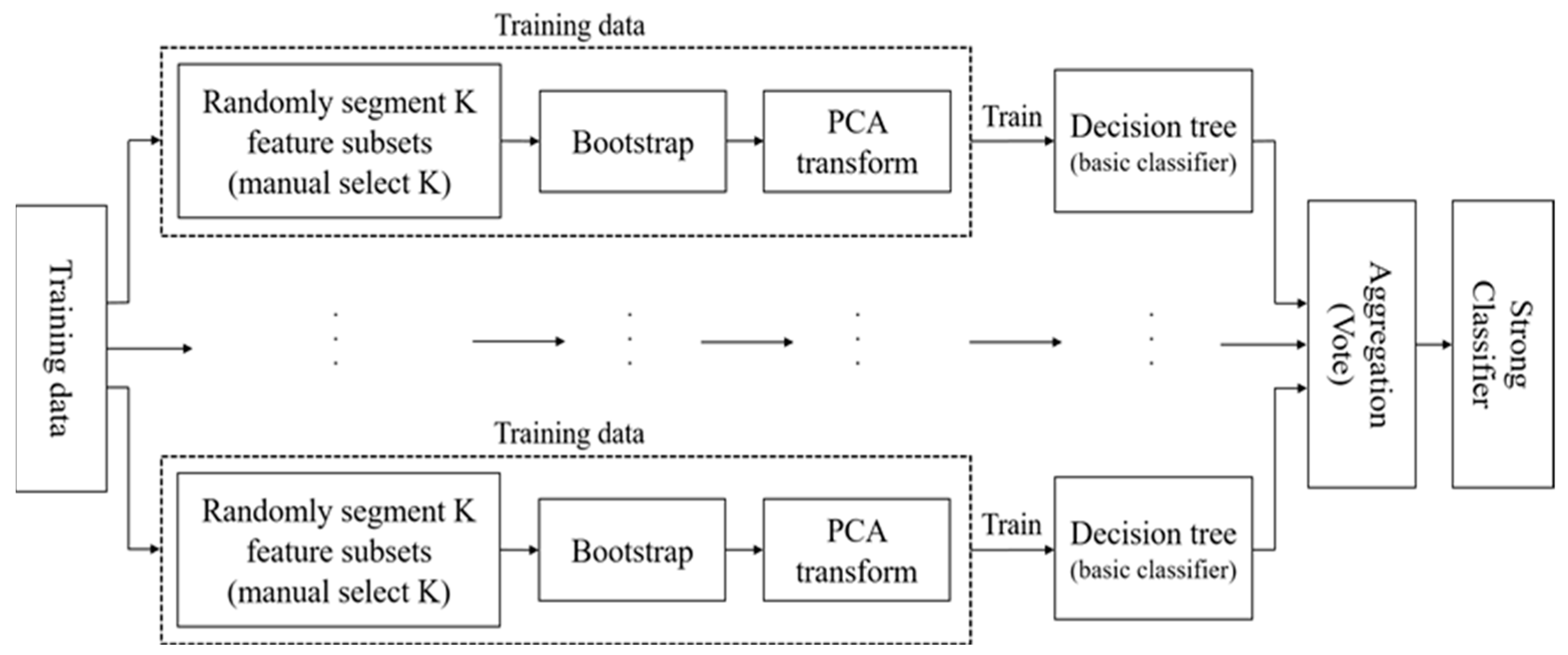
The above process can also be shown as Figure 1.
Figure 1. The Flowchart of RotForest.

3.1.2. AdaBoost

In our proposed method, one of the important parts is to connect each rotation result via AdaBoost [10]. The following process shows the typical detailed steps of AdaBoost.
Input: L , loss: l , initial weight D
For  t = 1 , 2 , , T :
  • Calculate the classifier error of G t ( x ) from l on training set:
    e t = P ( ( G t ( x i ) y i ) ) = i = 1 N w t i l ( G t ( x i ) y i )
  • Calculate the classification of G t ( x ) :
    α t = 1 2 log 1 e t e t
  • Update the weight distribution:
    D t + 1 = ( w t + 1 , n ,   , w t + 1 , N ) )
  • Build a linear combination:
    f ( x ) = t = 1 M α t G t ( x )
    where w t + 1 ,   n = w t n z t exp ( α t y n G t ( x ) ) and Z t is a normalization factor, so that D t + 1 is a probability distribution.
Output:
The final classifier is as follows:
G ( x ) = s i g n ( f ( x ) ) = s i g n ( t = 1 T α t G t ( x ) )

3.1.3. RotBoost

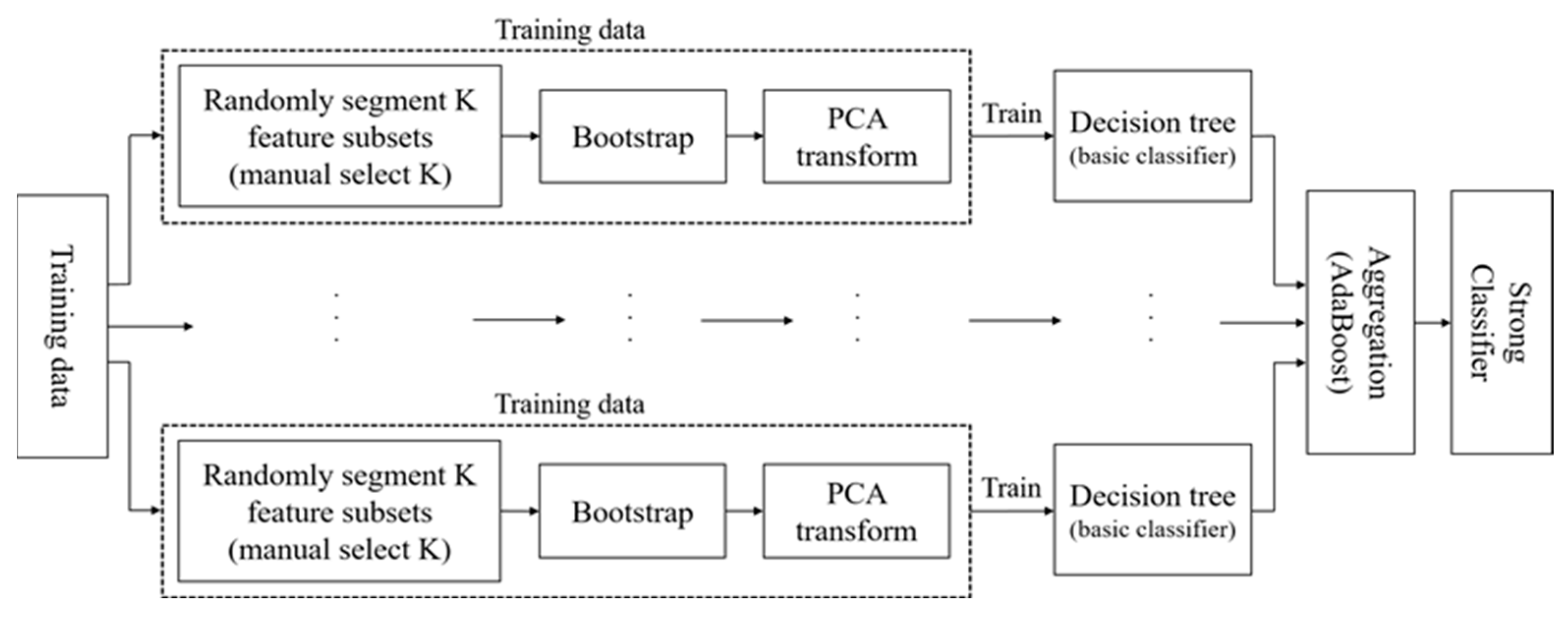
In Section 2, RotBoost [27] shares a similar aspect of this by simply combining RotBoost with AdaBoost. In order to train multiple base classifiers parallelly, AdaBoost minimizes the residual from the aggregation of all classifier results. Based on the elaborations of RotForest and AdaBoost in the last two sub-sections, the process of RotBoost can be represented in the following description along with Figure 2:
Figure 2. The Flowchart of RotBoost.
  • Apply the same steps of 1 to 4 from RotForest to obtain the training data;
  • Apply the decision tree as the base classifier;
  • Update the weights of each classifier based on the aggregation result of all classifiers, which is following the steps of 1 to 3 by calculating the residual from the output of G ( x ) in (7).

3.2. Random RotBoost

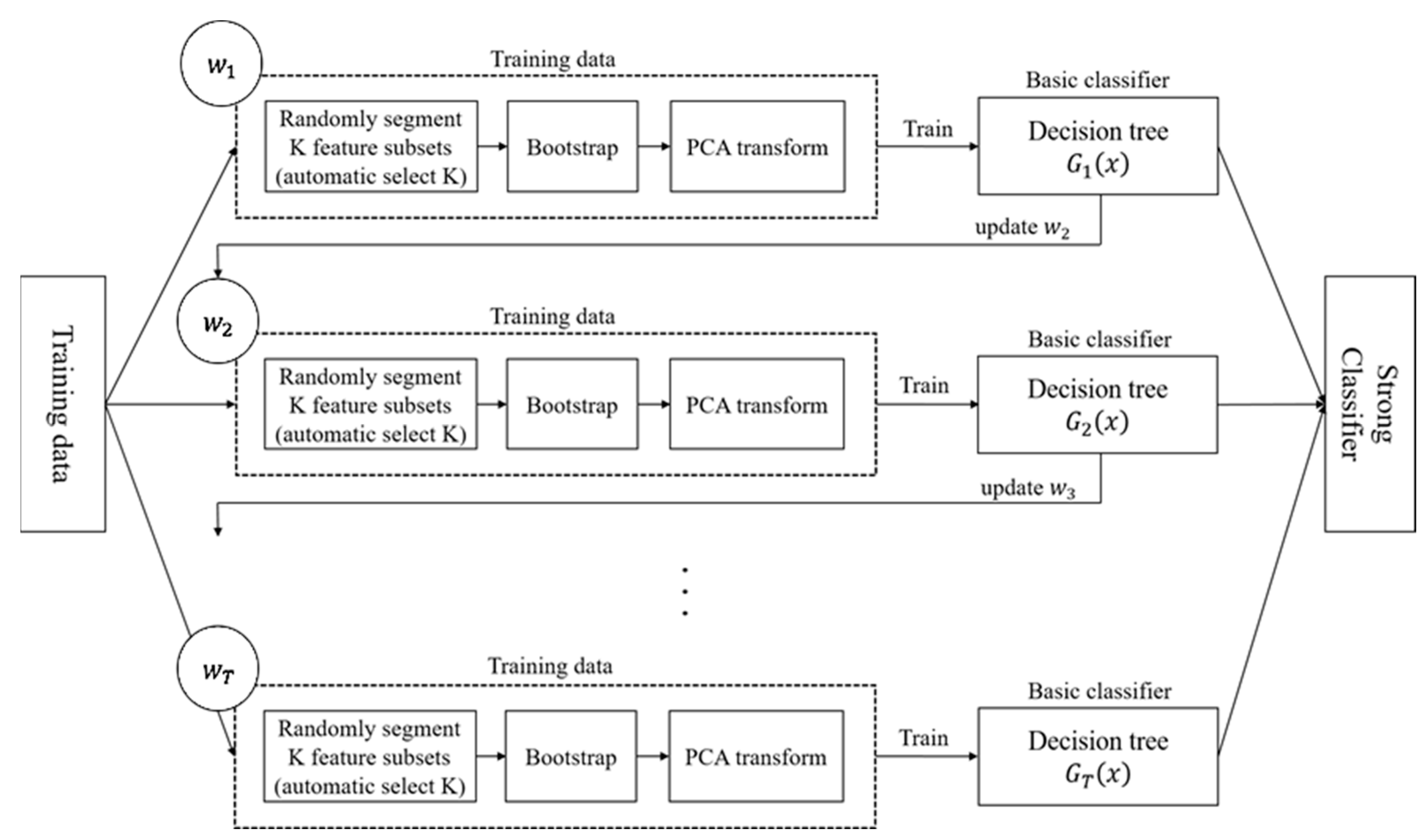
In order to take the advantages from RotForest and AdaBoost and further improve them, a pre-defined free random Rotation with adaptive boosting connection Forest is Proposed entitled Random RotBoost. The training process is different from the process detailed above with AdaBoost connecting each tree between each rotation, and each rotation part conducting randomly featured projections on random segment subsets before processing PCA conversion. That is, instead of predefining K as a number of rotation sample subsets, a random number is applied for randomly selecting feature subsets at each round, and this design increases the diversity of features. After processing the PCA conversion, the useful information of features can be retained to the greatest extent, and the redundant information, as well as less impactful features, can also be effectively removed. The following process with Figure 3 explains the whole process of Random RotBoost.
Figure 3. The flowchart of the proposed algorithm—Random RotBoost.
Input: L , loss: l , initial weight D
For f in F:
  • Randomly select K:
    (a)
    Split the feature set F into K subsets; each subset has M = F / K features;
    (b)
    Process PCA to get a rotation matrix;
    (c)
    Apply decision tree to perform the classification and calculate the weight of each time.
  • AdaBoost connect:
    (a)
    Calculate the classifier error of g f ( X R f a ) from l on the training set:
    g f = P ( ( g f ( x i ) y i ) ) = i = 1 N w f i l ( g f ( x i ) y i )
    (b)
    Calculate the classification of g f ( x ) :
    α f = 1 2 log 1 e f e f
    (c)
    Update the weight distribution:
    D f + 1 = ( w f + 1 , n ,   , w f + 1 , N ) )
    (d)
    Build the updated combination:
    g f ( x ) = s i g n ( i = 1 f α i G i ( x ) )
Output:
The final classifier is as follows:
G ( x ) = s i g n ( f ( x ) ) = s i g n ( f = 1 F α f G f ( x ) )

4. Experiments and Results

4.1. Data Sets and Evaluation Metric

In our simulations, nine data sets are selected from UCI ML Repository [28] for evaluating the reliability of the proposed method and the diversity of simulations. These data sets involve different fields, including medicine, machinery, etc. Especially in the medical field, there are 6 medical data sets, including Brainwave, Parkinson, Breast-Cancer, Wisconsin-Breast, Heart-Stalog, and real-world electrocardiogram (ECG) data. The data size and number of features of all data sets are summarized in Table 1.
Table 1. Experimental data description.
The confusion matrix is applied to evaluate the classification performance of the proposed method. In our experiment, evaluation, accuracy, precision, recall, and F-measure (F1-score) [28] are applied. Accordingly, the following results and discussion are divided toward each index to discuss. Finally, a time cost observation toward each candidate is also revealed after the metrics evaluation.

4.2. Results and Discussion

The performance of Random RotBoost is compared with four ensemble methods, including the RotForest, RotBoost, Ensemble 1, and Ensemble 2. The detailed information about Ensemble 1 and Ensemble 2 can be seen in the Appendix A. Both ensembles follow the structure of RotForest, but each ensemble replaced the base classifier from the decision tree with a set of different classifiers. For example, Ensemble 1: decision tree, boosting tree, and Random Forest; Ensemble 2: Logistic Regression, boosting tree, and KNN. For each model with every data set, 80% of randomly sampled data are assigned as the training set, and 20% are assigned for testing accuracy, precision, recall and F1-score.

4.2.1. Accuracy

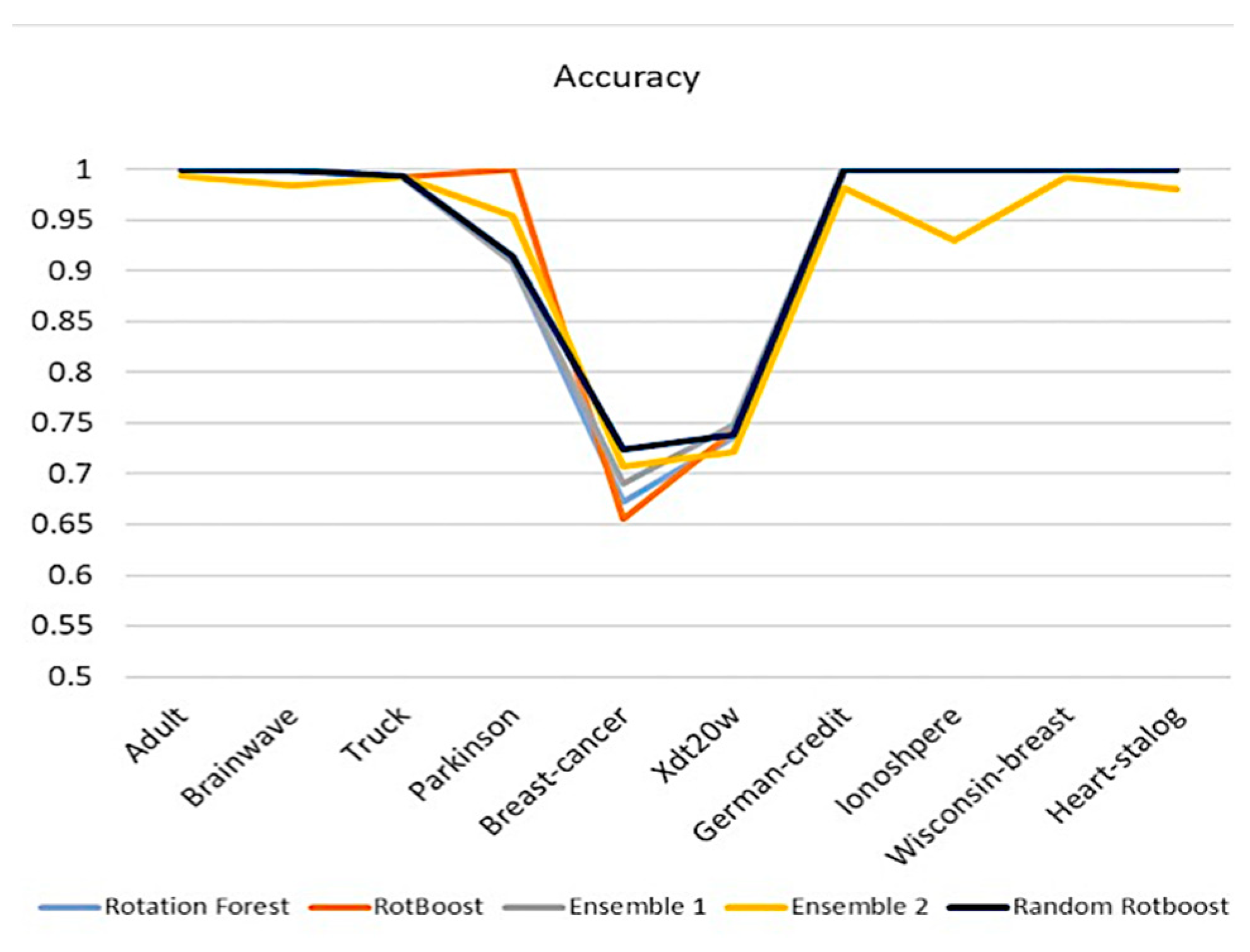
Accuracy is one of the most intuitive ways of observing performance. In Figure 4, except for the performance in Parkinson, Random RotBoost outshines others in most of the medical data sets. In light of many difficult tasks in Truck, which consists of over 100 features, Random RotBoost dominates over competitors. On the other hand, although Breast-Cancer and Xdt20w(ECG) have non-obvious differences between features, Random RotBoost still maintains a better result.
Figure 4. Accuracy Comparison.

4.2.2. Precision

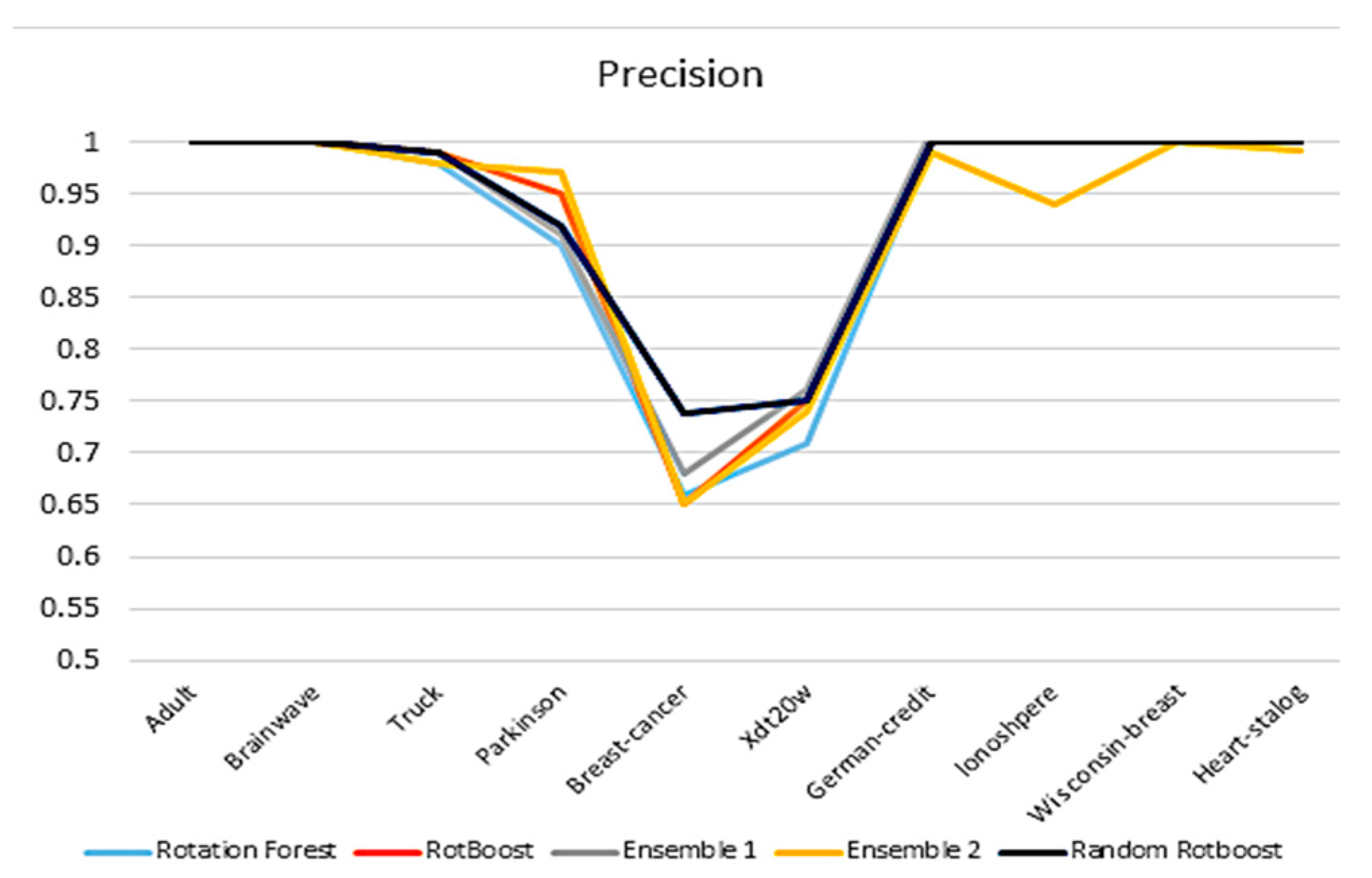
A similar picture in accuracy is witnessed in this precision comparison in Figure 5. By using precision, it reflects the ability of the model to distinguish between negative samples. Based on this expectation, Random RotBoost performed better than others in the Breast-Cancer data set, which could indicate our method is less likely to misdiagnose cancer-free patients. Moreover, the gap between Random RotBoost shrinks in terms of Parkinson, which further demonstrates Random RotBoost’s ability.
Figure 5. Precision comparison.

4.2.3. Recall

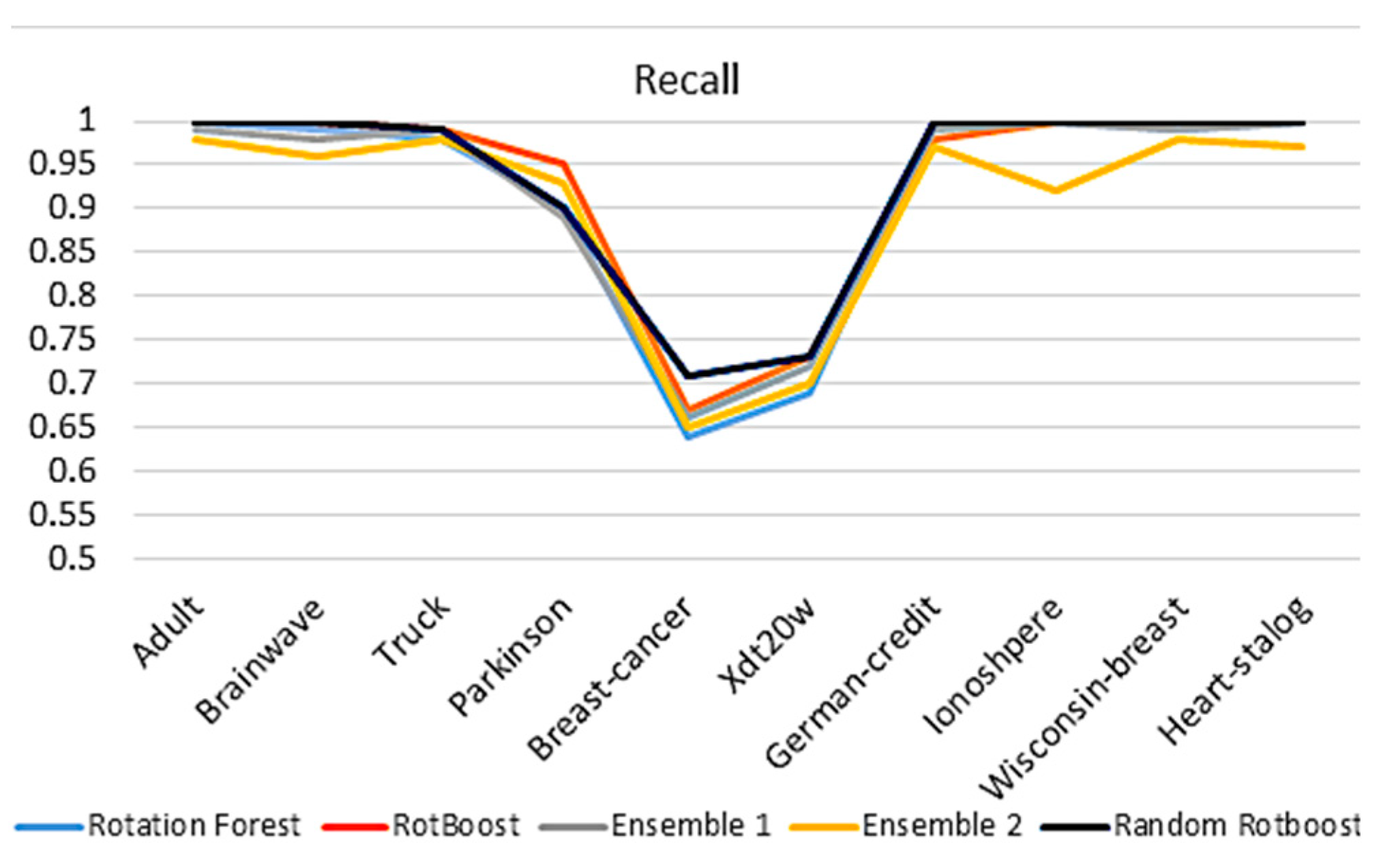
When evaluating models with Recall in Figure 6, the assessment of models’ completeness and ability to classify positive results is considered In the medical industry, this type of capability is vital to recognize disease. We can see that Random RotBoost still has a high performance across the data sets. Although the results of Truck have degraded slightly, the gap between Parkinson and others has also degraded.
Figure 6. Recall comparison.

4.2.4. F1-Score

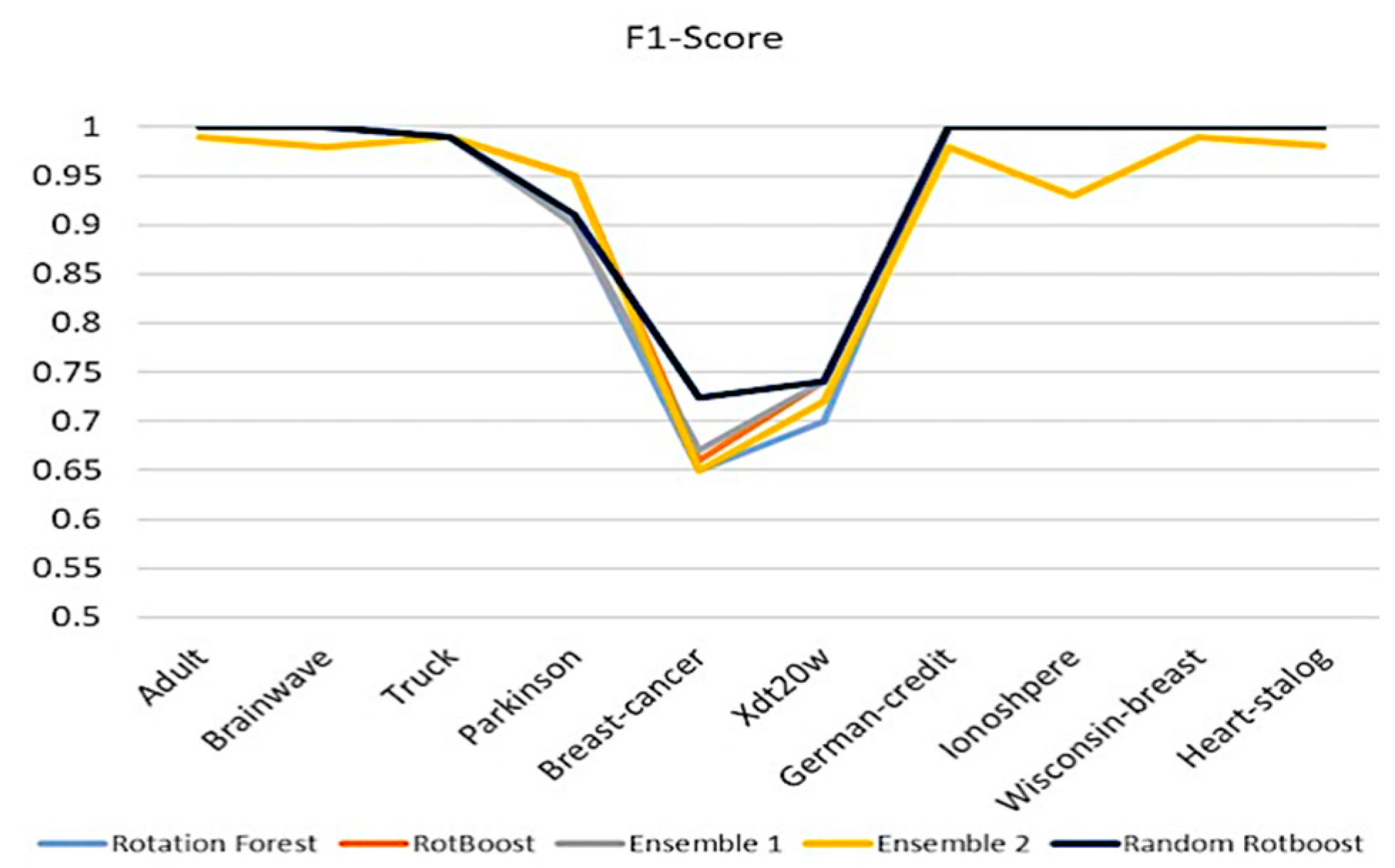
After evaluating accuracy, precision, and recall, an all-around evaluating aspect is F1-Score, which is an index balancing the ability of evaluation of positive and negative capability. As our proposed method, Random RotBoost, keeps maintaining the high-level performance compared with others, we see a similar picture in the former three metrics. However, the result of RotBoost shows a much different picture in the former evaluations, which are quite different from metric to metric. Further, another surprising aspect is the unstable results of Ensemble 2, which has fluctuating results in different data sets. This could indicate that a combination of very diverse base classifiers will dim each other. Overall, from these evaluations, Random RotBoost maintains the merit of providing high-dimensional data to reflect on every metric performance, please see Figure 7.
Figure 7. F1-Score comparison.

4.2.5. Time Cost

Apart from classifying performance, evaluating total prediction time is also an important aspect. In Section 3, the detailed mechanism of Random RotBoost was revealed. Adding the random rotation process and AdaBoost connection operations could increase time spent. Although a typical method is measuring the time complexity [23], as the proposed algorithm involves a random process, we conducted a comparison in average time spending in prediction. Therefore, a total time cost result in prediction is recorded in Table 2, where bold text means the best performance among the comparison. By directly comparing average costing time, Random RotBoost did not sacrifice too much time cost performance, which ranks second among all candidates. Most importantly, it costs the least time in Wisconsin-breast. When focusing on medical data sets, although the computation time of proposed method is not necessarily the shortest, it is not far from those of other ensemble methods. This demonstrates the superior performance of Random RotBoost toward medical data sets.
Table 2. Total time cost comparison (time/s).

5. Conclusions and Future Works

5.1. Conclusions

This work effectively integrates the advantages of Rotation Forest and AdaBoost to propose a new tree-based algorithm, Random RotBoost. Regarding the concern of noise from sparse features in medical data sets, a less-solid classification method is not only unable to reach a good classification performance but can also easily cause the problem of data distortion in processing medical data. From the practical evidence, this work shows that the proposed method can reach a reliable classification performance in simulation experiments when compared with other novel ensemble methods. Thus, the proposed method can potentially enhance the quality of clinical decision support based on its prediction performance of processing medical data sets.

5.2. Future Works

In the future, we expect that the proposed method can be used in practical applications. When selecting experimental data sets, there are special types of medical fields, such as Brainwave, Parkinson, and Xdt20w (ECG). It can be said that the proposed method can help medical personnel to make good diagnostic predictions and support informed clinical decisions. Although Random RotBoost has improved the classification accuracy compared with traditional classification methods, there is still much room for improvement in the processing of small sample data sets. Determining how to deal with this type of data is still a major challenge in the field of machine learning.

Author Contributions

Conceptualization, S.-J.L.; Data curation, H.-Y.Y.; Formal analysis, B.P., Y.H. and N.Z.; Funding acquisition, S.-J.L. and N.Z.; Investigation, C.-H.T. and W.-H.H.; Methodology, S.-J.L. and D.-R.L.; Project administration, X.J.; Validation, Q.J.; Writing—original draft, S.-J.L.; Writing—review & editing, S.-J.L. All authors have read and agreed to the published version of the manuscript.

Funding

This research is partially supported by the Ministry of Science and Technology Research grant in Taiwan (MOST 110-2410-H-A49-014-), Key Research and Development Program of Yunnan Province (202102AA100021), Yunnan Natural Science Foundation Project (202101AT070167) and the Open Foundation of Key Laboratory in Software Engineering of Yunnan Province (2020SE311).

Institutional Review Board Statement

Not applicable.

Data Availability Statement

The simulation data can be accessed from UCI ML Repository: https://ergodicity.net/2013/07/ (accessed on 23 May 2019).

Conflicts of Interest

The authors declare no conflict of interest.

Appendix A

A.1. Other Ensembles

A.1.1. Isomerous Ensemble 1

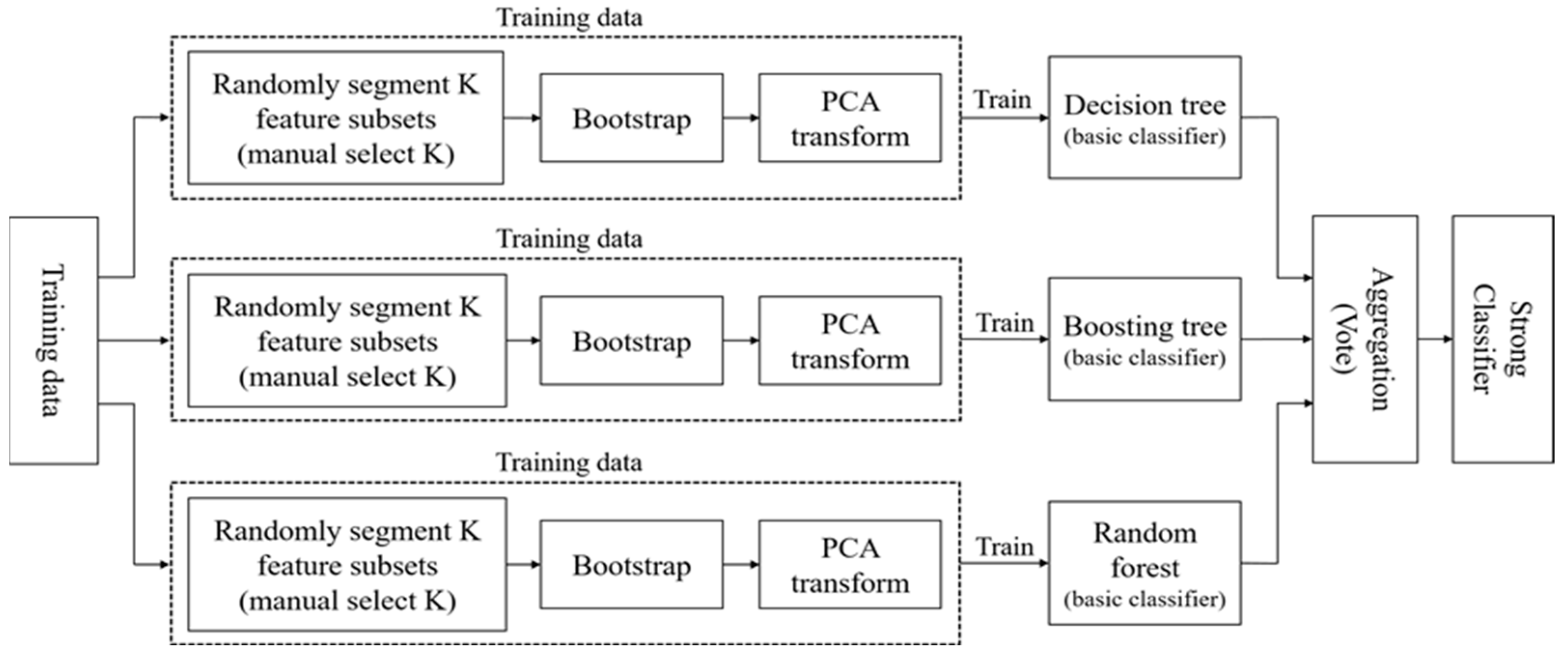
A high-performance ensemble method usually depends on the quality of base classifier embedded [29]. To obtain better generalization capability, it is essential that the classifiers are composed of highly accurate and as diverse models as possible. The integration of only a single classifier cannot meet the requirements of higher ensemble performance [30]. Hence, three base classifiers are applied to the Isomerous Ensemble Classifier 1 algorithm, hereinafter referred to as Ensemble 1. In Ensemble 1, the base classifier is a combination of three different algorithms consisting of decision tree, boosting decision tree, and Random Forest. The goal is to increase the diversity by applying different kinds of decision tree algorithm and voting mechanism to form a strong classifier. The flowchart is shown in the following figure.
Figure A1. Flowchart of Isomerous Ensemble Classifier 1.

A.1.2. Isomerous Ensemble 2

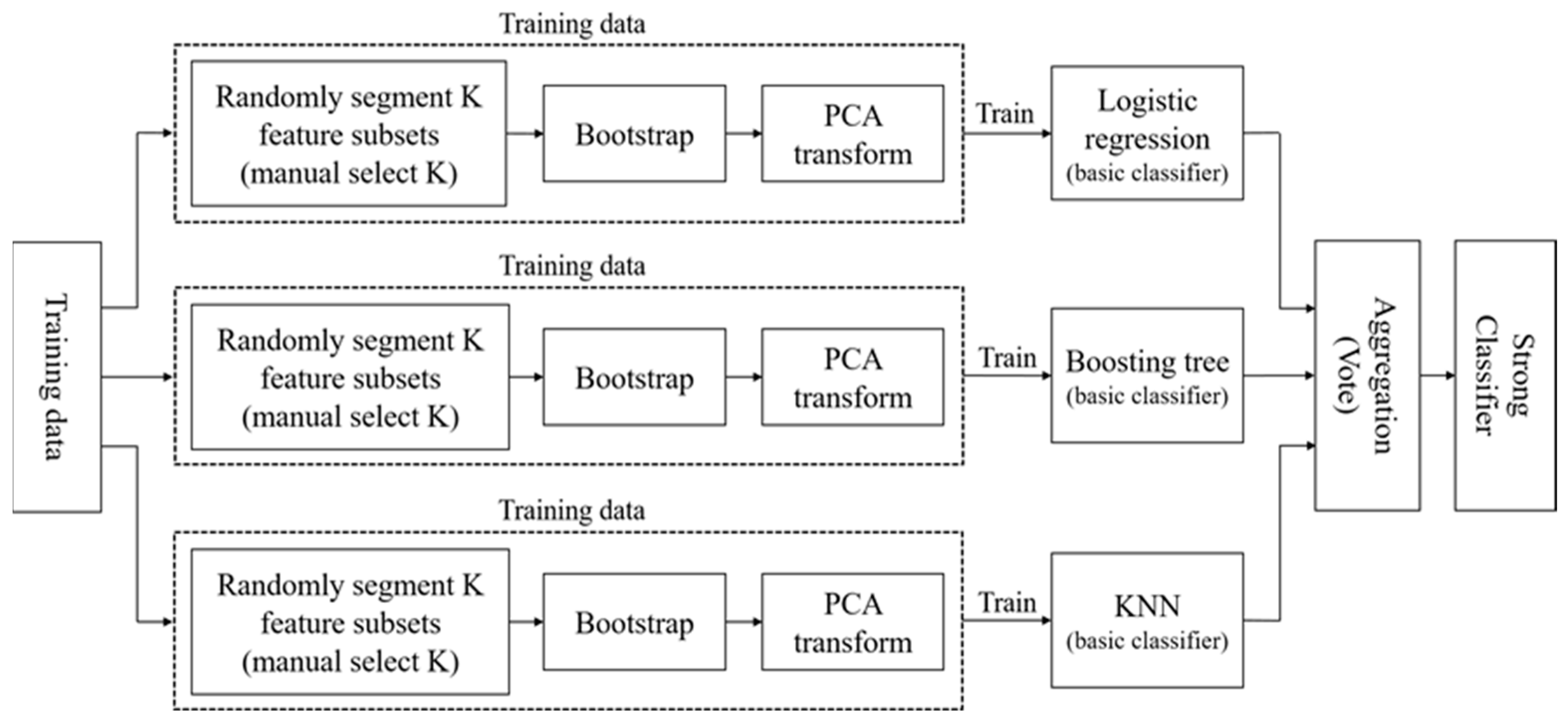
The Isomerous Ensemble Classifier 2 in this paper, hereinafter referred to as Ensemble 2, is the ensemble concept of the isomerous multiple classifier [9]. This work also makes changes on the base classifiers, with the purpose to increase the difference by combining different types of classifiers, which make up the corresponding deficiency of each classifier. Basically, the difference between Ensemble 1 and Ensemble 2 is that Ensemble 2 is based on the integration of three base classifiers, including logistic regression [31], boosting tree, and KNN [32]. Further, the flowchart is shown in the following figure:
Figure A2. Flowchart of Isomerous Ensemble Classifier 2.

A.2. Experimental Comparison toward Each Data Set

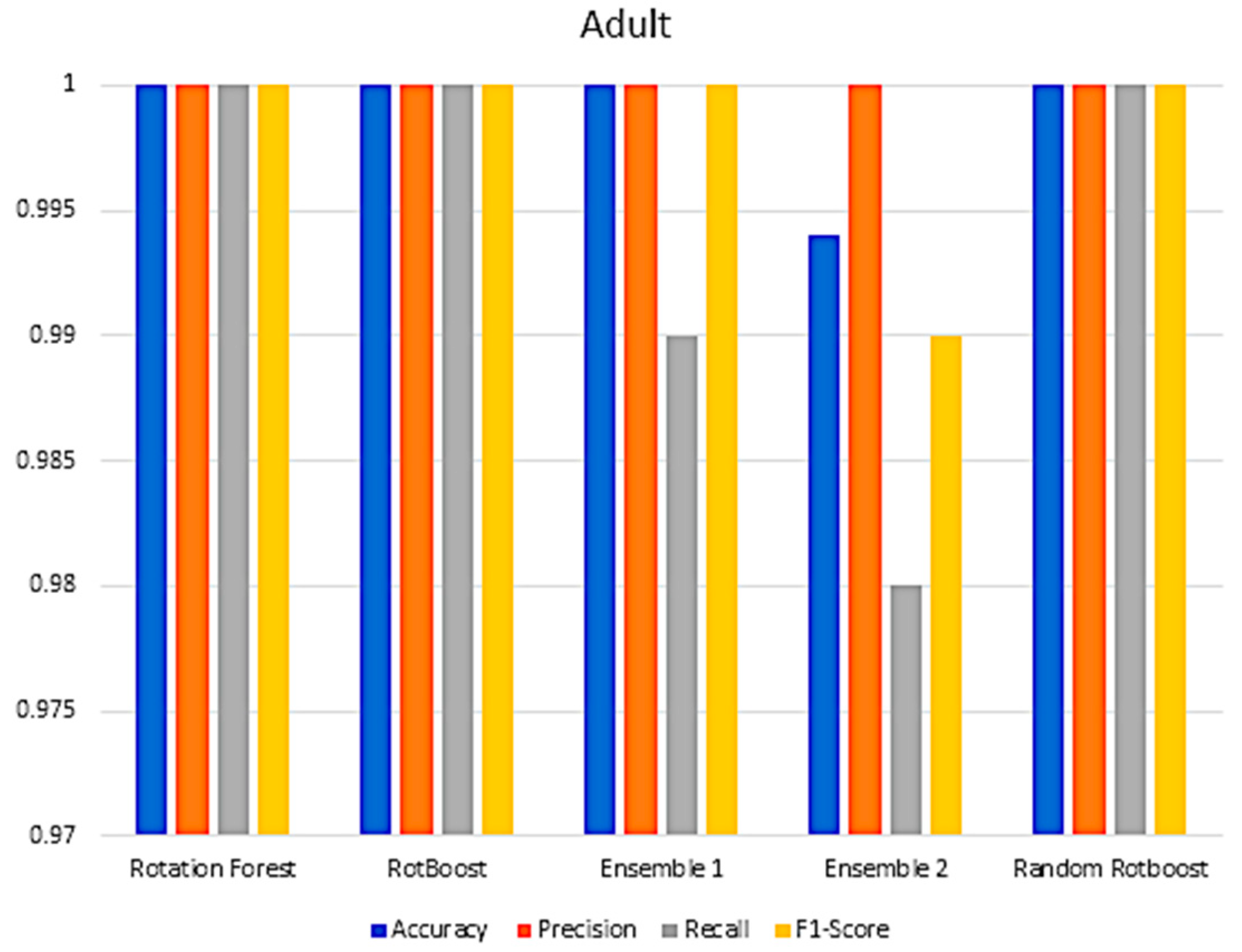
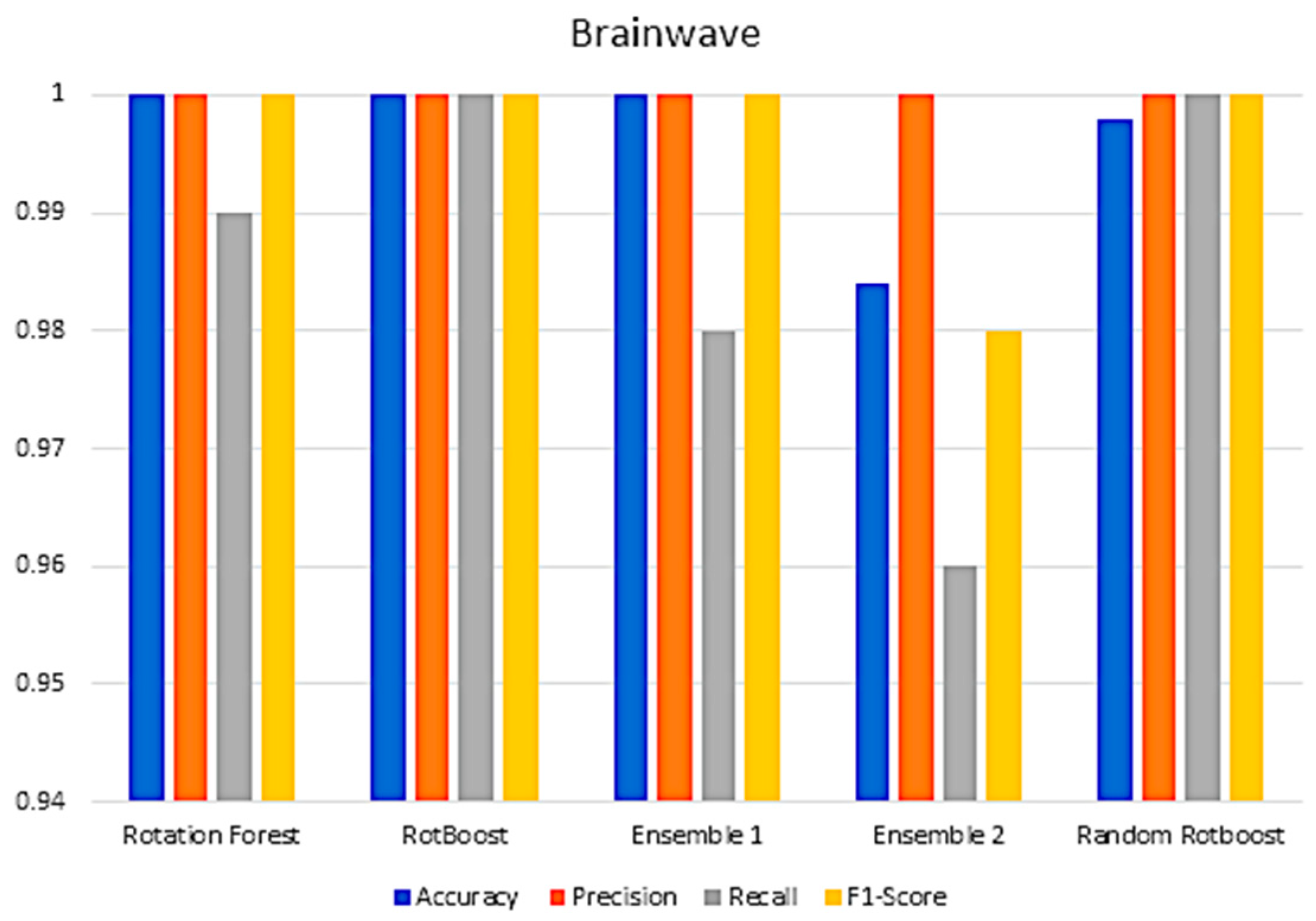
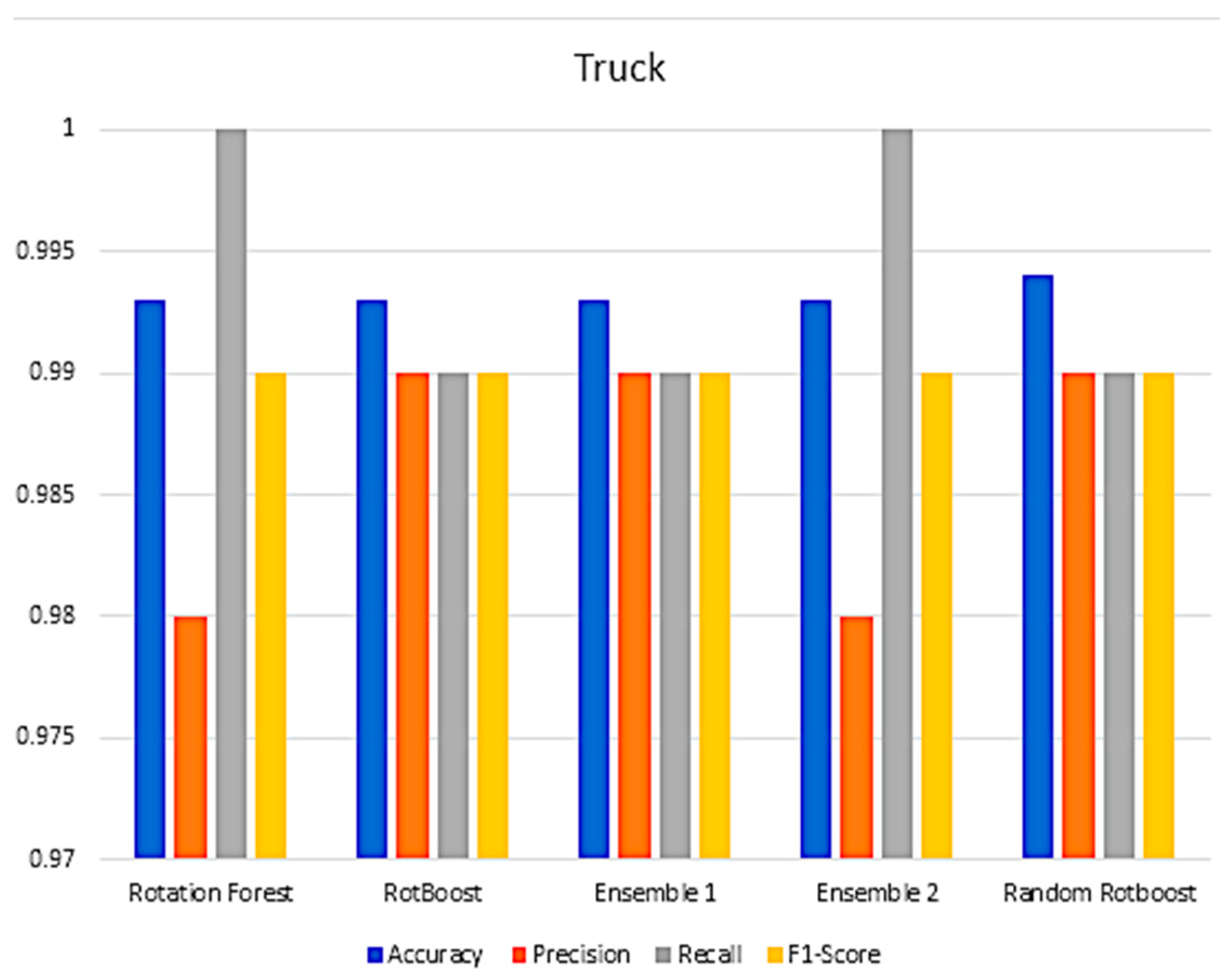
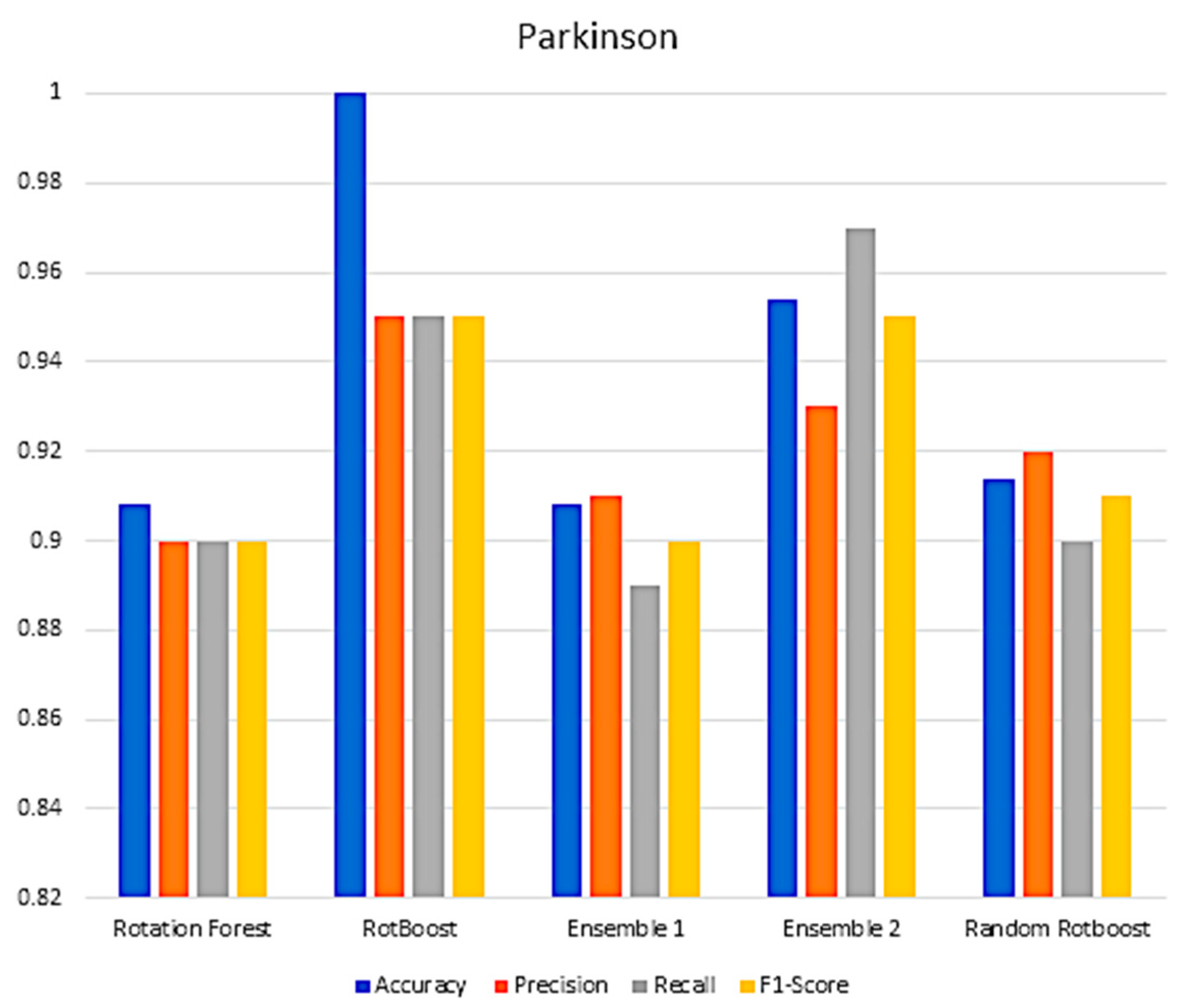
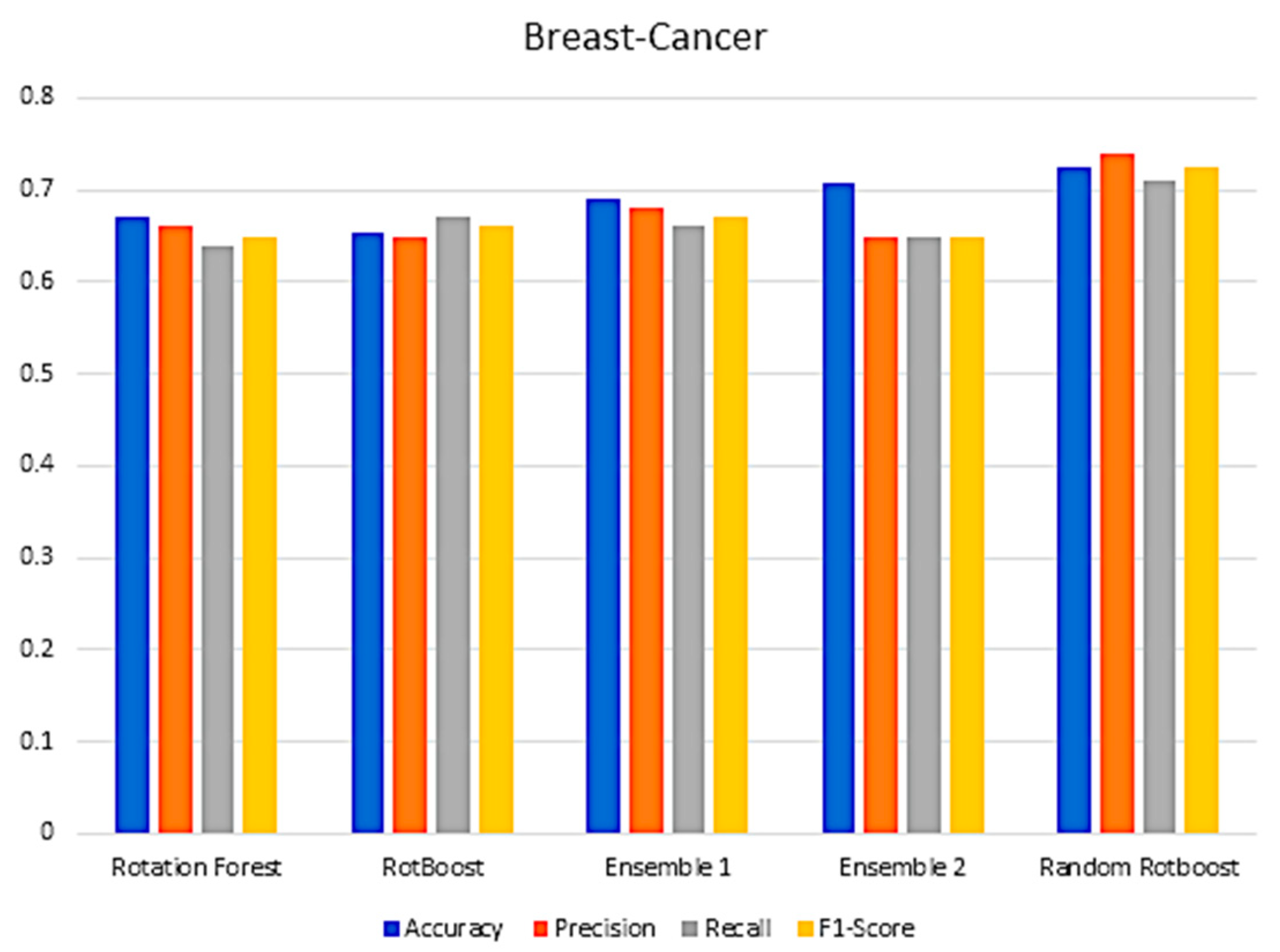
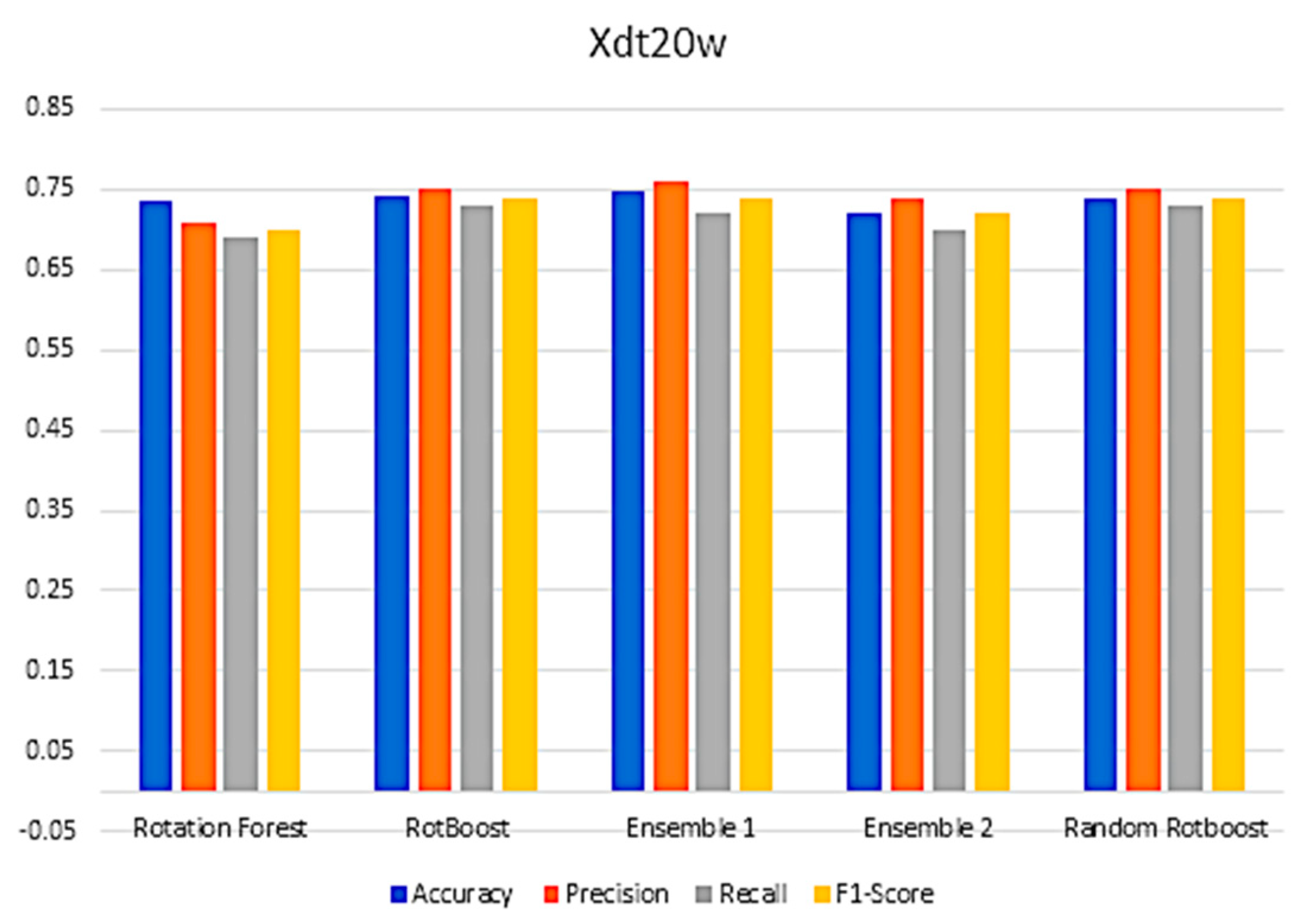
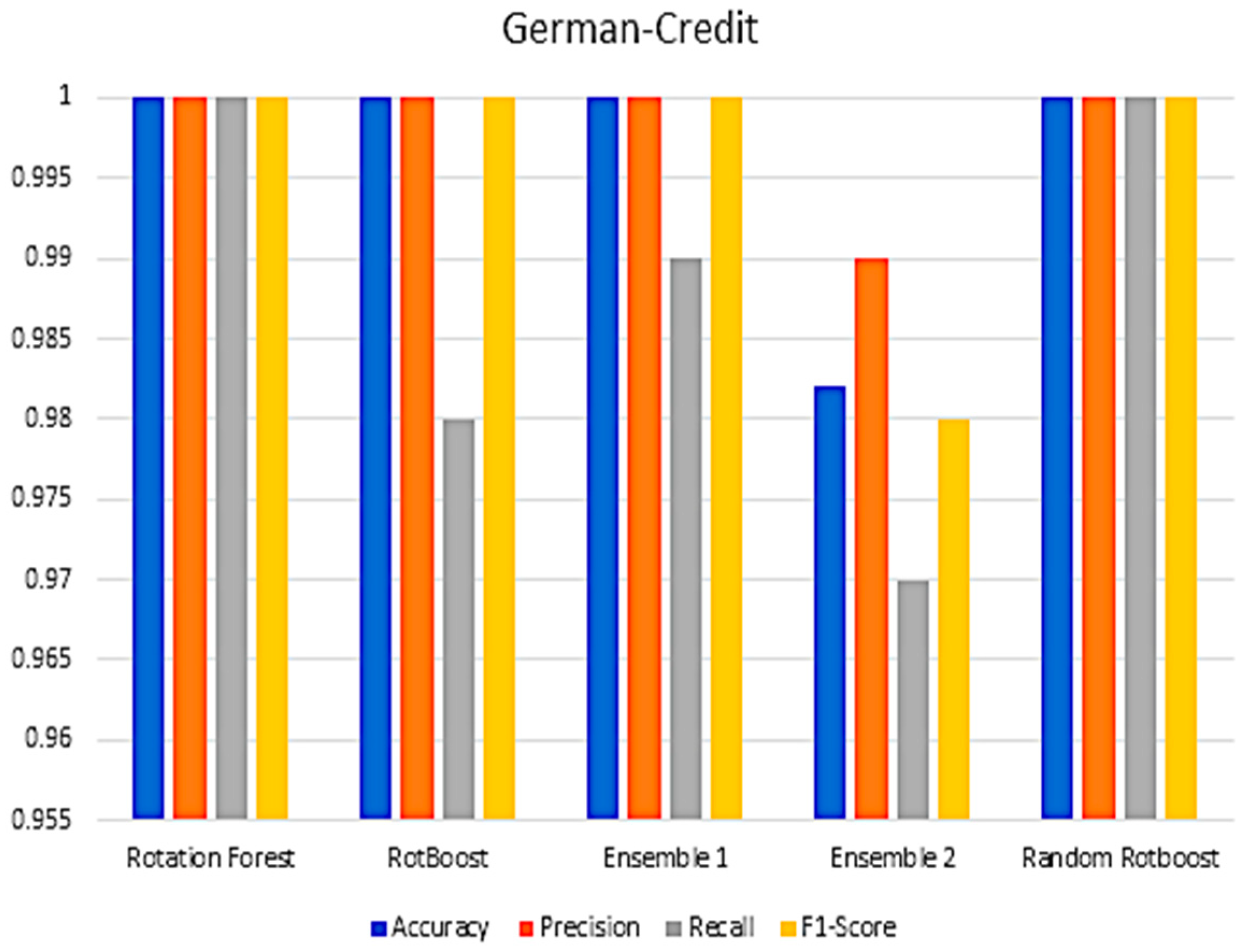
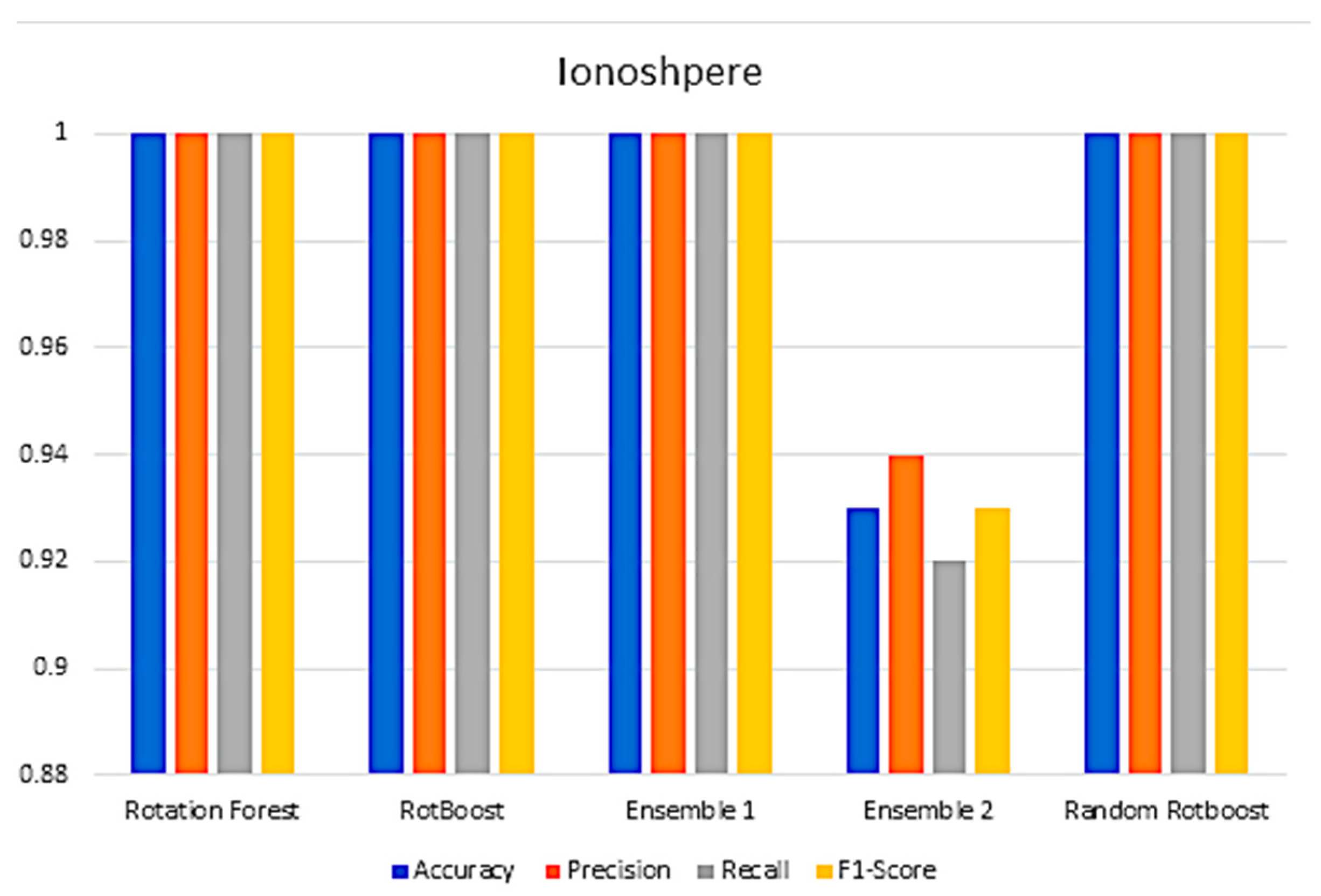
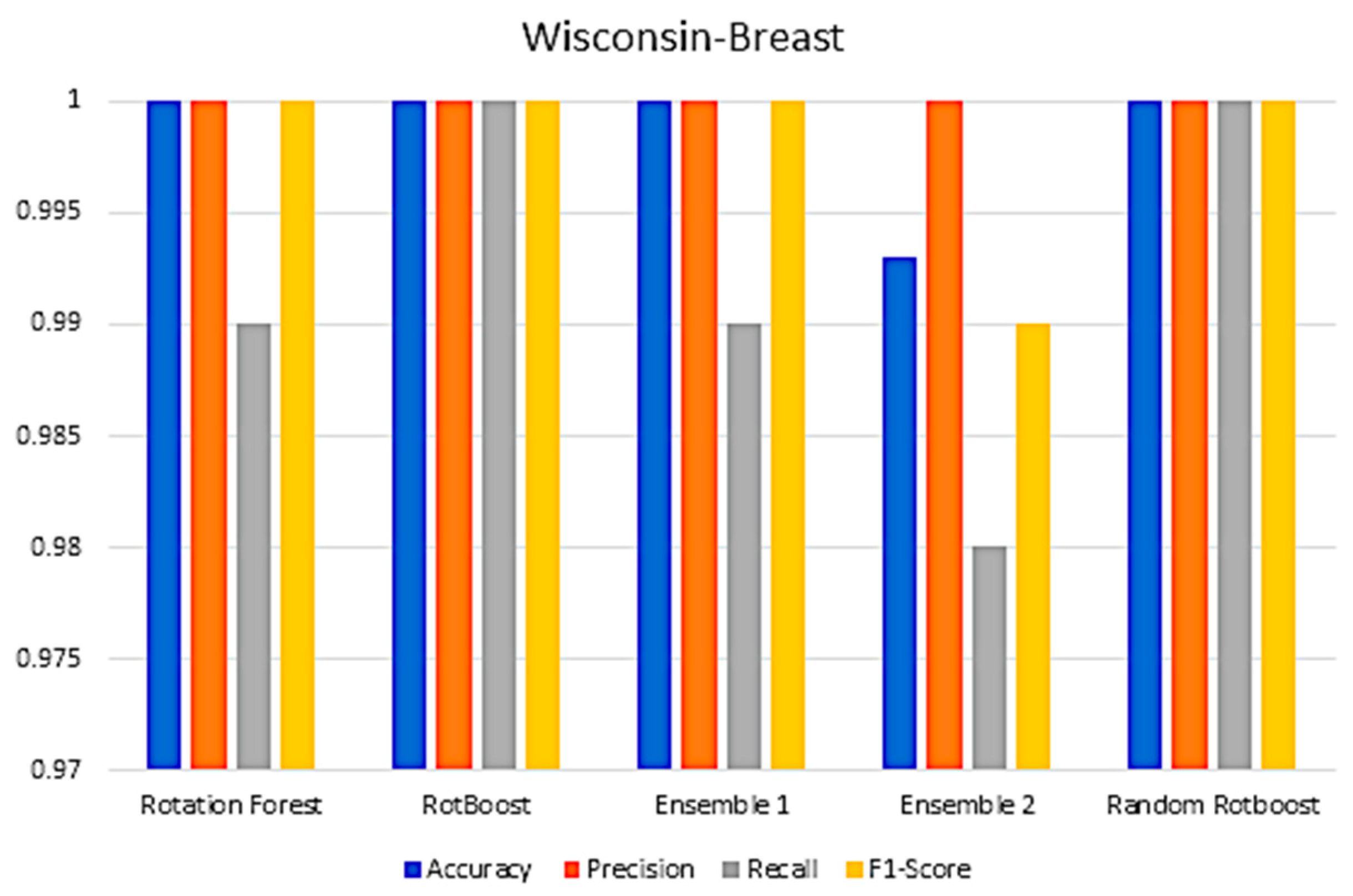
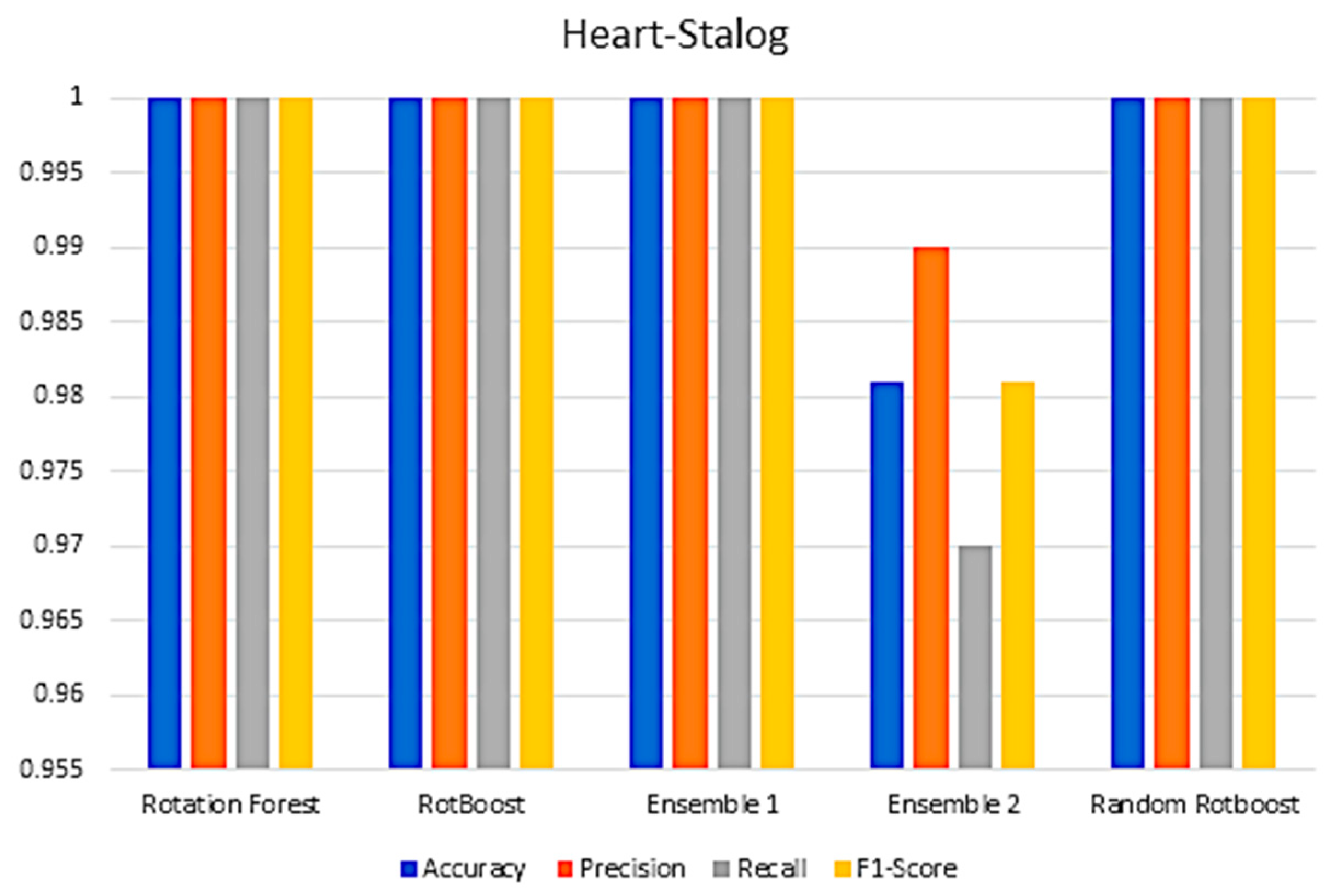
In Section 4, a range of combination comparisons of accuracy, precision, recall, F1-Score have been well discussed. The following Figure A3, Figure A4, Figure A5, Figure A6, Figure A7, Figure A8, Figure A9, Figure A10, Figure A11 and Figure A12 are the aforementioned four metric evaluations of each data set. By showing these comparisons, another easily compared aspect can be seen. The following results correspond to the same results in Figure A4, Figure A5, Figure A6 and Figure A7.
Figure A3. Performance in the Adult data set.
Figure A4. Performance in the Brainwave data set.
Figure A5. Performance in the Truck data set.
Figure A6. Performance in the Parkinson data set.
Figure A7. Performance in the Breast-Cancer data set.
Figure A8. Performance in the ECG data set.
Figure A9. Performance in the German−Credit data set.
Figure A10. Performance in the Ionosphere data set.
Figure A11. Performance in the Wisconsin−Breast data set.
Figure A12. Performance In the Heart−Stalog data set.

References

  1. Mitchell, T.M. Artificial neural networks. Mach. Learn. 1997, 45, 81–127. [Google Scholar]
  2. Breiman, L.; Friedman, J.H.; Olshen, R.A.; Stone, C.J. Classification and Regression Trees; Routledge: London, UK, 2017. [Google Scholar]
  3. Quinlan, J.R. Induction of decision trees. Mach. Learn. 1986, 1, 81–106. [Google Scholar] [CrossRef] [Green Version]
  4. Quinlan, J.R. C4. 5: Programs for Machine Learning; Elsevier: Amsterdam, The Netherlands, 2014. [Google Scholar]
  5. Li, F.; Wong, A.; Clausi, D.A. Combining rotation forests and adaboost for hyperspectral imagery classification using few labeled samples. In Proceedings of the 2014 IEEE Geoscience and Remote Sensing Symposium, Quebec City, QC, Canada, 13–18 July 2014; pp. 4660–4663. [Google Scholar]
  6. Liu, M.; Yan, X.; Wang, L. Identification of Cell Pathology by Using Stacked Auto-Encoders Combination with Rotation Forest. In Proceedings of the 2018 5th International Conference on Information Science and Control Engineering (ICISCE), Zhengzhou, China, 20–22 July 2018; pp. 261–265. [Google Scholar]
  7. Rodriguez, J.J.; Kuncheva, L.I.; Alonso, C.J. Rotation forest: A new classifier ensemble method. IEEE Trans. Pattern Anal. Mach. Intell. 2006, 28, 1619–1630. [Google Scholar] [CrossRef]
  8. Pearson, K.L., III. On lines and planes of closest fit to systems of points in space. Lond. Edinb. Dublin Philos. Mag. J. Sci. 1901, 2, 559–572. [Google Scholar] [CrossRef] [Green Version]
  9. Mao, S.; Xiong, L.; Jiao, L.; Zhang, S.; Chen, B. Isomerous multiple classifier ensemble via transformation of the rotating forest. J. Xidian Univ. 2014, 41, 48–53. [Google Scholar]
  10. Caruana, R.; Niculescu-Mizil, A. An empirical comparison of supervised learning algorithms. In Proceedings of the 23rd International Conference on Machine Learning, Pittsburgh, PA, USA, 25–29 June 2006; pp. 161–168. [Google Scholar]
  11. Wieczorek, W.; Kozak, J.; Strąk, Ł.; Nowakowski, A. Minimum query set for decision tree construction. Entropy 2021, 23, 1682. [Google Scholar] [CrossRef]
  12. Moshkov, M. On the depth of decision trees with hypotheses. Entropy 2022, 24, 116. [Google Scholar] [CrossRef]
  13. Azad, M.; Chikalov, I.; Hussain, S.; Moshkov, M. Entropy-based greedy algorithm for decision trees using hypotheses. Entropy 2021, 23, 808. [Google Scholar] [CrossRef]
  14. Ma, E.J.; Kummer, A. Principled Decision-Making Workflow with Hierarchical Bayesian Models of High-Throughput Dose-Response Measurements. Entropy 2021, 23, 727. [Google Scholar] [CrossRef]
  15. Opitz, D.; Maclin, R. Popular ensemble methods: An empirical study. J. Artif. Intell. Res. 1999, 11, 169–198. [Google Scholar] [CrossRef]
  16. Breiman, L. Bagging predictors. Mach. Learn. 1996, 24, 123–140. [Google Scholar] [CrossRef] [Green Version]
  17. Freund, Y.; Schapire, R.E. Experiments with a new boosting algorithm. In Proceedings of the ICML, Garda, Italy, 3–6 July 1996; pp. 148–156. [Google Scholar]
  18. Breiman, L. Random forests. Mach. Learn. 2001, 45, 5–32. [Google Scholar] [CrossRef] [Green Version]
  19. Friedman, J.H. Greedy function approximation: A gradient boosting machine. Ann. Stat. 2001, 29, 1189–1232. [Google Scholar] [CrossRef]
  20. Chen, T.; Guestrin, C. Xgboost: A scalable tree boosting system. In Proceedings of the 22nd Acm Sigkdd International Conference on Knowledge Discovery and Data Mining, San Francisco, CA, USA, 13–17 August 2016; pp. 785–794. [Google Scholar]
  21. Turska, E.; Jurga, S.; Piskorski, J. Mood disorder detection in adolescents by classification trees, random forests and XGBoost in presence of missing data. Entropy 2021, 23, 1210. [Google Scholar] [CrossRef]
  22. Freund, Y.; Schapire, R.E. A decision-theoretic generalization of on-line learning and an application to boosting. J. Comput. Syst. Sci. 1997, 55, 119–139. [Google Scholar] [CrossRef] [Green Version]
  23. Zhao, X.; Nie, X. Splitting choice and computational complexity analysis of decision trees. Entropy 2021, 23, 1241. [Google Scholar] [CrossRef]
  24. Golub, G.H.; Mahoney, M.W.; Drineas, P.; Lim, L.-H. Bridging the gap between numerical linear algebra, theoretical computer science, and data applications. SIAM News 2006, 39, 1–3. [Google Scholar]
  25. He, Q.; Xu, Z.; Li, S.; Li, R.; Zhang, S.; Wang, N.; Pham, B.T.; Chen, W. Novel entropy and rotation forest-based credal decision tree classifier for landslide susceptibility modeling. Entropy 2019, 21, 106. [Google Scholar] [CrossRef] [Green Version]
  26. Colkesen, I.; Kavzoglu, T. Performance evaluation of rotation forest for svm-based recursive feature elimination using hyperspectral imagery. In Proceedings of the 2016 8th Workshop on Hyperspectral Image and Signal Processing: Evolution in Remote Sensing (WHISPERS), Los Angeles, CA, USA, 21–24 August 2016; pp. 1–5. [Google Scholar]
  27. Zhang, C.-X.; Zhang, J.-S. RotBoost: A technique for combining Rotation Forest and AdaBoost. Pattern Recognit. Lett. 2008, 29, 1524–1536. [Google Scholar] [CrossRef]
  28. Asuncion, A.; Newman, D. UCI Machine Learning Repository. 2007. Available online: https://ergodicity.net/2013/07/ (accessed on 23 May 2019).
  29. Krogh, A.; Vedelsby, J. Neural network ensembles, cross validation, and active learning. Adv. Neural Inf. Process. Syst. 1994, 7, 173. [Google Scholar]
  30. Schapire, R.E. The strength of weak learnability. Mach. Learn. 1990, 5, 197–227. [Google Scholar] [CrossRef] [Green Version]
  31. Cramer, J.S. The origins of logistic regression. Tinbergen Inst. Work. Pap. 2002, 4, 119. [Google Scholar] [CrossRef] [Green Version]
  32. Altman, N.S. An introduction to kernel and nearest-neighbor nonparametric regression. Am. Stat. 1992, 46, 175–185. [Google Scholar]
Publisher’s Note: MDPI stays neutral with regard to jurisdictional claims in published maps and institutional affiliations.

Article Metrics

Citations

Article Access Statistics

Multiple requests from the same IP address are counted as one view.