
Topic Editors


Integrative Genomics and Multi-Omics Approaches for Sustainable Animal Production
Topic Information
Dear Colleagues,
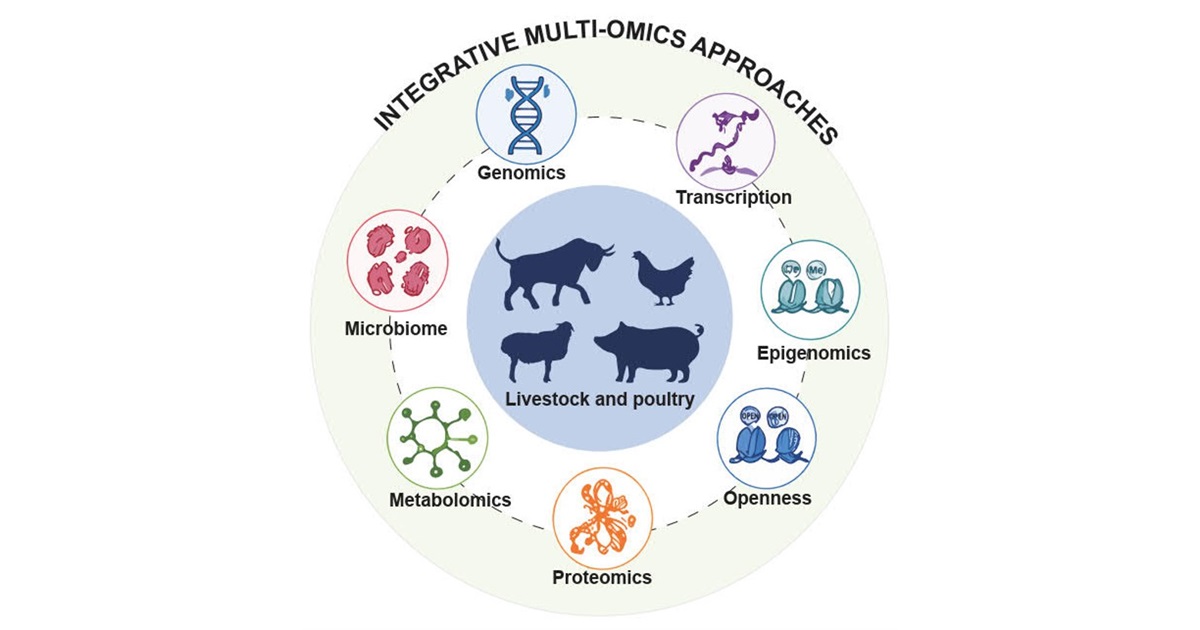
The global livestock industry faces pressing challenges, including the growing demand for high-quality animal products, the need to ensure animal health and welfare, and the imperative to reduce greenhouse gas emissions and resource utilization for sustainable agricultural development. The Topic, “Integrative Genomics and Multi-Omics Approaches for Sustainable Animal Production”, aims to showcase cutting-edge research that elucidates the molecular architecture underlying economically important traits in production animals. By integrating genomics, transcriptomics, epigenomics, chromatin accessibility profiling, proteomics, metabolomics, and microbiome analyses, recent advances now enable systematic investigation of complex biological networks regulating growth, reproduction, disease resistance, feed efficiency, and environmental adaptation.
This Topic welcomes original research articles, reviews, and short communications that uncover regulatory mechanisms of key economic traits, such as intramuscular fat deposition, feed conversion efficiency, and disease resistance in pigs, ruminants, poultry and other economically important animal species. By bridging fundamental biological insights with applied breeding strategies, it aims to provide innovative solutions for environmentally sustainable, low-input, and high-efficiency animal production systems in the context of modern sustainable agriculture.
Prof. Dr. Weimin Wang
Dr. Deyin Zhang
Prof. Dr. Weiwei Wu
Topic Editors
Keywords
- multi-omics
- economic trait
- functional genomics
- molecular breeding
- environmental adaptation
Participating Journals
| Journal Name | Impact Factor | CiteScore | Launched Year | First Decision (median) | APC | |
|---|---|---|---|---|---|---|

Agriculture
|
4.5 | 7.8 | 2011 | 17.4 Days | CHF 2600 | Submit |

Animals
|
3.2 | 5.5 | 2011 | 15.7 Days | CHF 2400 | Submit |

Biology
|
4.3 | 7.3 | 2012 | 14.2 Days | CHF 2700 | Submit |

Genes
|
3.1 | 5.9 | 2010 | 13.3 Days | CHF 2600 | Submit |

Journal of Genome Biotechnology and Genetics
|
- | - | 2026 | 15.0 days * | CHF 1000 | Submit |
* Median value for all MDPI journals in the first half of 2026.

Preprints.org is a multidisciplinary platform offering a preprint service designed to facilitate the early sharing of your research. It supports and empowers your research journey from the very beginning.
MDPI Topics is collaborating with Preprints.org and has established a direct connection between MDPI journals and the platform. Authors are encouraged to take advantage of this opportunity by posting their preprints at Preprints.org prior to publication:
- Share your research immediately: disseminate your ideas prior to publication and establish priority for your work.
- Safeguard your intellectual contribution: Protect your ideas with a time-stamped preprint that serves as proof of your research timeline.
- Boost visibility and impact: Increase the reach and influence of your research by making it accessible to a global audience.
- Gain early feedback: Receive valuable input and insights from peers before submitting to a journal.
- Ensure broad indexing: Web of Science (Preprint Citation Index), Google Scholar, Crossref, SHARE, PrePubMed, Scilit and Europe PMC.
