


Coastal Hydrology and Climate Change: Challenges and Solutions

A special issue of Coasts (ISSN 2673-964X).

Deadline for manuscript submissions: closed (31 December 2025) | Viewed by 6771
Editors


E-Mail Website
Guest Editor
School of Engineering and Applied Science, University of Virginia, Charlottesville, VA, USA
Interests: coastal watershed management; hydrological modeling, climate change impacts; human resillience; agricultural water management, SWAT/SWAT+ model; flood; drought

E-Mail Website
Guest Editor
1. Department of Extension, Agricultural and Biological Engineering, The Ohio State University, Columbus, OH, USA
2. Department of Food, Agricultural and Biological Engineering, The Ohio State University, Columbus, OH, USA
Interests: hydrology; agricultural best management practices (BMPs); ecosystem services; carbon sequestration; soil and water conservation; water quality management; climate change mitigation; sustainable agriculture; SWAT modeling; nutrient management

E-Mail Website
Guest Editor
Department of Geography and Planning, East Carolina University, Greenville, NC, USA
Interests: climate variability; monsoon dynamics; tropical cyclones; extreme weather events; tropical-extratropical interactions; regional climate modeling; coastal precipitation patterns; climate impact on coastal systems; atmospheric sciences; southeastern U.S. climate
Special Issues, Collections and Topics in MDPI journals

E-Mail Website
Guest Editor Assistant
1. Department of Extension, Agricultural and Biological Engineering, The Ohio State University, Columbus, OH, USA
2. Department of Food, Agricultural and Biological Engineering, The Ohio State University, Columbus, OH, USA
Interests: water quality; coastal watershed management; hydrological modeling; SWAT+ model; climate change adaptation; sea-level rise impacts; nitrate loading; best management practices (BMPs); watershed-scale conservation; agricultural nutrient runoff

Special Issue Information

Dear Colleagues,

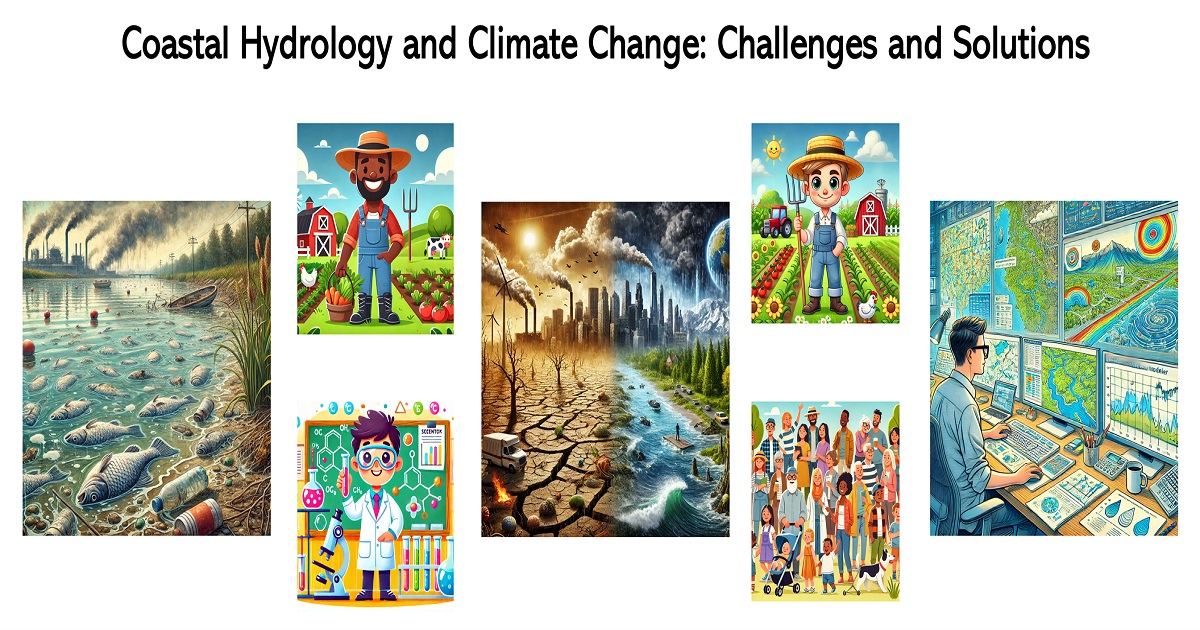
We invite researchers and scholars to contribute to the Special Issue titled “Coastal Hydrology and Climate Change: Challenges and Solutions”. This Special Issue aims to explore the complex interplay between climate change, nutrient dynamics, and coastal hydrology. With climate change, rising sea levels, saltwater intrusion, and crop yield reduction increasingly threatening coastal ecosystems and economies worldwide, understanding the drivers contributing to these impacts is more critical than ever.

This Special Issue seeks high-quality research and review articles that examine the impacts of climate change on water resources, nutrient cycling, the role of anthropogenic nutrient enrichment, and how coastal hydrology contributes to water degradation. We welcome submissions from a wide range of disciplines, including (i) hydrology, (ii) climate change, (iii) human resilience under changing climate, (iv) coastal processes, (v) nature-based solutions, (vi) environmental economics, and (vii) sustainable coastal ecosystem. Interdisciplinary research, case studies, and innovative methodological approaches are particularly welcomed and encouraged.

Join us in advancing scientific knowledge to maintain coastal resilience. Submit your manuscripts and take advantage of this Special Issue, where we will work with you to showcase your research and help it reach a broad, interdisciplinary audience.

Dr. Thanh Nhan Duc Tran
Dr. Asmita Murumkar
Dr. Rosana Nieto Ferreira
Guest Editors

Dr. Mahesh R. Tapas
Guest Editor Assistant

Manuscript Submission Information

Manuscripts should be submitted online at www.mdpi.com by registering and logging in to this website. Once you are registered, click here to go to the submission form. Manuscripts can be submitted until the deadline. All submissions that pass pre-check are peer-reviewed. Accepted papers will be published continuously in the journal (as soon as accepted) and will be listed together on the special issue website. Research articles, review articles as well as short communications are invited. For planned papers, a title and short abstract (about 250 words) can be sent to the Editorial Office for assessment.

Submitted manuscripts should not have been published previously, nor be under consideration for publication elsewhere (except conference proceedings papers). All manuscripts are thoroughly refereed through a single-anonymized peer-review process. A guide for authors and other relevant information for submission of manuscripts is available on the Instructions for Authors page. Coasts is an international peer-reviewed open access quarterly journal published by MDPI.

Please visit the Instructions for Authors page before submitting a manuscript. The Article Processing Charge (APC) for publication in this open access journal is 1200 CHF (Swiss Francs). Submitted papers should be well formatted and use good English. Authors may use MDPI's English editing service prior to publication or during author revisions.

Keywords

  • climate change
  • nutrient enrichment
  • coastal hydrology
  • sustainable water management
  • anthro-pogenic impacts
  • saltwater intrusion
  • coastal resilience
  • nature-based solutions
  • environmental economics
  • water resource degradation

Benefits of Publishing in a Special Issue

  • Ease of navigation: Grouping papers by topic helps scholars navigate broad scope journals more efficiently.
  • Greater discoverability: Special Issues support the reach and impact of scientific research. Articles in Special Issues are more discoverable and cited more frequently.
  • Expansion of research network: Special Issues facilitate connections among authors, fostering scientific collaborations.
  • External promotion: Articles in Special Issues are often promoted through the journal's social media, increasing their visibility.
  • Reprint: MDPI Books provides the opportunity to republish successful Special Issues in book format, both online and in print.

Further information on MDPI's Special Issue policies can be found here.

Published Papers (3 papers)

Order results
Result details
Select all
Export citation of selected articles as:

Research

39 pages, 25548 KB  
Article
Assessment of Nearshore Coastal and Infrastructural Vulnerability Due to Coastal Hazards Along the East Coast of the UAE: A Remote Sensing and GIS Perspective
by P. Subraelu, Fouad Lamghari Ridouane, Francois Mitterand Tsombou and Maryam Alhefeiti
Coasts 2026, 6(2), 22; https://doi.org/10.3390/coasts6020022 - 3 Jun 2026
Viewed by 688
Abstract
As they are home to numerous significant ecosystems, natural resources, and a growing population, coastal regions are among the most vital locations on Earth. This study, pertaining to the east coast of the UAE, integrates nine distinct characteristics to provide a thorough methodology [...] Read more.
As they are home to numerous significant ecosystems, natural resources, and a growing population, coastal regions are among the most vital locations on Earth. This study, pertaining to the east coast of the UAE, integrates nine distinct characteristics to provide a thorough methodology for assessing integrated coastal vulnerability. Land use and land cover (LULC), nearshore bathymetry, coastal geomorphology, coastal slope, shoreline erosion and deposition, population density, wave and tide, and nearshore benthic features are important parameters that are examined. For the first time, coastal benthic features are included to assess coastal vulnerability in this region. By combining the variably weighted rank values of the nine variables, an Integrated Coastal Vulnerability Index was created, which divides the coastline into low-, moderate-, and high-risk categories. The methodology improves the precision of regional risk assessments by combining these factors with data from real-time coastal surveillance. Approximately 26.4% of the UAE’s 178 km east coast (or 47.1 km) is at high risk, followed by 17.3% (or 30.9 km) at moderate risk and 56.3% (or 100.2 km) at low risk. The offshore areas of the east coast of the UAE are prone to shoaling and tunneling effects from incoming high waves at certain areas due to the concave-shaped bathymetry and medium-range canyons present, which exacerbate storm surges or tsunamis due to the shoaling effect. For a 3 m rise in sea level, most significantly, 5.58 km2 of plantation and 14.39 km2 of residential areas will be damaged in the Kalba and Fujairah regions. Additional commercial spaces totaling 1.07 km2 will also have an impact, adding to the existing 2.59 km2 of oil bunkers in Fujairah. More than 40,000 people who live within 3.0 m of the UAE’s east coast in six separate districts—Kalba, Fujairah City, Mirbah and Qidfa, Khorfakkan, Dadna and Bidya, and Dibba—will be impacted if a tsunami wave or storm surge of three meters strikes the east coast. Our results are intended to assist government agencies, coastal planners, and policymakers in the Northeast Emirates (Fujairah and Sharjah) in creating sustainable and successful adaptation and mitigation plans for areas most vulnerable to coastal hazards. In addition to enhancing scientific knowledge of coastal vulnerabilities, this integrative method is a useful tool for making well-informed decisions in the face of shifting socio-economic and climatic situations. Full article
(This article belongs to the Special Issue Coastal Hydrology and Climate Change: Challenges and Solutions)
Show Figures

Figure 1

22 pages, 3001 KB  
Article
Storm Events Along the Coasts of Senegal
by Cheikh Omar Tidjani Cisse, Rafael Almar and Mamadou Sadio
Coasts 2026, 6(1), 9; https://doi.org/10.3390/coasts6010009 - 3 Mar 2026
Viewed by 1283
Abstract
Coastal storms represent a major environmental issue and constitute an important challenge for coastal flood management. This study analyzes the frequency and characteristics of storms on the Senegalese coast between 1993 and 2023, focusing on four coastal cities: Dakar, Saint-Louis, Mbour, and Cap-Skring. [...] Read more.
Coastal storms represent a major environmental issue and constitute an important challenge for coastal flood management. This study analyzes the frequency and characteristics of storms on the Senegalese coast between 1993 and 2023, focusing on four coastal cities: Dakar, Saint-Louis, Mbour, and Cap-Skring. The analysis is based on wave data from the ERA5 model and on meteorological and oceanographic data from different models. Storms were detected using the Peak Over Threshold (POT) method, based on the 95th percentile and fitted to a generalized Pareto distribution (GPD). The results reveal a contrasted spatial distribution of coastal storms, with a higher occurrence in Dakar and Saint-Louis. An apparent increase in the frequency of storms is observed in Saint-Louis, Mbour, and Cap-Skring, while an apparent decrease is noted in Dakar; however, these trends are not statistically significant. Extreme coastal water levels (ECWL) associated with storms show an opposite evolution, with an apparent decrease in the first three regions and an apparent increase in Dakar. The most intense and longest storms, in terms of energy content (Es), are mainly observed in Dakar and Saint-Louis. A linear relationship is highlighted between the duration and intensity of storms. Storm occurrence shows a strong seasonal modulation, with a predominance during the dry season (November to May). The most energetic storms are mostly generated by waves from the west to west-northwest direction in Dakar and Saint-Louis, while Mbour and Cap-Skring present a wider directional window. This first analysis at the scale of the Senegalese coast provides essential elements for understanding the risk of coastal storms and constitutes support for coastal flood management in a context of climate change. Full article
(This article belongs to the Special Issue Coastal Hydrology and Climate Change: Challenges and Solutions)
Show Figures

Figure 1

17 pages, 3189 KB  
Article
Aragonite Saturation State as an Indicator for Oyster Habitat Health in the Delaware Inland Bays
by Tahera Attarwala, Amin Boukari and Gulnihal Ozbay
Coasts 2025, 5(3), 30; https://doi.org/10.3390/coasts5030030 - 19 Aug 2025
Cited by 2 | Viewed by 3054
Abstract
Bivalves such as oysters rely on aragonite and calcite for shell formation via the biomineralization of calcium carbonate. Ocean acidification reduces carbonate ion availability, compromising shell growth and inducing dissolution under undersaturated conditions (Ω < 1). This study assessed the aragonite and [...] Read more.
Bivalves such as oysters rely on aragonite and calcite for shell formation via the biomineralization of calcium carbonate. Ocean acidification reduces carbonate ion availability, compromising shell growth and inducing dissolution under undersaturated conditions (Ω < 1). This study assessed the aragonite and calcite saturation state (Ω) as a proxy for evaluating habitat suitability for oyster aquaculture and restoration. Temperature, salinity, pH, and total alkalinity were monitored across multiple sites and used to calculate the aragonite and calcite saturation state via the Seacarb package. Calcium hardness and dissolved oxygen were also measured to evaluate compliance with hatchery water quality standards. Results indicated temporal and spatial fluctuations in saturation states, with frequent undersaturation during cooler months. Spearman correlation analyses demonstrated significant positive relationships between temperature and salinity (p = 0.46), between pH and aragonite saturation state (p = 0.72), and between alkalinity and aragonite saturation state (p = 0.51). These findings highlight the importance of carbonate chemistry variability and seasonal drivers in determining the suitability of sites for oyster cultivation and restoration under changing environmental conditions. Full article
(This article belongs to the Special Issue Coastal Hydrology and Climate Change: Challenges and Solutions)
Show Figures

Graphical abstract

Back to TopTop