


Abstract
Background: There are currently limited systematic reviews of mobile health interventions for middle-aged and elderly patients with prediabetes from trial studies. This review aimed to gather and analyze information from experimental studies investigating the efficacy of mobile health usability for outcomes among middle-aged and elderly patients with prediabetes. Methods: We conducted a literature search in five databases: Clinicaltrials.gov, the International Clinical Trials Registry Platform (ICTRP), PubMed, ProQuest, and EBSCO, with a date range of January 2007 to July 2022 written in English, following a registered protocol on PROSPERO (CRD42022354351). The quality and possibility of bias were assessed using the Jadad score. The data extraction and analysis were conducted in a methodical manner. Results: A total of 25 studies were included in the qualitative synthesis, with 19 studies using randomized trial designs and 6 studies with non-randomized designs. The study outcomes were the incidence of diabetes mellitus, anthropometric measures, laboratory examinations, measures of physical activity, and dietary behavior. During long-term follow-up, there was no significant difference between mobile health interventions and controls in reducing the incidence of type 2 diabetes. The findings of the studies for weight change, ≥3% and ≥5% weight loss, body mass index, and waist circumference changes were inconsistent. The efficacy of mobile health as an intervention for physical activity and dietary changes was lacking in conclusion. Most studies found that mobile health lacks sufficient evidence to change hbA1c. According to most of these studies, there was no significant difference in blood lipid level reduction. Conclusions: The use of mobile health was not sufficiently proven to be effective for middle-aged and elderly patients with prediabetes.
Keywords:
prediabetic state; telemedicine; m-Health; middle-aged; elderly; intervention; systematic review 1. Introduction
Impaired Fasting Glucose (IFG), Impaired Glucose Tolerance (IGT), or both, and/or elevated levels of Hemoglobin A1c (HbA1c) are all signs of prediabetes [1]. In 2015, there were over 318 million cases of IGT worldwide, and by 2040, there are expected to be about 481 million cases [2]. Prediabetes has become more common as people become older [3]. The transition from normoglycemia to prediabetes or diabetes, or from prediabetes to diabetes, was prevalent in middle-aged and elderly people, suggesting the need for continuing treatment [4]. Individuals with prediabetes are four times more likely than individuals with normal glucose tolerance to develop Type-2 Diabetes Mellitus (T2DM) [5]. Prediabetes can lead to major complications, whether or not patients have T2DM. Microalbuminuria is about twice as common in patients with prediabetes as it is in healthy people, and it can lead to significant problems such as chronic kidney disease (CKD) and macrovascular disease. Prediabetes, on the other hand, can cause many types of diabetic neuropathy, including peripheral neuropathy, polyneuropathy, small-fiber neuropathy, and autonomic neuropathy [6].
Changes in lifestyle, such as daily physical activity and a healthy diet, can reduce the risk of prediabetes, improve the health of diabetic patients, and prevent complications [7]. Consultations with health care professionals at medical facilities are commonly used to modify a person’s lifestyle. Personal coaching for physical activity and personal consultations for healthy eating recommendations are also not generally offered. As a result, mobile health or m-Health interventions could be some of the solutions for improving self-management awareness and compliance with prediabetes interventions including lifestyle changes and healthy foods [8].
Mobile phone ownership is on the rise, with an estimated 90% of the world’s population having one by 2020. According to the most recent statistics, 80% of older adults own a mobile phone (aged 65 years and older) [9]. As the number of mobile phone owners increases, so does the number of mobile phone software applications (apps), including mobile health apps [10]. Health-related mobile phone apps are more preferable since they are less expensive, handier, and more engaging [11]. Their use has been applied in both developed and developing countries, and results demonstrated that they can provide great promise when it comes to providing individualized medical recommendations [8].
Previous systematic reviews on the efficacy of mobile health interventions to improve health outcomes concluded that interventions have the potential to improve health outcomes as well as diet, physical activity, and clinical metabolic parameters [12,13,14]. There were various types of mobile health interventions to achieve positive health outcome change [15,16], such as app-based mobile interventions [16,17,18,19], text message-based interventions [16,20,21,22], website-based interventions [23,24], wearable devices [16,25,26], and so on. Several studies [15,18,23] suggested that future research be conducted to determine the best number and combination of different technology features to maximize intervention efficacy, utilization patterns, and participant engagement. Despite this, evidence on the effectiveness of mobile health interventions for some chronic conditions and non-communicable diseases has been inconsistent and remains weak [27,28].
There are currently limited systematic reviews of mobile health interventions from trial studies for middle-aged and elderly patients with prediabetes [29,30,31]. Elavsky et al. [31] published a systematic review of interventions utilizing mobile technology to change physical activity, sedentary behavior, and sleep among adults aged 50 and older. The review did not include a specific focus on prediabetes management through mobile health interventions and health outcomes. Inconsistent findings, effects on health outcomes, and intervention details remain to be investigated [29,31]. Therefore, the goal of this study was to compile and analyze evidence from experimental studies investigating the efficacy of mobile health usability for outcomes among middle-aged and elderly patients with prediabetes.
2. Methods
2.1. Study Design and Research Sample
This systematic review was conducted and reported in accordance with the Preferred Reporting Items for Systematic Reviews and Meta-Analyses (PRISMA) 2020 statement (Supplementary File S1) [32]. The protocol has been registered in the Prospective Registry of Systematic Reviews (PROSPERO) database. The registration number is CRD4202235435. We used PubMed, ProQuest, EBSCO, Clinicaltrials.gov, and the International Clinical Trials Registry Platform (ICTRP) to conduct a systematic search. The scope of the search was limited to English-language publications published between January 2007 and July 2022. Duplicate records were eliminated, and all records were imported into Mendeley Desktop from the database search.
The following keywords were used to search the database: ((prediabetes AND (minimize risk factor OR physical activity OR body mass index OR weight loss OR healthy diet OR smoking OR alcohol consumption) AND (mobile phone application OR mobile phone app OR telemedicine OR telehealth OR mobile health OR health, mobile OR health OR mobile) AND (middle-aged OR elderly)).
2.2. Inclusion and Exclusion Criteria
The following were the inclusion criteria for the studies that were included: (1) Participants had prediabetes according to American Diabetes Association (ADA) criteria, which included impaired fasting glucose (IFG) 5.6–6.9 mmol/L, impaired glucose tolerance (IGT) 7.8–11.0 mmol/L, or HbA1c (hemoglobin A1c) 5.7–6.4% without a history of T2DM and diabetes medications (insulin or oral anti hyperglycemic agents); (2) Participants were 40 years of age or older; (3) Mobile health intervention is a major component of the study; (4) the mobile health provided lifestyle modification (e.g., physical activity and healthy diets); (5) the study measured participants’ glycated hemoglobin (HbA1c), weight, fasting blood sugar, body mass index(BMI), or other health-related outcomes; (6) the study design is a randomized controlled trial (RCT) or other types experimental study; and (7) the full-text of the article was available. We excluded studies that: (1) Participants had gestational diabetes mellitus (GDM); (2) the study was not a primary study; (3) protocol publication; (4) and did not meet one or more of the inclusion criteria.
2.3. Study Selection
Three reviewers (Y.A.J., R.N. and D.D.E.) worked independently to identify articles by looking at the titles, then studying the abstracts, and finally reading the full-text form. The full articles of any possibly relevant studies were then obtained for a thorough review by all reviewers. In the event of a disagreement, a consensus decision was achieved.
2.4. Data Extraction
Three reviewers (Y.A.J., R.N. and D.D.E.) retrieved data from the included studies and entered it into a spreadsheet independently. Author, year, country, sample size, study design, details of intervention and control, outcomes of interest, and the other key results were among the data retrieved from the studies. If the needed data were not reported in an article, we contacted the article’s corresponding author to obtain any missing information. If within four weeks of being contacted, the corresponding author does not respond, then the study was not included.
2.5. Quality Assessment
Using an adapted version of the Jadad score, two reviewers (R.N. and D.D.E.) independently assessed the quality and risk of bias of the included studies [33]. In the event of a disagreement, another author (Y.A.J.) joined the debate to assist in the resolution of the issues.
2.6. Data Synthesis
The Cochrane methodologies for data analysis and syntheses [34] were used to accomplish the data synthesis (narrative synthesis). Data from both qualitative and quantitative sources were described, analyzed, and classified individually. The characteristics of the research, as well as the significant disparities between them, were meticulously recorded. Topics that were relevant were highlighted, and the data were translated into a descriptive style. As stated in the original studies, the outcome results are described in detail. Due to a paucity of studies with similar settings, interventions and results, a meta-analysis could not be performed.
3. Results
3.1. Search Results
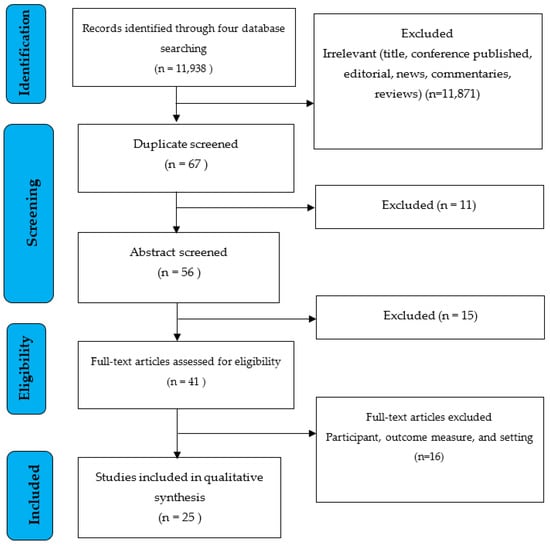
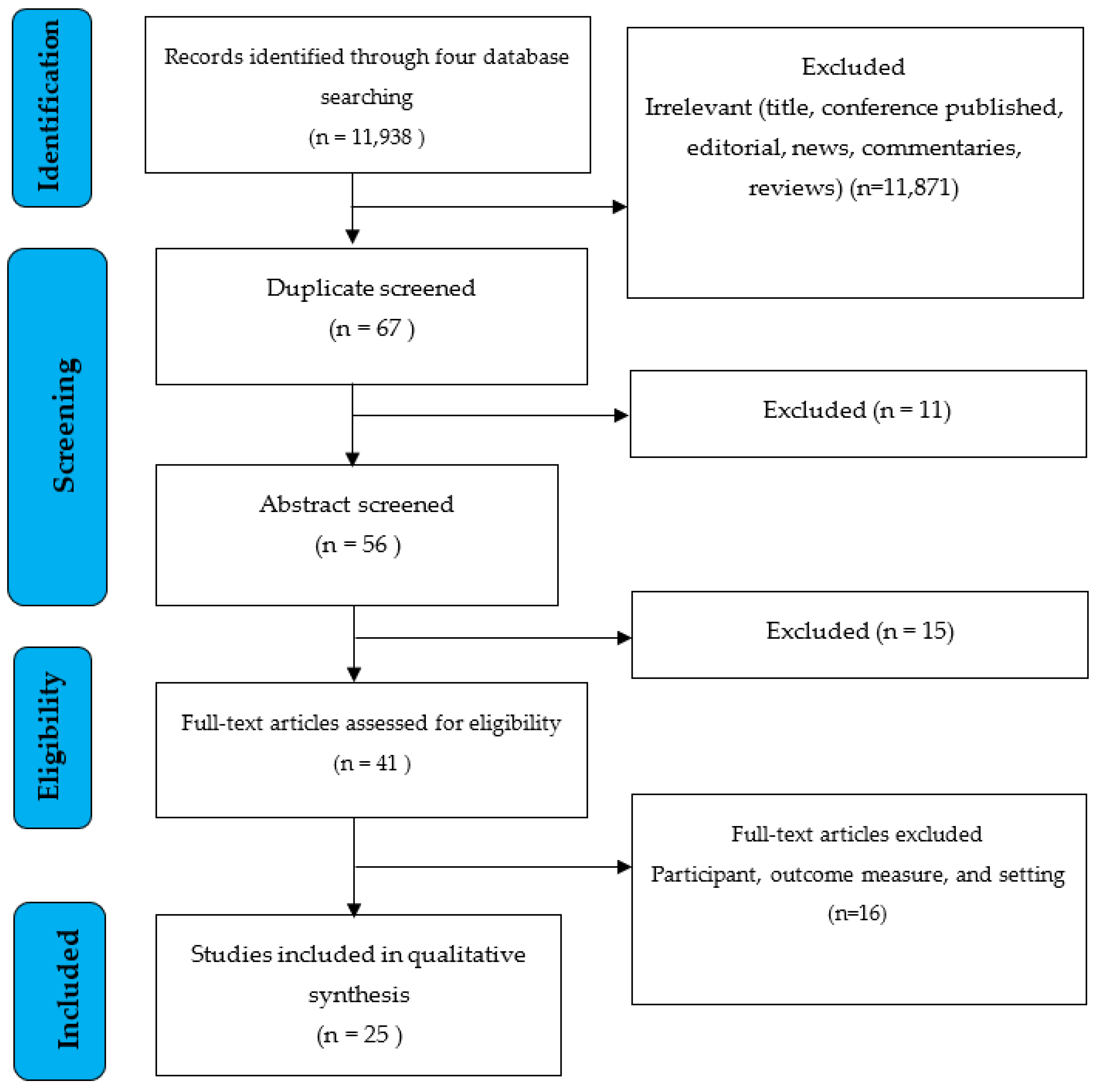
For our investigation, we selected five electronic search engines (PubMed, ProQuest, EBSCO, Clinicaltrials.gov, and the International Clinical Trials Registry Platform (ICTRP)) accessed on 8 July 2022. There were 11,938 electronic database documents discovered in all. A total of 11,871 articles were removed from the study due to being irrelevant (title, conference, published, editorial, news, comments, and reviews). In addition, 11 articles were eliminated from the study because they had a title that was duplicated across four search engines. Following that, 16 papers were eliminated since the abstracts did not meet the inclusion requirements. A total of 41 full articles were reviewed for eligibility and 25 were included in the qualitative synthesis (Figure 1).
Figure 1.
PRISMA flow diagram [35].
3.2. Characteristics of the Studies
This systematic review was comprised of 19 studies with randomized trial designs [36,37,38,39,40,41,42,43,44,45,46,47,48,49,50,51,52,53,54] and 6 studies [55,56,57,58,59,60] with other types of trial designs (pragmatic trial and quasi-experimental). The features of the studies are detailed in Table 1. The characteristics of the participants and the mobile health intervention are summarized in Table 2. A total of 7600 participants from 19 trials were randomized, with 6318 completing the study, indicating that ±17% of the participants did not finish the randomized trials. A total 1866 (94.7%) completed the studies from non-randomized trial design. There are eight studies [38,47,49,50,56,58,59,60] that samples of less than 100 participants. There were three studies with a sample size of more than 1300, two RCT studies [52,61] and 1 pragmatic study [57]. The majority of studies reported mobile health as an early intervention for individuals with prediabetes. Chen’s [55] study reported not only personal counseling as an early intervention but also risk scoring as screening.
A total of thirteen studies [36,39,40,41,43,44,46,48,50,51,53,57,58] only used hbA1c as a diagnostic tool for prediabetes. Research conducted by Ramachandran [36] only used an oral glucose tolerance test (OGTT) as a diagnostic standard for prediabetes. Three other studies, namely Chen [55], Block [37], and Muralidharan [54], only used plasma fasting glucose (FG) tests. There were seven other studies that use a combination examination to establish the diagnosis of prediabetes. Bender, Sharit, Kunthi, Stewart, Sevilla, and Moravcova [42,45,49,56,59,60] used three tests, namely HbA1c, OGGT, and Fasting Glucose (FG) levels. Meanwhile, Fukuoka [47] used a combination of HbA1c and FG assays. There was one study that diagnosed prediabetes by not using laboratory tests but using risk category scoring from the ADA [38].
The youngest average age of 37.8 ± 9.2 years was found in Muralidharan’s [54] study, while the oldest average age was found in McLeod’s [53] study, which is 61.8 ± 9.5 years old. Hamdan’s [41] study only examined female subjects and Ramachandran’s [36] only examined male subjects. Bender’s study only intervened in Filipino Americans because they had a higher risk of developing type 2 diabetes [49]. The shortest studies lasted 3 months, and were found in the Sevilla, Kondo, and Griauzde [46,50,60] studies. Khunti’s study had the longest intervention which was 48 months. There were three types of interventions used, namely text message-based, website-based, and mobile phone apps.
Staite [39] used all three intervention combinations. Block [37] used websites and mobile phone apps. Stewart [59] used text message-based and mobile phone apps. There were 15 studies using only mobile phone apps, 3 other studies using websites, and 4 studies using text messages only. There were 6 studies that use wearable devices as part of the intervention [39,43,49,50,59]. The study outcomes were classified into five categories, which included the incidence of diabetes mellitus (DM), anthropometric measures, laboratory examinations, measures of physical activity, and eating behavior. Ramachandran [36], Khunti [42], and Nanditha [52] examined all of the five outcome categories. Kondo and Chen examined four of the five categories except incidence of DM. Meanwhile Fischer [57] (anthropometric measures) and Francis [40] (physical activity measures) only assessed one of the five clinical outcome parameters.
3.3. Quality Assessment
The Jadad score [33,62] was used to measure the quality of the trials, which reflects the quality of research based on their description of randomization, blinding, and dropouts (withdrawals). The methodology features of the Jadad score are shown in Table 3. Each study in this systematic review received a score (Table 4). In the Jadad score, the scale runs from 0 to 5, with a score of ≤2 indicating a low-quality report and a score of ≥3 indicating a high-quality report [33]. Six [55,56,57,58,59,60] studies have low quality, according to the analysis. This is due to the trial’s insufficiency of randomization in selecting participants. Concerning “blinding,” we understand that many studies do not receive points because the nature of the intervention does not allow for “blinding”.
Table 1.
Characteristics of the studies.
Table 2.
Summary of participant characteristics and mobile health intervention.


Table 3.
Jadad Score Calculation [33,62].
Table 4.
Jadad quality score of experimental studies in this systematic review.
3.4. Mobile Health Interventions
Six studies [36,39,48,52,57,59] used text messaging or short message service (SMS) as an intervention. Furthermore, Staite [39] and Stewart [59] include interventions other than text messaging, such as mobile phone apps and website-based interventions. Ramachandran [36] and Nanditha [52] reported on text messages based on the trans-theoretical model stage. Despite this, Staite [39] reported text messages that were based on the theory of planned behavior; Stewart [59] reported text messages that were based on Bandura’s self-efficacy: toward a unifying theory of behavioral change; and Fischer [48,57] did not report any details about the theory that underpins text messages to participants. Four studies [36,39,52,59] that used messages as interventions reported that content-text messages were created using curriculum material from the National Diabetes Prevention Program (DPP).
In a different manner, five studies [37,39,55,56,60] used website-based interventions. Besides website-based interventions, participants also received intervention via mobile phone apps [37]. Chen Study [55] with SOPs underlying SWAP-DM2 and Block Study [37] with DPP Curriculum demonstrate a distinct variation in the content of each website-based intervention in each study. The website-based intervention adopted the methods and theoretical frameworks, such as The SWAP-DM2 provided diabetes prevention services, ranging from uncomplicated educational websites and record-keeping to quite complex risk-scoring and individualized counseling [55]. Despite this, the Alive-PD was a fully automated and flexible online behavior change strategy [37]. The system includes tools for weight monitoring, eating, and physical activity, as well as weekly health information on diabetes and prevention strategies, quizzes, social support through virtual teams and a participant messaging program, feedback on diet and activity reports, and also goal achievement of success or failure, weekly reminders, and other features [37]. Practice the use of website-based was conducted as a basis for promoting positive Physical Activity (PA), dietary lifestyles [56] and mental resilience [39].
Eighteen [38,40,41,42,44,45,46,48,49,50,51,52,53,54,58] studies used mobile phone apps as an intervention. There were twelve mobile phone apps [37,40,42,45,46,47,51,52,53,54,59] developed from the Diabetes Prevention Programs (DPP) curriculum for adults at risk of T2DM. Despite this, another mobile phone app was developed by other methods such as for a low-carb program [58]. Most mobile phone apps aim to change dietary habits and increase physical activity. Reminder functions [37,38], daily recording [40,42,52], peer support [37,44], personal health coaching [44], and even gamified individual goals [48] were used to achieve the target parameters.
Six studies [40,41,47,48,51,59] were conducted on wearable devices, which may be useful for tracking and recording users’ activity in near-real time [47] and providing feedback [48]. Fitbit accounts for five out of six wearable devices [40,41,51,59,63].
3.5. Outcomes Reported
Anthropometric measures, such as weight loss, changes in BMI, and waist circumference were used as the primary outcomes in twelve studies [38,39,42,45,47,52,53,54,55,56,57,59]. Changes in HbA1c were the main result in five studies [37,44,49,51,58]. In addition, three studies [46,48,50] examined physical activity and its changes as the primary outcome of the research. In Ramachandran [36] and Nanditha’s [43] studies, the primary outcome was the incidence of type 2 diabetes. In the study conducted by Griauzde [41], Bender [40], and Sevilla [60], the primary outcomes were the feasibility and acceptability of the mobile health intervention. In Xu’s [46] studies, the primary outcome was a change in dietary behaviors and physical activity. The summary of intervention outcomes is shown in Table 5.
3.5.1. Incidence of T2DM
The findings from Ramachandran [36] showed that mobile phone messaging (SMS) could be an effective technique for lifestyle modification to reduce the incidence of type 2 diabetes. The cumulative incidence of T2DM at 24-month follow-up was lower in those who received mobile phone messages than in controls [36]. Despite this, Khunti [50] and Nanditha [43] found that SMS and mobile phone apps did not significantly reduce the cumulative incidence of T2DM at the 12, 24, and 48-month follow-ups. There were other factors that could influence these inconsistent results, such as the content of the intervention and the role of the tool or other intervention (wearable device) [50] that has the potential to have an effect. Differences in examination methods and the provision of a prediabetes diagnosis were also factors that needed to be considered in these findings.
3.5.2. Anthropometric Measures
An analysis of twenty studies using weight change as an outcome found that eight studies [39,43,44,47,49,50,53,60] showed no significant differences between intervention and control. Despite this, a significant difference was observed between the intervention and control groups in nine other studies [37,38,42,45,51,52,54,57,59]. Furthermore, the Sharit [56], Chen [55], and Summers [58] studies found significant changes in body weight following the intervention. Seven [37,38,42,45,51,57,59] of the 12 studies that found a significant difference in weight change from mobile health apps were based on content based on DPP.
There were two studies [39,57] that include a ≥3% weight loss as a research outcome. The results of the two are completely contradictory. According to the Fischer study in 2016, there was a significant difference in achieving ≥3% weight loss between the intervention and control groups [39], Meanwhile Fischer in 2019 [57] stated the opposite. Respondent characteristics, such as ethnicity, were suspected to be important considerations in these findings. There was a significant difference between the control and intervention groups and pre-post intervention in three [40,51,52] of the four studies that included achieving ≥5% weight loss as an outcome. Fischer [39], however, stated that there was no difference between the intervention and control groups. Two studies [40,51] used DPP-based content and mobile health apps as interventions.
Changes in BMI were noted in 17 studies [36,37,38,40,42,43,45,46,47,49,50,51,53,54,55,56,60]. BMI changes were shown in two studies [55,56] pre-and post-intervention, but the findings were not conclusive. The other fifteen studies [36,37,38,40,42,43,45,46,47,49,50,51,53,54,60] examined the comparison of changes in BMI in the intervention and control groups. Seven [37,38,42,45,46,51,54] of the fifteen studies reported a significant difference in BMI changes between the control and intervention groups. However, the findings of eight [36,40,43,47,49,50,53,60] other studies found, there was no significant difference in BMI changes between the intervention and control groups.
Waist circumference was observed as an outcome in fifteen studies. Six studies [36,43,47,49,50,53] showed no significant effect of intervention on waist circumference. Despite this, eight studies [37,38,40,45,46,51,54,60] reported a significantly reduced waist circumference between the intervention group and the control. In addition, Sharit’s study described a different mean reduction in waist circumference between baseline and post-intervention [56].
Table 5.
Summary of Intervention Outcome.


3.5.3. Physical Activity
Eleven [36,38,43,48,50,51,52,54,55,56,59] studies reported changes in physical activity as an outcome measure of the study. Five of the 11 studies stated that the mobile health intervention showed significant differences in increased physical activity between the control and intervention groups [48,51,54,59] and pre-post intervention [55]. Despite this, six studies reported that there were no significant differences in increases in physical activity between the control and intervention groups [36,38,43,50,52] and pre-post intervention [56].
3.5.4. Dietary Behaviors
Eight [36,43,46,49,50,54,55,60] studies reported dietary behavior as an outcome measure. Five [36,43,46,54,55] of the eight studies stated that the mobile health intervention showed significant differences in changes to healthy dietary behavior between the control group and the intervention and pre-post-intervention groups [55]. Despite this, three [49,50,60] studies reported that there was no significant difference in changes in dietary behavior between the control and intervention groups.
3.5.5. Laboratory Measures
In sixteen studies [37,38,39,40,42,43,44,47,49,50,51,52,53,54,58,60], the HbA1c test was used as an outcome. Four studies found that mobile health interventions significantly improved HbA1c reduction, both in pre-post [51,58] studies and control intervention [37,52] studies. On the other hand, twelve [38,39,40,42,43,44,47,49,50,53,54,60] other studies found that there was no significant difference in HbA1c reduction between the control and intervention groups.
Reduction in blood glucose levels was one of the measures used as an outcome in eight studies [36,37,38,40,43,53,54,60]. Three [36,37,60] studies explained that there were significant differences in reduction in blood fasting glucose levels between the intervention and control groups and 1 h glucose levels in pre-post intervention. Whereas no significant difference in reduction in blood fasting glucose levels was found between the intervention and control groups in the other five studies [38,40,43,53,54]. In addition, the reduction in blood glucose levels was also significantly different in the oral glucose tolerance test (OGTT) in the control and intervention groups in the study on Vida Sana apps [60].
Seven studies [36,37,38,43,45,49,52] reported blood lipid level reduction as an outcome of the study. All of these studies stated that the mobile health intervention did not show a significant difference in blood lipid level reduction between the control and intervention groups [36,37,38,43,45,49,52].
4. Discussions
Traditional face-to-face treatment for achieving and sustaining weight or BMI can be replaced with technologies that are practical, affordable, and scalable [64]. Mobile phone intervention has gained widespread acceptance among people of all ages and socioeconomic backgrounds, and it provides numerous opportunities in health care, including self-management and T2DM prevention [65]. Despite growing concerns about data privacy in the fields of access, patient confidentiality, and data storage [66]. The variety of definitions and use of diagnostic tools used in these study results indicate that prediabetes was a complex condition that triggers a burden on clinical services and public health policies [3]. The use of combined diagnostic tools is expected to be able to detect conditions of undiagnosed prediabetes and diabetes [67]. Depending on the diagnostic tools used as standards, the characteristics of the intervention each subject requires, and the treatment’s results can change.
During long-term follow-up, there was no significant difference between mobile health interventions and controls in reducing the incidence of T2DM [43,50]. Despite this, there was variation in outcomes that may be brought about by variances in the intervention’s underlying theory and the message’s content to participants, and length of observation. Participants in twenty trials used technology to reduce weight, according to this systematic review. Studies show that mobile phone messaging is an effective and acceptable method to deliver advice and support towards dietary behavior to prevent T2DM in individuals at high risk. The findings [57] showed that although SMS4PreDM was relatively low-cost to deliver and demonstrated high retention, weight loss outcomes may not be sufficient to serve as a population health strategy. It can happen because pre-diabetes is influenced by many factors [55].
In these studies, website-based interventions were used to promote positive health outcomes such as physical activity, dietary habits, and mental resilience. These interventions differed in their complexity, ranging from simple educational websites to more complex individualized counseling. The differences in the details of the form of intervention, may be one factor making the research results inconclusive.
As a simple and effective measure of central obesity, waist circumference is a major predictor of increased risk of hypertension, diabetes mellitus, dyslipidemia, metabolic syndrome, and coronary heart disease [68]. Waist circumference could potentially be used as a clinical equivalent for visceral adipose tissue, which impairs insulin sensitivity and predisposes to prediabetes when excessive [69]. A systematic review and meta-analysis study looked at the impact of technology on waist circumference reduction and found a mean change of 02.99 cm (95% CI: 03.68 to 02.30) [68]. Self-management by chronic healthcare customers can be enhanced via mobile apps, according to users of health apps. This might be used for patients with prediabetes, particularly in terms of lifestyle adjustments [70].
Using text messages instead of other reminders had some advantages. Text messages could be sent to patients at the same time, they were always available, cost-effective, and required less staff [71]. Despite all the benefits and features of text messaging on a mobile phone, there are some drawbacks, such as: the staff could not be certain that text messages were received by all participants, mobile phone numbers could have changed [71], and participants sometimes blocked their status or stopped reading the text messages [72]. A few intervention strategies were bidirectional, allowing T2DM patients to receive continuous and personalized support via SMS while also allowing T2DM patients to interact with healthcare professionals and diabetes care educators to strengthen their T2DM self-management abilities and knowledge [65].
In other circumstances, mobile health technology (including social media) may provide benefits such as low or no cost, high scalability, self-tracking, and tailored feedback, image and video use for improved health literacy, wide range, and data sharing for large-scale analytics [73]. Mobile phone apps are widely utilized all around the world. Health and medical apps are increasingly being employed in a range of scenarios, according to evidence. Many authors in the medical and public health literature have highlighted the benefits that laypeople and healthcare professionals may contribute to health and medical apps [74]. Chronic disease or patients’ conditions must be monitored for a long time. Using mobile phone apps for chronic self-care could be beneficial, allowing patients to monitor and regulate their illnesses [70]. Despite the fact that mobile health intervention prompts were well-received by patients, there are conflicting results regarding their influence on behavioral, laboratory, and T2DM incidence [75].
There are some limitations in this study that need to be addressed. First, in our study, we only used American Diabetes Association (ADA) criteria for prediabetes, although many other prediabetes studies used the World Health Organization (WHO) criteria. Second, although few studies on mobile health interventions with a sample adequate for prediabetes intervention used randomized controlled trials (RCTs) as their study design, we propose that further studies on mobile health apps for prediabetes intervention use RCT design. Third, we were unable to depict all studies in meta-analysis due to differences in diagnostic methods, evaluation, and reporting of intervention outcomes. Approximately half of the studies provided sufficient data to compute them. Fourth, our search strategy may have resulted in a bias for positive results because null or negative results are less likely to be published. Finally, the full text of certain studies was not available.
5. Conclusions
The systematic review includes twenty-five studies that were discussed about mobile health intervention for pre-diabetes among middle-aged and elderly patients. A few studies showed that each mobile health intervention promised an effective and acceptable method to deliver advice and support towards lifestyle modification to prevent diabetes. Although, evidence of the effectiveness of mobile health as an intervention for prediabetes was inconclusive.
Supplementary Materials
The following supporting information can be downloaded at: https://www.mdpi.com/article/10.3390/ijerph192013638/s1, Supplementary File S1: PRISMA 2020 statement checklist. Supplementary File S2: Screening Forms. Supplementary File S3: Data Extraction Forms.
Author Contributions
Y.A.J. was responsible for the formulation of research question, design the main conceptual ideas; drafting the manuscript, analysis and interpretation of data; R.N.A., R.N. and D.D.E. assisted with the formulation of the research question, wrote the manuscript in consultation with Y.A.J.; R.N.A., R.N. and D.D.E. performed the research, analysis and interpretation of data; R.N.A., L.L. and H.K. commented on manuscript drafts. All authors have read and agreed to the published version of the manuscript.
Funding
The authors have no funding source to declare.
Institutional Review Board Statement
Not applicable.
Informed Consent Statement
Not applicable.
Data Availability Statement
All data generated or analyzed during this study are included in this published article [and its Supplementary Information Files].
Acknowledgments
The authors acknowledge the contributions of Siti Solichatul Makkiyyah from the Medical Faculty, Islamic University of Indonesia for reviewing and editing the manuscript.
Conflicts of Interest
The authors declare that they have no competing interests.
Abbreviations
ADA: American Diabetes Association; BMI: Body Mass Index; CKD: Chronic Kidney Disease; DPP: Diabetes Prevention Program; FG: Fasting Glucose; HbA1c: Hemoglobin A1c; IFG: Impaired Fasting Glucose; IGT: Impaired Glucose Tolerance; OGTT: Oral Glucose Tolerance Test PRISMA: Preferred Reporting Items for Systematic Reviews and Meta Analyses; RCTs: Randomized Controlled Trials; SMS: Short Text Message; TD2M: Type02 Diabetes Mellitus; WHO: World Health Organization.
References
- Introduction: Standards of medical care in diabetes-2018. Diabetes Care 2018, 41, S1–S2. [CrossRef] [Scilit]
- Ogurtsova, K.; da Rocha Fernandes, J.D.; Huang, Y.; Linnenkamp, U.; Guariguata, L.; Cho, N.H.; Cavan, D.; Shaw, J.E.; Makaroff, L.E. IDF Diabetes Atlas: Global estimates for the prevalence of diabetes for 2015 and 2040. Diabetes Res. Clin. Pract. 2017, 128, 40–50. [Google Scholar] [CrossRef] [Scilit]
- Richter, B.; Hemmingsen, B.; Metzendorf, M.-I.; Takwoingi, Y. Development of type 2 diabetes mellitus in people with intermediate hyperglycaemia. Cochrane Database Syst. Rev. 2018, 10, CD012661. [Google Scholar] [CrossRef] [Scilit] [PubMed]
- Rooney, M.R.; Rawlings, A.M.; Pankow, J.S.; Echouffo Tcheugui, J.B.; Coresh, J.; Sharrett, A.R.; Selvin, E. Risk of Progression to Diabetes Among Older Adults With Prediabetes. JAMA Intern. Med. 2021, 181, 511–519. [Google Scholar] [CrossRef] [Scilit]
- Anothaisintawee, T.; Sansanayudh, N.; Thamakaison, S.; Lertrattananon, D.; Thakkinstian, A. Neck Circumference as an Anthropometric Indicator of Central Obesity in Patients with Prediabetes: A Cross-Sectional Study. BioMed Res. Int. 2019, 2019, 4808541. [Google Scholar] [CrossRef] [Scilit]
- Grundy, S.M. Pre-diabetes, metabolic syndrome, and cardiovascular risk. J. Am. Coll. Cardiol. 2012, 59, 635–643. [Google Scholar] [CrossRef] [Scilit] [PubMed]
- Hemmingsen, B.; Sonne, D.P.; Metzendorf, M.-I.; Richter, B. Insulin secretagogues for prevention or delay of type 2 diabetes mellitus and its associated complications in persons at increased risk for the development of type 2 diabetes mellitus. Cochrane Database Syst. Rev. 2016, 10, CD012151. [Google Scholar] [CrossRef] [Scilit] [PubMed]
- Wu, X.; Guo, X.; Zhang, Z. The efficacy of mobile phone apps for lifestyle modification in diabetes: Systematic review and meta-analysis. JMIR mHealth uHealth 2019, 7, e12297. [Google Scholar] [CrossRef] [Scilit] [PubMed]
- Center, P.R. Older Adults and Technology Use. PEW Research Center. 2014. Available online: http://www.pewinternet.org/2014/04/03/older-adults-andtechnology-%0Ause/%0A (accessed on 25 September 2022).
- Carroll, J.K.; Moorhead, A.; Bond, R.; LeBlanc, W.G.; Petrella, R.J.; Fiscella, K. Who uses mobile phone health apps and does use matter? A secondary data analytics approach. J. Med. Internet Res. 2017, 19, e125. [Google Scholar] [CrossRef] [Scilit] [PubMed]
- Hou, C.; Carter, B.; Hewitt, J.; Francisa, T.; Mayor, S. Do mobile phone applications improve glycemic control (HbA1c) in the self-management of diabetes? A systematic review, meta-analysis, and GRADE of 14 randomized trials. Diabetes Care 2016, 39, 2089–2095. [Google Scholar] [CrossRef] [Scilit]
- Ang, S.M.; Chen, J.; Liew, J.H.; Johal, J.; Dan, Y.Y.; Allman-Farinelli, M.; Lim, S.L. Efficacy of interventions that incorporate mobile apps in facilitating weight loss and health behavior change in the asian population: Systematic review and meta-analysis. J. Med. Internet Res. 2021, 23, e28185. [Google Scholar] [CrossRef] [Scilit] [PubMed]
- Liang, X.; Wang, Q.; Yang, X.; Cao, J.; Chen, J.; Mo, X.; Huang, J.; Wang, L.; Gu, D. Effect of mobile phone intervention for diabetes on glycaemic control: A meta-analysis. Diabet. Med. 2011, 28, 455–463. [Google Scholar] [CrossRef] [Scilit] [PubMed]
- Fakih El Khoury, C.; Karavetian, M.; Halfens, R.J.G.; Crutzen, R.; Khoja, L.; Schols, J.M.G.A. The Effects of Dietary Mobile Apps on Nutritional Outcomes in Adults with Chronic Diseases: A Systematic Review and Meta-Analysis. J. Acad. Nutr. Diet. 2019, 119, 626–651. [Google Scholar] [CrossRef] [Scilit] [PubMed]
- Wang, Y.; Min, J.; Khuri, J.; Xue, H.; Xie, B.; Kaminsky, L.A.; Cheskin, L.J. Effectiveness of Mobile Health Interventions on Diabetes and Obesity Treatment and Management: Systematic Review of Systematic Reviews. JMIR mHealth uHealth 2020, 8, e15400. [Google Scholar] [CrossRef] [Scilit] [PubMed]
- Kitsiou, S.; Paré, G.; Jaana, M.; Gerber, B. Effectiveness of mHealth interventions for patients with diabetes: An overview of systematic reviews. PLoS ONE 2017, 12, e0173160. [Google Scholar] [CrossRef] [Scilit] [PubMed]
- Villinger, K.; Wahl, D.R.; Boeing, H.; Schupp, H.T.; Renner, B. The effectiveness of app-based mobile interventions on nutrition behaviours and nutrition-related health outcomes: A systematic review and meta-analysis. Obes. Rev. 2019, 20, 1465–1484. [Google Scholar] [CrossRef] [Scilit] [PubMed]
- Schoeppe, S.; Alley, S.; Van Lippevelde, W.; Bray, N.A.; Williams, S.L.; Duncan, M.J.; Vandelanotte, C. Efficacy of interventions that use apps to improve diet, physical activity and sedentary behaviour: A systematic review. Int. J. Behav. Nutr. Phys. Act. 2016, 13, 127. [Google Scholar] [CrossRef] [Scilit] [PubMed]
- Dounavi, K.; Tsoumani, O. Mobile Health Applications in Weight Management: A Systematic Literature Review. Am. J. Prev. Med. 2019, 56, 894–903. [Google Scholar] [CrossRef] [Scilit] [PubMed]
- Wang, X.; Shu, W.; Du, J.; Du, M.; Wang, P.; Xue, M.; Zheng, H.; Jiang, Y.; Yin, S.; Liang, D.; et al. Mobile health in the management of type 1 diabetes: A systematic review and meta-analysis. BMC Endocr. Disord. 2019, 19, 21. [Google Scholar] [CrossRef] [Scilit]
- Dobson, R.; Whittaker, R.; Pfaeffli Dale, L.; Maddison, R. The effectiveness of text message-based self-management interventions for poorly-controlled diabetes: A systematic review. Digit. Health 2017, 3, 2055207617740315. [Google Scholar] [CrossRef] [Scilit]
- Marcolino, M.S.; Oliveira, J.A.Q.; D’Agostino, M.; Ribeiro, A.L.; Alkmim, M.B.M.; Novillo-Ortiz, D. The Impact of mHealth Interventions: Systematic Review of Systematic Reviews. JMIR mHealth uHealth 2018, 6, e23. [Google Scholar] [CrossRef] [Scilit] [PubMed]
- Cotter, A.P.; Durant, N.; Agne, A.A.; Cherrington, A.L. Internet interventions to support lifestyle modification for diabetes management: A systematic review of the evidence. J. Diabetes Complicat. 2014, 28, 243–251. [Google Scholar] [CrossRef] [Scilit] [PubMed]
- Lorig, K.; Ritter, P.L.; Laurent, D.D.; Plant, K.; Green, M.; Jernigan, V.B.B.; Case, S. Online diabetes self-management program: A randomized study. Diabetes Care 2010, 33, 1275–1281. [Google Scholar] [CrossRef] [Scilit] [PubMed]
- Richardson, C.R.; Mehari, K.S.; McIntyre, L.G.; Janney, A.W.; Fortlage, L.A.; Sen, A.; Strecher, V.J.; Piette, J.D. A randomized trial comparing structured and lifestyle goals in an internet-mediated walking program for people with type 2 diabetes. Int. J. Behav. Nutr. Phys. Act. 2007, 4, 59. [Google Scholar] [CrossRef] [Scilit] [PubMed]
- Turner, T.; Spruijt-Metz, D.; Wen, C.K.F.; Hingle, M.D. Prevention and treatment of pediatric obesity using mobile and wireless technologies: A systematic review. Pediatr. Obes. 2015, 10, 403–409. [Google Scholar] [CrossRef] [Scilit] [PubMed]
- Baron, J.; McBain, H.; Newman, S. The impact of mobile monitoring technologies on glycosylated hemoglobin in diabetes: A systematic review. J. Diabetes Sci. Technol. 2012, 6, 1185–1196. [Google Scholar] [CrossRef] [Scilit]
- Bloomfield, G.S.; Vedanthan, R.; Vasudevan, L.; Kithei, A.; Were, M.; Velazquez, E.J. Mobile health for non-communicable diseases in Sub-Saharan Africa: A systematic review of the literature and strategic framework for research. Global. Health 2014, 10, 49. [Google Scholar] [CrossRef] [Scilit] [PubMed]
- Barengo, N.C.; Diaz Valencia, P.A.; Apolina, L.M.; Estrada Cruz, N.A.; Fernández Garate, J.E.; Correa González, R.A.; Cinco Gonzalez, C.A.; Gómez Rodriguez, J.A.; González, N.C. Mobile Health Technology in the Primary Prevention of Type 2 Diabetes: A Systematic Review. Curr. Diabetes Rep. 2022, 22, 1–10. [Google Scholar] [CrossRef] [Scilit] [PubMed]
- Van Rhoon, L.; Byrne, M.; Morrissey, E.; Murphy, J.; McSharry, J. A systematic review of the behaviour change techniques and digital features in technology-driven type 2 diabetes prevention interventions. Digit. Health 2020, 6, 2055207620914427. [Google Scholar] [CrossRef] [Scilit]
- Elavsky, S.; Knapova, L.; Klocek, A.; Smahel, D. Mobile health interventions for physical activity, sedentary behavior, and sleep in adults aged 50 years and older: A systematic literature review. J. Aging Phys. Act. 2019, 27, 565–593. [Google Scholar] [CrossRef] [Scilit]
- Page, M.J.; McKenzie, J.E.; Bossuyt, P.M.; Boutron, I.; Hoffmann, T.C.; Mulrow, C.D.; Shamseer, L.; Tetzlaff, J.M.; Akl, E.A.; Brennan, S.E.; et al. The PRISMA 2020 statement: An updated guideline for reporting systematic reviews. BMJ 2021, 372, n71. [Google Scholar] [CrossRef] [Scilit] [PubMed]
- Jadad, A.R.; Moore, R.A.; Carroll, D.; Jenkinson, C.; Reynolds, D.J.; Gavaghan, D.J.; McQuay, H.J. Assessing the quality of reports of randomized clinical trials: Is blinding necessary? Control. Clin. Trials 1996, 17, 1–12. [Google Scholar] [CrossRef] [Scilit]
- Macaskill, P.; Gatsonis, C.; Deeks, J.; Harbord, R.; Takwoingi, Y. Chapter 10 Analysing and Presenting Results. In Cochrane Handbook for Systematic Reviews of Diagnostic Test Accuracy; 2010; pp. 1–61. Available online: http://srdta.cochrane.org/handbook-dta-reviews (accessed on 25 September 2022).
- Moher, D.; Liberati, A.; Tetzlaff, J.; Altman, D.G. PRISMA 2009 Flow Diagram. Prism. Statement 2009, 6, 1000097. [Google Scholar]
- Ramachandran, A.; Snehalatha, C.; Ram, J.; Selvam, S.; Simon, M.; Nanditha, A.; Shetty, A.S.; Godsland, I.F.; Chaturvedi, N.; Majeed, A.; et al. Effectiveness of mobile phone messaging in prevention of type 2 diabetes by lifestyle modification in men in India: A prospective, parallel-group, randomised controlled trial. Lancet Diabetes Endocrinol. 2013, 1, 191–198. [Google Scholar] [CrossRef] [Scilit]
- Block, G.; Azar, K.M.J.; Romanelli, R.J.; Block, T.J.; Hopkins, D.; Carpenter, H.A.; Dolginsky, M.S.; Hudes, M.L.; Palaniappan, L.P.; Block, C.H. Diabetes prevention and weight loss with a fully automated behavioral intervention by email, web, and mobile phone: A randomized controlled trial among persons with prediabetes. J. Med. Internet Res. 2015, 17, e240. [Google Scholar] [CrossRef] [Scilit]
- Xu, Z.; Geng, J.; Zhang, S.; Zhang, K.; Yang, L.; Li, J.; Li, J. A Mobile-Based Intervention for Dietary Behavior and Physical Activity Change in Individuals at High Risk for Type 2 Diabetes Mellitus: Randomized Controlled Trial. JMIR mHealth uHealth 2020, 8, e19869. [Google Scholar] [CrossRef] [Scilit]
- Staite, E.; Bayley, A.; Al-Ozairi, E.; Stewart, K.; Hopkins, D.; Rundle, J.; Basudev, N.; Mohamedali, Z.; Ismail, K. A Wearable Technology Delivering a Web-Based Diabetes Prevention Program to People at High Risk of Type 2 Diabetes: Randomized Controlled Trial. JMIR mHealth uHealth 2020, 8, e15448. [Google Scholar] [CrossRef] [Scilit]
- Francis, S.L.; Simmering, J.E.; Polgreen, L.A.; Evans, N.J.; Hosteng, K.R.; Carr, L.J.; Cremer, J.F.; Coe, S.; Cavanaugh, J.E.; Segre, A.M.; et al. Gamifying accelerometer use increases physical activity levels of individuals pre-disposed to type II diabetes. Prev. Med. Rep. 2021, 23, 101426. [Google Scholar] [CrossRef] [Scilit]
- Al-Hamdan, R.; Avery, A.; Al-Disi, D.; Sabico, S.; Al-Daghri, N.M.; McCullough, F. Efficacy of lifestyle intervention program for Arab women with prediabetes using social media as an alternative platform of delivery. J. Diabetes Investig. 2021, 12, 1872–1880. [Google Scholar] [CrossRef] [Scilit]
- Khunti, K.; Griffin, S.; Brennan, A.; Dallosso, H.; Davies, M.; Eborall, H.; Edwardson, C.; Gray, L.; Hardeman, W.; Heathcote, L.; et al. Behavioural interventions to promote physical activity in a multiethnic population at high risk of diabetes: PROPELS three-arm RCT. Health Technol. Assess. 2021, 25, 1–190. [Google Scholar] [CrossRef] [Scilit]
- Katula, J.A.; Dressler, E.V.; Kittel, C.A.; Harvin, L.N.; Almeida, F.A.; Wilson, K.E.; Michaud, T.L.; Porter, G.C.; Brito, F.A.; Goessl, C.L.; et al. Effects of a Digital Diabetes Prevention Program: An RCT. Am. J. Prev. Med. 2022, 62, 567–577. [Google Scholar] [CrossRef] [Scilit] [PubMed]
- Lim, S.L.; Ong, K.W.; Johal, J.; Han, C.Y.; Yap, Q.V.; Chan, Y.H.; Zhang, Z.P.; Chandra, C.C.; Thiagarajah, A.G.; Khoo, C.M. A Smartphone App-Based Lifestyle Change Program for Prediabetes (D’LITE Study) in a Multiethnic Asian Population: A Randomized Controlled Trial. Front. Nutr. 2021, 8, 780567. [Google Scholar] [CrossRef] [Scilit] [PubMed]
- Moravcová, K.; Karbanová, M.; Bretschneider, M.P.; Sovová, M.; Ožana, J.; Sovová, E. Comparing Digital Therapeutic Intervention with an Intensive Obesity Management Program: Randomized Controlled Trial. Nutrients 2022, 14, 2005. [Google Scholar] [CrossRef] [Scilit] [PubMed]
- Kondo, M.; Okitsu, T.; Waki, K.; Yamauchi, T.; Nangaku, M.; Ohe, K. Effect of Information and Communication Technology-Based Self-management System DialBeticsLite on Treating Abdominal Obesity in the Specific Health Guidance in Japan: Randomized Controlled Trial. JMIR Form. Res. 2022, 6, e33852. [Google Scholar] [CrossRef] [Scilit] [PubMed]
- Fukuoka, Y.; Gay, C.L.; Joiner, K.L.; Vittinghoff, E. A Novel Diabetes Prevention Intervention Using a Mobile App: A Randomized Controlled Trial with Overweight Adults at Risk. Am. J. Prev. Med. 2015, 49, 223–237. [Google Scholar] [CrossRef] [Scilit]
- Fischer, H.H.; Fischer, I.P.; Pereira, R.I.; Furniss, A.L.; Rozwadowski, J.M.; Moore, S.L.; Durfee, M.J.; Raghunath, S.G.; Tsai, A.G.; Havranek, E.P. Text Message Support for Weight Loss in Patients with Prediabetes: A Randomized Clinical Trial. Diabetes Care 2016, 39, 1364–1370. [Google Scholar] [CrossRef] [Scilit]
- Bender, M.S.; Cooper, B.A.; Flowers, E.; Ma, R.; Arai, S. Filipinos Fit and Trim—A feasible and efficacious DPP-based intervention trial. Contemp. Clin. Trials Commun. 2018, 12, 76–84. [Google Scholar] [CrossRef] [Scilit]
- Griauzde, D.; Kullgren, J.T.; Liestenfeltz, B.; Ansari, T.; Johnson, E.H.; Fedewa, A.; Saslow, L.R.; Richardson, C.; Heisler, M. A Mobile Phone-Based Program to Promote Healthy Behaviors Among Adults with Prediabetes Who Declined Participation in Free Diabetes Prevention Programs: Mixed-Methods Pilot Randomized Controlled Trial. JMIR mHealth uHealth 2019, 7, e11267. [Google Scholar] [CrossRef] [Scilit]
- Toro-Ramos, T.; Michaelides, A.; Anton, M.; Karim, Z.; Kang-Oh, L.; Argyrou, C.; Loukaidou, E.; Charitou, M.M.; Sze, W.; Miller, J.D. Mobile Delivery of the Diabetes Prevention Program in People with Prediabetes: Randomized Controlled Trial. JMIR mHealth uHealth 2020, 8, e17842. [Google Scholar] [CrossRef] [Scilit]
- Nanditha, A.; Thomson, H.; Susairaj, P.; Srivanichakorn, W.; Oliver, N.; Godsland, I.F.; Majeed, A.; Darzi, A.; Satheesh, K.; Simon, M.; et al. A pragmatic and scalable strategy using mobile technology to promote sustained lifestyle changes to prevent type 2 diabetes in India and the UK: A randomised controlled trial. Diabetologia 2020, 63, 486–496. [Google Scholar] [CrossRef] [Scilit]
- McLeod, M.; Stanley, J.; Signal, V.; Stairmand, J.; Thompson, D.; Henderson, K.; Davies, C.; Krebs, J.; Dowell, A.; Grainger, R.; et al. Impact of a comprehensive digital health programme on HbA1c and weight after 12 months for people with diabetes and prediabetes: A randomised controlled trial. Diabetologia 2020, 63, 2559–2570. [Google Scholar] [CrossRef] [Scilit]
- Muralidharan, S.; Ranjani, H.; Anjana, R.M.; Gupta, Y.; Ambekar, S.; Koppikar, V.; Jagannathan, N.; Jena, S.; Tandon, N.; Allender, S.; et al. Change in cardiometabolic risk factors among Asian Indian adults recruited in a mHealth-based diabetes prevention trial. Digit. Health 2021, 7, 20552076211039030. [Google Scholar] [CrossRef] [Scilit] [PubMed]
- Chen, P.; Chai, J.; Cheng, J.; Li, K.; Xie, S.; Liang, H.; Shen, X.; Feng, R.; Wang, D. A smart web aid for preventing diabetes in rural China: Preliminary findings and lessons. J. Med. Internet Res. 2014, 16, e98. [Google Scholar] [CrossRef] [Scilit] [PubMed]
- Sharit, J.; Idrees, T.; Andrade, A.D.; Anam, R.; Karanam, C.; Valencia, W.; Florez, H.; Ruiz, J.G. Use of an online personal health record’s Track Health function to promote positive lifestyle behaviors in Veterans with prediabetes. J. Health Psychol. 2018, 23, 681–690. [Google Scholar] [CrossRef] [Scilit] [PubMed]
- Fischer, H.H.; Durfee, M.J.; Raghunath, S.G.; Ritchie, N.D. Short message service text message support for weight loss in patients with prediabetes: Pragmatic trial. JMIR Diabetes 2019, 4, e12985. [Google Scholar] [CrossRef] [Scilit]
- Summers, C.; Tobin, S.; Unwin, D. Evaluation of the Low Carb Program Digital Intervention for the Self-Management of Type 2 Diabetes and Prediabetes in an NHS England General Practice: Single-Arm Prospective Study. JMIR Diabetes 2021, 6, e25751. [Google Scholar] [CrossRef] [Scilit]
- Stewart, J.L.; Hatzigeorgiou, C.; Davis, C.L.; Ledford, C.J.W. DPPFit: Developing and Testing a Technology-Based Adaptation of the Diabetes Prevention Program (DPP) to Address Prediabetes in a Primary Care Setting. J. Am. Board Fam. Med. 2022, 35, 548–558. [Google Scholar] [CrossRef] [Scilit]
- Sevilla-Gonzalez, M.D.R.; Bourguet-Ramirez, B.; Lazaro-Carrera, L.S.; Martagon-Rosado, A.J.; Gomez-Velasco, D.V.; Viveros-Ruiz, T.L. Evaluation of a Web Platform to Record Lifestyle Habits in Subjects at Risk of Developing Type 2 Diabetes in a Middle-Income Population: Prospective Interventional Study. JMIR Diabetes 2022, 7, e25105. [Google Scholar] [CrossRef] [Scilit] [PubMed]
- Khunti, K.; Gillies, C.L.; Taub, N.A.; Mostafa, S.A.; Hiles, S.L.; Abrams, K.R.; Davies, M.J. A comparison of cost per case detected of screening strategies for Type 2 diabetes and impaired glucose regulation: Modelling study. Diabetes Res. Clin. Pract. 2012, 97, 505–513. [Google Scholar] [CrossRef] [Scilit]
- Berger, V.W.; Alperson, S.Y. A general framework for the evaluation of clinical trial quality. Rev. Recent Clin. Trials 2009, 4, 79–88. [Google Scholar] [CrossRef] [Scilit]
- Dany, F.; Kusumawardani, N.; Pradono, J.; Kristianto, Y.; Delima, D. Faktor Risiko Prediabetes: Isolated Impaired Fasting Glucose (i-IFG), Isolated Impaired Glucose Tolerance (i-IGT) dan Kombinasi IFG-IGT (Analisis Lanjut Riskesdas 2013). Bul. Penelit. Kesehat. 2017, 45, 113–124. [Google Scholar] [CrossRef] [Scilit]
- Xiao, L.; Yank, V.; Wilson, S.R.; Lavori, P.W.; Ma, J. Two-year weight-loss maintenance in primary care-based Diabetes Prevention Program lifestyle interventions. Nutr. Diabetes 2013, 3, 17–19. [Google Scholar] [CrossRef] [Scilit] [PubMed]
- Muralidharan, S.; Ranjani, H.; Anjana, R.; Allender, S.; Mohan, V. Mobile health technology in the prevention and management of Type 2 diabetes. Indian J. Endocrinol. Metab. 2017, 21, 334–340. [Google Scholar] [CrossRef] [Scilit]
- Lee, J. Hype or hope for diabetes mobile health applications? Diabetes Res. Clin. Pract. 2014, 106, 390–392. [Google Scholar] [CrossRef] [Scilit] [PubMed]
- Gossain, V.V.; Aldasouqi, S. The challenge of undiagnosed pre-diabetes, diabetes and associated cardiovascular disease. Int. J. Diabetes Mellit. 2010, 2, 43–46. [Google Scholar] [CrossRef] [Scilit]
- Seo, D.C.; Niu, J. Evaluation of internet-based interventions on waist circumference reduction: A meta-analysis. J. Med. Internet Res. 2015, 17, e181. [Google Scholar] [CrossRef] [Scilit] [PubMed]
- Gupta, A.K.; Menon, A.; Brashear, M.; Johnson, W.D. Prediabetes: Prevalence, pathogenesis, and recognition of enhanced risk. In Nutritional and Therapeutic Interventions for Diabetes and Metabolic Syndrome, 2nd ed.; Elsevier Inc.: Amsterdam, The Netherlands, 2018; pp. 15–32. ISBN 9780128120194. [Google Scholar]
- Anderson, K.; Burford, O.; Emmerton, L. Mobile health apps to facilitate self-care: A qualitative study of user experiences. PLoS ONE 2016, 11, e0156164. [Google Scholar] [CrossRef] [Scilit]
- Kannisto, K.A.; Koivunen, M.H.; Välimäki, M.A. Use of mobile phone text message reminders in health care services: A narrative literature review. J. Med. Internet Res. 2014, 16, e222. [Google Scholar] [CrossRef] [Scilit] [PubMed]
- Strandbygaard, U.; Thomsen, S.F.; Backer, V. A daily SMS reminder increases adherence to asthma treatment: A three-month follow-up study. Respir. Med. 2010, 104, 166–171. [Google Scholar] [CrossRef] [Scilit]
- Prochaska, J.J.; Coughlin, S.S.; Lyons, E.J. Social media and mobile technology for cancer prevention and treatment. Am. Soc. Clin. Oncol. Educ. Book 2017, 37, 128–137. [Google Scholar] [CrossRef]
- Lupton, D. Apps as Artefacts: Towards a Critical Perspective on Mobile Health and Medical Apps. Societies 2014, 4, 606–622. [Google Scholar] [CrossRef] [Scilit]
- MacPherson, M.; Merry, K.; Locke, S.; Jung, M. Developing Mobile Health Interventions with Implementation in Mind: Application of the Multiphase Optimization Strategy (MOST) Preparation Phase to Diabetes Prevention Programming. JMIR Form. Res. 2022, 6, e36143. [Google Scholar] [CrossRef] [Scilit] [PubMed]
Publisher’s Note: MDPI stays neutral with regard to jurisdictional claims in published maps and institutional affiliations. |
© 2022 by the authors. Licensee MDPI, Basel, Switzerland. This article is an open access article distributed under the terms and conditions of the Creative Commons Attribution (CC BY) license (https://creativecommons.org/licenses/by/4.0/).