

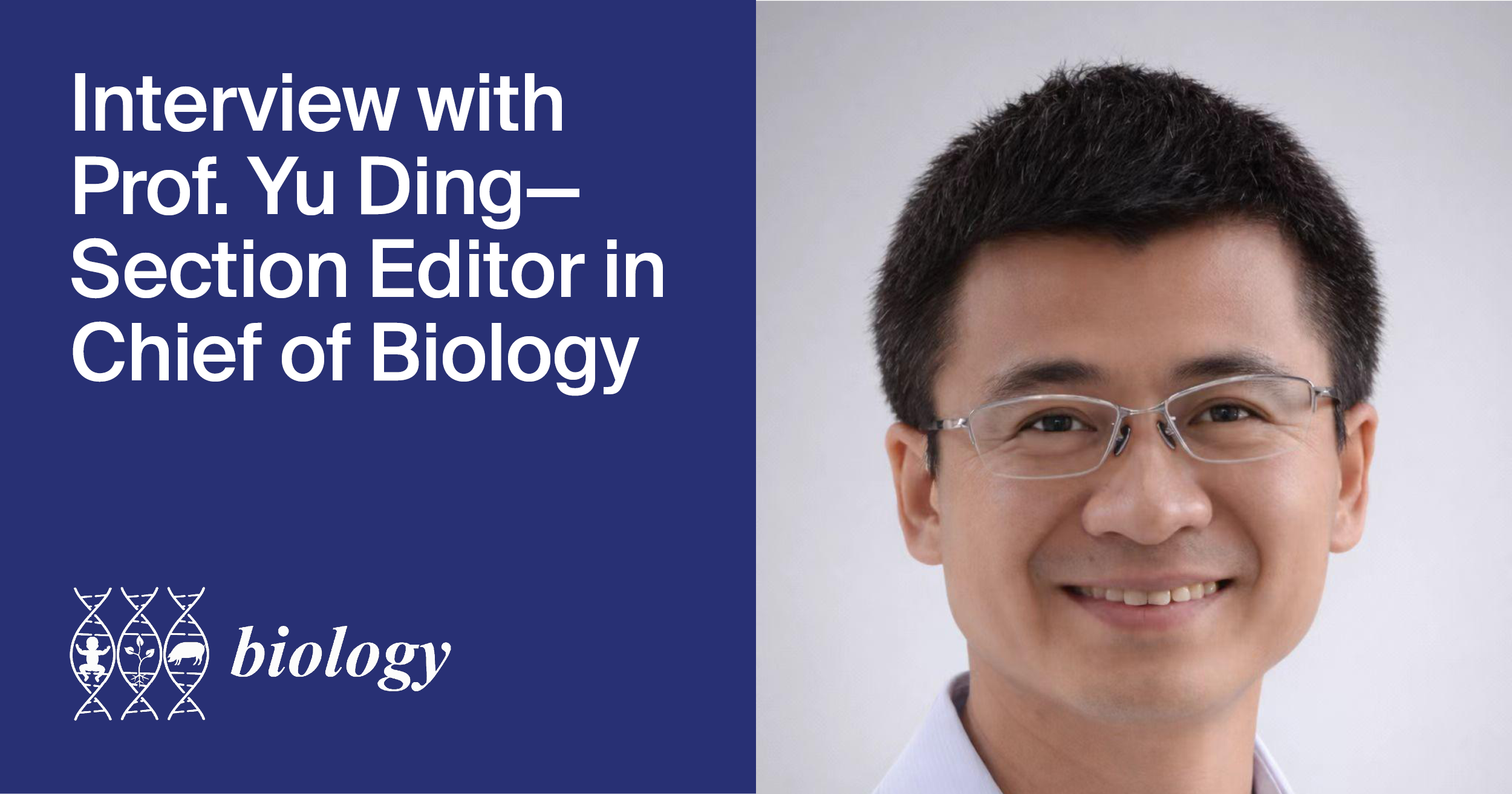
Interview with Prof. Yu Ding—Section Editor-in-Chief of the “Biotechnology” Section in Biology
Name: Prof. Yu Ding
Affiliation: School of Life Sciences, Fudan University, Shanghai 200433, China
Interests: autophagy; lysosome; nanobody; neurology; biophysics; targeted degradation; PROTACs; molecular glue; ATTEC degradation technology; protein structure
1. Could you briefly introduce yourself and your current research to our readers?
I am a faculty member at the School of Life Sciences, Fudan University, and my research focuses on targeted protein degradation and binder-based regulation of disease-relevant targets. In particular, we are interested in multiple cellular degradation pathways, including the ubiquitin–proteasome system, endoplasmic reticulum-associated degradation (ERAD), and autophagy- and lysosome-mediated degradation technologies such as ATTEC, as well as emerging modalities including PROTACs and molecular glues.
Another major direction of my work is the development and application of high-affinity binders—especially nanobodies—as versatile tools to modulate protein function, localization, and stability. These binders serve not only as basic research tools but also as starting points for therapeutic intervention. More recently, we have been integrating AI-assisted protein design and structural biology to accelerate binder discovery and to better understand degradation mechanisms at the molecular level.
2. What were the main challenges and innovations in your research field?
One major challenge in targeted protein degradation is translating innovative concepts into clinically approved drugs while selecting the most appropriate degradation pathway for a given target. The field is rapidly moving toward clinical relevance, as exemplified by compounds such as KT-621 from Kymera, which targets STAT6 and demonstrates how small-molecule degraders can potentially replace antibody-based therapies, offering distinct competitive advantages.
From a mechanistic perspective, another key challenge is to clearly understand and control different degradation routes, including proteasome-dependent degradation, ERAD for membrane and secretory proteins, and lysosome-mediated pathways. Each pathway has unique molecular requirements, spatial constraints, and safety considerations, making mechanistic clarity essential for rational degrading design.
For binder-based strategies, innovation lies in going beyond target binding toward functional modulation and degradation. This includes identifying binders that can effectively engage ERAD or lysosomal machinery, addressing issues such as humanization and in vivo applicability, and exploring hybrid approaches that combine small molecules and biologics. Concepts such as ADC-like designs, multispecific antibodies, and modular binder assemblies are opening new opportunities to target previously inaccessible proteins.
3. How do you see the research trends in this field, and what advice would you give to early career researchers?
This field is evolving extremely fast, driven by new technologies in chemistry, structural biology, AI, and cell biology. Targeted degradation and binder-based modulation are expanding beyond oncology into neurology, immunology, and metabolic diseases.
For early career researchers, my advice is to actively embrace new tools and interdisciplinary approaches. A strong foundation in basic biology remains essential, but the ability to integrate computation, structural insights, and translational thinking will be increasingly important. Most importantly, researchers should aim to ask meaningful biological and clinical questions and use the most appropriate technologies to address them efficiently.
4. What appealed to you about the journal that made you want to take the role as its Section Editor-in-Chief?
What attracted me most to Biology is its broad scope and its emphasis on open, rigorous, and timely dissemination of scientific knowledge. As Section Editor-in-Chief, I see this role as an opportunity to engage more closely with the scientific community, facilitate high-quality academic exchange, and help translate scientific advances into broader societal impact.
Serving the community and promoting the healthy development of the field are responsibilities I value highly, and Biology provides an excellent platform to achieve these goals.
5. What is your vision for the journal?
Biology covers a very wide range of disciplines, which I see as a major strength. My vision is to further enhance the journal’s role as a platform that bridges fundamental biology, technological innovation, and translational research.
For the “Biotechnology” Section in particular, I hope to promote studies that are not only technically sound but also conceptually clear and forward-looking. Encouraging interdisciplinary work, mechanistic depth, and clinical relevance will be key priorities. Ultimately, I hope the journal will continue to grow as a trusted venue that reflects both the diversity and the vitality of modern biological research.