



The Soil–Water–Microbiome Nexus: Integrating Microbial Functions for Agricultural Sustainability
A special issue of Water (ISSN 2073-4441). This special issue belongs to the section "Soil and Water".
Deadline for manuscript submissions: 10 July 2026 | Viewed by 2454
Special Issue Editors

Interests: soil–water–plant biogeochemistry; environmental microbiology; microbial molecular responses; climate change; water management practices; sustainable soil management

Interests: sustainable soil management; biopriming and bioaugmentation; irrigation practices; crop–microbial interactions; soil–water pollution management

Special Issue Information
Dear Colleagues,
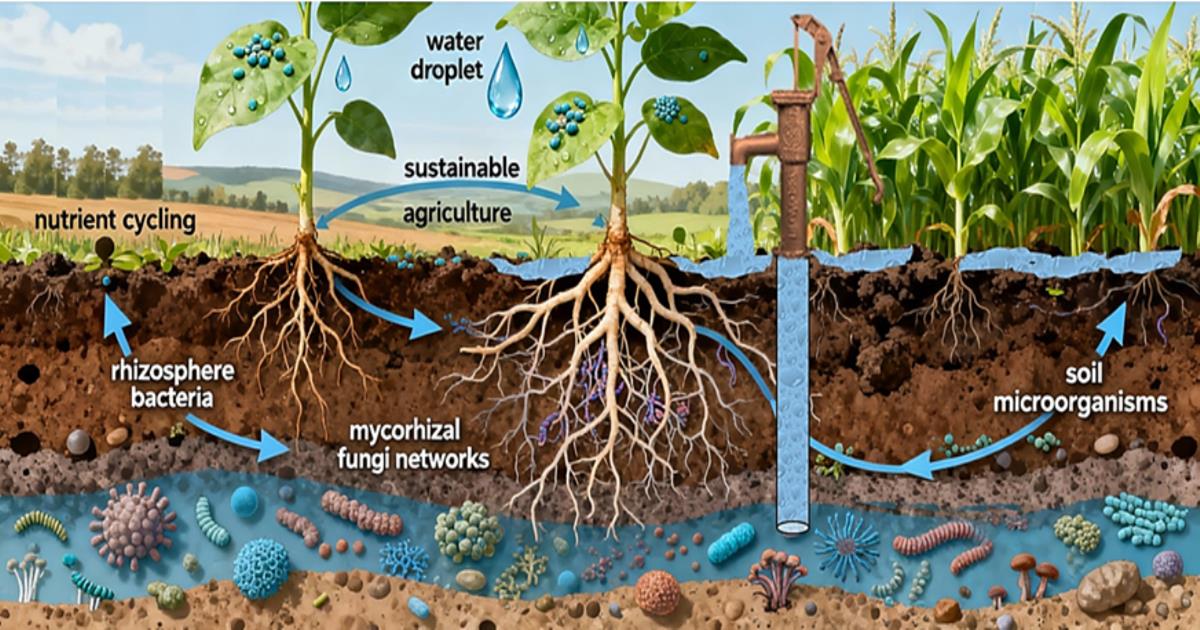
Soil and water represent the foundational resources underpinning global food security, yet decades of intensive agricultural management have compromised their quality, biodiversity, and functional integrity. The soil microbiome, comprising bacteria, archaea, fungi, and their intricate networks, plays an indispensable role in nutrient cycling, organic matter decomposition, plant growth promotion, disease suppression, and climate resilience within agroecosystems. Similarly, water management profoundly influences microbial community dynamics, shaping biogeochemical processes that determine agricultural productivity and environmental sustainability. Despite substantial advances in high-throughput sequencing, metagenomics, and microbial ecology, critical knowledge gaps persist that limit the translation of microbiome science into practical agricultural applications.
This Special Issue addresses several fundamental research gaps that currently limit the development of microbiome-based solutions for sustainable agroecosystems. First, the mechanisms governing plant–microbe communication, particularly root exudation signals that recruit beneficial microorganisms, remain poorly characterised across diverse crop species and environmental conditions. Second, the performance variability of microbial inoculants under field conditions, where fluctuating soil types, climate stressors, and indigenous microbial communities influence colonisation and persistence, represents a major barrier to consistent agronomic outcomes. Third, the functional roles of rare microbial taxa in multi-nutrient cycling and their responses to alternative water management strategies (such as alternate wetting and drying) require systematic investigation. Fourth, the integration of microbiome indicators into ecological risk assessment frameworks and soil health monitoring protocols remains largely undeveloped. Finally, understanding how climate change-induced stressors interact with soil and water microbiomes to affect ecosystem resilience demands urgent attention.
This Special Issue invites the submission of original research, reviews, and perspectives that advance mechanistic understanding of soil–water–microbiome interactions in agroecosystems, develop innovative microbial technologies for sustainable agriculture, and bridge the gap between laboratory discoveries and field-scale implementation under the One Health framework.
Dr. Arnab Majumdar
Dr. Debojyoti Moulick
Prof. Dr. Tarit Roychowdhury
Guest Editors
Manuscript Submission Information
Manuscripts should be submitted online at www.mdpi.com by registering and logging in to this website. Once you are registered, click here to go to the submission form. Manuscripts can be submitted until the deadline. All submissions that pass pre-check are peer-reviewed. Accepted papers will be published continuously in the journal (as soon as accepted) and will be listed together on the special issue website. Research articles, review articles as well as short communications are invited. For planned papers, a title and short abstract (about 250 words) can be sent to the Editorial Office for assessment.
Submitted manuscripts should not have been published previously, nor be under consideration for publication elsewhere (except conference proceedings papers). All manuscripts are thoroughly refereed through a single-blind peer-review process. A guide for authors and other relevant information for submission of manuscripts is available on the Instructions for Authors page. Water is an international peer-reviewed open access semimonthly journal published by MDPI.
Please visit the Instructions for Authors page before submitting a manuscript. The Article Processing Charge (APC) for publication in this open access journal is 2600 CHF (Swiss Francs). Submitted papers should be well formatted and use good English. Authors may use MDPI's English editing service prior to publication or during author revisions.
Keywords
- soil microbiome
- water management
- agroecosystem sustainability
- microbial inoculants
- nutrient cycling
- climate resilience
Benefits of Publishing in a Special Issue
- Ease of navigation: Grouping papers by topic helps scholars navigate broad scope journals more efficiently.
- Greater discoverability: Special Issues support the reach and impact of scientific research. Articles in Special Issues are more discoverable and cited more frequently.
- Expansion of research network: Special Issues facilitate connections among authors, fostering scientific collaborations.
- External promotion: Articles in Special Issues are often promoted through the journal's social media, increasing their visibility.
- Reprint: MDPI Books provides the opportunity to republish successful Special Issues in book format, both online and in print.
Further information on MDPI's Special Issue policies can be found here.
