



Additive Manufacturing for Circular Economy: Sustainable Materials and Energy-Efficient Processes
A special issue of Sustainability (ISSN 2071-1050).
Deadline for manuscript submissions: 20 November 2026 | Viewed by 220
Special Issue Editors

Interests: additive manufacturing; material characterization; topology optimization; architected materials; finite element models

Interests: 3D printing/additive manufacturing of composites and nanocomposite polymers; composites and nanocomposites; lattice structures; metamaterials; mechanical tests; in-situ SEM; nanoindentation; dynamic mechanical tests; FEM; FEA
Special Issues, Collections and Topics in MDPI journals

Interests: additive manufacturing (3D printing; 3D bio-printing; 3D design; 3D scanning); quality control and metrology (in-line; in situ and real time); flexible electronics and printed organic electronics; smart systems: sensors; IoT applications with AI functionalities; open design and digital manufacturing platforms; decision support systems supporting Industry 4.0; Agriculture 4.0; circular economy; heritage/culture; health and energy sector
Special Issue Information
Dear Colleagues,
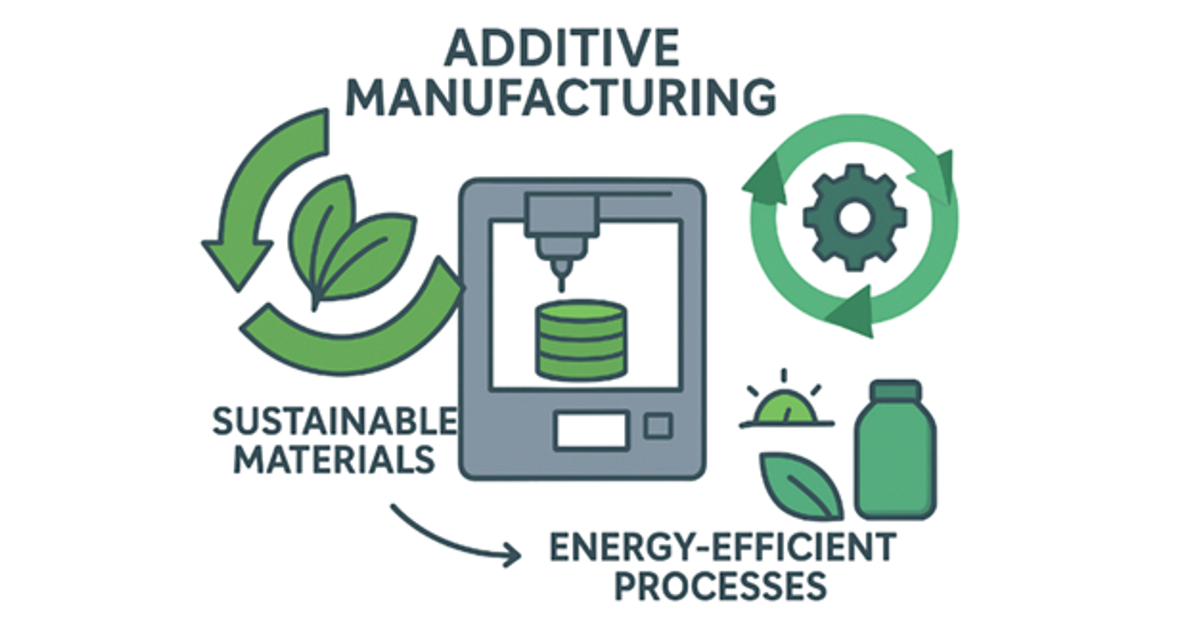
Additive Manufacturing (AM) technologies emerge as an efficient advanced net-zero waste solution for the development of sustainable, environmentally friendly production systems. In turn, this aids in the transition towards a circular economy, in alignment with the global Sustainable Development Goals on clean manufacturing processes, sustainable material utilization, energy-efficient production routes, and extended product life cycles.
Therefore, in this Special Issue, we seek contributions that will aid in the elevation of scientific knowledge and provide significant advancements regarding the practical implementation of AM into industrial systems to enhance circularity. Topics of interest include the development of sustainable and recycled feedstock materials; process optimization for reduced energy consumption and minimization of waste production; design for circularity strategies; assessments of environmental and financial impact through Life Cycle Assessment (LCA) analyses; and appropriate techno-economic studies.
The purpose of this Special Issue is to bridge material science, digital manufacturing processes, and sustainability science for long-term viable clean production systems. The collection of works will fill existing literature gaps and provide novel perspectives on the ability of AM to simultaneously reduce waste production, lower carbon emissions, minimize raw feedstock demands, and enhance system-wide metrics on sustainability. We warmly welcome contributions featuring novel methods of reacquiring recyclable feedstocks, AM-enabled circular practices, LCA analyses, and scalable projected production systems, either as computational investigations or as real-life pilot systems.
In this Special Issue, we hope to showcase original research articles, reviews, and perspectives aligned with the following topics:
- Bio-based, recycled, and upcycled polymers, metals, and composites;
- Recyclability and reusability of AM feedstocks;
- Low-impact material synthesis and processing routes;
- Process optimization for reduced energy consumption;
- Comparative energy analysis of AM vs. conventional manufacturing;
- Life-cycle assessment (LCA) of AM technologies and products;
- Industrial case studies demonstrating circular value chains;
- AI- or ML-driven AM for energy and material optimization;
- Digital Twins for sustainability assessment.
Manuscripts outside these themes but strongly connected to AM and circularity will also be considered. We look forward to receiving your contributions.
Dr. Nikolaos Kladovasilakis
Dr. Konstantinos Tsongas
Dr. Eleftheria Maria Pechlivani
Guest Editors
Manuscript Submission Information
Manuscripts should be submitted online at www.mdpi.com by registering and logging in to this website. Once you are registered, click here to go to the submission form. Manuscripts can be submitted until the deadline. All submissions that pass pre-check are peer-reviewed. Accepted papers will be published continuously in the journal (as soon as accepted) and will be listed together on the special issue website. Research articles, review articles as well as short communications are invited. For planned papers, a title and short abstract (about 250 words) can be sent to the Editorial Office for assessment.
Submitted manuscripts should not have been published previously, nor be under consideration for publication elsewhere (except conference proceedings papers). All manuscripts are thoroughly refereed through a single-blind peer-review process. A guide for authors and other relevant information for submission of manuscripts is available on the Instructions for Authors page. Sustainability is an international peer-reviewed open access semimonthly journal published by MDPI.
Please visit the Instructions for Authors page before submitting a manuscript. The Article Processing Charge (APC) for publication in this open access journal is 2400 CHF (Swiss Francs). Submitted papers should be well formatted and use good English. Authors may use MDPI's English editing service prior to publication or during author revisions.
Keywords
- additive manufacturing
- circular economy
- sustainable materials
- life cycle assessment
- bio-based materials
- energy efficient processes
- recycled feedstocks
- digital manufacturing
Benefits of Publishing in a Special Issue
- Ease of navigation: Grouping papers by topic helps scholars navigate broad scope journals more efficiently.
- Greater discoverability: Special Issues support the reach and impact of scientific research. Articles in Special Issues are more discoverable and cited more frequently.
- Expansion of research network: Special Issues facilitate connections among authors, fostering scientific collaborations.
- External promotion: Articles in Special Issues are often promoted through the journal's social media, increasing their visibility.
- Reprint: MDPI Books provides the opportunity to republish successful Special Issues in book format, both online and in print.
Further information on MDPI's Special Issue policies can be found here.
