Special Issue "Climate Change, Landscape in Transition and Tools for Sustainable Landscape Planning"

A special issue of Sustainability (ISSN 2071-1050). This special issue belongs to the section "Environmental Sustainability and Applications".

Deadline for manuscript submissions: 30 September 2021.

Special Issue Editor

Prof. Dr. Kristina Blennow
E-Mail Website
Guest Editor
Swedish Univ Agr Sci SLU, Dept Landscape Architecture Planning & Management, SE-23053 Alnarp, Sweden
Interests: risk; human/environment interaction; science and proven experience; climate change; climate change adaptation; climate change mitigation; biodiversity; sustainability; landscape analysis; adequacy of communications, landscape planning

Special Issue Information

Dear Colleagues,

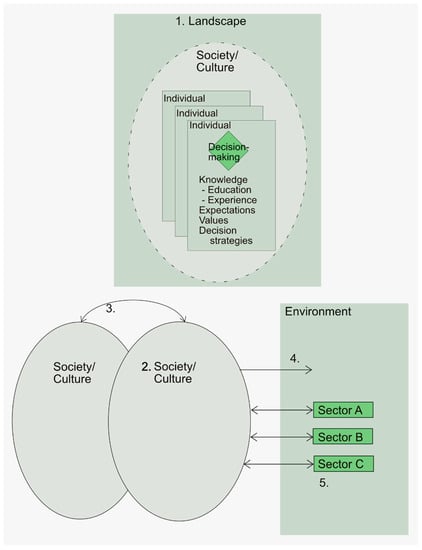
In recent years, there has been a growing interest in "landscape approaches" to overcome insufficient sectorial approaches to addressing interconnected social, environmental, and political challenges, such as climate change. Interactions between people and their environment provide a motive for the very use of the term "landscape", which, since the work by the early 20th century Finnish geographer Johannes Gabriel Granö, is often understood as the environment as perceived by people. Seen in this way, a landscape approach is an individual-oriented approach to sustainable land use management and planning.

This Special Issue of Sustainability offers a platform for advancing our understanding of the interconnections between people and their environment and the transitions that landscapes are going through, in particular, focusing on climate change and tools for sustainable landscape planning. It aims to draw together a collection of high-quality papers, testing hypotheses, providing assessments and tools, and discussing how to bridge the gap between science and practice to help further sustainable development.

We encourage researchers and practitioners to submit original research articles, case studies, reviews, and viewpoint articles on topics including, but not limited to, the following:

  • Landscape level assessments of the probability of negative ("risk assessments") and positive outcome in a changing climate;
  • Climate change perceptions;
  • Measures for climate change adaptation and mitigation in a landscape;
  • Climate change adaptation/mitigation decision-making by individuals;
  • Adequacy of communications; and
  • Tools for sustainable landscape planning.

Prof. Dr. Kristina Blennow
Guest Editor

Manuscript Submission Information

Manuscripts should be submitted online at www.mdpi.com by registering and logging in to this website. Once you are registered, click here to go to the submission form. Manuscripts can be submitted until the deadline. All papers will be peer-reviewed. Accepted papers will be published continuously in the journal (as soon as accepted) and will be listed together on the special issue website. Research articles, review articles as well as short communications are invited. For planned papers, a title and short abstract (about 100 words) can be sent to the Editorial Office for announcement on this website.

Submitted manuscripts should not have been published previously, nor be under consideration for publication elsewhere (except conference proceedings papers). All manuscripts are thoroughly refereed through a single-blind peer-review process. A guide for authors and other relevant information for submission of manuscripts is available on the Instructions for Authors page. Sustainability is an international peer-reviewed open access semimonthly journal published by MDPI.

Please visit the Instructions for Authors page before submitting a manuscript. The Article Processing Charge (APC) for publication in this open access journal is 1900 CHF (Swiss Francs). Submitted papers should be well formatted and use good English. Authors may use MDPI's English editing service prior to publication or during author revisions.

Keywords

  • climate change
  • landscape analysis
  • landscape planning
  • adaptation
  • mitigation
  • risk
  • risk perception
  • human/environment interaction
  • science and proven experience
  • decision analysis
  • tools for sustainable landscape planning
  • adequacy of communications

Published Papers (2 papers)

Order results
Result details
Select all
Export citation of selected articles as:

Research

Article
No polarization–Expected Values of Climate Change Impacts among European Forest Professionals and Scientists
Sustainability 2020, 12(7), 2659; https://doi.org/10.3390/su12072659 - 27 Mar 2020
Cited by 4 | Viewed by 1135
Abstract
The role of values in climate-related decision-making is a prominent theme of climate communication research. The present study examines whether forest professionals are more driven by values than scientists are, and if this results in value polarization. A questionnaire was designed to elicit [...] Read more.
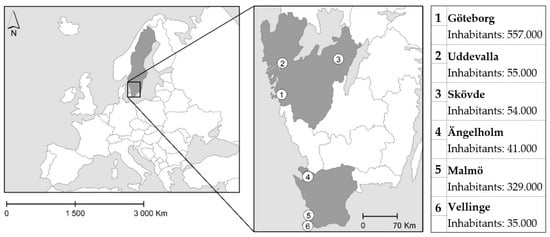
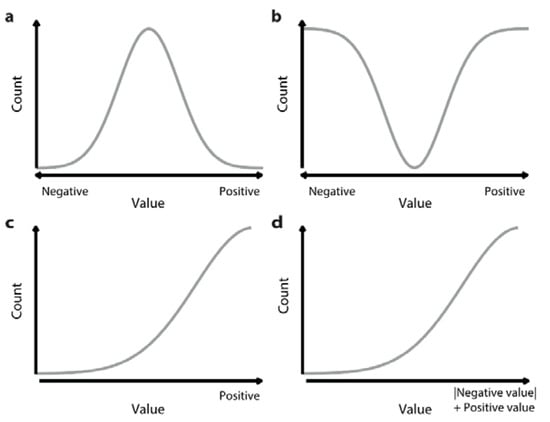
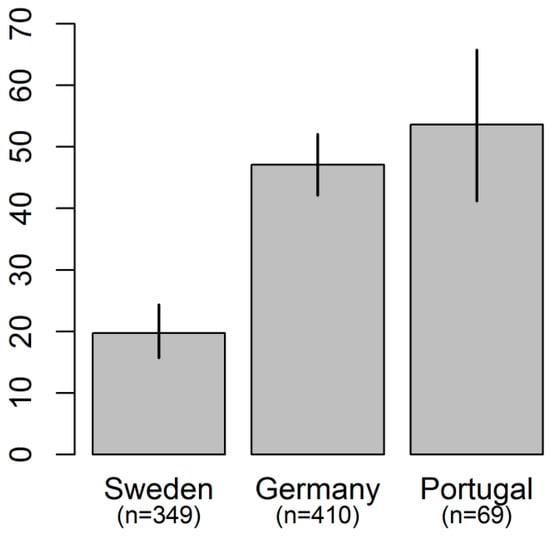
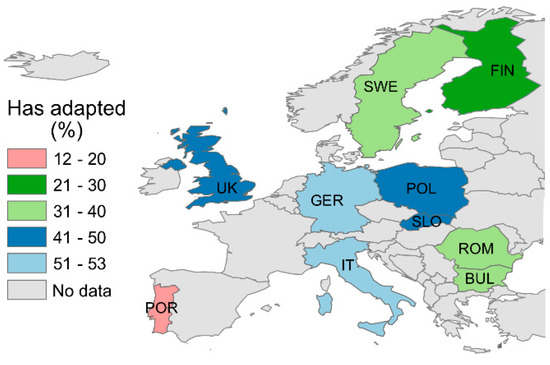
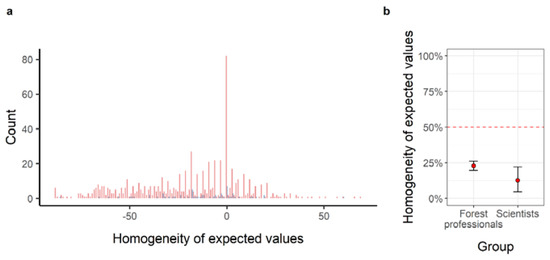
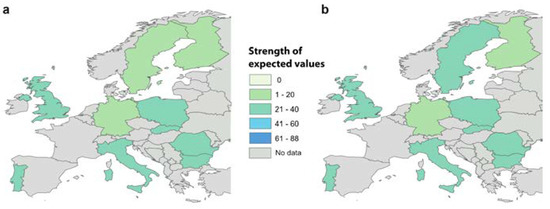
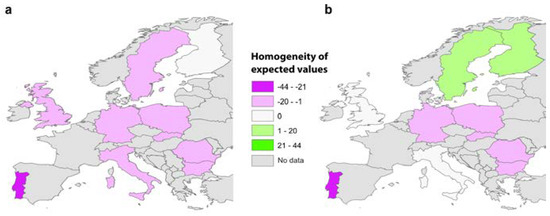
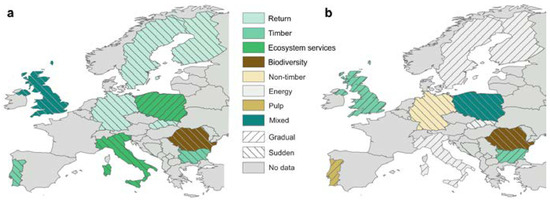
The role of values in climate-related decision-making is a prominent theme of climate communication research. The present study examines whether forest professionals are more driven by values than scientists are, and if this results in value polarization. A questionnaire was designed to elicit and assess the values assigned to expected effects of climate change by forest professionals and scientists working on forests and climate change in Europe. The countries involved covered a north-to-south and west-to-east gradient across Europe, representing a wide range of bio-climatic conditions and a mix of economic–social–political structures. We show that European forest professionals and scientists do not exhibit polarized expectations about the values of specific impacts of climate change on forests in their countries. In fact, few differences between forest professionals and scientists were found. However, there are interesting differences in the expected values of forest professionals with regard to climate change impacts across European countries. In Northern European countries, the aggregated values of the expected effects are more neutral than they are in Southern Europe, where they are more negative. Expectations about impacts on timber production, economic returns, and regulatory ecosystem services are mostly negative, while expectations about biodiversity and energy production are mostly positive. Full article
Show Figures

Figure 1
Article
Effect of Landscape Microclimates on Thermal Comfort and Physiological Wellbeing
Sustainability 2019, 11(19), 5387; https://doi.org/10.3390/su11195387 - 29 Sep 2019
Cited by 4 | Viewed by 1154
Abstract
Global climate change and intensifying heat islands have reduced human thermal comfort and health in urban outdoor environments. However, there has been little research that has focused on how microclimates affect human thermal comfort, both psychologically and physiologically. We investigated the effect of [...] Read more.
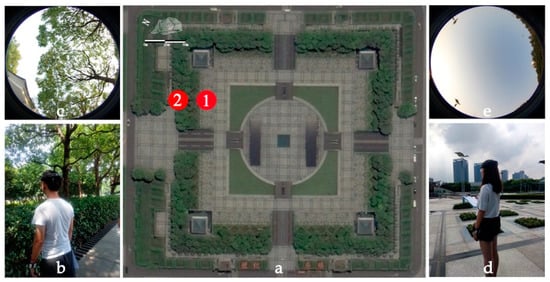
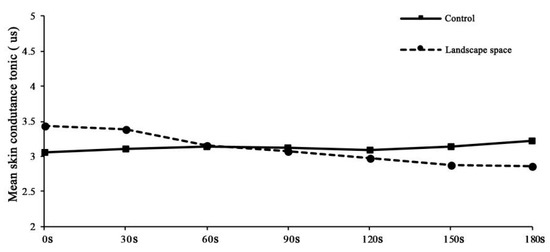
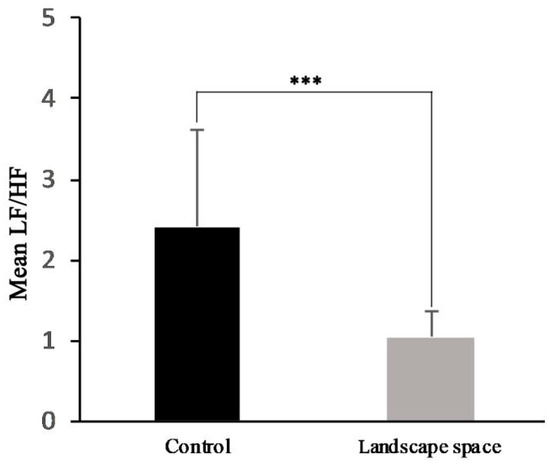
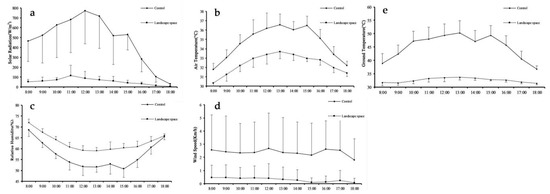
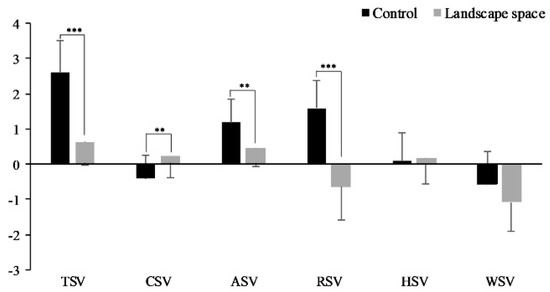
Global climate change and intensifying heat islands have reduced human thermal comfort and health in urban outdoor environments. However, there has been little research that has focused on how microclimates affect human thermal comfort, both psychologically and physiologically. We investigated the effect of a range of landscape microclimates on human thermal comfort and health using questionnaires and physiological measurements, including skin temperature, skin conductance, and heart rate variability, and compared the results with the effect of prevailing climate conditions in open spaces. We observed that in landscape microclimates, thermal sensation votes significantly decreased from 1.18 ± 0.66 (warm–hot) to 0.23 ± 0.61 (neutral–slightly warm), and thermal comfort increased from 1.18 ± 0.66 (uncomfortable–neutral) to 0.23 ± 0.61 (neutral–comfortable). In the landscape microclimates, skin temperature and skin conductance decreased 0.3 ± 0.8 °C and 0.6 ± 1.0 μs, respectively, while in the control, these two parameters increased by 0.5 ± 0.9 °C and 0.2 ± 0.7 μs, respectively. Further, in landscape microclimates, subject heart rate variability increased significantly. These results suggest landscape microclimates improve human thermal comfort and health, both psychologically and physiologically. These findings can provide an evidence base that will assist urban planners in designing urban environments for the health and wellbeing of residents. Full article
Show Figures

Figure 1
Back to TopTop