


Prions and Chronic Wasting Diseases

A topical collection in Pathogens (ISSN 2076-0817). This collection belongs to the section "Viral Pathogens".

Viewed by 5957

Editor


E-Mail Website
Collection Editor
Chinese Institute for Brain Research, Beijing 102206, China
Interests: prion; alpha-synuclein; prion disease; alpha-synucleinopathies; neurodegenerative diseases

Topical Collection Information

Dear Colleagues,

Prions, which are enigmatic proteins recognized for their viral-like transmissibility, including strains and evolvability, are the triggers for fatal neurodegenerative diseases such as chronic wasting disease (CWD). CWD, a cervid prion disease, has raised concerns due to its high lateral transmissibility, resulting in high prevalence among free-ranging animals and posing risks to other animal species and potentially humans. Consequently, CWD represents a critical intersection of wildlife health, conservation, and public health, warranting scientific attention.

Emerging research has revealed another intriguing aspect of prion biology—prion-like transmission. This phenomenon suggests that proteins unrelated to classical prions can adopt similar self-propagating properties. Understanding the nuances of prion-like transmission and its role in pathogenesis could potentially revolutionize our understanding of other neurodegenerative disorders characterized by protein aggregation, offering new insights into diseases that have eluded effective treatments.

This collection aims to rapidly publish the latest findings in the fields of prions, CWD, and prion-like transmission. The open accessibility of these findings will facilitate knowledge exchange, catalyzing collaborative efforts to unravel the mysteries surrounding these devastating disorders and pave the way for transformative breakthroughs. Manuscripts in any format, including original research, reviews, and personal opinions, are welcome for publication in this collection.

Dr. Jiyan Ma
Collection Editor

Manuscript Submission Information

Manuscripts should be submitted online at www.mdpi.com by registering and logging in to this website. Once you are registered, click here to go to the submission form. All submissions that pass pre-check are peer-reviewed. Accepted papers will be published continuously in the journal (as soon as accepted) and will be listed together on the collection website. Research articles, review articles as well as short communications are invited. For planned papers, a title and short abstract (about 250 words) can be sent to the Editorial Office for assessment.

Submitted manuscripts should not have been published previously, nor be under consideration for publication elsewhere (except conference proceedings papers). All manuscripts are thoroughly refereed through a single-blind peer-review process. A guide for authors and other relevant information for submission of manuscripts is available on the Instructions for Authors page. Pathogens is an international peer-reviewed open access monthly journal published by MDPI.

Please visit the Instructions for Authors page before submitting a manuscript. The Article Processing Charge (APC) for publication in this open access journal is 2200 CHF (Swiss Francs). Submitted papers should be well formatted and use good English. Authors may use MDPI's English editing service prior to publication or during author revisions.

Keywords

  • prion
  • transmissible spongiform encephalopathies
  • chronic wasting disease
  • protein misfolding
  • transmissibility
  • prion-like spread
  • neurodegeneration

Published Papers (3 papers)

2026

Jump to: 2025

28 pages, 3943 KB  
Article
Practical Real-Time Quaking-Induced Conversion for Detecting Classical Bovine Spongiform Encephalopathy and Classical and Atypical Scrapie Prions
by Akio Suzuki, Kazuhei Sawada, Taku Nakashima, Toyotaka Sato, Kohtaro Miyazawa, Yuichi Matsuura, Keigo Ikeda, Yoshifumi Iwamaru and Motohiro Horiuchi
Pathogens 2026, 15(3), 333; https://doi.org/10.3390/pathogens15030333 - 20 Mar 2026
Viewed by 496
Abstract
Real-time quaking-induced conversion (RT-QuIC) is highly sensitive for prion detection; however, inhibitory factors present in tissue homogenates readily interfere with the assay. We previously reported that recombinant cervid prion protein (rCerPrP) enabled the establishment of practical RT-QuIC for detecting chronic wasting disease and [...] Read more.
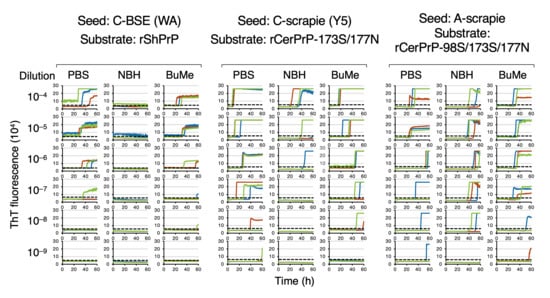
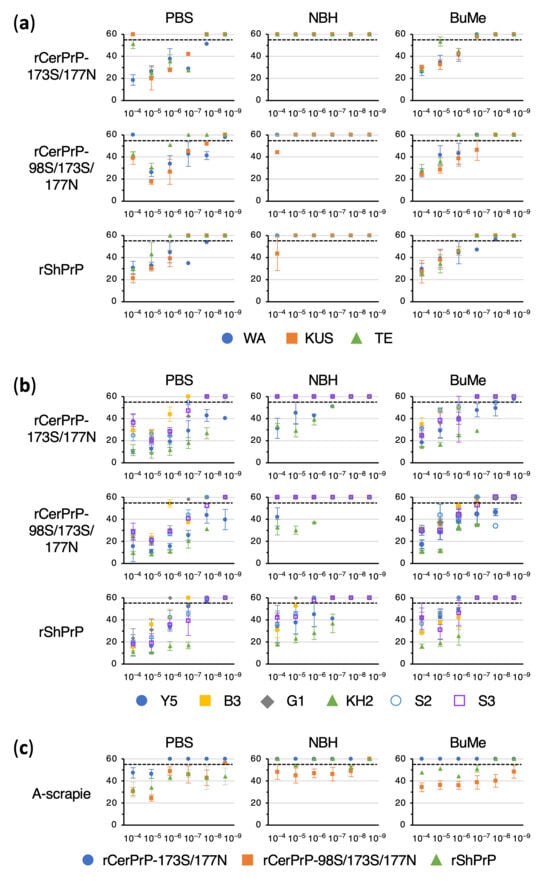
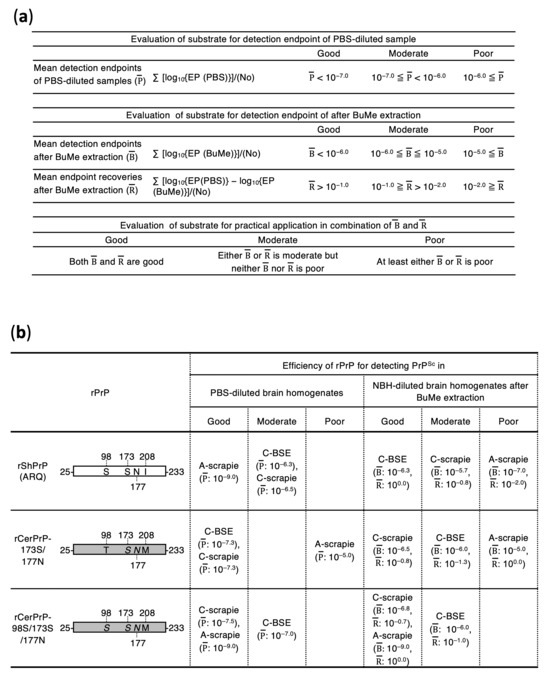
Real-time quaking-induced conversion (RT-QuIC) is highly sensitive for prion detection; however, inhibitory factors present in tissue homogenates readily interfere with the assay. We previously reported that recombinant cervid prion protein (rCerPrP) enabled the establishment of practical RT-QuIC for detecting chronic wasting disease and atypical bovine spongiform encephalopathy (BSE) prions, i.e., detecting low levels of prions in high concentration of brain tissue homogenates. Accordingly, the present study aimed to establish RT-QuIC for detecting classical BSE (C-BSE) and classical and atypical scrapie (C- and A-scrapie, respectively). A single-step lipid extraction using a 3:1 mixture of 2-butanol and methanol was effective as a pretreatment to remove inhibitors from brain homogenates. Among three rPrPs extensively evaluated, recombinant sheep PrP (rShPrP) was the most suitable substrate for practical detection of C-BSE prions. rCerPrP-173S/177N and rCerPrP-98S/173S/177N, which carry sheep-type amino acid substations at codons 173 and 177 and at codons 98, 173, and 177, showed excellent performance for detecting C-scrapie prions. Moreover, rCerPrP-98S/173S/177N, but not rCerPrP-173S/177N, was identified as an optimal substrate for detecting A-scrapie prions. These results suggested that combining inhibitor-removal pretreatment with the optimization of rPrP substrate for each animal prions further enhanced of RT-QuIC performance. Full article
Show Figures

Figure 1

2025

Jump to: 2026

14 pages, 1586 KB  
Article
Real-Time Quaking-Induced Conversion Assay Applied to the Italian Chronic Wasting Disease Monitoring Plan: Comparison of Classical and Innovative Diagnostic Methods
by Maria Mazza, Alessandra Favole, Valentina Campia, Barbara Iulini, Romolo Nonno, Ciriaco Ligios, Davide Pintus, Simone Peletto, Cristina Casalone, Cristiano Corona, Elena Bozzetta and Pier Luigi Acutis
Pathogens 2025, 14(10), 1053; https://doi.org/10.3390/pathogens14101053 - 18 Oct 2025
Viewed by 1402
Abstract
CWD surveillance and diagnosis are important issues in Europe since its detection in Norway, as some of its strains, like that of classical scrapie, are contagious. In addition, there are concerns as several matters about CWD are not yet known. Although diagnostic methods [...] Read more.
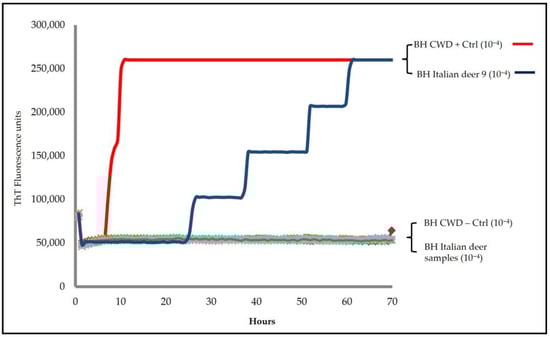
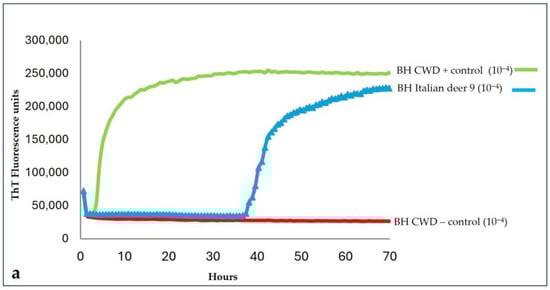
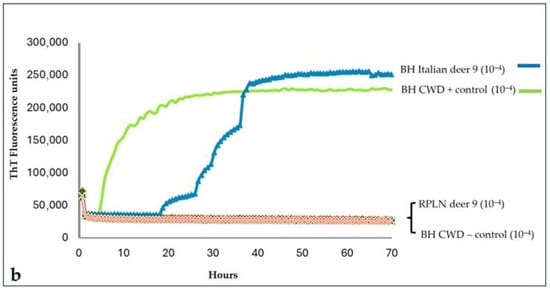
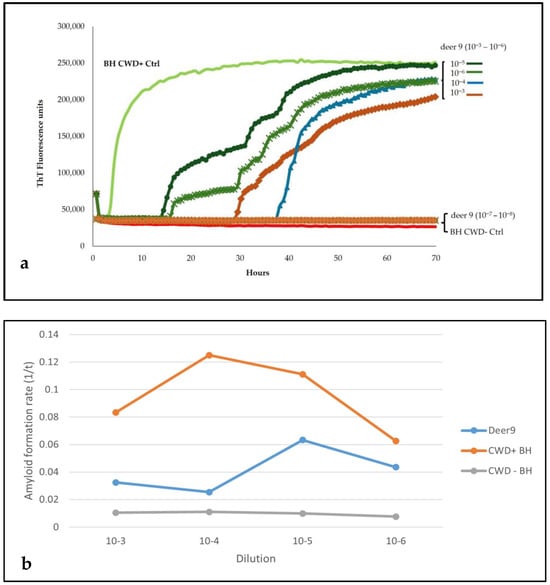
CWD surveillance and diagnosis are important issues in Europe since its detection in Norway, as some of its strains, like that of classical scrapie, are contagious. In addition, there are concerns as several matters about CWD are not yet known. Although diagnostic methods for the active surveillance in bovine and small ruminants have been able to detect the European CWD strains, a retrospective study on Italian wild red deer (Cervus elaphus) samples was performed to compare the results obtained from rapid screening tests, authorized according to EU Regulation 999/2001, and the RT-QuIC, a highly sensitive method in the detection of prion disease infection. A total of one hundred brainstems and medial retropharyngeal lymph nodes were selected out of those received from the CWD Italian surveillance system. Confirmed CWD-positive and -negative samples were included in the study as controls. All of the samples were first tested with the HerdChek BSE–Scrapie Antigen Test and then using the RT-QuIC. The rapid test was negative in all brainstem and lymph node samples. RT-QuIC analyses showed only one red deer brainstem sample positive for seeding activity, while all lymph nodes were negative, including the one from this case. This positive brainstem sample was then re-extracted and retested using two different recombinant prion protein substrates (Ha90-231; BV23-231) and their different batches from the first analyses. Seeding activity was consistently confirmed across both substrates and extractions, with positive signals detected down to dilutions of 10−4 using rPrP Ha90-231 and as low as 10−6 with rPrP BV23-231. The additional diagnostic investigations performed on this red deer using the alternative rapid test (TeSeE SAP Combi), Western blot, and immunohistochemistry showed negative results both in the brainstem and lymph nodes. This study showed that overall, the results obtained with the HerdChek BSE–Scrapie Antigen Test and RT-QuIC agree except in one case. Our findings highlight the potential of the RT-QuIC method to detect very low levels of PrPSc-associated seeding activity that may escape detection using classical methods. While seeding activity does not always equate to infectivity, only a bioassay will confirm the real disease status of this Italian case. These findings support the integration of RT-QuIC as a powerful complementary tool within existing surveillance frameworks to strengthen early detection and diagnostic accuracy. Full article
Show Figures

Figure 1

13 pages, 19888 KB  
Article
Investigating the In Vivo Effects of Anti-Prion Protein Nanobodies on Prion Disease with AAV Vector
by Jingjing Zhang, Mengfei Wang, Dan Wang, Xiangyi Zhang, Yue Ma, Els Pardon, Jan Steyaert, Romany Abskharon, Fei Wang and Jiyan Ma
Pathogens 2025, 14(2), 131; https://doi.org/10.3390/pathogens14020131 - 2 Feb 2025
Viewed by 3345
Abstract
Prion diseases are fatal neurodegenerative disorders affecting humans and animals, and the central pathogenic event is the conversion of normal prion protein (PrPC) into the pathogenic PrPSc isoform. Previous studies have identified nanobodies that specifically recognize PrPC and inhibit [...] Read more.
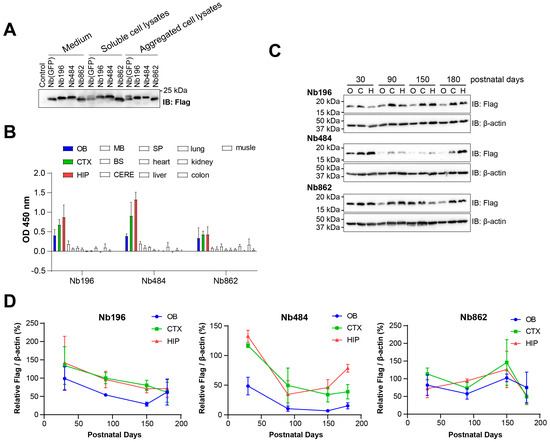
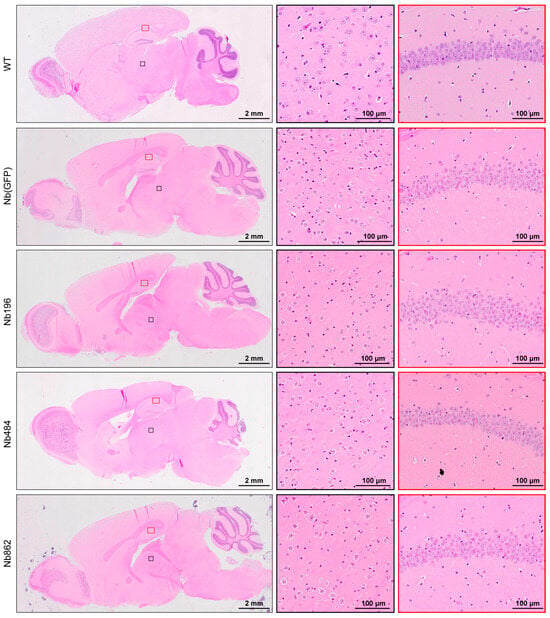
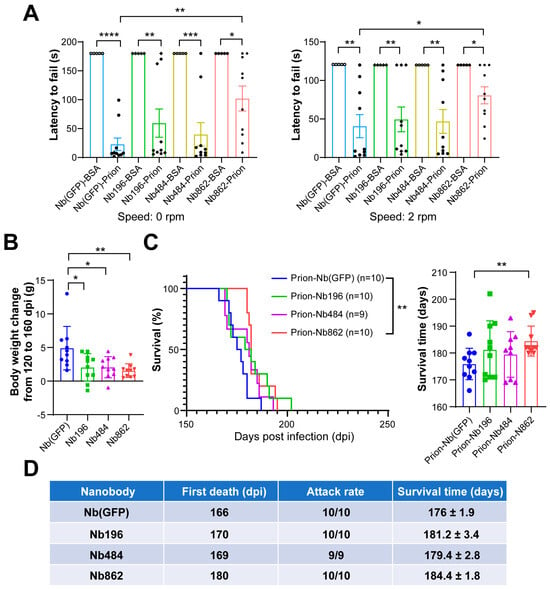
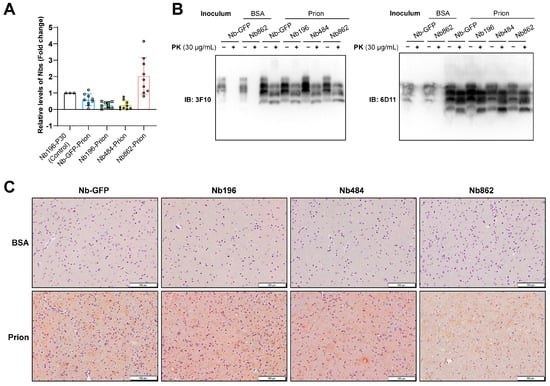
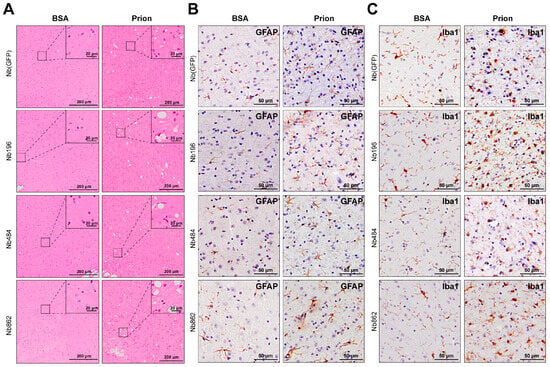
Prion diseases are fatal neurodegenerative disorders affecting humans and animals, and the central pathogenic event is the conversion of normal prion protein (PrPC) into the pathogenic PrPSc isoform. Previous studies have identified nanobodies that specifically recognize PrPC and inhibit the PrPC to PrPSc conversion in vitro. In this study, we investigated the potential for in vivo expression of anti-PrPC nanobodies and evaluated their impact on prion disease. The coding sequences of three nanobodies were packaged into recombinant adeno-associated virus (rAAV) and were administered via intracerebroventricular (ICV) injection in newborn mice. We found that the expression of these nanobodies remained robust for over 180 days, with no observed detrimental effects. To assess their therapeutic potential, we performed ICV injections of nanobody-expressing rAAVs in newborn mice, followed by intracerebral prion inoculation at 5–6 weeks of age. One nanobody exhibited a small yet statistically significant therapeutic effect, extending survival time from 176 days to 184 days. Analyses of diseased brains revealed that the nanobodies did not alter the pathological changes. Our findings suggest that high levels of anti-PrPC nanobodies are necessary to delay disease progression. Further optimization of the nanobodies, AAV vectors, or delivery methods is essential to achieve a significant therapeutic effect. Full article
Show Figures

Figure 1

Back to TopTop