


Clinical Advances in Neuromuscular Diseases: Neurometabolic Disorders

A Topical Collection in Muscles (ISSN 2813-0413).

Viewed by 27153

Editors


E-Mail Website
Collection Editor
Department of Neurosciences, University of Padova, 35128 Padova, Italy
Interests: metabolic myopathies; muscular dystrophy; neutral lipid storage disorders; spinal muscular atrophy; McArdle disease
Special Issues, Collections and Topics in MDPI journals

Topical Collection Information

Dear Colleagues,

Metabolic disorders are characterized by the deficiency or dysfunction of essential metabolites and most commonly manifest with neurological symptoms due to impaired brain development or functioning. Due to their low incidence and high mortality, metabolic disorders are traditionally the preserve of pediatric neurologists; however, some can present in adulthood and increasing numbers of patients transition into adult services. Therefore, the neurometabolic disorders of inborn error of metabolism with CNS involvement apply to both children and adult neurologists.

Recent advances have been reported in mitochondrial encephalomyopathies and neutral lipid storage disorders. The covered topics of interest in this Topical Collection include, but are not limited to, the following:

  1. Glycogen storage disorders;
  2. Pompe, McArdle diseases and Danon disease;
  3. Lipid metabolic disorders, i.e., carnitine deficiency, organic aciduria, RR-MADD, NLSD-M and NLSD-I;
  4. Mitochondrial encefalomyopaties;
  5. Muscular dystrophies mimicking metabolic disorders with cramps or myoglobinuria, such as Becker muscular dystrophy, calpainopathy, dysferlinopathy, etc.

Prof. Dr. Corrado Angelini
Prof. Dr. Daniela Tavian
Collection Editors

Manuscript Submission Information

Manuscripts should be submitted online at www.mdpi.com by registering and logging in to this website. Once you are registered, click here to go to the submission form. All submissions that pass pre-check are peer-reviewed. Accepted papers will be published continuously in the journal (as soon as accepted) and will be listed together on the collection website. Research articles, review articles as well as short communications are invited. For planned papers, a title and short abstract (about 250 words) can be sent to the Editorial Office for assessment.

Submitted manuscripts should not have been published previously, nor be under consideration for publication elsewhere (except conference proceedings papers). All manuscripts are thoroughly refereed through a single-anonymized peer-review process. A guide for authors and other relevant information for submission of manuscripts is available on the Instructions for Authors page. Muscles is an international peer-reviewed open access quarterly journal published by MDPI.

Please visit the Instructions for Authors page before submitting a manuscript. The Article Processing Charge (APC) for publication in this open access journal is 1200 CHF (Swiss Francs). Submitted papers should be well formatted and use good English. Authors may use MDPI's English editing service prior to publication or during author revisions.

Keywords

  • glycogen
  • lipid disorders
  • Pompe
  • NLSD-M
  • NLSD-I
  • mitochondria
  • McArdle disease

Published Papers (8 papers)

2026

Jump to: 2025, 2024, 2023

23 pages, 877 KB  
Review
Characterization of Dystrophin-Related Syndromes: Carriers, DMD, and BMD
by Naoufel Chabbi, Corrado Angelini, Irune García, Clara Lépée Aragón and Alicia Aurora Rodriguez
Muscles 2026, 5(3), 60; https://doi.org/10.3390/muscles5030060 - 26 Aug 2026
Viewed by 1075
Abstract
Primary dystrophin deficiency, caused by X-chromosome mutations within the DMD gene, encompasses a continuous clinical spectrum of neurological, muscular, and cardiac disorders known as dystrophinopathies that exhibit profound phenotypic variability driven by specific mutation profiles and epigenetic factors. This comprehensive review analyzes the [...] Read more.
Primary dystrophin deficiency, caused by X-chromosome mutations within the DMD gene, encompasses a continuous clinical spectrum of neurological, muscular, and cardiac disorders known as dystrophinopathies that exhibit profound phenotypic variability driven by specific mutation profiles and epigenetic factors. This comprehensive review analyzes the clinical and molecular characteristics of seven primary classifications: Duchenne muscular dystrophy (DMD), a severe childhood myopathy caused by a complete absence of the protein that leads to loss of ambulation and fatal cardiorespiratory failure in youth; Becker muscular dystrophy (BMD), a milder variant with partial protein deficiency that preserves walking capabilities into adulthood and prolongs life expectancy; pseudometabolic dystrophinopathic syndrome, featuring exercise intolerance, cramps, and recurrent rhabdomyolysis that mimics metabolic diseases; asymptomatic dystrophinopathy, representing the mild end of the spectrum identified incidentally through chronically elevated creatine kinase levels; brain dystrophin-related syndrome, where the disruption of distal isoforms like Dp140 and Dp71 results in neurodevelopmental and neuropsychiatric comorbidities such as ADHD, autism, and intellectual disability; X-linked dilated cardiomyopathy (XLDCM), a cardiac-selective condition causing severe heart failure and arrhythmias while sparing skeletal muscle function; and female dystrophin-related syndrome, distinguishing between familial carriers—who can manifest symptoms due to skewed X-chromosome inactivation—and rare sporadic females who develop an exceptional, severe, Duchenne-like phenotype due to cytogenetic accidents such as Turner syndrome or chromosomal translocations. Ultimately, advancements in molecular testing (NGS and WGS) have significantly optimized diagnostic precision, proving essential for implementing early cardioprotective care, accurate genetic counseling, and the development of future tissue-specific targeted gene therapies. The present study also discusses the psychosocial impact that the disease has on patients. Full article
Show Figures

Figure 1

11 pages, 636 KB  
Case Report
Mexico’s First Heart Transplant in a Patient with Becker Muscular Dystrophy Reveals an Overlooked Cause of Idiopathic Dilated Cardiomyopathy
by Norma Alejandra Vázquez-Cárdenas, Silvia García, Martha Eunice Rodríguez Arellano, Benjamín Gómez-Díaz, Delia Carolina López Vargas and Luz Berenice López-Hernández
Muscles 2026, 5(3), 57; https://doi.org/10.3390/muscles5030057 - 11 Aug 2026
Viewed by 805
Abstract
Background: Pathogenic variants in the DMD gene are a frequently overlooked cause of dilated cardiomyopathy (DCM) in idiopathic cases, especially when skeletal myopathy is mild or seemingly absent. Becker muscular dystrophy (BMD) and X-linked dilated cardiomyopathy are at opposite ends of this clinical [...] Read more.
Background: Pathogenic variants in the DMD gene are a frequently overlooked cause of dilated cardiomyopathy (DCM) in idiopathic cases, especially when skeletal myopathy is mild or seemingly absent. Becker muscular dystrophy (BMD) and X-linked dilated cardiomyopathy are at opposite ends of this clinical spectrum but result from pathogenic variants in the same gene. Cardiomyopathy is a major cause of premature death in muscular dystrophies. Case presentation: We describe a 37-year-old man who underwent orthotopic heart transplantation for presumed idiopathic DCM with refractory heart failure. He had a six-year history of progressive proximal weakness, pseudohypertrophy of the calf, a positive Gowers sign, and markedly elevated creatine kinase (6638 IU/L). Multiplex ligation-dependent probe amplification (MLPA) revealed an in-frame deletion of exons 45–47 of DMD [c. (6438+1_6439-1)_(6912+1_6913-1) del; NM_004006.2], confirming BMD. Immunofluorescence showed reduced and patchy dystrophin expression. Conclusions: To our knowledge, this is the first documented heart transplant in a patient with BMD in Mexico. This case demonstrates the value of considering muscular dystrophy in the differential diagnosis of apparently idiopathic dilated cardiomyopathy (DCM), a step that opens the door to accurate diagnosis, carrier screening, and genetic counseling, and supports the view that heart transplantation is a viable option in carefully selected patients with muscular dystrophy cardiomyopathy. Full article
Show Figures

Figure 1

2025

Jump to: 2026, 2024, 2023

8 pages, 1572 KB  
Case Report
Muscle Endurance Training in a Person with Friedreich’s Ataxia
by Nicole T. McGarrell, Max E. Green and Kevin K. McCully
Muscles 2025, 4(1), 1; https://doi.org/10.3390/muscles4010001 - 9 Jan 2025
Cited by 1 | Viewed by 2847
Abstract
Friedreich’s ataxia (FRDA) results from a faulty mitochondrial protein known as Frataxin. The purpose of this case report was to test whether skeletal muscle in FRDA can adapt to an endurance-based training program using neuromuscular electrical stimulation (NMES). A 36-year-old female with FRDA [...] Read more.
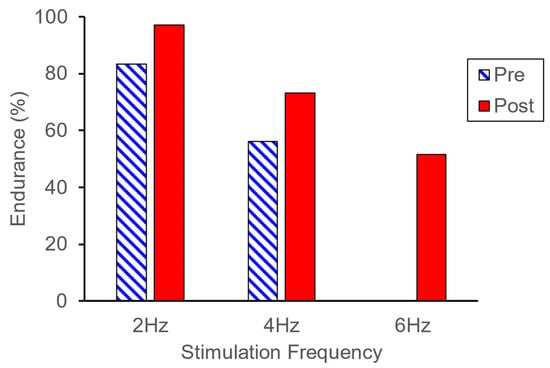
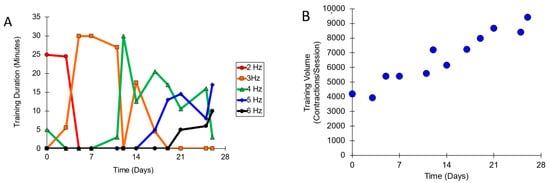
Friedreich’s ataxia (FRDA) results from a faulty mitochondrial protein known as Frataxin. The purpose of this case report was to test whether skeletal muscle in FRDA can adapt to an endurance-based training program using neuromuscular electrical stimulation (NMES). A 36-year-old female with FRDA completed twelve training sessions, each lasting 30 min over 30 days, focused on the forearm muscles using NMES. Pre- and post-training session measurements of contractions, muscle-specific endurance, and muscle mitochondrial capacity were taken per training session. Training contractions increased from 4200 to 9420. Muscle-specific endurance increased by 14% at 2 Hz and 17% at 4 Hz. Muscle endurance at 6 Hz increased from 0% to 51%. The rate constant of mitochondrial capacity was 0.95 min−1 pre- and 0.99 min−1 post-training session. In conclusion, one month of NMES increased training volume and muscle-specific endurance but did not change mitochondrial capacity. Muscle adaptations to endurance training were seen in FRDA, but increased training might be needed to test if mitochondrial capacity can improve. Full article
Show Figures

Figure 1

2024

Jump to: 2026, 2025, 2023

11 pages, 1004 KB  
Article
Noninvasive Assessments of Mitochondrial Capacity in People with Mitochondrial Myopathies
by Kevin K. McCully, Hannah M. Bossie and Fran D. Kendall
Muscles 2024, 3(4), 393-403; https://doi.org/10.3390/muscles3040033 - 26 Nov 2024
Cited by 2 | Viewed by 2895
Abstract
People affected by mitochondrial myopathies (MITOs) are thought to have impaired skeletal muscle oxygenation. The aims of this study were to measure skeletal muscle mitochondrial capacity in MITO participants and able-bodied (AB) participants and evaluate the influence of muscle-specific endurance training in one [...] Read more.
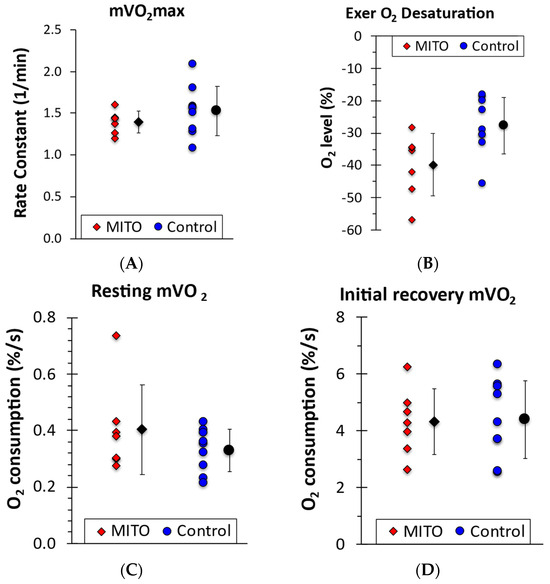
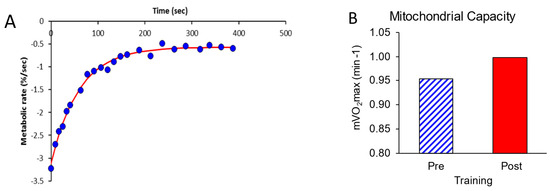
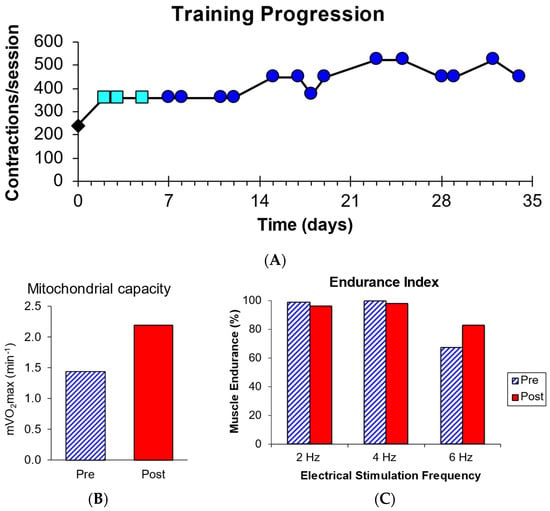
People affected by mitochondrial myopathies (MITOs) are thought to have impaired skeletal muscle oxygenation. The aims of this study were to measure skeletal muscle mitochondrial capacity in MITO participants and able-bodied (AB) participants and evaluate the influence of muscle-specific endurance training in one MITO participant. Participants (n = 7) with mitochondrial disease and controls (n = 9) were tested (ages 18–54 years). Mitochondrial capacity (mVO2max) was measured using the rate constant of recovery of oxygen consumption (mVO2) after exercise in the forearm flexor muscles with near-infrared spectroscopy (NIRS). One MITO participant was tested before and after performing 18 forearm exercise sessions in 30 days. There were no differences between MITO and AB participants in mVO2max (MITO: 1.4 ± 0.1 min−1; AB: 1.5 ± 0.3 min−1; p = 0.29), resting mVO2 (MITO: −0.4 ± 0.2%/min; AB: −0.3 ± 0.1%/min; p = 0.23), or initial post exercise oxygen consumption rates (MITO: 4.3 ± 1.2%/min; AB: 4.4 ± 1.4%/min; p = 0.9). Exercise oxygen desaturation was greater in MITO (39.8 ± 9.7% range) than in AB (28 ± 8.8% range) participants, p = 0.02. The MITO participant who trained increased her mitochondrial capacity (58%) and muscle-specific endurance (24%) and had reduced symptoms of muscle fatigue. We found no evidence supporting in vivo impairment of forearm muscle mVO2max in genetically confirmed MITO participants. This is consistent with studies that report increased mitochondrial content, which offsets the decrease in mitochondrial function. Positive muscle adaptations to endurance training appear to be possible in people with MITOs. Characterization of study populations will be important when interpreting the relationship between in vivo mitochondrial capacity and mitochondrial disease. Full article
Show Figures

Figure 1

11 pages, 899 KB  
Article
Alternative Treatments to Exercise for the Attenuation of Disuse-Induced Skeletal Muscle Atrophy in Rats
by Jinho Park, T. Brock Symons, Eun Hye Kwon, Eunhee Chung and Sukho Lee
Muscles 2024, 3(3), 224-234; https://doi.org/10.3390/muscles3030020 - 22 Jul 2024
Cited by 1 | Viewed by 5158
Abstract
The prevalence of skeletal muscle atrophy, caused by disease and aging, is rising as life expectancy increases. Exercise is the most effective treatment option; however, it is often impractical for individuals suffering from disease or bedridden. The formulation of non-exercise-based interventions is necessary. [...] Read more.
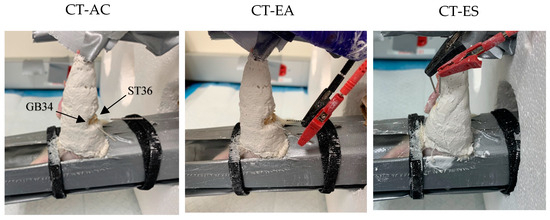
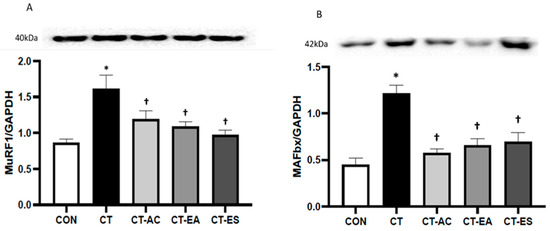
The prevalence of skeletal muscle atrophy, caused by disease and aging, is rising as life expectancy increases. Exercise is the most effective treatment option; however, it is often impractical for individuals suffering from disease or bedridden. The formulation of non-exercise-based interventions is necessary. This study assessed the impact of acupuncture (AC), electro-acupuncture (EA), and electrical stimulation (ES) on muscle mass and contractile properties in a model of casting-induced muscle atrophy. Sprague-Dawley rats (n = 40) were assigned to five groups: control (CON), cast (CT), cast receiving AC (CT-AC), cast receiving EA (CT-EA), and cast receiving ES (CT-ES) (n = 8 each). Treatments were 15 min and three times/week for 14 days. Contractile properties and protein markers of atrophy and inflammation were measured. Casting decreased muscle mass and fiber cross-sectional area, but AC, EA, and ES attenuated cast-induced muscle atrophy. All treatments increased peak twitch tension compared to CT. CT increased the protein levels of MAFbx and MuRF1, while AC, EA, and ES mitigated the elevation of these proteins. Our results indicate that acupuncture, electro-acupuncture, and electrical stimulation show promise as therapeutic strategies to counteract skeletal muscle loss and dysfunction resulting from disuse atrophy caused by injury, disease, and aging. Full article
Show Figures

Figure 1

12 pages, 3031 KB  
Case Report
PNPT1 Spectrum Disorders: An Underrecognized and Complex Group of Neurometabolic Disorders
by Paulo Sgobbi, Igor Braga Farias, Paulo de Lima Serrano, Bruno de Mattos Lombardi Badia, Hélvia Bertoldo de Oliveira, Alana Strucker Barbosa, Camila Alves Pereira, Vanessa de Freitas Moreira, Marco Antônio Troccoli Chieia, Adriel Rêgo Barbosa, Pedro Henrique Almeida Fraiman, Vinícius Lopes Braga, Roberta Ismael Lacerda Machado, Sophia Luiz Calegaretti, Isabela Danziato Fernandes, Roberta Correa Ribeiro, Marco Antonio Orsini Neves, Wladimir Bocca Vieira de Rezende Pinto and Acary Souza Bulle Oliveira
Muscles 2024, 3(1), 4-15; https://doi.org/10.3390/muscles3010002 - 19 Jan 2024
Cited by 1 | Viewed by 5018
Abstract
An 18-year-old man presented with slowly progressive infancy-onset spasticity of the lower limbs and cerebellar ataxia, associated with painless strabismus, intellectual disability, urinary incontinence, bilateral progressive visual loss, and cognitive decline since early adolescence. A neurological examination disclosed spastic dysarthria, left eye divergent [...] Read more.
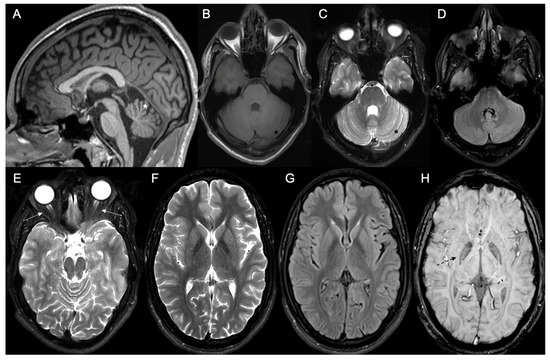
An 18-year-old man presented with slowly progressive infancy-onset spasticity of the lower limbs and cerebellar ataxia, associated with painless strabismus, intellectual disability, urinary incontinence, bilateral progressive visual loss, and cognitive decline since early adolescence. A neurological examination disclosed spastic dysarthria, left eye divergent strabismus, bilateral ophthalmoparesis, impaired smooth pursuit, severe spastic paraparesis of the lower limbs with global brisk tendon reflexes, bilateral extensor plantar responses, and bilateral ankle clonus reflex. Bilateral dysdiadochokinesia of the upper limbs, Stewart-Holmes rebound phenomenon, bilateral dysmetria, and a bilateral abnormal finger-to-nose test were observed. Markedly reduced bilateral visual acuity (right side 20/150, left side 20/400) and moderate to severe optic atrophy were detected. Neuroimaging studies showed cerebellar atrophy and bilateral optic nerves and optic tract atrophy as the main findings. As a complicated Hereditary Spastic Paraplegia, autosomal dominant Spinocerebellar Ataxia, or inherited neurometabolic disorders were suspected, a large next-generation sequencing-based gene panel testing disclosed the heterozygous pathogenic variant c.162-1G>A in intron 1 of the PNPT1 gene. A diagnosis of PNPT1-related spastic ataxia was established. Clinicians must be aware of the possibility of PNPT1 pathogenic variants in cases of spastic ataxia and spastic paraplegias that are associated with optic atrophy and marked cognitive decline, regardless of the established family history of neurological compromise. Full article
Show Figures

Figure 1

2023

Jump to: 2026, 2025, 2024

15 pages, 2568 KB  
Systematic Review
A Straightforward Approach to Analyze Skeletal Muscle MRI in Limb-Girdle Muscular Dystrophy for Differential Diagnosis: A Systematic Review
by Ryo Morishima and Benedikt Schoser
Muscles 2023, 2(4), 374-388; https://doi.org/10.3390/muscles2040029 - 8 Nov 2023
Cited by 8 | Viewed by 4486
Abstract
Skeletal muscle MRI studies in limb-girdle muscular dystrophy (LGMD) have increased over the past decades, improving the utility of MRI as a differential diagnostic tool. Nevertheless, the relative rarity of individual genotypes limits the scope of what each study can address, making it [...] Read more.
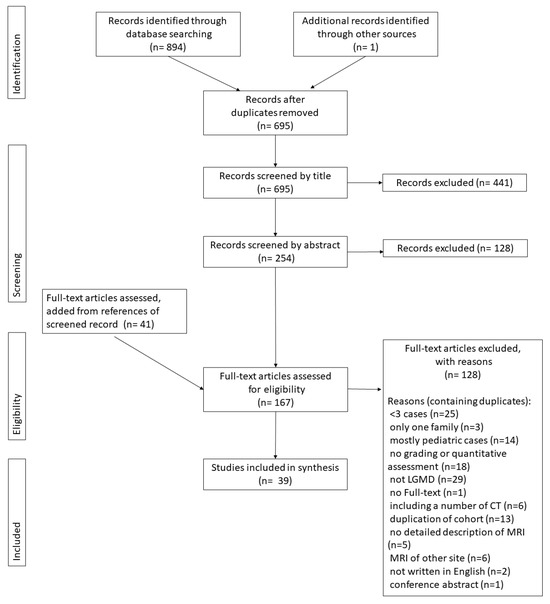
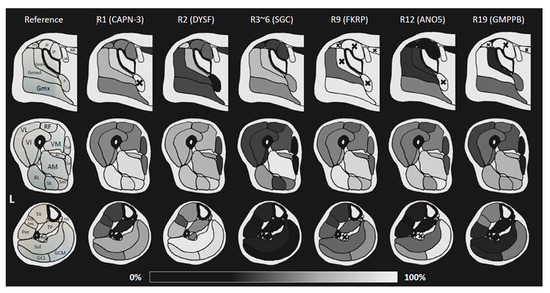
Skeletal muscle MRI studies in limb-girdle muscular dystrophy (LGMD) have increased over the past decades, improving the utility of MRI as a differential diagnostic tool. Nevertheless, the relative rarity of individual genotypes limits the scope of what each study can address, making it challenging to obtain a comprehensive overview of the MRI image of this splintered group. Furthermore, MRI studies have varied in their methods for assessing fat infiltration, which is essential in skeletal muscle MRI evaluation. It stayed problematic and impeded attempts to integrate multiple studies to cover the core MRI features of a distinct LGMD. In this study, we conducted a systematic review of LGMD in adults published until April 2023; 935 references were screened in PubMed and EMBASE, searches of the gray literature, and additional records were added during the screening process. Finally, 39 studies were included in our final analysis. We attempted to quantitatively synthesize the MRI data sets from the 39 individual studies. Finally, we illustrated ideal and simple MRI muscle involvement patterns of six representative LGMD genotypes. Our summary synthesis reveals a distinct distribution pattern of affected muscles by LGMD genotypes, which may be helpful for a quick first-tier differential diagnosis guiding genetic diagnostics. Full article
Show Figures

Figure 1

3 pages, 171 KB  
Editorial
Clinical Advances in Neuromuscular Diseases: Neurometabolic Disorders
by Corrado Angelini and Daniela Tavian
Muscles 2023, 2(3), 271-273; https://doi.org/10.3390/muscles2030020 - 17 Jul 2023
Viewed by 2278
Abstract
Metabolic myopathies are characterized by the dysfunction of several metabolic pathways that results in a deficiency of fuels required to generate energy for muscle contractions [...] Full article
Back to TopTop