Advanced Extraction and Recovery of Rare Earth Elements

A topical collection in Minerals (ISSN 2075-163X). This collection belongs to the section "Mineral Processing and Extractive Metallurgy".

Viewed by 1420

Editors


E-Mail Website
Collection Editor
School of Water Resources and Environmental Engineering, East China University of Technology, Nanchang 330013, China
Interests: complex sulfide ore; rare metals; rare earth; mineral processing; salt-lake resources
Special Issues, Collections and Topics in MDPI journals

E-Mail Website
Collection Editor
Faculty of Resource and Environmental Engineering, Jiangxi University of Science and Technology, Ganzhou 341000, China
Interests: strategic mineral resources; clean and efficient utilization; mineral processing

E-Mail Website
Collection Editor
School of Resource & Safety Engineering, Wuhan Institute of Technology, Wuhan 430073, China
Interests: rare earth elements; extractive metallurgy; geochemistry; solid waste recycling
Special Issues, Collections and Topics in MDPI journals

E-Mail Website
Collection Editor
Faculty of Resource and Environmental Engineering, Jiangxi University of Science and Technology, Ganzhou 341000, China
Interests: mineral processing; beneficiation technology; rare earth extraction from refractory resources

Topical Collection Information

Dear Colleagues,

Rare earth elements, as critical strategic resources, play a pivotal role in the global economy and technological advancement and are widely recognized as essential raw materials for securing competitive advantages in future high-tech industries. With the ongoing expansion of global rare earth exploitation, ore deposits are becoming increasingly lean, finely disseminated, and complex in composition, leading to escalating challenges in resource development. Sustained technological innovation is therefore imperative to ensure efficient recovery and utilization of rare earth resources. Overcoming the limitations of conventional processing methods and advancing greener, more intelligent extraction technologies have emerged as key priorities in the evolution of rare earth resource development.

This Topical Collection presents cutting-edge research on green process innovation, intelligent equipment advancement, and cross-disciplinary technological integration in the context of rare earth resource development. The themes of the collection are extensive and include, but are not limited to, the following fields:

(1) Green extraction process for ionic-type rare earth ore.

(2) High-efficiency flotation recovery of rare earth elements in mineral phases.

(3) Rare earth bio-metallurgy technology.

(4) High-efficiency extraction of rare earth elements from low-concentration lixivium.

(5) High-efficiency and short-process recovery technology of rare earth elements from secondary resources.

Prof. Dr. Xianping Luo
Prof. Dr. Hepeng Zhou
Prof. Dr. Zhenyue Zhang
Dr. Xuekun Tang
Collection Editors

Manuscript Submission Information

Manuscripts should be submitted online at www.mdpi.com by registering and logging in to this website. Once you are registered, click here to go to the submission form. All submissions that pass pre-check are peer-reviewed. Accepted papers will be published continuously in the journal (as soon as accepted) and will be listed together on the collection website. Research articles, review articles as well as short communications are invited. For planned papers, a title and short abstract (about 250 words) can be sent to the Editorial Office for assessment.

Submitted manuscripts should not have been published previously, nor be under consideration for publication elsewhere (except conference proceedings papers). All manuscripts are thoroughly refereed through a single-blind peer-review process. A guide for authors and other relevant information for submission of manuscripts is available on the Instructions for Authors page. Minerals is an international peer-reviewed open access monthly journal published by MDPI.

Please visit the Instructions for Authors page before submitting a manuscript. The Article Processing Charge (APC) for publication in this open access journal is 2400 CHF (Swiss Francs). Submitted papers should be well formatted and use good English. Authors may use MDPI's English editing service prior to publication or during author revisions.

Keywords

  • ionic-type rare earth ore
  • rare earths in mineral phases
  • bio-metallurgy technology
  • rare earth lixivium
  • rare earths from secondary resources
  • rare earth high-efficiency extraction

Published Papers (2 papers)

2026

22 pages, 10712 KB  
Article
Comparative Study on the Differential Adsorption Mechanisms of Typical Light/Heavy Rare Earth Ions by Kaolinite and Halloysite
by Hongchang Liu, Shiyun Huang, Mengyuan Wang, Yang Liu, Jingna Li and Jun Wang
Minerals 2026, 16(4), 399; https://doi.org/10.3390/min16040399 - 14 Apr 2026
Viewed by 405
Abstract
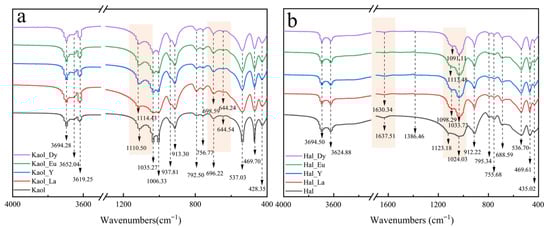
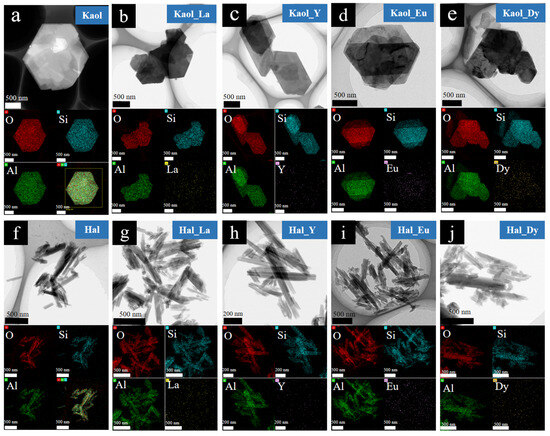
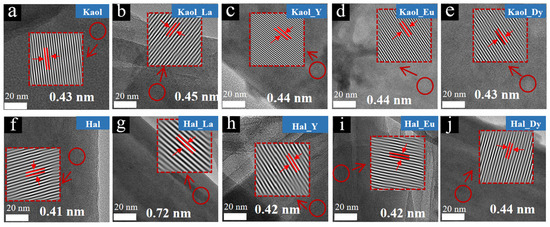
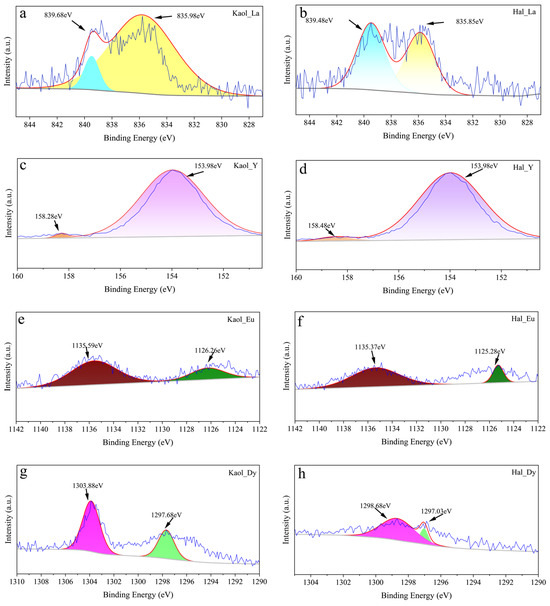
The inevitable toxicity and bioaccumulation of rare earth elements (REEs) have posed potential pollution risks to the environment. In this study, two major clay minerals from weathered ion-adsorption rare earth deposits—tubular halloysite and platy kaolinite—were used as research objects, and a series of [...] Read more.
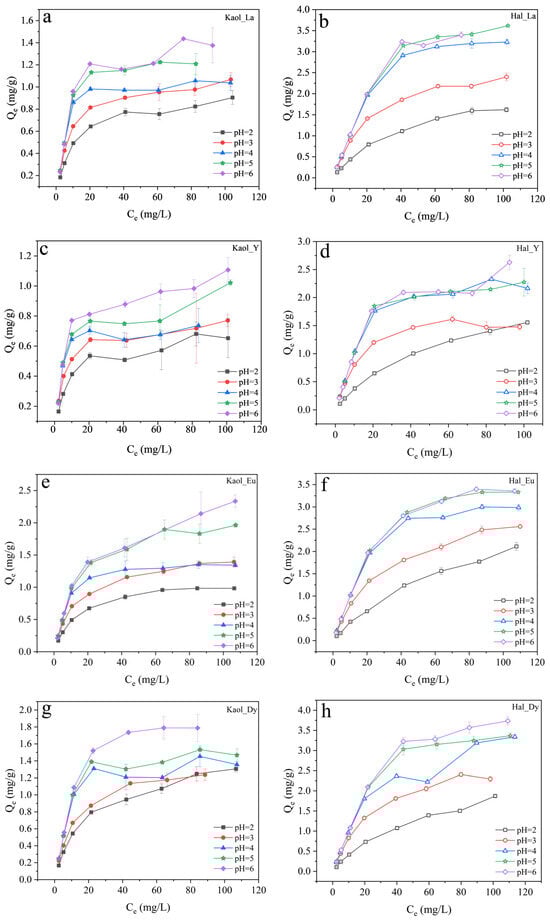
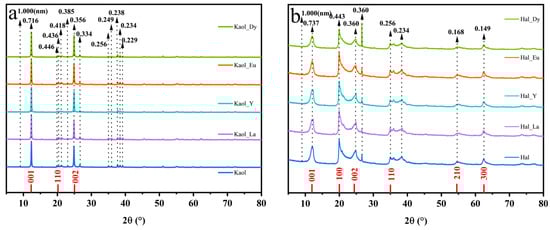
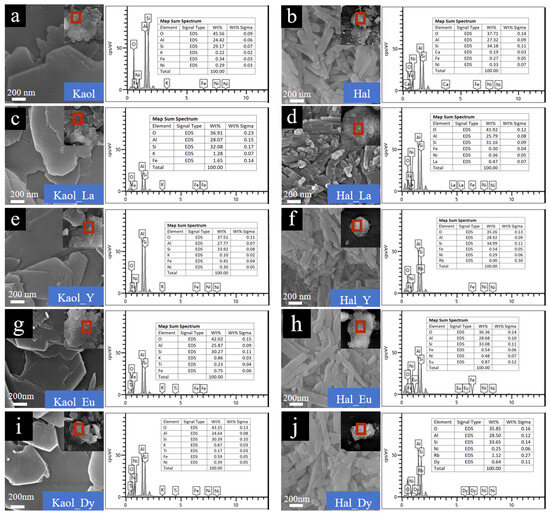
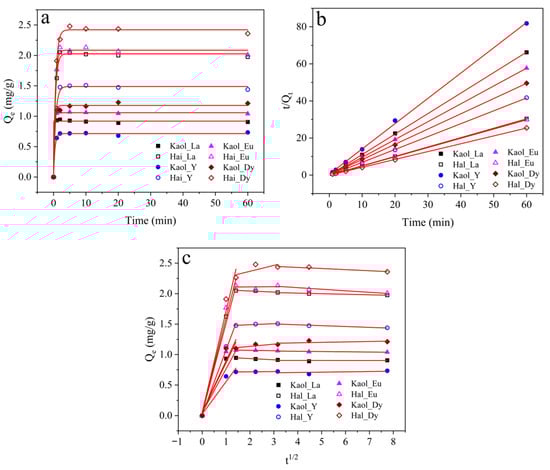
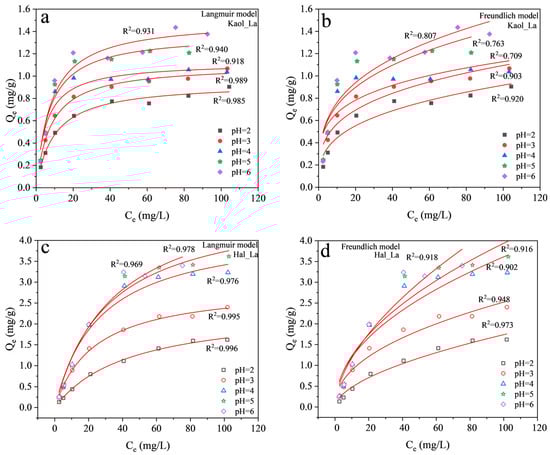
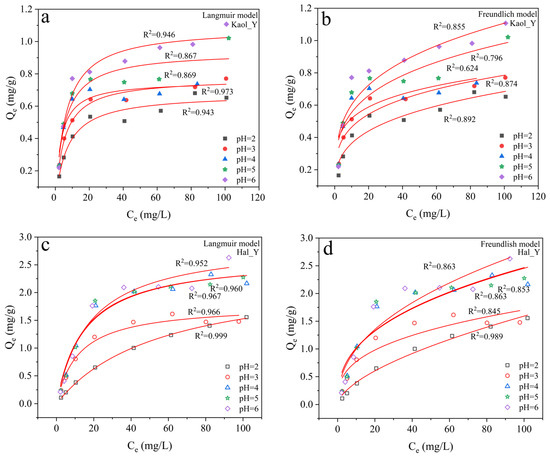
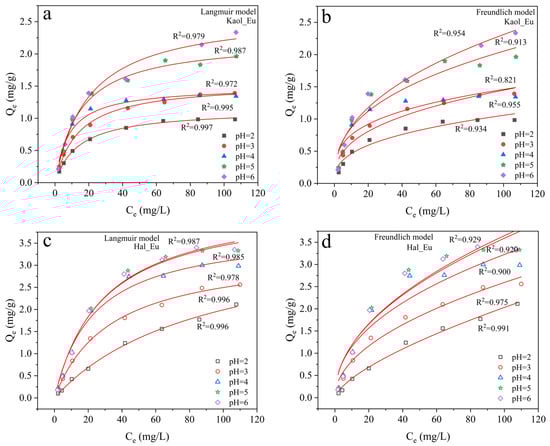
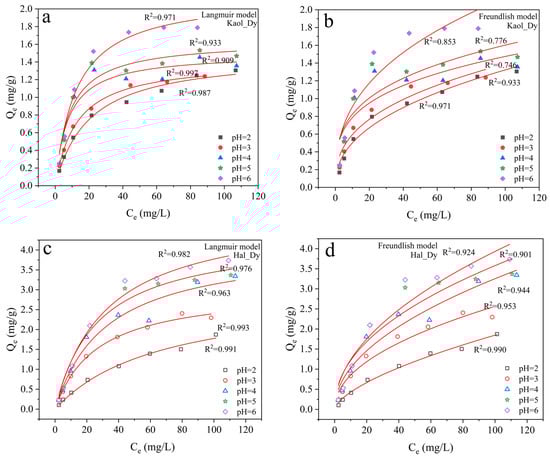
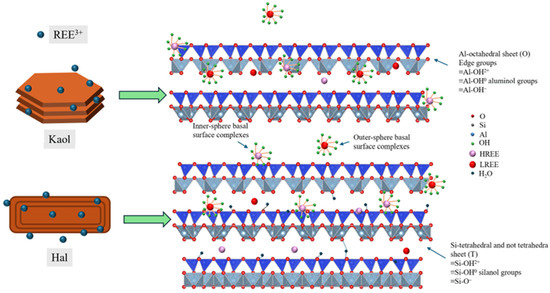
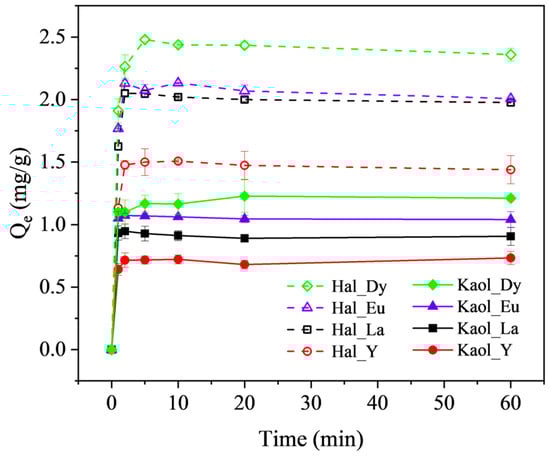
The inevitable toxicity and bioaccumulation of rare earth elements (REEs) have posed potential pollution risks to the environment. In this study, two major clay minerals from weathered ion-adsorption rare earth deposits—tubular halloysite and platy kaolinite—were used as research objects, and a series of batch adsorption experiments were conducted on light rare earth elements (La, Eu) and heavy rare earth elements (Y, Dy) at different concentrations, aiming to clarify the adsorption mechanisms of rare earth ions onto clay minerals. The results showed that under the same conditions, the adsorption capacity of halloysite was higher than that of kaolinite. The unit adsorption capacity of both kaolinite and halloysite for REEs increased with rising pH. The adsorption processes of REEs onto kaolinite and halloysite were better fitted by the pseudo-second-order kinetic model and the Langmuir model, indicating that the adsorption was a homogeneous process dominated by chemisorption, with a fast adsorption rate that was basically completed within the first 5 min. The 1/n values fitted by the Freundlich model were all between 0 and 1, suggesting that the adsorption reaction was favorable. Rare earth ions were adsorbed onto halloysite and kaolinite through outer-sphere complexation (electrostatic attraction) and inner-sphere complexation. Full article
Show Figures

Figure 1

11 pages, 2062 KB  
Article
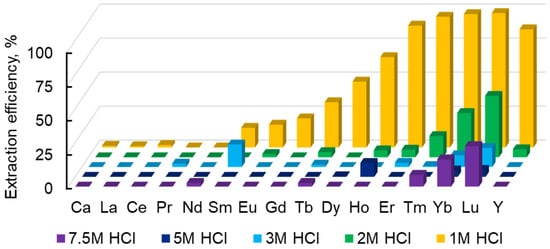
Separation of Heavy Rare Earth Elements from Calcium and Light Rare Earth Elements Using Estonian Phosphorite Ore Raw Material
by Kairit Laksberg, Liis Vitsut, Silvester Jürjo, Ove Oll and Enn Lust
Minerals 2026, 16(2), 183; https://doi.org/10.3390/min16020183 - 7 Feb 2026
Viewed by 651
Abstract
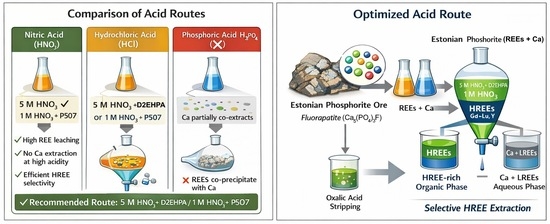
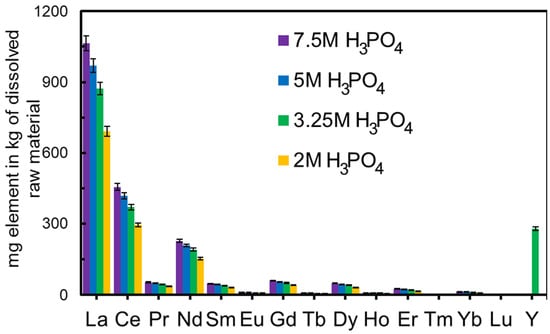
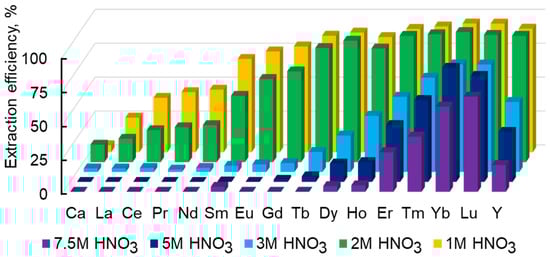
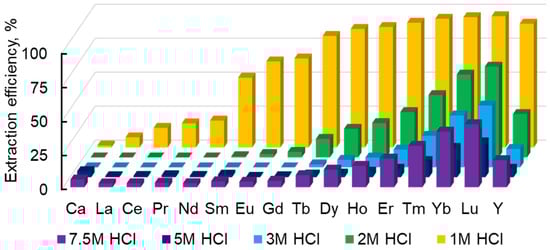
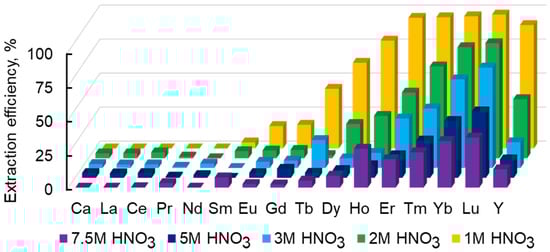
Separation of heavy rare earth elements from calcium and light rare earth elements extracted from Estonian phosphorite ore by acid leaching and subsequent liquid extraction has been conducted and analyzed. For initial leaching, nitric acid, hydrochloric acid, and orthophosphoric acid with different concentrations [...] Read more.
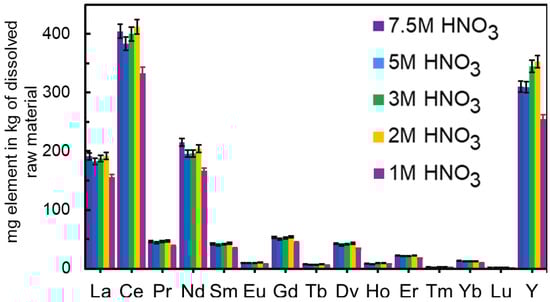
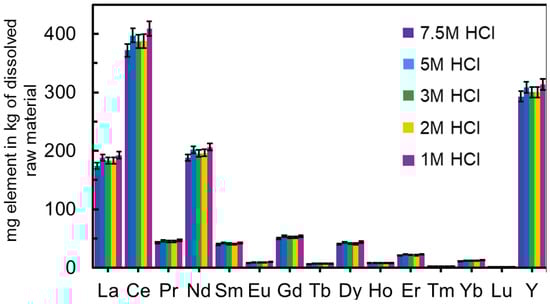
Separation of heavy rare earth elements from calcium and light rare earth elements extracted from Estonian phosphorite ore by acid leaching and subsequent liquid extraction has been conducted and analyzed. For initial leaching, nitric acid, hydrochloric acid, and orthophosphoric acid with different concentrations have been utilized. For the final separation of heavy rare earth elements, a liquid extraction with bis(2-ethylhexyl) phosphate (D2EHPA) or 2-ethylhexyl hydrogen-2-ethylhexyl phosphonate (P507) at different acidic concentrations has been applied. After leaching and extraction, all samples were characterized using the inductively coupled plasma mass spectrometry method (ICP-MS/MS). Optimal conditions for both extracting agents have been established. All rare earth elements + Y have been recovered in acid leaching, and heavy rare earth elements (elements Gd-Lu) have been selectively recovered by D2EHPA with 5 M nitric acid leaching and by P507 with 1 M nitric acid leaching. The presence of Sc has not been detected in Estonian phosphorite ore. Full article
Show Figures

Graphical abstract

Back to TopTop