


Image Segmentation: Trends and Challenges

A special issue of Journal of Imaging (ISSN 2313-433X).

Deadline for manuscript submissions: closed (31 January 2026) | Viewed by 1670

Special Issue Editor


E-Mail Website
Guest Editor
Department of Electrical and Computer Engineering, Democritus University of Thrace, 67100 Xanthi, Greece
Interests: deep learning; computer vision; audio source separation; music information retrieval
Special Issues, Collections and Topics in MDPI journals

Special Issue Information

Dear Colleagues,

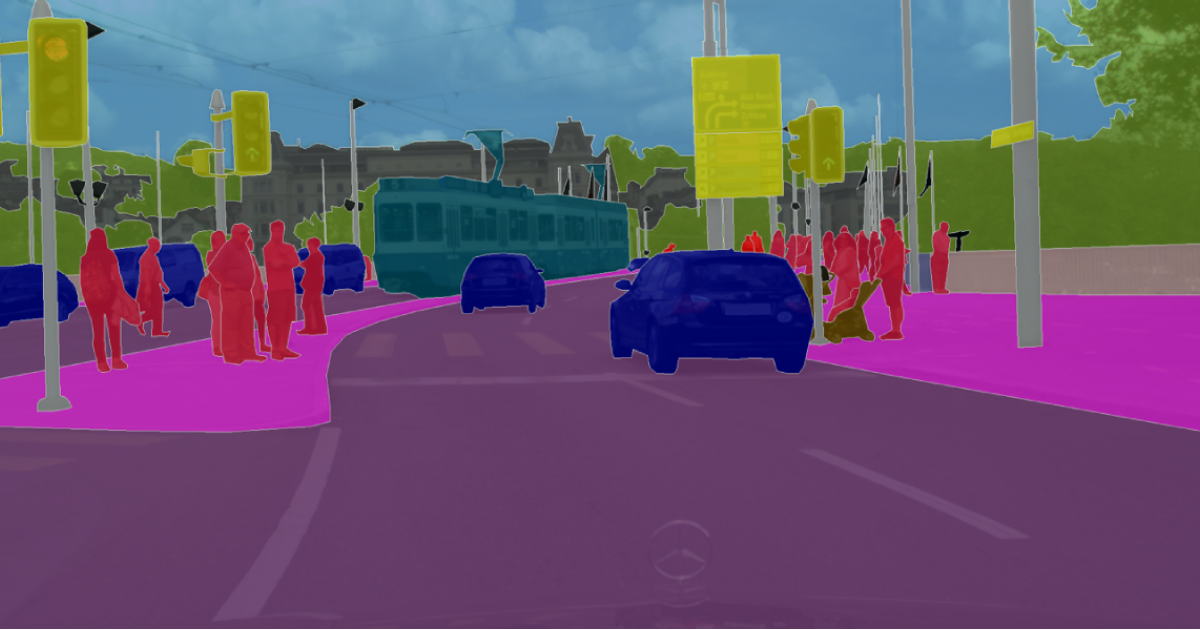
Image segmentation is a subfield of computer vision that focuses on partitioning an image into areas corresponding to different semantic classes. Image segmentation techniques vary, depending on how input image areas are classified and labeled. They can be broadly categorized into the areas of semantic segmentation, instance segmentation, and panoptic segmentation. The development of deep learning techniques has seen the emergence of a variety of techniques that address the aforementioned computer vision tasks. The developed techniques have achieved improved performance, compared to the previous state of the art, which has raised expectations for modern computer vision. Novel deep learning concepts and networks appear almost daily, and they have thus attracted significant attention from scientists worldwide. The aim of this Special Issue is to present novel approaches in the field of image segmentation that surpass the current state of the art and introduce novel concepts to the field.

Prof. Dr. Nikolaos Mitianoudis
Guest Editor

Manuscript Submission Information

Manuscripts should be submitted online at www.mdpi.com by registering and logging in to this website. Once you are registered, click here to go to the submission form. Manuscripts can be submitted until the deadline. All submissions that pass pre-check are peer-reviewed. Accepted papers will be published continuously in the journal (as soon as accepted) and will be listed together on the special issue website. Research articles, review articles as well as short communications are invited. For planned papers, a title and short abstract (about 250 words) can be sent to the Editorial Office for assessment.

Submitted manuscripts should not have been published previously, nor be under consideration for publication elsewhere (except conference proceedings papers). All manuscripts are thoroughly refereed through a single-blind peer-review process. A guide for authors and other relevant information for submission of manuscripts is available on the Instructions for Authors page. Journal of Imaging is an international peer-reviewed open access monthly journal published by MDPI.

Please visit the Instructions for Authors page before submitting a manuscript. The Article Processing Charge (APC) for publication in this open access journal is 1800 CHF (Swiss Francs). Submitted papers should be well formatted and use good English. Authors may use MDPI's English editing service prior to publication or during author revisions.

Keywords

  • deep learning
  • semantic segmentation
  • instance segmentation
  • panoptic segmentation
  • image binarization
  • automated driving perception

Benefits of Publishing in a Special Issue

  • Ease of navigation: Grouping papers by topic helps scholars navigate broad scope journals more efficiently.
  • Greater discoverability: Special Issues support the reach and impact of scientific research. Articles in Special Issues are more discoverable and cited more frequently.
  • Expansion of research network: Special Issues facilitate connections among authors, fostering scientific collaborations.
  • External promotion: Articles in Special Issues are often promoted through the journal's social media, increasing their visibility.
  • Reprint: MDPI Books provides the opportunity to republish successful Special Issues in book format, both online and in print.

Further information on MDPI's Special Issue policies can be found here.

Published Papers (2 papers)

Order results
Result details
Select all
Export citation of selected articles as:

Research

28 pages, 16155 KB  
Article
A Robust Skeletonization Method for High-Density Fringe Patterns in Holographic Interferometry Based on Parametric Modeling and Strip Integration
by Sergey Lychev and Alexander Digilov
J. Imaging 2026, 12(2), 54; https://doi.org/10.3390/jimaging12020054 - 24 Jan 2026
Viewed by 452
Abstract
Accurate displacement field measurement by holographic interferometry requires robust analysis of high-density fringe patterns, which is hindered by speckle noise inherent in any interferogram, no matter how perfect. Conventional skeletonization methods, such as edge detection algorithms and active contour models, often fail under [...] Read more.
Accurate displacement field measurement by holographic interferometry requires robust analysis of high-density fringe patterns, which is hindered by speckle noise inherent in any interferogram, no matter how perfect. Conventional skeletonization methods, such as edge detection algorithms and active contour models, often fail under these conditions, producing fragmented and unreliable fringe contours. This paper presents a novel skeletonization procedure that simultaneously addresses three fundamental challenges: (1) topology preservation—by representing the fringe family within a physics-informed, finite-dimensional parametric subspace (e.g., Fourier-based contours), ensuring global smoothness, connectivity, and correct nesting of each fringe; (2) extreme noise robustness—through a robust strip integration functional that replaces noisy point sampling with Gaussian-weighted intensity averaging across a narrow strip, effectively suppressing speckle while yielding a smooth objective function suitable for gradient-based optimization; and (3) sub-pixel accuracy without phase extraction—leveraging continuous bicubic interpolation within a recursive quasi-optimization framework that exploits fringe similarity for precise and stable contour localization. The method’s performance is quantitatively validated on synthetic interferograms with controlled noise, demonstrating significantly lower error compared to baseline techniques. Practical utility is confirmed by successful processing of a real interferogram of a bent plate containing over 100 fringes, enabling precise displacement field reconstruction that closely matches independent theoretical modeling. The proposed procedure provides a reliable tool for processing challenging interferograms where traditional methods fail to deliver satisfactory results. Full article
(This article belongs to the Special Issue Image Segmentation: Trends and Challenges)
Show Figures

Figure 1

33 pages, 4122 KB  
Article
Empirical Evaluation of UNet for Segmentation of Applicable Surfaces for Seismic Sensor Installation
by Mikhail Uzdiaev, Marina Astapova, Andrey Ronzhin and Aleksandra Figurek
J. Imaging 2026, 12(1), 34; https://doi.org/10.3390/jimaging12010034 - 8 Jan 2026
Viewed by 608
Abstract
The deployment of wireless seismic nodal systems necessitates the efficient identification of optimal locations for sensor installation, considering factors such as ground stability and the absence of interference. Semantic segmentation of satellite imagery has advanced significantly, and its application to this specific task [...] Read more.
The deployment of wireless seismic nodal systems necessitates the efficient identification of optimal locations for sensor installation, considering factors such as ground stability and the absence of interference. Semantic segmentation of satellite imagery has advanced significantly, and its application to this specific task remains unexplored. This work presents a baseline empirical evaluation of the U-Net architecture for the semantic segmentation of surfaces applicable for seismic sensor installation. We utilize a novel dataset of Sentinel-2 multispectral images, specifically labeled for this purpose. The study investigates the impact of pretrained encoders (EfficientNetB2, Cross-Stage Partial Darknet53—CSPDarknet53, and Multi-Axis Vision Transformer—MAxViT), different combinations of Sentinel-2 spectral bands (Red, Green, Blue (RGB), RGB+Near Infrared (NIR), 10-bands with 10 and 20 m/pix spatial resolution, full 13-band), and a technique for improving small object segmentation by modifying the input convolutional layer stride. Experimental results demonstrate that the CSPDarknet53 encoder generally outperforms the others (IoU = 0.534, Precision = 0.716, Recall = 0.635). The combination of RGB and Near-Infrared bands (10 m/pixel resolution) yielded the most robust performance across most configurations. Reducing the input stride from 2 to 1 proved beneficial for segmenting small linear objects like roads. The findings establish a baseline for this novel task and provide practical insights for optimizing deep learning models in the context of automated seismic nodal network installation planning. Full article
(This article belongs to the Special Issue Image Segmentation: Trends and Challenges)
Show Figures

Figure 1

Back to TopTop