Article

Reframing the Sustainable Livelihoods Framework in Urban Crisis Contexts: Mobility, Health, Natural Capital and the Impacts of the COVID-19 Pandemic in São Paulo City (Brazil)


by
Pedro Henrique Campello Torres
1,*,
Sandra Momm
2,
Beatriz Milz
2,
Thais Tartalha Lombardi
2,
Gabriel Machado Araujo
2,
Bruna Bauer
2 and
Dorcas Nthoki Nyamai
3
1
Department of Environment and Biological Sciences, Institute of Bioscience (IBCLP), State University of São Paulo (UNESP), São Vicente 11330-900, SP, Brazil
2
Center for Engineering, Modeling and Applied Social Sciences, Federal University of ABC (UFABC), Santo André 09280-560, SP, Brazil
3
Department of Spatial Planning, TU Dortmund University, 44227 Dortmund, Germany
*
Author to whom correspondence should be addressed.
Int. J. Environ. Med. 2026, 1(1), 3; https://doi.org/10.3390/ijem1010003
Submission received: 1 July 2025 / Revised: 5 January 2026 / Accepted: 12 January 2026 / Published: 23 January 2026

Abstract

The COVID-19 pandemic has underscored and intensified existing structural inequalities, particularly in urban centers of the Global South. This paper revisits the Sustainable Livelihoods Framework (SLF), originally designed for rural contexts, proposing its adaptation to centralize mobility as a critical analytical axis in urban contexts. Through an examination of São Paulo, Brazil, we explore how mobility restrictions, access to natural capital, and health outcomes intersected during the pandemic, disproportionately affecting vulnerable populations. To explore the application of the adapted framework, we analyze two contrasting neighborhoods in São Paulo, highlighting how different urban contexts mediate the impacts of systemic crises. By integrating mobility into the SLF, we aim to provide a more nuanced tool for analyzing and addressing urban vulnerabilities in times of systemic crises.

1. Introduction

The COVID-19 pandemic acted as a magnifying lens, revealing and exacerbating pre-existing socio-economic and health disparities, especially in urban areas of the Global South. Measures such as lockdowns and mobility restrictions, while necessary for public health, had uneven impacts across different socio-economic groups and were not uniformly experienced. In this context, the Sustainable Livelihoods Framework (SLF)—originally developed to measure and characterize poverty and inequality in rural settings—offers an entry point for rethinking urban livelihood strategies during times of crisis or disruption, such as a pandemic [1,2]. However, applying the SLF to urban environments during crisis periods demands critical adaptation, particularly given the central role that mobility and access to public space play in shaping urban vulnerability [3,4]. This article seeks to contribute to such adaptation by proposing an urban-oriented SLF model, illustrated by the case of City of São Paulo, Brazil.
The Sustainable Livelihoods Framework (SLF), developed by Chambers and Conway [5], offers a comprehensive approach to understanding how individuals and communities mobilize various forms of capital to sustain their livelihoods. Further refined by Ian Scoones [6] within the context of research developed at the Institute of Development Studies (IDS), and initially focused mainly on Africa, the framework was traditionally applied in rural settings. One of its first adaptations to urban contexts was proposed by Rakodi and Lloyd-Jones [7]. However, some authors argue that its adaptation to urban settings still requires greater attention to factors such as mobility and access to public and open spaces—including green infrastructure—which play pivotal roles in achieving sustainable livelihoods [8,9].
Thus, the SLF enables the evaluation of various assets that contribute to resilience—not only in terms of monetary income but also in relation to access to natural capital, social networks, skills, and health resources [5,6]. The framework has proven particularly useful in understanding how vulnerable populations are affected by crises like COVID-19, highlighting the role of mobility in sustaining livelihoods. However, it is essential to adapt the framework to account for different temporal phases—before, during, and after the pandemic—in order to better capture the shifting nature of livelihoods during a crisis.
When discussing the benefits of green infrastructure in urban areas, it is important to recognize that such interventions can have varying effects depending on the social and economic context [8,9,10]. Recent studies emphasize that, although increased access to green spaces is generally associated with improved public health, the benefits are not equitably distributed. In gentrifying contexts, vulnerable populations—such as racial minorities and low-income residents—may not only fail to benefit from these spaces, but may also experience adverse effects, including displacement or symbolic exclusion from these environments [11,12].
Therefore, this work seeks to contribute to the literature on urban livelihoods and vulnerability in crisis contexts, with a focus on adapting the Sustainable Livelihoods Framework (SLF) by incorporating mobility and natural capital as central elements in urban settings. Furthermore, we reflect on how disruptions and crises impact livelihood strategies and how these strategies evolve in response, by examining them across different points in time. The paper aims to address this knowledge gap by providing insights into how urban populations—particularly in São Paulo City, Brazil—navigated the complex interplay of restricted physical mobility, virtual mobility, and access to green spaces during the COVID-19 pandemic. This contribution is especially relevant given the disproportionate impacts of public health measures on informal workers and marginalized communities, underscoring the urgent need for urban policy frameworks that address mobility inequalities and green privilege [13].
In revisiting the SLF, we clarify that adapting the framework to urban crisis conditions does not imply replacing its conceptual foundations, but rather extending its analytical capacity. The centrality of mobility emerges from a systematic assessment of how urban inequalities materialize through access—or lack thereof—to services, employment, and health infrastructures. This urban-oriented SLF retains the classical capital structure while explicitly addressing dimensions historically underdeveloped in SLF literature, such as virtual mobility, the spatial configuration of services, and unequal exposure to health risk. The revised framework therefore complements rather than substitutes the original SLF perspective.
The paper is organized as follows: an introduction outlining the theoretical foundations and context of the SLF; a critical review and adaptation of the framework for urban crisis environments; an analysis of mobility as a core axis of urban livelihoods; and a case study that explore how the adapted framework was applied to the COVID-19 pandemic in São Paulo. These case studies are not intended to serve as ideal models for applying the framework, but rather to enrich the discussion by grounding it in concrete empirical realities. Through this structure, the article advances a nuanced understanding of sustainable urban livelihoods amid unprecedented global disruptions.

2. Background and Research Gaps: Adapting the Sustainable Livelihoods Framework to Urban Contexts

This paper is theoretical in nature, grounded in a conceptual adaptation of the Sustainable Livelihoods Framework (SLF) for urban crisis contexts. Rather than employing a traditional empirical method, we engage in a critical literature review and analytical synthesis to reinterpret SLF components—particularly mobility and natural capital—within urban environments of the Global South. The city of São Paulo is used illustratively to examine the intersections of mobility, health, and natural capital during the COVID-19 pandemic. This case provides a context-specific lens, illustrating how theoretical insights from an adapted SLF can be mobilized in practice and replicated in similar urban areas across the Global South.
This literature review followed a conceptual–analytical orientation, focusing on theoretical developments of the SLF and its recent applications in urban contexts. Rather than producing a systematic review—which would fall outside the scope of this theoretically driven article—we examined seminal and contemporary works that discuss the limitations of SLF in settings marked by rapid urbanization, infrastructure deficits, and crisis conditions. This approach strengthens the argument that classical SLF formulations insufficiently incorporate mobility, spatial justice and environmental inequalities—critical dimensions of urban livelihoods in the Global South.
The design of the framework aimed to understand livelihood strategies and their outcomes, comprising four capitals as described by Scoones [6], or five types of capital when applied to urban settings, where physical and natural capital are considered separately. These are:
  • Human—encompassing assets and capabilities that members of a household/group or individuals might have, such as educational attainment;
  • Social—referring to assets provided by the community, including social support networks, social structure, and organization;
  • Financial—relating to the ability to access jobs and generate income;
  • Natural—referring to green areas and open spaces;
  • Physical—describing the city’s infrastructure.
While the first three capitals focus on both tangible and intangible assets (e.g., educational attainment or formal employment as tangible, and support networks as intangible), natural and physical capitals refer to tangible assets, and their measurement is centered on existence and accessibility. Our choice to apply and adapt this framework stems from its relational design, without attributing numerical values. Instead, we aim to understand how the availability and accessibility of these assets play different roles—or how changes in availability can be disrupted at particular points in time—interfering with strategies and allowing for illustrative cases of how livelihood strategies cope with crises.
Thus, while the original focus of natural capital was on rural assets (e.g., access to agricultural land or local environmental resources) and the vulnerabilities derived from them, it does not fully capture the spatial, social, and infrastructural complexities of urban areas. This limitation underscores the need to invest in adapting the framework to urban settings. It becomes particularly evident when considering issues such as access to (public) infrastructure, mobility, and urban health disparities—factors integral to urban livelihoods but often underrepresented in the original framework. Nevertheless, both urban and rural applications revolve around understanding how poverty is reproduced in a given context and how it might be overcome: How are poverty, vulnerability, and inequalities intertwined?
Authors such as Rakodi and Lloyd-Jones [7] were among the first to depart from the classical set of assets and adapt them to urban contexts, focusing on access to services—particularly health—and on housing and mobility policies, reshaping the debate around urban poverty [11,12]. However, these authors acknowledge that there is still room to refine the framework for urban contexts to better capture vulnerabilities and inequalities. Most refinements have come from adaptations to different rural and urban contexts across both the Global North and the Global South.

2.1. The SLF in the Global North: Adapting to Urban Development and Social Inequality

While most studies employing the SLF have focused on the Global South, it has also been adapted—albeit less extensively—to explore dynamics of vulnerability and policy interventions in some urban and peri-urban settings in the Global North. For instance, studies conducted in the United Kingdom, Canada, and the United States have adapted the SLF to examine how immigrant and refugee communities rely on social networks, access to education and healthcare, as well as mobility, to secure their urban survival in contexts of marginalization. Moser’s [14] research in the United Kingdom is an example of such an adaptation, assessing how urban communities cope with recurring economic crises and urban violence, and emphasizing the interdependence between social capital and physical capital (such as housing and transport) in cities.
Another relevant example from the Global North is the study by Cranston [15], which applied the SLF to urban neighborhoods in Canada to understand internal migration dynamics and the survival strategies of vulnerable populations. In this context, financial capital and social mobility emerge as central components in individuals’ ability to adapt to economic and social crises, such as the 2008 recession.

2.2. The SLF in the Global South: Focusing on Urban Poverty and Systemic Vulnerabilities

The SLF has been increasingly adapted to examine poverty, vulnerability, and inequalities in rapidly urbanizing contexts of the Global South, particularly in large cities across Latin America and Africa. This adaptation to urban settings is crucial, as many of the capital components (such as physical and natural capital) play a more central role due to challenges related to accessing basic infrastructure, services, and natural resources, which are often scarce or unevenly distributed.
An important example of the use of the SLF in Latin America can be found in Moser’s study on Caracas, Venezuela, one of the first to expand the SLF into Latin American urban contexts. The study shows how urban residents rely on various forms of capital (particularly social and natural) to cope with recurring economic crises and urban violence. Moser argues that although the SLF was originally designed for rural contexts, its adaptation to Latin American cities provides a more nuanced understanding of the coping capacities of populations living in informal urban settlements. Bebbington and Thiele [16] research in Brazil, particularly in São Paulo, explored urban vulnerabilities in peripheral neighborhoods and demonstrated how unequal access to natural resources (such as parks and clean water), combined with restricted mobility due to inadequate public transport, exacerbates the challenges faced by low-income populations. In many of these urban contexts, limited social mobility and low financial capital are seen as major barriers to escaping poverty [17].
In Africa, the SLF has been particularly useful for examining how urban residents cope not only with poverty but also with health crises and food insecurity. The book edited by Rakodi and Lloyd-Jones [7] expands the initial approach taken by Chambers and Conway [5] and Scoones [6], adapting the framework’s capitals and assets to African rural contexts where British-funded development projects have been implemented. In addition, Tandoh et al. [18] analyzed the impacts of the COVID-19 pandemic on livelihood dynamics in an urban district in Ghana. The researchers found that while social capital (such as community networks) was essential for survival, natural capital (access to food and outdoor spaces) also played a central role, as many communities depend on urban spaces for food cultivation or natural resource extraction.
Sackey et al.’s [19] work in Kenya also used the SLF to explore the relationship between urban poverty and social vulnerability. They focused on how access to public transport and basic infrastructure affects the ability of urban families to maintain stable sources of income, particularly during crises like the COVID-19 pandemic. The study showed that the lack of access to public transport and healthcare services disproportionately affected low-income urban communities, thereby increasing their vulnerability.

2.3. Distinctions in the SLF Applications: Global North vs. Global South and the Relevance of This Study

Thus, by examining applications of the framework in different settings and regions of the world, a major distinction in the use of the SLF between the Global North and the Global South lies in the nature of the vulnerabilities faced by urban populations and the types of capital that are most critical to sustaining livelihoods.
  • In the Global North, urban vulnerability is often linked to social exclusion, gentrification, lack of access to healthcare and education, and inequality in accessing modern infrastructure. When applied to these contexts, the SLF tends to focus on the interactions between social, human, and physical capital, often exploring how public policies and social inequality affect these interactions.
  • In the Global South, urban vulnerabilities are more frequently tied to a lack of access to basic infrastructure and services, such as transportation, clean water, and adequate public spaces. Natural capital (access to natural resources and green spaces) takes a much more central role in our analysis, as it is often scarce in urban areas of the Global South. Urban mobility, a central issue on promoting and exacerbating inequality, especially during crises such as the COVID-19 pandemic, is seen as a critical indicator of the ability of urban populations to adapt to changing circumstances.
Therefore, this article seeks to fill this gap by advancing the SLF in a way that not only dialogs with the original framework but also addresses its limitations in capturing urban dynamics in times of crisis or under a major shift on urban tissue. Specifically, we argue for incorporating mobility as a central axis, as it directly influences access to all forms of capital, and for giving greater weight to natural capital, especially in contexts where access to clean air, green spaces, and public health facilities is limited.
By emphasizing these urban dimensions, the article aims to contribute to the broader academic discussion of sustainable livelihoods, moving beyond its rural origins to address the pressing concerns of urban vulnerability in a time of global crisis. This adaptation of the SLF responds to the growing need for more holistic and equitable approaches to urban planning, particularly in crisis situations like the COVID-19 pandemic and the consequent disruptions during the lockdown [1,3,10].
While previous works acknowledged inequalities in urban settings, very few explicitly interrogate mobility as a structuring axis of livelihood security. This gap is particularly pronounced in studies from the Global South, where mobility determines access to all other forms of capital. Our adaptation directly addresses this conceptual omission.

3. Materials and Methods

The first step in the methodology was a literature review that enabled the SLF to be reframed. This comprehensive review was conducted to map different applications of the SLF, identify its classical limitations, and define the key dimensions of the expanded analytical framework. This phase also explored graphic models to represent and facilitate the visualization of the adapted framework, with particular attention to the incorporation of new dimensions—especially mobility.
The selection of interviews for the illustrative cases followed two criteria: (1) representation of contrasting socio-territorial conditions (Central Region vs. Tiradentes City), and (2) diversity of livelihood trajectories before, during and after the pandemic. Four interviews were chosen from the broader dataset collected by the ICOLMA project, not as a representative sample, but as analytically informative cases that reflect distinct configurations of SLF capitals and mobility constraints. Qualitative responses were coded using a directed content analysis approach, in which responses were allocated to the five SLF capitals based on explicit conceptual definitions. Coding was carried out by two researchers independently, with discrepancies resolved through discussion to enhance clarity and internal consistency.
This study adopts a conceptual–analytical methodology centered on the adaptation of the Sustainable Livelihoods Framework (SLF) to urban crisis contexts, with a particular emphasis on mobility as a critical axis for analyzing vulnerability. Rather than employing a traditional empirical research design, the paper engages in a theoretical synthesis supported by illustrative evidence drawn from the city of São Paulo, Brazil. To operationalize the adapted SLF, we focus on how restrictions on mobility during the COVID-19 pandemic intersected with access to natural capital (e.g., green space), exposure to health risks, and broader socio-territorial inequalities, including green privilege [13]. The aim is not to produce generalizable empirical findings, but rather to illustrate how the conceptual adaptation of the SLF can help reveal overlooked dynamics of urban vulnerability.
To explore the framework’s applicability—considering structures related to public transport, health infrastructure and services, and open areas—two contrasting districts in São Paulo were selected: the Central Region and Tiradentes City. These districts, differentiated by socioeconomic status, access to mobility infrastructure, public services, and green areas, allow us to examine how mobility constraints and structural conditions mediate the effects of systemic crises such as the pandemic. The Central Region is characterized by consolidated mobility infrastructure and greater access to services, while Tiradentes City, located in the eastern periphery, is marked by long-distance commuting patterns and a more precarious urban environment [20]. The selection of these areas aims to reflect the diversity and spatial heterogeneity of urban experiences during the lockdown, rather than to represent the city as a whole. This empirical grounding serves to explore and discuss the proposed framework by connecting theoretical insights with concrete realities.
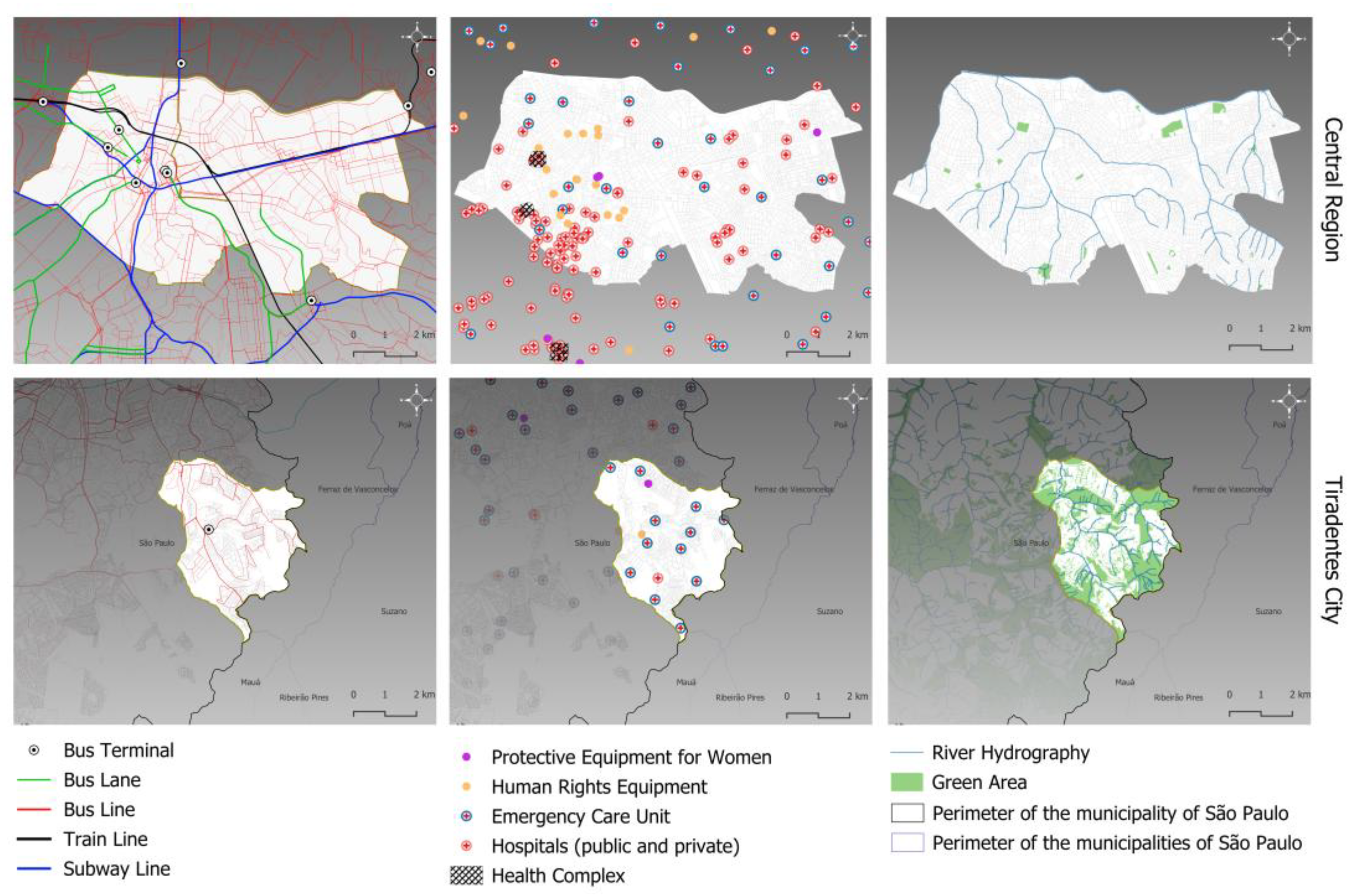
The applied methodology integrates primary and secondary data to enable a robust and contextualized analysis of urban livelihoods during times of crisis. The first stage consisted of the literature review, as previously mentioned. The second step of the methodology focused on organizing the data grounded in the ICOLMA project collected through semi-structured interviews applied to households in the city of São Paulo. For the city of São Paulo, using the Maptionnaire platform [21], responses were coded and spatialized with the aid of R (version R 4.4.1) and QGIS software (version 3.34 Prizren) [22,23]. Six thematic maps were produced focusing on two contrasting regions: the Central Region and Tiradentes City. The objective is to visualize spatial patterns related to mobility infrastructure, the availability of public services (such as health, protection, and human rights facilities), and access to natural capital (green areas and river systems) in the context of the COVID-19 pandemic. These maps help reveal spatial disparities in infrastructure and service provision that shaped individuals’ everyday experiences during the health crisis. They serve as tools for territorial diagnosis, supporting the development of more inclusive and spatially just urban and health policies. The base data for the maps were sourced from GEOSampa [24] and IBGE [25]. All maps are projected using SIRGAS 2000/UTM zone 23S, EPSG: 31983.
The qualitative coding structure was aligned with the conceptual model, not intended as a statistical generalization but as a systematic way to illustrate how each capital interacts with mobility. This makes the methodology transparent and replicable for future applications, without implying a quantitative evaluation model that exceeds the scope of this conceptual article.
The questions and responses were categorized and coded according to the five traditional SLF capitals—human, social, financial, natural, and physical—as defined by Chambers and Conway [5]. This process involved allocating responses to specific capitals based on a detailed analysis of the questionnaire and thematic grouping (e.g., general data, household composition, geographic information). Moreover, the core focus of the classical framework was to examine how the capitals relate to strategies that could overcome poverty or address the problems that need to be resolved to do so. In this study, we chose to understand how these capitals relate to mobility (see Figure 1, below) as a central analytical category. This approach allows us to analyze how our data reveal livelihood strategies that either successfully overcame the stresses and disruptions during the pandemic or were less successful in fully doing so, while also identifying gaps in those strategies.
The third stage consisted of the practical application of the adapted framework to selected exploratory cases. For this purpose, four cases were selected for empirical analysis. The exploratory cases selected to explore the discussion refer, respectively, to two interviews from the Central Region and two from Tiradentes City, districts with contrasting mobility infrastructures and urban contexts.
It is important to clarify that the adapted framework is not intended as a multi-dimensional evaluative tool with defined quantitative indicators or accuracy assessments. Such an instrument would require a distinct research design, including standardized measurement procedures and new data collection protocols. Instead, our approach remains conceptual and illustrative, aimed at demonstrating how SLF components behave under crisis-induced mobility constraints in urban environments.

4. Results

4.1. Reframing the SLF

Adapting the Sustainable Livelihoods Approach to the context experienced during the COVID-19 pandemic revealed the need for a critical re-evaluation to recalibrate the framework for the current situation. The aim here was to adjust the classical diagram to account for three distinct time periods (before, during, and after the pandemic), with our research focused on restricted mobility and limited accessibility. Therefore, mobility becomes the core of the livelihood framework, considering two specific scenarios: restricted mobility and virtual mobility (Figure 1). This idea stems from the understanding that most activities and services that individuals or families need to access are primarily location-based. Thus, mobility is essential for people to reach these spatially dispersed activities and services.
The framework operates across three temporal phases—before, during and after the pandemic—illustrating how mobility mediates access to human, social, financial, natural and physical capitals in urban environments. In our study, mobility is positioned as a central element of the livelihood framework, especially in urban areas where access to services and resources is spatially dispersed. The pandemic introduced two primary scenarios related to mobility: restricted mobility and virtual mobility (as shown in Figure 1). For many, restricted mobility meant the inability to engage in essential livelihood activities—such as going to work, accessing healthcare, or obtaining food—thereby increasing vulnerability. For others, the shift to virtual mobility offered new opportunities to sustain livelihoods, including online work, access to virtual markets, and remote education. However, these opportunities were not available to all, as digital inequalities (e.g., limited access to hardware, internet connectivity, and mobile data) continued to prevent many from fully benefiting from virtual mobility.
Virtual mobility also had the potential to enhance human capital, as individuals gained access to online jobs, educational resources, and new market opportunities. Nevertheless, the digital divide remains a significant challenge in many marginalized urban communities where access to technology is limited. As such, mobility—in both its physical and virtual forms—must be understood as a critical component of livelihood resilience, particularly in the context of crises like the COVID-19 pandemic. The livelihood framework can be adapted to examine how mobility—both restricted and virtual—has influenced urban populations’ ability to adapt to the challenges posed by the pandemic. Although the adapted SLF is primarily conceptual, its components can be operationalised through a minimal set of indicators that allow researchers and practitioners to apply the framework consistently. We outline below the essential requirements for each capital:
  • Human Capital:
  • Education level, occupational category, digital skills, access to remote work.
  • Social Capital:
  • Strength of local networks, reliance on institutional support, access to care networks.
  • Natural Capital:
  • Distance to green areas, perceived safety of parks, availability of recreational outdoor spaces.
  • Physical Capital:
  • Access to basic services (schools, health units, commerce), housing quality, transport infrastructure.
  • Financial Capital:
  • Income stability, savings, formal/informal employment, economic shocks during crisis.
  • Mobility (central dimension):
    Restricted physical mobility: commute times, transport availability, exposure levels.
    Virtual mobility: internet access, device availability, digital literacy.

4.2. Exploring Cases in the City of São Paulo: Adapting the SLF—The Importance of Time and Space

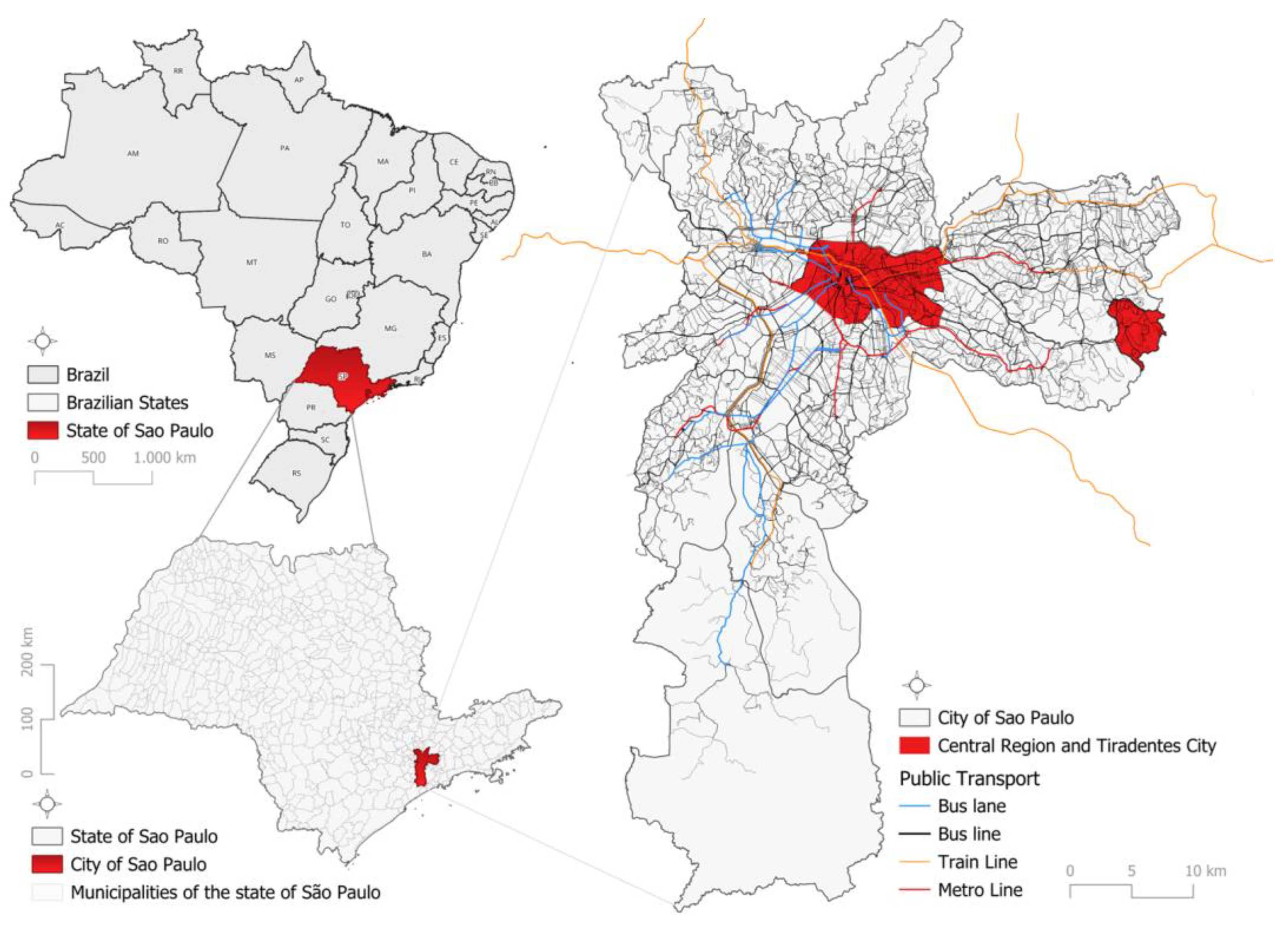
This section presents the socio-spatial context (Figure 2 and Figure 3) and then the cases in the City of São Paulo (Section 4.2.1 and Section 4.2.2).
Brazil is the largest country in Latin America, with a population exceeding 203 million people and marked by persistent territorial and socio-economic inequalities. Located in the southeastern region, the State of São Paulo is the most populous and economically dynamic in the country, home to over 44 million inhabitants across 645 municipalities (Figure 2). The São Paulo Metropolitan Region plays a pivotal role as Brazil’s core of industrial production, finance, and services, while simultaneously concentrating critical urban challenges such as mobility bottlenecks, environmental pressures, and deep-rooted spatial disparities. The City of São Paulo, the state capital, has over 11 million residents and exhibits stark contrasts in its urban form and access to infrastructure.
Based on Figure 2 and Figure 3, the Central Region, which occupies only 4.2% of the city’s total area, concentrates approximately 800,000 residents within 62.7 km2, reaching a population density of about 12,800 inhabitants per km2. This central territory houses key administrative functions and benefits from high-capacity public transportation, a consolidated urban fabric, and a broad distribution of public services—including hospitals, emergency care units, human rights facilities, and services for women’s protection. In stark contrast, Tiradentes City—located at the extreme eastern edge of the municipality—is home to over 194,000 people in only 14.93 km2, with a slightly higher density of around 13,000 inhabitants per km2 (Figure 2 and Figure 3). Despite this similarity in population density, the area faces severe infrastructure deficits. Tiradentes City lacks access to metro and train systems and is served exclusively by conventional bus lines, which are often irregular and poorly connected. Moreover, approximately 43.1% of its surface consists of environmental protection areas, forest reserves, and permanent preservation zones, significantly reducing developable land and intensifying constraints on urban consolidation.

4.2.1. Exploring Cases from Tiradentes City

Located in São Paulo’s eastern periphery, Tiradentes City’s physical capital is constrained: public transport provision is only partial, with no subway or train stations, limiting residents’ daily mobility and access to employment and services. Natural capital presents a contrast. The district sustains a high population density (13,000 inhabitants/km2) yet maintains approximately 43% of its area classified as green spaces, resulting in intense demographic pressure. Similarly, health facilities, although present and fairly well distributed throughout the area, are neither abundant nor diverse, creating difficulties in accessing healthcare services, particularly for some specialties.
The first exploratory case from Tiradentes City concerns a Black woman aged 26–35 who lives with her young son. Regarding her financial capital, throughout the three periods (before, during, and after the pandemic), she remained in informal employment and even took frontline roles during the pandemic, which she described as generating a persistent sense of insecurity. Despite informal employment, she reported that her financial situation improved in both 2020 and 2023 compared to the pre-pandemic baseline of 2019. Her daily mobility pattern was stable: every workday she spent roughly two and a half hours commuting by bus and metro to the western districts of São Paulo. During the pandemic, when she was not working, she spent time at home caring for her child; reliable home internet allowed her to engage in online activities.
For other SLF capitals, the respondent’s asset portfolio displays marked asymmetries. Human capital is constrained, as she has not completed higher education. Financial capital was limited to an income between half and one minimum wage. Physical capital is characterized by long, costly commutes and moderate access times to essential services (groceries and hospitals), although digital connectivity is strong. Social capital cannot be assessed due to non-response on social participation items. Natural capital is comparatively favorable: the household was a seven-minute walk from a green area. Together, these features portray a livelihood that balances chronic exposure to labor insecurity with incremental gains in financial well-being and accessible environmental spaces. This illustrates how disruption changed livelihood strategies and how the capitals were mobilized at each point in the timeline investigated.
The second case from Tiradentes City is also represented by a Black woman aged 26–35, who identifies as LGBTQIA+ and studied up to high school. Before and during the pandemic, she lived with her son, but by the time of the interview (post-pandemic) she was living alone. She held a formal job before and during the first year of the pandemic, then lost her job; at the time of the interview, she was doing freelance work and reported periods of unemployment. Her total household income after the pandemic was about R$ 500, below half the minimum wage. She stated that her financial situation was stable between 2019 and 2020 but worsened significantly in 2023 after losing her job. She had the necessary devices for online activities and found it easy to use digital services. During the pandemic, she highlighted staying home to look after her son and supervise his studies, which felt safe, whereas the post-pandemic period was more difficult.
Considering the SLF, her asset profile is uneven. Human capital is limited to high school education. Financial capital fell sharply when formal work ended, and after the pandemic her earnings were very low. Physical capital shows mixed access: one hour by bus to work when employed, but shorter bus journeys to grocery stores throughout all periods, walking distance to healthcare, and journeys of more than two hours by bus and metro for social activities (suspended during the pandemic). She reports good digital access, and online social interaction was important for her social capital. Natural capital is positive, as she lives within walking distance of a green area. Overall, these factors reveal a livelihood under financial strain and limited mobility, characterized by changes in commuting patterns, reflecting a less sustainable livelihood that did not fully recover from the stresses caused by the pandemic.
These two cases demonstrate that economic trajectories in Tiradentes City are far from uniform: one respondent experienced gradual financial gains despite informal work, while the other suffered a sharp decline after losing her formal job. Yet their location imposes a common constraint: both women must devote long hours commuting to employment opportunities outside the district, reflecting limited public transport options and highlighting the importance of physical capital within their livelihood strategies. This shared mobility burden underscores how place-based infrastructure can shape—and often restrict—diverse household pathways within the same area.
For both respondents, natural capital was present in the form of green areas nearby, allowing them access within walking distance even during the most challenging periods of the pandemic, but these areas are not parks for use by the population. Thus, these cases illustrate how financial capital played a central role and connected differently with other capitals, revealing one livelihood trajectory moving toward a more sustainable scenario, while the other struggled to recover from pandemic-related stresses.

4.2.2. Exploring Cases from the Central Region

Both cases from the Central Region are located in the Sé district, the historic core of São Paulo. Regarding the physical capital of the district, the public transportation provision is total: residents have access to trains stations, metro lines, bus terminals and dedicated bus corridors, which greatly shorten daily trips to jobs and services. In contrast, the natural capital is limited. The district holds a high population density of about 15.8k inhabitants/km2 and only ~16.7% of its area is classified as green space.
The first case from the Central Region is a household of five people, most of them migrated from Minas Gerais and have lived in the São Paulo Metropolitan Region since 2012. Before the pandemic, they lived in Guarulhos (a large city in the Metropolitan Region of São Paulo) where the respondent, a white woman aged 36–45 with primary education, worked informally and reached work by short bus rides. Everyday tasks and health visits were done on foot. During the first year of the pandemic, the mobility pattern stayed similar, but the family’s finances worsened.
Between the first year of the pandemic and the time of the interview (2023), they relocated to the Sé district in the city center. The respondent obtained a formal job that pays between half and one minimum wage and reported that the financial situation of the household was “much better” in 2023 than before the pandemic, reflecting a recovery from the negative financial impact of the pandemic. Living near a metro station now lets her walk to work and to health service. During the pandemic, the school closures and limited digital equipment created stress for the children, and the respondent found it hard to participate in online activities.
Considering the SLF, the relocation of the household reshaped the asset mix. Human capital remains low because no adult completed secondary school. Financial capital has recovered with the new formal job but stays modest. Physical capital improved sharply: living next to a metro station allows the respondent to walk to work and health facilities, and most trips stay short. Social capital weakened; in-person activities fell from weekly to monthly and the respondent had difficulties adapting to online activities. Natural capital is stable, with green space less than ten minutes away on foot in both locations, but the Central Region has parks and public squares. The case illustrates how relocating to the city center and gaining formal employment can ease pandemic-related losses, even when education and digital access remain limited.
The second case from the Central Region is a household with three members: the respondent, a cis woman aged 36–45 who finished high school, her partner of the same age and schooling level, and their daughter under five. All adults were born in Bahia and now live in the city center. Before and during the first year of the pandemic, the respondent held a formal job in a supermarket and spent about one hour by bus to reach work. During the pandemic she continued working in person, reporting crowded buses and customers without masks, while her partner lost his job and stayed home for a year, and resulted in accumulated debt for the household. By the time of the interview (2023) the respondent was unemployed; and total household income was between one and two minimum wages. She described finances as unchanged between 2019 and 2020, but worse in 2023, mostly caused by the job loss.
Using the lens of the SLF, the family’s human capital consists of completed secondary education for both adults. Financial capital weakened after job loss, even though the partner’s earnings keep household income. Physical capital remains mixed: pre-pandemic commutes were long, but everyday services stayed close. The respondent reported she had difficulties with doing online activities. Social capital cannot be assessed because the survey questions were not responded to. Natural capital is moderate, with a green area reachable within walking distance.
In summary, the two cases illustrate how strong physical capital is in the Central Region, which can ease daily mobility, yet does not guarantee economic security. Also, these cases illustrate how the experiences during the pandemic are not equal: one family regained stability after the respondent secured formal work, whereas the other faced deeper hardship when formal employment was lost.
Taken together, the four cases reveal that livelihood trajectories diverge significantly even within similar socio-economic groups, but structural mobility constraints remain a common denominator shaping exposure to risk, income stability and access to services. A summary comparison highlights that:
(a)
Peripheral households experienced much longer commutes and higher dependence on overcrowded transport;
(b)
Digital inclusion varied widely, affecting opportunities for virtual mobility;
(c)
Natural capital was unequally accessible and often not usable;
(d)
Financial shocks were mediated by mobility conditions rather than the employment sector alone.

4.2.3. Comparative Summary of the Four Illustrative Cases

To synthesize and compare the four illustrative cases discussed above, Table 1 presents a comparative overview of the main livelihood capitals, mobility conditions, and key constraints identified across the Central Region and Tiradentes City.

5. Discussion

5.1. Mobility as a Central Axis in Urban Livelihoods

The adaptation of the SLF reveals two major insights for urban contexts. The framework does not aim to replace existing models but to integrate dimensions—especially mobility and spatial inequality—that are indispensable for understanding urban livelihoods during systemic disruptions:
  • Mobility as central capital: Urban livelihoods are highly dependent on mobility—not just as a means of transportation but as a determinant of access to employment, healthcare, and essential services. In São Paulo city, mobility inequalities were starkly revealed during COVID-19, especially among informal workers. For instance, in Tiradentes City, respondents faced long, time-consuming commutes, typically exceeding two hours, often relying on overcrowded and unreliable bus systems. This mobility burden directly affected the physical capital available to peripheral residents and constrained their ability to maintain stable livelihoods during the pandemic.
  • Natural capital and environmental privileges: Access to green spaces and environmental resources is unevenly distributed across São Paulo city. Low-income neighborhoods, often located in peripheral areas, had limited access to these assets, undermining physical and mental health during the pandemic. Paradoxically, some peripheral areas like Tiradentes City showed relatively high shares of protected green areas (about 43% of the territory), but those did not always translate into usable or accessible recreational spaces due to environmental regulations, topographic challenges, or urban fragmentation. Nevertheless, both respondents in Tiradentes reported proximity to green areas within walking distance, which contributed modestly to well-being during mobility restrictions.
These insights reinforce the need to reframe natural and physical capital as dynamic and relational in urban crisis contexts, where access, governance, and infrastructure mediate livelihood security. For example, while formal infrastructure was limited in Tiradentes City, the Central Region benefited from a dense and multimodal public transport network, alongside a higher concentration of services. This allowed respondents there to reduce travel times, even when facing economic hardship, and partially offset losses in other capitals, such as financial and social.
In urban environments, mobility is not just a matter of physical movement—it is a critical determinant of access to essential services, livelihood opportunities, and social connections. The COVID-19 pandemic starkly highlighted the role of mobility in sustaining livelihoods, particularly in the City of São Paulo where the impacts of lockdown measures were unequally distributed across the population. While some individuals had the flexibility to work remotely, many others, particularly those in informal employment or living in peripheral neighborhoods, were unable to benefit from the same mobility restrictions that the privileged also faced. This contrast is exemplified by the two cases in Tiradentes City, where both respondents, despite their differing employment trajectories, experienced prolonged commutes and spatial isolation, revealing how geography itself shaped livelihood constraints.

5.2. Inequalities in the Ability to Work from Home

One of the most significant inequalities that the COVID-19 pandemic underscored was the digital divide and the disproportionate ability to engage in remote work (home office). In high-income neighborhoods, people with access to stable internet connections, personal computers, and the possibility to work remotely experienced less disruption to their daily lives. However, this was not the case for millions of Brazilians, especially in São Paulo city, where many residents rely on informal, low-wage work that requires physical presence.
In São Paulo, a city with stark socio-economic inequalities, the pandemic exacerbated existing vulnerabilities. While the middle and upper classes could pivot to home-office work, the majority of São Paulo’s working population is employed in the informal sector, particularly in low-paying jobs that cannot be done remotely. According to IPEA (Institute of Applied Economic Research) data, around 40% of the workforce in Brazil was engaged in informal work before the pandemic [26,27]. These workers, including delivery drivers, street vendors, construction workers, and other essential labor, were required to continue working during the pandemic, despite the risks posed by the virus.
This inequality becomes more evident when examining the digital connectivity of interviewees. One respondent in Tiradentes City noted strong digital access, which enabled online engagement during mobility restrictions, while another struggled with digital literacy and technological limitations. In the Central Region, one household faced stress due to school closures and limited digital equipment for their children, while the other respondent declared difficulty in engaging with online tasks. These cases reflect how virtual mobility is not uniformly accessible—even in areas with better infrastructure—and further complicates the reliance on it as a resilience strategy.

5.3. Informal Work and Its Connection to Urban Mobility

In the City of São Paulo, many workers in the informal sector depend heavily on mobility for their livelihood [10]. Whether it is traveling between clients, deliveries, or accessing informal markets, the ability to move around the city was an essential component of their survival. During the pandemic, mobility restrictions impacted these workers significantly, but many continued to perform their roles because they were seen as essential. As mentioned earlier, delivery drivers were one group that could not simply stop working.
Unlike those working in formal office settings, where work can be done remotely, informal workers are exposed to both health risks and economic precarity during crises. The lack of social safety nets (such as unemployment benefits) for informal workers means that their livelihoods are more dependent on their ability to continue moving within the city. Many of these workers cannot afford to stay at home or reduce their activity, even in times of crisis, because they lack the financial cushion that salaried employees enjoy.
Case study analysis reveals that informal work did not always correlate with economic deterioration. One respondent in Tiradentes maintained informal employment and managed to report improved financial conditions in 2020 and 2023, compared to 2019. In contrast, another respondent with a formerly formal job experienced financial collapse after job loss and transition to unstable freelance work. These contrasting trajectories demonstrate that informal work outcomes are also mediated by other factors—such as physical capital (e.g., proximity to services and transit), human capital, and gendered caregiving responsibilities. In both cases, however, mobility remained non-negotiable for income generation.
Additionally, transportation—another aspect of mobility—plays a critical role in the ability of informal workers to access their employment opportunities. São Paulo’s public transportation system is often overcrowded, insufficient and difficult to navigate, especially for those living in peripheral neighborhoods where affordable housing is available [12]. Public buses, subways, and trains are often the only means of transport for workers who cannot afford private transportation, and during the pandemic, mobility restrictions on public transit disproportionately affected those from lower-income communities who had to travel to work despite the risks. Furthermore, workers in informal employment often live in informal settlements with limited access to healthcare, public spaces, or green areas that might help mitigate the adverse health effects of the pandemic.

5.4. The Role of Mobility in Exacerbating Social Inequalities

The pandemic revealed the mobility inequalities in São Paulo city. For those who could work from home or who had financial stability, movement restrictions were relatively manageable. In contrast, essential informal workers faced difficult choices: continue working and risk exposure to the virus or stay home and lose their livelihoods. This situation laid bare the structural inequalities in Brazilian society, where wealthy individuals and those in formal employment had more opportunities to protect themselves from the pandemic’s economic and health impacts.
Moreover, peripheral neighborhoods—home to lower-income and predominantly Black or Pardo communities—suffered the most. These areas have limited access to healthcare, public services, and employment opportunities. As a result, residents of these neighborhoods often faced additional barriers to following lockdown orders, either because they were not given the same mobility restrictions or because they could not afford to stay home without income.
The case studies presented reinforce how urban inequalities are also racialized and gendered. In Tiradentes City, both cases were represented by Black women, one identifying as LGBTQIA+, whose trajectories highlighted how overlapping vulnerabilities (race, gender, sexual orientation, and informal work) amplify exposure to risk and reduce adaptive capacity. These lived experiences illustrate that resilience is not evenly distributed and that capital accumulation and depletion vary significantly even within the same neighborhood.
The gig economy and informal labor market in São Paulo highlight a troubling paradox: while these workers provide essential services that support the urban economy, they often face precarious working conditions and lack the protection afforded to formal workers [1]. These inequalities were magnified during the pandemic, when public health interventions (e.g., social distancing, lockdowns) largely ignored the realities of informal labor and the impossibility for many urban workers to “stay home.”

5.5. A Closer Look at Mobility, Work, and Health in the City of São Paulo

The intersection of mobility, work, and health in São Paulo city during the COVID-19 pandemic serves as a poignant example of how urban vulnerabilities can be exacerbated in times of crisis. While some workers had the luxury of home offices, many workers had to continue traveling through the city, navigating not only the public transportation system but also the urban health crisis. Workers in peripheral neighborhoods often had to confront crowded and poorly maintained transit systems, contributing to the rapid spread of the virus. This was particularly true for low-income groups, where public transport remained a primary mode of mobility.
During the height of the pandemic, some studies noted that in São Paulo city, delivery workers were exposed to high levels of risk, as they moved between densely populated areas with poor sanitary conditions [1,2,28]. The very nature of informal work, relying on mobility within dense urban areas, made these workers highly vulnerable to health threats, as they did not have the luxury of choosing safer work environments or benefiting from the security of a formal employment contract [1,2,28]. Moreover, lack of protective measures, such as face masks or sanitization, further heightened their exposure.
The transition to remote work was facilitated for those with access to technological infrastructure and suitable conditions in their homes. However, a significant portion of the population in São Paulo, particularly in peripheral areas, depends on in-person jobs that cannot be performed remotely. According to Torres et al. [10], public governance during the pandemic adopted a “disruptive governance” approach, characterized by centralized decisions that were largely insensitive to local realities, negatively impacting the most vulnerable populations. The approach taken by public authorities, described by Torres et al. [10] as “Dr. Jekyll and Mr. Hyde in the tropics,” reveals a public management strategy that alternated between strict control measures and ineffective public policies, without considering the specific needs of peripheral populations. This “disruptive governance” resulted in policies that, instead of mitigating, exacerbated social and spatial inequalities, directly affecting mobility and, consequently, urban livelihoods.

5.6. Policy Implications

The adapted SLF offers actionable insights for urban planners, mobility agencies, public health authorities and social protection programs. By framing mobility as an enabling or disabling condition for access to all other capitals, the framework highlights several policy priorities:
1.
Mobility Equity:
  • Investments in safe, multimodal and affordable transport in peripheral areas can directly reduce exposure risks and improve access to employment, health services and education.
2.
Digital Inclusion as Public Infrastructure:
  • Virtual mobility should be treated as a public good. Expanding free or low-cost broadband access and digital literacy programs can significantly enhance household resilience during crises.
3.
Green Infrastructure and Health:
  • Urban green areas must be planned and distributed with equity criteria, as natural capital proved essential for physical and mental well-being during restricted mobility periods.
4.
Integrated Crisis Response Planning:
  • Local governments can use the adapted SLF to create priority matrices, identifying neighborhoods where combined deficits (mobility + natural capital + physical infrastructure) amplify vulnerability.
5.
Spatial Justice Approaches:
  • The framework invites a shift from sectoral planning to integrated territorial strategies, recognizing that mobility constraints reproduce structural inequalities in the urban fabric.

6. Final Discussion and Conclusions

From a policy perspective, the adapted SLF highlights clear intervention points: improving multimodal transport provision in peripheral districts; expanding accessible green areas; supporting digital inclusion; and designing crisis-response tools that consider differentiated mobility needs. Our reframing of the SLF highlights the importance of incorporating urban-specific dynamics, such as transport infrastructure, informal labor, and environmental inequalities. In the Global South, where basic services are often fragmented or inaccessible to marginalized communities, mobility is a fundamental component of livelihood strategies. The City of São Paulo exemplifies these dynamics: during COVID-19, informal workers—who lacked the option to work remotely—remained mobile out of necessity, exposing themselves to greater health risks.
Similarly, natural capital must be reconceptualized in urban contexts not merely as green space, but as a component of what has been termed green privilege—the unequal distribution of environmental benefits [13,29]. Vulnerable communities in São Paulo faced limited access to natural capital, compounding health vulnerabilities and highlighting the environmental dimensions of social inequality. The relationship between natural capital and urban health also intersects with issues of social equity, a central concern in the SLF. Vulnerable populations, particularly those in low-income neighborhoods, often face barriers to accessing natural spaces, creating a disparity in capital access that exacerbates existing inequalities. The uneven distribution of green spaces, compounded by gentrification processes, reflects the unequal availability of natural capital across different social groups [9].
In line with the SLF, green privilege [13] must be considered when analyzing access to natural capital. Bebbington [30] discusses how different groups (e.g., the urban poor) are likely to have unequal access to critical livelihood assets, including green spaces. In the Global South, and particularly in cities like São Paulo city, large populations in informal settlements often have limited or no access to such spaces, putting them at a disadvantage in terms of their health resilience. Access to green space, as part of the urban livelihood capital, is essential not only for physical well-being but also for the long-term sustainability of urban communities.

6.1. Linking Natural Capital to Livelihood Resilience

From a livelihoods perspective, natural capital, such as green spaces, plays a critical role in livelihood resilience. According to Ellis [31], the SLF underscores how diverse forms of capital—whether human, social, financial, or natural—interact to provide individuals and communities with the tools to withstand and recover from external shocks. In the case of the COVID-19 pandemic, natural capital (e.g., access to green spaces) not only supported urban populations’ physical health but also played a significant role in maintaining mental well-being and social cohesion. The ability to access natural resources during the pandemic, therefore, directly impacted the livelihood resilience of urban communities.
A key takeaway from the SLF is that livelihoods are often interconnected with environmental resources. Natural capital in urban areas, particularly green spaces, is a critical asset for building resilience in the face of both environmental and socio-economic challenges. Integrating green space into urban planning as part of the livelihood framework offers a more holistic approach to urban health equity. Policymakers must recognize that access to such spaces is not just an environmental issue, but a matter of health and resilience, particularly in times of crisis.

6.2. Integrating Mobility and Natural Capital into the SLF

Integrating mobility and natural capital into the Sustainable Livelihoods Framework (SLF) provides a more nuanced and interconnected approach to understanding urban vulnerabilities, particularly during times of crisis. The impact of COVID-19 (SARS-CoV-2) further highlighted the interdependence between these elements and underscored the role of urban inequalities, especially for marginalized populations in cities like São Paulo, Brazil, where mobility restrictions during the pandemic exacerbated existing disparities.
During the pandemic, mobility became a central theme in discussions of urban inequalities. The crisis brought to light the deep-rooted historical inequalities embedded in urban systems. The oscillation, divergence, and dispersion of efforts in the Brazilian response to the pandemic [32] revealed significant gaps in mobility infrastructure, especially in peripheral areas where low-income populations reside. Mobility restrictions meant that many essential workers, particularly in informal labor sectors such as delivery services, continued to work on the frontlines, while other groups were confined to their homes, contributing to a growing divide in urban experiences during the crisis [32].
For many low-income residents, mobility was not just a matter of physical movement but also of access to essential services such as healthcare, food, and employment. The pandemic made it clear that mobility intersects deeply with health equity—for example, those with limited access to public transportation or who lived in poorly connected neighborhoods were disproportionately affected by the lack of access to health facilities and vital resources. The livelihood framework can be adapted to explore how these disparities in mobility impacted people’s resilience during the pandemic, highlighting how transportation infrastructure serves as a fundamental pillar for health and well-being in urban settings.

6.3. The Role of Natural Capital

The pandemic also emphasized the importance of natural capital, particularly green spaces, in promoting mental and physical well-being Argüelles, L. [33]. Green spaces in urban areas, such as parks and open-air areas, are essential resources that contribute to the health of city dwellers, offering spaces for relaxation, exercise, and social interaction. However, access to these spaces is not evenly distributed, with wealthier neighborhoods typically having better access to parks and recreational areas. This disparity became even more evident during the pandemic when lockdown measures restricted people’s ability to leave their homes. Studies have shown that the absence of access to parks and green areas has been linked to increased levels of stress, anxiety, and depression, particularly among residents of high-density, low-income neighborhoods [9].
In the context of urban resilience, the availability and accessibility of natural capital have significant implications. When mobility is restricted, urban residents’ dependence on green spaces for physical and mental health becomes more critical. In the City of São Paulo, however, marginalized communities were often excluded from the benefits of green spaces, not only due to limited access but also due to broader processes such as gentrification, which pushed poorer populations out of areas with better green infrastructure. In this way, natural capital and mobility are deeply connected, and their equitable distribution is essential for urban resilience during times of crisis.

6.4. The Role of the Sustainable Livelihoods Framework in Urban Crises

The livelihood framework helps understand how access to mobility and natural capital influences the resilience of different social groups during a crisis. As noted, the COVID-19 pandemic significantly disrupted people’s livelihoods by limiting mobility and altering access to essential resources and services. As highlighted by Torres et al. [10], the mobility restrictions had cascading effects on social and family organization, as well as on the way people engaged with their work environments. In the case of informal workers—such as delivery drivers, street vendors, and others in the gig economy—mobility remained a crucial factor in their livelihood resilience, despite official lockdowns.
The lessons learned from integrating mobility and natural capital into the SLF offer valuable insights for sustainable urban development in the post-COVID-19 era. To build more resilient cities, equitable access to mobility and green spaces must be prioritized. Urban policies should aim to ensure that green spaces are not only distributed more equitably but also that mobility infrastructure is designed to support all residents, regardless of their socio-economic status. The integration of sustainable transportation and green infrastructure will be crucial for addressing the social inequalities that have been exacerbated by the pandemic.
By focusing on mobility and accessibility, cities can help mitigate future risks and create urban environments that are more resilient, equitable, and sustainable. Policies that prioritize affordable public transport, digital access, and green spaces can contribute to improving livelihood resilience for all, particularly marginalized groups. As the world continues to recover from the COVID-19 pandemic, it is essential that we rethink urban development through the lens of mobility and natural capital as fundamental components of sustainable livelihoods.

6.5. Final Remarks and Steps Forward

This article argues that the Sustainable Livelihoods Framework, while originally conceived for rural settings, can and should be adapted for urban crisis contexts. In doing so, it must place mobility at the center of analysis and reconsider the role of natural capital in urban livelihood resilience. The case of São Paulo city during the COVID-19 pandemic illustrates how structural inequalities manifest in urban space and how they can be analytically addressed through an expanded SLF. Future research should further test and refine this framework across varied urban contexts in the Global South, promoting more equitable and resilient urban planning and governance strategies. The COVID-19 pandemic exposed and exacerbated the vulnerabilities of urban populations, particularly in the Global South, where socio-economic inequalities are stark and pervasive.
The integration of mobility into the SLF is especially pertinent in urban contexts, where access to transportation, public spaces, and social mobility are vital determinants of livelihood sustainability [7]. The pandemic starkly revealed that while some urban residents could adapt to remote work and access essential services with relative ease, others—particularly those in informal and essential sectors—faced substantial barriers. Informal workers, such as delivery drivers and street vendors, had little choice but to continue working despite the risks posed by mobility restrictions. This situation illuminated the profound inequalities in urban infrastructure, where access to mobility is often a matter of survival, not just convenience.
Furthermore, the role of natural capital, particularly access to green spaces, must be redefined in the context of urban sustainability and resilience. During the pandemic, the lack of accessible green spaces for many low-income and marginalized communities compounded existing health disparities. The inequitable distribution of natural resources, such as parks and clean air, is not just an environmental issue but a social justice concern. Vulnerable groups, often living in high-density and poorly serviced neighborhoods, are more exposed to environmental hazards, such as heat islands and air pollution, which further undermine their ability to cope with crises like COVID-19. Thus, natural capital must be considered as a crucial asset in urban livelihood strategies, not only for physical well-being but also for mental health and overall resilience.
In conclusion, the adaptation of the SLF to urban settings—especially in the context of the Global South—offers valuable insights into the interconnectedness of mobility, health, and natural capital. By incorporating these dimensions into the framework, we can better understand the complexities of urban vulnerability and develop more inclusive policies that address the needs of all citizens, particularly those in marginalized communities. The COVID-19 pandemic has underscored the need for comprehensive, equitable urban planning that integrates social, environmental, and infrastructural considerations, ensuring that all urban dwellers have the resources and opportunities to sustain their livelihoods, especially in times of crisis. This expanded framework holds promise for informing future urban development strategies that prioritize resilience, equity, and sustainability in the face of systemic challenges.
Analytically, the proposed framework demonstrates that mobility is not merely a variable within urban livelihoods but an enabling or disabling condition for all other capitals. By positioning mobility at the center, the urban SLF exposes structural inequalities that conventional approaches often overlook. This analytical shift constitutes the core theoretical contribution of the article.

Author Contributions

Conceptualization, P.H.C.T. and S.M.; Data Curation, B.M.; Formal analysis, B.M.; Funding acquisition, S.M.; Investigation, P.H.C.T., S.M., D.N.N., B.M., G.M.A. and B.B.; Methodology, P.H.C.T., S.M., B.M., B.B. and T.T.L.; Project administration, S.M. and P.H.C.T.; Supervision, S.M. and T.T.L.; Visualization, G.M.A.; Writing—original draft, P.H.C.T., S.M., B.M., T.T.L., B.B. and G.M.A.; Writing—review & editing, P.H.C.T., S.M., B.M., T.T.L. and D.N.N. All authors have read and agreed to the published version of the manuscript.

Funding

This study was financed, in part, by the São Paulo Research Foundation (FAPESP), Brasil. Process Number 2023/09825-4, 2023/01631-6, 2021/07554-8, 2022/08402-0, 2024/05779-0, 2024/22978-7. This study was also financed in part by the Coordenação de Aperfeiçoamento de Pessoal de Nível Superior—Brasil (CAPES)—Finance Code 001.

Institutional Review Board Statement

The study was conducted in accordance with the principles of the Declaration of Helsinki and approved by the Institutional Review Board (Ethics Committee) of the Federal University of ABC (UFABC), Plataforma Brasil, under protocol code 6.541.320, on 29 November 2023.

Informed Consent Statement

Informed consent was obtained from all subjects involved in the study.

Data Availability Statement

The data supporting the findings of this study are not publicly available due to privacy and ethical restrictions related to participant confidentiality. Data may be made available from the corresponding author upon reasonable request and with approval of the UFABC Ethics Committee.

Acknowledgments

The authors would like to express their sincere gratitude to all members of the international ICOLMA project, involving research teams from Brazil, South Africa, and Germany, whose collaboration and collective efforts made this research possible. We are particularly grateful to the scholarship holders and student researchers involved in the project, whose dedication, fieldwork, and analytical contributions were fundamental throughout all stages of the study. We also extend our special thanks to all interviewees from the neighborhoods analyzed in this research; without their time, trust, and willingness to share their experiences, this study would not have been possible.

Conflicts of Interest

The authors declare no conflicts of interest.

References

  1. Schnittfinke, T.; Greiving, S.; Nyamai, D.N.; Scholz, W.; Schramm, S.; Behrens, R.; Zuidgeest, M.; Rink, B.; Momm, S.; Travassos, L.; et al. Criticality assessment and cascading effects: Impacts of COVID-19 disruptions in public transport on marginalized groups in Dortmund, Germany, São Paulo, Brazil, and Cape Town, South Africa. J. Surveill. Secur. Saf. 2024, 5, 140–159. [Google Scholar] [CrossRef]
  2. Momm, S.; Terra, M.F.; Travassos, L.; Chaves, I.M.S.; Fernandes, B.d.S. Violência de gênero e o campo do planejamento e estudos territoriais: Um retrato sobre a violência contra as mulheres no município de São Paulo durante o primeiro ano da pandemia de COVID-19. Urbe. Rev. Bras. Gestão Urbana 2021, 15, e20210384. [Google Scholar] [CrossRef]
  3. Natarajan, N.; Newsham, A.; Rigg, J.; Suhardiman, D. A sustainable livelihoods framework for the 21st century. World Dev. 2022, 155, 105898. [Google Scholar] [CrossRef]
  4. Corbera, E.; Anguelovski, I.; Honey-Rosés, J.; Ruiz-Mallén, I. Academia in the Time of COVID-19: Towards an Ethics of Care. Plan. Theory Pract. 2020, 21, 191–199. [Google Scholar] [CrossRef]
  5. Chambers, R.; Conway, G.R. Sustainable Rural Livelihoods: Practical Concepts for the 21st Century; Institute of Development Studies (IDS): Brighton, UK, 1992. [Google Scholar]
  6. Scoones, I. Livelihoods perspectives and rural development. J. Peasant. Stud. 2009, 36, 171–196. [Google Scholar] [CrossRef]
  7. Rakodi, C.; Lloyd-Jones, T. (Eds.) Urban Livelihoods: A People-Centred Approach to Reducing Poverty; Earthscan: Barcelona, Spain, 2002. [Google Scholar]
  8. Haase, S.; Kabisch, S.; Haase, A.; Andersson, E.; Banzhaf, E.; Baró, F.; Brenck, M.; Fischer, L.K.; Frantzeskaki, N.; Kabisch, N.; et al. Greening cities—To be socially inclusive? About the alleged paradox of society and ecology in cities. Habitat Int. 2017, 64, 41–48. [Google Scholar] [CrossRef]
  9. Cole, H.V.S.; Triguero-Mas, M.; Connolly, J.J.T.; Anguelovski, I. Determining the health benefits of green space: Does gentrification matter? Health Place 2019, 57, 1–11. [Google Scholar] [CrossRef] [PubMed]
  10. Torres, P.H.C.; Travassos, L.R.F.C.; Moreira, R.M.P.; de Souza Fernandes, B. Dr. Jekyll e Mr. Hyde nos trópicos: Governança disruptiva e justiça ambiental face à pandemia da COVID-19. Século XXI Rev. Ciências Sociais 2021, 11, 231–266. [Google Scholar] [CrossRef]
  11. Parnell, S.; Robinson, J. (Re)theorizing Cities from the Global South: Looking Beyond Neoliberalism. Urban Geogr. 2013, 33, 593–617. [Google Scholar] [CrossRef]
  12. Mitlin, D.; Satterthwaite, D. Urban Poverty in the Global South; Routledge: London, UK, 2013. [Google Scholar]
  13. Park, L.S.-H.; David, P. The Slums of Aspen: Immigrants vs. the Environment in America’s Eden; NYU Press: New York, NY, USA, 2011. [Google Scholar] [CrossRef]
  14. Moser, C.O.N. The asset vulnerability framework: Reassessing urban poverty reduction strategies. World Dev. 1998, 26, 1–19. [Google Scholar] [CrossRef]
  15. Cranston, S.; Schapendonk, J.; Spaan, E. New directions in exploring the migration industries: Introduction to special issue. J. Ethn. Migr. Stud. 2018, 44, 543–557. [Google Scholar] [CrossRef]
  16. Bebbington, A.; Thiele, G. Non-Governmental Organizations and the State in Latin America: Rethinking Roles in Sustainable Agricultural Development; Routledge: London and New York, 1993. J. Lat. Am. Stud. 1995, 27, 485–487. [Google Scholar] [CrossRef]
  17. Honey-Rosés, J.; Anguelovski, I.; Chireh, V.K.; Daher, C.; van den Bosch, C.K.; Litt, J.S.; Mawani, V.; McCall, M.K.; Orellana, A.; Oscilowicz, E.; et al. The impact of COVID-19 on public space: An early review of the emerging questions—Design, perceptions, and inequities. Cities Health 2020, 5, S263–S279. [Google Scholar] [CrossRef]
  18. Tandoh, F.K.; Kimengsi, J.N.; Betey Campion, B. The COVID-19 pandemic and dynamics of livelihood assets in the Kwahu South District of Ghana: Determinants and policy implications. Dev. Pract. 2024, 34, 611–632. [Google Scholar] [CrossRef]
  19. Sackey, J.; Adams, R.; Opoku, A. Livelihoods and vulnerabilities: An urban perspective from Nairobi. J. Afr. Dev. 2019, 21, 10–25. [Google Scholar]
  20. de São Paulo, C. Histórico—Tiradentes City. Prefeitura de São Paulo. 2024. Available online: https://capital.sp.gov.br/web/cidade_tiradentes/w/historico/94 (accessed on 13 June 2025).
  21. Kyttä, M.; Fagerholm, N.; Hausner, V.H.; Broberg, A. Maptionnaire. In Evaluating Participatory Mapping Software; Burnett, C.M., Ed.; Springer International Publishing: Cham, Switzerland, 2023; pp. 71–91. [Google Scholar] [CrossRef]
  22. R Core Team. R: A Language and Environment for Statistical Computing; R Foundation for Statistical Computing: Vienna, Austria, 2025; Available online: https://www.R-project.org/ (accessed on 13 June 2025).
  23. QGIS Development Team. QGIS Geographic Information System; Open Source Geospatial Foundation: Beaverton, OR, USA, 2024; Available online: http://qgis.org (accessed on 13 June 2025).
  24. GEOSampa. Base de Dados Geoespaciais do Município de São Paulo. Prefeitura do Município de São Paulo. 2025. Available online: https://geosampa.prefeitura.sp.gov.br (accessed on 13 June 2025).
  25. Instituto Brasileiro de Geografia e Estatística (IBGE). Bases Cartográficas Contínuas do Brasil; IBGE: Rio de Janeiro, Brazil, 2025. Available online: https://www.ibge.gov.br/geociencias (accessed on 13 June 2025).
  26. Institute of Applied Economic Research (IPEA). Labour Market and Informality in Brazil; IPEA: Brasília, Brazil, 2019. Available online: https://www.ipea.gov.br (accessed on 13 June 2025).
  27. Instituto Brasileiro de Geografia e Estatística (IBGE). Síntese de Indicadores Sociais: Uma Análise das Condições de Vida da População Brasileira; IBGE: Rio de Janeiro, Brazil, 2019. Available online: https://www.ibge.gov.br (accessed on 13 June 2025).
  28. Escoto, A.; Gonsales, M. Responses of app-based delivery workers at COVID-19 crisis in the largest latin american cities: São Paulo and Mexico city. Socioscapes. Int. J. Soc. Politics Cult. 2021, 2, 135–156. [Google Scholar]
  29. Daufenback, V.; Bógus, C.M.; Rocha, C.; Ribeiro, E.A. “A gente é invisível pra sociedade”: Impactos das condições de trabalho na saúde e qualidade de vida em entregadores de comida na pandemia de COVID-19. Saúde Soc. 2023, 32, e220528pt. [Google Scholar] [CrossRef]
  30. Bebbington, A. Capitals and capabilities: A framework for analyzing peasant viability, rural livelihoods and poverty. World Dev. 1999, 27, 2021–2044. [Google Scholar] [CrossRef]
  31. Ellis, F. Rural Livelihoods and Diversity in Developing Countries; Oxford University Press: Oxford, UK, 2000. [Google Scholar]
  32. Travassos, L.R.F.C.; Moreira, R.M.P.; Cortez, R.S. The Virus, the Disease and the Inequality. Ambient. Soc. 2020, 23, e0111. [Google Scholar] [CrossRef]
  33. Argüelles, L. Privileged Socionatures and Naturalization of Privilege: Untangling Environmental Privilege Dimensions. Prof. Geogr. 2021, 73, 650–661. [Google Scholar] [CrossRef]
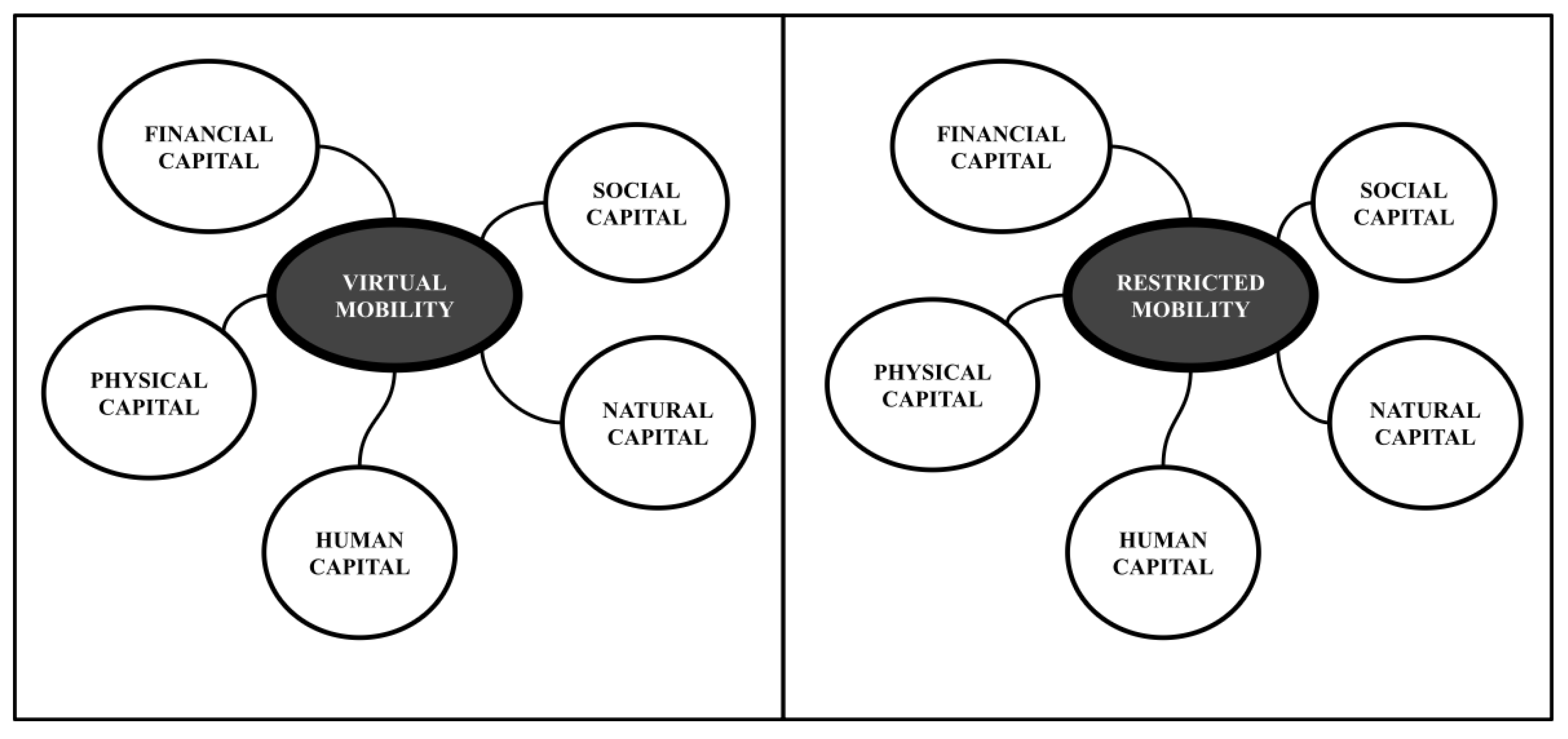
Figure 1. Adapted Sustainable Livelihoods Framework (SLF) for Urban Crisis Contexts. This diagram reframes the classical SLF by positioning mobility—in its two forms, restricted physical mobility and virtual mobility—as the central analytical axis structuring access to the five capitals. The figure illustrates how each capital (human, social, natural, physical and financial) becomes more or less accessible across the three pandemic phases (before, during and after). Arrows represent directional dependencies, showing that mobility conditions mediate livelihood outcomes and shape inequalities in urban environments. The framework does not replace the original SLF but extends it by integrating spatial justice, infrastructure accessibility and digital conditions as essential urban dimensions.
Ijem 01 00003 g001
Figure 2. Localization and public transport infrastructure in the City of São Paulo (Brazil) and two locations—Central Region and Tiradentes City. Data source: GEOSampa [24] and IBGE [25].
Ijem 01 00003 g002
Figure 3. Transportation, health facilities and green areas in two locations—Central Region and Tiradentes City. Data source: GEOSampa [24].
Ijem 01 00003 g003
Table 1. Summary of Case Characteristics, Capitals and Mobility Dynamics.
Element Case 1—Central Region (A) Case 2—Central Region (B) Case 3—Tiradentes City (A)Case 4—Tiradentes City (B)
Human CapitalStable employment; high skills; flexible hoursReduced working hours; partial remote workLow wages; essential worker; no remote workInformal employment; unstable hours
Social CapitalDense local networks; institutional supportModerate networks; reliance on neighborsStrong family networks; local dependenceWeak institutional networks
Financial CapitalStable income; savings bufferIncome loss during crisis; limited savingsHighly vulnerable; income fluctuationsVery low income; informal earnings
Physical CapitalGood access to public transport and servicesGood access, but limited digital infrastructureLong commutes; poor infrastructureVery long commutes; limited services
Natural CapitalAccess to green spaces within walking distanceLimited local green areas; crowdedParks far from home; poor accessVery limited green areas; unsafe parks
Mobility—Before pandemicHigh autonomy; short distancesModerate autonomy; mixed modesLong-distance commuting; dependence on busesStrong dependence on overcrowded buses
Mobility—During pandemicShift to remote work; reduced exposureReduced movement; partial digital substitutionNo mobility alternatives; high exposureSevere mobility restrictions
Mobility—After pandemicHybrid work; stable access restoredEconomic recovery slow; moderate accessPersistence of long travel timesIncreased vulnerability; limited changes
Main ConstraintsHealth risk; digital overloadIncome instabilityTransport dependence; risk exposureIncome + transport + limited public services
Key InsightsMobility mediates access to all capitalsDigital inclusion shapes resilienceInequality strongly tied to commutingSpatial injustice persists beyond crisis
Disclaimer/Publisher’s Note: The statements, opinions and data contained in all publications are solely those of the individual author(s) and contributor(s) and not of MDPI and/or the editor(s). MDPI and/or the editor(s) disclaim responsibility for any injury to people or property resulting from any ideas, methods, instructions or products referred to in the content.