Int. J. Cogn. Sci. 2026, 2(2), 14; https://doi.org/10.3390/ijcs2020014 - 4 Jun 2026
Abstract
►
Show Figures
Alzheimer’s disease (AD) results in progressive neural degeneration that causes cognitive and non-cognitive symptoms (NCSs). While cognitive symptoms commonly prompt a formal diagnosis, NCSs also contribute significantly to disability, caregiver burden, and overall disease progression. NCSs are rooted in both physiological and psychological
[...] Read more.
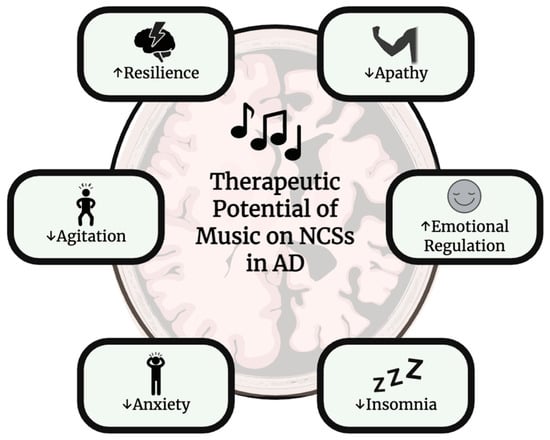
Alzheimer’s disease (AD) results in progressive neural degeneration that causes cognitive and non-cognitive symptoms (NCSs). While cognitive symptoms commonly prompt a formal diagnosis, NCSs also contribute significantly to disability, caregiver burden, and overall disease progression. NCSs are rooted in both physiological and psychological consequences of AD, resulting in apathy/motivation loss, emotional dysregulation, anxiety, depression, agitation, and sleep disturbances. Despite progresses in pharmaceutical management of NCSs, variable efficacy, unwanted side effects, and lack of symptom-wide effectiveness often limit therapeutic practicality for people with AD, suggesting a need for the identification of practical adjunctive treatments. Mechanistic evidence of using music interventions as complementary treatment to manage cognitive symptoms in AD has been established, but the potential benefits for NCSs are less clear. Music interventions have the potential to adaptatively alter mechanisms underlying NCSs that span both physiological and psychological domains of symptomology. Physiologically, music has been shown to alter autonomic activity, neurotransmitter release in various brain regions, and mediate hormonal regulation. Psychologically, music interventions have been shown to enhance mechanisms related to motivation, emotional regulation, and resilience to mental stress. Behavioral and neuroimaging evidence further supports this and suggests that the mechanisms of music-induced benefits may aid in counteracting NCSs in people with AD. While the neuromechanistic rationale for music-induced benefits towards NCSs in AD is promising, findings are largely fragmented, leaving therapeutic application difficult. Accordingly, the purpose of this review is to integrate current mechanistic evidence and clinical findings for a rationale and framework for the therapeutic application of music interventions to combat NCSs in AD. Overall, evidence largely supports the use of music as an adjunctive, feasible, and non-invasive therapeutic tool to improve various aspects of NCSs in AD. The translation of mechanistic findings to therapeutic utility are further highlighted. Limitations, challenges, and future directions necessary to fully realize music benefits on NCSs in AD are also discussed with a goal of therapeutic translation.
Full article
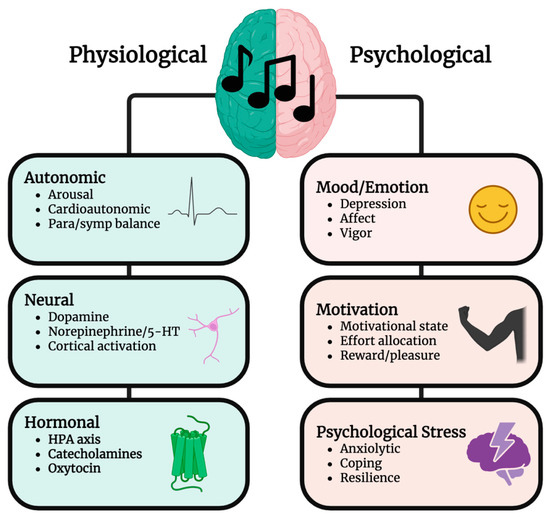
Figure 1