



Advances in Non-Destructive Structural Health Monitoring and Damage Detection
A special issue of Applied Sciences (ISSN 2076-3417). This special issue belongs to the section "Civil Engineering".
Deadline for manuscript submissions: closed (20 June 2026) | Viewed by 1995
Editors

Interests: structural health monitoring (SHM); cement science & concrete technology; rehabilitation & strengthening of existing R.C. structures; polymer modified cement based mortars
Special Issues, Collections and Topics in MDPI journals

Interests: structural health monitoring (SHM); fiber-reinforced concrete (FRC); reinforced concrete; rehabilitation & strengthening of existing R.C. structures; piezoelectric sensors; PZT; non-destructive testing (NDT); seismic performance assessment; seismic analysis
Special Issues, Collections and Topics in MDPI journals

Interests: Structural Health Monitoring (SHM); reinforced concrete; rehabilitation & strengthening of existing R.C. structures; Fiber-Reinforced Polymer (FRP); piezoelectric sensors; PZT; Electro-Mechanical Impedance (EMI); electro-mechanical admittance; Non-Destructive Testing (NDT); vertical forests
Special Issues, Collections and Topics in MDPI journals
Special Issue Information
Dear Colleagues,
Structural health monitoring (SHM) presents an intriguing area of focus within non-destructive techniques (NDTs), posing significant challenges in its application across various industries. Furthermore, the aging of civil infrastructure and inadequate maintenance practices can potentially lead to catastrophic incidents, posing risks to human life and substantial financial burdens for their repair and restoration. Hence, the development of NDTs to ensure the robustness and reliability of SHM has become an immediate and vital priority for safeguarding civil structures.
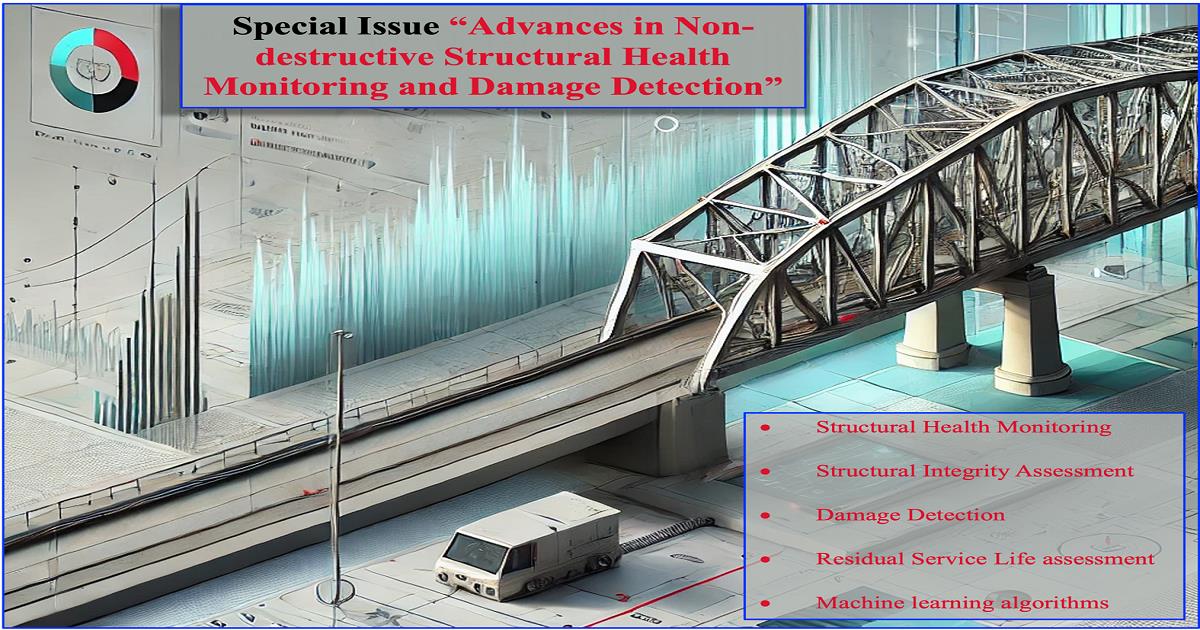
This Special Issue aims to highlight the most recent advancements in SHM techniques and the current state-of-the-art developments in the field. Additionally, we welcome research papers that introduce innovative emerging methodologies. Furthermore, this Special Issue encourages the submission of research integrating machine learning algorithms into well-established SHM. Submissions covering a wide range of topics, including but not limited to the following aspects, will be carefully reviewed for potential publication:
- Structural health monitoring (SHM);
- Damage detection;
- Residual Service Life (RSL) assessment;
- Machine learning algorithms;
- Vibration-based SHM;
- Acoustic emission (AE);
- Wave-based SHM;
- Electro-mechanical impedance;
- Computer vision-based SHM;
- Piezoresistive sensing;
- Fiber Bragg grating (FBG) sensors.
Dr. George Sapidis
Dr. Maria C. Naoum
Dr. Nikos Papadopoulos
Guest Editors
Manuscript Submission Information
Manuscripts should be submitted online at www.mdpi.com by registering and logging in to this website. Once you are registered, click here to go to the submission form. Manuscripts can be submitted until the deadline. All submissions that pass pre-check are peer-reviewed. Accepted papers will be published continuously in the journal (as soon as accepted) and will be listed together on the special issue website. Research articles, review articles as well as short communications are invited. For planned papers, a title and short abstract (about 250 words) can be sent to the Editorial Office for assessment.
Submitted manuscripts should not have been published previously, nor be under consideration for publication elsewhere (except conference proceedings papers). All manuscripts are thoroughly refereed through a single-anonymized peer-review process. A guide for authors and other relevant information for submission of manuscripts is available on the Instructions for Authors page. Applied Sciences is an international peer-reviewed open access semimonthly journal published by MDPI.
Please visit the Instructions for Authors page before submitting a manuscript. The Article Processing Charge (APC) for publication in this open access journal is 2400 CHF (Swiss Francs). Submitted papers should be well formatted and use good English. Authors may use MDPI's English editing service prior to publication or during author revisions.
Keywords
- structural health monitoring (SHM)
- non-destructive testing (NDT)
- residual service life (RSL)
- machine learning algorithms
- structural integrity assessment
- electro-mechanical impedance (EMI)
- acoustic emission (AE)
- piezoresistive sensing
- vibration-based SHM
- computer vision-based SHM
Benefits of Publishing in a Special Issue
- Ease of navigation: Grouping papers by topic helps scholars navigate broad scope journals more efficiently.
- Greater discoverability: Special Issues support the reach and impact of scientific research. Articles in Special Issues are more discoverable and cited more frequently.
- Expansion of research network: Special Issues facilitate connections among authors, fostering scientific collaborations.
- External promotion: Articles in Special Issues are often promoted through the journal's social media, increasing their visibility.
- Reprint: MDPI Books provides the opportunity to republish successful Special Issues in book format, both online and in print.
Further information on MDPI's Special Issue policies can be found here.
