



Advances and Applications of 3D Imaging in Medicine
A special issue of Applied Sciences (ISSN 2076-3417). This special issue belongs to the section "Biomedical Engineering".
Deadline for manuscript submissions: 20 October 2026 | Viewed by 382
Editor

Special Issue Information
Dear Colleagues,
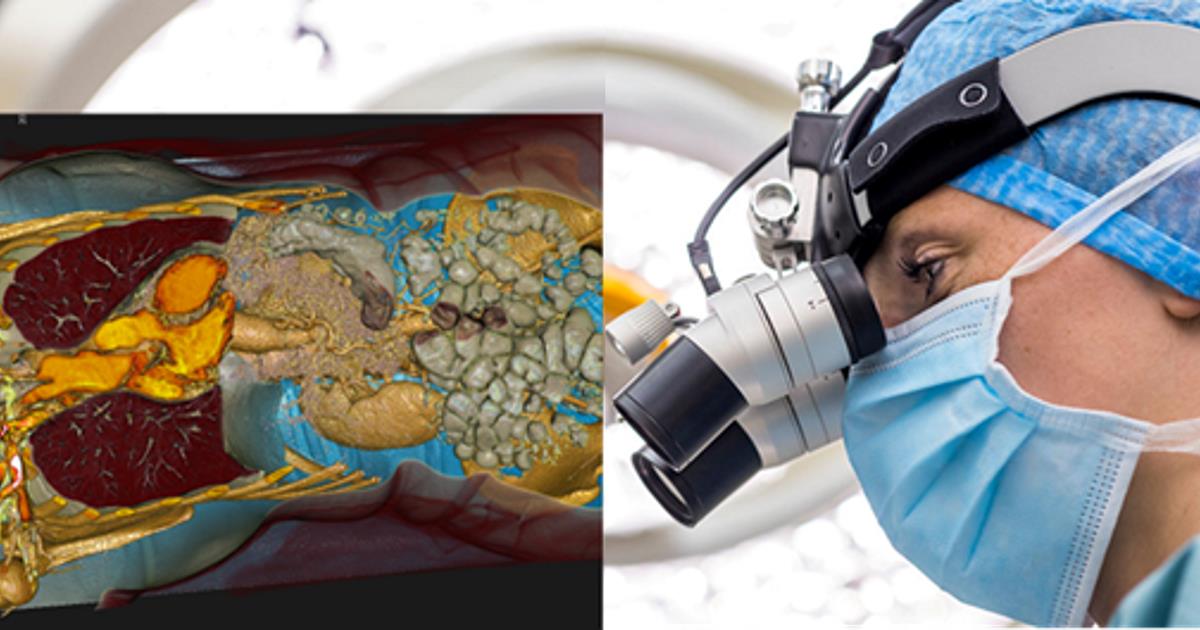
In recent years, three-dimensional (3D) imaging, together with virtual and augmented reality technologies, has become an increasingly important component of medical education, as well as clinical diagnosis and treatment. Three-dimensional imaging has emerged as a fundamental tool in modern medical diagnostics and treatment planning. It reconstructs volumetric representations of anatomical structures from multiple cross-sectional datasets, enabling detailed visualization of spatial relationships within the human body. This approach enhances the ability of clinicians and researchers to analyze complex anatomical and pathological features.
Compared with conventional two-dimensional imaging, 3D visualization is more intuitive because human perception is naturally adapted to stereoscopic spatial information. Consequently, 3D imaging provides substantial benefits for medical education by helping to bridge the gap between traditional anatomical training and clinical imaging. Digital 3D models derived from realistic specimens allow students to study anatomical structures in detail and to access learning materials, independent of time and location. Furthermore, immersive environments created with virtual reality enable participants to interact within shared virtual spaces, facilitating collaborative learning without the need for their physical presence in specialized facilities.
Several imaging modalities contribute to 3D medical visualization, including Computed Tomography, Magnetic Resonance Imaging, and 3D Ultrasound. These techniques acquire sequential image slices that can be computationally reconstructed by using algorithms such as volume rendering, surface rendering, and multiplanar reconstruction. The resulting volumetric datasets enable improved assessment of anatomical morphology, disease progression, and treatment outcomes, while also supporting educational applications. In addition, photorealistic scanning techniques, combined with virtual reconstruction methods and artificial intelligence-assisted processing, allow for the generation of highly detailed digital anatomical models.
In clinical practice and biomedical research, 3D imaging plays a crucial role in areas such as surgical planning, image-guided interventions, and the quantitative analysis of tissues and organs. By providing high-resolution spatial information, 3D imaging technologies contribute significantly to more accurate diagnoses and support the development of personalized therapeutic strategies.
The Special Issue “Advances and Applications of 3D Imaging in Medicine” welcomes submissions presenting recent research in this rapidly evolving and promising field. The scope includes a broad range of topics addressing the latest applications of 3D imaging in medical diagnosis and treatment, as well as patient-centred applications and medical education, including extended reality technologies such as AR/VR and virtual classrooms.
Recommended topics include, but are not limited to, the following:
- Photorealistic anatomical specimens in education.
- Generated 3D models for educational purposes.
- 3D real-time recording of surgery for education and remote coaching.
- 3D virtual classrooms.
- Holographic models in medical training.
- VR in patient education.
- VR applications in geriatrics.
- VR as part of surgery (patient side).
- 3D VR in surgical planning and intraoperative support (doctor’s side).
- 3D imaging in radiology and diagnosis.
- 3D printing for education and surgical preparation.
- 3D imaging for printing implants in dentistry and for surgical applications.
- Applications of AI in 3D medical image processing.
- AI-driven medical imaging for disease diagnosis and prognosis assessment.
- ……
Dr. Andreas Herrler
Guest Editor
Manuscript Submission Information
Manuscripts should be submitted online at www.mdpi.com by registering and logging in to this website. Once you are registered, click here to go to the submission form. Manuscripts can be submitted until the deadline. All submissions that pass pre-check are peer-reviewed. Accepted papers will be published continuously in the journal (as soon as accepted) and will be listed together on the special issue website. Research articles, review articles as well as short communications are invited. For planned papers, a title and short abstract (about 250 words) can be sent to the Editorial Office for assessment.
Submitted manuscripts should not have been published previously, nor be under consideration for publication elsewhere (except conference proceedings papers). All manuscripts are thoroughly refereed through a single-anonymized peer-review process. A guide for authors and other relevant information for submission of manuscripts is available on the Instructions for Authors page. Applied Sciences is an international peer-reviewed open access semimonthly journal published by MDPI.
Please visit the Instructions for Authors page before submitting a manuscript. The Article Processing Charge (APC) for publication in this open access journal is 2400 CHF (Swiss Francs). Submitted papers should be well formatted and use good English. Authors may use MDPI's English editing service prior to publication or during author revisions.
Keywords
- VR/AR/XR
- education
- diagnosis
- treatment
- visualization
- 3D printing
- radiology
- photorealistic
- generated models
- AI
Benefits of Publishing in a Special Issue
- Ease of navigation: Grouping papers by topic helps scholars navigate broad scope journals more efficiently.
- Greater discoverability: Special Issues support the reach and impact of scientific research. Articles in Special Issues are more discoverable and cited more frequently.
- Expansion of research network: Special Issues facilitate connections among authors, fostering scientific collaborations.
- External promotion: Articles in Special Issues are often promoted through the journal's social media, increasing their visibility.
- Reprint: MDPI Books provides the opportunity to republish successful Special Issues in book format, both online and in print.
Further information on MDPI's Special Issue policies can be found here.
