




Epidemiology of Antimicrobial-Resistant Pathogens in Animals: A One Health Perspective

A special issue of Antibiotics (ISSN 2079-6382). This special issue belongs to the section "Antibiotics in Animal Health".

Deadline for manuscript submissions: 31 July 2026 | Viewed by 1928
Special Issue Editors


E-Mail Website
Guest Editor
Department of Veterinary Medicine, Infectious Diseases Section, University of Bari, Bari, Italy
Interests: antimicrobial compounds; veterinary infectious diseases; zoonoses; molecular epidemiology of AMR

E-Mail Website
Guest Editor
Department of Veterinary Medicine, Infectious Diseases Section, University of Bari, Bari, Italy
Interests: antimicrobial resistance; veterinary epidemiology; public health; surveillance systems
Special Issues, Collections and Topics in MDPI journals

E-Mail Website
Guest Editor
Department of Veterinary Medicine, University of Bari Aldo Moro, Strada Provinciale per Casamassima, km 3, 70010 Valenzano, Italy
Interests: bacterial pathogenesis; mechanisms of antibiotic resistance; veterinary microbiology; diagnostics
Special Issues, Collections and Topics in MDPI journals

Special Issue Information

Dear Colleagues,

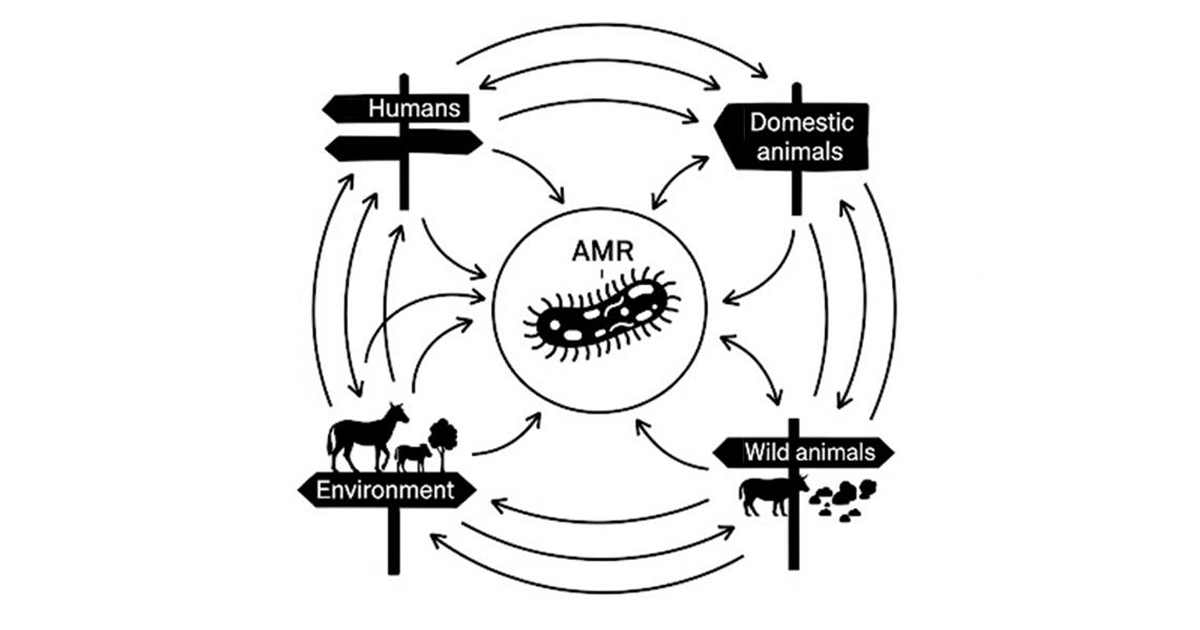
Antimicrobial resistance (AMR) is a global threat that profoundly impacts human, animal, and environmental health. The emergence, selection, and dissemination of antimicrobial-resistant pathogens within livestock, companion animals, and wildlife populations present critical challenges to veterinary medicine and public health. A comprehensive understanding of the complex epidemiology of AMR, including the genetic determinants of resistance and transmission dynamics across different ecosystems, is pivotal for the development and implementation of effective evidence-based strategies to combat this problem. The World Health Organization (WHO) have noted that AMR is associated with almost 2 million of deaths annually and poses a significant economic burden worldwide (WHO, 2024; Centre for Disease Control and prevention, 2024). Specifically, the use of antimicrobials in animal agriculture and veterinary practice is recognized as an area that could significantly increase the AMR burden.

This Special Issue, entitled "Epidemiology of Antimicrobial-Resistant Pathogens in Animals: A One Health Perspective," aims to publish high-impact research, novel approaches, and comprehensive reviews to further advance our understanding of AMR in various animal populations. Our broad scope encourages submissions that address the multifaceted nature of AMR from a One Health standpoint.

Key topics will include the following:

  • Molecular epidemiology and evolution of resistance: genetic mechanisms involved in AMR in animal pathogens, including the characterization of novel resistance genes, mobile genetic elements easing horizontal gene transfer, and the evolutionary trajectories of resistant strains under selective pressure.
  • Transmission dynamics and ecological drivers: Investigating the complex pathways through which resistant microorganisms and resistance determinants spread:
    • Within and between different animal populations.
    • Between animals and humans (zoonotic and reverse zoonotic transmission).
    • Through environmental matrices. 
  • Surveillance, monitoring, and risk assessment: advancements in surveillance methodologies and risk assessment models that quantify the threat posed by AMR in animal populations to public health.
  • Impact of Antimicrobial Use (AMU): Evaluating the quantitative and qualitative impact of antimicrobial consumption patterns in veterinary medicine on the selection, emergence, and persistence of AMR.
  • Next-Generation Sequencing applied to AMR: use of novel NGS technologies to discover, diagnose, and investigate AMR patterns in clinical and environmental studies.
  • One Health approaches to AMR: We will highlight studies that adopt an integrated One Health approach, using multidisciplinary collaboration to address AMR at the human–animal–environment interface.

By focusing on these critical areas, this collection aims to make a substantial contribution to the global understanding of AMR in animals, informing policy decisions and guiding future research directions to safeguard animal and public health.

We invite the submission of original research articles and systematic reviews, which will offer significant insights into the epidemiology of antimicrobial-resistant pathogens in animals.

Dr. Francesco Pellegrini
Dr. Paolo Capozza
Dr. Marialaura Corrente
Guest Editors

Manuscript Submission Information

Manuscripts should be submitted online at www.mdpi.com by registering and logging in to this website. Once you are registered, click here to go to the submission form. Manuscripts can be submitted until the deadline. All submissions that pass pre-check are peer-reviewed. Accepted papers will be published continuously in the journal (as soon as accepted) and will be listed together on the special issue website. Research articles, review articles as well as short communications are invited. For planned papers, a title and short abstract (about 250 words) can be sent to the Editorial Office for assessment.

Submitted manuscripts should not have been published previously, nor be under consideration for publication elsewhere (except conference proceedings papers). All manuscripts are thoroughly refereed through a single-blind peer-review process. A guide for authors and other relevant information for submission of manuscripts is available on the Instructions for Authors page. Antibiotics is an international peer-reviewed open access monthly journal published by MDPI.

Please visit the Instructions for Authors page before submitting a manuscript. The Article Processing Charge (APC) for publication in this open access journal is 2900 CHF (Swiss Francs). Submitted papers should be well formatted and use good English. Authors may use MDPI's English editing service prior to publication or during author revisions.

Keywords

  • antimicrobial resistance (AMR)
  • veterinary epidemiology
  • one health
  • zoonotic pathogens
  • surveillance systems
  • molecular epidemiology
  • resistance mechanisms

Benefits of Publishing in a Special Issue

  • Ease of navigation: Grouping papers by topic helps scholars navigate broad scope journals more efficiently.
  • Greater discoverability: Special Issues support the reach and impact of scientific research. Articles in Special Issues are more discoverable and cited more frequently.
  • Expansion of research network: Special Issues facilitate connections among authors, fostering scientific collaborations.
  • External promotion: Articles in Special Issues are often promoted through the journal's social media, increasing their visibility.
  • Reprint: MDPI Books provides the opportunity to republish successful Special Issues in book format, both online and in print.

Further information on MDPI's Special Issue policies can be found here.

Published Papers (3 papers)

Order results
Result details
Select all
Export citation of selected articles as:

Research

Jump to: Other

16 pages, 8467 KB  
Article
Exploring Antibiotic Resistance Patterns in Isolates from Domestic Animals in Southern Italy
by Tiago Bugarim, Vanessa Maria Bachmann, Marialaura Corrente, Raffaella Sasso, Anna Madio, Marinella Dibari, Vito Martella and Grazia Greco
Antibiotics 2026, 15(5), 429; https://doi.org/10.3390/antibiotics15050429 - 24 Apr 2026
Viewed by 360
Abstract
Background/Objectives: Surveillance studies focusing on clinically relevant infections confirm that antimicrobial resistance (AMR) is widespread among bacterial isolates from European households and livestock domestic animals. Due to the shared interface between humans and these animals, as well as an increasing trend in the [...] Read more.
Background/Objectives: Surveillance studies focusing on clinically relevant infections confirm that antimicrobial resistance (AMR) is widespread among bacterial isolates from European households and livestock domestic animals. Due to the shared interface between humans and these animals, as well as an increasing trend in the number of pets per person, the spread of AMR is of concern. Methods: In this study, antibiogram reports issued at the bacteriology laboratory of the Department of Veterinary Medicine of the University of Bari from 2020 to 2025 were reviewed and analyzed using descriptive and statistical methods to explore the AMR patterns. Results: Two hundred and twenty-eight results were included, comprising 2599 individual tests. A total of 76 molecules across 25 antibiotic classes were tested. Ear swabs were the most common sample type, and Staphylococcus spp. and E. coli were the most isolated bacteria. Two-thirds of the isolates were susceptible to at least one substance classified by the European Medicine Agency (EMA) as category D. Fairly low non-susceptibility (NS) results were obtained for sulfamethoxazole-trimethoprim (D category), gentamicin (C category), and enrofloxacin (B category). Conclusions: An increase in the NS trend was observed over the five-year period. Overall, the results support the need for continuous antibiotic stewardship. Full article
Show Figures

Figure 1

15 pages, 304 KB  
Article
Antimicrobial Susceptibility and Fluoroquinolone Resistance Patterns of Pseudomonas aeruginosa Isolated from Canine Otitis Externa in Romania
by Ionela Popa, Ionica Iancu, Vlad Iorgoni, Alexandru Gligor, Kalman Imre, Emil Tîrziu, Timea Bochiș, Călin Pop, Janos Degi, Andrei Ivan, Michael Dahma, Ana-Maria Plotuna, Gabriel Orghici, Viorel Herman and Ileana Nichita
Antibiotics 2026, 15(2), 144; https://doi.org/10.3390/antibiotics15020144 - 2 Feb 2026
Cited by 2 | Viewed by 859
Abstract
Background/Objectives: Canine otitis externa (OE) is frequently complicated by Pseudomonas aeruginosa (P. aeruginosa) infections, which are often associated with treatment failure due to intrinsic and acquired antimicrobial resistance. This study aimed to assess the prevalence and antimicrobial susceptibility of P. aeruginosa [...] Read more.
Background/Objectives: Canine otitis externa (OE) is frequently complicated by Pseudomonas aeruginosa (P. aeruginosa) infections, which are often associated with treatment failure due to intrinsic and acquired antimicrobial resistance. This study aimed to assess the prevalence and antimicrobial susceptibility of P. aeruginosa isolates from dogs with OE in Timiș County, Romania, with a focus on aminoglycosides and fluoroquinolones, to provide region-specific, clinically relevant data and address potential public health implications. Methods: Exudate samples were collected from 435 dogs diagnosed with OE across multiple veterinary clinics between 2022 and 2025. P. aeruginosa isolates were identified using standard culture methods, and antimicrobial susceptibility was determined using the VITEK® 2 Compact system according to CLSI VET01, Fifth Edition (2018) guidelines. Tested antibiotics included amikacin, gentamicin, enrofloxacin, marbofloxacin, and pradofloxacin. Resistance profiles were analyzed at both the individual antibiotic and class levels. Results:P. aeruginosa was isolated in 14.0% (61/435) of dogs. All isolates were susceptible to amikacin and gentamicin, whereas resistance to enrofloxacin and marbofloxacin was 27.9%, and pradofloxacin resistance reached 63.9%. A total of 24.6% of isolates were susceptible to all tested antibiotics. The most frequent multidrug-resistant combination among fluoroquinolones was ENR (R) + MAR (R) + PRA (R), observed in 23.0% of isolates. Conclusions: This study provides recent, region-specific data on P. aeruginosa prevalence and antimicrobial susceptibility in canine OE, offering clinically relevant insights into aminoglycoside and fluoroquinolone resistance. The findings highlight the potential public health significance of resistant P. aeruginosa strains at the human–animal interface and underscore the importance of antimicrobial stewardship in veterinary practice. Full article

Other

Jump to: Research

9 pages, 503 KB  
Brief Report
Isolation of a Methicillin-Resistant Staphylococcus pseudintermedius Strain from a Domestic Dog with Vulvovaginitis: A Potential Public Health Concern?
by Lorenzo Pace, Valeria Rondinone, Laura Del Sambro, Viviana Manzulli, Stefano Castellana, Luigina Serrecchia, Angelica Bianco, Beatrice Maffei, Leonardo Marino, Antonio Petrella and Domenico Galante
Antibiotics 2026, 15(5), 480; https://doi.org/10.3390/antibiotics15050480 - 9 May 2026
Viewed by 253
Abstract
Background: Staphylococcus pseudintermedius is a major opportunistic pathogen of dogs and the primary cause of canine pyoderma and other infections. The global emergence of methicillin-resistant S. pseudintermedius (MRSP) represents a significant challenge in veterinary medicine due to its frequent multidrug-resistant phenotype and [...] Read more.
Background: Staphylococcus pseudintermedius is a major opportunistic pathogen of dogs and the primary cause of canine pyoderma and other infections. The global emergence of methicillin-resistant S. pseudintermedius (MRSP) represents a significant challenge in veterinary medicine due to its frequent multidrug-resistant phenotype and limited therapeutic options. Methods: We describe the phenotypic and genomic characterization of an MRSP isolate recovered from a vaginal swab of an 11-year-old dog diagnosed with vulvovaginitis in southern Italy. Antimicrobial susceptibility testing was performed using broth microdilution according to CLSI VET01S guidelines. Whole-genome sequencing was conducted to determine sequence type and antimicrobial resistance determinants. Results: The isolate was identified as S. pseudintermedius by MALDI-TOF MS and confirmed by genomic analysis. Multilocus sequence typing assigned the strain to sequence type ST2333. Phenotypically, the isolate exhibited multidrug resistance, including resistance to β-lactams, macrolides, lincosamides, tetracyclines, aminoglycosides, fluoroquinolones, and trimethoprim–sulfamethoxazole, while remaining susceptible to amikacin, rifampicin, florfenicol, and vancomycin. Whole-genome sequencing confirmed the presence of mecA and additional resistance determinants consistent with the observed phenotype. Conclusions: This report suggests the possible occurrence of an MDR MRSP ST2333 lineage in southern Italy and highlights the importance of combined phenotypic and genomic surveillance to support antimicrobial stewardship in veterinary medicine within a One Health framework. Full article
Show Figures

Figure 1

Back to TopTop