1. Introduction
In relation to the energy transition, the International Energy Agency predicts that by 2050, renewable sources will cover more than 80% of global electricity demand [
1,
2]. However, the intermittent nature of solar and wind resources poses significant risks to the adequacy, stability, and quality of service. Historically, thermal power plants have ensured grid inertia and balancing, but today they are increasingly unsustainable in low-load operation, due to high specific consumption and reduced operating efficiency. This compromises their supply capacity, making the electricity system more vulnerable to fluctuations in renewable production [
3]. For example, the blackout that hit the Iberian Peninsula on 28 April 2025, highlighted the fragility of grids in contexts with high renewable penetration. The blackout was caused by a multifactorial overvoltage problem, which resulted in a cascading disconnection of generation plants, culminating in an “electricity zero” that left Spain and Portugal without electricity for several hours. In this event, the report of the Ministerio para la Transición Ecológica y el Reto Demográfico (MITECO) (
https://www.miteco.gob.es/es/prensa/ultimas-noticias/2025/junio/se-presenta-el-informe-del-comite-de-analisis-de-la-crisis-elect.html (accessed on 2 December 2025)) pointed to the lack of synchronous power plants and the limited inertia of the system as aggravating factors.
The energy transition is not feasible if hypothesised exclusively on renewable sources without a profound revision of consumption models, i.e., it is necessary to plan and promote a fair and participatory transition [
4]. The assertion argues that it is necessary to change the energy paradigm, drastically reducing energy demand [
5]. This means redefining the role of individuals and communities, promoting informed and critical behaviours, both as conscious users and as prosumers [
6]. The term prosumer (Alvin Toffler in 1980 in his book “The third wave” [
7] coined for the first time the term “prosumer” which is a crasis of the terms producer and consumer, which indicates a consumer who is in turn a producer or, in the very act of consuming, contributes to production)—a fusion of producer and consumer—describes an actor active in the production and management of energy, who does not limit himself to consuming but contributes to generation, storage, and distribution.
The recent literature highlights how user behaviour is a key lever for demand management, directly influencing both the load profile and the overall efficiency of energy systems. The study on flexible approaches to energy solutions within buildings [
7] shows that operational and behavioural barriers still significantly limit the potential for flexibility (always reflected in the energy theme) available in buildings, necessitating a design approach that integrates technologies and usage practices in a coordinated manner. Furthermore, ref. [
8] emphasizes the strategic role of thermal and hybrid storage systems, which require the active involvement of building users. In this sense, users are considered an integral part of the system; user engagement is, therefore, a factor in ensuring optimal system operation in scenarios of high renewable variability.
These insights confirm that the transition to prosumer models is not a simple technological change, but a socio-technical process in which spatial design, system accessibility, and the representation of energy information play a central role. In fact, prosumers can install photovoltaic systems, manage home storage systems, participate in energy communities, and actively influence grid balancing.
With respect to the context outlined—i.e., the urgency of the energy transition to renewable sources and the behavioural role of users—the use of energy storage strategies is strategic, to support the grid and the criticality of large power plants in relation to overcapacity and system stability. There is a strong need to rethink the concept of energy adequacy, which can be defined as the ability of an electricity system to meet demands in all foreseeable conditions, ensuring continuity and quality of service [
9,
10].
It refers to the structural and managerial sufficiency of generation, storage, and network resources over time, in relation to expected demand and the anticipated availability of energy sources [
11]. Unlike resilience, which concerns the system’s capacity to respond to extreme events, disruptions, or unexpected shocks, adequacy focuses on performance under statistically predictable and planned conditions. It is, therefore, primarily a planning and sufficiency concept, assessed over medium- to long-term horizons through probabilistic and capacity-based evaluations.
While related to flexibility and resilience, adequacy addresses a distinct question: whether the system is structurally equipped to ensure reliable supply under expected operating scenarios.
Recent research confirms that in scenarios characterized by high renewable energy penetration, electricity system adequacy cannot be guaranteed without a significant increase in flexibility (both distributed, of the energy system, of the internal spatial layout, etc.), particularly through the building sector, which represents one of the main controllable loads of the energy system. Studies [
12] highlight how electricity system stability depends on a set of strategies that include technological integration, management, and user behaviour. In parallel, the International Energy Agency (International Energy Agency (IEA), “More efficient and flexible buildings are key to clean energy transitions”, IEA Commentary, 2024. Available online:
https://www.iea.org/commentaries/more-efficient-and-flexible-buildings-are-key-to-clean-energy-transitions (accessed on 26 February 2026)) (cited above) emphasizes how more efficient and flexible buildings constitute a key resource for energy security, being able to reduce peak demand and improve the coupling between renewable sources and final consumption. These contributions argue that energy adequacy is a property emerging from the interaction between built space design, storage systems, digital technologies, and daily usage practices. Therefore, energy adequacy requires (in the authors’ view) integrated solutions between storage technologies, behavioural strategies, and management models of spaces and buildings.
As architectural and urban design can contribute significantly to energy adequacy, integrating energy systems into built landscapes through multidimensional and meta-design approaches [
13]. The aim is to emphasize the role of design as a coordination device between spatial, technological, and social aspects, to achieve a design outcome that is consistent with circularity.
The analyses collected in the Special Issue “Energy Performance in Sustainable Architecture Design” [
14] show how energy performance emerges from design decisions regarding the building envelope, internal configuration of spaces, materials used, and intelligent management of the building. At the same time, studies [
15] highlight that the energy transition (with respect to the building scale) requires not only efficient technologies but also design strategies capable of integrating renewables and new models of space use, interpreting the building “as an active node of the network.” From this perspective, the role of architectural design is fundamental for integrating storage technologies, spatial configurations, and user behaviour.
The relationship between energy and space is not only technical, but energy systems become active devices that structure the territory and influence the practices of use and habitation [
16]. The expansion of renewables alone is, therefore, not enough, but a systemic rethinking of the energy model is necessary, capable of addressing the variability of renewable sources and the infrastructural criticalities of current energy systems (such as production overcapacity).
From these premises, the contribution proposes an integrated approach for energy adequacy, articulated on two complementary dimensions:
Technological Dimension. The adoption of storage systems makes it possible to decouple production and consumption, improving the flexibility and robustness of the grid. These solutions make it possible to compensate for the variability of renewable production and reduce dependence on conventional power plants, which are increasingly unsustainable in low-load operation.
Behavioural and Systemic Dimension. The active involvement of end users is crucial. “Smart” building management, incentive policies, and conscious practices can reduce energy demand and improve system response. Recent studies show that user behaviour can reduce peak demand by up to 20%, without the need for new infrastructure [
17]. In this framework, User Engagement is a central strategy for building more flexible and adaptable energy systems.
This study contributes to the existing body of literature by proposing an integrated, multiscale framework that combines energy storage technologies, adaptive energy use, and active user engagement. Unlike previous research focused on single technologies, this work explores how multiple forms of storage-thermal, electrical, and hydropower-based-can be strategically integrated into design processes operating at both the building and territorial scales. The research examines how design decisions, regulatory constraints, and user behaviour jointly shape the performance of hybrid energy systems.
In this sense, the authors adopt a distinctly architectural approach: the project is conceived as a synthetic act capable of holding together all dimensions of the building process-technical, environmental, spatial, regulatory, and social-while explicitly incorporating the needs, practices, and expectations of users. Energy performance is, therefore, not treated as a purely technical outcome, but as the result of coordinated design choices embedded within real contexts of use. The main objectives of this study are:
To analyse the structural challenges facing contemporary electricity systems in high-renewable contexts.
To assess the technical and environmental potential of thermal and hybrid storage systems.
To demonstrate, through two applied case studies, how integrated design strategies and user involvement can enhance energy adequacy at the local scale.
To discuss the scalability and replicability of such approaches in the development of future energy systems.
By situating energy adequacy within a comprehensive design framework, this research advances an approach in which technological innovation, spatial configuration, regulatory alignment, and user participation are treated as interdependent components of a coherent project strategy.
2. Methodological Approach and Design Experiments
The methodological approach adopted in this paper is based on two approaches. The first, deductive, derives from the analysis of the critical issues of the European and Italian electricity system. As argued in the introduction, national studies show that the expansion of renewables has exceeded the grid’s ability to adapt, generating production overcapacity and dispatching difficulties [
18,
19]. In addition, the reading of international case studies confirms the validity and replicability of integrated approaches that make use of storage systems.
The second, inductive, reports two design experiments (coordinated by Prof. Elisabetta Ginelli—Politecnico di Milano, ABC Department and carried out in Italy): the first is research for third parties, exemplary for its replicability and simplicity, which led to the energy requalification of a public building. This intervention integrated innovative solutions, including the use of an artificial reservoir as a storage system to power a heat pump, and participatory user strategies to optimise energy demand and reduce costs. The second research derives from the winning of the Smart Living tender of the Regione Lombardia, which led to the creation of the cHOMgenius prototype: a modular, off-grid, and industrialised housing system, built off-site with dry technology to facilitate disassembly. This prototype project experiments with new forms of quality of living and advanced environmental performance, integrating autonomous energy production. The two case studies were also selected for their typological diversity—redevelopment vs. new construction, on-grid vs. off-grid—to explore the replicability of the approach in different contexts.
2.1. Deductive Phase: System-Level Analysis
The deductive phase investigates the structural challenges affecting contemporary electricity systems at the global, European, and Italian levels. The analysis is grounded in the examination of publicly available datasets (IEA, EEA, Terna) concerning renewable energy penetration, grid flexibility, curtailment events, and infrastructural constraints. In parallel, an international review of case studies on energy storage integration was conducted to identify critical gaps related to overcapacity, supply variability, system rigidity, and behavioural barriers. This phase aimed to frame the broader systemic conditions within which hybrid storage strategies must operate, highlighting the tensions between increasing renewable deployment and the structural adequacy of electricity networks.
2.2. Inductive Phase: Case Study Development
The inductive phase presents two applied case studies developed by the research group to which the authors belong. Although distinct in context and scale, the case studies are methodologically comparable, as they share the same analytical framework and research objectives. They are, therefore, examined in parallel. The following analytical activities were undertaken:
Data collection: geometric surveys; thermophysical analysis of the building envelope; characterization of existing technical systems; assessment of occupancy patterns and usage profiles.
Energy simulations: evaluation of thermal demand, coefficient of performance (COP), seasonal efficiency, and storage system behaviour under dynamic conditions.
Environmental assessment: Life Cycle Assessment (LCA), including both operational and embodied impacts.
Economic analysis: cost–benefit evaluation, payback period estimation, and assessment of operational cost reductions.
System performance evaluation: estimation of peak load reduction, improvement in self-consumption rates, degree of energy autonomy, and avoided emissions.
User-oriented intervention plan: development of behavioural adaptation strategies and preparation of a building user manual to support the correct operation of the integrated energy system.
Through the integration of quantitative modelling, environmental and economic evaluation, and user-centred operational strategies, the inductive phase translates system-level insights into applied design and performance verification at the local scale.
5. Case Studies: Designing Energy Adequacy
The integrated approach to the energy transition, outlined in the previous chapters, finds a concrete application in two experimental projects developed by the research group, authors of this contribution. Although these are small-scale case studies (especially compared to the cases described in the previous chapter), they are examples of how it is possible to intervene effectively at the local level on energy dynamics, through contained and replicable interventions: the energy retrofit of a public building in Milan and the cHOMgenius off-grid prototype.
5.1. Energy Retrofit: Intervention on the Former Rivaverde Building
The intervention on the former Rivaverde (A place born in the 80s as an unheated covered space for summer activities in the western part of the Idroscalo (Milan). Transformed over the years into a recreational space, numerous activities are carried out there alongside the production of musical events, including a multidisciplinary artistic workshop, with a predominantly young target, and a laboratory for musical, literary and theatrical courses (being able to accommodate 200 people in winter and 800 in summer)), a public building for recreational use located along the eastern shore of lake Idroscalo in Milan (Italy), is a case of energy redevelopment of the existing public building stock. The project was developed as part of the third-party research “Guidelines for the environmental and energy redevelopment of the former Rivaverde building” with Scientific Manager Prof. E. Ginelli (Politecnico di Milano Dip. ABC), with the technical advice of Ing. M. Maistrello, and in collaboration with the Arci Magnolia Association and the Metropolitan City of Milan.
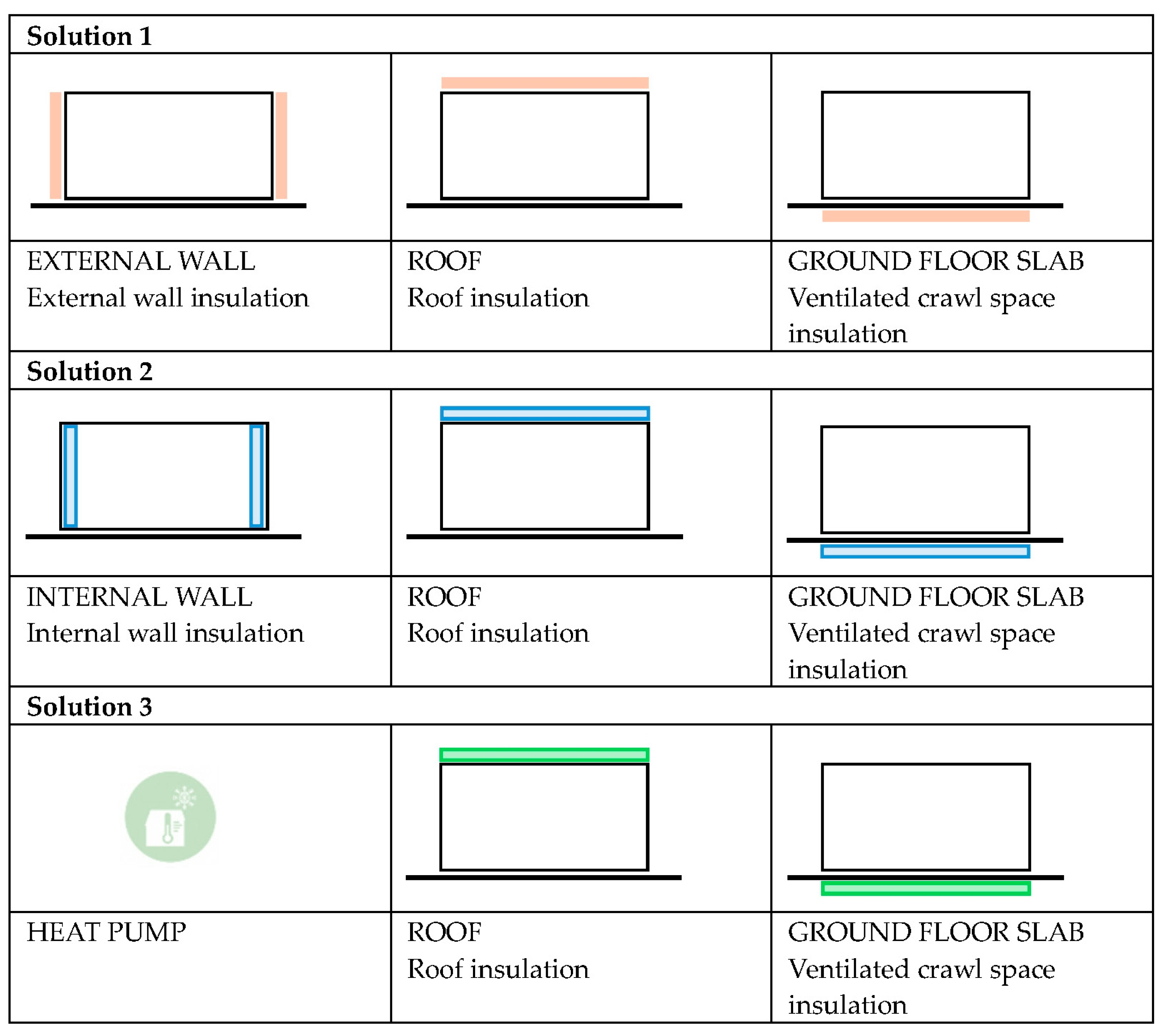
The public tender for the assignment of the building provided for the obligation to create an external thermal coat and the replacement of the windows and doors. However, thanks to the technical-scientific support of the Politecnico di Milano, the successful bidder undertook a process of critical revision of the specifications, proposing an integrated and contextualised energy strategy (
Figure 1), more suited to the use and environmental characteristics of the building.
The diagram (
Figure 1) compares the three design configurations evaluated during the preliminary phase:
Solution 1, external wall insulation, roof insulation, and ground floor slab insulation through a ventilated crawl space;
Solution 2, internal wall insulation, roof insulation, and ground floor slab insulation;
Solution 3, integration of a water-to-water heat pump using the Idroscalo lake as thermal source, combined with roof insulation and ground floor slab insulation.
These solutions were assessed with respect to thermal performance, construction feasibility, and compatibility with the building’s usage profile and environmental constraints.
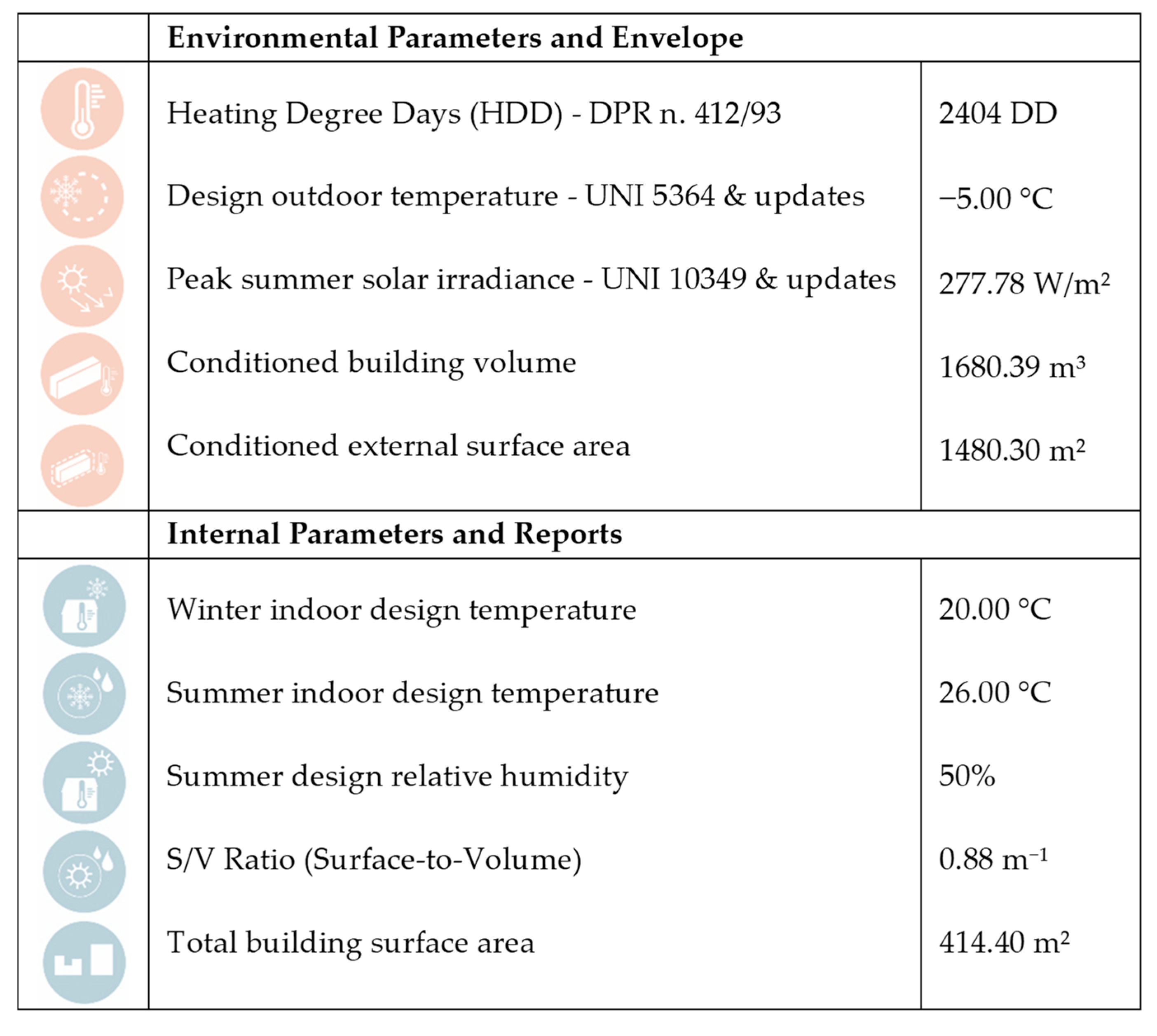
The climatic conditions of the site and the geometric characteristics of the building (which has an air-conditioned volume of 1680.39 m3, external surface area of 1480.30 m2 and S/V ratio of 0.88 m−1) strongly influenced the design choices. In fact, the absence of a methane gas distribution network in the area, the poor natural ventilation and the high variable internal load (due to public use and musical events) have made it necessary to have a flexible and silent system solution.
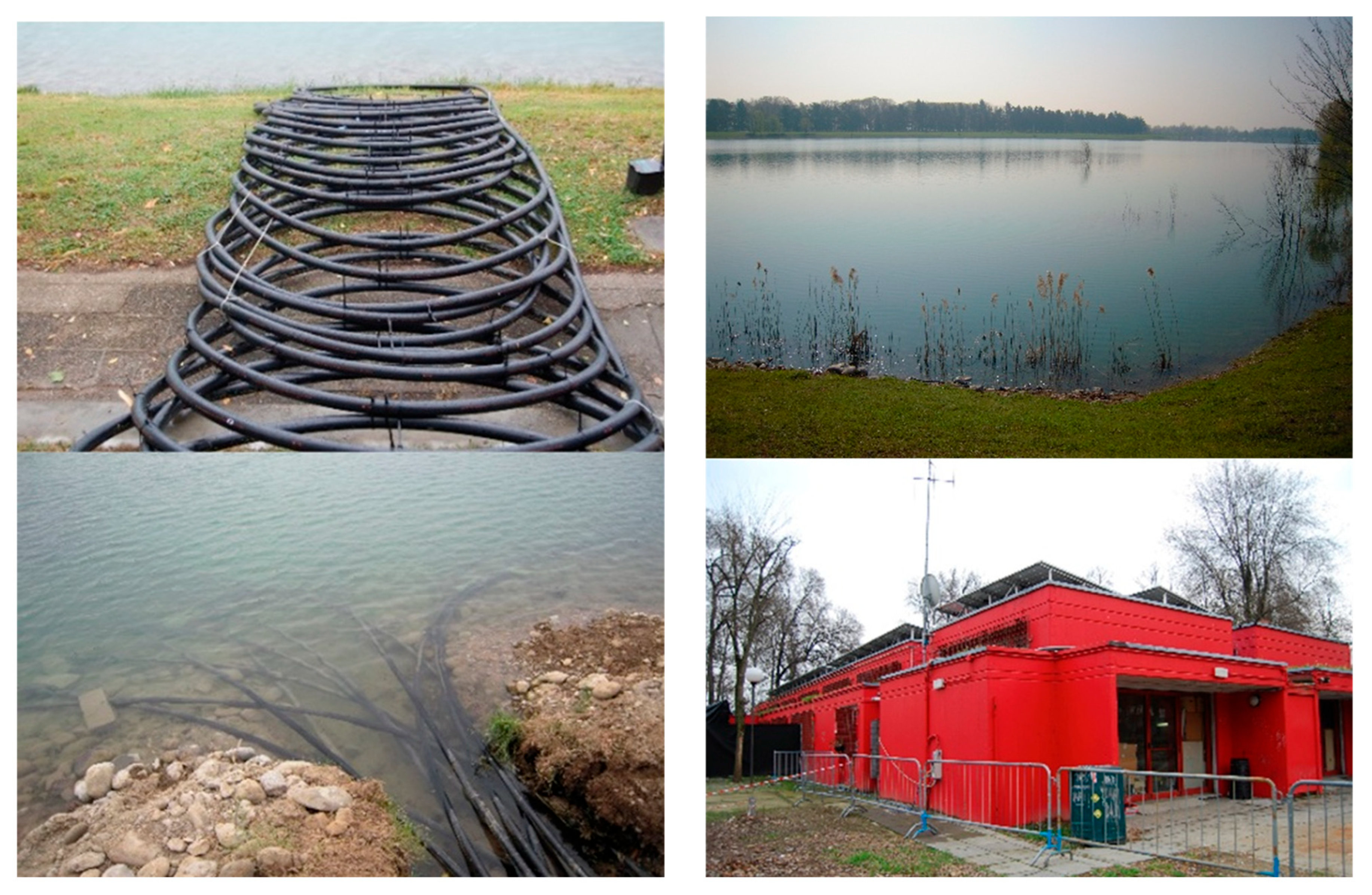
The building subject to the tender, previously heated by LPG boilers, has been equipped with a water-to-water heat pump that uses the thermal mass of the nearby Idroscalo lake as a renewable source of exchange, as
Figure 2 shows. The system operates with underground heat exchangers at 1 °C in the supply and 6 °C in the return, ensuring high efficiency with a design COP of 4.50 and a useful thermal power of 100 kW. The heat pump has been integrated with a photovoltaic system on the roof (20 kWp) and a battery storage system, ensuring significant electrical autonomy and reduction of peak power, flanked by load control according to the actual occupation of space. Indoor comfort conditions were guaranteed through an air conditioning and ventilation system with temperatures of 20 °C in winter and 26 °C in summer, with relative humidity of 50% in both seasons, ensuring thermo-hygrometric comfort and air quality, even in the presence of high crowding indices. The intervention also included the insulation of the roof, solving infiltration problems and improving summer comfort. In addition, a decisive aspect was the reshaping of the hours of use of the spaces, differentiating the attendance bands between staff and public. This has made it possible to reduce peaks in electrical load, optimizing the self-consumption of locally produced energy.
The images (
Figure 2) illustrate the installation of the underwater heat exchangers connected to the water-to-water heat pump adopted in the Rivaverde retrofit project.
Coiled polyethylene heat-exchange pipes prior to immersion;
The Idroscalo lake provides the thermal mass for seasonal heat exchange;
Underwater connection of intake and return lines, enabling stable operation at 1 °C (supply) and 6 °C (return);
Refurbished building housing the new hvac system.
The lake acts as a large-capacity thermal reservoir, improving system COP and enabling stable renewable energy integration.
The figure (
Figure 3) summarizes the conditions used for system design and energy simulations, including:
Heating Degree Days (HDD), design outdoor temperature, and peak summer solar irradiance;
Thermophysical characteristics of the building (conditioned volume, external surface area, and S/V ratio);
Indoor comfort setpoints for winter and summer operation.
These parameters inform the sizing of the heat pump, the storage systems, and the envelope interventions. In a context of limited economic resources and short execution times, the decisive element of operational success was the active involvement of users. Through targeted training activities, the staff was made aware of the principles of efficient use of energy, contributing to the regulation of the systems and the reduction of consumption. The most significant results consist of the reduction of primary energy requirements by 35%; in the reduction of CO
2 emissions to about a third of the previous values (−24,000 kg/year); within a total payback period of less than 10 years. The approach adopted, based on energy-economic feasibility analysis, dynamic simulation and adaptive design, represents an example of replicable systemic innovation, capable of combining efficiency, emission reduction and active user participation [
42].
The integration of the water-to-water heat pump with thermal storage, photovoltaic generation, and user-oriented management strategies resulted in a 35% reduction in primary energy demand, a decrease in CO2 emissions of approximately 24,000 kg per year, and an increase in local electrical autonomy. Collectively, these measures significantly enhanced the overall efficiency of the system.
It is important to note that the reported reductions in primary energy demand and emissions are based on predictive calculations derived from simulated operational data. Continuous measurement is not yet available, as the building is currently undergoing monitoring.
5.2. cHOMgenius: Prototipo Abitativo Off-Grid per Una Qualità Circolare Dell’abitare
The project “cHOMgenius. prototypesystem & sharedproject”, developed by the ABC Department of Politecnico di Milano within the “Smart Living” programme of the Lombardy Region, is a demonstrative prototype of a permanent, industrialised, and fully off-grid residential space. The project aims to test a model capable of combining modularity, adaptability, and circularity, in alignment with the European Level(s) indicators for design for adaptability and disassembly. The realisation of the prototype was made possible through a network of more than twenty national and international companies, with Politecnico di Milano and BFC Sistemi srl acting as the industrial lead partner. The prototype experiments with off-site prefabrication, on-site assembly, and operational management, with the objective of reducing construction time and costs while validating replicable solutions [
43].
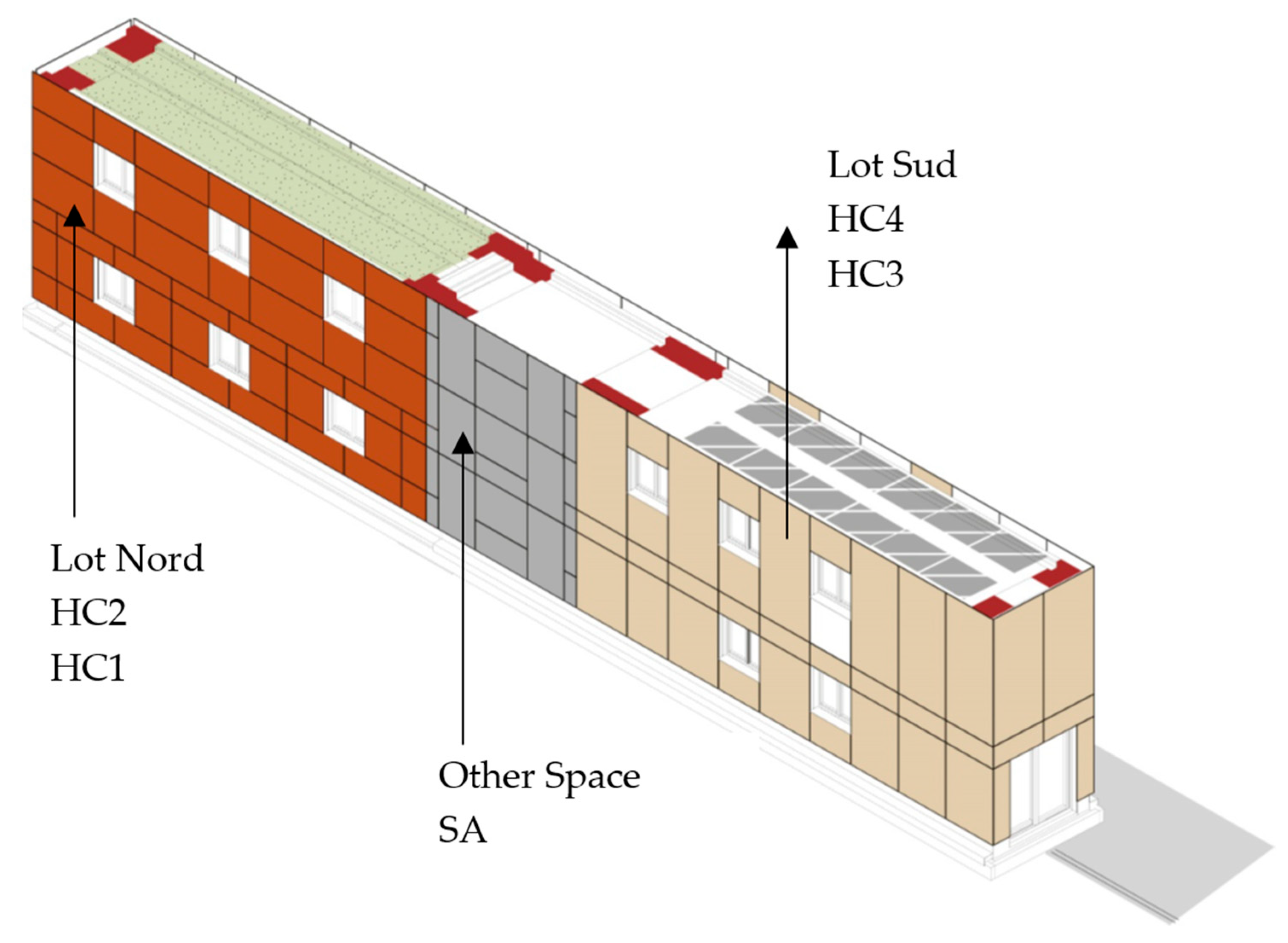
From a construction perspective, the prototype employs decommissioned maritime containers as load-bearing elements. The construction system is entirely dry-assembled, relying on mechanically tightened joints and reversible foundations to enable rapid assembly, disassembly, and component reuse. The building system is divided into two lots: the North Lot, comprising modules HC1 and HC2-each with a floor area of 24.21 m
2 and respective weights of 11,181 kg and 11,439 kg-features a 35.60 m
2 green roof on top of HC2; the South Lot includes modules HC3 and HC4, measuring 22.10 m
2 and 6.52 m
2, respectively, with weights of 11,364 kg and 10,139 kg, and integrates 35.24 m
2 of photovoltaic panels on the roof of HC4. Positioned between the two lots is the “Other Space” (SA), a steel structure with a footprint of 7.37 m
2 and a weight of 8500 kg, covered by an 18.44 m
2 reflective membrane roof (
Figure 4). This space is designed to house the technical plant module (skid), ensuring full accessibility for maintenance operations.
The axonometric representation (
Figure 4) of the modular off-grid housing system, showing the distribution of the four container-based living units (HC1–HC4), the North and South lots, and the central “Other Space” (SA) hosting the energy skid.
Roof elements include the extensive green roof (HC2) and photovoltaic array (HC4).
The diagram highlights the spatial organisation enabling modularity, disassembly, and integration of renewable energy and storage technologies.
The prototype achieves high energy efficiency: the building envelope exhibits thermal transmittance values ranging between 0.103 and 0.135 W/m2K, with phase shift values of up to 18.96 h, ensuring summer comfort and reduced thermal loads. Annual energy demand is estimated at 638.40 kWh for space heating and 3314.35 kWh for domestic hot water production, values compatible with fully off-grid operation. The plant skid integrates renewable energy sources-photovoltaic systems, a micro-cogenerator, and a heat pump-with thermal and electrical storage and a low-voltage distribution system (24 V DC), avoiding inverter-based conversions and thereby minimising energy losses. The skid module is designed to be replicable and scalable according to demand, enabling application in multi-family configurations. The prototype’s energy indicators (transmittance, phase shift, annual heating requirements) are derived from performance calculations and simulation models conducted during the design phase.
From an environmental perspective, the prototype achieves a 35% reduction in embodied carbon compared to conventional construction solutions and, according to life cycle assessment (LCA), halves operational CO2 emissions. The system ensures thermo-hygrometric comfort and high indoor environmental quality through advanced solar control strategies and building automation systems. The adoption of dry construction techniques and reversible components reduces environmental impacts while enabling disassembly and reuse, and the collaborative design process allowed optimisation of time and resources, including on-site testing of module transfer and refinement of assembly and installation phases. The system is managed by a self-learning predictive algorithm, connected to IoT infrastructures, which optimises energy flows in real time in response to user needs.
The PLUS performance of the prototype-covering energy, environmental, and operational dimensions-was assessed through a systemic evaluation matrix, highlighting the synergies between envelope, plant systems, and user behaviour. The lightweight, high-performance envelope contributes to a 35% reduction in embodied carbon compared to traditional solutions, while solar control systems and building automation further enhance indoor comfort and environmental quality.
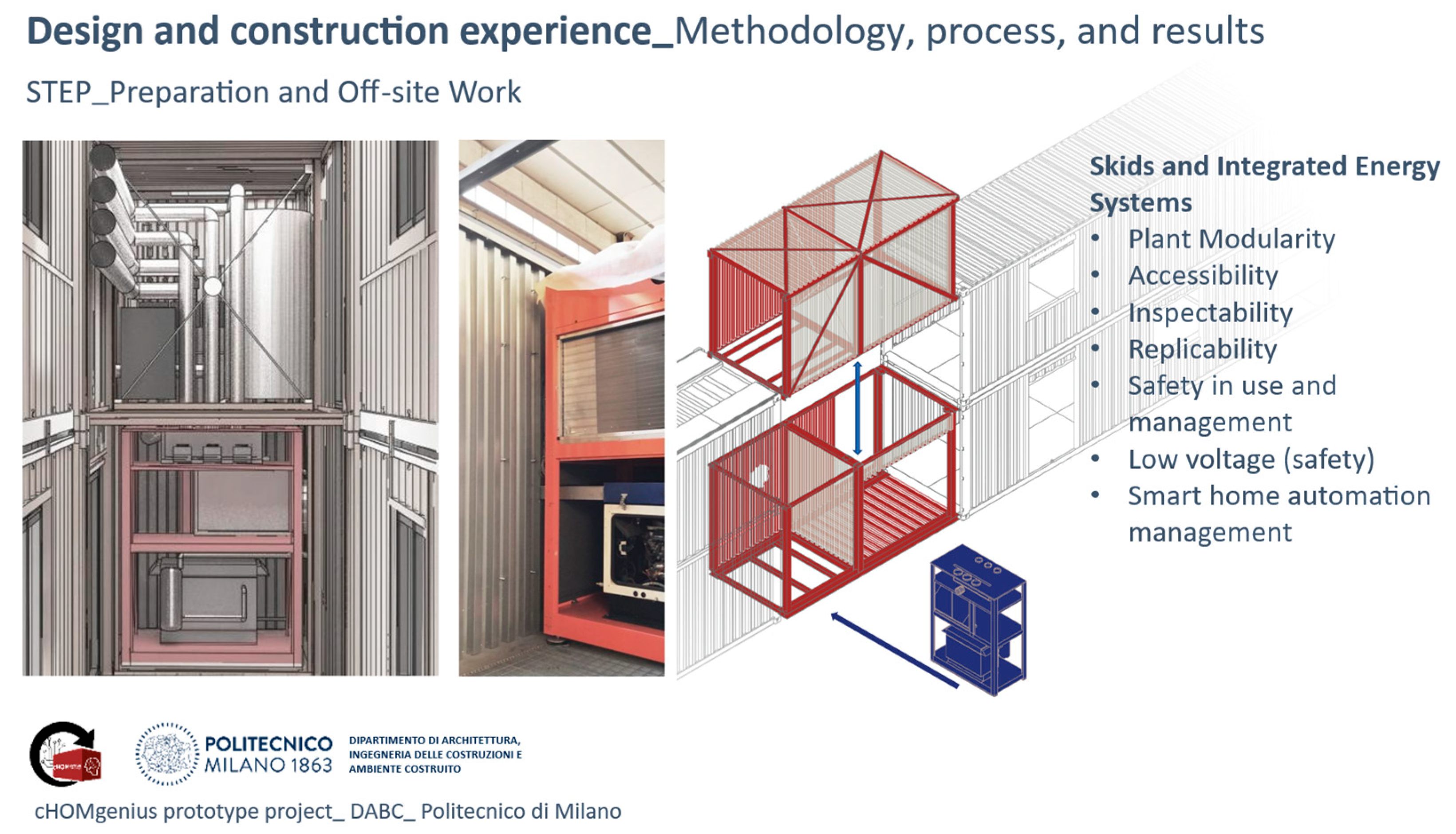
The figure (
Figure 5) illustrates the design and construction process of the energy skid, including:
Internal mechanical compartment with heat pump, micro-cogenerator, and thermal/electrical storage units;
Prefabricated structural frame enabling rapid assembly and full inspectability;
Modular integration with the building units;
Functional scheme showing plant modularity, low-voltage distribution (24 V DC), smart home automation, and safety features.
The skid constitutes the core of the off-grid energy system, enabling autonomous operation and efficient energy management. The combination of a high-performance building envelope, integrated renewable energy production, and thermo-electric storage systems enabled a substantial reduction in energy demand-achieving a 50% decrease in operational emissions compared with conventional solutions-and full off-grid operation, ensuring operational flexibility and high levels of occupant comfort.
5.3. Comparison Between the Two Case Studies
The two case studies—Rivaverde retrofit and cHOMgenius off-grid prototype—illustrate two complementary approaches to enhancing energy adequacy, showing how different design strategies can address energy flexibility under distinct functional, spatial, and infrastructural conditions.
In the Rivaverde project, the primary objective is the energy redevelopment of an existing public building, characterised by infrastructural constraints (such as the absence of a natural gas network), highly variable internal loads due to public events, and the need for silent and flexible system operation. The integration of a water-to-water heat pump drawing thermal energy from lake Idroscalo, combined with roof-mounted photovoltaics and electrical storage, improves system efficiency and reduces peak loads. These technical solutions are complemented by user-focused operational strategies, including the reorganisation of occupancy schedules, which were essential to achieving a 35% reduction in primary energy demand and a decrease of approx. 24,000 kg of CO2 emissions per year.
In contrast, cHOMgenius is conceived from the outset as a fully off-grid, modular residential prototype (new construction), designed to test construction reversibility, circularity, and autonomous energy management. Built using dry-assembled, reused maritime containers, the system integrates an energy skid combining photovoltaics, a micro-cogenerator, a heat pump, and thermal and electrical storage, supported by a low-voltage (24 V DC) distribution system to minimise conversion losses. Performance simulations demonstrate its ability to operate autonomously, achieving a 50% reduction in operational emissions compared to conventional solutions and ensuring high indoor comfort through advanced envelope performance, solar control systems, and building automation.
Despite their differences in scale, context, and purpose, both projects demonstrate that an integrated approach-combining high-performance envelopes, renewable generation, storage systems, and user-aware management strategies-can significantly strengthen local energy adequacy. Rivaverde exemplifies a contextual, replicable retrofit strategy for existing public buildings, while cHOMgenius showcases the potential of fully autonomous, modular, and circular housing models. Together, they highlight how architectural design can operate across multiple scales to provide diverse yet complementary responses to the challenges of the energy transition.
The results synthesized in
Table 1 clearly show that in the case of cHOMgenius, the combination of nZEB-level thermal insulation together with thermal and electrical storage systems allows the building’s energy demand to be reduced to zero, effectively enabling off-grid operation and full energy autonomy. In the case of the Rivaverde building, by contrast, no intervention was carried out on the opaque envelope, as this would not have been economically viable in terms of return on investment. Nevertheless, the adoption of a high-efficiency energy system exploiting the adjacent artificial water basin allows the building to approach nZEB performance levels. This demonstrates that the relationship between building envelope and technical systems must be assessed on a case-by-case basis and addressed through tailored design solutions.
6. Discussion
The proposed solutions demonstrate strong scalability potential. Thermal and hybrid storage technologies can be modularly integrated into district-level systems, while the cHOMgenius energy system can be replicated in multi-unit or community-based microgrid configurations, enabling gradual large-scale adoption without extensive grid reinforcement. Recent studies likewise highlight the value of hybrid storage integration for enhancing system flexibility and confirm that thermal storage offers system-level benefits with lower environmental impact compared to electrochemical alternatives.
A key limitation, already embedded in the design process, concerns the need for active user engagement; without it, these technologies remain operationally fragile. This reinforces the importance of involving end users and system operators, as technological appropriateness must be matched by appropriate management practices.
The analysis developed in the previous chapters highlights three complementary dimensions that contribute to the definition of robust, flexible, and participatory energy systems, capable of responding in an integrated manner to the challenges of the ecological transition.
Technological robustness: the integration of hybrid energy storage systems-electrochemical, thermal, and hydropower-based- enables the decoupling of energy production and consumption, thereby enhancing grid stability and adaptive capacity in the presence of renewable energy variability [
44]. The case studies examined demonstrate how modular and multifunctional solutions can be effectively implemented both in consolidated urban contexts and in experimental prototypes, contributing to emission reductions and increased local energy autonomy.
User engagement: intelligent demand-side management and informed user behaviour represent a strategic lever for optimizing energy flows without the need for additional physical infrastructure. The adoption of digital technologies, adaptive home automation systems, and co-design models fosters active and informed participation. This is evidenced by energy retrofit projects and off-grid prototypes in which the interaction between users and smart devices becomes an integral component of the energy system itself. Within this perspective, the energy transition becomes not only a technical process but a project of spatial and cultural transformation—what Latour [
45] calls “a reorientation of design toward the terrestrial,” or, in Deplazes’ [
46] terms, the reconstruction of infra-structures as active agents within living territories.
Regulatory and managerial innovation: to overcome persistent administrative and operational barriers, it is essential to promote flexible governance instruments [
47], adaptive procurement frameworks, and performance assessment systems capable of recognising the value of advanced solutions, such as Performance Level Upgrading Systems (PLUS), that are not yet fully codified within existing regulatory frameworks. The cHOMgenius case suggests a model of progressive standardisation, capable of incentivising circular strategies and high-quality living environments through reward-based criteria and simple, replicable measurement tools.
Taken together, these three dimensions outline an integrated approach in which technology, behaviour, and regulation jointly contribute to the construction of a new energy–territorial paradigm, grounded in shared responsibility and in the adaptive capacity of systems to respond to environmental and social change. This is also demonstrated by the comparison of the two case studies, in which the integrated envelope insulation and energy storage can achieve full off-grid performance, while high-efficiency energy systems alone may approach nZEB levels. Optimal solutions therefore depend on case-specific design, balancing envelope improvements, system efficiency, and economic feasibility.
7. Conclusions
This study demonstrates that energy adequacy in systems with a high penetration of renewable energy sources cannot be ensured through the expansion of generation capacity alone. Instead, it requires an integrated approach combining energy storage systems, flexible demand-side management, and the active involvement of users. Energy adequacy thus emerges as a structural and systemic issue, rather than a purely technological one.
The multiscale analysis highlights how the misalignment between renewable energy generation and consumption profiles-exacerbated by climatic variability and infrastructural constraints-leads to operational instability and curtailment phenomena (“The intentional reduction of instantaneous power from non-dispatchable variable renewable energy resources (such as wind and solar photovoltaics) relative to what would naturally be available from the wind and the sun”, from National Renewable Energy Laboratory (NREL).
What Is Power System Curtailment? NREL/FS-6A40-90517, 2024.
https://www.nrel.gov/docs/fy25osti/90517.pdf (accessed 18 December 2025)), particularly in the Italian context, which is characterised by pronounced generation overcapacity. Within this framework, energy storage systems constitute a key enabling infrastructure, capable of decoupling production from consumption and restoring temporal flexibility to the energy system.
The results, together with the reviewed literature, confirm the strategic role of thermal energy storage, which stands out for its economic sustainability, technical simplicity, scalability, and compatibility with the built environment. The use of water reservoirs, aquifers, and seasonal storage systems enables effective peak demand reduction, increased local self-consumption, and enhanced system robustness-especially when integrated with heat pumps and renewable energy sources. Compared to purely electrical storage, these solutions are more closely aligned with building energy demand profiles and are more readily replicable.
The study further demonstrates that active user engagement is a determining factor in the effectiveness of energy storage systems. Conscious and adaptive demand management strategies enhance overall system performance without requiring additional infrastructural investments, reinforcing the socio-technical nature of energy adequacy.
From a design perspective, the findings underscore the need to integrate energy storage systems from the earliest stages of architectural and territorial planning. Storage systems, particularly thermal and hybrid configurations, should be considered structuring elements of the design process, capable of influencing energy performance, spatial organisation, and patterns of building use. This contribution highlights that hybrid storage configurations, multiscale integration, and participatory models of energy use constitute indispensable conditions for ensuring energy adequacy in future scenarios. This approach represents a necessary step towards more flexible, resilient, and equitable energy systems, while providing operational insights for research, design practice, and energy policy.
The future of hybrid systems depends less on their technological maturity than on the capacity to embed them within integrated territorial frameworks in which energy, water, and human agency operate as components of a coherent metabolism. Within this perspective, the energy transition cannot be interpreted solely as a technical process, but rather as a spatial and cultural transformation that redefines the relationship between infrastructures and living environments. Hybrid systems should, therefore, be conceived not as isolated devices, but as active elements within complex territorial ecologies, capable of mediating between environmental resources, built form, and social practices.
Future research should focus on long-term performance assessments of hybrid storage systems through extended monitoring campaigns, as well as on the analysis of behavioural dynamics within energy communities, given their influence on system stability and efficiency. Furthermore, advanced numerical models are needed to optimise interactions between building-scale and landscape-scale storage infrastructures. Such models must incorporate diverse user profiles and behavioural patterns in order to mitigate potential user-driven imbalances and enhance the overall resilience of hybrid energy frameworks.