


Abstract
(1) Introduction: Transportation logistics play a pivotal role in facilitating both individual mobility and supply chain operations on a global scale. However, conventional transportation systems have contributed significantly to urban congestion and environmental degradation. In response to these challenges, there is growing momentum to investigate the potential of renewable energy to power electric vehicles (EVs) and flying automobiles, aiming to reduce fossil fuel dependence and carbon emissions. (2) Objectives: By analyzing key drivers and opportunities for integrating flying vehicles into existing infrastructure through dynamic modeling, this study seeks to accelerate the transition to sustainable transportation. (3) Methodology: A mixed-method approach, combining literature review and causal loop diagram analysis, is employed to understand the factors influencing EV and flying car adoption. (4) Results: Findings highlight the significant potential of renewable energy in reducing emissions and reliance on fossil fuels through widespread EV and flying vehicle adoption. The major drivers and challenges in infrastructure, safety, and airspace management are also identified. In addition, this research emphasizes the importance of sustainable transportation in addressing urban congestion, pollution, and energy security. (5) Conclusions: By leveraging renewable energy and embracing technological advancements, a low-carbon future for transportation can be achieved, benefiting both the environment and society.
1. Introduction
Transportation logistics serve as the lifeblood of modern societies, underpinning both individual mobility and the seamless flow of goods across global supply chains [1]. Yet, the traditional modes of transportation that have long fueled this interconnection have also brought about pressing challenges, such as urban congestion and environmental harm [2]. In recognition of these issues, there has emerged a palpable shift towards embracing intelligent transportation systems (ITS) and sustainable solutions [3], endeavoring to delve into the realm of renewable energy sources as a means to power electric vehicles (EVs) and flying automobiles, with the overarching goal of hastening the transition towards a low-carbon future [4]. In response, the imperative for transitional change in transportation has gained momentum, with governments, industries, and researchers alike exploring novel avenues for mitigating these adverse impacts [5]. Intelligent transportation systems have emerged as a promising frontier, leveraging advanced technologies to optimize traffic flows, enhance safety, and minimize environmental footprint [6,7]. In contrast, conventional transportation systems, while undeniably integral to modern life, have left an indelible mark on urban landscapes, often characterized by congested roadways and polluted air [1,8]. Such challenges are not merely local in nature but extend to encompass broader environmental concerns, including climate change and resource depletion in the context of sustainable transportation [1,2].
Investigating the role of renewable fuels in powering both electric vehicles (EVs) and flying cars presents a multifaceted research endeavor that delves into the technological, economic, and environmental dimensions of sustainable transportation [9]. A key technical aspect lies in the optimization of renewable energy sources, such as solar and wind power, for the generation of electricity to charge EV batteries and power propulsion systems in flying cars [10]. Research could focus on developing efficient energy conversion and storage solutions tailored to the unique energy demands of these vehicles, including advanced battery technologies with high energy density and rapid charging capabilities [11]. Additionally, exploring the feasibility of renewable hydrogen production and distribution infrastructure holds promise for powering fuel cells in both ground-based and aerial vehicles, offering zero-emission alternatives to fossil fuels and mitigating carbon emissions across the transportation sector [12].
Analyzing the dynamic growth and sustainability implications of advancements in battery technology and alternative energy sources like hydrogen fuel cells underscores the importance of long-term viability and scalability in transitioning to renewable transportation fuels [5]. Technical research efforts may involve conducting life cycle assessments to evaluate the environmental impacts and resource requirements of different energy storage solutions, considering factors such as raw material extraction, manufacturing processes, and end-of-life disposal [11,13]. Furthermore, assessing the economic feasibility and market readiness of emerging technologies plays a crucial role in guiding strategic investments and policy decisions aimed at accelerating the adoption of sustainable transportation solutions [14]. By leveraging insights from interdisciplinary research, stakeholders can effectively navigate the evolving landscape of renewable energy integration in EVs and flying cars, driving innovation towards a greener and more resilient transportation infrastructure.
Central to the discourse on sustainable transportation is the pivotal role of renewable energy sources in powering the vehicles of tomorrow [15]. Electric vehicles, heralded for their potential to reduce emissions and reliance on fossil fuels, stand at the forefront of this transition [16]. Yet, the integration of renewable energy into the charging infrastructure remains a critical challenge, necessitating innovative solutions to ensure scalability and reliability [17]. Furthermore, the advent of flying automobiles, once relegated to the realm of science fiction, presents a unique opportunity to reimagine urban mobility while concurrently addressing congestion and emissions [18]. However, the realization of this vision hinges upon the availability of sustainable energy sources to propel these aerial vehicles [5]. Against this backdrop, few researchers have sought to explore the untapped potential of renewable energy sources in powering both ground-based EVs and futuristic flying automobiles [19]. By harnessing the natural abundance of solar, wind, and other renewable resources, the research demonstrating the feasibility and efficacy of transitioning towards a transportation paradigm rooted in sustainability and resilience would be one of the paramount issues [16]. Thus, through a multidisciplinary approach encompassing systematic review and itemized causal loop model, this study endeavors to shed light on the opportunities and challenges inherent in realizing a low-carbon future powered by renewable energy-driven transportation systems.
Owing to its significance, this paper systematically reviews the existing literature across multiple fields, including renewable energy, transportation technologies, policy frameworks, and environmental studies. This broad scope ensures that all relevant factors are considered, offering a well-rounded perspective on the topic. On the other hand, the use of an itemized causal loop model allows for a detailed analysis of the dynamic relationships between different variables. This model helps identify feedback loops and causal relationships that are often overlooked in traditional reviews, providing deeper insights into the complex interactions at play. In addition, the detailed causal loop model and the systematic review provide a foundation for future research. Scholars can build on this work to explore specific aspects in greater depth, develop new models, and conduct empirical studies that test the theoretical insights presented in this paper. This research thus serves as a catalyst for further academic inquiry and innovation in the field.
2. Renewable Fuels in Transportation
The research sets out with a multifaceted approach to investigate the potential of renewable fuels in revolutionizing the landscape of transportation, particularly in the realms of electric vehicles (EVs) and flying cars [9]. By delving into this intersection of renewable energy and transportation, the greater importance is focused not only on reducing reliance on fossil fuels but also on mitigating carbon emissions, thereby addressing pressing environmental concerns [13]. This parameter holds significant implications for the respective fields, as it seeks to explore innovative solutions for sustainable mobility while concurrently advancing the discourse on renewable energy integration [20]. Moreover, by analyzing the dynamic growth and sustainability implications of advancements in battery technology and alternative energy sources like hydrogen fuel cells, the research movement is crucial for contributing to the ongoing dialogue surrounding energy transition and resilience in the face of climate change [21,22].
Renewable fuels, such as hydrogen and electricity, have garnered significant attention in mitigating carbon emissions and reducing reliance on fossil fuels in the transportation sector. Zero-emission vehicles powered by renewable fuels offer a promising solution to combat climate change by reducing greenhouse gas emissions [23]. The transition to renewable fuels, particularly hydrogen fuel cells and advancements in battery technology for electric vehicles (EVs), is crucial for achieving sustainability goals in the transport industry [24]. In the exploration of renewable energy sources for powering EVs and flying cars, solar energy, for instance, offers immense potential for both ground-based and aerial vehicles [25]. Advanced photovoltaic (PV) technologies, including thin-film solar cells and solar concentrators, can be integrated into vehicle surfaces such as roofs, hoods, and wings, maximizing energy capture while minimizing aerodynamic drag [26]. Moreover, emerging concepts like solar roadways and solar-powered charging stations hold promise for enhancing the range and sustainability of electric transportation systems [27]. For flying cars, solar-powered drones and air taxis equipped with high-efficiency solar arrays can extend flight endurance and reduce reliance on conventional fossil fuels, enabling cleaner and more autonomous urban air mobility solutions [28].
Wind energy presents another compelling option for renewable propulsion in transportation. Beyond its well-established use in stationary wind turbines, innovative wind-assisted propulsion systems are being developed for both EVs and flying cars [29]. In ground transportation, retractable wind turbines and wind-capturing devices integrated into vehicle design can harness airflow during motion, supplementing electric power and increasing efficiency, particularly on highways and open roads [10]. In the realm of flying cars, vertical axis wind turbines (VAWTs) integrated into air-frames or deployed at takeoff and landing sites can harvest wind energy, providing supplementary thrust and extending flight range [30]. Additionally, advancements in kite-based propulsion systems and airborne wind energy (AWE) technologies offer novel approaches to harnessing wind power for sustainable aerial mobility, promising increased efficiency and reduced environmental impact in urban airspace [31].
According to Table 1, the integration of renewable energy sources with electric vehicle (EV) infrastructure offers substantial environmental and efficiency benefits, as highlighted by recent studies. Barman et al. [27] found that such integration can significantly reduce emissions, though it faces challenges like high initial costs and the need for a robust grid. Similarly, Alkawsi et al. [32] reported that smart grid technologies optimize energy distribution for EV charging stations, improving efficiency and reducing grid strain, albeit with cybersecurity and technical integration issues. Minak [29] demonstrated the viability of solar-powered EV charging stations in high irradiance regions, promoting sustainability despite the variability of solar energy and high setup costs. Sandaka and Kumar [24] highlighted hydrogen fuel cells as an alternative to battery-electric vehicles, offering long-range potential but facing high production costs and storage challenges. Hassan et al. [5] underscored the role of renewable energy-powered EVs in meeting climate targets, yet their effectiveness depends on renewable energy availability and storage. Vishnuram and Alagarsamy [33] noted that integrating EVs with renewable energy microgrids can boost community energy independence, despite high setup costs and technical hurdles. However, Duehnen et al. [34] pointed out that using renewable energy in EV production can lower the overall environmental impact but faces supply chain complexities and cost issues. Finally, Chung et al. [35] emphasized that smart charging algorithms enhance grid stability and reduce energy costs, though their complexity and user acceptance remain concerns.

Table 1.
Renewable Fuels in Transportation.
3. Sustainable Transportation Solutions and the Reduction of Carbon Emissions for EVs and Flying Cars
Stakeholders invested in promoting sustainable transportation solutions for electric vehicles (EVs) and flying cars can leverage insights from innovative approaches to renewable energy integration and carbon emission reduction [36]. One promising avenue lies in the development of smart charging infrastructure that optimizes the utilization of renewable energy sources [32]. By deploying advanced algorithms that forecast renewable energy generation patterns and dynamically adjust charging schedules accordingly, stakeholders can ensure that EVs and flying cars draw power primarily from clean energy sources [9]. Additionally, the implementation of bidirectional charging systems enables vehicles to not only consume energy but also serve as mobile energy storage units, facilitating grid stabilization and further enhancing the reliability of renewable energy integration [27].
Furthermore, stakeholders can explore the potential of vehicle-grid integration (VGI) initiatives to mitigate carbon emissions and enhance grid resilience [33]. Through VGI programs, EVs and flying cars can actively participate in demand response schemes, adjusting their charging or flying schedules in response to fluctuations in renewable energy availability and grid congestion [37]. By incentivizing vehicle owners to engage in grid-balancing activities, stakeholders can foster a symbiotic relationship between sustainable transportation and renewable energy infrastructure, driving the decarbonization of the transportation sector while bolstering grid reliability [38]. Moreover, the development of VGI-enabled microgrids presents an opportunity to create localized energy ecosystems where EVs and flying cars serve as integral components, contributing to the establishment of resilient and sustainable transportation networks powered by clean energy sources [35].
Table 2 summarizes recent research on various innovations in electric vehicles (EVs) and urban mobility, highlighting their potential impacts and associated challenges. Wu et al. [39] emphasize the importance of policy incentives to boost EV adoption, though economic feasibility and sustainability of these incentives are concerns. Chapman and Fujii [36] suggest that flying cars could alleviate urban traffic congestion, but issues such as air traffic management and noise pollution need to be addressed. Wireless charging for EVs, as discussed by Lebrouhi et al. [40], offers convenience but faces efficiency losses and high development costs. Bathla et al. [41] highlight the efficiency benefits of autonomous driving technology for EVs, tempered by ethical and legal challenges.
Table 2.
Sustainable Transportation Solutions and the Reduction of Carbon Emissions for EVs and Flying Cars.
Studies like those by Cohen et al. [42] and Ali et al. [8] explore the transformative potential of electric vertical takeoff and landing (eVTOL) aircraft and the integration of EVs in public transportation, respectively, each noting significant infrastructure and regulatory hurdles. Liu et al. [11] point out the lower lifecycle emissions of EVs compared to internal combustion engine vehicles, although battery production and disposal remain issues. Muratori et al. [43] and Bao et al. [44] discuss the benefits of EV car-sharing programs and smart mobility solutions, respectively, highlighting infrastructural and technological integration challenges. The development of lightweight materials, renewable energy policies, and AI in traffic management are also considered key to enhancing the efficiency and adoption of EVs and flying cars, with material costs, policy implementation, and data privacy being major concerns.
4. Innovations in Battery Technology and Charging Infrastructure
Assessing innovations in battery technology involves a multifaceted approach, considering factors such as energy density, cycle life, and charging rates [34]. These batteries offer potential benefits for electric vehicles, enabling longer driving ranges and reducing overall weight [47]. Furthermore, research into solid-state batteries aims to address safety concerns and improve lifespan by replacing liquid electrolytes with solid alternatives, enhancing stability and reducing the risk of thermal runaway events [48]. Additionally, advancements in battery management systems, utilizing artificial intelligence and machine learning algorithms, enable precise monitoring of battery health and optimization of charging protocols, extending battery longevity and enhancing overall performance [49].
In parallel, the evolution of charging infrastructure plays a pivotal role in the widespread adoption of electric vehicles. Rapid charging technologies, such as ultra-fast chargers capable of delivering up to 350 kW, are poised to revolutionize the charging experience, drastically reducing charging times and enhancing convenience for EV drivers [50]. Moreover, the integration of bidirectional charging capabilities enables vehicles to serve as energy storage units, facilitating grid stabilization and enabling vehicle-to-grid (V2G) applications [51]. Propulsion systems for electric vehicles are also undergoing transitional changes, with advancements in electric motor design, regenerative braking systems, and power electronics leading to increased efficiency and performance [52]. Furthermore, the convergence of electric propulsion with autonomous capabilities represents a paradigm shift in transportation, with AI-driven autonomous vehicles offering the potential for safer, more efficient, and environmentally sustainable mobility solutions [41].
The following table (Table 3) provides a snapshot of research articles focusing on sustainable transportation solutions for intelligent mobility, covering both electric vehicles and flying cars, outlining the authors, key findings, impact, and issues addressed in each study.
Table 3.
Sustainable Transportation Solutions for Intelligent Mobility, Covering both Electric Vehicles and Flying Cars.
Table 3 summarizes key research findings on advancements in electric vehicle (EV) and flying car technologies, highlighting their impacts and associated challenges. Kasliwal et al. [22] emphasize that battery storage advancements are crucial for flying cars’ viability, improving range and efficiency, though safety and regulatory issues remain. Alqahtani and Kumar [9] suggest blockchain technology can enhance EV charging security, but its integration complexity and energy consumption are concerns. Chen and Folly [37] highlight artificial intelligence’s role in optimizing energy management in smart grids for EVs, improving distribution and cost-efficiency despite data privacy and algorithmic bias issues.
Other significant findings include Mateen et al.’s [50] emphasis on renewable energy integration for grid stability, and Brown and Davis [53] showcasing Vehicle-to-Grid (V2G) technology’s potential to enhance grid stability and provide revenue for EV owners. Challenges such as battery degradation, high costs of fast-charging infrastructure [54], and the need for robust charging networks [17] are also highlighted. Additionally, innovations like solid-state batteries [47], wireless inductive charging [25], and smart grids [56] offer significant benefits but face high costs and technological maturity issues.
5. Methodology
This research adopts a mixed-method approach, integrating both literature review and causal loop diagram analysis to comprehensively explore the potential of renewable energy sources in powering electric vehicles (EVs) and flying cars, and to provide insights into sustainable transportation solutions under the astute direction of Shamsuddoha et al. [57].
5.1. Systematic Literature Review
A systematic literature review is conducted to gather and analyze existing research, publications, and reports related to sustainable transportation and renewable energy technologies. This review encompasses a wide range of sources, including academic journals, conference proceedings, industry reports, government publications, and expert opinions. Through this process, current trends, challenges, opportunities, and best practices in the field are identified and synthesized to establish a comprehensive understanding of the subject matter.
5.2. Flowchart for the Systematic Literature Review Process
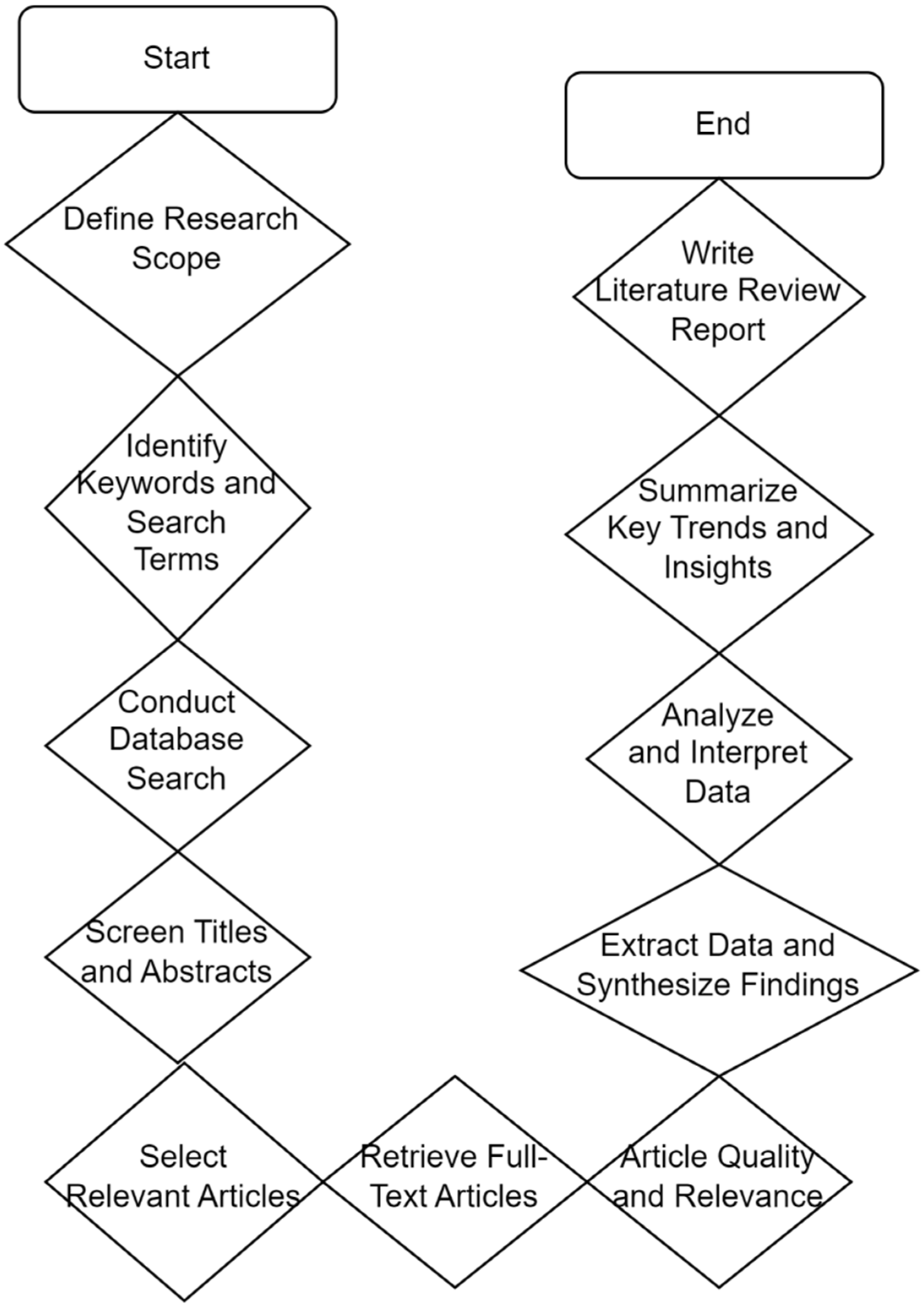
Below is the flowchart for the systematic literature review process:
This flowchart (Figure 1) outlines the systematic process of conducting a literature review to gather and analyze existing research on sustainable transportation and renewable energy technologies. It begins with defining the research scope and identifying keywords and search terms. Then, it proceeds through database searches, screening titles and abstracts, selecting relevant articles, retrieving full-text articles, and assessing their quality and relevance. Subsequently, the flowchart involves data extraction, synthesis, analysis, and interpretation to summarize key trends and insights. Finally, it concludes with the writing of the literature review report.
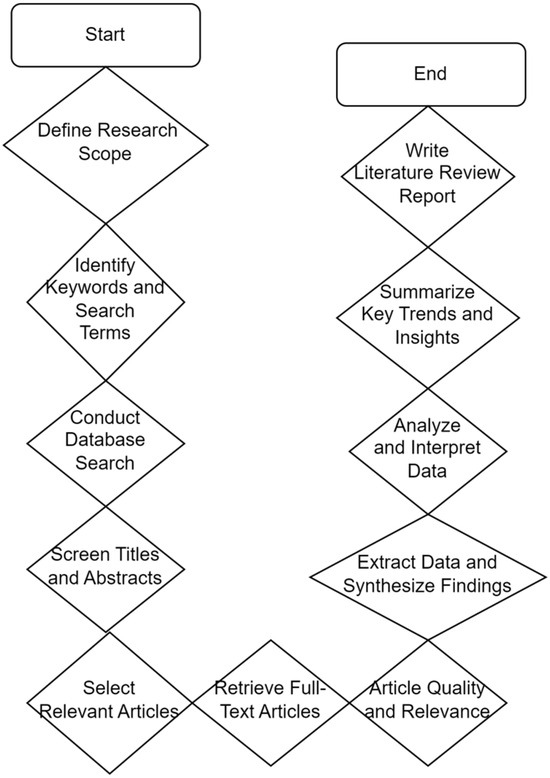
Figure 1.
Flowchart for the Systematic Literature Review.
5.3. Systematic Literature Review Process
- A.
- Setting Research Question: Investigate the current research on renewable fuels in EVs and flying cars affecting transportation’s growth and sustainability;
- B.
- Search Strategy: Use academic databases (PubMed, IEEE Xplore, Scopus) and search engines (Google Scholar) with keywords like “renewable fuels”, “hydrogen fuel cells”, “electric vehicles”, “flying cars”, “carbon emissions”, “transportation infrastructure”, and “sustainability”;
- C.
- Inclusion and Exclusion Criteria: Include peer-reviewed articles, conference papers, government reports, and industry publications from the past decade; exclude non-English publications, irrelevant studies, and duplicates;
- D.
- Screening and Selection: Review titles, abstracts, and full texts using inclusion/exclusion criteria;
- E.
- Data Extraction and Synthesis: Gather key findings, methodologies, and conclusions, categorizing by themes such as renewable fuel technologies, sustainability, challenges, and opportunities;
- F.
- Quality Assessment: Evaluate studies’ quality and reliability, considering biases;
- G.
- Analysis and Interpretation: Analyze data to identify themes, trends, and implications within the research context.
Table 4 highlights differences in the number of academic papers found across Google Scholar, PubMed, and OpenAlex on topics such as hydrogen fuel cells, renewable fuels, carbon emissions, electric vehicles, flying cars, sustainability, and transportation infrastructure. For instance, Google Scholar yielded the most papers for “hydrogen fuel cells” (3930), while PubMed led for “renewable fuels” (3949). Searches for “flying cars” showed stark contrasts, with Google Scholar finding 243 papers compared to PubMed’s 52.
Table 4.
Systematic Literature Search.
According to Table 5, 2256 papers were found, with an average of 173.39 citations per paper, underscoring the impact and relevance of the research. Each paper averaged 2.9 authors, indicating high collaboration. The papers have an h-index of 332, g-index of 508, hI_norm of 201, and hI_annual of 1.76, indicating high citation impact. The hA value of 94 highlights the significant scholarly contributions of the authors.
Table 5.
Citation Metrics.
5.4. Causal Loop Model
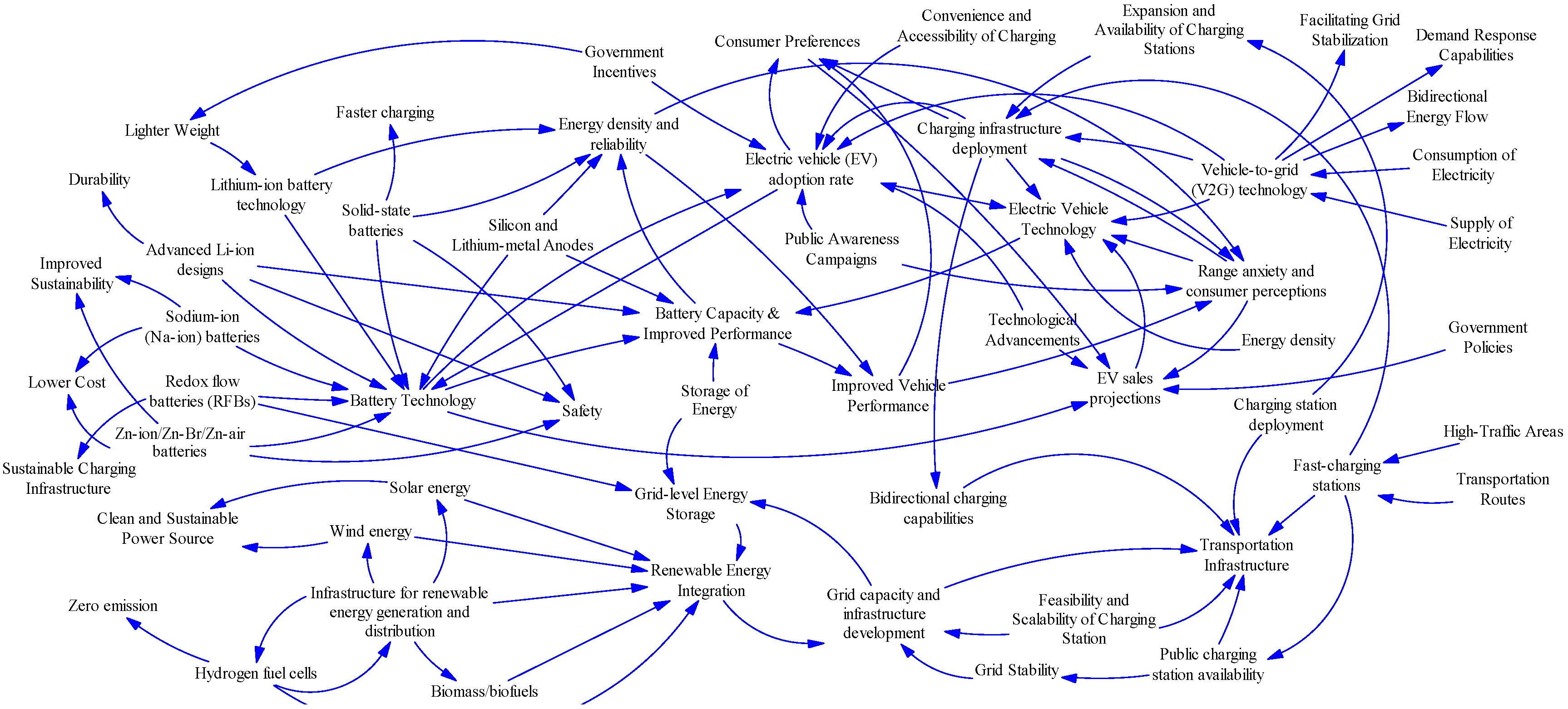
This causal loop diagram (CLD) is constructed to visually represent the complex interactions and feedback loops between key factors influencing the adoption of EVs and flying cars with the ideology from Shamsuddoha and Woodside [58] and Shamsuddoha et al. [59] to develop a causal model using concern variables like energy cost, government regulations, traffic, innovative technologies, etc. Basically, this model allows for the depiction of causal relationships among various variables such as technological advancements, policy interventions, market dynamics, consumer behavior, and infrastructure development. By mapping out these interdependencies (Figure 2), the CLD facilitates the identification of leverage points and system dynamics that can influence the transition towards sustainable transportation. Through iterative refinement and validation, the CLD helps to uncover insights into the underlying mechanisms driving the adoption of renewable energy-powered transportation solutions and to inform strategic decision-making processes.
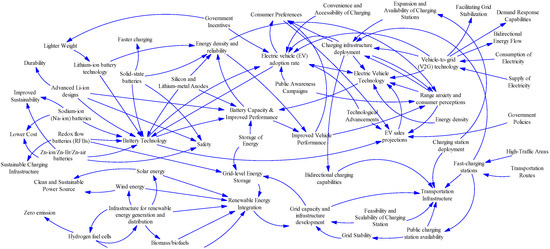
Figure 2.
Causal Loop Model.
Consumer Preferences and EV Adoption Rate: As the adoption of renewable fuels like hydrogen increases, there is a corresponding decrease in the consumption of fossil fuels, leading to a reduction in carbon emissions [60]. This reduction in emissions propels further adoption of renewable fuels due to their environmental benefits, creating a positive reinforcement loop [61].
Battery Technology Advancement: Progress in battery technology, such as enhancements in energy density and charging efficiency, makes electric vehicles (EVs) more practical and appealing to consumers [42]. Additionally, technologies such as vehicle-to-grid (V2G) enable bidirectional energy flow, allowing EVs to serve as storage units and support grid stability [51]. This, in turn, enhances the reliability and sustainability of the energy supply, fostering a symbiotic relationship between EV adoption and grid stability [16].
Renewable Energy Integration: Government policies that incentivize the use of renewable fuels and electric vehicles (EVs) create a positive feedback loop [39]. These policies encourage businesses and consumers to invest in renewable energy technologies, leading to increased adoption [56]. As adoption rates rise, policymakers are further motivated to implement supportive regulations, reinforcing the cycle [62]. In this case, government incentives, including tax rebates, subsidies, and regulatory measures, exert a significant influence on EV adoption rates [54]. Higher incentives encourage consumers to make the switch to electric vehicles, thereby driving market demand and prompting manufacturers to expand their EV offerings [21].
Infrastructure Development: The expansion of infrastructure, such as hydrogen refueling stations, supports the adoption of renewable fuel-powered vehicles [5]. As infrastructure improves, the perceived viability and convenience of renewable fuels increase, driving further adoption and investment in infrastructure development, creating a positive reinforcement loop [55]. However, as charging infrastructure proliferates, it enhances the feasibility and practicality of EV ownership, thereby bolstering consumer confidence and driving further market growth [27].
Safety and Regulatory Compliance: Safety concerns and regulatory compliance requirements for flying cars necessitate ongoing improvements in technology and regulations [46]. As safety standards improve, public trust in flying cars increases, leading to greater acceptance and potentially further advancements in safety technology, creating a balancing loop [28].
Public Perception and Acceptance: Public perception of renewable fuels and flying cars influences adoption rates [63]. Positive experiences and effective communication about the benefits of these technologies can increase public acceptance and adoption rates [64]. However, negative incidents or perceptions may slow adoption, requiring efforts to rebuild trust, creating a balancing loop [65]. As individuals increasingly prioritize factors such as sustainability and cost-effectiveness, the demand for EVs rises correspondingly [48]. This surge in demand not only fuels innovation within the industry but also influences government policies and infrastructure development initiatives [5].
Technological Innovation and Investment: Increased investment in research and development drives technological innovation in renewable fuels and flying car technology [66]. As new advancements emerge, the performance, efficiency, and safety of these technologies improve, stimulating further investment and innovation, creating a positive reinforcement loop [45]. On the other hand, demand response capabilities, enabled by technologies like V2G, allow EVs to adjust their charging patterns in response to grid conditions [50]. This flexibility not only supports grid stability but also optimizes energy usage and reduces overall electricity costs [42], thereby excelling further EV adoption and infrastructure investment.
These descriptions provide a comprehensive understanding of the complex interplay of factors contributing to a more holistic view of the dynamics involved in the transition to renewable fuels and the integration of flying cars into transportation infrastructure.
Finally, by employing this mixed-method approach, the research aims to provide a comprehensive analysis of the role of renewable energy sources in shaping the future of transportation. The integration of the literature review and causal loop diagram analysis enables a holistic understanding of the complex interactions and dynamics at play, thereby offering valuable insights and guidance for promoting sustainable transportation solutions.
5.5. Role of Hydrogen Fuel Cells in Reducing Fossil Fuel Reliance and Carbon Emissions
I. Zero Emissions and Sustainability: Hydrogen fuel cells offer a genuinely zero-emission solution for the transportation sector, generating electricity with only water vapor as the emission product [24]. This characteristic is pivotal in reducing the carbon footprint of transportation, aligning with global efforts to combat climate change and mitigate greenhouse gas emissions [16].
II. Rapid Refueling and Operational Efficiency: Hydrogen refueling times, notably for heavy-duty trucking, are significantly faster compared to other zero-emission alternatives like battery electric vehicles (BEVs) [10]. With refueling taking only a few minutes, hydrogen-powered vehicles can minimize downtime, crucial for operational efficiency in industries reliant on heavy-duty transportation [67].
III. Adaptable Production and Renewable Integration: The versatility of hydrogen production from various renewable resources through water electrolysis enables regions with surplus renewable energy to participate in the energy transition [68]. This adaptability fosters a more inclusive approach to renewable energy utilization and allows for the transportation of hydrogen to areas lacking renewable infrastructure [15].
IV. Policy Developments Driving Adoption: Legislative frameworks such as the USA’s Inflation Reduction Act (IRA) and European Union’s mandatory national targets for hydrogen refueling infrastructure deployment play a pivotal role in accelerating the integration of hydrogen into road transport [69]. These policies provide incentives and subsidies, alleviating costs associated with hydrogen infrastructure development and fostering a competitive hydrogen ecosystem [38].
V. De-carbonization Challenges and Strategies: Realizing the full potential of hydrogen in heavy-duty trucking requires concerted action, including infrastructure expansion, collaboration among stakeholders, policy support, and sustained research and development [5]. These efforts are essential for overcoming challenges associated with infrastructure deployment, technology adoption, and regulatory frameworks [21].
6. Summary Overview on Potential Opportunities and Challenges for Sustainable Transportation Solutions as for Intelligent Mobility
6.1. Potential Opportunities
6.1.1. Environmental Benefits
- -
- Significant reduction in greenhouse gas emissions and air pollutants.
- -
- Decreased reliance on fossil fuels through the use of renewable energy sources.
6.1.2. Technological Advancements
- -
- Improvements in battery technology, leading to longer ranges and shorter charging times for EVs.
- -
- Development of advanced propulsion systems for flying cars, increasing efficiency and safety.
6.1.3. Economic Growth
- -
- Job creation in the renewable energy and electric vehicle sectors.
- -
- Potential for new markets and industries related to flying car technology.
6.1.4. Energy Independence
- -
- Reduced dependency on imported oil, enhancing national energy security.
- -
- Increased use of locally produced renewable energy sources.
6.1.5. Urban Mobility and Traffic Reduction
- -
- Alleviation of traffic congestion through the use of flying cars and intelligent mobility solutions.
- -
- Improved public transportation systems integrating EVs.
6.1.6. Innovation in Infrastructure
- -
- Development of smart grids and charging infrastructure for EVs.
- -
- Creation of vertiports and other infrastructure for flying cars.
6.1.7. Enhanced User Experience
- -
- Advanced features such as autonomous driving and AI integration in EVs and flying cars.
- -
- Improved comfort and convenience for users.
6.2. Challenges
6.2.1. High Initial Costs
- -
- High development and manufacturing costs for EVs and flying cars.
- -
- Significant investment required for infrastructure development.
6.2.2. Technological Barriers
- -
- Challenges in battery technology, such as energy density and recycling.
- -
- Safety and regulatory concerns for flying cars.
6.2.3. Infrastructure Development
- -
- Need for extensive charging networks for EVs.
- -
- Requirement for new infrastructure like vertiports for flying cars.
6.2.4. Regulatory and Policy Issues
- -
- Complex and evolving regulations for the approval and operation of flying cars.
- -
- Need for supportive policies and incentives for renewable energy and EV adoption.
6.2.5. Energy Supply and Storage
- -
- Intermittency of renewable energy sources like solar and wind.
- -
- Challenges in energy storage and grid management.
6.2.6. Public Acceptance and Adoption
- -
- Consumer hesitation due to range anxiety and unfamiliarity with new technologies.
- -
- Concerns over the safety and practicality of flying cars.
6.2.7. Environmental and Social Impacts
- -
- Potential environmental impacts of large-scale battery production and disposal.
- -
- Social equity issues related to the accessibility and affordability of new transportation technologies.
7. Conclusions
The role of hydrogen fuel cells in reducing reliance on fossil fuels and mitigating carbon emissions presents a promising pathway for decarbonizing road transport. This research highlights the crucial role of sustainable transportation in alleviating urban congestion, reducing environmental degradation, and enhancing energy security. By utilizing renewable energy sources to power electric vehicles and flying automobiles, a significant decrease in fossil fuel dependence and carbon emissions can be achieved. While this study offers valuable insights into the potential of these technologies, it also emphasizes the challenges of integrating them into existing infrastructure. To fully realize the benefits of a low-carbon transportation future, concerted efforts are needed to address these challenges and promote the widespread adoption of sustainable transportation solutions. However, realizing this potential requires concerted action from stakeholders across various sectors, including infrastructure development, collaboration, policy support, and research and development. Similarly, the integration of flying vehicles into transportation infrastructure offers revitalized opportunities for urban mobility but necessitates comprehensive approaches addressing technological, legal, societal, and environmental challenges. Building on the findings of this study, future research should focus on in-depth analysis of infrastructure requirements including developing charging stations and landing pads. Further research is needed to assess the economic impacts of transitioning to a sustainable transportation system including job creation and cost-benefit analysis. Ostensibly, understanding the factors influencing public acceptance of these new technologies and developing strategies to promote behavioral changes related to transportation choices are crucial for the successful implementation of sustainable transportation solutions.
Author Contributions
Conceptualization, methodology, literature review, resources, M.A.K., T.N. and M.S.; writing—original draft preparation, writing—review and editing, M.A.K., M.S. and T.N., Software—M.A.K. and M.S., Revisions based on reviewers’ comments—M.A.K. and M.S. All authors have read and agreed to the published version of the manuscript.
Funding
This research received no external funding.
Institutional Review Board Statement
Not applicable.
Informed Consent Statement
Not applicable.
Data Availability Statement
Not applicable.
Conflicts of Interest
The authors declare no conflict of interest.
References
- Brzeziński, Ł.; Kolinski, A. Challenges of the Green Transformation of Transport in Poland. Sustainability 2024, 16, 3418. [Google Scholar] [CrossRef]
- Sridevi, B.; Patel, S.; Osas, E.G. Eco-Friendly Cities and Villages with Sustainability Futuristic Perspectives. In Renewable Energy and AI for Sustainable Development; CRC Press: Boca Raton, FL, USA, 2024; pp. 237–258. [Google Scholar]
- Shamsuddoha, M.; Nasir, T.; Hossain, N.U.I. A Sustainable supply chain framework for dairy farming operations: A system dynamics approach. Sustainability 2023, 15, 8417. [Google Scholar] [CrossRef]
- Corkish, R.; Kumar, S.; Korinihona, J. Energy Transitions. In The Water, Energy, and Food Security Nexus in Asia and the Pacific: The Pacific; Springer: Berlin/Heidelberg, Germany, 2024; pp. 249–279. [Google Scholar]
- Hassan, Q.; Viktor, P.; Al-Musawi, T.J.; Ali, B.M.; Algburi, S.; Alzoubi, H.M.; Al-Jiboory, A.K.; Sameen, A.Z.; Salman, H.M.; Jaszczur, M. The renewable energy role in the global energy Transformations. Renew. Energy Focus 2024, 48, 100545. [Google Scholar] [CrossRef]
- Kashem, M.A.; Shamsuddoha, M.; Nasir, T. Digital-Era Resilience: Navigating Logistics and Supply Chain Operations after COVID-19. Businesses 2024, 4, 1–17. [Google Scholar] [CrossRef]
- Khalil, R.A.; Safelnasr, Z.; Yemane, N.; Kedir, M.; Shafiqurrahman, A.; Saeed, N. Advanced Learning Technologies for Intelligent Transportation Systems: Prospects and Challenges. IEEE Open J. Veh. Technol. 2024, 5, 397–427. [Google Scholar] [CrossRef]
- Nawazish Ali, S.M.; Ahmadi, S.; Amani, A.M.; Jalili, M. Urban Integrated Sustainable Transportation Networks. In Interconnected Modern Multi-Energy Networks and Intelligent Transportation Systems: Towards a Green Economy and Sustainable Development; Wiley Online Library: Hoboken, NJ, USA, 2024; pp. 59–91. [Google Scholar]
- Alqahtani, H.; Kumar, G. Machine learning for enhancing transportation security: A comprehensive analysis of electric and flying vehicle systems. Eng. Appl. Artif. Intell. 2024, 129, 107667. [Google Scholar] [CrossRef]
- Yu, X.; LeBlanc, S.; Sandhu, N.; Wang, L.; Wang, M.; Zheng, M. Decarbonization potential of future sustainable propulsion—A review of road transportation. Energy Sci. Eng. 2024, 12, 438–455. [Google Scholar] [CrossRef]
- Liu, J.; Xiao, J.; Yang, J.; Wang, W.; Shao, Y.; Liu, P.; Whittingham, M.S. The TWh challenge: Next generation batteries for energy storage and electric vehicles. Next Energy 2023, 1, 100015. [Google Scholar] [CrossRef]
- Kiesewetter, L.; Shakib, K.H.; Singh, P.; Rahman, M.; Khandelwal, B.; Kumar, S.; Shah, K. A holistic re-view of the current state of research on aircraft design concepts and consideration for advanced air mobility applications. Prog. Aerosp. Sci. 2023, 142, 100949. [Google Scholar] [CrossRef]
- Liu, F.; Shafique, M.; Luo, X. Literature review on life cycle assessment of transportation alternative fuels. Environ. Technol. Innov. 2023, 32, 103343. [Google Scholar] [CrossRef]
- Kurniawan, T.A.; Meidiana, C.; Goh, H.H.; Zhang, D.; Othman, M.H.D.; Aziz, F.; Anouzla, A.; Sarangi, P.K.; Pasaribu, B.; Ali, I. Unlocking synergies between waste management and climate change mitigation to accelerate decarbonization through circular-economy digitalization in Indonesia. Sustain. Prod. Consum. 2024, 46, 522–542. [Google Scholar] [CrossRef]
- Akpan, J.; Olanrewaju, O. Sustainable energy development: History and recent advances. Energies 2023, 16, 7049. [Google Scholar] [CrossRef]
- Jansen, I.; Petrova, S. Driving Towards Sustainability: Electric Vehicles’ Contribution to Environmental and Public Health. J. Sustain. Technol. Infrastruct. Plan. 2023, 7, 25–45. [Google Scholar]
- Ravindran, M.A.; Nallathambi, K.; Vishnuram, P.; Rathore, R.S.; Bajaj, M.; Rida, I.; Alkhayyat, A. A Novel technological review on fast charging infrastructure for electrical vehicles: Challenges, solutions, and future research directions. Alex. Eng. J. 2023, 82, 260–290. [Google Scholar] [CrossRef]
- Van Wynsberghe, A.; Guimarães Pereira, Â. The politics and imaginary of ‘autonomous vehicles’: A participatory journey. Humanit. Soc. Sci. Commun. 2022, 9, 1–10. [Google Scholar] [CrossRef] [PubMed]
- Sadaf, M.; Iqbal, Z.; Javed, A.R.; Saba, I.; Krichen, M.; Majeed, S.; Raza, A. Connected and automated vehicles: Infra-structure, applications, security, critical challenges, and future aspects. Technologies 2023, 11, 117. [Google Scholar] [CrossRef]
- Bibri, S.E.; Krogstie, J.; Kaboli, A.; Alahi, A. Smarter eco-cities and their leading-edge artificial intelligence of things solutions for environmental sustainability: A comprehensive systematic review. Environ. Sci. Ecotechnol. 2024, 19, 100330. [Google Scholar] [CrossRef] [PubMed]
- Abdin, Z. Shaping the stationary energy storage landscape with reversible fuel cells. J. Energy Storage 2024, 86, 111354. [Google Scholar] [CrossRef]
- Kasliwal, A.; Furbush, N.J.; Gawron, J.H.; McBride, J.R.; Wallington, T.J.; De Kleine, R.D.; Kim, H.C.; Keoleian, G.A. Role of flying cars in sustainable mobility. Nat. Commun. 2019, 10, 1555. [Google Scholar] [CrossRef] [PubMed]
- Bukhari, J.; Somanagoudar, A.G.; Hou, L.; Herrera, O.; Mérida, W. Zero-Emission Delivery for Logistics and Transportation: Challenges, Research Issues, and Opportunities. In The Palgrave Handbook of Global Sustainability; Springer: Cham, Switzerland, 2023; pp. 1729–1749. [Google Scholar]
- Sandaka, B.P.; Kumar, J. Alternative vehicular fuels for environmental decarbonization: A critical review of challenges in using electricity, hydrogen, and biofuels as a sustainable vehicular fuel. Chem. Eng. J. Adv. 2023, 14, 100442. [Google Scholar] [CrossRef]
- Bergesen, W. Optimization of the Energy Management System of a Solar Car; NTNU: Trondheim, Norway, 2023. [Google Scholar]
- Telli, K.; Kraa, O.; Himeur, Y.; Ouamane, A.; Boumehraz, M.; Atalla, S.; Mansoor, W. A comprehensive review of recent research trends on unmanned aerial vehicles (UAVs). Systems 2023, 11, 400. [Google Scholar] [CrossRef]
- Barman, P.; Dutta, L.; Bordoloi, S.; Kalita, A.; Buragohain, P.; Bharali, S.; Azzopardi, B. Renewable energy integration with electric vehicle technology: A review of the existing smart charging approaches. Renew. Sustain. Energy Rev. 2023, 183, 113518. [Google Scholar] [CrossRef]
- Mohsan, S.A.H.; Othman, N.Q.H.; Li, Y.; Alsharif, M.H.; Khan, M.A. Unmanned aerial vehicles (UAVs): Practical aspects, applications, open challenges, security issues, and future trends. Intell. Serv. Robot. 2023, 16, 109–137. [Google Scholar] [CrossRef] [PubMed]
- Minak, G. Solar Energy-Powered Boats: State of the Art and Perspectives. J. Mar. Sci. Eng. 2023, 11, 1519. [Google Scholar] [CrossRef]
- Alkalbani, I.; Guangul, F.M. Economical evaluation of energy harvesting using vertical axis wind turbine from a wind turbulence created by moving cars. In Proceedings of the 2021 International Conference on Smart City and Green Energy (ICSCGE), Hangzhou, China, 20–22 November 2021; pp. 26–29. [Google Scholar]
- Pereira, A.F.C.; Sousa, J.M.M. A Review on Crosswind Airborne Wind Energy Systems: Key Factors for a Design Choice. Energies 2022, 16, 351. [Google Scholar] [CrossRef]
- Alkawsi, G.; Baashar, Y.; Abbas, U.D.; Alkahtani, A.A.; Tiong, S.K. Review of renewable energy-based charging infrastructure for electric vehicles. Appl. Sci. 2021, 11, 3847. [Google Scholar] [CrossRef]
- Vishnuram, P.; Alagarsamy, S. Grid Integration for Electric Vehicles: A Realistic Strategy for Environmentally Friendly Mobility and Renewable Power. World Electr. Veh. J. 2024, 15, 70. [Google Scholar] [CrossRef]
- Duehnen, S.; Betz, J.; Kolek, M.; Schmuch, R.; Winter, M.; Placke, T. Toward green battery cells: Perspective on materials and technologies. Small Methods 2020, 4, 2000039. [Google Scholar] [CrossRef]
- Chung, C.-Y.; Xiong, Y.; Kim, E.; Qiu, C.; Chu, C.-C.; Gadh, R. Challenges of vehicle-grid integration as modern distributed energy implementation. In Proceedings of the 2022 IEEE Green Energy and Smart System Systems (IGESSC), Long Beach, CA, USA, 7–8 November 2022; pp. 1–6. [Google Scholar]
- Chapman, A.; Fujii, H. The Potential Role of Flying Vehicles in Progressing the Energy Transition. Energies 2022, 15, 7406. [Google Scholar] [CrossRef]
- Chen, Q.; Folly, K.A. Application of artificial intelligence for EV charging and discharging scheduling and dynamic pricing: A review. Energies 2022, 16, 146. [Google Scholar] [CrossRef]
- Cao, J.; Chen, X.; Qiu, R.; Hou, S. Electric vehicle industry sustainable development with a stakeholder engagement system. Technol. Soc. 2021, 67, 101771. [Google Scholar] [CrossRef]
- Wu, Y.A.; Ng, A.W.; Yu, Z.; Huang, J.; Meng, K.; Dong, Z. A review of evolutionary policy incentives for sustainable development of electric vehicles in China: Strategic implications. Energy Policy 2021, 148, 111983. [Google Scholar] [CrossRef]
- Lebrouhi, B.E.; Khattari, Y.; Lamrani, B.; Maaroufi, M.; Zeraouli, Y.; Kousksou, T. Key challenges for a large-scale development of battery electric vehi-cles: A comprehensive review. J. Energy Storage 2021, 44, 103273. [Google Scholar] [CrossRef]
- Bathla, G.; Bhadane, K.; Singh, R.K.; Kumar, R.; Aluvalu, R.; Krishnamurthi, R.; Kumar, A.; Thakur, R.N.; Basheer, S. Autonomous Vehicles and Intelligent Automation: Applications, Challenges, and Opportunities. Mob. Inf. Syst. 2022, 2022, 7632892. [Google Scholar] [CrossRef]
- Cohen, A.P.; Shaheen, S.A.; Farrar, E.M. Urban air mobility: History, ecosystem, market potential, and challenges. IEEE Trans. Intell. Transp. Syst. 2021, 22, 6074–6087. [Google Scholar] [CrossRef]
- Muratori, M.; Alexander, M.; Arent, D.; Bazilian, M.; Cazzola, P.; Dede, E.M.; Farrell, J.; Gearhart, C.; Greene, D.; Jenn, A.; et al. The rise of electric vehicles—2020 status and future expectations. Prog. Energy 2021, 3, 022002. [Google Scholar] [CrossRef]
- Bao, Y.J.; Cheng, K.W.E.; Cheung, N.C.; Ho, S.L. Experimental ex-amination on a new switched reluctance wind power generator system for electric vehicles. IET Power Electron. 2012, 5, 1262–1269. [Google Scholar] [CrossRef]
- Gill, S.S.; Xu, M.; Ottaviani, C.; Patros, P.; Bahsoon, R.; Shaghaghi, A.; Golec, M.; Stankovski, V.; Wu, H.; Abraham, A. AI for next generation computing: Emerging trends and future directions. Internet Things 2022, 19, 100514. [Google Scholar] [CrossRef]
- Stöcker, C.; Bennett, R.; Nex, F.; Gerke, M.; Zevenbergen, J. Review of the Current State of UAV Regulations. Remote Sens. 2017, 9, 459. [Google Scholar] [CrossRef]
- Fichtner, M. Recent research and progress in batteries for electric vehicles. Batter. Supercaps 2021, 5, e202100224. [Google Scholar] [CrossRef]
- Machín, A.; Morant, C.; Márquez, F. Advancements and Challenges in Solid-State Battery Technology: An Indepth Review of Solid Electrolytes and Anode Innovations. Batteries 2024, 10, 29. [Google Scholar] [CrossRef]
- Wu, B.; Widanage, W.D.; Yang, S.; Liu, X. Battery digital twins: Perspectives on the fusion of models, data and artificial intelligence for smart battery management systems. Energy AI 2020, 1, 100016. [Google Scholar] [CrossRef]
- Mateen, S.; Amir, M.; Haque, A.; Bakhsh, F.I. Ultra-fast charging of electric vehicles: A review of power electronics converter, grid stability and optimal battery consideration in multi-energy systems. Sustain. Energy Grids Netw. 2023, 35, 101112. [Google Scholar] [CrossRef]
- Yu, H.; Niu, S.; Shang, Y.; Shao, Z.; Jia, Y.; Jian, L. Electric vehicles integration and vehicle-to-grid operation in active distribution grids: A comprehensive review on power architectures, grid connection standards and typical applications. Renew. Sustain. Energy Rev. 2022, 168, 112812. [Google Scholar] [CrossRef]
- Afonso, J.L.; Cardoso, L.A.L.; Pedrosa, D.; Sousa, T.J.C.; Machado, L.; Tanta, M.; Monteiro, V. A Review on power electronics technologies for electric mobility. Energies 2020, 13, 6343. [Google Scholar] [CrossRef]
- Mojumder, M.R.H.; Ahmed Antara, F.; Hasanuzzaman, M.; Alamri, B.; Alsharef, M. Electric vehicle-to-grid (V2G) technologies: Impact on the power grid and battery. Sustainability 2022, 14, 13856. [Google Scholar] [CrossRef]
- Kumar, R.R.; Chakraborty, A.; Mandal, P. Promoting electric vehicle adoption: Who should invest in charging infrastructure? Transp. Res. Part E Logist. Transp. Rev. 2021, 149, 102295. [Google Scholar] [CrossRef]
- Feng, B.; Ye, Q.; Collins, B.J. A dynamic model of electric vehicle adoption: The role of social commerce in new transportation. Inf. Manag. 2019, 56, 196–212. [Google Scholar] [CrossRef]
- Jenn, A. Emissions of electric vehicles in California’s transition to carbon neutrality. Appl. Energy 2023, 339, 120974. [Google Scholar] [CrossRef]
- Shamsuddoha, M.; Kashem, M.A.; Qudrat-Ullah, H. The Sustainable Management of Plastic Contents Recycling in Bangladesh: A System Dynamics Approach. In Managing Complex Tasks with Systems Thinking; Springer: Cham, Switzerland, 2023; pp. 325–346. [Google Scholar]
- Shamsuddoha, M.; Woodside, A.G. Achieving radical process innova-tions by applying technology-mindset transformations via second-order system-dynamics engineering. J. Bus. Res. 2022, 147, 37–48. [Google Scholar] [CrossRef]
- Shamsuddoha, M.; Kashem, M.A.; Nasir, T. Smart Transportation Logistics: Achieving Supply Chain Efficiency with Green Initiatives. In Data Analytics for Supply Chain Networks; Springer: Cham, Switzerland, 2023; pp. 243–258. [Google Scholar]
- Holechek, J.L.; Geli, H.M.E.; Sawalhah, M.N.; Valdez, R. A global assessment: Can renewable energy replace fossil fuels by 2050? Sustainability 2022, 14, 4792. [Google Scholar] [CrossRef]
- Aba, M.M.; Sauerb, I.L. Conceptual framework for the interactions between conventional and Alternative Fuel vehicles in the energy transition. In Proceedings of the ISDC 2023, The 2023 System Dynamics Conference, Chicago, IL, USA, 23–27 July 2023. [Google Scholar]
- Song, R.; Potoglou, D. Are existing battery electric vehicles adoption studies able to inform policy? A review for policymakers. Sustainability 2020, 12, 6494. [Google Scholar] [CrossRef]
- Filimonau, V.; Mika, M.; Pawlusiński, R. Public attitudes to biofuel use in aviation: Evidence from an emerging tourist market. J. Clean. Prod. 2018, 172, 3102–3110. [Google Scholar] [CrossRef]
- Golbabaei, F.; Yigitcanlar, T.; Paz, A.; Bunker, J. Individual predictors of autonomous vehicle public acceptance and intention to use: A systematic review of the literature. J. Open Innov. Technol. Mark. Complex. 2020, 6, 106. [Google Scholar] [CrossRef]
- Khan, S.K.; Shiwakoti, N.; Stasinopoulos, P. A conceptual system dynamics model for cybersecurity assessment of connected and autonomous vehicles. Accid. Anal. Prev. 2022, 165, 106515. [Google Scholar] [CrossRef] [PubMed]
- İnci, M.; Büyük, M.; Demir, M.H.; İlbey, G. A review and research on fuel cell electric vehicles: Topologies, power electronic converters, energy management methods, technical challenges, marketing and future aspects. Renew. Sustain. Energy Rev. 2021, 137, 110648. [Google Scholar] [CrossRef]
- Kennington, L. A Techno-Economic Analysis of Hydrogen, Electric, and Diesel Fuel in Medium-and Heavy-Duty Transportation Applications. Master’s Thesis, Massachusetts Institute of Technology, Cambridge, MA, USA, 2023. [Google Scholar]
- Liu, M.; Qian, Y.; Luo, Y.; Hao, H.; Liu, Z.; Zhao, F.; Sun, X.; Xun, D.; Geng, J. Lifecycle greenhouse gas emissions and energy cost analysis of flying cars with three different propulsion systems. J. Clean. Prod. 2022, 331, 129985. [Google Scholar] [CrossRef]
- Talus, K.; Martin, M. A guide to hydrogen legislation in the USA: A renewed effort. J. World Energy Law Bus. 2022, 15, 449–461. [Google Scholar] [CrossRef]
Disclaimer/Publisher’s Note: The statements, opinions and data contained in all publications are solely those of the individual author(s) and contributor(s) and not of MDPI and/or the editor(s). MDPI and/or the editor(s) disclaim responsibility for any injury to people or property resulting from any ideas, methods, instructions or products referred to in the content. |
© 2024 by the authors. Licensee MDPI, Basel, Switzerland. This article is an open access article distributed under the terms and conditions of the Creative Commons Attribution (CC BY) license (https://creativecommons.org/licenses/by/4.0/).