Article

Effects of Enriched Safflower Oil with Oleoresin from Capsicum annuum var. Anaheim on the Physicochemical and Microbiological Properties of Reformulated Pork Sausages


by
Alfredo Varela-Esquer
1,
Saul Ruíz-Cruz
2,*,
María Isabel Estrada-Alvarado
1,*,
Martin Valenzuela Melendres
3,
Luis A. Cira-Chávez
1,
Enrique Márquez-Ríos
2,
José de Jesús Ornelas-Paz
4,
Carmen Lizette Del-Toro-Sánchez
2 and
Víctor Manuel Ocaño-Higuera
5
1
Departamento de Biotecnología y Ciencias Alimentarias, Instituto Tecnológico de Sonora, 5 de Febrero 818 sur, Ciudad Obregón 85000, Sonora, Mexico
2
Departamento de Investigación y Posgrado en Alimentos, Universidad de Sonora, Encinas y Rosales s/n, Hermosillo 83000, Sonora, Mexico
3
Coordinación de Tecnología de Alimentos de Origen Animal, Centro de Investigación en Alimentación y Desarrollo, Carretera Gustavo Enrique Astiazarán Rosas No. 46, La Victoria, Hermosillo 83304, Sonora, Mexico
4
Centro de Investigación en Alimentación y Desarrollo, A.C, Av. Río Conchos S/N Parque Industrial, Cuauhtémoc 31570, Chihuahua, Mexico
5
Departamento de Ciencias Químico Biológicas, Universidad de Sonora, Encinas y Rosales s/n, Hermosillo 83000, Sonora, Mexico
*
Authors to whom correspondence should be addressed.
Compounds 2026, 6(2), 26; https://doi.org/10.3390/compounds6020026
Submission received: 20 January 2026 / Revised: 13 March 2026 / Accepted: 3 April 2026 / Published: 10 April 2026
(This article belongs to the Special Issue Phenolic Compounds: Extraction, Chemical Profiles, and Bioactivity)

Abstract

The growing demand for healthier meat products has led to efforts to reduce synthetic additives, such as nitrites, in processed meats. This study evaluated the effect of enriched safflower oil with oleoresin from Capsicum annuum var. Anaheim (ESO) as a functional ingredient in the reformulation of Frankfurt-style pork sausages with reduced nitrite content. Five formulations were evaluated: a negative control without additives (F1 (0% ESO, 0% nitrite), a positive control containing only sodium nitrite F2 (0% ESO, 0.15% nitrite = 93.8 mg/kg), and three experimental treatments contained ESO and nitrite: F3 (0.5% ESO, 0.075% nitrite = 46.9 mg/kg), F4 (1% ESO, 0.05% nitrite = 31.3 mg/kg), and F5 (1.5% ESO, 0% nitrite), stored under refrigeration (4 °C) for five weeks. Physicochemical (pH, color, texture profile, proximate composition, residual chlorides and nitrites), oxidative (TBARS), and microbiological (total viable count) analyses were conducted over 5 weeks of storage. Results showed that formulation F4 provided the best balance between oxidative stability microbial control and nitrite residual content, maintaining TBARS levels below the 1.0 mg MDA/kg rancidity threshold (0.33 ± 0.01 mg MDA/kg), TVC within the 6.0 log CFU/g limit for processed meats (3.89 log CFU/g) and 1.15 mg/kg of nitrite residual at the end of the storage period. These findings suggest a synergistic effect between ESO and nitrites. Since addition of ESO was consistent with improved cured color development, likely due to the combined effect of reduced nitrite levels and the natural pigments from Anaheim chili. These findings demonstrate that ESO is a promising natural additive to partially replace nitrites, contributing to the development of healthier and safer processed meat alternatives.

1. Introduction

In recent years, nutrition has become a point of interest for governments, researchers, and the food industry, due to the increasing prevalence of non-communicable diseases associated with the excessive consumption of ultra-processed foods. These products, promoted by the food industry in response to modern and fast-paced lifestyles, have gained popularity due to their low cost, long shelf life, and convenience. However, their high level of processing and the use of synthetic additives have been linked to diseases such as diabetes, atherosclerosis, and certain types of cancer [1]. In this context, processed meat products such as sausages represent an important source of nutrients but are also a cause for concern due to the processing methods employed, roasting, smoking, and curing, which often involve the addition of synthetic preservatives and flavor enhancers. While these additives extend shelf life and enhance sensory acceptability, their excessive use has been associated with adverse health effects [2].
In response to growing consumer demand for healthier and safer foods, the food industry has explored the use of natural ingredients with functional properties. Among these, the bioactive compounds present in chili peppers (Capsicum annuum) have attracted interest due to their antioxidant, antimicrobial, and anti-inflammatory effects [3,4,5]. In particular, the production of Anaheim pepper in Mexico increased from 61,929.21 tons in 2022 to 78,335.19 tons in 2023 [6]. Its richness in vitamins, carotenoids, capsaicinoids, and phenolic compounds makes it a promising candidate for application in processed meat products [7,8]. However, these compounds are highly susceptible to degradation due to environmental factors such as temperature, light, and oxygen, limiting their effectiveness in industrial applications [9].
Oleoresins, concentrated extracts obtained from spices and herbs, offer greater thermal stability than plant extracts and essential oils, making them a viable option for the food industry [10]. In particular, Capsicum oleoresin, rich in carotenoids, capsaicinoids, and phenolic compounds, has demonstrated antioxidant, antimicrobial, and preservative properties, making it a natural alternative to synthetic additives in processed meats [11,12]. Previous studies have reported that incorporating oleoresins into meat matrices can reduce lipid oxidation and microbial proliferation, allowing a reduction in the use of nitrites in sausage formulations [13].
Frankfurt-type sausages, among the most popular processed meat products, consist of emulsified proteins and fats with added water, caseinates, starch, spices, salt, and sodium nitrite to enhance microbiological safety and color stability [14,15]. However, frequent consumption of processed meats has been associated with cardiovascular disease, obesity, and certain types of cancer due to the presence of nitrites and their potential conversion into N-nitrosamines, compounds with mutagenic and carcinogenic activity [16,17,18]. This concern has prompted the reformulation of sausages by incorporating natural ingredients intended to reduce or eliminate the use of nitrites without compromising product quality or microbiological safety [19,20].
Safflower oil (Carthamus tinctorius L.), characterized by its content of phytosterols, tocopherols, and high levels of mono- and polyunsaturated fatty acids, has been proposed as an ideal vehicle to improve the oxidative stability of bioactive compounds in Anaheim pepper oleoresin [21,22]. In this regard, the combination of safflower oil with Anaheim pepper oleoresin represents an innovative strategy to enhance the antioxidant and antimicrobial capacities in sausage formulations [13,23]. This approach may reduce reliance on synthetic antioxidants such as butylated hydroxyanisole (BHA) and butylated hydroxytoluene (BHT), as well as on functionally relevant compounds like nitrites, thereby promoting the development of more natural and healthier products [24].
While various plant-derived ingredients—including flours and solvent-based extracts from walnut, chia, and pomegranate, as well as paprika oleoresin—have been explored as natural antioxidants in meat products [4,25,26,27], research on the specific application of Capsicum annuum var. Anaheim oleoresin remains limited. This variety is characterized by a unique profile of bioactive compounds, particularly specific capsaicinoids and carotenoids, which may offer superior synergistic effects when delivered via a lipid carrier such as safflower oil. Therefore, this study aimed to evaluate the impact of replacing synthetic nitrites with enriched safflower oil containing Anaheim chili oleoresin (ESO) in pork sausages. We hypothesized that the antioxidant and antimicrobial properties of ESO would compensate for reduced nitrite levels, maintaining physicochemical stability and microbial safety without compromising product quality. To our knowledge, this is the first study to investigate the dual role of Anaheim chili oleoresin as both a functional ingredient and a preservative in a reduced-nitrite meat matrix.

2. Materials and Methods

2.1. Materials and Reagents

Fully ripe Anaheim chili peppers (Capsicum annuum) were purchased from a local market (Ciudad Obregón, Sonora, México), washed with distilled water, and dried at 45 °C for 48 h. The dried fruits were then ground, sieved (0.8 mm), and stored at 25 °C until use. Enriched safflower oil (ESO) was prepared following the methodology described by Treto-Alemán et al. [23], with minor modifications. Oleoresin was extracted by macerating the chili powder in absolute ethanol (20% w/v) at 45 °C for 1 h under constant stirring. The supernatant was filtered through Whatman No. 1 filter paper, and ethanol was removed using a rotary evaporator (Yamato BM500 and RE301, Tokyo, Japan) at 45 °C. The resulting oleoresin was dissolved in safflower oil (Oleico®) using an Ultra-Turrax homogenizer (IKA T18BS1, IKA-Werke GmbH & Co. KG, Staufen, Germany) to a final concentration of 20%. ESO was stored in amber glass containers at −18 °C until further use. For sausage processing, pork meat (2.5 kg per formulation) was obtained from a local supplier in Hermosillo, Mexico. The non-meat ingredients included safflower oil (Oleico®, Navojoa, Mexico), sodium nitrite (Fabpsa, Mexico City, Mexico), potato starch, sodium tripolyphosphate, ground coriander (Mi Granero, Puebla, Mexico), sodium chloride (Sal Bahía, Ciudad Obregón, Mexico), casein (Food Technologies Trading, Mexico City, Mexico), liquid smoke (Carnotex, Hermosillo, Mexico), white pepper, nutmeg, garlic powder, and onion powder (McCormick, Cuautitlán, Mexico).

2.2. Experimental Design

The physicochemical, antioxidant, and microbiological properties of pork sausages reformulated with varying concentrations of enriched safflower oil (ESO) and sodium nitrite were evaluated. Five formulations (F1–F5) were prepared, as detailed in Table 1. All analyses were performed in triplicate and included: instrumental color (CIE L*, a*, b*), pH, texture profile analysis (TPA), lipid oxidation (TBARS), residual nitrite content, residual sodium chloride, proximate composition, and total viable counts.

2.3. Sausage Preparation

Sausages were prepared following the methodology described by Fernández-López et al. [26], with minor modifications. The experimental design consisted of two independent production batches prepared on different days (biological replicates). For each batch, all analytical determinations were performed in triplicate (technical replicates) to ensure both process reproducibility and measurement precision. Results are reported as the mean ± standard deviation of all observations. The five formulations (F1–F5), shown in Table 1, were produced at the pilot plant of the Research Center for Food and Development (CIAD) in Hermosillo, Mexico. Pork meat was cut into approximately 5 cm × 5 cm pieces and ground using a bowl cutter (Kilia, Neumünster, Germany) for 1 min until a fine paste was obtained. Ice, sodium chloride, sodium tripolyphosphate, and the corresponding ESO/nitrite mixture were then added, and mixing continued for 5 min. Subsequently, pork fat and the remaining ingredients were incorporated and emulsified for 2 min, maintaining the temperature below 10 °C. The emulsion was then vacuum-mixed for an additional 5 min. The sausage emulsion was stuffed into cellulose casings (2.0 cm × 10 cm) using a vacuum filler (Omet ICS60-B, Omet Srl, Siena, Italy) and cooked in an oven (EnviroPak CVU350E, EnviroPak, Clackamas, OR, USA) until the internal temperature reached 71.1 °C, monitored using a probe thermometer placed in the geometric center of a sausage. Cooked sausages were immediately cooled in ice water (5 min), vacuum-packed, and stored at 4 ± 1 °C until analysis.
The experimental design ensured that the total salt content remained constant at 1.65% across all formulations (Table 1). The amount of added sodium chloride was precisely adjusted in each treatment to account for the salt already present in the curing salt (6.25% NaNO2), thereby maintaining a uniform ionic strength throughout the study. Regarding fat content, the reduction from 5% to 3.5% was strategically performed to accommodate the inclusion of ESO as a functional lipid phase, ensuring the total lipid proportion remained balanced.

2.4. Physicochemical Properties of Pork Sausages (Instrumental Color and pH)

Instrumental color was measured in triplicate on the surface of the sausages using a Chroma Meter CR-400 colorimeter (Konica Minolta, Tokyo, Japan). The CIE L*, a*, and b* values (lightness, redness, and yellowness, respectively) were recorded with an 8 mm aperture, a 10° standard observer, and a D65 illuminant. The pH was determined using a portable pH meter (HI 99163, Hanna Instruments, Woonsocket, RI, USA) equipped with a penetration electrode specifically designed for meat products.

2.5. Texture Profile Analysis (TPA)

Texture profile analysis was performed using a TA-XT2 texture analyzer (Stable Micro Systems, Godalming, UK). Sausage samples were cut into 3 cm portions and subjected to a double compression test to 50% of their original height, using a 50 kg load and a crosshead speed of 1 mm/s. The evaluated parameters were hardness (N), springiness (distance recovered after the first compression, in cm), cohesiveness (ratio of the area under the second compression curve to that of the first), and chewiness (N × cm), following the method of Gutiérrez-Pacheco et al. [27].

2.6. Proximate Composition and Residual Sodium Chloride Determination

Moisture, ash, fat (Goldfish method), and protein (Micro-Kjeldahl) contents were determined according to the official methods of the Association of Official Analytical Chemists (AOAC, 2000) [29]. Residual sodium chloride content was determined as follows: 5 g of sausage sample were weighed into a 100 mL volumetric flask, and 20 mL of deionized water were added. The mixture was heated in a water bath at 100 °C for 1 h. After cooling, 2 mL of 15% potassium ferrocyanide and 2 mL of 30% zinc acetate were added, and the volume was adjusted to 100 mL with deionized water. The solution was filtered through Whatman No. 41 paper, and 100 µL of the filtrate were used to determine sodium chloride concentration using a chloridometer (Model 925, Corning, Medfield, MA, USA).

2.7. Lipid Oxidation by Thiobarbituric Acid Reactive Substances (TBARS) Assay

Lipid oxidation was evaluated by measuring thiobarbituric acid reactive substances (TBARS), following the method of Botsaris et al. [30]. Ten grams of sausage were homogenized with 15 mL of 7.5% trichloroacetic acid using an Ultra-Turrax homogenizer (IKA T25, IKA-Werke GmbH & Co. KG, Staufen, Germany) at 11,000 rpm for 1 min. The homogenate was centrifuged at 2300× g for 30 min at 5 °C and filtered through Whatman No. 42 filter paper. Two milliliters of the filtrate were mixed with 2 mL of 0.02 M thiobarbituric acid solution and heated in a water bath at 97 °C for 20 min. After cooling, absorbance was measured at 531 nm. A standard curve of 1,1,3,3-tetraethoxypropane (TEP) was used to quantify malondialdehyde (MDA) content. Results were expressed as mg MDA per kg of sample (mg MDA/kg).

2.8. Determination of Residual Nitrites (Griess Assay)

Residual nitrite content was determined according to the method described by Vivar-Vera et al. [31], with slight modifications. Briefly, 1 g of finely chopped sausage was placed in a 250 mL volumetric flask, and 50 mL of nitrite-free water were added. The mixture was heated in a water bath at 80 °C for 1 h under continuous stirring. After cooling to room temperature, 1 mL of saturated mercuric chloride solution was added, and the volume was adjusted to 250 mL with nitrite-free water. The solution was filtered through Whatman No. 4 filter paper. Ten milliliters of the filtrate were transferred to a 50 mL volumetric flask, mixed with 30 mL of distilled water and 2 mL of Griess reagent, and brought to volume. After incubation in the dark for 20 min, absorbance was measured at 520 nm. Results were expressed as mg/kg of nitrites.

2.9. Total Viable Count

Total viable counts (TVC) were determined according to the method of Fernández-López et al. [26], with slight modifications. Briefly, 10 g of sausage were diluted in 90 mL of peptone water in sterile stomacher bags and homogenized for 1 min. Serial decimal dilutions were plated on Plate Count Agar (Merck, Darmstadt, Germany) and incubated at 37 °C for 48 h. Results were expressed as logarithms of colony-forming units per gram (log CFU/g).

2.10. Statistical Analysis

Statistical analysis was performed using a two-way ANOVA to determine the effects of formulation (F1–F5), storage weeks (0, 1, 2, 3, and 4; corresponding to 0, 7, 14, 21, and 28 days), and their interaction on the physicochemical and microbiological properties of the sausages. In cases where significant interactions or main effects were observed, a Tukey’s HSD post hoc test was applied for means comparison (p < 0.05). All analyses were conducted using StatGraphics Plus 5.1 software. Results were reported as mean ± standard deviation.

3. Results and Discussion

3.1. Instrumental Color (CIE L*a*b* Values)

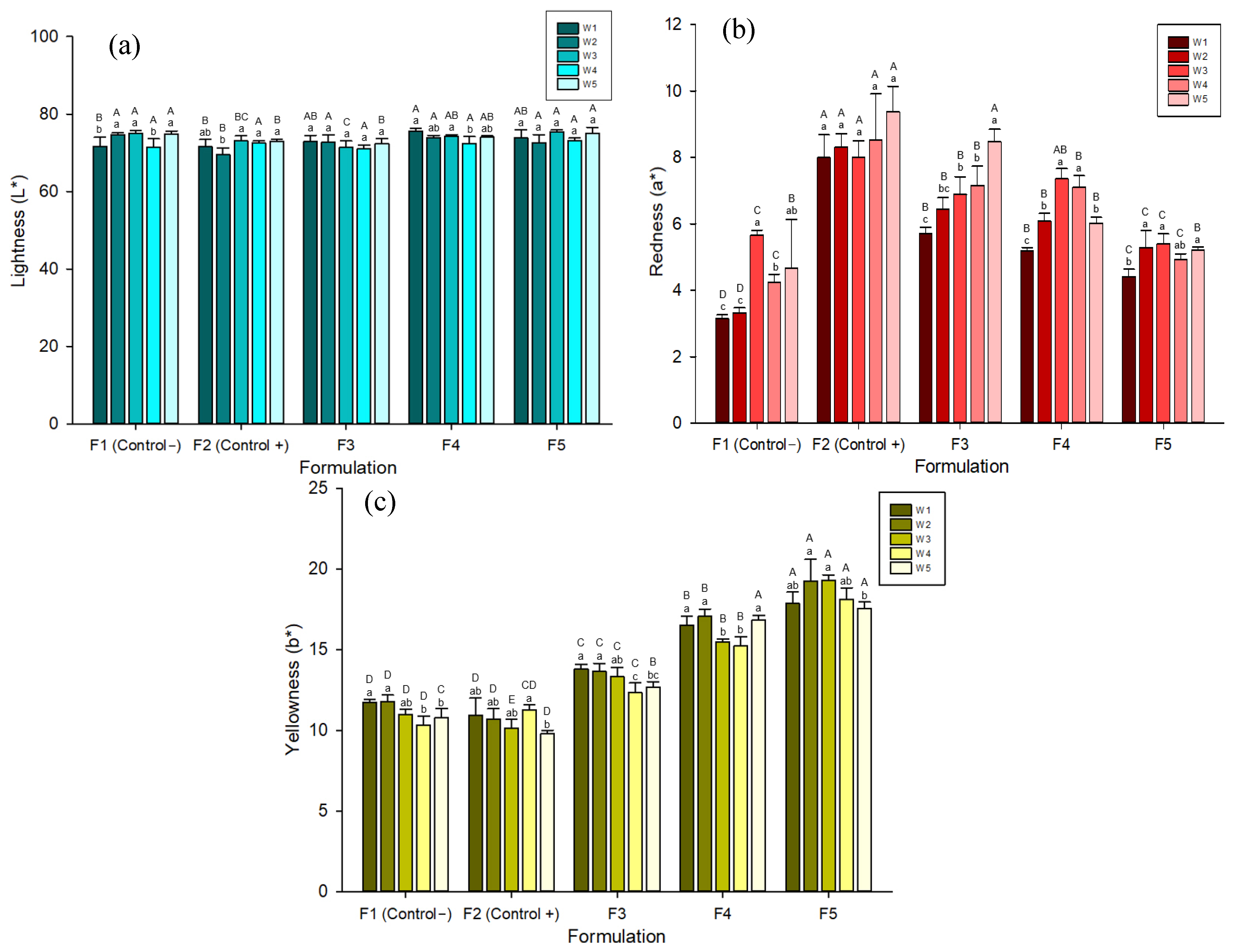
Color is a key attribute in the acceptability of meat products, as it directly influences consumer perception of freshness and quality. It depends on the concentration and redox state of heme pigments, as well as light scattering properties within the meat matrix [25]. Figure 1 shows the effects of incorporating enriched safflower oil (ESO) and reducing nitrite levels in the following formulations: F1 (Negative Control, 0% ESO, 0% nitrites), F2 (Positive Control, 0% ESO, 0.15% nitrites), F3 (0.5% ESO, 0.075% nitrites), F4 (1% ESO, 0.05% nitrites), and F5 (1.5% ESO, 0% nitrites). Lightness (L*), redness (a*), and yellowness (b*) values were measured over 5 weeks of refrigerated storage.
Figure 1a shows the results for lightness (L*). At week 1, formulations containing ESO (F3, F4, and F5) showed higher L* values (72.89–75.64) compared to F1 (71.68) and F2 (71.67). By week 5, L* values slightly increased in F1, F2, and F5 (74.88, 72.90, and 75.09, respectively), while decreases were observed in F3 and F4 (72.41 and 74.01, respectively). No statistically significant differences were observed within formulations over time, nor among formulations at any storage week. The higher lightness in formulations with ESO may be related to increased light scattering due to changes in the lipid microstructure of the meat matrix. Fernández-López et al. [26] reported that moisture and fat content can affect light reflectance, thereby increasing product brightness. Similar results were found by Kim and Chin [13] in sausages formulated with paprika oleoresin and sunflower oil, where L* values were higher in nitrite-free treatments (T1: 74.9) than in nitrite-containing ones (Control: 73.6; T2: 73.9; T3: 73.2).
Figure 1b presents the a* (redness) values. In week 1, the formulations with ESO (F3, F4, and F5) exhibited higher a* values (5.70, 5.19, and 4.40, respectively) than F1 (3.14), but lower than F2 (7.99), which contained only nitrites. By week 5, redness values increased in all formulations, with F2 recording the highest value (9.37), followed by F3 (8.47), F4 (6.02), and F5 (5.21), while F1 had the lowest value (4.66). Results showed that F2 (Positive Control) did not exhibit statistically significant differences over the five-week period, in contrast to the other formulations, which showed significant changes in redness during storage. Moreover, significant differences in a* values were found among formulations within the same evaluation week.
The results suggest that the initial redness observed in formulations containing ESO may be attributed to the presence of carotenoids (capsanthin and capsorubin) from the Anaheim chili oleoresin. These carotenoids, classified as xanthophylls, contain hydroxyl groups at both ends of their molecular structures, which confer polarity and facilitate their extraction into the oleoresin [12,32,33]. By week 5, redness values increased in all formulations, possibly due to the stabilization or concentration of these pigments. In F2, the presence of nitrites promoted the formation of nitrosomyoglobin, a stable red pigment, explaining its highest a* value. In contrast, the increases in F3, F4, and F5 may be attributed to the slow oxidation of phenolic compounds present in ESO, which interact with meat components and enhance redness. However, since their a* values remained below those of F2, this suggests that nitrites are more effective at preserving red color [31]. Conversely, formulation F1, lacking both ESO and nitrites, showed the lowest redness values throughout the storage period, likely due to the oxidation of oxymyoglobin (OxyMb) into brownish metmyoglobin (MetMb), which imparts grayish-brown tones [34].
Kim and Chin [13] reported that sausage formulations containing nitrites, sunflower oil, and paprika oleoresin exhibited higher a* values (T3: 12.3; T2: 11.7) than nitrite-free formulations (T1: 6.60), attributing this effect to reddish carotenoid pigments present in paprika. In contrast, Gutiérrez-Pacheco et al. [27] observed that the addition of pomegranate juice or powder decreased a* values (6.8–9.2) relative to the control (9.5), likely due to lutein and other compounds that impart yellowish hues to meat products.
Figure 1c presents the results for the yellowness parameter (b*). In week 1, higher b* values were recorded in F3, F4, and F5 (13.82, 16.52, and 17.86, respectively), whereas F1 (Negative Control) and F2 (Positive Control) exhibited lower values (11.76 and 10.96, respectively). By week 5, b* values decreased in all formulations; however, F3, F4, and F5 retained higher yellowness (12.70–17.56) compared to F1 and F2 (10.80 and 9.79, respectively). Although no statistically significant differences were observed within each formulation over the storage period, significant differences were found among formulations at specific storage times.
These findings align with those of Kim and Chin [13], who attributed increased b* values to the presence of carotenoids in paprika oleoresin. They reported higher b* values in sausages containing paprika oleoresin and sunflower oil (T1: 9.62; T2: 7.51; T3: 7.86), compared to the nitrite-only control (6.19). Similarly, Gutiérrez-Pacheco et al. [27] found that the addition of pomegranate (juice or powder) increased b* values (9.2–19.5) in pork sausages relative to the control (8.9), attributing this to the presence of chlorophyll and lutein, which can impart yellowish and greenish hues to meat products.

3.2. pH

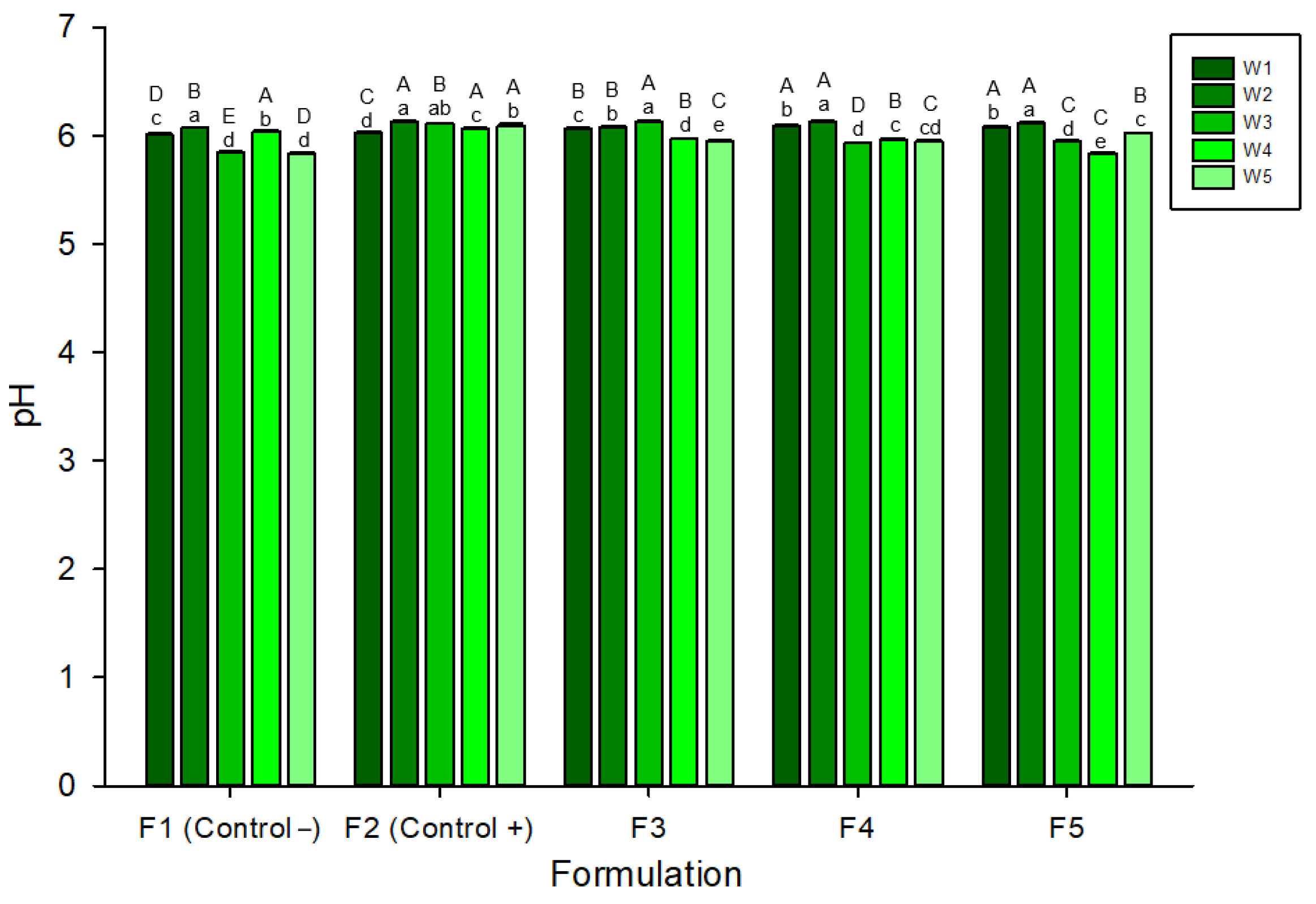
The pH values of the samples evaluated during the storage period are presented in Figure 2. In week 1, the formulations without ESO (F1, Negative Control and F2, Positive Control) exhibited the lowest pH values (6.01 and 6.03, respectively), whereas F3, F4, and F5, containing ESO, showed slightly higher values (6.06, 6.09, and 6.08, respectively). After five weeks of storage, a general decrease in pH was observed in most formulations, reaching 5.84 in F1, 5.95 in both F3 and F4, and 6.02 in F5. However, F2 showed a pH increase to 6.09. Overall, the results indicate statistically significant differences between formulations at each specific storage week. Additionally, each formulation exhibited significant differences over the five-week storage period.
Wongnen et al. [35] evaluated pork sausages stored at 4 °C and supplemented with Glochidion wallichianum leaf extract at concentrations ranging from 0 to 10%. They reported that pH remained stable in most treatments; however, a significant reduction was observed in samples containing 10% extract. This was attributed to the release of protons from phenolic compounds during their oxidation and interaction with meat proteins and lipids during cooking and storage, leading to the formation of free phenolic acids. Similarly, Gutiérrez-Pacheco et al. [27] reported that the addition of pomegranate juice or peel powder reduced the pH compared to the control, due to the inherently acidic nature of these ingredients.
In contrast, other studies have shown that the addition of lipid-based ingredients or bioactive compounds does not significantly affect sausage pH. Kim and Chin [13] reported pH values ranging from 6.05 to 6.08 in pork sausages formulated with paprika oleoresin, sunflower oil, and nitrites, with no significant differences observed. Similarly, Kim [36] studied chicken sausages supplemented with pepper seed powder and oil, reporting that pH remained stable during the first 14 days of storage at 4 °C. However, a gradual decline in pH was observed thereafter, which was associated with microbial growth during storage. Several authors have linked pH reduction primarily to microbial activity during storage, rather than to the incorporation of vegetable powders, seeds, or by-products. For instance, Fernández-López et al. [26] observed that the initial pH of 6.14 in Frankfurt-type sausages was not significantly affected by the addition of chia seeds, but gradually declined due to lactic acid bacteria growth. In contrast, Balzan et al. [37] proposed that the source of bioactive compounds could influence pH during cooking. They observed pH reductions in both raw (from 5.8 to 5.7) and cooked (from 6.1 to 6.0) pork sausages after the addition of phenolic compounds derived from olive oil by-products.

3.3. Texture Profile Analysis

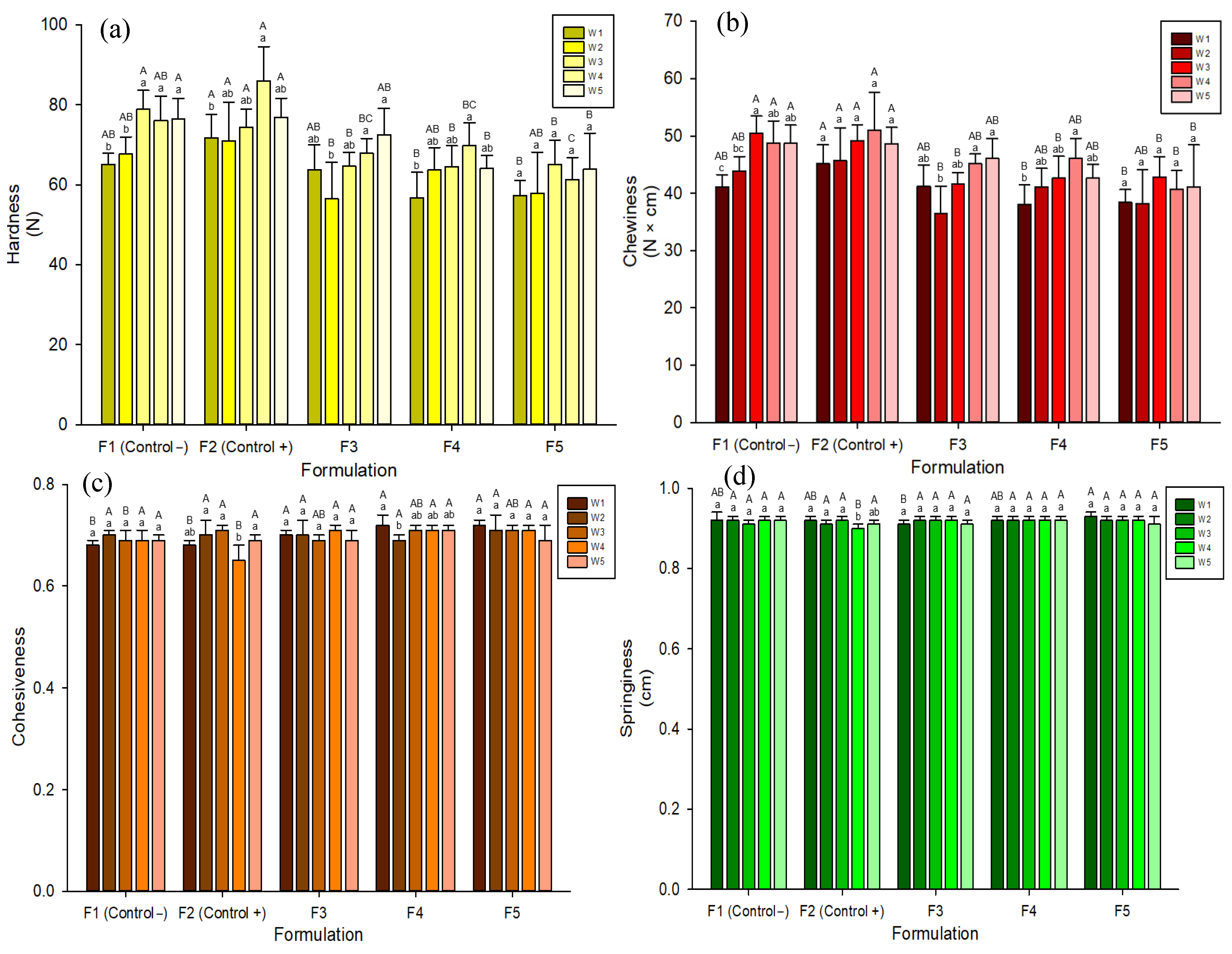
The texture profile analysis results for the evaluated formulations are shown in Figure 3. Figure 3a presents the hardness values. Overall, no statistically significant differences (p > 0.05) were observed among formulations within the same storage week or within each formulation throughout the 5-week storage period. In week 1, formulations F1 and F2 exhibited values of 65.11 and 71.80, respectively, while samples containing ESO (F3, F4, and F5) showed values ranging from 56.81 to 63.83. Although a numerical increase in hardness was observed by week 5 across all formulations (F1: 76.35; F2: 76.80; F3: 72.49; F4: 64.06; F5: 63.90), these changes were not statistically significant. The consistency in total salt content (1.65%) across all treatments was fundamental to maintaining uniform ionic strength, which is critical for myofibrillar protein extraction and the subsequent development of texture. Although pork back fat was partially replaced by ESO (from 5% to 3.5%), the stability of the hardness values suggests that the enriched oil successfully integrated into the meat matrix, compensating for the reduction in solid fat without compromising the technological properties of the emulsion. The absence of significant differences indicates that the incorporation of ESO effectively maintained a hardness profile comparable to the control sausages. The slight numerical increase in hardness during storage may be attributed to progressive protein denaturation and natural water loss, though it remained within non-significant margins.
Figure 3b shows the chewiness values. Similarly, no statistically significant differences (p > 0.05) were observed between formulations or over the 5-week storage period. In week 1, formulations without ESO (F1 and F2) exhibited values of 41.09 and 45.19, respectively, whereas ESO-containing samples (F3, F4, and F5) showed values between 38.09 and 41.27. By week 5, values ranged from 41.12 to 48.72. The fact that chewiness remained statistically stable suggests that the lipid reformulation did not alter the energy required to masticate the product. These results are consistent with Kim and Chin [13], who found that the incorporation of vegetable oils and oleoresins in pork sausages did not significantly impact hardness, springiness, chewiness, or cohesiveness.
Figure 3c,d present the springiness and cohesiveness values, respectively. Overall, no statistically significant differences were observed among formulations throughout storage. These findings align with previous studies by Barros et al. [38], who reported that the addition of tiger nut oil in beef burgers did not affect texture parameters.
On the other hand, some studies have reported contrasting effects on the texture of reformulated meat products. Bázan-Lugo et al. [39] found that the addition of 2% paprika powder in pork sausages increased hardness, possibly due to greater water retention during cooking. Gutiérrez-Pacheco et al. [27] evaluated the impact of pomegranate in pork sausages, finding that pomegranate juice increased hardness, cohesiveness, springiness, and chewiness, while pomegranate powder reduced them. These effects may be related to the formation of complexes between phenolic compounds and proteins, through covalent and non-covalent interactions, which alter protein solubility and functionality and, consequently, the texture of processed meat products such as sausages.
Vivar-Vera et al. [31] examined the incorporation of star fruit fiber into pork and turkey sausages and determined that increasing fiber concentrations led to enhanced hardness and chewiness, alongside diminished springiness. These modifications were associated with the fiber’s capacity to retain water within the meat matrix. In a related context, Lee et al. [40] documented a decline in texture-related metrics when substituting animal fat with vegetable oils, ascribing this to interactions between fatty acids and muscle proteins yielding a looser structure. In our study, the balanced combination of ESO and constant salt levels likely prevented such a decline, preserving the textural integrity of the sausages throughout the 5-week period.

3.4. Proximate Composition and Residual Sodium Chlorides

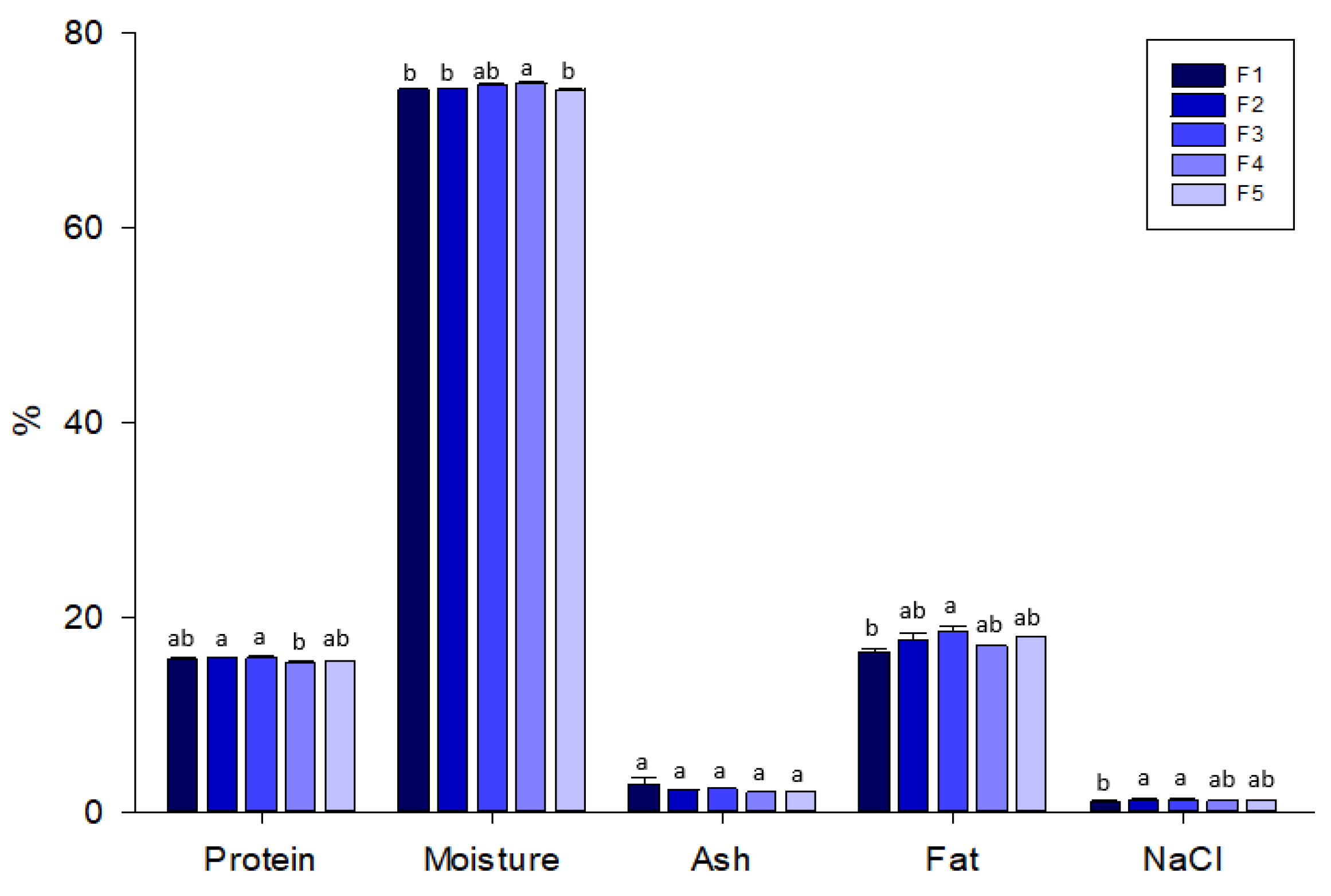
The assessment of proximate composition (moisture, protein, fat, and ash contents) as well as residual sodium chloride levels in pork sausages reformulated with enriched safflower oil (ESO), revealed no statistically significant variations among the tested formulations (Figure 4). These results indicate that the inclusion levels of ESO applied in this study were insufficient to elicit measurable changes in the overall chemical profile of the product. Similar outcomes were documented by Kim and Chin [13], who reported no notable alterations in proximate composition following the incorporation of paprika oleoresin and sunflower oil into pork sausage formulations.
In contrast to the present findings, Cocan et al. [3] reported significant differences in the proximate composition of pork sausages supplemented with yellow or red bell pepper. Their formulations exhibited moisture contents ranging from 46.88% to 49.58%, protein between 18.75% and 19.58%, fat from 24.90% to 26.48%, and ash levels from 2.36% to 3.13%. These compositional shifts were attributed to both the nature of the plant-based ingredients and the processing techniques employed, such as smoking, scalding, or drying. Likewise, Cabral et al. [4] observed notable differences in pork sausages fortified with antioxidants derived from globe pepper, with reported ranges of 14.82–18.01% for protein, 22.40–24.13% for fat, 63.24–65.28% for moisture, and 2.82–2.99% for ash content. Previous studies have also reported modifications in the proximate composition of processed meat products following the partial substitution of pork fat with vegetable oils. Lee et al. [40] demonstrated that incorporating blends of grape seed, olive, and canola oils resulted in decreased moisture, protein, and ash contents in pork sausages, likely due to variations in fat composition. On the other hand, Chen et al. [41] documented reductions in moisture and fat levels in sausages formulated with canola oil, without significant alterations in protein and ash values. Regarding the residual sodium chloride content, values in the present study ranged from 1.04% to 1.26% NaCl, with no statistically significant differences among formulations. These concentrations were slightly lower than those reported by Cocan et al. [3], who observed levels between 2.05 and 2.18 g/100 g in sausages containing red or yellow bell peppers. Similarly, Balzan et al. [37] reported values ranging from 1.5 to 2.4 g/100 g in products formulated with phenolic extracts derived from olive oil by-products.

3.5. Changes in Lipid Oxidation by Measurement of Thiobarbituric Acid Reactive Substances (TBARS)

Oxidative degradation is a major factor influencing the quality and shelf life of meat products. Among the most commonly used indicators for its evaluation are color, peroxide value, and thiobarbituric acid reactive substances (TBARS), with TBARS being one of the most widely accepted methods due to its quantification of malondialdehyde (MDA), a key secondary product of lipid peroxidation [42,43]. Several studies have established 2 mg MDA/kg as the upper acceptable limit for oxidation in meat products [44], although values exceeding 1.0 mg MDA/kg are often associated with the onset of rancid flavors and a decline in sensory quality [36,45].
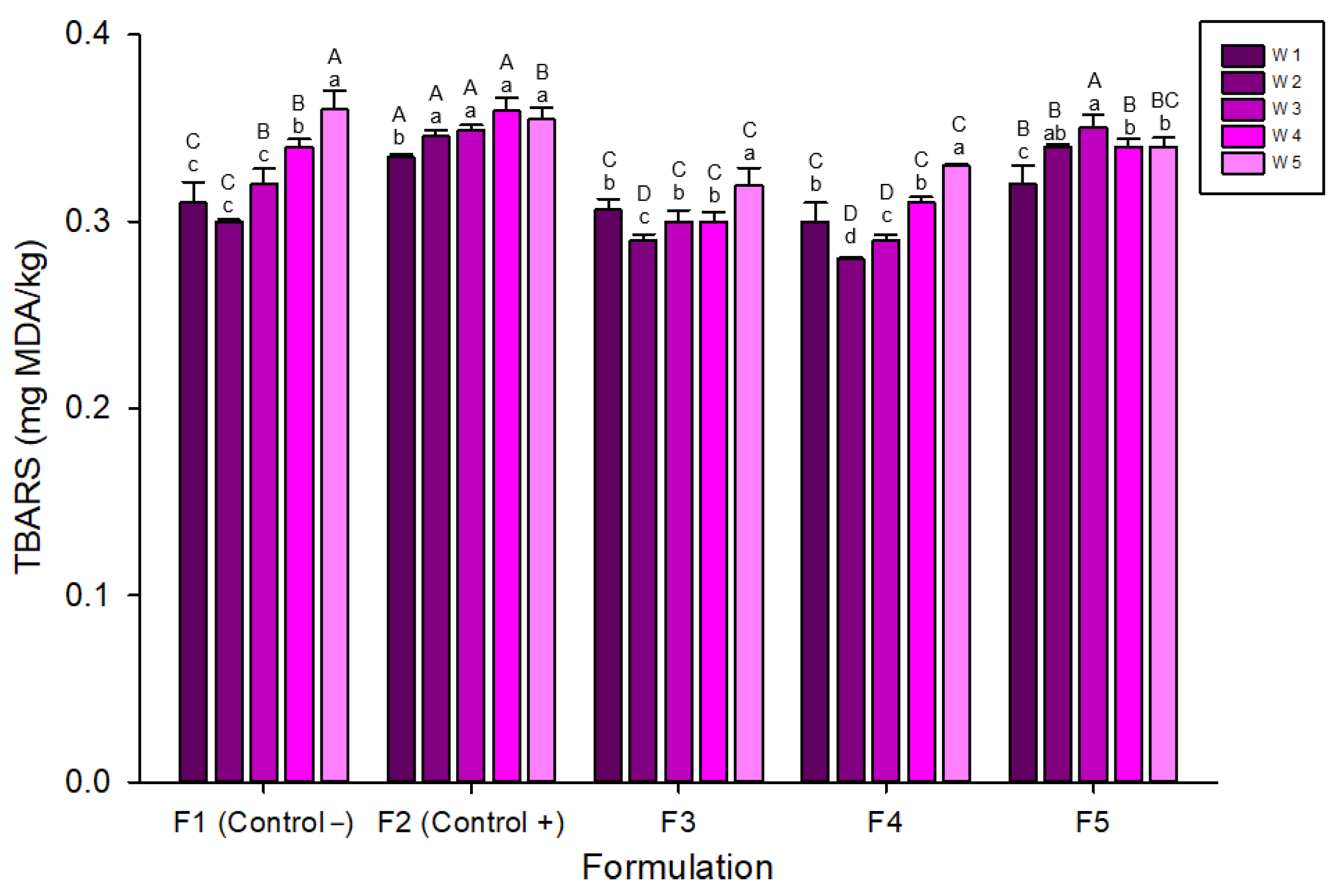
TBARS values for all pork sausage formulations progressively increased during refrigerated storage at 4 °C (Figure 5). By week 1, formulations F2 (Positive Control) and F5 exhibited the highest TBARS levels (0.33 and 0.32 mg MDA/kg, respectively), with no statistically significant difference between them. Conversely, the lowest values were observed in F1 (Negative Control), F3, and F4, which ranged from 0.30 to 0.31 mg MDA/kg, also without significant differences. At week 5, the formulations lacking ESO (F1, F2) and the one without nitrites (F5) showed the highest TBARS values (0.34 to 0.36 mg MDA/kg), whereas F3 and F4, containing both ESO and nitrites, exhibited the lowest levels (0.32 and 0.33 mg MDA/kg). Overall, TBARS values remained below 0.36 mg MDA/kg across all treatments, including the negative control. These findings indicate that the combination of ESO and nitrites in F3 and F4 effectively mitigated lipid oxidation, offering protection comparable to that provided by nitrites alone (F2) during five weeks of storage.
According to Choe and Min [46], antioxidants neutralize free radicals by donating hydrogen atoms, forming relatively stable and less reactive antioxidant radicals. This mechanism is fundamental in halting the propagation of lipid oxidation in food systems. The phenolic compounds in ESO primarily function through this pathway, scavenging free radicals and inhibiting both the initiation and propagation phases of oxidation. Moreover, transition metals such as iron and copper catalyze the generation of free radicals via hydrogen abstraction or hydroperoxide decomposition. Phenolic compounds can chelate these metals, thereby preventing their involvement in redox reactions that accelerate lipid oxidation.
Reddy et al. [47] indicated that phenolic antioxidants not only function as free radical scavengers but also reduce the local oxygen concentration, thereby preventing the initiation of the oxidative chain reaction. In this context, the phenolic compounds present in ESO, particularly flavonoids, contribute by neutralizing free radicals and inhibiting peroxide formation, which accounts for the lower TBARS levels observed in formulations F3 and F4 during storage. Furthermore, flavonoids and phenolic acids are effective at chelating transition metals such as Fe2+, Fe3+, and Cu2+, well-known pro-oxidants in food systems. This chelating capacity is critical for minimizing the catalytic activity of these metals in lipid oxidation reactions, thereby enhancing the oxidative stability of meat products throughout storage.
The antioxidant activity of ESO aligns with previous findings on the application of Capsicum extracts in meat products. Cabral et al. [4] reported TBARS values between 0.013 and 0.069 mg MDA/kg in pork sausages treated with globe pepper (Capsicum baccatum var. pendulum) extract over 60 days of storage, attributing this effect to phenolic compounds and the protective effect of vacuum packaging. In contrast, Cocan et al. [3] observed a different pattern in sausages containing yellow or red peppers, with TBARS values rising from 0.419–1.035 mg MDA/kg on day 1 to 2.046–3.554 mg MDA/kg by day 20.
In a similar study, De Oliveira et al. [5] compared the addition of globe pepper extract with sodium erythorbate in fresh and smoked pork sausages, finding TBARS values between 0.013 and 0.069 mg MDA/kg after 30 days of storage. This suggests that the phenolic compounds in the pepper acted synergistically with vacuum packaging to prevent lipid oxidation. Similarly, Kim [36] reported that adding pepper seed powder and oil to chicken sausages reduced lipid oxidation compared to the control, with initial TBARS values of 0.28 and 0.29 μg MDA/mL, increasing to 0.38 and 0.47 μg MDA/mL after 14 days. These findings indicate that chili-based treatments provided effective protection against lipid oxidation, maintaining TBARS values below 1.0 mg MDA/kg, the threshold for avoiding undesirable flavor and odor changes and preserving product quality [48].
Several studies have reported higher TBARS values than those observed in the present work. For instance, Nicorescu et al. [49] reported that while rosehip polyphenols combined with nitrites reduced lipid oxidation in smoked pork sausages during the early stages of storage, TBARS levels still exceeded 3.5 mg MDA/kg by day 20. Similarly, Balzan et al. [37] found TBARS values ranging from 0.6 to 2.5 mg MDA/kg in raw sausages without antioxidants after 14 days of storage, and from 3.7 to 4.2 mg MDA/kg in cooked sausages. However, the incorporation of phenolic extracts derived from olive oil processing residues maintained TBARS levels below 1 mg MDA/kg in both matrices, indicating their efficacy in controlling lipid oxidation. Additionally, Joseph et al. [50] demonstrated that meat emulsions enriched with tomato and guava exhibited significantly lower TBARS values than the control, an effect attributed to the antioxidant activity of compounds such as lycopene, β-carotene, ferulic acid, caffeic acid, and vitamin C, highlighting the importance of natural antioxidants in meat preservation.

3.6. Residual Nitrite Content

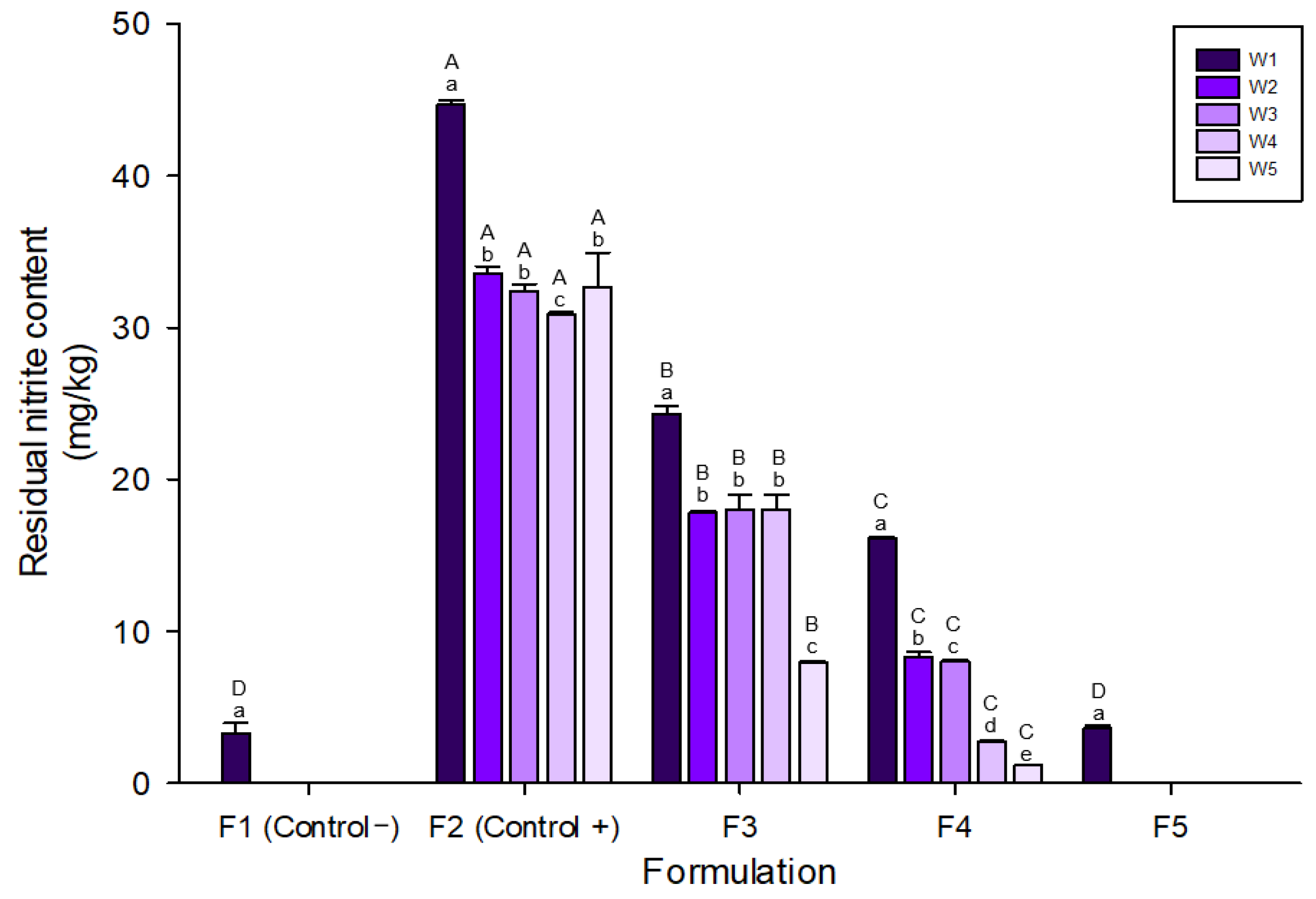
Figure 6 presents the residual nitrite content in pork sausages stored at 4 °C over a five-week period. Initially, the highest values were observed in formulations F2, F3, and F4 (44.67, 24.32, and 16.15 mg/kg, respectively), while significantly lower levels were detected in F1 and F5 (3.30 and 3.64 mg/kg, respectively). As storage progressed, nitrite concentrations gradually declined and became undetectable in F1 and F5 from the second week onward. At the end of the storage period, residual nitrite levels in F2 and F3 were 32.68 and 7.95 mg/kg, respectively, whereas F4 showed only 1.16 mg/kg. Overall, statistically significant differences (p < 0.05) were observed both among formulations at each evaluation week and within each formulation across the storage period.
The progressive decrease in residual nitrite levels observed in formulations F3 and F4 could potentially be associated with interactions between nitrites and the bioactive compounds present in ESO, particularly polyphenols and flavonoids. Several studies have reported that nitrites can react with phenolic compounds or other reducing agents present in the formulation, as well as with endogenous substances in meat. According to previous findings, when the pH of the meat approaches 6.0 or lower, nitrite is converted into nitrous acid, a relatively unstable compound. This nitrous acid readily reacts with reducing agents such as reduced nicotinamide adenine dinucleotide (NADH), cysteine, cytochromes, or with exogenous agents like ascorbic acid, and phenolic acids, leading to the formation of nitric oxide, a key intermediate responsible for the development of the characteristic pink color in cured sausages [51,52]. Although the specific reaction products between ESO components and nitrites were not directly quantified in this study, these established chemical pathways offer a plausible mechanism to explain the lower residual nitrite concentrations observed in the reformulated samples.
This behavior aligns with the findings of Kim and Chin [13], who reported a gradual reduction in residual nitrite levels in sausages formulated with paprika oleoresin and sunflower oil. In their study, the reference formulation (150 mg/kg nitrites) showed a decrease from 21.2 mg/kg on day 0 to 4.88 mg/kg by day 35. In contrast, formulations with lower nitrite levels—T2 (37.5 mg/kg nitrites and 0.1% paprika oleoresin) and T3 (75 mg/kg nitrites and 0.1% paprika oleoresin)—had initial values of 6.90 and 9.45 mg/kg, respectively, which declined to 0.55 and 1.91 mg/kg by the end of the storage period.
Contrasting findings were reported by Delgado-Ospina et al. [53], who evaluated pork sausages supplemented with cocoa pod husk flour and observed residual nitrite levels exceeding 30 mg/kg in all formulations, suggesting limited interaction between cocoa polyphenols and nitrites. Conversely, Fernández-López et al. [26] found that the incorporation of chia seeds into Frankfurt-type sausages accelerated the reduction of residual nitrites, with levels decreasing from 20.37–23.88 mg/kg to 2.05–2.22 mg/kg over 21 days, an effect attributed to the antioxidant activity of polyphenols.
The use of nitrites in meat products plays a crucial role in ensuring oxidative stability, color, and microbiological safety. In processed meats, nitrites are converted into nitric oxide (NO), which reacts to myoglobin to form nitrosomyoglobin; this process is consistent with the development of the characteristic red coloration and the subsequent stabilization of the cured pink hue [54]. It is important to note that residual nitrite levels can be influenced by several factors, including storage conditions, pH, temperature, initial nitrite concentration, and the presence of reducing agents. Consequently, any unreacted nitrite may remain bioavailable for further reactions within the human body, potentially leading to the formation of carcinogenic nitroso-compounds [53].
In the study by Vivar-Vera et al. [31], the incorporation of dietary fiber concentrate from starfruit into sausages was shown to reduce residual nitrite levels. This effect was attributed to the transformation of nitrite into nitrous acid and its subsequent conversion into nitric oxide, a process mediated by flavonoids and ascorbic acid. This mechanism not only contributes to color stability and inhibits Clostridium botulinum, thereby enhancing product safety, but also reduces the formation of nitrosamines. However, it is important to note that excessive reduction of nitrite levels may compromise the microbiological safety of the product.

3.7. Total Viable Counts

Table 2 shows the changes in total viable counts (TVC) of mesophilic aerobic bacteria in pork sausages formulated with enriched safflower oil (ESO) and varying concentrations of nitrites, stored for five weeks at 4 °C. In week 1, all formulations exhibited low microbial counts. However, by week 2, formulation F1 (negative control) exceeded the microbiological quality limit of 2 log CFU/g established by the Mexican official standard [55] for processed meat products. As storage progressed, microbial counts gradually increased in all samples. Notably, formulations F2 (positive control) and F4 remained within the marginally acceptable limit of 4 log CFU/g by the end of the storage period. In contrast, formulations F3 and F5 surpassed this threshold, indicating that the combination of ESO and nitrites in F4 provided microbiological stability comparable to F2, which contained nitrites only.
These results may be attributed to the presence of bioactive compounds in the ESO, such as phenolic compounds, carotenoids, and capsaicinoids. These molecules are known to compromise bacterial cell membrane integrity, inhibit biofilm formation, and interfere with enzymatic activity, thereby contributing to the reduction of microbial counts [56]. Nevertheless, the isolated antimicrobial effect of ESO (F5) was insufficient to maintain microbial counts within acceptable limits, unlike the synergistic effect of ESO and nitrites observed in F4. Romero-Luna et al. [57] also reported multiple antimicrobial mechanisms associated with chili-derived bioactive compounds. Among these are the actions of antimicrobial peptides (AMPs), which increase membrane permeability, induce pore formation, and disrupt protein synthesis. Phenolic compounds may bind to the bacterial cell wall, alter surface properties, and cause K+ ion leakage, leading to reduced viability. Capsaicinoids alter membrane structure by adhering to the cell wall and facilitating the influx of Ca2+ and K+ ions, as well as capsaicin itself, resulting in osmotic stress and eventual cell lysis. Capsaicin has also been shown to interfere with bacterial gene expression, affecting cell growth, while capsianosides may inhibit biofilm formation by chelating calcium ions essential for biofilm structural integrity.
The antimicrobial activity associated with chili-derived bioactive compounds, as reported by Mokhtar et al. [58], is associated with the ability of flavonoids to penetrate phospholipid membranes due to their hydrophobic nature. This facilitates the transport of other bioactive compounds across membrane proteins. Additionally, phenolic acids such as gallic acid and cinnamic acid can disrupt membrane hydrophobicity, leading to local pore formation and leakage of essential intracellular components. These alterations compromise cell integrity and disrupt microbial ionic and metabolic homeostasis.
Additionally, chili-derived bioactive compounds are known to exert antimicrobial effects through the inhibition of bacterial cell wall synthesis, leading to energy depletion and impaired cellular function. Supporting this mechanism, Ekom et al. [56] reported that methanolic extracts of Capsicum annuum caused significant membrane disruption in bacteria, resulting in the leakage of cytoplasmic components such as sugars, proteins, and nucleic acids, indicative of severe structural damage. Moreover, while some bacteria can develop resistance via biofilm formation, the Capsicum annuum extract demonstrated substantial biofilm inhibition in Staphylococcus aureus 18, Pseudomonas aeruginosa PA01, and Escherichia coli 64R, with inhibition rates of 53.8%, 53.4%, and 35.34%, respectively. This effect was attributed to the inhibition of peptidoglycan synthesis, a critical structural component of bacterial cell walls.
Previous studies have evaluated similar formulations in meat products. Kim and Chin [13] reported that microbial counts in sausages containing paprika oleoresin, sunflower oil, and nitrites increased gradually during storage, remaining below 2 log CFU/g at day 7, reaching 2.30 log CFU/g at day 14, and 4.61 log CFU/g by day 35. Similarly, Kim [36] found that chicken sausages formulated with pepper seed powder and oil maintained undetectable microbial growth for up to 14 days of refrigerated storage at 4 °C. In another study, Nicorescu et al. [49] observed that combining rosehip polyphenols with nitrites enhanced the antimicrobial activity of smoked pork sausages. In contrast, using polyphenols alone or synthetic additives (sodium nitrite, BHA, and tetrasodium pyrophosphate) resulted in significantly higher microbial growth. These findings underscore the synergistic benefit of combining nitrites with natural antioxidants to improve microbiological stability.
In line with this, other studies have evaluated the incorporation of plant extracts in meat products as sources of bioactive compounds. Salejda et al. [25] reported that the inclusion of green walnut husk significantly reduced microbial growth in pork/beef sausages compared to the control. De Oliveira et al. [5] found that the addition of Capsicum baccatum var. pendulum (globe pepper) extract to fresh and smoked pork sausages maintained microbial growth within acceptable limits, attributing this effect to the combined action of natural antioxidants, adherence to good manufacturing practices, and optimal storage conditions. Fernández-López et al. [26], however, observed that while the inclusion of chia in Frankfurt-type sausages did not prevent microbial proliferation, it slightly reduced microbial growth relative to the control by the end of the storage period.

4. Conclusions

In conclusion, this study suggests that replacing synthetic nitrites with enriched safflower oil containing Anaheim chili oleoresin (ESO) can effectively maintain the oxidative stability and microbiological safety of pork sausages throughout 5 weeks of refrigerated storage. Formulation F4, in particular, provided a promising balance of these preservative properties. While the total salt content was maintained strictly constant at 1.65% to ensure uniform ionic strength, the reduction in pork fat (from 5% to 3.5%) was a strategic adjustment to accommodate the ESO inclusion. However, the absence of direct quantification for nitrosamines and specific cured pigments, such as nitrosylhemochrome, is acknowledged as a limitation. Furthermore, the need for broader microbiological studies—including the evaluation of specific pathogenic bacteria—and comprehensive sensory analysis (to evaluate the impact of oleoresin pungency on flavor and consumer acceptance) is recognized to further strengthen these findings. Future research incorporating these elements is essential to fully validate the safety, quality, and market viability of these reduced-nitrite meat matrices.

Author Contributions

Conceptualization, A.V.-E., M.V.M., M.I.E.-A. and S.R.-C.; methodology, A.V.-E., M.V.M. and S.R.-C.; formal analysis, A.V.-E., M.V.M., C.L.D.-T.-S., J.d.J.O.-P. and E.M.-R.; investigation, M.I.E.-A., L.A.C.-C., V.M.O.-H. and S.R.-C.; resources, M.I.E.-A., L.A.C.-C., V.M.O.-H. and S.R.-C.; data curation, M.V.M., M.I.E.-A. and S.R.-C.; writing—original draft preparation, A.V.-E., M.I.E.-A. and S.R.-C.; writing—review and editing, A.V.-E., M.I.E.-A. and S.R.-C.; visualization, A.V.-E. and M.V.M.; supervision, L.A.C.-C. and E.M.-R.; project administration, S.R.-C. and M.I.E.-A.; funding acquisition, M.I.E.-A., S.R.-C. and L.A.C.-C. All authors have read and agreed to the published version of the manuscript.

Funding

This research received no external funding.

Data Availability Statement

The original contributions presented in this study are included in the article. Further inquiries can be directed to the corresponding authors.

Acknowledgments

We gratefully acknowledge the Mexican Council for Science and Technology (Conahcyt) for the postgraduate scholarship granted for the first author.

Conflicts of Interest

The authors declare no conflicts of interest.

References

  1. Taneri, P.E.; Wehrli, F.; Roa-Díaz, Z.M.; Itodo, O.A.; Salvador, D.; Raeisi-Dehkordi, H.; Bally, L.; Minder, B.; Jong, J.C.K.; Laine, J.E.; et al. Association between ultra-processed food intake and all-cause mortality: A systematic review and meta-analysis. Am. J. Epidemiol. 2022, 191, 1323–1335. [Google Scholar] [CrossRef] [Scilit] [PubMed]
  2. Yang, D.; Chen, C.; Zhao, D.; Li, C. Impact of ultra-processed meat products on human health: Review and outlook. J. Food Sci. 2025, 90, e70040. [Google Scholar] [CrossRef] [Scilit] [PubMed]
  3. Cocan, I.; Cadariu, A.; Negrea, M.; Alexa, E.; Obistioiu, D.; Radulov, I.; Poiana, M. Investigating the antioxidant potential of bell pepper processing by-products for the development of value-added sausage formulations. Appl. Sci. 2022, 12, 12421. [Google Scholar] [CrossRef] [Scilit]
  4. Cabral, N.O.; Oliveira, R.F.; Henry, F.C.; Oliveira, D.B.; Santos Junior, A.C.; Maia Junior, J.A.; Martins, M.L.L. Effect of the fruit aqueous extract of balloon pepper (Capsicum baccatum var. Pendulum) on lipid oxidation, microbiological quality and consumer acceptance of fresh pork sausage and smoked. Food Sci. Technol. 2021, 42, e09221. [Google Scholar] [CrossRef] [Scilit]
  5. De Oliveira-Cabral, N.; De Oliveira, R.F.; Henry, F.D.C.; De Oliveira, D.B.; Dos Santos, A.C.; De azevedo-Maia, J.; Martins, M.L.L. Effect of the extract of balloon pepper (Capsicum baccatum var. Pendulum) on lipid peroxidation and microbiology of pork sausage. Agric. Res. Technol. 2020, 24, 165–167. [Google Scholar] [CrossRef] [Scilit]
  6. Servicio de Información Agroalimentaria y Pesquera (SIAP). Cierre de la Producción Agrícola por Cultivo. Available online: https://nube.agricultura.gob.mx/cierre_agricola/ (accessed on 15 July 2024).
  7. Baenas, N.; Belović, M.; Ilic, N.; Moreno, D.; García-Viguera, C. Industrial use of pepper (Capsicum annum L.) derived products: Technological benefits and biological advantages. Food Chem. 2019, 274, 872–885. [Google Scholar] [CrossRef] [Scilit]
  8. Barik, S.; Ponnam, N.; Reddy, A.C.; Reddy, L.D.C.; Saha, K.; Acharya, G.C.; Madhavi Reddy, K. Breeding peppers for industrial uses: Progress and prospects. Ind. Crops Prod. 2022, 178, 114626. [Google Scholar] [CrossRef] [Scilit]
  9. ElGamal, R.; Song, C.; Rayan, A.M.; Liu, C.; Al-Rejaie, S.; ElMasry, G. Thermal degradation of bioactive compounds during drying process of horticultural and agronomic products: A comprehensive overview. Agronomy 2023, 13, 1580. [Google Scholar] [CrossRef] [Scilit]
  10. Procopio, F.R.; Ferraz, M.C.; Paulino, B.N.; do Amaral Sobral, P.J.; Hubinger, M.D. Spice oleoresins as value-added ingredient for food industry: Recent advances and perspectives. Trends Food Sci. Technol. 2022, 122, 123–139. [Google Scholar] [CrossRef] [Scilit]
  11. Da Silva Anthero, A.G.; Hogg, B.; Ryan, S.M.; O’Neill, G.; Hubinger, M.D.; Celayeta, J.M.F. Spray-dried Capsicum oleoresin microparticles: A comprehensive study on stability, cytotoxicity, and digestibility. Food Res. Int. 2025, 212, 116507. [Google Scholar] [CrossRef] [Scilit]
  12. Batiha, G.E.; Alqahtani, A.; Ojo, O.A.; Shaheen, H.; Wasef, L.; Elzeiny, M.; Ismail, M.; Shalaby, M.; Murata, T.; Zaragoza-Bastida, A.; et al. Biological properties, bioactive constituents, and pharmacokinetics of some Capsicum spp. and Capsaicinoids. Int. J. Mol. Sci. 2020, 21, 5179. [Google Scholar] [CrossRef] [Scilit]
  13. Kim, G.H.; Chin, K.B. Characteristics of low-nitrite pork emulsified-sausages with paprika oleoresin solution during refrigerated storage. J. Anim. Sci. Technol. 2021, 63, 394–404. [Google Scholar] [CrossRef] [Scilit] [PubMed]
  14. Flores, M. Sausages and comminuted products: Cooked sausages. Encycl. Food Health 2016, 722–727. [Google Scholar] [CrossRef] [Scilit]
  15. Bhattacharya, S. Extruded Snacks. In Snack Foods: Processing and Technology, 1st ed.; Academic Press: Cambridge, MA, USA, 2023; pp. 165–196. [Google Scholar] [CrossRef] [Scilit]
  16. Cerón-Guevara, M.I.; Rangel-Vargas, E.; Lorenzo, J.M.; Bermúdez, R.; Pateiro, M.; Rodríguez, J.A.; Sánchez-Ortega, I.; Santos, E.M. Reduction of salt and fat in frankfurter sausages by addition of Agaricus bisporus and Pleurotus ostreatus flour. Foods 2020, 9, 760. [Google Scholar] [CrossRef] [Scilit]
  17. Lonergan, S.M.; Topel, D.G.; Marple, D.N. Sausage processing and production. Sci. Anim. Growth Meat Technol. 2019, 14, 229–253. [Google Scholar] [CrossRef] [Scilit]
  18. Manessis, G.; Kalogianni, A.I.; Lazou, T.; Moschovas, M.; Bossis, I.; Gelasakis, A.I. Plant-derived natural antioxidants in meat and meat products. Antioxidants 2020, 9, 1215. [Google Scholar] [CrossRef] [Scilit] [PubMed]
  19. Sindelar, J.J.; Milkowski, A.L. Human safety controversies surrounding nitrate and nitrite in the diet. Nitric Oxide 2012, 26, 259–266. [Google Scholar] [CrossRef] [Scilit]
  20. Karwowska, M.; Kononiuk, A.; Wójciak, K.M. Impact of sodium nitrite reduction on lipid oxidation and antioxidant properties of cooked meat products. Antioxidants 2019, 9, 9. [Google Scholar] [CrossRef] [Scilit]
  21. Khalid, N.; Khan, R.S.; Hussain, M.I.; Farooq, M.; Ahmad, A.; Ahmed, I. A comprehensive characterisation of safflower oil for its potential applications as a bioactive food ingredient—A review. Trends Food Sci. Technol. 2017, 66, 176–186. [Google Scholar] [CrossRef] [Scilit]
  22. Hou, N.; Gao, H.; Qiu, Z.; Deng, Y.; Zhang, Y.; Yang, Z.; Gu, L.; Liu, H.; Zhu, X.; Qin, Z.; et al. Quality and active constituents of safflower seed oil: A comparison of cold pressing, hot pressing, Soxhlet extraction and subcritical fluid extraction. LWT 2024, 200, 116184. [Google Scholar] [CrossRef] [Scilit]
  23. Treto-Alemán, K.M.; Torres-Castillo, J.A.; Contreras-Toledo, A.R.; Del Rocío Moreno-Ramírez, Y. Enriquecimiento del aceite comestible por compuestos fenólicos y antioxidantes de chile piquín (Capsicum annuum var. glabriusculum). CienciaUAT 2021, 15, 156–168. [Google Scholar] [CrossRef] [Scilit]
  24. Oubannin, S.; Bijla, L.; Ahmed, M.N.; Ibourki, M.; Kharrassi, Y.E.; Devkota, K.; Bouyahya, A.; Maggi, F.; Caprioli, G.; Sakar, E.H.; et al. Recent advances in the extraction of bioactive compounds from plant matrices and their use as potential antioxidants for vegetable oils enrichment. J. Food Compos. Anal. 2024, 128, 105995. [Google Scholar] [CrossRef] [Scilit]
  25. Salejda, A.M.; Janiewicz, U.; Korzeniowska, M.; Kolniak-Ostek, J.; Krasnowska, G. Effect of walnut green husk addition on some quality properties of cooked sausages. LWT 2016, 65, 751–757. [Google Scholar] [CrossRef] [Scilit]
  26. Fernández-López, J.; Lucas-González, R.; Viuda-Martos, M.; Sayas-Barberá, E.; Navarro, C.; Haros, C.M.; Pérez-Álvarez, J.A. Chia (Salvia hispanica L.) products as ingredients for reformulating frankfurters: Effects on quality properties and shelf-life. Meat Sci. 2019, 156, 139–145. [Google Scholar] [CrossRef] [Scilit]
  27. Gutiérrez-Pacheco, S.L.; Camou, J.P.; Cumplido-Barbeitia, G.; González-Ríos, H.; Ayala-Zavala, J.F.; Heredia, J.B.; Valenzuela-Melendres, M. Effects of pomegranate juice and pomegranate peel powders on quality properties and antioxidant activity of pork sausage. J. Food Process. Preserv. 2021, 45, e15755. [Google Scholar] [CrossRef] [Scilit]
  28. Secretaría de Salud. NOM-122-SSA1-1994, Bienes y Servicios. Productos de la Carne. Productos Cárnicos Curados y Cocidos, y Curados Emulsionados y Cocidos. Especificaciones Sanitarias [Mexican Official Standard NOM-122-SSA1-1994, Goods and Services. Meat Products. Cured and Cooked Meat Products, and Emulsified and Cooked Cured Products. Sanitary Specifications]; Secretaría de Salud: Mexico City, Mexico, 1996; Available online: https://salud.gob.mx/unidades/cdi/nom/122ssa14.html (accessed on 2 April 2026).
  29. Association of Official Analytical Chemist. Official Methods of Analysis of AOAC International, 17th ed.; Association of Official Analytical Chemist: Gaithersburg, MD, USA, 2000. [Google Scholar]
  30. Botsaris, G.; Orphanides, A.; Yiannakou, E.; Gekas, V.; Goulas, V. Antioxidant and antimicrobial effects of Pistacia lentiscus l. extracts in pork sausages. Food Technol. Biotechnol. 2015, 53, 472–478. [Google Scholar] [CrossRef] [Scilit]
  31. Vivar-Vera, M.d.A.; Pérez-Silva, A.; Ruiz-López, I.I.; Hernández-Cázares, A.S.; Solano-Barrera, S.; Ruiz-Espinosa, H.; Bernardino-Nicanor, A.; González-Cruz, L. Chemical, physical and sensory properties of Vienna sausages formulated with a starfruit dietary fiber concentrate. J. Food Sci. Technol. 2018, 55, 3303–3313. [Google Scholar] [CrossRef] [Scilit] [PubMed]
  32. Aziz, E.; Batool, R.; Akhtar, W.; Rehman, S.; Shahzad, T.; Malik, A.; Shariati, M.A.; Laishevtcev, A.; Plygun, S.; Heydari, M.; et al. Xanthophyll: Health benefits and therapeutic insights. Life Sci. 2020, 240, 117104. [Google Scholar] [CrossRef] [Scilit] [PubMed]
  33. Ramakrishnan, T.V.; Francis, F.J. Autoxidation of carotenoids and their relative polarity. J. Food Qual. 1980, 3, 25–34. [Google Scholar] [CrossRef] [Scilit]
  34. Villasante, J.; Ouerfelli, M.; Bobet, A.; Metón, I.; Almajano, M.P. The effects of pecan shell, roselle flower and red pepper on the quality of beef patties during chilled storage. Foods 2020, 9, 1692. [Google Scholar] [CrossRef] [Scilit]
  35. Wongnen, C.; Ruzzama, N.; Chaijan, M.; Cheong, L.; Panpipat, W. Glochidion wallichianum leaf extract as a natural antioxidant in sausage model system. Foods 2022, 11, 1547. [Google Scholar] [CrossRef] [Scilit]
  36. Kim, Y.K. Quality improvement of the chicken sausage with pepper seed (Capsicum annuum L.). Curr. Res. Nutr. Food Sci. J. 2020, 8, 829–836. [Google Scholar] [CrossRef] [Scilit]
  37. Balzan, S.; Taticchi, A.; Cardazzo, B.; Urbani, S.; Servili, M.; Di Lecce, G.; Zabalza, I.B.; Rodriguez-Estrada, M.T.; Novelli, E.; Fasolato, L. Effect of phenols extracted from a by-product of the oil mill on the shelf-life of raw and cooked fresh pork sausages in the absence of chemical additives. LWT 2017, 85, 89–95. [Google Scholar] [CrossRef] [Scilit]
  38. Barros, J.C.; Munekata, P.E.S.; De Carvalho, F.A.L.; Pateiro, M.; Barba, F.J.; Domínguez, R.; Trindade, M.A.; Lorenzo, J.M. Use of tiger nut (Cyperus esculentus L.) oil emulsion as animal fat replacement in beef burgers. Foods 2020, 9, 44. [Google Scholar] [CrossRef] [Scilit]
  39. Bázan-Lugo, E.; García-Martínez, I.; Alfaro-Rodríguez, R.H.; Totosaus, A. Color compensation in nitrite-reduced meat batters incorporating paprika or tomato paste. J. Sci. Food Agric. 2012, 92, 1627–1632. [Google Scholar] [CrossRef] [Scilit]
  40. Lee, H.; Jung, E.; Lee, S.; Kim, J.; Lee, J.; Choi, Y. Effect of replacing pork fat with vegetable oils on quality properties of emulsion-type pork sausages. Korean J. Food Sci. Anim. Resour. 2015, 35, 130–136. [Google Scholar] [CrossRef] [Scilit]
  41. Chen, Y.; Jia, X.; Sun, F.; Jiang, S.; Liu, H.; Liu, Q.; Kong, B. Using a stable pre-emulsified canola oil system that includes porcine plasma protein hydrolysates and oxidized tannic acid to partially replace pork fat in frankfurters. Meat Sci. 2020, 160, 107968. [Google Scholar] [CrossRef] [Scilit]
  42. Papuc, C.; Goran, G.V.; Predescu, C.N.; Nicorescu, V.; Stefan, G. Plant polyphenols as antioxidant and antibacterial agents for shelf-life extension of meat and meat products: Classification, structures, sources, and action mechanisms. Compr. Rev. Food Sci. Food Saf. 2017, 16, 1243–1268. [Google Scholar] [CrossRef] [Scilit]
  43. Ozaki, M.M.; Munekata, P.E.; Jacinto-Valderrama, R.A.; Efraim, P.; Pateiro, M.; Lorenzo, J.M.; Pollonio, M.A.R. Beetroot and radish powders as natural nitrite source for fermented dry sausages. Meat Sci. 2021, 171, 108275. [Google Scholar] [CrossRef] [Scilit]
  44. Ghafouri-Oskuei, H.; Javadi, A.; Asl, M.R.S.; Azadmard-Damirchi, S.; Armin, M. Quality properties of sausage incorporated with flaxseed and tomato powders. Meat Sci. 2020, 161, 107957. [Google Scholar] [CrossRef] [Scilit]
  45. Alirezalu, K.; Hesari, J.; Yaghoubi, M.; Khaneghah, A.M.; Alirezalu, A.; Pateiro, M.; Lorenzo, J.M. Combined effects of ε-polylysine and ε-polylysine nanoparticles with plant extracts on the shelf life and quality characteristics of nitrite-free frankfurter-type sausages. Meat Sci. 2021, 172, 108318. [Google Scholar] [CrossRef] [Scilit]
  46. Choe, E.; Min, D.B. Mechanisms of antioxidants in the oxidation of foods. Compr. Rev. Food Sci. Food Saf. 2009, 8, 345–358. [Google Scholar] [CrossRef] [Scilit]
  47. Reddy, D.M.; Reddy, G.V.B.; Mandal, P.K. Application of natural antioxidants in meat and meat products—A review. Food Nutr. J. 2018, 3, 1–12. [Google Scholar] [CrossRef] [Scilit]
  48. Varela-Esquer, A.; Ruiz-Cruz, S.; Cira-Chávez, L.A.; Estrada-Alvarado, M.I.; Márquez-Ríos, E.; Valenzuela-Melendres, M. Compuestos fenólicos obtenidos de chile (Capsicum sp.) para el control de la oxidación y el deterioro bacteriano en la carne y en productos cárnicos: Revisión. Acta Agron. 2024, 73, 25–39. [Google Scholar] [CrossRef] [Scilit]
  49. Nicorescu, V.; Papuc, C.; Predescu, C.; Gajaila, I.; Petcu, C.; Stefan, G. The influence of rosehip polyphenols on the quality of smoked pork sausages, compared to classic additives. Rev. Chim. 2018, 69, 2074–2080. [Google Scholar] [CrossRef] [Scilit]
  50. Joseph, S.; Chatli, M.K.; Biswas, A.K.; Sahoo, J. Oxidative stability of pork emulsion containing tomato products and pink guava pulp during refrigerated aerobic storage. J. Food Sci. Technol. 2014, 51, 3208–3216. [Google Scholar] [CrossRef] [Scilit] [PubMed]
  51. Ben, T.; Wu, P.; Zou, H.; Chen, Y. Characterization of nitrite degradation by polyphenols in sea buckthorn (Hippophaë rhamnoides L.) by density function theory calculations. LWT 2021, 149, 111884. [Google Scholar] [CrossRef] [Scilit]
  52. Li, L.; Shao, J.; Zhu, X.; Zhou, G.; Xu, X. Effect of plant polyphenols and ascorbic acid on lipid oxidation, residual nitrite and N-nitrosamines formation in dry-cured sausage. Int. J. Food Sci. Technol. 2013, 48, 1157–1164. [Google Scholar] [CrossRef] [Scilit]
  53. Delgado-Ospina, J.; Martuscelli, M.; Grande-Tovar, C.D.; Lucas-González, R.; Molina-Hernandez, J.B.; Viuda-Martos, M.; Fernández-López, J.; Pérez-Álvarez, J.Á.; Chaves-López, C. Cacao pod husk flour as an ingredient for reformulating Frankfurters: Effects on quality properties. Foods 2021, 10, 1243. [Google Scholar] [CrossRef] [Scilit]
  54. Shakil, M.H.; Trisha, A.T.; Rahman, M.; Talukdar, S.; Kobun, R.; Huda, N.; Zzaman, W. Nitrites in cured meats, health risk issues, alternatives to nitrites: A review. Foods 2022, 11, 3355. [Google Scholar] [CrossRef] [Scilit]
  55. Secretaría de Salud. NOM-213-SSA1-2018, Productos y Servicios. Productos Cárnicos Procesados y los Establecimientos Dedicados a su Proceso. Disposiciones y Especificaciones Sanitarias. Métodos de Prueba [Mexican Official Standard NOM-213-SSA1-2018, Products and Services. Processed Meat Products and Establishments Dedicated to Their Processing. Sanitary Provisions and Specifications. Test Methods]; Diario Oficial de la Federación: Mexico City, Mexico, 2019; Available online: https://www.dof.gob.mx/nota_detalle.php?codigo=5556645&fecha=03/04/2019#gsc.tab=0 (accessed on 2 April 2026).
  56. Ekom, S.E.; Tamokou, J.D.D.; Kuete, V. Antibacterial and therapeutic potentials of the Capsicum annuum extract against infected wound in a rat model with its mechanisms of antibacterial action. BioMed Res. Int. 2021, 2021, 4303902. [Google Scholar] [CrossRef] [Scilit]
  57. Romero-Luna, H.E.; Colina, J.; Guzmán-Rodríguez, L.; Sierra-Carmona, C.G.; Farías-Campomanes, Á.M.; García-Pinilla, S.; González-Tijera, M.M.; Malagón-Alvira, K.O.; Peredo-Lovillo, A. Capsicum fruits as functional ingredients with antimicrobial activity: An emphasis on mechanisms of action. J. Food Sci. Technol. 2023, 60, 2725–2735. [Google Scholar] [CrossRef] [Scilit]
  58. Mokhtar, M.; Ginestra, G.; Youcefi, F.; Filocamo, A.; Bisignano, C.; Riazi, A. Antimicrobial activity of selected polyphenols and capsaicinoids identified in pepper (Capsicum annuum L.) and their possible mode of interaction. Curr. Microbiol. 2017, 74, 1253–1260. [Google Scholar] [CrossRef] [Scilit]
Figure 1. CIE Lab* values: (a) L* (lightness), (b) a* (redness), and (c) b* (yellowness) of reformulated pork sausages with enriched safflower oil (ESO), evaluated over 5 weeks of storage at 4 °C. F1 (Negative Control), 0% ESO and 0% curing salt; F2 (Positive Control), 0% ESO and 0.15% curing salt; F3, 0.5% ESO and 0.075% curing salt; F4, 1% ESO and 0.05% curing salt; F5, 1.5% ESO and 0% curing salt. Values for curing salt represent the percentage of the commercial mixture added to the formulation. These percentages correspond to target sodium nitrite (NaNO2) concentrations of: F2 = 93.8 mg/kg; F3 = 46.9 mg/kg; F4 = 31.3 mg/kg; and F1, F5 = 0 mg/kg. W1 to W5 indicate weeks of storage (Week 1 to Week 5). Different lowercase letters (a–c) indicate significant differences (p < 0.05) within the same formulation over different storage weeks (1–5 weeks); different uppercase letters (A–E) indicate significant differences (p < 0.05) among formulations on the same sampling day.
Compounds 06 00026 g001
Figure 2. pH values of reformulated pork sausages with enriched safflower oil (ESO), evaluated over 5 weeks of storage at 4 °C. F1 (Negative Control), 0% ESO and 0% curing salt; F2 (Positive Control), 0% ESO and 0.15% curing salt; F3, 0.5% ESO and 0.075% curing salt; F4, 1% ESO and 0.05% curing salt; F5, 1.5% ESO and 0% curing salt. Values for curing salt represent the percentage of the commercial mixture added to the formulation. These percentages correspond to target sodium nitrite (NaNO2) concentrations of: F2 = 93.8 mg/kg; F3 = 46.9 mg/kg; F4 = 31.3 mg/kg; and F1, F5 = 0 mg/kg. W1 to W5 indicate weeks of storage (Week 1 to Week 5). Different lowercase letters (a–e) indicate significant differences (p < 0.05) within the same formulation over different storage weeks (1–5 weeks); different uppercase letters (A–E) indicate significant differences (p < 0.05) among formulations on the same sampling day.
Compounds 06 00026 g002
Figure 3. Texture properties: (a) hardness, (b) chewiness, (c) cohesiveness, and (d) springiness of reformulated pork sausages with enriched safflower oil (ESO), evaluated over 5 weeks of storage at 4 °C. F1 (Negative Control), 0% ESO and 0% curing salt; F2 (Positive Control), 0% ESO and 0.15% curing salt; F3, 0.5% ESO and 0.075% curing salt; F4, 1% ESO and 0.05% curing salt; F5, 1.5% ESO and 0% curing salt. Values for curing salt represent the percentage of the commercial mixture added to the formulation. These percentages correspond to target sodium nitrite (NaNO2) concentrations of: F2 = 93.8 mg/kg; F3 = 46.9 mg/kg; F4 = 31.3 mg/kg; and F1, F5 = 0 mg/kg. W1 to W5 indicate weeks of storage (Week 1 to Week 5). Different lowercase letters (a–c) indicate significant differences (p < 0.05) within the same formulation over different storage weeks (1–5 weeks); different uppercase letters (A–C) indicate significant differences (p < 0.05) among formulations on the same sampling day.
Compounds 06 00026 g003
Figure 4. Proximate composition and residual sodium chloride content in reformulated pork sausages with enriched safflower oil (ESO), evaluated over 5 weeks of storage at 4 °C. F1 (Negative Control), 0% ESO and 0% curing salt; F2 (Positive Control), 0% ESO and 0.15% curing salt; F3, 0.5% ESO and 0.075% curing salt; F4, 1% ESO and 0.05% curing salt; F5, 1.5% ESO and 0% curing salt. Values for curing salt represent the percentage of the commercial mixture added to the formulation. These percentages correspond to target sodium nitrite (NaNO2) concentrations of: F2 = 93.8 mg/kg; F3 = 46.9 mg/kg; F4 = 31.3 mg/kg; and F1, F5 = 0 mg/kg. Different superscripts letter indicate significant differences (p < 0.05).
Compounds 06 00026 g004
Figure 5. TBARS values of reformulated pork sausages with enriched safflower oil (ESO), evaluated over 5 weeks of storage at 4 °C. F1 (Negative Control), 0% ESO and 0% curing salt; F2 (Positive Control), 0% ESO and 0.15% curing salt; F3, 0.5% ESO and 0.075% curing salt; F4, 1% ESO and 0.05% curing salt; F5, 1.5% ESO and 0% curing salt. Values for curing salt represent the percentage of the commercial mixture added to the formulation. These percentages correspond to target sodium nitrite (NaNO2) concentrations of: F2 = 93.8 mg/kg; F3 = 46.9 mg/kg; F4 = 31.3 mg/kg; and F1, F5 = 0 mg/kg. W1 to W5 indicate weeks of storage (Week 1 to Week 5). Different lowercase letters (a–d) indicate significant differences (p < 0.05) within the same formulation over different storage weeks (1–5 weeks); different uppercase letters (A–D) indicate significant differences (p < 0.05) among formulations on the same sampling day.
Compounds 06 00026 g005
Figure 6. Residual nitrite content (mg/kg) in reformulated pork sausages with enriched safflower oil (ESO), evaluated over 5 weeks of storage at 4 °C. F1 (Negative Control), 0% ESO and 0% curing salt; F2 (Positive Control), 0% ESO and 0.15% curing salt; F3, 0.5% ESO and 0.075% curing salt; F4, 1% ESO and 0.05% curing salt; F5, 1.5% ESO and 0% curing salt. Values for curing salt represent the percentage of the commercial mixture added to the formulation. These percentages correspond to target sodium nitrite (NaNO2) concentrations of: F2 = 93.8 mg/kg; F3 = 46.9 mg/kg; F4 = 31.3 mg/kg; and F1, F5 = 0 mg/kg. W1 to W5 indicate weeks of storage (Week 1 to Week 5). Different lowercase letters (a–e) indicate significant differences (p < 0.05) within the same formulation over different storage weeks (1–5 weeks); different uppercase letters (A–D) indicate significant differences (p < 0.05) among formulations on the same sampling day.
Compounds 06 00026 g006
Table 1. Formulation of pork sausages added with Enriched Safflower Oil with oleoresin from Capsicum annuum var. Anaheim (ESO).
Ingredients (g/100 g)Formulations
F1 (Negative Control)F2 (Positive Control)F3F4F5
Pork meat59.72559.72559.72559.72559.725
Fat554.543.5
ESO000.511.5
Curing salt (6.25% NaNO2)00.150.0750.050
Ice water3030303030
Potato starch1.51.51.51.51.5
Salt (NaCl)1.651.51.5751.61.65
Sodium Tripolyphosphate0.30.30.30.30.3
Casein1.51.51.51.51.5
Liquid smoke0.050.050.050.050.05
Pepper0.130.130.130.130.13
Coriander0.03620.03620.03620.03620.0362
Nutmeg0.03620.03620.03620.03620.0362
Garlic0.03620.03620.03620.03620.0362
Onion0.03620.03620.03620.03620.0362
Abbreviations: ESO, enriched safflower oil; F1, with 0% ESO and 0% curing salt; F2, with 0% ESO and 0.15% curing salt; F3, with 0.5% ESO and 0.075% curing salt; F4, with 1% ESO and 0.05% curing salt; F5, with 1.5% ESO and 0% curing salt. Sodium nitrite was provided via curing salt (6.25% NaNO2). All treatments complied with the maximum limit of 156 mg/kg established by the Mexican Official Standard NOM-122-SSA1-1994 [28].
Table 2. Total viable count (TVC) in Frankfurt-type pork sausages stored at 4 °C over 5 weeks of storage.
Storage Week12245
Formulationlog CFU/g
F11.952.273.004.475.22
F21.401.482.273.233.89
F31.701.852.244.474.80
F41.481.812.293.733.89
F51.541.902.914.184.39
ESO, enriched safflower oil; F1 (Negative Control), 0% ESO and 0% curing salt; F2 (Positive Control), 0% ESO and 0.15% curing salt; F3, 0.5% ESO and 0.075% curing salt; F4, 1% ESO and 0.05% curing salt; F5, 1.5% ESO and 0% curing salt. Values for curing salt represent the percentage of the commercial mixture added to the formulation. These percentages correspond to target sodium nitrite (NaNO2) concentrations of: F2 = 93.8 mg/kg; F3 = 46.9 mg/kg; F4 = 31.3 mg/kg; and F1, F5 = 0 mg/kg. Results are expressed as log colony-forming unit per gram (log CFU/g).
Disclaimer/Publisher’s Note: The statements, opinions and data contained in all publications are solely those of the individual author(s) and contributor(s) and not of MDPI and/or the editor(s). MDPI and/or the editor(s) disclaim responsibility for any injury to people or property resulting from any ideas, methods, instructions or products referred to in the content.