

Article

Tourism Innovation Ecosystems: Insights from Theory and Empirical Validation

by
Jairo Jeronimo Coelho de Souza Filho
,
Sara Joana Gadotti dos Anjos
*,
Francisco Antônio dos Anjos
and
Vitor Roslindo Kuhn
Tourism and Hotels Management, Univesidade do Vale do Itajaí, Balneário Camboriú 88 337 300, Brazil
*
Author to whom correspondence should be addressed.
Tour. Hosp. 2025, 6(5), 272; https://doi.org/10.3390/tourhosp6050272 (registering DOI)
Submission received: 17 September 2025 / Revised: 10 November 2025 / Accepted: 28 November 2025 / Published: 9 December 2025
(This article belongs to the Special Issue Sustainability of Tourism Destinations)

Abstract

This study develops and empirically validates a theoretical model designed to assess the performance of tourism innovation ecosystems by integrating the dimensions of innovation, technology, and sustainability—dimensions that have typically been examined in isolation within the literature. The empirical investigation was conducted at two major tourism destinations: a pilot phase in Las Vegas, followed by the main study in Orlando, USA. Data collection was facilitated via the Amazon Mechanical Turk (MTurk) platform, and analysis was conducted using Confirmatory Factor Analysis (CFA) and Structural Equation Modeling (SEM), enabling the examination of eight hypotheses across seven constructs. The findings provided evidence of both convergent and discriminant validity and supported five of the eight proposed hypotheses. Specifically, the study confirmed significant relationships among technology acceptance and adoption, adoption and innovation generation, innovation and both sustainability and overall ecosystem performance, and adoption and sustainability. Conversely, collaboration and actor-integration barriers did not exhibit significant effects in Orlando, which is consistent with its mature institutional environment. Innovation emerged as a mediating variable linking technology and sustainability, exerting a substantial influence on overall ecosystem performance. This research advances the theoretical consolidation of the tourism innovation ecosystem concept and offers actionable insights for destination managers aiming to foster innovation, facilitate the adoption of connective technologies, and implement sustainable strategies. The proposed model demonstrates empirical robustness and practical relevance, providing a comprehensive framework for analyzing and enhancing smart, resilient tourism destinations.

1. Introduction

The quest for competitiveness and sustainable innovation within tourist destinations has catalyzed scholarly interest in innovation ecosystems as dynamic structures that coordinate actors, resources, and processes to create collective value. While the ecosystem concept originated in industrial and technological domains (Moore, 1993; Adner, 2006; Gomes et al., 2018), its theoretical application to tourism remains insufficiently articulated and empirically fragmented—especially in relation to the interdependencies that underpin sustained innovation in this sector.
This study addresses a persistent gap in the literature: despite the growing influence of ecosystem thinking on tourism research, the interconnections among technology, sustainability, and multi-actor coordination remain examined in isolation. To address this, the present research investigates how technology acceptance and adoption, collaboration and integration barriers, and innovation jointly shape sustainability and overall ecosystem performance within a destination context. The primary objective is to empirically test a theoretically grounded model that links these seven constructs using primary data collected in Orlando. The study’s contribution is threefold: (i) it integrates technology and sustainability as central components of the ecosystem, rather than treating them as discrete elements; (ii) it adapts Moore’s (1993) co-evolutionary and Adner’s (2006) alignment frameworks to the operational realities of tourism; and (iii) it provides robust empirical evidence through the application of SEM in a mature destination context.
Innovation is widely recognized as a foundational driver of economic and social development, owing to its transformative capacity to generate value and facilitate sustainable growth (Hjalager, 2010; Pikkemaat & Zehrer, 2016; Rodriguez et al., 2014; Sigala, 2023). Within the tourism sector, innovation reconfigures operational logics, enables personalized experiences, enhances destination competitiveness, supports adaptation to dynamic markets, and strengthens the adoption of sustainable practices (Buhalis & Sinarta, 2019; Madanaguli et al., 2022).
Ongoing digital transformation, evolving consumer behavior, and mounting environmental pressures necessitate new organizational models for tourism destinations. Innovation ecosystems offer a comprehensive framework for understanding multi-actor value creation; however, their structures, mechanisms, and impacts remain underexplored in tourism research.
Drawing on Moore’s foundational perspective of business ecosystems as co-evolving communities of actors and Adner’s emphasis on interdependent complementarities and alignment, this study conceptualizes the tourism innovation ecosystem as an integrated structure, rather than a collection of discrete pillars (Moore, 1993; Adner, 2006). In the tourism context, this structure is realized through data-intensive, platform-based configurations that coordinate heterogeneous stakeholders and facilitate value co-creation at the destination level (Gretzel et al., 2015a, 2015b; Boes et al., 2016; Buhalis, 2020).
Within this ecosystemic framework, technology transcends its traditional role as an efficiency tool, functioning instead as the mechanism that links innovation and sustainability through monitoring, coordination, and process redesign. Empirical evidence indicates that technology adoption supports transitions toward circularity, reduces environmental impact, and complements ecosystem-based adaptation and multi-level governance in destinations (Gretzel et al., 2015b; Buhalis & Amaranggana, 2015; Buhalis, 2020; Khalifa et al., 2022; Lavorel et al., 2019; Luthe & Wyss, 2016; Wolf et al., 2018). Accordingly, innovation, technology, and sustainability operate as an interdependent triad: technologies coordinate actors and data flows; coordination facilitates collaborative innovation; and innovation manifests in sustainable practices and improved destination performance.
Unlike industrial ecosystems, those in tourism encompass heterogeneous actors—governments, firms, universities, communities, and visitors—characterized by fragmentation, seasonality, the predominance of SMEs, and fluid organizational boundaries (Hjalager, 2010; Gretzel et al., 2015b; Buhalis et al., 2024). These conditions increase coordination costs and complicate alignment, underscoring the centrality of governance, data interoperability, and shared routines for value co-creation at the destination level (Del Chiappa & Baggio, 2015; Eichelberger et al., 2020).
This study adopts a system-level ecosystem perspective (see Section 2) and positions it in relation to adjacent theoretical approaches. Whereas cluster, network, and value-chain lenses emphasize geographical proximity, dyadic ties, or linear resource flows, the ecosystem lens captures complementary roles, architectural alignment, and platform-mediated coordination—features that more accurately reflect tourism’s heterogeneous and fluid actor landscape. The proposed model builds on Adner’s ecosystem-as-structure framework but extends it by incorporating tourism-specific complexities such as seasonality, the predominance of SMEs, and multi-level governance, while making technology–sustainability complementarities explicit at the construct level (Gretzel et al., 2015a; Boes et al., 2016; Buhalis, 2020).
Despite recent advances in the study of smart destinations, sustainability, and digital transformation, many contributions continue to address these domains in isolation (Boes et al., 2016; Buhalis et al., 2019; Lavorel et al., 2019), reinforcing the need for systemic articulation in tourism research. This study responds to that gap by modeling the socio-technical mechanisms that transform technology acceptance into adoption and collaborative innovation into sustainability and performance outcomes.
For clarity, the study’s aim and hypotheses are stated upfront: eight relationships among seven constructs—collaboration barriers, integration barriers, technology acceptance, technology adoption, innovation generation, sustainability, and overall performance—are tested. The model anticipates that acceptance precedes adoption; adoption and integration foster innovation; innovation and adoption enhance sustainability; and innovation and sustainability, in turn, improve ecosystem performance.
Orlando (USA) represents a mature tourism innovation ecosystem that combines a large-scale visitor economy with a diversified innovation base and multi-actor governance. Previous destination studies indicate that such environments are conducive to data-driven coordination and platform-enabled co-creation among heterogeneous stakeholders (Gretzel et al., 2015a; Boes et al., 2016; Buhalis, 2020; Eichelberger et al., 2020). In Orlando, seasonality and the predominance of SMEs coexist with high digital readiness and service integration, making alignment mechanisms empirically salient. Beyond visitor volume, the articulation among public agencies, universities, and firms fosters technology adoption and experimentation at the destination level—attributes typically associated with smart-destination maturity (Stare & Križaj, 2018; Orlando Economic Partnership, n.d.; Business View Magazine, 2024). This configuration enables the observation of how acceptance translates into adoption and how collaborative innovation connects to sustainability and performance, thereby strengthening construct validity and the contextual interpretation of the SEM results.
Data were collected via Amazon Mechanical Turk (MTurk) and analyzed through Confirmatory Factor Analysis (CFA) and Structural Equation Modeling (SEM). The study’s originality lies in integrating technology and sustainability within a single ecosystemic model and empirically testing their joint effects on performance using destination-level, multi-actor data. The findings contribute to the theoretical consolidation of tourism innovation ecosystems and offer practical guidance for destination managers seeking to invest in data infrastructures, enhance coordination routines, and address integration bottlenecks to scale innovation and sustainability.
The remainder of the article is organized as follows: Section 2 outlines the theoretical framework and hypotheses; Section 3 details the methodology and data collection procedures; Section 4 presents results and discussion; and Section 5 concludes with implications, limitations, and directions for future research.

2. Theoretical Framework

In recent decades, the literature on innovation ecosystems has emerged as a significant research stream in innovation and strategic management, privileging the study of interactions among diverse actors and the collaborative dynamics that generate collective value. Seminal frameworks introduced by Moore (1993) and Adner (2006) have been widely adopted to describe interorganizational configurations where firms, governments, universities, and users co-create solutions within complex, interdependent environments. Despite this theoretical progress, the application of the innovation ecosystem concept to tourism remains insufficiently articulated and empirically limited, especially considering the sector’s territorial particularities, institutional fragmentation, and pronounced stakeholder heterogeneity (Gretzel et al., 2015a).
The conceptual evolution of ecosystem thinking in tourism can be delineated into three distinct waves. The first wave, rooted in strategic management, foregrounds co-evolution and interdependence among actors (Moore, 1993; Adner, 2006). The second wave applies these principles to smart-destination contexts, emphasizing the roles of data infrastructures, system interoperability, and multi-actor governance as enablers of value co-creation (Gretzel et al., 2015a; Boes et al., 2016; Del Chiappa & Baggio, 2015; Buhalis, 2020). The third wave extends the framework to address tourism-specific complexities—including the predominance of SMEs, seasonality, and cross-scalar governance—while elucidating how technology mediates sustainability outcomes and destination performance (Eichelberger et al., 2020; Luthe & Wyss, 2016; Lavorel et al., 2019). The present model is anchored within this third wave, rendering the mechanisms underpinning the tourism innovation ecosystem both observable and empirically testable.
This study builds upon Moore’s (1993) co-evolutionary logic and Adner’s (2006) complementarity–alignment framework, adapting these concepts specifically to the tourism sector through the lens of smart destinations. Within this perspective, data infrastructures, system interoperability, and multi-actor governance are conceptualized as the architectural interfaces that facilitate alignment among heterogeneous stakeholders and connect technological adoption to sustainability outcomes (Gretzel et al., 2015a; Boes et al., 2016; Buhalis, 2020).
Compared to clusters, networks, or value chains, the ecosystem lens emphasizes complementary roles and architectural alignment across heterogeneous actors, including platform coordination and data interfaces. These characteristics more accurately capture tourism’s fragmented, seasonal, and boundary-spanning nature than linear or dyadic models, justifying the operationalization of acceptance/adoption and collaboration/integration as alignment mechanisms (Gretzel et al., 2015a; Boes et al., 2016; Del Chiappa & Baggio, 2015; Eichelberger et al., 2020).
The innovation ecosystem concept has become a central paradigm for connecting diverse actors—firms, governments, academic institutions, associations, and consumers—through collaborative networks that facilitate knowledge exchange and the co-creation of innovative solutions. Drawing on biological systems, this model advances value co-creation by integrating diverse competencies and resources, supporting technological progress, and reinforcing sustainable competitive advantage (Moore, 1993; Adner, 2006; Gomes et al., 2018).
In the tourism field, the ecosystem perspective has been adopted as an integrative framework that brings together public and private stakeholders to co-create value, foster territorial development, and drive digital transformation (Gomes et al., 2018). However, unlike industrial ecosystems, tourism environments face distinctive challenges, including the predominance of micro- and small-sized enterprises, seasonality in demand, weak institutional coordination, and low technological maturity (Sigala, 2023). These structural characteristics impose barriers to collaboration and hinder the formation of integrated ecosystems, reinforcing the need for models that account for the sector’s specificities.
Despite the transformative influence of digitalization, the platform economy, and sustainability imperatives, these forces have not uniformly fostered coordinated or innovative systems within tourism. Previous studies highlight persistent barriers to collaboration, limited integration of actors, resistance to technology adoption, and a lack of robust metrics for assessing collective performance (Gretzel et al., 2015b; Buhalis et al., 2024). Although empirical applications of the ecosystem concept have proliferated across diverse tourism domains—including rural (Cunha et al., 2020), wine, hospitality (Buhalis et al., 2024), smart tourism (Buhalis & Amaranggana, 2015), and even space tourism—the literature continues to lack an integrative, empirically substantiated model that adequately addresses the interdependence of structural and relational variables.
In this context, seven dimensions were consolidated, which also comprise the structure of the data collection instrument:
  • Barriers to Collaboration within the Ecosystem
  • Barriers to Actor Integration
  • Technology Acceptance
  • Technology Adoption
  • Innovation Generation through Collaboration and Integration in the Ecosystem
  • Sustainability as a Consequence of Innovation
  • Overall Ecosystem Performance
These dimensions guide the formulation of the specific hypotheses tested in this study.

2.1. Barriers to Collaboration and Actor Integration in the Ecosystem

The academic literature on innovation ecosystems consistently highlights the critical role of collaboration among actors for coordinated functioning and the generation of collective value. Nevertheless, effective cooperation is frequently impeded by structural, institutional, and cultural barriers. Within the tourism sector, these obstacles are particularly pronounced, given the predominance of small and medium-sized enterprises, fragmented local systems, and the absence of formal mechanisms for integrated governance (Hjalager, 2010; Gretzel et al., 2015b; Boes et al., 2016; Del Chiappa & Baggio, 2015). Gretzel et al. (2015b) points out that weak and uneven social networks hinder the development of cooperative ties and joint initiatives, while Hjalager (2010) notes that the financial costs of collaboration, coupled with perceived risks and a competitive ethos, discourage stakeholder engagement in collaborative processes. These barriers foster mistrust, restrict information flows, and limit strategic alignment among ecosystem participants. Furthermore, the lack of institutionalized mechanisms for public–private coordination in many destinations results in fragmented and sporadic interactions, undermining the continuity of innovation.
Tourism-sector collaboration and integration are further restricted by domain-specific conditions: seasonality exacerbates coordination costs; the dominance of SMEs and informal actors reduces absorptive capacity; and asymmetric stakeholder power complicates both alignment and data-sharing routines (Hjalager, 2010; Boes et al., 2016; Gretzel et al., 2015b). Such characteristics support modeling collaboration and integration barriers as distinct antecedent constructs that shape subsequent acceptance and adoption dynamics within the ecosystem.
Building on this foundation, the following hypothesis is proposed to assess the extent to which perceived collaboration barriers impact actors’ ability to integrate within the ecosystem:
H01. 
Barriers to collaboration among actors negatively influence actor integration in the tourism innovation ecosystem.
Actor integration constitutes a fundamental condition for the coordinated functioning of innovation ecosystems, especially in tourism, where institutional complexity and actor diversity are pronounced. However, this process is often constrained by structural, political, and relational impediments. Morant-Martínez et al. (2019) argue that the lack of coherent and coordinated public policy undermines alignment and systemic coordination among stakeholders. Fragmented governance, low institutional interoperability, and the absence of stable coordination forums further exacerbate disintegration. Lavorel et al. (2019) add that a disconnect between local and regional levels diminishes adaptive capacity and weakens institutional resilience in tourism systems. Additional factors such as geographic isolation, limited technological resources, and persistent mistrust among stakeholders contribute to fragile interconnections. Luthe and Wyss (2016) identify historical rivalries, the lack of permanent dialogue channels, and diffuse decision-making structures as recurrent barriers to effective integration in tourism destinations. In light of this context, the following hypothesis is formulated to examine whether perceived integration barriers exert a negative influence on technology acceptance within the ecosystem:
H02. 
Barriers to actor integration negatively influence technology acceptance in the tourism innovation ecosystem.

2.2. Technology Acceptance and Adoption

The acceptance of new technologies within tourism innovation ecosystems is intrinsically linked to actors’ willingness to engage in operational, cultural, and relational transformation (Konstantinova, 2019). Such acceptance is influenced not only by the availability of technological resources but also by subjective determinants—perceived usefulness, system familiarity, and readiness to revise established processes. Gretzel et al. (2015a) emphasize that resistance to change in tourism destinations often originates from limited technical expertise, apprehension regarding data governance, and low levels of trust in digital platforms.
Furthermore, the adoption of technology is mediated by sociocultural, institutional, and managerial dynamics that shape how innovations are interpreted and assimilated. Buhalis et al. (2024) argue that openness to technological innovation is heterogeneously distributed among tourism stakeholders, being more pronounced in organizations exhibiting flexible structures, forward-looking leadership, and experience with collaborative networks. As such, acceptance emerges as a pivotal dimension in ecosystem dynamics, influencing information flows, interoperability, and stakeholder involvement in digital initiatives (Moro Visconti, 2020). Gretzel et al. (2015b) further warn that technological misalignment within tourism ecosystems fosters fragmentation and diminishes collective value, impeding the integration of interconnected services and stakeholder networks.
Based on these considerations, the following hypothesis was advanced:
H03. 
Technology acceptance positively influences technology adoption in the tourism innovation ecosystem.
Within tourism innovation ecosystems, technology adoption refers to actors’ capacity to embed, operationalize, and sustain technological solutions systematically and effectively (Khalifa et al., 2022). This represents a subsequent phase to acceptance, characterized by the integration of digital tools into organizational routines and the seamless inclusion of technologies in information management and service delivery. Gretzel et al. (2015b) note that this transition is often inhibited in tourism by inadequate digital competencies and insufficient technical support, particularly among smaller enterprises. Collado-Agudo et al. (2023) highlight that technology adoption is shaped by perceived utility, usability, and competitive pressures, as well as by organizational commitments to local development—demonstrating the influence of both technological and contextual factors in this process.
Successful adoption also hinges on contextual and structural enablers, including robust digital infrastructure, platform interoperability, and effective institutional incentives. Buhalis and Amaranggana (2015) suggest that destinations guided by data-driven management, investments in digital connectivity, and strong governance mechanisms are more advanced in their adoption of digital tools. The literature further reveals that technology adoption generates positive externalities within ecosystems by enhancing data collection and analysis, promoting user engagement, and stimulating value co-creation. Buhalis et al. (2024) stress that technology’s centrality as an innovation catalyst positions its adoption as a strategic driver of sustainability and collective performance.
Accordingly, the following hypothesis was formulated:
H04. 
Technology adoption positively influences innovation generation in the tourism innovation ecosystem.
In tourism innovation ecosystems, the technological layer operationalizes sustainability goals by enabling real-time monitoring, resource optimization, and data-driven coordination among diverse actors (Gretzel et al., 2015b; Buhalis & Amaranggana, 2015; Buhalis, 2020). Thus, technology acceptance and adoption are not merely technical steps; they constitute socio-technical mechanisms that bridge collaboration and integration with sustainability outcomes, as modeled in H05 and H06.

2.3. Innovation Generation, Sustainability, and Ecosystem Performance

Relative to traditional ecosystem-as-structure models, this framework makes explicit the unique complexities of tourism by positioning innovation as the central mediating force linking alignment mechanisms (acceptance/adoption and collaboration/integration) to system-level outcomes, namely sustainability and performance. This approach renders the technology–sustainability nexus observable and empirically testable within the destination context (Gretzel et al., 2015a; Boes et al., 2016; Buhalis, 2020; Luthe & Wyss, 2016; Lavorel et al., 2019).
Within this conceptualization, innovation generation is positioned as a pivotal dimension of the tourism innovation ecosystem, connecting stakeholder integration and technology adoption to outcomes in sustainability and overall performance. The prevailing literature underscores that innovation emerges from multi-actor collaboration, institutional coordination, and strategic deployment of digital technologies, rather than as an isolated phenomenon. Gretzel et al. (2015b) maintain that innovative tourism environments are distinguished by their capacity to catalyze collective value creation through experimentation, flexibility, and trust among stakeholders. In the proposed model, innovation generation occupies an intermediary role—serving as both an outcome of collaboration, integration, and technology adoption, and as an antecedent to sustainability and performance. Buhalis et al. (2019) further assert that the success of smart destinations hinges on their capacity to integrate stakeholders, foster open data, and facilitate user-centric solutions. Thus, innovation generation is conceptualized as the dynamic core linking operational mechanisms with broader systemic impacts.
Consistent with this logic, sustainability is treated as a function of collaborative innovation and the strategic use of adopted technologies to manage resources and coordinate actors (Gretzel et al., 2015b; Buhalis et al., 2019). Sustainability in tourism ecosystems is, therefore, technologically mediated and governed through multi-level arrangements (Luthe & Wyss, 2016; Lavorel et al., 2019), rather than an isolated or purely exogenous outcome. Technology-enabled circular practices further link adoption to greater resource efficiency and impact mitigation (Khalifa et al., 2022), while applied research demonstrates the value of monitoring and participatory mechanisms in supporting responsible use of shared spaces (Wolf et al., 2018).
In the proposed model, sustainability results directly from implemented innovations and the effective adoption of technologies by actors within the ecosystem. In this context, sustainability encompasses environmental conservation, social inclusion, and economic viability at the destination level. Chakraborty (2024) emphasizes that technology enhances sustainability in tourism by enabling efficient resource management, minimizing waste, and facilitating carbon footprint monitoring—findings that resonate with Gretzel et al. (2015b) regarding technology’s role in fostering responsible experiences and impact tracking. The literature further intimates that innovative environment are predisposed to embed sustainable practices as a function of institutional and strategic maturity. Buhalis et al. (2019) note that data-driven destinations are better equipped to adapt policies to sustainable standards and to respond effectively to environmental and social imperatives. Accordingly, in the model, sustainability is operationalized as a consequence of both innovation generation and technology adoption. On this basis, the following hypotheses are advanced:
H05. 
Technology adoption positively influences sustainability in the tourism innovation ecosystem.
H06. 
Innovation generation positively influences sustainability in the tourism innovation ecosystem.
Ecosystem performance is defined as the system’s capacity to generate collective outcomes valued by diverse stakeholders, reflecting the maturity of collaboration, efficacy of governance, and material impacts of implemented innovations. This construct incorporates dimensions such as service quality, stakeholder coordination, efficient resource utilization, and adaptive responsiveness to evolving destination demands. Buhalis et al. (2019) highlight that the performance of smart destinations is intrinsically linked to the integration of technology, innovation, and sustainability. In the current model, performance is conceptualized as the terminal dependent variable, determined by the quality and performance of preceding system interactions. Sotirofski (2024) contends that innovation ecosystems foster economic growth and competitive advantage by promoting collaboration and knowledge exchange, thereby enhancing value creation. This perspective is corroborated by evidence that innovative, sustainable ecosystems generate collective value, foster institutional trust, and attract both residents and visitors. Based on this, the following hypotheses are articulated:
H07. 
Innovation generation positively influences performance in the tourism innovation ecosystem.
H08. 
Sustainability positively influences performance in the tourism innovation ecosystem.

3. Methodology

This research adopts a quantitative, exploratory, and descriptive approach. The objective is to analyze the Tourism Innovation Ecosystem of the city of Orlando, Florida (USA) using a methodological framework that includes an empirical survey conducted via the Amazon Mechanical Turk (MTurk) platform. The outcome is the empirical validation of the core dimensions of the tourism innovation ecosystem.

3.1. Empirical Study

The empirical study utilized a structured questionnaire administered to representatives from multiple sectors within Orlando’s tourism and innovation ecosystem. Data collection was conducted through Amazon Mechanical Turk (MTurk), a widely recognized crowdsourcing platform that facilitates efficient and cost-effective access to geographically dispersed and demographically diverse participants. This approach is especially advantageous in complex research contexts that demand a heterogeneous sample of ecosystem actors (Buhrmester et al., 2011; Mortensen & Hughes, 2018). The methodological decision to use MTurk aligns with established practices in innovation and management research, leveraging the platform’s flexibility and broad reach to ensure sample diversity and data quality.
It is important to recognize that MTurk samples may overrepresent individuals with higher technological familiarity, which could introduce bias into constructs such as technology acceptance and perceived barriers. To address this limitation, the survey incorporated a series of screening questions to verify participants’ relevance to the tourism innovation ecosystem. Eligibility required respondents to confirm affiliation with at least one of the following categories: (i) public or private tourism organizations, (ii) universities or research institutes focused on tourism and hospitality, or (iii) community associations engaged in destination management. Only participants meeting these criteria progressed to the main questionnaire. This procedure, as recommended by studies utilizing MTurk (Keith et al., 2017; Zhao & Gearhart, 2023; LSE Impact Blog, 2020), enhanced data quality and contextual relevance while minimizing the risks of self-selection and inattentive responses.
A non-probabilistic judgment sampling strategy was employed, appropriate for research that seeks to engage specific, qualified participant profiles. Respondents were selected according to predefined criteria, including managerial or executive roles, business ownership, government representation, academic or research engagement, and participation in community organizations. This approach ensured a diverse representation of ecosystem stakeholders. While judgment sampling enhances control over sample relevance and contextual fit, it inherently constrains the statistical generalizability and external validity of the results, as findings reflect the perceptions of a context-dependent configuration. This methodological trade-off between sample precision and representativeness is well established in the literature (Barbetta, 2002; Cooper & Schindler, 2016; Sampieri et al., 2006), and is particularly appropriate for exploratory studies testing theoretical models in complex, multi-actor environments such as tourism innovation ecosystems.
Prior to full-scale data collection in Orlando, a pilot study was conducted in Las Vegas, United States, to enhance the validity and reliability of both the data collection instrument and the underlying theoretical model. This preliminary phase was essential for evaluating the questionnaire’s functionality and resolving any inconsistencies before broader application. The academic literature underscores the importance of pilot studies—especially in research designs using multiple data sources—for the preliminary validation of measurement items and the assessment of their alignment with research objectives (Brown, 2015; Hair et al., 2009).
The final validated sample comprised 361 respondents, surpassing the minimum threshold for Structural Equation Modeling as recommended by Hair et al. (2009), who advise 5–10 respondents per observed variable.

3.2. Data Collection Instrument and Hypotheses

The eight hypotheses formulated in this study operationalize the core proposition that innovation, technology, and sustainability are key determinants of tourism ecosystem performance.
The primary data collection instrument was a structured, self-administered questionnaire designed to measure stakeholders’ perceptions of tourism innovation ecosystems, utilizing a five-point Likert scale. Questionnaire development was guided by an extensive literature review, ensuring the operationalization of the eight research hypotheses (H01–H08) that address gaps identified in prior studies (Hjalager, 2010; Buhalis et al., 2024). To maximize content validity and theoretical alignment, questionnaire items were derived and adapted from construct-specific literature and systematically organized into thematic blocks, with each set directly corresponding to a latent variable proposed in the hypotheses. The dimensions and principal references informing item construction included:
This conceptual foundation, coupled with the explicit alignment between theory, hypotheses, and measurement indicators, functions as a robust verification mechanism for the research instrument. Each questionnaire item is anchored in empirically validated concepts from the literature, with contextual adaptations made to suit the specific destination under investigation. This approach facilitated a direct empirical assessment of the instrument’s validity through a quantitative pilot study. As detailed earlier in the methodological section, this process ensured the consistency, reliability, and contextual appropriateness of the measurement scales prior to full-scale data collection in Orlando.

3.3. Data Analysis

Data were organized in Microsoft Excel and analyzed using JASP 0.19.2 software. The principal analytical method was Structural Equation Modeling (SEM), supplemented by Confirmatory Factor Analysis (CFA). SEM is particularly well-suited for evaluating complex theoretical models, including those applied in exploratory research, when underpinned by a robust theoretical framework (Hair et al., 2009; Bagozzi & Yi, 2012; Kline, 2023).
CFA was employed to assess the unidimensionality of constructs and to evaluate the reliability and validity of the measurement scales. Model fit was determined using indices such as RMSEA (<0.08), SRMR (<0.05), CFI and TLI (>0.90), and the χ2/df ratio (<3). Convergent validity was established through Average Variance Extracted (AVE > 0.50), while discriminant validity was confirmed by comparing AVE with squared inter-construct correlations. Hypothesis testing was conducted using a significance threshold of p < 0.05.

4. Results and Discussion

4.1. Pilot Study in the Las Vegas Tourism Innovation Ecosystem

The pilot study was designed to capture the perceptions of stakeholders in the Las Vegas tourism ecosystem. The online questionnaire achieved a response rate of 44.44%, resulting in 137 valid responses. To validate the measurement dimensions, Confirmatory Factor Analysis (CFA) was conducted to evaluate the structure of the items and their correspondence with the theoretical constructs. Data normality was assessed using the Shapiro–Wilk test, which indicated a non-normal distribution; consequently, robust estimation techniques were employed (Field, 2009). The Diagonally Weighted Least Squares (DWLS) method was selected for analysis, as it is particularly suitable for Likert-type data and demonstrates stability under non-normal conditions (DiStefano & Morgan, 2014).
The model fit indices indicated a satisfactory overall fit. Although the chi-square statistic was significant, all other fit indices supported the adequacy of the model (Bagozzi & Yi, 2012). Convergent validity was assessed through factor loadings (all above 0.500, p < 0.05) and Average Variance Extracted (AVE), which exceeded 0.500 for all constructs except Innovation Generation (0.486). The item GERACAO01, which showed high cross-loadings with Technology Acceptance, Technology Adoption, and Sustainability, and had the lowest loading (0.645), was removed. Its removal raised the AVE for the Innovation Generation construct to 0.533 and further improved the model fit, as shown in Table 1.
The standardized factor loadings and AVE values satisfied the thresholds established in the literature, supporting the validity of the measurement model. Reliability analysis using McDonald’s Omega coefficient yielded values above 0.800 for all dimensions, indicating robust internal consistency (Brown, 2015; Hair et al., 2009; Bagozzi & Yi, 2012; Flora, 2020). Collectively, these results confirm the convergent validity of the seven evaluated dimensions—Collaboration and Integration Barriers, Innovation Generation, Technology Acceptance and Adoption, Sustainability, and Ecosystem Performance. This validation stage established a strong empirical foundation for advancing to the main study in the Orlando Tourism Innovation Ecosystem, where the proposed hypotheses were further tested.

4.2. Measurement Model Validation in the Orlando Tourism Innovation Ecosystem

Following the pilot study in the Las Vegas tourism ecosystem, the principal data collection for hypothesis testing was conducted in the Orlando Tourism Innovation Ecosystem in December 2024. The questionnaire was accessed by 655 individuals, resulting in a response rate of 55.11% and a final valid sample of 361 respondents. Data normality was evaluated using the Shapiro–Wilk test, which is recommended for samples exceeding 100 cases; the results indicated a non-normal distribution (Field, 2009).
The demographic profile of the Orlando sample was predominantly male (67%; n = 242) and comprised mostly Generation Y (Millennials; 64%; n = 231). In terms of educational attainment, the majority held either a university degree (52.6%; n = 190) or a postgraduate qualification (42.1%; n = 152). Regarding occupational status, 75.9% (n = 274) were employed in the private sector, while 24.1% (n = 87) worked in public institutions. A detailed breakdown of professional roles revealed that business owners (35.5%; n = 128) and managers (34.9%; n = 126) constituted the largest groups, followed by government representatives (10.5%; n = 38), researchers (11.1%; n = 40), academics (5.5%; n = 20), and a smaller segment (2.5%; n = 9) from the local community involved in destination initiatives.
Experience in the tourism sector was concentrated among professionals with up to 3 years of practice (51%; n = 184), followed by those with 3 to 5 years (30.2%; n = 109). Most respondents (76.7%; n = 277) reported frequent participation in initiatives and events within the Orlando Tourism Innovation Ecosystem, reflecting a high level of engagement among local stakeholders—particularly those in leadership or management positions. Table 2 presents the complete sociodemographic and occupational profile of the respondents.
The predominance of managers and entrepreneurs in the sample is consistent with the existing literature, which underscores the pivotal role of active leadership and human capital in the effective functioning of innovation ecosystems. Morant-Martínez et al. (2019) argue that the success of local ecosystems hinges on the active engagement of a diverse array of stakeholders, particularly in advanced and innovation-oriented contexts. Similarly, Boes et al. (2016) contend that leadership, when underpinned by qualified human capital, facilitates the integration of technological and social resources, thereby enhancing destination competitiveness and quality of life. Eichelberger et al. (2020) and Mai et al. (2023) further highlight that visible and engaged leadership in the tourism sector is instrumental in driving innovation by cultivating organizational learning environments that foster knowledge acquisition, sharing, and interpretation.
Consequently, the composition of the Orlando sample—characterized by a high concentration of highly educated professionals occupying managerial or entrepreneurial positions with frequent involvement in ecosystem activities—mirrors the theoretical expectations associated with innovation-driven tourism systems. This level of engagement promotes resource integration, facilitates knowledge exchange, and strengthens overall ecosystem functionality, thereby reinforcing the argument that human capital and active participation are fundamental to the sustainability of tourism innovation ecosystems.
To validate the measurement model, Structural Equation Modeling (SEM) with Confirmatory Factor Analysis (CFA) was performed using JASP software (version 0.19.2) with the robust DWLS estimation method, appropriate for non-normal data distributions. The initial fit indices indicated acceptable values: RMSEA = 0.07 (90% CI: 0.066–0.075), SRMR = 0.049, CFI = 0.945, and TLI = 0.938. Although these values were within recommended thresholds (CFI and TLI > 0.90; RMSEA < 0.08; SRMR < 0.05), additional refinements were implemented to improve model fit.
Subsequent analyses identified three constructs with Average Variance Extracted (AVE) values marginally below the recommended threshold of 0.50: Integration Barriers (0.472), Technology Acceptance (0.479), and Ecosystem Performance (0.488). To address this, items with lower factor loadings and those compromising convergent validity or composite reliability were systematically reviewed and removed. Following these adjustments, AVE values improved, and all constructs satisfied the discriminant validity criteria established by Fornell and Larcker (1981) and the HTMT test.
The finalized Orlando sample consisted of 361 valid respondents, exceeding the minimum sample size recommended by Hair et al. (2009). The final CFA yielded a statistically robust model, permitting advancement to the structural analysis phase, as summarized in Table 3.

4.3. Final Analysis and Hypothesis Validation

Following validation of the measurement model, the proposed hypotheses were tested using the structural model for the Orlando Tourism Innovation Ecosystem. Structural Equation Modeling (SEM) was conducted using Diagonally Weighted Least Squares (DWLS), an appropriate method for non-normal data distributions. During the initial analysis, some standardized regression coefficients exceeded 1, indicating the presence of Heywood cases (Hair et al., 2009; Jöreskog & Yang, 2013). Guided by modification indices, the item AVALIA01 was removed, resulting in improved model fit and the resolution of illogical coefficients. The respecified model exhibited strong fit indices: CFI = 0.963; TLI = 0.959; RMSEA = 0.061; SRMR = 0.043; χ2/df = 2.35.
The R2 values demonstrated the explanatory power of the structural model for each endogenous construct:
  • Technology Adoption: R2 = 0.415
  • Innovation Generation: R2 = 0.556
  • Sustainability: R2 = 0.312
  • Ecosystem Performance: R2 = 0.619
These results reflect the proportion of variance accounted for in each endogenous construct by its respective predictors. Notably, 41.5% of the variance in Technology Adoption was explained by Collaboration Barriers, Integration Barriers, and Technology Acceptance. Innovation Generation was predicted by Integration Barriers and Technology Adoption, while Sustainability was influenced by both Innovation Generation and Technology Adoption. Ecosystem Performance exhibited the highest explanatory power, with 61.9% of its variance accounted for by Innovation Generation, Technology Adoption, and Sustainability, thereby demonstrating the strong predictive capacity of the overall structural model.
It is important to clarify those three constructs—Collaboration Barriers, Integration Barriers, and Technology Acceptance—function as exogenous variables in the model and, as such, do not yield R2 values. While R2 provides an aggregate measure of the model’s explanatory strength, future research should also incorporate effect size metrics, such as Cohen’s f2, to assess the unique contribution of each exogenous variable to the endogenous constructs. Reporting f2 values would further enhance the interpretability and methodological robustness of findings in models with multiple interacting dimensions (Hair et al., 2009).
Table 4 and Figure 1 summarize the results for the eight tested hypotheses. Of these, five were supported based on the rejection of the null hypothesis (p < 0.05), while three were not confirmed.
Hypotheses H01 and H02, which assessed the impact of collaboration and integration barriers on innovation generation, were not supported (p = 0.526 and p = 0.930, respectively). These findings demonstrate a lack of statistically significant relationships, despite the established prominence of these barriers in the literature. Prior research (Wirtz et al., 2019; Hjalager, 2010) suggests that low trust, heightened competition, and elevated collaboration costs can impede innovation. However, in the Orlando ecosystem, these barriers appeared to have no measurable effect—potentially reflecting the maturity of local governance and the strategic alignment among stakeholders.
A comparable trend was observed regarding integration barriers. Studies by Luthe and Wyss (2016), Madanaguli et al. (2022), and Hjalager et al. (2018) highlight that historical rivalries, ineffective public policy, and fragmented governance frequently hinder stakeholder integration. Nevertheless, H02 was also not supported, indicating that the Orlando innovation ecosystem may have developed adaptive mechanisms—such as established collaborative networks and advanced technological infrastructure—that effectively mitigate the adverse impacts of these barriers.
Two key findings warrant further discussion, as they depart from prevailing assumptions in the literature. First, the lack of significant effects from collaboration and integration barriers on innovation generation (H01–H02 not Supported) contrasts with previous evidence that links low trust, weak public policy, scarce resources, and fragmented governance to diminished innovation capacity. In Orlando, however, these barriers did not impede innovation. This outcome can plausibly be attributed to contextual factors such as institutional maturity, a dense network of collaborative relationships, and robust technological infrastructure, which may buffer against relational frictions.
Second, a methodological consideration relates to the respondent profile. The data collected via MTurk were predominantly from highly educated, private-sector stakeholders occupying managerial or entrepreneurial roles and frequently engaging in ecosystem activities. This sample composition may reduce the observed effects of barriers, as individuals embedded within effective networks are less likely to encounter obstacles. At the same time, it may exaggerate technology-driven pathways, given the respondents’ high level of digital engagement.
Collectively, these factors help explain the apparent inconsistency with previous studies and clarify the boundary conditions of our findings. In ecosystems marked by strong governance, high digital maturity, and dense stakeholder networks—and when samples are primarily drawn from such environments—barriers may have a limited direct impact on innovation. Instead, the progression from technology acceptance to adoption and then to innovation emerges as the primary mechanism.
Although the absence of significant effects for collaboration and integration barriers differs from the broader literature, which emphasizes their importance for innovation (Hjalager, 2010; Wirtz et al., 2019), this result must be understood in the specific context of Orlando. The city’s institutional maturity and well-established governance structures likely mitigate these frictions. This finding does not suggest that collaboration is unimportant for innovation; rather, its impact becomes less pronounced in highly coordinated ecosystems and remains essential in less mature destinations. Therefore, this result defines a boundary condition rather than contradicting previous evidence.
Hypothesis H03, which examined the influence of technology acceptance on adoption, was supported (β = 0.988; p < 0.001), revealing a strong positive relationship. This result is consistent with prior research indicating that stakeholders’ acceptance of technology is linked to perceived ease of use, accessibility, and value (Buhalis et al., 2024; Polese et al., 2018; Cunha et al., 2020). Additionally, the high qualifications of ecosystem actors in Orlando seem to facilitate technological adoption, as demonstrated by the participant profile.
Hypothesis H04 was also supported (β = 0.806; p < 0.001), demonstrating that technology adoption significantly drives innovation generation. This finding aligns with the work of Salvado et al. (2023), Boes et al. (2016), and Gretzel et al. (2015a), who argue that digital technologies improve connectivity among stakeholders, facilitate innovative practices, and enrich the tourism experience. Technological integration, therefore, extends beyond mere tool adoption; it represents a fundamental transformation in operational logic that promotes more efficient connections and dynamic resource sharing.
In terms of sustainability, hypotheses H05 and H06 explored its relationship with technology adoption and innovation generation, respectively. H06 was supported (β = 0.839; p = 0.043), indicating that innovation generation significantly contributes to sustainable practices (Lavorel et al., 2019; Pencarelli, 2020; Polese et al., 2018). In contrast, H05 was not supported (β = 0.220; p = 0.596), suggesting that technology adoption did not directly impact sustainability in this context. This may be because, in Orlando, technology is primarily utilized to enhance efficiency and competitiveness rather than to explicitly promote sustainability, as noted by Khalifa et al. (2022).
Finally, hypotheses H07 and H08 evaluated the effects of innovation generation and sustainability on ecosystem performance. Both were supported: H07 exhibited a strong coefficient (β = 0.717; p < 0.001), and H08 showed a moderate coefficient (β = 0.320; p = 0.026). These findings reinforce previous research, which demonstrates that innovation directly boosts competitiveness, governance, and regional development (Buhalis et al., 2019; Eichelberger et al., 2020; Boes et al., 2016). Sustainability, albeit to a lesser degree, also positively influences performance (Buhalis et al., 2024; Lavorel et al., 2019).
Collectively, these five supported hypotheses reinforce the main proposition that the interplay among innovation generation, technology adoption, and sustainability enhances ecosystem performance. The mediating role of innovation generation between technology and sustainability further validates this mechanism, even though not all hypothesized relationships were confirmed. The not Supported hypotheses do not undermine the overall model, as their effects on performance were minimal or statistically insignificant, and were offset by the validated pathways. It is important to note that using MTurk facilitated access to a diverse and qualified sample; however, the platform’s user base—generally characterized by higher digital literacy—may have diminished the perceived impact of collaboration and integration barriers. This potential bias should be considered when generalizing the results to areas with lower technological familiarity or less robust collaborative networks.

5. Final Considerations

This study aimed to identify and analyze the key dimensions that structure a tourism innovation ecosystem. The central hypothesis proposed that the interplay among innovation, technology, and sustainability positively impacts ecosystem performance. To test this, an empirical investigation was carried out in the tourism ecosystem of Orlando, USA, focusing on how these dimensions interact interdependently within the destination context.
Orlando was selected due to its well-established reputation as a complex and continuously innovative tourist destination, allowing for clear observation of factors such as collaboration, technology adoption, sustainable practices, and organizational performance. However, the objective was not to propose a universally generalizable model. Instead, the study sought to investigate—using primary data—the structuring mechanisms that define a tourism innovation ecosystem, as identified in the specialized literature.
The development of the theoretical framework revealed that existing research on tourism innovation ecosystems often treats key concepts in a fragmented manner. Topics such as sustainability, technology adoption, collaboration, and performance are frequently analyzed in isolation, highlighting the need for a more integrated theoretical perspective. This study addresses that gap by bringing these dimensions together into a unified empirical framework, drawing on influential work by Hjalager (2010), Gretzel et al. (2015b), Buhalis et al. (2019, 2024), Lavorel et al. (2019), and Eichelberger et al. (2020), all of whom underscore the interdependence of innovation, technology, and sustainability as primary drivers of destination transformation.
The empirical phase of the study used data from the MTurk platform and applied Structural Equation Modeling (SEM) to test eight hypotheses drawn from the dimensions identified in the literature. The findings showed that five of these eight hypotheses were statistically supported. The strongest results related to the influence of technology acceptance on adoption (H03), the effect of technology adoption on innovation generation (H04), the role of innovation in sustainability (H06), and the positive impacts of both innovation (H07) and sustainability (H08) on ecosystem performance.
Hypotheses H01 and H02, which assessed the effects of collaboration and integration barriers, were not supported. This suggests that, although these obstacles exist, they did not impede innovation in the Orlando context—likely a result of the city’s institutional maturity and established collaborative networks (Wirtz et al., 2019). Hypothesis H05, which examined the direct link between technology adoption and sustainability, was also not supported. This outcome indicates that the positive impact of technology on sustainability in Orlando depends on broader strategic alignment rather than direct adoption alone.
Although this study does not offer a universal model, the Orlando case yields analytically generalizable insights when considered within its specific context. Orlando’s high level of digital maturity, sophisticated technological infrastructure, and dense institutional networks clarify why collaboration and integration barriers did not impede innovation (H01–H02 not Supported) and why the direct effect of technology adoption on sustainability (H05) was not observed. Both of these relationships seem to depend on governance quality, trust, and strategic alignment. Conversely, the consistently validated pathways—technology acceptance → adoption (H03), adoption → innovation (H04), innovation → sustainability (H06), and innovation/sustainability → performance (H07–H08)—constitute mechanisms that are likely transferable to destinations with similar technological capacity, policy support, and stakeholder coordination.
While Orlando displays hallmarks of a mature innovation ecosystem—such as strong governance, advanced technological infrastructure, and institutional coordination—this level of maturity is not uniformly experienced. Smaller firms and community-based organizations may encounter lower degrees of digital integration and collaborative readiness, elements that the aggregate model may overlook. Therefore, future research should investigate intra-ecosystem disparities to gain a more nuanced understanding of maturity and alignment among different actors.
Accordingly, the main contribution of this study is to differentiate between insights that are transferable and those that are context-specific. The sequencing and integration of acceptance, adoption, innovation, sustainability, and performance can inform destination strategies in similar contexts. In contrast, the limited impact of barriers and the importance of explicit alignment between technology and sustainability seem particular to Orlando and may not be universally applicable.
From a theoretical perspective, the results underscore the interdependence among the analyzed dimensions, in line with Boes et al. (2016), Buhalis et al. (2024), Lavorel et al. (2019), and Polese et al. (2018). Innovation is identified as the primary mediating factor, connecting technology with sustainability and exerting a direct influence on ecosystem performance. These findings contribute to the theoretical discourse by providing empirical evidence that supports widely discussed assumptions, particularly regarding the interplay of collaboration, technology, and sustainability within complex tourism environments.
The practical implications of this study are significant. Destination managers can leverage the identified dimensions to develop policies and strategies that foster continuous innovation. Promoting collaboration, encouraging technology acceptance and adoption, and aligning innovation with sustainability objectives can collectively enhance ecosystem performance across social, economic, and environmental domains. As illustrated by Gretzel et al. (2015a) and Eichelberger et al. (2020), integrated efforts that create synergy among ecosystem actors tend to amplify the positive impacts of innovation. These managerial recommendations are most relevant for destinations with advanced technological readiness and governance maturity, while less developed contexts may require a more gradual approach tailored to their institutional and infrastructural realities.
The originality of this research lies in its integrated empirical approach, which validates the interconnections among the structural dimensions of a tourism innovation ecosystem without advocating a prescriptive or universally generalizable model. This perspective advances the theoretical field by presenting a coherent, empirically supported interpretation of the factors that sustain innovative tourism ecosystems, thus reinforcing its significance for both academic and managerial audiences. However, due to the use of non-probabilistic sampling and MTurk respondents from a digitally mature destination, the findings should be interpreted cautiously when applied to less developed or structurally distinct ecosystems.
One limitation of this study is the use of non-probabilistic judgment sampling, which restricts the generalizability of the findings. However, this method aligns with the research scope and is supported by methodological literature (Cooper & Schindler, 2016; Sampieri et al., 2006). Additionally, reliance on self-reported perceptions and a cross-sectional design limits the ability to infer causality or track changes over time. Coupled with MTurk-based sampling and the high digital maturity of the studied destination, these factors underscore the importance of cautious generalization and highlight the need for replication in more diverse and less technologically advanced settings.
For future research, it is recommended to replicate this study in a variety of destinations—urban and rural, national and international—to investigate how cultural, institutional, and technological contexts shape the formation and performance of innovation ecosystems. Longitudinal studies could further illuminate the temporal evolution of these relationships and their impact on ecosystem performance. Incorporating additional contextual variables, such as digital maturity, public policy frameworks, and consumer behavior, would also enrich future analyses and strengthen the empirical foundation of tourism innovation ecosystem research. The distinctiveness of Orlando’s ecosystem adds explanatory depth to the findings by demonstrating how mature governance structures and technological infrastructure influence innovation outcomes at the destination level.

Author Contributions

Conceptualization, J.J.C.d.S.F., S.J.G.d.A. and F.A.d.A.; Data Curation, J.J.C.d.S.F. and S.J.G.d.A.; Formal Analysis, J.J.C.d.S.F. and V.R.K.; Funding Acquisition, J.J.C.d.S.F. and S.J.G.d.A.; Investigation, J.J.C.d.S.F. and V.R.K.; Methodology, J.J.C.d.S.F., S.J.G.d.A., F.A.d.A. and V.R.K.; Project Administration, J.J.C.d.S.F. and S.J.G.d.A.; Supervision, S.J.G.d.A. and F.A.d.A.; Validation, J.J.C.d.S.F. and F.A.d.A.; Visualization, J.J.C.d.S.F., S.J.G.d.A. and V.R.K.; Writing—Original Draft, J.J.C.d.S.F., S.J.G.d.A. and V.R.K. All authors have read and agreed to the published version of the manuscript.

Funding

This work was supported by the Coordination for the Improvement of Higher Education Personnel (CAPES) under grant PG-SS 125 VPPEx/2023. The publication fee (APC) was funded by the University of Vale do Itajaí.

Institutional Review Board Statement

Ethical review and approval were waived for this study due to the Institutional Review Board Statement, in accordance with the Brazilian National Health Council Resolution No. 510 of 7 April 2016, research in the Human and Social Sciences that does not involve the identification of participants or risk greater than that encountered in daily life is exempt from evaluation by an ethics committee. Specifically, Article 1, Sole Paragraph, items I and V, state that public opinion surveys with non-identifiable participants and studies using aggregated, anonymous data are not subject to CEP/CONEP review.

Informed Consent Statement

Informed consent was obtained from all subjects involved in the study.

Data Availability Statement

The original contributions presented in the study are included in the article, further inquiries can be directed to the corresponding author.

Conflicts of Interest

The authors declare no conflicts of interest.

References

  1. Adner, R. (2006). Match your innovation strategy to your innovation ecosystem. Harvard Business Review, 84(4), 98–107. [Google Scholar]
  2. Bagozzi, R. P., & Yi, Y. (2012). Specification, evaluation, and interpretation of structural equation models. Journal of the Academy of Marketing Science, 40(1), 8–34. [Google Scholar] [CrossRef]
  3. Barbetta, P. A. (2002). Estatística aplicada às ciências sociais (8th ed.). UFSC. [Google Scholar]
  4. Boes, K., Buhalis, D., & Inversini, A. (2016). Smart tourism destinations: Ecosystems for tourism destination competitiveness. International Journal of Tourism Cities, 2(2), 108–124. [Google Scholar] [CrossRef]
  5. Brown, T. A. (2015). Confirmatory factor analysis for applied research. Guilford Publications. [Google Scholar]
  6. Buhalis, D. (2020). Technology in tourism-from information communication technologies to eTourism and smart tourism towards ambient intelligence tourism: A perspective article. Tourism Review, 75(1), 267–272. [Google Scholar] [CrossRef]
  7. Buhalis, D., & Amaranggana, A. (2015). Smart tourism destinations enhancing tourism experience through personalisation of services. In Information and communication technologies in tourism 2015: Proceedings of the international conference in Lugano, Switzerland, February 3–6, 2015 (pp. 377–389). Springer International Publishing. [Google Scholar]
  8. Buhalis, D., Efthymiou, L., Uzunboylu, N., & Thrassou, A. (2024). Charting the progress of technology adoption in tourism and hospitality in the era of industry 4.0. EuroMed Journal of Business, 19(1), 1–20. [Google Scholar] [CrossRef]
  9. Buhalis, D., Harwood, T., Bogicevic, V., Viglia, G., Beldona, S., & Hofacker, C. (2019). Technological disruptions in services: Lessons from tourism and hospitality. Journal of Service Management, 30(4), 484–506. [Google Scholar] [CrossRef]
  10. Buhalis, D., & Sinarta, Y. (2019). Real-time co-creation and nowness service: Lessons from tourism and hospitality. Journal of Travel & Tourism Marketing, 36(5), 563–582. [Google Scholar] [CrossRef]
  11. Buhrmester, M., Kwang, T., & Gosling, S. D. (2011). Amazon’s Mechanical Turk: A new source of inexpensive, yet high-quality, data? Perspectives on Psychological Science, 6(1), 3–5. [Google Scholar] [CrossRef]
  12. Business View Magazine. (2024, July 29). Orlando, Florida—The city beautiful. Business View Magazine. Available online: https://businessviewmagazine.com/orlando-florida/ (accessed on 15 July 2025).
  13. Chakraborty, P. P. (2024). The role of technology in enhancing sustainable tourism practices: Innovations and impacts. In Special interest trends for sustainable tourism (pp. 195–230). IGI Global. [Google Scholar]
  14. Collado-Agudo, J., Herrero-Crespo, Á., & San Martín-Gutiérrez, H. (2023). The adoption of a smart destination model by tourism companies: An ecosystem approach. Journal of Destination Marketing & Management, 28, 100783. [Google Scholar] [CrossRef]
  15. Cooper, D. R., & Schindler, P. S. (2016). Métodos de pesquisa em administração-12ª edição. McGraw Hill Brasil. [Google Scholar]
  16. Cunha, C., Kastenholz, E., & Carneiro, M. J. (2020). Entrepreneurs in rural tourism: Do lifestyle motivations contribute to management practices that enhance sustainable entrepreneurial ecosystems? Journal of Hospitality and Tourism Management, 44, 215–226. [Google Scholar] [CrossRef]
  17. Del Chiappa, G., & Baggio, R. (2015). Knowledge transfer in smart tourism destinations: Analyzing the effects of a network structure. Journal of Destination Marketing & Management, 4(3), 145–150. [Google Scholar] [CrossRef]
  18. DiStefano, C., & Morgan, G. B. (2014). A comparison of diagonal weighted least squares robust estimation techniques for ordinal data. Structural Equation Modeling: A Multidisciplinary Journal, 21(3), 425–438. [Google Scholar] [CrossRef]
  19. Eichelberger, S., Peters, M., Pikkemaat, B., & Chan, C. S. (2020). Entrepreneurial ecosystems in smart cities for tourism development: From stakeholder perceptions to regional tourism policy implications. Journal of Hospitality and Tourism Management, 45, 319–329. [Google Scholar] [CrossRef]
  20. Field, A. (2009). Descobrindo a Estatística Usando o SPSS (L. Viali, Trans.; 2nd ed.). Grupo A-Bookman. [Google Scholar]
  21. Flora, D. B. (2020). Your coefficient alpha is probably wrong, but which coefficient omega is right? A tutorial on using R to obtain better reliability estimates. Advances in Methods and Practices in Psychological Science, 3(4), 484–501. [Google Scholar] [CrossRef]
  22. Fornell, C., & Larcker, D. F. (1981). Evaluating structural equation models with unobservable variables and measurement error. Journal of Marketing Research, 18(1), 39–50. [Google Scholar] [CrossRef]
  23. Gomes, L. A., Facin, A. L. F., Salerno, M. S., & Ikenami, R. K. (2018). Unpacking the innovation ecosystem construct: Evolution, gaps and trends. Technological Forecasting and Social Change, 136, 30–48. [Google Scholar] [CrossRef]
  24. Gretzel, U., Sigala, M., Xiang, Z., & Koo, C. (2015a). Smart tourism: Foundations and developments. Electronic Markets, 25(3), 179–188. [Google Scholar] [CrossRef]
  25. Gretzel, U., Werthner, H., Koo, C., & Lamsfus, C. (2015b). Conceptual foundations for understanding smart tourism ecosystems. Computers in Human Behavior, 50, 558–563. [Google Scholar] [CrossRef]
  26. Hair, J. F., Black, W. C., Babin, B. J., Anderson, R. E., & Tatham, R. L. (2009). Análise multivariada de dados. Bookman Editora. [Google Scholar]
  27. Hjalager, A. M. (2010). A review of innovation research in tourism. Tourism Management, 31(1), 1–12. [Google Scholar] [CrossRef]
  28. Hjalager, A. M., Kwiatkowski, G., & Østervig Larsen, M. (2018). Innovation gaps in Scandinavian rural tourism. Scandinavian Journal of Hospitality and Tourism, 18(1), 1–17. [Google Scholar] [CrossRef]
  29. Jöreskog, K. G., & Yang, F. (2013). Nonlinear structural equation models: The Kenny–Judd model with interaction effects. In Advanced structural equation modeling (pp. 57–88). Psychology Press. [Google Scholar]
  30. Keith, M. G., Tay, L., & Harms, P. D. (2017). Systems perspective on Amazon Mechanical Turk for organizational research: Review and recommendations. Frontiers in Psychology, 8, 1359. [Google Scholar] [CrossRef]
  31. Khalifa, A. A., Ibrahim, A. J., Amhamed, A. I., & El-Naas, M. H. (2022). Accelerating the transition to a circular economy for net-zero emissions by 2050: A systematic review. Sustainability, 14(18), 11656. [Google Scholar] [CrossRef]
  32. Kline, R. B. (2023). Principles and practice of structural equation modeling. Guilford Publications. [Google Scholar]
  33. Konstantinova, S. (2019). Digital transformation in tourism. International Journal of Knowledge, 35(1), 188–193. [Google Scholar]
  34. Lavorel, S., Colloff, M. J., Locatelli, B., Gorddard, R., Prober, S. M., Gabillet, M., & Peyrache-Gadeau, V. (2019). Mustering the power of ecosystems for adaptation to climate change. Environmental Science & Policy, 92, 87–97. [Google Scholar] [CrossRef]
  35. LSE Impact Blog. (2020). How to conduct valid social science research using MTurk: A checklist. London School of Economics and Political Science. Available online: https://blogs.lse.ac.uk/impactofsocialsciences/2020/12/15/how-to-conduct-valid-social-science-research-using-mturk-a-checklist/ (accessed on 7 March 2025).
  36. Luthe, T., & Wyss, R. (2016). Resilience to climate change in a cross-scale tourism governance context: A combined quantitative-qualitative network analysis. Ecology and Society, 21(1), 27. [Google Scholar] [CrossRef]
  37. Madanaguli, A., Kaur, P., Mazzoleni, A., & Dhir, A. (2022). The innovation ecosystem in rural tourism and hospitality—A systematic review of innovation in rural tourism. Journal of Knowledge Management, 26(7), 1732–1762. [Google Scholar] [CrossRef]
  38. Mai, N. K., Do, T. T., & Tran, P. M. (2023). How leadership competences foster innovation and high performance: Evidence from tourism industry in Vietnam. Journal of Hospitality and Tourism Insights, 6(3), 1253–1269. [Google Scholar] [CrossRef]
  39. Moore, J. F. (1993). Predators and prey: A new ecology of competition. Harvard Business Review, 71(3), 75–86. [Google Scholar]
  40. Morant-Martínez, O., Santandreu-Mascarell, C., Canós-Darós, L., & Millet Roig, J. (2019). Ecosystem model proposal in the tourism sector to enhance sustainable competitiveness. Sustainability, 11(23), 6652. [Google Scholar] [CrossRef]
  41. Moro Visconti, R. (2020). Corporate governance, digital platforms, and network theory: Information and risk-return sharing of connected stakeholders. Management Control, 2, 179–204. [Google Scholar] [CrossRef]
  42. Mortensen, K., & Hughes, T. L. (2018). Comparing Amazon’s Mechanical Turk platform to conventional data collection methods in the health and medical research literature. Journal of General Internal Medicine, 33(4), 533–538. [Google Scholar] [CrossRef]
  43. Orlando Economic Partnership. (n.d.). Innovation in Orlando. Orlando Economic Partnership. Available online: https://orlando.org/l/innovation/ (accessed on 3 March 2024).
  44. Pencarelli, T. (2020). The digital revolution in the travel and tourism industry. Information Technology & Tourism, 22(3), 455–476. [Google Scholar] [CrossRef]
  45. Pikkemaat, B., & Zehrer, A. (2016). Innovation and service experiences in small tourism family firms. International Journal of Culture, Tourism and Hospitality Research, 10(4), 343–360. [Google Scholar] [CrossRef]
  46. Polese, F., Botti, A., Grimaldi, M., Monda, A., & Vesci, M. (2018). Social innovation in smart tourism ecosystems: How technology and institutions shape sustainable value co-creation. Sustainability, 10(1), 140. [Google Scholar] [CrossRef]
  47. Rodriguez, I., Williams, A. M., & Hall, C. M. (2014). Tourism innovation policy: Implementation and outcomes. Annals of Tourism Research, 49, 76–93. [Google Scholar] [CrossRef]
  48. Salvado, J., Kastenholz, E., Cunha, D., & Cunha, C. (2023). The stakeholder-entrepreneur value-cocreation pyramid in wine tourism: Taking supplier collaboration to the next level. Revista Turismo & Desenvolvimento (RT&D)/Journal of Tourism & Development, (43), 181–199. [Google Scholar] [CrossRef]
  49. Sampieri, R. H., Collado, C. F., & Lucio, P. B. (2006). Metodologia de pesquisa. In Metodologia de pesquisa (5th ed., pp. xxiv–583). Penso. [Google Scholar]
  50. Sigala, M. (2023). Thriving in wine tourism through technology and innovation: A survival or a competitiveness need? In Technology advances and innovation in wine tourism: New managerial approaches and cases (pp. 3–11). Springer Nature. [Google Scholar]
  51. Sotirofski, I. (2024). Understanding innovation ecosystems. Interdisciplinary Journal of Research and Development, 11(1), 1. [Google Scholar] [CrossRef]
  52. Stare, M., & Križaj, D. (2018). Evolution of an innovation network in tourism: Towards sectoral innovation eco-system. Amfiteatru Economic, 20(48), 438–453. [Google Scholar] [CrossRef]
  53. Wirtz, J., So, K. K. F., Mody, M. A., Liu, S. Q., & Chun, H. H. (2019). Platforms in the peer-to-peer sharing economy. Journal of Service Management, 30(4), 452–483. [Google Scholar] [CrossRef]
  54. Wolf, I. D., Brown, G., & Wohlfart, T. (2018). Applying public participation GIS (PPGIS) to inform and manage visitor conflict along multi-use trails. Journal of Sustainable Tourism, 26(3), 470–495. [Google Scholar] [CrossRef]
  55. Zhao, S., & Gearhart, S. (2023). Comparing Amazon’s MTurk and a SONA student sample: A test of data quality using attention and manipulation checks. Survey Practice, 16(1), 1–13. [Google Scholar] [CrossRef]
  56. Zheng, R., Zhen, S., Mei, L., & Jiang, H. (2021). Ecotourism practices in potatso national park from the perspective of tourists: Assessment and developing contradictions. Sustainability, 13(22), 12655. [Google Scholar] [CrossRef]
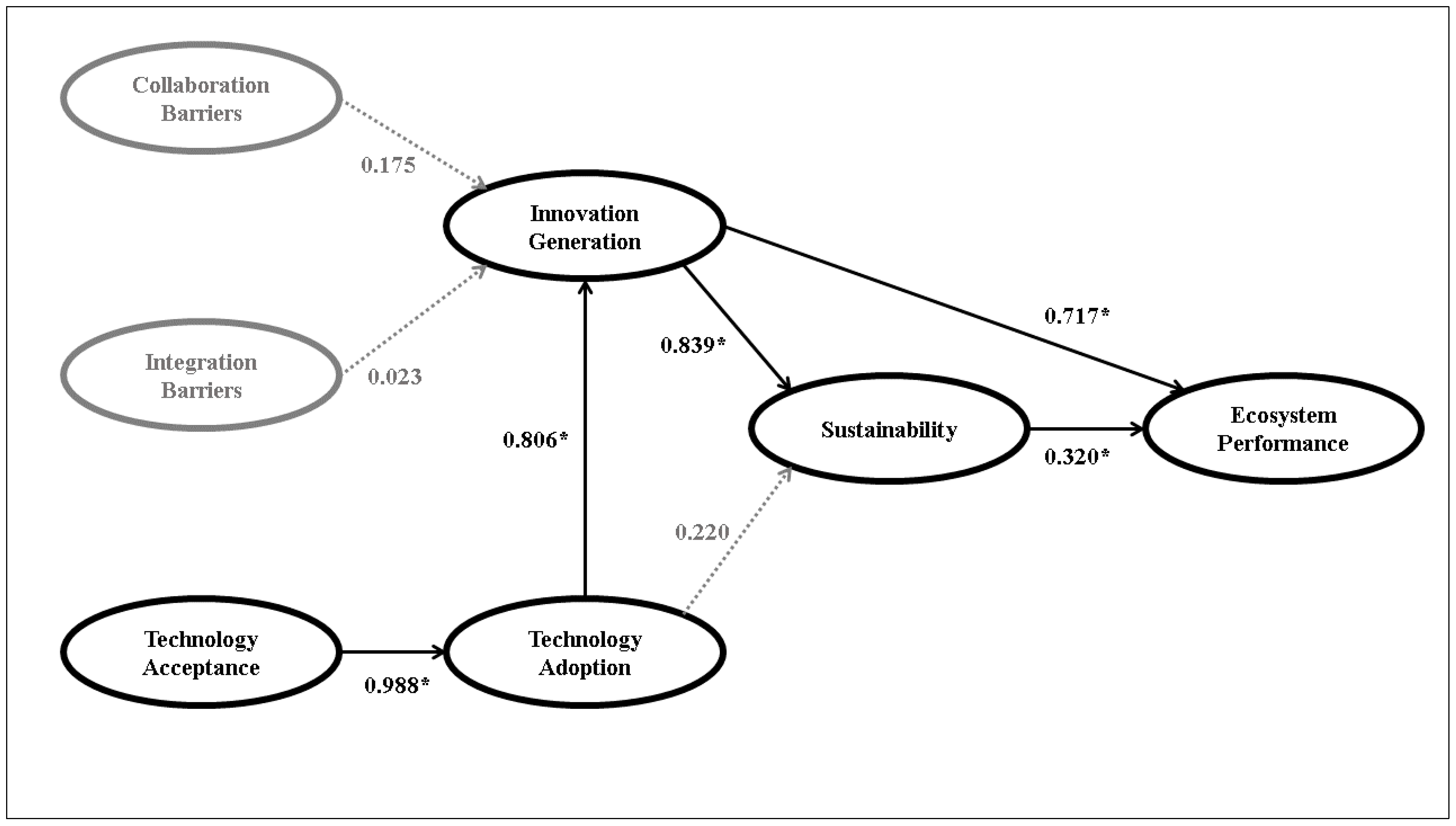
Figure 1. Hypothesis Relationships in the Orlando Tourism Innovation Ecosystem. Note: Estimated correlations between observable variables and constructs were omitted from the figure for simplification purposes, as they are not of primary theoretical interest. Legend: * Supported relationships with p-value < 0.05. Source: Prepared by the author, 2025.
Tourismhosp 06 00272 g001
Table 1. Confirmatory Factor Analysis of the Pilot Study Dimensions in Las Vegas.
DimensionStructureFactor Loadings AVEMcDonald’s Omega
Collaboration Barriers4 itens0.714~0.7970.5980.852
Integration Barriers4 itens0.674~0.7980.5650.836
Innovation Generation through Collaboration and Integration4 itens0.676~0.7910.5330.808
Technology Acceptance5 itens0.693~0.7570.5180.828
Technology Adoption5 itens0.654~0.7650.5370.840
Sustainability4 itens0.678~0.7740.5310.813
Innovation Ecosystem Performance5 itens0.677~0.7660.5180.824
Legend: AVE = Average Variance Extracted. Fit indices: CFI = 0.975; TLI = 0.972; RMSEA = 0.052 (90% C.I. 0.041–0.062); SRMR = 0.053; Chi-square/df ratio = 1.37 (χ2 = 564.31/df = 413). Source: Prepared by the Authors, 2025.
Table 2. Sociodemographic and Occupational Profile of Respondents in the Orlando Tourism Innovation Ecosystem.
Characteristicn%Characteristicn%
Gender Job title in the tourism sector
Female11933.00Entrepreneur12835.50
Male24267.00Manager12634.90
Generational age group Government Representative3810.50
Generation Z (ages 18–29)9024.90Academic205.50
Generation Y (ages 30–43)23164.00Researcher4011.10
Generation X (ages 44–59)4011.10Local Community92.50
Educational level Years of experience
Primary education (completed)41.10Up to 3 years18451.00
Technical course92.503 to 5 years10930.20
Incomplete higher education61.70More than 5 years6818.80
Completed higher education19052.60Participation in the ecosystem
Postgraduate degree15242.10Never51.40
Employment sector Occasionally7921.90
Private sector27475.90Frequently27776.70
Public sector8724.10
Source: Prepared by the Authors, 2025.
Table 3. Confirmatory Factor Analysis of the Measurement Model in the Orlando Tourism Innovation Ecosystem.
DimensionItemsFactor LoadingsAVEMcDonald’s Omega
Collaboration BarriersCOLAB01 0.7280.5420.796
COLAB02 0.730
COLAB03 0.716
COLAB040.768
Integration BarriersINTEG010.6920.5140.737
INTEG030.745
INTEG040.715
Innovation Generation through Collaboration and IntegrationGERACAO020.7080.5070.768
GERACAO030.697
GERACAO040.718
GERACAO050.706
Technology AcceptanceACEITA010.7510.5340.744
ACEITA030.679
ACEITA050.719
Technology AdoptionADOCAO010.7200.5470.841
ADOCAO020.713
ADOCAO030.710
ADOCAO040.746
ADOCAO050.752
SustainabilitySUSTEN010.7050.5160.785
SUSTEN020.746
SUSTEN030.712
SUSTEN040.726
Innovation Ecosystem PerformanceAVALIA010.7400.5370.790
AVALIA030.702
AVALIA040.744
AVALIA050.745
Legend: AVE = Average Variance Extracted. Fit Indices: CFI = 0.956; TLI = 0.951; RMSEA = 0.067 (90% CI 0.061–0.072); SRMR = 0.045; χ2/df = 2.61 (χ2 = 789.34/df = 303). Source: Prepared by the Authors, 2025.
Table 4. Hypothesis Analysis of the Structural Model for the Orlando Tourism Innovation Ecosystem.
SECONDARY HYPOTHESESRelationship CoefficientS.E.p-ValueConclusion
H01Collaboration Barriers => Innovation Generation0.1750.2760.526Not Supported
H02Integration Barriers => Innovation Generation0.0230.2590.930Not Supported
H03Technology Acceptance => Technology Adoption0.9880.014<0.001Supported
H04Technology Adoption => Innovation Generation0.8060.071<0.001Supported
H05Technology Adoption => Sustainability0.2200.4160.596Not Supported
H06Innovation Generation => Sustainability0.8390.4150.043Supported
H07Innovation Generation => Ecosystem Performance0.7170.150<0.001Supported
H08Sustainability => Ecosystem Performance0.3200.1440.026Supported
Source: Prepared by the authors, 2025.
Disclaimer/Publisher’s Note: The statements, opinions and data contained in all publications are solely those of the individual author(s) and contributor(s) and not of MDPI and/or the editor(s). MDPI and/or the editor(s) disclaim responsibility for any injury to people or property resulting from any ideas, methods, instructions or products referred to in the content.



