Proceeding Paper

Lider Project–Bus Techno Brick: Sustainable Bumper for a Helicopter by Polycarbonate †
by
Eduardo Javier Martín
*,
Juan Manuel Jiménez García
and
Dario Crespo Molera
Airframe Design and Stress Department, Airbus Helicopter España, Carretera de la Peñas km 5.3, Parque Aeronautico Logístico, 02006 Albacete, Spain
*
Author to whom correspondence should be addressed.
Presented at the 15th EASN International Conference, Madrid, Spain, 14–17 October 2025.
Eng. Proc. 2026, 133(1), 190; https://doi.org/10.3390/engproc2026133190 (registering DOI)
Published: 4 June 2026

Abstract

Polycarbonate is a thermoplastic material well known for its high impact resistance and thermal stability, making it a strong candidate for non-structural aerospace applications. Within the framework of the LIDER project for the techno brick BUS, the behavior of polycarbonate has been experimentally assessed under critical conditions, aiming to validate its potential use in a future tail bumper design for helicopters. The experimental campaign included high strain rate impact tests, ageing tests to evaluate water absorption effects, and high-temperature exposure to assess thermal performance. The results of these tests form the core of this study, demonstrating the material’s capabilities and limitations under operationally relevant conditions. These findings aim to support the development of lightweight and robust non-structural components in aerospace systems.

1. Introduction

The aerospace industry has traditionally relied heavily on metal alloys and, more recently, thermoset matrix composites to meet structural requirements. However, the relentless pursuit of greater weight efficiency and a reduced environmental footprint has shifted research interest towards high-performance thermoplastic polymers [1]. Unlike traditional prepreg materials, which consist of fiber reinforcements embedded in a thermosetting resin that requires an irreversible curing cycle using pressure and temperature, thermoplastics offer a fundamental advantage: their reprocessability [2].
In thermoset systems, the strong crosslinks formed during curing provide excellent mechanical properties but severely limit the recyclability of the final component, as their decomposition requires high temperatures that degrade the material. In contrast, thermoplastics from the polycarbonate (PC) family are characterized by their ability to melt and flow under the application of heat without undergoing irreversible chemical reactions. This not only gives the final component intrinsic recyclability properties, but also eliminates the need for long curing cycles, allowing the use of faster and more efficient manufacturing processes, such as injection moulding [3].
Polycarbonate stands out specifically for its high toughness, thermal stability and excellent impact resistance, making it an ideal candidate for non-structural aerospace applications that require energy absorption [4]. These advantageous properties have positioned polycarbonates as a viable alternative in sectors where weight reduction and sustainability are critical, aligning with the CO2 emission reduction targets of today’s aviation industry.
Within the framework of the LIDER project, the use of polycarbonate (Makrolon 2207) has been proposed for the manufacture of a helicopter bumper, a component that is currently manufactured using thermoset prepreg technology. The bumper is a non-structural part whose main function is to protect the vertical stabilizer and rear rotor from impact and damage during landing and ground maneuvers (Figure 1). This element, developed as the “Techno Brick BUS”, aims to increase the cost efficiency and sustainability of the manufacturing process, validating the behavior of the material under critical operating conditions such as moisture, temperature and high strain rates.

Objetives and Scope

The primary objective of this work is to evaluate the mechanical viability of polycarbonate (PC) as a constituent material for the development of the helicopter rear bumper. To achieve this validation, it is imperative to characterize the behavior of the material not only under ideal laboratory conditions but also under the critical service conditions to which the component will be exposed during its operational life. Consequently, this study addresses three specific aims:
  • Characterization of Hygrothermal Aging: Since helicopters operate in diverse climatic environments, the bumper will be exposed to cycles of moisture and heat. This work focuses on determining the combined influence of moisture absorption and high temperatures on the mechanical integrity of the PC. Specifically, the mechanical behavior is analyzed under a critical condition defined by the component’s mission profile: moisture-saturated material at a temperature of 90 °C.
  • Evaluation of Response to High Strain Rates: Given that the main function of the bumper is impact protection, static (quasi-static) characterization is insufficient. As polymers are viscoelastic materials, their mechanical response is highly dependent on the rate of load application. This study analyzes the strain rate sensitivity of polycarbonate, determining how tensile strength, stiffness, and energy absorption capacity vary when the material is subjected to strain rates of 10 s−1, 50 s−1, and 100 s−1.
  • Definition of the Material Operational Window: Finally, this research seeks to synthesize experimental results to establish a safe “operating window” for the bumper design. This involves quantifying the percentage loss of mechanical properties due to aging, confirming whether strain hardening (due to impact velocity) compensates for thermal softening, and providing reliable experimental data for future finite element analysis (FEA) simulations.

2. Materials and Methods

2.1. Material Characterization and Specimen Manufacturing

The material selected for the experimental campaign is commercial polycarbonate (PC) Makrolon® 2207 (Covestro, Leverkusen, Germany), supplied in pellet form. This amorphous thermoplastic is characterized by high toughness and transparency, properties derived from its molecular structure. The specific grade 2207 was chosen for its suitability for general-purpose injection moulding applications and its high viscosity. Its intrinsic properties include a glass transition temperature (Tg) of approximately 140 °C, which ensures dimensional stability at bumper operating temperatures, and an excellent Charpy impact resistance of 55 kJ/m2 at room temperature (23 °C). These characteristics make it an ideal candidate for non-structural components subject to impact in the aerospace sector.
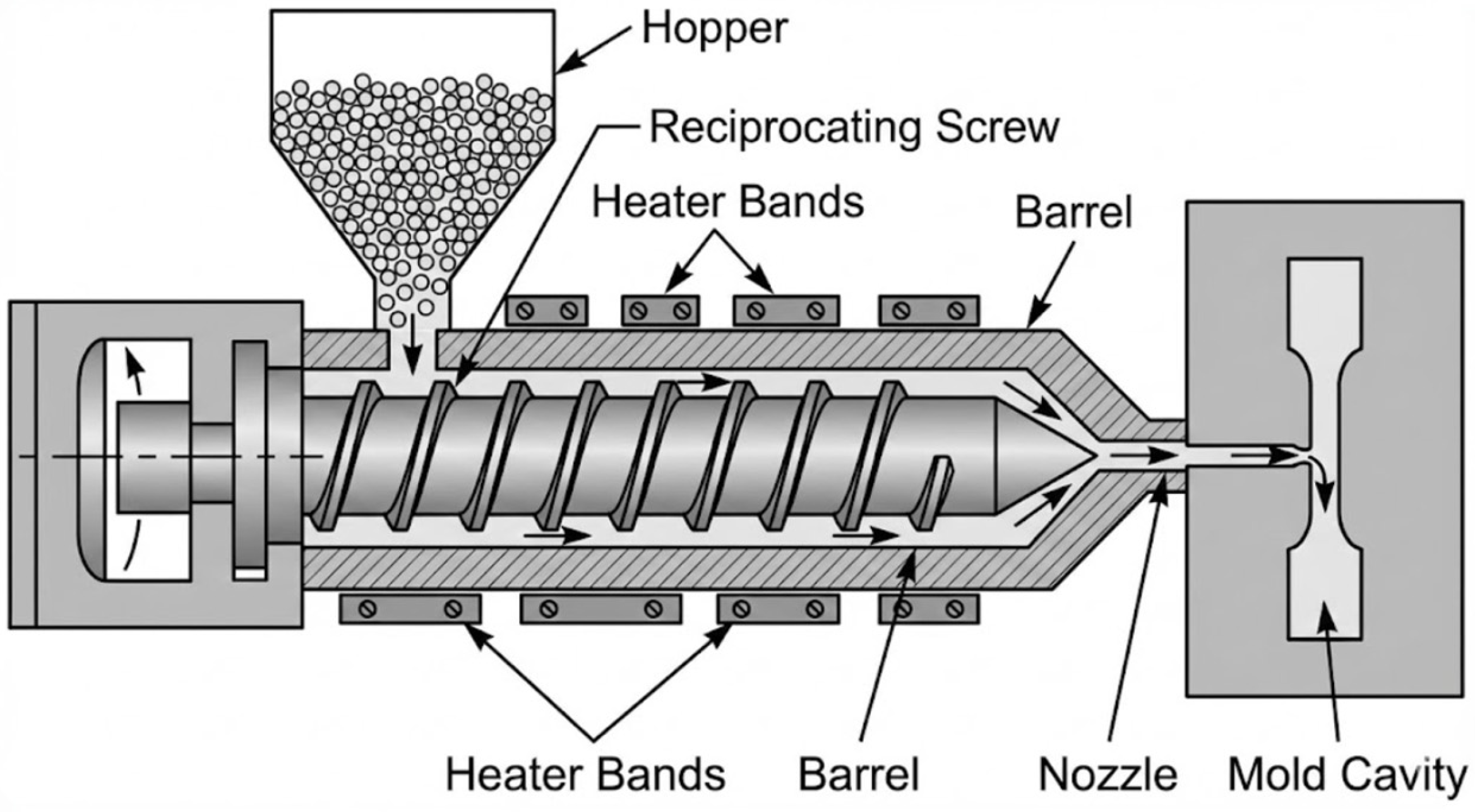
To obtain the test coupons, injection moulding was employed—a cyclic manufacturing technique that ensures high dimensional accuracy and repeatability. The plasticization process is carried out by a reciprocating screw injection unit. As illustrated in Figure 2, polycarbonate granules are fed from the hopper into the heated barrel. The screw design is critical; its helical geometry not only transports the material to the nozzle but also generates heat through shear friction which, combined with external heating bands, ensures homogeneous melting of the polymer prior to injection into the mould cavity.
In this study, test specimens were manufactured using two high-precision industrial injection moulding machines: an Arburg Allrounder 420 (ARBURG GmbH + Co KG, Loβburg, Germany) and a Krauss Maffei 160/750 EX (KraussMaffei, Munich, Germany). The injection cycle was optimized to minimize internal defects such as sink marks or voids, thereby ensuring isotropic homogeneity in the calibrated area of the test piece, a critical aspect for the validity of subsequent mechanical tests as described by Pötsch and Michaeli [3].

2.2. Experimental Setup and Environmental Conditioning

Mechanical characterization was strictly governed by international standards to ensure result comparability. Test specimens were manufactured in accordance with ISO 527-2:2012 (Plastics—Determination of tensile properties) [5], selecting Type 1A geometry. This geometry, commonly known as a ‘dog-bone’, consists of a narrow calibrated section where deformation is concentrated and two wider heads for gripping. The choice of Type 1A is standard for multipurpose injection-moulded specimens, allowing a smooth transition of stresses and preventing premature fracture in the clamping areas [5].
Uniaxial tensile tests were performed using an INSTRON 347M-50 universal testing machine (Instron, Norwood, MA, United States) equipped with calibrated load cells suitable for the expected force ranges. To simulate the actual operating conditions of the component, specific environmental conditioning protocols were applied:
  • Hygrothermal Aging (Moisture): Although polycarbonate is resistant, it is hygroscopic; water molecules in the polymer network can act as a plasticizer, interfering with Van der Waals forces between chains and altering mechanical properties [6]. Specimens designated as “Aged” were conditioned in a climatic chamber under controlled conditions of 70 °C and 85% relative humidity (RH). This process was maintained for a total period of 118 days. During this interval, gravimetric control was performed by periodically weighing control specimens to monitor absorption kinetics, confirming that the material reached the saturation plateau prior to mechanical testing.
  • High Temperature Implementation: To evaluate performance at elevated temperatures 90 °C), a thermal chamber was coupled to the INSTRON machine (Instron, Norwood, MA, United States). The procedure involved placing the specimen in the jaws within the chamber, controlled heating to the target temperature (90 °C), and a specific soaking time prior to testing. This ensured the specimen reached thermal equilibrium throughout its thickness, avoiding temperature gradients that could distort ductility data [2].

2.3. Experimental Test Matrix

The experimental campaign was designed to assess the mechanical response of the material under varying environmental conditions and strain rates. A total of 29 specimens were tested across six different configurations. The complete test matrix, detailing the specific standards, number of specimens per condition, environmental parameters, and testing velocities, is summarized in Table 1.
The quasi-static test (0.08 mm/s) served as a baseline to evaluate the degradation caused by hydrothermal aging and thermal softening. Subsequently, high-speed tensile test was conducted on the aged material to characterize the strain rate sensitivity, simulating impact scenarios relevant to the helicopter bumper operation.

2.4. Data Acquisition and Analysis

Data acquisition involved continuous recording of the applied force (F) and crosshead displacement (ΔL) for all configuration listed in Table 1. From this raw data, engineering stress–strain curves were calculated following fundamental mechanics equations and ISO 527.
The nominal stress (σ) was calculated as:
σ = F A 0
where A0 is the initial cross-sectional area of the specimen. The nominal strain (ε) was determined as:
ε = L L 0
where L0 is the initial reference length. From the resulting curves, key properties such as Young’s modulus, maximum tensile strength, and strain at break were extracted, allowing for the quantification of moisture embrittlement and strain rate hardening effects [7].

3. Results and Discussion

The mechanical behavior of the Makrolon® 2207 polycarbonate was evaluated considering the critical variables for the helicopter bumper application: hygrothermal aging, operating temperature, and strain rate. The experimental results are presented below, categorized by loading regime.

3.1. Effect of Enviromental Conditions on Quasi-Static Behavior

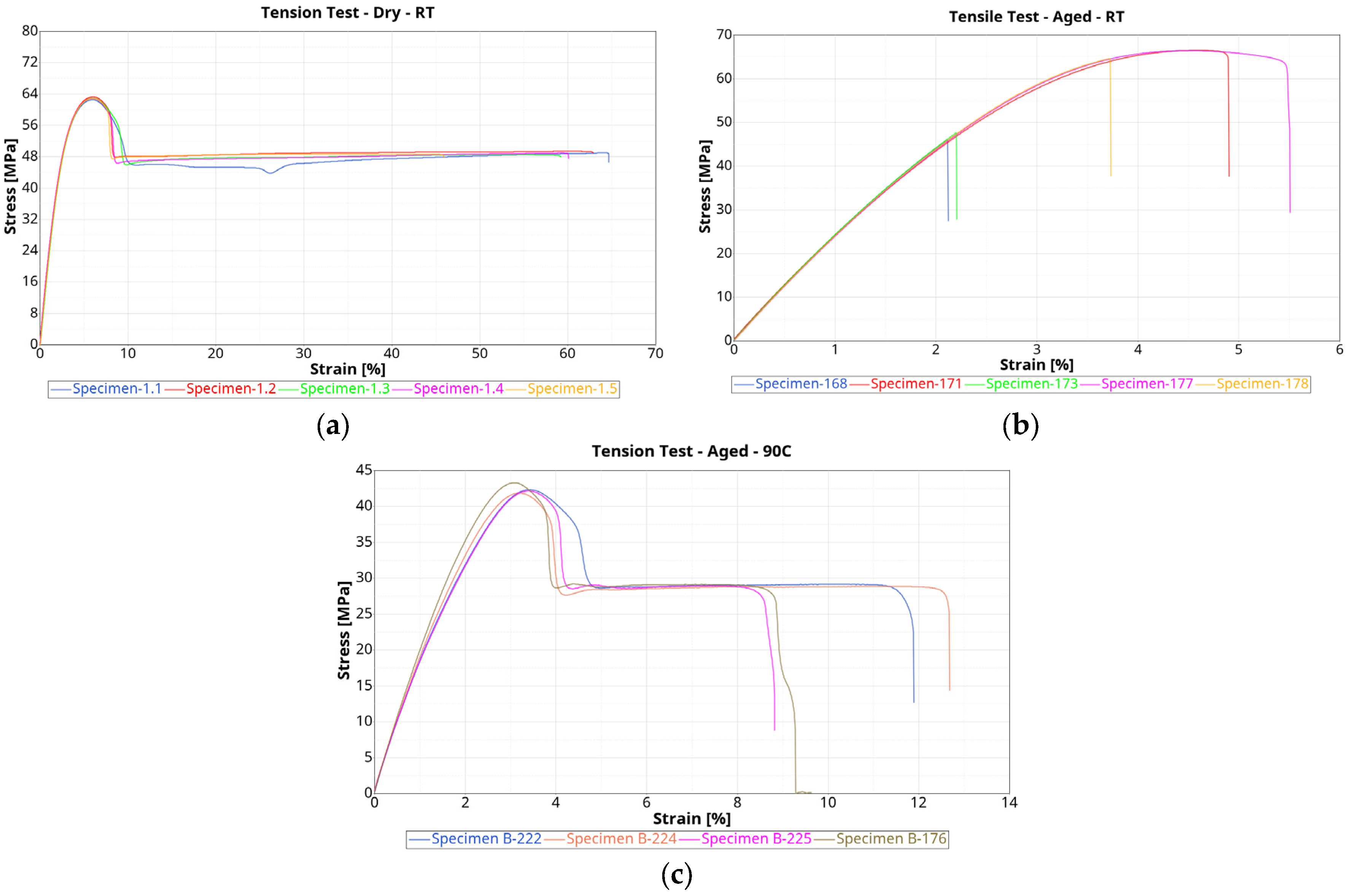
Figure 3 illustrates the engineering stress–strain curves obtained at a low strain rate (0.08 mm/s) under three different environmental conditions: Dry at Room Temperature (RT), Aged at RT, and Aged at 90 °C.
Under reference conditions (Dry, 23 °C), the material exhibits the typical ductile behavior of polycarbonate. It presents a high tensile strength of 62.92 ± 0.23 MPa and an extensive plastic deformation capacity, exceeding 60% strain at break. This confirms the material’s suitability for energy absorption in its pristine state.
However, the absorption of moisture induces a drastic change in mechanical performance. As observed in the blue curve (Aged, 23 °C), the material undergoes severe embrittlement. While the tensile strength shows a moderate decrease of approximately 7% (dropping to 58.56 ± 6.60 MPa), the most critical effect is the catastrophic reduction in ductility. The strain at failure collapses from >60% to a mere 3.69 ± 1.37%. This transition from ductile to brittle behavior indicates that moisture acts as a potent degradation agent, likely promoting craze initiation and restricting polymer chain mobility under tensile load.
When the aged material is tested at the maximum operating temperature of 90 °C, a thermal softening effect is evident. The tensile strength drops to its minimum value of 42.24 ± 0.67 MPa, representing a loss of roughly 32% compared to the dry reference. Interestingly, the elevated temperature partially mitigates the moisture-induced brittleness, recovering some deformation capacity up to 10.26 ± 2.03%. This suggests that thermal energy facilitates chain slippage, counteracting the locking effect of the moisture to a limited extent.

3.2. Effect of High Strain Rates (Impact Simulation)

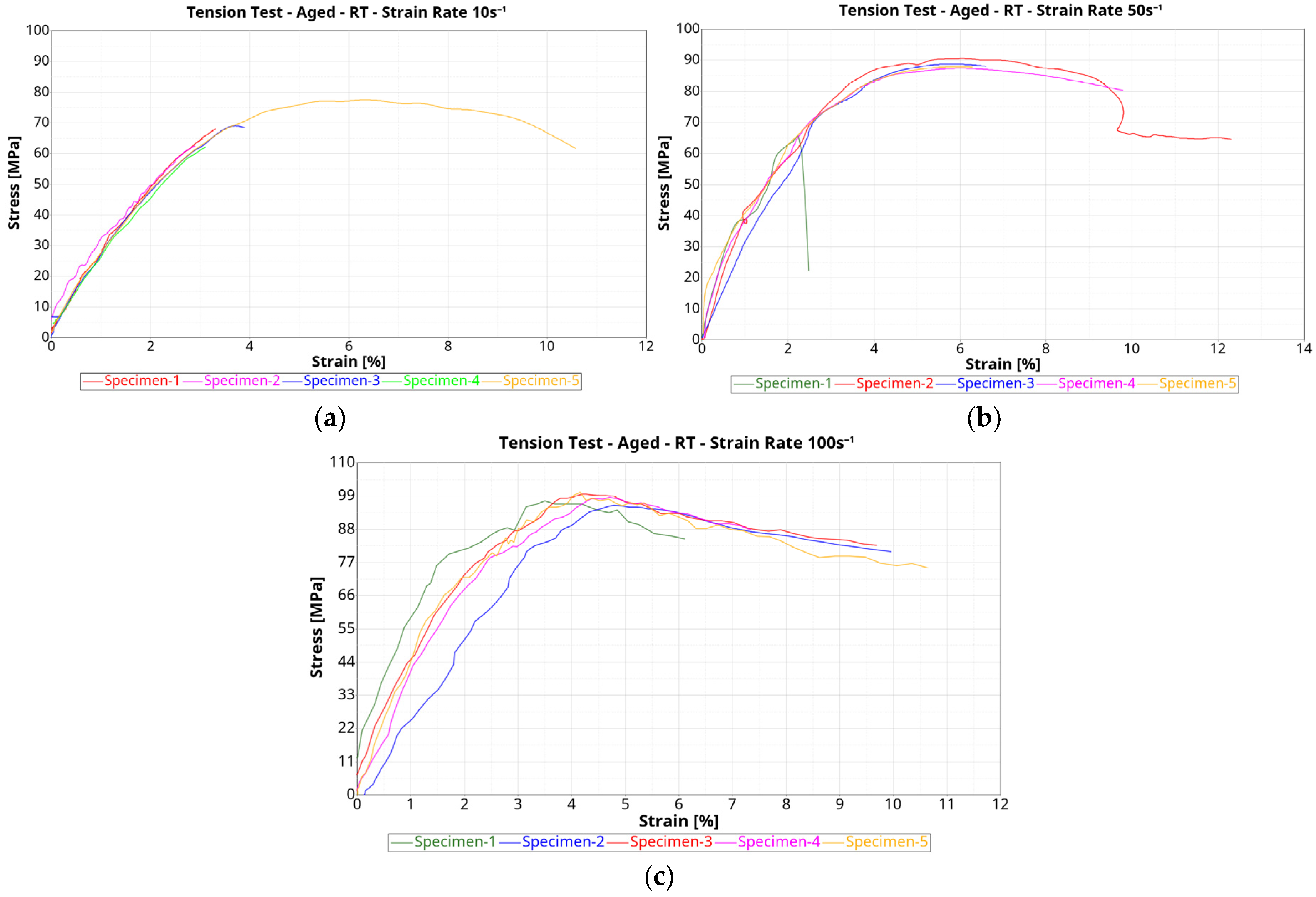
Given the bumper’s protective function, the material’s response to impact is decisive. Figure 4 presents the stress–strain curves for the aged material tested at dynamic rates of 10 s−1, 50 s−1, and 100 s−1.
A clear strain hardening trend is observed as the loading velocity increases. This viscoelastic response is positive for impact applications:
  • At 10 s−1, the tensile strength increases to 67.77 ± 5.60 MPa, surpassing the static aged value.
  • At 50 s−1, the material becomes significantly stiffer and stronger, reaching 84.06 ± 9.19 MPa.
  • At 100 s−1, the material exhibits its maximum resistance, with a tensile strength of 98.36 ± 1.55 MPa, nearly doubling the strength of the aged material at 90 °C.
It is noteworthy that, unlike the static aged condition, high strain rates allow for a slight improvement in ductility, with failure strains increasing from ~3.7% (static) to 8.75% at 100 s−1. This implies that under rapid impact, the material is capable of absorbing more energy than predicted by static tests on aged samples.

3.3. Summary of Mechanical Properties

To provide a comprehensive overview of the material’s operational window, Table 2 summarizes the mean values and standard deviations for Tensile Strength (σmax) and Strain at Break (εbreak) obtained across all tested configurations.
These results highlight a critical trade-off: while moisture severely compromises ductility in static scenarios (making the part potentially brittle), the high strain rates typical of an impact event activate hardening mechanisms that restore significant strength and a margin of deformation capacity.

4. Conclusions

The experimental assessment of Makrolon® 2207 validates its potential for the sustainable helicopter bumper within the LIDER project, revealing a complex trade-off between environmental degradation and dynamic hardening. While hygrothermal aging constitutes the most detrimental factor by inducing a severe ductile to brittle transition, drastically reducing failure strain from over 60% to approximately 3.7% and high operating temperatures (90 °C) cause a 32% decrease in strength due to thermal softening, the material exhibits a highly favorable response to high strain rates. Crucially for impact applications, the dynamic testing demonstrated that high loading velocities significantly enhance mechanical performance, doubling the tensile strength and partially restoring ductility, thereby confirming the material’s structural integrity under critical service conditions.

Author Contributions

Conceptualization, E.J.M., J.M.J.G. and D.C.M.; methodology, E.J.M.; validation, E.J.M. and D.C.M.; formal analysis, E.J.M.; investigation, E.J.M.; writing—original draft preparation, E.J.M.; writing—review and editing, J.M.J.G. and D.C.M.; supervision, D.C.M.; project administration, J.M.J.G.; funding acquisition, J.M.J.G. All authors have read and agreed to the published version of the manuscript.

Funding

This research was funded by the Centre for the Development of Industrial Technology (CDTI) under the Aeronautical Technology Program (PTA), grant number PTAG-20221005, within the framework of the LIDER project.

Institutional Review Board Statement

Not applicable.

Informed Consent Statement

Not applicable.

Data Availability Statement

The data presented in this study are available on request from the corresponding author. The data are not publicly available due to confidentiality agreements regarding the industrial application.

Acknowledgments

The authors would like to acknowledge AIRBUS Helicopters for their technical support and collaboration in the definition of requirements for the Techno Brick BUS.

Conflicts of Interest

Author Eduardo Javier Martín Paradas was employed by the company AIRBUS. The remaining authors declare that the research was conducted in the absence of any commercial or financial relationships that could be construed as a potential conflict of interest.

References

  1. Campbell, F.C. Polymer Matrix Composites. In Manufacturing Technology for Aerospace Structural Materials; Elsevier Science: Oxford, UK, 2006; pp. 273–368. [Google Scholar] [CrossRef]
  2. Wang, Y.; Cao, K. Experimental investigation and modelling of the behavior of polycarbonate with temperature effects from low to high strain rates. Int. J. Solids Struct. 2014, 51, 2539–2556. [Google Scholar] [CrossRef]
  3. Pötsch, G.; Michaeli, W. Injection Molding: An Introduction, 2nd ed.; Hanser Publishers: Munich, Germany, 2008. [Google Scholar]
  4. Cao, K.; Wang, Y. Experimental investigation and modelling of the tensile behavior of polycarbonate. Polymers 2016, 8, 63. [Google Scholar] [CrossRef]
  5. ISO 527-2:2012; International Organization for Standardization. Plastics—Determination of Tensile Properties—Part 2: Test Conditions for Moulding and Extrusion Plastics. ISO: Geneva, Switzerland, 2012.
  6. Nouri, S.; Dubé, M. Experimental investigation of the effect of hygrothermal aging on the mechanical behavior of polycarbonate. Mech. Mater. 2016, 103, 3–12. [Google Scholar] [CrossRef]
  7. Callister, W.D.; Rethwisch, D.G. Materials Science and Engineering: An Introduction, 10th ed.; Wiley: Hoboken, NJ, USA, 2018. [Google Scholar]
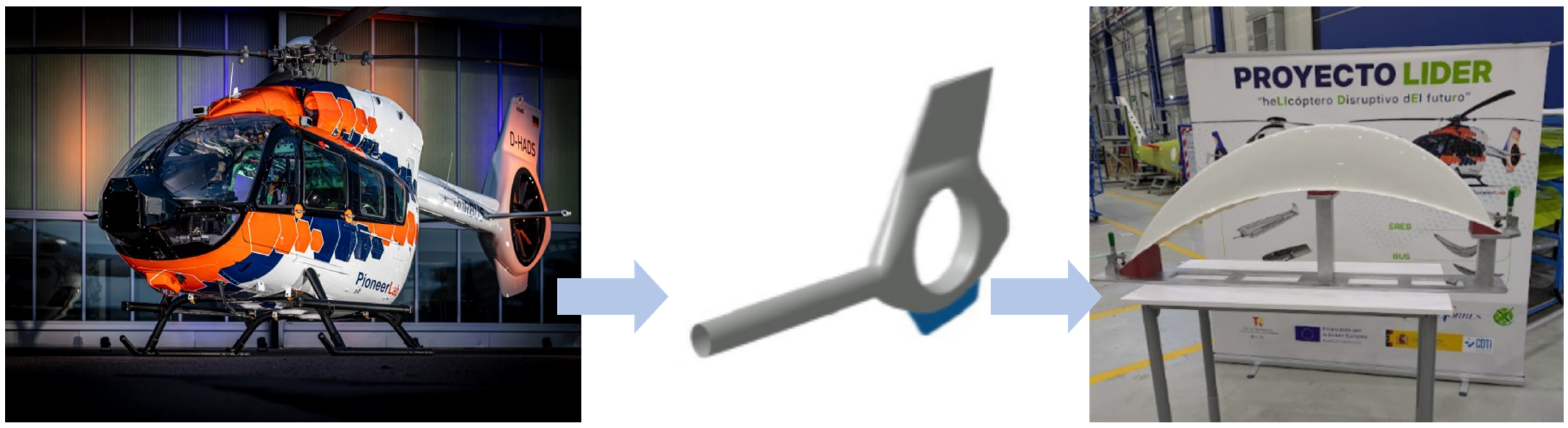
Figure 1. Bumper description and location at the helicopter.
Engproc 133 00190 g001
Figure 2. Injection moulding process.
Engproc 133 00190 g002
Figure 3. Engineering stress–strain curves for quasi-static tensile test (0.08 mm/s): (a) Dry material at 23 °C; (b) Aged material at 23 °C; (c) Aged material at 90 °C.
Engproc 133 00190 g003
Figure 4. Effect of strain rate on the tensile behavior of aged polycarbonate at 23 °C: (a) strain rate at 10 s−1; (b) strain rate at 50 s−1; (c) strain rate at 100 s−1.
Engproc 133 00190 g004
Table 1. Summary of the experimental test matrix, including environmental conditions and loading rates.
Test TypeStandardSpecimen CountTemperature [°C]MoistureTest Velocity [mm/s]
TensileISO 527-2523NO (Dry)0.08
TensileISO 527-2523YES (Aged)0.08
TensileISO 527-2490YES (Aged)0.08
TensileISO 527523YES (Aged)1150
TensileISO 527523YES (Aged)5750
TensileISO 527523YES (Aged)11,500
Table 2. Summary of the experimental test matrix, including environmental conditions, loading rates, strength values and strain brake values.
Test ConditionsTemperature [°C]Strain Rate [s−1]Tensile Strength [MPa]Strain Break [%]
Dry (Reference)23Quasi-static62.92 ± 0.2358.56 ± 6.60
Aged23Quasi-static58.56 ± 6.603.69 ± 1.37
Aged90Quasi-static42.24 ± 0.6710.26 ± 2.03
Aged (Impact)231067.77 ± 5.604.75 ± 3.27
Aged (Impact)235084.06 ± 9.197.44 ± 3.81
Aged (Impact)2310098.36 ± 1.558.75 ± 1.92
Disclaimer/Publisher’s Note: The statements, opinions and data contained in all publications are solely those of the individual author(s) and contributor(s) and not of MDPI and/or the editor(s). MDPI and/or the editor(s) disclaim responsibility for any injury to people or property resulting from any ideas, methods, instructions or products referred to in the content.