1. Introduction
Traditional power system planning has undergone substantial transformation with the integration of renewable energy technologies. In South Africa, the Department of Minerals and Energy, now the Department of Energy and Electricity, has conducted public procurement of renewable energy since Bid Window 1 (RIPPPP BW1) in 2011, extending to the recent Battery Energy Storage Bid Window 3 (BESIPPPP BW3) [
1]. A flagship initiative, the Risk Mitigation Independent Power Producer Procurement programme (RMIPPP), launched in August 2020, aims to address short-term supply gaps identified in the IRP 2019 by procuring 2000 MW of generation capacity from technology-agnostic projects. These include hybrid systems combining photovoltaic (PV) arrays, battery storage, wind, and/or gas generation [
2]. Hybrid power plants integrate complementary renewable and storage technologies to improve capacity factors, reduce intermittency, and enhance grid stability. Through coordinated control strategies and advanced power–electronic interfaces, these systems provide essential ancillary services and support reliable network operation, offering a scalable pathway toward high renewable penetration and resilient power infrastructure. Despite the advantages of inverter-based resources, their proliferation introduces stability challenges, particularly in weak grid areas with low short-circuit ratios. While the existing research has predominantly addressed inertia and rotor angle stability, this paper presents a comprehensive review of hybrid inverter-based generation’s impact on voltage stability, with a specific focus on South Africa. It identifies a research gap in voltage stability analysis relative to other stability domains and synthesizes key findings on voltage profiles, reactive power support, and system stability using an IEEE bus system as the foundational model.
2. Power System Stability
2.1. Classical Power System Stability
The CIGRE/IEEE Joint Task Force on Stability Terms and Definitions [
3] emphasized the importance of precise terminology in power system stability analysis, particularly following major blackouts attributed to instability events. They defined power system stability as “The ability of an electric power system, for a given initial operating condition, to regain a state of operating equilibrium after being subjected to a physical disturbance, with most system variables bounded so that practically the entire system remains intact.” As shown in
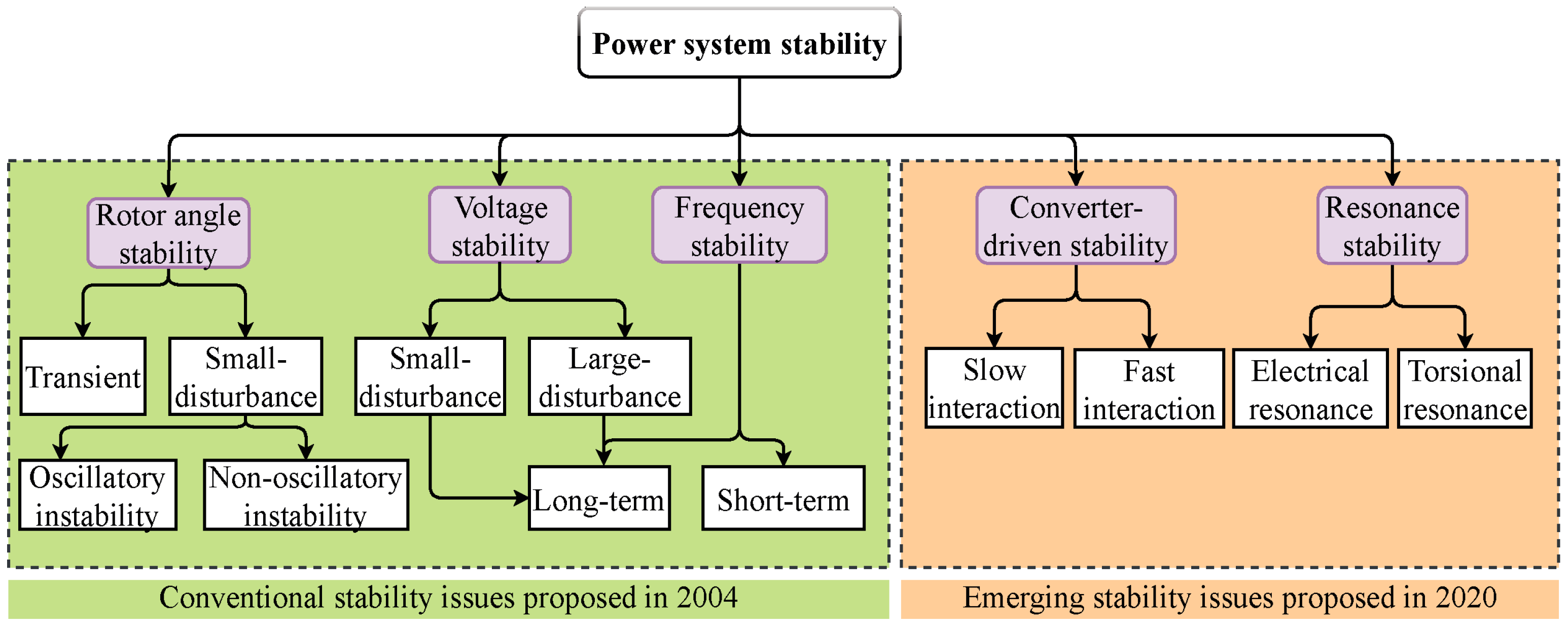
Figure 1, early stability classifications (depicted on the green block) recognized three primary categories: rotor angle, voltage, and frequency stability [
3]. These classifications have since evolved to address the impacts of increasing inverter-based resource penetration and HVDC transmission [
4], as shown on the light orange block of emerging stability issues.
Traditionally, transient stability, often equated with rotor angle stability, addresses synchronous generator behaviour following faults. However, the integration of non-synchronous generation has introduced additional stability concerns including frequency, voltage, and inter-area stability [
5]. Transient stability maintains system synchronism following severe disturbances, influenced by rotor angle dynamics, typically within 3–5 s post-disturbance (extending to 10–20 s for large systems with significant inter-area oscillations).
This paper focuses on voltage stability in weak grids with inverter-based resources. The literature notes that time-scale separation between classical and extended stability phenomena becomes blurred with power electronics-dominated systems, in which stability issues can cascade; for instance, angle instability potentially escalating into voltage collapse if not promptly mitigated.
2.2. Voltage Stability
Voltage stability refers to the ability of the power system to maintain steady voltages close to nominal at all buses in the system after being subjected to a disturbance [
3,
4]. These disturbances can either be sudden major contingencies due to loss of critical transmission infrastructure (i.e., lines) or generators or could be gradual such as a slow ramp in load or generation. It is influenced by the location, size and speed of response of voltage-controlling components. Voltage stability is considered to be load-driven and as such could also be referred to as load stability [
6]. It has also been referred to as the fundamental relationship between system voltage and reactive power, where reactive power limitations or constraints across transmission lines can be the primary reason for voltage instability and the resultant voltage collapse [
7], as well as load dynamics pushing the system beyond its total transmission and generation capability. As per
Figure 1, voltage stability can be further classified into short-term and long-term stability as follows [
3], and this is depicted in
Table 1.
Short-term voltage stability considers fast dynamics following a disturbance and is heavily influenced by generator excitation and fast reactive power compensation compared with the slower time frames of long-term voltage stability categorized by a slow-acting tap changer and thermal limits due to load growth and reactive reserve depletion [
3]. A major factor contributing to voltage instability is the voltage drop that occurs within the transmission network, which limits the capability of the transmission network for power transfer and voltage support [
7].
3. Constrained Grids with High Renewable Penetration
For the purpose of this paper, the constraints hampering the integration of renewable energy projects into the South African grid are transmission grid constraints. Based on the geographical location of South Africa, the Northern Cape area has the highest solar irradiance levels in the world [
8], while the greater Cape region has a higher energy yield output for wind generation projects. Following REIPPP (Renewable Energy Independent Power Producer Procurement programme) bid window 6, grid capacity in the Northern and greater Cape region was constrained with no further renewable generation projects allowed to connect to the grid. CRSES (Centre for Renewable and Sustainable Energy Studies) reports that to date about 6 GW of public procurement from wind and solar projects has been connected to the grid (7%), where coal is at 40.5 GW (73%), with the total renewable energy contribution (inclusive of hydroelectric, nuclear and pumped storage) being 11.5 GW (11%) [
9].
3.1. Weak Grids and Voltage Stability
Frequency stability has typically been a strong research focus in strong grids, while rotor angle stability and voltage stability are a more common focus in weaker grids [
10]. Weak or constrained transmission grids are typically less interconnected or meshed, with fewer redundancy or contingency options for maintaining continuity of supply used [
4,
10].
With grids such as the South African one in which synchronous generators are centrally located in the Mpumalanga region while inverter-based resources are mainly in the greater Cape region (Northern, Western and Eastern provinces), power gets evacuated over long transmission lines, which contributes to grid stability concerns as fault levels are typically lower. For example, the Northern Cape has fewer transmission lines but high penetration of renewable generation that needs to be exported to the Gauteng region, which is the main load centre for the country with the highest load demand.
Weak grids are characterized by [
4]
Low short-circuit capacity which can make fault detection and protection coordination more challenging.
Vulnerability to control interactions that can lead to inverter-based resources interacting negatively with the grid, resulting in oscillations or instability.
Limited voltage regulation capability as the grids struggle to maintain voltages within the regulated bands during network faults or load changes.
Reduced system inertia where there are fewer synchronous generators in the grid, which affects frequency control.
The short-circuit ratio is considered a good measure for grid strength. Previous research expressed this system strength as the sensitivity of voltages to variations in current injection (i.e., stiffness of voltage). Others have classified system strength to indicate both inertia and voltage stiffness of the grid. And the latest definitions covering both steady state and dynamic states of operation express it as the size of change in voltage following a fault/disturbance [
10].
The short-circuit ratio can be defined as follows:
Typically, an SCR of >3 indicates a strong grid, while 1 < SCR < 3 indicates a weak grid and below 1 a very weak grid [
11].
Thus, weak grids would be more susceptible to instability (frequency and voltage) due to severe system faults or disturbances.
From
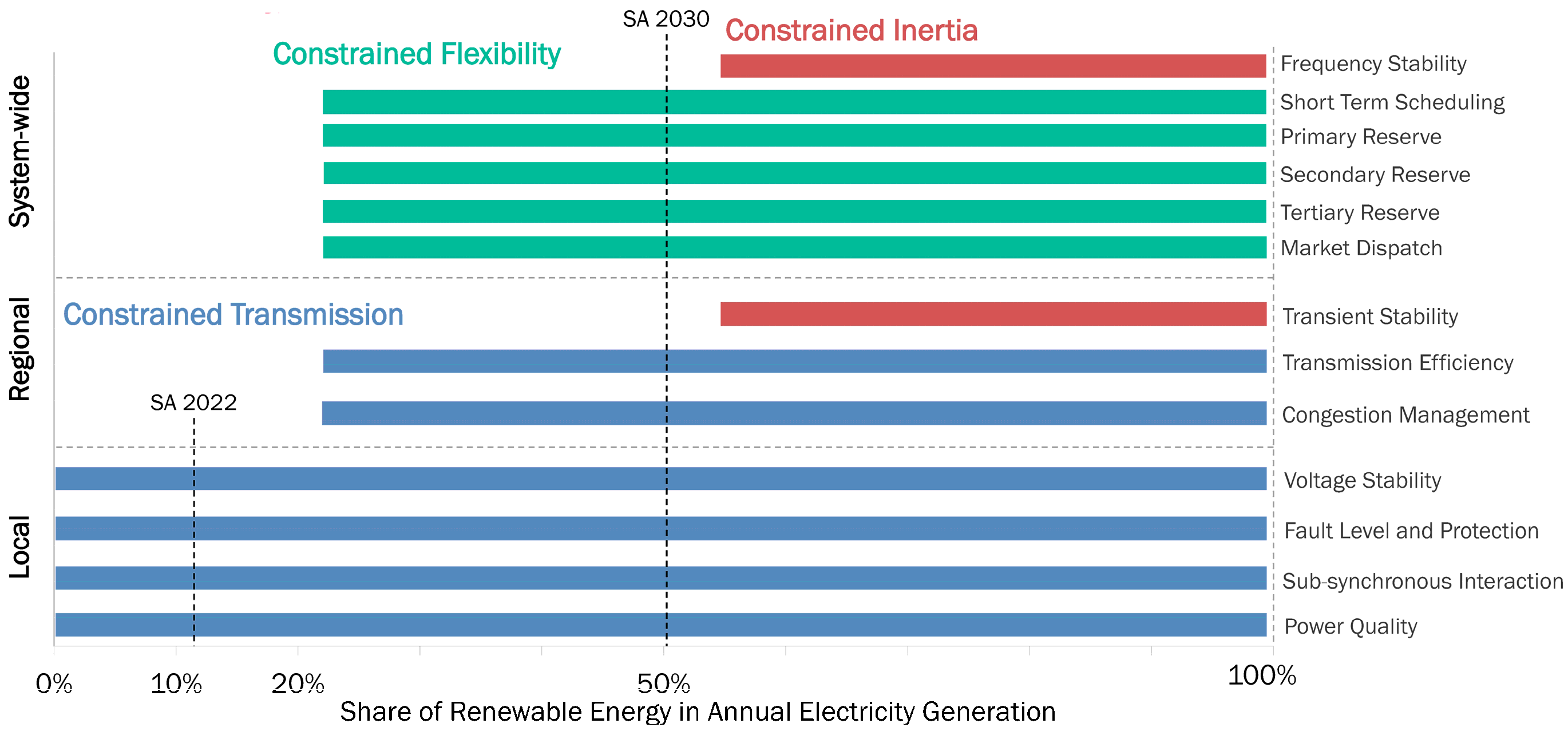
Figure 2, it is clear that, as nations integrate more renewable generation, local network phenomena change with the interactions of converter-based energy resources with power quality, fault levels, and voltage control being impacted from the onset. However, for regional-level (such as sub-transmission) and the system-wide-level (transmission-level) penetration, grid concerns such as congestion management, transient stability, frequency stability and voltage stability become more prominent in the grid [
12].
3.2. Dynamic Load Models’ Impact on Voltage Stability
Typical load models used in steady-state power analysis are constant-power loads also referred to as a PQ load model, in which the active (P) and reactive power (Q) are constant regardless of load changes in the system; these loads are voltage-insensitive. However, for dynamic and power stability studies, dynamic load models are critical and need to be sensitive to voltage fluctuations in the grid. Widely used load characteristic types are exponential load and polynomial load, depicted in Equations (5) and (6) [
13,
14,
15]. These can be constant-impedance (Z) loads, constant-current (I) loads, constant-power (P) loads, or a combination of these loads known as ZIP loads. The voltage dependency of load characteristics is conventionally modelled using exponential representations. According to reference [
15], the exponential load model expresses this relationship as
where the normalized voltage is defined as
Here, P and Q represent the active and reactive power components at bus voltage V, while V0 denotes the initial operating voltage. The exponents α and β typically take values of 0, 1, or 2, corresponding to constant-power, constant-current, and constant-impedance characteristics, respectively. An alternative representation of load–voltage dependency is provided by the polynomial model:
This formulation is commonly known as the ZIP model, combining constant-impedance (Z), constant-current (I), and constant-power (P) components. These static load models are acceptable for steady-state system analysis in which the response of the composite loads to voltage and frequency changes is very fast [
16]. However, for rotor angle stability, voltage stability studies, etc., load dynamics are critical.
4. Hybrid Renewable Generation
Hybrid generation plants have emerged as a critical architecture in modern power systems, enabling high renewable energy penetration while preserving operational stability. These systems integrate multiple generation technologies, typically solar photovoltaic (PV), wind, and battery energy storage systems (BESSs) within a unified control and interconnection framework. Hybridization provides complementary resource profiles; for example, solar and wind generation exhibit inverse diurnal and seasonal characteristics, thus enhancing the aggregate capacity factor and reducing variability [
17]. At the system level, hybrid plants utilize coordinated power electronics, hybrid power plant controllers (HPPCs), and energy management systems (EMSs) to optimize dispatch and provide ancillary services including frequency containment and voltage regulation. BESSs enable additional functionality such as inertia emulation and ramp-rate smoothing, thereby alleviating stress on transmission infrastructure [
17]. Protection coordination for hybrid plants requires adaptation to bidirectional power flows and reduced system inertia. Optimal sizing ensures life-cycle cost minimization and grid compliance. As utilities transition toward low-carbon portfolios, hybrid plants are increasingly deployed as grid-stabilizing assets capable of supporting grid-forming operations and black start capabilities [
10].
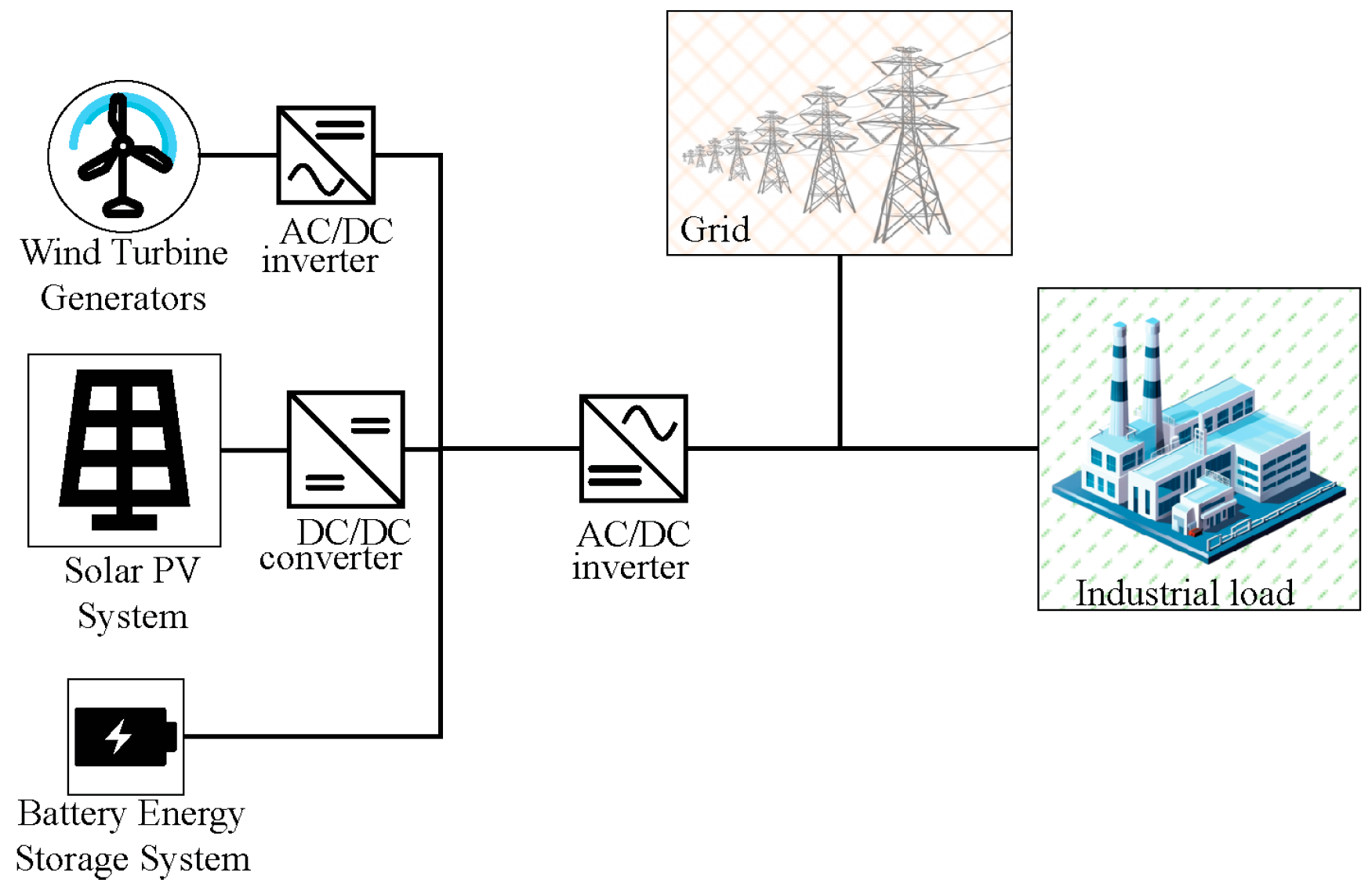
Figure 3 illustrates a typical hybrid renewable energy architecture in which wind, solar and battery storage are integrated via power electronic converters to a common DC (direct current) bus. The collected energy is then converted through the AC/DC (alternating or direct current) converter to supply various loads.
Hybrid plants provide the following benefits:
Hybrid power plants can be co-located, so that design optimization benefits are maximized, or non-co-located as “virtual hybrid power plants” without shared infrastructure [
21,
22].
5. Power System Model and Simulations
Power system modelling particularly for transient stability can be complex, especially for a grid with a high number of nodes/buses like the South African grid, which has more than 1000 buses. For voltage stability, as we have come to learn, accurate representation of loads and their associated transmission grid elements (transformers, lines, reactive power compensation) will have a huge influence on the accuracy and usability of the models.
The IEEE 14-bus system was selected as the standard relevant and widely used power system model for validating power flow, stability, and optimization algorithms [
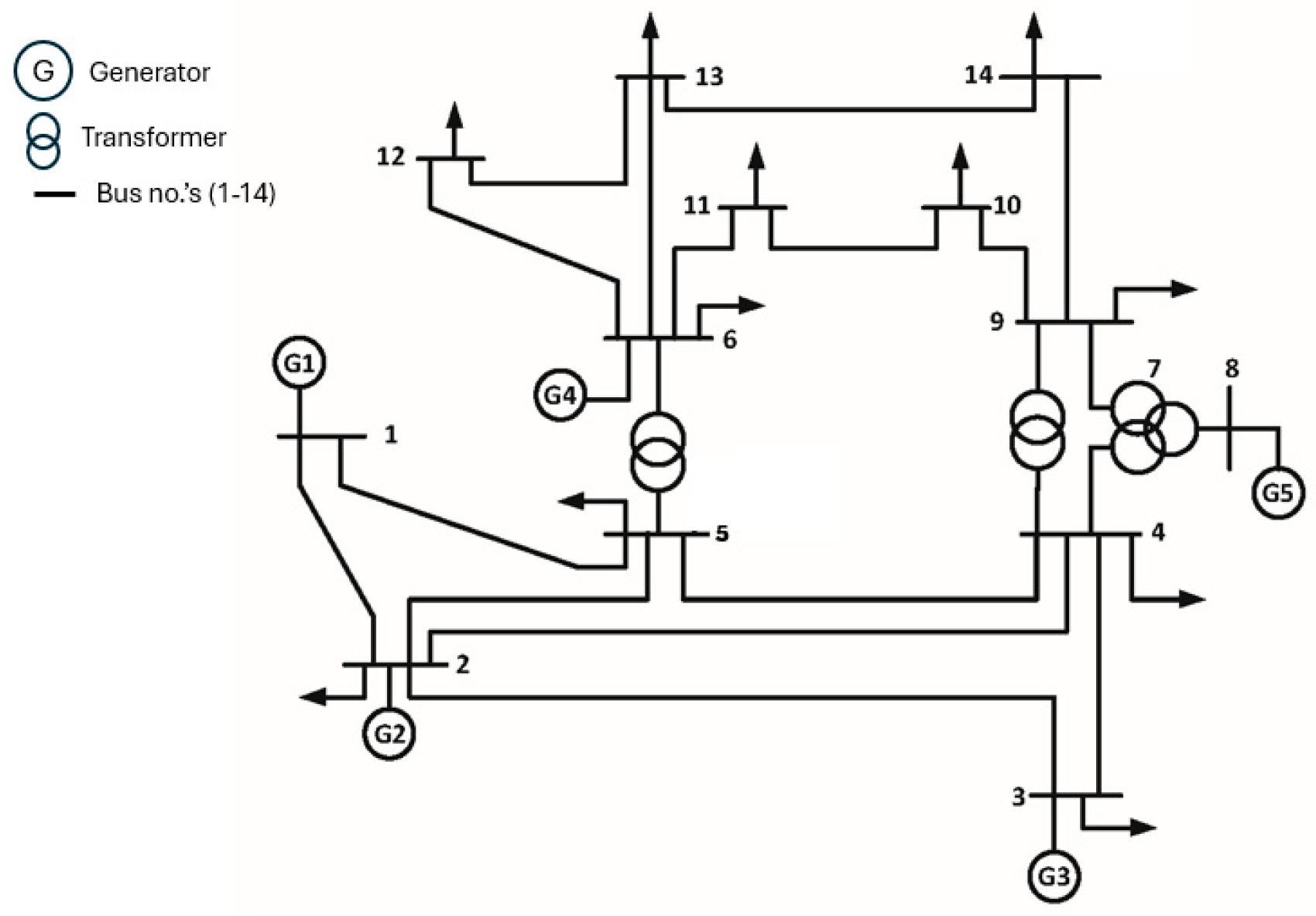
23]. It consists of 14 buses, including Bus 1 as the slack, Buses 2 and 3 as PV (generator) buses, and the remaining as PQ load buses. The system includes five synchronous generator units, three transformer-coupled branches, several fixed shunt elements, and 20 transmission lines with specified line impedances and ratings. This is depicted in
Figure 4 below.
It represents a simplified portion of an actual utility sub-transmission network, exhibiting typical voltage-reactive interactions, generator Q-limits, and line congestion. This model will need to be modified to evaluate integration of hybrid renewable energy resources in a representative weak-grid-scenario study. The IEEE 14-bus test system base case comprises a slack generator and a PV generator, reflecting the conventional configuration of synchronous machine-based power systems.
5.1. Base Case: Weak Grid Representation
In the base case all the other generators were purely providing reactive support with no active power generated. To reduce the Thevenin grid impedance, thus weakening the system, an external grid was added at Bus 1 as well as a long transmission line to emulate long transfer distances of power from strong generation sources (typical of Mpumalanga) through long lines to load centres (typical of Gauteng). This being between the external grid and Bus 1.
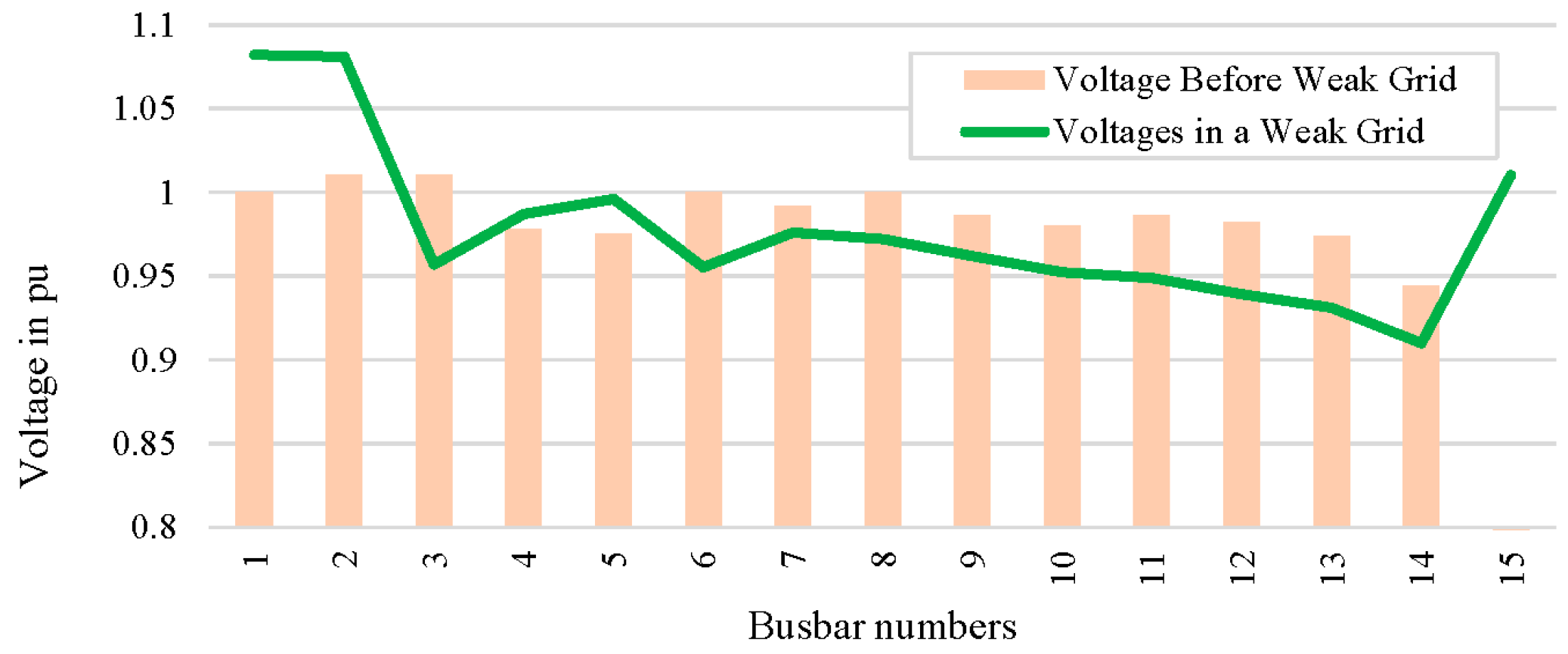
Figure 5 depicts the impact on voltage before and after the system is modified and the system weakened to represent a weak grid. Typical Eskom 132 kV Dinosaur conductor-type line parameters were implemented for the representative long line at a length of 215 km. A few lines listed below were also amended to create the long line (charging-dominant effect). These lines were scaled to raise reactance and capacitance and increase the charging effect, thus becoming capacitive.
Line_1–5: X × 1.8, C × 1.5.
Line_2–3: X × 1.6, C × 1.4.
Line_2–4: X × 1.4, C × 1.3.
Historically FACTS (flexible alternating current transmission system) devices have been successful in minimizing voltage instability in power systems. These included devices such as STATCOMs (Static Synchronous Compensators), SVCs (Static Var Compensators) or SSSCs (Static Synchronous Series Compensators) [
6]. However most utilities currently utilize conventional study analyses such as P-V curves (voltage sensitivity analysis with respect to active power changes on critical loads, for example) and Q-V curves (sensitivity analysis on variation of bus voltages with respect to reactive power injection at critical buses) to evaluate and predict voltage instability, while other techniques covered in the literature include reactive power optimization, nodal analysis, minimum singular value and sensitivity analysis, and neuro-fuzzy networks amongst others.
5.2. Integrating Hybrid Generation on the 14-Bus System
The following inverter-based hybrid generation sources were introduced on the following buses to modify the 14-bus system.
Bus 6:
PV Plant: = 30 MVA ( = 30 MW).
Battery Energy Storage: = 15 MVA, ( = 30 MWh).
Bus 3:
Wind Plant: = 40 MVA ( = 30 MW).
Battery Energy Storage: = 10 MVA, = 20 MWh.
The hybrid generation sites at Bus 6 (PV + BESS) and Bus 3 (Wind + BESS) were selected based on the following considerations:
To capture a representative range of grid strengths and operational conditions within the modified IEEE 14-bus system.
Bus 6 reflects a weak, high-impedance node at which a hybrid PV-BESS system can be evaluated for voltage support capability. It is connected via a long line that results in low short-circuit strength.
Bus 3 is a major load and generation aggregation node, allowing for the assessment of a wind plant and the stabilizing role of BESSs. The bus has moderate grid strength, enabling evaluation of how BESSs mitigate fast wind fluctuations.
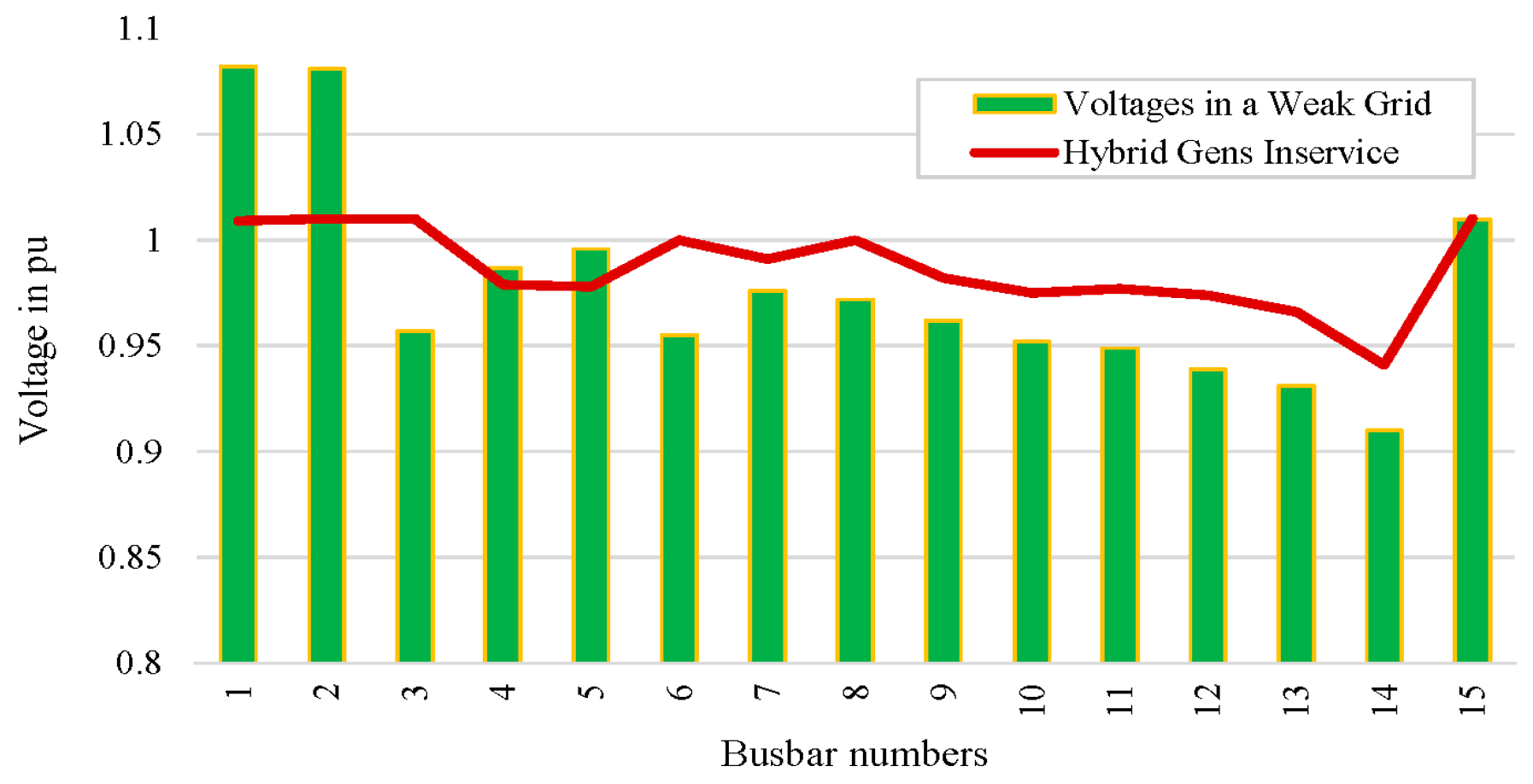
Figure 6 shows the voltage profiles of the modified 14-bus system when hybrid generators are added at Buses 3 and 6. Distinct overall voltage profile improvement is observed in the system, bringing the high voltages of the grid source Buses 1 and 2 closer to acceptable voltage limits.
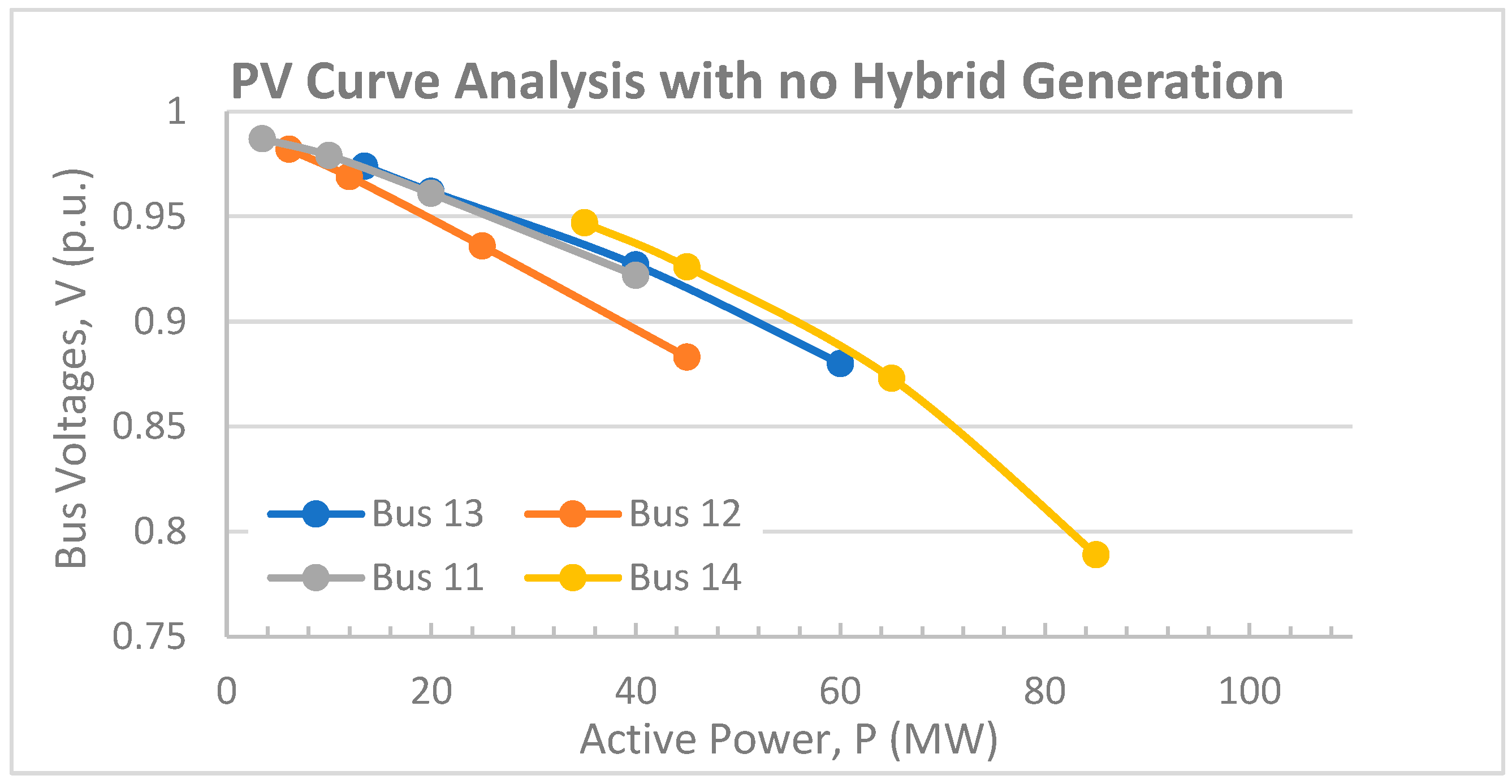
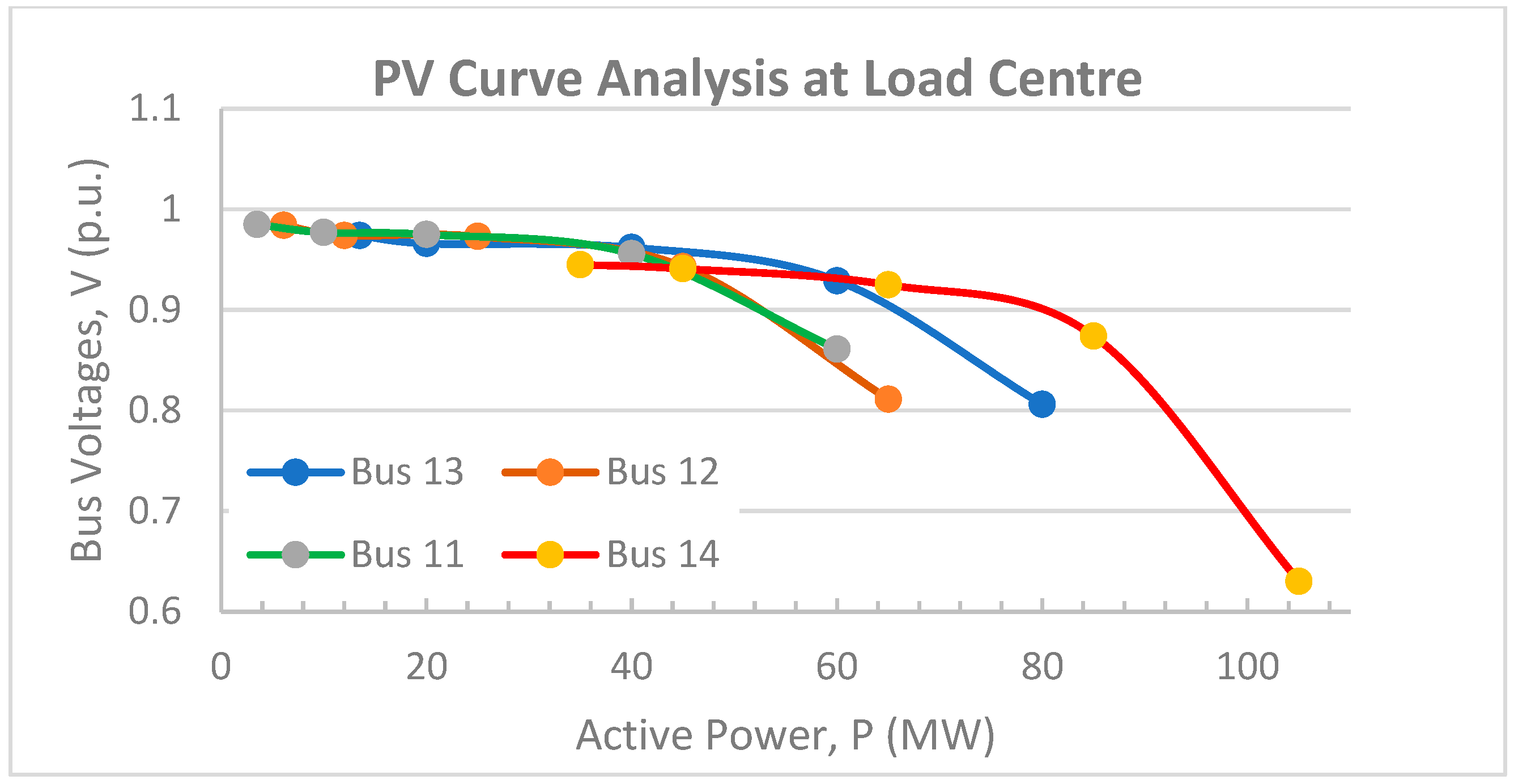
Figure 7 and
Figure 8 depict the voltage sensitivity of the grid with a gradual increase in critical loads in step sizes of approximately 20 MW, for the scenarios with and without hybrid generation in the modified 14-bus casefile. The load increase continues until grid instability potentially occurs, indicated by the failure of the load flow casefile to converge due to plants exceeding operational limits.
6. Conclusions
This study examines voltage stability challenges in South Africa’s constrained grids with increasing hybrid renewable integration. Simulations using a modified IEEE 14-bus system reveal vulnerabilities in line loading and reactive power balance. Penetration of inverter-based resources in low short-circuit-ratio areas exacerbates voltage control difficulties. Among voltage stability assessment methods, P–V and Q–V curve analyses provide reliable steady-state evaluation of system behaviour under increasing load conditions and effectively assess proximity to voltage collapse. Hybrid systems with battery energy storage present promising solutions for mitigating voltage instability in weak grids, which are prone to fluctuations and reactive power deficits that can lead to blackouts. Realizing their potential requires accurate dynamic modelling, grid code compliance, and proactive planning. The modified IEEE 14-bus system was enhanced with hybrid resources, inverter-based generation, and control systems to reflect weak network characteristics like those in South Africa’s Northern Cape. Future work should focus on dynamic modelling of the 14-bus system to develop predictive tools for grid planners. Higher inverter-based resource penetration necessitates refined simulations, real-time PMU (phasor measurement unit)/WMU (waveform measurement unit) monitoring, and collaboration with OEMs (original equipment manufacturers) for electromagnetic transient modelling to better manage increasing converter interactions.
Author Contributions
Conceptualization N.L.N. and D.O.; methodology, N.L.N.; simulations, N.L.N.; validation, M.M. and D.O.; formal analysis, N.L.N.; investigation, N.L.N.; resources, D.O.; data curation, N.L.N.; writing—original draft preparation, N.L.N.; writing—review and editing, M.M. and D.O.; visualization, N.L.N.; supervision, D.O.; project administration, N.L.N.; funding acquisition, N.L.N. All authors have read and agreed to the published version of the manuscript.
Funding
This research received no external funding.
Institutional Review Board Statement
Not applicable.
Informed Consent Statement
Not applicable.
Data Availability Statement
The original contributions presented in this study are included in the article. Further inquiries can be directed to the corresponding authors.
Acknowledgments
During the preparation of this study, the authors used DigSilent PowerFactory version 2025 for the purposes of power system simulation. The authors have reviewed and edited the output and take full responsibility for the content of this publication.
Conflicts of Interest
The authors declare no conflicts of interest.
References
- Department of Mineral Resources and Energy. Battery Energy Storage Bid Window 3: List of Bids Received on 28 November 2024; Online PDF, Nov. 2024; Tender no: DMRE/022/2023/24. Available online: https://www.dbsa.org/sites/default/files/media/documents/2024-11/BESIPPPP%20BW3%20Bids%20Received%2028%20Nov%202024.pdf (accessed on 2 August 2025).
- Department of Mineral Resources and Energy. Risk Mitigation in Context: The Risk Mitigation Independent Power Producer Procurement Programme (RMIPPPP) in Context. 2021. Available online: https://www.dmpr.gov.za/Portals/0/Energy_Website/IPP/Risk-Mitigation-in-Context.pdf (accessed on 1 November 2025).
- Kundur, P.; Paserba, J.; Ajjarapu, V.; Andersson, G.; Bose, A.; Canizares, C.; Hatziargyriou, N.; Hill, D.; Stankovic, A.; Taylor, C.; et al. Definition and classification of power system stability IEEE/CIGRE joint task force on stability terms and definitions. IEEE Trans. Power Syst. 2004, 19, 1387–1401. [Google Scholar] [CrossRef]
- Shair, J.; Li, H.; Hu, J.; Xie, X. Power system stability issues, classifications and research prospects in the context of high-penetration of renewables and power electronics. Renew. Sustain. Energy Rev. 2021, 145, 111111. [Google Scholar] [CrossRef]
- Kim, D.J.; Moon, Y.H.; Lee, J.J.; Ryu, H.S.; Kim, T.H. A new method of recording generator dynamics and its application to the derivation of synchronous machine parameters for power system stability studies. IEEE Trans. Energy Convers. 2017, 33, 605–616. [Google Scholar] [CrossRef]
- Azhagan, A.; Karthikeyan, R. Voltage Stability Enhancement on IEEE 14 Bus System. 2013. Available online: https://papers.ssrn.com/sol3/papers.cfm?abstract_id=2235549 (accessed on 12 February 2026).
- Malik, F.H.; Khan, M.W.; Rahman, T.U.; Ehtisham, M.; Faheem, M.; Haider, Z.M.; Lehtonen, M. A comprehensive review on voltage stability in wind-integrated power systems. Energies 2024, 17, 644. [Google Scholar] [CrossRef]
- Boateng, L.; Mhangara, P. A comparative assessment of annual solar irradiance trends between Mpumalanga and Northern Cape Province in South Africa using PVGIS. Energies 2023, 16, 6665. [Google Scholar] [CrossRef]
- CSIR–Energy Research Centre. Utility-Scale Power Generation Statistics in South Africa. 2025. Available online: https://www.csir.co.za/sites/default/files/2025-10/Utility%20Statistics%20Report_29092025.pdf (accessed on 12 November 2025).
- Boricic’, A.; Torres, J.L.R.; Popov, M. System strength: Classification, evaluation methods, and emerging challenges in IBR-dominated grids. In 2022 IEEE PES Innovative Smart Grid Technologies-Asia (ISGT Asia); IEEE: New York, NY, USA, 2022; pp. 185–189. [Google Scholar]
- Fitzgerald, D.; Le Roux, M.; Bekker, B.; Pierce, W.; Auret, C.; Morison, S.; Snyman, L. Visualisation of South African Electricity Data. 2025. Centre of Renewable & Sustainable Energy Studies, Stellenbosch University. Available online: https://www.crses.sun.ac.za/sa-energy-stats/ (accessed on 12 November 2025).
- Mararakanye, N.; Bekker, B. Renewable energy integration impacts within the context of generator type, penetration level and grid characteristics. Renew. Sustain. Energy Rev. 2019, 108, 441–451. [Google Scholar] [CrossRef]
- Rainey, M.; Oyedokun, D. Load modelling effects on power system inertia response. In 2020 IEEE PES/IAS PowerAfrica; IEEE: Nairobi, Kenya, 2020; pp. 1–5. [Google Scholar]
- Polykarpou, E.; Asprou, M.; Kyriakides, E.; Hadjilaou, C.; Petoussis, A.; Achillides, Z. Effect of load composition on the frequency response of the Cyprus power system. In 2018 IEEE International Conference on the Science of Electrical Engineering in Israel (ICSEE); IEEE: New York, NY, USA, 2018; pp. 1–5. [Google Scholar]
- Concordia, C.; Ihara, S. Load representation in power system stability studies. In IEEE Transactions on Power Apparatus and Systems; IEEE: New York, NY, USA, 2007; pp. 969–977. [Google Scholar]
- Sarkar, M.; Sørensen, M.; Sørensen, P.E.; Hansen, A.D. Impact of different load types on voltage stability of power system considering wind power support. In Proceedings of the 18th Wind Integration Workshop, Dublin, Ireland, 16–18 October 2019; pp. 1–5. [Google Scholar]
- Murphy, C.; Harrison-Atlas, D.; Grue, N.; Mosier, T.; Gallego-Calderon, J.; Elliott, S. Complementarity of Renewable Energy-Based Hybrid Systems; Technical Report; National Renewable Energy Laboratory (NREL): Golden, CO, USA, 2023.
- Murphy, C.; Mills, A. Hybrid Energy Systems: Opportunities for Coordinated Research; Report No. DOE/GO-102021-5447; National Renewable Energy Laboratory (NREL): Golden, CO, USA, 2021. Available online: https://docs.nlr.gov/docs/fy21osti/77503.pdf (accessed on 30 November 2025).
- Denholm, P. Energy storage to reduce renewable energy curtailment. In 2012 IEEE Power and Energy Society General Meeting; IEEE: New York, NY, USA, 2012; pp. 1–4. [Google Scholar]
- de Andrade Santos, J.A.F.; De Jong, P.; da Costa, C.A.; Torres, E.A. Combining wind and solar energy sources: Potential for hybrid power generation in Brazil. Util. Policy 2020, 67, 101084. [Google Scholar] [CrossRef]
- Buonomano, A.; Calise, F.; d’Accadia, M.D.; Vicidomini, M. A hybrid renewable system based on wind and solar energy coupled with an electrical storage: Dynamic simulation and economic assessment. Energy 2018, 155, 174–189. [Google Scholar] [CrossRef]
- Dykes, K.; King, J.; DiOrio, N.; King, R.; Gevorgian, V.; Corbus, D.; Blair, N.; Anderson, K.; Stark, G.; Turchi, C.; et al. Opportunities for Research and Development of Hybrid Power Plants; Technical Report; National Renewable Energy Lab. (NREL): Golden, CO, USA, 2020.
- Peyghami, S.; Davari, P.; Fotuhi-Firuzabad, M.; Blaabjerg, F. Standard test systems for modern power system analysis: An overview. IEEE Ind. Electron. Mag. 2019, 13, 86–105. [Google Scholar] [CrossRef]
- Amiri, E.M.; Zaker, B.; Rahbarimagham, H.; Abedi, M.; Gharehpetian, G. Optimal placement and sizing of STATCOM to improve power quality considering wind generation. Literatures 2013, 5, 9. [Google Scholar]
| Disclaimer/Publisher’s Note: The statements, opinions and data contained in all publications are solely those of the individual author(s) and contributor(s) and not of MDPI and/or the editor(s). MDPI and/or the editor(s) disclaim responsibility for any injury to people or property resulting from any ideas, methods, instructions or products referred to in the content. |