Power Energy Management for a Hybrid Renewable System Using Artificial and Computational Intelligence †

Abstract
1. Introduction
2. Literature Review
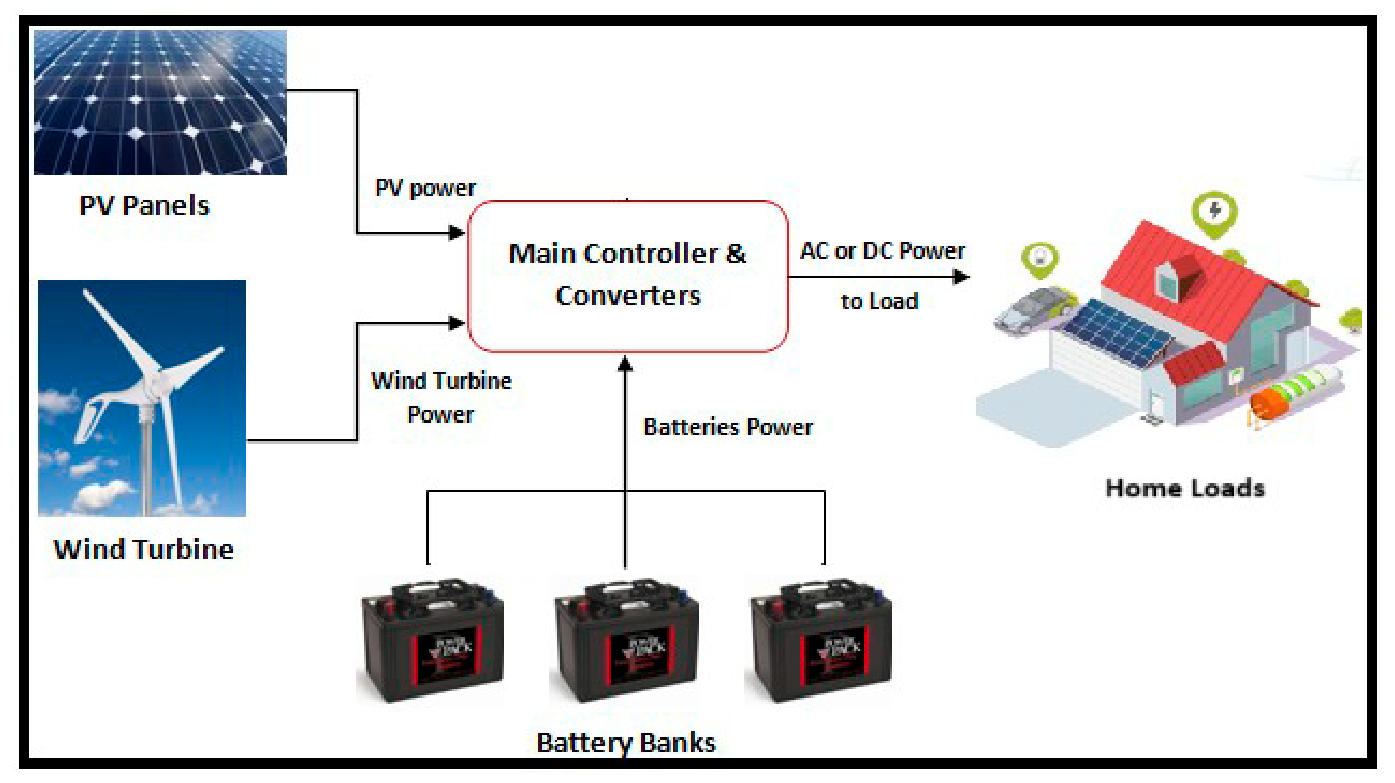
3. Hybrid Renewable System and Proposed Artificial and Computational Intelligence Technique
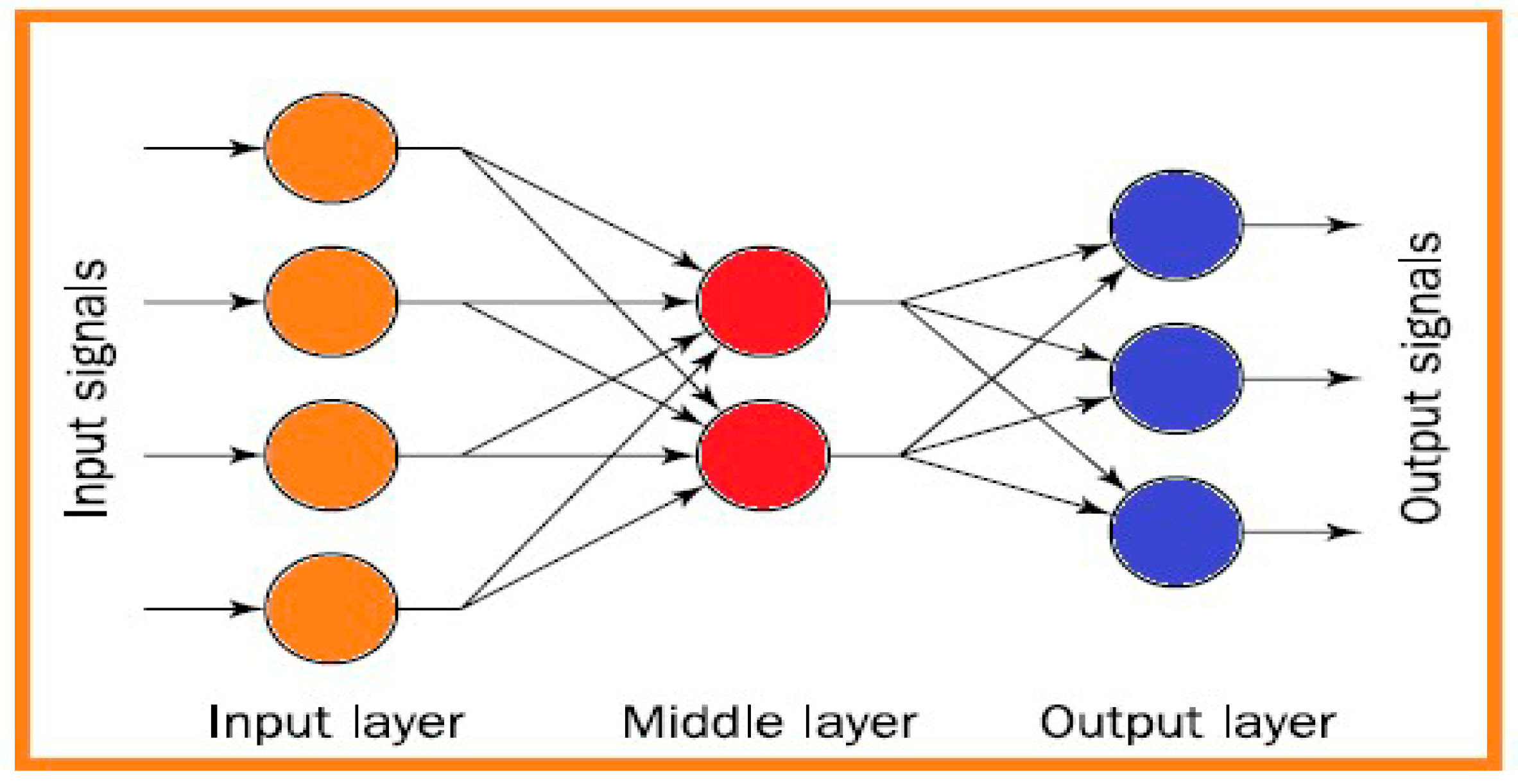
Mathematical Modelling for ANN in Hybrid System
4. Simulation Results and Discussion
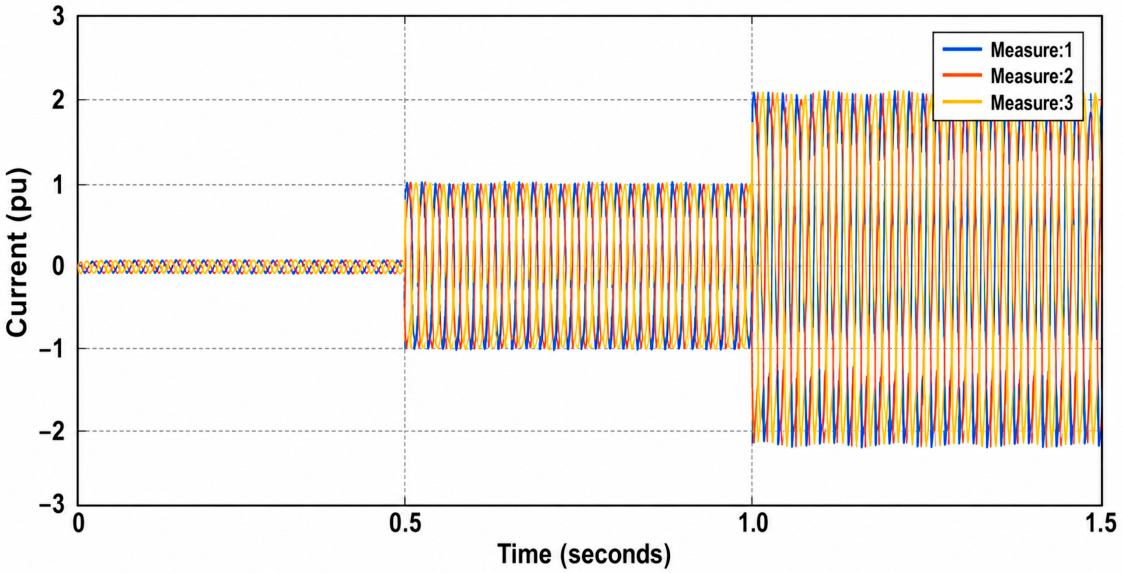
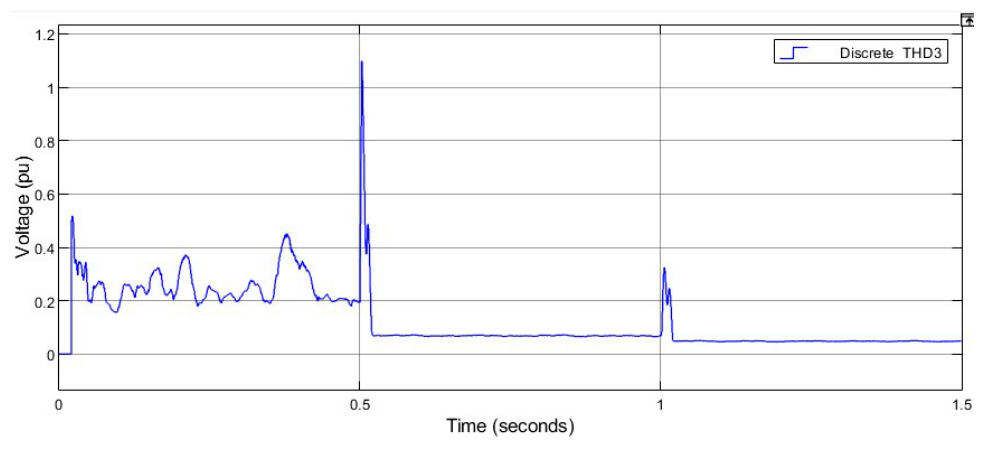
Power Energy Management During Fault Outbreaks
5. Conclusions
Author Contributions
Funding
Institutional Review Board Statement
Informed Consent Statement
Data Availability Statement
Conflicts of Interest
References
- Zulu, M.L.T.; Sarma, R.; Tiako, R. Enhancing Power Quality in a PV/Wind Smart Grid with Artificial Intelligence Using Inverter Control and Artificial Neural Network Techniques. Electricity 2025, 6, 35. [Google Scholar] [CrossRef]
- Chung, I.-Y.; Liu, W.; Cartes, D.A.; Schoder, K. Control parameter optimization for a microgrid system using particle swarm optimization. In Proceedings of the 2008 IEEE International Conference on Sustainable Energy Technologies, Singapore, 24–27 November 2008; pp. 837–842. [Google Scholar]
- Zulu, M.L.T.; Sarma, R.; Tiako, R. Modified fuzzy logic and artificial bee colony: An artificial intelligence approach to optimization and power quality improvement in an MPPT-based system. Sci. Afr. 2025, 28, e02690. [Google Scholar] [CrossRef]
- Sahoo, S.K.; Sinha, A.K.; Kishore, N. Control techniques in AC, DC, and hybrid AC–DC microgrid: A review. IEEE J. Emerg. Sel. Top. Power Electron. 2017, 6, 738–759. [Google Scholar] [CrossRef]
- Kouveliotis-Lysikatos, I.N.; Koukoula, D.I.; Hatziargyriou, N.D. A double-layered fully distributed voltage control method for active distribution networks. IEEE Trans. Smart Grid 2017, 10, 1465–1476. [Google Scholar] [CrossRef]
- Nduwamungu, A.; Lie, T.T.; Lestas, I.; Nair, N.-K.C.; Gunawardane, K. Control strategies and stabilization techniques for DC/DC converters application in DC MGs: Challenges, opportunities, and prospects—A review. Energies 2024, 17, 669. [Google Scholar] [CrossRef]
- Khan, A.A.; Timilsina, L.; Muriithi, G.; Arsalan, A.; Moghassemi, A.; Papari, B.; Ozkan, G.; Edrington, C.S.; Boghrabadi, N.S.; Wang, Z. Energy Management Systems for Maritime Microgrids: A Comprehensive Review of Intelligent Optimization Strategies. IEEE Access 2025, 13, 171563–171597. [Google Scholar] [CrossRef]
- Salimath, G.; Singh, N.K.; Badge, S.S. Coordination and performance analysis of pumped hydro storage system integrated with solar, wind hybrid system. In Proceedings of the 2017 International Conference on Energy, Communication, Data Analytics and Soft Computing (ICECDS), Chennai, India, 1–2 August 2017; pp. 160–164. [Google Scholar]
- Golroodbari, S.; Vaartjes, D.; Meit, J.; Van Hoeken, A.; Eberveld, M.; Jonker, H.; Van Sark, W. Pooling the cable: A techno-economic feasibility study of integrating offshore floating photovoltaic solar technology within an offshore wind park. Sol. Energy 2021, 219, 65–74. [Google Scholar] [CrossRef]
- Zhang, M.; Han, Y.; Liu, Y.; Zalhaf, A.S.; Zhao, E.; Mahmoud, K.; Darwish, M.M.; Blaabjerg, F. Multi-timescale modeling and dynamic stability analysis for sustainable microgrids: State-of-the-art and perspectives. Prot. Control Mod. Power Syst. 2024, 9, 1–35. [Google Scholar] [CrossRef]



| PV Model Voltages | |
|---|---|
| Condition | Outputs |
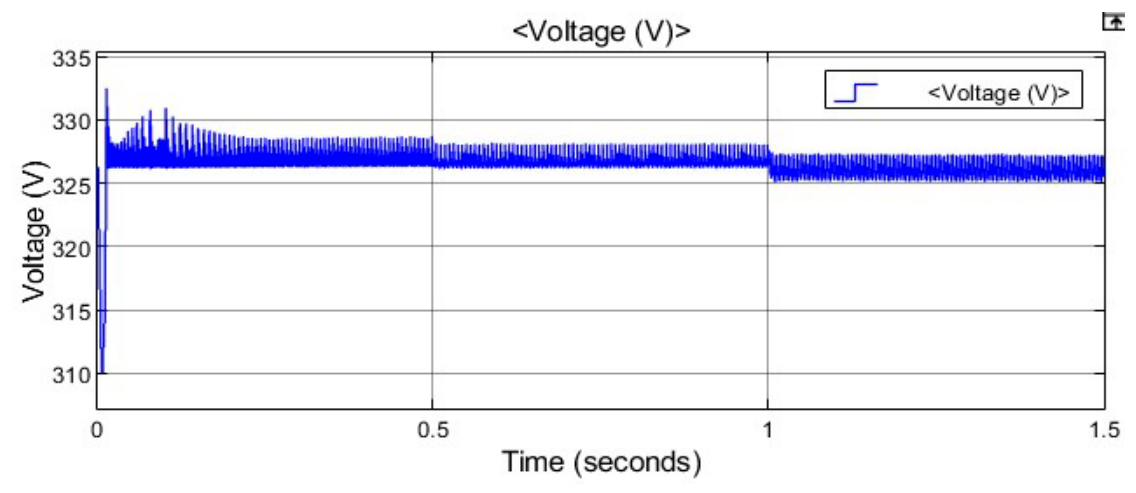
| DC grid voltage at full load | Vdc_1 = 666.5 V |
| DC grid voltage without battery storage connected | Vdc_1 = 665 V |
| DC voltage during normal operation | Vdc_1 = 700 V |
| Wind Generation | |
|---|---|
| Conditions | Outputs |
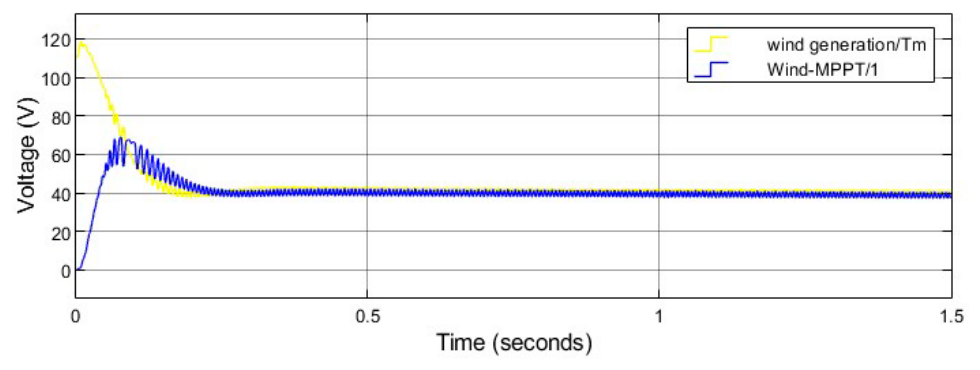
| Wind generation/Tm with wind MPPT/1 without battery storage | Tm = 43.5 kW MPPT/1 = 42.5 kW |
| Wind generation with wind MPPT/3 and discrete first-order filter | MPPT/3 = 13.5 kW First order = 12 kW |
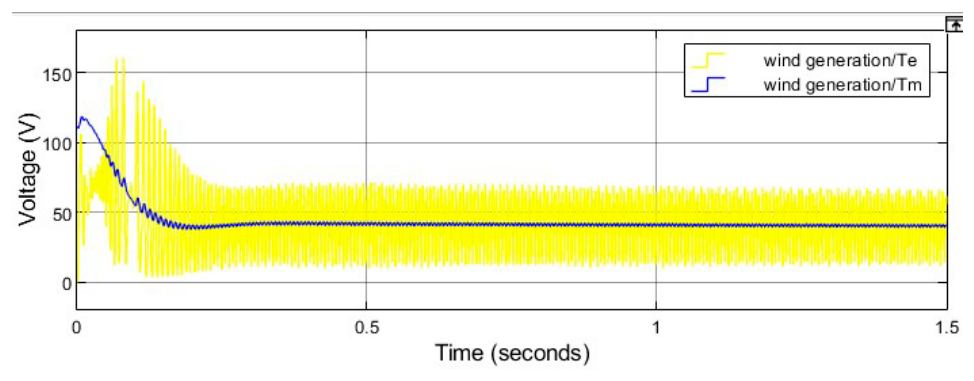
| Wind generation/Te and wind generation/Tm output during normal conditions | Te = 160 kW Tm = 120 kW |
| Wind generation/Tm and wind MPPT/1 output during normal conditions | Tm = 120 kW, MPPT/1 = 70 kW Equilibrium = 40 kW |
| Wind generation/Te and wind generation/Tm without battery storage | Te = 75 kW Tm = 44 kW |
Disclaimer/Publisher’s Note: The statements, opinions and data contained in all publications are solely those of the individual author(s) and contributor(s) and not of MDPI and/or the editor(s). MDPI and/or the editor(s) disclaim responsibility for any injury to people or property resulting from any ideas, methods, instructions or products referred to in the content. |
© 2026 by the authors. Licensee MDPI, Basel, Switzerland. This article is an open access article distributed under the terms and conditions of the Creative Commons Attribution (CC BY) license.
Share and Cite
Zulu, M.L.T.; Sarma, R.; Tiako, R. Power Energy Management for a Hybrid Renewable System Using Artificial and Computational Intelligence. Eng. Proc. 2026, 140, 52. https://doi.org/10.3390/engproc2026140052
Zulu MLT, Sarma R, Tiako R. Power Energy Management for a Hybrid Renewable System Using Artificial and Computational Intelligence. Engineering Proceedings. 2026; 140(1):52. https://doi.org/10.3390/engproc2026140052
Chicago/Turabian StyleZulu, Musawenkosi Lethumcebo Thanduxolo, Rudiren Sarma, and Remy Tiako. 2026. "Power Energy Management for a Hybrid Renewable System Using Artificial and Computational Intelligence" Engineering Proceedings 140, no. 1: 52. https://doi.org/10.3390/engproc2026140052
APA StyleZulu, M. L. T., Sarma, R., & Tiako, R. (2026). Power Energy Management for a Hybrid Renewable System Using Artificial and Computational Intelligence. Engineering Proceedings, 140(1), 52. https://doi.org/10.3390/engproc2026140052