
Article

Protective Pectin-Zinc-Thymol Coating to Minimize Salmonella Typhimurium, Enteritidis, and Montevideo in Cherry Tomatoes

by
Ismael García-Vera
1,
Carlos Arnulfo Velázquez-Carriles
2,
Jorge L. Mejía-Méndez
3,
Diego E. Navarro-López
3,
Luis Miguel Anaya-Esparza
4,
Martin Zermeño-Ruiz
1,
Omar Graciano-Machuca
5,
Luis Gilberto López-Muñoz
6 and
Jorge Manuel Silva-Jara
1,*
1
Pharmacobiology Department, University Center of Exact Sciences and Engineering, University of Guadalajara, Guadalajara 44430, Mexico
2
Biological, Sintetic and Materials Engineering Department, University Center of Tlajomulco, University of Guadalajara, Carretera Tlajomulco, Santa Fé, Km 3.5, 595, Tlajomulco de Zúñiga 45641, Mexico
3
School of Engineering and Sciences, Tecnológico de Monterrey, Epigmenio González 500, San Pablo, Santiago de Querétaro 76130, Mexico
4
Center for Studies on Agriculture, Food, and the Climate Crisis, Los Altos University Center, University of Guadalajara, Rafael Casillas Aceves 1200, Tepatitlán de Morelos 47600, Mexico
5
Digital Signal Processing Research Center, University Center of the Valleys, Carretera a Guadalajara, Supermanzana El Km 45.5, Caimanero 46708, Mexico
6
Agroindustrial Engineering Program, University of Los Llanos, Kilómetro 12 vía a Puerto López, Vda Barcelona, Villavicencio 500003, Colombia
*
Author to whom correspondence should be addressed.
Polysaccharides 2026, 7(3), 91; https://doi.org/10.3390/polysaccharides7030091
Submission received: 14 June 2026 / Revised: 21 July 2026 / Accepted: 31 July 2026 / Published: 4 August 2026

Abstract

Cherry tomatoes are highly susceptible to Salmonella contamination during pre- and post-harvest handling, leading to foodborne illness outbreaks and significant economic losses. Edible coatings incorporating natural antimicrobials offer a promising alternative to conventional chemical treatments for enhancing food safety while maintaining produce quality. This study developed and evaluated a pectin-based edible coating enriched with zinc nanohydroxide-thymol nanohybrids (ZnNH-T) for controlling Salmonella contamination and extending shelf-life of cherry tomatoes. ZnNH-T nanohybrids were synthesized via precipitation, followed by thymol intercalation, and characterized by SEM. Four coating formulations were prepared: pectin alone (P), pectin-thymol (PT), pectin-ZnNH (PNH), and pectin-ZnNH-T (PNHT). Antibacterial activity of the four coatings was first screened in vitro by disc diffusion against six S. enterica serovars; three serovars (Typhimurium, Enteritidis, and Montevideo) showing a statistically significant, coating-dependent inhibition response were selected for the postharvest assay. Cherry tomatoes were coated and dip-inoculated with three Salmonella serotypes (Typhimurium, Enteritidis, and Montevideo) at approximately 105 CFU/mL and stored at 25 °C for 12 days. Antimicrobial efficacy, antioxidant activity (ABTS assay), and physicochemical quality parameters (weight loss, color, pH, and total soluble solids) were evaluated. Zinc nanohydroxides were successfully synthesized, as observed in SEM morphology. ABTS radical scavenging activity of filmogenic solutions was highest for PT (92.4%) and moderate for PNHT (65.9%), while P and PNH showed minimal activity (20.1% and 17.8%, respectively). PNHT coating achieved an approximately 2-log CFU/g reduction in Salmonella populations compared to uncoated controls over 12 days of storage, demonstrating sustained antimicrobial efficacy. Coated tomatoes exhibited significantly reduced weight loss (8% for PNHT vs. 13% for control), better color retention, lycopene content, maintained firmness, and stable pH and TSS values compared to uncoated controls. The pectin-ZnNH-T coating system represents a novel multifunctional approach for enhancing cherry tomato safety and quality. The use of thymol from the layered hydroxide structure, combined with zinc ion antimicrobial effects, provides sustained pathogen reduction while maintaining desirable physicochemical properties. This natural, biodegradable coating technology has potential for commercial application in fresh produce preservation.

1. Introduction

Cherry tomato is a fruit widely cultivated worldwide that contributes significantly to the human diet [1]. It is considered a functional food due to its content of antioxidant compounds, vitamins, and flavonoids [2]. However, cherry tomatoes are susceptible to bacterial contamination during pre- and post-harvest processes; consequently, the fruit is affected in its physicochemical properties [3]. Cherry tomatoes have high nutritional value due to their rich content of essential phytochemicals.
In Mexico, the number of foodborne illnesses caused by Salmonella spp. reaches 70,000 cases each year; the main sources of this pathogen are irrigation water and animals near cultivation areas [4]. Different Salmonella serotypes can survive on the epicarp and in the pulp of tomatoes; however, this varies by serotype [5]. Serotypes such as Montevideo, Newport, and Hadar are more adaptable to growth in tomatoes than serotypes such as Enteritidis, Typhimurium, and Dublin. Furthermore, it has been reported that ripe tomatoes support better survival and growth of Salmonella Montevideo than Salmonella Typhimurium [5,6,7]. In recent years, Salmonella has also been detected in raw tomatoes [8], leading to foodborne disease outbreaks and significant economic losses.
To reduce the microbial load in foods, physical and/or chemical control methods can be applied. However, current microbial control methods to ensure food safety and reduce microbial spoilage rely heavily on chemicals, radiation, and thermal treatments, which have significant disadvantages, including altering the food and affecting its sensory properties [9]. As an alternative, nanotechnologies are a growing field in the food sector. Technologies such as hybrid nanohydroxide salts, used as antimicrobial contact surfaces or in food packaging systems, show great potential for the food industry [10].
An edible coating is a thin layer of edible material that forms a protective covering over food products and is consumed along with them. In coating formulations, various substances such as plasticizers, crosslinking agents, emulsifiers, and reinforcing agents are used to modify the material’s basic functionality [11,12]. Additionally, various active compounds like antimicrobials, antioxidants, colorants, flavors, and nutraceuticals are incorporated into the coating-forming solution to enhance the quality, stability, and safety of packaged food products, providing antibacterial, antifungal, or antioxidant properties to the edible material [13,14].
Pectin is an anionic polysaccharide with a structural backbone of α-D-galacturonic acid linked by (1 → 4) bonds, found in plant fiber and cell walls [15]. It has great potential for use in edible coating preparation due to its biodegradability, safety, strong gel-forming ability, and excellent gas-barrier properties [16,17].
Thymol (2-isopropyl-5-methylphenol) is a natural colorless monoterpenoid phenol, characterized by a strong aroma and solubility in alcohol and other organic solvents. It is the main active component of the essential oil extracted from Thymus vulgaris. Thymol has demonstrated antiseptic, antibacterial, antifungal, anthelmintic, antiviral, and antioxidant properties, among others. The antioxidant activity of thymol is attributed to the ability of phenolic groups to absorb or neutralize free radicals and to enhance endogenous antioxidants and beneficial microorganisms in foods [18]. Nevertheless, higher antioxidant activity does not imply great antimicrobial activity against pathogens [19].
Layered hydroxysalts (LHS) or nanohydroxides (NH) are compounds belonging to the group of inorganic salts, consisting of brucite-like layers. The general formula of layered hydroxysalts is M2+(OH)2−x(Am−)x/m·nH2O, where M can be one or two different divalent cations, and A represents an intercalated anion [20]. NH has made significant progress in synthesis, structure, and modifications. Their adaptability has enabled them to meet the requirements of practical applications in various fields, including catalysis, conversion processes, thin-film devices, and ion-exchange/adsorbent materials [21]. Zinc layered hydroxysalts [Zn5(OH)8(NO3)2·2H2O] consist of stacked layers containing a single type of cation. In recent years, zinc nanohydroxides (ZnNH) have been widely studied due to the broad range of properties that can be introduced through intercalation and functionalization reactions, such as surface chemical modification [22]. These nanostructures can be used as intelligent packaging systems, offering advantages over conventional methods, including antimicrobial activity, controlled nutrient delivery, improved mechanical resistance, enhanced bioavailability, and the preservation of active compounds [23].
The present research focuses on the formulation of an edible coating made of pectin enriched with nanohybrids of zinc nanohydroxides and thymol. It includes the characterization and evaluation of its antioxidant capacity and its application on cherry tomatoes to prevent Salmonella enterica adherence and survival. Tomatoes were analyzed for microbiological and physicochemical quality, considering parameters such as color, soluble solids, pH, lycopene content, and weight loss over 12 days at 25 °C.

2. Materials and Methods

2.1. Raw Materials

Food-grade citrus pectin was purchased from LM GENU pectin (CP Kelco, Atlanta, GE, USA. ZnCl2 (Golden Bell, Guadalajara, Mexico), NaOH (Sigma-Aldrich, Mexico City, Mexico), and thymol (Favela Pro, Sinaloa, Mexico) were used to synthesize zinc-nanohydroxides. Glycerol (Favela Pro, Sinaloa, Mexico) and CaCl2 (Analytyka, Santa Monica, CA, USA) were used for the coatings.

2.2. Zinc Nanohydroxide Salt and Hybrid Synthesis

ZnNH and hybrids with thymol (ZnNH-T) were synthesized as described in a previous study [24]. To confirm morphology, FE-SEM (TESCAN Mira3, Tempe, AZ, USA) was used at 15 kV.

2.3. Filmogenic Solutions

Edible coatings were prepared as described by Shivangi et al. [25]. For the base solution, 3 g of pectin was diluted in 100 mL of distilled water and stirred continuously for 24 h at room temperature (30 °C). Then, glycerol was added at 0.5%, and 10 mg of CaCl2 was used as a cross-linking agent [26]. This base filmogenic solution was labeled as P. Finally, thymol, ZnNH, and ZnNH-T were added at 1% of the total solution; each combination was labeled PT (pectin thymol), PNH (pectin zinc nanohydroxide), and PNHT (pectin zinc nanohydroxide-thymol). All mixtures were stirred for 30 min at room temperature, and a portion was poured into Petri dishes and dried in a convection oven for characterization (casting method); the remaining solution was kept at 4 °C until use.

2.4. Filmogenic Solution and Edible Coating Characterization

Viscosity of filmogenic solutions was measured by adding 45 mL of the solutions in a viscosimeter (BROOKFIELD LVT 299301, Middleboro, MA, USA); turbidity was determined in a turbidimeter (Hangzhou Qiwei Instrument ZD-10A, Hangzhou, China), while total soluble solids were quantified in a refractometer (SOONDA, Shanghai, China).
For the characterization of the edible coatings prepared with the casting method, an FT-IR spectrophotometer (Nicolet iS5, ThermoScientific, Waltham, MA, USA) from 4000 to 400 cm−1 with 32 scans of resolution was used. Color was measured with a colorimeter (3nh SC-10, Guangzhou, China), where values for a, b, and L were recorded and used to calculate total differential color (ΔE), Chroma (C*), and Hue angle (), with Equations (1)–(3), respectively [27]. The thickness of the coatings was measured with a digital micrometer (WEN 10725, West Dundee, IL, USA); transparency was determined with the method described by Han and Floros [28] with modifications. Solutions were read at 530 nm using a transmittance reader (VINCKOLOR TH-200, Shenzhen, China), and the results were expressed as the percentage of transparency (T%) estimated using Equation (4).
E a b * = [ ( L * ) 2 + ( a * ) 2 + ( b * ) 2 ] 1 / 2
C * = a 2 + b 2  
H ° = arctan ( b a )
T   ( % ) = log ( T 530 n )
where ΔL is the difference in luminosity, Δa is the difference from green to red, Δb is the difference from blue to yellow, and n is the thickness of the coating.

2.5. Antioxidant Activity of Filmogenic Solutions

The antioxidant activity of filmogenic solutions was assessed by inhibition of the 2,2′-azinobis-(3-ethylbenzothiazoline-6-sulfonic acid) (ABTS) radical, following the methodology of Li et al. [29]. ABTS radical at 7.5 mM was adjusted to an absorbance of 0.7 at 750 nm, then 280 μL of the solution and 20 μL of each filmogenic solution (P, PT, PNH, PNHT) were added to a 96-well microtiter plate and incubated in the dark for 10 min. Measurements were read at 750 nm in a plate reader (BIORAD, i-Mark, Berkeley, CA, USA), and the results were expressed as a percentage of inhibition (Equation (5)). ABTS radical with methanol was used as a control.
A B T S   i n h i b i t i o n   ( % ) = A 0 A 1 A 0   ( 100 )  
where A0 is the absorbance of the control, and A1 is the sample absorbance.

2.6. In Vitro Antibacterial Screening by Disc Diffusion

Prior to the postharvest assay, the antibacterial activity of the four pectin-based coatings (P, PT, PNH, and PNHT) was screened in vitro against six Salmonella enterica serovars (Agona, Bredeney, Enteritidis, Give, Montevideo, and Typhimurium) using the agar disc diffusion method. Bacterial strains were cultured in tryptic soy broth (TSB) for 24 h at 37 °C, and the cell density was adjusted to 1 × 10⁵ CFU/mL using the optical density at 600 nm, with 1 absorbance unit corresponding to 1 × 10⁹ CFU/mL. Sterile paper discs (6 mm diameter) were impregnated with each coating formulation and placed onto Mueller–Hinton agar plates previously seeded with the corresponding bacterial suspension. Plates were incubated at 37 °C for 24 h, and the diameter of the inhibitory zone (mm) was measured in three replicates per treatment.

2.7. In Vivo Antibacterial Activity of Coatings

To test the antibacterial effect of the edible coatings, Salmonella enterica serotypes (Enteritidis, Typhimurium, and Montevideo) donated by the Molecular Biology Laboratory of Universidad de Guadalajara, CUCEI, were evaluated. Bacterial strains were cultured in tryptic soy broth (TSB) and incubated for 24 h at 36 °C before testing. The cell density was adjusted to 1 × 10⁵ cells/mL using the optical density at 600 nm measured with a UV-Vis spectrophotometer (Optizen POP BIO, Daedeok, Republic of Korea). Cherry tomatoes (Solanum lycopersicum var. cerasiforme) at maturity stage 6 (deep red, with a red color exceeding 90%) [30], similar in size, color, and texture, were purchased in local markets of Guadalajara, Mexico. Fruits were washed and disinfected in sodium hypochlorite (20 mg/L) for 20 s, then washed again to remove residual chlorine, and dried at room temperature (30 °C). Filmogenic solutions for each treatment were prepared, and tomatoes were coated in two dipping cycles of 30 s each and allowed to dry at room temperature (30 °C) [31], followed by inoculation with Salmonella suspensions previously prepared by immersion. Tomatoes were maintained at room temperature (30 °C) for 12 days and sampled for Salmonella recovery at different times (1, 3, 6, 9, 12 days). Tomatoes without any coating were used as a control [32].
For Salmonella recovery, tomatoes were submerged in buffered peptone water (BPW) and agitated manually for 1 min to detach the cells. Serial dilutions were made in BPW, cultured by plate extension over Xylose Lysine Desoxycholate (XLD) Agar, and incubated for 24 h at 36 °C. Results were expressed as LogCFU/g.

2.8. Physicochemical Characteristics of Coated Tomatoes

Tomatoes were coated as previously described and kept at room temperature (30 °C) for 12 days without Salmonella inoculation, with evaluations conducted at 1, 3, 6, 9, and 12 days [33]. Each tomato was weighed at the beginning of the test, and weight loss was determined using an analytical balance. Weight loss was calculated as described in Equation (6).
W e i g h t   l o s s   ( % ) = m 0 m n m 0   ( 100 )  
where m0 and mn are the weight of the tomato at day 0 and sampling day, respectively. Color parameters (ΔE, C*, and ) were determined with Equations (1)–(3), while lycopene content was calculated with Equation (7) and expressed as mg of lycopene per 100 g [34].
L y c o p e n e = 11.848   ( a b ) + 1.5471
where a and b are the chromatic coordinates of the color space of the colorimetry test.
The pH of the tomatoes was measured with a potentiometer (HANNA H06310595, Cluj-Napoca, Romania); total soluble solids (TSS) were determined with a SOONDA refractometer (Shanghai, China).

2.9. Statistical Analysis

All experiments were performed in triplicate and analyzed using one-way ANOVA, followed by the Tukey test. Statistical significance was defined as p < 0.05, and the analysis was conducted using Statgraphics Centurion XVIII (V. 19.5.01). For the disc diffusion assay, a two-way ANOVA (coating × Salmonella serovar) was performed to evaluate the main and interactive effects of the antimicrobial formulation and the bacterial serovar on inhibitory zone diameter, followed by Tukey’s HSD test (p < 0.05); partial eta-squared (η2p) was calculated as a measure of effect size. Serovars were further characterized by their multivariate inhibition profiles across the four coatings using Ward’s hierarchical clustering and principal component analysis (PCA) on standardized (z-score) data to objectively group serovars by susceptibility patterns rather than by ranked means alone.

3. Results and Discussion

3.1. Nanomaterials Characterization

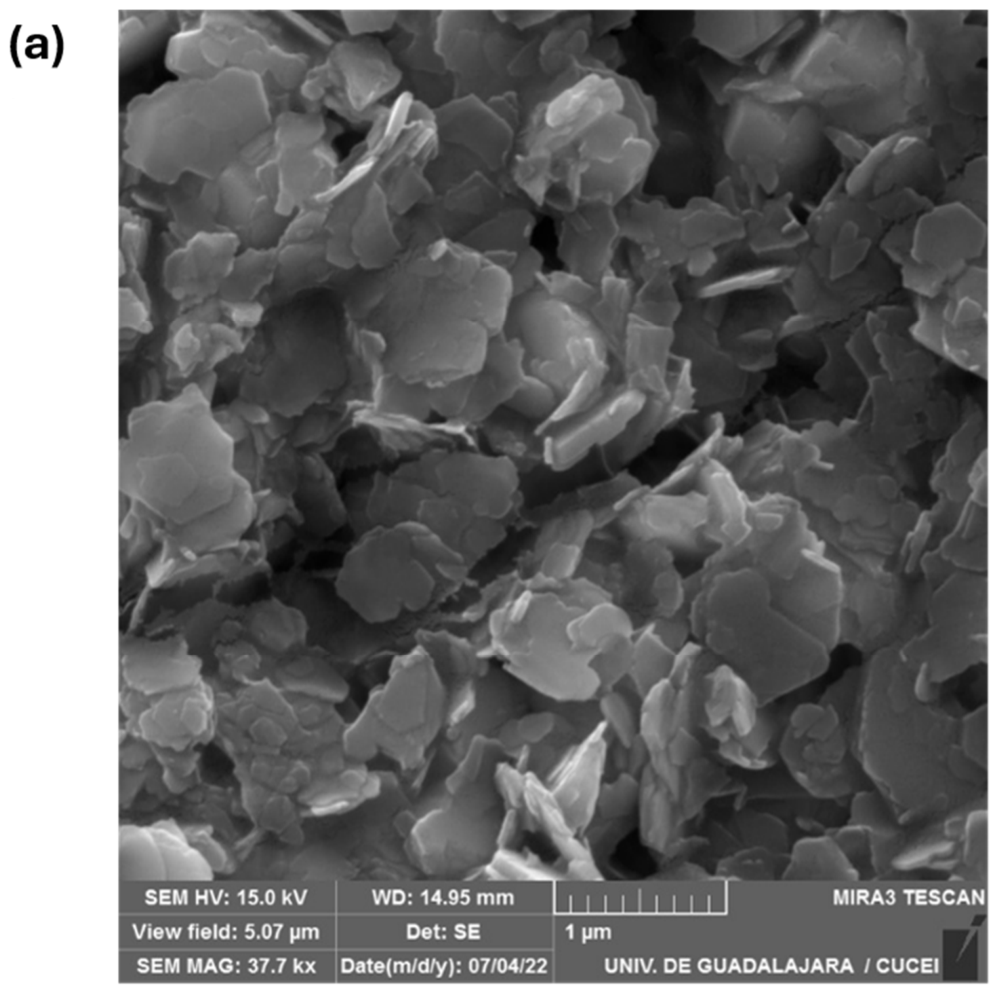
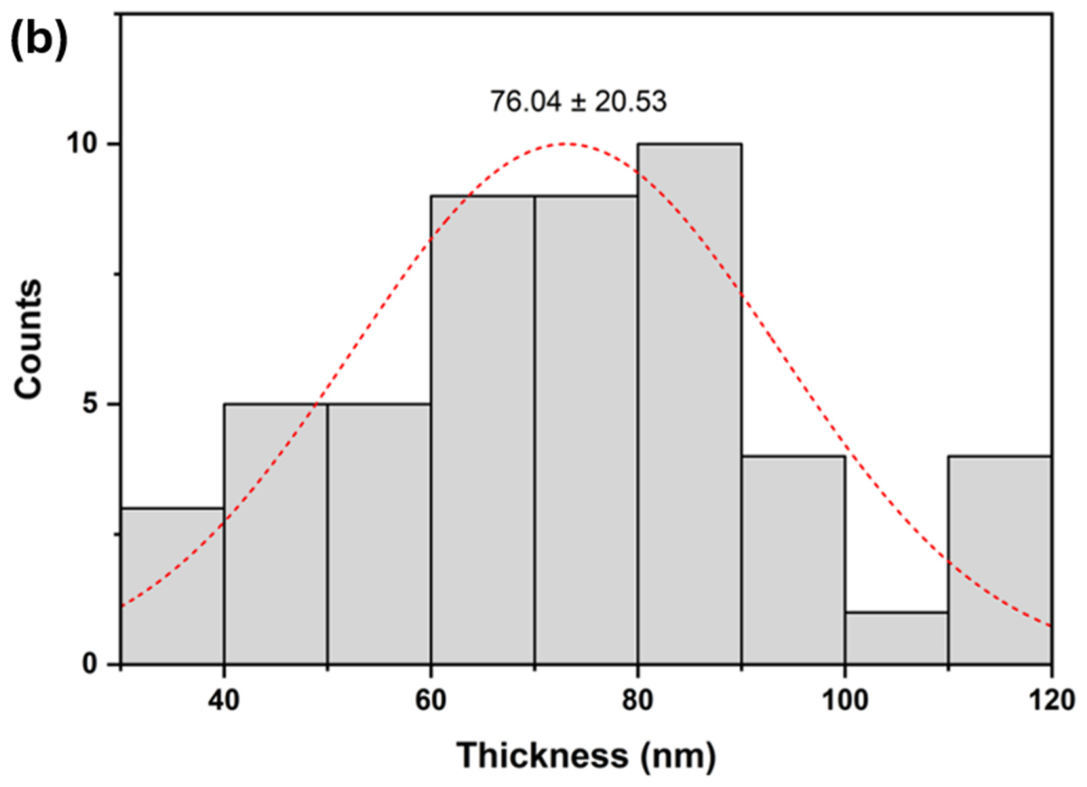
Figure 1a shows the characterization of zinc nanohydroxides (ZnNH). The morphology in the SEM images reveals a typical hexagonal structure characteristic of layered hydroxides; the thickness, estimated using ImageJ (V. 1.54p), was approximately 76.04 nm (Figure 1b). A similar result was observed [23]. The ZnNH sample exhibited a characteristic platelet-like morphology with hexagonal or irregular shapes, typical of layered hydroxide structures formed by coprecipitation methods. The platelets had lateral dimensions ranging from 100 to 500 nm and appeared stacked in a layered arrangement, consistent with a layered double hydroxide structure.

3.2. Characterization of Filmogenic Solution and Edible Coating

3.2.1. Fourier Transform Infrared Spectroscopy

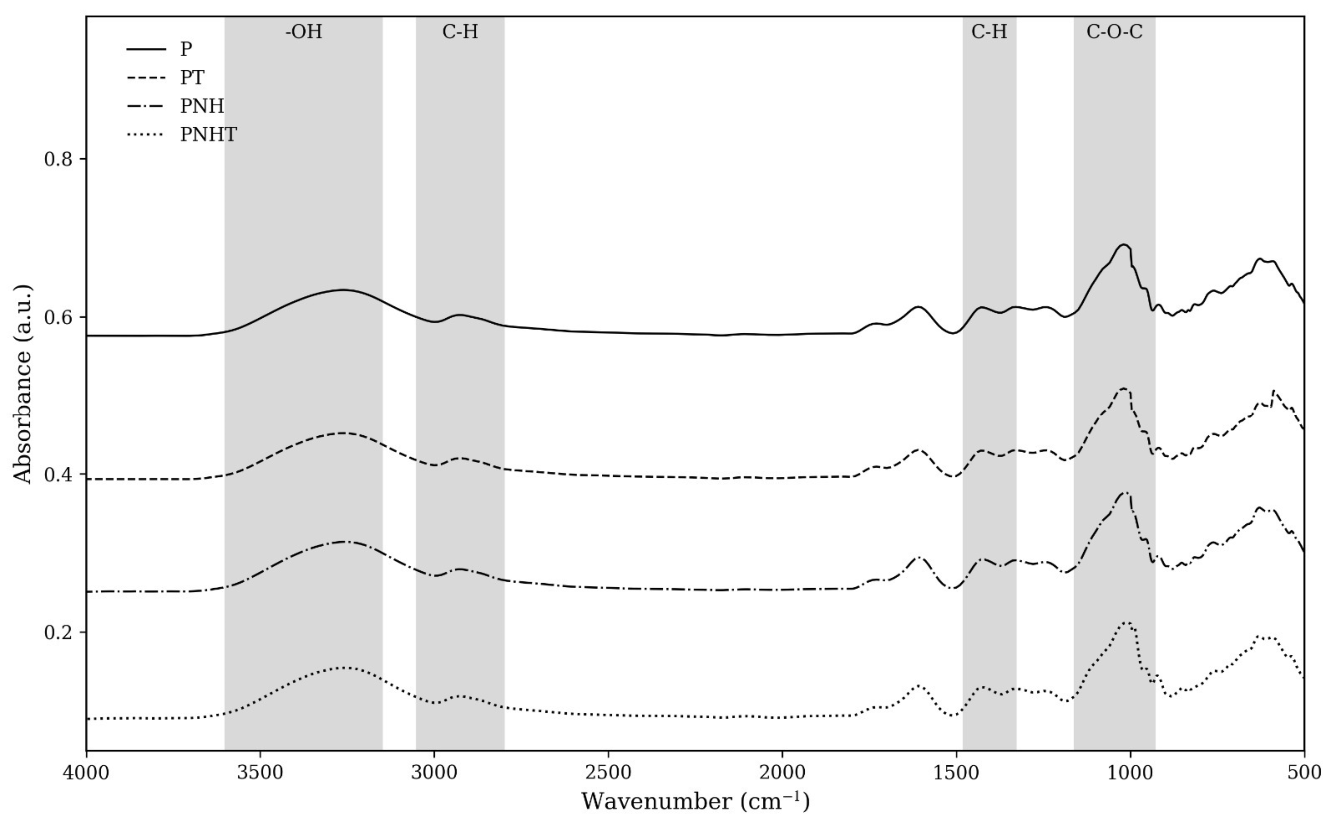
The FTIR spectra of edible coatings (P, PT, PNH, and PNHT) are depicted in Figure 2. Signals between 3500 and 3100 cm−1 can be associated with the vibration of –OH groups, while C–OH and C–O–C glycosidic bonds are observed around 1000 cm−1 [22]. In pectin-based coatings, a broadening at 1100 cm−1 is observed, attributed to the C–O–C stretching vibrations of the saccharide ring in pectin [35].
PT and PNHT have peaks and intensities similar to P, suggesting possible incorporation of thymol and the hybrid into the polymeric network. Due to their cationic nature, ZnNH, and ZnNH-T are entrapped within the crosslinked pectin matrix, and no new chemical bonds are formed [36], thereby enabling efficient encapsulation of the nanocomposites.

3.2.2. Physicochemical Properties of Filmogenic Solutions

Table 1 shows the results for viscosity, turbidity, and total soluble solids (TSS) of filmogenic solutions. These parameters are crucial for adhesion, substrate absorption, thickness, and coating uniformity when applied to foods [37]. No significant differences were found in TSS (p > 0.05), possibly due to the insertion of thymol and nanohydroxide salts between the polysaccharides. On the other hand, the viscosity of PNHT was significantly higher than that of P, PT, and PNH. This behavior may be due to the incorporation of ZnNH-T into the pectin network, as pectin’s molecular structure allows it to interact with other molecules, forming longer, more complex chains. This chaining increases viscosity by creating an entangled molecular network within the solution [38]. Similarly, turbidity increased significantly in PT, PNH, and PNHT compared to P, possibly due to the formation of larger complexes within the system [39].
Table 2 shows the colorimetric parameters of the pectin-based edible coatings. In general, no significant differences (p > 0.05) were observed among coating types for L*, C*, , a*, and b*. On the other hand, PNH and PNHT exhibited higher ΔE* than PT (with PT as the reference), although the difference was not significant among treatments (p > 0.05). This may be attributed to the color imparted by ZnNH and ZnNH-T, which appeared whitish and was reflected in the coating solutions.
Younis and Zhao [40] reported values of 2.82, 14.11, 14.39, and 78.93 for a*, b*, C*, and , respectively, in a 1.5% pectin coating. Similarly, Shahrampour et al. [41] reported values of 3.1 and 9.0 for a* and b*, respectively, in a 2% low-methoxyl pectin coating, values similar to those in this study. The thickness of the food coatings ranged from 0.161 to 0.197 mm (Table 3). An increase in thickness was observed when thymol, ZnNH, and ZnNH-T were added to the coating; however, no significant differences were found between the coatings (p > 0.05). The uniform thickness of the coatings may be due to the formation of a compact structure resulting from hydrogen bond interactions between the pectin polymer chains [42].
Similarly, the transparency of the coatings ranged from 2.381 to 2.491% (Table 3); no significant differences were found in transparency (p > 0.05) [43]. Therefore, the ability of the edible coatings to retain moisture is affected.

3.3. Antioxidant Capacity of Filmogenic Solutions

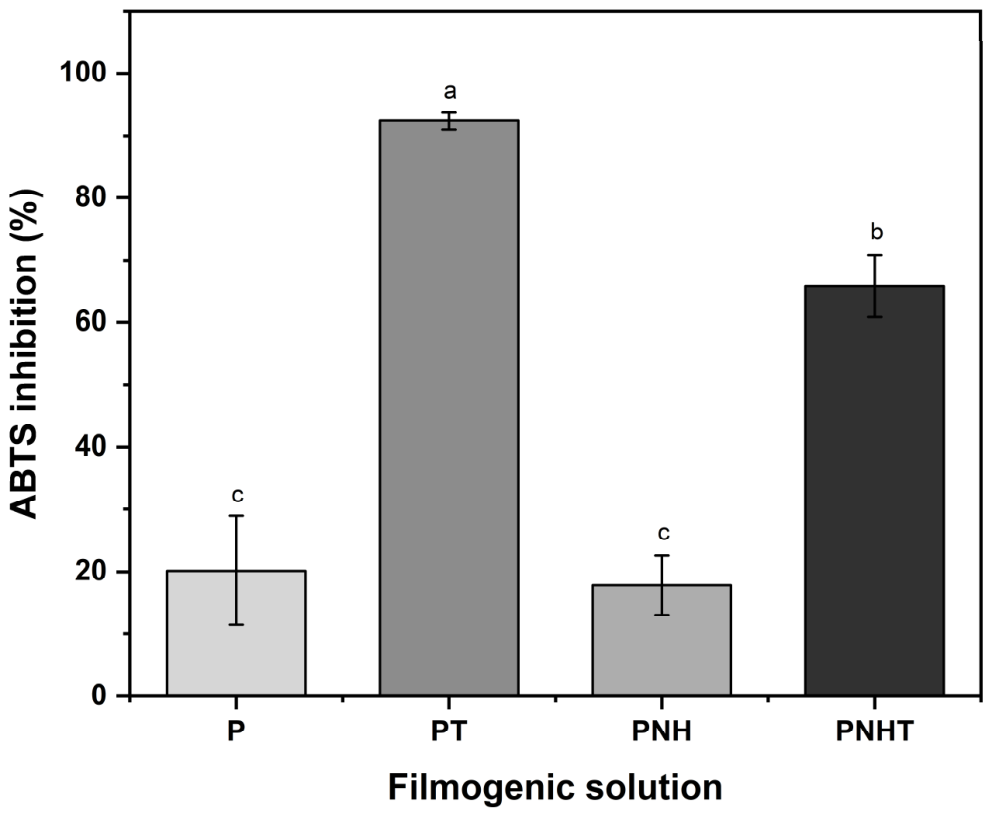
The presence of antioxidants decreases absorbance at 750 nm by eliminating free radicals, yielding a measurement that reflects antioxidant capacity [44]. According to the ABTS assay results evaluating the antioxidant capacity of pectin-based food coatings, ABTS radical inhibitions of 20.1%, 92.4%, 17.8%, and 65.9% were observed for P, PT, PNH, and PNHT, respectively (Figure 3). The data were analyzed using analysis of variance. A significant difference was observed for PT and PNHT (p < 0.05). The increased percentage of ABTS radical inhibition for PT and PNHT compared to P and PNH can be attributed to the presence of thymol, whose antioxidant activity has been previously reported [45]. Furthermore, inhibition of the ABTS radical of P was observed. This was likely due to pectin’s cation-scavenging activity reported in the study by Wang et al. [3], since pectin can remove metal cations and prevent free radical formation through the Fenton reaction, where these cations can catalyze the formation of hydroxyl radicals (•OH) from hydrogen peroxide by inhibiting free radical formation. Pectin could indirectly reduce ABTS radical formation by reducing the availability of oxidizing agents [46,47].

3.4. In Vitro Antibacterial Screening and Selection of Serovars for the Postharvest Assay

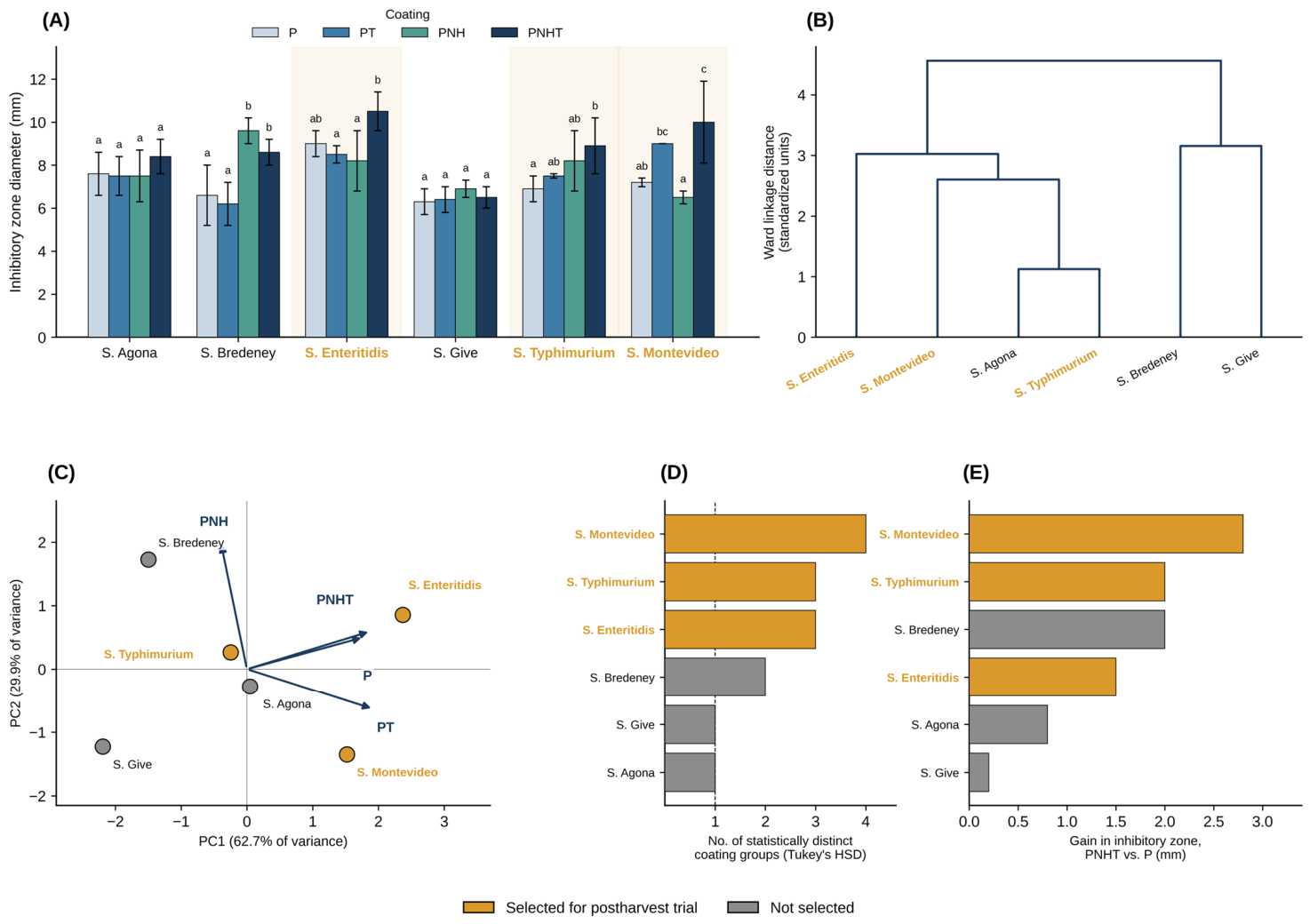
Figure 4A shows the inhibitory zone diameters produced by the four pectin-based coatings against the six S. enterica serovars evaluated. Overall antibacterial activity increased with the combined incorporation of zinc nanohydroxide and thymol (PNHT), consistent with the synergistic action previously reported for related zinc-layered hydroxide–thymol hybrid systems [24]. The two-way ANOVA indicated significant main effects of coating and serovar (p < 0.0001 for both) and a significant coating × serovar interaction (p = 0.0009; η2p = 0.51), confirming that susceptibility to the antimicrobial formulations was serovar-dependent rather than uniform across the panel.
Not all serovars responded to the coatings in a statistically meaningful way. S. Agona and S. Give showed no significant differences among the four coatings (Tukey’s HSD, p > 0.05), i.e., a single homogeneous group spanning P, PT, PNH, and PNHT, indicating that the disc diffusion assay did not resolve a susceptibility gradient for these two serovars under the conditions tested (Figure 4A,D). S. Bredeney differed significantly only with the zinc-containing coatings (PNH, PNHT) but not with thymol alone (PT), suggesting a zinc-dependent rather than a thymol-synergistic response (Figure 4A,D). In contrast, S. Enteritidis, S. Typhimurium, and S. Montevideo exhibited a clear, statistically significant increase in inhibition with the PNHT formulation relative to the plain-pectin control (P), gaining 1.5, 2.0, and 2.8 mm, respectively (Figure 4E). These three serovars were therefore selected for the postharvest cherry tomato assay, as they were the only ones for which the antimicrobial coatings (specifically the zinc–thymol combination central to this study) produced a measurable, statistically significant effect in vitro.
This selection is broadly consistent with a multivariate analysis of the inhibition profile, presented here as a secondary, exploratory complement to the ANOVA. Principal component analysis (62.7% and 29.9% of variance explained by PC1 and PC2, respectively) showed that PT and PNHT loaded in a similar direction, distinct from PNH, which aligned more closely with S. Bredeney (Figure 4C). Ward’s hierarchical clustering on the same standardized data grouped S. Enteritidis, S. Montevideo, S. Typhimurium, and S. Agona together, apart from S. Bredeney and S. Give (Figure 4B); given the limited number of serovars evaluated, this grouping is best interpreted as a qualitative visualization aid rather than an independent confirmatory test. Although S. Agona clustered near the three selected serovars on this basis, its response to the individual coatings was not statistically differentiated (Figure 4D), which is why it was not prioritized for the postharvest assay despite its proximity in the multivariate space.

3.5. Efficiency of Edible Coatings on Salmonella Adherence

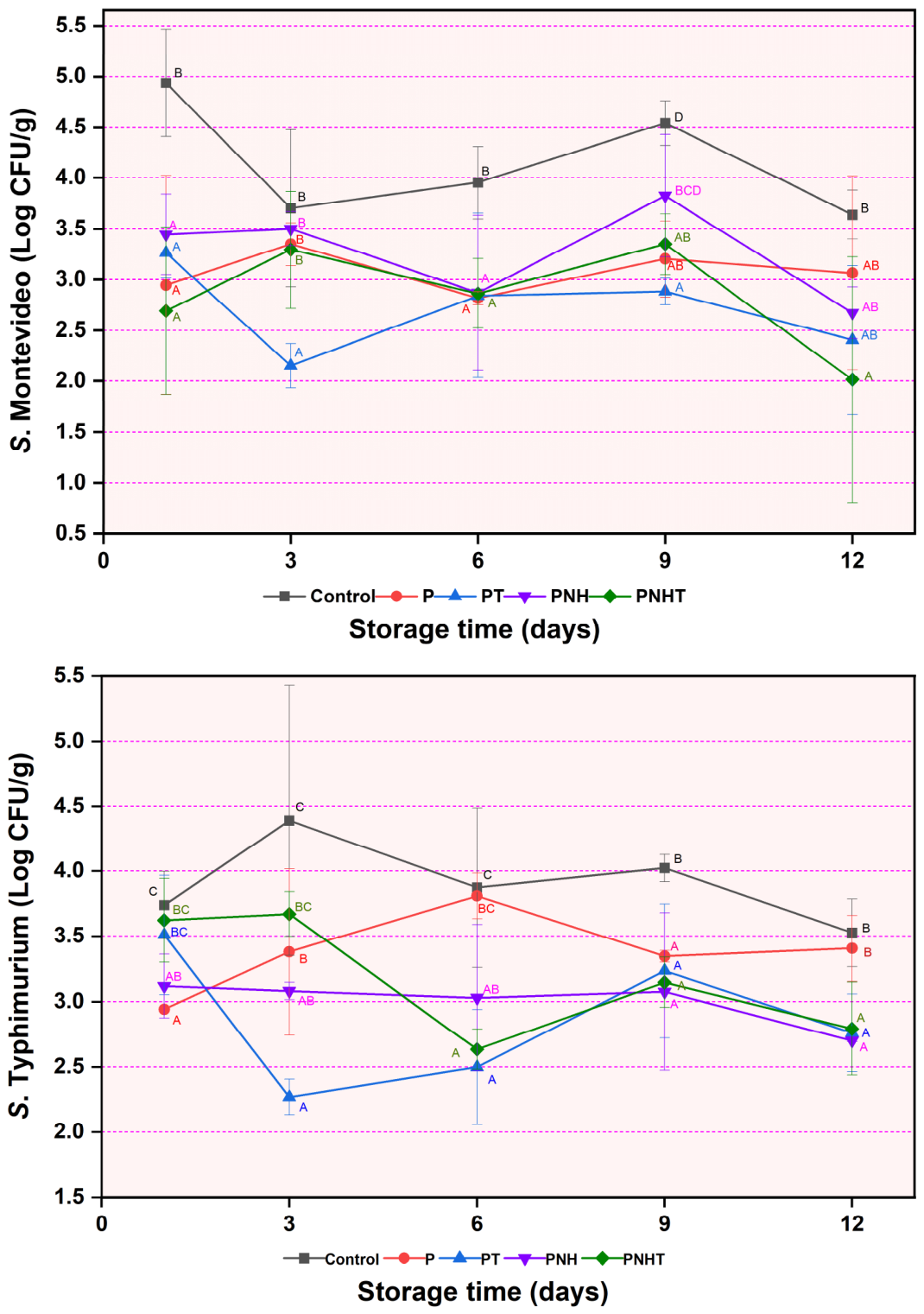
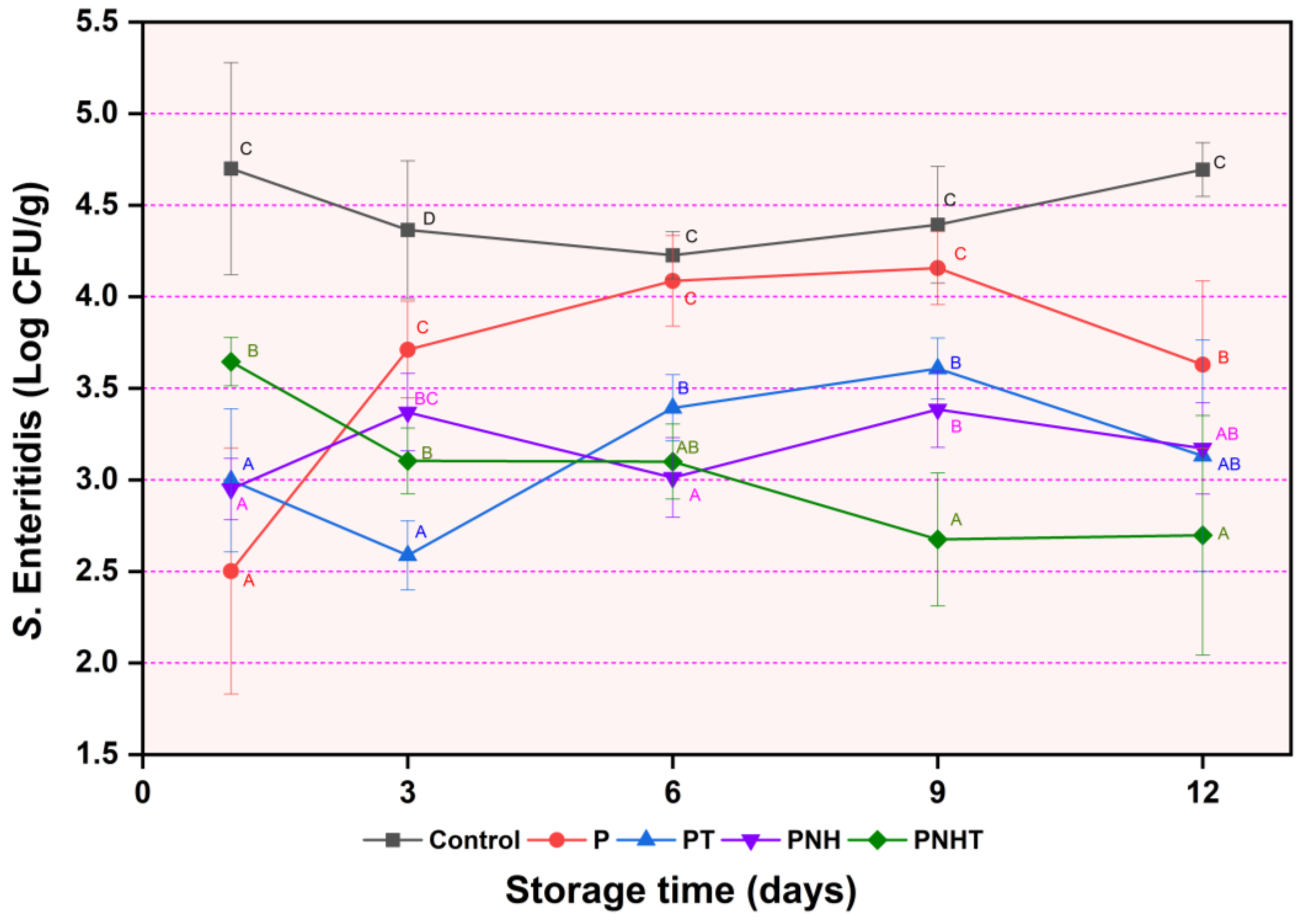
The antimicrobial effect of pectin-based coatings against S. Enteritidis, S. Typhimurium, and S. Montevideo during 12 days of storage at room temperature in cherry tomatoes is shown in Figure 5.
In general, Salmonella counts decreased in coated cherry tomatoes throughout the 12-day storage period, regardless of the serotype evaluated. On day 1, coatings P and PNH showed lower microbial loads (2 to 3.1 log CFU/g) of S. Enteritidis and S. Typhimurium compared to the other coatings [PT (3 to 3.5 log CFU/g) and PNHT (3.5 to 3.7 log CFU/g)], as well as the control (3.7 to 4.7 log CFU/g).
On day 3, a decrease in microbial load was observed in the three Salmonella serotypes treated with the PT coating (1.9 log CFU/g for S. Enteritidis, 2.1 log CFU/g for S. Typhimurium, and 1.7 log CFU/g for S. Montevideo). This may be attributed to the antimicrobial effect of thymol, which reduces Salmonella spp. load in contaminated fruit, as previously reported by Lu and Wu [48]. It was observed that the microbial load of cherry tomatoes coated with PT began to increase after day 3 of storage (from 2.5 to 3.3 log CFU/g) for all three Salmonella serotypes, whereas increases occurred earlier for P-coated tomatoes (day 1: 3.3 to 3.6 log CFU/g) and later for PNH-coated tomatoes (day 9: 3 to 3.6 log CFU/g). In contrast, the PNHT treatment showed a reduction in microbial load from day 3 to day 12 of storage [from 3.5 to 2.7 log CFU/g (S. Enteritidis), 3.5 to 3.0 log CFU/g (S. Typhimurium), and 2.6 to 2.0 log CFU/g (S. Montevideo)], compared to the control (4.8 to 4.9 log CFU/g, 3.7 to 3.5 log CFU/g, and 4.9 to 4.0 log CFU/g for S. Enteritidis, S. Typhimurium, and S. Montevideo, respectively). These results may be attributed to a controlled release of thymol [49,50], which exerts a sustained antimicrobial effect on cherry tomatoes throughout the 12-day storage period. Takala et al. [51] reported reductions of 2 log CFU/g of S. Typhimurium in broccoli coated with methylcellulose (10 mg/mL) containing rosemary extract (13.5 mg/mL), oregano, and thyme (6 mg/mL) during 12 days of storage at 4 °C [52]. Similarly, Won et al. [52] reported a 2-log CFU/cherry reduction for a Salmonella cocktail in cherry tomatoes coated with chitosan (1%) and grapefruit seed extract (1%) stored at 25 °C. The significant performance of PNHT compared to PT and PNH suggests a synergistic or additive antimicrobial effect between zinc ions and thymol. Zinc ions may enhance the antimicrobial activity of thymol by increasing bacterial membrane permeability, facilitating thymol penetration into cells [24]. Additionally, the layered hydroxide structure provides a controlled-release mechanism that maintains effective thymol concentrations on the tomato surface over extended storage periods. The formulations presented in this research focused on avoiding energy use for storage (refrigeration), thereby reducing costs and waste at points of sale. Additionally, it has been reported that these layered materials are non-toxic at the concentration used in this study [53], which suggests that their application is safe for consumption.

3.6. Physicochemical Properties of Coated Tomatoes

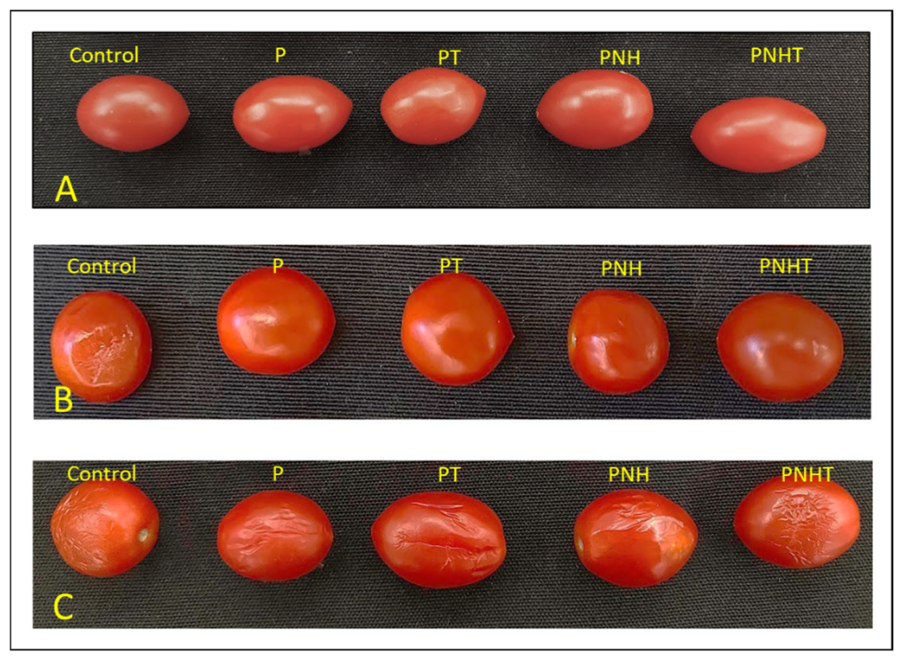
The physicochemical properties of tomatoes coated with different solutions were analyzed in a 12-day experiment. Figure 6 shows tomatoes under different treatments during evaluation on day 1 (Figure 6A), day 6 (Figure 6B), and day 12 (Figure 6C). Interestingly, by the sixth day, the control’s quality began to decline, as evidenced by increased turgor loss, whereas the coated tomatoes showed reduced turgor loss. This was also observed at the end of the experiment, where turgor loss was evident in all treatments; however, it was slightly less pronounced in coated tomatoes compared to the control.

3.6.1. Weight Loss

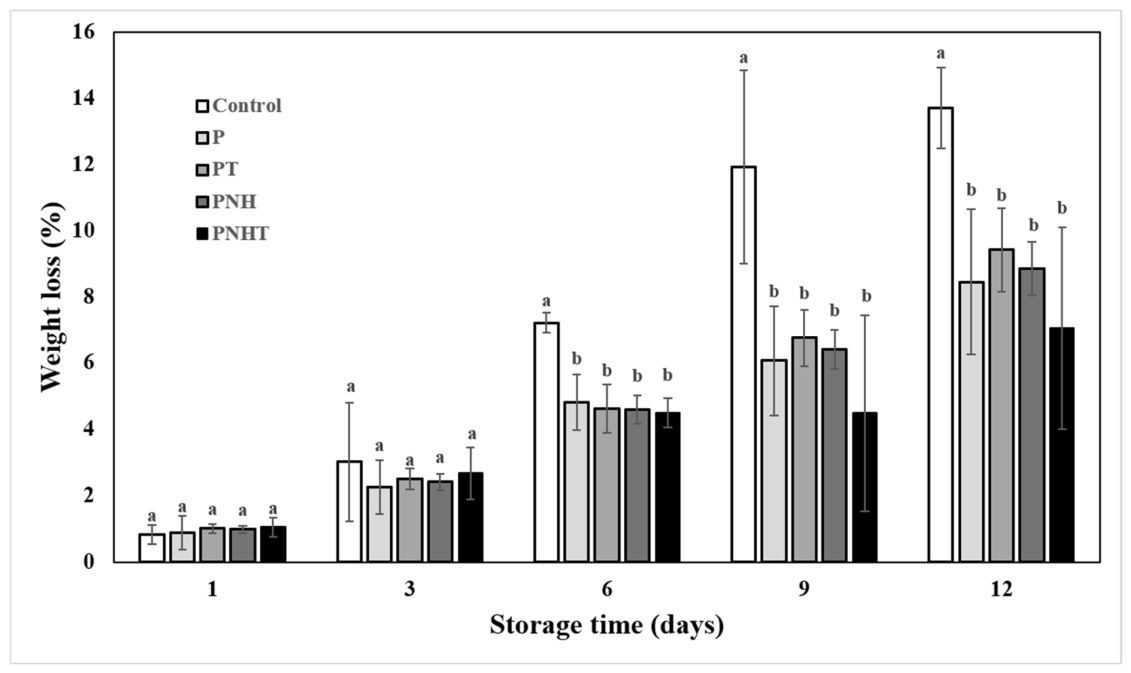
Significant differences (p < 0.05) were observed by coating type relative to the control on days 6, 9, and 12 (Figure 7); however, pectin-coated cherry tomatoes exhibited a lower weight loss over 12 days of storage (8%) than the control (13%). The physiological weight loss in the coated cherry tomatoes may be due to the effect of the coating and its ability to create a semipermeable barrier, which only allows limited exchange of O2, CO2, and H2O, thus reducing the fruit’s metabolism and, consequently, decreasing the rate of respiration, heat production, and ethylene production [54].

3.6.2. Color Parameters

During the 12-day test, the color of tomatoes coated with different pectin formulations was measured for Total differential color (ΔE), Chroma, and Hue angle. Table 4 presents the values for each treatment. Significant differences (p < 0.05) were observed for the type of coating in C* (PNH, day 9); in (P, day 6, and P, PT, and PNH, day 9); and in L* (PNH, days 9 and 12), compared to the control. Furthermore, the ΔE for PT on day 1, P, PT, and PNHT on day 9, as well as P on day 12, showed values >3, indicating significant differences from the control, possibly due to ripening in the uncoated cherry tomatoes. On the other hand, the PNHT treatment showed no significant differences in C*, , and L* over the 12-day analysis period compared with the control.
Pholsin et al. [55] reported L* and ΔE values of 43 and 10, respectively, for cherry tomatoes coated with pectin extracted from cocoa epicarp (10%), on day 12 of storage. In this regard, Flores et al. [56] reported L* and ΔE values of 45.51 and 5.31, respectively, for cherry tomatoes coated with pectin (3%) and stored at 12 °C. These results may differ from those of the present study, possibly due to the type of fruit, the origin of the pectin, and the storage temperatures.

3.6.3. Lycopene, pH and Soluble Solids

Table 5 shows the physicochemical parameters of cherry tomatoes coated with pectin-based coatings during the 12 days of analysis. Significant differences (p < 0.05) were observed between coating types in lycopene content (PNHT, day 6; P, days 6 and 9) and pH (PNH, day 6). However, no significant differences (p > 0.05) were found in the soluble solids content of the cherry tomatoes.
The increase in pH may be due to acid decomposition from respiration during storage and to increased organic acid concentrations during ripening [57].
Coated tomatoes retained significantly higher lycopene content compared to uncoated controls (p < 0.05). The control tomatoes had a lycopene content of 9.58 ± 0.37 mg/100 g by day 12, while coated tomatoes ranged from 9.85 ± 0.79 mg/100 g (P) to 10.44 ± 1.80 mg/100 g (PNH), representing increases of 2.81% to 8.97% compared to the control. The better retention of lycopene in coated tomatoes is attributed to several factors: (1) reduced oxidative degradation due to the barrier properties of the coating, which limit oxygen exposure [58]; (2) antioxidant protection provided by thymol in PT and PNHT coatings, which can scavenge free radicals that would otherwise degrade lycopene [59]; and (3) reduced light exposure due to the opacity of nanohybrid-containing coatings, which protects lycopene from photodegradation [54]. The preservation of lycopene content is important not only for maintaining the attractive red color of tomatoes but also for retaining their nutritional value and health benefits [60].

4. Conclusions

In this study, zinc nanohydroxide-thymol nanohybrids were successfully incorporated into a citrus pectin matrix to develop active edible coatings for cherry tomatoes. Prior in vitro screening against six S. enterica serovars, combined with two-way ANOVA and multivariate (PCA) analysis, showed that susceptibility to the coatings was serovar-dependent and provided statistical justification for prioritizing Typhimurium, Enteritidis, and Montevideo in the postharvest assay. The addition of these nanohybrids significantly enhanced the antioxidant properties of the coatings. Furthermore, the pectin-based formulations demonstrated an antimicrobial effect against Salmonella spp., notably reducing the microbial load on the fruit surface by approximately 2 Log CFU/g during 12 days of storage. These coatings not only improved safety but also helped preserve the physicochemical quality of the cherry tomatoes, including visual firmness and total soluble solids. Therefore, the pectin-nanohybrid coating represents a promising and sustainable technology for extending the shelf life of fresh produce. The study highlights several key areas requiring further research before the pectin-ZnNH-T coating system can be commercially implemented. These include sensory evaluation to assess consumer acceptability of thymol’s odor and optimize its loading for balanced efficacy, as well as safety and migration studies to quantify zinc and thymol transfer into tomato tissue and ensure regulatory compliance. Extended storage trials under refrigerated conditions and longer timeframes are needed to better reflect real distribution chains, alongside scale-up efforts to develop practical application methods and conduct economic feasibility analyses. Finally, testing the coating on other produce and against additional pathogens such as E. coli O157:H7 and Listeria monocytogenes would confirm the technology’s broader versatility and applicability. Additionally, determining the minimum inhibitory and bactericidal concentrations (MIC/MBC) for the selected serovars would complement disc diffusion screening and further validate the antimicrobial mechanism.

Author Contributions

Conceptualization, J.M.S.-J.; methodology, I.G.-V., D.E.N.-L., J.M.S.-J., M.Z.-R., L.M.A.-E., C.A.V.-C. and O.G.-M.; software, L.G.L.-M., J.M.S.-J. and J.L.M.-M.; validation, L.M.A.-E., J.L.M.-M., J.M.S.-J. and D.E.N.-L.; formal analysis, C.A.V.-C., J.L.M.-M., M.Z.-R. and L.M.A.-E.; investigation, I.G.-V. and J.M.S.-J.; resources, J.M.S.-J., C.A.V.-C. and J.L.M.-M.; data curation, I.G.-V., O.G.-M. and L.G.L.-M.; writing—original draft preparation, I.G.-V., C.A.V.-C. and J.M.S.-J.; writing—review and editing, J.L.M.-M., D.E.N.-L., J.M.S.-J., C.A.V.-C. and L.M.A.-E.; visualization, J.M.S.-J.; supervision, J.M.S.-J.; project administration, J.M.S.-J. and C.A.V.-C.; funding acquisition, J.M.S.-J. All authors have read and agreed to the published version of the manuscript.

Funding

This research received no external funding.

Institutional Review Board Statement

Not applicable.

Data Availability Statement

The raw data supporting the conclusions of this article will be made available by the authors upon reasonable request.

Acknowledgments

The authors gratefully acknowledge the Laboratorio de Microbiología Sanitaria Investigación. We thank the Microscopy and Characterization Facilities at Universidad de Guadalajara for assistance with SEM and FTIR analyses.

Conflicts of Interest

The authors declare no conflicts of interest.

References

  1. Aviña-Padilla, K.; Zamora-Macorra, E.J.; Ochoa-Martínez, D.L.; Alcántar-Aguirre, F.C.; Hernández-Rosales, M.; Calderón-Zamora, L.; Hammond, R.W. Mexico: A Landscape of Viroid Origin and Epidemiological Relevance of Endemic Species. Cells 2022, 11, 3487. [Google Scholar] [CrossRef] [Scilit]
  2. Taiye Mustapha, A.; Zhou, C.; Wahia, H.; Amanor-Atiemoh, R.; Otu, P.; Qudus, A.; Abiola Fakayode, O.; Ma, H. Sonozonation: Enhancing the Antimicrobial Efficiency of Aqueous Ozone Washing Techniques on Cherry Tomato. Ultrason. Sonochem. 2020, 64, 105059. [Google Scholar] [CrossRef] [Scilit] [PubMed]
  3. Wang, C.; Qiu, W.-Y.; Chen, T.-T.; Yan, J.-K. Effects of Structural and Conformational Characteristics of Citrus Pectin on Its Functional Properties. Food Chem. 2021, 339, 128064. [Google Scholar] [CrossRef] [Scilit] [PubMed]
  4. Gurtler, J.B.; Harlee, N.A.; Smelser, A.M.; Schneider, K.R. Salmonella enterica Contamination of Market Fresh Tomatoes: A Review. J. Food Prot. 2018, 81, 1193–1213. [Google Scholar] [CrossRef] [Scilit] [PubMed]
  5. Shi, X.; Namvar, A.; Kostrzynska, M.; Hora, R.; Warriner, K. Persistence and Growth of Different Salmonella Serovars on Pre- and Postharvest Tomatoes. J. Food Prot. 2007, 70, 2725–2731. [Google Scholar] [CrossRef] [Scilit] [PubMed]
  6. Hanning, I.B.; Nutt, J.D.; Ricke, S.C. Salmonellosis Outbreaks in the United States Due to Fresh Produce: Sources and Potential Intervention Measures. Foodborne Pathog. Dis. 2009, 6, 635–648. [Google Scholar] [CrossRef] [Scilit] [PubMed]
  7. Guo, X.; Chen, J.; Brackett, R.E.; Beuchat, L.R. Survival of Salmonellae on and in Tomato Plants from the Time of Inoculation at Flowering and Early Stages of Fruit Development through Fruit Ripening. Appl. Env. Microbiol. 2001, 67, 4760–4764. [Google Scholar] [CrossRef] [Scilit] [PubMed]
  8. Godínez-Oviedo, A.; Tamplin, M.L.; Bowman, J.P.; Hernández-Iturriaga, M. Salmonella enterica in Mexico 2000–2017: Epidemiology, Antimicrobial Resistance, and Prevalence in Food. Foodborne Pathog. Dis. 2020, 17, 98–118. [Google Scholar] [CrossRef] [Scilit] [PubMed]
  9. Eleftheriadou, M.; Pyrgiotakis, G.; Demokritou, P. Nanotechnology to the Rescue: Using Nano-Enabled Approaches in Microbiological Food Safety and Quality. Curr. Opin. Biotechnol. 2017, 44, 87–93. [Google Scholar] [CrossRef] [Scilit] [PubMed]
  10. Yu, H.; Park, J.-Y.; Kwon, C.W.; Hong, S.-C.; Park, K.-M.; Chang, P.-S. An Overview of Nanotechnology in Food Science: Preparative Methods, Practical Applications, and Safety. J. Chem. 2018, 2018, 5427978. [Google Scholar] [CrossRef] [Scilit]
  11. Hassan, B.; Chatha, S.A.S.; Hussain, A.I.; Zia, K.M.; Akhtar, N. Recent Advances on Polysaccharides, Lipids and Protein Based Edible Films and Coatings: A Review. Int. J. Biol. Macromol. 2018, 109, 1095–1107. [Google Scholar] [CrossRef] [Scilit] [PubMed]
  12. Galus, S.; Arik Kibar, E.A.; Gniewosz, M.; Kraśniewska, K. Novel Materials in the Preparation of Edible Films and Coatings—A Review. Coatings 2020, 10, 674. [Google Scholar] [CrossRef] [Scilit]
  13. Salgado, P.R.; Ortiz, C.M.; Musso, Y.S.; Di Giorgio, L.; Mauri, A.N. Edible Films and Coatings Containing Bioactives. Curr. Opin. Food Sci. 2015, 5, 86–92. [Google Scholar] [CrossRef] [Scilit]
  14. Moeini, A.; Germann, N.; Malinconico, M.; Santagata, G. Formulation of Secondary Compounds as Additives of Biopolymer-Based Food Packaging: A Review. Trends Food Sci. Technol. 2021, 114, 342–354. [Google Scholar] [CrossRef] [Scilit]
  15. Song, D.-H.; Hoa, V.B.; Kim, H.W.; Khang, S.M.; Cho, S.-H.; Ham, J.-S.; Seol, K.-H. Edible Films on Meat and Meat Products. Coatings 2021, 11, 1344. [Google Scholar] [CrossRef] [Scilit]
  16. Lopes, I.A.; Santos, J., Jr.; Da Silva, D.C.; Da Silva, L.J.S.; Barros, A.K.; Villa-Vélez, H.A.; Santana, A.A. Characterization of Pectin Biofilms with the Addition of Babassu Mesocarp and Whey Protein Concentrate. Am. J. Mater. Sci. 2017, 7, 64–70. [Google Scholar]
  17. Sucheta; Rai, S.K.; Chaturvedi, K.; Yadav, S.K. Evaluation of Structural Integrity and Functionality of Commercial Pectin Based Edible Films Incorporated with Corn Flour, Beetroot, Orange Peel, Muesli and Rice Flour. Food Hydrocoll. 2019, 91, 127–135. [Google Scholar] [CrossRef] [Scilit]
  18. Escobar, A.; Pérez, M.; Romanelli, G.; Blustein, G. Thymol Bioactivity: A Review Focusing on Practical Applications. Arab. J. Chem. 2020, 13, 9243–9269. [Google Scholar] [CrossRef] [Scilit]
  19. Gutiérrez-Larraínzar, M.; Rúa, J.; Caro, I.; de Castro, C.; de Arriaga, D.; García-Armesto, M.R.; del Valle, P. Evaluation of antimicrobial and antioxidant activities of natural phenolic compounds against foodborne pathogens and spoilage bacteria. Food Control 2012, 26, 555–563. [Google Scholar] [CrossRef] [Scilit]
  20. Arizaga, G.G.C.; Mangrich, A.S.; Wypych, F. Cu2+ Ions as a Paramagnetic Probe to Study the Surface Chemical Modification Process of Layered Double Hydroxides and Hydroxide Salts with Nitrate and Carboxylate Anions. J. Colloid Interface Sci. 2008, 320, 238–244. [Google Scholar] [CrossRef] [Scilit] [PubMed]
  21. Almasri, D.A.; Essehli, R.; Tong, Y.; Lawler, J. Layered Zinc Hydroxide as an Adsorbent for Phosphate Removal and Recovery from Wastewater. RSC Adv. 2021, 11, 30172–30182. [Google Scholar] [CrossRef] [Scilit] [PubMed]
  22. Nabipour, H.; Hosaini Sadr, M.; Thomas, N. Synthesis, Characterisation and Sustained Release Properties of Layered Zinc Hydroxide Intercalated with Amoxicillin Trihydrate. J. Exp. Nanosci. 2015, 10, 1269–1284. [Google Scholar] [CrossRef] [Scilit]
  23. Singh, T.; Shukla, S.; Kumar, P.; Wahla, V.; Bajpai, V.K.; Rather, I.A. Application of Nanotechnology in Food Science: Perception and Overview. Front. Microbiol. 2017, 8, 1501. [Google Scholar] [CrossRef] [Scilit] [PubMed]
  24. Velázquez-Carriles, C.; Macías-Rodríguez, M.E.; Ramírez-Alvarado, O.; Corona-González, R.I.; Macías-Lamas, A.; García-Vera, I.; Cavazos-Garduño, A.; Villagrán, Z.; Silva-Jara, J.M. Nanohybrid of Thymol and 2D Simonkolleite Enhances Inhibition of Bacterial Growth, Biofilm Formation, and Free Radicals. Molecules 2022, 27, 6161. [Google Scholar] [CrossRef] [Scilit] [PubMed]
  25. Shivangi, S.; Dorairaj, D.; Negi, P.S.; Shetty, N.P. Development and Characterisation of a Pectin-Based Edible Film That Contains Mulberry Leaf Extract and Its Bio-Active Components. Food Hydrocoll. 2021, 121, 107046. [Google Scholar] [CrossRef] [Scilit]
  26. López-Cruz, R.; Ragazzo-Sánchez, J.A.; García-Muro, D.A.; Carvajal-Millán, E.; Silva-Jara, J.M.; Calderón-Santoyo, M. Development and Characterization of Pectin-Based Antifungal Edible Coatings with Entrapped Bio-Control Agent Meyerozyma guilliermondii LMA-Cp01 for the Management of Colletotrichum Gloeosporioides from Papaya Fruit. Biotecnia 2025, 27, e2496. [Google Scholar] [CrossRef] [Scilit]
  27. Gennadios, A.; Weller, C.L.; Hanna, M.A.; Froning, G.W. Mechanical and Barrier Properties of Egg Albumen Films. J. Food Sci. 1996, 61, 585–589. [Google Scholar] [CrossRef] [Scilit]
  28. Han, J.H.; Floros, J.D. Casting Antimicrobial Packaging Films and Measuring Their Physical Properties and Antimicrobial Activity. J. Plast. Film. Sheeting 1997, 13, 287–298. [Google Scholar] [CrossRef] [Scilit]
  29. Li, H.; Wang, X.; Li, P.; Li, Y.; Wang, H. Comparative Study of Antioxidant Activity of Grape (Vitis vinifera) Seed Powder Assessed by Different Methods. J. Food Drug Anal. 2020, 16, 12. [Google Scholar] [CrossRef] [Scilit]
  30. Brandt, S.; Pék, Z.; Barna, É.; Lugasi, A.; Helyes, L. Lycopene Content and Colour of Ripening Tomatoes as Affected by Environmental Conditions. J. Sci. Food Agric. 2006, 86, 568–572. [Google Scholar] [CrossRef] [Scilit]
  31. Saha, A.; Tyagi, S.; Gupta, R.K.; Tyagi, Y.K. Natural Gums of Plant Origin as Edible Coatings for Food Industry Applications. Crit. Rev. Biotechnol. 2017, 37, 959–973. [Google Scholar] [CrossRef] [Scilit] [PubMed]
  32. Salas-Méndez, E.D.J.; Vicente, A.; Pinheiro, A.C.; Ballesteros, L.F.; Silva, P.; Rodríguez-García, R.; Hernández-Castillo, F.D.; Díaz-Jiménez, M.D.L.V.; Flores-López, M.L.; Villarreal-Quintanilla, J.Á.; et al. Application of Edible Nanolaminate Coatings with Antimicrobial Extract of Flourensia cernua to Extend the Shelf-Life of Tomato (Solanum lycopersicum L.) Fruit. Postharvest Biol. Technol. 2019, 150, 19–27. [Google Scholar] [CrossRef] [Scilit]
  33. Mattson, T.E.; Johny, A.K.; Amalaradjou, M.A.R.; More, K.; Schreiber, D.T.; Patel, J.; Venkitanarayanan, K. Inactivation of Salmonella spp. on Tomatoes by Plant Molecules. Int. J. Food Microbiol. 2011, 144, 464–468. [Google Scholar] [CrossRef] [Scilit] [PubMed]
  34. López-Palestina, C.U.; López-Duran, M.C.; Gutiérrez-Tlahque, J.; Arenales-Sierra, I.M.; Laureano-López, B.; Vargas-Torres, A.; Hernández-Fuentes, A.D. Efecto del uso de biopeliculas sobre calidad poscosecha de tomate nativo ‘ojo de venado’ (Solanum lycopersicum L var. cerasiforme). Investig. Desarro. Cienc. Tecnol. Aliment. 2016, 1, 405–411. [Google Scholar]
  35. Nisar, T.; Wang, Z.-C.; Yang, X.; Tian, Y.; Iqbal, M.; Guo, Y. Characterization of citrus pectin films integrated with clove bud essential oil: Physical, thermal, barrier, antioxidant and antibacterial properties. Int. J. Biol. Macromol. 2018, 106, 670–680. [Google Scholar] [CrossRef] [Scilit] [PubMed]
  36. Zhang, W.; Cao, J.; Jiang, W. Effect of different cation in situ cross-linking on the properties of pectin-thymol active film. Food Hydrocoll. 2022, 128, e107594. [Google Scholar] [CrossRef] [Scilit]
  37. Chakravartula, S.S.N.; Soccio, M.; Lotti, N.; Balestra, F.; Dalla Rosa, M.; Siracusa, V. Characterization of Composite Edible Films Based on Pectin/Alginate/Whey Protein Concentrate. Materials 2019, 12, 2454. [Google Scholar] [CrossRef] [Scilit] [PubMed]
  38. Freitas, C.M.P.; Coimbra, J.S.R.; Souza, V.G.L.; Sousa, R.C.S. Structure and Applications of Pectin in Food, Biomedical, and Pharmaceutical Industry: A Review. Coatings 2021, 11, 922. [Google Scholar] [CrossRef] [Scilit]
  39. Jahromi, M.; Niakousari, M.; Golmakani, M.T.; Mohammadifar, M.A. Physicochemical and structural characterization of sodium caseinate based film-forming solutions and edible films as affected by high methoxyl pectin. Int. J. Biol. Macromol. 2020, 165, 1949–1959. [Google Scholar] [CrossRef] [Scilit] [PubMed]
  40. Younis, H.G.R.; Zhao, G. Physicochemical properties of the edible films from the blends of high methoxyl apple pectin and chitosan. Int. J. Biol. Macromol. 2019, 131, 1057–1066. [Google Scholar] [CrossRef] [Scilit] [PubMed]
  41. Shahrampour, D.; Khomeiri, M.; Razavi, S.M.A.; Kashiri, M. Development and characterization of alginate/pectin edible films containing Lactobacillus plantarum KMC 45. LWT Food Sci. Technol. 2020, 118, 108758. [Google Scholar] [CrossRef] [Scilit]
  42. Priyadarshi, R.; Kim, S.-M.; Rhim, J.-W. Pectin/pullulan blend films for food packaging: Effect of blending ratio. Food Chem. 2021, 347, 129022. [Google Scholar] [CrossRef] [Scilit] [PubMed]
  43. Neog, B.; Das, J.K.; Vijayakumar, A.; Badwaik, L.S. Development and characterization of edible films made with Indian jujube fruit puree and pectin. J. Food Process Eng. 2022, 45, 13977. [Google Scholar] [CrossRef] [Scilit]
  44. Lang, Y.; Gao, N.; Zang, Z.; Meng, X.; Lin, Y.; Yang, S.; Yang, Y.; Jin, Z.; Li, B. Classification and antioxidant assays of polyphenols: A review. J. Future Foods 2024, 4, 193–204. [Google Scholar] [CrossRef] [Scilit]
  45. Siahbalaei, R.; Kavoosi, G.; Shakeri, R. In vitro antioxidant and antidiabetic activity of essential oils encapsulated in gelatin-pectin particles against sugar, lipid and protein oxidation and amylase and glucosidase activity. Food Sci. Nutr. 2020, 8, 6457–6466. [Google Scholar] [CrossRef] [Scilit] [PubMed]
  46. Ezati, P.; Roy, S.; Rhim, J.W. Pectin/gelatin-based bioactive composite films reinforced with sulfur functionalized carbon dots. Colloids Surf. A Physicochem. Eng. Asp. 2022, 636, e128123. [Google Scholar] [CrossRef] [Scilit]
  47. Sriamornsak, P. Chemistry of pectin and its pharmaceutical uses: A review. Silpakorn Univ. Int. J. 2003, 3, 206–228. [Google Scholar]
  48. Lu, Y.; Wu, C. Reduction of Salmonella enterica Contamination on Grape Tomatoes by Washing with Thyme Oil, Thymol, and Carvacrol as Compared with Chlorine Treatment. J. Food Prot. 2010, 73, 2270–2275. [Google Scholar] [CrossRef] [Scilit] [PubMed]
  49. Velázquez-Carriles, C.A.; Carbajal-Arizaga, G.G.; Silva-Jara, J.M.; Reyes-Becerril, M.C.; Aguilar-Uscanga, B.R.; Macías-Rodríguez, M.E. Chemical and biological protection of food grade nisin through their partial intercalation in laminar hydroxide salts. J. Food Sci. Technol. 2020, 57, 3252–3258. [Google Scholar] [CrossRef] [Scilit] [PubMed]
  50. Nabipour, H.; Hu, Y. Layered zinc hydroxide as vehicle for drug delivery systems: A critical review. J. Porous Mater. 2022, 29, 341–356. [Google Scholar] [CrossRef] [Scilit]
  51. Takala, P.N.; Vu, K.D.; Salmieri, S.; Khan, R.A.; Lacroix, M. Antibacterial effect of biodegradable active packaging on the growth of Escherichia coli, Salmonella typhimurium and Listeria monocytogenes in fresh broccoli stored at 4 °C. Food Sci. Technol. 2013, 53, 499–506. [Google Scholar] [CrossRef] [Scilit]
  52. Won, J.S.; Lee, S.J.; Park, H.H.; Song, K.B.; Min, S.C. Edible Coating Using a Chitosan-Based Colloid Incorporating Grapefruit Seed Extract for Cherry Tomato Safety and Preservation. J. Food Sci. 2017, 83, 138–146. [Google Scholar] [CrossRef] [Scilit] [PubMed]
  53. Romero-García, D.M.; Velázquez-Carriles, C.A.; Gomez, C.; Velázquez-Juárez, G.; Silva-Jara, J.M. Tannic acid-layered hydroxide salt hybrid: Assessment of antibiofilm formation and foodborne pathogen growth inhibition. J. Food Sci. Technol. 2023, 60, 2659–2669. [Google Scholar] [CrossRef] [Scilit] [PubMed]
  54. Fagundes, C.; Palou, L.; Monteiro, A.R.; Pérez-Gago, M.B. Hydroxypropyl methylcellulose-beeswax edible coatings formulated with antifungal food additives to reduce postharvest diseases and maintain quality of cherry tomatoes. Sci. Hortic. 2015, 193, 249–257. [Google Scholar] [CrossRef] [Scilit]
  55. Pholsin, R.; Shiekh, K.A.; Jafari, S.; Kijpatanasilp, I.; Na Nan, T.; Suppavorasatit, I.; Assatarakul, K. Impact of pectin edible coating extracted from cacao shell powder on postharvest quality attributes of tomato (Lycopersicon esculentum Mill.) fruit during storage. Food Control 2024, 155, 110023. [Google Scholar] [CrossRef] [Scilit]
  56. Flores, K.S.U.; Oliveira, I.G.S.; Souza, V.N.B.D.; Garcia, V.A.D.S.; Altemio, Â.D.C.; Martelli, S.M. Pectin-based edible coating containing gibberellic acid in the post-harvest conservation of fresh tomatoes. Ciênc. Agrotecnol. 2023, 47, e009223. [Google Scholar] [CrossRef] [Scilit]
  57. Asiamah, E.; Arthur, W.; Kyei-Barfour, V.; Sarpong, F.; Ketemepi, H.K. Enhancing the functional and physicochemical properties of tomato (Solanum lycopersicum L.) fruit through polysaccharides edible dipping technique coating under various storage conditions. Bioact. Carbohydr. Diet. Fibre 2023, 30, 100373. [Google Scholar] [CrossRef] [Scilit]
  58. Shi, J.; Maguer, M.L. Lycopene in Tomatoes: Chemical and Physical Properties Affected by Food Processing. Crit. Rev. Food Sci. Nutr. 2000, 40, 1–42. [Google Scholar] [CrossRef] [Scilit] [PubMed]
  59. Yanishlieva, N.V.; Marinova, E.M.; Gordon, M.H.; Raneva, V.G. Antioxidant Activity and Mechanism of Action of Thymol and Carvacrol in Two Lipid Systems. Food Chem. 1999, 64, 59–66. [Google Scholar] [CrossRef] [Scilit]
  60. Rao, A.; Rao, L. Carotenoids and Human Health. Pharmacol. Res. 2007, 55, 207–216. [Google Scholar] [CrossRef] [Scilit] [PubMed]
Figure 1. Zinc nanohydroxides characterization. (a) Scanning electron microscopy (SEM); (b) Size distribution of thickness.
Polysaccharides 07 00091 g001aPolysaccharides 07 00091 g001b
Figure 2. FTIR of pectin edible coatings.
Polysaccharides 07 00091 g002
Figure 3. Percentage of ABTS radical inhibition of pectin-based coatings. Different superscript letters indicate significant differences (p < 0.05) according to Tukey’s HSD test.
Polysaccharides 07 00091 g003
Figure 4. In vitro antibacterial screening of pectin-based coatings and statistical basis for serovar selection. (A) Inhibitory zone diameters (mm, mean ± SD, n = 3; disc diffusion) for coatings P, PT, PNH, and PNHT against six S. enterica serovars. Letters denote significant differences among coatings within each serovar (Tukey’s HSD, p < 0.05); shaded columns mark the three serovars selected for the postharvest assay. Two-way ANOVA: significant effects of coating (p < 0.0001) and serovar (p < 0.0001), and a significant coating × serovar interaction (p = 0.0009, η2p = 0.51), showing that susceptibility was serovar-dependent. (B) Hierarchical clustering (Ward’s method) of serovars by inhibition profile. (C) PCA biplot of the standardized inhibition matrix (PC1 = 62.7%, PC2 = 29.9% of variance); arrows show coating loadings. (D) Number of statistically distinct coating groups per serovar (from panel A); a value of 1 indicates no significant coating effect was detected. (E) Gain in inhibitory zone for PNHT vs. the plain-pectin control (P), by serovar. S. Enteritidis, S. Typhimurium, and S. Montevideo (gold) were the only serovars with a statistically resolvable coating effect and were therefore selected for the postharvest assay. Grey denotes serovars not selected.
Polysaccharides 07 00091 g004
Figure 5. Recovery of Salmonella enterica from tomatoes coated with edible coatings. Different superscript letters for coating treatment in each day indicate significant differences (p < 0.05) according to Tukey’s HSD test.
Polysaccharides 07 00091 g005aPolysaccharides 07 00091 g005b
Figure 6. Pectin-coated cherry tomatoes of storage at day 1 (A), 6 (B), and 12 (C).
Polysaccharides 07 00091 g006
Figure 7. Weight loss of tomato with pectin-based edible coatings. Different letters for coating treatment on each day indicate significant (p < 0.05) according to Tukey’s HSD test.
Polysaccharides 07 00091 g007
Table 1. TSS, viscosity, and turbidity of pectin-based food coatings.
Filmogenic
Formulation
Physicochemical Parameter
TSS (°Brix)Viscosity (cP)Turbidity (NTU)
P5.0 ± 1.2 a63.33 ± 15.28 ab1096 ± 76 a
PT5.7 ± 1.7 a46.67 ± 5.77 a1257 ± 95 b
PNH4.4 ± 1.0 a73.33 ± 15.28 b1325 ± 4 b
PNHT4.6 ± 1.2 a113.33 ± 15.28 c1349 ± 27 b
Different superscript letters within the same column indicate significant differences (p < 0.05) according to Tukey’s HSD test.
Table 2. Colorimetric parameters of pectin-based food coatings.
ParametersEdible Coating Formulation
PPTPNHPNHT
L*37.11 ± 1.27 a37.12 ± 1.58 a37.28 ± 2.05 a36.58 ± 2.14 a
C*14.91 ± 2.80 a13.79 ± 1.16 a12.93 ± 1.28 a14.23 ± 1.83 a
70.67 ± 3.78 a71.77 ± 1.43 a72.58 ± 2.84 a70.58 ± 1.32 a
a*5.04 ± 1.92 a4.33 ± 0.66 a3.90 ± 1.00 a4.75 ± 0.88 a
b*14.01 ± 2.27 a13.09 ± 1.01 a12.31 ± 1.03 a13.41 ± 1.63 a
ΔE*-1.82 ± 0.34 a2.58 ± 1.40 a2.57 ± 1.10 a
Different superscript letters within the same row indicate significant differences (p < 0.05) according to Tukey’s HSD test.
Table 3. Thickness and transparency of pectin-based food coatings.
Edible Coating
Formulation
Physicochemical Parameter
Thickness (mm)Transparency (%)
P0.161 ± 0.036 a2.44 ± 0.03 a
PT0.172 ± 0.021 a2.45 ± 0.04 a
PNH0.175 ± 0.014 a2.49 ± 0.11 a
PNHT0.197 ± 0.097 a2.38 ± 0.10 a
Different superscript letters within the same column indicate significant differences (p < 0.05) according to Tukey’s HSD test.
Table 4. Average of color parameters of tomato pectin-based coatings at 25 °C. for 12 days.
ParameterDayControlPPTPNHPNHT
E a b * 1-2.12 ± 0.77 ab3.15 ± 0.54 b1.95 ± 0.41 a1.96 ± 0.51 a
3-2.89 ± 1.77 a1.31 ± 0.80 a2.68 ± 2.10 a1.22 ± 1.00 a
6-2.08 ± 0.54 a2.25 ± 1.39 a2.47 ± 0.51 a2.81 ± 1.54 a
9-3.14 ± 1.68 a3.50 ± 0.80 a4.08 ± 0.60 a3.04 ± 0.92 a
12-3.26 ± 0.86 a2.74 ± 2.03 a2.58 ± 0.63 a1.36 ± 0.41 a
C*119.70 ± 2.61 a19.02 ± 0.43 a19.70 ± 1.87 a19.14 ± 1.64 a21.28 ± 1.56 a
317.72 ± 1.29 ab16.45 ± 0.95 a18.06 ± 1.95 ab19.55 ± 3.04 b20.36 ± 1.30 b
618.88 ± 1.23 a20.08 ± 1.76 a19.60 ± 2.45 a19.25 ± 2.31 a18.77 ± 1.70 a
917.62 ± 0.37 a19.93 ± 0.51 ab19.03 ± 1.14 ab21.63 ± 3.97 b18.23 ± 0.50 ab
1219.91 ± 0.71 a18.18 ± 1.30 a18.44 ± 2.17 a21.04 ± 2.21 a19.49 ± 0.44 a
154.19 ± 4.87 a53.36 ± 2.51 a52.80 ± 3.85 a53.59 ± 2.84 a51.81 ± 2.64 a
356.59 ± 2.52 ab59.42 ± 1.67 a56.48 ± 4.72 ab55.03 ± 4.21 ab52.14 ± 1.38 a
656.44 ± 1.53 b51.22 ± 2.44 a54.53 ± 1.24 ab53.87 ± 2.46 ab56.29 ± 3.32 b
958.37 ± 2.40 b52.51 ± 1.71 a54.60 ± 1.91 a53.45 ± 2.08 a54.80 ± 1.89 ab
1254.98 ± 1.20 a55.90 ± 2.65 a53.62 ± 2.91 a53.40 ± 5.74 a55.15 ± 1.57 a
L*134.38 ± 1.15 a34.14 ± 0.34 a34.25 ± 0.83 a34.14 ± 0.73 a34.64 ± 0.65 a
334.21 ± 0.88 a32.77 ± 0.56 a34.43 ± 1.06 a34.03 ± 3.09 a35.05 ± 0.53 a
633.11 ± 0.07 a34.65 ± 0.23 a33.63 ± 0.61 a33.37 ± 2.23 a33.20 ± 2.55 a
931.66 ± 1.21 a33.10 ± 1.91 ab33.61 ± 0.61 ab34.09 ± 0.85 b32.78 ± 0.14 ab
1232.83 ± 0.67 a32.65 ± 0.88 a33.42 ± 1.10 ab34.73 ± 1.10 b33.08 ± 1.02 ab
Different superscript letters within the same column indicate significant differences for coating treatment each day (p < 0.05) according to Tukey’s HSD test. (-) indicates that the value was considered control 0. E a b * is the total color difference; C* is Chroma, stands for Hue angle, and L* is the luminosity of the tomatoes.
Table 5. Physicochemical parameters of cherry tomatoes with pectin coatings.
ParameterDayControlPPTPNHPNHT
Lycopene content (mg/100 g)110.15 ± 1.50 a10.37 ± 0.79 a10.58 ± 1.22 a10.31 ± 0.91 a10.89 ± 0.90 a
39.38 ± 0.76 ab8.55 ± 0.46 a9.44 ± 1.40 ab9.88 ± 1.28 ab10.76 ± 0.46 b
69.41 ± 0.46 a11.09 ± 0.83 b9.99 ± 0.39 ab10.21 ± 0.78 ab9.48 ± 1.01 a
98.86 ± 0.69 a10.64 ± 0.56 b9.98 ± 0.60 ab10.34 ± 0.67 ab9.91 ± 0.59 ab
129.58 ± 0.37 a9.85 ± 0.79 ab10.30 ± 0.93 ab10.44 ± 1.80 ab9.80 ± 0.48 ab
pH14.40 ± 0.05 b4.38 ± 0.02 b4.30 ± 0.02 a4.30 ± 0.02 a4.35 ± 0.06 ab
34.32 ± 0.08 a4.33 ± 0.04 a4.46 ± 0.14 a4.49 ± 0.11 a4.47 ± 0.09 a
64.38 ± 0.04 ab4.53 ± 0.06 bc4.28 ± 0.16 a4.57 ± 0.10 c4.38 ± 0.06 ab
94.48 ± 0.11 a4.45 ± 0.01 a4.69 ± 0.18 b4.72 ± 0.09 b4.46 ± 0.09 a
124.85 ± 0.59 a4.49 ± 0.10 a4.60 ± 0.15 a4.57 ± 0.05 a4.92 ± 0.58 a
Soluble solids (°Brix)15.90 ± 0.89 a5.17 ± 2.05 a6.00 ± 0.26 a6.37 ± 0.15 a6.70 ± 0.36 a
36.83 ± 0.31 ab6.37 ± 0.35 ab5.90 ± 0.87 a7.17 ± 0.55 b6.57 ± 0.32 ab
66.67 ± 0.32 a6.33 ± 0.61 a6.53 ± 0.31 a7.83 ± 1.79 a6.20 ± 1.08 a
96.63 ± 0.72 ab6.57 ± 0.64 ab5.13 ± 0.80 a8.13 ± 2.59 b5.60 ± 0.35 a
126.63 ± 0.47 ab7.07 ± 0.64 ab5.63 ± 1.03 a6.40 ± 0.90 ab7.53 ± 1.17 ab
Different superscript letters within the same column indicate significant differences for coating treatment each day (p < 0.05) according to Tukey’s HSD test.
Disclaimer/Publisher’s Note: The statements, opinions and data contained in all publications are solely those of the individual author(s) and contributor(s) and not of MDPI and/or the editor(s). MDPI and/or the editor(s) disclaim responsibility for any injury to people or property resulting from any ideas, methods, instructions or products referred to in the content.