1. Introduction
The escalating volume of agricultural waste presents one of the most pressing environmental challenges of the 21st century. The intensification of global agriculture to meet the demands of a growing and increasingly affluent population has led to the generation of colossal quantities of organic residues. It is estimated that agricultural by-products, including stalks, leaves, prunings, and processing losses, amount to billions of tons annually worldwide [
1,
2,
3,
4]. These materials are frequently mismanaged; they are left to decompose in fields, openly burned, or disposed of in landfills. Such practices contribute significantly to a range of environmental problems, including soil degradation, air pollution from particulate matter, and the emission of potent greenhouse gases such as methane and nitrous oxide [
5,
6,
7]. This linear “take-make-dispose” economic model not only exacerbates ecological damage but also represents a profound loss of valuable bio-resources that could be used for the production of materials, chemicals, and energy [
8,
9]. Consequently, there is a pressing global imperative to transition towards a circular bioeconomy, wherein waste is re-envisioned not as an endpoint, but as a primary feedstock for new value chains [
10,
11].
Among the myriad of agricultural residues, those derived from the nightshade family (Solanaceae) and the ornamental horticulture industry represent particularly promising, yet often overlooked, sources of lignocellulosic biomass. Solanaceous crops, which include tomatoes, potatoes, peppers, and eggplants, are cultivated on a massive scale globally. According to the Food and Agriculture Organization (FAO), global tomato production alone exceeds 200 million tons annually [
12]. Collectively, these crops constitute an estimated 12–15% of total global vegetable production. The processing of these crops—for canning, juicing, and fresh market sales—generates substantial waste streams. By-products like tomato pomace (comprising skins, seeds, and stems) and potato peels can account for 20–30% of the total harvest weight [
12,
13]. Concurrently, the global floriculture industry, a multi-billion-dollar sector, produces vast amounts of green waste, primarily in the form of stems and leaves from cut flowers such as roses, chrysanthemums, and lilies. This material can represent up to 50% of the plant’s total harvested mass [
14,
15]. The substantial volume of these waste streams, which are often concentrated near agricultural hubs and urban centers, creates urgent environmental and logistical challenges related to disposal and sanitation [
5,
16].
Crucially, both tomato and flower stems are rich in lignocellulose, a complex three-dimensional matrix composed primarily of three biopolymers: cellulose, hemicellulose, and lignin. Cellulose, a linear polysaccharide composed of β(1→4) linked D-glucopyranose units, is the most abundant biopolymer on Earth and a cornerstone of numerous industrial applications. It is the principal component of paper, textiles, and a wide range of derivatives [
17]. The cellulose content in these agricultural residues can reach up to 40–45%, which is highly comparable to that found in traditional sources like softwood and hardwood (40–55%), and superior to many cereal straws (30–40%) [
18,
19]. Hemicellulose is a heteropolysaccharide of various sugars (xylose, mannose, arabinose, etc.), while lignin is a complex aromatic polymer that acts as a cementing agent, providing structural rigidity and resistance to microbial attack [
20]. This compositional similarity positions tomato and flower stems as highly promising non-wood alternatives for cellulose production. While previous research has explored the use of various agricultural wastes for producing fibers, composites, and adsorbents [
21,
22], the systematic production and comparative characterization of high-purity dissolving-grade cellulose from these two specific, underutilized residues remain an area requiring further investigation.
Recent studies have increasingly focused on processing tomato residues. For instance, Moradi and Fathi successfully produced cellulose nanocrystals (CNCs) from tomato pomace, achieving a purified cellulose yield of 16.30% after alkaline and bleaching treatments. Their optimal CNC extraction via acid hydrolysis at 45 °C for 30 min yielded particles with a high crystallinity of 79% and an average diameter of 104 nm, which effectively stabilized Pickering emulsions [
23]. In a complementary study, Kassab et al. demonstrated that post-harvest tomato plant residue (including stems and leaves) is a viable source for both cellulose microfibers (CMF) and nanocrystals. By subjecting CMF to sulfuric, phosphoric, or citric/hydrochloric acid hydrolysis, they produced sulfated, phosphorylated, and carboxylated CNCs, respectively, all retaining the cellulose I crystalline structure with crystallinity indices between 78 and 89% and aspect ratios ranging up to 98. Notably, these tomato-derived CNCs exhibited relatively high thermal stability compared to conventional sulfated CNCs from other sources [
24]. These findings collectively underscore the potential of tomato-derived biomass as a feedstock for high-purity cellulose derivatives, though systematic comparative studies between different agricultural residues (e.g., tomato stems vs. flower stems) for producing dissolving-grade pulp remain scarce.
The valorization of these residues through cellulose extraction offers a multi-faceted solution with significant environmental benefits. Firstly, it directly addresses the problem of waste accumulation, reducing the burden on landfills and mitigating associated pollution [
25]. Secondly, it provides a low-cost and abundantly available feedstock, decreasing reliance on conventional wood pulp and thereby helping to alleviate pressure on forest ecosystems, preserve biodiversity, and reduce the carbon footprint associated with logging and transportation [
19,
26]. Thirdly, it aligns with the principles of green chemistry and sustainable development by creating high-value products from waste [
18,
27]. High-purity cellulose (dissolving pulp) is the raw material for a vast array of products. These include textile fibers like viscose, modal, and Lyocell; cellulose derivatives such as ethers (e.g., carboxymethyl cellulose) and esters (e.g., cellulose acetate); and advanced materials like CNCs and nanofibrillated cellulose (NFC) used in biomedical composites, packaging, and rheology modifiers [
28,
29]. The quality of cellulose for these advanced applications is typically defined by two key parameters: its α-cellulose content (a measure of purity, typically required to be >90% for dissolving grades) and its degree of polymerization (DP), which directly influences the mechanical strength of the final product) [
30].
This study, therefore, aims to rigorously investigate and compare the potential of flower stems and tomato stems (greenhouse crops) as raw materials for the production of such high-quality cellulose. The primary objectives are as follows: (i) to develop and apply a robust, multi-step chemical pulping and bleaching process suitable for these specific feedstocks; (ii) to quantify and compare the yield, purity (α-cellulose content), and DP of the extracted cellulose; (iii) to characterize the structure of the obtained cellulose using FT-IR spectroscopy and X-ray diffraction (XRD); (iv) to analyze the residual inorganic elemental composition of the final products via ICP-OES; and (v) to evaluate the overall suitability of the resulting materials for high-value applications, thereby contributing to the sustainable development of waste-to-man-made fibers.
2. Materials and Methods
2.1. Raw Materials and Preparation
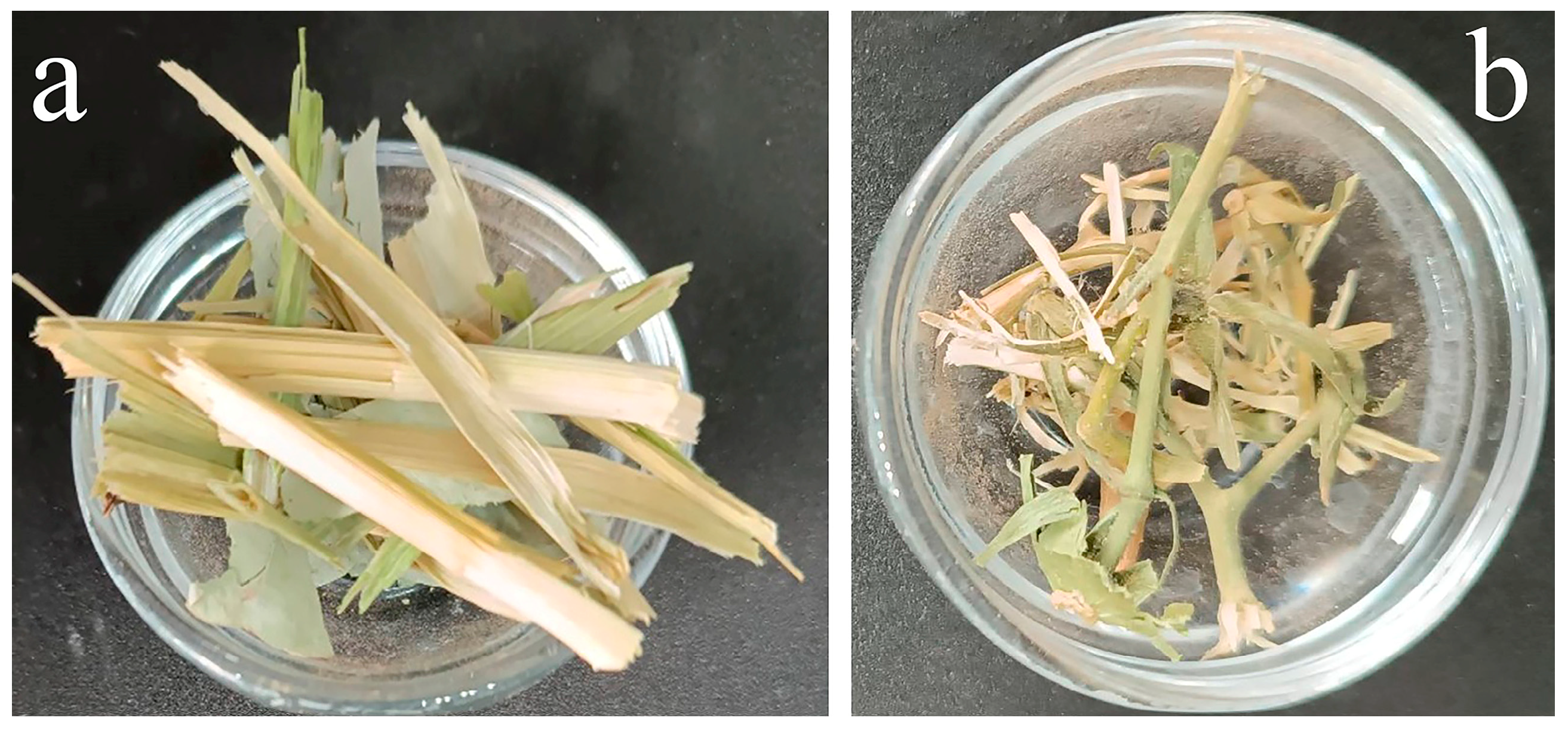
The agricultural residues investigated in this study were post-harvest flower stems (mixed species, obtained from local commercial greenhouses (Moscow region, Russia)) and tomato stems (collected from a farm after vegetables harvesting) (Moscow region, Russia). Representative samples of the raw materials are shown in
Figure 1. Upon reception, the samples contained significant amounts of physical contaminants such as soil and dust. To ensure purity in subsequent analyses, the raw materials were first thoroughly washed with filtered tap water followed by distilled water to remove surface impurities. The cleaned samples were then air-dried at ambient temperature followed by oven-drying at 60 °C until a constant weight was achieved. The dried materials were subsequently cut into smaller pieces (approx. 2–5 cm in length) to facilitate uniform chemical processing.
2.2. Pulping and Bleaching Procedure
A multi-stage chemical treatment process was employed to isolate cellulose from the lignocellulosic matrix. All cooking steps were performed in a glass reactor under atmospheric pressure at a temperature of 100 °C, using a liquor-to-material ratio (hydromodulus) between 8:1 and 10:1 (mL liquor: g dry material). After each stage, the solid pulp was separated from the spent liquor by vacuum filtration using a sintered glass crucible and thoroughly washed with hot distilled water until the filtrate reached a neutral pH.
Hydrothermal Pre-treatment (Water Activation): To increase the accessibility of the lignocellulosic structure to chemicals, the dried samples were first subjected to a hydrothermal treatment in boiling distilled water for 1 h. This step swells the biomass and removes a portion of extractives and hemicellulose.
Alkaline Delignification (Stage 1): The material was treated with a 10% (w/v) aqueous sodium hydroxide (NaOH) solution for 60 min at 100 °C. This primary alkaline stage aims to solubilize a major fraction of lignin and hemicelluloses.
Acid Treatment (Stage 2): To remove metal ions that can catalyze the degradation of cellulose and interfere with bleaching, the pulp was treated with a 10% (v/v) sulfuric acid (H2SO4) solution for 60 min at 100 °C. This process helps to break down lignin-carbohydrate complexes and remove metal ions.
Alkaline Extraction (Stage 3): A second alkaline treatment with a fresh 10% NaOH solution was performed for 60 min at 100 °C. This step further solubilizes residual lignin and hemicellulose fragments that were made accessible by the acid treatment.
Hydrogen Peroxide Bleaching (Stage 4): To achieve the desired brightness and remove chromophoric groups (primarily from residual lignin), the pulp was bleached using a mixture of 10% NaOH and 5% (v/v) hydrogen peroxide (H2O2) for 60 min at 100 °C.
Final Acid Wash (Stage 5): A brief, final acid wash with 10% H2SO4 was carried out for 15 min at 100 °C. This step neutralizes any remaining alkali, removes trace metals, and brightens the final pulp.
Following the final filtration and extensive washing with distilled water, the purified cellulose was dried at 60 °C to constant weight. The overall pulping yield was calculated gravimetrically as the percentage of the final oven-dry cellulose mass relative to the initial oven-dry raw material mass.
2.3. Determination of α-Cellulose Content
The purity of the extracted cellulose, defined by its α-cellulose content (the high molecular weight, alkali-resistant fraction), was determined according to the standard procedure outlined in GOST 6840-78 (equivalent to TAPPI T 203 om-93). This method involves treating a known mass of oven-dry cellulose with 17.5% and then 9.45% NaOH solutions under controlled conditions. The insoluble residue, representing the α-cellulose fraction, is filtered, washed, dried, and weighed. The result is expressed as a percentage of the starting mass of the material.
2.4. Degree of Polymerization (DP)
The viscosity-average degree of polymerization (DP) of the cellulose samples was determined by measuring their intrinsic viscosity [η] in cadoxen solvent (a complex of cadmium oxide with ethylenediamine), following the guidelines of GOST 25438-82 (ASTM D1795 2021; ASTM D4243 2023) [
31]. Cellulose samples were dissolved in cadoxen, and the flow times of the solutions and the pure solvent were measured using an Ubbelohde capillary viscometer at 25.0 ± 0.1 °C. The intrinsic viscosity was calculated from at least three replicate measurements for each sample. The DP was then calculated using the Mark–Houwink–Sakurada equation:
where the constants K
m = 0.71 and a = 0.93 were used for the cadoxen system at 25 °C.
2.5. Determination of Metal Content
The concentration of inorganic elements in the final cellulose samples was analyzed using an inductively coupled plasma emission spectrometer (ICPE-9000, Shimadzu, Kyoto, Japan). A known mass of the sample was subjected to acid treatment. The resulting solution was nebulized into an argon plasma, and the intensity of element-specific atomic emission lines was measured to quantify the elemental concentrations.
2.6. Fourier-Transform Infrared (FT-IR) Spectroscopy
The chemical functional groups of the raw materials and extracted cellulose were characterized by FT-IR spectroscopy. Spectra were recorded using a Bruker IFS-66 v/s FT-IR (Bruker Optics, Ettlingen, Germany) spectrometer coupled with a HYPERION-2000 (Bruker Optics, Ettlingen, Germany) microscope. Measurements were taken in the range of 4000–600 cm−1 with a resolution of 2 cm−1 over 50 scans, using a germanium crystal in ATR mode.
2.7. X-Ray Diffraction (XRD) Analysis
The crystallinity of the cellulose samples was investigated using X-ray diffraction on a Rigaku Rotaflex RU-200 diffractometer (Rigaku Corporation, Tokyo, Japan). The instrument was operated with CuKα radiation (λ = 1.542 Å) at 50 kV and 100 mA. Measurements were performed in the Bragg–Brentano geometry over a 2θ range from 5° to 40° at a scanning speed of 2°/min with a step size of 0.04°. The degree of crystallinity was determined by the ratio of the areas of three crystalline peaks to the overall diffraction area [
32].
2.8. Morphology
The surface morphology of the fibers were studied using low-voltage scanning electron microscopy (SEM) on an FEI Scios microscope (FEI Scios, Waltham, MA, USA) at an accelerating voltage of less than 1 kV in the secondary electron mode.
2.9. Fiber Spinning
The spinning solutions were prepared in two stages. First, cellulose was mixed with a solvent, and the antioxidant propyl gallate (Sigma Aldrich, Saint Louis, MO, USA) was added. The system was then mechanically activated under pressure and shear. In the second stage, the activated system was placed in the heated chamber of a capillary viscometer and heated to 120 °C to produce a flowable solution. The production of spinning solutions is described in more detail in the patent by Golova et al. [
33].
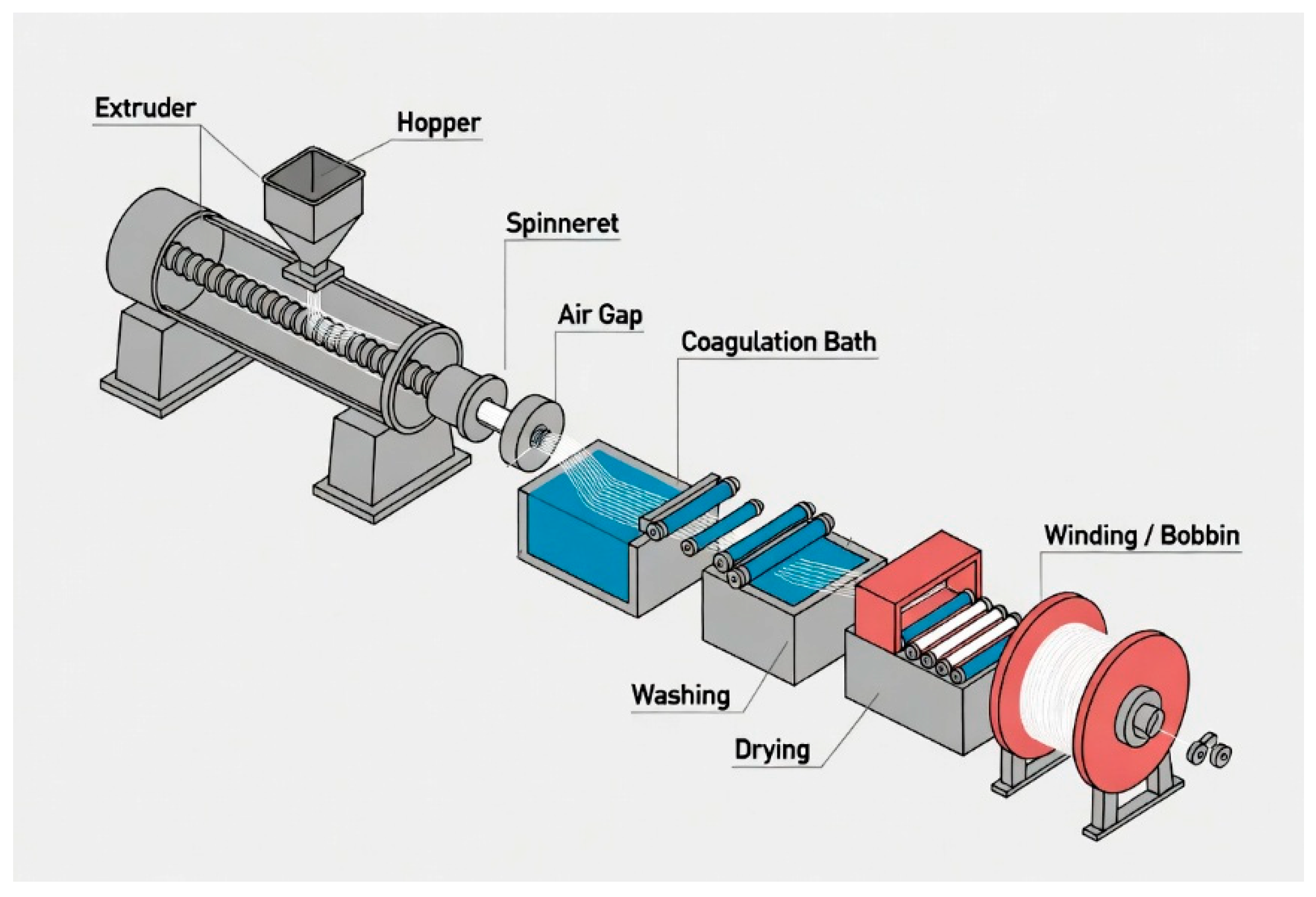
The spinning dopes were processed into fibers using a dry-jet wet spinning technique on a Rheoscope 1000 capillary viscometer (CEAST, Pianezza, Italy) equipped with a coagulation bath and a take-up drum. The solution was extruded through a stainless-steel capillary with a diameter of 0.5 mm and a length-to-diameter ratio (l/d) of 10 at a temperature of 120 °C. The extrudate passed through an air gap of 15 mm before entering the coagulation bath filled with distilled water maintained at 20 ± 2 °C. The choice of coagulant (distilled water) significantly affects the rate of phase separation and the resulting fiber morphology, as discussed in detail elsewhere [
34,
35]. The take-up speed was varied in the range of 70–100 m/min. The as-spun fibers were subsequently washed in several changes in distilled water to remove residual N-methylmorpholine N-oxide (NMMO) and then dried under ambient conditions in a free state to equilibrium moisture content. A laboratory extruder was used to produce larger batches of cellulose-based fibers (
Figure 2).
2.10. Mechanical Testing
The tensile properties of the obtained fibers were determined using an Instron 1122 universal testing machine (Instron, Norwood, MA, USA) in accordance with ISO 6989 [
36]. Fiber specimens were conditioned for 24 h at 23 ± 2 °C and 50 ± 5% relative humidity prior to testing. The initial gauge length was set to 10 mm, and the crosshead speed was maintained at 10 mm/min. For each fiber sample, no fewer than 20 monofilaments were tested, and the average values of tensile strength (σ, MPa), elastic modulus (E, GPa), and elongation at break (ε, %) were calculated together with their standard deviations. The fiber diameter was measured using an optical microscope at a magnification of ×400.
2.11. AI-Generated Figures
The Lykon Dreamshaper XL artificial intelligence model (Version v2 Turbo) was used to generate the dry-jet wet fiber spinning setup schematic in
Figure 2. Keyword generation: “Technical schematic of extruder with hopper, heating zones, screw, spinneret, coagulation and washing baths, drying and fiber winding.” The output data has been edited and verified by the authors, who take full responsibility for the accuracy of the figure.
3. Results
3.1. Pulping Process and Yield
The main characteristics of dissolving cellulose include the degree of polymerization, the proportion of alpha fraction, and the amount of inorganic impurities (metals)., as mentioned in papers: Meng et al., Sayed et al. [
37,
38]. The following steps are required to obtain dissolving pulp: mechanical and chemical cleaning, including removal of physical impurities; alkaline digestion in caustic soda to dissolve pectins, proteins, and fats, while adjusting the DP; lignin separation with H
2SO
4; bleaching (this step is optional); and finishing, and drying [
39].
The multi-step chemical pulping process effectively transformed the raw agricultural residues into purified cellulose.
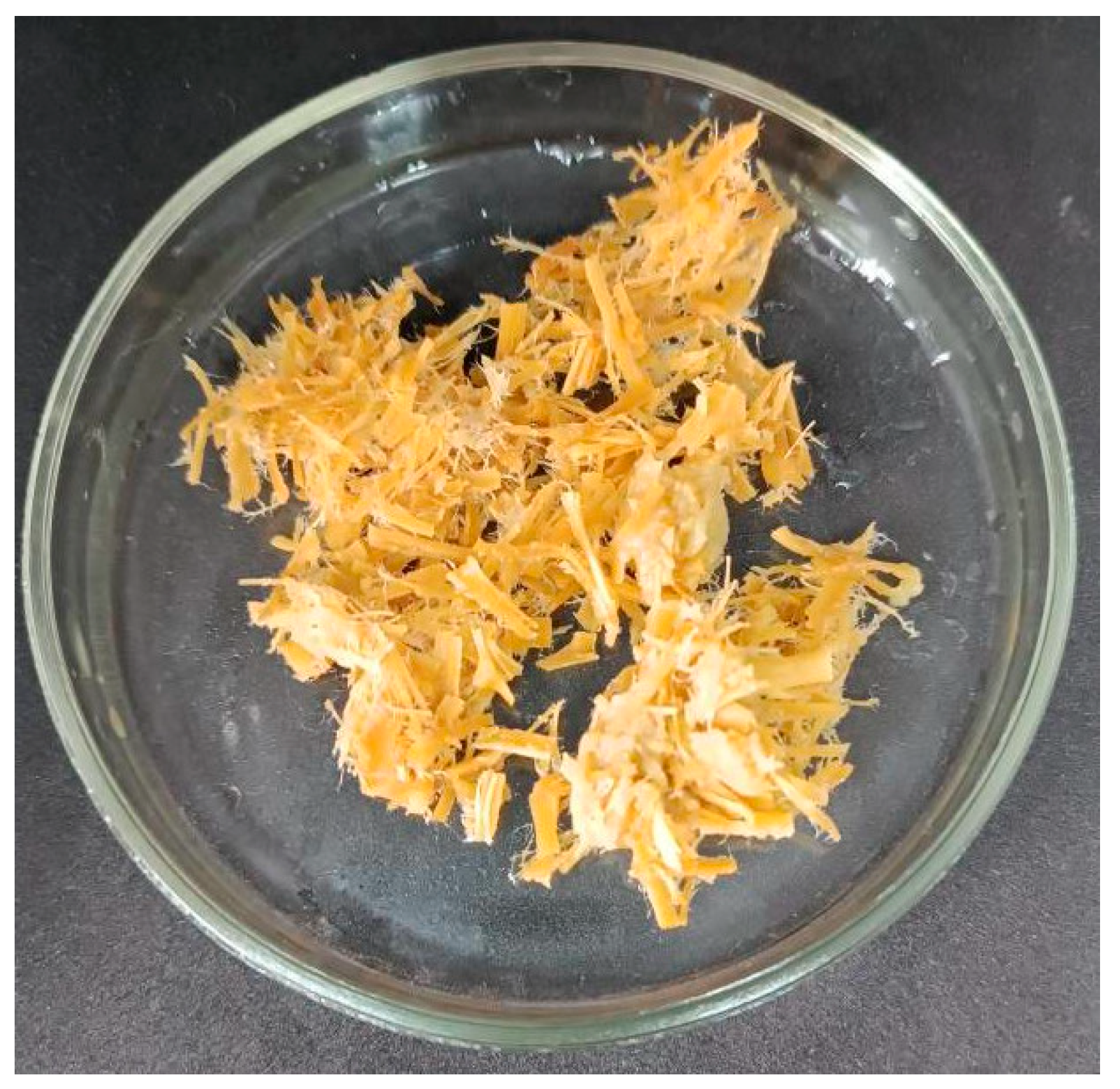
Figure 3 illustrates the incremental alterations in the morphology of the flower stem sample during the procedure. After the first alkaline treatment (Stage 1), the material lost its structural integrity but retained a dark yellow-brown color, indicating the presence of significant residual lignin and other colored compounds. Subsequent acid treatment (Stage 2) partially lightened the pulp (
Figure 3), and a second alkaline treatment (Stage 3) further removed degradation products, though the pulp still exhibited a greyish hue.
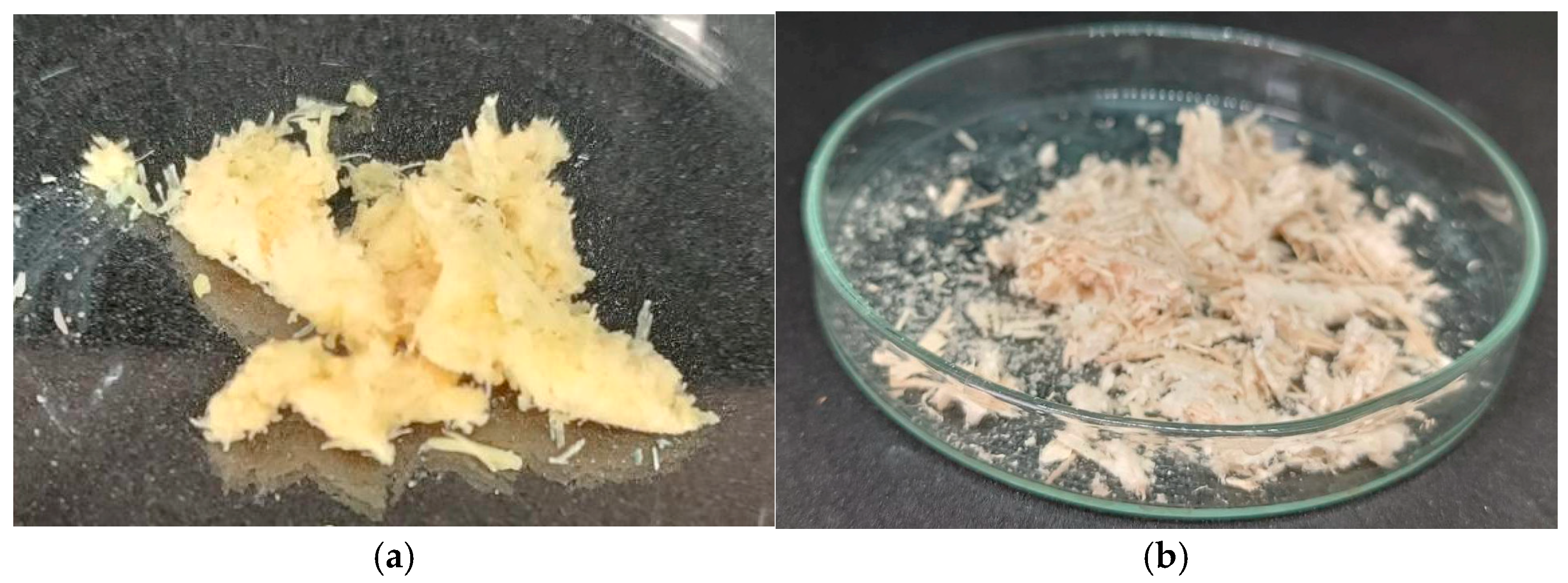
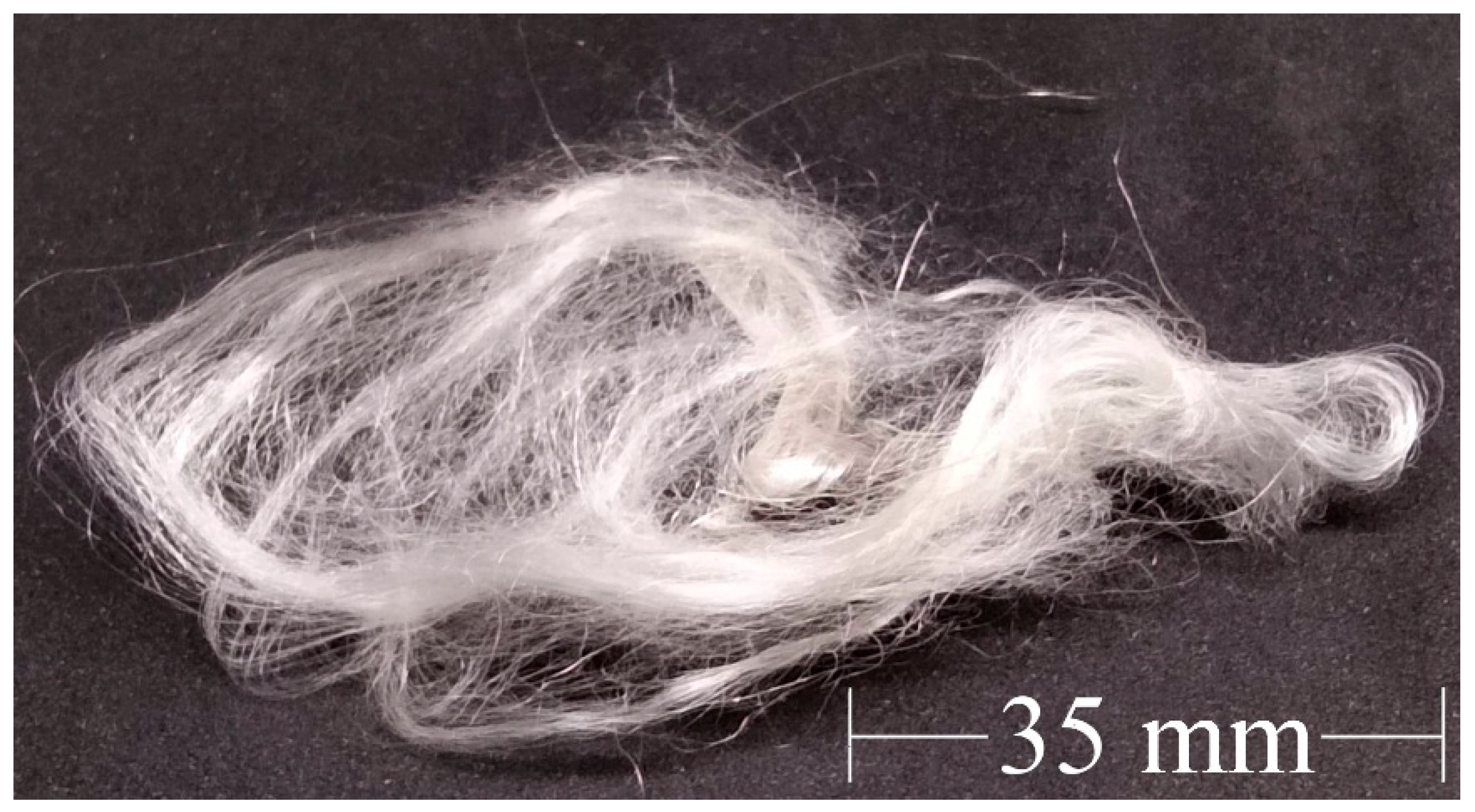
The decisive step was the hydrogen peroxide bleaching (Stage 4), which successfully oxidized chromophoric groups, yielding a pulp with the characteristic white to off-white color of purified cellulose (
Figure 4a,b). The final acid wash (Stage 5) further enhanced the brightness.
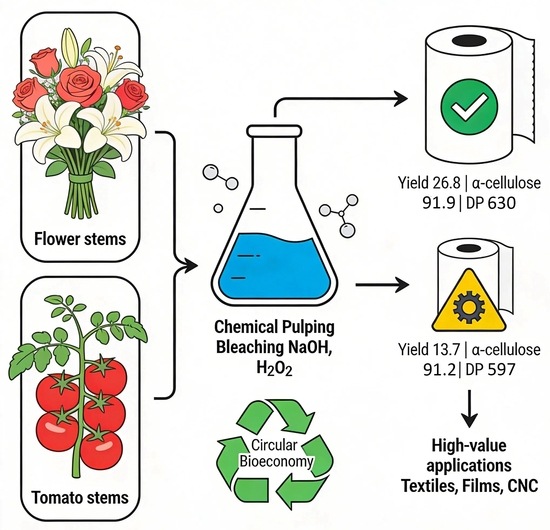
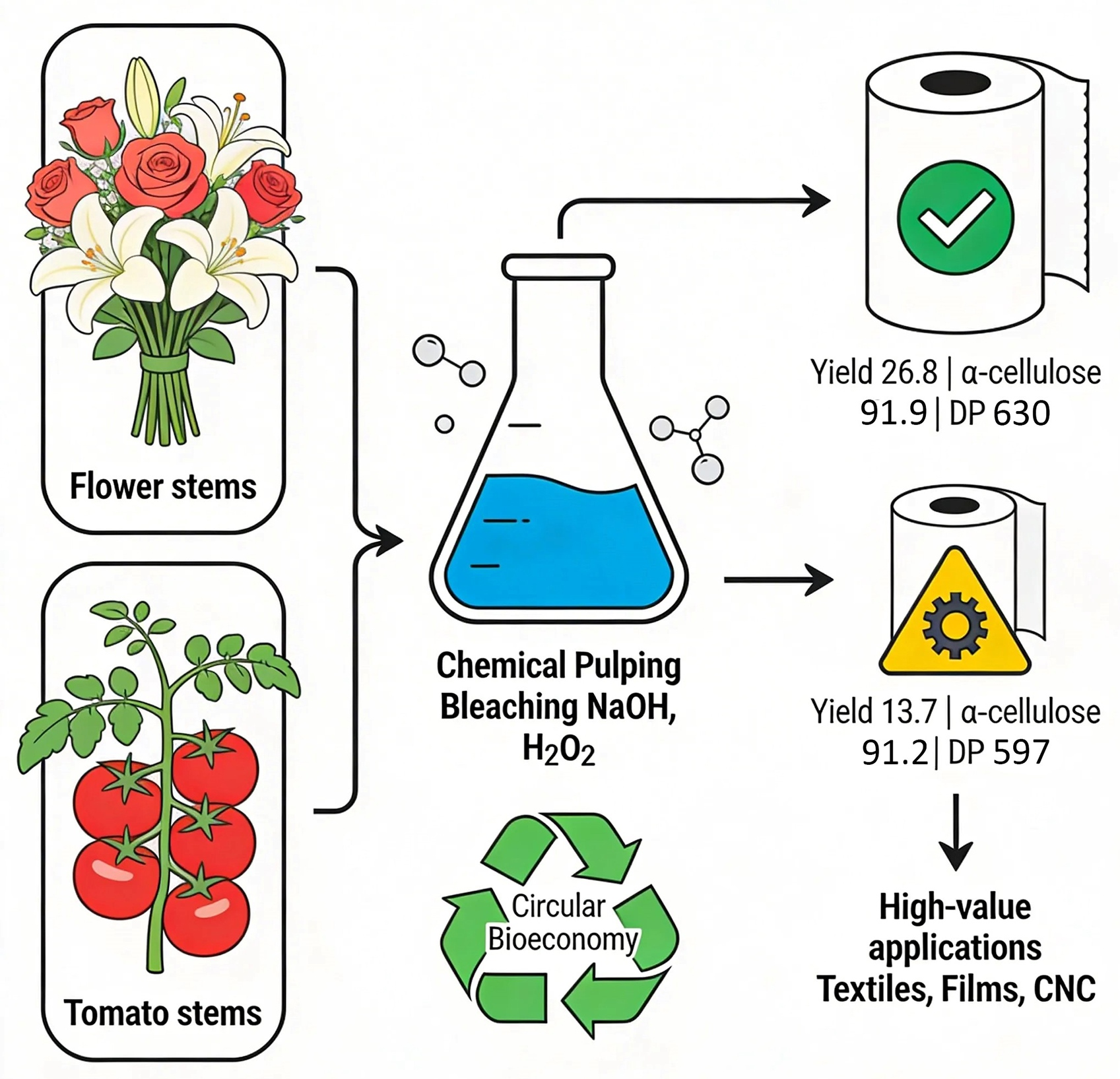
The overall yields of purified cellulose obtained from the two feedstocks are presented in
Table 1. A significant difference was observed. Flower stems yielded 26.8% cellulose, which is more than double the yield from tomato stems (13.74%). For tomato waste, the obtained values are lower compared to those described previously in the literature (about 30%), which is probably due to differences in varieties and pulp cooking conditions [
40]. This substantial variation suggests fundamental differences in the initial composition of the two materials, with tomato stems likely containing a higher proportion of non-cellulosic components such as hemicellulose, soluble sugars, and other extractives that are solubilized and lost during the harsh chemical processing.
3.2. α-Cellulose Content and Degree of Polymerization
The purity of the extracted cellulose, as measured by its α-cellulose content, is critical for determining its suitability for high-value applications. As shown in
Table 2, both samples exhibited excellent purity levels. Cellulose from flower stems had an α-cellulose content of 91.9%, while that from tomato stems was slightly lower at 91.2%. These values comfortably exceed the 91% threshold typically required for dissolving-grade pulps used in the manufacture of textiles (e.g., viscose, Lyocell) and cellulose derivatives (e.g., ethers and esters).
The degree of polymerization is a measure of the average chain length of the cellulose molecules. It directly influences the mechanical properties of fibers and films made from cellulose. The DP values for the extracted celluloses are given in
Table 3. Both samples demonstrated high DP values, with flower stem cellulose at 630 and tomato stem cellulose at 597. These values are well above the minimum requirement of approximately 400 for standard dissolving pulps, indicating that the pulping process, while effective at removing impurities, was not overly degradative to the cellulose polymer chains.
Based on the overall yield data, cellulose derived from flower stems was selected for all subsequent experiments and fiber spinning trials. Although both feedstocks yielded cellulose of comparable purity and DP, the significantly higher production yield from flower stems (26.8% vs. 13.74%) made it the more efficient and practical choice for further work.
3.3. Spectroscopic Analysis (FT-IR)
The structural integrity of the obtained cellulose and the efficiency of the purification process were evaluated using spectroscopic methods.
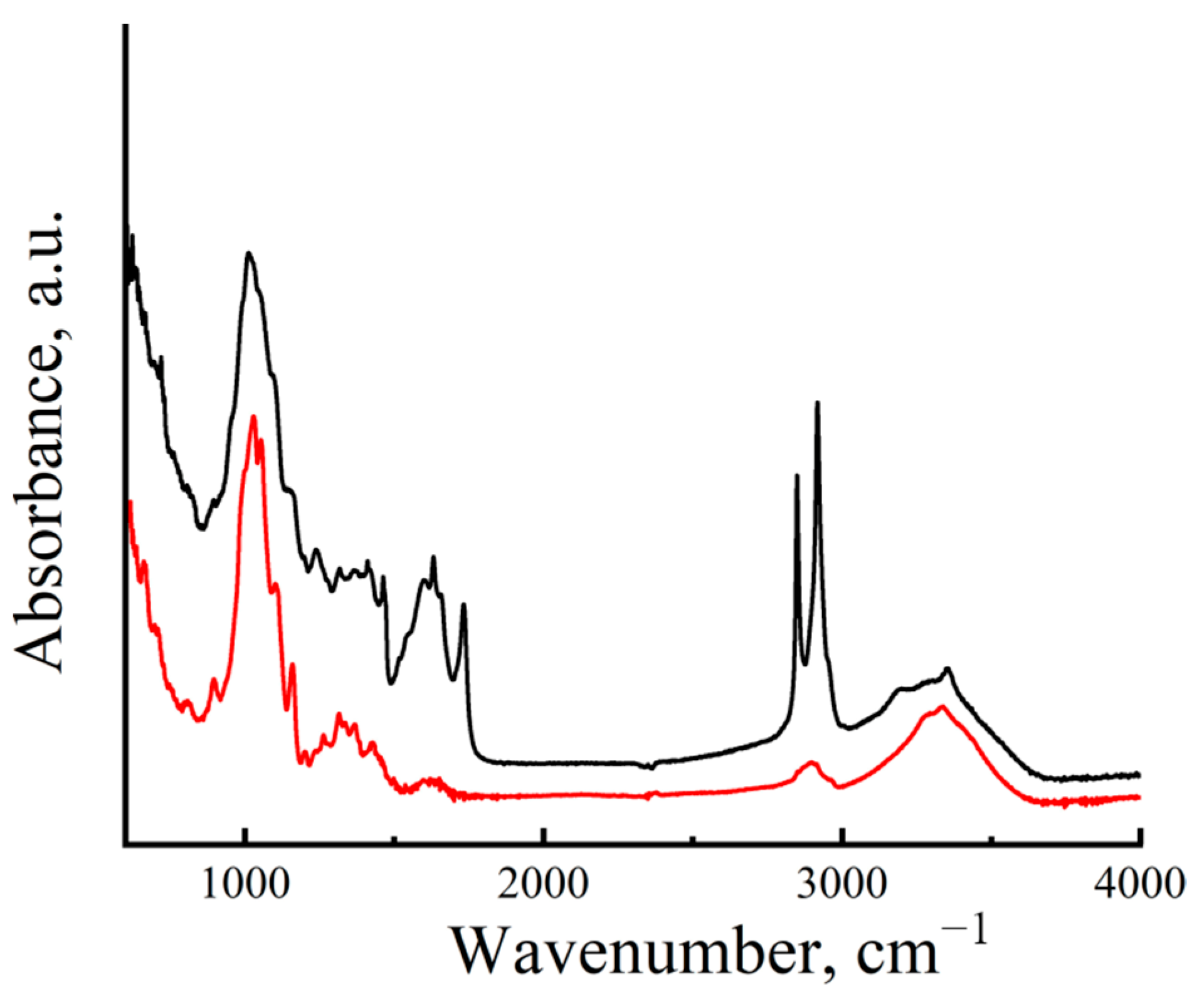
Figure 5 displays the spectrum of the cooked and purified cellulose sample in the range of 4000–600 cm
−1.
The spectrum exhibits all the characteristic vibrational bands associated with native cellulose (Cellulose I) [
41,
42]. A broad and intense band centered around 3330 cm
−1 is attributed to the O–H stretching vibrations of the hydroxyl groups involved in extensive inter- and intramolecular hydrogen bonding. The absorption band at 2890 cm
−1 corresponds to the C–H stretching vibrations of the methylene and methine groups within the polysaccharide backbone.
The “fingerprint” region between 1500 cm−1 and 900 cm−1 provides detailed information on the carbohydrate structure. Key absorption peaks are clearly resolved:
The band at 1160 cm−1 is assigned to the asymmetric C–O–C bridge stretching of the β-glycosidic linkage.
The peak at 1105 cm−1 arises from C–O ring stretching vibrations.
The strong band at 1030 cm−1 is associated with the C–O–C pyranose ring skeletal vibration.
The presence and well-defined nature of these peaks confirm that the core cellulosic structure remained intact throughout the chemical processing.
A crucial indicator of the process efficiency is the absence of a distinct peak around 1510 cm−1, which is characteristic of the aromatic skeletal vibration in lignin. The lack of this signal confirms that the cooking and subsequent multi-stage washing/acid treatment steps were highly effective in removing lignin from the final product. Furthermore, the minimal background signal in the 1600–1700 cm−1 region suggests a low level of adsorbed moisture.
The complex pattern of bands observed in the low-wavenumber region (below 800 cm−1) originates from the skeletal bending modes of the glucopyranose rings and vibrations within the hydrogen-bonding network, further indicating a highly ordered crystalline structure.
It is known that the original plant material may contain, in addition to its main component—cellulose lignin and hemicellulose. The presence of these compounds leads to the appearance of additional bands in the spectrum (
Figure 5). A band at 1730 cm
–1 (νC=O in the ester group) is observed for hemicellulose. Lignin is characterized by bands at 1595 cm
–1 (bands of skeletal vibrations of the benzene ring) and 1460 cm
–1 (δC–H). After pulping the lignocellulosic raw material, the intensity of the bands characteristic of lignin and hemicellulose decreases. Removal of cellulose satellites resulted in an increase in the total crystalline index (TCI) value.
3.4. X-Ray Diffraction (XRD) Analysis
The crystalline structure of the obtained cellulose sample was investigated by X-ray diffraction.
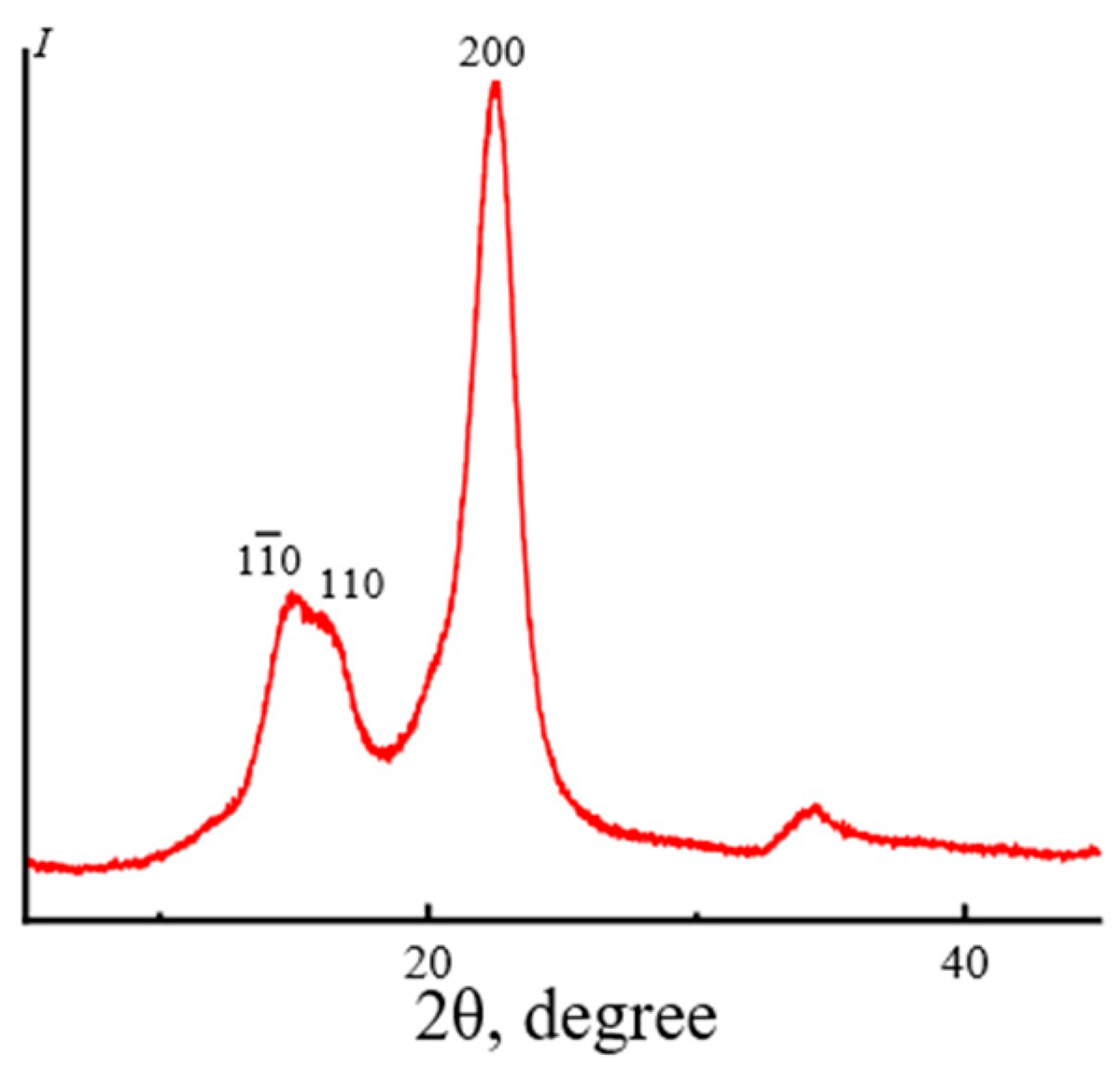
Figure 6 shows the diffraction pattern recorded over a 2θ range of 5° to 45°.
The diffractogram displays the distinctive reflections of native cellulose (Cellulose I). Three main peaks are clearly observed. The first, less intense peak is located at a 2θ angle of approximately 14.6°, second peak at a 2θ angle ~16.6° and last one peak ~22.7°, which correspond to the crystallographic planes (1–10, 110, 200), respectively [
43]. Additionally, a weaker peak is discernible around 34.5°, corresponding to the (004) plane. The positions of these peaks agree with the standard pattern for cellulose I [
42], confirming that the crystal structure remained intact and was not transformed during the pulping. The calculated crystallinity value is 75%.
3.5. Metal Content Analysis
The content of inorganic impurities is presented in
Table 4.
Elemental composition analysis of the cellulose processed with tap water (during primary removal of contaminants) showed a substantial inorganic residue, with calcium (7838 ppm) and magnesium (908 ppm) as the dominant species. This confirms that while the washing and acid treatment steps successfully removed transition metals (e.g., Fe, Cu), they were insufficient to eliminate Mg, Ca. Consequently, the total metal content far exceeds the typical threshold (<10 ppm) required for high-thermal-stability applications. Despite this, the solid-phase method of obtaining spinning solutions allows for the production of fibers in a very short period of time (no more than 20–30 min). As a result, cellulose degradation does not occur to any significant degree. The system’s rheological properties, which are important when converting the spinning solution into fibers, are also preserved.
3.6. Mechanical Properties
The fibers were spun using a dry-jet wet method from 16% solutions in NMMO.
Figure 7 shows a photograph of the spun fibers.
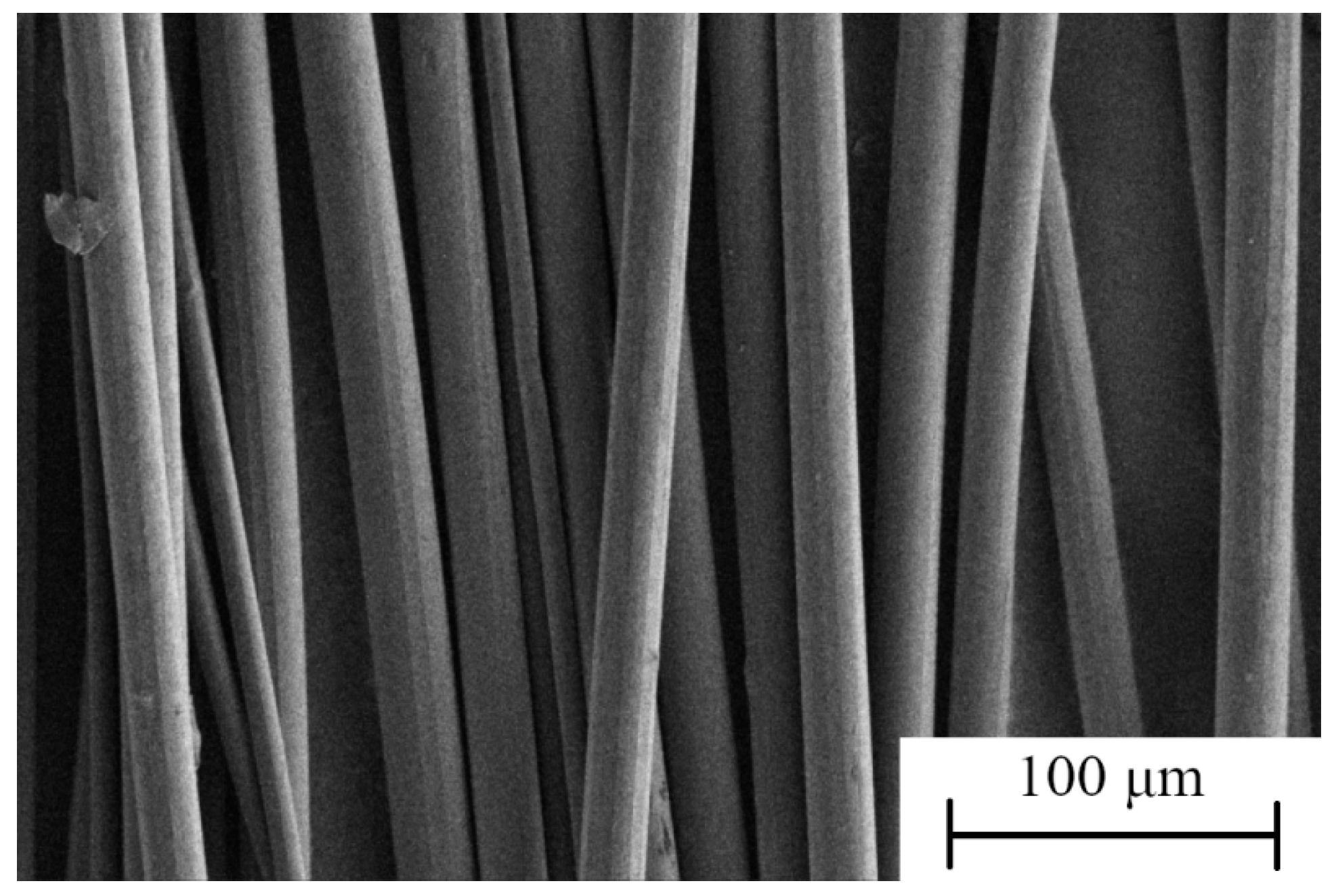
As can be seen from the photo, the fibers have the traditional white color for cellulose man-made fibers. The average diameter of the curls does not exceed 18 microns, which corresponds to industrial standards (
Figure 8).
The photograph shows a smooth and uniform surface of the spun fibers. The fiber surface is virtually free of foreign particles or deposits of precipitated low-molecular-weight substances. Cracks, chips, and other defects are not clearly visible. Thus, the resulting fiber surface morphology is close to that of industrial Lyocell fibers.
The mechanical properties of the cellulose fibers obtained in this study are summarized in
Table 5. The spinning conditions, including the composition of the coagulation bath, are known to significantly affect the tensile properties of Lyocell-type fibers, particularly for feedstocks with low α-cellulose content [
44].
It can be seen that the fibers based on the flower stems cellulose exhibit tensile strength values of 490 MPa, which is comparable to that of commercial Lyocell fibers derived from wood cellulose. The elastic modulus reaches 14.1 GPa for flower stems cellulose and 14.7 GPa for Lyocell. At the same time, the elongation at break for flower stems cellulose is 7.4%, which is slightly higher than the values for industrial Lyocell fibers. Nevertheless, the mechanical performance of the obtained fibers is fully sufficient for a range of potential applications, including woven and nonwoven textiles.
4. Discussion
The primary goal of this study was to evaluate the potential of greenhouse waste (flower and tomato stems) as alternative feedstocks for cellulose production. The results demonstrate that both residues can be successfully refined into high-purity cellulose using a conventional multi-step chemical pulping sequence. The final products exhibited key quality parameters—α-cellulose content > 91% and DP around 600—that firmly place them within the specifications for dissolving-grade pulp [
30]. This finding is significant, as it confirms that these waste streams are viable sources of materials that can, in some cases, replace wood pulp in various industries.
A critical finding of this work is the substantial difference in pulping yield between the two feedstocks. The 26.8% yield from flower stems is economically attractive and comparable to yields obtained from other non-wood sources like cereal straws (up to 40%) [
18]. In contrast, the 13.74% yield from tomato stems is considerably lower, raising questions about its economic viability. The low yield is likely attributable to the intrinsic composition of tomato plant biomass, which may contain high levels of pectin, soluble carbohydrates, and pigments like lycopene and chlorophyll, all of which are removed during the harsh chemical processing [
7,
20]. While the quality of the final tomato stem pulp meets a number of requirements for producing high-margin products, its low yield will impact the economics of the process. If its associated components (hemicellulose, pectin, and other components) are simultaneously extracted and utilized, then the use of tomato stem pulp may become more attractive.
The high α-cellulose content and DP of both samples indicate that the employed pulping conditions, while thorough, were not excessively aggressive towards the cellulose chains. The careful control of temperature (100 °C) and the sequential application of alkali and acid treatments, culminating in a peroxide bleaching, allowed for the effective dissolution of lignin and hemicellulose while preserving the integrity of the cellulose polymer. The degree of polymerization, in particular, is a sensitive indicator of cellulose degradation. Values close to 600 suggest that the cellulose is suitable for applications requiring high mechanical strength, such as textile fibers or reinforced biocomposites [
27]. The successful removal of transition metal ions is another positive outcome, as these ions are known to catalyze the oxidative degradation of cellulose, especially during bleaching or thermal processing.
Comparing these results with the broader literature reinforces the promise of non-wood feedstocks. Studies on cellulose from sources like eggplant residues [
17] and various agricultural wastes [
19] have similarly reported high-purity products. However, the direct comparison of yields is often difficult due to variations in raw material sourcing, pre-treatment methods, and pulping conditions. The strength of this study lies in its direct, side-by-side comparison of two specific residue types under identical processing conditions, highlighting that not all agricultural waste is created equal and that feedstock selection is paramount.
The practical and theoretical implications of this work are clear. On a practical level, it provides a proof-of-concept for converting local flower waste into a valuable industrial raw material. For regions with significant floriculture or tomato processing industries, this could represent a new avenue for waste management and economic diversification. Theoretically, the results contribute to a deeper understanding of the variability in response of different plant tissues to standard pulping chemistry, underscoring the need for feedstock-specific process optimization.
5. Conclusions
This study successfully demonstrates the technical feasibility of producing high-quality, dissolving-grade cellulose from two common agricultural waste streams: flower and tomato stems. Through a multi-stage chemical pulping process involving alkaline, acid, and bleaching treatments, cellulose with exceptional purity and polymer chain length was obtained.
Flower stems are a particularly promising feedstock, yielding 26.8% cellulose with an α-cellulose content of 91.9% and a degree of polymerization of 630. This combination of high yield and high quality makes them an economically attractive alternative to traditional wood sources.
Tomato stems can also yield very pure cellulose (91.2% α-cellulose, DP 597), but their significantly lower overall yield (13.74%) presents an economic challenge. Valorization of this residue may require a more holistic biorefinery approach to recover other valuable components from the waste stream.
Based on flower stems cellulose, manmade fibers with mechanical properties suitable for processing into woven and nonwoven textile products were obtained for the first time.
The extracted cellulose from both sources meets or exceeds the stringent quality standards required for dissolving pulp, rendering it suitable for a range of high-value applications, including the production of textiles, biodegradable films, and specialty chemicals.
This research provides a strong foundation for future work.
Optimizing the pulping conditions (e.g., temperature, time, reagent concentration) specifically for flower stems to maximize yield while preserving DP. Such pulp cooking conditions may reduce the cost of the resulting raw material.
Scaling up the process from the laboratory to a pilot scale to evaluate its performance under industrially relevant conditions.
Exploring the downstream processing of the obtained cellulose to produce value-added products such as cellulose nanocrystals, nanofibrillated cellulose, or cellulose-based films.
Ultimately, this work contributes to the growing body of evidence that agricultural residues are not merely waste, but a valuable resource capable of driving the transition towards a more sustainable and circular bioeconomy.




 ,
,