Article

Densification of Expanded Polystyrene Waste Using Organic Solvents, a Sustainable Recycling Strategy


by
Romeo Garcia-Cruz
1,
David Reyes-Gonzalez
1,*,
Guadalupe Rodriguez-Martinez
2,
Gustavo Martínez-Castellanos
1,
Rodrigo Vivar-Ocampo
3 and
David Arroyo-Acosta
2
1
Division of Postgraduate Studies and Reseacrh, Tecnológico Nacional de México/Instituto Tecnológico Superior de Misantla, Km 1.8 Carretera a Loma de Cojolite, Misantla 93821, Mexico
2
Petroleum Engineering Department, Tecnológico Nacional de México/Instituto Tecnológico Superior de Misantla, Km 1.8 Carretera a Loma de Cojolite, Misantla 93821, Mexico
3
Renewable Energy Engineering, Faculty of Engineering Science and Technology, Universidad Autónoma de Baja California, Blvd. Universitario #1000, Valle de las Palmas, Tijuana 21500, Mexico
*
Author to whom correspondence should be addressed.
Eng 2026, 7(4), 165; https://doi.org/10.3390/eng7040165
Submission received: 19 February 2026 / Revised: 24 March 2026 / Accepted: 26 March 2026 / Published: 1 April 2026

Abstract

Expanded polystyrene (EPS) is a material with a wide range of applications in different sectors of everyday life and in industry. EPS is a major environmental challenge, as the properties that give it versatility of use make it a difficult waste to manage. Consequently, this type of plastic waste has a low recycling rate, which leads to the need to develop efficient solutions for its management and use postconsumer. Herein presents an assessment of the densification capacity of EPS waste using organic solvents as a sustainable strategy for the recovery of such waste. A mixed factorial experiment design was carried out in which the type of solvent, the revolutions per minute for agitation in the densification process and the concentration of the solvent were analyzed as incidence factors. A coefficient determination of 93.12% was obtained, demonstrating that the model fits normally. The results show that xylene and thinner have the best performance compared to other solvents used in the experiments. This study contributes to the optimization of solvent-based EPS densification processes by statistically identifying which ones are most effective under low-cost and low-energy consumption conditions, providing a scalable and replicable strategy, especially in regions where recycling infrastructure is limited.

1. Introduction

Since the beginning of the 21st century, the exponential growth of population has been directly related to the high rates of consumerism in the world. These factors have brought with them a series of problems for the planet’s natural environment. One of these problems is the high rate of waste generation, as well as the inadequate disposal of it. Plastic waste is the main type of waste generated worldwide. It is currently estimated that global plastic consumption is 400 million tons per year, of which only 9% is recycled and the rest follows the trend of inappropriate final disposal [1]. Unfortunately, the final disposal of this waste is carried out mainly in open-air dump or is incinerated, which leads to even greater problems such as the generation of microplastics or the release of dioxins into the environment [2]. Despite representing a high-impact global problem, plastics are vital to meet basic and applied human needs. For this reason, the production of plastic products does not decrease, contributing to the persistence of the problem of plastics waste over time, until a sustainable solution is provided.
Nowadays, packaging and construction are the sectors with the highest consumption of plastic worldwide [3,4]. Among the plastic materials with high consumption rates is polystyrene (PS). It can be found in various forms: general-purpose (GPPS); high impact (HIPS); extruded (XPS); and expanded (EPS), each with specific features to suit different applications. While XPS and EPS share similar characteristics, they differ primarily by possessing a distinct cell structure, defined by different factors in the manufacturing process of each type [5,6]. The XPS features a closed-cell structure that gives it high density, low thermal conductivity, and high compressive strength. So it is an excellent thermal insulator used mainly in the construction sector [7,8,9,10]. Specifically, expanded polystyrene (EPS), is a material with many applications in different industrial sectors due to its physical and chemical properties, which give it versatility for a wide range of uses [11,12,13]. EPS is used in the manufacturing of disposable products for the food industry. Additionally, it is mainly used as packaging for fragile items and, to a lesser extent, as thermal and acoustic insulation in construction. Products made of this material usually have a very short shelf life and, in most cases, are discarded after a single use. The main problem with the use of this material is that when it becomes waste, it becomes unmanageable to be transported to recycling centers [14,15]. This problem arises due to its low density, provided by its closed-cell structure with air inside, which translates into waste with little mass and large volume. For this reason, the EPS waste has minimal or no recovery in the recycling industry in Mexico. Achieving a reduction in the volume of this waste would contribute to circularity, ensuring its post-consumption use as recycled raw material to manufacture new products.
This work only considers the recovery and use of polystyrene waste in its expanded form (EPS). This is based on the authors’ previous experience, which shows the overgeneration of this waste at the study site, specifically in the food and packaging sector, even above other plastics. Additionally, considering the characteristics of the study site and its demographic factors, the use of extruded polystyrene (XPS) in the construction sector is minimal, if not non-existent; which constitutes a technical limitation for obtaining XPS residues when developing this work.
Seeking sustainable solutions by reducing the volume of EPS waste to ensure proper management of the same is a relevant issue for the care of the environment. However, the techniques and procedures for densifying polystyrene waste that are currently practiced in developed countries are based on technology that is difficult to access for developing countries like Mexico. In addition, it should be considered that such technologies are expensive and have a counterproductive environmental impact when developed [16,17]. One strategy that contributes to reducing the problem of EPS waste is the dissolution of EPS by means of organic solvents [18,19,20,21,22]. In this procedure, the solvents penetrate the EPS structures, breaking the intermolecular links between the polymer chains [23] and making it a homogeneous solution [24]. From this solution, it is possible to recover polystyrene in its original form by gravimetry or by evaporation of the solvent. This strategy of densification of polystyrene waste allows the reuse or recycling of these to make new products.
In literature it is possible to find research focused on densification experiments of polystyrene waste using organic solvents. However, in many of these works the objective is only to demonstrate the functionality and behavior of recovered polystyrene for post-consumer applications [25,26,27,28]. In much of the reported literature, the effect of the factors involved in the densification process is not analyzed; most of the reported studies have focused on the solubility behavior of EPS in individual solvents, keeping constant the external factors that can influence the dissolution capacity of polystyrene, but few have statistically modeled the influence of these factors as operating conditions in experiments or addressed the feasibility of solvent recovery and reuse in a context with low access to technologies. In contrast to the above, this work seeks to demonstrate the efficiency of the solvents used in the experiments to guarantee the greatest amount of polystyrene recovered in the shortest possible time. Research where a characterization of polystyrene residues densified with acetone and ethyl acetate is carried out, showing satisfactory densification results, however, the factors that could influence the procedure indirectly affecting the final characteristics of the recovered polystyrene are not considered [29]. Similarly, other research group carried out the densification of polystyrene waste in solvents to obtain recovered polystyrene nanoparticles, demonstrating the efficiency of the procedure and the innovative obtaining of polystyrene nanoparticles, however, this work lacks control of the variables involved in the procedure and is specifically based on the analysis of the nanoparticles obtained [30]. There are works to densify polystyrene waste using organic solvents such as essential oils of star anise, chamomile, eucalyptus, thyme, lily, lavender, among others [31] and mainly jobs where limonene is used as a solvent [32,33,34,35]. These works mostly support how environmentally friendly these natural solvents are, however, the densification results with the use of limonene as a solvent demonstrate the slowness of the process, which is not feasible for the effects of large-scale or industrial processes. On the other hand, there are works such as that of where the process of dissolving polystyrene waste with commercial grade solvents is the first step to obtain a homogeneous polymeric solution, to which a natural fiber is subsequently added to obtain a composite polymeric material [36]. This and other similar works are relevant in obtaining new composite materials based on recycled raw materials [37,38,39,40,41,42]. However, by not proposing a design of experiments for its realization and not controlling the factors that influence it, there is a knowledge gap regarding the quality of the composite material obtained at the end of the work and the densification process of EPS waste is something secondary. The novelty of this study lies in the integration of a mixed factorial experimental design with statistical modeling to evaluate the influence of operational variables of the EPS waste densification process. Unlike previous studies reported in the literature that focus on solvent efficacy or material properties, this paper presents a quantitative analysis of variables of the proposed method with a focus on low-cost conditions and low energy expenditure, which makes it suitable for small-scale contexts with limited resources. This combination provides a more complete understanding of EPS densification processes compared to previous work.
One of the main contributions of this study lies in its potential to reduce the environmental burden associated with expanded polystyrene (EPS) waste, especially in regions where open-air dump or incineration are the predominant final disposal methods.
To evaluate the sustainability of the proposed solvent-based densification method, a comparative analysis against conventional EPS waste management practices is presented. Open-air dump, as the most common method in developing countries, involves significant environmental risks due to the long degradation time of EPS, such as the possible generation of leachate and the inefficient use of available space. On the other hand, incineration, while significantly reducing the volume of waste, releases toxic compounds such as styrene, benzene, and other volatile organic compounds (VOCs), contributing to air pollution and greenhouse gas (GHG) emissions. It is estimated that incinerating 1 kg of polystyrene can generate more than 3 kg of CO2 equivalent, in addition to persistent organic pollutants [43,44].
The aim of this work is to statistically analyze the amount of densified polystyrene waste and its densification time considering the influence of external factors such as type of solvent, RPM and concentrations in each mixture; factors that in this case are operating conditions that determine the dissolution capacity of polystyrene. The densification process was carried out using mixtures with different concentrations (25, 50 and 100%) of organic solvents at room temperature. Also, to carry out an efficient densification and replace the use of heat in the process, centrifugation was applied at different revolutions per minute (RPM).

2. Materials and Methods

2.1. Definition of Experimental Design

To analyze the number of grams of densified polystyrene waste and the densification time in this recycling process, the factors considered were solvent (acetone, thinner, xylene, limonene and ethyl acetate); revolutions per minute (200, 400 and 600); and the concentration of the solvent (25, 50 and 100%). For a correct analysis of the effect of the type of solvent on the defined response variables, a mixed factorial experiment design with two replications was established 5 × 3 × 3 [45]. Obtaining 90 runs in total to develop the experiments in which a mixture with different concentrations of each type of solvent was used, centrifuged at different RPM.

2.2. Solvents

According to different studies reported in literature, the effectiveness of a solvent over a solute is directly related to the similarity of their chemical structures [46]. For this reason, polystyrene as a nonpolar compound reacts in nonpolar solvents such as those selected for this study. The selection of solvents is based on the assumption that solvents with a low tendency to form hydrogen bonds are the most suitable solvent for polymer recycling [47].
The solvents used in this procedure were acetone (99.5% Wöhler® Chemicals), xylene (98.5% Wöhler® Chemicals), ethyl acetate (99.9% Wöhler® Chemicals), 99% Limonene (ROAR)® and American thinner. The properties of the solvents mentioned above are shown below in Table 1. In addition to solvents, distilled water (pH 7 Wöhler® Chemicals) and ethyl alcohol (96% Wöhler® Chemicals) were used for the mixtures.

2.3. EPS Waste

The expanded polystyrene waste used in this study came mainly from packaging materials for household appliances and electronic equipment of various sizes. This waste was collected directly from garbage containers and informal disposal points, preventing it from being sent to an open-air dump or remaining indefinitely in the environment.
Before the experimental process, the EPS waste was subjected to pre-treatment to ensure homogeneous conditions during densification. The pretreatment included the following steps: (1) Initial separation and classification: the waste was manually selected to remove materials from foreign to the EPS, such as rigid plastic parts, cardboard, paper, strapping or other types of materials. This step ensured that only polystyrene was processed; (2) Visual inspection and sorting: Each fragment was inspected to identify areas with dirt, oil stains, moisture, adhesives, tapes, or other contaminants on the EPS. Differences in color or cell structure were also detected that could indicate previous degradation or prolonged exposure to environmental conditions, separating the collected waste by appearance; (3) Cleaning and removal of external contaminants: contaminants such as adhesive tapes, labels, staples, adhered paper, among others, were manually removed. In cases where dirt, dirt or food remains were found, the residues were subjected to a wash; (4) Washing: only on parts with visible dirt, a wash was carried out with water and neutral detergent to have the EPS residues ready for the densification process. This step was applied so that dirt was not a factor that could interfere with the densification process, and finally; (5) Cutting and standardization of size: the waste selected for densification was cut into pieces of approximately 1 to 4 cm. This size allowed for proper handling in the vessels for densification, as well as a more uniform interaction with the solvents used.
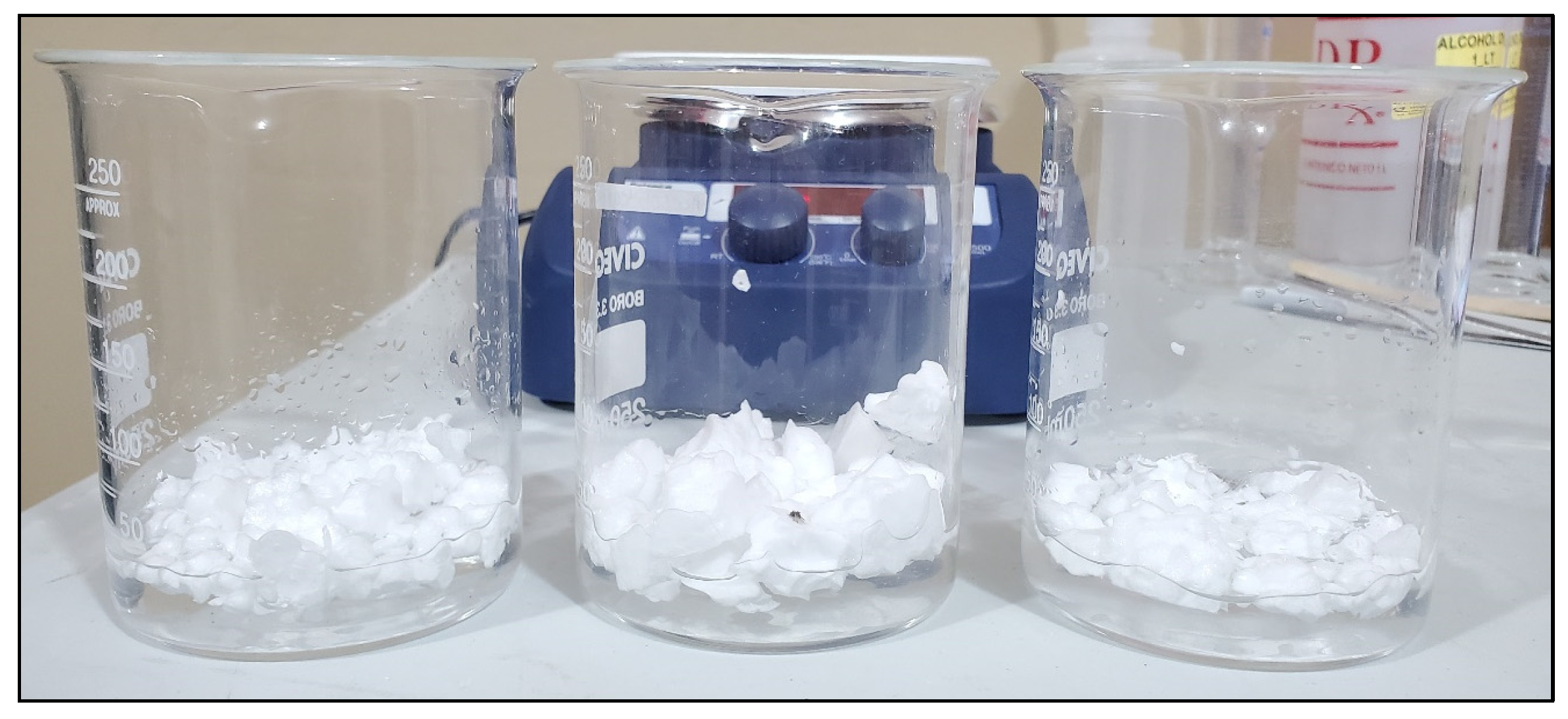
This procedure of simple pre-densification steps allowed obtaining a clean and relatively homogeneous material, suitable for experimental tests, eliminating contaminants and standardizing particle size (1–4 cm); in this way, variability in the process is reduced and greater reliability in the experimental results is ensured. Figure 1 illustrates the appearance of the material after pretreatment.

2.4. Densification Process

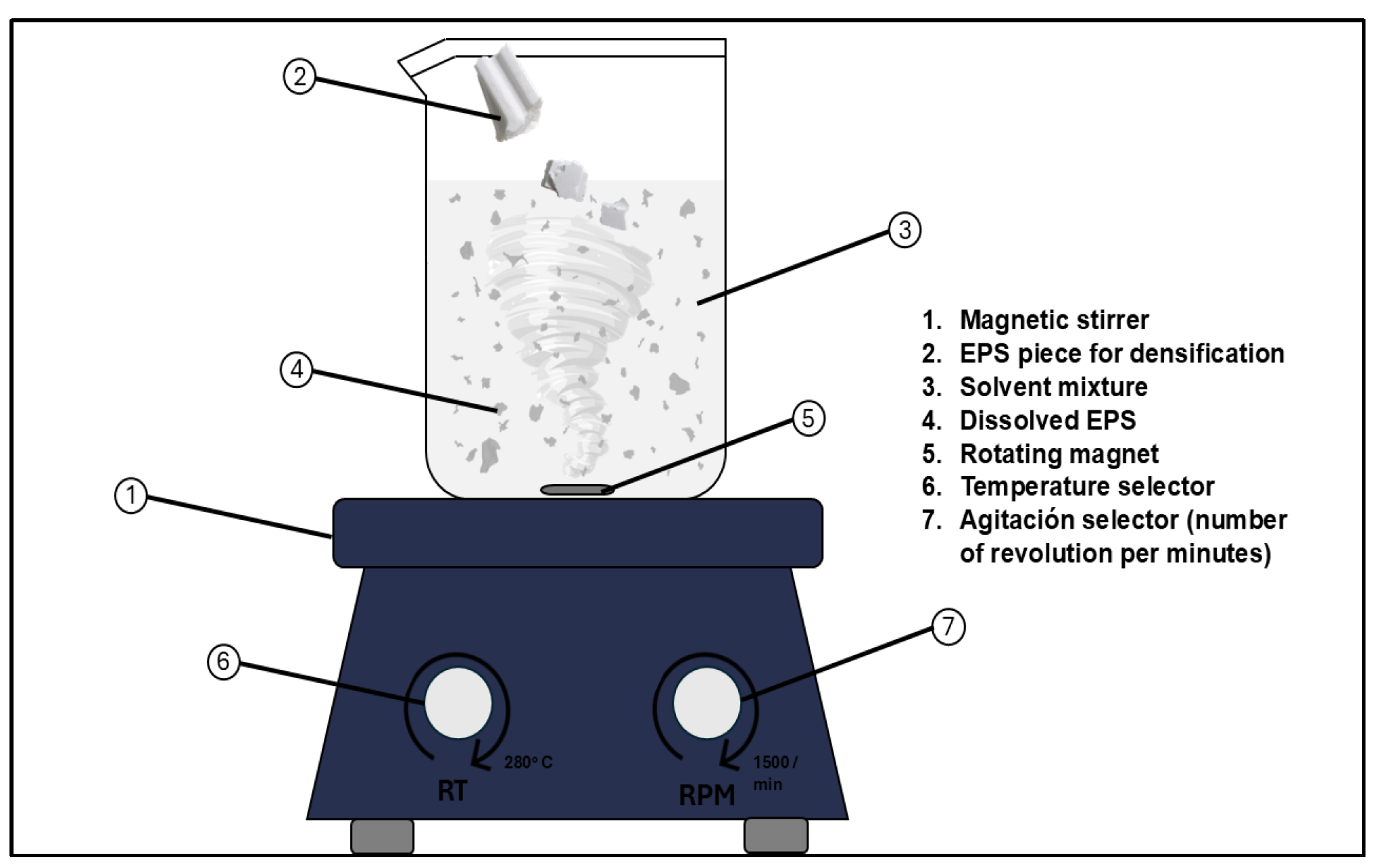
Once the solvent concentration for each mixture was defined according to the experimental design, it was poured into a laboratory beaker. This container was placed on a magnetic stirrer where the mixture was stirred at the different set speeds. When centrifugation started, the polystyrene pieces were added to the mixture. In the moment mixture reached its maximum saturation point, identified by the absence of solvent action on the EPS residues, the centrifugation was stopped, and the densified polystyrene recovered from the laboratory beaker, showing in most cases no remaining traces of the mixture. All experiments were conducted at room temperature.
In addition, all experiments were conducted in well-ventilated laboratory conditions, minimizing the accumulation of volatile organic compounds (VOCs). Personal protective equipment (gloves, goggles, and lab coats) was used at all times, and open flames were avoided, and proper storage of solvents in closed containers. Throughout the procedure, notes were taken on the time elapsed during densification from start to finish, as well as the total weight of the densified polystyrene in each run. These data were statistically analyzed to draw pertinent conclusions from the experiment. The densification process described is illustrated below in Figure 2.
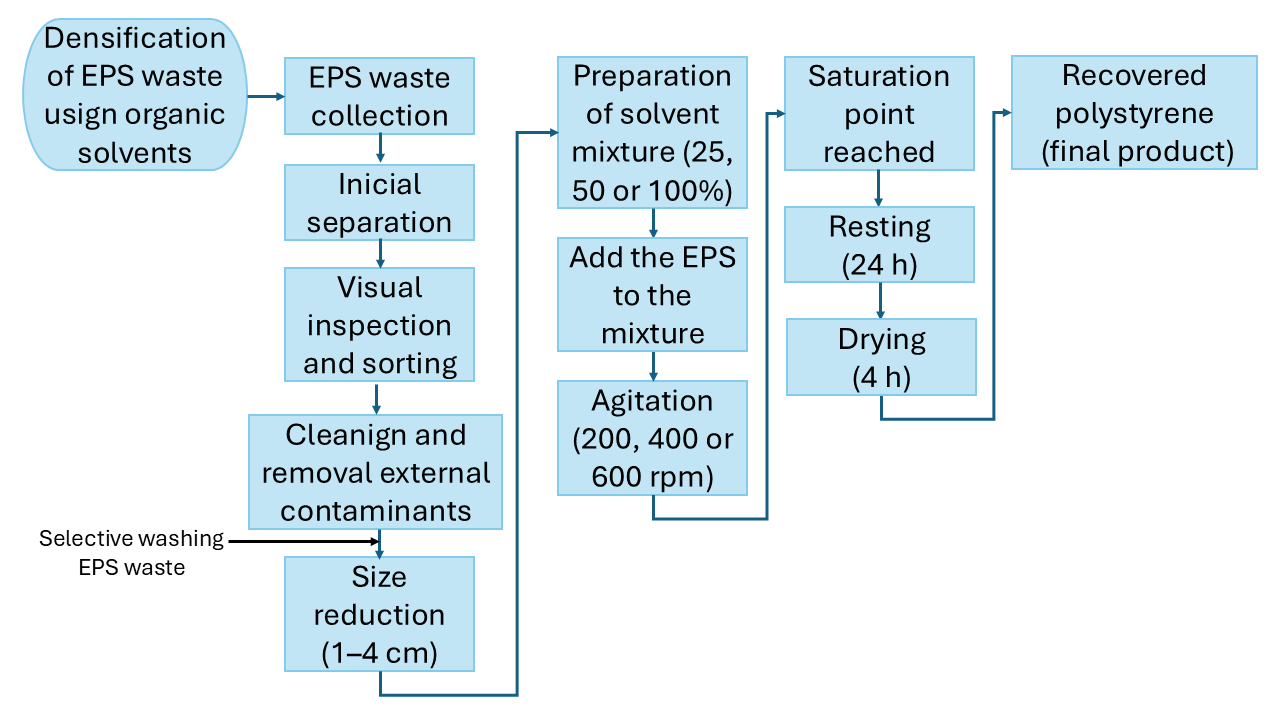
To represent this EPS recycling strategy, the following diagram (Figure 3) summarizes the main stages involved in the densification of EPS waste, including collection, pretreatment, dissolution, recovery, and material recovery.

3. Results

3.1. Desification Result

In the next Table 2 summarizes most representative experimental conditions, including the total volume of the solution, the composition of the solvent mixture, and the mass of EPS dissolved in each run. To avoid redundancy, the conditions with insignificant dissolution capacity are not shown.
During the development of the experiment, in each run of densification the mixture was brought to the maximum saturation point. The saturation point was operationally defined as the stage at which no further dis-solution of EPS was visually observed, despite continuous agitation. At this point, additional EPS fragments remained intact in the solution, indicating that the solvent had reached its maximum dissolution capacity under the given experimental conditions. Below in Figure 4, you can see pieces of polystyrene that do not densify and remain on the mixture without any dissolving effect.
After each experimental run, the mixture was allowed to rest for 24 h to facilitate phase separation. Subsequently, the liquid phase was carefully removed by decantation. The recovered densified EPS was then left to dry at room temperature to ensure solvent evaporation, after which it was weighed using an analytical balance and stored for further analysis. At the end of the resting time, the samples of the recovered material showed clear differences in their appearance, homogeneity and presence of impurities.
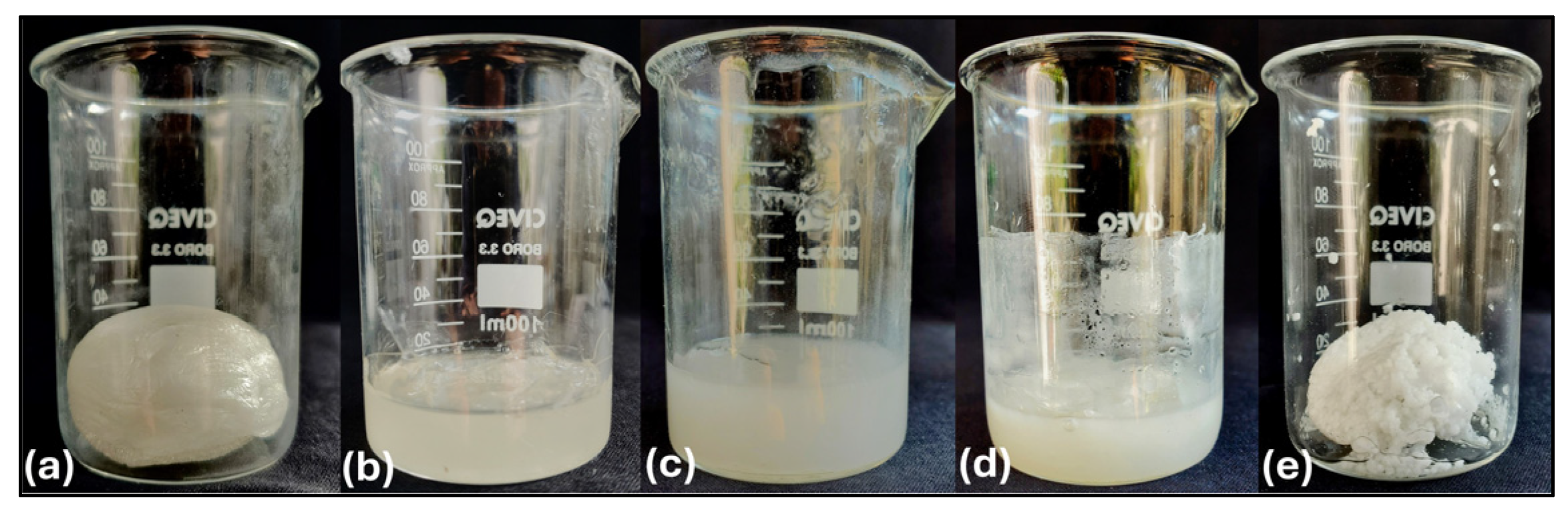
Visual analysis of the recovered EPS samples (Figure 5) reveals significant differences in structural morphology depending on the solvent used during the densification process. In the first sample (Figure 5a), obtained using acetone as a solvent, the recovered material has a compact and homogeneous appearance, with a smooth and slightly shiny surface. The absence of visible pores, bubbles or phase separation suggests an efficient dissolution and densification process. The material obtained has a uniform off-white structure, which could indicate efficient dissolution and reorganization of the polymer with minimal air entrapment. This kind of plastic mass obtained is completely manageable without the presence of adhesion to contact; giving you a storage and transportation advantage for later uses. In contrast, the second sample obtained with ethyl acetate (Figure 5b), presents a viscous, completely adhesive consistency that suggests an advantage of the material obtained for its specific use in composite materials or the creation of lacquers and varnishes. These samples have a homogeneous morphology as well as a translucent and oily appearance. In the third sample (Figure 5c), obtained using thinner as a solvent after decantation, a similar behavior is observed to that obtained with ethyl acetate but with less presence of adhesion. The recovered material has a semi-compact structure, with an opaque white color and a viscoelastic consistency ideal for use as a polymer matrix for composite materials. In the fourth sample (Figure 5d), obtained using xylene as a solvent after decantation, the material obtained consists of a structure similar to the sample processed with thinner, however the material has a partially more aqueous structure with a bright white color. Finally, in the sample treated with limonene (Figure 5e) an irregular morphology is observed, characterized by a structure of small, disaggregated EPS spheres. This is due to the effect that the solvent generated without dissolving the EPS. Together, the images allow you to identify variations in color, texture, and uniformity. These visual parameters are relevant to describe the behavior of recovered EPS and to anticipate its possible quality and subsequent uses, such as solid polystyrene regeneration, adhesive production or composite materials from polymeric matrices.
The apparent density of the densified EPS was determined by measuring the mass and final volume of most representative samples. Density was calculated as the ratio between mass and volume (g/cm3). Since the samples have an irregular shape, the volume was estimated by liquid displacement. The apparent porosity was estimated based on the ratio between the measured apparent density of the densified EPS and the theoretical density of polystyrene (≈1.05 g/cm3) [48]. The results of these estimates can be seen below in the Table 3.
These two results allow us to conclude that the proposed process functions as an alternative for managing this type of waste, addressing the problem of transportation difficulty due to low density and excess volume. Higher solvent concentrations tend to enhance polymer chain mobility and promote structural collapse, leading to higher density and lower porosity. However, the interaction between solvent composition and operating conditions (such as agitation speed) also plays a critical role in determining the final material properties. In conclusion, these observations are not only structural parameters, but also key predictors of the mechanical behavior and consistency of the densified EPS.

3.2. Statistical Analysis

Once the experiment and data collection were carried out, an analysis of variance was carried out. According to the results of the analysis, for the linear terms of the solvent and the concentration, a p-value lower than the confidence level of α = 0.05 is obtained, as shown below in Table 4. This allows us to conclude that these effects are statistically significant for the densification process of polystyrene waste. In other words, the type of solvent and the concentration at which it is used are directly associated with the amount of grams of densified polystyrene waste.
Additionally, remarkable the linear term of revolutions per minute (RPM), which has a value p = 0.410, greater than the significance level, represents a null influence of this factor on the densification of EPS waste for this procedure. However, in the initial observations of the pilot bull runs, without agitation, the densification times were up to 12 h, a significant difference compared to the times in this experiment where agitation was applied. This difference shows that the amount of polystyrene obtained in the recovery increases in the process with agitation and that the time required for its obtainment is significantly reduced. With the values obtained from the interactions, Solvent×RPM with a value p = 0.064 and RPM×Concentration with a value p = 0.050, which are values p greater than and equal to the level of significance, it is confirmed with sufficient statistical evidence that revolutions per minute are not a significant factor for the effects of the experiment. However, given the initial comparison of dissolution without agitation, it is advisable to apply it. So, the minimum RPM used in this procedure can be taken as the best option, guaranteeing better results.
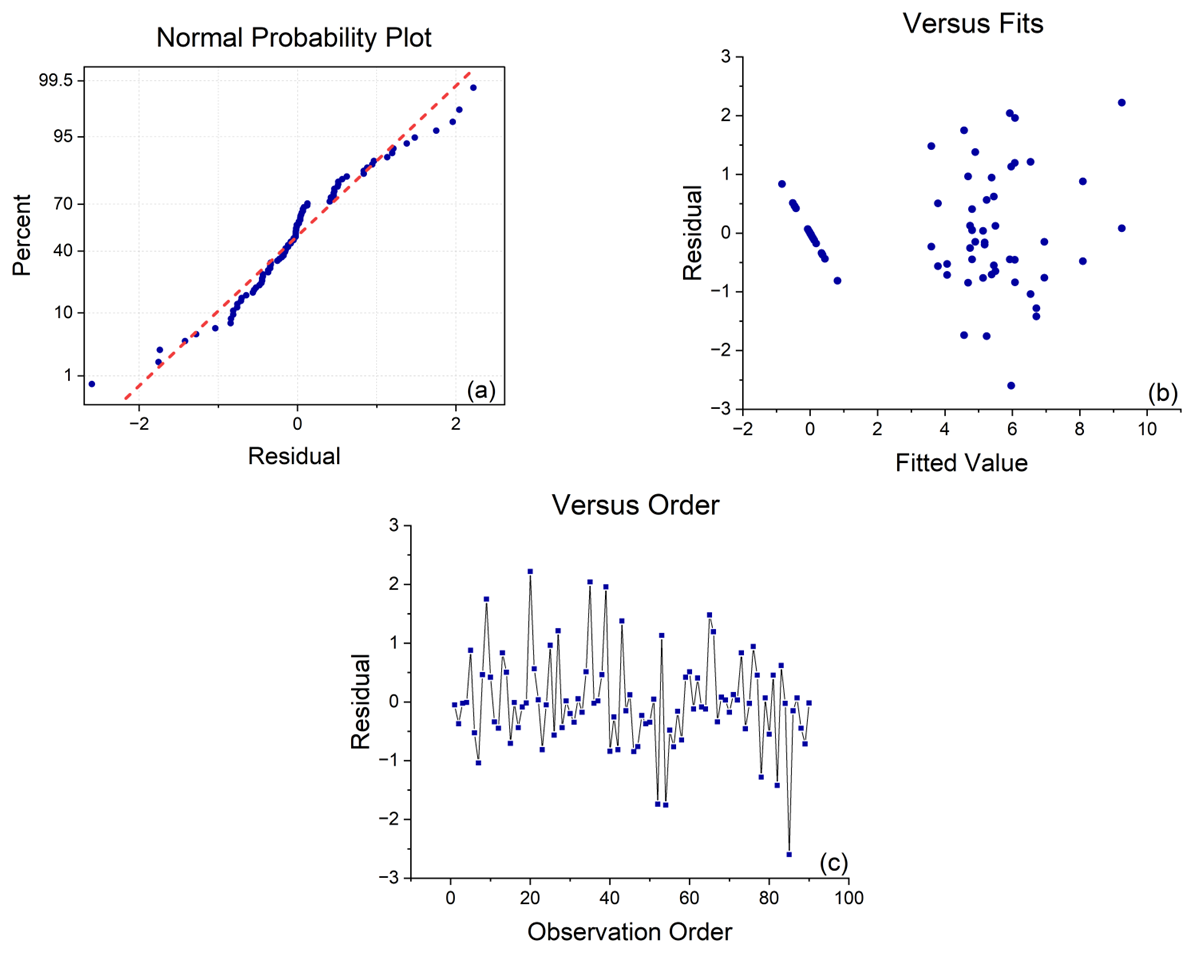
When performing the design analysis, a coefficient of determination (R2) was obtained, which shows that the model explains 93.12% of the variance behavior of the grams of densified polystyrene waste. Below is the regression equation (Equation (1)). The model includes main effects and two-way interaction terms.
EPS (g) = β0 + β1 (Solvent) + β2 (RPM) + β3 (Concentration) + β12 (Solvent×RPM) + β13 (Solvent×Concetration) + β23 (RPM×Concetration)
In addition, in Table 5, the estimated regression coefficients for the main effects are presented, including the type of solvent, RPM, and concentration, along with their standard errors, confidence intervals, and statistical significance. For this analysis, the values of the variance inflation factor (IVF) obtained are greater than 1 but less than 5, which represents a moderate correlation between the predictors of the regression model. Thus, it is possible to conclude that there is no problem in evaluating the individual impact that each of the interactions has on the response.
According to the normal probability plot, shown below in Figure 6a, the assumption that the residuals are distributed in a normal manner is verified, and according to the residuals vs. fits plot seen in Figure 6b, a constant variance is verified. Considering the residuals vs. order plot shown in Figure 6c, it can be verified that the residuals are independent of each other, since they are randomly located around the center line. In conclusion, the model fits normally and represents the behavior of variance for the response of the experiment.
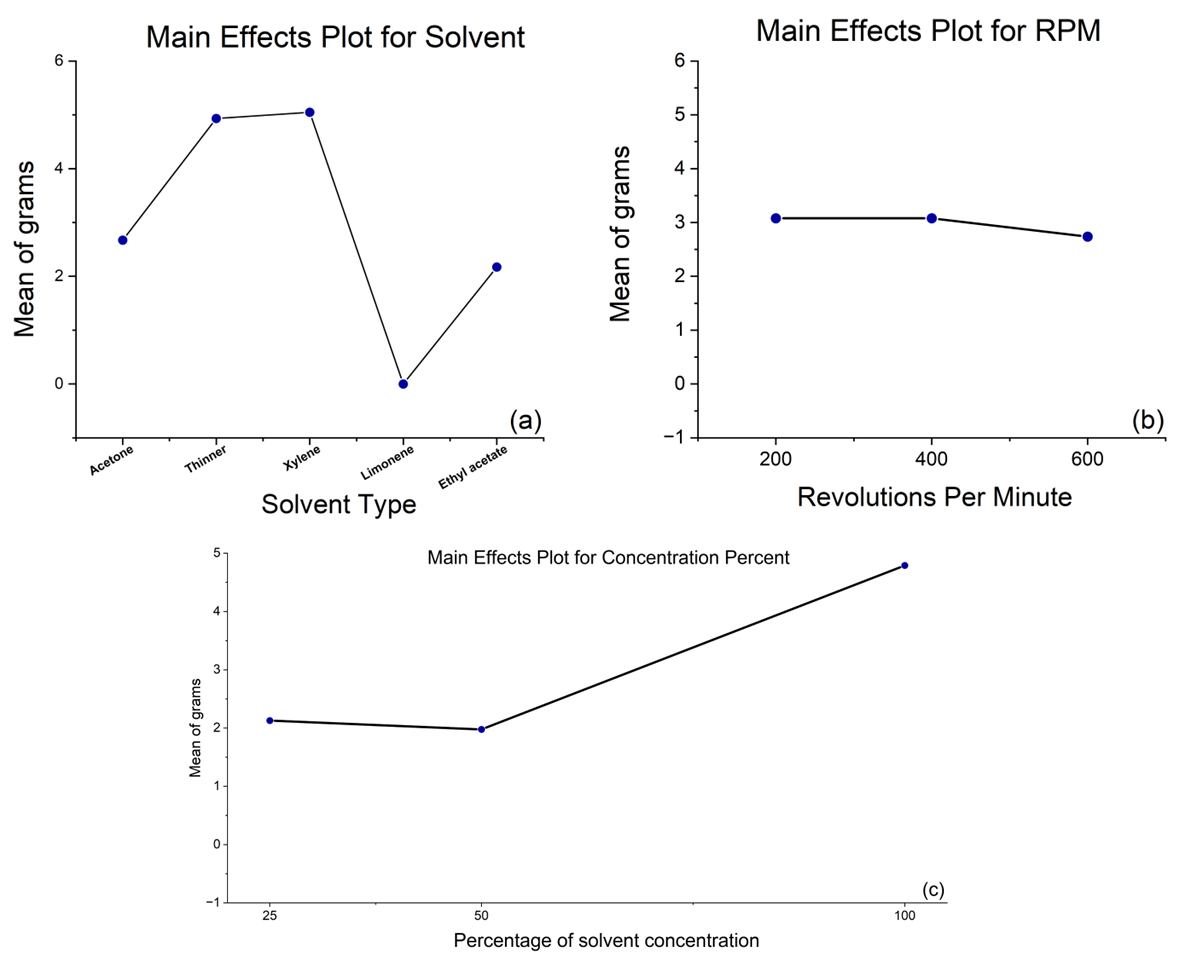
According to the behavior observed in the main effects plot, for the Dissolving factor, it is confirmed that the type of solvent used is statistically significant. As can be seen in Figure 7a, Xylene, followed by Thinner, are the best candidates in terms of the number of grams obtained in the densification of polystyrene waste. The RPM factor plot shows the little significance that this factor has in the response of the experiment, since the observed values are close to the value of the mean, without showing significant changes, as can be seen in Figure 7b. In the last plot shown in Figure 7c, it is notable that the use of a concentration of 100% solvent for the densification of polystyrene waste means higher efficiency in terms of the amount in grams obtained. However, it is also noted that the remaining values, 25% and 50%, may not have a significant variation in the response variable due to the application of either of the two concentrations. Therefore, and following the approach of presenting a low-cost and low-energy consumption procedure, it is recommended to use a 25% concentration of the solvent in the final mix for densification.
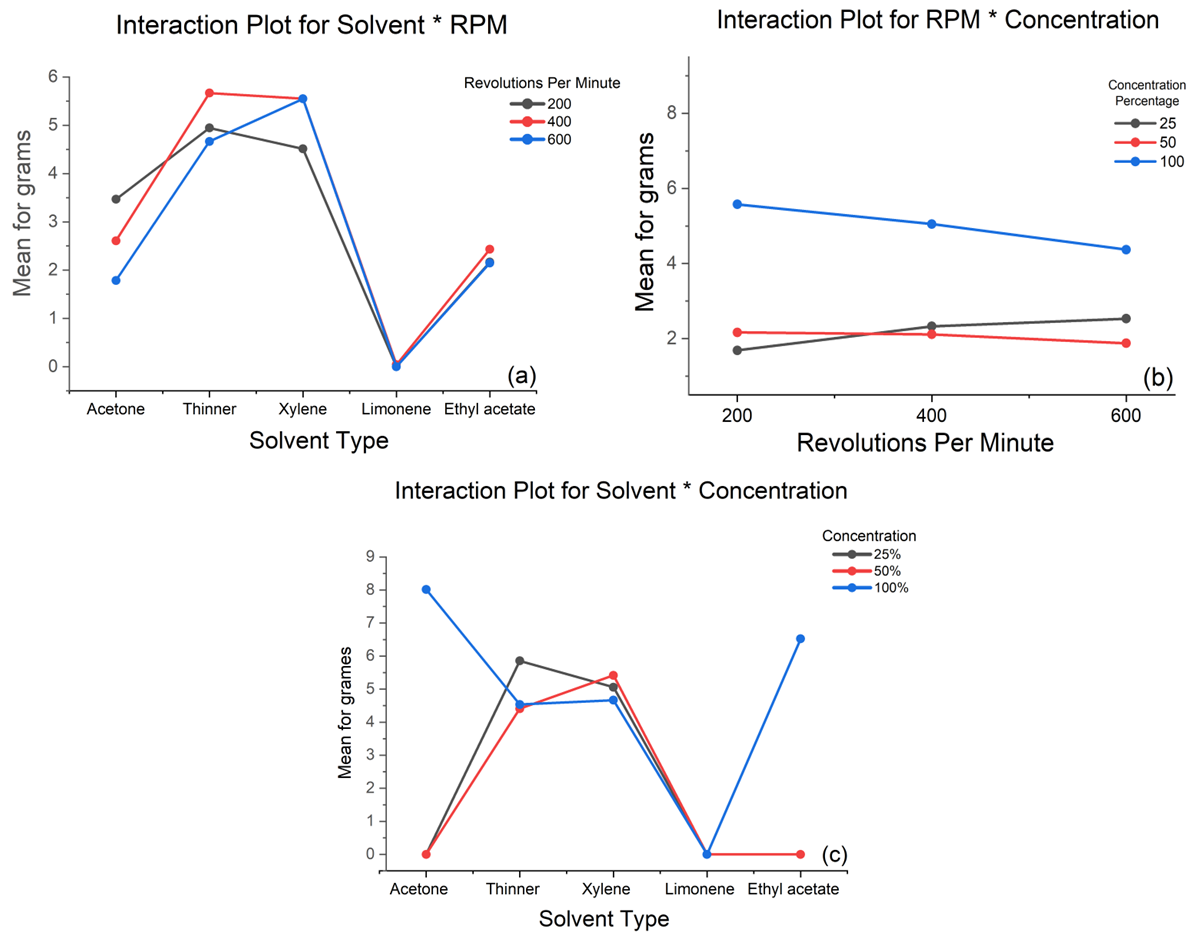
In the Solvent×RPM interaction plot, the number of revolutions per minute applied for each solvent is not statistically significant, because the mean values for the gram response do not present a greater variability and this is supported by the similarity in the behavior of the values obtained and the pattern observed in each type of solvent. This behavior is shown below in Figure 8a. Regarding the RPM×Concentration interaction, the non-significant effect of revolutions per minute on the variation of the densification of polystyrene waste is confirmed, since for concentrations of 25% and 50%, the behavior of the mean response is similar, this can be seen in Figure 8b. And finally in Figure 8c, when analyzing the behavior of the Solvent×Concentration interaction, it can be concluded that despite the fact that Acetone and Ethyl Acetate, both in a concentration of 100%, have the highest efficiency in terms of the number of dissolved grams of polystyrene waste, this would not be the best option when considering a mass process for the densification of such waste, since a dissolution with 100% solvent would incur an increase in the cost of the process. Unlike Thinner and Xylene, which have a similar densification efficiency despite being used in the different concentrations of the experiment. This positions them as the best candidates based on the number of grams obtained in the densification of polystyrene waste.
During the development of this experiment, the outlier observed in the results corresponding to the use of limonene is directly related to the densification time that it requires compared to the other solvents evaluated. While the limonene mixture demonstrated a similar densification capacity in terms of grams of recovered polystyrene, the time needed to complete densification is significantly longer. This behavior suggests that although polystyrene exhibits a remarkable chemical similarity to EPS, which is demonstrated in its densification capacity by breaking the intermolecular links between polymer chains, its dissolution rate is considerably slower.
In this case, the use of limonene in the densification of polystyrene waste is limited from an operational perspective, since its application would imply long process times, therefore, a considerable lower efficiency compared to the rest of the solvents tested in this experiment. For industrial or community-scale applications where the volume processed per unit of time is an important factor, the behavior of limonene represents a technical disadvantage.

3.3. Effect of the Hildebrand Parameters on Eps Solubility

The Hildebrand solubility parameter (δ) is defined as a numerical estimate of the degree of interaction between materials, particularly useful for assessing solubility in non-polar materials [49]. This parameter is key to explaining why some solvents have better performance in dissolving polystyrene, predicting solubility due to the similarity in the cohesion parameters between the polymer and the solvent.
Research has demonstrated that EPS dissolves effectively in several conventional organic solvents. Among the most commonly employed are acetone, toluene, cyclohexene, 2-pentanone, and ethylbenzene [50]. Each of these solvents exhibits different dissolution characteristics based on its physical and chemical properties. Acetone, for instance, has proven highly effective in multi-cycle recycling processes, maintaining the structural integrity of polystyrene during repeated dissolution-precipitation cycles [51]. Toluene and mixed acetone-toluene solvent systems have been successfully employed in dissolving EPS foam waste for various applications, with optimal solvent ratios determined through experimental screening [52]. Notably, chloroform represents another effective solvent for EPS dissolution, particularly for preparing EPS nanofiber solutions used in advanced applications [53]. However, chloroform and related halogenated solvents pose significant environmental and health concerns, driving the search for greener alternatives. In a lab-scale comparison, the dissolution kinetics of polystyrene in cyclohexene showed that increased turbulence in a properly designed baffled reactor could decrease dissolution time from approximately 40 min to just 7 min, indicating that reactor design and mixing conditions work synergistically with solvent properties to control dissolution rates. For practical applications, optimized dissolution conditions with these conventional solvents achieve full dissolution of real waste samples within 5 min.
The efficiency observed in the densification of expanded polystyrene by means of the different organic solvents in this work can be explained from the Hildebrand solubility index (δ), which quantifies the cohesion energy between molecules and allows predicting the compatibility between polymers and solvents. According to this theory, dissolution occurs when the solubility parameter of the solvent is close to that of the polymer. In this case, for polystyrene the average value reported is approximately 18.6 (MPa)1/2 [54]. The solvents evaluated in this study have similar values, as can be seen below in Table 6. These results show that Xylene has a very similar δ to that of polystyrene, this translates into better compatibility, which coincides with the higher performance observed in the experiment carried out. In contrast, Limonene, despite being a natural solvent with low toxicity, has an inferior δ that reduces its ability to break the internal cohesion of the polymer, prolonging the dissolution time, which has also been demonstrated experimentally in this work.
The analysis of the solubility parameters confirms that the similarity between the δ of expanded polystyrene and solvents is a determining criterion for selecting efficient dissolving agents. This theoretical approach, combining the experimental design applied in this work, strengthens the scientific basis of the proposed method and opens the possibility of evaluating other solvents with similar characteristics to optimize processes on an industrial scale.
The effective selection of solvents for EPS dissolution requires balancing multiple considerations beyond simple solubility parameter matching. In a comprehensive solvent screening in dissolutions, solubility emerged as the most critical factor for effective dissolution, though viscosity, polarity, Hildebrand solubility parameters, dipole moment, and dielectric constants all contribute to overall effectiveness [62,63]. This multi-parameter approach reflects the complex nature of polymer-solvent interactions and highlights why single-parameter models have limitations.
The choice between conventional and green solvents involves trade-offs: conventional solvents like acetone and toluene typically provide fast dissolution rates with well-established processing parameters, while green solvents like D-limonene offer environmental and sustainability advantages with comparable or sometimes superior dissolution characteristics [63,64]; however, the dissolution rate is larger than that of conventional solvents. Mixed solvent systems increasingly represent the optimal compromise, combining the dissolution efficiency of conventional solvents with the environmental benefits of biobased alternatives.
Hildebrand solubility parameters have become instrumental in optimizing EPS recycling processes. For example, when EPS waste is dissolved in organic solvents like D-limonene (a natural, biobased solvent from citrus waste), the approach enables recovery of polystyrene for secondary applications [65]. Similarly, acetone has been successfully employed as a dissolution medium for EPS recycling, allowing the recovered polystyrene to be processed through additive manufacturing techniques. The solubility parameter concept helps researchers systematically select optimal solvent combinations and ratios, enhancing the efficiency of chemical recycling processes while considering both environmental sustainability and technical effectiveness [64].

3.4. Analysis of Polystyrene Recycling Scenarios

The recycling of EPS in small-scale contexts is affected by logistical and economic barriers that require comparative analyses between different technological routes [65]. Recent literature supports that, despite the fact that solvent dissolution is a known technique, current work has focused on optimizing dissolution and studying the suitability of “green” solvents, such as terpenes from plants [66]. These recent reviews and studies provide evidence on opportunities and bottlenecks in their implementation that can be addressed with affordable procedures such as the one reported in this work. To this end, it is essential to carry out a comparison of different recycling scenarios and demonstrate the feasibility of taking this solvent-based densification procedure to small and medium-scale contexts as a municipal alternative for the management of this type of waste.
According to extensive bibliographic evidence, it is known that mechanical recycling and thermal densification with specialized machines allow this type of waste to be reincorporated into low-value applications, such as frames, insulators or molded products [67,68,69]. However, these two procedures require large volumes of waste collection, industrial equipment and relatively clean waste. These conditions limit their application in small-scale contexts and are also economically unviable in municipalities where urgent actions are needed for the management of this type of plastic waste. Similarly, chemical recycling and energy recovery (pyrolysis) are strategies that, despite being technically advanced, require high-investment industrial plants and homogeneous waste for their correct processing, so they are not accessible to local scales [70,71,72,73]. On the other hand, dissolution with organic solvents has shown a significant volume reduction and the possibility of recovering polystyrene with good purity. Previous studies also show this [74,75], however, most studies have focused on the solubility behavior of EPS in individual solvents, but few have statistically modeled the influence of operational parameters or addressed the feasibility of solvent recovery and reuse in low-tech contexts as is the case in this work. In this operational context of municipalities with limited resources, densification with solvents emerges as the viable and efficient alternative to manage EPS waste, recover quality polystyrene and facilitate its transport. Likewise, it allows the generation of recycled materials with added value, such as composite materials or various products, without the need for complex industrial technology.
As for these applications of recovered polystyrene, the literature shows practical alternatives ranging from incorporation into agglomerates and composites (plastic wood, composite materials, light fillers for concrete); coatings and molded parts with low mechanical demand; to uses in lightweight construction products and functional applications (filters, panels, substrates). The applications described depend on the purity and subsequent treatments of the recovered material [76]. These alternatives of use turn dissolution into a sustainable management route for polystyrene waste, giving way to circularity in short value chains in municipal contexts. Generating high-value products based on recycled raw materials.

4. Discussions

The present study demonstrated a higher densification efficiency in mixtures containing the lowest concentration of xylene and thinner. These solvents are excellent candidates for a large-scale densification process, since the amount of densified polystyrene with lower concentrations does not vary significantly from mixtures with concentrations of 100% of the same or a different solvent. The superior performance of xylene and turpentine can be explained by their physicochemical compatibility with polystyrene, as well as by the synergistic effect of the diluent mixture (solvent–alcohol–water) used in the experiments. According to Hildebrand’s solubility parameter theory, on which this work is based, dissolution is favored when the solubility parameter of the solvent is similar to that of the polymer. Therefore, the use of xylene and thinner with solubility parameters within the range of the polystyrene parameter promotes the appropriate intermolecular interactions for densification and generates effective penetration into the polymer matrix. In addition to the main solvent, the incorporation of alcohol and water plays a key role in the densification process. While the organic solvent promotes the breaking of bonds in the polymer chain, the presence of alcohol (moderately polar) acts as a co-solvent that can partially alter the solvent–polymer interactions and modify the overall polarity of the system. This facilitates a controlled reduction in solubility, giving stability to the system and increasing the densification capacity. Water, being highly polar and a non-solvent for polystyrene, functions as a separator between the phases. As a result, the combination of the separation of the polymer chains followed by anti-solvent induced precipitation leads to the reorganization and compaction of the polymer chains, allowing the obtaining of the final recovered EPS sample. With the lowest concentration of xylene and thinner (25%), an amount of recovered polystyrene of 7.97 g and 5.49 g respectively per run is obtained. With these results, a recovery of 398.5 g and 274.5 g per liter of each solvent is estimated. Regarding the analysis of the time of the densification process of EPS waste, the results show that the procedure is efficient since a good amount of recovered polystyrene is obtained in times ranging from 284 s (minimum) to 417 s (maximum). These times are considerably shorter than those reported in the literature for densification processes of polystyrene waste with solvents. This procedure for recovering polystyrene waste using affordable solvents is promising because it is considered an environmentally friendly alternative. In addition to being an affordable procedure to be developed by micro, small and medium-sized recycling companies that seek to manage this type of waste.
Sustainable management of EPS waste is a complex challenge that requires integrated approaches and innovative solutions. Solvent-based EPS solutions represent a promising strategy in this context, enabling the efficient recovery and recycling of this plastic waste. In the same way, this densification process is an alternative in contexts of small and medium waste generation. By integrating these practices into the framework of the circular economy, we can move towards a future where resources are used efficiently and responsibly, for the benefit of both the environment and society. The method developed in this work offers opportunities for the recovery and post-consumption use of polystyrene waste. The pre-treatment applied to the selected waste, including separation, inspection, cleaning and size standardization; It allowed to obtain a homogeneous and suitable residue for the process. This was reflected in a stable and reproducible solution. After the experiment, the visual observations showed differences in texture, coloration and presence of bubbles between the samples obtained, evidencing how the incidence factors of the experiment analyzed in this work determine the behavior of the material during its recovery.
The results obtained allow us to conclude that densification by dissolution allows to reduce the volume of EPS, facilitating its logistical management and subsequent reuse. With the implementation of this process in the collection centers that receive this type of waste, it is possible to contribute to the transition to the circular economy, since proper management of this waste reduces the amount of plastic waste in open-air dumps and promotes its use as recycled raw material, having a direct impact on the principles of circularity.
The densification process proposed in this work uses commercial solvents, which operates at room temperature without thermal requirements or combustion, which significantly reduces energy consumption and eliminates the generation of hazardous atmospheric pollutants. It also allows a reduction of more than 90% in the volume of EPS, which facilitates its storage and transport to recycling centers.
The specific energy consumption was estimated as the ratio between energy input and processed mass (kWh/kg), a common approach in process engineering and recycling studies. For the proposed process this consumption was estimated using the expression: Espec = (Pt)⁄m, where Espec is the specific energy consumption in kWh/kg of EPS, P is the equipment power (kW), t is the operating time (h), and m is the mass of densified EPS (kg). Since the experiments were conducted at room temperature without activating the heating function of magnetic stirrer used, the motor input power of the magnetic stirring system (5 W) was considered instead of the total rated power of the equipment MS-H280-Pro used in the experiments. Under the most favorable experimental conditions, the estimated specific energy demand ranged between 0.05 and 0.11 kWh/kg of EPS. This value should be interpreted as a preliminary estimate of the operative energy of the densification process, emphasizing the need to carry out a complete life cycle analysis evaluation in future works. Although the estimated energy consumption corresponds to a preliminary range, it allows a comparison with data reported in the literature. According to data reported in a study on industrial densification of EPS, 7350.34 kWh is needed to process 28,110 kg of EPS, equivalent to 0.261 kWh/kg [77]. In a report on plastic waste recycling, specifically for the dissolution of EPS waste from construction, an electricity consumption of close to 3800 kWh/t was reported, that is, 3.8 kWh/kg [78]. In addition, compared to thermochemical processes such as pyrolysis, the difference is even greater, a recent study for pyrolysis of single-use plastics reported energy inputs of 11.22 to 45.00 kWh/kg [79]. In conclusion, it is estimated that this method has a lower direct energy demand, especially when mechanical agitation replaces the need for heat.
Although solvent use involves handling chemicals, the selection of low-toxicity solvents (e.g., limonene or ethyl acetate) and the potential for evaporation-condensation recovery or distillation further mitigate environmental risks. Unlike mechanical recycling, this method avoids problems of cross-contamination by food waste or mixed streams, which often hinder the recyclability of EPS but which in this procedure were eliminated in the pre-treatment of waste for densification. In conclusion, this approach represents an accessible alternative for municipalities, communities or small generators that do not have infrastructure for mechanical or chemical recycling.
Since the results of this work demonstrate the efficiency of the densification process carried out, the statistical analysis allowed us to identify and quantify the critical variables that affect the recovery of polystyrene waste and efficiency in terms of time, which from the industrial field is essential for the optimization and standardization of the process. By considering these factors in the design of experiments for the process of recovery and post-consumption use of waste, as in this work, it contributes to the development of recycling strategies that can successfully scale up at a pilot and even industrial level, guaranteeing the technical, economic and environmental viability of this large-scale process. Although this work allowed to lay the clear experimental foundations for the efficiency of this type of EPS recovery, the research leaves open some opportunities for improvement. Future Life Cycle Assessments (LCA) are recommended to quantify specific categories of impact such as global warming potential, acidification, and human toxicity, as well as to optimize solvent selection based on environmental and economic performance. In addition to controlling the evaporation and recovery of the solvents used, in this context, it is recommended as future research to conduct a comprehensive risk assessment that addresses occupational exposure to volatile organic compounds (VOCs) and safe handling practices and complement with a framework that integrates the applicable regulatory standards and safety guidelines for solvent-based EPS densification processes. These efforts would contribute to ensuring the safe implementation and scalability of this approach, particularly in developing or resource-limited cities.
Overall, the findings of this work reinforce the importance of exploring low-cost and adaptable implementation technologies for the management of post-consumer EPS, replicable especially in regions where recycling infrastructure is limited. The dissolution densification strategy presented provides a basis for future research aimed at improving the circularity of polystyrene, promoting the local use of recovered material and preventing its accumulation in open-air dump or ecosystems.

Author Contributions

Conceptualization, R.G.-C. and D.R.-G.; methodology, D.R.-G.; software, R.G.-C.; validation, G.R.-M., G.M.-C. and R.V.-O.; formal analysis, R.G.-C., D.R.-G., G.R.-M., G.M.-C. and R.V.-O.; investigation, R.G.-C., D.A.-A. and D.R.-G.; resources, R.G.-C. and D.R.-G.; data curation, G.R.-M., G.M.-C., D.A.-A. and R.V.-O.; writing—original draft preparation, R.G.-C. and D.R.-G.; writing—review and editing, R.G.-C., D.A.-A. and D.R.-G.; visualization, G.R.-M.; supervision, D.R.-G.; project administration, D.R.-G.; funding acquisition, R.G.-C., D.R.-G., G.R.-M., G.M.-C., D.A.-A. and R.V.-O. All authors have read and agreed to the published version of the manuscript.

Funding

This research received no external funding.

Institutional Review Board Statement

Not applicable, as the study did not involve humans or animals.

Informed Consent Statement

Not applicable, as the study did not involve humans or animals.

Data Availability Statement

The raw data supporting the conclusions of this article are available from the authors upon reasonable request.

Acknowledgments

The Secretaría de Ciencias, Humanidades, Tecnología e Innovación (SECIHTI) is thanked for assigning the scholarship to pursue a Ph.D. in Engineering Sciences to R.G.-C. (CVU 1054083) at the Instituto Tecnológico Superior de Misantla (ITSM), whose support facilitated the research related to this article.

Conflicts of Interest

The authors declare no conflicts of interest.

References

  1. Costales, A.L. El Impacto de los Plásticos en Nuestra vida Diaria. In Transversalizar la Agenda 2030 en la Docencia e Investigación Universitarias; Economistas sin Fronteras: Madrid, Spain, 2024; pp. 63–68. Available online: https://dialnet.unirioja.es/servlet/libro?codigo=979954 (accessed on 8 January 2025).
  2. Gil-Jasso, N.D.; Segura-González, M.A.; Soriano-Giles, G.; Neri-Hipolito, J.; López, N.; Mas-Hernández, E.; Barrera-Díaz, C.E.; Varela-Guerrero, V.; Ballesteros-Rivas, M.F. Dissolution and recovery of waste expanded polystyrene using alternative essential oils. Fuel 2019, 239, 611–616. [Google Scholar] [CrossRef]
  3. Rodríguez-Liébana, J.A.; Martín-Lara, M.; Navas-Martos, F.; Peñas-Sanjuan, A.; Godoy, V.; Arjandas, S.; Calero, M. Morpho-structural and thermo-mechanical characterization of recycled polypropylene and polystyrene from mixed post-consumer plastic waste. J. Environ. Chem. Eng. 2022, 10, 108332. [Google Scholar] [CrossRef]
  4. Plastics Europe. Plastics—The Facts 2021. An Analysis of European Plastics Production, Demand and Waste Data. Available online: https://plasticseurope.org/knowledge-hub/plastics-the-facts-2021/ (accessed on 17 March 2026).
  5. Amir, A.H.; Alibaba, H.Z. Comparison between heat conductivity of EPS (expanded polystyrene) and XPS (extruded polystyrene. Int. J. Recent Res. Civ. Mech. Eng. 2017, 4, 24–31. [Google Scholar]
  6. Huang, H.; Huang, L.; Lin, F.; Qian, W.; Yin, L.; Xu, R.; Lei, C. Room temperature brittle-to-ductile transition in polystyrene induced by extrusion casting melt stretching: Contribution of free volume and chain entanglement. Polymer 2024, 294, 126745. [Google Scholar] [CrossRef]
  7. Niu, F.; Jiang, H.; Su, W.; Jiang, W.; He, J. Performance degradation of polymer material under freeze-thaw cycles: A case study of extruded polystyrene board. Polym. Test. 2021, 96, 107067. [Google Scholar] [CrossRef]
  8. Aksit, M.; Zhao, C.; Klose, B.; Kreger, K.; Schmidt, H.-W.; Altstädt, V. Extruded Polystyrene Foams with Enhanced Insulation and Mechanical Properties by a Benzene-Trisamide-Based Additive. Polymers 2019, 11, 268. [Google Scholar] [CrossRef] [PubMed]
  9. Kytinou, V.K.; Metaxa, Z.S.; Zapris, A.G.; Kosheleva, R.I.; Prokopiou, V.D.; Alexopoulos, N.D. Exploitation of extruded polystyrene (XPS) waste for lightweight, thermal insulation and rehabilitation building applications. Dev. Built Environ. 2024, 20, 100580. [Google Scholar] [CrossRef]
  10. Ghoshal, T.; Parmar, P.R.; Bhuyan, T.; Bandyopadhyay, D. Polystyrene Foams: Materials, Technology, and Applications. ACS Symp. Ser. 2023, 1439, 121–141. [Google Scholar] [CrossRef]
  11. Capricho, J.C.; Prasad, K.; Hameed, N.; Nikzad, M.; Salim, N. Upcycling Polystyrene. Polymers 2022, 14, 5010. [Google Scholar] [CrossRef]
  12. Maafa, I.M. Pyrolysis of Polystyrene Waste: A Review. Polymers 2021, 13, 225. [Google Scholar] [CrossRef]
  13. Arguillarena, A.; Margallo, M.; Urtiaga, A.; Irabien, A. Life-cycle assessment as a tool to evaluate the environmental impact of hot-dip galvanisation. J. Clean. Prod. 2021, 290, 125676. [Google Scholar] [CrossRef]
  14. Mumbach, G.D.; Bolzan, A.; Machado, R.A.F. A closed-loop process design for recycling expanded polystyrene waste by dissolution and polymerization. Polymer 2020, 209, 122940. [Google Scholar] [CrossRef]
  15. Palmgren, R.; Hinkka, V. Reverse logistics model for increased polystyrene recycling. In Proceedings of the Nordic Logistics Research Network (NOFOMA), Virtual, 28–30 September 2021; Available online: https://cris.vtt.fi/en/publications/reverse-logistics-model-for-increased-polystyrene-recycling (accessed on 7 January 2025).
  16. Espinoza-Merchán, M.P.; Torres-Parra, L.J.; Rojas-Arias, N.; Coha-Vesga, P.M. Recovery and Incorporation of expanded polystyrene Solid Waste in Lightweight Concrete. Ingeniería 2020, 25, 237–249. [Google Scholar] [CrossRef]
  17. Muthukumar, J.; Kandukuri, V.A.; Chidambaram, R. A critical review on various treatment, conversion, and disposal approaches of commonly used polystyrene. Polym. Bull. 2024, 81, 2819–2845. [Google Scholar] [CrossRef]
  18. Zhao, Y.-B.; Lv, X.-D.; Ni, H.-G. Solvent-based separation and recycling of waste plastics: A review. Chemosphere 2018, 209, 707–720. [Google Scholar] [CrossRef]
  19. Pin, J.-M.; Soltani, I.; Negrier, K.; Lee, P.C. Recyclability of Post-Consumer Polystyrene at Pilot Scale: Comparison of Mechanical and Solvent-Based Recycling Approaches. Polymers 2023, 15, 4714. [Google Scholar] [CrossRef] [PubMed]
  20. Obele, C.M.; Ibenta, M.E.; Ogbuagu, J.O. Production and characterization of an ecofriendly polystyrene waste adhesive made with toluene–acetone solvent. Polym. Bull. 2024, 81, 10235–10253. [Google Scholar] [CrossRef]
  21. Escobar Ramos, H.Y. Evaluación del Efecto de la Variación de la Concentración de Polímero, Tipo de Disolvente y Voltaje en las Propiedades Fisicoquímicas de las Fibras de Poliestireno (PS) Sintetizadas Mediante la Técnica de Electrohilado. 2020. Available online: http://biblioteca.ingenieria.usac.edu.gt/ (accessed on 20 May 2024).
  22. Sosa Gómez, A.B.; Escobar Hernández, H. Análisis de Alternativas Ambientales para el Manejo de los Residuos Sólidos, a Partir del Modelo de Economía Circular en el Municipio de Tierralta—Córdoba. 2022. Available online: https://hdl.handle.net/10495/32484 (accessed on 1 June 2023).
  23. Miller-Chou, B.A.; Koenig, J.L. A review of polymer dissolution. Prog. Polym. Sci. 2003, 28, 1223–1270. [Google Scholar] [CrossRef]
  24. Gutiérrez, C.; García, M.T.; Gracia, I.; De Lucas, A.; Rodríguez, J.F. The selective dissolution technique as initial step for polystyrene recycling. Waste Biomass Valorization 2013, 4, 29–36. [Google Scholar] [CrossRef]
  25. John, M.; Welle, F. Recycling of Post-Consumer Polystyrene Packaging Waste into New Food Packaging Applications—Part 1: Direct Food Contact. Recycling 2023, 8, 26. [Google Scholar] [CrossRef]
  26. Welle, F. Recycling of Post-Consumer Polystyrene Packaging Waste into New Food Packaging Applications—Part 2: Co-Extruded Functional Barriers. Recycling 2023, 8, 39. [Google Scholar] [CrossRef]
  27. Uttaravalli, A.N.; Dinda, S.; Gidla, B.R. Scientific and engineering aspects of potential applications of post-consumer (waste) expanded polystyrene: A review. Process Saf. Environ. Prot. 2020, 137, 140–148. [Google Scholar] [CrossRef]
  28. Bernat, K. Post-Consumer Plastic Waste Management: From Collection and Sortation to Mechanical Recycling. Energies 2023, 16, 3504. [Google Scholar] [CrossRef]
  29. Gutierrez-Velasquez, E.I.; Monteiro, S.N.; Colorado, H.A. Characterization of expanded polystyrene waste as binder and coating material. Case Stud. Constr. Mater. 2022, 16, e00804. [Google Scholar] [CrossRef]
  30. de Sousa Cunha, R.; Mumbach, G.D.; Machado, R.A.F.; Bolzan, A. A comprehensive investigation of waste expanded polystyrene recycling by dissolution technique combined with nanoprecipitation. Environ. Nanotechnol. Monit. Manag. 2021, 16, 100470. [Google Scholar] [CrossRef]
  31. Molina, N.F.; Brito, Y.F.; Benavides, J.M.P. Recycling of residual polymers reinforced with natural fibers as a sustainable alternative: A review. Polymers 2021, 13, 3612. [Google Scholar] [CrossRef] [PubMed]
  32. Hattori, K.; Hattori, K. Recycling of Expanded Polystyrene Using Natural Solvents. In Recycling Materials Based on Environmentally Friendly Techniques; IntechOpen: London, UK, 2015. [Google Scholar] [CrossRef]
  33. Mendoza, I.D.P.; Pulido, J.L. Efecto de la concentración y temperatura en la disolución de poliestireno expandido usando solventes naturales. Av. Investig. Ing. 2021, 18, 1–15. [Google Scholar] [CrossRef]
  34. Hardjono, H.; Dewi, E.N.; Lusiani, C.E.; Febriansyah, I.; I Bachtiar, R.I. D-limonene from orange (Citrus Maxima) peel extraction as destructive agent of styrofoam waste. IOP Conf. Ser. Mater. Sci. Eng. 2021, 1073, 012013. [Google Scholar] [CrossRef]
  35. Mollehuara, M.A.; Cuadrado, A.R.; Vidal, V.L.; Camargo, S.D. Systematic review: Analysis of the use of D-limonene to Reduce the Environmental Impact of Discarded Expanded Polystyrene (EPS). IOP Conf. Ser. Earth Environ. Sci. 2022, 1048, 012003. [Google Scholar] [CrossRef]
  36. Sriprom, W.; Sirivallop, A.; Choodum, A.; Limsakul, W.; Wongniramaikul, W. Plastic/Natural Fiber Composite Based on Recycled Expanded Polystyrene Foam Waste. Polymers 2022, 14, 2241. [Google Scholar] [CrossRef]
  37. Canché, J.A.C.; Nah, J.S.C.; Castellanos, R.A.G.; Estrada, R.H.C.; Baeza, J.G.C. Aprovechamiento de nuevos productos en base a poliestireno expandido recuperado. Rev. Colomb. Mater. 2014, 5, 15–20. [Google Scholar] [CrossRef]
  38. Rodríguez Escobar, W.; Bejarano Barrera, H.; Villazón Amarís, H. Importancia estratégica de los nuevos materiales en el desarrollo sostenible y como alternativa de competitividad. Inf. Técnico 2019, 67, 21. [Google Scholar] [CrossRef][Green Version]
  39. Bouza Padín, R. Diseño y Caracterización de Nuevos Materiales Compuestos Polipropileno y Madera: Estudio del Viniltrimetoxisilano Como Agente de Acoplamiento. Ph.D. Thesis, Universidad de La Coruña, Coruña, Spain, 2019. [Google Scholar]
  40. Vilches Arenas, L.F. Desarrollo y Métodos de Evaluación de Nuevos Productos Aislantes e Ignífugos Obtenidos a Partir de Materiales Residuales—Dialnet. Ph.D. Thesis, Universidad de Sevilla, Seville, Spain, 2002. Available online: https://dialnet.unirioja.es/servlet/tesis?codigo=55452 (accessed on 23 June 2022).
  41. Balto, Y.; Edwin Raj, R.; Anne Chandra, J.; Vettivel, S.C. Experimental investigation of discarded additive material combination and composition to appropriate thermal insulating properties of the composite cement mortar. Eur. J. Environ. Civ. Eng. 2021, 25, 1318–1328. [Google Scholar] [CrossRef]
  42. Dairi, B.; Djidjelli, H.; Boukerrou, A.; Migneault, S.; Koubaa, A. Morphological, mechanical, and physical properties of composites made with wood flour-reinforced polypropylene/recycled poly(ethylene terephthalate) blends. Polym. Compos. 2017, 38, 1749–1755. [Google Scholar] [CrossRef]
  43. Berrio-Meza, E.; Ardila Arias, A.N.; Arriola-Villaseñor, E.; Bedoya Betancur, S. Análisis técnico-económico y de ciclo de vida puerta a puerta de un proceso de reciclaje de poliestireno expandido a nivel industrial. Tend. Energías Renov. Sustentabilidad 2023, 2, 152–162. [Google Scholar]
  44. Bhat, M.A.; Gedik, K.; Gaga, E.O. Atmospheric micro (nano) plastics: Future growing concerns for human health. Air Qual. Atmos. Health 2022, 16, 233–262. [Google Scholar] [CrossRef]
  45. Gutiérrez Pulido, H.; de la Vara Salazar, R. Análisis y Diseño de Experimentos, 2nd ed.; McGraw-Hill Interamericana: Mexico City, Mexico, 2008; Available online: www.FreeLibros.org (accessed on 9 December 2025).
  46. da Luz, M.S.; da Silva, M.F.B.; de Campos, A.; Ferreira, D.C.; Rocha, V.C.; de Souza Inácio Gonçalves, J.C.; Lemos, D.A.; Poleto, C. Expanded Polystyrene (EPS) Recycling: An Environmentally Friendly Process to Recover Dissolved Polystyrene (PS) Using Waste Cooking Soybean Oil. 2023. Available online: https://lume.ufrgs.br/handle/10183/271035 (accessed on 6 November 2024).
  47. Triebert, D.; Hanel, H.; Bundt, M.; Wohnig, K. Solvent-Based Recycling. ACS Symp. Ser. 2021, 1391, 33–59. [Google Scholar] [CrossRef]
  48. Rolón, B.; Hernández, J. Investigation of properties of recycling waste polystyrene compressed and mixed with Al2O3. Mater. Today Proc. 2024. [Google Scholar] [CrossRef]
  49. Wypych, A. Information on data fields. In Databook of Adhesion Promoters; ChemTec Publishing: Toronto, ON, Canada, 2018; pp. 3–15. [Google Scholar] [CrossRef]
  50. Kol, R.; Denolf, R.; Bernaert, G.; Manhaeghe, D.; Bar-Ziv, E.; Huber, G.W.; Niessner, N.; Verswyvel, M.; Lemonidou, A.; Achilias, D.S.; et al. Increasing the Dissolution Rate of Polystyrene Waste in Solvent-Based Recycling. ACS Sustain. Chem. Eng. 2024, 12, 4619–4630. [Google Scholar] [CrossRef] [PubMed]
  51. García-Sobrino, R.; Cortés, A.; Sevilla-García, J.I.; Muñoz, M. Sustainable Multi-Cycle Physical Recycling of Expanded Polystyrene Waste for Direct Ink Write 3D Printing and Casting: Analysis of Mechanical Properties. Polymers 2024, 16, 3609. [Google Scholar] [CrossRef]
  52. Boonpeng, C.; Suwan, T.; Siriput, P.; Tantrapongsaton, W. Investigation of Optimal Ratios of EPS Foam Waste and Solvents as Alternative Green Polymer-Based Additives for Enhancing Cement Properties. Key Eng. Mater. 2025, 1019, 123–128. [Google Scholar] [CrossRef]
  53. da Silveira, K.P.; da Silva Crespo, J.; Catafesta, J.; Giovanela, M.; Takimi, A.S.; Tubino, R.M.C. Production of polystyrene nanofibers for adsorption of mineral oils derived from petroleum. J. Cell. Plast. 2025, 61, 183–202. [Google Scholar] [CrossRef]
  54. Hoyos, J.R. Aplicación en el Diseño Mobiliario Gránulos de Polipropileno Obtenidos por Extracción con Solventes para Extracción con Solventes para Aplicación en el Diseño. 2022. Available online: https://red.uao.edu.co/entities/publication/79303425-afbb-40b9-8e93-beabf616ff04 (accessed on 24 August 2025).
  55. van Krevelen, D.W. Klaas te Nijenhuis, Properties Determining the Chemical Stability and Breakdown of Polymers; Elsevier Science: Amsterdam, The Netherlands, 2009; Available online: https://books.google.com/books/about/Properties_of_Polymers.html?hl=es&id=bzRKwjZeQ2kC (accessed on 12 March 2026).
  56. Carvalho, S.P.; Lucas, E.F.; González, G.; Spinelli, L.S. Determining hildebrand solubility parameter by ultraviolet spectroscopy and microcalorimetry. J. Braz. Chem. Soc. 2013, 24, 1998–2007. [Google Scholar] [CrossRef]
  57. Barton, A.F.M. Solubility parameters. Chem. Rev. 2002, 75, 731–753. [Google Scholar] [CrossRef]
  58. Zeng, W.; Du, Y.; Xue, Y.; Frisch, H.L. Solubility Parameters. In Physical Properties of Polymers Handbook; Springer: New York, NY, USA, 2007; pp. 289–303. [Google Scholar] [CrossRef]
  59. Moradi, H.; Bahmanyar, H.; Azizpour, H. Molecular simulation of liquid-liquid extraction of acetic acid and acetone from water in the presence of nanoparticles based on prediction of solubility parameters. Heliyon 2024, 10, e38086. [Google Scholar] [CrossRef] [PubMed]
  60. Bautista-Quijano, J.R.; Telschow, O.; Paulus, F.; Vaynzof, Y. Solvent–antisolvent interactions in metal halide perovskites. Chem. Commun. 2023, 59, 10588–10603. [Google Scholar] [CrossRef]
  61. Malpani, V.; Ganeshpure, P.A.; Munshi, P. Determination of Solubility Parameters for the p-Xylene Oxidation Products. Ind. Eng. Chem. Res. 2011, 50, 2467–2472. [Google Scholar] [CrossRef]
  62. Jain, S.; Patel, N.; Lin, S. Solubility and dissolution enhancement strategies: Current understanding and recent trends. Drug Dev. Ind. Pharm. 2015, 41, 875–887. [Google Scholar] [CrossRef]
  63. Padiya, B.N.V.D.; Kavimandan, B.R. Volume Reduction of Expanded Polystyrene with Limonene. Int. J. Adv. Res. Sci. Commun. Technol. 2025, 735–743. [Google Scholar] [CrossRef]
  64. Hessel, V.; Tran, N.N.; Asrami, M.R.; Tran, Q.D.; Long, N.V.D.; Escribà-Gelonch, M.; Tejada, J.O.; Linke, S.; Sundmacher, K. Sustainability of green solvents—Review and perspective. Green Chem. 2022, 24, 410–437. [Google Scholar] [CrossRef]
  65. Xu, Z.; Sun, D.; Xu, J.; Yang, R.; Russell, J.D.; Liu, G. Progress and Challenges in Polystyrene Recycling and Upcycling. ChemSusChem 2024, 17, e202400474. [Google Scholar] [CrossRef]
  66. García, Á.I.H.; Alejandro-Hernández, S.; Cuevas-Carballo, Z.B.; Galaviz-Pérez, J.A.; Vázquez-Rodríguez, J.M.; Guerrero-Zárate, D. Solubility/Insolubility: A Possible Option for Recycling Polystyrene. Appl. Sci. 2024, 14, 7950. [Google Scholar] [CrossRef]
  67. Reynoso, L.E.; Viegas, G.M.; Juan, G.A.S. Placas aislantes de EPS reciclado: Factores críticos y potencialidades para la viabilidad productiva de un emprendimiento en el Partido de La Plata. Rev. Habitat Sustentable 2022, 12, 26–39. [Google Scholar] [CrossRef]
  68. Gonzalez-Aguilar, A.M.; Pérez-García, V.; Riesco-Ávila, J.M. A Thermo-Catalytic Pyrolysis of Polystyrene Waste Review: A Systematic, Statistical, and Bibliometric Approach. Polymers 2023, 15, 1582. [Google Scholar] [CrossRef] [PubMed]
  69. Schyns, Z.O.G.; Shaver, M.P. Mechanical Recycling of Packaging Plastics: A Review. Macromol. Rapid Commun. 2021, 42, e2000415. [Google Scholar] [CrossRef]
  70. Agredo, K.O.; Coral, D.F.C.; Páez, J.E.R.; Astaiza, J.E.D.; Vargas, E.E.M. Pirólisis del tereftalato de polietileno y poliestireno para la síntesis de nanoestructuras de carbono: Una revisión bibliométrica. Rev. UIS Ing. 2023, 22, 29–42. [Google Scholar] [CrossRef]
  71. Antonio Jose Ortiz Hernandez, D. Optimización de los Parámetros para la Pirolisis de Polietileno de baja Densidad (ldpe) con el Objeto de Reducir Benceno-Derivados en los Efluentes Gaseosos. 2023. Available online: http://crea.ujaen.es/jspui/handle/10953.1/20054 (accessed on 20 May 2024).
  72. Pérez-Bravo, G.; Contreras-Larios, J.L.; Rodríguez, J.F.; Zeifert-Soares, B.; Angeles-Beltrán, D.; López-Medina, R.; Vázquez-Rodríguez, T.; Salmones-Blasquez, J. Catalytic Pyrolysis Process to Produce Styrene from Waste Expanded Polystyrene Using a Semi-Batch Rotary Reactor. Sustainability 2022, 14, 14914. [Google Scholar] [CrossRef]
  73. Gonzalez-Aguilar, A.M.; Cabrera-Madera, V.P.; Vera-Rozo, J.R.; Riesco-Ávila, J.M. Effects of heating rate and temperature on the thermal pyrolysis of expanded polystyrene post-industrial waste. Polymers 2022, 14, 4957. [Google Scholar] [CrossRef]
  74. García-Sobrino, R.; Cortés, A.; Calderón-Villajos, R.; Díaz, J.G.; Muñoz, M. Novel and Accessible Physical Recycling for Expanded Polystyrene Waste with the Use of Acetone as a Solvent and Additive Manufacturing (Direct Ink-Write 3D Printing). Polymers 2023, 15, 3888. [Google Scholar] [CrossRef] [PubMed]
  75. Hearon, K.; Nash, L.D.; Rodriguez, J.N.; Lonnecker, A.T.; Raymond, J.E.; Wilson, T.S.; Wooley, K.L.; Maitland, D.J. A High-Performance Recycling Solution for Polystyrene Achieved by the Synthesis of Renewable Poly(thioether) Networks Derived from d-Limonene. Adv. Mater. 2013, 26, 1552–1558. [Google Scholar] [CrossRef] [PubMed]
  76. Gautam, B.; Tsai, T.-H.; Chen, J.-T. Towards sustainable solutions: A review of polystyrene upcycling and degradation techniques. Polym. Degrad. Stab. 2024, 225, 110779. [Google Scholar] [CrossRef]
  77. Berrio-Mesa, E.; Ardila A, A.N.; Arriola-Villaseñor, E.; Bedoya-Betancur, S.A. Gate-to-Gate Life Cycle Study and Techno-Economic Analysis of an Industrial Process for Producing Densified Polystyrene from Recycled Expanded Polystyrene. Polymers 2026, 18, 34. [Google Scholar] [CrossRef]
  78. Evaluación Ambiental y Económica del Reciclaje de Residuos Plásticos—Oficina de Publicaciones de la UE. Available online: https://op.europa.eu/en/publication-detail/-/publication/bb91bc32-b19f-11ed-8912-01aa75ed71a1/language-en (accessed on 22 March 2026).
  79. Abnisa, F.; Wan Daud, W.M.A. Exergy and energy analysis of pyrolysis of pretreated single-use waste plastics. Sustain. Chem. Pharm. 2025, 45, 102020. [Google Scholar] [CrossRef]
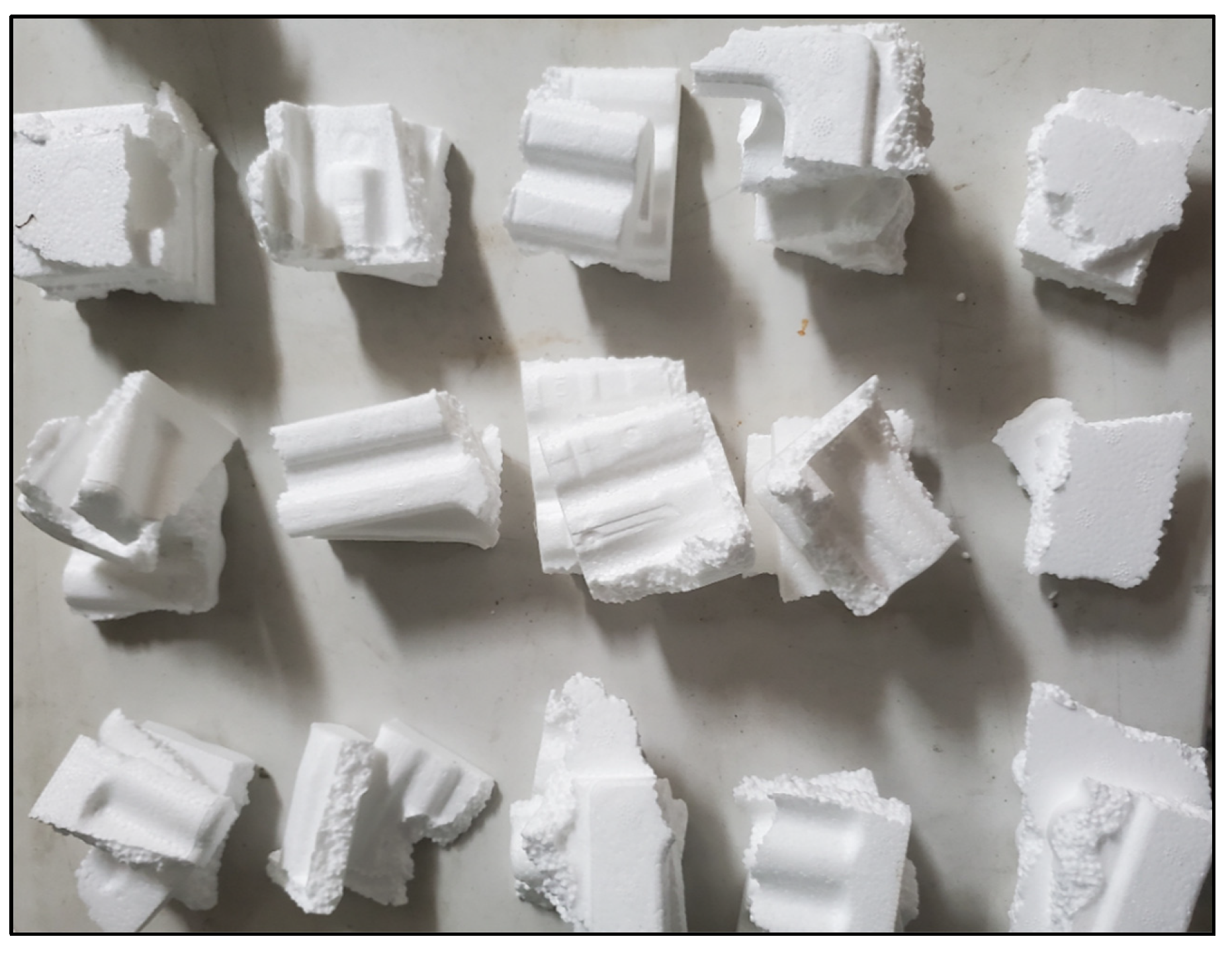
Figure 1. Pre-treated polystyrene waste for densification. Source: Authors.
Eng 07 00165 g001
Figure 2. Densification process on magnetic stirrer. Source: Authors.
Eng 07 00165 g002
Figure 3. Process diagram for the recovery of EPS using solvents. Source: Authors.
Eng 07 00165 g003
Figure 4. Maximum saturation point of the mixture in the EPS solution. Source: Authors.
Eng 07 00165 g004
Figure 5. (a) EPS densified with acetone, (b) EPS densified with ethyl acetate, (c) EPS densified with thinner, (d) EPS densified with xylene, (e) EPS densified with limonene. Source: Authors.
Eng 07 00165 g005
Figure 6. Residual plots. (a) Normal probability plot; (b) Residual versus fits plot; (c) Residual versus order plot. Source: Authors.
Eng 07 00165 g006
Figure 7. Main effects plots. (a) Solvent; (b) RPM; (c) Concentration. Source: Authors.
Eng 07 00165 g007
Figure 8. Interaction plots. (a) Solvent×RPM; (b) RPM×Concentration; (c) Solvent×Concentration. Source: Authors.
Eng 07 00165 g008
Table 1. Physicochemical properties of solvents.
PropertyAcetoneXyleneEthyl acetateLimoneneThinner
Chemical formulaC3H6OC6H4C4H8O2C10H16n/a
Boiling Point (°C)5613977178136
Melting Point (°C)−95−25−84−74−34
Density (kg/m3)788
(to 25 °C)
870
(to 20 °C)
900850760
Molar mass (g/mol)58.1106.288.11136.23n/d
Viscosity (cP)0.320.540.45n/dn/d
Source: International Chemical Safety Sheets, International Labour Organization.
Table 2. Most representative experimental conditions.
SolventSolvent (%)Solvent (mL)Alcohol (mL)Water (mL)Total
Volume (mL)
RPMReplicationEPS
Dissolved (g)
Acetone10020002060015.43
25.29
10020002040018.97
27.61
100200020200111.47
29.33
502010104060010.40
20.51
252020408040010.19
20.2
Thinner10020002060013.59
23.37
10020002040013.60
24.37
10020002020014.35
24.85
502010104060013.23
24.30
502010104040014.36
24.86
502010104020014.07
24.85
252020408060014.90
23.48
252020408040015.49
25.24
252020408020013.90
24.90
Xylene10020002060014.49
24.87
10020002040015.65
23.84
10020002020016.32
22.83
502010104060017.10
23.37
502010104040016.33
24.68
502010104020016.28
24.75
252020408060015.48
27.97
252020408040015.02
24.98
252020408020013.54
23.35
Ethyl acetate10020002060017.27
25.62
10020002040017.75
25.50
10020002020016.80
25.79
502010104060011.58
20.90
252020408040010.75
20.62
Source: Authors.
Table 3. Apparent density and porosity for Most representative experimental results.
SolventConcentration
(%)
RPMMass
(g)
Volume
(cm3)
Density (g/cm3)Porosity (%)
Acetone10020011.47210.546247.98
Thinner254005.49110.499152.47
Xylene256007.97210.379563.85
Ethyl acetate1004007.75100.775026.19
Source: Authors.
Table 4. p-values obtained from the analysis of variance.
Sourcep-Value
Model0.000
Linear0.000
Solvent0.000
RPM0.410
Concentration0.000
2-term interactions0.000
Solvent×RPM0.064
Solvent×Concentration0.000
RPM×Concentration0.050
Error 
Lack of fit0.099
Pure error 
Total 
Source: Authors.
Table 5. Estimated regression coefficients, standard errors and confidence intervals.
TermCoefficientStandard ErrorLower 95% CIUpper 95% CIp-Value
Intercept2.9650.1022.7613.170
Solvent     
Acetone−0.2930.204−0.7020.1160.157
Thinner1.9680.2041.5592.3770
Xylene2.0820.2041.6732.4910
Limonene−2.9650.204−3.374−2.5570
Ethyl acetate−0.7910.204−1.2−0.3830
RPM     
2000.1130.144−0.1760.4020.436
4000.1140.144−0.1750.4030.435
600−0.2270.144−0.5160.0620.121
Concentration     
25−0.8360.144−1.125−0.5470
50−0.9880.144−1.277−0.6990
1001.8240.1441.5352.1130
Source: Authors.
Table 6. Solvent Solubility Parameters (δ) and Expanded Polystyrene Compatibility.
Solubility Index (δ) (MPa)½Difference with
Respect to EPS (|δEPS − δsolv|)
Theoretical CompatibilityExperimental
Observation
Polystyrene [55,56]18.60------
Xylene [57]18.000.6Very highGood efficiency, shorter densification time
Ethyl
acetate [58]
18.610Very highHigh efficiency, shorter densification time
Aceto [59]20.001.4LoudFast dissolution, less stability in densification
Limone [60]16.302.3ModerateLonger densification time, slow dissolution
Thiner * [61]~18.30~0.3Very highGood efficiency, shorter densification time
* Tinner whose exact composition varies depending on the manufacturer, is a mixture of aromatic solvents such as xylene and toluene with parameters close to 18 MPa½. Source: Authors.
Disclaimer/Publisher’s Note: The statements, opinions and data contained in all publications are solely those of the individual author(s) and contributor(s) and not of MDPI and/or the editor(s). MDPI and/or the editor(s) disclaim responsibility for any injury to people or property resulting from any ideas, methods, instructions or products referred to in the content.