Article

The Formal Recognition of Scent as a Cultural Value in Australasian Heritage Registers

by
Murray Parker
1,* and
Dirk H. R. Spennemann
2
1
Faculty of Science and Health, Charles Sturt University, P.O. Box 789, Albury, NSW 2640, Australia
2
Gulbali Institute, Charles Sturt University, P.O. Box 789, Albury, NSW 2640, Australia
*
Author to whom correspondence should be addressed.
Heritage 2026, 9(6), 218; https://doi.org/10.3390/heritage9060218
Submission received: 16 April 2026 / Revised: 24 May 2026 / Accepted: 24 May 2026 / Published: 27 May 2026

Abstract

Cultural heritage arises from the interactions of people and the connected environment, manifesting in both tangible and intangible forms. Standard management aims to identify and register heritage assets, with subsequent conservation preserving identified values. Australian and New Zealand/Aotearoa heritage-specific legislation enshrines distinct ascribed values, formed in response to charters presenting heritage philosophies. Recent shifts towards greater acceptance of intangible heritage and emerging scholarly attention towards sensorial aspects (smells and sounds) demonstrate trajectories of change and a broader understanding of heritage theory. How this is exemplified in real-world management is rarely discussed. Taking Australasia as an example, this paper aims to survey values as enshrined in heritage legislation, examine aesthetic value definitions, and investigate recognition of olfactory sensorial aspects in heritage registers. We find that despite aesthetic, historic, and scientific values being commonly presented in the legislation, aesthetic olfactory attributes are largely absent, being recorded in only 0.18% across all heritage entries. Of these, a quarter were attributed significance or value, with the majority of entries being associated with offensive smell mitigation. We find this incongruent with recent scholarly work, and discuss potential reasons thereof, finding there is significant room to develop identification/assessment of olfactory aesthetic heritage.

1. Introduction

In a broad sense, cultural heritage arises from the interactions of people, both among themselves and with the environment in which they live. The outcome of these processes can manifest itself in several forms. Intangible cultural heritage is the result of people’s interactions with each other and finds its expression, for example, in skills, language, folklore, practices and customs. People’s interaction with the environment in which they live manifests itself in tangible form, such as the built and constructed environment, cultural modifications to landscapes, refuse, resource, and extraction sites, as well as in a range of moveable objects and artefacts of varied sizes and materials. What differentiates these interactions as heritage are the cultural values that a community attaches to these [1,2], with the desire to maintain these tangible and intangible manifestations for the benefit of the present community [3,4,5] and, purportedly, for future generations [6].
Early heritage conservation management was based on principles set out in Athens Charter of 1931 and Venice Charter of 1964. While the aesthetics of environmental setting loomed large in the Athens Charter of 1931 [7], the aesthetic and historic values of heritage places were placed at the centre of conservation efforts in the Venice Charter of 1964 [8].
The US National Historic Preservation Act of 1966 [9] is focussed on the management of cultural significance; its implementation refers to “sites, structures and objects of historical, architectural or archaeological significance” [10]. The aim of the standard cultural heritage management is the identification and registration of heritage assets and their subsequent conservation with the aim of preserving the identified heritage values [11,12,13,14,15]. This ‘authorised heritage discourse’ [16] considers heritage as innate, fragile and finite, where experts function as largely objective stewards on behalf of the people, which, on reflection, is both illusory [17] and ignores the roles of the ‘experts’ [18,19], their generational limitations [20] and the epistemology of their knowledge [21].
Traditionally, intangible heritage has focussed on cultural expressions of language, crafts and skills, as well as rituals and other culturally modulated behaviour and social practice [22]. Recent research has extended this by expanding intangible heritage from activities to include immerse participation in local events and at places that are central to social practice [23]. Here, participation and cultural expression [24] may result in sensory experiences from any of the five standard senses (including sight, sound, smell, taste and touch), either solo or in conjunction, that may manifest as cultural heritage.
Sensory perception is driven by neural processing [25], being a combination of sensory detection and perceptual processing, with individual human parameters of physiology, culture and mental focus being primary influences [26,27,28]. Both sensory and multisensory perception have been well researched in museology, including utilising touch to (re)acquaint visitors with heritage objects [29], to express intangible heritage of languages [30], through engaging non-traditional heritage attributes to connect personal sentiments [31], and through immersive museum experiences for educative purposes [31,32,33].
Tangible heritage sites have also been the focus of sensory expression through sound and light shows [34,35], as well as through the naturally occurring sensory attributes which are extant on-site within or surrounding heritage sites or places. Examples include aural heritage components such as acoustic properties of heritage sites [36], individual soundscapes of cultural places [37,38,39], and locally specific musical heritages [40,41]. Elements of tactile heritage include locally distinct authentic food production [42], and gustatory heritage comprise taste authenticity [43] and elements of unique flavour within individual geographic locales [44]. Research into heritage odorous components has included both individual and localised historic smells, as well as sustained smells being iconic of a place [45,46,47,48]. Additionally, sensory experiences at the intersection of two individual sense modalities may manifest as novel multisensory heritage, with examples including visual and olfactory elements of back country huts in New Zealand [49] or the multisensory experience of European Christmas markets being considered manifestations of socially significant cultural heritage [50].
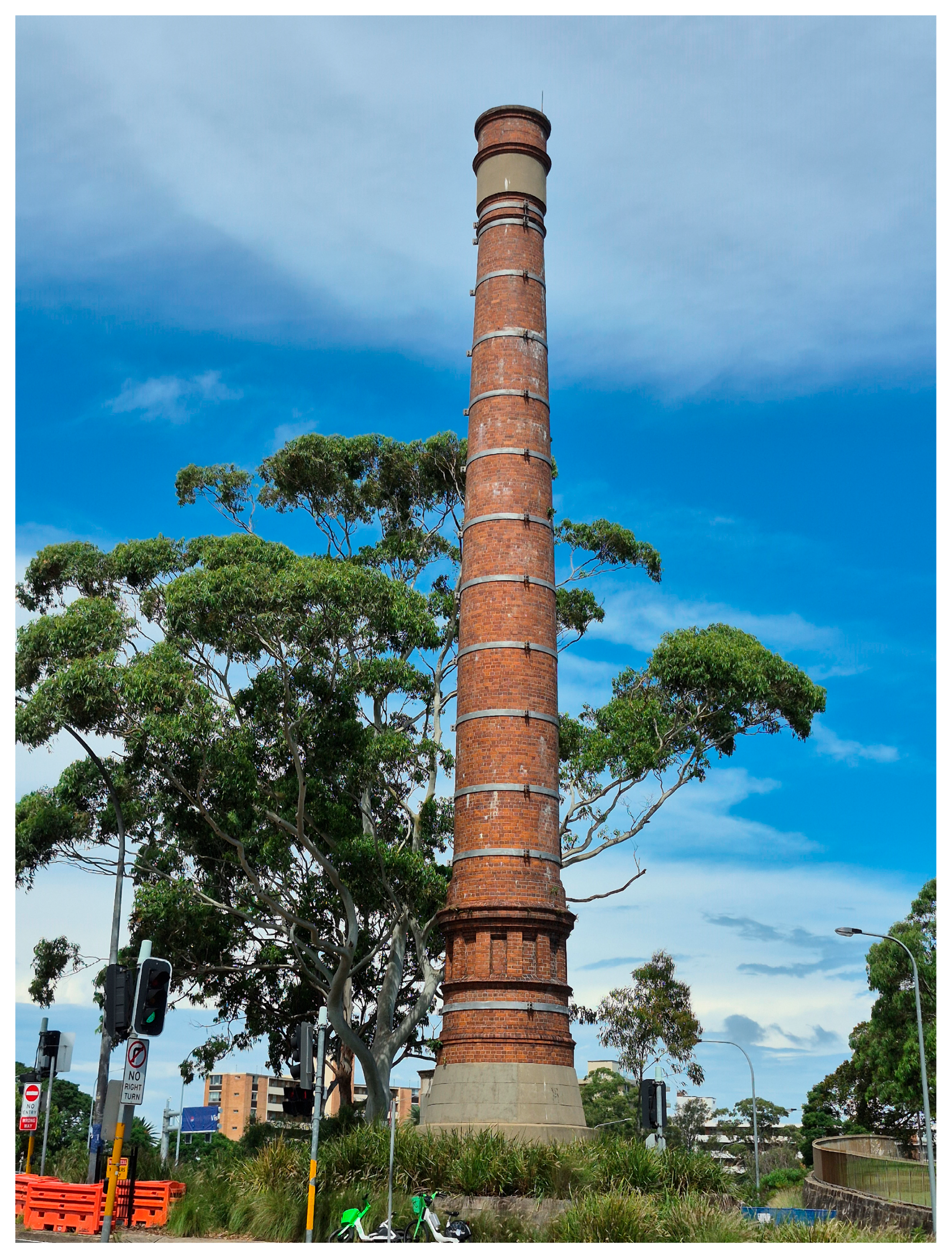
Whilst contemporary research promotes the understanding of non-visual heritage theory in both museology and outdoor sites, and while principal guidance documents, such as Australia ICOMOS Burra Charter make reference to sensory significance beyond the visual element (see below), an examination of management process and practice suggests that the determination and assessment of non-visual heritage is currently limited. In view of the emergence of scent-centred heritage theory [51,52], there is a need to formally examine the status quo, both in terms of the formal guidance that is provided to heritage practitioners and in terms of actual site listings that go beyond the visual component (e.g., Figure 1). When considering the four senses other than visual, in the Australasian region limited work has been carried out on aural heritage, focussed on church bells in New South Wales [53] as well as the Australia-wide silencing of these during the COVID-19 pandemic [54,55,56,57,58]. So far, no systematic heritage-related research has been carried out in the senses of smell, taste, and touch. To our knowledge, no research systematically examines the inclusion of olfactory criteria in heritage policy and guidance documents, nor examines their inclusion in the listings of any jurisdiction.
This paper seeks to investigate the parameters of managing olfactory heritage within all states and territories of Australia and New Zealand. This paper will (i) survey the cultural heritage values as enshrined in the Australasian heritage legislation as well as their iterations over time; (ii) examine the definitions of aesthetic value in Australasian heritage legislation and associated policy documents; and (iii) investigate the recognition of scent as a cultural value in Australasian heritage listings/registers that have administrative implications.

2. Background to the Heritage Legislation in Australasia

2.1. Australia

The Commonwealth of Australia is a federated nation which was formed in 1901 by the union of all former British colonies on the Australian continent, including Tasmania. As this was a voluntary agreement, the individual colonies surrendered only a minimum of powers to the newly formed Commonwealth government that was sufficient to allow it to function, to represent Australia’s interests on the world stage and to control immigration by making laws pertaining to race [59]. All other powers were retained by the colonies (now states). In consequence, the Commonwealth could pass legislation with respect to Indigenous Australian Heritage under the race powers provision of the Australian Constitution, as well as establish World Heritage Sites (under the foreign affairs power) [60]. At Federation, all individual states and territories maintained the right to regulate their own land management and planning regimes, which includes the management of cultural heritage sites.
While during the 1960s heritage conservation and preservation was a topic of legislation and charters in Europe and the USA [8,9], Australia lagged behind. Australian heritage legislation finds its roots in the 1974 Inquiry into the National Estate (‘Hope Report’), which assessed the parlous state of management and protection of Australian natural and cultural heritage [61]. The findings of the report were given effect with the Australian Heritage Commission Act which was passed the following year and which established the Australian Heritage Commission as well the Register of the National Estate, which was a list that was to encompass “those components of the natural environment of Australia or the cultural environment of Australia, that have aesthetic, historic, scientific or social significance or other special value for future generations as well as for the present community” [62]. While the Register of the National Estate was shaped on the example of the US Register of Historic Places [9], it had a much greater remit as it covered both the natural and the cultural environment (covering both Indigenous Australian and settler-colonialist/European places).
Given the provisions of the Australian Constitution, however, the Commonwealth’s role with regard to heritage assets other than Indigenous Australian place was limited to items on Commonwealth-owned or -controlled land. Heritage management at the state and local level was the prerogative of the individual states. Consequently, the Register of the National Estate had a largely educative and informative role without any legal effects. On the other hand, it was inconceivable that an item deemed to be of sufficient merit to be included in the Register of the National Estate would also not be formally protected at least at the state level.
Over time, the various Australian states and territories enacted their own heritage legislation. The first state to do so was New South Wales, which in 1977 enacted the Heritage Act which established the Heritage Council of NSW, as well as the State Heritage Register. This was followed by the Environmental Planning and Assessment Act in 1979, which regulated heritage management at the local government level [63,64]. With the exception of South Australia, which passed its own heritage legislation in 1978 [65], the other states managed heritage concerns as part of planning legislation.
At this juncture, the Australia chapter of the International Commission on Monuments and Sites (ICOMOS) refined the Venice Charter of 1964 [8] and in 1979 adopted a set of guidelines for the conservation of places of cultural significance (“Burra Charter”) [66], which were based on the four key values (aesthetic, historic, scientific and social) defined in the Heritage Commission Act 1975 [62]. Prior to the Burra Charter, some states had chosen their own wide interpretation of values. The New South Wales Heritage Act of 1977, for example, recognises “historic, scientific, cultural, social, archaeological, architectural, natural, aesthetic” values [63], while the South Australian Heritage Act of 1978 recognises “aesthetic, architectural, historical, cultural, archaeological, technological, scientific” values [65]. While the Burra Charter had no legally binding powers, it was authored and agreed upon by leading heritage professionals of the day and thus found rapid adoption [13]. When the remaining Australian states and territories eventually passed their own heritage legislation, the four core values were also recognised (with the exception of Victoria in 1987 [67], but included in revision [68]).
Today, the Commonwealth has carriage over items on Commonwealth-owned or -controlled land (Commonwealth Heritage List) as well as items of ‘outstanding’ heritage value to the nation (National Heritage List) [69]. Except for the Australian Capital Territory, which comprises only a single local government area, all states and territories maintain a two-tiered register of heritage assets of state and of local significance. These are managed based on state and local planning controls as enshrined in state heritage and planning legislation®. The National Trust of Australia, with branches in each state and territory, also maintains a register of significant or notable places, some of which the Trust owns. As the National Trust functions as an advocacy body, its listings have informative, but no legally binding value.

2.2. New Zealand/Aotearoa

In the Australasian setting, New Zealand/Aotearoa was the earliest jurisdiction to recognise heritage items as worth protecting when, in 1954, it passed “an act…for the preservation and marking of places and things of national or local historic interest and the keeping of permanent records in relation thereto” [70]. At present, the key legislation governing the use, development and protection of historic heritage in New Zealand/Aotearoa includes: the Resource Management Act 1991 [71], the Historic Places Act 1993 [72], the Conservation Act 1987, the Environment Act 1986 [73], the Local Government Act 2002 and the Reserves Act 1977. The Historic Places Act 1993 (Section 23) gives direction for assessing significance [72].

3. Materials and Methods

3.1. Australasian Heritage Legislation and Policy Documents

The corpora of legislation of the Australian states and territories as well as New Zealand/Aotearoa were systematically searched (via the keyword ‘heritage’) for acts pertaining to heritage protection. Excluded from the analysis were acts that focus on Indigenous Australian heritage protection, as these encompass different assessments of cultural heritage significance outside the standard planning framework. The cultural heritage values listed in each Act were extracted, as were any specific definitions related to aesthetic value in the official guidance documents. Each Act and guidance document was checked to identify any predecessor acts that were repealed and document versions that were superseded. All versions were assessed.
Also searched for and assessed were official national and state-based policy guidance documents issued by the respective jurisdictions relating to the identification and interpretation of heritage significance and values. The process entailed searches via Google, both general searches as well as domain-specific searches (e.g., nsw.gov.au, sa.gov.au or govt.nz), as well as searches on online databases (e.g., NSW heritage digital library heritagensw.intersearch.com.au). Where the resulting documents indicated the existence of earlier and now obsolete versions or editions, these were also searched for and assessed.

3.2. Australasian Heritage Registers

Systematically searched were the (national) Australian Heritage database, which includes the National and the Commonwealth heritage lists; the heritage registers of the Australian States and territories, which include both state and local government level listings; as well as Rārangi Kōrero (New Zealand Heritage List) (Table 1).
The search terms comprised the following four adjectives: ‘odour,’ ‘olfactory,’ ‘scent’ and ‘smell.’ The keyword searches covered ‘all fields’ with the exception of the Commonwealth database, where the search was confined to description, place history and statement of significance [74], and New South Wales, where the search options were limited to the fields of historical notes and significance description [75]. Three databases (Australian Capital Territory, Northern Territory and Queensland) did not provide a full text of keyword search option. For these, a Google search was substituted with the search logic “[term] site:URL.” The URL to be searched was a truncated version of the standard database link to a heritage-listed item with the ID number excluded (e.g., https://apps.des.qld.gov.au/heritage-register/detail/ (accessed on 27 February 2026) for the Queensland database). For each of the three databases, the validity of the chosen substitution approach was tested with search terms known to be commonplace (e.g., ‘house’). While there were methodological differences in the data collection, we consider this not to be a limitation that impacts the validity of the data collected.
To provide a general benchmark, a similar search was carried out for the keyword ‘aesthetic’. To provide comparative data on another non-visual sense, the overall representation of aural was also tested, using the keywords ‘sound,’ ‘aural,’ ‘auditory’ and ‘acoustic*’. All entries were checked to exclude those listings where the adjective ‘sound’ was used as a geographic term, as an attribute of a historical action (‘sound decision’) or to describe the structural integrity of an item. The New Zealand/Aotearoa register was omitted from the capture of ‘aural’ because ‘sound’ is a very common geographic term in that country (‘sound’ occurred in 2006 records).
Because their listings have only informative, but no legally binding value, the now defunct Commonwealth-based Register of the National Estate [76,77] as well as the state registers maintained by the National Trust of Australia [78] were excluded from investigation. The searches in the Victorian Heritage Database [79] also returned items that were only listed by the National Trust. These were excluded in the data cleaning exercise (see below). All database searches were carried out on 27 February 2026.
The database searches returned a combined 244 entries (Table 1), which were individually assessed and evaluated. Excluded were items only listed on the National Trust Register (Victoria only), which is a body without statutory power (39 entries), as well as items where a reference to ‘smell’ or ‘odour’ referred to environmental conditions prior to the item being created and unrelated to the item’s creation (56 entries). Also excluded were entries where the search term ’scent’ was related to Lemon-scented gum trees (Corymbia citriodora) or Scented satinwood (Ceratopetalum apetalum) that were included in plant lists (31 entries). Minor exclusions were due to other uses of the search terms (4) and blank records (2). These exclusions resulted in a total of 112 entries remaining for inclusion in this study. These included entries were subsequently manually searched for the original search terms to determine text source within each entry, being considered as part of the item’s significance, description, and/or historic context, and whether any values were attributed.
Table 1. Details of search mechanisms utilised and frequency of resulting search terms in the registers. Abbreviations: D—Description; H—History; S—Discussion/Statement of Significance.
SearchSearch TermsRegister Entries
JurisdictionModeCoverage‘Smell’‘Odour’‘Olfactory’‘Scent’All ScentTotalRef.
Commonwealth (Cth)KeywordD, H, S626[74]
Austr. Capital Ter. (ACT)Googleall fields305[80]
New South Wales (NSW)KeywordH, S3042188838,237[75]
Northern Territory (NT)Googleall fields11681[81]
Queensland (Qld)Googleall fields734111798[82]
South Australia (SA)Keywordall fields229943[83]
Tasmania (Tas)Keywordall fields114936[84]
Victoria(Vic)Keywordall fields23515885102,133[79]
Western Australia (WA)Keywordall fields161112820,466[85]
New Zealand/
Aotearoa (NZ/A)
Keywordall fields2721285843[86]
Notes: The figure of items included in the register for Victoria was comparatively high as it also includes individual properties in heritage conservation areas. Register Entries for ‘all scent’ may be lower than the combined total of search terms as some Entries included multiple terms.

4. Results

4.1. Heritage Values as Enshrined in Australasian Heritage Legislation

The first legislative reference to Australasian heritage protection was the 1945 amendment to the New South Wales (NSW) Local Government Act 1906, which gave local councils the power to develop planning schemes that could include, inter alia, “the preservation of places or objects of historical or scientific interest or natural beauty or advantage” [87]. At the time, the meaning of these values was deemed self-evident. During the 1960s–1970s, development boomed, and potential heritage assets, including places of iconic value were lost [88]. While the protection of Indigenous Australian heritage, championed by the (then) Australian Institute of Aboriginal Studies founded in 1964 [89], was formalised as early as in 1965 in South Australia (SA) [90], in 1967 in Queensland [91], and in 1969 in NSW [92], legislation related to the protection of settler colonialist and more recent heritage items lagged behind. New Zealand, on the other hand, had legislated protection as early as 1954 with “historic, archaeological, scientific, educational, architectural, literary, [and] other special interact” being considered [70]. Noteworthy is the inclusion of ‘educational’ and ‘literary.’
The first formal mention of Australian heritage values occurred in the report to the 1974 Inquiry into the National Estate, which found “elements of the cultural-and natural environment which are … of aesthetic, historical, social and cultural, ecological, or other special value to the nation or part of it [61].” The inclusion of social value makes this assessment highly significant, being the first time that this suite of cultural values were articulated. The findings of the report were given effect through the creation of the Register of the National Estate in 1975, listing “those places … that have aesthetic, historic, scientific or social significance or other special value for future generations as well as for the present community” [62].
Following the formation of the Australian Heritage Commission, individual states enacted their own heritage protection legislation, which included their own definitions of heritage significance (Table 2). The first state to do so was New South Wales in 1977, which listed (in that order) “historic, scientific, cultural, social, archaeological, architectural, natural, [and] aesthetic significance” [63]. South Australia followed a year later, drawing on “aesthetic, architectural, historical, cultural, archaeological, technological, [and] scientific interest” [65].
The assessment of heritage significance in New Zealand/Aotearoa commenced with the Historic Places Act of 1954, which covered “places and objects and things…of historic …archaeological, scientific, educational, architectural, literary, or other special …interest” (§3) [70]. The 1980 version defined a historic place as an entity that “provides evidence of any cultural, traditional, aesthetic, or other value of the past” (§2[b]) [104]. This was widened in 1993 by recognising “aesthetic, archaeological, architectural, cultural, historical, scientific, social, spiritual, technological, or traditional” values for the assessment of significance (§23[1]), including the “technical accomplishment or value, or design of the place” (§23[2][g]) [72]. In its most recent version, the Heritage New Zealand Pouhere Taonga Act of 2014 includes significance of “the technical accomplishment, value, or design of the place” (§66[3][g]) [103].
Additional definitions of values in NZ are included in land management and planning legislation, such as the Resource Management Act 1991 [71]. Although these do not define ‘heritage’ and ‘heritage values’ per se, but in defining the purposes of heritage orders (s 189), the act states that they include protecting “place(s) of special interest, character, intrinsic or amenity value or visual appeal, or of special significance to the tangata whenua for spiritual, cultural, or historical reasons; and …a place may be of special interest by having special architectural, historical, scientific, ecological or other interest” [71]. Likewise, the Environment Act 1986 defines ‘Environment’ to include “those physical qualities and characteristics of an area that contribute to people’s appreciation of its pleasantness, aesthetic coherence, and cultural and recreational attributes” (§17) [73]. Moreover, the authorities are to have regard to, inter alia, “areas, landscapes, and structures of aesthetic, archaeological, cultural, historic, recreational, scenic, and scientific value” (§32) [73]. Beyond the nationwide legislation, regional and local authorities (city and district councils) also provide guidance through criteria in their district plans.
Given the wide range of individual approaches towards non-Indigenous Australian heritage, the Heritage Chairs and Officials of Australia and New Zealand (HCOANZ), a collaborative network dedicated to the preservation and promotion of cultural heritage in both countries, resolved in 1998 to standardise the heritage criteria in all jurisdictions [105]. This standardisation, effected in 2008, referred to the minimum types of included criteria, but did not limit these to a common set of eight (Table 3), nor did it provide interpretive guidance for these.

4.2. Definitions of Aesthetic Value in Australasian Heritage Legislation and Policy Documents

All formally identified items of Australasian heritage legislation (Table 2) were examined for the inclusion of, and definitions for, aesthetic value. In addition, a systematic search was carried out for national and state-based policy documents. These are discussed below (Table 4). In the following section, we will examine 13 acts and executing regulations, 27 government guidelines and policy documents as well as eight documents produced by Australia and New Zealand ICOMOS. The bulk of the legislation was passed before the year 2000, while the majority of guidelines and policy documents are more recent.

4.2.1. Commonwealth

To reach the threshold for inclusion in the National Heritage List (NHL), a place must possess ‘outstanding’ heritage value to the Australian community. The criterion relevant to this paper requires that “(e) the place has outstanding heritage value to the nation because of the place’s importance in exhibiting particular aesthetic characteristics valued by a community or cultural group” [106], with criterion informed by text of Criterion E of the former register of the National Estate, which assessed an item’s “importance in exhibiting particular aesthetic characteristics valued by a community or cultural group” which were interpreted as aesthetic characteristics held in high esteem or otherwise valued by the community” [76]. Criteria for the Commonwealth Heritage List are identical to those of the NHL except that they only apply to items owned or controlled by the Commonwealth [107].
In the explanatory notes, the guidance document for the NHL states that “the grounds on which a place may satisfy criterion (e) … through … features of beauty, or features that inspire, emotionally move or have other characteristics that evoke a strong human response” [106]. This is further elaborated by noting that this response “can be evoked by visual or non-visual elements but is predominantly visual and related to the concept of beauty. It can include related to this, emotional responses, sense of place, sound, smell, or any other factor having a strong impact on human thoughts, feelings and attitudes” [106]. This text is an edited version of the definition of aesthetic value that had been developed for the Comprehensive Regional Assessment of National Estate values in the 1990s: “Aesthetic value is the response derived from the experience of the environment or particular natural and cultural attributes within it. This response can be to either visual or non-visual elements and can embrace emotional response, sense of place, sound, smell and any other factors that have a strong impact on human thought, feelings and attitudes” [108].
Another response to the Hope Report was the founding of the Australian national chapter of the International Council on Monuments and Sites (ICOMOS) in 1976 [109]. Australia ICOMOS approved the 1979 Burra Charter [66], which provided a conceptual set of guidelines for the conservation of places of cultural significance. This document was taken into consideration by Australia’s state heritage bodies when developing their own policies. The Burra Charter in its initial version [66], as well as its revisions [110,111,112,113], does not go beyond listing aesthetic value as one of the core values for assessing significance. The first set of guidelines to the charter, issued in 1988, elaborates by noting that “aesthetic value includes aspects of sensory perception for which criteria can and should be stated. Such criteria may include consideration of the form, scale, colour, texture and material of the fabric; the smells and sounds associated with the place and its use” [113].
That formulation was maintained in the 1999 edition [111]. Accompanying the 2013 revision of the Burra Charter [112], Australia ICOMOS issued a ‘Practice Note’ that elaborated on the Charter, noting that “aesthetic value refers to the sensory and perceptual experience of a place—that is, how we respond to visual and non-visual aspects such as sounds, smells and other factors having a strong impact on human thoughts, feelings and attitudes. Aesthetic qualities may include the concept of beauty and formal aesthetic ideals. Expressions of aesthetics are culturally influenced” [114]. When considering aesthetic value, the practice note asks whether a place exhibits “compositional or uncommonly attractive qualities involving combinations of colour, textures, spaces, massing, detail, movement, unity, sounds, scents? [114] The emphasis of this, as well as that of the other elaborations (‘inspirational‘; ‘symbolic for its aesthetic qualities’), is firmly placed on the positive aspects of aesthetics.
As noted earlier, the national heritage convention of chairs of State heritage council and directors of heritage (HCOANZ) resolved in 1998 to standardise the criteria for non-Indigenous Australian heritage in all jurisdictions. A formal set of eight criteria was agreed upon in 2008 and subsequently adopted by all Australian jurisdictions [99,115,116,117]. The systematic survey of formal guidelines and other guidance publications by the state heritage offices resulted in 21 documents, two of which predate the standardisation: the NSW Heritage Manual of 1996 [118] and the Heritage Regulations for the Northern Territory of the same year [119]. The latter only repeat the relevant assessment criterion (§5[n]), with ‘smell’ (and aural/auditory) not mentioned anywhere in the document. The NSW Heritage Manual expands on criterion 2 (aesthetic significance) by noting, inter alia, that an item can be “significant for strong visual, or sensory appeal or cohesion” or is “aesthetically distinctive”. While a ‘sensory appeal’ is mentioned, all text and examples point to visual interpretation.
Australian Capital Territory
While the ACT Heritage Act §10(e) considers the “importance in exhibiting particular aesthetic characteristics valued by the ACT community or a cultural group in the ACT” [93], the ACT guidelines are internally inconsistent. On one hand, they note that “aesthetic characteristics include artistic excellence, and a range of aesthetic forms including all sensory perceptions” and that “places and objects considered under this criterion include features that inspire, emotionally move or have other characteristics that evoke a strong human response” [117]. This was expanded by acknowledging that “aesthetic qualities are the visual or other qualities of a place or object that invite judgement against the ideals of beauty, picturesqueness, evocativeness, expressiveness, grotesqueness, sublimeness and other descriptors of aesthetic judgment” [117]. Yet at the same time, these guidelines apply as a ‘basic test’ whether “particular aesthetic characteristics are evident in the physical fabric of the place or object” [117], implying that a tangible manifestation is necessary for listing rather than an emotive response. Moreover, “a place can be considered for its aesthetic value in relation to view/s to or from the place” [117]. All subsequent commentary as well as examples related to the criterion exclusively focus on the visual qualities of a place.
New South Wales
The guidelines for assessing heritage significance produced in 2000 as well as those produced in 2001 focus on an “association… with creative or technical innovation or achievement,” an “inspiration for a creative or technical innovation or achievement,” “aesthetically distinctive” attributes as well as “exemplifying a particular taste, style or technology” [120,121]. The guidelines clearly focus on visual values such as “distinctive aesthetic attributes in form or composition” and architectural styles [120]. Non-visual senses are not mentioned, let alone considered. The companion text on investigating heritage significance, however, only mentions that heritage items “may be exceptional for their aesthetic qualities” but does not provide any further guidance [122].
The 2002 guidance to local governments focusses on the fabric of the place and emphasises “major work(s) by an important designer or artist… [such as] an important early (seminal) work of a major architect”, “positive visual or sensory appeal or landmark and scenic qualities” or “exemplifying a particular taste, style or technology” [123]. Non-visual senses are again not mentioned.
The updated 2023 version of the guidelines for assessing heritage significance makes reference to “sensual qualities that can be judged to be of significance against various ideals including beauty, picturesqueness, evocativeness, expressiveness, landmark presence, streetscape contribution, symbolism or some other quality of nature or human endeavour” [124]. The measures against which the criterion can be assessed, however, are focused entirely on visual characteristics. Its companion text also narrows its attention to the visual aspects, noting that “aesthetic relates to the aesthetic characteristics and creative achievement of the item including its architecture, interiors, landscape and other designed or natural elements” and that the expertise to assess these aspects “might include archaeology/rock art, architecture, interior design, landscape architecture and fine arts” [125].
Northern Territory
While the Northern Territory Heritage Act §11(e) includes ‘aesthetic characteristics’ in its set of criteria [96], they are not addressed at all in the regulations of any guidance documents [126].
Queensland
The Queensland Heritage Act contains ‘aesthetic significance’ as its criterion e (§23[1][e]) but also for creative achievement via its criterion f (§23[1][f]) [97]. According to the guidelines, both criteria relate to the aesthetic or architectural (criterion e) or aesthetic, architectural or other (technological) significance (criterion f) of a heritage place [127]. While criterion f is mainly to be used for ‘artistic value’, criterion e includes “beautiful, natural aesthetic, picturesque, evocative and expressive attributes” as well as symbolic meaning [127].
The Schedule accompanying the Queensland Heritage Act 1992 defines ‘aesthetic significance’ to “include its visual merit or interest” [128] but does not otherwise elaborate. Yet, the current Queensland guidelines make clear reference to non-visual attributes. “A place may have aesthetic significance if it has qualities that affect the senses of the viewer or observer. While this is most often expressed in terms of visual qualities, aesthetic significance may be judged also in terms of the auditory, olfactory or tangible aspects of a place” [127]. Making reference to the 1988 Guidelines to the Burra Charter [113] as well as other sources [129], the Queensland guidelines define aesthetic significance as “sensual qualities that can be judged against various ideals including beauty, picturesqueness, evocativeness, expressiveness, landmark presence, symbolism or some other quality of nature or human endeavour” [127]. The guidelines also note that “aesthetic significance may be derived from responses to both visual and non-visual aesthetic qualities… non-visual aesthetic qualities include sound, smell, taste, touch, feel, sense of place, symbolism, or some other quality of a place that impacts on our senses and draws an aesthetic or emotional response” [127]. While non-visual measures figure prominently, the document did not provide any guidance on how to research or assess these qualities.
In its 2020 revision of the guidelines, the Queensland Department of Arts and Heritage continues with their definition but then limits its applicability to “merit, originality, accomplishment, inventiveness or creative adaptation in a variety of fields of human endeavour including but not exclusive to art, engineering, architecture, industrial or scientific design, landscape design, construction, manufacture, craftsmanship, or some other technical field” [130]. Any reference or discussion of sound, smell, taste, touch, and feel has been omitted in the guidelines, while visual qualities are discussed in a detailed and elaborate section [130].
South Australia
The South Australian Heritage Act §16(e) references aesthetic value, but embeds this firmly as tangible output: “high degree of creative, aesthetic or technical accomplishment or is an outstanding representative of particular construction techniques or design characteristics” [98]. Consequently, in its first set of guidelines, the SA Heritage Council focusses on and emphasises the physical fabric and visible physical evidence and also requires “merit… in medium such as songs, poetry, literature, painting, sculpture, publications, print media, etc.” [131]. The guidelines of 2020 again focus on how the physical fabric demonstrates these visual attributes and notes that these aesthetic, technical or creative characteristics of the place need to be ‘critically recognised’ “within a relevant art, design or technological discipline as an outstanding example within South Australia” [132]. Non-visual senses are not mentioned at all. The latest 2024 version of the guidelines recasts the same approach, albeit in varied wording [133]. The most recent set of guidelines even more strongly focus on the visual by stating that “aesthetic characteristics are the visual qualities of a place that invite judgement against the ideals of beauty, picturesqueness, evocativeness, expressiveness, sublimeness and other descriptors of aesthetic judgement” [133]. Again, senses other than visual are not considered.
Tasmania
Tasmania did not consider aesthetic value as one of its criteria of the Heritage Act of 1995 [134] until amendments in 2013 [116] when §16(2)(h) was added, including a criterion of “exhibiting particular aesthetic characteristic” [99]. Until then, aesthetic value was peripherally addressed under criterion d with a focus on ‘aesthetic composition’ (§16[2][d]), and criterion e (creative or technical achievement) ’artistic excellence’ (§16[2][e]), where aesthetic significance was assessed as to whether a “place exhibits sensual qualities that can be judged against various ideals including beauty, picturesqueness, evocativeness, expressiveness, landmark presence, symbolism or some other quality of nature or human endeavour” [134]. The measures mentioned in the document were focussed solely on visual characteristics.
The revised guidelines of 2025 contain a section on criterion h, which uses the definition of aesthetic value developed for the Comprehensive Regional Assessment of National Estate values in the 1990s [135]. While non-visual aspects are listed, the set of measures and examples still strongly focus on the visual, when focussing on “particular aesthetic characteristics of an identified style or fashion,” and “a place’s aesthetic qualities in inspiring artistic or cultural responses, represented in art, photography, literature, folk art, folk lore, mythology or other imagery or cultural arts” [135]. Even the measure “aesthetic characteristics which are inspirational or which evoke strong feelings or special meanings” is focussed on sensory perceptions other than olfactory (and even auditory) as it stipulates that a place “inspires or creates a strong evocative response [such as] a sense of awe, wonder, astonishment, reverence, reflection, pleasure, tranquility, peacefulness, seclusion or remoteness” [135].
Victoria
The current Victorian Heritage Register Criteria and Threshold Guidelines, which have seen little modification since their original formulation in 2012 as far as aesthetic value is concerned [136], use a version of the definition of aesthetic value developed for the Comprehensive Regional Assessment of National Estate values in the 1990s [137]. The guidelines note these aesthetic qualities “may relate to the concept of beauty” may be “the result of the conscious design” or may be “the outcome of the way in which a place or object has evolved and been used over time” [137]. Importantly, the guidelines note that “aesthetic values tend to be specific to a time and cultural context” [137]. In terms of implementation, however, non-visual aspects are not considered. Emphasis is on the physical fabric of the place/object, the aesthetic values of which need to find “critical recognition of the aesthetic characteristics of the place/object within a relevant art, design, architectural or related discipline within Victoria” and find “wide public acknowledgement… expressed in publications, print or digital media, painting, sculpture, songs, poetry, literature, or other media” [137]. Most of the reference measures relate solely to visual aspects. One of the measures queries whether the heritage item has “qualities which are inspirational or which evoke strong feelings or special meanings” [137], which might be construed as applicable to non-visual characteristics. None of the examples or other explanatory text, however, makes any reference to non-visual aesthetic values.
Western Australia
The Heritage Act of Western Australia includes the “importance in exhibiting particular aesthetic characteristics valued by any group or community” (factor F) [138]. The Western Australian guide to assessing cultural heritage values uses an abbreviated version of the definition of aesthetic value as developed for the Comprehensive Regional Assessment of National Estate values in the 1990s, but then also note that “aesthetic qualities tend to be specific to a time and cultural context” [139]. As with the Victorian guidelines, this text has been taken from Comprehensive Regional Assessment of National Estate values.
In its reference tool section, the guide uses the measure whether the “place [has] special compositional or uncommonly attractive qualities involving combinations of colour, textures, spaces, massing, detail, movement, unity, sounds, scents” [139]. Yet, it then limits this by noting that “the physical fabric of the place clearly exhibits particular aesthetic characteristics”, predisposing interpretation towards the visual sense. The test also requires a “wide public acknowledgement of the aesthetic characteristics of the place … including its landmark qualities, expressed in publications, print or digital media, painting, sculpture, songs, poetry, literature, or other media” [139]. The emphasis on visual characteristics is more strongly evident in more abbreviated publications issued by the Heritage Council of WA. In its explanation of factors for significance, the Council notes that “aesthetic characteristics may relate to the concept of beauty, or may be characteristics associated with good design” and that “aesthetic qualities may inspire awe or fear” [138]. In its guidance to local councils, it focusses purely on visual manifestations of architectural form, streetscapes, gardens, plantings and cultural landscape settings [140]. Other senses are not mentioned.

4.2.2. New Zealand/Aotearoa

The revised New Zealand/Aotearoa heritage legislation of 1980 included, for the first time, the concept of aesthetic value (§2[b]) in the evaluation of historic places [104], which was continued in the 1993 (§23[1]) and 2014 (§66[1]) revisions [72,103]. It appears, however, that there are no formal guidelines issued by the heritage authorities on the interpretation of the definition as well as any criteria that may derive therefrom.
ICOMOS New Zealand passed its charter in 1993, which included the standard mention of aesthetic value (§22) but did not provide any guidance [141]. The 2010 revision of the charter expanded the definition of cultural heritage value to also include “other…intangible values, associated with human activity” (§25), again without providing guidance [142]. The Resource Management Act 1991, which guides heritage orders, includes ‘visual appeal’ among the values (§189), but does not otherwise consider aesthetic value [71]. The Environment Act 1986 also focusses on the “characteristics of an area that contribute to people’s appreciation of its pleasantness, aesthetic coherence, and cultural and recreational attributes [73].” Some modicum of guidance can be found in a document produced by Auckland Regional Council, which offers commentary on aspects of aesthetics in terms of architectural design as well as cultural context. For the latter, it refers to “visual amenity, or aesthetic value (past or present beauty)”, but is silent on manifestations of senses other than visual [143].

4.3. Representation of Scent-Related Terms in the Various Registers

The size of the state registers ranges from relatively small, such as the Northern Territory with 681 entries, to very large, as in the case of Victoria, which has in excess of 100,000 individual properties on the state registers as well as the local government heritage overlays (Table 5). As highlighted in the methodology, 112 individual register entries referred to an olfactory-related attribute within parameters of significance, description, and/or historic context, including those with value attribution. Whilst over two-thirds of these were designated the term ‘smell’ (67.9%), ‘odour’ accounted for 27.7% of the valid entries, and ‘scent’ 11.6% (Table 5). While some registers contained zero entries containing olfactory-related terms, the remainder comprised a very low proportion (average = 0.18%)—noteworthy considering the comparatively high proportion of ‘aesthetic’ representation across most registers (average = 25.6%). Similarly, low representation was noted for the other non-visual sensory attribute of sound (0.07%).
Additionally, higher proportions of the term ‘aesthetic’ did not necessarily correspond to increased olfactory term reference within registers, as exemplified by jurisdictions of NZ and NSW having limited aesthetic interpretation, yet higher proportions of entries containing olfactory terms.
In the valid entries, references to building smells, food smells, manufacturing smells and scented plants were reasonably well represented; however, the majority referred to offensive smells and mitigation thereof (average = 58.9%) (Table 6). Reference proportion of offensive smells was not uniform between the jurisdictions, however, being higher in Victoria, Queensland, and NSW (81.25%, 77.78% and 64.29% respectively), and significantly lower in NZ (31.82%). Likewise, references to other olfactory attributes were non-uniform; NZ data revealed a comparatively high proportion of building smells (22.73%), WA for manufacturing smells (22.73%), and both NSW and Victoria for scented plants (14.29% and 12.50% respectively). Most importantly, the majority of valid entries referred to an olfactory attribute solely within an item’s historic context or description, notably so for those pertaining to manufacturing smells (84.62%), scented plants (81.82%) and offensive smells (80.30%) (Table 7 and Appendix A). Only a quarter of valid entries referred to any significance or attributed value of an olfactory attribute (24.11%, n = 27), with this subset of entries forming the data for the remainder of our analysis.

Reference to Olfactory Attributes with Significance or Attributed Value

For the data subset, the NZ register revealed the greatest number of heritage items (n = 10), followed by Victoria (n = 9), NSW (n = 7) and Queensland (n = 1). Offensive smells again formed the bulk of the data (48.15%), followed by building smells (14.81%) and those non-defined (11.11%). Twenty-three entries placed olfactory terminology within significance criteria, including categories of historic (n = 10), aesthetic (n = 7), scientific (n = 1), historic and research (n = 1), educational (n = 1), and social (n = 1). Another two entries placed terminologies both within significance criteria and the Statement of Significance, with criteria being historic and aesthetic (n = 1), or social (n = 1), and an additional four attributed value to olfactory attributes within historic context (but not specifically within significance criteria).
All seven entries which referred olfactory attributes solely to aesthetic significance were found in the NZ register. These included: Defiance Hut, whereby “the hut’s appearance, sounds, smell and feel combine to evoke a sense of place” [144]; Napier Prison (Former), recognising that the “lingering musty smells (…) are a confronting reminder of the harsh conditions faced by inmates at the prison” [145]; Ōtamahua/Quail Island Historic Area, whereby the “historic area combines evocative sights, sounds, smells and feel” [146]; Wellington Botanic Garden with “the scents and smells together help to create the character and ambience of the garden” [147]; as well as Te Matatiki Toi Ora The Arts Centre, Addington Cemetery and Te Whare Waiutuutu Kate Sheppard House, in which multisensory facets (including smells) appeal to one’s senses and create a sense of place. Another NZ entry, Tangiwai Historic Reserve, recognised the multisensory assault of knowing (including visual, sound, smell, touch, and taste), which forms a powerful source of memory and therefore enhances potential for public education of the place.
Ten entries recognised the improvement of offensive olfactory attributes as significant within historical context, with these comprising: two sewer vents which evidenced the improvement of nineteenth-century NSW sewerage schemes to efficiently disperse sewer odours; five cast iron urinals (Victoria) which serve as “a reminder of Melbourne’s transition from a smelly disease ridden city to a healthier, cleaner and more modern metropolis” [148]; and one underground public toilet (also Victoria) which similarly recognised urban transformation through mitigation of offensive odours. The Northern Market Reserve Wall was recognised as historically significant (in part) through protecting local residents from offensive visuals and odours of adjacent livestock, and the Carriers’ Arms Hotel with its nineteenth-century floor plan was considered historically significant through the minimising of offensive smells through the provision of detached kitchens.
Additionally, one NSW sewer vent was recognised, having historical significance in conjunction with research significance—with vent shafts being an exemplar of the development of understanding to effectively mitigate odorous gases within the sewerage system. Another NSW sewer vent was recognised both historically (in the Statement of Significance) and also through social significance criteria, with the latter made clear that as the vent shaft improved living conditions through eliminations of sewer odours, it was likely to be attributed value by the local community.
One NSW entry referred to both historic and aesthetic significance of the experienceable smells of the sea and harbour waters within the Millers Point & Dawes Point Village Precinct, in conjunction with other sensory attributes, including visual amenity of the harbour and the aural qualities of boats, ships and wharf work. Another entry recognised scientific significance of an olfactory attribute of Hopetoun Cemetery (Victoria), with the highly scented rose cultivar Rosa La Reine being considered of significant age. Finally, social and historic significance were both recognised concerning odour emanations from the Willoughby Incinerator (NSW), being attributed social significance as “the building was subject to rigorous protest and objections from local residents over the smoke and smell” through use of the incinerator operations as a garbage and sewage disposal unit [149].
In addition, four entries attributed degrees of value directly to an olfactory attribute, despite no reference to any significance criteria. The olfactory experience of a timber mill in Mount Wilson (NSW) was remembered as being “a magical place (…) And there was the wonderful smell of newly sawn sassafras and coachwood logs” [150], the multisensory experience of Nicol’s Blacksmith Shop (Duntroon, NZ) “was well loved and evoked many fond memories of the sight and smell of smoke, the hot red glow of metal in the darkness and the sound of the hammer on the anvil” [151], and the now demolished Carisbrook Turnstile Building (Former) (NZ) gave a feel, smell and touch that imbued the whole environment of the cricket place. Interestingly, as the only identified entry directly associated with human odour, a historic olfactory encounter at Reconciliation Rocks (Queensland) was attributed social value, whereby being smeared with human sweat was believed highly important to the Guugu Yimithirr people: “In the old days people would go up to welcome somebody by taking [Narrla] from under their arms and rub it all over you. And they didn’t have deodorant before! So, sweat [narrla] was a very important thing, because that was the smell of you. So, your ancestors would recognise you.” [152].
Further investigation revealed that only 11 entries of the subset data made reference to olfactory attributes which may still exhibit emanation (Table 8), including all of the above entries recognised as having aesthetic significance, and comprising largely of building smells, natural smells, scented plants, and, somewhat problematically, those identified as ‘non-defined’ olfactory attributes. Extant olfactory heritage attributes with attributed significance and/or value therefore account for only 9.82% of all valid entries identified through the search strategy of this study.

5. Discussion

The paper has shown a disconnect between the importance that heritage theory ascribes to the multisensory elements of aesthetic value and what heritage systems actually assess and protect. A priori, it should be noted that our research and findings do not circumscribe the wide range of scent that is part of intangible cultural heritage practices (e.g., food production, religious rituals, festivals, market spaces, etc), but whether scent is recognised as a value attributed to heritage places and whether this value is expressed in olfactory terms in statutory heritage place registers.
At the theoretical level, research as well as policy documents increasingly recognise that heritage value can derive from non-visual sensory experience, including smell, sound, touch, and taste. The HCOANZ criteria, the Comprehensive Regional Assessment of National Estate values, and the explanatory notes as provided by the revised Burra Charter of 2013 clearly expand the concept of ‘aesthetic value’ beyond the visual, and explicitly acknowledge that aesthetic value can arise from both visual and non-visual experience, including smell. When considering Australasian state (and territory) guidance, however, any inclusion of this or similar formulations appears to be lip-service. They are parsimonious and, in most instances, silent on auditory or olfactory manifestations, narrowing back any definition of aesthetic value to the visible fabric, architecture, landscape, and design. New South Wales is a good example of this. Even where terms like ’sensory appeal‘ appear, the actual assessment measures remain overwhelmingly visual. Queensland is one of the few jurisdictions to explicitly mention olfactory and other non-visual qualities, yet even for that state, there is little practical advice on how those qualities should actually be researched or assessed.
At the practical level, the paper has found that while reference to aesthetic characteristics occurs in a quarter of all listings (average 25.6%), it rarely translates into explicit aural or olfactory recognition. Only very few heritage listings referred to items comprising or associated with existing sounds or with emanating odours, whether through aesthetic criteria or otherwise (average 0.18%) (Table 5). Moreover, olfactory attributes included in the listings were subsequently not clearly defined in-text, being limited simply to an ambiguous ‘smell’ or ‘scent’, which contributes to a sense of place within an important cultural site/place. In most cases, smell appeared only in descriptive or historical background material, not in the formal statement of significance. Only 27 cases (24.11% of valid entries) referred to an olfactory attribute as having heritage value or significance.
New Zealand’s heritage framework appears to be more capable of treating smell not just as historical context, but as an aesthetic quality worthy of recognition in its own right. There are New Zealand places, such as huts, former prisons and historic areas, where extant olfactory attributes, such as building smells, natural smells, or scented plants, are linked to aesthetic value.
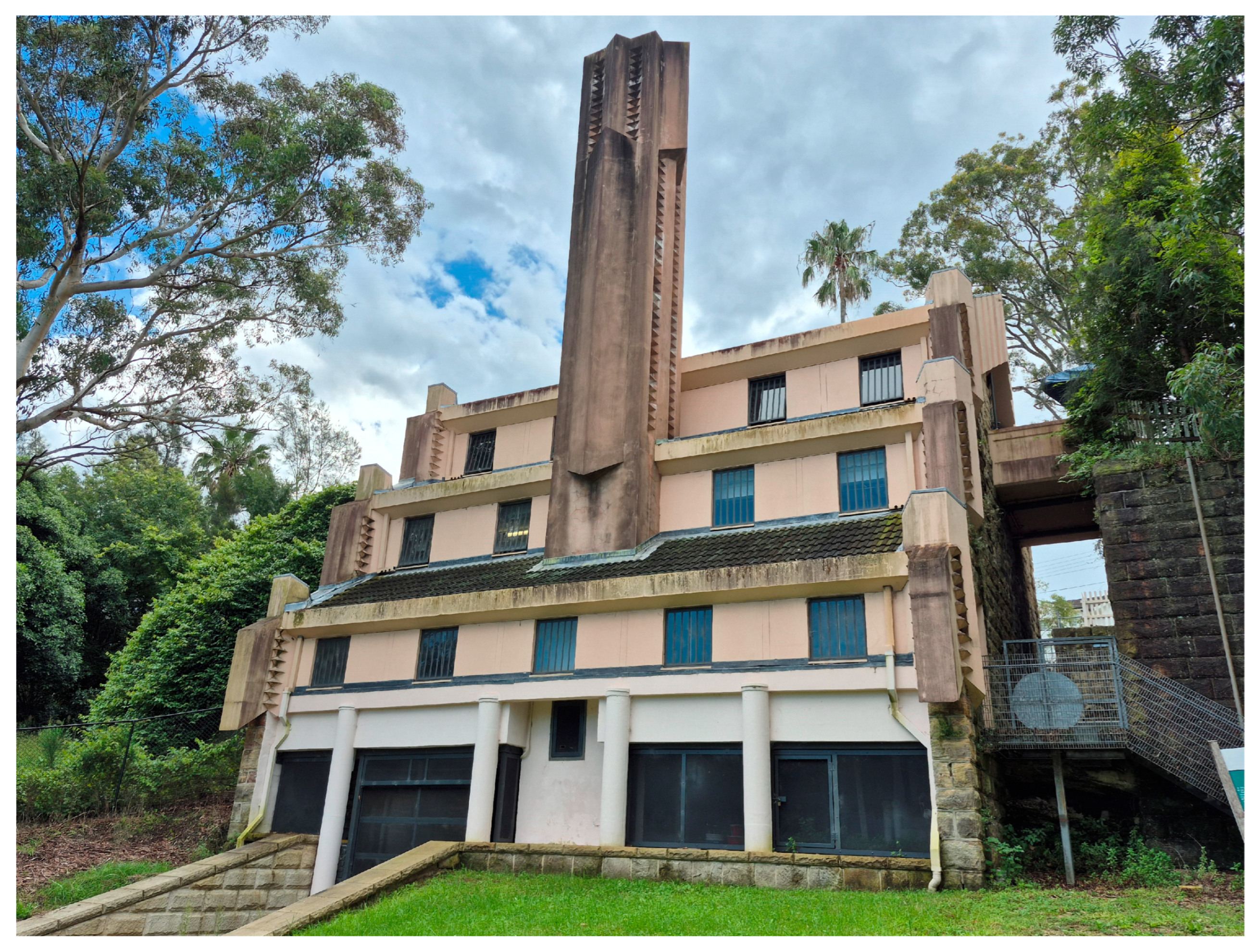
Unlike visual aspects of heritage, which are there, quite literally, for all to see, olfactory aspects of heritage are transient and subject to local environmental conditions [153] as well as ephemeral. If the process that gave rise to the scent or odour is no longer practised, any olfactory triggers will have disappeared unless the odour-generating chemicals have permeated the fabric of a heritage item. Consequently, a significant proportion of those listings which positively identified odours/scents as heritage attributes comprised heritage items which no longer actually emitted odours, such as an incinerator (NSW039) (Figure 2) and a sewer vent (NSW064 SHR 01641) (Figure 1).
It is evident that much of the identification of smell in heritage is derived from oral history or the archival or historic record. Smell enters heritage documentation mainly through the language of offence, nuisance, or pollution rather than positive meaning. Of the 112 listings that referenced smells, 58.9% were mentioned “offensive” smells. It would appear that, epistemologically, heritage professionals appear much more comfortable documenting smell when it is a problem, such as industrial emissions, sewage, smoke, or unpleasant working conditions, than when it is a positive part of place identity or memory. This bias may well be an artefact of the historic record drawn on when examining the history and significance of heritage items. For example, industrial and offensive odours were preserved in records because they generated protest, regulation, or controversy. With any documentation emphasis being placed on historic records, it would follow that contemporary thinking and existing ascription of olfactory heritage is neglected for consideration, whether inadvertently or otherwise.
At present, heritage, as it is currently perceived, appears to be an odourless construct. The underrepresentation of smell in heritage documentation, and in both site descriptions and site histories, is likely to be an artefact of a deficient process. Heritage guidance documents may include reference to sound or smell as one of the sensory criteria, but if assessors are given no criteria, no methodology, and no evidentiary model, smell will still always be overlooked or side-lined in the process, with limited practical understanding taking place.
Heritage systems typically rely on photographs, plans, fabric analysis, archival documents, and comparative description. In the heritage context, the identification of smell is made complicated by its principal attributes:
  • Smell is transient. It changes by topography, season, weather, time of day, and human activity [153].
  • Smell is culturally interpreted rather than universally self-evident. People experience and interpret odours differently depending on memory, culture, physiology, and context [154,155]. A smell may be comforting, sacred, nostalgic, revolting, or meaningless depending on context. Unlike visual attributes, there are, at present, no specific criteria that classify smell within the heritage domain.
  • Smell is difficult to document. Built fabric can be photographed or measured; smells do not leave the same kind of direct, easily reproducible record. While they are difficult to preserve in a stable evidentiary form, they can be recorded and documented [52,156].
  • Smell can disappear. Even when historically important, many smellscapes no longer exist in their original form [157], making living smell heritage especially rare.
At present, heritage systems do not yet have a conservation model for smell. Even if a smell is recognised as significant, should we need to consider what exactly is being protected? Is it the material source of the smell, the activity that produces it, the environmental conditions that allow it to persist, or the memory and interpretation attached to it? For example, a historic prison’s smell may depend on old building materials and enclosed conditions; a botanic garden’s scent depends on living plantings and seasonal cycles; and a mill’s smell may depend on an industry that no longer exists.
Some guidance on a possible conceptual approach to resolve this issue can be derived from the treatment of historical value which heritage systems recognise as one of the key criteria for the assessment of cultural significance of a place or item. The guidelines to the Burra Charter note that “A place may have historic value because it has influenced, or has been influenced by, an historic figure, event, phase, or activity. It may also have historic value as the site of an important event. For any given place the significance will be greater where evidence of the association or event survives in situ, or where the settings are substantially intact, than where it has been changed or evidence does not survive. However, some events or associations may be so important that the place retains significance regardless of subsequent treatment” [111].
Critical here is that the historic connection (figure, event, phase, or activity) is an intangible component that occurred in the past and that may (but not need to) have left traces that are still observable in the fabric of the place/item. The nature and context of that historic connection is purely derived from historic records (e.g., archival documents, contemporary eyewitness accounts), while the in-situ evidence may find expression in a new construction in relation to that historic connection or in a modification of an existing place or item as a result of that historic connection.
When applying the guidance to the concept of smell, the past existence of a smell can be equated to the historic event, phase or activity and thus be documented accordingly based on archival documents or contemporary eyewitness accounts. It is the historically contemporary importance of the manifestation of the smell that matters. In addition, evidence of that past smell event or activity can be found in the equipment that once generated that smell, such as vine vats, tannery pits or coffee roasters and mills. It can also be found in places and items erected in response to mediating undesirable odours, such as sewer vents (Figure 1).
Finally, the epistemology of ‘scent’ as opposed to ‘odour’ has implications for heritage value assessments. Sensory aesthetics, be they visual, aural, or olfactory, need not be positive to be cultural significant. What is currently absent is a uniform terminology and classification of smells and smell types in heritage settings. These can then be inserted into the exemplification of the criteria for aesthetic value.

6. Conclusions and Implications

The paper has shown a disconnect between the importance that heritage theory ascribes to the multisensory elements of aesthetic value and what heritage systems assess and protect. Theoretically, policy documents increasingly recognise non-visual heritage, expanding the concept of ‘aesthetic value’ towards the non-visual, including that of smell. In practice, however, guidance is largely parsimonious towards non-visual manifestations, restricting aesthetic value definitions to visible fabric, architecture, landscape, and design.
It appears that heritage professionals principally document odours when they are problematic to society, such as industrial emissions, sewage, or smoke. Positive aspects of odour value, being part of place identity or memory, are largely overlooked. The underrepresentation of such documentation is likely to be an artefact of a deficient process. Guidance documents may include reference to smell within sensory criteria, but if assessors are given no criteria or methodology to follow, smell will still always be side-lined in the management process.
However, it is the historically contemporary importance of the manifestation of the smell that matters. We put forward that heritage systems need a conservation model for smell, which directly address unique challenges of such non-visual heritage. Even when a smell is recognised as significant of a site or place, further consideration needs to be made on what associated elements should be protected—the material source of the smell, the activity causing emanation, environmental conditions which allow persistence, and/or memory and interpretation subsequently attached.
There is a clear absence of uniform terminology and classification of smells and smell types in heritage settings. Once addressed, these can then be inserted into the exemplification of the criteria for aesthetic value, allowing recognition of olfactory heritage values similarly to that of traditional visual-based determination.

Author Contributions

The authors jointly contributed to all parts of this paper. All authors have read and agreed to the published version of the manuscript.

Funding

This research received no external funding.

Data Availability Statement

The data can be accessed via the authors’ institutional depository at the following doi: http://doi.org/10.26189/cfd84450-582b-4dc5-9e61-ea5f4217b3e2.

Conflicts of Interest

The authors declare no conflicts of interest.

Appendix A. Extended Data Tables

Table A1. Olfactory attributes by point on mention in the assessment. Abbreviations: D—Description; H—History; V—Values discussion; S—Statemen of Significance.
Olfactory AttributeD&HHV&HV,S&HV&SSTotal
Aged smell of house 1 1
Ammonia smell 1 1
Bakery smell 1 1
Beer and cigarettes 1 1
Cereal smell 2 2
Cooking smell(s)14 5
Disinfectant smells 1 1
Effluent smell 1 1
Garbage and smoke smell 1 1
Garden smell 1 1
Historic smell 1 1
Horse and hay smell 1 1
Human sweat 1 1
Hut smell 1 1
Improvement of offensive smells328 1 840
Limiting horse smell 1 1
Milk smell 1 1
Mixed human focused 1 1
Musty smell 1 1
Non-defined 6 6
Offensive drain 2 2
Offensive harbour 3 3
Offensive industry 2 2
Offensive lavatory odours 1 1
Offensive milk 1 1
Offensive morgue smell 1 1
Offensive smell 2 2
Offensive vent 2 2
Opium, vinegar smells 1 1
Putrification smell 1 1
Sawn log smell 1 1
Scented plants45 110
Seaside smells 11
Sewer smell 2 2
Sewerage smell 11
Smoke smell 1 1
Soap smell 1 1
Sour milk smell 1 1
Sour smell 1 1
Sulphur smell 2 2
Tannery smell 1 1
Tarry odour 1 1
Unpleasant butter industry smell 1 1
Whale smell 1 1
Wine smell 1 1
Wood smell 1 1
Total88031811112
Table A2. Olfactory attributes by state listing.
Olfactory AttributeNSWNTQLDVicWANZ/ATotal
Aged smell of house1 1
Ammonia smell 11
Bakery smell1 1
Beer and cigarettes 11
Cereal smell 2 2
Disinfectant smells 1 1
Effluent smell 1 1
Garbage and smoke smell 1 1
Garden smell 1 1
Historic smell 11
Horse and hay smell 1 1
Human sweat 1 1
Hut smell 11
Improvement of offensive smells16 598240
Limiting horse smell1 1
Milk smell 11
Mixed human focused 11
Musty smell 11
Non-defined 66
Offensive drain2 2
Offensive harbour3 3
Offensive industry2 2
Offensive lavatory odours 11
Offensive milk1 1
Offensive morgue smell1 1
Offensive smell 11 2
Offensive vent2 2
Opium, vinegar smells 11
Putrification smell 11
Sawn log smell1 1
Scented plants6 121 10
Seaside smells1 1
Sewer smell 1 1 2
Sewerage smell 1 1
Smoke smell 11
Soap smell 1 1
Sour milk smell 11
Sour smell 11
Sulphur smell 11 2
Tannery smell 1 1
Tarry odour 1 1
Unpleasant butter industry smell 11
Whale smell 1 1
Wine smell 1 1
Wood smell 1 1
Cooking smell(s)4 1 5
Total4219162222112

References

  1. de la Torre, M. Values and heritage conservation. Herit. Soc. 2013, 6, 155–166. [Google Scholar] [CrossRef]
  2. Fredheim, L.H.; Khalaf, M. The significance of values: Heritage value typologies re-examined. Int. J. Her. Stud. 2016, 22, 466–481. [Google Scholar]
  3. Spennemann, D.H.R. The nexus between cultural heritage management and the mental health of urban communities. Land 2022, 11, 304. [Google Scholar] [CrossRef]
  4. Smith, G.S.; Messenger, P.M.; Soderland, H.A. Heritage Values in Contemporary Society; Routledge: Abingdon, UK, 2017. [Google Scholar]
  5. Mydland, L.; Grahn, W. Identifying heritage values in local communities. Int. J. Her. Stud. 2012, 18, 564–587. [Google Scholar] [CrossRef]
  6. Spennemann, D.H.R. Futurist rhetoric in U.S. historic preservation: A review of current practice. Int. Rev. Public Nonprofit Mark. 2007, 4, 91–99. [Google Scholar] [CrossRef]
  7. ICOMOS. The athens charter for the restoration of historic monuments. Adopted at the first international congress of architects and technicians of historic monuments, athens 1931. In La Conservation des Monuments d’Art et d’Histoire; Musees, O.I.d., Ed.; Institut de Cooperation Intellectuelle: Paris, France, 1933; pp. 448–454. [Google Scholar]
  8. ICOMOS. International Charter for the Conservation and Restoration of Monuments and Sites, Venice, 1964; International Council of Monuments and Sites: Venice, Italy, 1964. [Google Scholar]
  9. National Historic Preservation Act 80 Stat. 915. United States: 1966. Available online: https://www.govinfo.gov/content/pkg/STATUTE-80/pdf/STATUTE-80-Pg915.pdf (accessed on 27 February 2026).
  10. US Government. Executive Order 11593. Protection and Enhancement of the Cultural Environment; State, Tribal, Local, Plans & Grants Division, Cultural Resources, Partnerships, and Science Directorate, National Park Service: Washington, DC, USA, 1971.
  11. Weeks, K.D.; Grimmer, A.E. The Secretary of the Interior’s Standards for the Treatment of Historic Properties with Guidelines for Preserving, Rehabilitating, Restoring & Reconstructing Historic Buildings; Technical Preservation Services, National Park Service, U.S. Department of the Interior: Washington, DC, USA, 1995.
  12. Hume, G.L. The Secretary of the Interior’s Standards for Rehabilitation and Guidelines for Rehabilitating Historic Buildings; US Department of the Interior, National Park Service, Preservation Assistance Divsion: Washington, DC, USA, 1983.
  13. Kerr, J.S. The Conservation Plan: A Guide to the Preparation of Conservation Plans for Places of European Cultural Significance; National Trust of Australia: Sydney, NSW, Austalia, 1985. [Google Scholar]
  14. Feilden, B. Conservation of Historic Buildings; Routledge: Abingdon, UK, 2007. [Google Scholar]
  15. Spennemann, D.H.R. An integrated architecture for successful heritage site management planning. CRM J. Herit. Steward. 2007, 4, 18–28. [Google Scholar]
  16. Smith, L. Uses of Heritage; Routledge: Abingdon, UK, 2006. [Google Scholar]
  17. De Cesari, C. Regimes and the state. In Thinking Through Heritage Regimes; Bendix, R.F., Eggert, A., Peselmann, A., Eds.; Universitätsverlag Gottingen: Göttingen, Germany, 2012; pp. 399–413. [Google Scholar]
  18. Spennemann, D.H.R. Your solution, their problem. Their solution, your problem: The Gordian Knot of Cultural Heritage Planning and Management at the Local Government Level. disP-Plan. Rev. 2006, 42, 30–40. [Google Scholar] [CrossRef]
  19. Sandbrook, C.; Scales, I.R.; Vira, B.; Adams, W.M. Value plurality among conservation professionals. Conserv. Biol. 2011, 25, 285–294. [Google Scholar] [PubMed]
  20. Spennemann, D.H.R. The Shifting Baseline Syndrome and Generational Amnesia in Heritage Studies. Heritage 2022, 5, 2007–2027. [Google Scholar] [CrossRef]
  21. Spennemann, D.H.R. The usefulness of the Johari Window for the Cultural Heritage Planning Process. Heritage 2023, 6, 724–741. [Google Scholar] [CrossRef]
  22. UNESCO. Basic Texts of the 2003 Convention for the Safeguarding of the Intangible Cultural Heritage; UNESCO: Paris, France, 2024. [Google Scholar]
  23. Lindborg, P.; Aletta, F.; Xiao, J.; Liew, K.; Matsuda, Y.; Yue, R.; Jiang, Q.; Lam, L.H.; Wei, L. Multimodal Hong Kong: Documenting soundscape and smellscape at places of intangible cultural heritage. In Proceedings of the 53rd International Congress & Exposition on Noise Control Engineering (INTER-NOISE 2024): From Jules Verne’s World to Multi-Disciplinary Approaches for Acoustics & Noise Control Engineering, Nantes, France, 25–29 August 2024. [Google Scholar]
  24. Parker, M.; Spennemann, D.H.R.; Bond, J. Sensory and multisensory perception—Perspectives towards defining multisensory experience and heritage. J. Sens. Stud. 2024, 39, e12940. [Google Scholar] [CrossRef]
  25. Stein, B.E.; Burr, D.; Constantinidis, C.; Laurienti, P.J.; Alex Meredith, M.; Perrault, T.J., Jr.; Ramachandran, R.; Röder, B.; Rowland, B.A.; Sathian, K.; et al. Semantic confusion regarding the development of multisensory integration: A practical solution. Eur. J. Neurosci. 2010, 31, 1713–1720. [Google Scholar] [CrossRef] [PubMed]
  26. Balez, S. Smell walks. In Experiential Walks for Urban Design; Piga, B.E.A., Siret, D., Thibaud, J.-P., Eds.; Springer: Cham, Switzerland, 2021; pp. 93–114. [Google Scholar]
  27. McLean, K. Nose-First: Practices of Smellwalking and Smellscape Mapping. Ph.D. Thesis, Royal College of Art, London, UK, 2019. [Google Scholar]
  28. Gary, J.B.; Gallagher, L.; Joseph, P.V.; Reed, D.; Gudis, D.A.; Overdevest, J.B. Qualitative Olfactory Dysfunction and COVID-19: An Evidence-Based Review with Recommendations for the Clinician. Am. J. Rhinol. Allergy 2023, 37, 95–101. [Google Scholar] [CrossRef] [PubMed]
  29. Classen, C. The Museum of the Senses: Experiencing Art and Collections; Bloomsbury Academic: New York, NY, USA, 2017. [Google Scholar]
  30. Bornand, S.; Leguy, C. Exhibiting intangible heritage in a museum: The Voices of Africa experience. Nord. J. Afr. Stud. 2016, 25, 364–384. [Google Scholar]
  31. Miotto, L. Using scents to connect to intangible heritage: Engaging the visitor olfactory dimension: Three museum exhibition case studies. In Proceedings of the 2016 International Conference on Virtual Systems and Multimedia, VSMM 2016, Kuala Lumpur, Malaysia, 17–21 October 2016. [Google Scholar]
  32. Kannenberg, J. Towards a more sonically inclusive museum practice: A new definition of the ‘sound object’. Sci. Mus. Group J. 2017, 250–271. [Google Scholar] [CrossRef] [PubMed]
  33. Howes, D.; Clarke, E.; Macpherson, F.; Best, B.; Cox, R. Sensing art and artifacts: Explorations in sensory museology. Senses Soc. 2018, 13, 317–334. [Google Scholar] [CrossRef]
  34. Subedi, K. Immersive attractions: Visitors experiences in light and sound shows. J. Tour. Herit. Res. 2025, 8, 98–112. [Google Scholar]
  35. Villalobos Acosta, C. Light shows and narratives of the past. Int. J. Hist. Archaeol. 2013, 17, 332–350. [Google Scholar] [CrossRef]
  36. Aletta, F.; Kang, J. Historical acoustics: Relationships between people and sound over time. Acoustics 2020, 2, 128–130. [Google Scholar] [CrossRef]
  37. Jordan, P. Historic approaches to sonic encounter at the Berlin wall memorial. Acoustics 2019, 1, 517–537. [Google Scholar] [CrossRef]
  38. Zheng, J. Soundscape as an outstanding universal value: An introduction with case studies of chinese world cultural heritage sites. Change Over Time 2019, 9, 232–255. [Google Scholar] [CrossRef]
  39. Alves, S.; Di Gabriele, M.; Carillo, S.; Masullo, M.; Maffei, L. Exploring the soundscape and the atmosphere of the Gigli di Nola cultural festival in Italy. Emot. Space Soc. 2021, 41, 100848. [Google Scholar] [CrossRef]
  40. Jabłonkowska, J.B. Around the sharq taronalari international music festival—Cultural aspects of festival tourism. Hemispheres 2016, 31, 43–51. [Google Scholar]
  41. Sorea, D.; Csesznek, C. The groups of caroling lads from făgăras, land (Romania) as niche tourism resource. Sustainability 2020, 12, 4577. [Google Scholar] [CrossRef]
  42. Woods, O.; Donaldson, J. Haptic heritage and the paradox of provenance within Singapore’s cottage food businesses. Food Cult. Soc. 2021, 25, 237–253. [Google Scholar] [CrossRef]
  43. Mardatillah, A.; Sam’un Jaja, R.; Hermanto, B.; Herawaty, T. Riau Malay food culture in Pekanbaru, Riau Indonesia: Commodification, authenticity, and sustainability in a global business era. J. Ethn. Foods 2019, 6, 1–10. [Google Scholar] [CrossRef]
  44. Mercado, J.M.T. Pancit: Explicating the culinary safeguarding culture of Philippine noodles—The case of Luzon Island. J. Culin. Sci. Technol. 2021, 20, 473–497. [Google Scholar] [CrossRef]
  45. Bembibre, C.; Strlic, M. Smell of heritage: A framework for the identification, analysis and archival of historic odours. Herit. Sci. 2017, 5, 2. [Google Scholar] [CrossRef]
  46. Skrede, J.; Andersen, B. Remembering and reconfiguring industrial heritage: The case of the digester in Moss, Norway. Landsc. Res. 2021, 46, 403–416. [Google Scholar] [CrossRef]
  47. Bembibre, C.; Leemans, I.; Elpers, S. (Eds.) The Olfactory Heritage Toolkit; Odeuropa: Amsterdam, The Netherlands, 2024. [Google Scholar]
  48. Davis, L.; Thys-Şenocak, L. Heritage and scent: Research and exhibition of Istanbul’s changing smellscapes. Int. J. Herit. Stud. 2017, 23, 723–741. [Google Scholar]
  49. Kearns, R.; Fagan, J. Sleeping with the past? Heritage, recreation and transition in New Zealand tramping huts. N. Z. Geogr. 2014, 70, 116–130. [Google Scholar] [CrossRef]
  50. Spennemann, D.H.R.; Parker, M. The changing face of German Christmas markets: Historic, mercantile, social and experiential dimensions. Heritage 2021, 4, 1821–1835. [Google Scholar] [CrossRef]
  51. Parker, M.; Spennemann, D.H.R.; Bond, J. Sensory perception in cultural studies—A review of sensorial and multisensorial heritage. Senses Soc. 2023, 19, 231–261. [Google Scholar] [CrossRef]
  52. Parker, M.; Spennemann, D.H.R.; Bond, J. Methodologies for smellwalks and scentwalks—A critical review. Chem. Senses 2024, 49, bjae005. [Google Scholar] [CrossRef]
  53. Parker, M.; Spennemann, D.H.R. Conceptualising sound making and sound loss in the urban heritage environment. Int. J. Urban Sustain. Dev. 2022, 14, 264–286. [Google Scholar] [CrossRef]
  54. Parker, M.; Spennemann, D.H.R. Anthropause on audio: The effects of COVID-19 pandemic on church bell ringing in New South Wales (Australia). J. Acoust. Soc. Am. 2020, 148, 3102–3106. [Google Scholar] [CrossRef]
  55. Parker, M.; Spennemann, D.H.R. Responses to government-imposed restrictions: The sound of Australia’s church bells one year after the onset of COVID-19. J. Acoust. Soc. Am. 2021, 150, 2677–2681. [Google Scholar] [CrossRef]
  56. Parker, M.; Spennemann, D.H.R. To ring or not to ring: What COVID-19 taught us about religious soundscapes in the community. Heritage 2022, 5, 1676–1686. [Google Scholar] [CrossRef]
  57. Spennemann, D.H.R.; Parker, M. Hitting the ‘Pause’ Button: What does COVID tell us about the future of heritage sounds? Noise Mapp. 2020, 7, 265–275. [Google Scholar] [CrossRef]
  58. Spennemann, D.H.R.; Parker, M. Increasing Intensity: The sounds of church bells in Australia one year after COVID-19. J. Acoust. Soc. Am. 2021, 149, A28. [Google Scholar] [CrossRef]
  59. House of Representatives and Attorney—General’s Department. An Act to Place Certain Restrictions on Immigration and to Provide for the Removal from the Commonwealth of Prohibited Immigrants; National Archives of Australia: Chester Hill, NSW, Australia, 1901.
  60. An Act to constitute the Commonwealth of Australia United Kingdom, 1900. Available online: https://www.legislation.gov.uk/ukpga/Vict/63-64/12/enacted (accessed on 27 February 2026).
  61. Commonwealth of Australia. Report of the National Estate: Report of the Committee of Inquiry into the National Estate [‘The Hope Report’]; Parliamentary Paper 1974, No. 195; Australian Government Publishing Service: Canberra, Australia, 1974.
  62. Office of Legislative Drafting, Attorney-General’s Department. An Act to Establish an Australian Heritage Commission; Office of Legislative Drafting, Attorney-General’s Department: Canberra, Australia, 1975.
  63. NSW Legislation. An Act to Conserve the Environmental Heritage of the State; Act 136 of 1977; Parliamentary Counsel’s Office: New South Wales, Australia, 1977.
  64. NSW Legislation. An Act to Institute a System of Environmental Planning and Assessment for the State of New South Wales; Act 203 of 1979; Parliamentary Counsel’s Office: Sydney, NSW, Australia, 1979.
  65. An Act to Preserve, Protect and Enhance the Environmental, Social and Cultural Heritage of the State; and for Other Purposes; State of South Australia: Adelaide, Autralia, 1978.
  66. Australia ICOMOS. The Australia ICOMOS Guidelines for the Conservation of Places of Cultural Significance (“Burra Charter”); Australia ICOMOS Inc.: Burwood, VIC, Autralia, 1979. [Google Scholar]
  67. Chief Parliamentary Counsel. Planning and Environment Act. Victoria, 1987; Victorian Legalisation: Melbourne, VIC, Autralia, 1987.
  68. Heritage Act. State of Victoria 2017. Available online: https://www.legislation.vic.gov.au/in-force/acts/heritage-act-2017/009 (accessed on 27 February 2026).
  69. An Act Relating to the Protection of the Environment and the Conservation of Biodiversity, and for Related Purposes; Commonwealth of Australia: Sydney, NSW, Australia, 1999.
  70. Parliament Counsel Office. An Act Make Provision for the Preservation and Marking of Places and Things of National or Local Historic Interest and the Keeping of Permanent Records in Relation Thereto; New Zealand Legislation: Wellington, New Zealand, 1954.
  71. Parliament Counsel Office. An Act to Restate and Reform the Law Relating to the Use of Land, Air, and Water; New Zealand Legislation: Wellington, New Zealand, 1991.
  72. An Act (a) to Promote the Identification, Protection, Preservation, and Conservation of the Historical and Cultural Heritage of New Zealand; and (b) to Continue the New Zealand Historic Places Trust and the New Zealand Historic Places Board of Trustees with the Functions and Powers Necessary for the Full and Proper Attainment of the Objectives of This Act; and (c) to Establish the Maori Heritage Council; and (d) to Amend and Consolidate the Historic Places Act 1980. New Zealand, 1993. Available online: https://www.legislation.govt.nz/act/public/1993/38/en/latest/ (accessed on 27 February 2026).
  73. An Act to (a) Provide for the Establishment of the Office of Parliamentary Commissioner for the Environment: (b) Provide for the Establishment of the Ministry for the Environment: (c) Ensure That, in the Management of Natural and Physical Resources, Full and Balanced Account is Taken of—(i) the Intrinsic Values of Ecosystems; and (ii) All Values Which are Placed by Individuals and Groups on the Quality of the Environment; and (iii) the Principles of the Treaty of Waitangi; and (iv) the Sustainability of Natural and Physical Resources; and (v) the Needs of Future Generations. New Zealand, 1986. Available online: https://www.legislation.govt.nz/act/public/1986/0127/latest/DLM99751.html (accessed on 27 February 2026).
  74. DCCEEW. Australian Heritage Database. 2025. Available online: https://www.dcceew.gov.au/parks-heritage/heritage/publications/australian-heritage-database (accessed on 27 February 2026).
  75. NSW Heritage Office. State Heritage Inventory 2026. Available online: https://www.hms.heritage.nsw.gov.au/App/Item/SearchHeritageItems# (accessed on 27 February 2026).
  76. Department of the Environment and Energy. Criteria for the Register of the National Estate. 2018. Available online: https://web.archive.org/web/20180903061718/http://155.187.2.69/heritage/places/rne/criteria.html (accessed on 11 March 2026).
  77. DAWE. Register of the National Estate—Archive. 2021. Available online: https://www.dcceew.gov.au/parks-heritage/heritage/places/register-national-estate (accessed on 15 March 2026).
  78. National Trust of Australia (NSW). National Trust Register. 2026. Available online: https://www.nationaltrust.org.au/services/trust-register-nsw/ (accessed on 15 March 2026).
  79. Heritage Council of Victoria. Victorian Heritage Database. 2026. Available online: https://vhd.heritagecouncil.vic.gov.au (accessed on 27 February 2026).
  80. ACT Government. ACT Heritage Register. 2026. Available online: https://www.act.gov.au/environment/heritage/act-heritage-register (accessed on 27 February 2026).
  81. Heritage Council of the Northern Territory. NT Heritage Register. 2026. Available online: https://www.ntlis.nt.gov.au/heritageregister/ (accessed on 27 February 2026).
  82. Queensland Government. Queensland Heritage Register. 2026. Available online: https://apps.des.qld.gov.au/heritage-register/ (accessed on 27 February 2026).
  83. Heritage South Australia. SA Heritage Places Database Search. 2026. Available online: https://maps.sa.gov.au/heritagesearch/HeritageSearchByKeywords.aspx (accessed on 27 February 2026).
  84. Heritage Tasmania. Heritage Register Search. 2026. Available online: https://onlineregister.heritage.tas.gov.au (accessed on 27 February 2026).
  85. Heritage Council of WA. InHerit Search Heritage Places. 2026. Available online: https://inherit.dplh.wa.gov.au/Public/?advanced=True (accessed on 27 February 2026).
  86. Heritage New Zealand/Pouhere Taonga. New Zealand Heritage List/Rārangi Kōrero. 2026. Available online: https://www.heritage.org.nz/places (accessed on 27 February 2026).
  87. An Act to Make Better Provision for and in Relation to Town Planning and Country Planning; for This Purpose to Amend the Local Government Act, 1919, and Certain Other Acts; And for Purposes Connected Therewith; Act 21 of 1977; State of New South Wales: Sydney, NSW, Australia, 1945.
  88. Thorpe, A. Public participation in planning: Lessons from the green bans. Environ. Plan. Law J. 2013, 30, 93–105. [Google Scholar] [CrossRef]
  89. Mulvaney, J. The road to Burra: Memories of an ancient traveller. Hist. Environ. 2004, 18, 9–13. [Google Scholar]
  90. Governor of the State of South Australia. An Act to Provide for the Preservation of Aboriginal and Historic Relics; UNESCO: Paris, France, 1965. [Google Scholar]
  91. An Act to provide for the Preservation of Anthropoligical, Ethnological, Archaeological and Prehistoric Aboriginal Relics; State of Queensland: Brisbane, QLD, Australia, 1967.
  92. An Act to Establish Additional National Parks and an Additional State Park; to Incorporate Certain State Parks in Certain National Parks; to Make Further Provisions with Respect to Pounds and the Impounding of Animals; to Provide for the Preservation of Certain Anthropological, Archaeological and Aboriginal Relics; For These and Other Purposes to Amend the National Parks and Wildlife Act, 1967, and for Purposes Connected Therewith; Act 78 of 1969; State of New South Wales: Sydney, NSW, Australia, 1969.
  93. ACT Parliamentary Counsel. Heritage Act 2004 (as Updated to 16 November 2025); A2004-57; Australian Capital Territory: Canberra, Australia, 2004.
  94. An Act to Amend the Heritage Act 1977 to Provide for Interim Heritage Orders, the State Heritage Register and Heritage Agreements and to Make Further Provision with Respect to the Conservation of Items of the Environmental Heritage, Financial Incentives, the Role of Local Councils and Government Instrumentalities, Excavation Permits, and in Other Respects; and for Other Purposes; State of New South Wales: Sydney, NSW, Australia, 1998.
  95. An Act Relating to the Natural and Cultural Heritage of the Northern Territory; Northern Territory: Darwin, Australia, 1991.
  96. An Act About the Territory’s Cultural and Natural Heritage; Northern Territory: Darwin, Australia, 2011.
  97. Minister for the Environment and Tourism and Minister for Science and Innovation. An Act to Provide for the Conservation of Queensland’s Cultural Heritage; Queensland Legislation: Brisbane, QLD, Australia, 1992.
  98. First Nations Heritage Protection Alliance. An Act to Make Provision for the Identification, Recording and Conservation of Places and Objects of Non-Aboriginal Heritage Significance; to Establish the South Australian Heritage Council; and for Other Purposes, South Australia; The First Nations Heritage Protection Alliance: Melbourne, Australia, 1993. [Google Scholar]
  99. Tasmanian Government. An Act to Promote the Identification, Assessment, Protection and Conservation of Places Having Historic Cultural Heritage Significance and to Establish the Tasmanian Heritage Council; Tasmanian Legislation: Hobart, TAS, Australia, 1995.
  100. Chief Parliamentary Counsel. Heritage Act. Victoria, 1995; Act 93 of 1995; Victorian Legalisation: Melbourne, VIC, Australia, 1995.
  101. Government of Western Australia. An Act to Provide for, and to Encourage, the Conservation of Places Which Have Significance to the Cultural Heritage in the State, to Establish the Heritage Council of Western Australia, and for Related Purposes; Act 103 of 1990; Western Australian Legislation: Perth, WA, Australia, 1990.
  102. Government of Western Australia. An Act to Recognise the Importance of, and Promote Understanding Andappreciation of, Western Australia’s Cultural Heritage; and Provide for the Identification and Documentation of Places of Cultural Heritage Significance and for the Conservation, Use, Development and Adaptation of Such Places; and Repeal the Heritage of Western Australia Act 1990; and Make Consequential Amendments to Various Other Acts, and for Related Purposes; No 103 of 1990; Western Australian Legislation: Perth, WA, Australia, 2018.
  103. Paliamentary Counsel Office. Heritage New Zealand Pouhere Taonga Act 2014; New Zealand Legislation: Wellington, New Zealand, 2014.
  104. Paliamentary Counsel Office. An Act to Preserve the Historic Heritage of New Zealand, to Continue the New Zealand Historic Places Trust and to Establish the New Zealand Historic Places Board of Trustees with the Necessary Powers and Functions for the Full and Proper Attainment of the Objectives of This Act, and to Amend and Consolidate the Historic Places Act 1954; New Zealand Legislation: Wellington, New Zealand, 1980.
  105. DCCEEW. Heritage Chairs and Officials of Australia and New Zealand. 2025. Available online: https://www.dcceew.gov.au/parks-heritage/heritage/organisations/hcoanz (accessed on 29 March 2026).
  106. Australian Heritage Council. Guidelines for the Assessment of Places for the National Heritage List; Australian Heritage Council, Department of the Environment, Water, Heritage and the Arts: Canberra, Australia, 2009.
  107. Australian Heritage Council. Identifying Commonwealth Heritage Values and Establishing a Heritage Register. A Guideline for Commonwealth agencies; Australian Heritage Council, Department of the Environment, Water, Heritage and the Arts: Canberra, Australia, 2010.
  108. O’Brien, M.; Ramsay, J. Assessing Aesthetic Values of Landscapes for the Register of the National Estate: A Discussion Paper; Internal paper prepared for the Australian Heritage Commission; Australian Heritage Commission: Canberra, Australia, 1991.
  109. Hannah, B. Innovation in Conservation: A Timeline History of Australia ICOMOS and the Burra Charter Technical Report; Report commissioned by Australia ICOMOS; Australia ICOMOS Inc.: Burwood, Australia, 2017. [Google Scholar]
  110. Australia ICOMOS. The Burra Charter: The Australia ICOMOS Charter for Places of Cultural Significance; Australia ICOMOS Inc.: Sydney, Australia, 1981. [Google Scholar]
  111. Australia ICOMOS. The Burra Charter: The Australia ICOMOS Charter for Places of Cultural Significance; Guidelines to the Burra Charter: Cultural Significance; Australia ICOMOS Inc.: Sydney, Australia, 1999. [Google Scholar]
  112. Australia ICOMOS. The Burra Charter: The Australia ICOMOS Charter for Places of Cultural Significance 2013; Australia ICOMOS Inc.: Burwood, VIC, Australia; International Council of Monuments and Sites: Paris, France, 2013. [Google Scholar]
  113. Australia ICOMOS. The Burra Charter. The Australia ICOMOS Charter for Places of Cultural Significance. Guidelines to the Burra Charter: Cultural Significance; Australia ICOMOS Inc.: Sydney, Australia, 1988. [Google Scholar]
  114. Australia ICOMOS. Understanding and Assessing Cultural Significance [Practice Note]; Australia ICOMOS Inc.: Burwood, VIC, Australia; International Council of Monuments and Sites: Paris, France, 2013. [Google Scholar]
  115. Heritage Council. Heritage Council Criteria for the Assessment of Cultural Heritage Significance; Heritage Council of Victoria: Melbourne, Australia, 2008.
  116. Tasmanian Government. An Act to Amend the Historic Cultural Heritage Act 1995; Act 70 or 2013; Tasmania Legislation: Hobart, TAS, Australia, 2013.
  117. ACT Heritage Council. Heritage Assessment Policy. A Policy Document for Nominating, Assessing and Making Decisions About Heritage Places and Objects Against the Criteria in the Heritage Act 2004; ACT Heritage Council: Canberra, Australia, 2018.
  118. NSW Heritage Office. NSW Heritage Manual; Heritage Office and Department of Urban Affairs and Planning: Sydney, Australia, 1996.
  119. Northern Territory. Regulations Under the Heritage Conservation Act as in Force at 10 April 1996; Northern Territory: Darwin, Australia, 1996.
  120. NSW Heritage Office. Assessing Heritage Significance; NSW Heritage Office: Sydney, Australia, 2001; Volume 2.
  121. NSW Heritage Office. Assessing Heritage Significance; NSW Heritage Office: Sydney, Australia, 2000.
  122. NSW Heritage Office. Investigating Heritage Significance; NSW Heritage Office: Sydney, Australia, 2004.
  123. NSW Heritage Office. Local Government Heritage Guidelines; NSW Heritage Office: Sydney, Australia, 2002.
  124. NSW Heritage Office. Assessing Heritage Significance, Revised Edition; NSW Heritage Office: Sydney, Australia, 2023; Volume 2.
  125. NSW Heritage Office. Investigating Heritage Significance, Revised Edition; NSW Heritage Office: Sydney, Australia, 2021.
  126. Northern Territory. Regulations Under the Heritage Conservation Act as in Force at 10 April 1996; Northern Territory: Darwin, Australia, 2012.
  127. Heritage Branch. Assessing Cultural Heritage Significance. Using the Cultural Heritage Criteria; Heritage Branch, Department of Environment and Heritage Protection: Brisbane, Australia, 2013.
  128. Minister for the Environment and Tourism and Minister for Science and Innovation. Schedule to Queensland Heritage Act 1992; Queensland Legislaiton: Brisbane, QLD, Australia, 1992.
  129. Ramsay, J.; Paraskevopoulos, J. More than Meets the Eye: Identifying and Assessing Aesthetic Value; Report of the Aesthetic Value Workshop held at the University of Melbourne on 27 October 1993; International Federation of Landscape Architects: Versailles, France, 1994. [Google Scholar]
  130. Arts and Heritage. Guideline Identifying and Assessing Places of Local Cultural Heritage Significance in Queensland; Arts and Heritage, Department of Environment and Science: Brisbane, Australia, 2020.
  131. SA Heritage Council. Guidelines for Interpreting State Heritage Criteria. Assessing Places for State Heritage Listing; South Australian Heritage Council: Adelaide, Australia, 2019.
  132. SA Heritage Council. Guidelines for Interpreting State Heritage Criteria. Assessing Places for State Heritage Listing; South Australian Heritage Council: Adelaide, Australia, 2020.
  133. SA Heritage Council. Guidelines for Interpreting State Heritage Criteria. Assessing Places for State Heritage Listing; South Australian Heritage Council: Adelaide, Australia, 2024.
  134. DPIPWE. Assessing Historic Heritage Significance. For Application with the Historic Cultural Heritage Act 1995, 5th ed.; Department of Primary Industries, Parks, Water and Environment: Hobart, Australia, 2011.
  135. Heritage Tasmania. Assessing Historic Heritage Significance. For Application with the Historic Cultural Heritage Act 1995, 7th ed.; Heritage Tasmania: Hobart, Tasmania, 2025.
  136. Heritage Council. Assessing the Cultural Heritage Significance of Places and Objects for Possible State Heritage Listing: The Victorian Heritage Register Criteria and Threshold Guidelines; Heritage Council of Victoria: Melbourne, Australia, 2012.
  137. Heritage Council of Victoria. Assessing the Cultural Heritage Significance of Places and Objects for Possible State Heritage Listing: The Victorian Heritage Register Criteria and Threshold Guidelines, 2nd ed.; Heritage Council of Victoria: Melbourne, Australia, 2020.
  138. Heritage Council of WA. Factors for Assessing Cultural Heritage Significance; Heritage Council of Western Australia: Perth, Australia, 2023.
  139. Heritage Council of WA. The State Register of Heritage Places. A Guide to Assessing Cultural Heritage Significance; Heritage Council of Western Australia: Perth, Australia, 2023.
  140. Heritage Council of WA. Guidelines for the Assessemnt of Local Heritage Places; Heritage Council of Western Australia: Perth, Australia, 2022.
  141. ICOMOS New Zealand. ICOMOS New Zealand Charter for the Conservation of Places of Cultural Heritage Value; ICOMOS New Zealand: Auckland, New Zealand, 1993. [Google Scholar]
  142. ICOMOS New Zealand. ICOMOS New Zealand Charter for the Conservation of Places of Cultural Heritage Value; Revised 2010; ICOMOS New Zealand: Auckland, New Zealand, 2010. [Google Scholar]
  143. Auckland Regional Council. Guidelines: Assessing Historic Heritage Significance; Auckland Regional Council: Auckland, New Zealand, 2025. [Google Scholar]
  144. Heritage New Zealand/Pouhere Taonga. Defiance Hut. 2026. Available online: https://www.heritage.org.nz/list-details/5046/Listing (accessed on 15 March 2026).
  145. Heritage New Zealand/Pouhere Taonga. Napier Prison (Former). 2026. Available online: https://www.heritage.org.nz/list-details/181/Napier-Prison-Former (accessed on 15 March 2026).
  146. Heritage New Zealand/Pouhere Taonga. Ōtamahua/Quail Island Historic Area. 2026. Available online: https://www.heritage.org.nz/list-details/9552/Antarctic%20connection (accessed on 15 March 2026).
  147. Heritage New Zealand/Pouhere Taonga. Wellington Botanic Garden. 2026. Available online: https://www.heritage.org.nz/list-details/7573/Listing (accessed on 15 March 2026).
  148. Heritage Council of Victoria. Cast Iron Urinal. 2026. Available online: http://vhd.heritage.vic.gov.au/places/4314 (accessed on 15 March 2026).
  149. State Heritage Inventory. Incinerator. 2026. Available online: https://www.hms.heritage.nsw.gov.au/App/Item/ViewItem?itemId=2660224 (accessed on 15 March 2026).
  150. State Heritage Inventory. Timber Mill. 2026. Available online: https://www.hms.heritage.nsw.gov.au/App/Item/ViewItem?itemId=1170607 (accessed on 15 March 2026).
  151. Heritage New Zealand/Pouhere Taonga. Nicol’s Blacksmith Shop. 2026. Available online: https://www.heritage.org.nz/list-details/9237/Listing (accessed on 15 March 2026).
  152. The State of Queensland. Reconciliation Rocks. 2026. Available online: https://apps.des.qld.gov.au/heritage-register/detail/?id=650262 (accessed on 15 March 2026).
  153. Spennemann, D.H.R.; Parker, M.; Bond, J. Attenuation of Odours in the Urban Outdoor Environment: A Rapid Review and Implications for the Conduct and Interpretation of Smell Walks. Environments 2023, 10, 163. [Google Scholar] [CrossRef]
  154. Broge, E.H.D.; Wendin, K.; Rasmussen, M.A.; Bredie, W.L.P. Familiarity and identification of everyday food odors in older adults and their influence on hedonic liking. Food. Qual. Prefer. 2023, 103, 10. [Google Scholar] [CrossRef]
  155. Olofsson, J.K.; Ekstrom, I.; Larsson, M.; Nordin, S. Olfaction and Aging: A Review of the Current State of Research and Future Directions. i-Perception 2021, 12, 20416695211020331. [Google Scholar] [CrossRef]
  156. Parker, M.; Spennemann, D.H.R.; Bond, J. The identification and documentation of on-site sensory and multisensory experiences—A methodological protocol. Field Methods 2025, 37, 128–149. [Google Scholar] [CrossRef]
  157. Tullett, W. Smell and the Past: Noses, Archives, Narratives; Bloomsbury Academic: London, UK, 2023. [Google Scholar]
Figure 1. Sewer vent (NSW064 SHR_01641), St Leonards NSW. Part of the original North Sydney sewerage system built between 1891 and 1898 and still operating to mitigate offensive smell emanation from the sewer network (Photo: M Parker 2026).
Heritage 09 00218 g001
Figure 2. Reverberatory incinerator (NSW039), Willoughby NSW, now operating as a community art space and cafe (Photo: M Parker 2026).
Heritage 09 00218 g002
Table 2. Formal heritage legislation in Australasia and the cultural values enshrined therein.
Original ActCurrent Act
JurisdictionEnactedValues EnshrinedEnactedValues EnshrinedRefs.
Cth1975aesthetic, historic,
scientific, social,
other special
1999aesthetic, historic,
scientific, social,
other special
[62,69]
ACT2004aesthetic,
creative/technical,
social, spiritual,
cultural, historical
[93]
NSW1977historic, scientific,
cultural, social,
archaeological,
architectural,
natural, aesthetic
[63,94]
NT1991prehistoric,
protohistoric,
historic, social,
aesthetic, scientific
2011aesthetic, historical,
scientific, social
[95,96]
QLD1992aesthetic, historic,
scientific, social,
other special
[97]
SA1978aesthetic, architectural,
historical, cultural,
archaeological,
technological, scientific
1993creative,
aesthetic, technical,
cultural, spiritual,
historical, [scientific]
[65,98]
Tas1995historical, creative,
technical, social,
spiritual, aesthetic
[99]
Vic1987scientific, aesthetic,
architectural,
historical,
special cultural
2017aesthetic,
archaeological,
architectural, cultural,
historical, scientific,
social
[67,68,100]
WA1990aesthetic, historic,
scientific, social
2018aesthetic, historic,
scientific, social, spiritual
[101,102]
NZ/A1954historic,
archaeological,
scientific, educational, architectural, literary, other special
2014aesthetic, archaeological, architectural, cultural, historical, scientific,
social, spiritual,
technological, traditional
[70,72,103,104]
Table 3. HCOANZ common minimum set of criteria for the assessment of cultural significance.
No.Criterion
AImportance to the course, or pattern, of [a state’s] cultural history.
BPossession of uncommon, rare, or endangered aspects of [a state’s] cultural history.
CPotential to yield information that will contribute to an understanding of [a state’s] cultural history.
DImportance in demonstrating the principal characteristics of a class of cultural places and objects.
EImportance in exhibiting particular aesthetic characteristics.
FImportance in demonstrating a high degree of creative or technical achievement at a particular period.
GStrong or special association with a particular community or cultural group for social, cultural, or spiritual reasons.
HSpecial association with the life or works of a person, or group of persons, of importance in [a state’s] history.
Table 4. The cultural values enshrined in heritage legislation in Australasia. Abbreviations: EPBC—Environment Protection and Biodiversity Conservation; HNZPTA—Heritage New Zealand Pouhere Taonga Act.
(a)
ActJurisdictionYearHistoricalAestheticScientificSocialCulturalSpiritualArchaeologicalArchitecturalTechnicalOther Special
Historic PlacesNZ/A1954x x xx x
Austr. Heritage CommissionCth1975xxxx x
HeritageNSW1977xxxxx xx
South Australian HeritageSA1978xxx x xxx
Historic PlacesNZ/A1980xx x x
EnvironmentNZ/A1986xxx x x
Planning and EnvironmentVic1987xxxxx
Heritage of Western AustraliaWA1990xxxx
Heritage ConservationNT1991xxxx
Resource ManagementNZ/A1991x x xx x x
Queensland HeritageQLD1992xxxx x
Historic PlacesNZ/A1993xxxxxxxxx
Heritage PlacesSA1993xxx xx x
HeritageVic1995xxxxx xx
Historic Cultural HeritageTas1995xx x x x
EPBCCth1999xxxx x
HeritageACT2004xx xxx x
HeritageNT2011xxxx
HNZPTANZ/A2014xxxxxxxx
HeritageVic2017xxxxx xx
HeritageWA2018xxxx x
Frequency 211918151278866
(b)
ActJurisdictionYearCreativeNatural/EcologicalPrehistoricProtohistoricEducationalLiteraryTraditionalScenicRecreationalReference
Historic PlacesNZ/A1954 xx [70]
Austr. Heritage CommissionCth1975 [62]
HeritageNSW1977 x [63]
South Australian HeritageSA1978 [65]
Historic PlacesNZ/A1980 x [104]
EnvironmentNZ/A1986 xx
Planning and EnvironmentVic1987 [67]
Heritage of Western AustraliaWA1990 [101]
Heritage ConservationNT1991 xx [95]
Resource ManagementNZ/A1991 x
Queensland HeritageQLD1992 [97]
Historic PlacesNZ/A1993 x [72]
Heritage PlacesSA1993x [98]
HeritageVic1995 [100]
Historic Cultural HeritageTas1995x [99]
EPBCCth1999 [69]
HeritageACT2004x [93]
HeritageNT2011 [96]
HNZPTANZ/A2014 x [103]
HeritageVic2017 [68]
HeritageWA2018 [102]
Frequency 321111311
Table 5. Number of validated entries and their proportional representation in the registers.
Search TermRegister EntriesListings (%) with
Jurisdiction‘Smell’‘Odour’‘Olfactory’‘Scent’All ScentTotalAll Scent‘Aesthetic’All Aural
National62628.121.28
ACT30546.560.66
NSW221574238,2370.111.910.09
NT116810.150.730.15
QLD722917980.5072.300.72
SA994326.150.00
Tas0049360.000.450.16
Vic114316102,1330.0225.740.05
WA1482220,4660.1136.740.14
NZ/A21212258430.3816.93
Notes: The figure of items in the register for Victoria includes individual properties in heritage conservation areas. Register Entries for ‘all scent’ may be lower than the combined total of search terms as some Entries included multiple terms.
Table 6. Aggregated olfactory attributes by state listing.
Olfactory AttributeNSWNTQLDVicWANZ/ATotal
Building smell1 157
Ethnic Smell 112
Food-type smell4 2 6
Human smell 1 1
Manufacturing smell3 15413
Nature smell1 113
Non-defined 33
Offensive27171311766
Scented plants6 121111
Total4219162222112
Table 7. Aggregated olfactory attributes by point on mention in the assessment. Abbreviations: D—Description; H—History; V—Values discussion; S—Discussion/Statement of Significance.
Olfactory AttributeDD&HHV&HV,S&HV&SS&HSTotal
Building smell 31 3 7
Ethnic Smell 2 2
Food-type smell 15 6
Human smell 1 1
Manufacturing smell1 102 13
Nature smell 1 1 13
Non-defined 3 3
Offensive6344 1 4866
Scented plants 45 1 111
Total7870418410112
Table 8. Heritage entries with extant olfactory attributes (arranged by olfactory attribute).
Heritage EntryJurisdictionOlfactory AttributeSignificance Criteria
Defiance HutNZBuilding smellAesthetic
Napier Prison (Former)NZBuilding smellAesthetic
Te Whare Waiutuutu Kate Sheppard HouseNZBuilding smellAesthetic
Ōtamahua/Quail Island Historic AreaNZNature smellAesthetic
Millers Point & Dawes Point Village PrecinctNSWNature smellStatement, Historical, Aesthetic
Te Matatiki Toi Ora/The Arts CentreNZNon-definedAesthetic
Addington CemeteryNZNon-definedAesthetic
Tangiwai Historic ReserveNZNon-definedPotential for public education
Sewer VentNSWOffensiveHistorical, Research
Wellington Botanic GardenNZScented plantsAesthetic
Disclaimer/Publisher’s Note: The statements, opinions and data contained in all publications are solely those of the individual author(s) and contributor(s) and not of MDPI and/or the editor(s). MDPI and/or the editor(s) disclaim responsibility for any injury to people or property resulting from any ideas, methods, instructions or products referred to in the content.