


Abstract
During the lifespan of domestic animals, specific pathologies may arise in relation to their intended use. With the aim of increasing knowledge about the uses of animals in past urban contexts, a number of archeozoological studies conducted on faunal samples from medieval and post-medieval sites in Barcelona (north-eastern Iberia) have been reviewed and the pathological cases analyzed. The results show that the most frequent pathologies among large mammals (bovines and equines) are related to their use as working animals, whether as mounts or as draft or pack animals, with all of these animals frequently reaching an advanced age. Dogs present pathologies arising from mistreatment or biomechanical defects in breeds selected according to size and morphology. Animals reared to produce meat, principally suids and, above all, caprines, tend to be the specimens that display the fewest pathological indicators. This is due to the fact that they were slaughtered at a relatively young age and that their origin was not local, as they had been reared outside the city and, although transported alive, they would have been slaughtered for meat consumption in Barcelona, so they failed to develop the pathologies typical of animals that can be considered strictly urban. This evidence demonstrates that the analysis of bone pathologies is a useful means of reconstructing animal use and husbandry practices in urban contexts.
1. Introduction
It is widely known, both from popular knowledge and the health sciences, whether among those dealing with humans (medicine) or those treating animals (veterinary), that the majority of the diseases that individuals develop in the course of their lives have a considerable environmental component [1]. This environmental influence on the health of living beings, which is associated with other causes such as the random genetic determinants of each individual, must be understood in its broadest sense as being characteristic of both the natural and artificial (anthropogenic) environment. In this respect, human agglomerations, of which cities are the most complex expression, involve the creation of a new ecosystem [2,3] that affects the health of its inhabitants, both humans and the species that live alongside them, whether as fully domesticated or commensal animals [4].
For this reason, throughout the lifespan of domestic animals, specific pathologies may develop in connection with their functional roles. Animal paleopathology offers a valuable framework for understanding how animals were used in the past by analyzing lesions and structural changes in bones, teeth, and joints. Research on faunal assemblages from the Southern Levant, for instance, has shown that processes of domestication and the intensification of farming were accompanied by increases in trauma, musculoskeletal stress markers (MSMs), periodontal disease, and inflammatory lesions—not only in working livestock such as cattle and donkeys but also in non-working animals such as chickens and companion species [5]. Following these lines of research, over the last few decades, numerous studies have examined animal remains from prehistoric to modern contexts, revealing a wide spectrum of pathological alterations related to animal use, husbandry practices, and environmental conditions. Lesions such as osteoarthritis, exostoses, and enthesopathies are frequently documented in draft and transport animals, reflecting repetitive mechanical stress and prolonged physical activity (e.g., [6,7,8]). In contrast, periosteal reactions, fractures, and dental pathologies are often associated with trauma, infectious processes, or poor nutrition resulting from intensive exploitation or inadequate management (e.g., [9,10,11,12]). Comparative research across Europe has demonstrated that load-bearing species—particularly cattle, horses, and donkeys—exhibit the highest frequencies of degenerative joint disease and bone remodeling, consistent with their role in traction and transport [13,14,15]. These differences in the frequency and type of pathology allow us not only to detect which animals were used for work rather than food, but also to assess intensity, care practices, age, and mobility, providing a richer reconstruction of human–animal relationships in past urban, rural, and colonial settings.
In urban contexts, such as medieval Barcelona, systematic taphonomic and pathological studies remain limited. This study aims to advance knowledge of paleopathological evidence and its correlation with the functional uses of animals in historical urban settings. To achieve this objective, archeozoological remains from three medieval sites in Barcelona (north-eastern Iberia) have been reviewed, and the pathological cases analyzed. To complement the paleopathological data, additional archeozoological and historical evidence (both documentary and archeological) has also been considered.
The choice of these three sites is motivated, first of all, by the fact that the initial results (in some cases with fully completed studies) of the archeozoological analyses are already available. Furthermore, although these sites are currently located in the very heart of the city, each of them highlights the urban and peri-urban reality of Barcelona throughout the Middle Ages, a period in which the city underwent rapid growth, which would not be repeated until the 19th and 20th centuries with the demolition of a large part of the medieval walls, its urban growth beyond these walls—the planned expansion of Barcelona—and the annexation of different municipalities that existed around it [16,17,18].
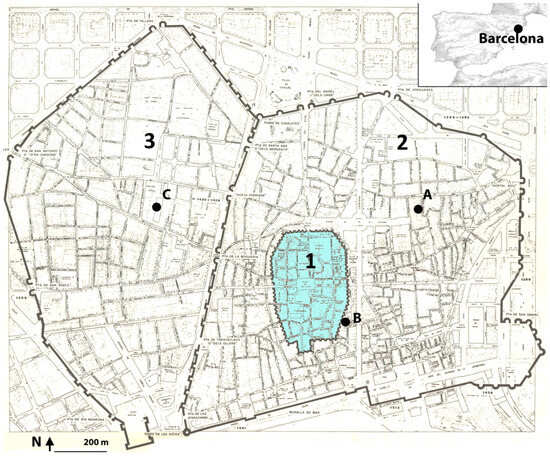
Barcelona originated as a city in Roman times, more precisely at the end of the 1st century BC. However, throughout this period, it remained a modest, relatively small city, covering little more than 10 hectares, enclosed within its own walls (Figure 1, no. 1). These walls served as a clear boundary for the urban space throughout late antiquity [19]. It was not until the early Middle Ages, from the 8th to 10th centuries, that the city’s fabric spread beyond these walls and began to colonize the surrounding area, which until then had only been used for agriculture, with its respective support buildings and dwellings, and a few religious houses, such as Sant Pere de les Puel·les, to the northeast, and Sant Pau del Camp, to the west of the urban center. This expansion during the early Middle Ages took place mainly on the eastern side [20]. On the western side, Barcelona developed much less, only as far as the present-day Rambles. This entire area was finally walled-in at the beginning of the 14th century (Figure 1, no. 2), although soon, during the same century, the area now known as the Raval neighborhood was enclosed by a new wall, farther to the west. Despite this, the newly enclosed area remained sparsely populated until relatively recently, in the 19th century, being occupied in the early modern period mainly by vegetable gardens or monastic buildings (Figure 1, no. 3) [21].
Figure 1.
Map of the city of Barcelona (old town) showing the boundaries of the city walls throughout the medieval period. Numbers: 1: The Roman city and its walls, which survived until the Middle Ages and beyond. 2: Area of urban expansion during the early Middle Ages and city walls until the 14th century. 3: Extension of the city and city walls built in the late 14th century and early 15th century. Letters: A: Carrer Mestres Casals i Martorell. B: Carrer Sotstinent Navarro. C: Plaça de la Gardunya.
2. Materials and Methods
As mentioned above, this study focuses on a case study: the city of Barcelona in medieval times (between the 8th and 15th centuries), through the paleopathological analysis of bones—in this case of domestic mammals—recovered from three sites that are nowadays located within the core of the city: (1) Carrer Mestres Casals i Martorell (henceforth Mestres Casals i Martorell); (2) Carrer Sotstinent Navarro (henceforth Sotstinent Navarro); and (3) Plaça de la Gardunya (henceforth Gardunya) (Figure 1).
First of all, it will present the results of the paleopathological study of some of the archeological context of the Mestres Casals i Martorell site (Figure 1, A). Although this site has been occupied from the late Roman period to the present day, the faunal study has focused on the material recovered from a well that was excavated to a depth of 1.80 m, as the intervention had to be stopped for reasons of safety and due to the requirements of the construction work. It is interpreted as a structure linked to a rural settlement, at that time still outside the perimeter of the city walls. It is known to have been abandoned around the 9th and 10th centuries. Among the fill material, several animals that had been discarded for consumption purposes were located: three dogs and a cat [22].
Secondly, the results of the material with pathological evidence from the Sotstinent Navarro site (Figure 1, B) will be considered. This excavation has provided an archeological record from the initial moment of the founding of Roman Barcino, in the Early Imperial period, to very recent phases. During this long period, the site went from being an area outside the city walls to an urbanized space occupied by various types of residences, which were built against the former city walls. This study analyses the paleopathologies of the faunal remains corresponding to the central and late Middle Ages, between the 8th and 15th centuries, when the space corresponded to a residential area that would gradually be transformed into a Gothic palace at the end of this period, between the 12th-13th and 15th centuries, with different outbuildings, which have allowed the recovery of fauna from food, craft activities, and animal waste rejected for human consumption, in an area that must have been used as a courtyard or garden. This site will undoubtedly provide the bulk of the data for the present study [23,24].
Finally, data will be provided on the burial of a single dog found at the Gardunya site (Figure 1, C). This site was occupied, although not uninterruptedly, from prehistoric times to the 18th century, but its peak of use began with the founding of a convent belonging to the Dominican order in the late 14th century, although the sisters were soon replaced by Franciscan Tertiary nuns. As the faunal assemblages from the early modern convent occupation levels are currently still undergoing study, only the remains of one dog are presented here; these can be dated to the 14th century, prior to the founding of the convent and were found in a space that would have previously been used as a vegetable garden, at a time when this part of the city was being enclosed by the last sections of the defenses, to the west of the late medieval core [25].
The analysis of this material has followed the classic methodology of archeozoological studies. Anatomical and taxonomic identification of the remains has been carried out using reference collections and by comparing diagnostic criteria from different studies [26,27]. It is of particular interest to establish the animals’ age at death, following the proposals of Silver [28], calculated through epiphyseal fusion and dentition in the case of equids, and Grant [29] in the case of bovids and suids, established by dental wear. Bone and dental criteria have also been used in the case of dogs, which are of particular importance in this study [30,31,32]. Similarly, in the case of dogs, different methods have been used to calculate withers height, as breed definition and the presence of pathologies are of some importance. The measurements taken correspond to those proposed by von den Driesch [33], and the withers height figures have been obtained from the compilation made by Chaix and Méniel [34]. The data were quantified based on calculations of the number of identified specimens (NISP) and minimum number of individuals (MNI), using the proposal by Grayson [35]. The pathological diagnosis, carried out by one of the authors (A.T.), has been verified using veterinary manuals [36,37,38] and animal paleopathology manuals [39,40]. The diagnosis was made through initial visual observation and subsequently supported by radiology, using an IntechForView CR System 2 device with a focal spot size of 1.3 mm and a power of 40 KW.
Once a bone alteration is diagnosed, its pathognomonic cause is established according to the aforementioned literature. In summary, bone abnormalities have been linked to three main pathological groups: trauma, related to accidents, fights between individuals (generally as a result of inadequate housing), or punishment or mistreatment by humans (blows or similar); genetic alterations, usually generated by artificial selection, which produce allometries and, in turn, biomechanical imbalances that throughout the animals’ lifespan cause osteoarthritis and enthesopathies; and finally, prolonged physical activity, generally in the limbs and axial skeleton, with mechanical stress, which can produce the same pathologies. The origin of each of these has been established by the customary use of different species up to the present day.
3. Results
3.1. Mestres Casals i Martorell
To date, archeozoological analysis at this site has revealed the remains of three dogs and one cat. The cat showed no apparent pathologies, so no information concerning it is presented in this paper. As for the NISP, there are 669 elements corresponding to dogs, which should be related to the three individuals already mentioned. The remains of the animals were found fully articulated, so in most cases each element could be attributed to its corresponding individual. Only some parts, mainly from the axial skeleton, remained unattributed at the time of excavation. It is also true that some small bones must have been overlooked during their extraction. For all these reasons, a description of the pathological condition of each of the individuals can be made. In any case, 37 elements show some pathological symptoms, representing 5.53% of the NISP, although in terms of individuals, all three specimens suffer from pathological alterations. Each of the individuals is described below.
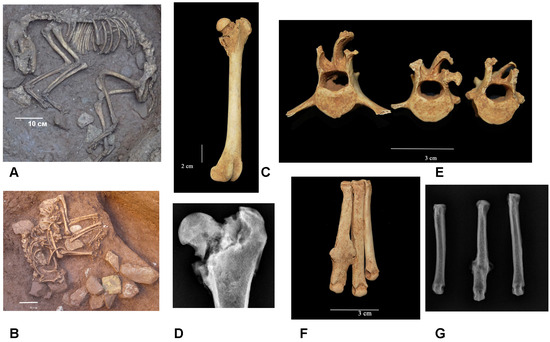
The first individual is a female between 6 and 8 years old, medium-large in size, with a height of 55 cm at the withers. This animal has multiple pathologies throughout its anatomy, especially as a result of trauma. Of particular note is a fracture in metacarpal 3, subsequently healed, with the bone callus affecting the adjacent metacarpals. It also has a sectioned and reossified caudal vertebra, which shows that the animal had had its tail docked. The second individual is another female, approximately 8 years old, medium-large in size, with a height of 57 cm at the withers. It has numerous dorsal apophyses in the thoracic and lumbar vertebrae, which are bent, without any bone callus visible on radiological examination, ruling out an origin due to accidental trauma. Finally, the third individual, again a female, is an extremely old animal, which, based on dental wear, could be attributed an age of 12 years. It has also lost several teeth (premolars from the left and right hemimandibles). As with the second animal, its height at the withers has been calculated at 57 cm. It has multiple healed fractures and, in some cases, pseudoarthrosis in elements that were not immobilized: in a rib and in the neck of the left femur. We are therefore dealing with aged animals that appear to have been mistreated, or that fought against each other. (Figure 2).
Figure 2.
Mestres Casals i Martorell. (A,B): Fully articulated dog remains during the excavation process (photos courtesy of Anna Bordas. ATICS SL). (C): Dog femur with pseudoarthrosis in the neck. (D): Detail of the above in X-ray image. (E): Lumbar vertebrae of a dog with spondylosis deformans. (F): Fracture in the metapodial of a dog and bone callus, with involvement of adjacent parts. (G): X-ray image of the above.
3.2. Sotstinent Navarro
For the moment, this site has provided the largest number of elements susceptible to analysis, with many remains (which in this case were generally disarticulated) corresponding to different species. A summary table is presented showing the number of remains and minimum number of individuals, as well as the incidence of pathological bones and animals and the percentage values they represent (Table 1) throughout the Middle Ages (9th to 15th centuries).
Table 1.
Sotstinent Navarro: NISP and MNI of the taxa analyzed in the study and pathological involvement in absolute and percentage values.
Caprines (genus Ovis and genus Capra) are undoubtedly the most important taxonomic group in terms of both NISP and MNI. They were usually slaughtered when young or subadult, at the optimum time for meat production, and the genus Ovis predominates over Capra. Although they constitute the most numerous taxa, there is very little pathological evidence. Remains with some type of pathological impact account for less than 0.5% and in terms of the number of individuals this would be significantly higher than 1%. We have a humerus with arthritic malformation of the distal epiphysis, but the rest of the elements (n: 6) are ribs with bone calluses, which appear to be the result of traumatic injuries that had healed and left bone calluses. This type of trauma would be consistent with the stabling of an excessive number of animals, which would butt each other on the sides in search of space.
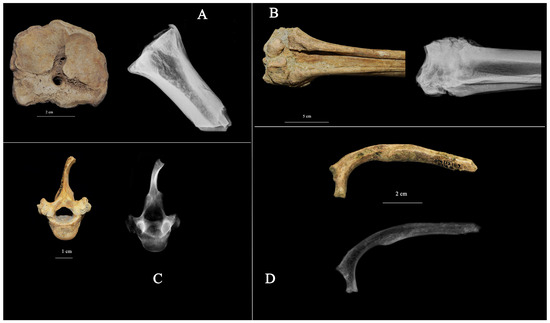
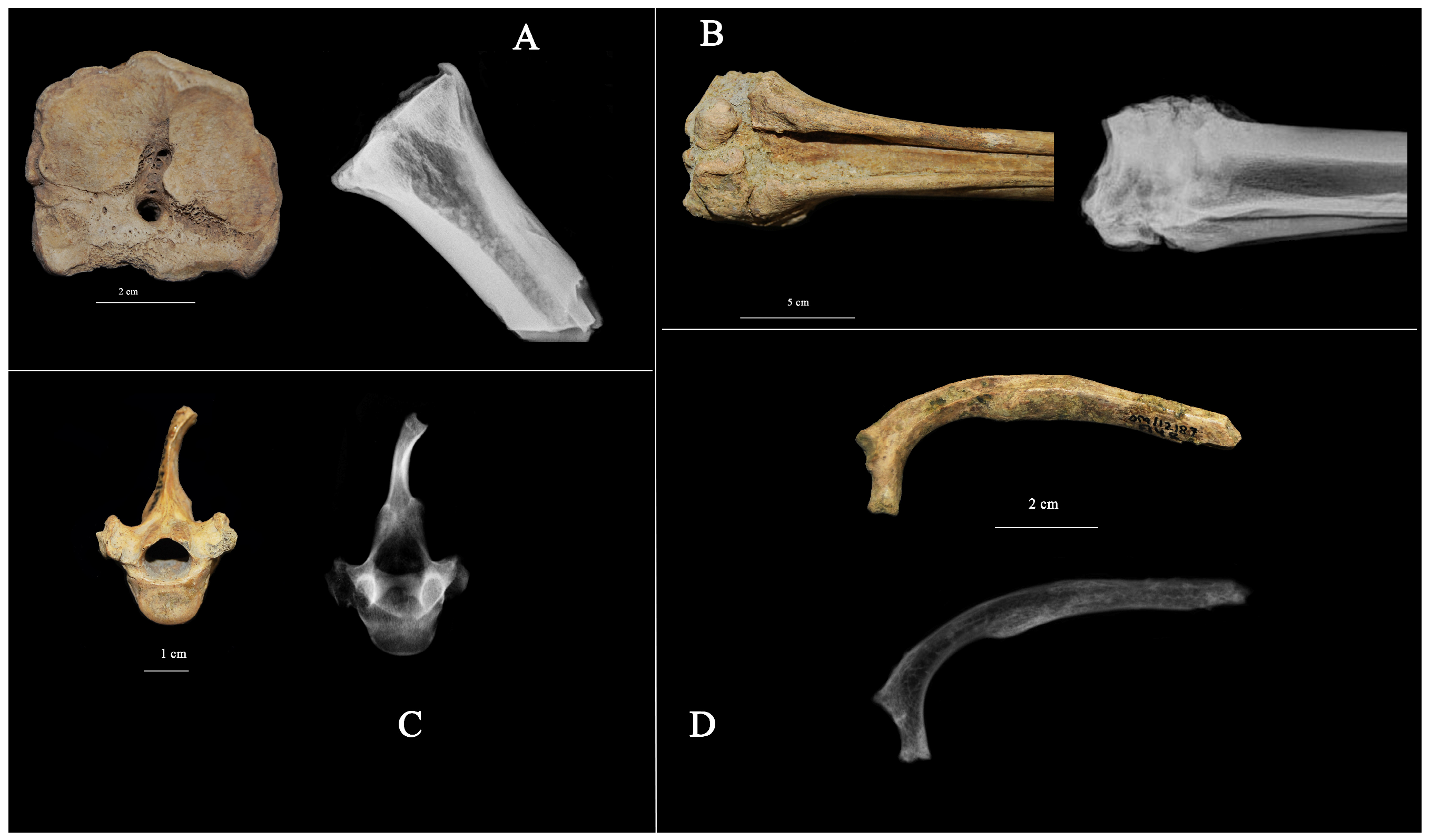
Cattle are the third-largest group represented in both the NISP and NMI calculations. In general, we find both adult and young animals, so it can be assumed that we are dealing with a group produced for two main reasons: animals raised for direct meat consumption (young individuals) and animals raised for milk production or as pack and draft animals (adult or elderly individuals), which were ultimately slaughtered for meat. This is partly reflected in the pathological evidence, both in its quantitative assessment and in its nature. In terms of quantification, the percentage of remains affected by pathologies, according to the NISP, is slightly higher than for goats and, as will be seen, pigs, reaching almost 2%, and, in individuals, clearly higher than goats and significantly higher than pigs, exceeding 10%. The pathologies have been located in the oral area, with two teeth showing evidence of gingivitis, probably due to the type of diet. Anomalies in the vertebrae have also been detected, including in both thoracic (two cases) and lumbar vertebrae, which present spondylitis or spondyloarthrosis and a fracture of the vertebral body, which could be related to the use of the animals for pack and draft purposes. Finally, there is a metatarsal with degenerative osteoarthritis caused both by work and prolonged stabling in unsuitable environments and on excessively hard floors.
Suids are the second most common taxonomic group according to the NISP and MNI frequencies, although far behind goats. These are always subadult animals, slaughtered when they had reached optimum meat quality. Pathological evidence is limited and falls between goats and cattle in numerical terms: in terms of the NISP, the percentage does not exceed 1%, although there are more individuals affected, with a proportion reaching 9% of the MNI. The evidence tends to be located in the extremities, such as a periosteal lesion in a humerus or a congenital deformity in a tibia, or also as lesions to the cartilage in a femur and calcaneus. These effects on suid limbs may be due to the intrinsic nature of the bones in selected breeds, which are very spongy and fatty, and to the selection of heavy animals, which put strain on the animals’ musculoskeletal system, as well as problems with pigsties or infectious diseases [41].
In the case of equids—a category that is assumed to include Equus caballus, Equus asinus, and perhaps also hybrids—their significance is much lower than that of the previous taxa. In fact, this is true as regarding MNI but not so much for the NISP, since some carcasses must have been abandoned without being previously processed, meaning that their anatomical integrity is high, should they be assumed to have been present. These would have been old animals that did not enter the food chain once they were no longer productive (as we assume in the case of cattle). In this case, the presence of pathologies rises considerably, exceeding 9% of the NISP and affecting one-third of the specimens in terms of MNI. As in cattle, pathological alterations sometimes affect cranial parts (jaw), but mainly the axial skeleton (vertebrae) and the limbs, both in the stylopodium and zeugopodium and, particularly, in the autopodium. Thus, impacts in the cervical, lumbar, and sacral vertebrae are found, with the fusion of different elements; in other words, arthrodesis. Bone fusion is particularly evident in one case in which the tarsal bones (navicular, lesser cuneiform, greater cuneiform, cuboid) were fused together and to the central metatarsal and atrophied metatarsals. Osteoarthritis has also been observed in the first phalanx. These processes, in the case of the vertebrae, can be linked to repeated stress from carrying and pulling loads, and in the case of the limbs, to excessive work and overweight loads, as well as the constant movement of animals on hard ground or when stabled, which are frequent causes of lameness in equines [42].
Finally, in the case of dogs, results similar to those of equids are recorded. First, it is an underrepresented taxon, with an MNI of 14, although due to the presence of some animals that must have been connected, the NISP is higher. These are adult animals, which in no case were processed for any purpose after their death. Regarding the NISP, the elements affected by pathologies total 9% and in some individuals they exceed 17%. Despite these similarities with equids, the diversity of the anatomical parts affected and the presence of pathologies associated with the artificial selection of the morphometry of some animals distinguishes them. An interesting case is that of the thoracic and lumbar vertebrae with deviated dorsal apophyses, with 11 cases. In addition, dysplasia of the humerus (three cases), panosteitis of the radius (two cases) and tibia (one case), and arthritis of the femur (one case), talus (one case), and phalanges (two cases) are observed, as well as a healed fracture of the ischium. In some older individuals, tooth loss with alveolar resorption is detected again (four cases). On the other hand, there are some specimens that retain their deciduous teeth into adulthood. It should be noted that, in at least one case, a brachymelic (short-legged) animal, of average body size but with clear evidence of achondroplasia, has been identified. The animal’s continued life, together with the difficulties of movement due to its congenital anatomical complexity, must have led to the appearance of many of the aforementioned pathologies in some of the bones of the extremities (Figure 3).
Figure 3.
Sotstinent Navarro. (A): Degenerative osteoarthritis in the proximal part of the metatarsal of Bos taurus, and radiological image. (B): Arthrodesis of the tarsal and metatarsal bones of Equus sp. and radiological image. (C): Thoracic vertebra of a dog with spondylosis deformans in the dorsal apophysis, and radiological image. (D): Caprine rib with fracture and bone callus, and radiological image.
3.3. The Gardunya Site
The dog buried at the Gardunya site, with 147 preserved elements analyzed, exhibited no evidence of disease. It is included in this study because of the great anatomical similarities between this specimen and those found at the Mestres Casals i Martorell site. It is a somewhat smaller animal, 47 cm tall at the withers, and much younger, less than 6 years old, and would have lived in a similar environment: a space that, although now within the city’s walls, would still have been used as agricultural land, and similarly its remains were articulated when found. Its relatively good health could be linked to its young age, indicating that many of the pathologies observed in the dogs in the previous cases are probably mainly the result of aging and the treatment received throughout their life.
4. Discussion
The paleopathological analysis of the faunal evidence (domestic mammals) studied in this work shows a certain diversity of alterations depending on the species, anatomical area affected, and location and function of the site, taking into account the growth of the city (Table 2).
Table 2.
Overall approximation of pathologies according to their presence in different anatomical sections (skull, axial skeleton, and appendicular skeleton) in percentage values, specifying the bones affected and the pathologies identified.
Assuming that the information comes mainly from the study of the Sotstinent Navarro site but with complementary data from the Mestres Casals i Martorell and Gardunya sites for dogs, it can be observed that among the species used primarily for meat, that is caprines and pigs, which were usually slaughtered at an early age once they had reached their optimal meat yield, the remains exhibit fewer pathological signs. In caprines, these are usually traumatic in nature and concentrated in the rib area. In pigs, they are found in the limbs and are due to degenerative phenomena linked to penning or the intrinsic nature of the skeletal structure of pigs. On the basis of these data, it can be assumed the interaction of caprines (sheep and goats) and suids with humans in the city was minimal during the lifetime of the specimens. These were young animals used to supply food resources, mainly meat. The increasing size of Barcelona, which even in the Middle Ages was not self-sufficient regarding its meat supply, meant that most animals were not reared locally. They would have arrived on the outskirts of the city alive but would have been slaughtered immediately for their meat. Therefore, the pathologies identified would not correspond to the animals’ way of life in the city. Furthermore, these health problems are usually few in number compared to other species. The slaughter of young animals would not allow for the development of pathologies that became more marked with age. The massive arrival of caprines from more distant territories of the Crown of Aragon (Valencia, Aragon, the Pyrenees, Mallorca) in Barcelona was already known through texts [43].
In the case of cattle, the number of pathologies is significantly higher but not excessively so, although there is an increase in the number of individuals affected. In this case, the pathologies are concentrated in the cranial (teeth), axial, and limb areas. In the latter two anatomical areas, the evidence points to aged animals that were repeatedly used for carrying loads and transport, with osteoarthritis and spondylitis appearing. The pathologies demonstrate this mixed use of cattle was mostly likely, as animals used for food production and service during their lifetime, most likely within the city.
Their use as pack animals and mounts is very evident among equines, in which pathologies are abundant and also affect the anatomical parts that suffer most from repeated loading and transport (spine and limbs), with the presence of arthrodesis in the vertebrae and the autopod bones as a result of previous osteoarthritis. These must have been animals that lived and worked in the city and were stabled in inadequate conditions, with excessively hard floors. Clearly, the pathologies developed due to these causes do not differ from those seen in working animals in medieval rural environments. However, it appears that in urban settings, as a result of more frequent activity as well as the difficulties of stabling and the hard surfaces of the streets, these problems seem to be more common. In the case of the equines from Sostinent Navarro, the incidence can be seen to be particularly high [44,45].
The case of dogs is also unique, in that the nature of the pathologies is diverse, ranging from animal abuse (or fighting), with frequent fractures that subsequently healed, or pseudoarthrosis, the possible use of some animals for carrying loads, or, conversely, the artificial selection of animals for esthetic reasons (pets?). The presence of curved dorsal apophyses in the thoracic and lumbar vertebrae could be related to their use for transport and carrying loads [46], although the origin of this type of pathology is a matter of debate and some authors correlate their occurrence with age, body size, sex, and inbreeding [47]. Whatever the case, the use of dogs for transport has been known since prehistoric times and has continued to the present day, with multiple ethnographic and historical parallels [48]. Of particular note is the presence of a breed with achondroplasia, which deforms the limbs and head and has biomechanical effects throughout the animals’ lives. In addition, many of these health disorders in animals tend to increase with age, as was already the case with equines and cattle used for work. The difference in assessment between the finds from the Mestres Casals i Martorell site and those from the Gardunya site could fall into this category.
In general terms, these results obtained in Barcelona are similar to those from zooarchaeological studies carried out in other European cities during the Middle Ages, although the data tend to be very scattered and generally focused on specific taxa, usually horses. Furthermore, these uses can be traced back to earlier urban contexts, specifically Roman urbes [49,50].
On the other hand, some of the results obtained and their interpretation in veterinary terms are consistent with the textual data. Although there are treatises devoted to the healing and recovery of certain animal groups, in most cases these are prestigious taxa rather than animals used for food production or traction in everyday activities. This means that, for some species, specifically horses and dogs, there are veterinary treatises, as there were for birds of prey used in falconry. However, these treatises focus on animals used in activities associated with the higher social classes: hunting, which would involve dogs and horses, and warfare, which would concentrate on the treatment of horses. In fact, in a medieval Catalan cultural context, the only professional specialists in animal healthcare that are known to have existed were for horses, since the care of sick or injured dogs would have been the responsibility of the owners or carers themselves, as would be the case with falconry birds [51]. In the case of horses and other equines, the figure of the menescal appears, referring to people dedicated exclusively to the healing of horses and mules, who seem to have evolved from another specialized activity linked to the management and care of equines: farriers. In fact, farriers and menescals were part of the same guild in some cities [52]. On the other hand, there is no textual evidence of the application of veterinary science to cattle, goats, and pigs, as this field is not attested in the north-eastern part of the Iberian Peninsula until the 17th century. Some researchers, however, believe that the lack of earlier texts does not necessarily mean that the health of these animals was neglected in earlier times [53].
5. Conclusions
The study of Barcelona’s urban growth during the Middle Ages (8th to 15th centuries) now has new evidence to complement traditional data from textual and archeological documentation: archeozoological studies and, specifically, animal paleopathology. The analysis and diagnosis of diseases, genetic alterations, and trauma in different domestic species that in one way or another coexisted with humans in urban or peri-urban areas demonstrate the uses of these animals and the context in which this took place: sheep, goats and pigs were clearly animals imported for meat supply and they were killed long before they could develop serious pathologies related to work or age. In contrast, large domestic mammals, equines (horses, donkeys, and mules) and, to a lesser extent, cattle, appear to have been used in a variety of ways, often throughout their lives, both for food (milk in the case of cattle) and as animals for traction and as mounts. Pathologies in the spine and limbs would indicate their use as draft and pack animals. This does not mean that, in the case of cattle, there may not have been some use of relatively young animals for meat, and this was definitely the case of old animals used for the same purpose, once they had been fully exploited in their lifetimes for whatever their role may have been. This would demonstrate, unlike medium-sized domestic animals, the use of these large species as draft animals and mounts in the urban ecosystem of Barcelona.
Finally, the case of dogs is particularly diverse. Pathologies are reflected both in breed selection, with biomechanical abnormalities due to allometric modification in some animals, and in traumas of varying intensity due to the treatment or use of certain individuals. In this regard, there is a marked difference between urban and peri-urban dogs. The latter, which lived in contexts linked to agricultural production (market gardens, orchards), are usually medium-to-large animals without metric disproportions. They may have been mistreated by their owners or have fought each other or have been injured by intruders. The result is a large number of injuries to multiple parts of the body—limbs and thorax—leading to fractures that resulted in bone calluses or pseudoarthrosis in animals that had recovered from their injuries. These dogs were essentially used for guarding and defense. The presence of this same pathology in strictly urban dogs suggests that this function would also occur in city streets. The use of dogs as pack animals cannot be ruled out, according to the interpretation some authors give to the curvatures of the dorsal processes of the thoracic and lumbar vertebrae. It should be emphasized, however, that many others do not consider this pathology as evidence of such activity. Further studies on this question are needed. Finally, as regards the evidence for dogs being kept as pets, the selection of small or disproportionate breeds, especially concerning the limbs (achondroplasia), is already recorded. In conclusion, animals that lived alongside humans in cities ultimately reflected the lifestyle habits of their inhabitants, and this can also be detected in the paleopathologies diagnosed in archeozoological studies. Barcelona during the Middle Ages is a good example of this phenomenon.
Author Contributions
J.N., M.F.-L., L.L. and P.B. wrote the main manuscript text and prepared the figures. The Rx were undertaken by A.T. Text revision, corrections and improvements were made by J.N., P.B., S.R. and L.L. All authors have read and agreed to the published version of the manuscript.
Funding
This research was funded by: PID2020-118194RJ-100 and PID2023-146276NB-100, Ministerio de Ciencia e Innovación (MICINN), 2021SGR00337, Generalitat de Catalunya.
Data Availability Statement
The data that support the findings of this study are available from the corresponding author upon reasonable request.
Acknowledgments
The authors would like to thank Emili Revilla, collections at the Museu d’Història de Barcelona, for facilitating the study of the material, as well as Anna Bordas, Òscar Matas, Jordi Ramos and Vanesa Triay, at the sites studied, who provided the textual and graphic data for contextualizing the faunal remains.
Conflicts of Interest
The authors declare no conflicts of interest.
References
- van Helden, P.D.; van Helden, L.S.; Hoal, E.G. One World, One Health: Humans, animals and the environment are inextricably linked–a fact that needs to be remembered and exploited in our modern approach to health. EMBO Rep. 2013, 14, 497–501. [Google Scholar] [CrossRef] [Scilit]
- Doxiadis, C.A. Ecology and Ekistics; Paul Elek: London, UK, 1977. [Google Scholar]
- Pickett, S.T.A.; Burch, W.R.; Dalton, S.E.; Foresman, T.W.; Grove, J.M.; Rowntree, R. A conceptual framework for the study of human ecosystems in urban areas. Urban Ecosyst. 1997, 1, 185–199. [Google Scholar] [CrossRef] [Scilit]
- Hassell, J.M.; Begon, M.; Ward, M.J.; Fèvre, E.M. Urbanization and Disease Emergence: Dynamics at the Wildlife-Livestock-Human Interface. Trends Ecol. Evol. 2017, 32, 55–67. [Google Scholar] [CrossRef] [Scilit]
- Namdar, L.; Bartosiewicz, L.; May, H.; Sapir-Hen, L. Animals’ paleopathology: Implications on human–animal interaction during the intensification of farming in the Southern Levant. Int. J. Osteoarchaeol. 2024, 34, e3333. [Google Scholar] [CrossRef] [Scilit]
- Bartosiewicz, L.; Van Nerr, W.; Lentacker, A.; Fabiš, M. Draught Cattle: Their Osteological Identification and History; Royal Museum for Central Africa: Tervuren, Belgium, 1997. [Google Scholar]
- MacKinnon, M. Cattle ‘breed’ variation and improvement in Roman Italy: Connecting the zooarchaeological and ancient textual evidence. World Archaeol. 2010, 42, 55–73. [Google Scholar] [CrossRef] [Scilit]
- Sick, J.; Kohut, G. Paleopathology, Entheseal Changes, and Cross-Sectional Geometry: The Zooarchaeology of Working Animals. Pathways 2021, 3, 52–70. [Google Scholar] [CrossRef] [Scilit]
- Bendrey, R. New methods for the identification of evidence for bitting on horse remains from archaeological sites. J. Archaeol. Sci. 2007, 34, 1036–1050. [Google Scholar] [CrossRef] [Scilit]
- Thomas, R. The zooarchaeology of animal ‘care’. In Care in the Past: Archaeological and Interdisciplinary Perspectives; Powell, L., Southwell-Wright, W., Gowland, R., Eds.; Oxbow Books: Oxford, UK, 2017; pp. 169–188. [Google Scholar]
- Lloveras, L.; Thomas, R.; Moreno-García, M.; Nadal, J.; Tomàs-Gimeno, X.; Rissech, C.; Bellis, L. Pathological and sub-pathological changes in European rabbit bones: Two reference cases to be applied to the analysis of archaeological assemblages. Int. J. Paleopathol. 2021, 34, 90–100. [Google Scholar] [CrossRef] [Scilit]
- Trbojević Vukičević, T.; Korpes, K.; Đuras, M.; Vrbanac, Z.; Javor, A.; Kolenc, M. Paleopathological Changes in Animal Bones from Croatian Archaeological Sites from Prehistory to New Modern Period. Vet. Sci. 2023, 10, 361. [Google Scholar] [CrossRef] [Scilit]
- Bartosiewicz, L. Bone structure and function in draft cattle. In Limping Together Through the Ages, Joint Afflictions and Bone Infections; Grupe, G., McGlynn, G., Peters, J., Eds.; Documenta Archaebiologiae, Verlag Marie Leidorf: Rahden, Germany, 2008; pp. 153–164. [Google Scholar]
- De Cupere, B.; Lentacker, A.; Van Neer, W.; Waelkens, M.; Werslype, L. Osteological evidence for the draught explotaition of cattle: First applications of a new methodology. Int. J. Osteoarchaeol. 2000, 10, 254–267. [Google Scholar] [CrossRef] [Scilit]
- Holmes, M.; Thomas, R. “…in winter, plough”: Zooarchaeological evidence for the changing role of draught cattle and horses in medieval England AD 400–1400. In Draft Animals in the Past, Present and Future; Kroop, C., Zoll, L., Eds.; Propylaeum: Heidelberg, Germany, 2022. [Google Scholar]
- Grau, R.; Nadal, M. La unificació municipal del Pla de Barcelona 1874–1897; Institut Municipal d’Història-Proa: Barcelona, Spain, 1997. [Google Scholar]
- Santa-Maria, G. Barcelona 1843. Progressisme versus Muralles; Ajuntament de Barcelona: Barcelona, Spain, 2005. [Google Scholar]
- Pallarès-Barberà, M.; Badia, A.; Duch, J. Cerdà and Barcelona: The need for a new city and service provision. Urban Izziv 2011, 22, 122–136. [Google Scholar] [CrossRef] [Scilit]
- Beltrán de Heredia, J. Barcino, de colonia romana a Sede Regia visigoda, medina islámica i ciutat comtal: Una urbs en transformación. Quarhis 2013, 9, 15–118. [Google Scholar]
- Banks, P. El creixement físic de Barcelona, segles X-XIII. Barc. Quad. D’història 2003, 8, 11–33. [Google Scholar]
- García, A. La Ciutat del Born. Economia i vida Quotidiana a Barcelona (Segles XIV a XVIII); Ajuntament de Barcelona: Barcelona, Spain, 2009. [Google Scholar]
- Fernández, M.; Lloveras, L.; Tarragó, A.; Banks, P.; Bordas, A.; Matas, O.; Ramos, J.; Triay, V.; Nadal, J. Els gossos a la Barcelona medieval. Registre arqueològic, icnològic i textual. In Cànids i Grups Humans en el Passat; Sanchis, A., Ed.; Museu de Prehistòria de València: València, Spain, 2024; pp. 197–218. [Google Scholar]
- Ramos, J. Memòria de la Intervenció Arqueològica Preventiva Efectuada al Carrer del Sotstinent Navarro, 12–16/Baixada de Caçador, 8. Muralla Romana, Torres 27 i 28. Districte de Ciutat Vella, Barcelona; Àtics SL; Memòria d’excavacions; Codi ICUB: 059/12; 052/13; 081/14; Institut de Cultura de Barcelona: Barcelona, Spain, 2017. [Google Scholar]
- Ramos, J.; Llinàs, J.A.; Miró, C. La muralla romana en el marc del Pla Bàrcino. La intervenció arqueològica a les torres 27 i 28. In Tribuna d’Arqueologia 2015–2016; Generalitat de Catalunya, Departament de Cultura: Barcelona, Spain, 2018; pp. 216–238. [Google Scholar]
- Velasco, A. Memòria de la Intervención Arqueológica a la Plaça de la Gardunya; Conatus Arqueología SLU; Codi ICUB: 089/10; Institut de Cultura de Barcelona: Barcelona, Spain, 2014. [Google Scholar]
- Schmid, E. Atlas of Animal Bones; Elsevier: Amsterdam, The Netherlands, 1972. [Google Scholar]
- Barone, R. Anatomie Comparée des Mammifères Domestiques. Tome 1: Ostéologie; Vigot: Paris, France, 1986. [Google Scholar]
- Silver, I.A. The ageing of domestic animals. In Science in Archaeology: A Survey of Progress and Research; Brothwell, D., Higgs, E., Eds.; Thames and Hudson: London, UK, 1969; pp. 283–302. [Google Scholar]
- Grant, A. The use of tooth wear as a guide to the age of domestic ungulates. In Ageing and Sexing Animal Bones from Archaeological Sites; Wilson, B., Grigson, C., Payne, S., Eds.; British Archaeological Reports BS 109; BAR Publishing: Oxford, UK, 1982; pp. 91–108. [Google Scholar]
- Piérard, J. Note d’anatomie appliquée, appreciation de l’âge du chien. Can. Vet. J. 1967, 8, 197–200. [Google Scholar] [PubMed]
- Morgan, J.P.; Miyabashi, T. Dental radiology: Ageing changes in permanent teeth of beagle dogs. J. Small Anim. Pract. 1991, 32, 11–18. [Google Scholar] [CrossRef] [Scilit]
- Horard-Herbin, M.P. Dog management and use in the late Iron Age: The evidence from the Gallic site of Levroux (France). In Dogs Through Time: An Archaeological Perspective; Crockford, S.J., Ed.; British Archaeological Reports; BAR Publishing: Oxford, UK, 2000; Volume IS 889, pp. 115–121. [Google Scholar]
- Driesch, A.v.d. A Guide to the Measurement of Animal Bones from Archaeological Sites; Peabody Museum Bulletin 1; Harvard University: Cambridge, MA, USA, 1976. [Google Scholar]
- Chaix, L.; Méniel, P. Manual de Arqueozoología; Ariel: Barcelona, Spain, 2005. [Google Scholar]
- Grayson, D.K. Quantitative Zooarchaeology; Academic Press: Cambridge, MA, USA, 1984. [Google Scholar]
- Fraser, C.M. El Manual Merck de Veterinaria; Océano: Barcelona, Spain, 1993. [Google Scholar]
- Smith, B.P. Large Animal Internal Medicine; Elsevier: Amsterdam, The Netherlands, 2009. [Google Scholar]
- Radostits, O.M.; Gay, C.C.; Hindhcliff, K.W.; Constable, P.D. Veterinary Medicine. A Textbook of the Diseases of cattle, Horses, Sheep, Pigs and Goats; Elsevier: Amsterdam, The Netherlands, 2010. [Google Scholar]
- Harcourt, R.A. The paleopathology of animal skeletal remains. Vet. Rec. 1971, 89, 267–272. [Google Scholar] [CrossRef] [Scilit]
- Baker, J.; Brothwell, D. Animal Diseases in Archaeology; Academic Press: London, UK, 1980. [Google Scholar]
- Canning, P.; Costello, N.; Mahan-Riggs, E.; Schwartz, K.J.; Skoland, K.; Crim, B.; Ramirez, A.; Linhares, D.; Gauger, P.; Karriker, L. Retrospective study of lameless cases in growing pigs associated with joint and leg submissions to a veterinary diagnostic laboratory. J. Swine Health Prod. 2019, 27, 118–124. [Google Scholar] [CrossRef] [Scilit]
- Stashak, T.S. Adams’ Lameness in Horses, 4th ed.; Lea & Febiger: Philadelphia, PA, USA, 1987. [Google Scholar]
- Banegas, R.A. Sangre, Dinero y Poder. El Negocio de la Carne en la Barcelona Bajomedieval; Ed. Milenio: Lleida, Spain, 2016. [Google Scholar]
- Broster, C.E.; Burn, C.C.; Barr, A.R.; Whay, H.R. The range and prevalence of pathological abnormalities associated with lameness in working horses from developing countries. Equine Vet. J. 2009, 41, 474–481. [Google Scholar] [CrossRef] [Scilit] [PubMed]
- Merridale-Punter, M.S.; Wiethoelter, A.K.; El-Hage, C.M.; Hitchens, P.L. Prevalence and Factors Associated with Working Equid Lameness in Low- and Middle- Income Countries. A Systematic Review and Meta-Analysis. Animals 2022, 12, 3100. [Google Scholar] [CrossRef] [Scilit]
- Albizuri, S.; Fernández, M.; Tomás, X. Evidencias sobre el uso del perro en la carga durante el Bronce Inicial en la Península Ibérica: El caso de Can Roqueta II (Sabadell, Barcelona). Archaeofauna 2011, 20, 139–155. [Google Scholar] [CrossRef] [Scilit]
- Latham, K.J.; Losey, R.J. Spondylosis deformans as an indicator of transport activities in archaeological dogs: A systematic evaluation of corrent methods for assessing archaeological specimens. PLoS ONE 2019, 14, e0214575. [Google Scholar] [CrossRef] [Scilit] [PubMed]
- Gautier, A. La Domestication. Et l’homme créa l’animal …; Herrance: Paris, France, 1990. [Google Scholar]
- Marković, N.; Stevanović, O.; Nešić, V.; Marinković, D.; Krstić, D.; Nedeljković, D.; Radmanović, D. Paleopathological study of Cattle and Horse bone remains of the Ancient Roman city of Sirmium (Pannonia/Serbia). Révue Med. Vétérinaire 2014, 165, 77–88. [Google Scholar]
- Janeczek, M.; Makowiecki, D.; Rozwadowska, A.; Chudziak, W.; Pasicka, E. Pathological Changes in Early Medieval Horses from Different Archaeological Sites in Poland. Animals 2024, 14, 490. [Google Scholar] [CrossRef] [Scilit] [PubMed]
- Ferragud, C.; Olmos de León, R.M. La cura dels cavalls, gossos i ocells de caça a la Corona d’Aragó: Entre la literatura específica i la seva assistència mèdica. In Els Animals a l’edat Mitjana; Sabaté, F., Ed.; Pagès edicions: Lleida, Spain, 2018; pp. 119–140. [Google Scholar]
- Cifuentes, L.; Ferragud, C.; García, L. Els menescals i l’art de la menescalia a la Corona d’Aragó durant la Baixa Edat Mitjana. In Història de la Ramaderia i la Veterinària als Països Catalans; (Proceedings of IV Col·loqui d’història agrària, Barcelona, Spain, May 1997); Centre d’Estudis Històrics Internacionals-Universitat de Barcelona: Barcelona, Spain, 1999; pp. 75–98. [Google Scholar]
- Cifuentes, L. Cavalls, bous i vaques: Sobre manescalia i agronomia a Catalunya entre l’edat mitjana i la moderna. In VI Trobada d’Historia de la Ciència I de la Tècnica, Vic, Spain, 27–29 October 2000; Batlló, J., de la Fuente, P., Puig, R., Eds.; Societat Catalana d’Història de la Ciència i de la Tècnica: Barcelona, Spain, 2002; pp. 87–91. [Google Scholar]

Disclaimer/Publisher’s Note: The statements, opinions and data contained in all publications are solely those of the individual author(s) and contributor(s) and not of MDPI and/or the editor(s). MDPI and/or the editor(s) disclaim responsibility for any injury to people or property resulting from any ideas, methods, instructions or products referred to in the content. |
© 2026 by the authors. Licensee MDPI, Basel, Switzerland. This article is an open access article distributed under the terms and conditions of the Creative Commons Attribution (CC BY) license.