

The Intertidal Zone of the Chiloé Archipelago (Chile): Tensions Between Williche Eco-Ontological Conservation and Other Actors: A Situated Ethnographic Dialogue



Abstract
1. Introduction
1.1. Archeological and Historical Background: The Inhabitants of the Northern Channels
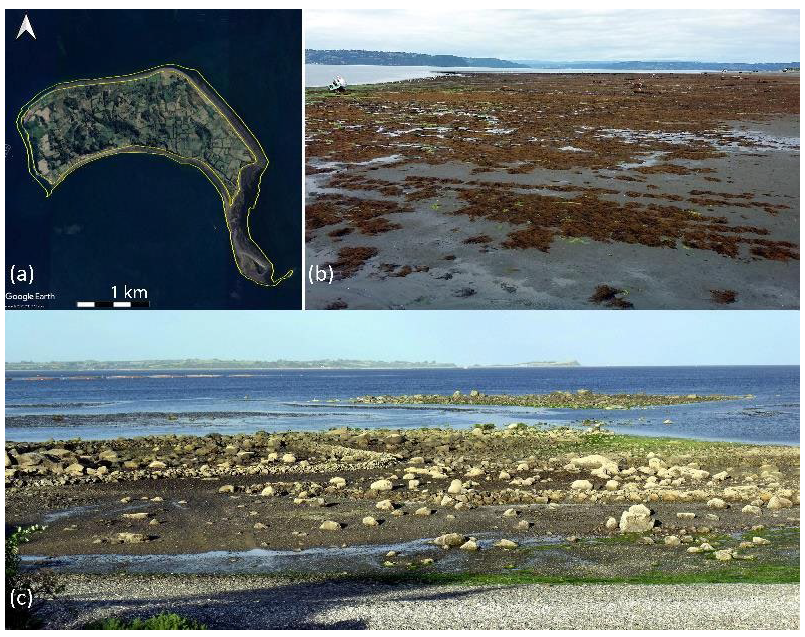
1.2. Area of Study
1.3. Legal Regulations and Indigenous Peoples
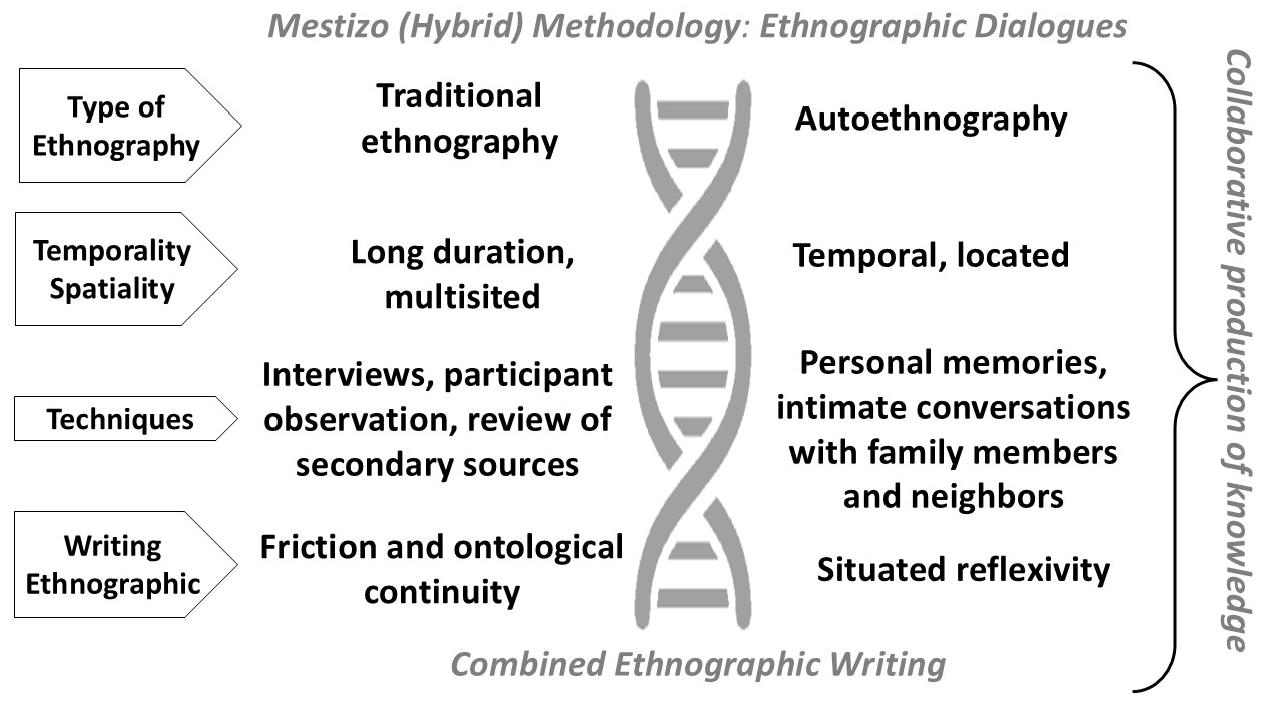
2. Method
“What is the purpose of an autoethnography if not to approach the knowledge that begins in the body to become a description? (…) In Caguach the fire is lit and on it sits an old teapot from grandmother’s time. Great-grandmother actually. Silence stimulates contemplation, and through it, images of the past are composed, and, in the absence of precise words, actions appear in the mind, projected from her eyes to be described. It is worth remembering that, as a strategy of adaptation and resistance, acts were transmitted through observation and the names were omitted, as it is the memories that pull the words after them, words that have not been used in the last 50 years” (Situated reflection, Daniela Leviñanco, pers. comm. Summer 2024–2025).
3. Results
“The bottom of the sea is like a town with streets, each place has a name: where the stones are, is called bajería, where the beach is, is called fango. We know whether we are on the rocks or not, where the sand is and how far the mud extends. When the fisherman asks, “Where did you catch those conger eels?” One says: in the mud of such and such, so many hours from the cove such and such’, because all the coves have names, just like the streets of a town. So, the fisherman who knows, goes there. Going to sea in the dark of night, he does whatever he needs to, to get to the place they told him of, that’s what you call an artisanal fisherman. We learned it with our fathers, with our uncles and grandparents” [69] (Fuenzalida, 2016: 76).
3.1. What Is the Beach, What Is the Intertidal, What Are the Things That Exist There?
“The sea is a neighbour, a member of the family. We are neighbours who greet each other every day (…) I have one foot in the water and the other on land. Because we sail the sea, we harvest it, we sow it” (Reflection, Daniela Leviñanco, pers. comm. Summer 2024–2025).
“My territory (…) is composed mainly of different beings that make up marine life: algae, fish, shellfish, molluscs (…) But it is also composed of the ngen (owners or protective forces) that inhabit these territories” [77] (Arce et al. 2023: 16).
“In the territory we inhabit there is a ngen (protective force) that is very strong (…) one can say that where this ngen is on the coast and in the sea, when the tides are good, there is an abundance of seaweed, it is very abundant, so much so that we cannot manage to take it all” [77] (Arce et al. 2023: 18).
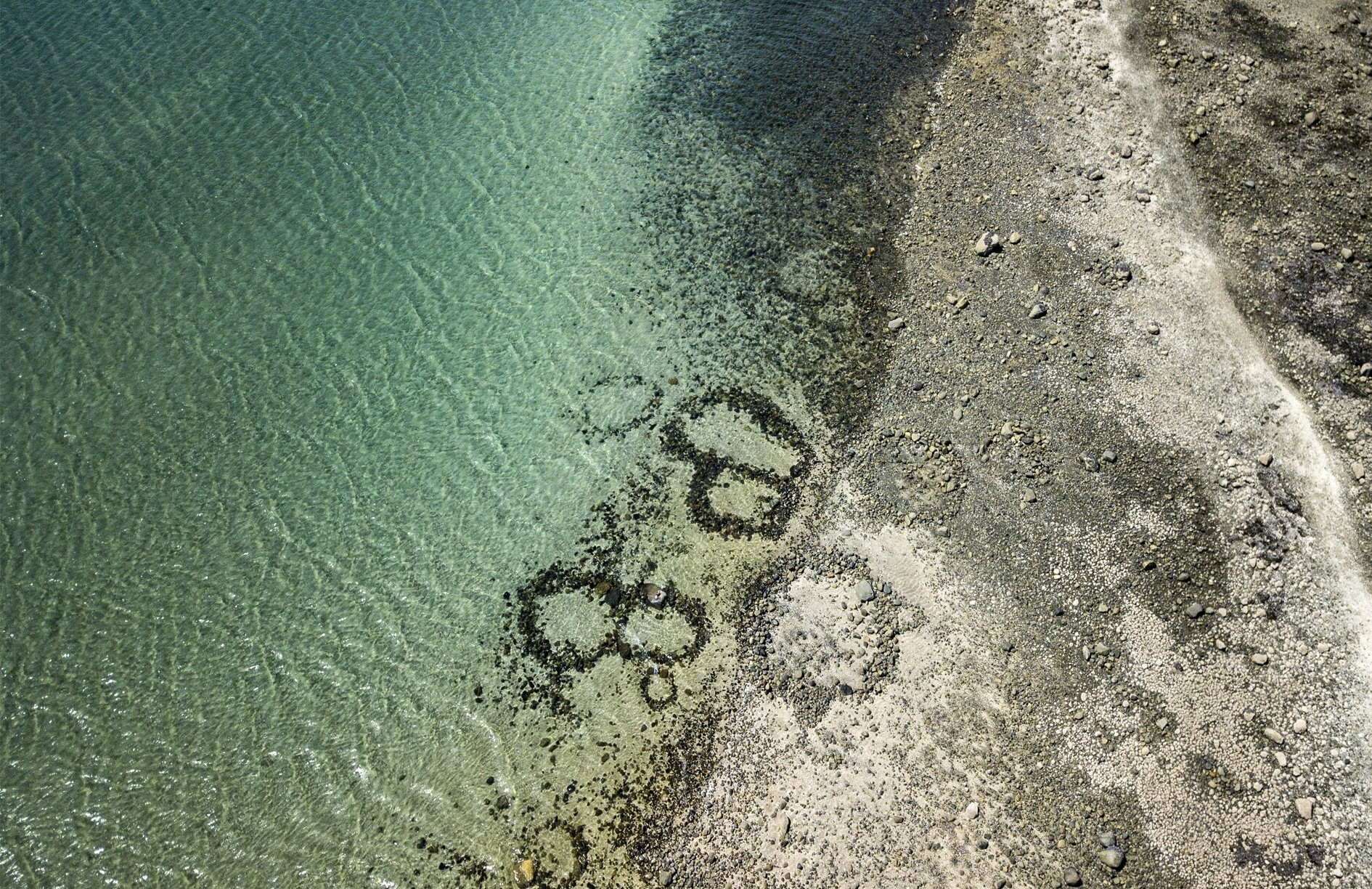
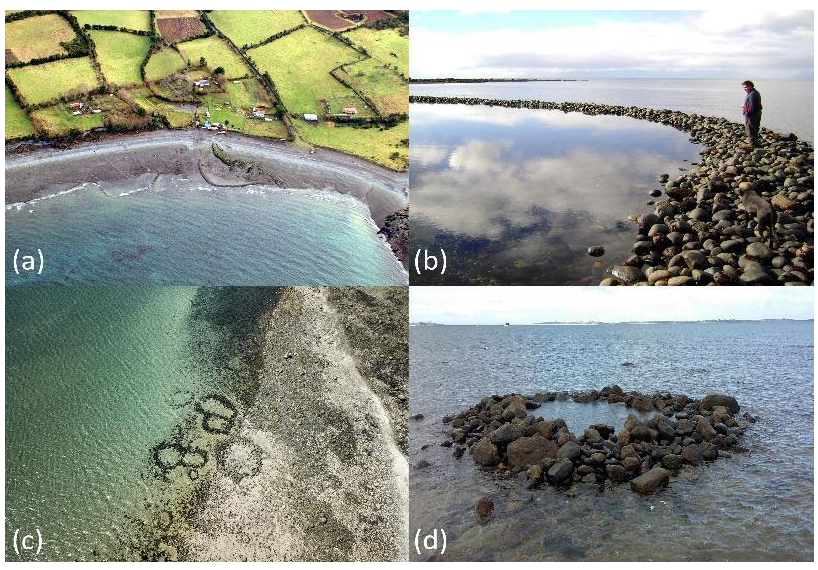
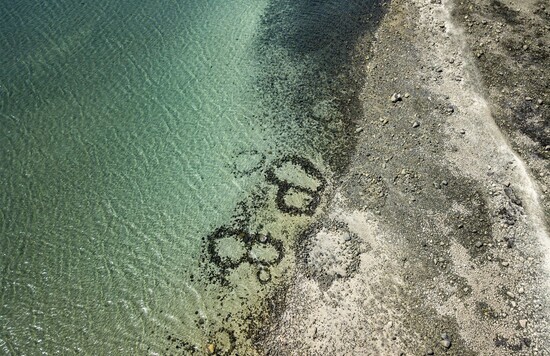
“Speaking of the childhoods of my mother and father (…) that was when they learned about the premise of duality as a requirement of balance, where the fertility of the Pincoya (a woman of the sea, half human and half fish) and the overwhelming power of the Cuchivilu (half pig and half fish) are a manifestation of that: abundant food and the contamination of the beach coexist as possibilities, and it is respect, offerings, and keeping alive the rituals that make these energies of the Mapu (land) and the Lafkenmapu (sea) compatible. A symbiosis of energies that exist together between the flooded territory and the dry land. And the same balance enables the existence of many other beings (ngüenes), who have always been invisible but are present in every organism and element, inhabiting boulders, underwater caverns, and fishing weirs” (Situated reflection, Daniela Leviñanco, pers. comm. Summer 2024–2025).
“People talk about the great scarcity of fish and shellfish. And if the sea is alive… why does it have so few living beings today? Why is an entire coast, so long, not enough to feed its children?” (Situated reflection, Daniela Leviñanco, pers. comm. Summer 2024-2025).
3.2. How Can and Should These Spaces Be Used?
“The second pot began to boil. The steam, with its humidity, dissolved temporal distances and brought to the present the persecution, forced displacements, abandonment, and confusion when the first missionaries arrived. Are these ontological differences the result of the denial of ancestral knowledge, which told us that everything is tied to our knowledge about our surroundings? Knowledge of clouds and wind was punished as witchcraft. Knowing the tides, knowing the many things related to that spirituality began to be frowned upon (…) Then, those who came from far away, when trying to change the belief in many spirits, many ngnes… into belief in a single higher being, that was the change, that was the loss. And we began to get sick and, spiritually, to forget ourselves. A silence entered, where is the knowledge to enter into communication with them?” (Situated reflection, Daniela Leviñanco, pers. comm. Summer 2024-2025).
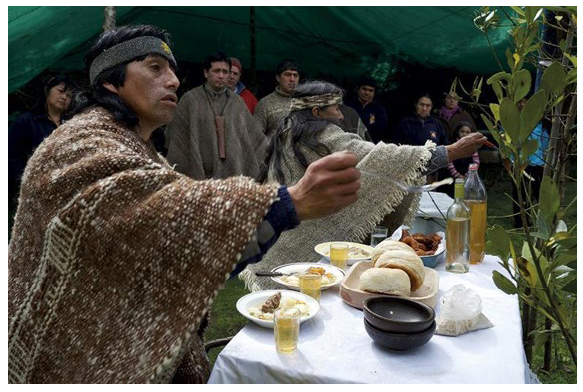
“During a minga [work party] to dig potatoes, we neighbours talked about the experiences that the old ones had left us. Although the stories differed, they all pointed to the same goal of preserving life and vitality in the intertidal. To ensure this, the journey to the beach or out to sea also involved upholding certain spiritual safeguards. Some neighbours used to say that to go down to the shellfish bed, you should go on an empty stomach so that the Pincoya would be kind enough to give you food. Others said that problems and grudges should be left on dry land, so you visited the intertidal in the best pañihue (spiritual state) possible: you have to go down there serenely and without quarrelling, or else the sea will withhold her gifts from you. Similarly, for some it was important to make an offering to the ngen that inhabits the shallows, since when looking for food, they had to give thanks for catching the Pincoyita’s children. They recalled that these offerings always had to take duality into account, which meant that all offerings had to be double: if murke (toasted flour) (Sic.) was brought, so should chicha or muday (beverages made from fermented grains and/or fruit)” (Situated reflection, Daniela Leviñanco, pers. comm. Summer 2024–2025).
“Taboos, or rather, our ethics on the beach, are the result of a long process of observation (…) that gives us certainty. We know that some birds or animals are omens that foretell good works or misfortunes to come. That when the tiuques (Milvago chimango) gather and call outside the house—quiiiiiiiiiiu, quiu, quiu, quiu—it means that the catch will pile up. We also see that in people, whose good or bad spirits, or pañihue (Sic.), play a role in accomplishing day to day work. We recognize a very low tide, or pilkán (Sic.), by the seagulls’ cries, or a rise in the high tide mark, which is also closely related to the full moon and new moon lunar phases” (Situated reflection, Daniela Leviñanco, pers. comm. Summer 2024–2025).
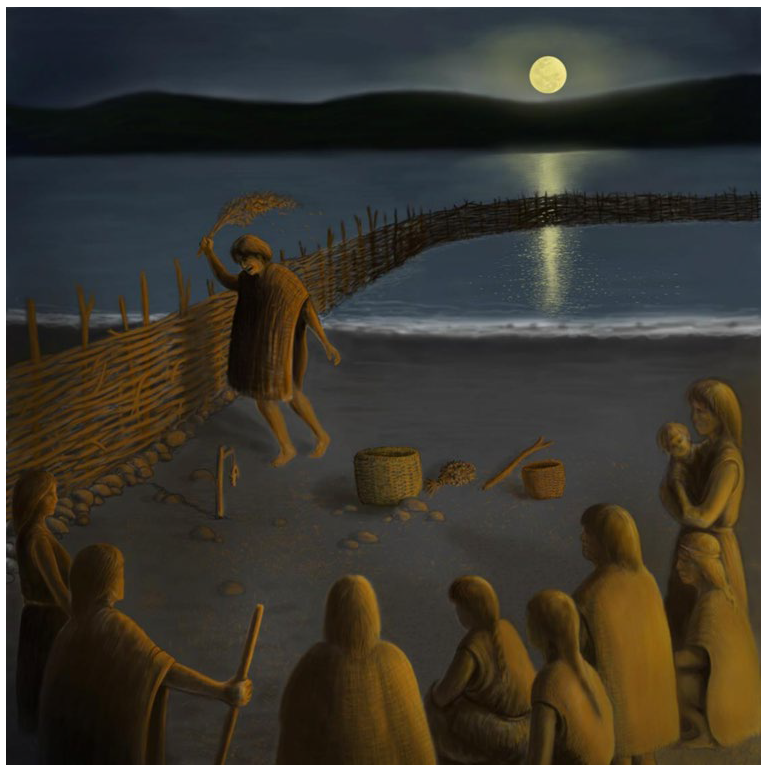
“The ancients remember holding a series of rogativa ceremonies next to the fish weirs to scare away evil spirits that could be locked inside. With branches of chaumán (Sic.) (Raukaua laetevirens), the weir owner would recite the incantation, Pininarro, pancacarro, ah Fiura! repeatedly to scare the evil being away. One neighbour recalled a ceremony to attract fish, where a man of good pañihue (Sic.) had to enter the territory of the Trauko (the guardian ngen of the forests) to look for branches of chaumán to pass through the nets and canvas. Once the man returned, he was enchaucao (sic.) (that is, contaminated by the essence of the Trauko), so he had to purify his spirit by jumping over a bonfire of marros (Sic.) (small pieces of driftwood). Nets and canvases were also hung over the fire so that the chaumán smoke would purify them and bring abundance. The enchaucao was whipped with chaumán branches while jumping over the fire, while those present recited, “Pininarro, pancacarro, ah Fiura!” (Situated reflection, Daniela Leviñanco, pers. comm. Summer 2024–2025).
3.3. How Ontological and Cosmogonic Differences with Other Territorial Actors Demarcate Distinct Beaches and Intertidal Areas?
“(…) what will happen to our spirituality if those who know it are already leaving. Their souls are moving with the tide, and perhaps the knowledge has not been conveyed sufficiently for them to understand why our sea must be defended. Everything is related, because you cannot take care of or protect what you do not know. Those fishermen who compete today and who forgot their roots… who failed to give them the knowledge? Isn’t there a voice inside them telling them to get it right? Today, what will it take to activate a spirituality that is perhaps hidden within them? What would be our role in this, what would be the role of the State in this?” (Situated reflection, Daniela Leviñanco, pers. comm. Summer 2024–2025).
4. Discussion
5. Conclusions
Author Contributions
Funding
Informed Consent Statement
Data Availability Statement
Acknowledgments
Conflicts of Interest
Abbreviations
References
- Pascual, U.; Balvanera, P.; Díaz, S.; Pataki, G.; Roth, E.; Stenseke, M.; Watson, R.T.; Dessane, E.B.; Islar, M.; Kelemen, E.; et al. Valuing nature’s contributions to people: The IPBES approach. Curr. Opin. Environ. Sustain. 2017, 26, 7–16. [Google Scholar] [CrossRef]
- Callicot, B. (Ed.) Cosmovisiones de la Tierra; Universidad de Magallanes: Punta Arenas, Chile, 2017. [Google Scholar]
- Dawson, N.M.; Coolsaet, B.; Sterling, E.J.; Loveridge, R.; Gross-Camp, N.D.; Wongbusarakum, S.; Sangha, K.K.; Scherl, L.M.; Phan, H.P.; Zafra-Calvo, N.; et al. The role of Indigenous peoples and local communities in effective and equitable conservation. Ecol. Soc. 2021, 26, 19. [Google Scholar] [CrossRef]
- Turner, N.; Cuerrier, A.; Joseph, L. Well grounded: Indigenous Peoples’ knowledge, ethnobiology and sustainability. People Nat. 2022, 4, 627–651. [Google Scholar] [CrossRef]
- Secretariat of the Convention on Biological Diversity. Strategic Plan for Biodiversity 2011–2020 and the Aichi Targets; Secretariat of the Convention on Biological Diversity: Montreal, QC, Canada, 2011. [Google Scholar]
- IUCN. The state of indigenous Peoples’ and local Communities’ lands and territories: A technical review of the state of indigenous Peoples’ and local Communities’ lands, their contributions to global biodiversity Conservation and ecosystem services, the pressures they face, and recommendations for actions. In Proceedings of the World Conservation Congress, Marseille, France, 3–11 September 2021. [Google Scholar]
- Scheidel, A.; Fernández-Llamazares, Á.; Bara, A.H.; Del Bene, D.; David-Chavez, D.M.; Fanari, E.; Garba, I.; Hanaček, K.; Liu, J.; Martínez-Alier, J.; et al. Global impacts of extractive and industrial development projects on Indigenous Peoples’ lifeways, lands, and rights. Sci. Adv. 2023, 9, ade9557. [Google Scholar] [CrossRef]
- Alvarez, R.; Caniullán, D.; Catín, J.; Cheuquenao, P.; Coñuecar, Y.; Diestre, F.; Jara, P.; Millatureo, N.; Vargas, D.; Ojeda, J. Reciprocal contributions: Indigenous perspectives and voices on marine-coastal experiences in the channels of northern Patagonia, Chile. People Nat. 2025, 7, 1086–1098. [Google Scholar] [CrossRef]
- Alvarez, R. Conflictos Ontológicos en los Archipiélagos Septentrionales de la Patagonia Insular, Chile. Ph.D. Thesis, Universidad de Los Lagos, Osorno, Chile, 2025. [Google Scholar]
- Ojeda, J.; Salomon, A.K.; Rowe, J.K.; Ban, N.C. Reciprocal contributions between people and nature: A conceptual intervention. BioScience 2022, 72, 952–962. [Google Scholar] [CrossRef]
- Escobar, A. Sentipensar con la Tierra. Nuevas Lecturas Sobre Desarrollo, Territorio y Diferencia; UNAULA: Medellín, Colombia, 2014. [Google Scholar]
- Blaser, M. Notes towards a Political Ontology of ‘Environmental’ Conflicts. In Contested Ecologies: Dialogues in the South on Nature and Knowledge; Green, L., Ed.; HSRC Press: Cape Town, South Africa, 2013. [Google Scholar]
- Lien, M.; Pálsson, G. Ethnography beyond the human: The ‘other-than-human’ in ethnographic work. Ethnos 2021, 86, 1–20. [Google Scholar] [CrossRef]
- Costanza, R.; Mageau, M. What is a healthy ecosystem? Aquat. Ecol. 1999, 33, 105–115. [Google Scholar] [CrossRef]
- Araos, F.; Catalán, E.; Nuñez, D.; Riquelme, W.; Cortinez, V.; de Fina, D.; Anbleyth-Evans, J. Cuidando la Patagonia Azul: Prácticas y estrategias de los pueblos originarios para curar las zonas marinas del sur de Chile. J. Lat. Am. Caribb. Anthropol. 2023, 28, 286–297. [Google Scholar] [CrossRef]
- Araos, F.; Catalán, E.; Álvarez, R.; Núñez, D.; Brañas, F.; Riquelme, W. Espacios Costeros Marinos para Pueblos Originarios: Usos consuetudinarios y conservación marina. Anuário Antropológico 2020, 45, 47–68. [Google Scholar] [CrossRef]
- Diestre, F.; Araos, F. La recuperación de los comunes en el sur-austral: Construcción institucional de Espacios Costeros Marinos de Pueblos Originarios. Polis 2020, 19, 19–50. [Google Scholar]
- Delgado, L.; Sandoval, C.; Quintanilla, P.; Quiñones-Guerrero, D.; Marín, I.; Marín, V. Including traditional knowledge in coastal policymaking: Yaldad bay (Chiloe, southern Chile) as a case study. Mar. Policy 2022, 143, 105181. [Google Scholar] [CrossRef]
- Skewes, J.C.; Alvarez, R.; Navarro, M. Usos consuetudinarios, conflictos actuales y posibilidades de conservación en el borde costero de Chiloé insular. Rev. Magallania 2012, 40, 107–123. [Google Scholar]
- Castilla, J.C.; Armesto, J.J.; Martínez-Harms, M.J. (Eds.) Conservación en la Patagonia Chilena: Evaluación del Conocimiento, Oportunidades y Desafíos; Ediciones Universidad Católica: Washington, DC, USA, 2021; 600p. [Google Scholar]
- Carrasco-Bahamonde, D. Desarrollo acuícola y territorialidades en disputa en el Archipiélago de Chiloé (Chile). In Territórios, re-Existências e Afetos; NUREG-Núcleo de Estudos Território e Resistência na Globalização-30 anos, 2024; pp. 121–146. [Google Scholar]
- Berkes, F. Sacred Ecology; Routledge: New York, NY, USA, 2008. [Google Scholar]
- Poh Poh, W.; Marone, E.; Lana, P.; Fortes, M. Island Systems. In Ecosystems and Human Well-Being: Current State and Trends; Hassan, R., Scholes, R., Ash, N., Eds.; Island Press: Washington, DC, USA, 2005. [Google Scholar]
- Baldacchino, G. Studying islands: On whose terms? Some epistemological and methodological challenges to the pursuit of island studies. Isl. Stud. J. 2008, 3, 37–56. [Google Scholar] [CrossRef]
- Norgaard, B. Development Betrayed: The End of Progress and a Co-Evolutionary Revisioning of the Future; Routledge: London, UK, 2006. [Google Scholar]
- Coq-Huelva, D.; Ther-Rios, F.; Bugueño, Z. Scalar Politics and the Co-Evolution of Social and Ecological Systems in Coastal Southern Chile. Tijdschr. Voor Econ. Soc. Geogr. 2018, 109, 434–448. [Google Scholar] [CrossRef]
- Mançano, B. Sobre la tipología de los territorios. Acción Tierra 2008, 1–20. [Google Scholar]
- Ward, I.; Smyth, D.; Veth, P.; McDonald, J.; McNeair, S. Recognition and value of submerged prehistoric landscape resources in Australia. Ocean. Coast. Manag. 2018, 160, 167–174. [Google Scholar] [CrossRef]
- Ward, I.; Elliott, M.; Guilfoyle, D. ‘Out of sight, out of mind’—Towards a greater acknowledgment of submerged prehistoric resources in Australian science-policy as part of a common, heritage. Front. Mar. Sci. 2022, 9, 959000. [Google Scholar] [CrossRef]
- Núñez, D. El Sustrato Indígena de los Seres Mitológicos de Chiloé; Proyecto Bajo la Lupa. In Subdirección de Investigación; Servicio Nacional del Patrimonio Cultural: Santiago, Chile, 2022. [Google Scholar]
- Alvarez, R. El alma de los Peces. In La Pesca en Chile: Miradas Entrecruzadas; Álvarez, R., Rebolledo, S., Quiroz, D., Torres, J., Eds.; Ediciones de la Subdirección de Investigación del Servicio Nacional del Patrimonio Cultural: Santiago, Chile, 2022; pp. 77–102. [Google Scholar]
- Alvarez, R.; Araos, F.; Núñez, D.; Skewes, J.; Rozzi, R.; Riquelme, W. Otros-que-humanos tensiones ontológicas en la implementación de la ley Lafkenche. CUHSO 2023, 33, 160–184. [Google Scholar] [CrossRef]
- Fundación Superación Pobreza (FSP). Usos Consuetudinarios Reflexiones Desde el Mar Interior de la Región de Los Lagos; Estudio Regional; Fundación Superación Pobreza (FSP): Santiago, Chile, 2024. [Google Scholar]
- Farías, A.; Gelvez, X.; Tecklin, D. Análisis de la Cobertura Marina de las Áreas Silvestres Protegidas en Patagonia Chilena; Documento Técnico, Programa Austral Patagonia; Universidad Austral de Chile: Valdivia, Chile, 2020; 26p. [Google Scholar]
- Reyes, O.; Tessone, A.; Belmar, C.; San Román, M.; Morello, F.; Moraga, M.; Urbina, X. Cambios y continuidades en la subsistencia e interacción entre sociedades cazadoras-recolectoras marinas y agro-alfareras durante el Holoceno tardío en el Archipiélago Septentrional), Patagonia, Chile. Lat. Am. Antiq. 2023, 34, 497–514. [Google Scholar] [CrossRef]
- Legoupil, D. Recolectores de moluscos tempranos en el sureste de la isla de Chiloé: Una primera mirada. Magallania 2005, 33, 51–61. [Google Scholar] [CrossRef]
- Rebolledo, D.; Delgado, A.; Kelly, P.; Sierralta, S.; Bravo, G.; Hernández, D.; Cortés, C. Chepu 005: Aproximaciones desde el Análisis de Colecciones a las Comunidades Cazadoras Recolectoras de Chiloé. Boletín Soc. Chil. Arqueol. 2021, 465–498. [Google Scholar]
- Reyes, O.; Belmar, C.; San Román, M.; Morello, F.; Urbina, X. Avances en la secuencia cronológica del mar interior de Chiloé, Patagonia occidental: Sitios arqueológicos San Juan 1, Tauco 1 y 2. Magallania 2020, 48, 173–184. [Google Scholar] [CrossRef]
- Massone, M.; Morello, F.; Borrero, L.A.; Legoupil, D.; Mena, F.; Prieto, A.; Ocampo, C.; Rivas, P.; San Román, M.; Martin, F.; et al. Cazadores-recolectores en la Patagonia chilena desde 11.000 años a.p. a la colonización occidental. In Prehistoria en Chile: Desde sus Primeros Habitantes Hasta los Incas; Falabella, F., Uribe, M., Sanhueza, L., Aldunate, C., Hidalgo, J., Eds.; Sociedad Chilena de Arqueología, Editorial Universitaria: Santiago, Chile, 2016; pp. 443–486. [Google Scholar]
- Alvarez, R. Reflexiones en torno a la ubicación espacial de corrales de pesca en Chiloé insular y continental (213–223). In Arqueología de la Patagonia, de Mar a Mar; IX Jornada de aAqueología de la Patagonia; Ñire Negro: Coyhaique, Chile, 2016. [Google Scholar]
- Alvarez, R.; Munita, D.; Fredes, F.; Mera, R. Corrales de Pesca en Chiloé; Imprenta América: Valdivia, Chile, 2008. [Google Scholar]
- Urbina, S.; Alvarez, R.; Maturana, C.; Sierralta, S.; Labarca, R.; Calas, E.; Farías, A.; Alvarez, M.; Martínez, V. Arqueología de Llanquihue y Chiloé; Gráfica Metropolitana: Santiago, Chile, 2024. [Google Scholar]
- Munita, D.; Alvarez, R.; Ocampo, C. Corrales de piedra, pesca pasiva en la costa interior de Chiloé. Boletín Soc. Chil. Arqueol. 2004, 37, 61–74. [Google Scholar]
- Instituto Nacional de Estadísticas (INE). Censo de Población y Vivienda; Instituto Nacional de Estadísticas (INE): Santiago, Chile, 2017. [Google Scholar]
- Fundación Superación Pobreza (FSP). Crisis en el Habitar Insular; Estudio Regional Los Lagos; Fundación Superación Pobreza (FSP): Santiago, Chile, 2016. [Google Scholar]
- Fundación Superación Pobreza (FSP). Territorio Biocultural Litoral-Insular; Estudio Nacional; Fundación Superación Pobreza (FSP): Santiago, Chile, 2021. [Google Scholar]
- Ostrom, E. Governing the Commons: The Evolution of Institutions for Collective Action; Cambridge University Press: Cambridge, UK, 1990. [Google Scholar]
- Gutiérrez, R.; Linsalata, L.; Navarro, M. Repensar lo político, pensar lo común: Claves para la discusión. In Modernidades Alternativas; Inclán, D., Linsalata, L., Millán, M., Eds.; Ediciones del Lirio: Mexico City, Mexico, 2016. [Google Scholar]
- Rozzi, R.; Álvarez, R.; Castro, V.; Núñez, D.; Ojeda, J.; Tauro, A.; Massardo, F. Biocultural calendars across four ethnolinguistic communities in southwestern South America. GeoHealth 2023, 7, e2022GH000623. [Google Scholar] [CrossRef]
- Antivil, A.; Donoso, S.; Figueroa, V.; Millaleo, S.; Murray, M.; Núñez, M.; Viera-Gallo, J.A. Contribuciones a la discusión constitucional: Reconocimiento y derechos de los pueblos indígenas. Temas Agenda Pública 2021, 16, 1–14. [Google Scholar]
- Guber, R. Prácticas Etnográficas. Ejercicios de Reflexividad de Antropólogas de Campo; Instituto de Desarrollo Económico y Social-Miño y Dávila Editores: Buenos Aires, Argentina, 2014. [Google Scholar]
- Ther, F. Antropología del territorio. POLIS 2012, 11, 493–510. [Google Scholar] [CrossRef]
- Tsing, A. Friction: An Ethnography of Global Connection; Princeton University Press: Princeton, NJ, USA, 2005. [Google Scholar]
- Latour, B. Nunca Fuimos Modernos; Siglo XXI Editores: Buenos Aires, Argentina, 2007. [Google Scholar]
- Gutiérrez de Angelis, M. No lineales, interactivas y reflexivas: Nuevas perspectivas y experiencias metodológicas en antropología visual. In La Otra Antropología: Reflexiones Sobre el Oficio Antropológico; Nava Morales, E., Calderón Bony, F., Eds.; Abya-Yala: Quito, Ecuador, 2014. [Google Scholar]
- Descola, P. Antropología de la Naturaleza; Lluvia Editores: Lima, Peru, 2002. [Google Scholar]
- Arias-Henao, J.; Roca-Servat, D. Etnografía Multiespecies: Teoría, técnicas y desafíos actuales. Jangwa Pana 2024, 23, 1–15. [Google Scholar] [CrossRef]
- Haraway, D. Seguir con el Problema: Generar Parentesco en el Chthuluceno; Consonni Ediciones: Basque Country, Spain, 2019. [Google Scholar]
- Ellis, C.; Bochner, A. Autoetnografía: Un panorama. Astrolabio 2015, 14, 249–273. [Google Scholar] [CrossRef]
- Viveiros de Castro, E. El Nativo Relativo. Avá. Rev. Antropol. 2016, 29–69. [Google Scholar]
- Arriagada, E.; Zambra, A. Apuntes iniciales para la construcción de una Ecología Política Feminista de y desde Latinoamérica. POLIS 2019, 18, 54 . [Google Scholar] [CrossRef]
- Sundberg, J. Feminist Political Ecology. In International Encyclopedia of Geography: People, the Earth, Environment and Technology; Richardson, D., Castree, N., Goodchild, M., Kobayashi, A., Liu, W., Marston, R., Eds.; John & Sons.: Chichester, UK, 2017. [Google Scholar]
- Zapata, L.; Genovesi, M.; Favret-Saada, J. “Ser afectado” como medio de conocimiento en el trabajo de campo antropológico. Avá. Rev. Antropol. 2013, 23, 49–67. [Google Scholar]
- Wagner, R. La Invención de la Cultura; Nola Editores: Madrid, Spain, 2020. [Google Scholar]
- Krenak, A. Nuestra Historia Está Entrelazada con la Historia del Mundo; Transas: San Martín, Argentina, 2021. [Google Scholar]
- Massumi, B.; Stengers, I. History Through the Middle: Between Macro and Mesopolitics. INFLeXions 2009, 3. [Google Scholar]
- Blanco, M. Autoetnografía: Una forma narrativa de generación de conocimientos. Andamios 2012, 9, 49–74. [Google Scholar] [CrossRef]
- Reyes, L. Aminorando la antropología: Sobre la práctica antropológica y los practicantes de antropología. Discursos Sur 2020, 6, 127–147. [Google Scholar]
- Fuenzalida, A. El Cabo de la Vida: El Siglo XX Desde el Mar; Municipalidad de Los Vilos: Los Vilos, Chile, 2016. [Google Scholar]
- Álvarez, R.; Araos, F.; Diestre, F.; Riquelme, W.; Brañas, F.; Torrijos, C.; Cursach, J.; Stock, M. ¿Es sustentable la salmonicultura en Chile? Enmarcando narrativas en disputa sobre la actividad salmonera en Chile. Desenvolv. Meio Ambiente 2022, l59, 23–45. [Google Scholar] [CrossRef]
- Yáñez, I.; Álvarez, R.; Flores, V.; Cartajena, I. A peinar la mar” Huellas y rastros de mundos femeninos sumergidos en el mar interior de Chiloé. In Proceedings of the IV Encuentro Internacional de Etnografías Colaborativas y Comprometidas, Concepción, Chile, 24–25 October 2024; Universidad de Concepción: Concepción, Chile, 2024. [Google Scholar]
- Martínez, C.; Arenas, F.; Bergamini, K.; Urrea, J. Hacia una ley de Costas en Chile: Criterios y Desafíos en un Contexto de Cambio Climático. Serie Policy Papers, 2019, Centro de Investigación para la Gestión Integrada del Riesgo de Desastres (CIGIDEN). Available online: https://www.cigiden.cl/wp-content/uploads/2019/10/PP_LeyBordeCostero_digital.pdf (accessed on 18 October 2025).
- Hallowell, A. Ojibwa World View and Disease; University of Chicago Press: Chicago, IL, USA, 1976. [Google Scholar]
- Guerra, D.; Maulén, W.; Skewes, J. ¿Qué es un lago? El lago Maihue y los otros modos de vivir los paisajes lacustres en el sur de Chile. Estud. Av. 2019, 31, 21–41. [Google Scholar]
- Riquelme, W. Comunes de la Mawiza. Aproximaciones desde el sistema socioecológico del bosque nativo de Panguipulli. In Hacia una Socioecología del Bosque Nativo en Chile; Razeto, R., Barreau, A., Müller-Using, S., Eds.; Social-Ediciones: Santiago, Chile, 2020. [Google Scholar]
- Alvarez, R.; Ther, F. Fragmentos de una cosmovisión mestiza asociada al acceso y uso del entorno costero en el archipiélago de Chiloé. Diálogo Andin. 2016, 49, 123–129. [Google Scholar] [CrossRef]
- Arce, L.; Vargas, K.; Coñuecar, Y. Mujeres del Mar. Aproximaciones Sobre los Espacios Costeros Marinos de Pueblos Originarios; Observatorio Ciudadano: Temuco, Chile, 2023. [Google Scholar]
- Lenkersdorf, C. Cosmovisiones; Universidad Nacional Autónoma de México: Mexico City, Mexico, 1997. [Google Scholar]
- Kohn, E. How Forests Think: Toward and Anthropology Beyond the Human; University of California Press: Berkeley, CA, USA, 2013. [Google Scholar]
- Biset, E. ¿Qué es una ontología política? Rev. Int. Pensam. Político 2020, 15, 323–346. [Google Scholar] [CrossRef]
- Blaser, M. Cultural Studies without ‘Cultures’? Cult. Stud. 2009, 23, 873–896. [Google Scholar] [CrossRef]
- Skewes, J.C. ¿Qué es el rodeo? Desensamblando las piezas de un ritual nacionalista. Rev. Austral Cienc. Soc. 2019, 37, 49–66. [Google Scholar] [CrossRef]
- Ingold, T. The Perception of the Environment: Essays on Livelihood, Dwelling and Skill; Routledge: London, UK, 2002. [Google Scholar]
- Viveiros de Castro, E. Perspectival Anthropology and the Method of Controlled Equivocation. Tipití 2004, 2, 3–22. [Google Scholar] [CrossRef]
- Descola, P. La Composición de los Mundos. Conversaciones con Pierre Charbonnier; Capital Intelectual: Buenos Aires, Argentina, 2016. [Google Scholar]
- Saldi, L.; Mafferra, L.; Barrientos Salinas, J. Ontologías en disputa. Diálogos entre la antropología y la arqueología para la problematización de paisajes regionales. Antípoda Rev. Antropol. Arqueol. 2019, 37, 3–26. [Google Scholar] [CrossRef]
- Castillo, O. La ecología política posthumanista: Algunas notas críticas para su discusión. In Reflexiones Regionales Sobre el Desarrollo Sustentable en Contextos Interculturales; Carrillo, M., Ed.; Universidad Intercultural del Estado de Hidalgo: Tenango de Doria, México, 2022; pp. 32–44. [Google Scholar]
- Perdomo, J. Agencias, mundos y ontologías como escenarios de problematización de la antropología contemporánea. Maguaré 2019, 33, 25–68. [Google Scholar] [CrossRef]
- Ledezma, I. Neoextractivismo, espacio de mercado y derecho a lo sagrado: El pueblo Mapuche en el Chile neoliberal. Líder Rev. Labor Interdiscip. Desarro. Reg. 2021, 88–110. [Google Scholar]
- Chambeaux, J. Disputas por el Territorio en San Juan de la Costa, Futawillimapu. Tres Relatos de Comienzos del Siglo XXI. Tesis de Maestría en Antropología Social, Centro de Investigaciones y Estudios Superiores en Antropología Social, Oaxaca, Mexico, 2017. [Google Scholar]
- Almagro, M.; Villanueva, N. Malentendidos cuidados. SCIO Rev. Filos. 2022, 22, 67–97. [Google Scholar]
- Aldunate, C. (Ed.) Chiloé; Colección Santander; Museo Chileno de Arte Precolombino: Santiago, Chile, 2016. [Google Scholar]
- Alvarez, R.A.; Munita, D.; Mera, C.R. Los Antiguos Habitantes de la Provincia de Llanquihue. In Consejo de Monumentos Nacionales; LOM: Santiago, Chile, 2011. [Google Scholar]
- Massey, D. For Space; Sage Publications: Thousand Oaks, CA, USA, 2005. [Google Scholar]
- De la Caneda, M. Earth Beings: Ecologies of Practice Across Andean Worlds; Duke University Press: Durham, NC, USA, 2015. [Google Scholar]
- Mondaca, E.; Uribe, E.; Henríquez, S.; Torres, V. (Eds.) Archipiélago de Chiloé: Nuevas Lecturas de un Territorio en Movimiento; Centro de Estudios Sociales de Chiloé—CESCH: Chiloé, Chile, 2018. [Google Scholar]
- Pérez-Orellana, C.; Delgado, L.; Marin, V. The adaptive cycle and the ecosystem services: A social-ecological analysis of Chiloé Island, southern Chile. Ecol. Soc. 2020, 25, 34. [Google Scholar] [CrossRef]
- Diestre, F.; Lima, S.; Araos, F.; Maulen, W.; Jara, M. Huellas de un mar enfermo: Reflexiones sobre maritorios sustentables y sufrimiento ambiental en Patagonia chilena. Saúde Debate 2024, 48, e8728. [Google Scholar] [CrossRef]
- Ñancucheo, C.; García, O.; Pardo, B. El espacio costero marino de pueblos originarios en Chile: Una oportunidad para la gobernanza policéntrica y multiescalar. In Planificación Multiescalar: Ordenamiento, Prospectiva Territorial y Liderazgos Públicos; CEPAL: Santiago, Chile, 2019; Volume III. [Google Scholar]
- Anbleyth-Evans, J.; Araos, F.; Ther, F. Toward marine democracy in Chile: Examining aquaculture ecological impacts through common property local ecological knowledge. Mar. Policy 2020, 113, 103690. [Google Scholar] [CrossRef]


Disclaimer/Publisher’s Note: The statements, opinions and data contained in all publications are solely those of the individual author(s) and contributor(s) and not of MDPI and/or the editor(s). MDPI and/or the editor(s) disclaim responsibility for any injury to people or property resulting from any ideas, methods, instructions or products referred to in the content. |
© 2026 by the authors. Licensee MDPI, Basel, Switzerland. This article is an open access article distributed under the terms and conditions of the Creative Commons Attribution (CC BY) license.
Share and Cite
Álvarez, R.; Leviñanco, D.; Yáñez, I.; Cartajena, I. The Intertidal Zone of the Chiloé Archipelago (Chile): Tensions Between Williche Eco-Ontological Conservation and Other Actors: A Situated Ethnographic Dialogue. Heritage 2026, 9, 66. https://doi.org/10.3390/heritage9020066
Álvarez R, Leviñanco D, Yáñez I, Cartajena I. The Intertidal Zone of the Chiloé Archipelago (Chile): Tensions Between Williche Eco-Ontological Conservation and Other Actors: A Situated Ethnographic Dialogue. Heritage. 2026; 9(2):66. https://doi.org/10.3390/heritage9020066
Chicago/Turabian StyleÁlvarez, Ricardo, Daniela Leviñanco, Isabel Yáñez, and Isabel Cartajena. 2026. "The Intertidal Zone of the Chiloé Archipelago (Chile): Tensions Between Williche Eco-Ontological Conservation and Other Actors: A Situated Ethnographic Dialogue" Heritage 9, no. 2: 66. https://doi.org/10.3390/heritage9020066
APA StyleÁlvarez, R., Leviñanco, D., Yáñez, I., & Cartajena, I. (2026). The Intertidal Zone of the Chiloé Archipelago (Chile): Tensions Between Williche Eco-Ontological Conservation and Other Actors: A Situated Ethnographic Dialogue. Heritage, 9(2), 66. https://doi.org/10.3390/heritage9020066