Article

Fire Detection Solutions for Heritage Buildings

by
Ágota Zsuzsanna Mohai
1,
Eszter Horváth-Kálmán
2,
Barbara Elek
1 and
Ákos Török
3,*
1
Donát Bánki Faculty of Mechanical and Safety Engineering, Institute of Safety Science and Cybersecurity, Óbuda University, H-1081 Budapest, Hungary
2
Miklós Ybl Faculty of Architecture and Civil Engineering, Institute of Civil Engineering, Óbuda University, H-1146 Budapest, Hungary
3
Department of Engineering Geology and Geotechnics, Faculty of Civil Engineering, Budapest University of Technology and Economics, H-1111 Budapest, Hungary
*
Author to whom correspondence should be addressed.
Heritage 2026, 9(2), 67; https://doi.org/10.3390/heritage9020067
Submission received: 4 December 2025 / Revised: 29 January 2026 / Accepted: 29 January 2026 / Published: 9 February 2026
(This article belongs to the Section Architectural Heritage)

Abstract

Fire safety in heritage buildings is a major challenge. It is necessary to find effective solutions that minimise damage to the protected building and do not cause damage or diminish the aesthetic value of the building. This requires not only special equipment, but often also specific solutions. The easiest way to increase the fire safety level of a building is to retrofit it with active fire protection systems. The aim of this paper is to review fire detection solutions suitable for historic buildings, with particular emphasis on minimally invasive and visually unobtrusive systems. The study combines a structured review of point, linear, and aspirating smoke detection technologies with a demonstrative parametric sizing assessment of an aspirating smoke detection (ASD) system using a manufacturer-supported sizing software. The sizing analysis investigates how changes in sampling hole diameter and fan settings influence transport time, sensitivity distribution, and system balance under constrained routing conditions typical of heritage interiors. The results highlight key trade-offs between response time and system balance, providing practical guidance for designers and conservation professionals. The findings support the development of fire detection strategies that align with European recommendations for heritage protection while ensuring technical effectiveness. The paper also provides a guideline to professionals, architects, restorers, and heritage experts, who have key roles in the protection of heritage structures.

Graphical Abstract

1. Introduction

The preservation of heritage buildings poses a unique challenge for contemporary professionals, especially when fire safety solutions must be integrated without compromising the architectural and cultural values of these structures. Over the years, numerous heritage buildings have suffered significant damage due to fire. The 2019 fire at Notre-Dame de Paris, detailed in the Journal of Cultural Heritage [1], brought global attention to the critical need for effective fire safety measures in historic buildings. In some countries, such as Malaysia, where between 1992 and 2008 a high number of important historic buildings (16 in total) were destroyed by fire, comprehensive studies are already underway to improve fire safety [2].
Modern technical fire safety solutions should be applied while preserving the original architectural character of heritage buildings. Conflicts between fire protection requirements and heritage conservation objectives have been identified in several European contexts. Recent studies on historic Polish old towns highlight that regulatory fire safety measures may significantly influence architectural authenticity if not adapted to heritage-specific constraints [3].
Recent research has explored various innovative approaches in this domain. D’Orazio et al. [4] proposed the application of digital technologies, such as evacuation simulators, to optimize fire safety strategies while ensuring the safety of vulnerable occupants. Similarly, Kincaid [5] emphasized the importance of proactive fire prevention strategies, particularly focusing on fire detection systems that minimize aesthetic compromises. Petrini et al. [6] further proposed a performance-based engineering framework to quantify and customize fire safety solutions tailored to the preservation needs of heritage structures. Recently, a comprehensive solution, a new multi-criteria decision-making model, was presented in a publication by Naziris et al. [7], which aims to strike a balance between increasing fire safety and preserving the cultural values of the building, taking into account budgetary constraints.
An innovative possibility of early fire detection has been outlined by Gao [8], however, the majority of research on fire protection for heritage buildings focuses on architectural and structural fire protection, as well as various engineering simulation solutions. In addition, several articles deal with the analysis of the effects of fire on traditional building materials such as stone (Hajpál and Török [9], Brotóns et al. [10], Delegou et.al [11], Martinho and Dionísio [12], Martinez-Ibanez et al. [13], Németh et al. [14]) or complex fire risk management (Tantra and Brimblecombe [15]).
This article discusses fire detection solutions for listed buildings, with a special focus on the application of aspiration smoke detectors. Our aim is to comprehensively investigate solutions that effectively integrate fire safety requirements with the requirements of heritage conservation demands, while minimizing compromises to the preservation of aesthetic and cultural values.
Under the Building Act [16], elements of outstanding architectural heritage may be declared protected as part of international (universal)1, national (national), and local architectural heritage. The proportion of cultural heritage sites that are part of the World Heritage List are remarkable in Europe (Figure 1).
In the UNESCO World Heritage List, the proportion of European cultural assets compared to the rest of the world is more than 50% (Figure 2). It can be said that our region is a world leader in this field.
In Hungary, monuments of national economic importance can be either highly protected or protected monuments [18], but there are also a significant number of monuments under local protection. The number of cultural heritage properties in Hungary is significant, with around eleven thousand listed or locally protected buildings, according to the monument database2 of the former Cultural Heritage Protection Office.3
The primary objective with regard to architectural monuments is, of course, to preserve them for posterity in their unaltered form. In the case of buildings, this is not an easy task because of their exposure to environmental hazards. In addition to erosion, damage from use and external factors such as the ravages of war contribute to their deterioration. Restoring them to their former splendour is a costly and highly skilled task, not only for architects and restorers, but also for specialist designers and builders.
Despite the long-recognised vulnerability of heritage buildings to fire, fire detection retrofits remain challenging because interventions must be effective yet visually unobtrusive and minimally invasive. Building on European recommendations on heritage fire risk reduction (e.g., COST Action C17 [19]), this paper (i) synthesises practicable fire detection options that minimise visual impact in heritage interiors, (ii) proposes a decision-oriented selection framework considering geometry, environment, and conservation constraints, and (iii) demonstrates, through a parametric sizing assessment of an aspirating smoke detection (ASD) layout, how post-design changes (hole diameters and fan settings) influence transport time, sensitivity distribution, and system balance.

2. Fires in Heritage Buildings

One of the main threats to heritage buildings is fire. In order to reduce the chances of a fire starting or spreading and to reduce the damage caused, appropriate technical fire safety solutions are required, in addition to compliance with the rules of use. Without fire safety engineering solutions, a potential fire threatens the very existence of the heritage building itself, as evidenced by several fires around the world.
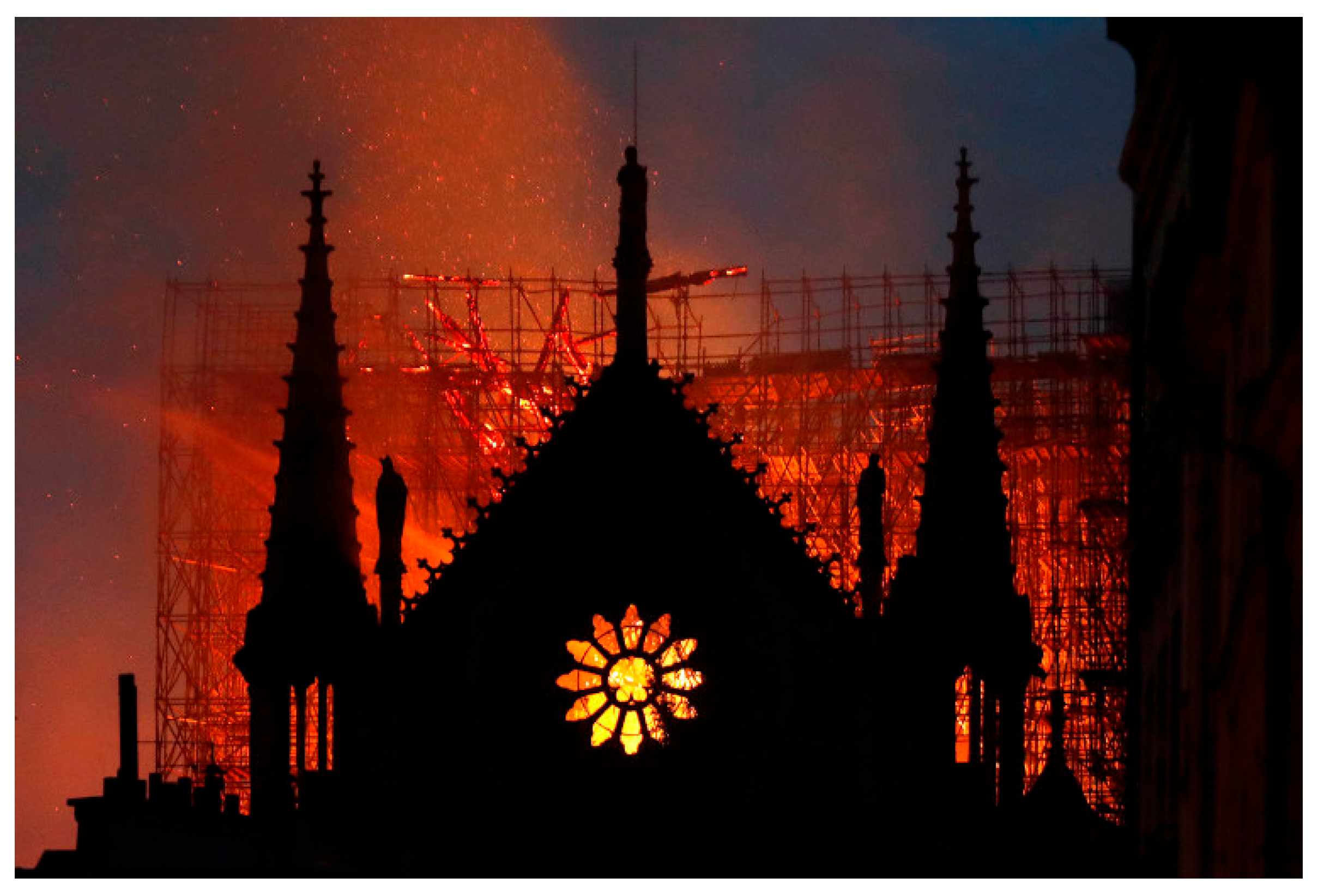
The financial cost of the 1992 fire at Windsor Castle (£37 million) rocked the British monarchy itself [20]. The 2019 fire at the 850-year-old Notre-Dame, which was on TV screens for days (Figure 3), has made the world aware of the priceless spiritual value of our church buildings in “connecting” people.
The reconstruction of Notre-Dame required various skills and a thorough understanding of fire effects in monuments [22], and it took 6 years. The cost of restoration is staggering, with an estimate of approximately €850 million. In addition, the fire destroyed many irreplaceable artefacts of immense sentimental value, including the nine-centimetre nail traditionally believed to have been used to crucify Christ [21].
The National Museum of Brazil (2018), the opera house La Fenice in Venice (1996), the Gran Teatre del Liceu in Barcelona (1994), the 19th century National Library of Bosnia (1992), and the Grand Theatre of Geneva (1951) are among the other buildings to have been destroyed by fire [23]. But Hungary also had a number of heritage buildings fire. To mention just the major ones, the dome of St Stephen’s Basilica burnt down in 1947 and the roof of the nave of the Esztergom Basilica caught fire in 1993 [24]. Many of you will remember the beautiful neo-Renaissance, cour d’honneur4 [25] solution building on one of the most beautiful circuses of Budapest, Kodály Körönd, which was in huge flames in 2014. It has been successfully renovated with HUF 2.5 billion [26] after a long time and a lot of problems. As we can see, the past decades have provided plenty of examples of the need to place greater emphasis on fire safety in historic buildings (Table 1).
The overview in Table 1 illustrates that, while the ignition causes of fires in heritage buildings vary widely, deficiencies in fire detection coverage—particularly in concealed spaces and during renovation works—are a recurring factor. The examples underline the importance of early and reliable detection systems specifically adapted to the architectural and conservation constraints of historic buildings.

3. Problems of Technical Fire Safety Solutions in Heritage Buildings

The role of fire safety is crucial, but typically it is linked to renovation and reconstruction, which can be retrofitted to improve safety.
Considering the age of heritage buildings, it is understandable that technical solutions in the field of fire protection, which are nowadays considered as evidence, did not exist for buildings of this age. They generally do not meet the requirements of current fire standards [27], which makes them especially vulnerable to fire [28]. Consequently, one of the major challenges in improving the fire safety of listed buildings is to apply modern technical solutions while preserving, or appearing to preserve, the old ones. Retrofitting fire safety solutions is not easy, even for non-listed buildings. The problems are compounded by a series of additional conditions and requirements arising from the protection of listed buildings. These include:
The use of original or most appropriate traditional building materials as a primary consideration,
-
to preserve the original building layout, design, and character,
-
to minimise disruption to building structures,
-
aesthetics.
These requirements are fully understandable and acceptable, but they are a major constraint and make good engineering solutions difficult. This is what we see when, for example, no fire safety solution is literally designed with reference to these considerations: “The cathedral is not properly equipped in case of fire. For aesthetic reasons, there is no fire extinguishing system or fire wall in the building.” [29].
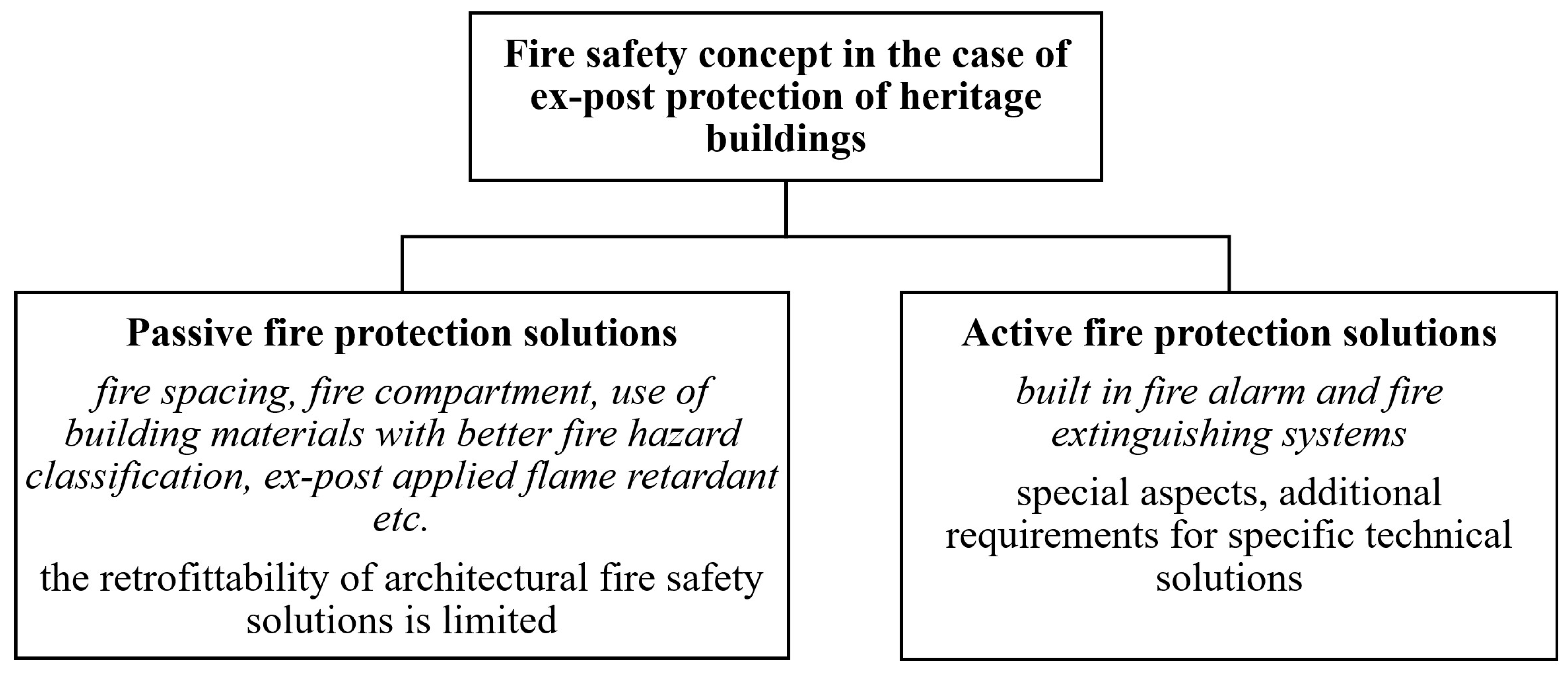
There are two main approaches to fire protection: passive and active fire protection solutions (Figure 4), which are not mutually exclusive, and their combined application can provide the highest level of fire safety and the most effective fire protection concept.
In hindsight, the choice of technical solutions for an existing building is limited. Moreover, in the case of listed buildings, the options are further limited by the specific requirements discussed earlier. Most passive fire protection solutions are difficult to retrofit. For example, it is not always possible to use building materials with a fire performance completely different from that of the original building material, and the possibility of retrofitting fire breaks and escape routes in an existing building is also very doubtful, not to mention the distance from neighbouring buildings and the existence of fire clearances. Active fire protection solutions, i.e., the use of built-in fire detection and extinguishing systems, are therefore the preferred means of retrofitting fire safety.
We do not want our monuments to be damaged or destroyed by fire, but we also do not want this to come at the cost of the protection solution itself, causing more damage than is acceptable, for example, by seriously damaging structures, cladding, or decoration. This is a huge contradiction that should be resolved in a way that serves the interests of all, but above all the long-term preservation of the monument.
Risk-based decision-making approaches have also been proposed for heritage buildings, where fire safety measures are evaluated alongside cultural value and architectural vulnerability. Multi-criteria fire risk assessment methods have been shown to support balanced protection strategies for historic structures [30]. Recent research has emphasized the applicability of index-based and performance-oriented fire safety evaluation methods, which allow the prioritization of protection measures based on building-specific risk profiles rather than prescriptive rules alone [31].
It is necessary to consider whether to opt for a technical solution that only partially meets the specific monument protection criteria, but which clearly increases fire safety, or to abandon protection, risking that a building “protected” by strict rules could be drastically damaged or even completely destroyed by fire. The question is to what extent this trade-off is necessary and which aspects have priority. For example, is the aesthetic aspect more important than the integrity of the building structure? The more specific and unique the solutions we can think of, the less compromise is required, but this requires specific technical fire protection solutions and the additional knowledge needed to apply them. We would like to analyse these specific solutions in the following, focusing in this article on a smaller area, namely fire detection solutions.

4. Special Fire Detection Solutions for the Protection of Historic Monuments

A primary problem in the renovation of listed buildings, and also in the design of fire detection solutions, is to increase the level of fire safety in such a way that the protection solution itself does not damage the protected building itself and is invisible or at least aesthetically pleasing.

4.1. Choosing Fire Detectors

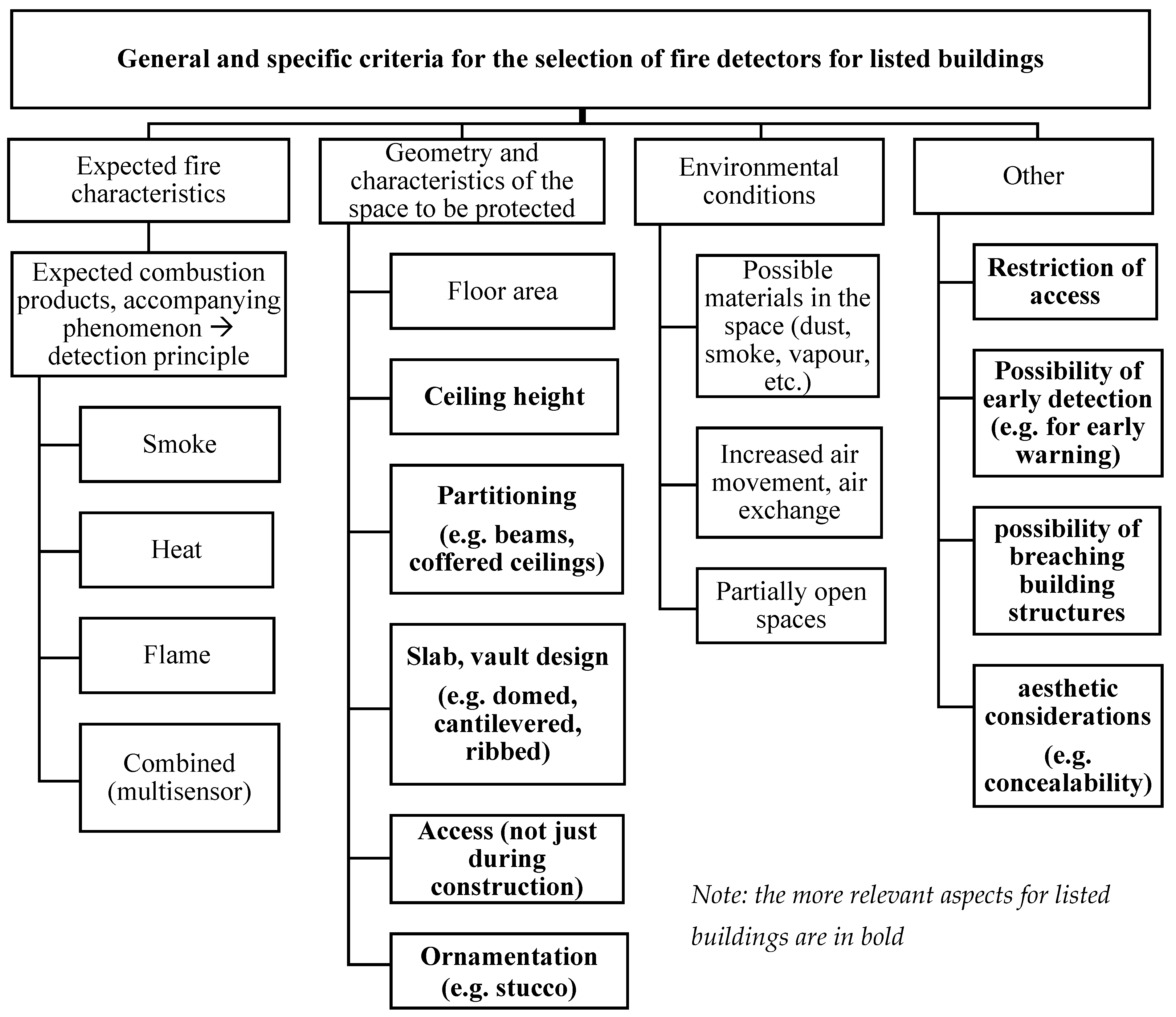
To develop an effective fire alarm in a heritage building, in addition to the general detector selection criteria, some additional, but very crucial, aspects need to be taken into account, which we have summarised in Figure 5.

4.2. Point Type Smoke Detectors

When designing fire detection systems, the first task is to select the detection principle based on the purpose of the protected space and the combustion properties of the materials present. In general-purpose spaces, in non-industrial environments, the basic detection principle is smoke detection first and heat detection second. In most fires, smoke is the first hazard expected to be generated, and smoke is also the primary hazard to the human body (smoke poisoning). If we have to exclude the possibility of smoke detection, the use of heat detectors is the most common option. There are two major limitations to the use of heat detectors. On the one hand, their application height is limited, with technical regulations not allowing their use generally above 7.5 and 9 m, depends on the sensitivity and type of the sensor [32,33].5 On the other hand, heat detectors must be installed at the highest point of the room so that the heat from the fire accumulates below the ceiling to an indicative level. A further disadvantage of heat detectors is that, compared to smoke detectors, fire alarms are generally expected later, so they should only be used in justified cases to avoid false alarms.
Smoke detectors operate on several principles, which largely determines their applicability to a given task. The most commonly used and most widespread type of smoke detector is the point-type optical scattered light detector, which is used as a quasi-basic detector in general spaces. Their application is unconditionally suitable up to 12 m according to most technical regulations, including the Hungarian Technical Directive on Fire Safety [33]. Their application in listed buildings is limited or implies a very high degree of aesthetic compromise (see Figure 6), because the detector must be placed and cabled on the ceiling of the room to be protected and at a density that ensures adequate coverage. The principle of operation of a point-type smoke detector is such that it will only give an alarm if the smoke is directly introduced into the detector chamber, so that it cannot be used without affecting the ceiling of the protected space.

4.3. Linear Smoke Detector (Beam Detector)

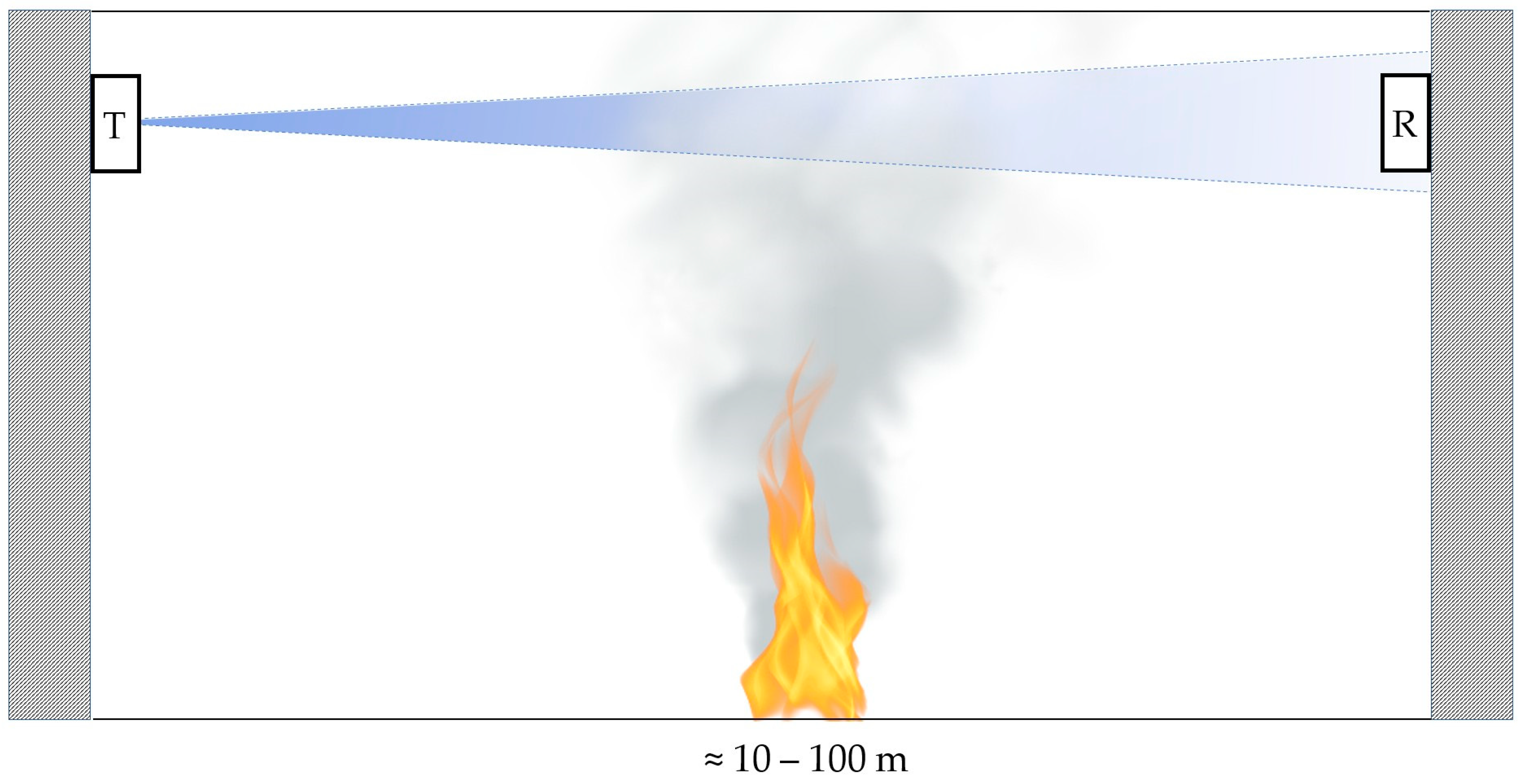
The operation of the so-called infrared linear smoke detectors is based, in simple terms, on the principle that the infrared light beam emitted by a transmitter is received by a receiver unit placed at a greater distance from it. The smoke in the space between the transmitter (T) and receiver (R) reduces the light reaching the receiver, which generates a fire alarm after a certain value (Figure 7).
Due to the principle of operation, beam detectors are not installed on the ceiling, but on the side wall. In this way, smoke detection can be achieved without damaging the ceiling itself, either aesthetically or physically. Infrared linear smoke detectors, unlike point detectors, can be used up to 16 metres [33] without any conditions in Hungary. An additional advantage is that they can be used in rooms with higher ceilings with a so-called multi-level protection solution, which is not possible with point detectors due to their ceiling mounting.
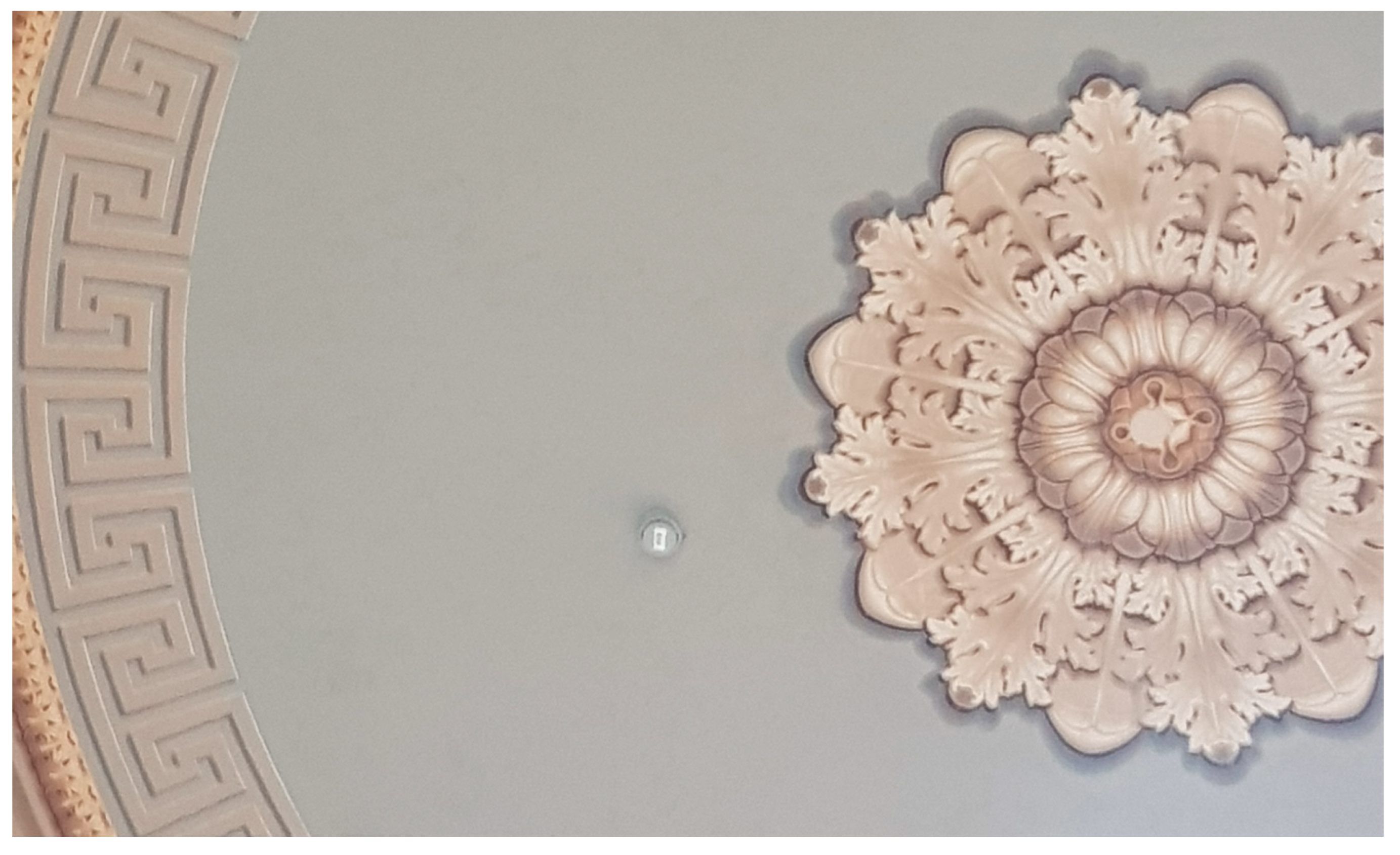
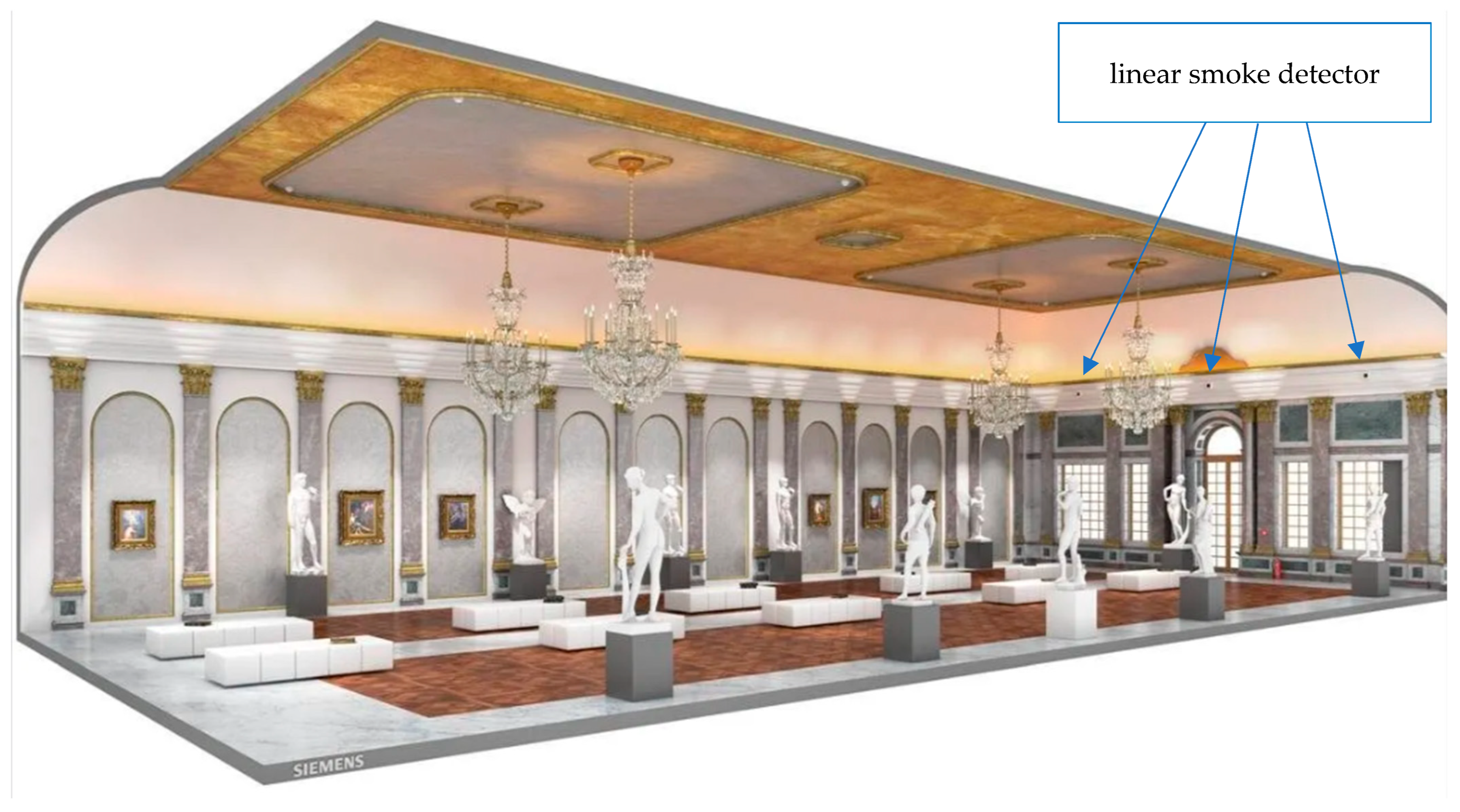
A fire detection solution with beam smoke detectors may be most appropriate where there is a flat or at least slightly sloping ceiling, but with a structured or decorated ceiling (e.g., stucco ceiling, see Figure 8).
Although aesthetically a much better solution than point detectors, it is not a good solution for protecting a room where the installation on boundary walls is out of the question. In these cases where aesthetics cannot be compromised, aspirating smoke detectors are clearly the preferred choice.

4.4. Aspirating Smoke Detector

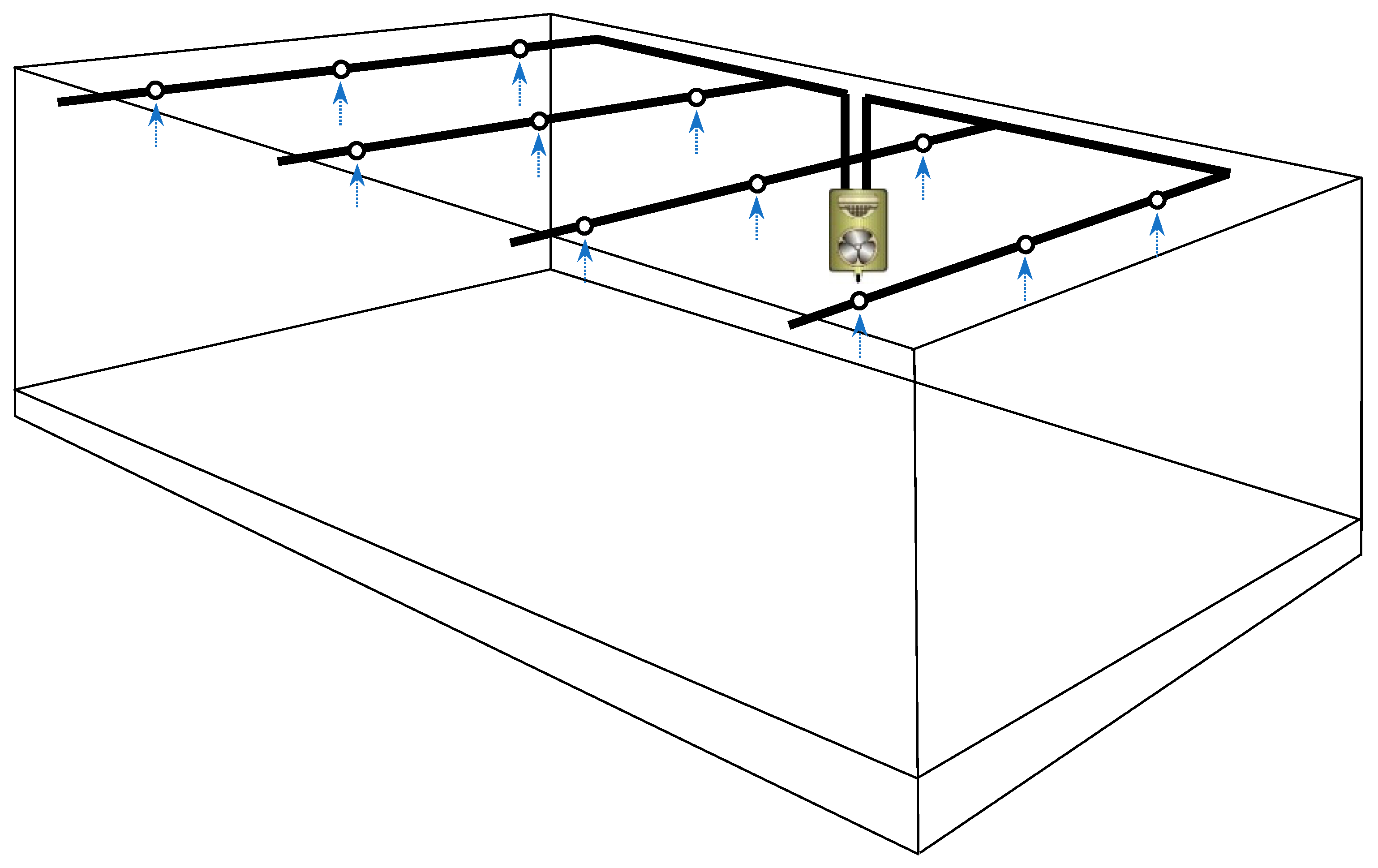
Due to their specific operating principle and design, one of the great advantages of high-sensitivity aspirating smoke detectors, more commonly known as “aspiration smoke detectors”, is their ability to be installed in a concealed position, which is why they are often used to protect certain rooms in heritage buildings, among other things. The network of sampling pipe (with sampling holes) is installed in the protected space, the evaluation unit itself, containing the detector and a fan with a continuous air flow, can be installed outside the protected space (Figure 9).
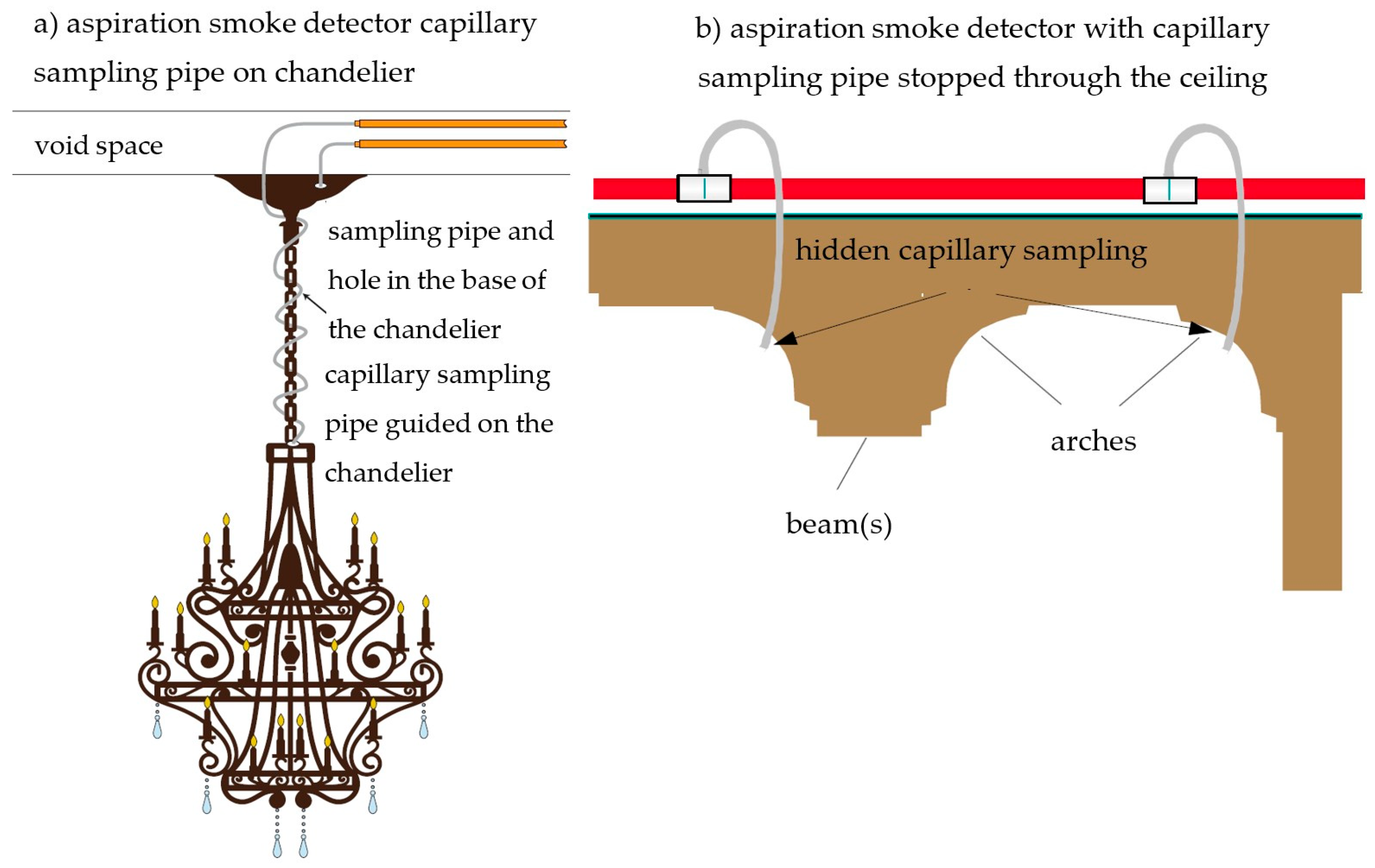
This flexible design of the sampling pipe network, allows air to be sucked out of the space to be protected through holes (so-called sampling points) that are almost invisible, given their diameter of a few mm. To achieve this, the sampling pipe itself must be positioned in such a way that it is either concealed in a structure, hidden behind a decorative element or even laid in a space above the protected area, e.g., in an attic, and is not visible to the visitor. Some possible solutions supported by the manufacturers are shown in Figure 10, but many creative technical solutions other than the general solution proposals are possible.
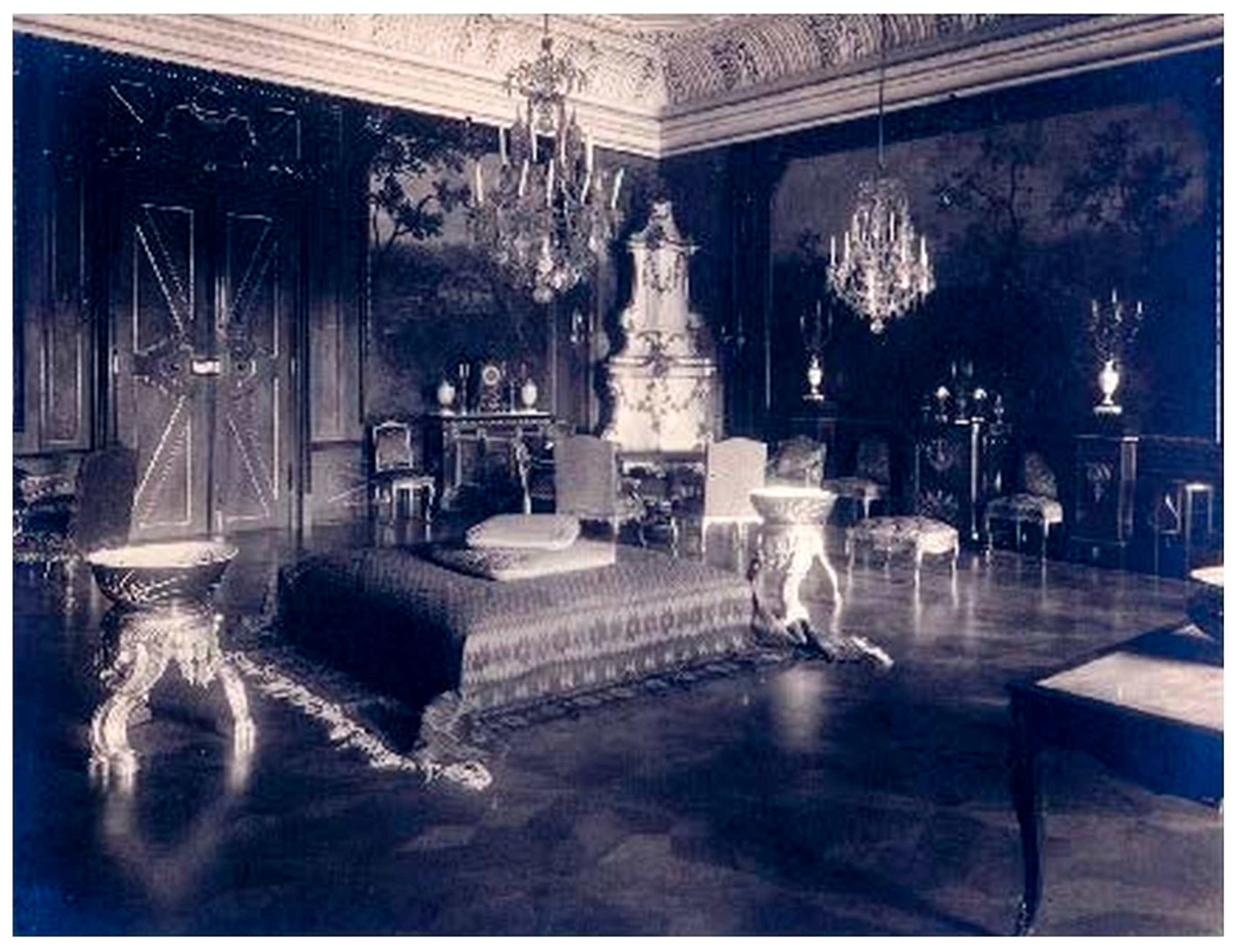
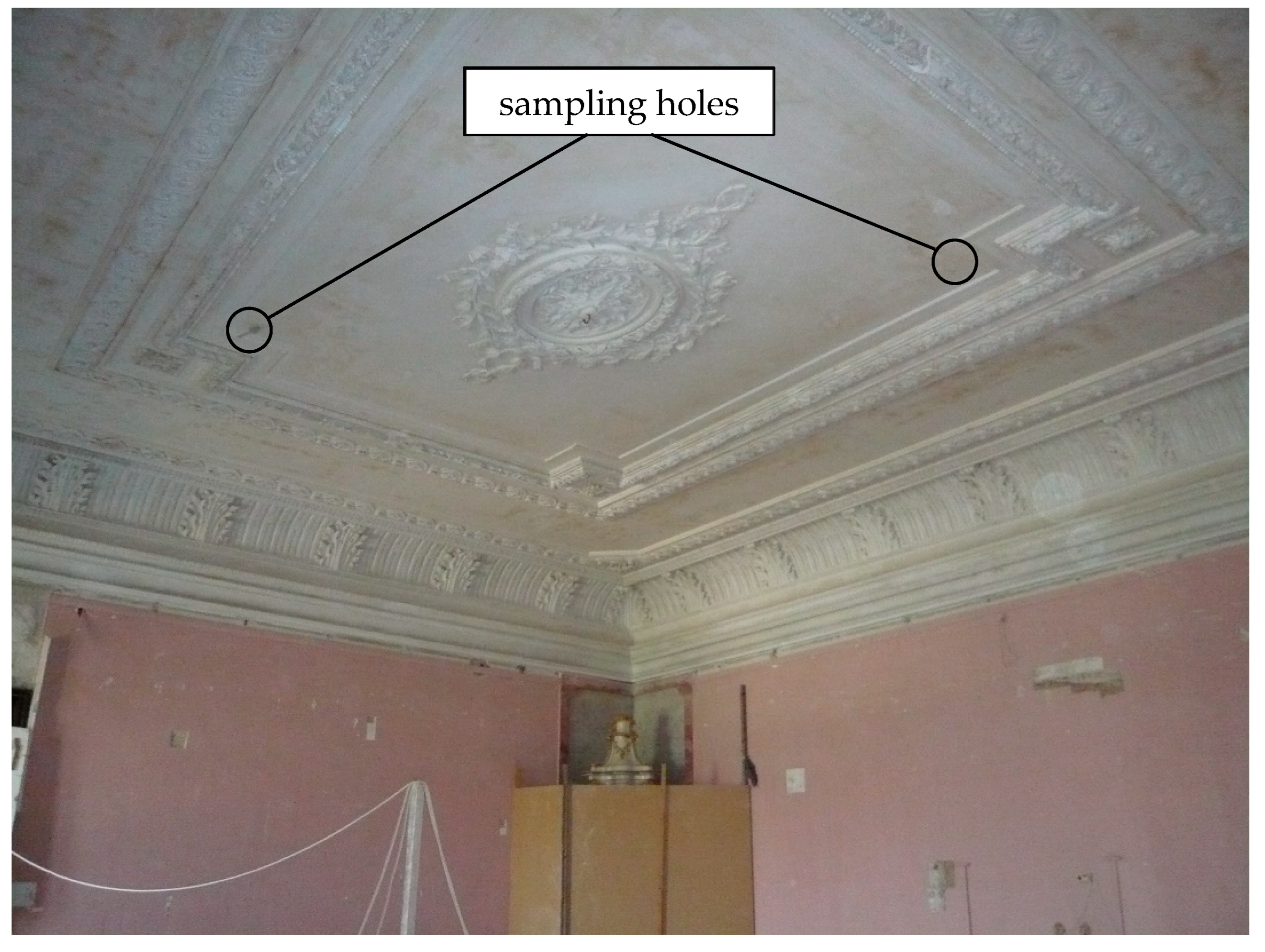
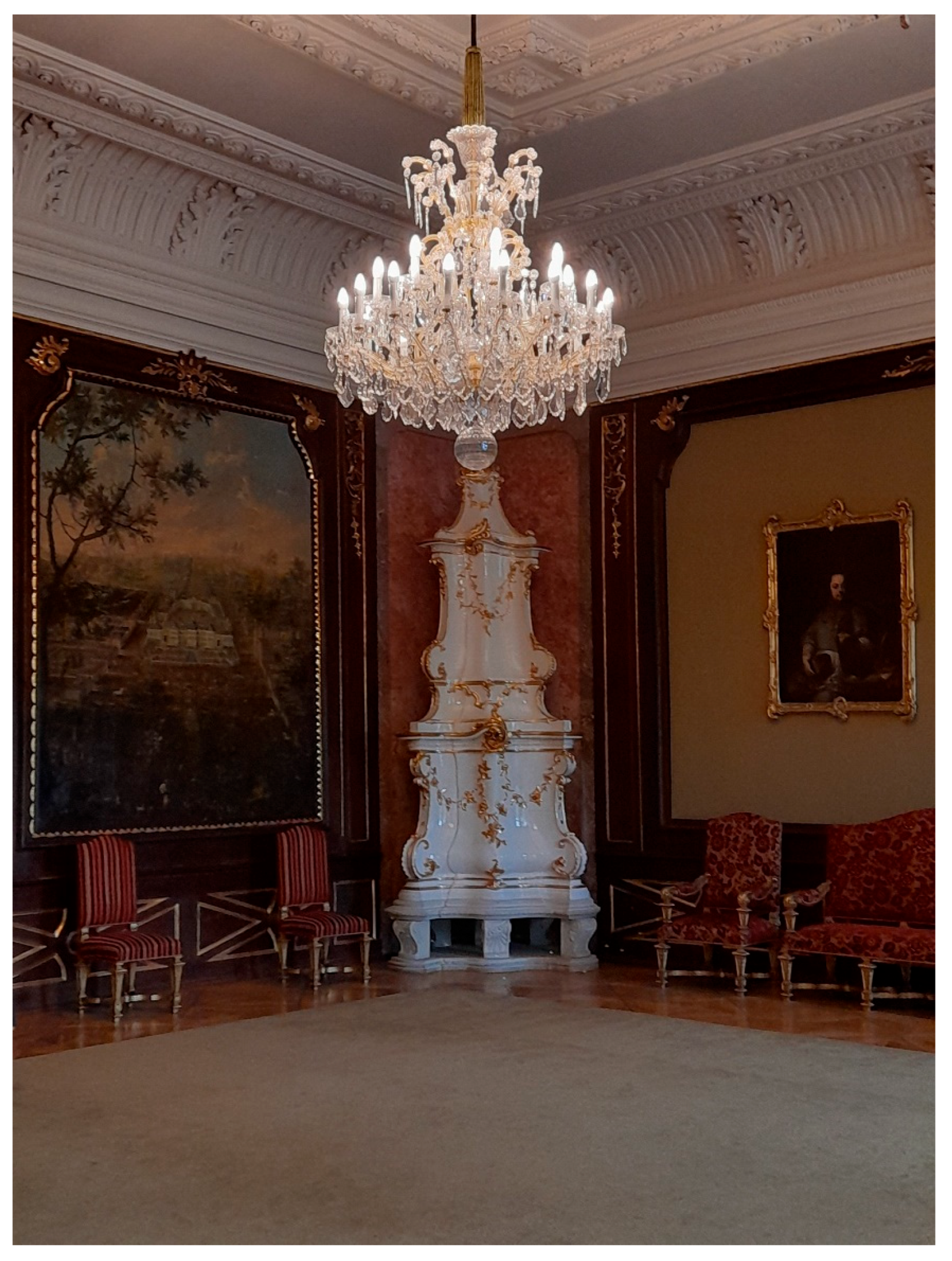
It is common practice to only pass a probe (capillary pipe) of a few mm in diameter through the structure to protect (Figure 10b), since the commonly used sampling pipe has a quite large outer diameter of 25 mm. An example of this application is the baroque Esterházy Palace in Pápa (Hungary). Figure 11 shows the original picture of one of the emblematic rooms of the castle, the Nádor Hall from 1921. During the renovation, the protection of the most beautiful rooms was designed to be achieved by means of a smoke detection solution with only two sampling points on the stucco ceiling, with the planned smoke detection solution (Figure 12). With this solution, the full splendour of the hall remained and is now visible after the completed historic repair (Figure 13).
As it was mentioned before, a picture in Figure 12 was taken during the renovation, with the conceptual solution shown in Figure 10b, using a capillary sampling pipe from the attic above the room to provide “invisible” smoke detection.
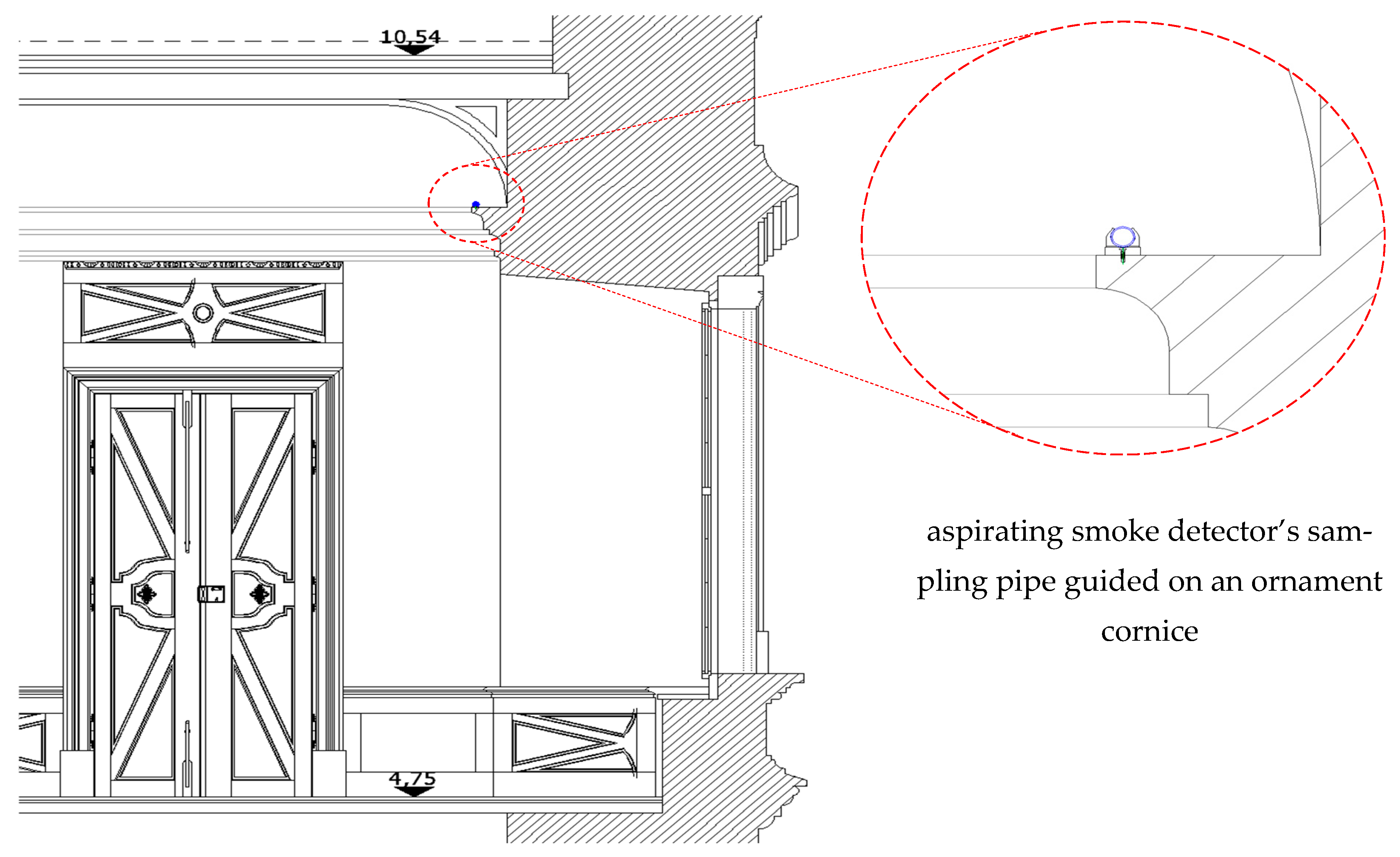
A good solution could also be to route the sampling pipe through the cornice, which is often found in listed buildings. Although the ideal positioning, i.e., at the geometric centre of the ceiling of the room, may be deviated from, it may be a feasible compromise after individual consideration and a design decision. An example of such a solution is shown in Figure 14.
We summarize the advantages and disadvantages of using different types of smoke detectors in listed buildings in Table 2.
As we can see, there is no universal solution; almost every monument requires a unique solution. The characteristics of the building to be protected, as well as the aspects that we consider important as clients or architects, exclude certain sensors from the outset, so we consider it important that architects also become familiar with these options.

5. Sizing

The following sizing assessment is not intended as a fire or smoke propagation simulation of a specific heritage space. No Computational Fluid Dynamics (CFD) or Fire Dynamics Simulator (FDS) modelling was applied. Instead, a manufacturer-supported aspirating smoke detector (ASD) sizing tool (PipeFlow) was used to perform a parametric assessment of the sampling pipe network.
The objective of this demonstrative analysis is to investigate how post-design parameter modifications—specifically changes in sampling hole diameters and fan speed—affect transport time, sensitivity distribution, and system balance within an ASD system whose pipe routing is constrained by architectural and conservation-related considerations. Such constraints are typical in heritage buildings, where the geometry and routing of sampling pipes are often dictated by aesthetic and reversibility requirements rather than by optimal detector layout.
It is very common in the case of heritage buildings to have to provide protection in spaces with high ceilings. For example, point optical smoke detectors cannot be used at heights above 12 m (see Table 2). According to a recommendation based on real-scale fire tests carried out by the FIA, the use of aspiration detectors at high ceiling heights is clearly preferable to line smoke detection, due to, among other things, the cumulative effect and the different sensitivity levels that can be achieved by design [38].
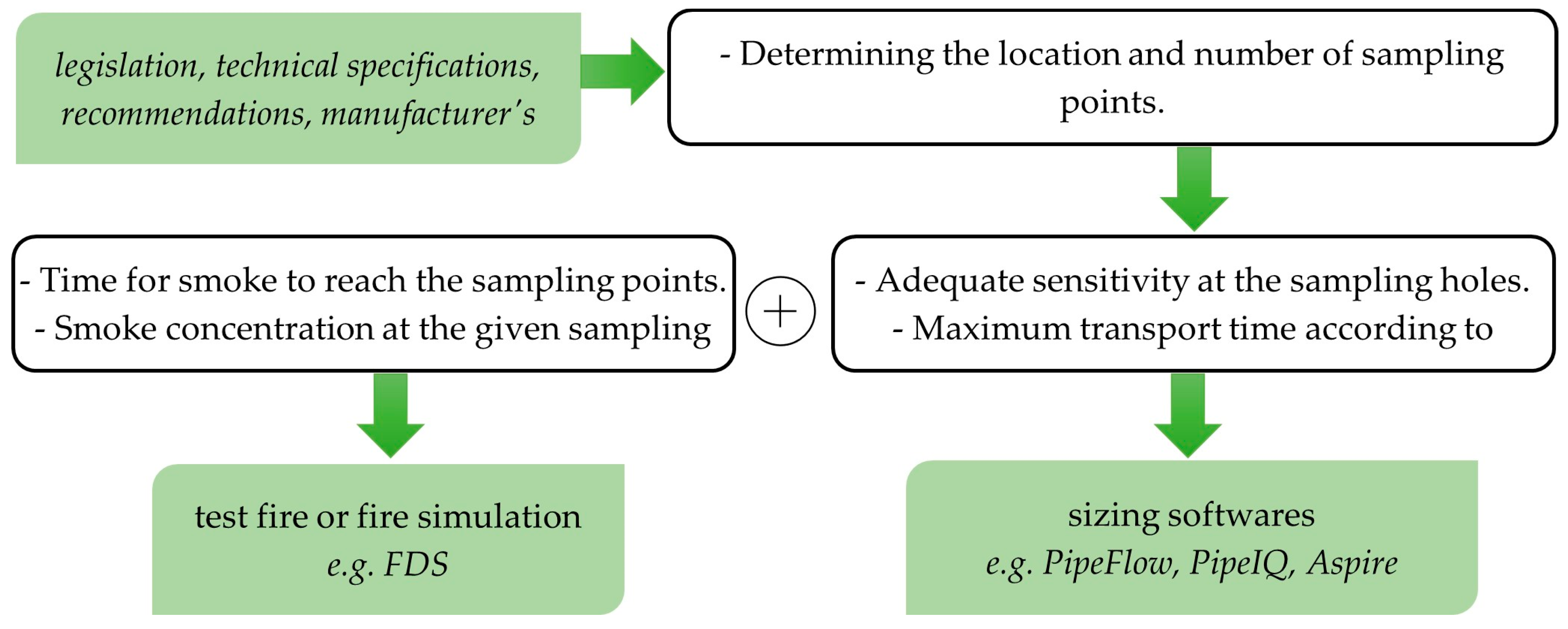
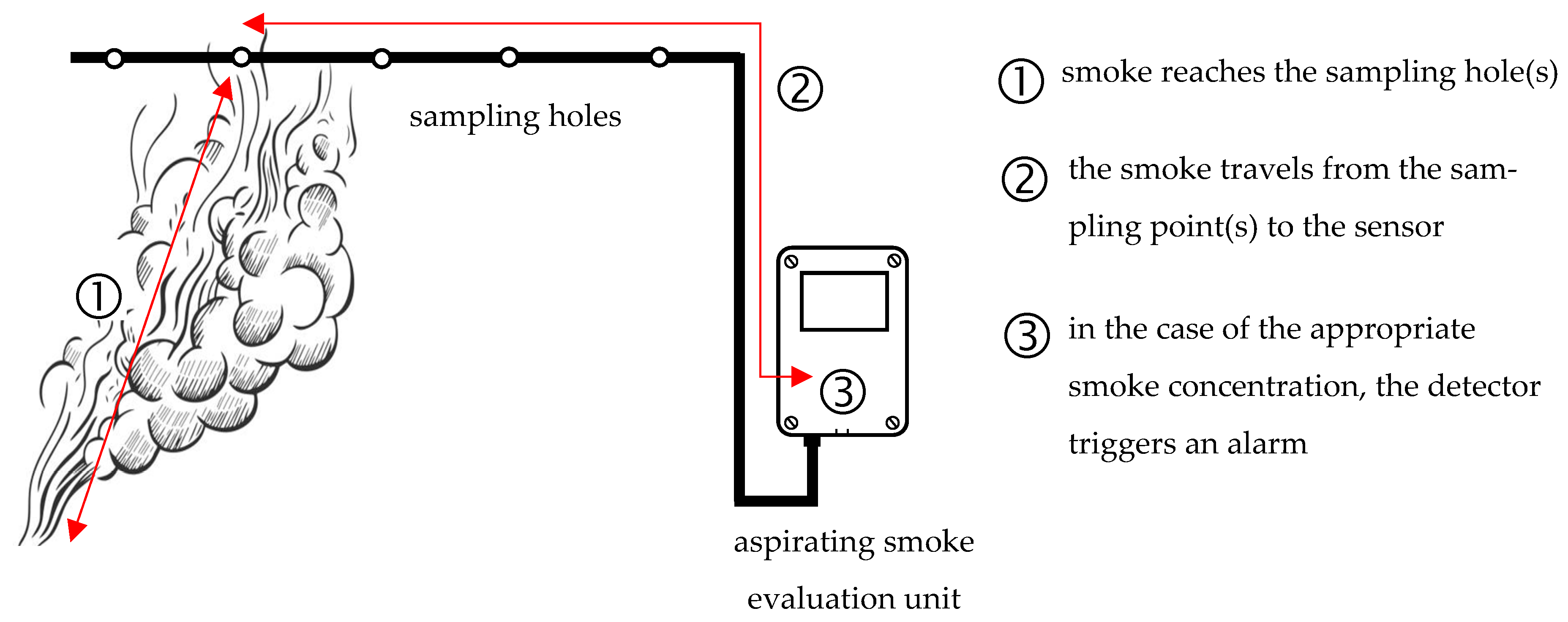
In the case of aspiration smoke detection, sizing software developed by the manufacturers and taking into account the requirements of the standard can be used to verify the correct sensitivity. When designing aspiration detection for a 40 m high space, it is recommended to design an aspiration detector with sensitivity class “B” according to the EN standards [39] with multiple sampling openings as recommended by the FIA [38] to obtain a proper fire alarm response. However, in order to be able to estimate as accurately as possible the smoke propagation, and thus the time for smoke to reach the detector in an interior with a high ceiling and a complex internal geometry, for example, in special applications such as certain historic buildings, procedures are required in addition to the compliance with the specifications (see Figure 15).
It is useless to size the sampling points for the correct sensitivity class if in reality the smoke does not reach the sampling holes at all or only reaches them late. And the reverse is also true: if the sensitivity at the given sampling point is not adequate, the detection in time also becomes uncertain.
The most appropriate solution, which is closest to reality, is a fire test that we can actually perform in the protected space. In this case, the conditions that can actually develop during a fire incident there can be best guaranteed. However, real-scale on-site fire tests are difficult to implement and expensive, so their application to verify a design solution is rare in everyday engineering practice. Many engineering solutions can be verified by the practice of post-commissioning test runs, but for fire detection systems this does not provide feedback on the adequacy of detection. Tests carried out under similar conditions by research laboratories can be taken as a basis, as is done, for example, by the FIA8 recommendations, but in these cases, due to the differences between the test and real conditions, the results are only estimates.
The other solution is using fire simulation software, thanks to the development of which aspiration sensors can already be parameterized [40], so it is possible to check the goodness of more complex solutions with this method even before the actual implementation (Figure 16).
In terms of costs, a fire simulation may be a more cost-effective solution than real-scale test fires in the field, but the high uncertainties and variability of the input parameterisation make the results only approximate reality. As in the case of all simulations, it is also true for fire simulations that it cannot take into account all conditions that occur in reality. For example, it is difficult to account for actual airflow conditions even if the location and size of holes in space are known. But it is equally difficult to take into account boundary conditions that may change over time. These can include the quality and quantity of equipment and materials stored, but also the choice of fire location and output can give a number of alternative results. In the present study, however, these approaches are discussed only for contextual completeness, while the demonstrative analysis is exclusively based on manufacturer-supported sizing software.
These methods only give approximate results, so it may be necessary to find a solution for retrofitting already deployed systems. Since the “sensing points” (location of the sampling holes) are given for an installed system, potential modifications could be made by changing the sensitivity of the sensor in the evaluation unit (if it is possible), changing the fan power (if it is possible), and changing the diameter of the sampling holes.
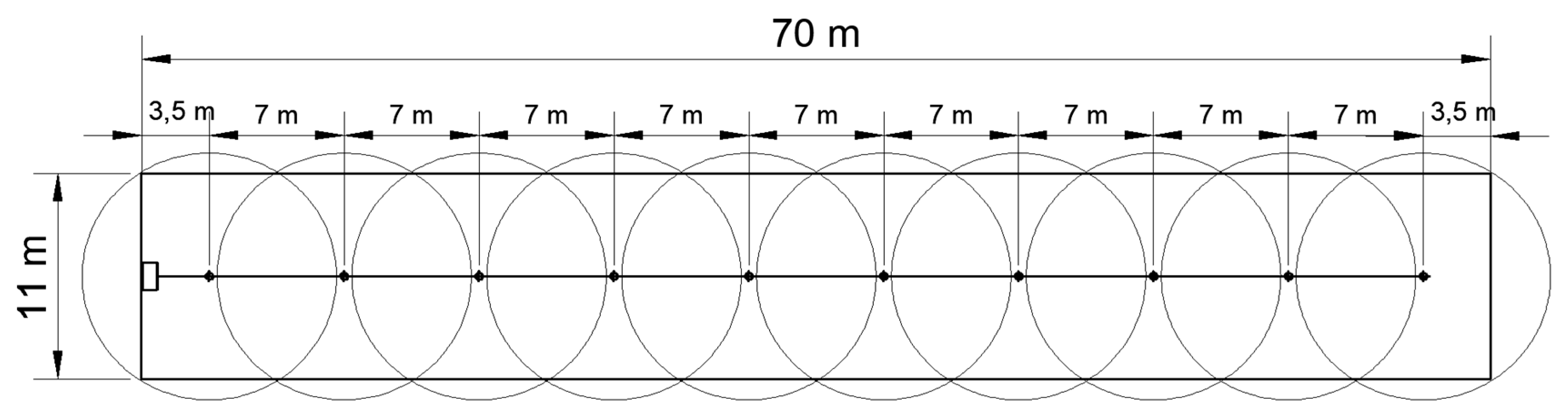
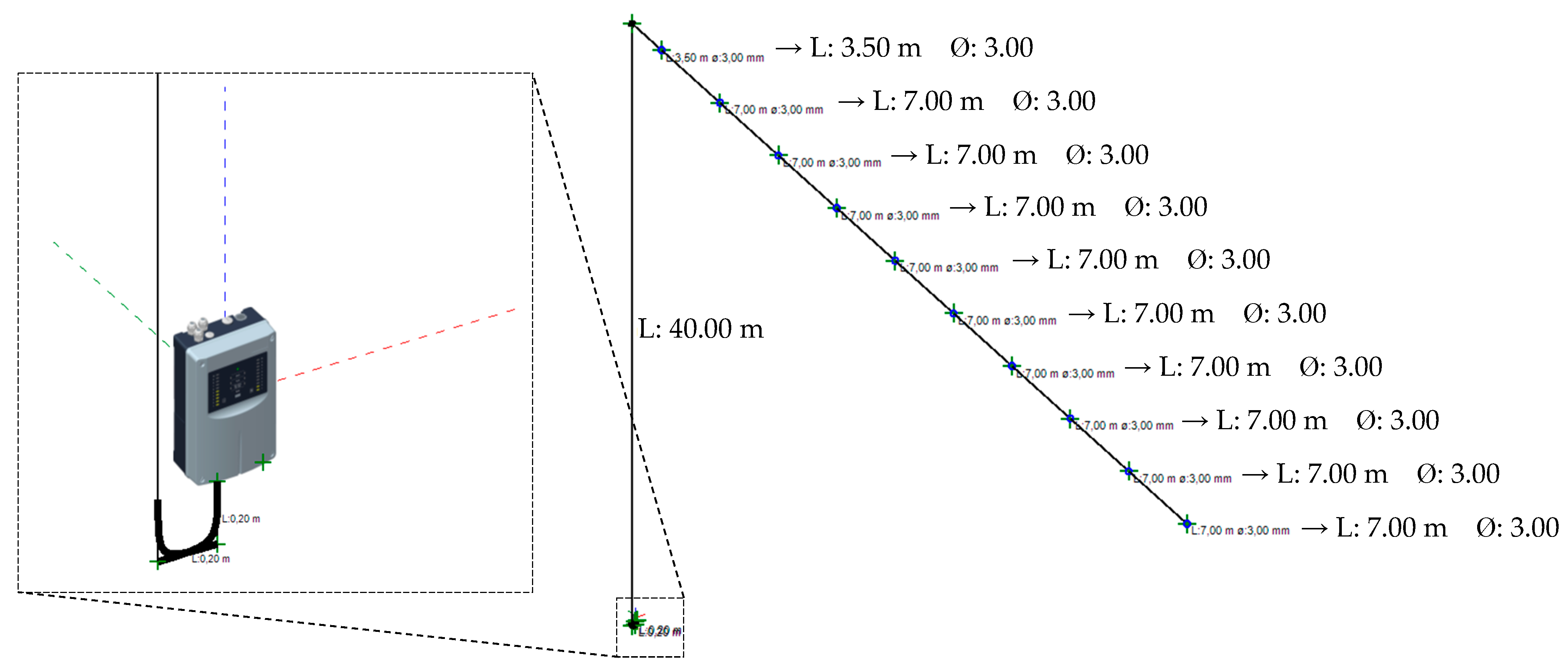
As one of the options to reduce the detection time, this paper will consider the possibility of changing the holes diameter afterwards, since sizing software allows the use of “manually” entered hole diameters different from the optimised hole diameters calculated by the sizing software. In this case, the question is how the balance of the system, the sensitivities achieved at each orifice and the transport time will vary. For this study, a simple “I-arrangement” aspiration sampling pipe network with 10 holes was scaled up, and a graphical detail of the scaling software layout is shown in Figure 17 with the evaluation unit and the sampling pipe network.
The pipe network shown in Figure 17 represents a simplified but technically realistic ASD layout, designed solely to allow controlled comparison between different sizing strategies under identical boundary conditions. The geometry does not correspond to a specific historic interior. While Figure 14 illustrates a visually concealed integration strategy for aspiration sampling in a heritage interior, the sizing assessment presented in Figure 17, Figure 18, Figure 19, Figure 20 and Figure 21 addresses the technical consequences of such aesthetically driven routing decisions. Specifically, constrained pipe layouts may necessitate post-design adjustments to maintain acceptable transport times and sensitivity balance, which is examined through the parametric PipeFlow analysis.
In the SecuriRAS ASD535 evaluation unit used in our example, the detector has an alarm sensitivity of 0.02–10%/m, and the airflow is adjustable in fan speed 5, ranging from 2500 rpm to 4500 rpm [41]. The total length of the designed sampling pipe network is 106.9 m. The software settings were based on a standard ambient temperature of 20 °C and an atmospheric pressure of 950 hPa, drilled sampling holes (between 2–7 mm with 0.5 mm pitch) and PC 25 PP sampling pipe. This is possible with the PipeFlow (Version 8) sizing software we use, so we took into account the limits and system boundaries defined by the [39] EN 54-20 standard.
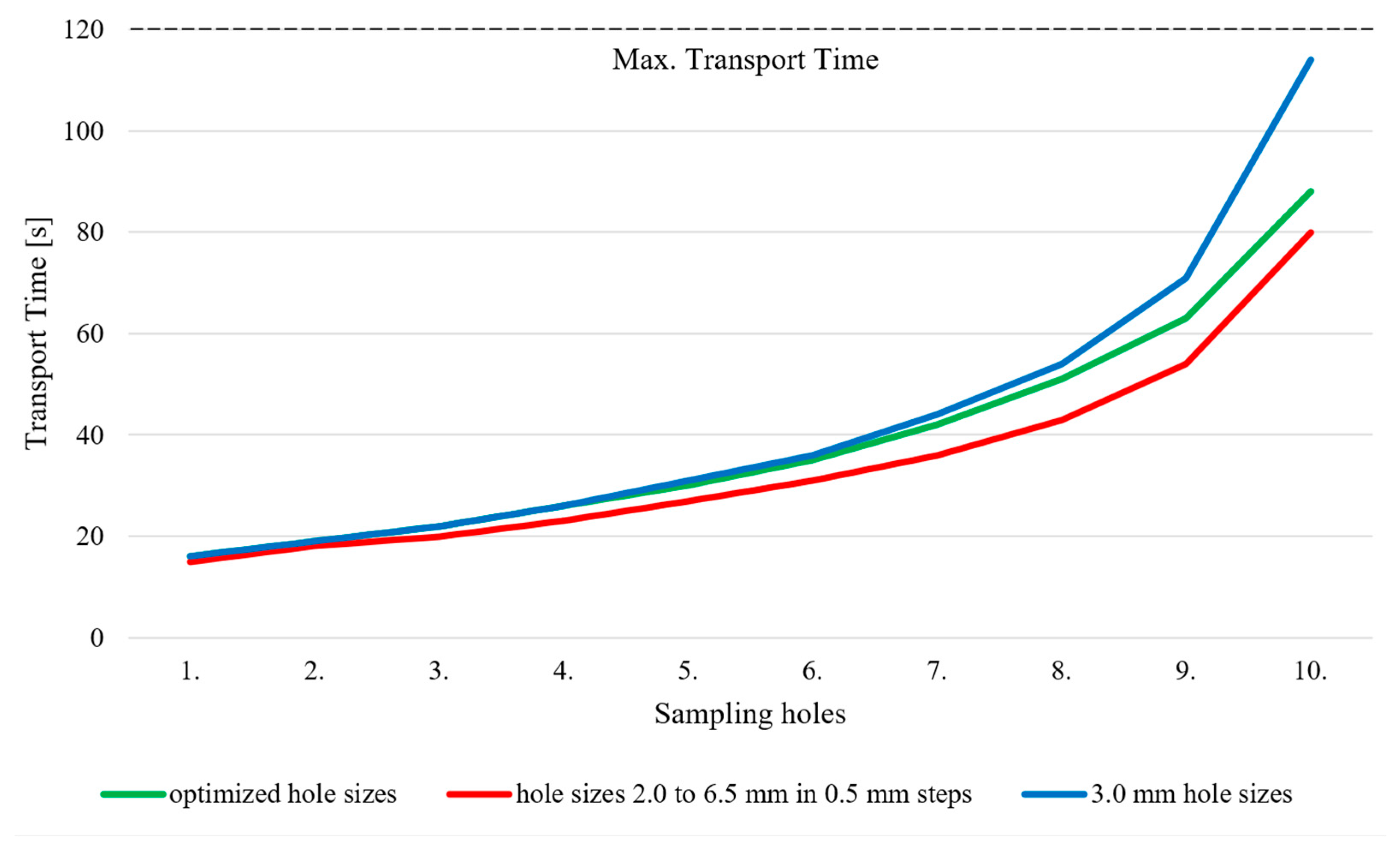
The question under investigation here is how much the maximum transport time of 120 sec [42] can be reduced by changing the design parameters for a system as shown in Figure 17. Among the initial conditions, we consider the number and position of the sampling holes to be constant, as we want to achieve sensitivity class “B” according to the recommendation of FIA [38]. Variable parameters in this case are the fan speed and the diameter size of the sampling holes. From the results of the scaling performed by varying these parameters, we highlight the three typical cases given in Table 3.
As can be seen, from the tests performed with the parameter changes, the best delivery time was 80 sec, which is 40 sec better than the still acceptable transport time (Figure 19). As can be seen, the sizing program allows for an arbitrary choice of hole sizes. The best transport time was not obtained with the optimized sampling hole sizes, but with the sampling hole sizes we defined and indicated in option 2 in Table 3. Since we thus deviated from the optimised dimensions suggested by the software, we investigated how this influenced the other parameters. Is there a disadvantage if not using the sampling hole sizes optimised by the sizing software.
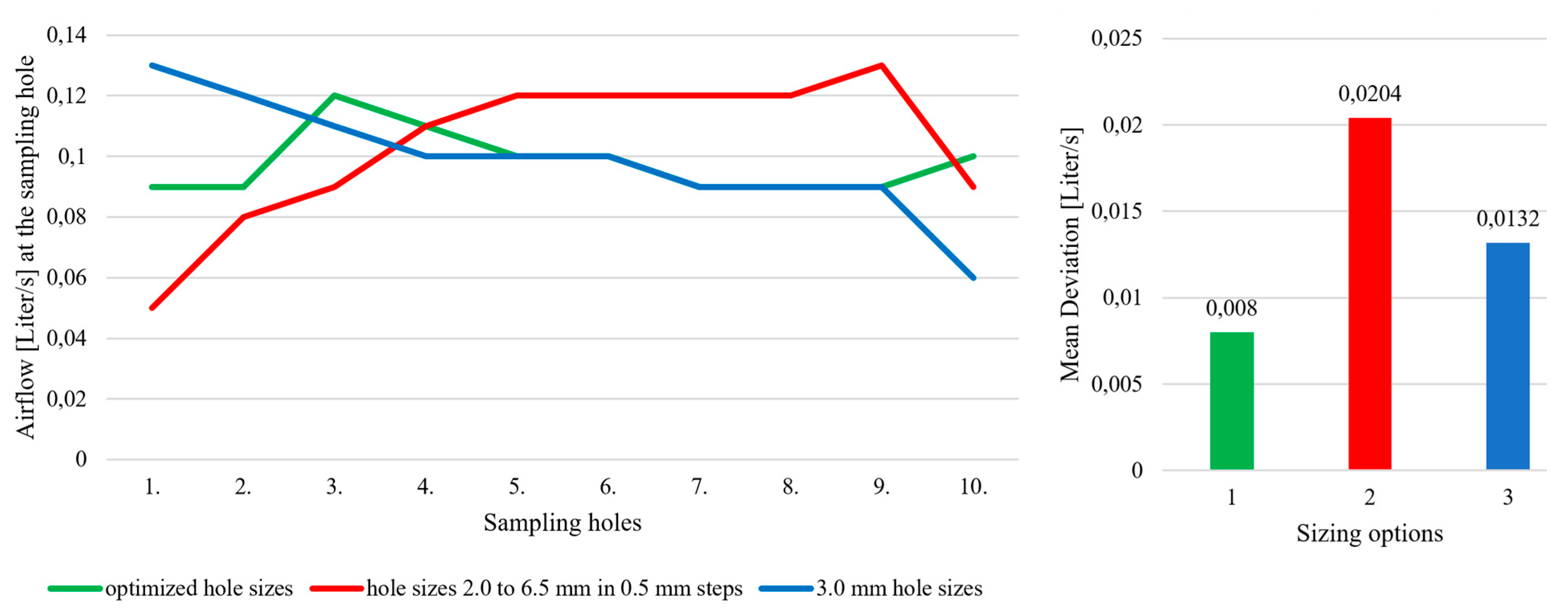
One of the most important parameters is the volumetric flow rate values measured at each sampling point itself, as this ensures the system is balanced [39]. The volumetric flow rate values for each sampling holes allocation are shown in Figure 20. Since the aim is to minimise the deviation between the different sampling points (balanced system), we calculated the average difference for each option (Figure 20). This clearly shows that the design according to option 2 shows the largest average deviation.
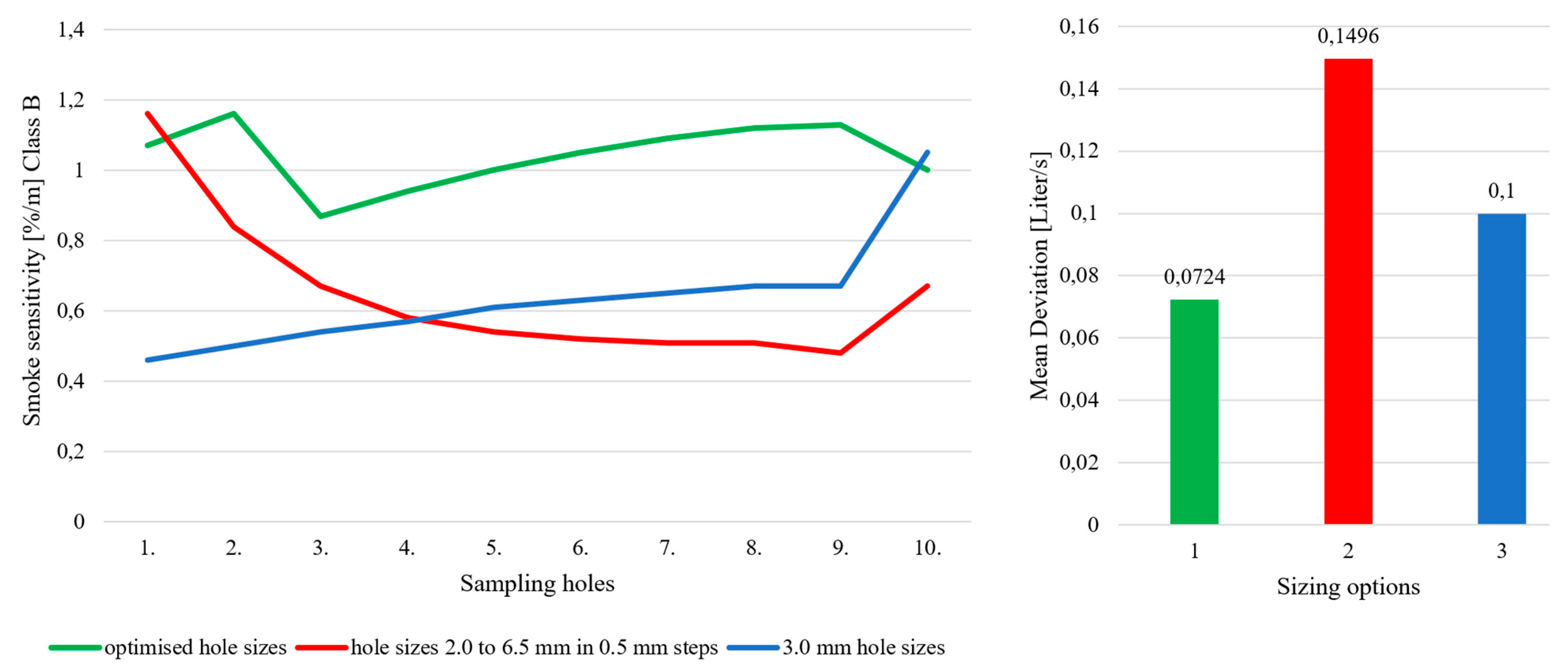
The most important parameter is the sensitivity of the detector itself, so we also examined the sensitivities per sampling holes. The sensitivities in %/m were obtained for the values shown in Figure 20, which correlate well with the values of the air flow rate and its uniformity also shows the system’s balance. The aim was to keep the values within the range of sensitivity class B.9 The other criterion was that there should not be a large difference between the sensitivity of the individual sampling holes over the whole network. Therefore, we calculated the average deviation for each option (Figure 21). Similar to the values of the air volume flow, the result obtained here shows that the design under option 2, which was found to be the most favourable in terms of transport time, shows the largest average deviation.
These values draw attention to the extent to which “manual” changes to parameters can cause changes in the final result. Given that the variation in the related parameters is still within tolerance, these changes are acceptable, but clearly affect the balance of the system, so any changes should be treated with caution compared to the software optimisation.

6. Protection During Renovation

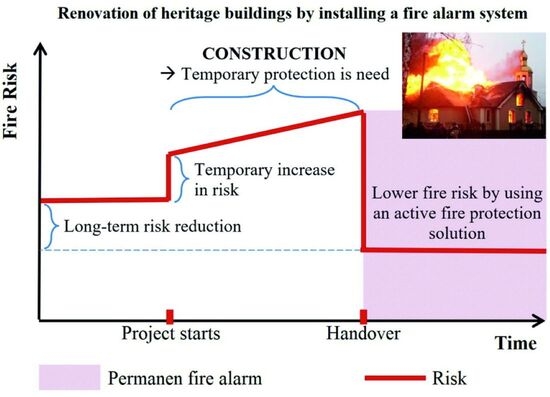
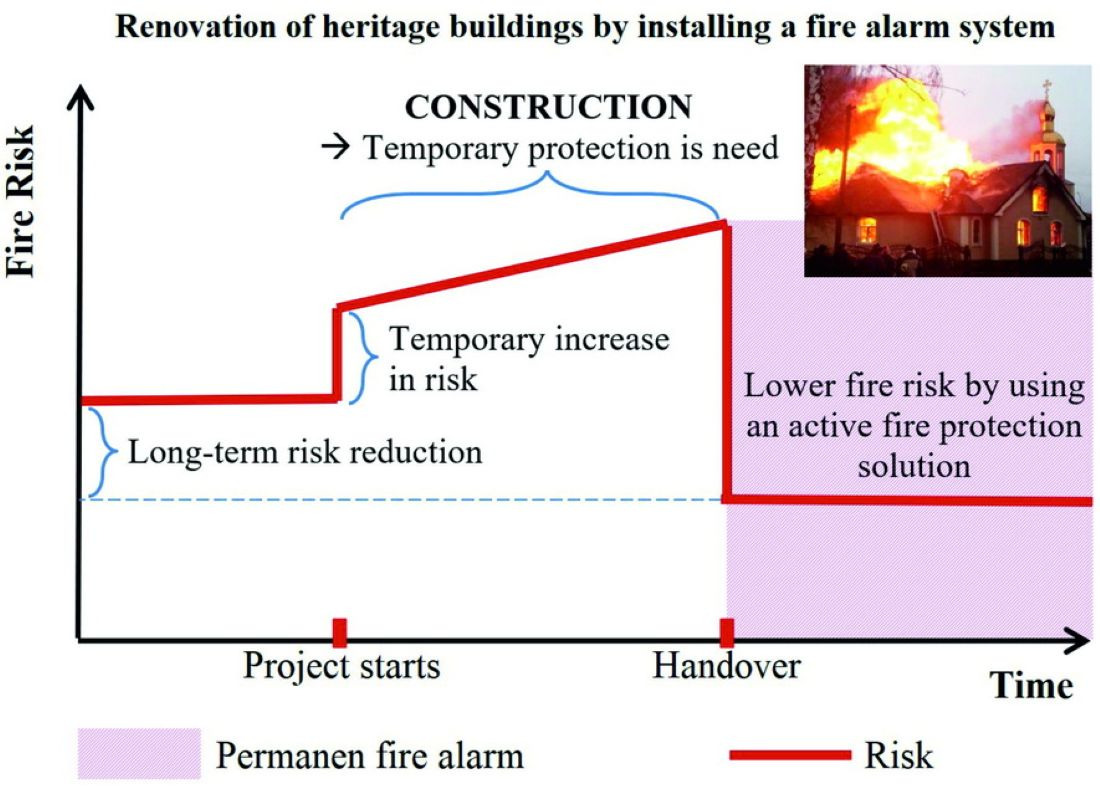
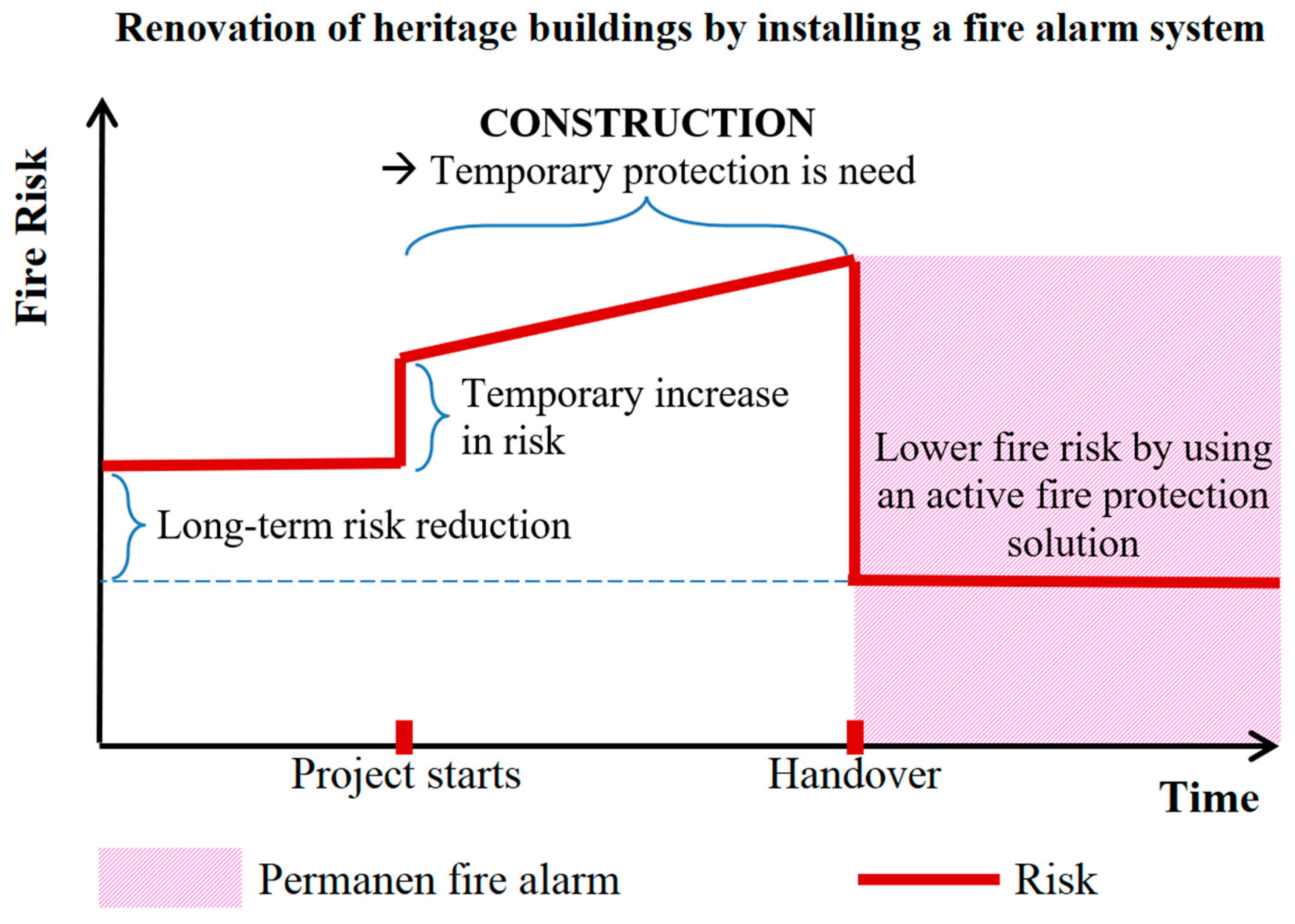
Fires in heritage buildings show that most fires occur during the renovation period, while the building is still under construction. It is useless to install fire alarm systems during renovation until the fire alarm system intended for permanent use is completed and commissioned, and as such the fire risk during construction is even higher than the general level (see Figure 22).
Obviously, the level of safety is only considered to be the level expected at the design stage for the completed and occupied building, even though the “value” of the building will increasingly approach its final value during construction. In the case of heritage buildings, this classical approach is even more true, since the destruction of a monument, both without and after renovation, is a major damage, since its ideological value is often much higher than its financial value. The damage or destruction of a listed building during renovation is approximately the same loss, even though a fire alarm system will be in operation after the renovation.
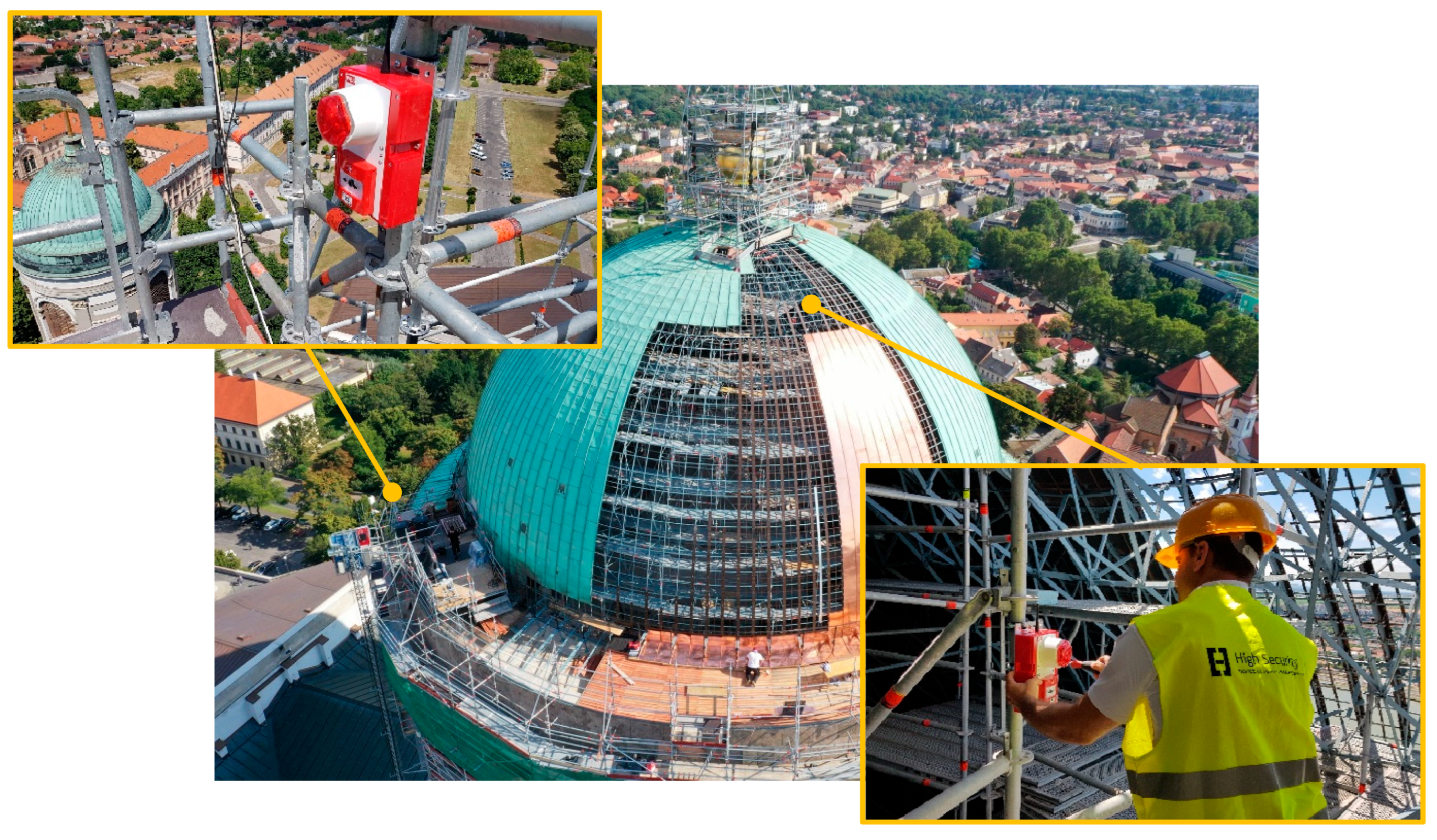
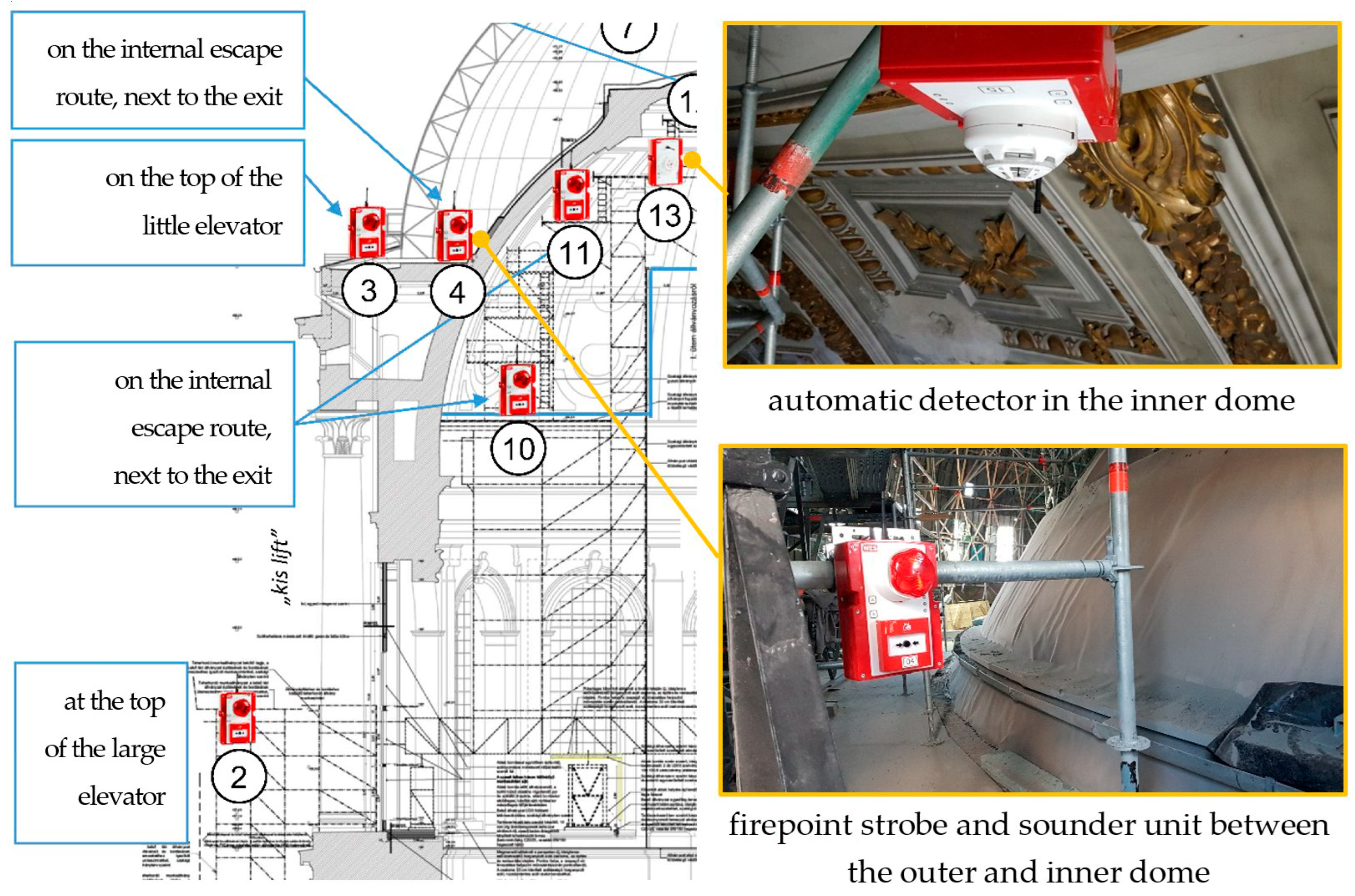
Appropriately effective fire safety solutions should not be limited to the final, post-occupancy state. It is also possible to temporarily increase safety during renovation, even with active fire protection devices, as there are already special fire alarm and evacuation systems (mobile fire alarms) that are designed to be flexible during construction [43]. Figure 23 and Figure 24 show an example of this with the mobile fire alarm system used during the renovation of the famous Esztergom Basilica in Hungary.
Construction sites are also subject to strict occupational health and safety regulations, and the tasks associated with compliance with these regulations must be defined in a safety and health plan, considering the specificities of the construction site [45]. In this plan, it is important to define, among other things, the methods of fire alarm and alarms in order to evacuate the construction site as quickly as possible. The use of a mobile fire detection and evacuation system during construction sites not only increases fire safety but also supports compliance with occupational health and safety regulations, insurance requirements and even environmental certification schemes such as LEED10 or BREEAM11 [46].

7. Conclusions

Fire safety in heritage buildings requires a fundamentally different design approach compared to contemporary structures, as technical effectiveness must be achieved while preserving architectural authenticity and minimizing physical and visual intervention. This study has demonstrated that appropriate fire detection solutions exist which can significantly improve safety levels without compromising the aesthetic and cultural value of historic buildings.
Based on the comparative review of point-type, linear, and aspirating smoke detection systems, the results confirm that no single detector type can be considered universally applicable in heritage contexts. Instead, detector selection must be guided by building-specific constraints such as ceiling height, spatial geometry, ornamentation, accessibility, and conservation requirements. Among the reviewed technologies, aspirating smoke detection systems offer particular advantages in heritage applications due to their high sensitivity, early warning capability, and potential for visually concealed installation.
The demonstrative software-based sizing assessment highlights the necessity of carefully validating any post-installation adjustments. An important practical implication of this study is that aesthetically driven routing constraints, which are typical in heritage buildings, must be explicitly considered during both the initial design and any subsequent modification of fire detection systems. The results underline that heritage-compatible solutions require close collaboration between fire safety engineers, architects, and conservation professionals, supported by quantitative performance evaluation rather than solely prescriptive rules. The scientific contribution of this paper lies in linking heritage-specific architectural and conservation constraints with measurable performance parameters of fire detection systems. By combining a structured review with a demonstrative parametric sizing assessment, the study provides both a conceptual decision framework and quantitative insights that support informed design choices. These findings are consistent with European recommendations on fire risk reduction in built heritage and contribute to the development of fire detection strategies that balance early warning performance with the principles of minimal intervention and reversibility.
Well-chosen fire alarm systems, based on lengthy preparation and consultation, play a key role in the preservation of listed buildings and heritage structures. Moreover, if more attention is paid to this area during renovation, unfortunate disasters in which fire damages nationally or even globally priceless historic buildings can be avoided.

Author Contributions

Conceptualization, Á.Z.M., Á.T.; Methodology, Á.Z.M., Á.T.; Software, Á.Z.M.; Validation, Á.Z.M., B.E., E.H.-K.; Á.T. Formal Analysis, Á.Z.M., B.E., E.H.-K.; Writing—Original Draft Preparation, Á.Z.M., B.E., E.H.-K., Á.T.; Writing—Review & Editing, Á.Z.M., Á.T., Visualization, Á.Z.M., B.E., E.H.-K. Supervision, Á.Z.M., Á.T. All authors have read and agreed to the published version of the manuscript.

Funding

The research has not received external funding.

Data Availability Statement

All the data used are in the manuscript. Additional information is available from the authors upon request.

Conflicts of Interest

The authors declare no conflict of interest.

Notes

1
Listed on the World Heritage List, established and maintained by the UNESCO World Heritage Committee (whc.unesco.org 2023).
2
3
In Hungarian, KÖH.
4
Principal court, often the forecourt, of a grand house or palace, often enclosed between the principal front of the corps de logis, the projecting wings and colonnades, and the fourth side composed of very low buildings, lodges, etc., or a wall or railing.” (Curl 2006)
5
TvMI: Fire Protection Technical Guideline (Hungary)
6
Based on TvMI 5.4 2024.02.01. Fire Protection Technical Guideline for Planning, design and installation of fire alarm systems, Table (TvMI 5., 2024)
7
See Note 6 above.
8
Fire Industry Association
9
Aspirating smoke detector providing enhanced sensitivity” (EN 54-20, 2007)
10
Leadership in Energy and Environmental Design
11
Building Research Establishment Environmental Assessment Method

References

  1. Guibaud, A.; Mindeguia, J.C.; Albuerne, A.; Parent, T.; Torero, J. Notre-Dame de Paris as a validation case to improve fire safety modelling in historic buildings. J. Cult. Herit. 2024, 65, 145–154. [Google Scholar] [CrossRef]
  2. Salleh, N.H.; Ahmad, A.G. Fire safety management in heritage Buildings: The current scenario in Malaysia. In Proceedings of the 22nd CIPA Symposium, Kyoto, Japan, 11–15 October 2009. [Google Scholar]
  3. Furmanek, A.F. Impact of the Fire Protection Requirements on the Cultural Heritage of the Polish Old Towns—Selected Problems. Sustainability 2025, 17, 176. [Google Scholar] [CrossRef]
  4. D’Orazio, M.; Canafoglia, M.; Bernardini, G.; Quagliarini, E. Towards Using Digital Technologies to Balance Conservation and Fire Mitigation in Building Heritage Hosting Vulnerable Occupants: Rapid Evacuation Simulator Verification for the “Omero Museum” (Ancona, Italy). Heritage 2024, 7, 3734–3755. [Google Scholar] [CrossRef]
  5. Kincaid, S. Fire prevention in historic buildings—Approaches for safe practice. Hist. Environ. Policy Pract. 2022, 13, 361–380. [Google Scholar] [CrossRef]
  6. Petrini, F.; Aguinagaldeb, A.; Bontempi, F. Structural Fire Risk for Heritage Buildings by the Performance-Based Engineering Format. Int. J. Archit. Herit. 2023, 17, 1171–1194. [Google Scholar] [CrossRef]
  7. Naziris, I.A.; Mitropoulou, C.C.; Lagaros, N.D. Innovative Computational Techniques for Multi-Criteria Decision Making, in the Context of Cultural Heritage Structures’ Fire Protection: Theory. Heritage 2022, 5, 1719–1733. [Google Scholar] [CrossRef]
  8. Gao, S.; Huang, G.; Chen, X.; Jiang, H.; Zhou, L.; Gao, X. Two-stage deep learning-based video image recognition of early fires in heritage buildings. Eng. Appl. Artif. Intell. 2024, 129, 107598. [Google Scholar] [CrossRef]
  9. Hajpál, M.; Török, Á. Mineralogical and colour changes of quartz sandstones by heat. Environ. Geol. 2004, 46, 311–322. [Google Scholar] [CrossRef]
  10. Brotóns, V.; Tomás, R.; Ivorra, S.; Alarcón, J.C. Temperature influence on the physical and mechanical properties of a porous rock: San Julian’s calcarenite. Eng. Geol. 2013, 167, 117–127. [Google Scholar] [CrossRef]
  11. Delegou, E.T.; Apostolopoulou, M.; Ntoutsi, I.; Thoma, M.; Keramidas, V.; Papatrechas, C.; Economou, G.; Moropoulou, A. The Effect of Fire on Building Materials: The Case-Study of the Varnakova Monastery Cells in Central Greece. Heritage 2019, 2, 1233–1259. [Google Scholar] [CrossRef]
  12. Martinho, E.; Dionísio, A. Assessment techniques for studying the effects of fire on stone materials: A literature review. Int. J. Archit. Herit. 2018, 14, 275–299. [Google Scholar] [CrossRef]
  13. Martínez-Ibáñez, V.; Garrido, M.E.; Hidalgo Signes, C.; Tomás, R. Micro and macro-structural effects of high temperatures in Prada limestone: Key factors for future fire-intervention protocols in Tres Ponts Tunnel (Spain). Constr. Build. Mater. 2021, 286, 122960. [Google Scholar] [CrossRef]
  14. Németh, A.; Antal, Á.; Török, Á. Physical Alteration and Color Change of Granite Subjected to High Temperature. Appl. Sci. 2021, 11, 8792. [Google Scholar] [CrossRef]
  15. Tantra, S.; Brimblecombe, P. Fire Risk in Traditional Villages of Sumba, Indonesia. Heritage 2022, 5, 3605–3615. [Google Scholar] [CrossRef]
  16. Act LXXVIII. of 1997 on the Formation and Protection of the Built Environment Landed Areas. Available online: https://njt.hu/jogszabaly/1997-78-00-00 (accessed on 29 May 2023).
  17. UNESCO: World Heritage List. 2023. Available online: https://whc.unesco.org/en/list/stat (accessed on 12 May 2023).
  18. Jámbor, A. What is a Monument? Építésijog.hu Kft. Budapest 2022. Available online: https://epitesijog.hu/1300-01-mi-az-a-muemlek (accessed on 20 May 2023).
  19. COST Action C17, Built Heritage: Fire Loss to Historic Buildings, COST (European Cooperation in Science and Technology), Brussels, Belgium, 2017. Available online: https://www.fireriskheritage.net (accessed on 5 December 2023).
  20. Index.Hu. The Fire That Rocked the British Monarchy. 2017. Available online: https://index.hu/kulfold/2017/11/20/windsor_kastely_tuz_brit_kiralyno_evfordulo/ (accessed on 10 May 2023).
  21. Today.Com. What Was Lost, What Was Saved in the Notre Dame Cathedral Fire. 2019. Available online: https://www.today.com/news/note-dame-cathedral-fire-what-was-lost-what-was-saved-t152249 (accessed on 17 May 2023).
  22. Praticò, Y.; Holzer, S.; Ochsendorf, J.; Flatt, R. Post-fire restoration of historic buildings and implications for Notre-Dame de Paris. Nat. Mater. 2020, 19, 817–820. [Google Scholar] [CrossRef]
  23. Voanews.Com. Heritage Landmarks Devastated by Fires. 2019. Available online: https://www.voanews.com/a/heritage-landmarks-devastated-by-fires-/4877081.html (accessed on 14 May 2023).
  24. Galántai, Z.; Prokopp, M.; Zsembery, Á. The Overall Artistic Significance of the Chapels and Stations of the Calvary in Esztergom-Downtown. Építés-Építészettudomány 2023, 51, 293–320. [Google Scholar] [CrossRef]
  25. Kep-Ter.Blog.Hu. Andrássy Street 83–85. The Kodály Körönd House, Whose Roof Burnt Down Twice. 2017. Available online: https://kep-ter.blog.hu/2017/08/29/andrassy_ut_83?ajanlo=1 (accessed on 20 May 2023).
  26. Origo.HU. Resurrected the Palace in Kodály Körönd, Which Was Destroyed in a Fire. 2019. Available online: https://www.origo.hu/gazdasag/20190701-kodaly-korond-palota-tuzvesz-felujitas.html (accessed on 12 May 2023).
  27. Veöreös, A. Environment Protection—Monument Preservation. Építés-Építészettudomány 2023, 51, 139–161. [Google Scholar] [CrossRef]
  28. Garcia-Castillo, E.; Paya-Zaforteza, I.; Hospitaler, A. Fire in heritage and historic buildings, a major challenge for the 21st century. Dev. Built Environ. 2023, 13, 100102. [Google Scholar] [CrossRef]
  29. Euronews.Com; Mátrai, A. Still Unclear Why the Fire Broke Out in Notre-Dame Three Years Ago. 2022. Available online: https://hu.euronews.com/2022/04/14/meg-mindig-homaly-fedi-miert-tort-ki-tuz-harom-eve-a-notre-dame-ban (accessed on 20 May 2023).
  30. Li, G.; Yuan, H.; Shan, Y.; Lin, G.; Xie, G.; Giordano, A. Architectural Cultural Heritage Conservation: Fire Risk Assessment of Ancient Vernacular Residences Based on FAHP and EWM. Appl. Sci. 2023, 13, 12368. [Google Scholar] [CrossRef]
  31. Omar, M.; Mahmoud, A.; Aziz, S.B.A. Fire Safety Index for High-Rise Buildings in the Emirate of Sharjah, UAE. Fire 2023, 6, 51. [Google Scholar] [CrossRef]
  32. BS 5839-1:2017; Fire Detection and Fire Alarm Systems for Buildings—Part 1: Code of Practice for System Design, Installation, Comissioning and Maintenance. BSI: London, UK, 2017.
  33. TvMI 5.4. 2024.02.01; Fire Protection Technical Guideline 5.4: Planning, Design and Installation of Fire Alarm Systems. National Directorate General for Disaster Management, Ministry of the Interior (NDGDM): Budapest, Hungary, 2024.
  34. Siemens.Com: 2023. Available online: https://sid.siemens.com/api/khub/documents/ZeKYT6A959K3TvBoZ_vthA/content (accessed on 12 May 2023).
  35. Honeywell. FAAST Fire Alarm Aspiration Sensing Technology®; Honeywell: Bracknell, UK, 2014. [Google Scholar]
  36. “Építészfórum”: “Library and the Nádor Hall from the Castle Album 1921”. 2015. Available online: https://epiteszforum.hu/uploads/images/2015/07/1920_16-pilgram-kep-24-nador-terem-copy-2-oldal-2.jpg (accessed on 10 May 2023).
  37. Pápai Esterházy-Kastély Facebook. 2021. Available online: https://www.facebook.com/story.php?story_fbid=4566829480035487&id=491235757594900&paipv=0&eav=AfbRur8g7_uKEklj5BT-c5Wgsu7x-bZbqLJ9YDou8mGowUve29o8GQJqSlV2afv7C_U&_rdr (accessed on 11 May 2023).
  38. FIA. Smoke Detection in High Spaces Using ASD, Fact File 45, Fire Industry Association; Fire Industry Association (FIA): Rickmansworth, UK, 2011. [Google Scholar]
  39. EN 54-20:2007; Fire Detection and Fire Alarm Systems. Part 20: Aspirating Smoke Detectors. CEN: Brussels, Belgium, 2007.
  40. McGrattan, K.; Floyd, J. Current and Future Parameters Used by the Fire Dynamics Simulator. Obtaining Data for Fire Growth Models; Bruns, M.C., Janssens, M.L., Eds.; ASTM International: West Conshohocken, PA, USA, 2023. [Google Scholar] [CrossRef]
  41. T131192V; Securiton: ASD 535 Aspiration System Technical Specification. Securiton: Zollikofen, Switzerland, 2008.
  42. FIA. Design, Installation, Commissioning & Maitenaince of Aspirating Smoke Detector (ASD) Systems, Code of Practice; Fire Industry Association (FIA): Rickmansworth, UK, 2012. [Google Scholar]
  43. Mohai, Á. Active fire safety on construction sites. Műszaki Katonai Közlöny 2017, 27, 55–69. [Google Scholar]
  44. Kima Studio Kft. Facebook Post 2021.09.06. Available online: https://www.facebook.com/kimastudiokft (accessed on 21 May 2023).
  45. Mohai, Á. Fire and accident prevention in construction sites I. Védelem Katasztrófavédelmi Szle. 2018, 6, 47–48. [Google Scholar]
  46. Al-Sakkaf, A.; Bagchi, A.; Zayed, T.; Mahmoud, S. Sustainability assessment model for heritage buildings. Smart Sustain. Built Environ. 2023, 12, 105–127. [Google Scholar] [CrossRef]
Figure 1. Distribution of World Heritage cultural sites around the world [17] (Note: cultural sites inscribed on the List of World Heritage in Danger marked in red).
Heritage 09 00067 g001
Figure 2. Proportion of World Heritage cultural sites in the world [17].
Heritage 09 00067 g002
Figure 3. Notre-Dame on fire [21].
Heritage 09 00067 g003
Figure 4. Structure of the fire protection concept.
Heritage 09 00067 g004
Figure 5. Criteria for the selection of fire detectors.
Heritage 09 00067 g005
Figure 6. Application of a photoelectric smoke detector during a church renovation.
Heritage 09 00067 g006
Figure 7. Working principle of the infrared line smoke detector (T-transmitter, R-receiver).
Heritage 09 00067 g007
Figure 8. Example of linear smoke detector application in a heritage building [34].
Heritage 09 00067 g008
Figure 9. Working principle of an aspiration smoke detector (simple case).
Heritage 09 00067 g009
Figure 10. Hidden fire detection solutions with aspiration smoke detectors: (a) capillary sampling pipe on a chandelier and (b) capillary sampling pipe through the ceiling [35].
Heritage 09 00067 g010
Figure 11. The Nádor Hall of Esterházy Castle in Pápa (1921) from the castle’s album [36].
Heritage 09 00067 g011
Figure 12. Planned location of the aspiration sampling holes during the renovation of the Esterházy Castle in Pápa (Hungary).
Heritage 09 00067 g012
Figure 13. The Nádor Hall of Esterházy Castle in Pápa after the renovation from 2009 to 2015 [37].
Heritage 09 00067 g013
Figure 14. Example of “concealed” installation of an aspiration smoke detector’s sampling pipe on a cornice.
Heritage 09 00067 g014
Figure 15. Interpretation of proper detection for aspirating smoke detectors (red arrows show the pathway of smoke).
Heritage 09 00067 g015
Figure 16. Design context for aspiration fire detectors.
Heritage 09 00067 g016
Figure 17. Design of the tested aspirating smoke detection system.
Heritage 09 00067 g017
Figure 18. Design of the examined aspirating smoke detector with ranges of 3.5 m to 7 m. The green crosses represent the location of detectors (image taken from the sizing software).
Heritage 09 00067 g018
Figure 19. Transport times for the three sizing options.
Heritage 09 00067 g019
Figure 20. Air volume current values and average deviation for the three sizing options.
Heritage 09 00067 g020
Figure 21. Sensitivity values and average deviation for the three sizing options.
Heritage 09 00067 g021
Figure 22. Fire risk during renovation of heritage buildings.
Heritage 09 00067 g022
Figure 23. Mobile fire alarm devices on the renovation of the Esztergom Basilica (authors photos and [44]).
Heritage 09 00067 g023
Figure 24. Mobile heat detectors and manual call points at the construction site of the Esztergom Basilica renovation.
Heritage 09 00067 g024
Table 1. Selected major fire events in heritage buildings discussed in this study, including reported causes and publicly available information on fire detection systems, based on the sources referenced in the manuscript.
BuildingLocationYearBuilding TypeReported/Suspected Cause of FireFire Detection/Alarm System (Reported)Key Lessons for Fire Detection in Heritage Buildings
Windsor
Castle
Windsor, UK1992Royal
palace
Electrical fault in spotlight during renovation worksAutomatic detection present, fire detected but spread rapidly through concealed voidsEarly detection alone is insufficient if concealed spaces are not adequately monitored
Notre-Dame CathedralParis, France2019Gothic
cathedral
Suspected electrical fault or construction-related ignition during renovationNo automatic fire suppression, detection system present, alarm handling, and response procedures publicly debatedDetection systems must ensure rapid alarm interpretation and coverage of roof voids
National
Museum
of Brazil
Rio de Janeiro, Brazil2018MuseumElectrical failure, lack of maintenanceNo effective automatic fire detection or suppression systemAbsence of detection systems significantly increases total loss risk
La Fenice
Opera House
Venice,
Italy
1996Opera houseArson during renovation worksDetection present, but ineffectiveDetection must be complemented by strict construction-phase fire safety management
Gran Teatre del LiceuBarcelona, Spain1994Opera houseMaintenance-related ignition (welding works)Limited detection coverage in roof structuresTemporary detection during renovation is critical
National Library of Bosnia and HerzegovinaSarajevo, Bosnia and Herzegovina1992LibraryArmed conflictNot applicable (war-related destruction)Not applicable (war-related destruction)
Grand Theatre of GenevaGeneva, Switzerland1951TheatreElectrical fault
(reported)
No modern fire detection systems installed at the timeHistorical fires demonstrate the importance of early detection retrofitting
St. Stephen’s BasilicaBudapest, Hungary1947BasilicaElectrical ignition
(reported)
No modern fire detection systems installed at the timeHistorical fires demonstrate the importance of early detection retrofitting
Esztergom
Basilica
Esztergom, Hungary1993BasilicaRoofing works during renovationNo permanent detection during constructionTemporary fire detection during renovation significantly reduces risk
Kodály Körönd residential palaceBudapest, Hungary2014Residential heritage buildingRoofing works
(construction-related ignition)
No fire alarm systemTemporary detection systems are essential during refurbishment
Table 2. Applicability of different types of smoke detectors in historic buildings. Source: Own table.
Point of ViewPoint Type Smoke DetectorsLinear Smoke DetectorAspirating Smoke Detector
non-installable ceiling-+
hidden installation for aesthetic reasons-+
higher sensitivity, early (pre)response--+
high ceiling<12 m6<16 m7+
split ceiling-+
interior with irregular geometry-
hard-to-reach, covered spaces--+
maintainability, accessibility-+
protection of attics and hiding places--+
Legend: “-“ is not a good solution, “+” is a very good solution, “○” can be a good solution.
Table 3. Measured values for the different intake designs. Source: Own table based on our software measures.
Opt.Sensitivity ClassFan LevelSizing Method of Sampling HolesSizes of Sampling Holes [mm]Transport Time
1.BV.optimized sampling holes2.5; 2.5; 3.0; 3.0; 3.0; 3.0; 3.0; 3.0; 3.0; 4.088 s
2.BV.hole sizes 2.5 to 6.5 mm in 0.5 mm steps2.0; 2.5; 3.0; 3.5; 4.0; 4.5; 5.0; 5.5; 6.0; 6.580 s
3.BV.3 mm hole sizes3.0; 3.0; 3.0; 3.0; 3.0; 3.0; 3.0; 3.0; 3.0; 3.0114 s
Disclaimer/Publisher’s Note: The statements, opinions and data contained in all publications are solely those of the individual author(s) and contributor(s) and not of MDPI and/or the editor(s). MDPI and/or the editor(s) disclaim responsibility for any injury to people or property resulting from any ideas, methods, instructions or products referred to in the content.