Article

Microclimate Indoor Monitoring for the Preservation of Organic-Based Cultural Heritage

by
Marianne Odlyha
1,* and
Charis Theodorakopoulos
2,*
1
School of Natural Sciences, Birkbeck, University of London, London WC1E 7HX, UK
2
Science in Conservation of Fine Art, School of Design, Arts and Creative Industries, Northumbria University, Newcastle upon Tyne NE1 8ST, UK
*
Authors to whom correspondence should be addressed.
Heritage 2026, 9(2), 64; https://doi.org/10.3390/heritage9020064

Submission received: 18 December 2025 / Revised: 28 January 2026 / Accepted: 29 January 2026 / Published: 6 February 2026
(This article belongs to the Special Issue Microclimate in Heritage)

Abstract

This paper examines the use of organic-based materials to monitor levels of corrosivity in indoor microclimate environments, which include proximity to artworks, artworks in display cases, and, in particular, in microclimate frames for paintings. It reviews research conducted within four EU-funded projects: Environmental Research for Art Preservation (ERA), Microclimate Indoor Monitoring in Cultural Heritage Preservation (MIMIC), Improved Protection of Paintings during Exhibition and Storage (PROPAINT), and Measurement, Effect Assessment, and Mitigation of Pollutant Impact on Movable Cultural Assets—Innovative Research for Market Transfer (MEMORI). The ERA project introduced the use of egg tempera paint dosimeters to assess levels of corrosivity in proximity to artworks. A multi-analytical approach was employed to evaluate chemical changes in the dosimeters, enabling risk assessment, exemplified by samples exposed at Sandham Memorial Chapel, Hampshire, UK. Building on this, in the MIMIC project, coated piezoelectric quartz crystals (egg tempera and resin mastic), a varnish commonly used by artists, were exposed at a number of sites together with the same coatings on steel strips. These were further employed in the PROPAINT project together with some continuous monitoring prototypes to investigate the nature of microclimates both within specially designed mc-paint frames and in the surrounding room environments. This paper presents Fourier Transform Infrared Spectroscopy (FTIR) and Dynamic Mechanical Analysis (DMA) from these exposures, together with environmental data recorded during the monitoring period and information on frame types used. Some correlation was found between FTIR, DMA, and environmental data. The findings reveal that changes in the physico–chemical properties measured by the techniques correlate with the environmental conditions. It also points to the possibility of using FTIR to monitor chemical changes in exposed coated strips. Additional data from the MEMORI project of similar exposures but including dammar and Regalrez 1094 varnish are also presented.

1. Introduction

In the ERA project, “mock paintings”, also referred to as paint dosimeters, were prepared and exposed near actual paintings to assess environmental impact [1,2,3]. The underlying rationale was that exposing materials commonly found in paintings could provide insight into the types and extent of deterioration that could affect paintings. Egg tempera paint dosimeters exhibited differential responses when exposed to varied indoor environments across selected museums. Chemical changes were evaluated using thermal, spectroscopic, and mass spectrometric analytical techniques, and a quantified damage ranking was established for each site. Recently, data were revisited and presented at the conference “Journey into the Aging and Alterations of Paintings (JAAP)” [4]. Amongst the sites studied were Clore Gallery in Tate Britain, London, UK, and Sandham Memorial Chapel, Hampshire, UK. The Clore Gallery has controlled relative humidity and temperature and uses carbon filters in its air-conditioning system, whereas Sandham Memorial Chapel has an uncontrolled environment. The paint dosimeters in the Clore Gallery showed minimal chemical change, particularly in the inorganic pigmented temperas. In contrast, significant changes were observed in dosimeters placed at Sandham Memorial Chapel [5] near Stanley Spencer’s painting “Moving Kitbags”. Further investigation at Sandham Memorial Chapel revealed RH and temperature gradients across this painting [6]. Poly(ethyleneimine) (PEI)-coated quartz crystal resonators were used to monitor these gradients in front of and behind the painting. Previous conservation concerns for this painting, such as varnish blanching, had already been identified and characterised [7]. The paint dosimeter results aligned with these observed issues, confirming that environmental monitoring could effectively identify risks to the painting.
In addition to egg tempera, further coatings were tested and included artists’ varnishes, such as resin mastic and dammar. These were used in the later MIMIC, PROPAINT, and MEMORI projects. Mass spectrometric studies on resin mastic showed changes that occurred with controlled accelerated light ageing of mastic coatings [8]. It was found that the magnitude of these changes could be correlated with mass changes occurring during degradation, which were monitored in terms of crystal frequency changes in the PQC crystals [9]. Resin mastic was also found to be sensitive to pollutant ageing involving nitrogen dioxide (NO2). X-ray Photoelectron Spectroscopy (XPS) studies revealed that following exposure to NO2, resin mastic was chemically altered to give increased carbonyl and hydroxyl moieties on the surface [10]. The PROPAINT project later confirmed this sensitivity and also to ozone (O3) [11]. Given these sensitivities, resin mastic was used in the MIMIC and in the PROPAINT projects, where it was applied as a coating on quartz crystal resonators and on steel strips. Both were exposed at sites with varying environmental control [12].
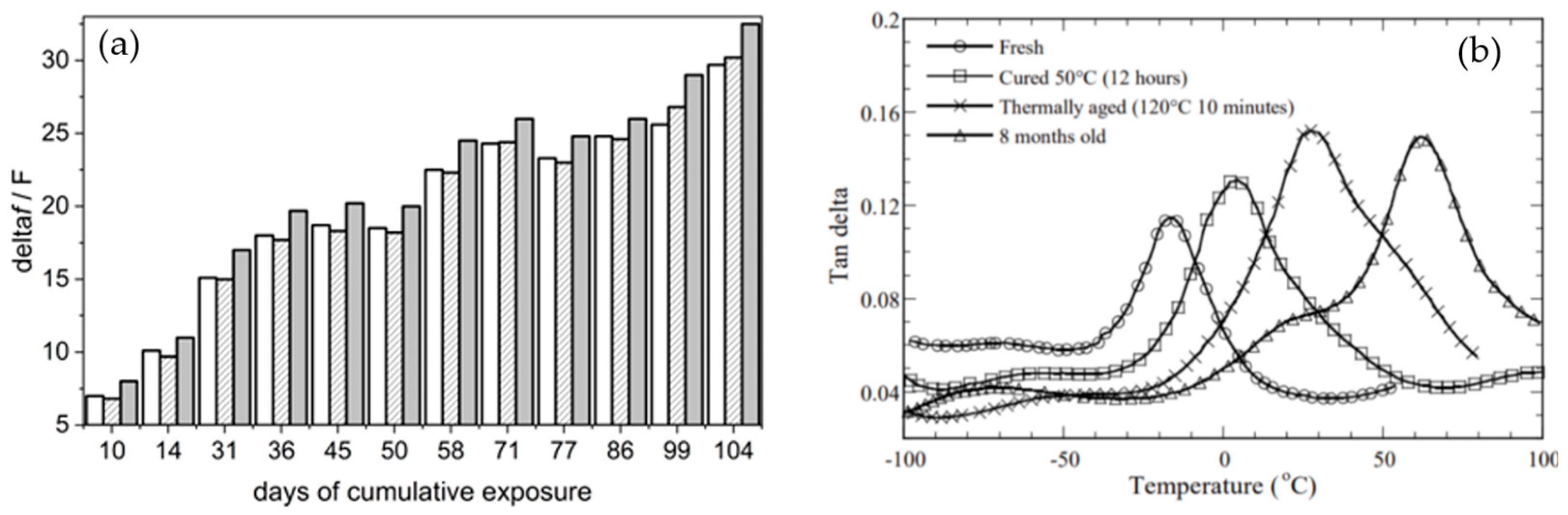
In the MIMIC project, mastic-coated quartz resonators were exposed in two locations in London: the Petrie Museum and one of the reading rooms in the British Library. Frequency changes in the quartz resonators were recorded over time. After 104 days in the Petrie Museum, the resonators showed a higher overall change (30.5) than the value (8.9) recorded after 189 days in the British Library. Figure 1a shows the result from the Petrie Museum. For each exposure period, the three bars (white, light-patterned, and solid grey) show the frequency shifts of the three different quartz crystal resonators. Measurements were taken at the end of each exposure period and continued for 104 days. The change was expressed as the ratio of frequency shift upon exposure to the original frequency of the coated crystal (delta f/F). The higher value obtained at the Petrie Museum despite the longer exposure period at the British Library reflects the difference in indoor environmental conditions. Though both sites are in central London, their indoor NO2 concentrations differed; the Petrie museum typically recorded levels of 40–60 µg/m3, while the British Library concentrations were 10–20 µg/m3.
These changes could be expressed in terms of light ageing equivalents: i.e., damage resulting from exposure for 8 days at 17,000 lux in the first case, and less than 4 days at 17,000 lux in the other case [13]. Figure 1b shows the effect of thermal and natural ageing on resin mastic expressed in terms of its glass transition temperature (Tg). Measurements were made of resin mastic films by Dynamic Mechanical Analysis (DMA) on a Nomex substrate. The Tg is measured as a peak in tan δ (see Section 2.4.2). The value of Tg increases with ageing due to changes such as crosslinking [14]. DMA is one of the techniques used in this paper to evaluate changes in resin mastic films on steel that were exposed in the PROPAINT project in the microclimate frames of paintings. The other technique that was used was FTIR. This provided information on chemical changes in resin mastic (e.g., broadening of the carbonyl peak), which could be correlated with the measured crystal frequency shifts of the quartz resonators. An example is the exposure in the vestibule of the National Museum of Denmark (NMD_V), which showed a significant change in crystal frequency shift (29.5), and the FTIR analysis revealed a substantial chemical alteration in the resin mastic samples [12]. The broadening of the carbonyl peak in resin mastic is supported by XPS data, which showed an increase in carbonyl moieties.
This paper presents the results from the exposure of resin mastic varnish films in the restricted spaces in microclimate (mc) frames and then in rooms at the sites selected in the PROPAINT project. It also presents the results from varnish films—dammar and Regalrez 1094—used in the MEMORI project [15], and which were exposed in a showcase at Chesters Roman Fort Museum. Post-exposure changes were evaluated using Reflectance FTIR and Dynamic Mechanical Analysis (DMA) to establish correlations between environmental conditions and physico–chemical changes in the exposed varnishes. The aim was also to demonstrate that small, low-cost devices can be effectively deployed in space-restricted environments to assess the corrosivity of enclosed air.

2. Materials and Methods

2.1. Samples

The varnish films were exposed within the mc-frames and the ambient room environments for periods of up to 70 weeks, spanning from November 2007 to April 2009 (Table 1) [11,16]. Approximately 30 μm-thick films of resin mastic and dammar varnish were prepared by airbrushing onto steel strips, following established protocols [11,12,13]. After drying, the coated strips were mounted horizontally on glass slides and placed at selected museum sites, where ambient acetic acid concentrations were monitored.

2.2. Exposure Locations (PROPAINT)

Exposure sites in the PROPAINT project included a number of institutions: Tate Store, London, UK (Tate S); Tate Britain, London, UK (Tate B); Germanic National Museum, Nuremberg, Germany (GNM); National Museum Oslo, Norway (NG); Statens Museum for Kunst, Copenhagen, Denmark (SMK1); English Heritage (EH) Kenwood House, London, UK (EHK); EH Apsley House, London, UK (EHA); Museum of Fine Arts Valencia, Spain (MBV); National Museum of Art, Mexico City, Mexico (MNA); National Museum Cracow, Poland (NMK1, NMK2); and SIT-Artyd International Transporters, https://www.sitspain.com/en/team/ (accessed on 2 January 2026).

Microclimate (mc) Frames

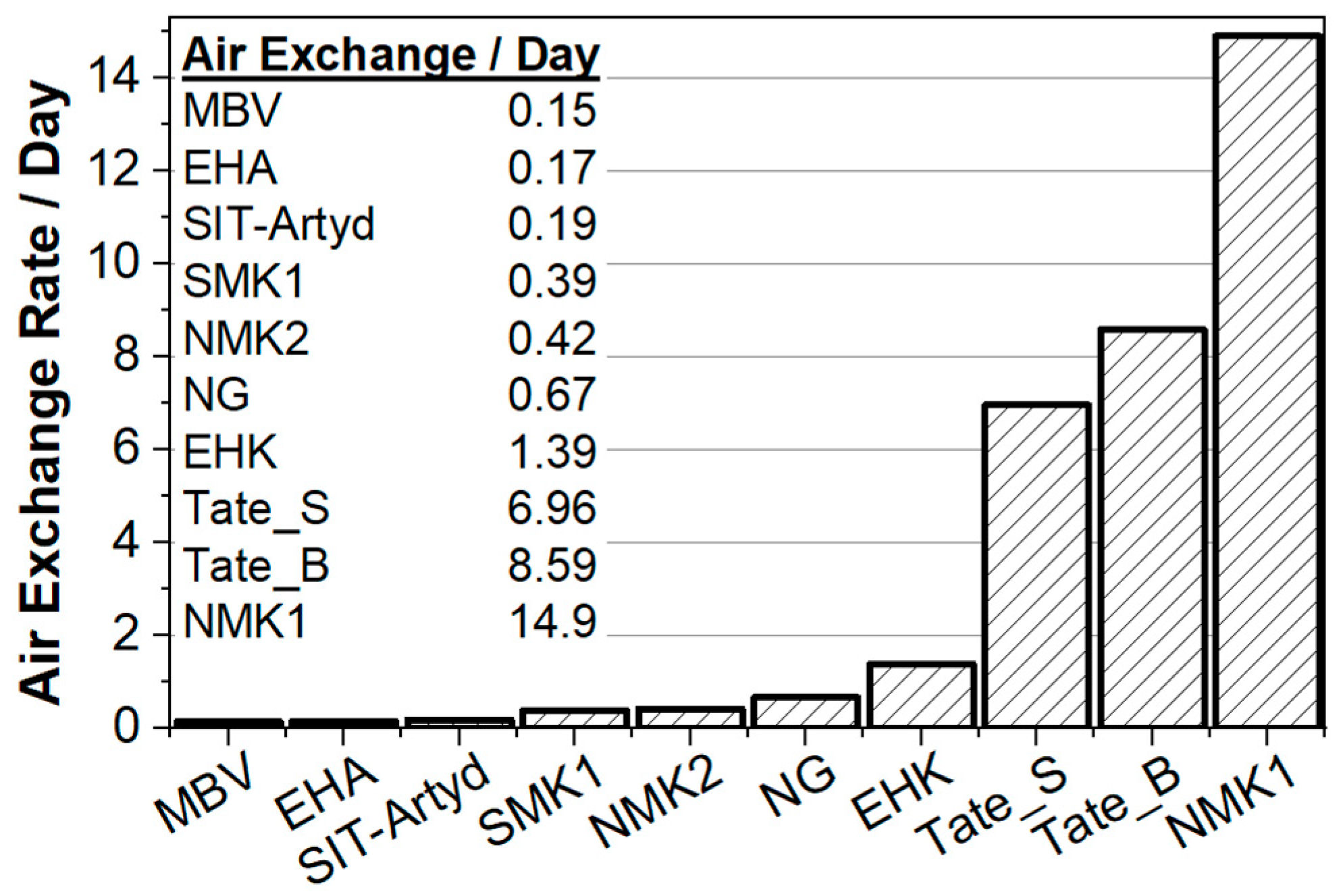
The mc-frames selected represented a broad range of designs and materials used. Measurements were made of their air exchange values [16], as shown in Figure 2. Passive diffusion samplers from the Norwegian Institute for Air Research (NILU) were used to monitor NO2, SO2, acetic acid, and formic acid gas concentrations individually. Moreover, passive diffusion samplers for VOCs were exposed inside and outside of the mc-frames. The passive samplers used were Thermal Desorption VOC sampling tubes with Tenax TA sorbent. For O3, passive diffusion samplers from the Swedish Environmental Institute (IVL) were used [17]. Temperature and relative humidity (RH) were also monitored.
Values for the environmental parameters have been summarised in the final report of the PROPAINT project [11] and in Grøntoft et al. (2010) [16]. Mean temperatures inside the mc-frames ranged from 15.2 °C to 21.9 °C, with an average of 17.8 °C. RH values inside the mc-frames ranged from 38% to 59% (average 52%), while room RH ranged from 25% to 55% (average 43%). These results indicate that mc-frames provided a buffering effect, reducing humidity variation and increasing the average RH by approximately 9%. Annual luminous exposure was higher in the rooms than inside the mc-frames, confirming the protective role of the frames against light exposure.
Frames at the National Museum Cracow, designated as NMK2 and NMK1, had different ACH d−1 values: 0.42 and 15 day−1, respectively. The frame at NMK2 was a modified “historic” frame constructed from polycarbonate, aluminium profiles, and foil [11], whereas NMK1 consisted of an open mc-enclosure made of fibreboard covered with tapestry.
Frames at the two English Heritage (EH) locations, EHK and EHA provided the range of mc-frame quality produced by EH over the past 30 years. The mc-frame at EHK containing the painting of London Bridge was not well sealed, with multiple breaches in the aluminium foil intended to isolate the wooden frame from the painting environment. In contrast, the mc-frame at EHA containing the Rubens painting featured better sealing and effective isolation of the wooden components. The two mc-frames were also located in markedly different pollution environments. Apsley House (EHA), located at Hyde Park Corner, London, is adjacent to a heavily trafficked junction with high diesel emissions. The building is only 6 m from the road, and its wooden windows allow for significant air ingress. As a result, nitrogen dioxide levels frequently exceed 40 µg/m3 and can reach up to 80 µg/m3. Airborne concentrations of sub-micron diesel particles are also high, exceeding 4000 /m3. In contrast, Kenwood House is situated in parkland, where NO2 concentrations remain below 20 µg/m3. Although the site experiences a high deposition of large dust particles, the concentration of fine particles is much lower, typically under 400 particles per m3.

2.3. Exposure Locations (MEMORI)

Dammar-coated steel strips were exposed at the EH site, Chesters Roman Fort Museum (27 August 2012 to 11 January 2013). The museum experiences high RH (55–85%) and an annual dose of 2.4 Mlux·hours (mix of mainly sunlight, UV-filtered, plus some tungsten room lights).

Showcase

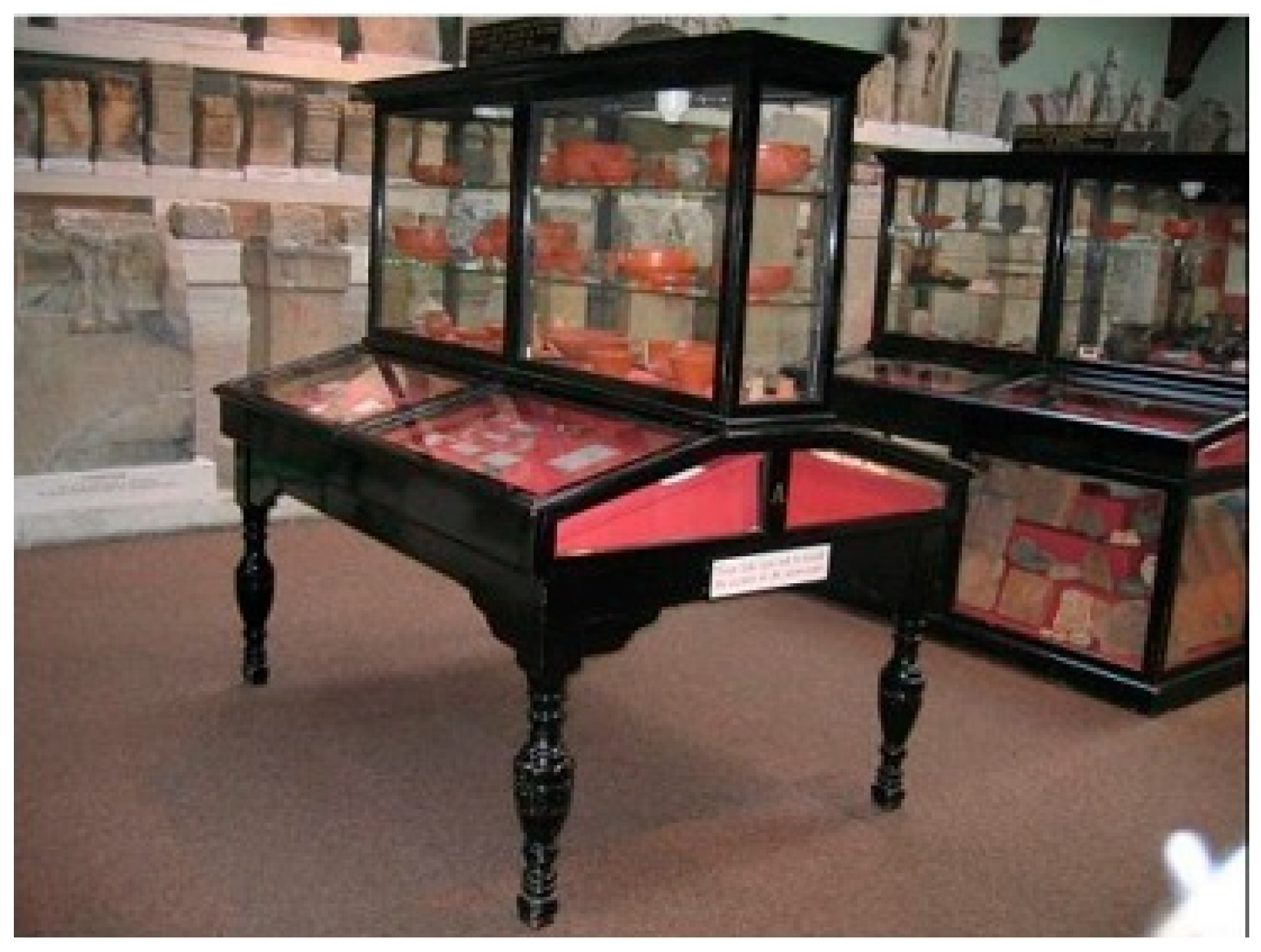
The samples were placed within one of the museum’s display showcases (Figure 3), which are constructed from lacquered wood and allow for controlled air exchange rates to simulate varying micro-environmental conditions. The lacquered wooden showcases are known to emit substantial concentrations of acetic acid, and internal acetic acid concentrations can reach 6000–10,000 µg/m3. These conditions create a chemically aggressive microclimate, accelerating deterioration processes and enabling measurable degradation within the experimental time frame. To mitigate environmental impact, the museum selectively displays more robust materials (unaffected by the aggressive environment) within these showcases. For some more sensitive objects, environmental modifications in the showcases, such as the inclusion of silica gel or activated charcoal cloth, were employed. However, these interventions were not assessed using the dosimeters.

2.4. Evaluation of Varnish Films from Both PROPAINT and MEMORI Projects

2.4.1. FTIR Reflectance

Spectroscopic analysis was conducted using a Perkin Elmer FTIR 2000 instrument (High Wycombe, UK) equipped with a Durascope attachment from SensIR Technologies (Danbury, CT, USA). For the resin mastic samples, measurements were performed using a variable specular reflection device incorporating an AmpliFIR adjustable gold-coated mirror (Danbury, CT, USA). The varnished sample was placed with the coated side facing down onto the gold mirror, allowing the infrared beam to reflect between the sample and the mirror surface.
Changes induced by environmental exposure were evaluated through the broadening of the carbonyl peak in the FTIR spectra. Quantitative assessment involved calculating the ratio of the carbonyl peak (c.1710 cm−1) area to that of the aliphatic CH peak (c.2935 cm−1) [18,19,20,21].

2.4.2. Dynamic Mechanical Analysis (DMA)

Dynamic Mechanical Analysis (DMA) was performed on the varnished steel strips using the DMA Mark 3 from Rheometric Scientific (now TA Instruments-A Subsidiary of Waters Ltd., Cheshire, UK). Samples measuring 10 mm × 10 mm were cut from the varnished steel sheet (0.1 mm thick) and clamped in the DMA. Measurements were made in bending mode (single cantilever) with a free length of 5 mm. A sinusoidal load was applied at 1 Hz while the sample was heated from 30 °C to 200 °C at 3 °C per minute. This provides a measure of the stiffness of the material from which the elastic (storage) modulus (E′) and the inelastic (loss) modulus (E″) are calculated. The ratio E″/E′ yields the viscoelastic parameter tan δ and a measure of the glass transition temperatures (Tg).

3. Results and Discussion

3.1. Monitoring of Pollutants in Rooms and Within Frames

Values for the pollutant measurements that were previously reported elsewhere [17] are summarised in Table 2.
It was found that concentrations of NO2 and O3 were consistently higher in rooms than inside the frames. The sites with the highest values include MNA, EHA, and Tate_B. Within the frames, pollutant levels were substantially reduced, demonstrating their protective effect. At EHA, this reduction is due to the frame’s very low air exchange rate (0.17), as shown in Figure 2. In contrast, NMK1 exhibited identical NO2 concentrations inside and outside the mc-frame, indicating no protective effect. Acetic acid concentrations inside frames exceeded 1000 μg/m3 at GNM, SMK1, EHK, and Tate_S.
The following sections present the DMA and FTIR results, illustrating how these environmental variations influenced the physico–chemical properties of the resin mastic varnish films.

3.2. Changes in Glass Transition Temperature (Tg) of Mastic Films Measured by DMA

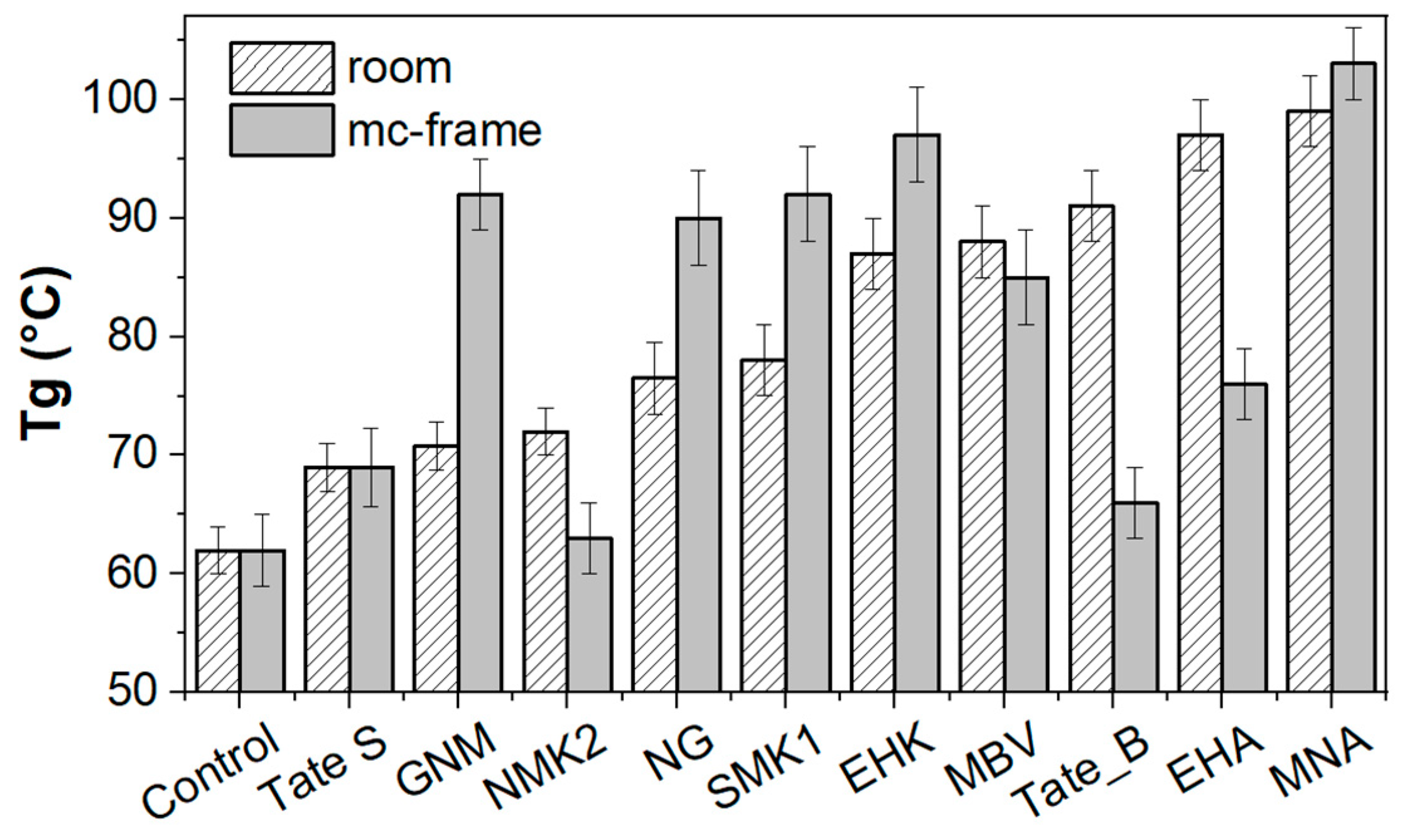
Figure 4 presents the Tg values for resin mastic strips exposed inside the mc-frames, in corresponding room environments, and for unexposed control samples. Each measurement was performed in duplicate. Notably, Tg values are higher inside the frames than outside at several sites, including GNM, SMK1, EHK, and Tate_S.
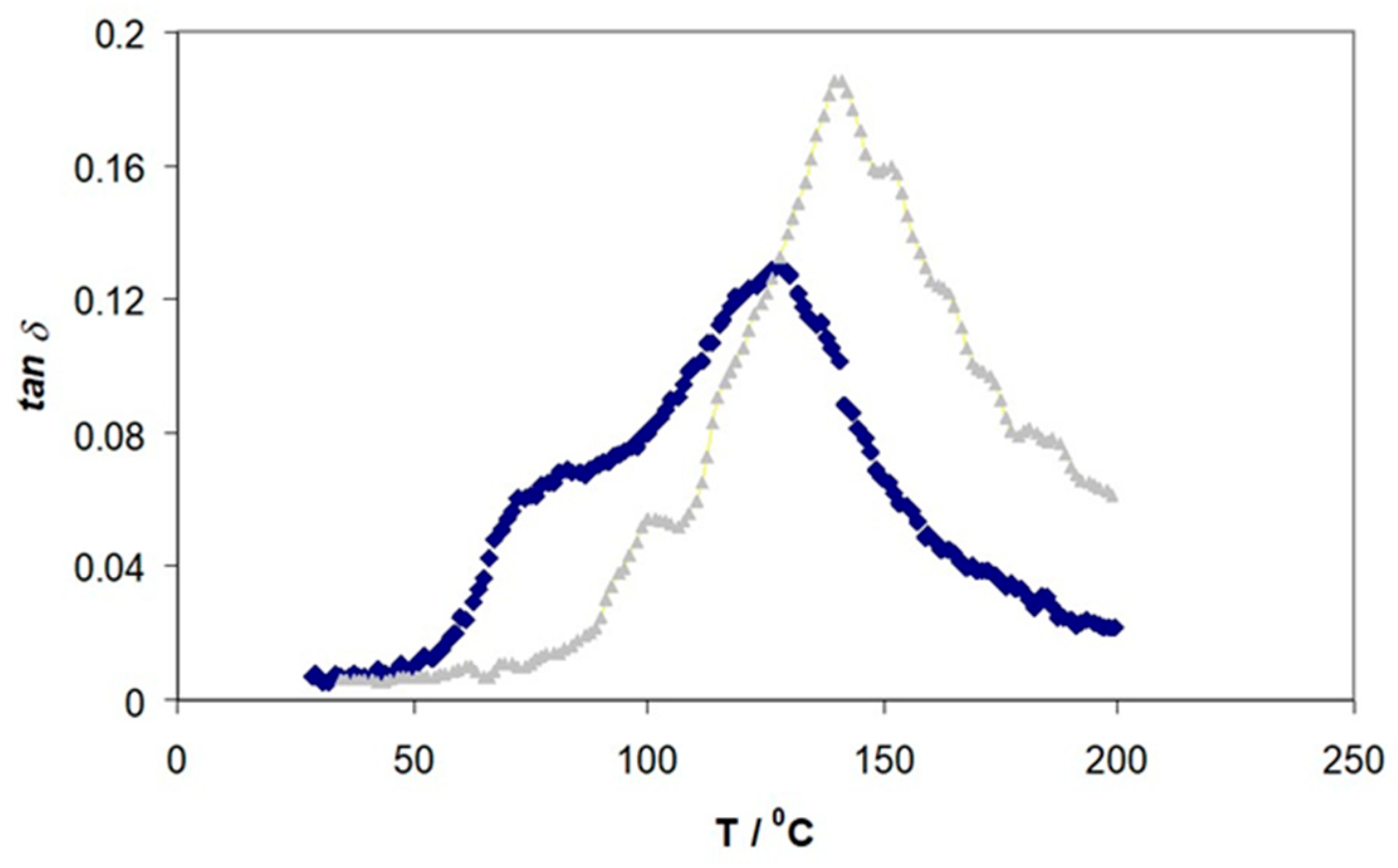
In these locations, concentrations of acetic acid vapour exceeded 1000 µg/m3, likely due to organic emissions from the frames themselves [16,22]. The varnish sample exposed in the frame at EHK received a higher dose of acetic acid than the sample in the frame at EHA. Correspondingly, the Tg value for the varnish film at EHK is higher than that in the frame at EHA, even though the site EHK has lower NO2 concentration. This suggests that the increase in Tg may have resulted from exposure to elevated acetic acid levels. Accelerated ageing studies conducted within the PROPAINT project confirmed that exposure to acetic acid alone contributes to oxidative crosslinking effects [11], a finding further supported by mass spectrometric analyses [23,24]. The results of Tg measurements for the resin mastic control sample and the one exposed to elevated acetic acid levels are shown in Figure 5 as the plot of tan δ versus temperature. Changes in Tg are associated with alterations in chemical structure, such as increased cross-linking, and are detected by shifts in Tg to higher values. The observed shift to a higher Tg in this case is indicative of increased oxidation and crosslinking that has occurred on exposure to acetic acid.
When the Tg values within frames are lower than those for samples exposed in the rooms, this indicates a protective effect of the frames on the varnish. This is most evident for samples exposed at EHA and Tate_B, where Tg within frames is substantially lower than Tg for samples exposed in rooms. In both cases, NO2 concentrations in the rooms are high (>30 μg/m3) (Table 2).
At this stage, it is difficult to predict the possible synergistic effect of pollutants (NO2 and acetic acid). The effects of NO2 and acetic acid on the stability of historic paper have been discussed in an earlier study [25]. There is no such discussion yet on resin mastic. Our data indicate that both pollutants lead to an increase in the Tg of resin mastic as determined by DMA. It may be that the presence of both unequal proportions could lead to an enhanced increase in Tg of the resin mastic. However, interactions between NO2 and acetic acid may occur across different RH levels, potentially influencing the formation of secondary products with distinct effects on the resin mastic varnish.
Installing barrier films and absorbers inside mc-frames is an effective way to reduce the buildup of internally emitted pollutants. Within the PROPAINT project, a case study demonstrated that barrier films such as PET-coated aluminium, Fomex, or Melinex, used alone or combined with charcoal cloth, effectively reduced the impact of pollutants inside mc-frames. The most effective solution identified was a combination of PET-coated aluminium and charcoal cloth [11].

3.3. Changes in Resin Mastic Films Measured by FTIR

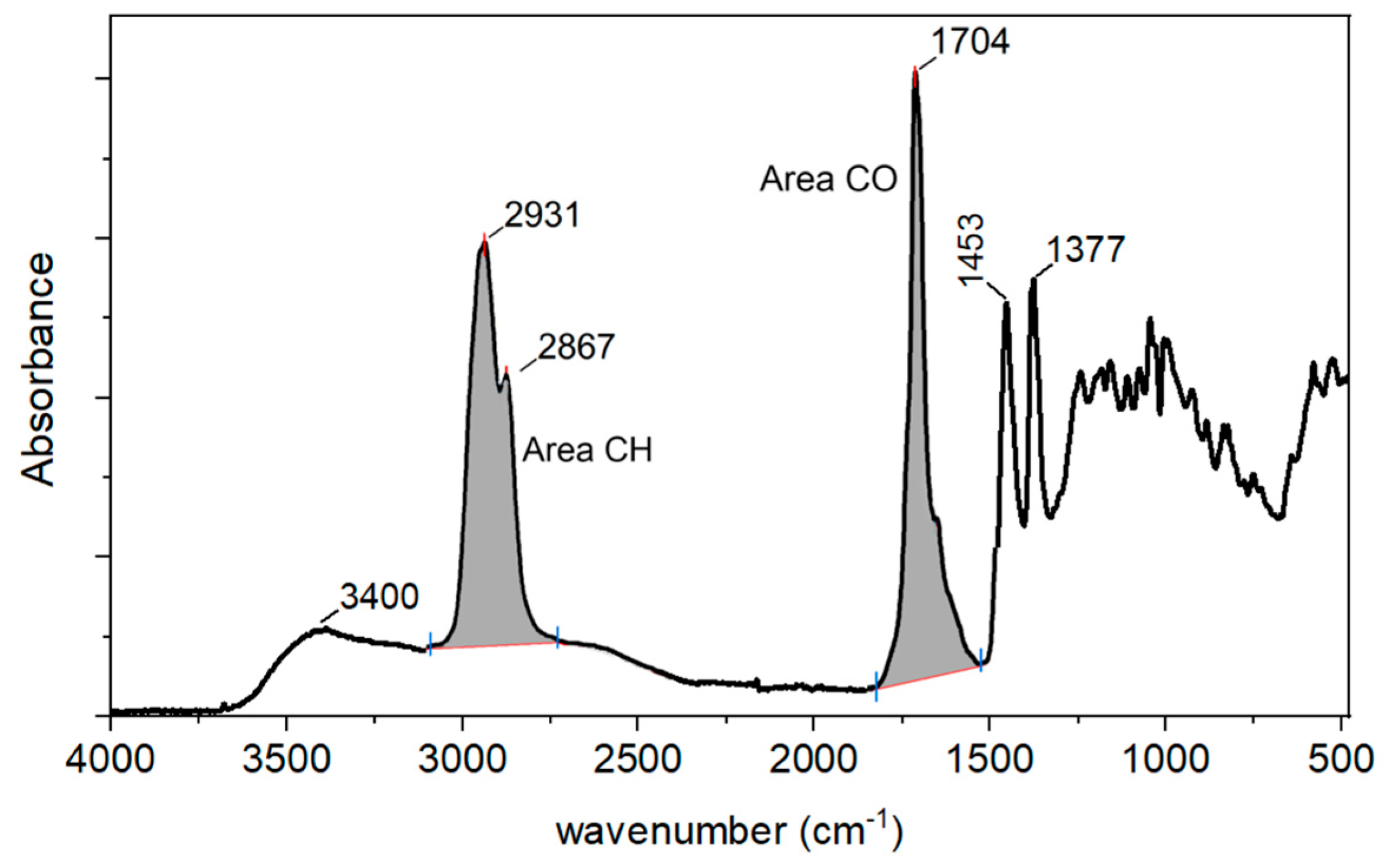
The FTIR spectrum of an unaged resin mastic film on a steel strip is shown in Figure 6. This control sample was stored in an anti-corrosion bag to prevent environmental degradation prior to analysis. Measurements were performed on samples that had been exposed within mc-frames and in rooms, enabling the assessment of chemical changes induced by environmental exposure.
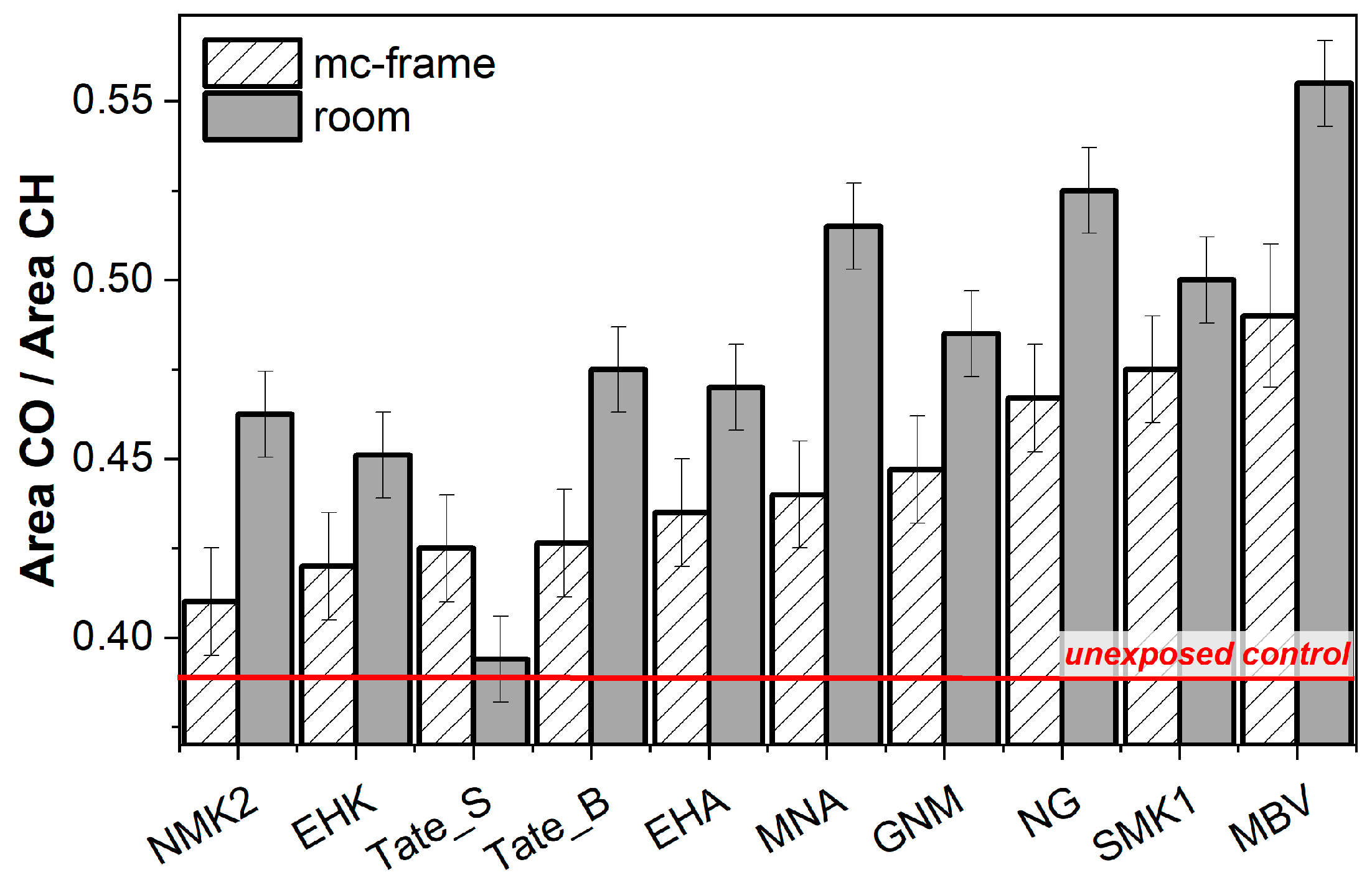
The relationship between FTIR band ratios in natural resins and their oxidative degradation, confirmed through mass spectrometry and other complementary analytical techniques, has previously been established [18,26,27,28,29]. The broadening of the carbonyl (C=O) absorption band in the resin mastic-exposed samples was quantified by calculating the ratio of the integrated areas of the carbonyl peak [27] to that of the CH stretching band that ranges from about 3050 cm−1 to 2850 cm−1, as shown in Figure 7. Variations in the C=O/CH ratio serve as an indicator of oxidative degradation of mastic resin [21].
The protective effect of the mc-frames is evident, as carbonyl broadening values for samples exposed in rooms (solid grey) are consistently higher than those in the frames (light-patterned). Among the monitored sites, room values for EHA exceed those for EHK, which aligns with the measured NO2 concentrations: 43 μg/m3 and 20 μg/m3 in rooms. In both, there is a reduction in frames of NO2 values to 2 μg/m3 and 1 μg/m3, respectively (Table 1).

3.4. Effect of Exposure of Dammar Resin Films: Changes Measured by DMA

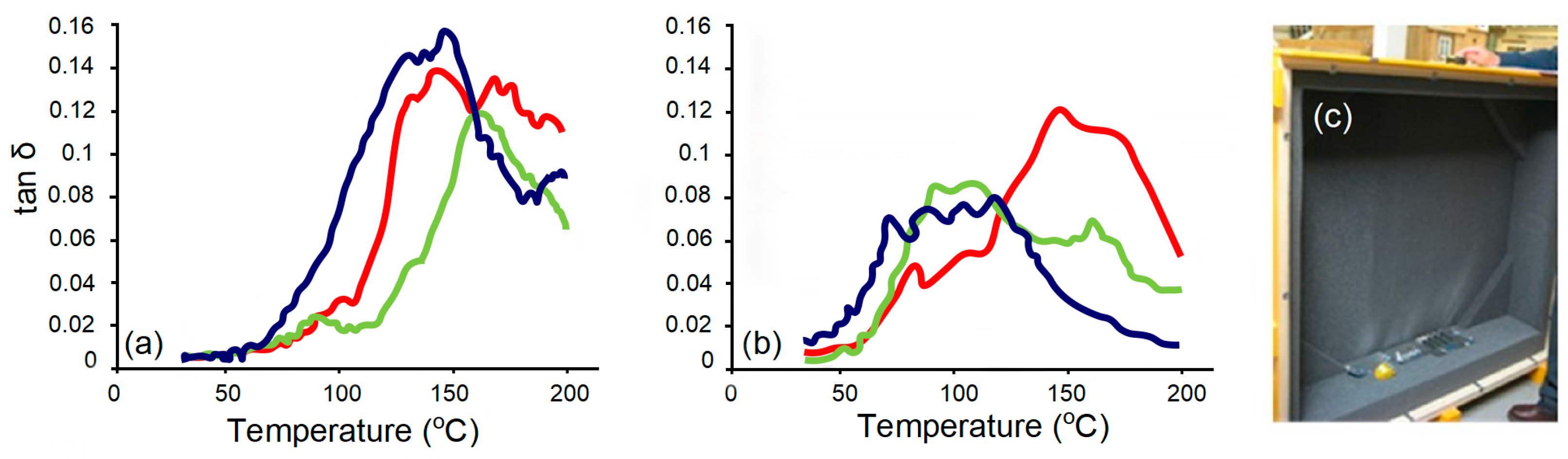
Figure 8a,b presents the DMA curves of dammar (left) and Regalrez (right) varnish films. These curves indicate the Tg shift of the exposed samples to higher values, consistent with increased crosslinking and the formation of higher molecular weight species compared to the unexposed control sample [15].
Values of acetic and formic acid concentrations measured in the display case at Chesters Roman Fort Museum and empty transport case (Tate_S) are shown in Table 3. While acetic acid levels were significantly higher in the empty transport case, formic acid levels were considerably lower. The Tg shift relative to the control was smaller for the sample exposed in the transport case than for the sample exposed in the display case in the Chesters Roman Fort Museum. This difference can be attributed to the shorter exposure period and the exclusion of light in the transport case, both of which affect the extent of chemical change.
The extent of change in dammar varnish was greater than that observed in accelerated ageing studies, where dammar resin samples were exposed to acetic acid or formic acid alone for up to four weeks.
To better interpret the high levels of change observed, accelerated ageing tests were carried out using thermal ageing of unexposed dammar varnish strips within the DMA analyser. Samples were heated to 200 °C and then re-heated, with the initial thermal ageing resulting in visible yellowing, a clear indicator of severe degradation. In addition to monitoring the Tg shift, changes in the shape of the DMA tan δ peak were evaluated by calculating the ratio of peak intensities at two selected temperatures (140 °C and 90 °C). The ratio was approximately 6.0 for thermally aged samples, 4.0 for the sample exposed in the Chesters display case, and 1.8 and 2.2 for samples exposed to acetic and formic acid, respectively. Mass spectrometry results corroborate these findings, confirming that the extent of change in the sample exposed at Chesters exceeds that observed in ageing tests with acetic acid alone [24]. These results demonstrate that the display case environment is highly aggressive and has caused significant deterioration of the dammar varnish.
The synthetic varnish Regalrez 1094 was also tested at Chesters Roman Fort Museum during a separate exposure period (24 July–20 August 2013). During this time, acetic acid and formic acid concentrations were measured at 565 µg/m3 and 165 µg/m3, respectively.
Exposure resulted in changes to Tg, accompanied by the evolution of a high temperature peak, indicating that Regalrez 1094 is less stable than assumed. A comparison with a sample subjected to two weeks of accelerated ageing in formic acid showed a similar high-temperature peak (Figure 8b), though less pronounced than in the sample exposed in the Chesters display case. Notably, this peak was absent in a sample aged for two weeks under acetic acid exposure. These findings suggest that under equivalent conditions, formic acid exposure is more damaging than acetic acid exposure over the same period.
The MEMORI data presented here have been included in the decision support model on the English Heritage website [30]. This model provides information on the susceptibility of a range of materials to exposure to volatile organic acids and indicates whether levels are acceptable or present a risk to the condition of objects. Further work is required to investigate the action of these acids on a wider range of organic-based materials.

4. Conclusions

Varnish-coated devices based on mastic, dammar, and Regalrez 1094 resins have proven effective in assessing complex environments in heritage contexts. This approach has been tested at multiple sites using resin mastic within the PROPAINT project, where pollutant gas concentrations were measured both inside mc-frames, with known air exchange rates, and in rooms, as well as within the MEMORI project in display cases. A clear correlation emerged between environmental conditions and changes in these materials, reflected in shifts in Tg values and changes in the carbonyl to CH integrated peak area ratios (carbonyl indices) measured by FTIR Reflectance. These findings suggest a link between mechanical and chemical changes, consistent with earlier observations in the ERA project with tempera paints [2,5]. This demonstrates the value of FTIR as a complementary technique for monitoring varnish changes. Given that many conservation laboratories have greater access to FTIR facilities (including portable FTIR analysers) than to DMA, the development of an FTIR-based approach could significantly benefit such studies by providing a practical alternative where DMA analysis is not available.
It also highlights the importance of evaluating microclimates, such as those within mc-frames, not only by their air exchange rate (ACH) values but also by the materials used in their construction, to ensure that emissions of volatile organic acids remain minimal. While low ACH values are generally considered protective for objects, they can increase the risk of pollutant accumulation if display materials emit significant amounts of organic acids.
With the growing emphasis on sustainability and energy efficiency, it is crucial to consider developing simple, practical tools that enable conservators to perform straightforward testing on a wide range microclimates, including mc-frames and display cases.

Author Contributions

Conceptualisation, M.O. and C.T.; methodology, M.O. and C.T.; validation, M.O. and C.T.; formal analysis, M.O. and C.T.; investigation, M.O. and C.T.; resources, M.O. and C.T.; data curation, M.O. and C.T.; writing—original draft preparation, M.O. and C.T.; writing—review and editing, M.O. and C.T.; visualisation, M.O. and C.T. All authors have read and agreed to the published version of the manuscript.

Funding

European Commission for funding the ERA (Environmental Research for Art Preservation) EV5VCT94-0548; MIMIC (Microclimate Indoor Monitoring in Cultural Heritage Preservation) EVK4-CT-2000-00040; FP6 PROPAINT (Improved Protection of Paintings during Exhibition and Storage), contract number 044254; and the FP7 project MEMORI (Measurement, Effect Assessment, and Mitigation of Pollutant Impact on Movable Cultural Assets—Innovative Research for Market Transfer, project ref. 265132) project, grant agreement ID 265132.

Data Availability Statement

Data are available on request to corresponding authors.

Acknowledgments

We thank the E.U. for their support of the projects outlined in the funding section above. We acknowledge collaboration with David Thickett (English Heritage) in the MEMORI project, and Gary M. Foster for the DMA measurements shown in Figure 1b.

Conflicts of Interest

The authors declare no conflicts of interest.

Abbreviations

The following abbreviations are used in this manuscript:
ACHAir Exchange
DMADynamic Mechanical Analysis
EHEnglish Heritage
EHAEnglish Heritage, Apsley House, London, UK
EHKEnglish Heritage, Kenwood House, London, UK
FTIRFourier Transform Infrared Spectroscopy
GNMGermanic National Museum, Nuremberg Germany
MBVMuseum of Fine Arts Valencia, Spain
mcMicroclimate
MNANational Museum of Art, Mexico City, Mexico
NGNational Museum, Oslo, Norway
NMK1&2National Museum Krakow, Poland
SIT-ArtydSIT Madrid, Spain
SMK1Statens Museum for Kunst, Copenhagen, Denmark
Tate_BTate Britain, London, UK
Tate_STate Store, London, UK

References

  1. Van den Brink, O.F. Molecular Changes in Egg Tempera Paint Dosimeters as Tools to Monitor the Museum Environment; FOM-Institute AMOLF: Amsterdam, The Netherlands, 2001. [Google Scholar]
  2. Odlyha, M.; Cohen, N.S.; Campana, R.; Foster, G.M. Environmental Research for Art Conservation and Assessment of Indoor Conditions Surrounding Cultural Objects. J. Therm. Anal. Calorim. 1999, 56, 1219–1232. [Google Scholar] [CrossRef]
  3. Bacci, M.; Picollo, M.; Porcinai, S.; Radicati, B. Evaluation of the Museum Environmental Risk by Means of Tempera-Painted Dosimeters. Thermochim. Acta 2000, 365, 25–34. [Google Scholar] [CrossRef]
  4. Odlyha, M.; Foster, G.M.; Poznańska, K.; Theodorakopoulos, C. Paint Dosimeters as Tools to Monitor Museum Environments. In Proceedings of the Postprints of Journey into the Aging & Alterations of Paintings’ (JAAP), Amsterdam, The Netherlands, 3–4 April 2025. [Google Scholar]
  5. Odlyha, M.; Cohen, N.S.; Foster, G.M. Dosimetry of Paintings: Determination of the Degree of Chemical Change in Museum Exposed Test Paintings (Smalt Tempera) by Thermal Analysis. Thermochim. Acta 2000, 365, 35–44. [Google Scholar] [CrossRef]
  6. Odlyha, M.; Foster, G.M.; Cohen, N.S.; Sitwellb, C.; Bullock, L. Microclimate Monitoring of Indoor Environments Using Piezoelectric Quartz Crystal Humidity Sensor. J. Environ. Monit. 2000, 2, 127–131. [Google Scholar] [CrossRef] [PubMed]
  7. Burnstock, A.; Caldwell, M.; Odlyha, M. A Technical Examination of Surface Deterioration of Stanley Spencer’s Paintings at Sandham Memorial Chapel. In Proceedings of the ICOM Committee for Conservation 10th Triennial Meeting, Washington, DC, USA, 20–27 August 1993; Preprints. pp. 231–238. [Google Scholar]
  8. Dietemann, P.; Kälin, M.; Zumbühl, S.; Knochenmuss, R.; Wülfert, S.; Zenobi, R. A Mass Spectrometry and Electron Paramagnetic Resonance Study of Photochemical and Thermal Aging of Triterpenoid Varnishes. Anal. Chem. 2001, 73, 2087–2096. [Google Scholar] [CrossRef] [PubMed]
  9. Cavicchioli, A. (Universidade de São Paulo, São Paulo, SP, Brazil). Private communication, 2025. [PubMed]
  10. West, R.H.; Odlyha, M.; Pratt, K.; Roberts, A.; Hutton, S. Monitoring the environmental degradation of paint dosimeters used to assess risk for fine art paintings on display by XPS. Surf. Interface Anal. 2004, 36, 862–865. [Google Scholar] [CrossRef]
  11. Dahlin, E. Improved Protection of Paintings during Exhibition, Storage and Transit Final Activity Report; Norwegian Institute for Air Research: Lillestrøm, Norway, 2010. [Google Scholar]
  12. Odlyha, M.; Theodorakopoulos, C.; Thickett, D.; Rhyl-Svendsen, M.; Slater, J.M.; Campana, R. Dosimeters for microclimate indoor monitoring for cultural heritage. In Museum Microclimates, Proceedings of the Contributions to the Copenhagen Conference, 19–23 November 2007; Timothy Padfield, K.B., Christensen, M.C., Eds.; National Museum of Denmark: Copenhagen, Denmark, 2007; pp. 73–79. [Google Scholar]
  13. Odlyha, M.; Wade, N.; Wang, Q.; Campana, R.; Ormsby, B.; Rhyl-Svendsen, M.; Padfield, T.; De Santis, F.; Smith, V.A.; Bullock, L.; et al. Microclimate Indoor Monitoring: Damage Assessment for Cultural Heritage Preservation. In Proceedings of the Preprints ICOM-CC 14th Triennial Meeting, The Hague, The Netherlands, 12–16 September 2005; pp. 670–676. [Google Scholar]
  14. Duncan, J. Principles and applications of mechanical thermal analysis. In Principles and Applications of Thermal Analysis; Gabbott, P., Ed.; Blackwell Publishing: Oxford, UK, 2008; pp. 119–163. [Google Scholar]
  15. Dahlin, E. MEMORI Final Project Report; FP7-ENV-2010; Theme 6: Environment (Including Climate Change), MEMORI and 7th Framework Programme; Springer: Berlin/Heidelberg, Germany, 2013. [Google Scholar]
  16. Grøntoft, T.; Odlyha, M.; Mottner, P.; Dahlin, E.; Lopez-Aparicio, S.; Jakiela, S.; Scharff, M.; Andrade, G.; Obarzanowski, M.; Ryhl-Svendsen, M.; et al. Pollution Monitoring by Dosimetry and Passive Diffusion Sampling for Evaluation of Conditions for Paintings in Microclimate Frames. J. Cult. Herit. 2010, 11, 411–419. [Google Scholar] [CrossRef]
  17. Lopez-Aparicio, S.; Grøntoft, T.; Odlyha, M.; Dahlin, E.; Mottner, P.; Thickett, D.; Ryhl-Svendsen, M.; Schmidbauer, N.; Scharff, M. Measurement of Organic and Inorganic Pollutants in Microclimate Frames for Paintings. e-Preserv. Sci. 2010, 7, 59–70. [Google Scholar]
  18. Theodorakopoulos, C. The Excimer Laser Ablation of Picture Varnishes. Ph.D. Thesis, Royal College of Art (RCA), London, UK, Institute of Electronic Structrure and Laser (IESL) at the Foundation of Reserach and Technology—Hellas (FORTH), Heraklion, Greece, FOM-Institute AMOLF, Amsterdam, The Netherlands, 2005. [Google Scholar]
  19. Theodorakopoulos, C.; Boon, J.J.; Zafiropulos, V. Molecular Study of the Depth Dependent Oxidation and Condensation Gradients of Aged Dammar and Mastic Varnish Films Assisted by KrF Excimer Laser Ablation. In Proceedings of the ICOM Committee for Conservation, Preprints, 14th Triennial Meeting, The Hague, The Netherlands, 12–16 September 2005. [Google Scholar]
  20. Theodorakopoulos, C.; Zafiropulos, V.; Boon, J.J. A Final Report on the Oxidation and Composition Gradients of Aged Painting Varnishes Studied with Pulsed UV Laser Ablation. In Lasers in the Conservation of Artworks, Proceedings of the LACONA VI Proceedings, Vienna, Austria, 21–25 September 2005; Springer: Berlin/Heidelberg, Germany, 2007; pp. 249–256. [Google Scholar]
  21. Theodorakopoulos, C.; Zafiropulos, V.; Boon, J.J.; Boyatzis, S.C. Spectroscopic Investigations on the Depth-Dependent Degradation Gradients of Aged Triterpenoid Varnishes. Appl. Spectrosc. 2007, 61, 1045–1051. [Google Scholar] [CrossRef] [PubMed]
  22. Grøntoft, T.; Thickett, D.; Lankester, P.; Hackney, S.; Townsend, J.H.; Ramsholt, K.; Garrido, M. Assessment of indoor air quality and the risk of damage to cultural heritage objects using MEMORI® dosimetry. Stud. Conserv. 2016, 61, 70–82. [Google Scholar] [CrossRef][Green Version]
  23. Bonaduce, I.; Colombini, M.P.; Di Girolamo, F.; Orsini, S.; Odlyha, M.; Rutkowska, S.; Scharff, M.; Grøntoft, T. The Impact of Organic Acids on Varnishes in Museum Environments. In Proceedings of the 3rd European Workshop on Cultural Heritage Preservation (EWCHP), Bolzano, Italy, 16–18 September 2013; pp. 11–16. [Google Scholar]
  24. Bonaduce, I.; Odlyha, M.; Di Girolamo, F.; Lopez-Aparicio, S.; Grøntoft, T.; Colombini, M.P. The Role of Organic and Inorganic Indoor Pollutants in Museum Environments on the Degradation of Dammar Varnish. Analyst 2013, 138, 487–500. [Google Scholar] [CrossRef] [PubMed]
  25. Menart, E.; de Bruin, G.; Strlic, M. Effects of NO2 and acetic acid on the stability of historic paper. Cellulose 2014, 21, 3701–3713. [Google Scholar] [CrossRef]
  26. Theodorakopoulos, C.; Zafiropulos, V. Depth-Profile Investigations of Triterpenoid Varnishes by KrF Excimer Laser Ablation and Laser Induced Breakdown Spectroscopy. Appl. Surf. Sci. 2009, 255, 8520–8526. [Google Scholar] [CrossRef]
  27. Chillè, C.; Papadakis, V.M.; Theodorakopoulos, C. An Analytical Evaluation of Er:YAG Laser Cleaning Tests on a Nineteenth Century Varnished Painting. Microchem. J. 2020, 158, 105086. [Google Scholar] [CrossRef]
  28. Chillè, C.; Sala, F.; Wu, Q.; Theodorakopoulos, C. A Study on the Heat Distribution and Oxidative Modification of Aged Dammar Films upon Er:YAG Laser Irradiation. J. Instute Conserv. 2020, 43, 59–78. [Google Scholar] [CrossRef]
  29. Chillè, C.; Theodorakopoulos, C.; Odlyha, M. A Study on the Laser-Induced Phenomena of Commercial Dammar, Ketone-Based and Poly(isobutyl methacrylate) Resin Artists’ Varnishes upon Er:YAG Laser Irradiation. J. Cult. Herit. 2024, 66, 166–175. [Google Scholar] [CrossRef]
  30. English Heritage. Management of Showcases. Available online: https://www.english-heritage.org.uk/learn/conservation/collections-advice-and-guidance/ (accessed on 15 December 2025).
Figure 1. (a) Exposure of resin mastic-coated piezoelectric quartz crystals (PQC) in the Petrie Museum, London. The three bars for each period of exposure (white, light-patterned, and solid grey) represent responses from three different PQC crystals. The response is measured as ratio of shift in frequency on exposure relative to the original frequency of the coated crystal (delta f/F). (b) Glass transition measurements (tan δ vs. temperature) of resin mastic. Ageing effects after thermal and natural ageing of mastic on Nomex substrate. Shift to higher values occurs with ageing.
Heritage 09 00064 g001
Figure 2. Air-exchange values (ACH d−1) in the microclimate (mc-frames) are shown. All mc-frames are historical except for MBV (Valencia, Spain), which is a modern fc-frame, and NMK1 (National Museum Cracow, Poland), which is an open mc-frame.
Heritage 09 00064 g002
Figure 3. Display case in Chester Roman Fort Museum where dammar and Regalrez 1094 varnished strips were exposed.
Heritage 09 00064 g003
Figure 4. Glass transition temperature (Tg) values for resin mastic films applied to steel substrates. Light-patterned bars represent samples exposed in room environments, while solid grey bars represent samples exposed inside mc-frames.
Heritage 09 00064 g004
Figure 5. DMA curves of tan δ as a function of temperature for resin mastic (control) (Dk blue) and resin mastic exposed 28 days in acetic acid vapour (40 mg/m3 and 75% RH) (grey).
Heritage 09 00064 g005
Figure 6. FTIR spectrum of resin mastic spray coated onto a steel substrate. The region used for evaluation of change in PROPAINT is that of the ratio of the carbonyl absorbance band in the range of 1715 to 1700 cm−1 relative to the CH band from about 3050 to 2850 cm−1.
Heritage 09 00064 g006
Figure 7. Ratios of the integrated areas of the carbonyl to that of the CH stretching bands (C=O/CH) plotted for mc-frames (light-patterned) and rooms (solid grey). The value of the unexposed control is indicated by the red line.
Heritage 09 00064 g007
Figure 8. (a) DMA curves (tan δ vs. temperature) of dammar varnish strips: control (dark blue) after exposure in empty transport case (red) and after exposure in Tate_S (mc-frame) (green). (b) DMA curves for Regalrez 1094 varnish: control (dark blue), accelerated aged sample (formic acid, 2 weeks [15]) (green), and after exposure in Chesters Roman Fort Museum (red). (c) Inside the transport case at Tate_S.
Heritage 09 00064 g008
Table 1. Exposures of varnish films within mc-frames in ambient room environments.
SiteTimeBreak in ExposureDuration (Weeks)
Tate BNovember 2007 to March 2009February 2008 to October 200838
Tate SNovember 2007 to March 2009February 2008 to October 200838
SMK1November 2007 to March 2009Additional March–April 200970
MBVNovember 2007 to March 2009March 2008 to June 200856
NMK2January 2008 to March 2009 62
EHKDecember 2007 to March 2009 66
EHADecember 2007 to March 2009 66
MNADecember 2007 to March 2009 66
GNMDecember 2007 to March 2009 66
NGDecember 2007 to March 2009 66
Table 2. Pollutant concentrations inside mc-frames vs. rooms (µg/m3).
NO2O3Acetic Acid (HAc)
SiteRoommc-FrameRoommc-FrameRoommc-Frame
MNA410201.438519
Tate S1120.53011362
GNM15110.5371831
NMK1101022175175
NMK210020.5175502
NG281100.516143
SMK1134130.5431070
MBV27082.747435
EH K20290.5521548
Tate B36230.5106543
EH AH43105.9092
Table 3. Exposure conditions for dammar varnish at Chesters Roman Fort Museum and in a transport case at Tate_S.
SitesHAcHCOOHLightExposure Dates
Chesters Roman Fort Museum1693 µg/m31000 µg/m3High annual dose 2.4 Mluxhrs27 August 2012 to 11 January 2013
Transport case at Tate_S7278 µg/m3180 µg/m3No light15 July to 12 August 2013
Disclaimer/Publisher’s Note: The statements, opinions and data contained in all publications are solely those of the individual author(s) and contributor(s) and not of MDPI and/or the editor(s). MDPI and/or the editor(s) disclaim responsibility for any injury to people or property resulting from any ideas, methods, instructions or products referred to in the content.