1. Introduction
Changing climatic conditions and the desire for energy saving potential are increasingly having an impact on the preservation of historic panel paintings in museums and in the context of listed monuments. The Intergovernmental Panel on Climate Change (IPCC) predicts an increase in temperature peaks, longer dry periods, high fluctuations in relative humidity (rH) for Central Europe and refers to the urgency of a cross-sectoral rethinking–also in the area of cultural heritage preservation [
1,
2].
These developments–largely caused by global climate change, usage, and their anthropogenic factors–pose significant challenges to the previously established strategies of preventive conservation. In order to prevent loss of substance and to maintain conservation standards, a ‘gentle adaptation’ of the climatic conditions to the changing circumstances become a priority [
3,
4].
Art and cultural assets made of hygroscopic materials such as plaster, wood, textiles, or paper, and their partly polychrome surfaces or coatings react particularly strongly to fluctuations in climate, namely humidity and temperature. Repeated moisture exposure can lead to warping of wood, dimension-related stresses with cracks, delaminating paint layers, or even loss of substance. The multilayered and diverse materials in historic panel paintings–typically consisting of a wooden support, primer, paint layer(s), gildings and varnish–make it particularly susceptible to such damage [
5].
Historic buildings and monuments–such as churches, castles, or monastery complexes–often only offer limited options for climatic control, as structural interventions are restricted or undesirable for conservation reasons. Personnel and financial constraints can further complicate the implementation of organizational or technical actions. The balance between the conservators aim to ensure stable climatic conditions and the goal of acting energy-efficiently and resource-conservatively proves to be a central area of tension.
The research project funded by the DBU (Deutsche Bundesstiftung Umwelt—
German Federal Environmental Foundation) “
Development and model application of an ‘in-situ’
humidification method with monitoring concept using the example of an anthropogenically damaged large-format wooden panel painting” addressed this complex challenge. The aim was to preserve such valuable in situ artworks in the long term, using an integrative approach that comprised monitoring, experimental research, and conservation assessment while taking into account climatic realities and energy limits. The comprehensive final report explains the approach, planning, research, execution, materials, methods, practical tests, results, discussions, solutions, and much more in detail [
6].
1.1. Case Study: Maundy Thursday Retable
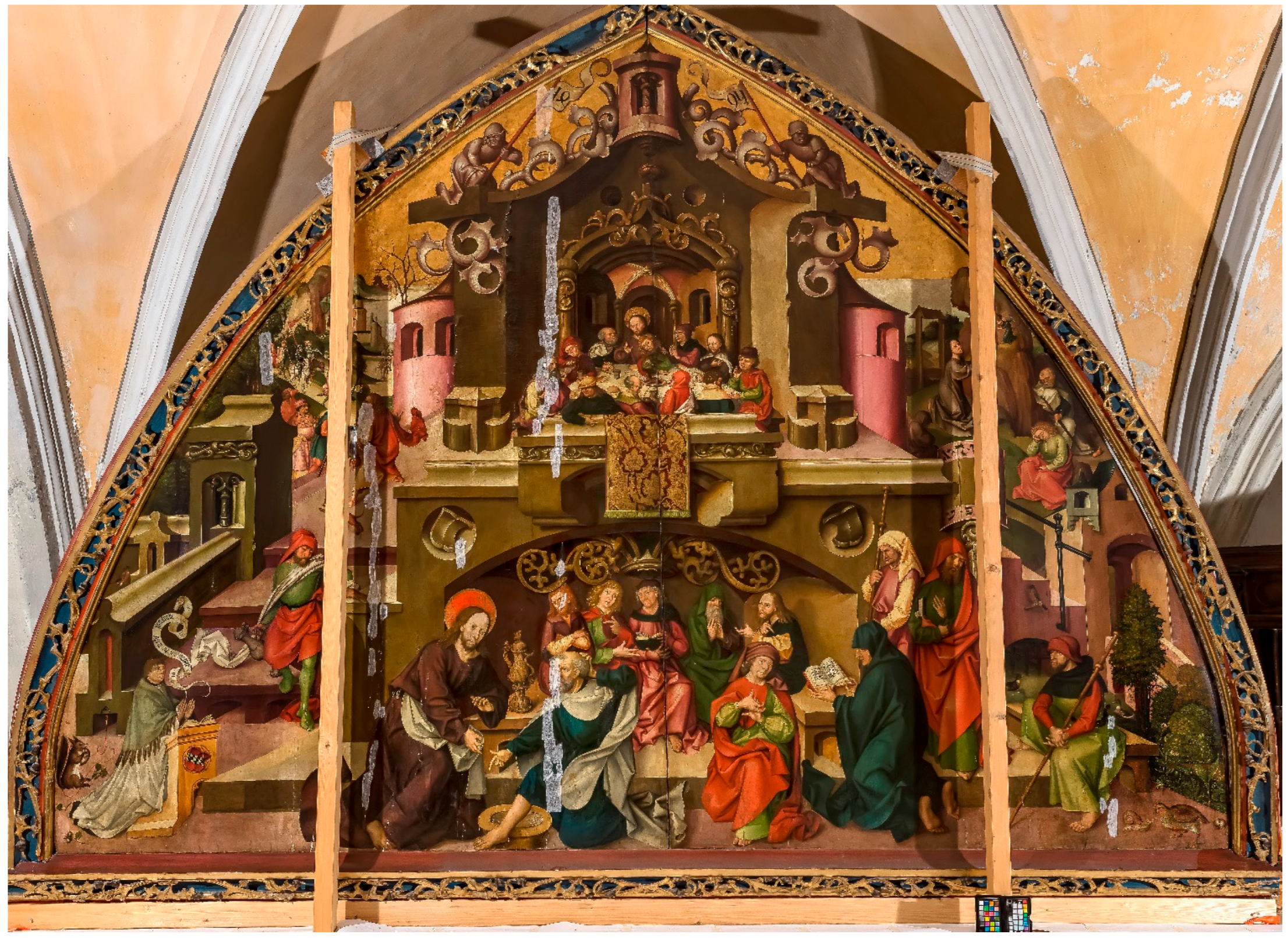
The large-format
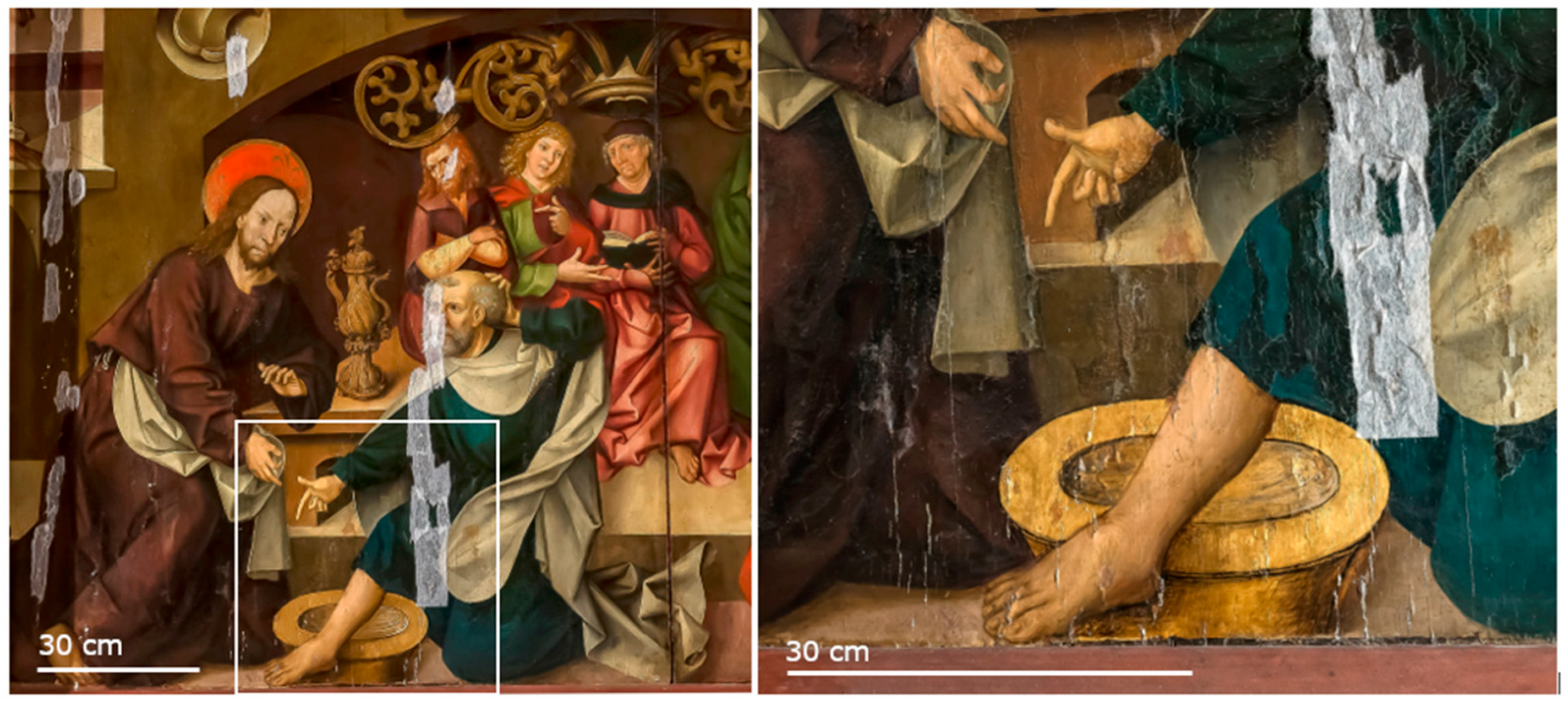
Maundy Thursday altarpiece (
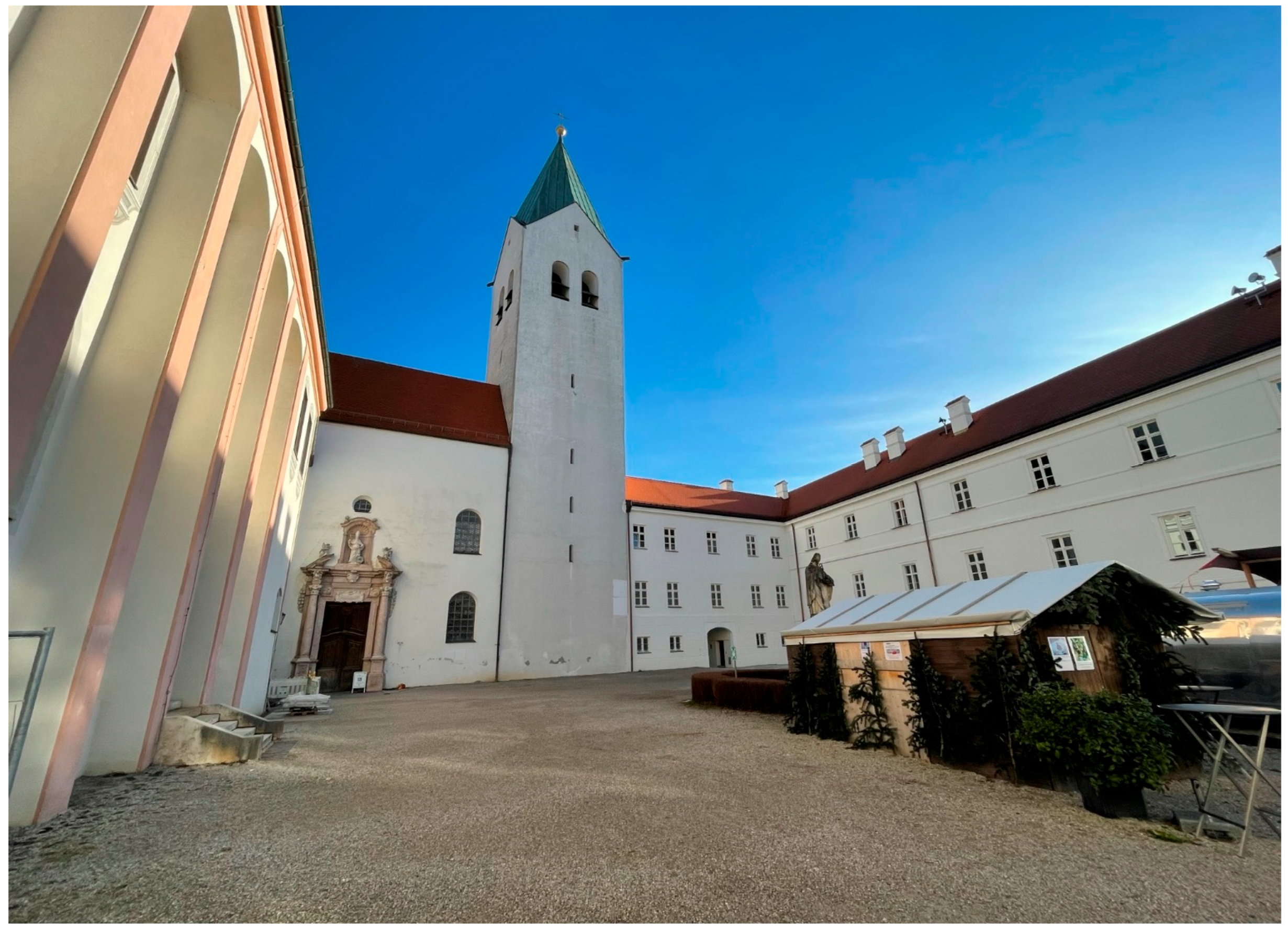
Figure 1), which served as a case study, was created both liturgically and in terms of its format explicitly for the location in the sacristy of the Freising Cathedral (Bavaria, Germany; Administration: Cathedral Foundation; courtyard with entrance to the cathedral see
Figure 2), where it still resides today. For conservation purposes, the panel had already been removed from the wall and placed on a wooden platform around two meters in front of its original location in 2016. The temporary installation was advantageous for the present investigations because it allowed easy access to the rear.
The west wall of this sacristy was occupied by an adjacent building, making it partly an exterior wall. The panel painting is inscribed and dated to 1495 and attributed to Hans Mair from Landshut [
7]. As part of the basic investigation, art technological studies and material analyses were carried out (e.g., FTIR, GC-MS; EDX at the BLfD central and external laboratories; all details see [
6,
8]), documenting the following, briefly summarized, structure:
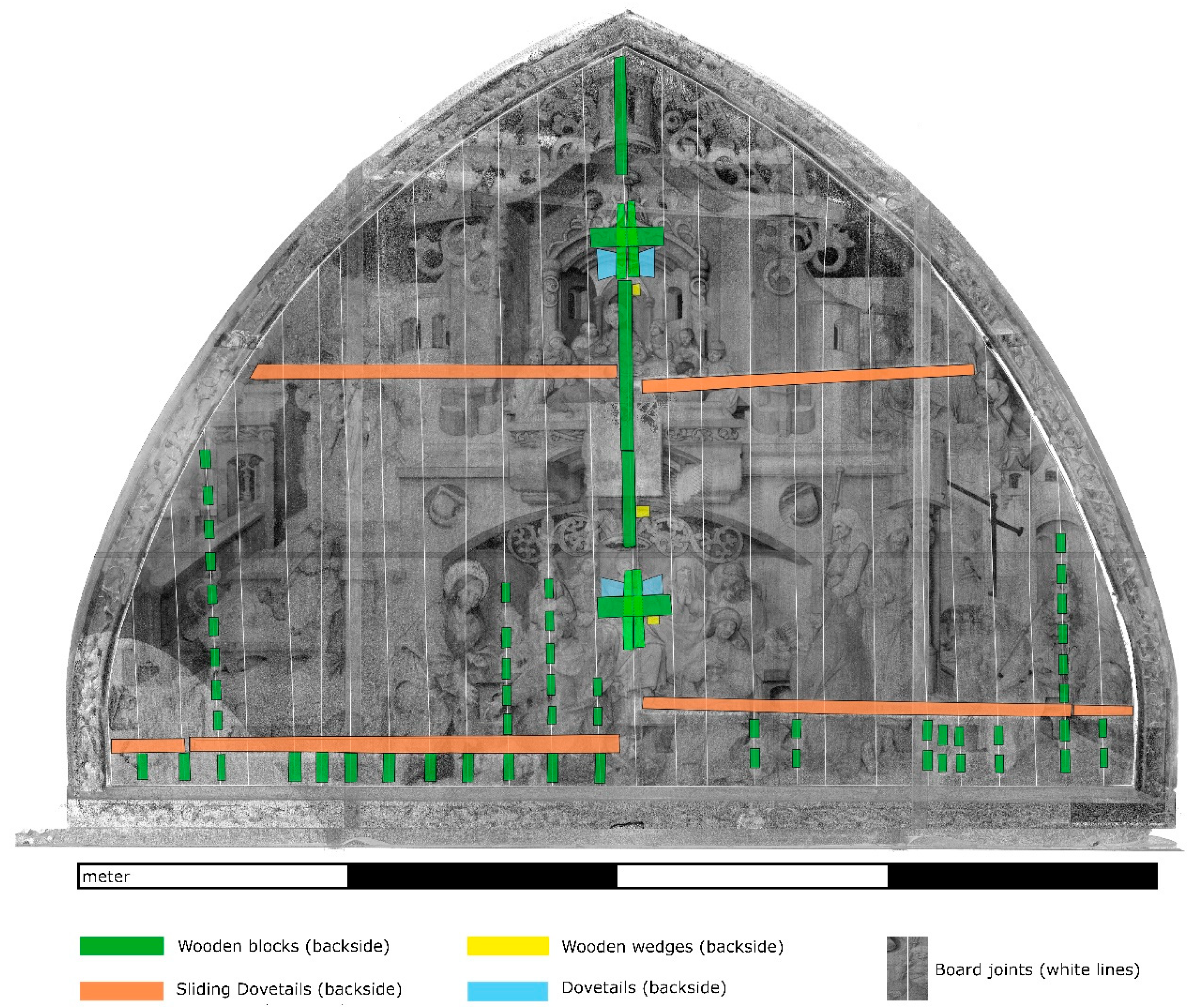
The ogival wooden panel painting with a decorative frame (H 275 × L 382 × D 2 cm) is made of 27 spruce (
Picea spec.) boards glued in the direction of the grain, with four rear edge batten strips (
Figure 3). The two lower ones are made of fir (
Abies spec.), while the two upper ones are made of spruce (
Picea spec.); they are almost 200 × 4 × 2 cm and are conically shaped inserts. Both strips on the left side (bottom and top) were dated between the 15th and 16th century using a natural radiocarbon measurement (Curt-Engelhorn-Zentrum Archäometrie GmbH). The vine carving on the decorative frame is made of lime wood (
Tilia spec.). Due to the fragility of the paint layer, it was not possible to lay the painting down during the project to view the cross-section; for financial, logistical, and spatial reasons, methods such as mobile X-rays or similar could not be used to identify the cutting directions. Based on the rear view with straight grain, mostly radial sections were observed.
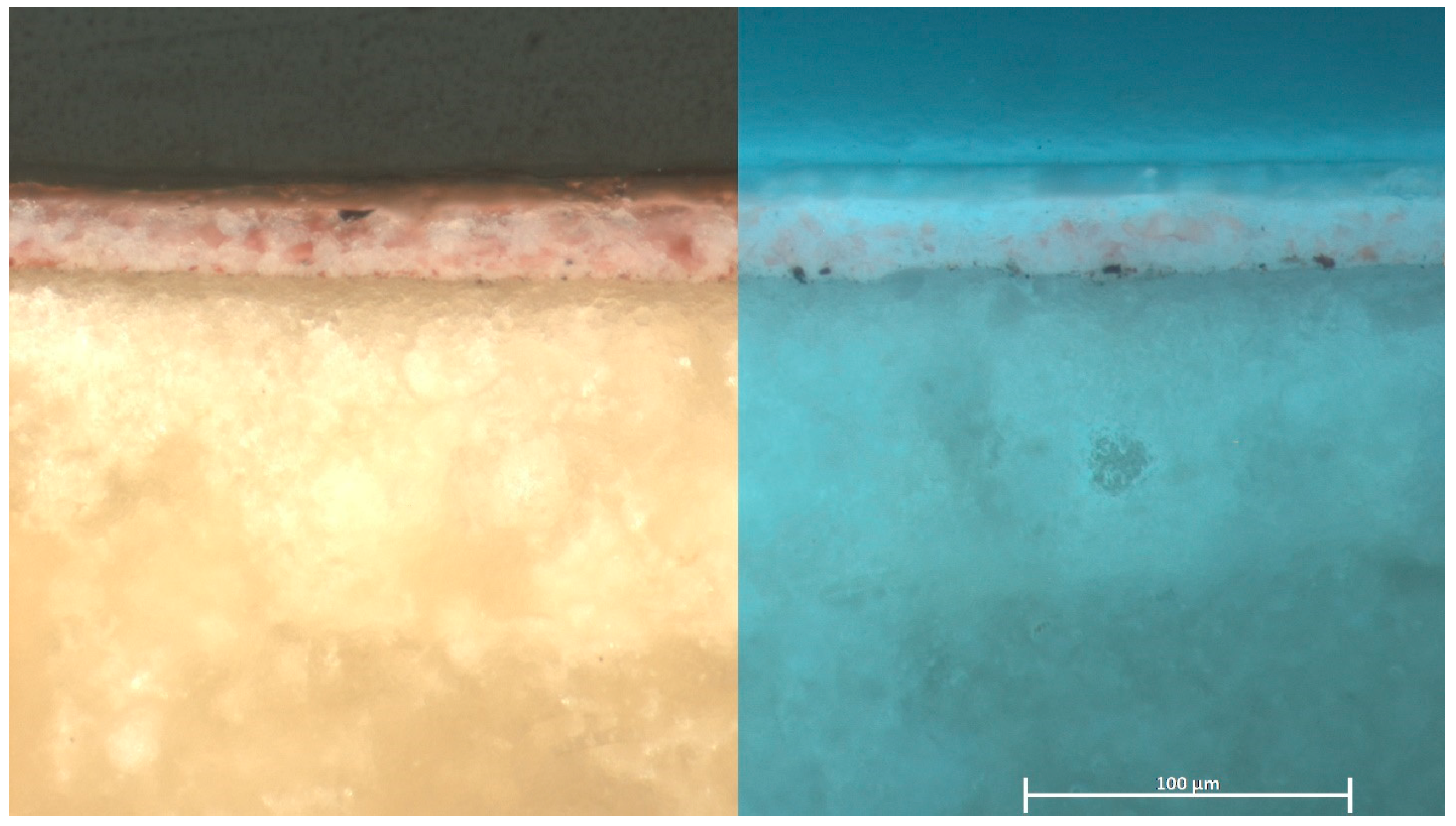
The paint layer structure is typical for a late medieval panel painting from southern Germany and consists of a preliminary gluing (animal glue), partial linen canvas applications, a multi-layered white priming (animal glue with calcium carbonate), gilded parts in the background (white and red clay minerals ‘bolus’, real gold) as well as several paint layers (historical pigments in linseed oil) and at least two transparent overlays (shellac as well as damar resin and partly proportions of a drying oil); exemplary cross-section see
Figure 4, further details [
6,
8].
On the back, there are constructive reinforcements (wooden blocks), horizontal adhesions (hemp), as well as stains, glue, and linseed oil coatings preserved. Further details about the construction, artistic composition, or the former restoration and object history can be found in the final report [
6,
8].
During the planning and at the project launch, the panel was already in a very fragile state of preservation. The use of the sacristy is associated with increasing comfort demands and occupational health/safety requirements. Therefore, the previously damp-cold climate developed over time through heating into a warm and dry state—especially in winter—which had a significant impact on the wooden structure of the altarpiece. Due to the cyclic material movements, it had continued to shrink and warp and the paint layer was peeling off to a considerable extent (
Figure 5).
Conservation was no longer possible without damaging or removing parts of the painting (overlapping, compression, trimming). This action was excluded for ethical-conservation reasons. Several connections had opened at the back; on the right side, a part of the painting was no longer seated within the frame rebate, causing the panel to warp backwards in that area due to climatic conditions.
Archival records show that conservation and stabilization actions, documented since the year 1903/04 and subsequently in 1960, 1974, 1986, 2006, and 2007, were not permanent or sustainable [
9,
10,
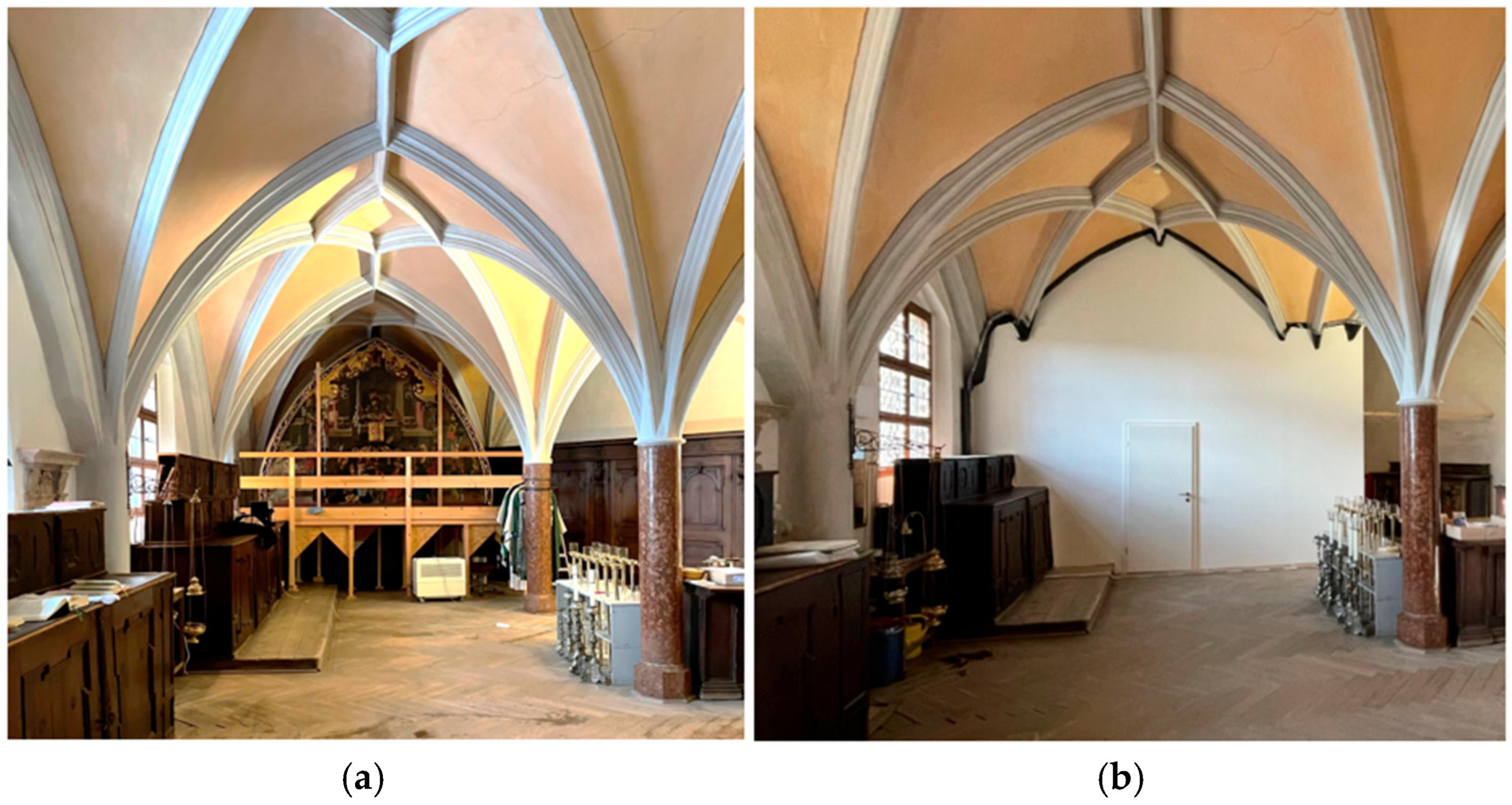
11]. In 2010, 2011, and 2016, only glued security (Japanese) papers were taken to secure the pictorial layer and a targeted investigation into the causes began with its removal from the wall and placement on a working platform (
Figure 6a).
It can be assumed that the panel painting has undergone a degree of irreversible compression, deformation, and warping over its long history, for example, due to its size, weight, storage, structural changes and interventions, environmental conditions, as well as its fixations (frame and ridge strips; see also [
12]). For various reasons, including the assumption that the ridge strips are original material and no active interventions in the material were authorized as part of the project, removing them during the project was neither possible nor desirable. The fact that the painting was last seen in a fully consolidated state in 2007 led to the assumption that in 2024, indirect humidification could restore sufficient volume or at least a warping (approximately to the 2007 dimensions) to allow the paint layer to be laid down and consolidated.
As Refs. [
13,
14] confirmed, the uppermost wood layers react quickly to sudden changes in humidity, while the underlying layers do not compensate immediately. In contrast, stresses in paint layers increase over time and then stabilize with increased humidity. Crossbeams then lead to a reduction in deformation on the back and an increase in deformation on the front, thereby changing the angle of curvature.
However, such a measure for a work of art of this size and quality was unknown or unpublished until 2019. Due to its high fragility, sensitivity, and size, all measures on the painting could only be carried out on site at that time. Only with the installation of an enclosure at the start of the project (April 2022;
Figure 6b) and the resulting improvement in the climate did a more stable overall condition develop, enabling further steps.
1.2. Research Questions, Challenges and Aims
For a sustainable conservation and preservation strategy, the central research question was posed: Is it possible to influence the natural absorption and loss of the hygroscopic materials in a wooden panel painting which is threatened or already damaged due to anthropogenic climate influences in such a way that the materials can be stabilized and preserved in the long term?
The comprehensive interdisciplinary nature of the issue and the goal of the humidification carried out under conservation and restoration supervision were assessed as extremely challenging. Due to the irreversible potential for damage to art and cultural assets due to improper handling, a variety of challenges were considered. First and foremost, the hygroscopic anisotropy of the main material, wood, which reacts differently to changes in humidity depending on the wood species and grain direction, leading to direction-dependent swelling and shrinkage (for spruce, depending on the source: approximately 0.16% radial; approximately 0.32% tangential [
15]). Further research and considerations focused on material behavior, the type, intensity, duration, and effects of climatic changes on the sensitive overall structure, as well as conservation goals. Apart from possibly necessary conservation emergency or preventive actions—such as facings of already loosened pictorial layer, changes in climate, and the installation of measuring technology—no active intervention in the substance should be made at this point. The project should primarily involve a basic assessment, risk assessment, and improvement of the environmental conditions as well as the condition for the later discussion and potential implementation of recommended restoration interventions and actions. Regarding the construction in particular, the likely originality of the four back edge strips and their potential tensions for the structure, as well as the possibly lacking glide capability of the large-format painting in the decorative frame, were discussed in various ways. The risk of biogenic infestation and degradation of materials when humidity increases were also focused on. Finally, it was necessary to agree on the various requirements and objectives of the parties involved (owner representatives, project committee with the diocese and those involved in the approval procedures, restorers, and art historians).
The main aim was to bring the painting into a treatable condition. Due to conservational reasons the increase in volume of the wooden support, which was necessary to lay down the flaking paint layers, could only be achieved by increasing the relative humidity. This article summarizes the approach to in situ moistening for implementing the individual climate corridor, taking the historical context into account. This was carried out following the comprehensive risk assessment and preliminary investigation, as already described in [
8].
2. Materials and Methods
Additional information on the wooden panel painting, such as analyses of painting materials and techniques, the combination of individual measured values into a comprehensive concept that has not yet been tested at this time, as well as the preliminary work for the development of a secure climate corridor for the case study, were already described separately [
6,
8] and are only briefly summarized below. The materials and (technical) equipment are listed in
Appendix A.
2.1. Summary of the Determined Basics and Previous Risk Assessment
For the development of a strategy to deal with the damaged panel painting, initial investigations, which described its material-specific behavior, comprehensive literature research and exchange of information with experts on this field, were conducted [
6,
8]. In addition to the previously mentioned basic research, an analysis of the climatic conditions on site before and during the enclosure was carried out, F as well as investigations into the object’s reaction to these conditions. The enclosure (5.25 × 5.20 × 4.65 m) was constructed individually and without structural interventions into the historic structure (walls, floors) from drywall materials.
The monitoring setup included the outdoor, room, micro-, and near-field climate (temperature, relative humidity, dew point, the monitoring of the wooden substrate for hygrothermal deformations (geometric linear expansion and deformations out of plane on the right side); electrical resistance (so-called wood moisture, opto-technical methods and conservation inspections. The main focus of monitoring the paint layer was to observe and record deformations and changes in the seams as well as in the detached paint layer using the opto-technical methods, macroscopic inspection, and long-term photography. The method of structured light scanning comparison has been described in [
4,
5].
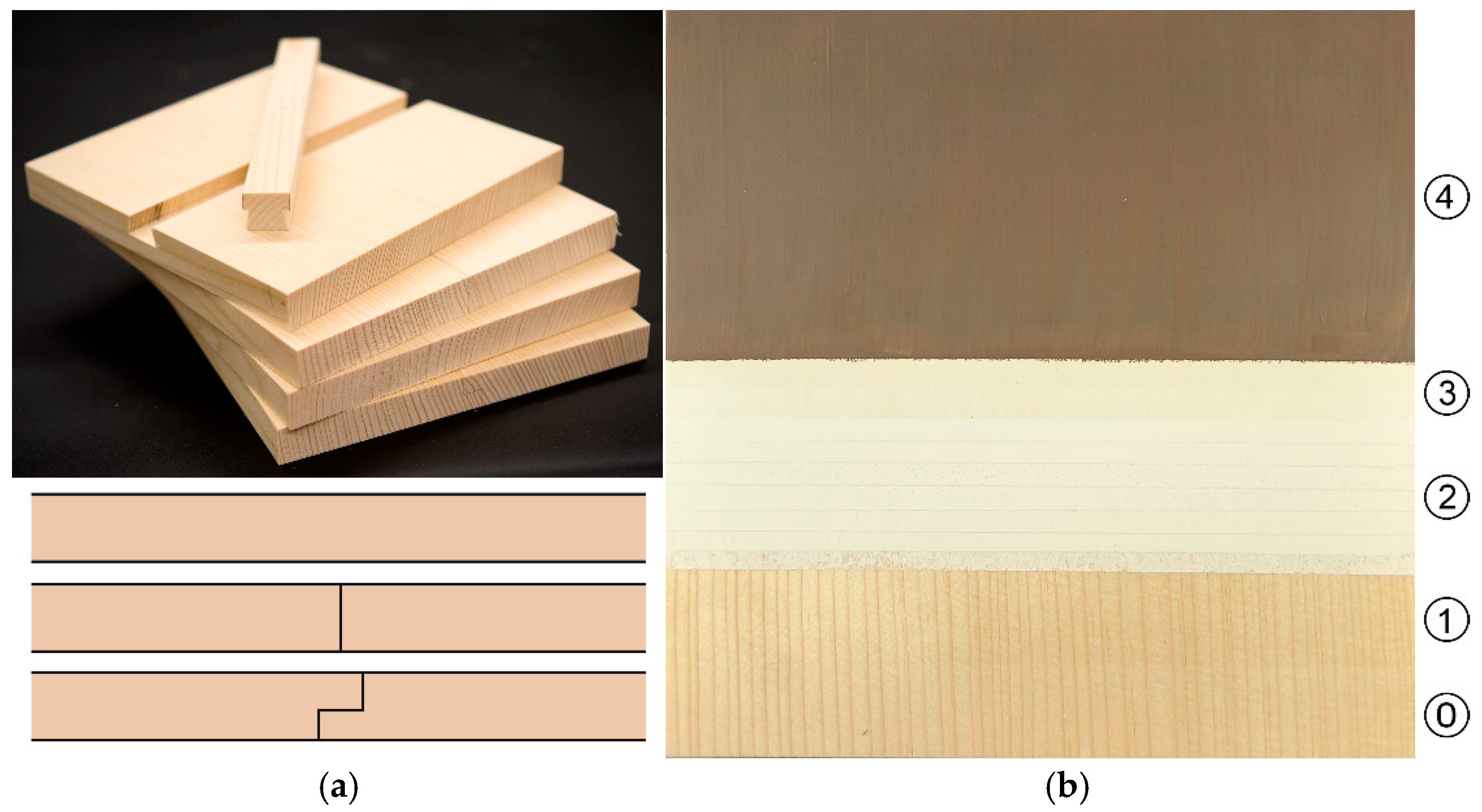
Since in situ humidification should not take place without prior testing, mock up test specimens were created (one of three sets, consisting of four plates each with different joining techniques; see
Figure 7) based on the findings from the analyses of the painting techniques and wood anatomy. Despite their inevitably different physical and mechanical properties compared to the aged original, the sample series should be subjected to artificial aging tests.
The evaluation of the archives confirmed that the
Maundy Tuesday altarpiece has suffered from mold infestation in the past [
9]. Therefore, one of three sets of test specimens was also additionally inoculated with mold spores (representatives of the genera
Alternaria,
Aspergillus,
Cladosporium, and
Penicillium) after production to simulate this pre-damage. Incubation was carried out for 52 days at 80–90% rH and 30 °C, followed by inhibition of superficially visible mold growth with an ethanol-water mixture (80:20).
Two sets of test samples (with and without biogenic damage) were examined in a climate chamber. Based on climate data measured in the sacristy of the case study, a maximum fluctuation in relative humidity from 80% to 34% was induced in the chamber at a constant room temperature over 18 days. The experiments were accompanied by high-resolution 3D scans with structured light analysis and gravimetric measurements. The third set of test samples was kept in situ at the case study to allow observations of its behavior over a longer period and in comparison to the original.
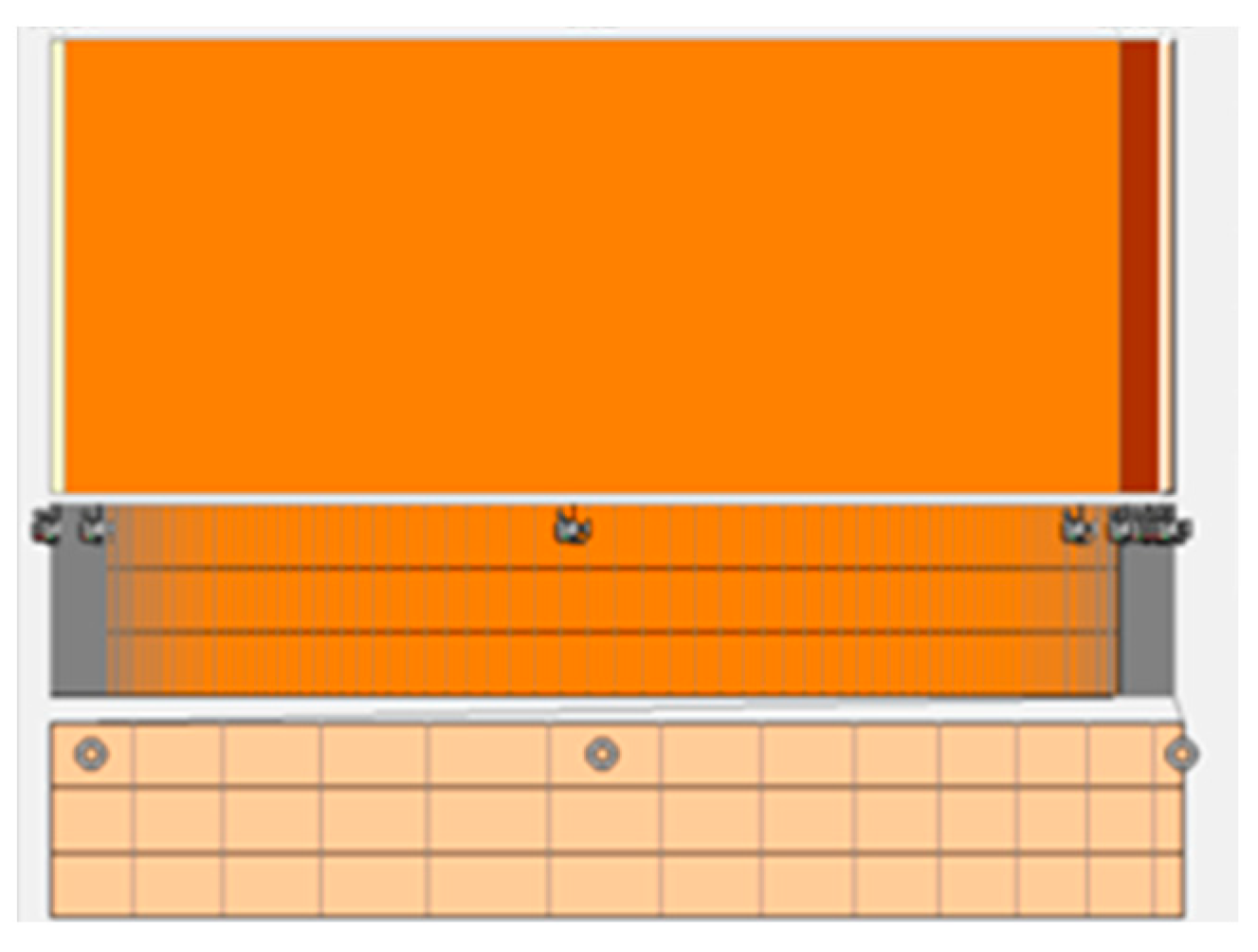
Furthermore a model for hygrothermal simulation was created using WUFI
® Pro (
Figure 8) [
8]. Glass frits of the same layer structure and their wet and dry cup measurements according to DIN EN ISO 12572:2001 [
16] served to define the necessary material specifications for the simulations.
The objectives were to estimate the performance of the materials and swelling processes under changing climatic conditions, to determine the equilibrium moisture content gravimetrically and to compare the different susceptibility of intact and pre-damaged test samples as well as potential risks for the original panel painting. The tests in the chamber were also subsequently used to validate the simulation model [
5].
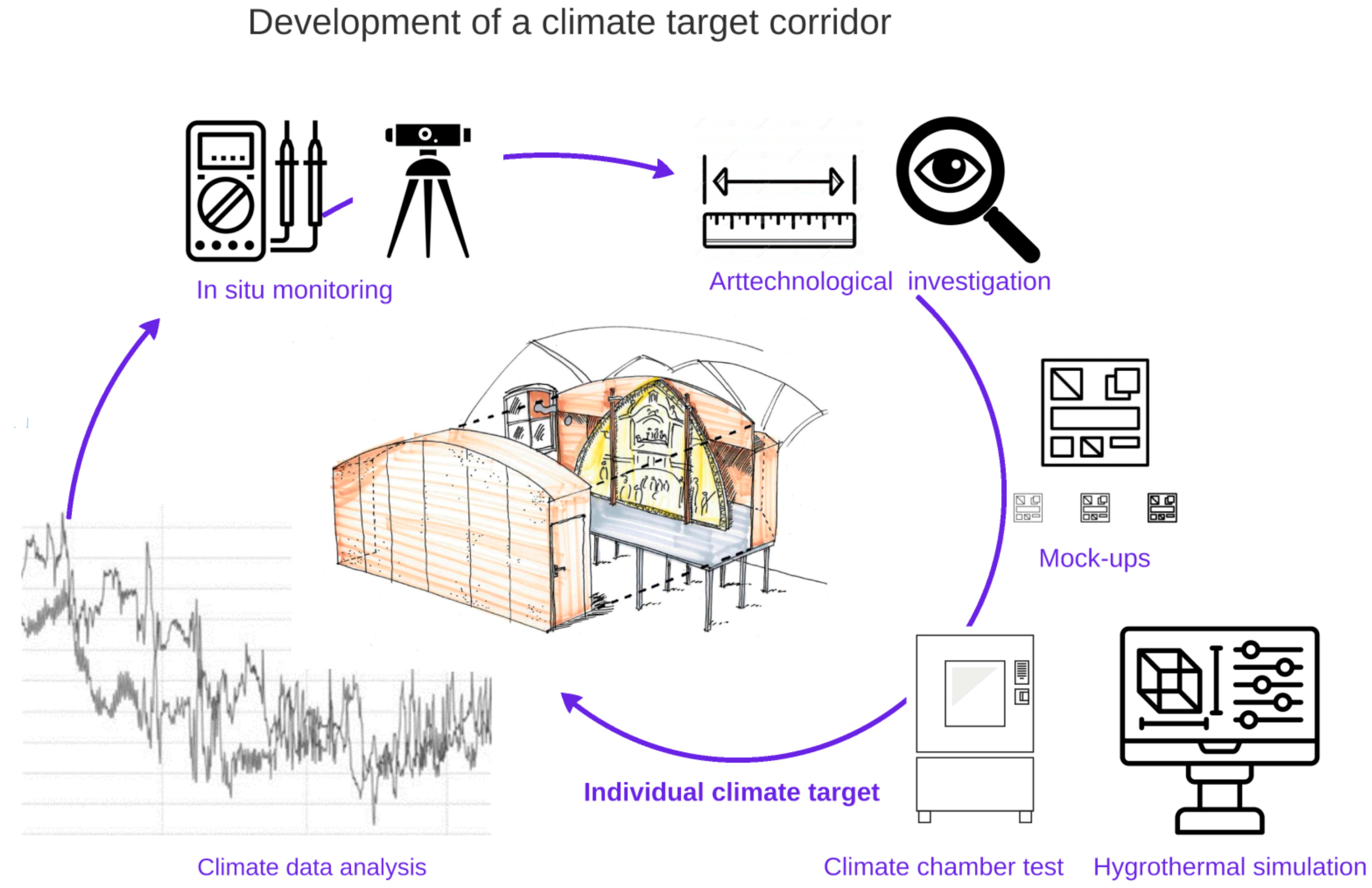
Based on all of this preliminary work and analysis, a tailored to the artwork climate corridor for the humidification of the panel painting could be established. In addition to the requirements of the panel painting (material-specific compatibilities, object and restoration history), the situation on site (risk of mold formation, as well as on the remaining historical installations in the sacristy like built-in cabinets) was taken into account. Furthermore, on-site conservation and metrological aspects were subject to continuous monitoring. If demonstrable damage had occurred due to the prevailing climate, such situations would have been avoided and short-term climate fluctuations minimized.
The correlation of the annual mean value of the relative humidity in the prevailing “historical” indoor climate of the sacristy (over a period of at least 13 months; here: measurements since 2018) with the standard DIN EN 15757 [
17] as well as the mentioned risks and limits specified a value of at least 65% rH, which was kept by means of a humidifier.
The scheme in
Figure 9 illustrates how the aforementioned investigations and methods interconnect to derive the approach for the humidification of the case study.
2.2. In Situ Humidification of the Panel Painting
After conducting the preliminary tests required for risk assessment and the positive evaluation of the results, two humidification tests were conducted in situ. These were accompanied by the previously mentioned climate and object monitoring. During the process, the relative humidity was first increased with the humidifier from about 65% rH to 70% rH from January to 31 March 2024. The timing of reaching equilibrium humidity (in ~2 weeks) was based on the previous research, WUFI
® Plus simulations, and preliminary tests in a climate chamber, as well as in situ monitoring by stagnating geometric length changes and conducting conservation inspections. A dehumidifier ensured that the rH could not be critically exceeded under changing outdoor or indoor climate conditions. After this step it was further increased by 5% to approximately 75% rH from 4 April to 16 April 2024. Changes in geometric length, paint layer, or potential damages (including potential occurrence of mold; therefore, conducted in the cooler season) were continuously monitored by conservators (every 2 days) and via the measurement technology (every minute to an online platform) [
6,
8]. From mid-April, a controlled reduction in the relative humidity to about 65% rH occurred, as this was assessed from a conservational and economic perspective to be both compatible with the artwork and more sustainable in terms of resource conservation and energy costs until further restoration actions (e.g., structural interventions such as removal or reworking of ridge strips, framing or consolidation of the paint layers) were agreed upon.
3. Results
The project results are presented and discussed in detail in the project’s final report [
6]. Ref. [
8] summarizes the results of the monitoring, hygrothermal simulation, and climate chamber experiments in English.
It has been shown that an enclosure can be an adequate and immediate action to isolate an artwork from a harmful climate. This also reduces the volume of space to be humidified (and thus the energy expenditure for it) as well as short-term climatic fluctuations, which decreases the effort required for climate control. Indirect humidification made it possible to maintain a comfortable climate (65% rH ± 2%; min. 8.6–max. 25.4 °C) for the case study throughout the year, even during the heating season.
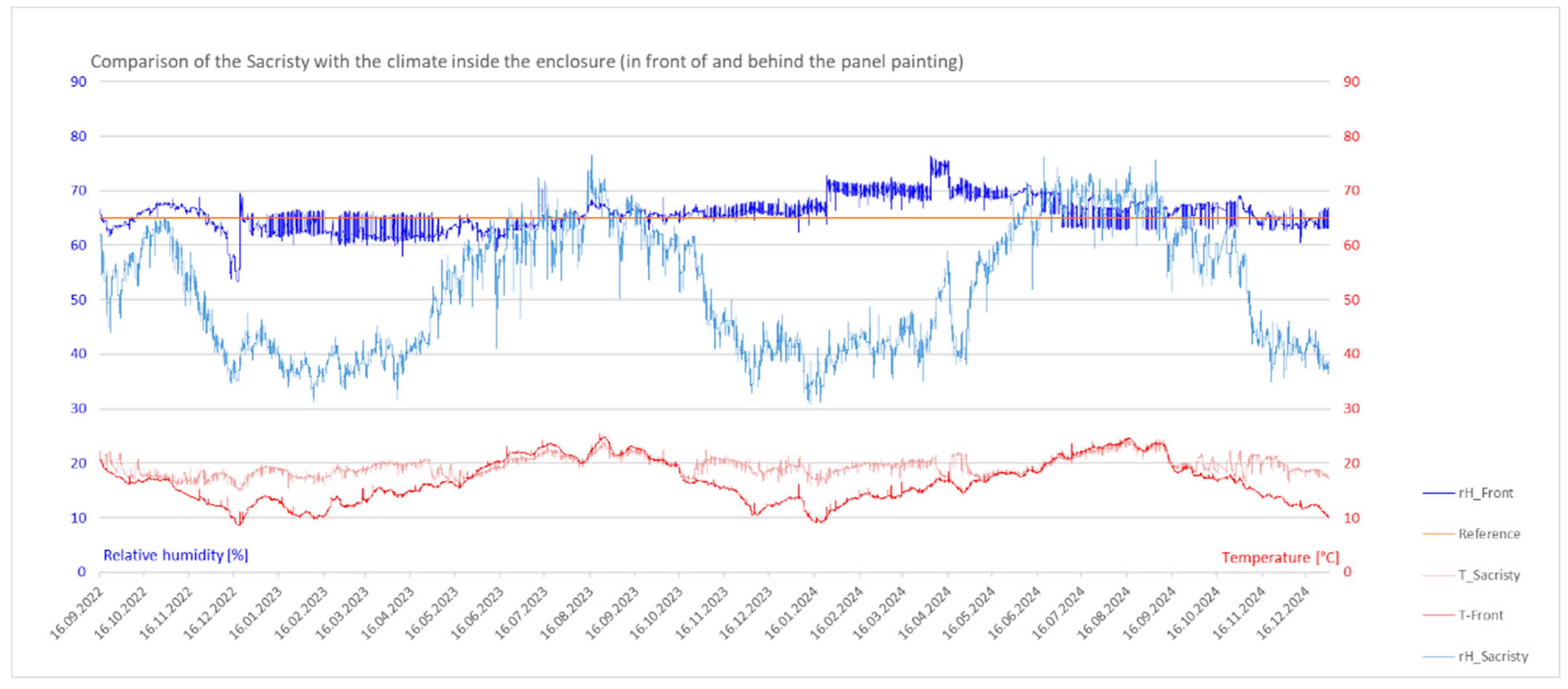
The analysis of the climate data, documented selectively before the start of the project (2006, 2015, 2018–2019) and continuously throughout the project (since 2022), revealed the well-known seasonal fluctuations of the outdoor climate and usage-related variations, such as during the coronavirus pandemic and energy crisis (approximately 2020–2023) and generally during the heating periods (October to April). Exemplary comparisons of the relative humidity (
Figure 10) show minimum values of 34–44% rH at an average of 16–19 °C without active intervention, e.g., by humidification devices, before 2020. In contrast, the relative humidity rose to a maximum of 77% rH in the summer of 2022, while the average from 2021 to 2022 was 62% rH. The completion of the enclosure in April 2022 is directly reflected in the measured data and significantly reduces fluctuations in temperature and relative humidity.
The evaluation of the project data (2022–2024) compares the outdoor and indoor climate (sacristy, enclosure, and near field) at the front and back of the panel, as well as at various elevations (beneath the work platform and at three elevations of the panel).
Figure 10 shows an example of the sacristy climate compared to the climate in the enclosure (panel front) and to the reference at 65% rH; further diagrams and discussion see [
6].
The solid masonry buffers the temperature peaks occurring outside throughout the year; heating in winter sometimes leads to significant temperature differences between the outside and inside air. The annual average relative humidity outside was ~79% rH and ~51% rH in the sacristy (
Table 1). The climate of the enclosure was closer to that of the sacristy than to the outdoor climate and was maintained at a constant 65% ± 2% rH using humidifiers throughout the project. This reduced the rH fluctuations from 45% in the sacristy to only approximately 17% in the enclosure.
Inside the enclosure the temperature and humidity differences at the panel painting are very small, the temperature expansion is up to 2 °C, and the maximum rH 10%. Surface temperature differences are greater in winter than in summer but never exceed 1 °C; furthermore, there are no drops below the dew point.
The simulations and climate chamber tests in the project clearly showed that the reaction speed and the extent of material expansion are significantly dependent on the existing moisture gradient. If this gradient is too large, there is a risk of tensions and irreversible damage, such as cracks or deformation [
5].
For all panels, the greatest reactions in the climate chamber occurred within the first three days; total deformations of 2 to 3.5 mm were measured. Overall, the untreated test panels showed less deformation than those treated with mold. In the pre-damaged panels, the butt joint (degraded rabbit skin glue) came loose on the fourth day. The gravimetric monitoring for determining the equilibrium moisture content led to the approach of a two-stage humidification over several weeks (as described above) with a moisture change of 5% each time.
A comparison of the manufactured wooden test bodies with those contaminated with mold spores also showed that the latter react more strongly to climatic changes and have a higher potential for damage. This can, among other things, be explained by the accelerated binder degradation caused by fungal infestation.
The reaction of the test bodies and the associated extrapolation of the simulated moisture absorption of the panel painting (WUFI
®Plus) generally matched the behavior of the original case study. However, the reaction of the original panel painting occurred somewhat slower than expected [
18].
According to the literature, depending on the case study, different time spans were conceivable for the smallest changes (reaction time) until the movements subsided (reaching equilibrium moisture content). Depending on the wood species, coatings, their respective properties or condition, and prevailing climatic conditions, these lasted from a few minutes to hours to several weeks or even months [
5,
6,
13,
14,
19,
20,
21,
22,
23]. In general, hardwoods can react more strongly than softwoods; thin or small woods can react faster than thick or large ones, and the deformations can be most severe in the tangential rather than longitudinal direction.
Over long periods of time, only very slight deformations (0.1–0.2 mm) were recorded on the wooden beam by the lasers. This is due to the very stable indoor climate and the lack of changes in wood moisture content. But even minimal and short-term changes in the relative humidity led to measurable deformations of the panel image in the z-direction.
Only 25–30 min pass between the relative humidity maximum and the deformation maximum of approximately 5 μm for a change in the relative humidity of 2 percentage points (see also [
14]). The overlying long-term trend of deformation follows the relative humidity trend with a delay of approximately 180 min; it takes approximately 14 days for the moisture to be evenly distributed across the entire panel thickness of an average of 20 mm across the entire cross-section and for the new equilibrium moisture content (stagnation of deformation) to be reached.
The measured expansion of the board of 2 mm (in x-axis) at the increase from 65 to 75% rH in the case study in Freising initially fell short of expectations. Theoretical extrapolation (without taking into account convex deformations of the z-axis and other critical parameters) suggested that there had been a significantly greater expansion over the entire length in relation to the ambient climate of the panel painting before the measurement period in the project started.
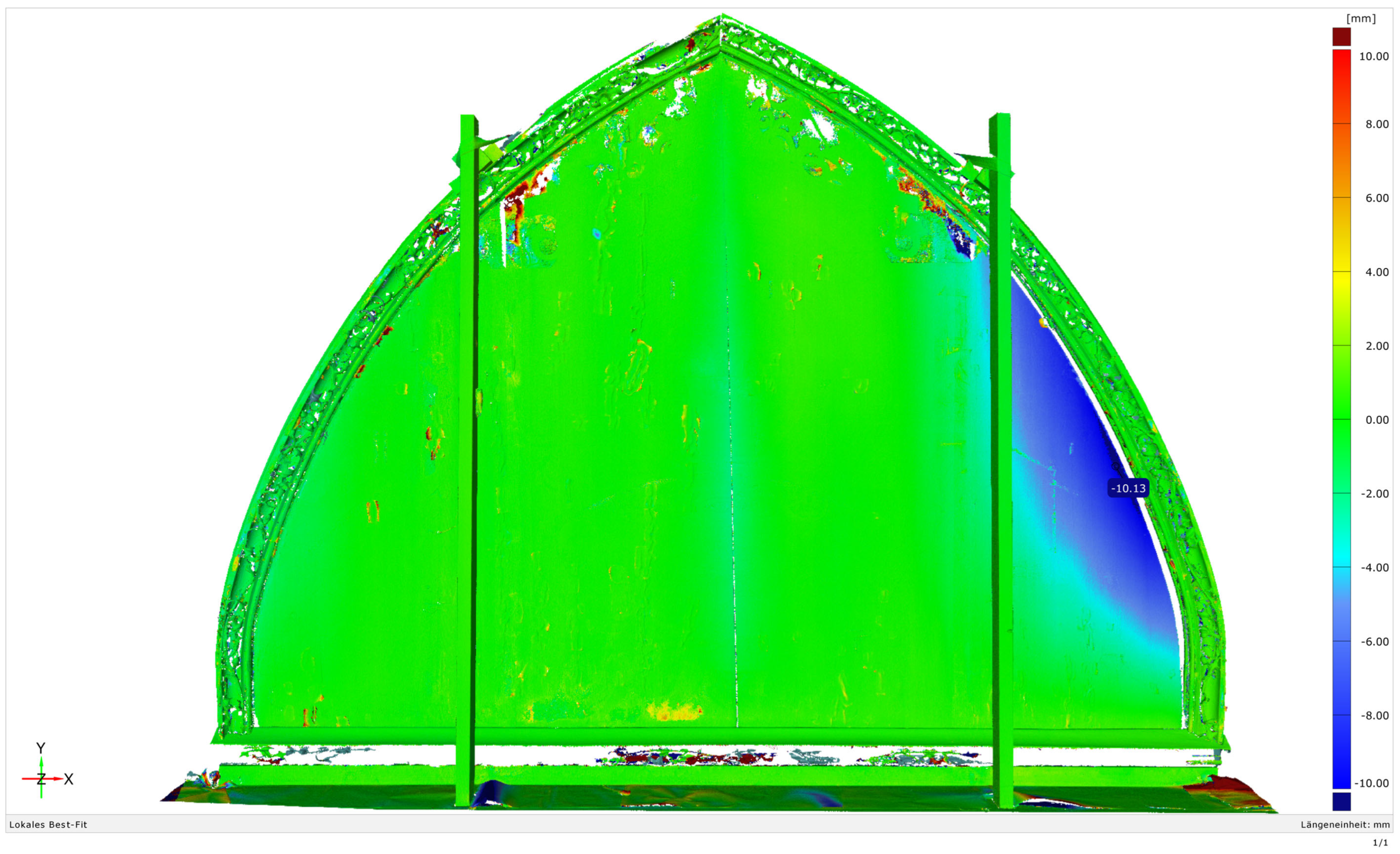
Based on the point cloud comparison of the opto-technical monitoring, the right side, which had migrated out of the panel frame, was identified as the one with the largest movements or warping (e.g., up to 10 mm in the z-axis in 2022;
Figure 11).
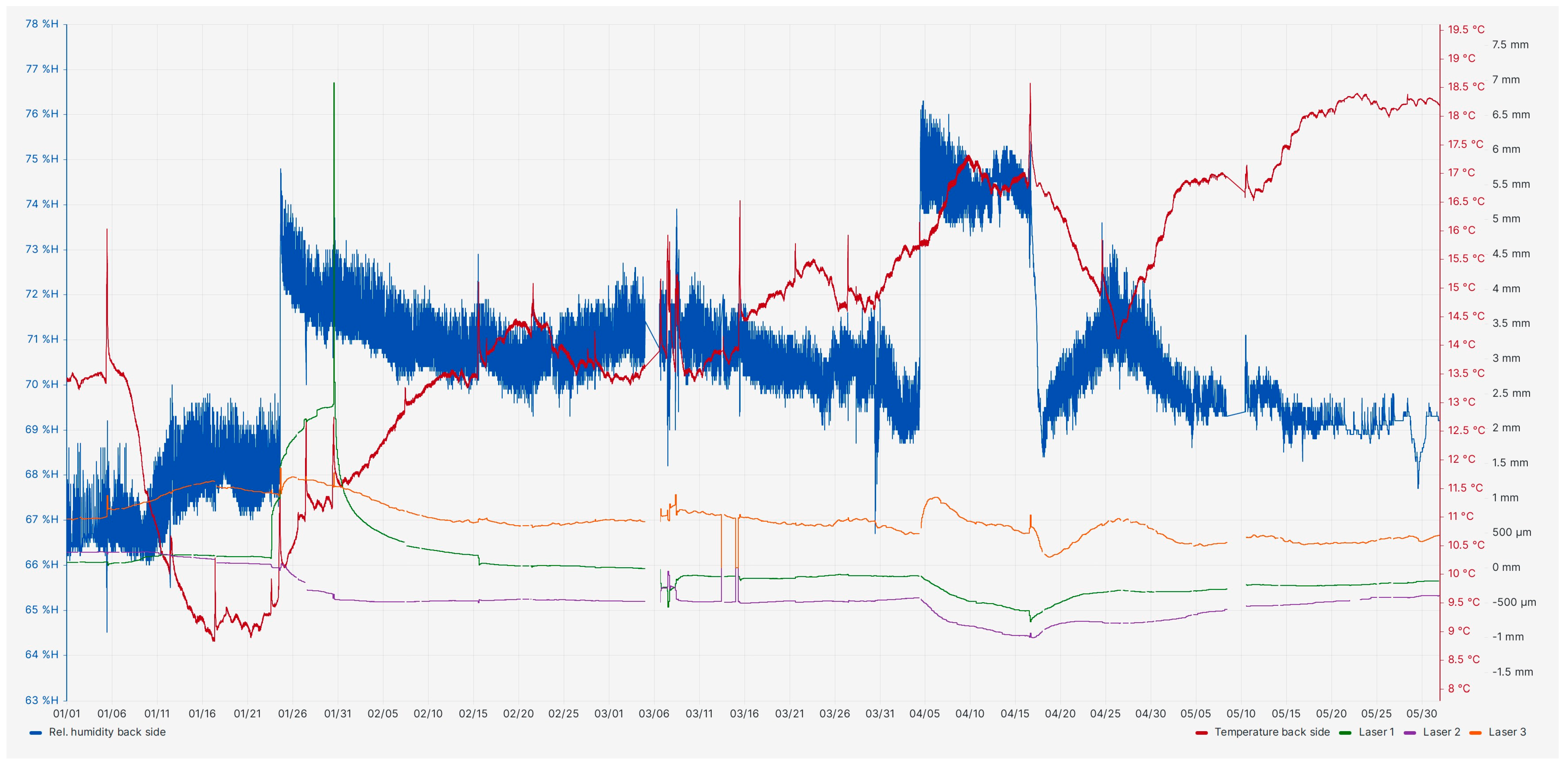
The humidification test was conducted in two steps (
Figure 12): from 65 to 70% rH over 14 days and, after the deformations had subsided, from 70 to 75% over a further 14 days. Here, too, the panel reacted within a very short time (25–30 min). The maximum warpage based on the scans was 25 mm in the z-direction when comparing a scan taken at 40% rH with one taken during the humidification test. The wood moisture content could be increased from approximately 13.7 ± 0.5% to approximately 15.6 to 16.2% but was viewed critically within the project for various reasons [
5].
In consideration of a tolerable climate range with the conservation, ecological, economic, and financial factors of sustainability, a gradual reduction in the rH began on 16 April 2024. (approx. 2% per week) to the corridor of approx. 65 ± 2% rH.
The hoped-for expansion of the shrunk base, approximating the last intact state in 2006, could not be achieved within the still tolerable moisture values (till max. 75% rH). Since the period of extreme dryness could not be documented by the triangulation lasers or extensometers, the maximum expansion from the starting point at 40% rH to a maximum of 75% rH (humidification attempt) unfortunately could not be fully measured. This is due to the extreme dryness at the beginning of the project (~40% rH) and supply shortages resulting from the global situation (COVID and the war in Ukraine). The quick construction of the enclosure with the adjustment of an equilibrium moisture content depending on the external climate (around 60% rH in the summer of 2022) seemed to be the only conservative justifiable step at the time.
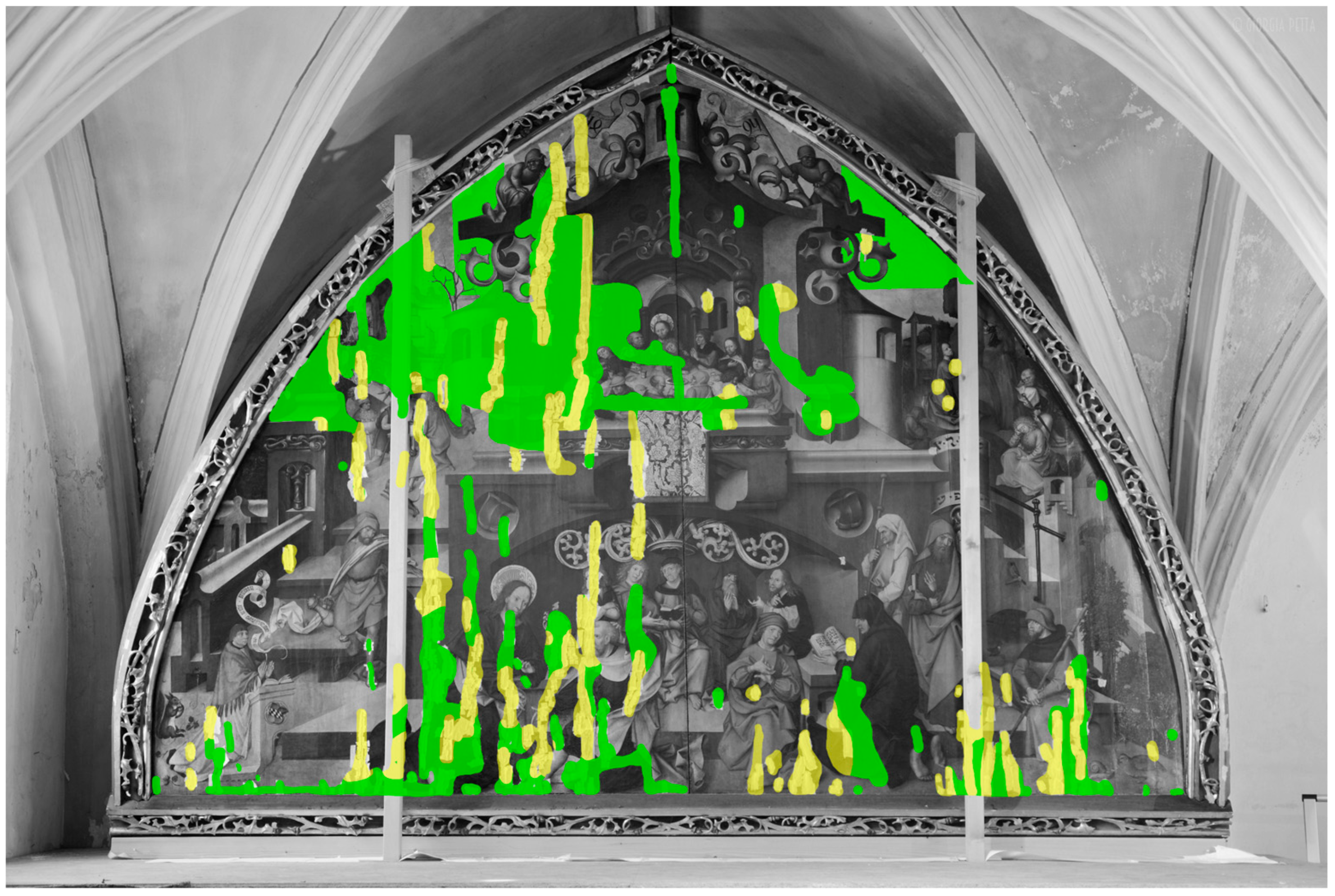
By the end of the project, it was possible to lay down and secure the majority of the detached parts of the tenting paint layer (
Figure 13). Approximately 25% of the surface of the painting had already detached before the project; of this portion, about 65% could be consolidated by the end of the project. For roof-shaped detachments that still cannot be removed without material loss, three methods of stabilization were discussed and presented in the final report [
6].
An intervention in the construction or environment was not possible during the duration of the project, but it will be discussed in the future with relevant experts and stakeholders based on the results.
4. Discussion
As part of the project for the conservative preservation of a panel painting, the reactions of the artwork to climatic fluctuations were measured and assessed through a case study using comprehensive analyses—including preliminary investigations, a monitoring concept, hygrothermal simulations, climate chamber tests, and other risk-based studies. The use of simulations, models, digital twins, or artificial manipulation of test specimens, whether in combination with or as a supplement to the original, was viewed critically, but as a valuable approach to approximation. Despite the necessary simplification and thus deviation from an aged artwork with its individual characteristics, conditions, restoration history, and reactions, these methods can serve as a predictive tool or for validating/verifying an artwork or various hypotheses, enabling a better assessment. Further research and correlation of original artworks with calculated data will, in the future, allow more and more insights into this complex field.
A prerequisite for successful climate adaptation measures is the analysis and minimization of existing damage causes, e.g., through structural, technical, organizational, and other actions. If an unsuitable indoor climate is identified as a primary factor, establishing a suitable climate corridor is a sensible next step. The analysis of the current state and the development of a climate corridor goal [
24], e.g., for moisture and later long-term stabilization, should only be carried out in close coordination with experts, under conservation and measurement supervision, and with a critical assessment of risks and opportunities. The material-specific requirements in the targeted corridor must also be taken into account. Regarding further risks to art and cultural heritage, a general reference should be made to the ‘10 agents of deterioration’ [
25]. For a comprehensive risk assessment the website of the Safety Guidelines for Cultural Property SiLK [
26,
27] offers a comprehensive list of approaches, as well as further literature and references.
At the same time, the energy, personnel, and financial costs, as well as the environmental impact of complex technical systems or long-term climate protection strategies, must be critically examined and weighed against each other. Passive and sustainable systems should be given priority.
The archival assumption that aged wood exhibits “signs of fatigue”, so that swelling is no longer possible, has been partially confirmed in the project, but with other reasons. Depending on the conditions described above (including the condition and history of the object, degree of previous damage, plastic deformation, external constraints, etc.), works of art react differently to moisture or exhibit altered moisture absorption capacity [
12]. According to older literature, it is not assumed that the mere aging of wood has a significant impact on its structural or mechanical properties; however, external influences such as previous conservation measures, pests, or climatic influences do. More recent studies show that the components of wood can also undergo chemical changes over time; for example, an increase in strength and stiffness and a decrease in toughness [
12,
23]. Therefore, expected results are never precisely predictable and can only be approximated.
Without knowledge of the exact climate, artwork history, and condition, predictions about the expansion potential of the wooden support are only possible to a limited extent and always carry a high-risk potential.
The project demonstrates that sustainable climate concepts are possible through a differentiated consideration of object condition, room type, and use. The focus is no longer on rigidly maintaining museum ideal values, but on dynamically controlling within acceptable fluctuation limits, which are tailored to each individual artwork and its historical climate.
However, the project shows again, that the natural swelling and shrinking of hygroscopic materials contributes to the destabilization of the materials and causes damage. A valuable insight is that the entire system of the wooden panel painting could be deliberately and carefully moistened in order to smooth the paint layers and preserve the painting in the long term. In this process, it is not rigid museum climate target values that should be maintained. It is rather compatible, dynamically controlled within acceptable fluctuation limits, around the average historical climate of the individual artworks, values that should—if feasible—be established for the long term. The intensive preliminary investigations, simulations, and practical tests enabled a risk assessment and classification of the influencing conditions, possibilities, and limitations (e.g., object materials and condition, room type, use).
A comparison to other projects, such as [
28], which achieved sufficient swelling of a painting from the first half of the 17th century by 83% relative humidity in 14 months, suggests that further humidification could generally enable additional expansion. However, conservational concerns—such as the risk of mold, adhesive degradation, or drying cracks (e.g., in case of a technical failure)—rendered this step unjustifiable in the current case. Additionally, economic and ecological aspects, as well as the irreversible loss of surface area due to cyclical moisture fluctuations [
23,
29], argued against returning the panel to its former original shape or dimensions following the last consolidation measure (2006).
Since such measures always carry the risk of losing original substance, they are only meaningful if sustainable long-term stabilization can be ensured.
Otherwise, the history of the case study and project insights show that there is always a risk of further loss of original substance, resulting the need for continuous conservation treatments. Therefore, at the beginning of a long-term preservation strategy like the one in Freising, it is necessary to identify the causes of damage, as well as essentially finding resource-efficient approaches to long-term stabilization and to examine any sustainability and environmental aspects. Further information on sustainability (e.g., the interdisciplinary team’s/participating stakeholders’ approach to decision-making with regard to economic, ecological, liturgical, ethical, and social responsibility; comparison and discussion of pragmatic, cost-effective methods with high-priced ones; electricity consumption of such a measurement and climate stabilization system, passive strategies for climate stabilization, etc.) can be found in [
6].
The removal of an object from its original environment—for example, with an enclosure, to storage, rectory, museum or a display case—is considered the last resort from a monument preservation perspective. In addition to the loss of context, a relocation can also be problematic from a conservational point of view, as the climate conditions prevailing in heated rooms are often significantly drier and warmer than those in a monument. Enclosures represent an intervention in the historical spatial structure, resulting in aesthetic and logistical challenges (e.g., regular inspections and monitoring) and in some locations it may only be usable on a temporary basis. Nevertheless, it may be necessary in individual cases when no other conservational actions promise lasting success.
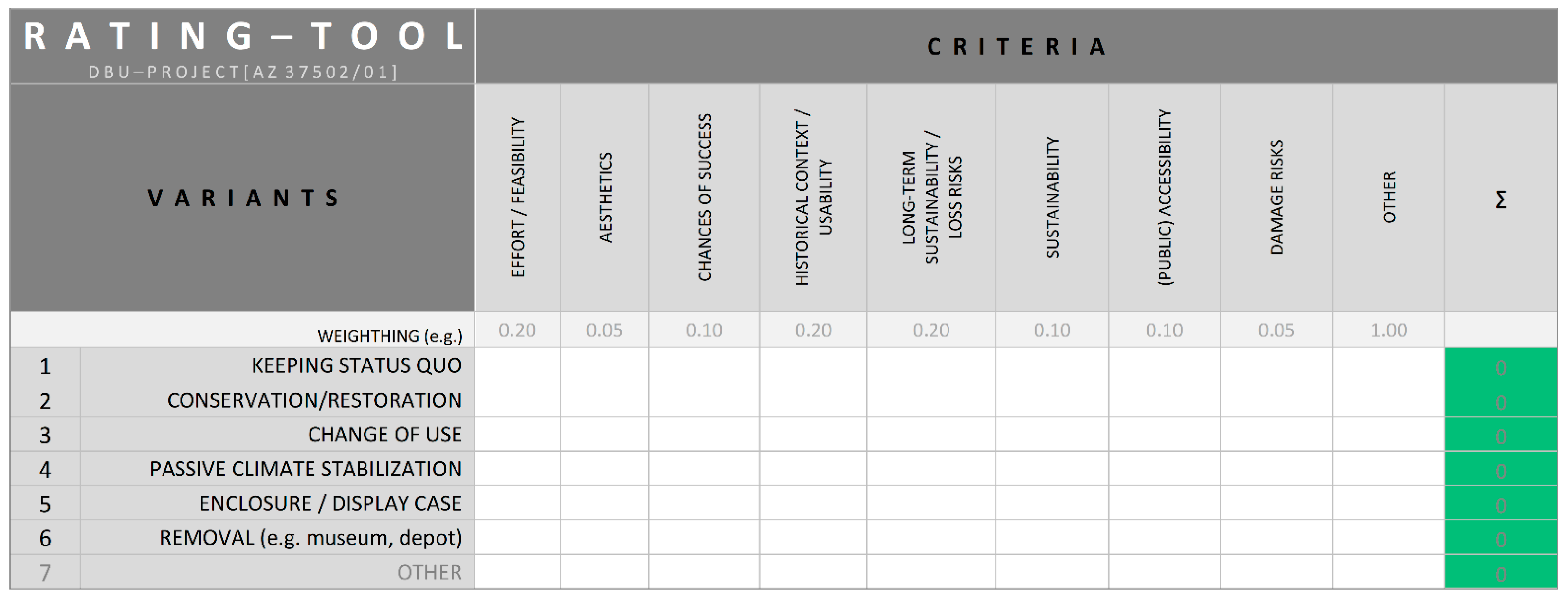
The first step is represented by the
action guide developed in the project with an evaluation matrix. This summarizes the planning steps for basic data collection, risk assessment, measurement technology, and implementation. The evaluation matrix (
Figure 14) serves as a decision-making aid, which includes various perspectives, alternatives, and requirements for the preservation of such damaged wooden panel paintings in a cultural heritage context. Different change scenarios (options) and requirements in the assessment (criteria) are contrasted. Depending on the perspective (e.g., conservative, preservation, or owner/user perspective), different weightings arise. The current condition (status quo) before the launch of the respective project is regarded as a reference for the changes being discussed. The variants do not claim to be exhaustive; they may differ in other projects or may also be used in combination. Depending on the weighting of the respective criteria in discussions with all stakeholders, the variants may perform differently. The evaluation matrix was fully completed and discussed in the final report [
6]. Here, it is deliberately presented without weightings or detailed selection options in order to demonstrate the most objective transferability possible to other projects, countries, and their individual laws or guidelines. The classification can, for example, be based on a symbol, traffic light, or color system (e.g., ++/+/o/-/-- or +/o/- or
♦ = very good/
♦ = medium/
♦ = bad) as well as numerical values (e.g., 1–5 or 1–10) and occur with different weighting. The matrix can therefore be seen as a tool or a stimulus for thought for the most objective evaluation possible. The final decision often depends on additional criteria. For example, political decisions or financial possibilities can play a disproportionately large role.
5. Transfer of Results to Sustainable Climate Stabilization in Heritage Preservation
The investigations showed that the damage caused by anthropogenic aridity resembles the one of climate change. In this project, it was sufficient to separate the panel painting from the heated sacristy, but not from the external climate to achieve stabilization. Nevertheless, the warm, humid climate, especially in the summer of 2024, had direct effects on the panel painting. An excessively dry external climate—as is to be expected from a climate change perspective—would necessitate humidification in the enclosure in the future. Therefore, solution strategies should aim to examine the building envelope and, as needed, reinforce it to stabilize the microclimate of the painting. There is still an urgent need for research on the examination of sustainable, resource-efficient, and economically viable stabilization strategies and materials.
A commonly feasible and cost-effective approach is to change the utilization of the room. Visitor flows and their impact on the indoor climate can be managed through organizational measures (e.g., visitor guidance, coat and umbrella racks, reduced opening hours and group sizes). The use of so-called ‘winter churches’ can also provide climatic relief.
Depending on physiological conditions, activity, clothing, or season, people react differently to physical conditions (e.g., air movement and composition, humidity, room and wall surface temperature). Since working conditions must also be considered, close-to-body heat sources (e.g., heated seat cushions, blankets, infrared radiation, heat pedestals) or defined workspaces (e.g., glass cubicles) can improve comfort.
Basically, various principles of operation come into question for the conditioning of indoor air. These include heating or lowering the temperature, as well as influencing the moisture content through dehumidification, humidification, or (adaptive) ventilation. If the external climate varies by region, however, site-specific changes must still be considered to improve the climate, such as dehumidification and humidification devices. These, however, require electricity and regular maintenance (including refilling, emptying and cleaning to prevent algae or mold growth). The installation of sensor-controlled pre-regulators can reduce the energy consumption of the devices.
Other options for stabilization or decoupling from the climate include climate boxes, open/closed enclosures, buffer materials, or back protection [
30]. These reduce the influence of the environment but must be carefully designed, maintained, and monitored (keywords: tightness, emissions, mold, interactions). Increasing repurposing of churches—for example, as event or office spaces—presents additional challenges, such as modern technology or workplace requirements, that impact the climate.
In particularly endangered cases, the use of a climate display case or passive buffer materials may be necessary or desired, while aesthetic, functional, and preservation considerations must be carefully weighed. The intended purpose of an object, whether it is a place of worship, a work of art, or something else, should always be taken into account. Often, it is not desired to disturb those sacred spaces through musealization. Furthermore, the (re)use of the premises and their artworks is partly an integral component of the intangible cultural heritage, which is also worthy of preservation. A professional concept (e.g., material selection, tightness, maintenance, emissions) is essential to exclude unfavorable conditions, malfunctions, or secondary damage (such as condensation, low air circulation, material damage or interactions). The unstable indoor climate in monuments, as well as personnel and financial constraints, pose a significant challenge for the proper adjustment and control of a climate display case or the buffer materials and artworks.
Regular on-site inspections are therefore very useful for fire protection, safety, maintenance, and conservation reasons (e.g., training and awareness-raising for sacristans, administrators or systems like ‘Monumentenwacht’, The Netherlands).
In the future, it should be examined how such measures will hold up under changing climate conditions—especially with regard to rising temperatures while humidity either decreases or increases. Moisture-adaptive/passive buffer materials such as silica gel or salts could create sustainable potential in cultural heritage.
Ultimately, structural adjustments are also a consideration, for example, to influence air currents or temperature zones. However, from a conservation and economic perspective, such interventions or the installation of a ventilation or full air conditioning system are usually only considered as a last resort. Due to the extensive and necessary preliminary investigations, costly renovation work, and high operating costs, as well as the risk of climatic deterioration due to lack of expertise, faulty technology, or insufficient maintenance, these systems will not be further elaborated on here. Interesting approaches for utilizing solar energy or passive conditioning systems are offered with [
31] or [
32].
6. Conclusions
The project demonstrated that adapting conservation strategies to changing climatic conditions is essential for the long-term preservation of historic panel paintings in situ. By combining in situ monitoring, simulations, climate chamber tests, and in situ humidification within a carefully defined and accompanied climate corridor, it was possible to significantly reduce further deterioration and create a treatable condition for the case study.
A central challenge lies in the problem of balancing conservation needs with the realities of climate change, historic architecture and inventory, use and sustainability goals.
Sensitive materials such as wood and polychrome layers react strongly to fluctuations in humidity and temperature, yet rigid climate stabilization is neither technically nor ecologically feasible in the long term. Therefore, ideal museum standards often cannot be applied to monuments, as energy efficiency and resource constraints limit technical interventions. Instead, a dynamic control should be carried out within acceptable fluctuation limits, tailored individually to each work of art and its historical context (inventory, condition, restoration history, etc.) [
24]. This tension makes it necessary to seek alternative approaches that are both conservation-effective and sustainable.
However, the results also highlighted the limitations of material recovery taking into account an in-situ treatment and, for the time being, without interventions in the construction or original material (e.g., strips): Aging wood exhibits altered moisture reactions and irreversible deformations, meaning that a complete restoration of the original dimensions can only be achieved to a limited extent or under a significant increase in equilibrium moisture content. Since this seems hardly justifiable ecologically and in terms of restoration ethics, sustainable conservation must instead focus on passive stabilization, careful risk management, and good preventive actions (e.g., regular maintenance and care). Enclosures and tailored climate controls can be effective interim or emergency solutions, but they require continuous monitoring and must be weighed against energy efficiency, economic feasibility, and environmental considerations.
Ultimately, this case underscores the need for integrative, resource-conscious preservation strategies that account for the specific material history of each artwork while responding to broader climate challenges. The evaluation matrix developed in the project offers a practical tool to guide decision-making, ensuring that future interventions weigh conservational, economic, and ecological factors in equal measures. This has been confirmed by the interdisciplinary approaches of the research group, as only through collaboration can holistic approaches be developed and implemented that consider the various possibilities and limitations from different perspectives and with different areas of expertise.
For practical conservation, clear areas of action emerged during the project, also, in light of climate change and its prospective effects:
Need for further research on transferability to other object groups.
Need for the development of passive, resource- and energy-saving methods for climate stabilization.
Development of (digital) risk assessment or decision-making aids (e.g., evaluation apps or tools).
Integration of developed methods into conservation guidelines.
Training of specialized personnel in dealing with monitoring and analysis data, their interpretation, and implementation of resulting actions.
In the long term, it will be necessary to link conservation objectives with sustainable operational strategies—digitally supported, data-based, and specifically tailored to the objects of cultural heritage.
Author Contributions
Conceptualization, T.H., K.H. and P.B.; methodology, T.H., K.H., P.B., J.B. and M.H.; software, L.P. and K.H.; validation, M.H., K.H. and T.H.; formal analysis, M.H.; investigation, L.P., M.H., K.H., T.H. and J.B.; resources, T.H., M.H., J.B., P.B. and K.H.; data curation, M.H. and L.P.; writing—original draft preparation, T.H. and K.H.; writing—review and editing, T.H., L.P., K.H., P.B. and M.H.; visualization, L.P., K.H. and T.H.; supervision, T.H., J.B., K.H. and P.B.; project administration, T.H. and J.B.; funding acquisition, T.H. and P.B. All authors have read and agreed to the published version of the manuscript.
Funding
This research was funded by the German Federal Environmental Foundation (“Deutsche Bundesstiftung Umwelt”; DBU) in the focus area “Preservation of nationally valuable cultural assets”; grant number 37502-01.
Data Availability Statement
Final report of the project: Hilger, T.; Brandt, J.; Hörmann, M.; Holl, K.; Fröhlich, A. Entwicklung Und Modellhafte Anwendung Einer in Situ Befeuchtungsmethode mit Monitoringkonzept Am Beispiel Eines Anthropogen geschädigten großformatigen Holztafelbildes; Bayerisches Landesamt für Denkmalpflege: München, 2024. Online:
https://www.dbu.de/projektdatenbank/37502-01/ [accessed on 10 September 2025]. On reasonable request the datasets used and/or analyzed during the project are available from: theresa.hilger@blfd.bayern.de.
Acknowledgments
This article summarizes the results of the research project Development and Model Application of an In-Situ Humidification Method with Monitoring Concept using the example of an anthropogenically damaged large-format wooden panel painting, funded by the German Federal Foundation for the Environment (File number AZ 37502-01; Duration January 2022 to August 2024). The project was led by the Restoration Department of the Bavarian State Office for Monument Preservation (Munich, Germany). Project partners included the Centre for Heritage Conservation Studies and Technologies (KDWT) at the University of Bamberg (Germany), the Technical University of Munich, School of Engineering and Design, Chair of Timber Structures and Building Construction (Germany), and the conservation consulting company Care for Art. In the subcontract, the Institute for Diagnostics and Conservation at Monuments in Saxony and Saxony-Anhalt e.V. (IDK) and the Fraunhofer Institute for Building Physics (Holzkirchen, Germany) were involved. The team of experts in restoration, natural sciences, wood technologies, and measurement technology was supplemented by an accompanying expert advisory board consisting of property owners (representatives), monument conservators, and participants in the approval process. We thank DBU and the specialist department–especially Constanze Fuhrmann, Heike Hemmer, and Sandra Strelow–for their support. Our special thanks go to Marc Aeilko-Aris and the Freising Cathedral Foundation with Elmar Hobelsberger, as well as the Archdiocese of Munich and Freising, for their trust and cooperation on the case study Maundy Thursday altarpiece. We thank the companies Adldinger, Gerlach Elektrotechnik, INCEN AG, IQAir International, Florian Lindner Design, TUM Professorship for Fungal Biotechnology in Wood Science, as well as all project participants, cooperation partners, colloquium participants, and the colleagues from BLfD, KDWT, TUM, IDK, IBP, and CFA for sponsoring, technical and professional support. The dedicated collaboration of all participants was crucial for the success of the project. Thanks to the attentive reviewers, whose suggestions we gladly accepted. During the preparation of this manuscript/study, the authors used ChatGPT-5.1 by OpenAI for the purposes of summarizing and shortening sections of text from the final project report. The authors have reviewed and edited the output and take full responsibility for the content of this publication. The publication of this article was supported by the Open Access publication fund of the University of Bamberg.
Conflicts of Interest
The authors declare no conflicts of interest.
Abbreviations
The following abbreviations are used in this manuscript:
| DBU | German Federal Environmental Foundation |
| EDX | Energy dispersive X-ray spectroscopy |
| FTIR | Fourier transform infrared spectroscopy |
| GC-MS | Gas chromatography–mass spectrometry |
| rH | Relative humidity |
| T | Temperature |
Appendix A
Table A1.
Materials and (technical) equipment.
Table A1.
Materials and (technical) equipment.
| Name | Model/Specifications | Software | Company |
|---|
| Enclosure | plasterboard panels specified for rooms with high humidity | none | Adldinger,
Freising (Bavaria, Germany) |
gypsum
for filling the joints | none |
| mineral wool as insulation between the joints | none |
vapor-tight foil
at the wall joints | none |
| Climate sensors | EL-USB-2 Datalogger
rH/Temp. | EasyLog USB, Version 7.7.0.0 | Lascar Electronics (Erie, PA, USA) |
ALMEMO 5690 data logger with rH, temperature, and surface temperature sensors FHAD46C2L05,
10 and FPA 611 | AMR
WinControl 8 | Ahlborn,
Akrobit (Holzkirchen, Germany) |
| Deformation sensors | CMOS laser: sensor head with laser line LK-H157 and control without display
PNP, LK-G5001P | none | Keyence (Itasca, IL, USA) |
| Ceramic gauge blocks | none | Mitutoyo (Kawasaki-shi, Japan) |
| extensometer FWA050TX2 | none | Ahlborn (Holzkirchen, Germany) |
Electrical resistance
(so-called wood moisture) | Thermofox
Universal Data Logger
with screw-in electrodes | SoftFOX, Version 2024
analysis software | Scanntronik
Mugrauer
GmbH (Zorneding, Germany) |
| Opto-technical methods | COMET LƎD 5M 3D structured light scanner | GOM INSPECT v.2020 and CloudCompare v.2.12.0 | Carl Zeiss Optotechnik GmbH (Former Steinbichler Optotechnik GmbH) (Neubeuern, Germany) |
Faro Focus S 350
laser scanner | GOM INSPECT v.2020 and CloudCompare v.2.12.0 | FARO (Korntal Münchingen, Germany) |
| Long-term photography | Z6 II system camera with 24–70 mm Z lens; F&V R300 SE | Photoshop, Version 26.4.1 | Nikon (Melville, NY, USA),
Adobe (San Jose, CA, USA) |
| Daylight LED ring light | - | Huss Light and Sound (Langenau, Germany) |
| Climate chamber | ClimeEvent C/340/40/3/M | - | Weiss
Umwelttechnik GmbH (Stuttgart, Germany) |
Digital precision scales
(gravimetric measures) | Balance BC-EE S/N0043702020; d = 0.001 g | - | Sartorius Lab Instruments GmbH & Co. KG (Göttingen, Germany) |
| PCB, max. 250 g, d = 0.001 g | - | Kern (Eisenberg, Germany) |
| Glass frits | Filter Discs,
porosity 4, ⌀ 90 mm | - | DURAN® (Richardson, TX, USA) |
| Humidification | Humidifier B 500 Professional | - | Brune (Aglasterhausen, Germany) |
Dehumidifier
OD 150 TH ECO | - | AirBlue (Garching bei München, Germany) |
| Ballasts: sicCareFOX-1H | - | PASStec
(Former PASSFox) (Crimmitschau, Germany) |
References
- Intergovernmental Panel on Climate Change (IPCC). Climate Change 2022—Impacts, Adaptation and Vulnerability: Working Group II Contribution to the Sixth Assessment Report of the Intergovernmental Panel on Climate Change, 1st ed.; Cambridge University Press: Cambridge, UK, 2023; ISBN 978-1-00-932584-4. [Google Scholar]
- Deutsche IPCC-Koordinierungsstelle Beitrag von Arbeitsgruppe I zum Sechsten IPCC-Sachstandsbericht, Zusammenfassung für die Politische Entscheidungsfindung; Deutsche IPCC-Koordinierungsstelle: Bonn, Germany; Bundesministerium für Klimaschutz, Umwelt, Energie, Mobilität, Innovation und Technologie: Wien, Austria; Akademie der Naturwissenschaften Schweiz SCNAT, ProClim: Bern, Switzerland, 2022.
- Holl, K.; Bellendorf, P. Schadensrisiko für Kulturgut Aufgrund zu Geringer Relativer Luftfeuchte in Innenräumen von National Wertvollen Kulturgütern. Analyse und Empfehlungen zum Umgang Hinsichtlich der Auswirkungen der Globalen, Anthropogenen Klimaerwärmung; Otto-Friedrich-Universität Bamberg Kompetenzzentrum für Denkmalwissenschaften und Denkmaltechnologien (KDWT), Professur für Restaurierungswissenschaft: Bamberg, Germany, 2022. [Google Scholar]
- Holl, K.; Pallas, L.; Bellendorf, P. Structured Light Scanning as a Monitoring Method to investigate dimensional changes due to climatic changes on Cultural Heritage. In Proceedings of the 26th International Conference on Cultural Heritage and New Technologies, Vienna, Austria, 2–4 November 2021. in press. [Google Scholar]
- Holl, K.K. Lehrstuhl Für Restaurierung, Kunsttechnologie und Konservierungswissenschaft Der Einfluss von Klimaschwankungen auf Kunstwerke im Historischen Kontext. Untersuchung des Schadensrisikos Anhand von Restauratorischer Zustandsbewertung, Laborversuchen und Simulation. Ph.D. Thesis, Technical University Munich, Munich, Germany, 2016. [Google Scholar] [CrossRef]
- Hilger, T.; Brandt, J.; Hörmann, M.; Holl, K.; Fröhlich, A. Entwicklung und Modellhafte Anwendung Einer In Situ Befeuchtungsmethode mit Monitoringkonzept am Beispiel Eines Anthropogen Geschädigten Großformatigen Holztafelbildes; Bayerisches Landesamt für Denkmalpflege: München, Germany, 2024; Available online: https://nbn-resolving.org/gui/explain?urn=urn%3Anbn%3Ade%3A101%3A1-2502271626266.922613696701 (accessed on 1 December 2025).
- Dehio, G.G.J.; Brix, M.; Bushart, B.; Paula, G.; Hemmeter, K. Bayern. Handbuch der Deutschen Kunstdenkmäler; Neubearbeitung; Deutscher Kunstverlag: München Berlin, Germany, 1979; ISBN 978-3-422-00359-0. [Google Scholar]
- Holl, K.; Hörmann, M.; Hilger, T.; Fröhlich, A.; Pallas, L.; Brandt, J. Development of a Method to Re-Humidify a Large-Sized Damaged Wooden Panel Painting. In Proceedings of the Wood Science and Technology Conference, Maastricht, The Netherlands, 19–21 October 2023. in print. [Google Scholar]
- Bayerisches Landesamt für Denkmalpflege Ortsakten Freising; Bayerisches Landesamt für Denkmalpflege: Freising, Germany, 1902.
- Nadler, S.; Hildebrandt, M. Freising Domkirche Mariä Geburt und St. Korbinian; BLfD Archiv: München, Germany, 2004. [Google Scholar]
- Landskron, G.; Landskron, A. Freising, Dom Mariä Geburt; Holztafelgemälde in der Domsakristei; BLfD Archiv: München, Germany, 2016. [Google Scholar]
- Gril, J.; Jullien, D.; Hunt, D. Compression Set and Cupping of Painted Wooden Panels. In Proceedings of the Analysis and Characterisation of Wooden Cultural Heritage by Scientific Engineering Methods, Halle, Germany, 28–29 April 2016. [Google Scholar]
- Bratasz, L.; Kozlowski, R.; Kozlowsja, A.; Rachwal, B. Sorption of Moisture and Dimensional Change of Wood Species Used in Historic Objects. In Wood Science for Conservation of Cultural Heritage-Heritage-Braga, 2008, Proceedings of the International Conference Held by Cost Action IE0601, Braga, Portugal, 5–7 November 2008; Firenze University Press: Firenze, Italy, 2010. [Google Scholar]
- Lorenzo, R.; Paola, M.; Thomas, H.; Chiara, M.; Luca, U.; Ciro, C.; Andrea, S.; Luciano, R.; Sandra, R.; Joseph, G.; et al. Exploring the inner hygro-mechanical behaviour of historical Panel Paintings: A novel approach using digital twins. Heritage Sci. 2024, 12, 27. [Google Scholar] [CrossRef]
- Niemz, P.; Sonderegger, W.U. Holzphysik: Eigenschaften, Prüfung und Kennwerte; Hanser: München, Germany, 2021; ISBN 978-3-446-47010-1. [Google Scholar]
- EN ISO 12572:2001; Deutsches Institut für Normung [din] Hygrothermal Performance of Building Materials and Products—Determination of Water Vapour Transmission Properties. ISO: Geneva, Switzerland, 2001.
- DIN EN 15757:2010-12; Erhaltung Des Kulturellen Erbes—Festlegungen für Temperatur und Relative Luftfeuchte zur Begrenzung Klimabedingter Mechanischer Beschädigungen an Organischen Hygroskopischen Materialien. DIN Media GmbH: Berlin, Germany, 2010. [CrossRef]
- Bratasz, Ł.; Kozłowska, A.; Kozłowski, R. Analysis of Water Adsorption by wood using the Guggenheim-Anderson-de Boer Equation. Eur. J. Wood Prod. 2012, 70, 445–451. [Google Scholar] [CrossRef]
- Brewer, A. An Auxiliary Support Case History. In Hamilton Kerr Institute: Bulletin. 2; Fitzwilliam Museum: Cambridge, UK, 1994; pp. 61–68. ISBN 978-0-904454-35-2. [Google Scholar]
- Microclimate Boxes for Panel Paintings. In The Structural Conservation of Panel Paintings, Proceedings of a Symposium at the J. Paul Getty Museum, Los Angeles, CA, USA, 24–28 April 1995; Dardes, K., Rothe, A., J. Paul Getty Museum, Getty Conservation Institute, Eds.; Getty Conservation Institute: Los Angeles, CA, USA, 1998; p. 497. ISBN 978-0-89236-384-1. [Google Scholar]
- Historical Overview of Panel Making Techniques in the Northern Countries. In The Structural Conservation of Panel Paintings, Proceedings of a Symposium at the J. Paul Getty Museum, Los Angeles, CA, USA, 24–28 April 1995; Dardes, K., Rothe, A., J. Paul Getty Museum, Getty Conservation Institute, Eds.; Getty Conservation Institute: Los Angeles, CA, USA, 1998; Volume II, p. 110. ISBN 978-0-89236-384-1. [Google Scholar]
- Dionisi Vici, P.; Mazzanti, P.; Uzielli, L. Mechanical Response of Wooden Boards Subjected to Humidity Step Variations: Climatic Chamber Measurements and Fitted Mathematical Models. J. Cult. Herit. 2006, 7, 37–48. [Google Scholar] [CrossRef]
- van Grevenstein, A.; New, B.; Young, C.; Seymour, K.; Groves, R.; Horie, V. The Conservation of Panel Paintings and Related Objects. In Research Agenda 2014–2020; NWO, Netherlands Organisation for Scientific Research: The Hague, The Netherlands, 2014. [Google Scholar]
- Kránitz, K.; Sonderegger, W.; Bues, C.-T.; Niemz, P. Effects of Aging on Wood: A Literature Review. Wood Sci. Technol. 2016, 50, 7–22. [Google Scholar] [CrossRef]
- WTA. WTA-Gruppe: Präventive Konservierung WTA Merkblatt 10-3: Climate and Climate Stability in Historic Buildings II: Climate Target Values; WTA: Munich, Germany, 2022; pp. 10–13. [Google Scholar]
- Canadian Conservation Institute (CCI). Agents of Deterioration. Available online: https://www.canada.ca/en/conservation-institute/services/agents-deterioration.html (accessed on 11 November 2025).
- Siegel, A.; Dohrmann, A. Silk-Tool. 2025. Available online: https://www.silk-tool.de/de/ (accessed on 11 November 2025).
- Habaru, S.; Prieur, M.; Glatigny, J. Sturmlandschaft mit Klimaschock. In Konservierung und Restaurierung von Holztafelgemälden: Erfahrungen aus der Praxis: Beiträge zur Gleichnamigen Fachtagung vom 8. bis 10. Mai 2015 in Dresden; Bründel, S., Hinderer, K., der Restauratoren, V., Eds.; Verband der Restauratoren e.V. (VDR): Bonn, Germany, 2019; ISBN 978-3-930015-03-0. [Google Scholar]
- Bratasz, Ł. Allowable Microclimatic Variations in Museums and Historic Buildings: Reviewing the Guidelines. In Proceedings of the Postprints of the Munich Climate Conference, Climate for Collections: Standards and Uncertainties, Munich, Germany, 7–9 November 2012; Doerner Institute (Munich) & Archetype Publications: Munich/London, Germany, 2013; pp. 11–19. ISBN 978-1-909492-00-4. [Google Scholar]
- Eisbein, M. Die Offene Klimakammer. Fünf Praxisbeispiele. In Interdisziplinäre Forschung in der Denkmalpflege; Institute for Diagnostics and Conservation of Monuments in Saxony and Saxony-Anhalt (IDK): Dresden, Germany, 2016; pp. 107–116. [Google Scholar]
- Ryhl-Svendsen, M.; Aasbjerg Jensen, L.; Klenz Larsen, P.; Bøhm, B.; Padfield, T. A Museum Storage Facility Controlled by Solar Energy. In Proceedings of the Postprints of the Munich Climate Conference, Climate for Collections: Standards and Uncertainties, Munich, Germany, 7–9 November 2012; Doerner Institute (Munich) & Archetype Publications (London): Munich/London, Germany, 2013; pp. 141–149. ISBN 978-1-909492-00-4. [Google Scholar]
- Klemm, L. Passively Conditioned Zero-Energy Storage for Cultural Properties and Archival Material. In Proceedings of the Postprints of the Munich Climate Conference, Climate for Collections: Standards and Uncertainties, Munich, Germany, 7–9 November 2012; Doerner Institute (Munich) & Archetype Publications (London): Munich/London, Germany, 2013; pp. 151–161. ISBN 978-1-909492-00-4. [Google Scholar]
Figure 1.
Case study: Maundy Thursday altarpiece; 15th Century; Oil on Spruce; attributed to Hans Mair of Landshut. The vertical timbers are part of the support structure for temporary installation in front of the wall. [© Diocesan Museum Freising, Walter Bayer].
Figure 1.
Case study: Maundy Thursday altarpiece; 15th Century; Oil on Spruce; attributed to Hans Mair of Landshut. The vertical timbers are part of the support structure for temporary installation in front of the wall. [© Diocesan Museum Freising, Walter Bayer].
Figure 2.
Courtyard with entrance to the cathedral St. Maria and Korbinian, Freising [© BLfD, Theresa Hilger].
Figure 2.
Courtyard with entrance to the cathedral St. Maria and Korbinian, Freising [© BLfD, Theresa Hilger].
Figure 3.
Orthographic view of the front [© KDWT, Leander Pallas] with mirrored mapping of the constructive elements of the back [© BLfD, Manuela Hörmann].
Figure 3.
Orthographic view of the front [© KDWT, Leander Pallas] with mirrored mapping of the constructive elements of the back [© BLfD, Manuela Hörmann].
Figure 4.
Exemplary cross-section of the case study with preliminary gluing (GC-MS: animal glue), multi-layered white priming (GC-MS: animal glue with calcium carbonate), several paint layers (GC-MS: historical pigments in linseed oil) and at least two transparent overlays (GC-MS: shellac as well as damar resin and partly proportions of a drying oil) in visual (left part) and ultraviolet (right part) incident light (20:1) [© BLfD, Manuela Hörmann].
Figure 4.
Exemplary cross-section of the case study with preliminary gluing (GC-MS: animal glue), multi-layered white priming (GC-MS: animal glue with calcium carbonate), several paint layers (GC-MS: historical pigments in linseed oil) and at least two transparent overlays (GC-MS: shellac as well as damar resin and partly proportions of a drying oil) in visual (left part) and ultraviolet (right part) incident light (20:1) [© BLfD, Manuela Hörmann].
Figure 5.
Close-up of the painting with flaking and roof tiles in the paint layers [© Diocesan Museum Freising, Walter Bayer].
Figure 5.
Close-up of the painting with flaking and roof tiles in the paint layers [© Diocesan Museum Freising, Walter Bayer].
Figure 6.
Working platform with panel painting in the sacristy (a,b) enclosure of the panel after its building in drywall construction (Volume: ~126 m3) [© BLfD, Theresa Hilger].
Figure 6.
Working platform with panel painting in the sacristy (a,b) enclosure of the panel after its building in drywall construction (Volume: ~126 m3) [© BLfD, Theresa Hilger].
Figure 7.
(a) Uncoated wooden test bodies (20 × 20 × 2 cm) with representation of the different joining types (no joint, end-to-end joint, lap joint, batten strip). (b) Front layer structure of the test bodies (20 × 20 × 2 cm) corresponding to the case study: 0 = Panel (Spruce); 1 = Insulation (rabbit skin glue, 7%; 1 layer); 2 = Primer (chalk-glue primer; 7% rabbit skin glue with calcium carbonate; 7 layers); 3 = Barrier layer (rabbit skin glue; 7%; 2 layers); 4 = Paint layer (linseed oil with synthetic verdigris, calcium carbonate, iron oxide and with lead) [© BLfD, Manuela Hörmann].
Figure 7.
(a) Uncoated wooden test bodies (20 × 20 × 2 cm) with representation of the different joining types (no joint, end-to-end joint, lap joint, batten strip). (b) Front layer structure of the test bodies (20 × 20 × 2 cm) corresponding to the case study: 0 = Panel (Spruce); 1 = Insulation (rabbit skin glue, 7%; 1 layer); 2 = Primer (chalk-glue primer; 7% rabbit skin glue with calcium carbonate; 7 layers); 3 = Barrier layer (rabbit skin glue; 7%; 2 layers); 4 = Paint layer (linseed oil with synthetic verdigris, calcium carbonate, iron oxide and with lead) [© BLfD, Manuela Hörmann].
Figure 8.
Screen recording of the simulation program WUFI® Pro [© Fraunhofer IBP, Kristina Holl].
Figure 8.
Screen recording of the simulation program WUFI® Pro [© Fraunhofer IBP, Kristina Holl].
Figure 9.
Scheme of risk assessment in the project [© Kristina Holl; sketch of the case study in the middle Stefan Arnold].
Figure 9.
Scheme of risk assessment in the project [© Kristina Holl; sketch of the case study in the middle Stefan Arnold].
Figure 10.
Comparison of the sacristy with the climate inside the enclosure (in front of the panel painting) with trend line at 65% rH, the determined target humidity for stabilization [© BLfD, Theresa Hilger].
Figure 10.
Comparison of the sacristy with the climate inside the enclosure (in front of the panel painting) with trend line at 65% rH, the determined target humidity for stabilization [© BLfD, Theresa Hilger].
Figure 11.
False color matching of two 3D scans from 27.01 (x January 2022 = 17.4 °C/53.2% rH) and 24 March 2022 (x March 2022 = 18.5 °C/43.2% rH) to demonstrate the movement of the board with a maximum difference of 10 mm with an average change of ~10%-points [© KDWT, Leander Pallas].
Figure 11.
False color matching of two 3D scans from 27.01 (x January 2022 = 17.4 °C/53.2% rH) and 24 March 2022 (x March 2022 = 18.5 °C/43.2% rH) to demonstrate the movement of the board with a maximum difference of 10 mm with an average change of ~10%-points [© KDWT, Leander Pallas].
Figure 12.
Relative Humidity in the enclosure (panel front and back) and laser measurements while performing the in-situ humidification from January to May 2024 [export: Florian Lindner; Visualization with Grafana, Version 12.2.1].
Figure 12.
Relative Humidity in the enclosure (panel front and back) and laser measurements while performing the in-situ humidification from January to May 2024 [export: Florian Lindner; Visualization with Grafana, Version 12.2.1].
Figure 13.
Mapping of the detached paint layer areas. Green = preservable by project end (2024); yellow = not preservable by project end (2024) [© BLfD, Manuela Hörmann].
Figure 13.
Mapping of the detached paint layer areas. Green = preservable by project end (2024); yellow = not preservable by project end (2024) [© BLfD, Manuela Hörmann].
Figure 14.
Evaluation matrix from the action guide developed in the project [© project team].
Figure 14.
Evaluation matrix from the action guide developed in the project [© project team].
Table 1.
Overview of climate data from 2022 to 2024.
Table 1.
Overview of climate data from 2022 to 2024.
| Position | | rH [%] | T [°C] |
|---|
Outside
Source: German Weather Service;
location: Freising | MAX | k. A. | ~23.3 |
| MIN | ~66 | ~−2.8 |
| x | ~79 | ~8.7 |
| Sacristy | MAX | 76.5 | 25.02 |
| MIN | 27.4 | 14.99 |
| x | 50.87 | 19.37 |
Panel,
back | MAX | 76.3 | 25.51 |
| MIN | 54.9 | 8.54 |
| x | 66.0 | 16.17 |
Panel,
front | MAX | 76.4 | 25.42 |
| MIN | 53.3 | 8.58 |
| x | 65.4 | 16.20 |
| Disclaimer/Publisher’s Note: The statements, opinions and data contained in all publications are solely those of the individual author(s) and contributor(s) and not of MDPI and/or the editor(s). MDPI and/or the editor(s) disclaim responsibility for any injury to people or property resulting from any ideas, methods, instructions or products referred to in the content. |
© 2025 by the authors. Licensee MDPI, Basel, Switzerland. This article is an open access article distributed under the terms and conditions of the Creative Commons Attribution (CC BY) license (https://creativecommons.org/licenses/by/4.0/).



 ,
,