1. Introduction
Additive manufacturing (AM) is a rapidly developing area in manufacturing, particularly fused filament fabrication (FFF) technology, commonly referred to as 3D printing. FFF builds up parts by subsequently depositing extruded thermoplastic beads on each other in the z-direction. As a result, FFF displays many advantages over traditional manufacturing methods, such as the ability to create complex part geometries, low material waste, and the ability to rapidly prototype various structures and parts without costly tooling [
1,
2,
3,
4,
5,
6,
7,
8,
9,
10]. This technology has increasingly inspired AM technology to be developed for build volumes exceeding 1 m
3, referred to as Large Area Additive Manufacturing (LAAM). LAAM has allowed for the development and production of large-scale polymer parts, tooling, and functional structures made entirely from Additively Manufactured (AM) thermoplastic materials [
11,
12,
13,
14].
The polymers and polymer matrix composite materials like those produced via LAAM are increasingly being implemented in a variety of industries ranging from automotive to construction. This is due to the number of benefits that they offer, including flexibility to incorporate bio-based and recyclable components [
13,
15], their high impact and corrosion resistance [
16,
17], and their flexibility to tailor properties to requirements [
18]. Alongside their benefits, these materials offer a number of drawbacks, including anisotropic properties which increase design complexity [
18], relatively limited service temperature and creep considerations [
18,
19,
20,
21], and bearing strength challenges which complicate fastening [
22,
23,
24]. These benefits and drawbacks together present materials with significant promise but which require unique consideration for implementation compared to metals. LAAM offers a solution to some unique implementations of polymer parts in large-scale manufacturing including boatbuilding [
25] and housing construction [
13].
A primary limitation of FFF and LAAM technologies is their anisotropy [
1,
4,
9,
10,
26,
27], resulting in significantly reduced strength in the z-direction due to weak interlayer bonding. These technologies also have limited ability to print overhangs or other steep features. Several methods of improving the mechanical properties and dimensional accuracy of parts made using the FFF process and LAAM are being developed for automotive, aerospace, and the construction industry where properties like low weight and high strength are critical to function or efficient material usage and low costs are necessary. A common method of improving the strength of an AM part is to improve the manufacturing settings including print speed, nozzle diameter, extruder temperature, and layer height [
3,
5,
7,
9,
28]. Z-pinning is another method of increasing the z-direction strength AM parts where melted thermoplastic is extruded into strategically placed holes or voids to bridge between printed layers [
14,
26,
29]. The diameter, depth, spacing, staggering, and fill of these pins are all significant parameters to consider when designing the z-pins. These have resulted in significant strength and toughness increases in the z-direction at moderate print infill levels.
Another method of improving the strength of a finished AM part is to orientate the part so that it is better aligned with the strong and weak directions of the printing process [
4,
8,
9]. This can be difficult to implement, since reorienting complex parts or structures to match one feature may harm the performance of a different feature. One solution to this is to divide a part into multiple smaller sections, or “co-parts”, with each co-part being centered around a set of features with similar ideal printing directions [
4]. All co-parts are then printed and bonded or mechanically fastened together to form a part that is stronger than a similar part that was printed in a single step [
4].
Further improvements in AM parts are being obtained through the usage of reinforcement to create composite materials which are well known for their high specific strength and specific stiffness. This is commonly achieved by compounding short fibers or long fibers into polymer pellets or a filament to then print with as normal. However, additional mechanical property increases can be achieved by using continuous fibers. For filament-based printers, the continuous fiber can be directly integrated into the filament [
1,
4,
5,
10,
30]. For pellet-based systems, the fiber can be provided by a separate feeder at the nozzle. Manual fiber reinforcement techniques have been used in additively manufactured parts, involving the strategic placement of fibers during the print process [
31], or bonding fibers within or onto the finished part [
2]. With properly considered design, any of these methods for including fiber reinforcement have the potential to significantly boost part strength.
Lastly, it is also possible to hybridize AM with other methods of creating thermoplastic polymer composites using compatible polymer systems to improve mechanical properties and manufacturability. Automated tape placement (ATP) is a method of additively manufacturing thermoplastic composites by building up tows or tapes of thermoplastic composite into plates or onto molds. Using a robotic cell or multi-stage processing ATP may be used with FFF or LAAM to improve structural properties [
32,
33,
34]. Overprinting onto pre-existing substrates also opens opportunities to customize the base part as needed or to provide a structural base for the hybridized printed part [
3]. This is of particular interest to the Advanced Structures and Composites Center at the University of Maine, which is developing both LAAM technologies [
13], as well as thermoplastic pultrusion [
35] to manufacture continuous fiber reinforced thermoplastics (CFRTP).
This paper examines a series of case studies that have investigated various aspects of creating hybridized advanced additive manufacturing (HAAM) by integrating CFRTPs as structural reinforcements in LAAM. Ultimately, HAAM seeks to integrate CFRTPs during the AM process for structures such as houses to add structural reinforcement where needed or to enable the printing of features such as overhangs, by serving as stay-in-place support. This research presents a proof-of-concept for a method of hybridizing LAAM construction by integrating high-performance, inexpensive, continuously formed CFRTP reinforcement into these structures. First, bond strength testing is conducted to determine the feasibility of this reinforcement technique, then a series of hybrid beam tests are performed to investigate raster pattern, beam geometry, and printing onto unsupported CFRTP plate spans. These case studies are designed to verify the potential of the HAAM method to improve LAAM structures for many applications by increasing strength, decreasing weight, and enabling difficult geometries. Critically, this new method does not preclude the use of other methods in conjunction, which may allow for greater improvements.
2. Evaluation of Bonding by Overprinting
The effectiveness of continuous fiber-reinforced thermoplastic (CFRTP) reinforcement in large-area additive manufacturing (LAAM) depends heavily on the quality of the bond formed between the additively manufactured (AM) material and the CFRTP substrate. This bond governs how effectively loads are transferred between the printed structure and the reinforcement, directly influencing both strength and stiffness. Without sufficient bonding, the CFRTP cannot contribute fully to structural performance, limiting the potential benefits of reinforcement. Therefore, characterizing the bond behavior is a critical step in evaluating the feasibility of this hybrid process and understanding how it can be optimized for practical applications.
Chen et al. [
36] found this bond to be impacted by similar factors to those that drive the interlaminar strength of the print itself. They also found the temperature of the interface to be highly important, with preference towards higher temperatures in the substrate.
As an initial proof-of-concept, we characterize the shear strength of the bond between CFRTP and AM overprinted on it. The sensitivity of the bond to two factors was assessed: the temperature of the AM extrudate (labeled
), and the temperature of the CFRTP plate (labeled
). This experiment consisted of a custom-designed flat plate of AM material printed atop a CFRTP substrate using a Cincinnati BAAM 3D printer. The properties of the CFRTP unidirectional tapes used to construct the substrate, and the AM feedstock, are provided in
Table 1. These were chosen due to their ready availability and the fact that both are produced using the same polymer matrix, which is necessary for good bonding between the two materials. It should be noted that differences in the coefficient of thermal expansion between continuous fiber and short fiber reinforced materials may affect the bond strength. An investigation of this effect would be useful but was outside the current scope of this work.
2.1. Substrate Preparation
Each substrate panel nominally measured 305 mm wide, 381 mm long, and 3.2 mm thick. The panel fiber architectures were specified to be a 16 layer, laminate and were made from PETG/E-glass preimpregnated unidirectional tape. Three of the panels included thermocouples integrated through the laminate thickness for use in initial testing of the heating setup to ensure that the laminates were being heated evenly and uniformly. After being laid up, the panel blanks were consolidated on a thermoforming press at 170 °C and 758 kPa pressure for 45 min.
2.2. Substrate Heating System
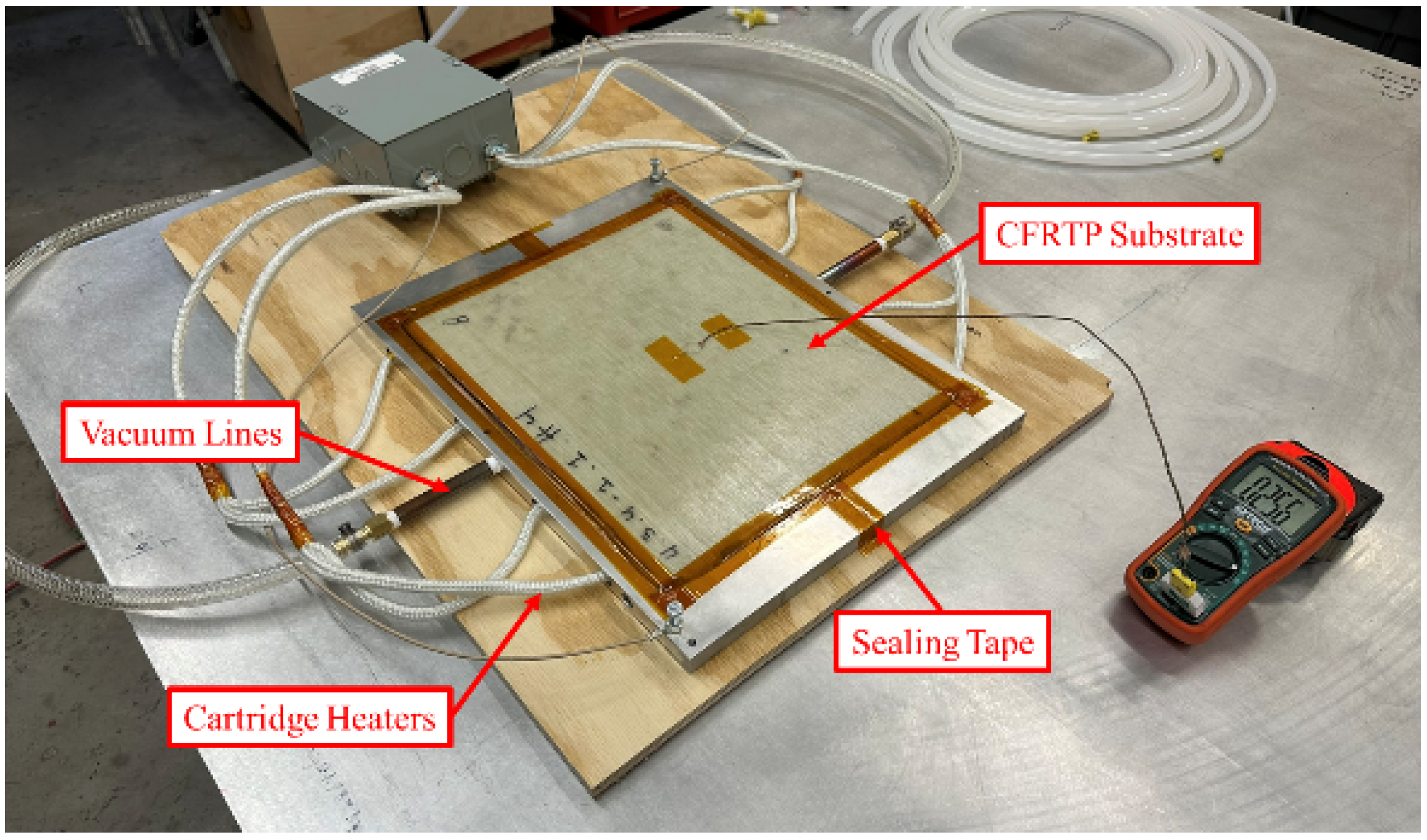
In order to achieve the desired substrate temperatures, a custom heating system was developed. This system was comprised of two thick aluminum plates with embedded cartridge heaters. These plates were designed to be configured as a single heating surface by aligning them beside one another and sealing them with high-temperature polyimide tape. Each plate also included vacuum pass-through ports to allow the CFRTP substrate to be held to the heating surface using vacuum pressure. A fine, stainless-steel mesh was used as a vacuum flow medium to provide even pressure across the entire substrate area. Plates were directly instrumented with thermocouples to track their temperature. An image of this plate heater being used to simultaneously heat and restrain a CFRTP substrate via vacuum is shown in
Figure 1. This plate heating system was able to reach temperatures of approximately 200 °C, as well as hold a target temperature at the top surface of the substrate within a margin of ±3 °C. To limit heat loss to the print bed, thin plywood spacers were used underneath the heating plates.
2.3. Specimen Manufacturing
Once the CFRTP panels and heating platens were prepared, the test specimens were manufactured. First, the heating platen setup was installed on the print bed, and the CFRTP panel was aligned and taped to the platen top surface with stainless-steel mesh flow media between the platen and CFRTP. The entire perimeter of the panel was firmly taped to create a vacuum-tight seal. Next, two thermocouples were taped to the top of each CFRTP panel, near the edges and away from the overprinting region with a third thermocouple attached directly to the heating platen. Data from these thermocouples were used to inform the control system for the heating elements. Target temperatures
were chosen as 200 °C and 220 °C, while
temperatures were chosen as 80 °C and 130 °C. These numbers were based on preliminary material trials as a balance between melt-flow, bonding, and the ability of the print-bead to support itself and subsequent layers. After verifying that the heaters and thermocouples were functioning, heating was started. This step took between 20 and 40 min, depending on the target substrate temperature (
). Once
was reached, the process was held for a brief period to ensure stability of the substrate temperature before overprinting began. Then, the 3D printing cycle was started, during which the machine overprinted a single layer of AM material at the specified melt temperature (
) onto the heated CFRTP substrate. During this period, the substrate temperature was monitored to ensure that it remained within approximately ±3 °C of
. After the overprinting was completed, the new hybrid panel was allowed to cool to room temperature in place. Finally, the cooled hybrid panels were machined into specimens conforming to ASTM D3846 [
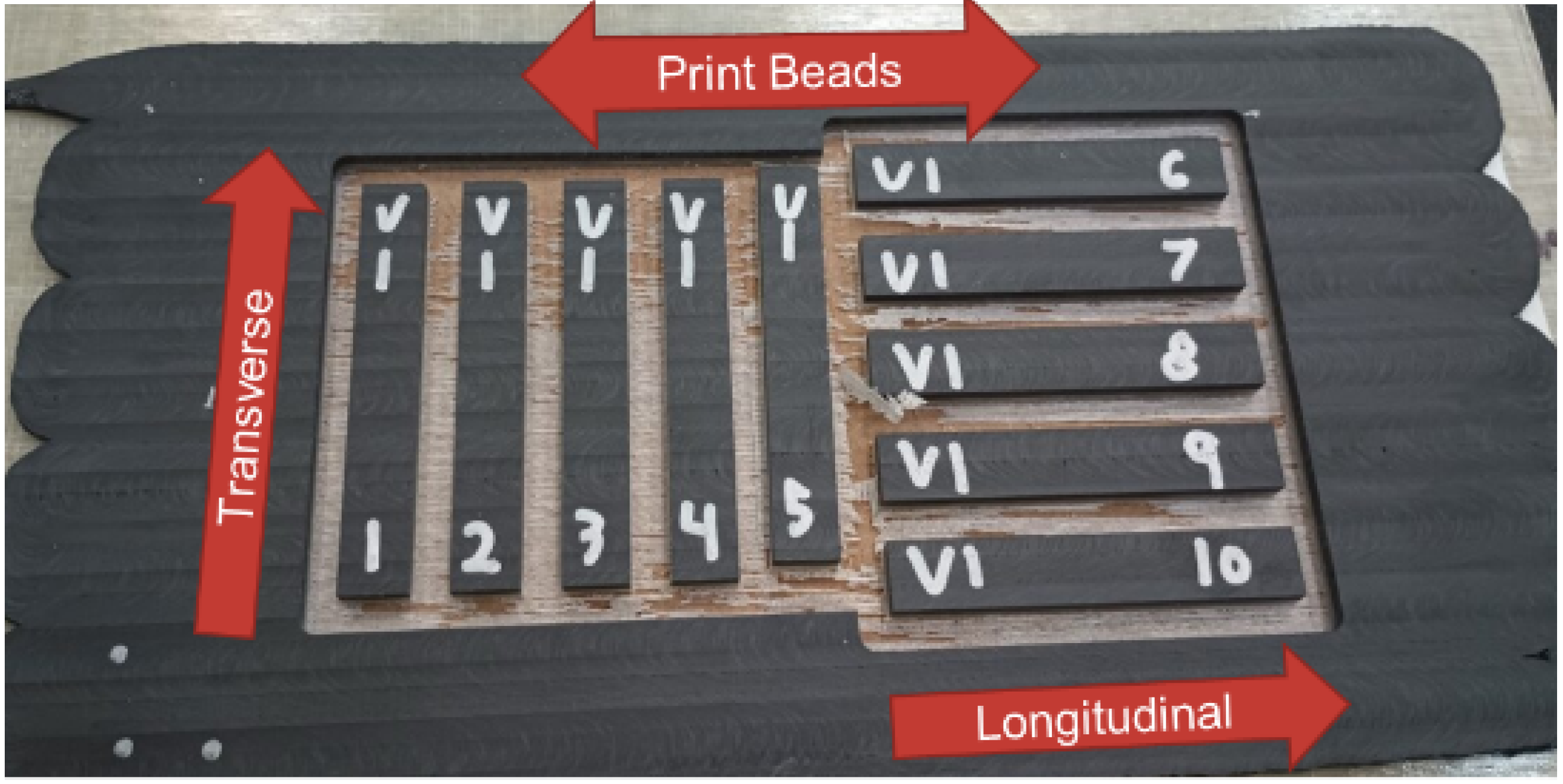
37]. Each hybrid panel produced a total of ten specimen in two groups of five, which were oriented at
to one another to characterize the orthotropy of the overprinting process. This is shown in
Figure 2, where there are five longitudinal coupons oriented parallel to the 3D printed beads and five transverse coupons oriented perpendicular to the beads. Note that the numbering on the specimens in the figure has no meaning other than for specimen tracking.
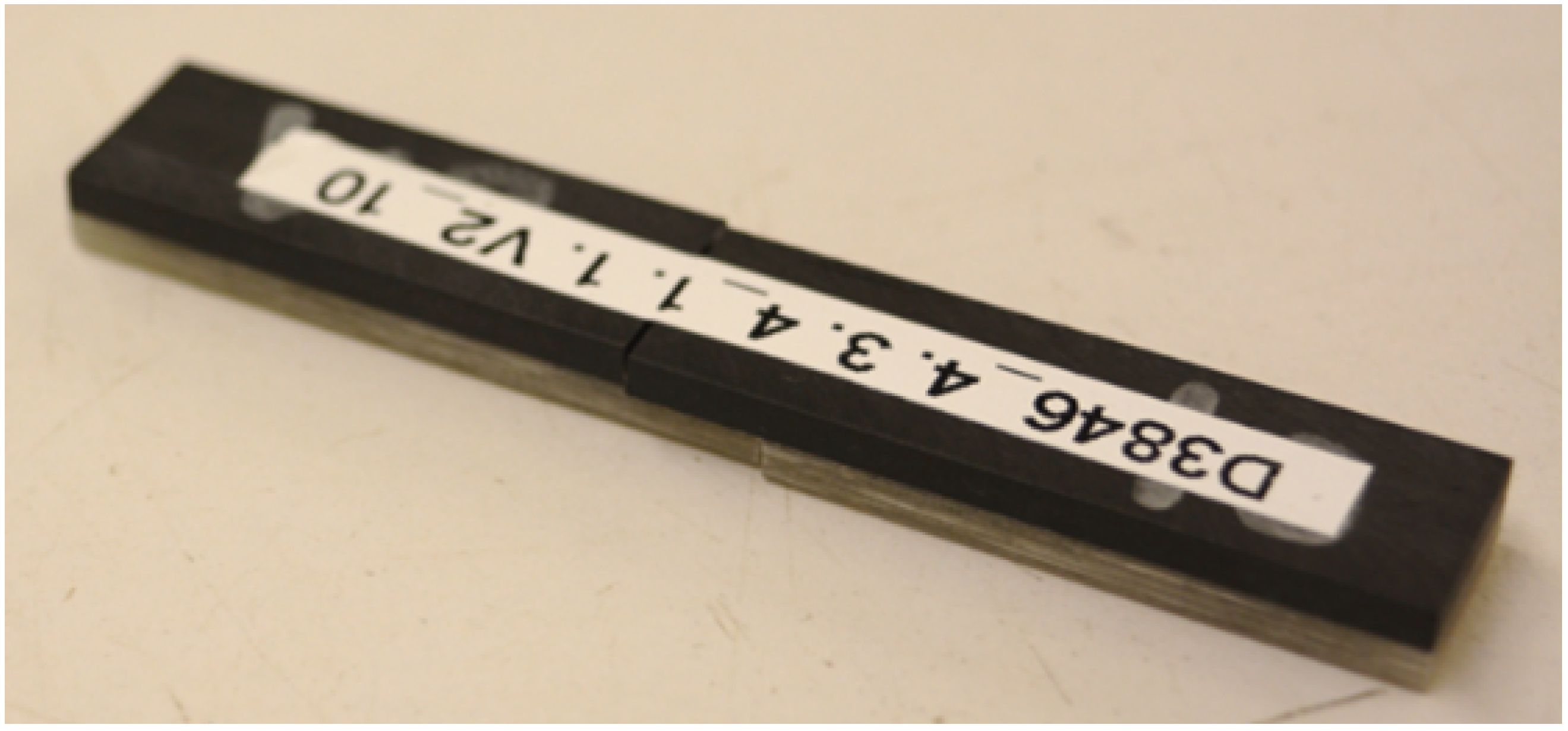
ASTM D3846 requires a specimen be prepared by cutting a groove on either side of the target region in order to force failure to occur along a chosen shear plane. After machining the groove, the specimen is installed in a fixture to eliminate non-axial deflection. Next, an axial compressive force is applied to the specimen. This standard has the advantage of measuring shear strength directly, since the geometry forces the load to be carried in shear across the target surface (red in
Figure 3). A photo of a broken test specimen is shown in
Figure 4. This experiment allows for direct testing and simple calculation of the shear strength of the bond between AM and CFRTP material.
2.4. Discussion of Results
Table 2 presents the results of the ASTM D3846 in-plane shear strength testing. Results from longitudinal and transverse coupons, as defined in
Figure 2, are presented independently to capture the orthotropy of this process.
A two-way ANOVA with a confidence interval of 95% was performed on these results to analyze the effects of the process temperatures and their interaction on the shear strength, and the results are presented in
Table 3.
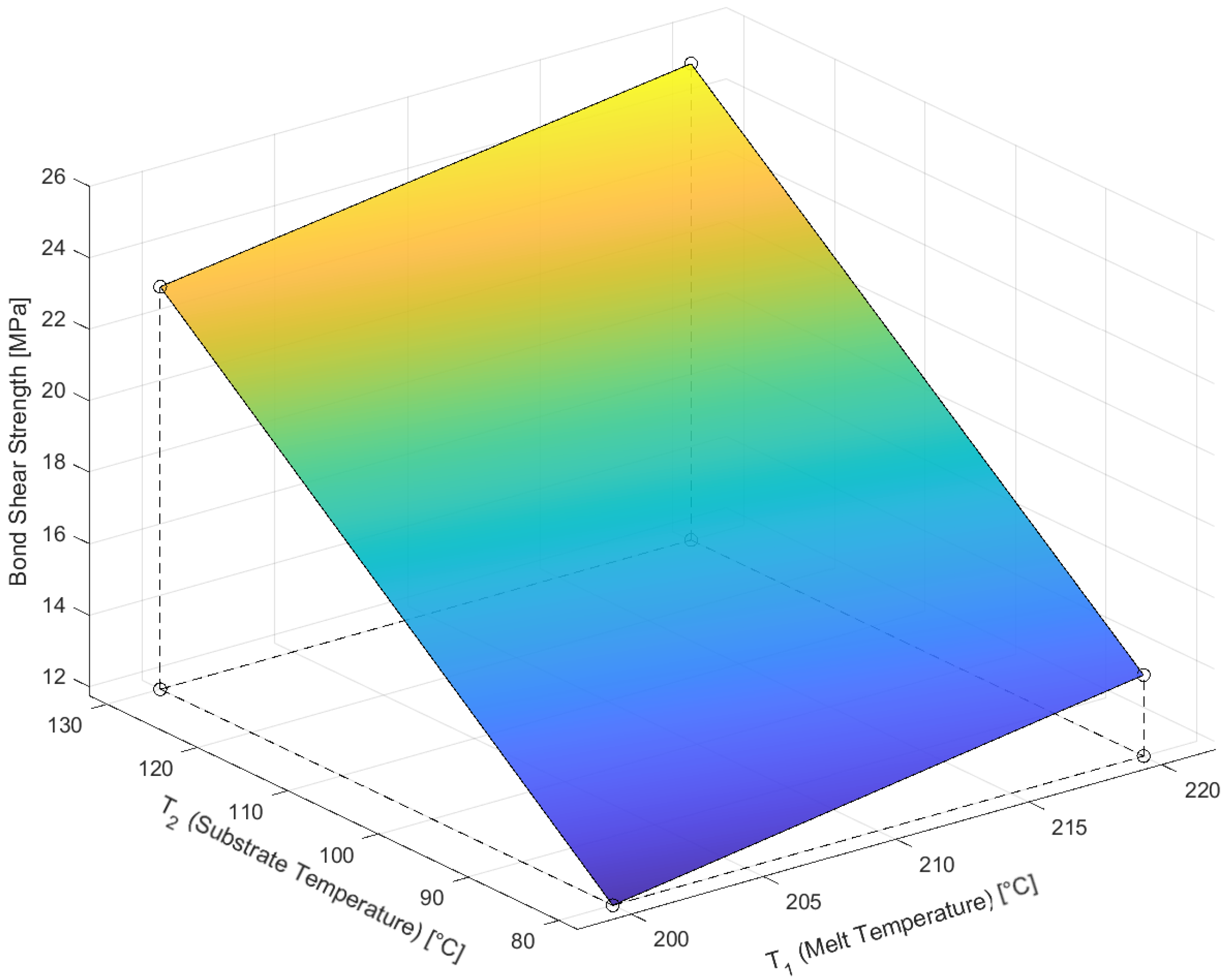
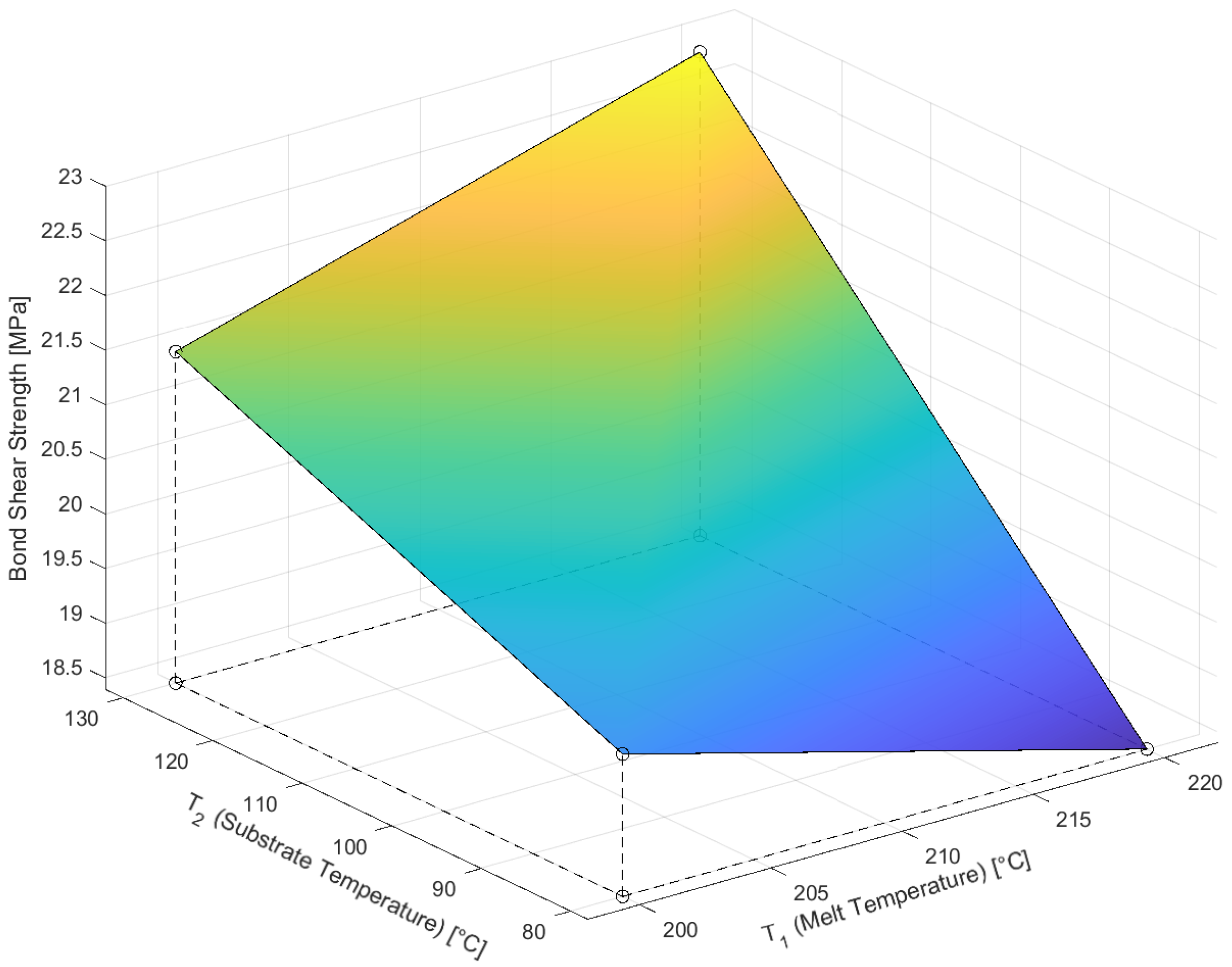
Surface plots of the results are given in
Figure 5 and
Figure 6, with the horizontal axes representing the process temperatures
and
and the vertical axis and color representing the measured shear strength.
The data presented in
Table 2 and
Figure 5 and
Figure 6 all indicate similar behavior: the shear strength of the overprinted bond is primarily controlled by higher substrate (
) temperatures and less by the melt temperature (
) of the AM material. The ANOVA presented in
Table 3 further reinforces this by demonstrating that the only statistically significant source of variation in this experiment was the substrate temperature, as it affects the longitudinal shear strength. All other sources of variation (
, the interaction of
and
, and
affecting the transverse strength) were all found to be statistically insignificant. Since the transverse shear strength is not clearly driven by either the substrate or melt temperatures, it is likely more significantly driven by other factors. It is possible that the shear strength in the direction of layer deposition is controlled more by mechanical factors, such as voids left by the print process parallel to the beads, or the orthotropy of the short fiber reinforcement within the AM material. Similar investigations have shown significant impact of bonding temperatures, layer thickness, and surface defects on bond strength [
38,
39], but it is unclear whether this could be influencing this observed directionality. Further experimentation is required to explain this result.
One of the major shortcomings of the results presented here is the narrow range of processing temperatures tested. While this experimentation has shown high significance for the substrate temperature and low significance for the melt temperature, this response may be non-linear across a wider range of processing temperatures. For example, it might be found that at much lower substrate temperatures, extruder temperature may become the dominant factor, as it contributes more substantially to the average temperature of the joint interface.
To widen the breadth of this testing and improve the understanding of the overprinting process, it is proposed that an expanded experiment should be performed to cover a wider range of temperatures with more sampling points. This will aid in developing future in situ applications for reinforcing LAAM parts by providing the data required to implement overprinting at a wider range of temperatures with more sampling points spanning above and below the material’s glass transition temperature (). In conclusion, it is clear that the temperature of both extrudate and substrate are important factors in the quality of the overprinted bond. The tested temperature window, however, is quite narrow, so further data is required to determine optimum values and relationships.
3. Strength Improvement in Reinforced Beams
One possible avenue of improvement in LAAM structures is in supporting and reinforcing regions that withstand bending loads. This series of experiments was performed to demonstrate the ability of the HAAM process to improve the strength of additively manufactured beam structures. While it is unlikely that simply constructing beams in this way would be an efficient manufacturing method, this is used as a test-bed for similar structural members that may be embedded into large-scale structural prints. Additionally, this experiment can provide some insight into the effect of varying raster patterns on the strength of the final part.
While factors affecting quality of bonds between LAAM and CFRTP parts have been investigated as part of the bonding experiment above, the final hybrid parts themselves may still be subject to deformation and distortion due to internal stresses created during part manufacturing and cooling. For this reason, the significant factors identified for this experiment were the pattern in which AM material is laid onto the CFRTP substrate and the total thickness of the substrate. Level selection was made based on typical raster patterns for LAAM parts of simple geometry. These levels are:
Linear Raster (A)
Linear Raster (B)
Concentric (C)
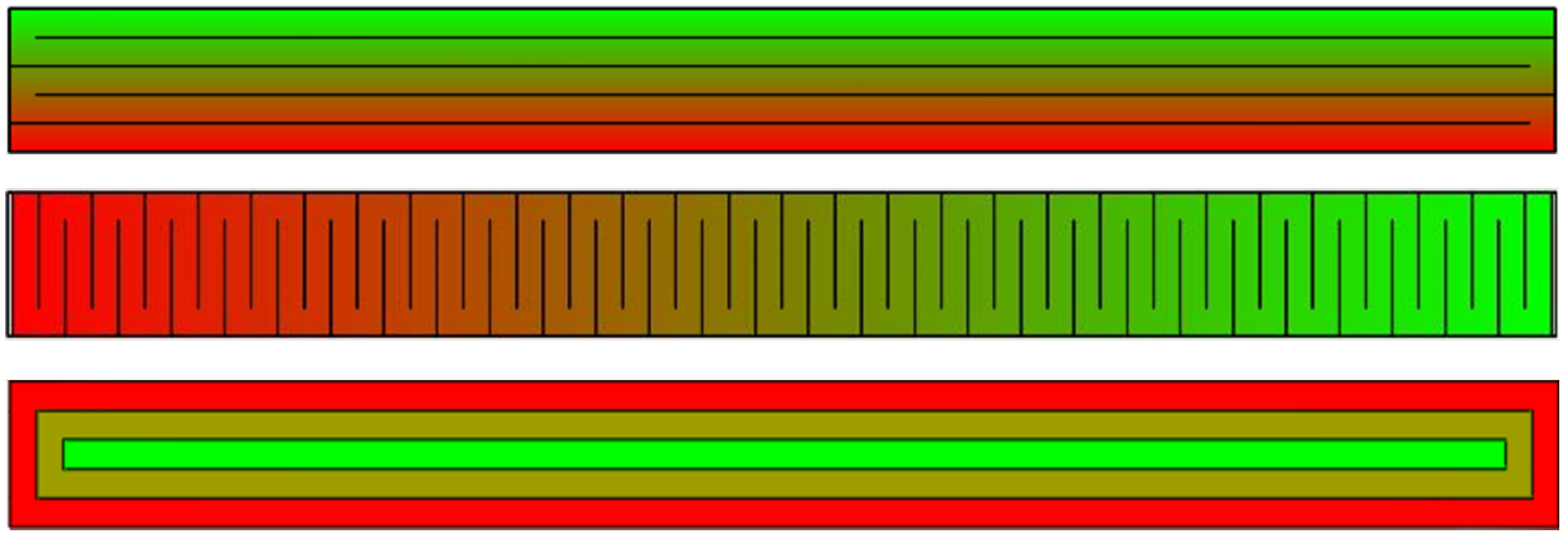
These raster patterns can be seen in
Figure 7, where the lines represent print beads and the print proceeds from red to green.
In addition, two levels of substrate thickness were used. The control was the “I” case, which had no substrate (i.e., 0 mm thickness). The next case had a substrate thickness of 3.2 mm and was labeled as the “II” case. The selected factors and levels led to a total of six combinations for testing. These unique combinations are detailed in
Table 4.
Beams of the listed configurations were manufactured to be tested in bending. The beams were 76.2 × 76.2 × 889 mm and were printed using a Cincinnati BAAM printer using the same material system as in the previous experiment. and temperatures were chosen as 220 °C and 130 °C based on the results of the previous experiment. CFRTP substrate panels were manufactured using standard thermoforming equipment. These were manufactured as slightly oversized to accommodate alignment of the printing nozzle to the substrate. Using the substrate heater from the previous experiment, the substrate was preheated and held at the designated temperature for the duration of the print. After printing beams with the various raster patterns discussed, they were tested in four-point bending to compare the strength of each configuration.
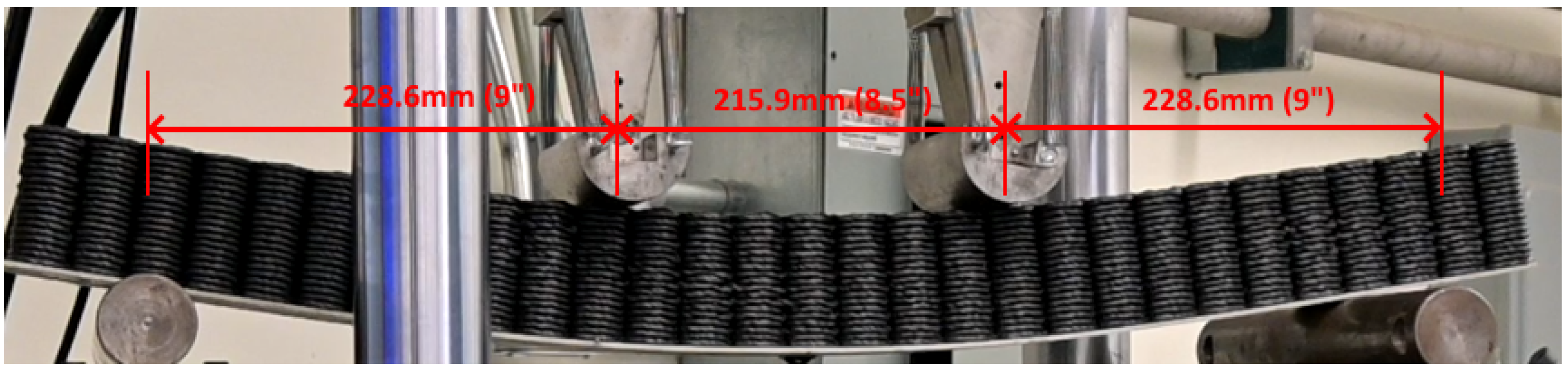
After manufacturing and measuring for distortion, each of the specimens was tested in 4-point bending to failure, as shown in
Figure 8. Deflection was measured using a string-potentiometer affixed to the midpoint of the beam, and applied force was measured using the load-cell integrated into the Instron test frame.
Discussion of Results
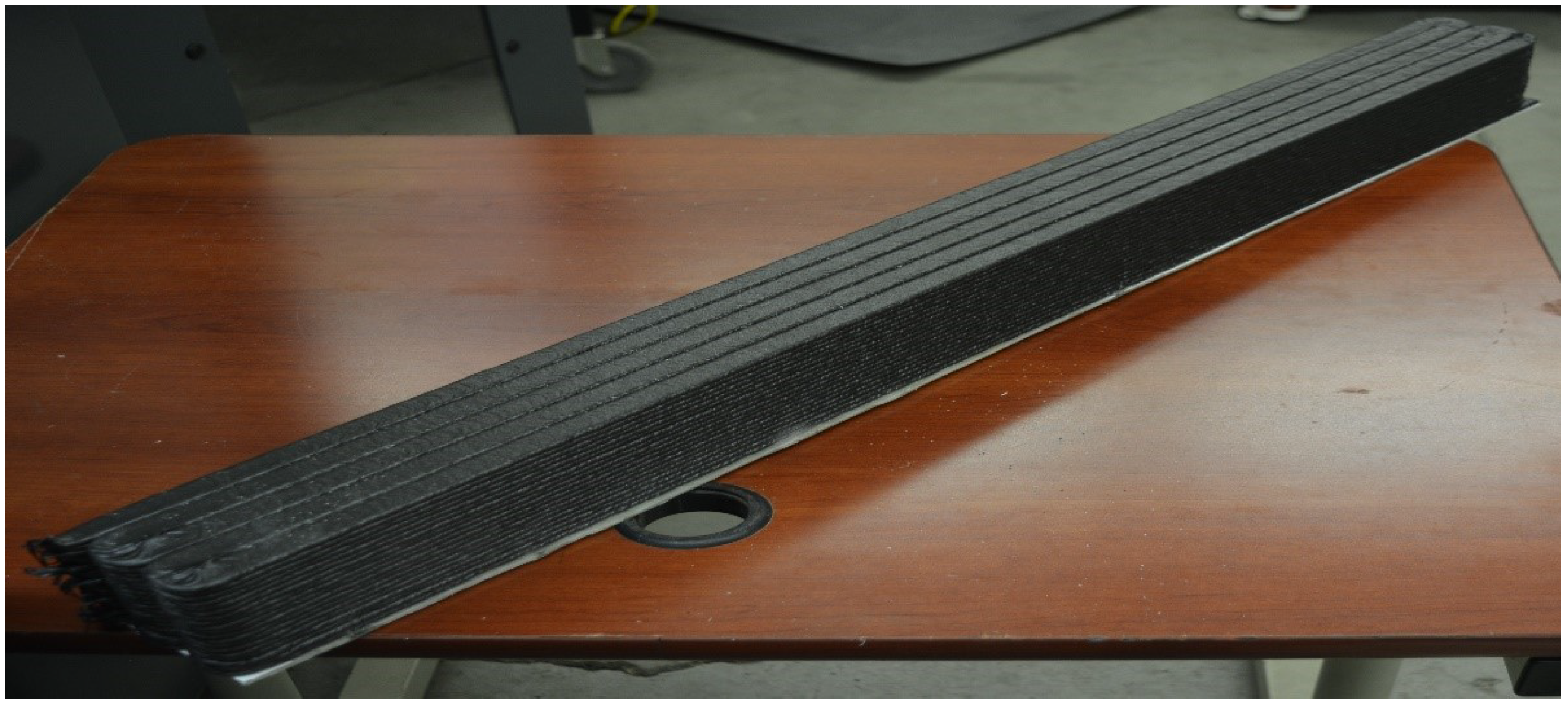
Each of the six specimens were manufactured successfully.
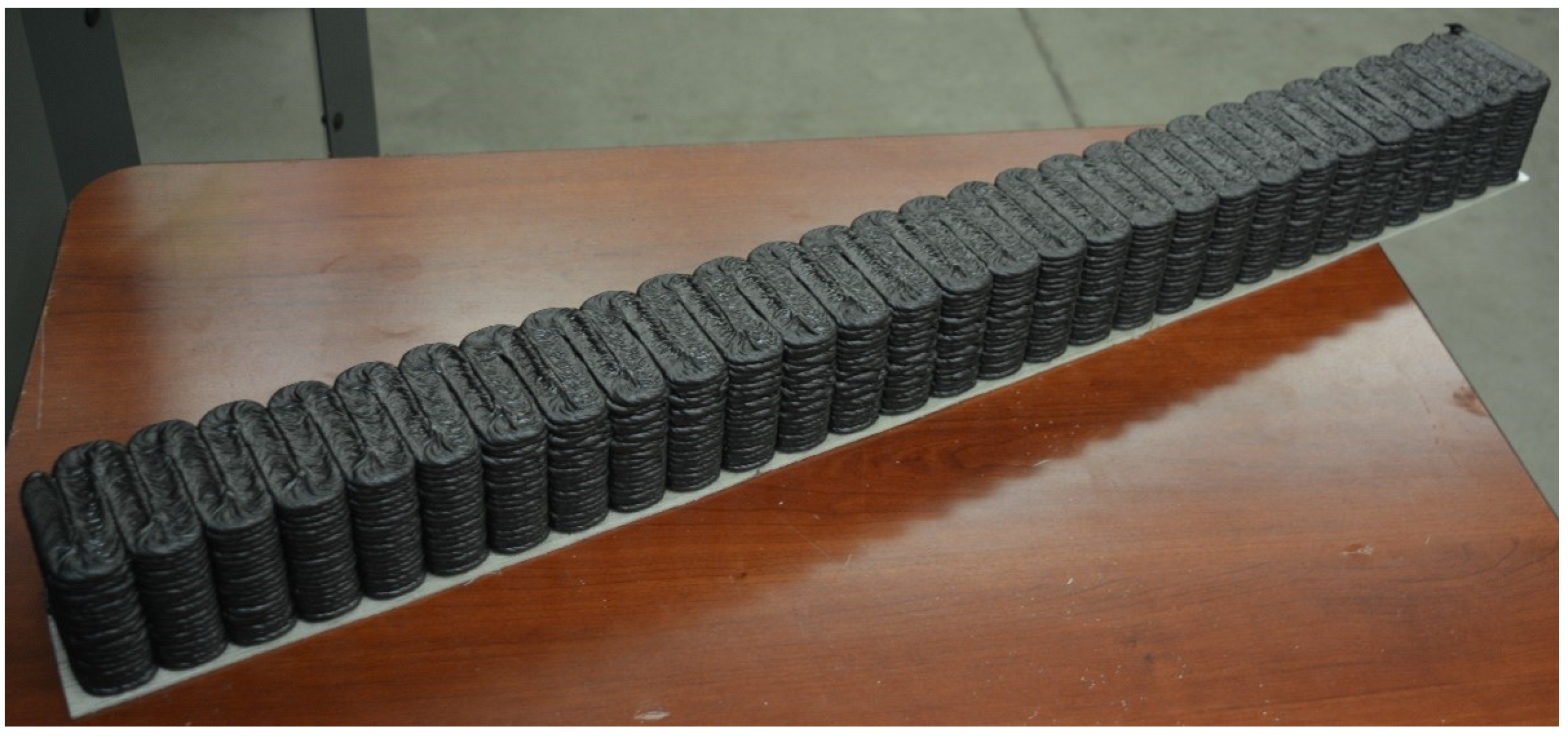
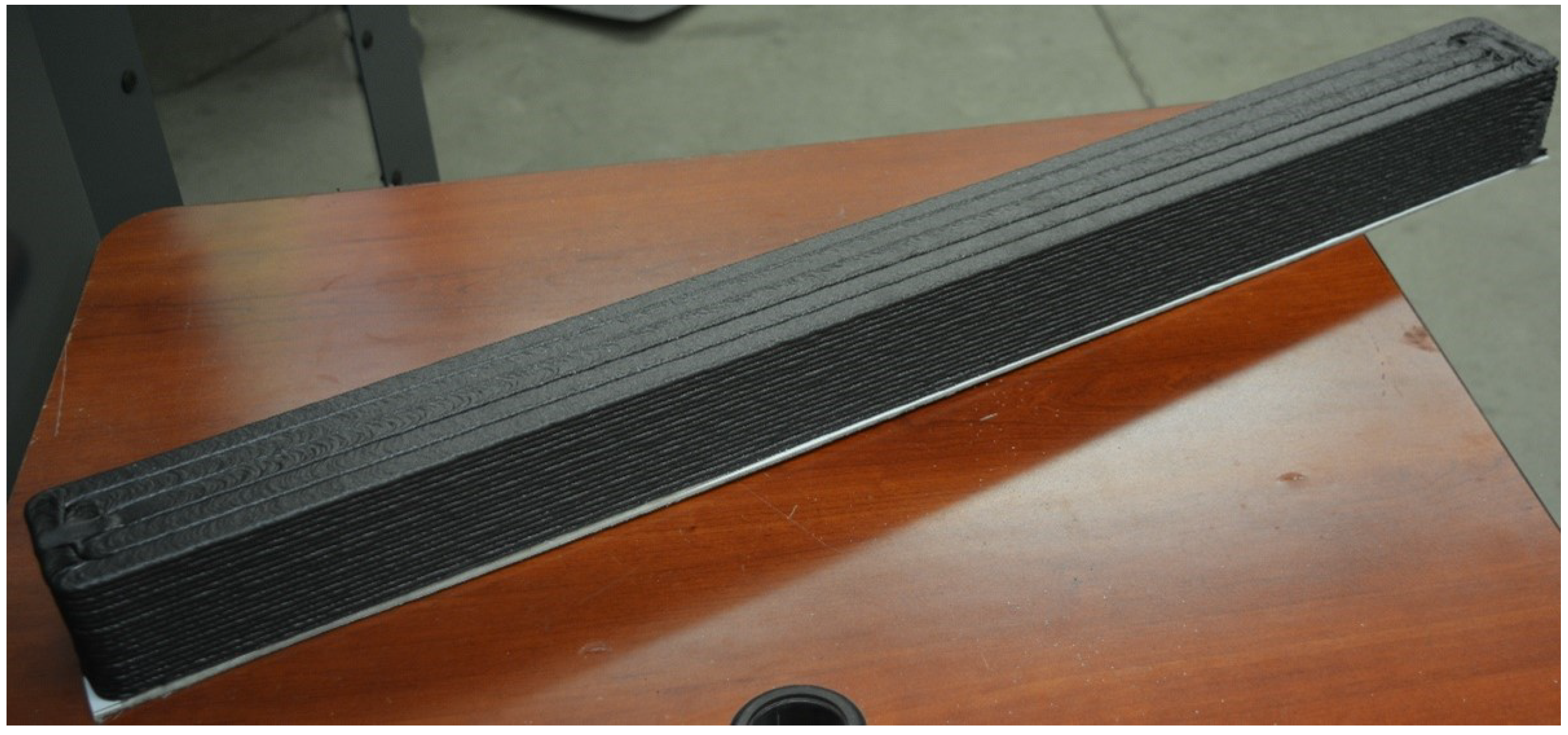
Figure 9,
Figure 10 and
Figure 11 show the completed hybrid specimens with
,
, and concentric raster patterns, respectively.
Table 5 compares the maximum flexural moment achieved by each raster pattern for neat LAAM and hybrid beams. In all cases, hybridization of the LAAM beam with a CFRTP substrate resulted in significant increases in flexural strength. This was most pronounced for the
raster pattern specimens, which showed a sevenfold increase in strength over their non-reinforced counterparts, demonstrating both the value of the reinforcement and the weakness of this raster-pattern in the unreinforced configuration. This was likely due to the
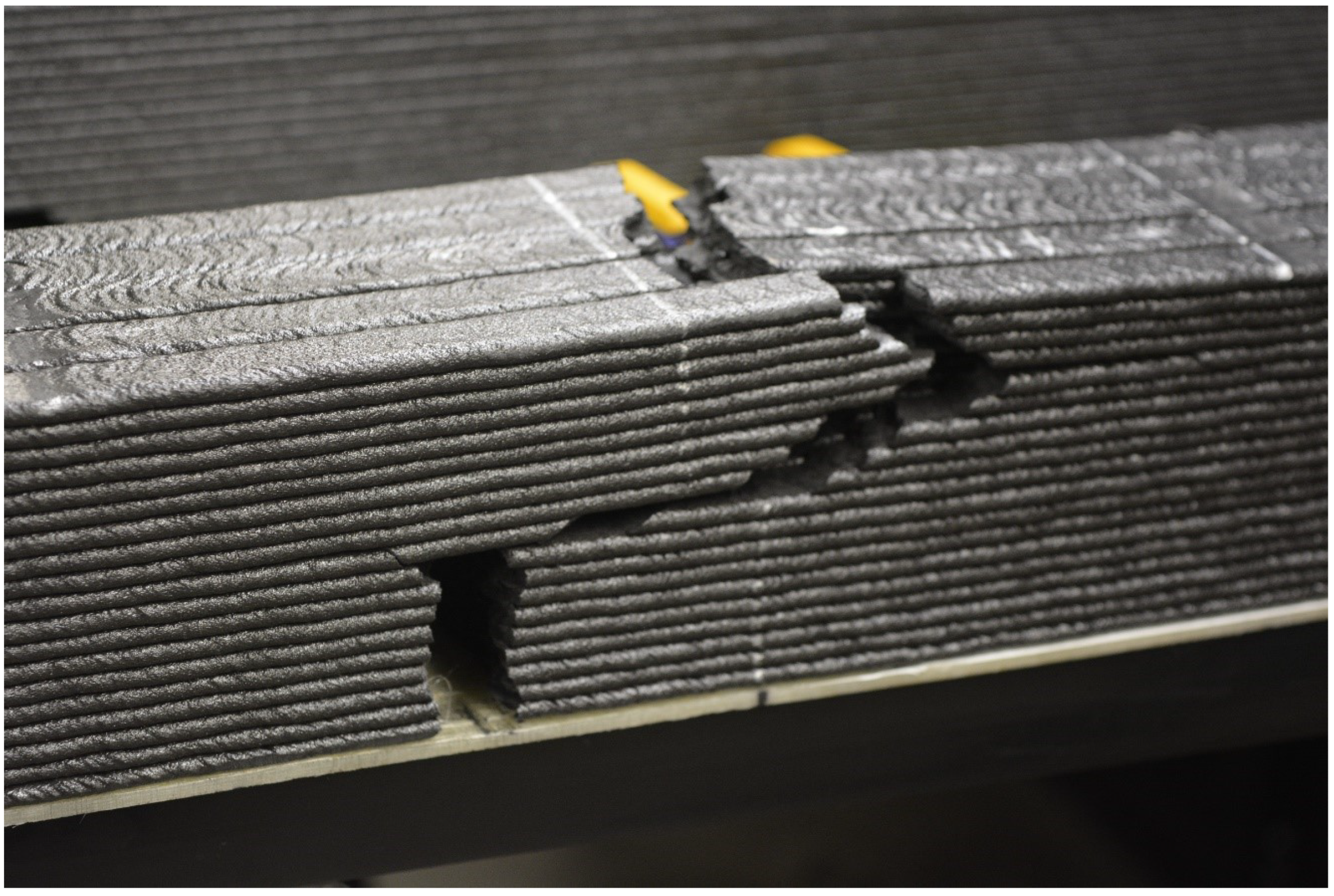
raster pattern’s reliance on the bead-to-bead bond for strength in the bending direction. With CFRTP as tension reinforcement, the AM material in the hybrid beam is subjected to a compression-dominated loading, where those weak bonds are less critical, thus facilitating the significant increase in measured strength. It should also be noted that, for each of the hybrid beam specimens, LAAM shear failure appeared to occur prior to LAAM-CFRTP debonding. The point of failure for the
hybrid specimen is shown in
Figure 12. This failure mode was typical of all hybrid beams and suggests failure by shear in the AM to be the dominant mode in these hybrid beams. Additionally, while the
reinforced specimens were not as strong as the others, they were nearly as strong as the unreinforced
specimens, indicating that CFRTP reinforcement can bring weaker raster selections to near parity with more optimized ones for some situations.
These results demonstrate clearly that the addition of CFRTP substrates can greatly improve the flexural strength of a member. This indicates that this process may be used in reinforcing bending members within a LAAM structure, which can pave the way toward additional process improvements and potential lightweighting. It has further been demonstrated that this reinforcement can mitigate the strength lost by a suboptimal raster angle, which may allow for greater flexibility in optimizing print orientation.
4. Beam Lightweighting
The next investigation was intended to verify that the HAAM process can produce parts with significantly reduced weight while maintaining or exceeding the strength of neat LAAM parts. This will inform future testing efforts and help steer more optimal designs.
In this relatively simple test, the single parameter is the removal of material from the “bulk” specimens tested in the previous case study to improve the specific strength.
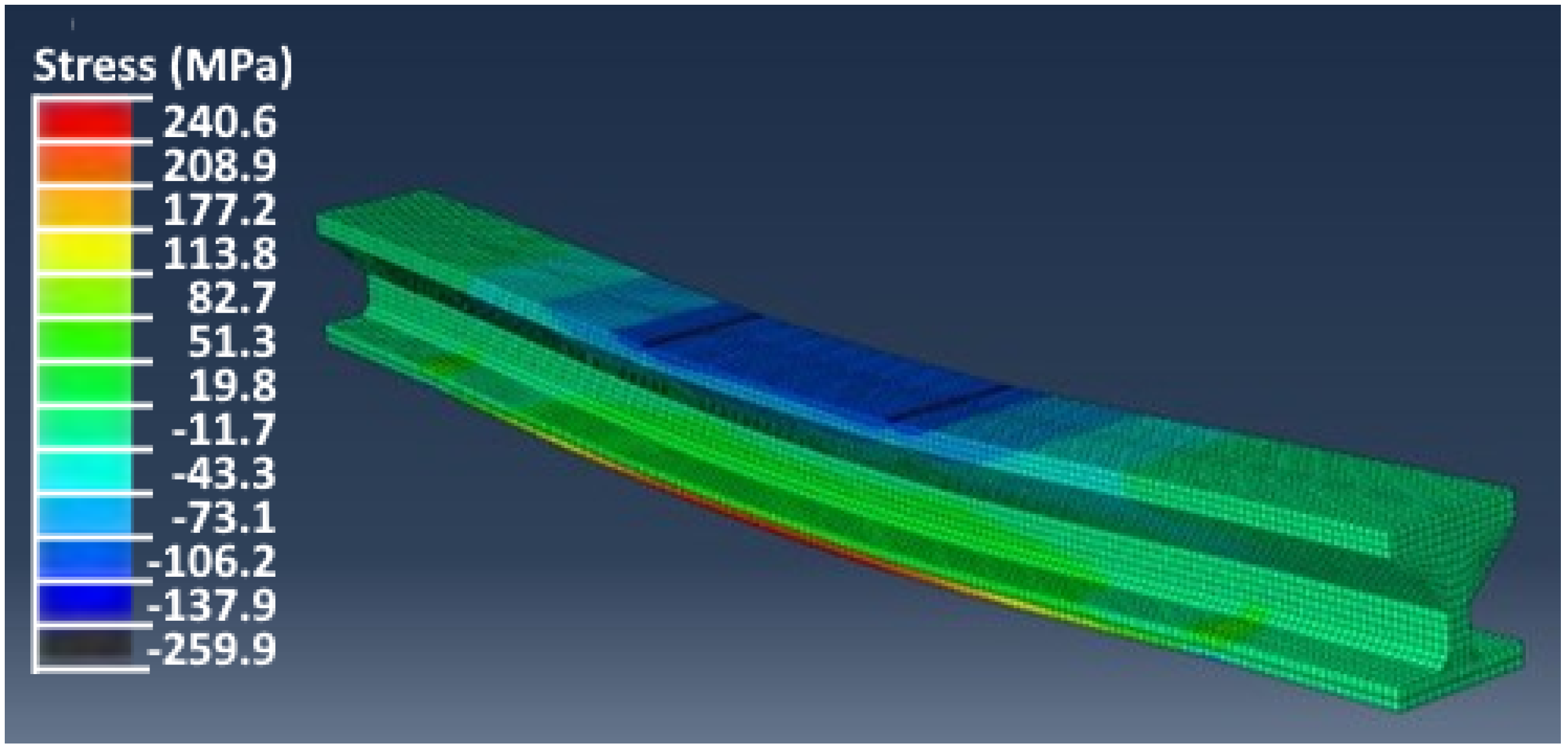
Preliminary FEA analyses were performed to determine the weight reductions possible to maintain the ultimate loads for a neat LAAM beam. The results of these analyses suggested that significant LAAM weight reductions are theoretically possible (greater than 60%). However, to ensure manufacturability, a simplified profile was designed, which balances weight-reduction and printability. The resulting profile is provided in
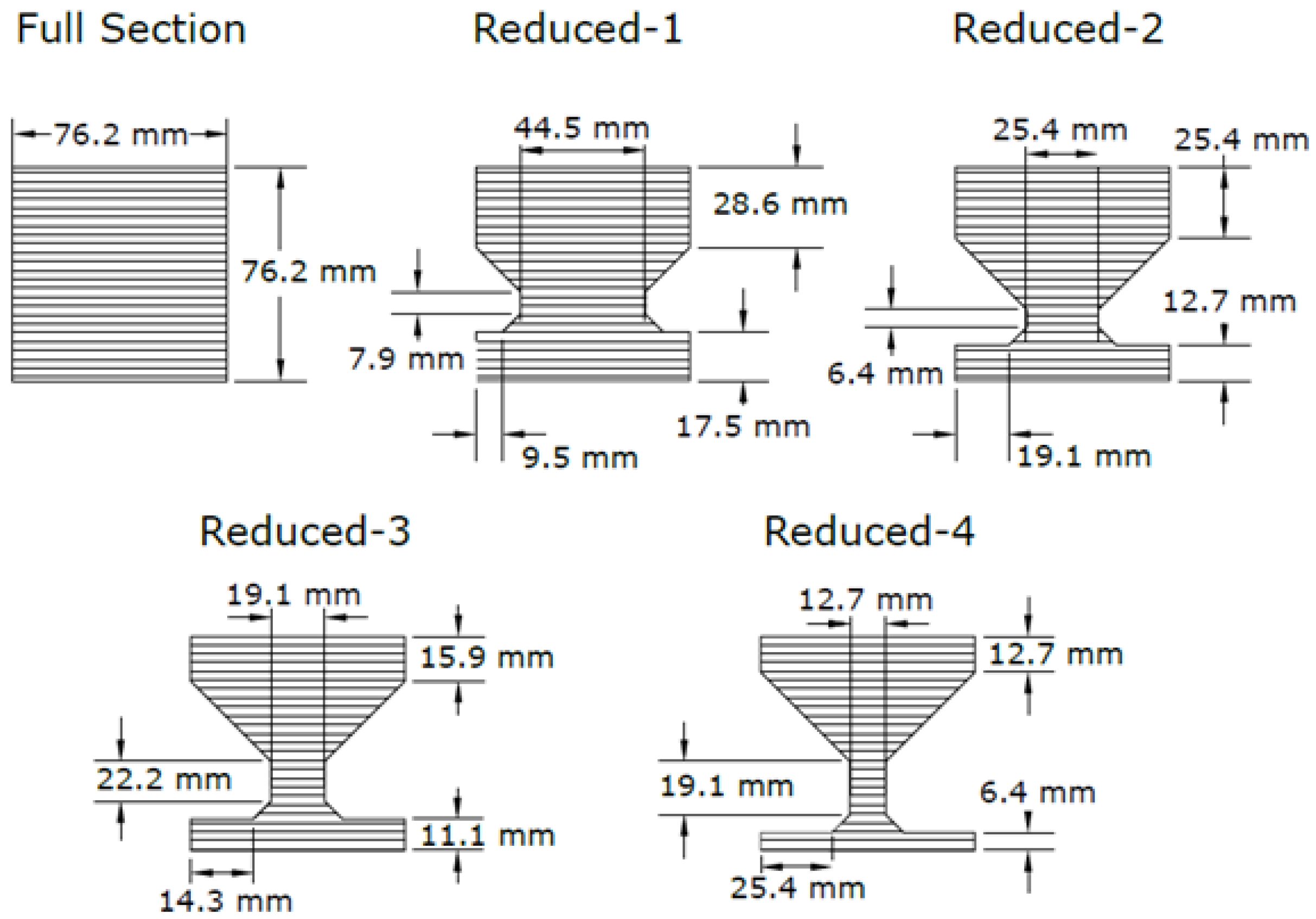
Figure 13. This profile provides a weight reduction of 44%. Based on this profile, additional beam profiles were designed to incorporate varying amounts of the feasible weight reduction. These beams, designated as ‘full section’, ‘reduced-1’, ‘reduced-2’, ‘reduced-3’, and ‘reduced-4’ incorporate various amounts of weight reduction, (0%, 11%, 22%, 33%, and 44% reduction, respectively). These were each printed and assessed experimentally. The dimensions of all profiles are provided in
Figure 14. These specimens were manufactured and tested in the same manner as those in the previous case study.
Discussion of Results
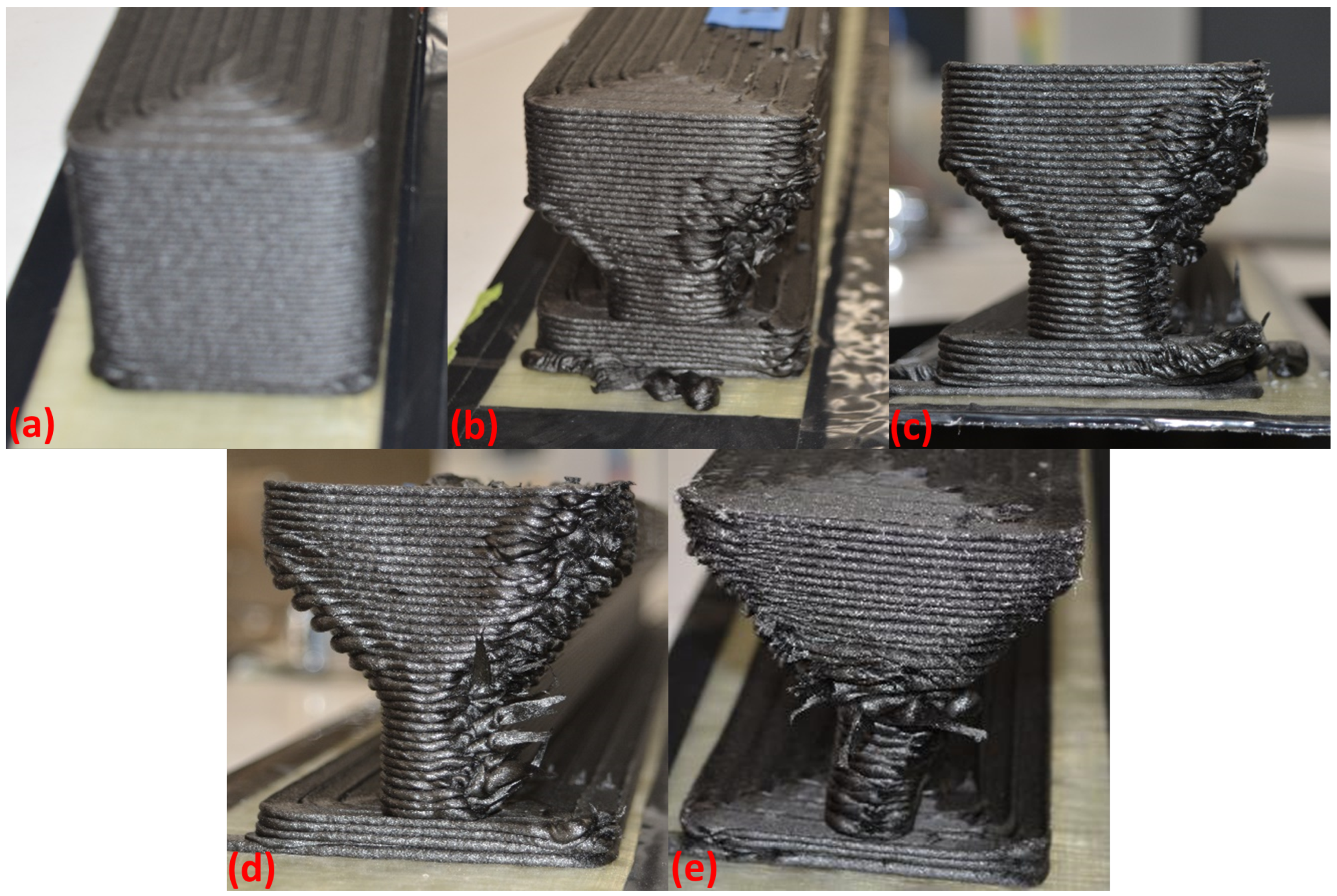
Each of the five specimens were manufactured successfully.
Figure 15 shows the completed specimens. After manufacturing, each of the specimens was tested in 4-point bending to failure as previously described.
Table 6 compares the maximum flexural moment achieved by each beam configuration.
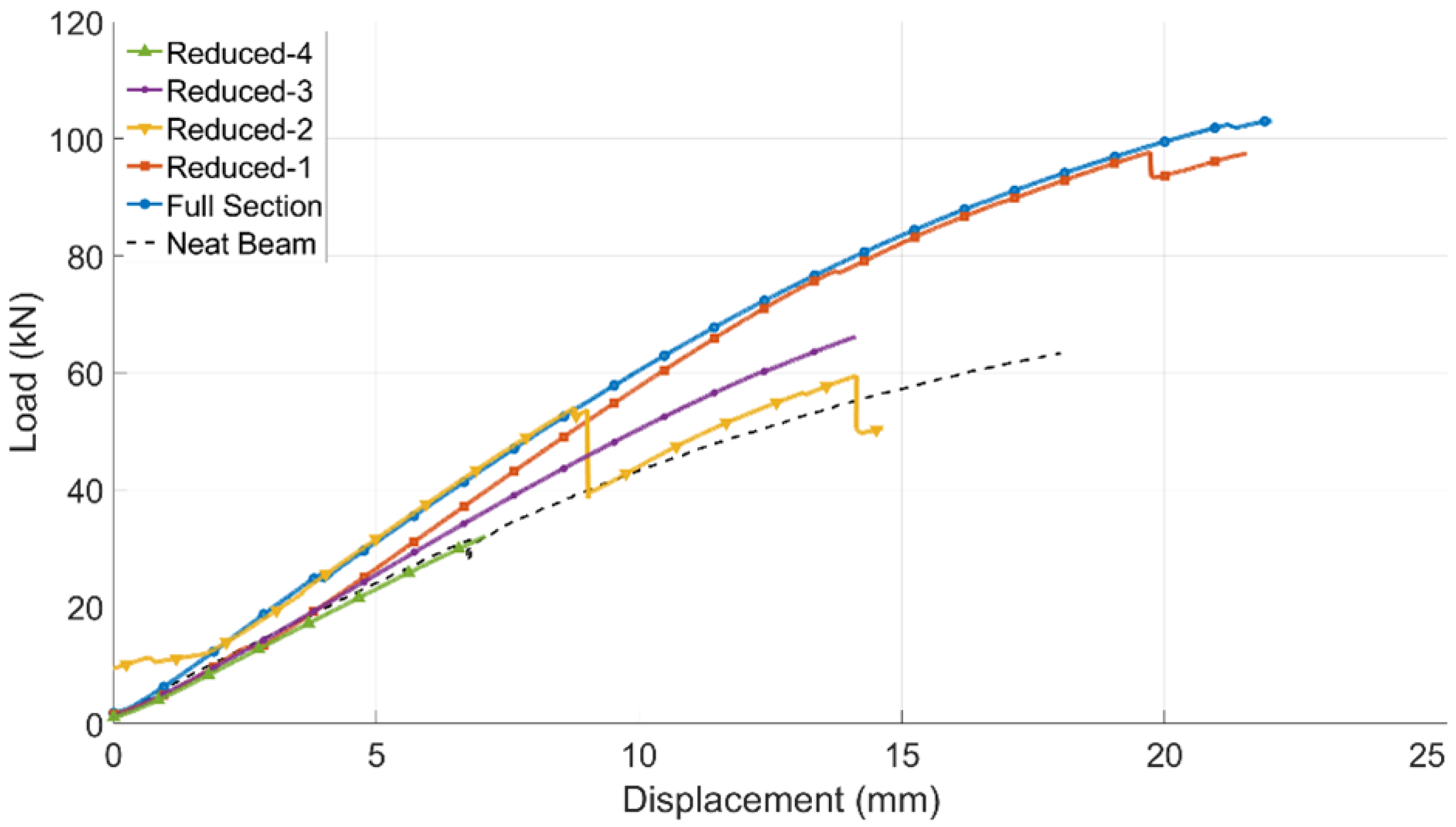
Figure 16 compares the load-deflection behavior of neat LAAM beams with hybrid beams with the various weight-reduced cross-sections. The data for the neat beams were taken from the previous case study, using the specimen with the concentric raster pattern, as that most closely matches the patterns used here. The moment capacities of these beams change for each configuration, so we normalize them against specimen mass to obtain the non-standard metric ‘specific moment capacity’, which is useful for comparison between specimens. In most cases, the specific strength of the reduced cross-section beams was significantly higher than that of the neat beam. Of note are the reduced-2 and reduced-4 beams, which seem to break from this trend. While it is likely that there were some defects in the print or in the AM-to-CFRTP bond; these outliers highlight the necessity of testing additional specimens before drawing quantitative conclusions. Despite their flaws, these results demonstrate significant potential for CFRTP reinforcement to improve AM with respect to lightweight performance.
The flexural strength results indicate that, even with a significant amount of AM material removed, the addition of CFRTP reinforcement can often allow for the retention of strength equivalent to the full-sized beam when constructed using AM alone. Particularly noteworthy is reduced-3, which carried 60% more load than the neat beam, using 33% less material. This indicates that the HAAM process has significant potential to lighten the weight of some LAAM structural components.
5. Print Stability with Unsupported Section
The purpose of this experiment was to inform knowledge of the ability of CFRTP substrates to support overlying LAAM material being printed over it despite being unsupported from beneath. This proof of concept will help determine whether an appropriate unsupported length of CFRP substrate can be used in future designs while avoiding collapse due to self-weight under overlying LAAM and heat softening.
An experiment was devised whereby a beam, like those in previous experiments, was printed on a substrate with an unsupported section. It was chosen to vary the unsupported span length as a single factor for this experiment. The four levels of this were selected to achieve a span-to-depth ratio of 1.0, 2.5, 5.0, and 7.5. The corresponding unsupported lengths were 76.2, 190.5, 381, and 571.5 mm, respectively.
5.1. Experimental Setup
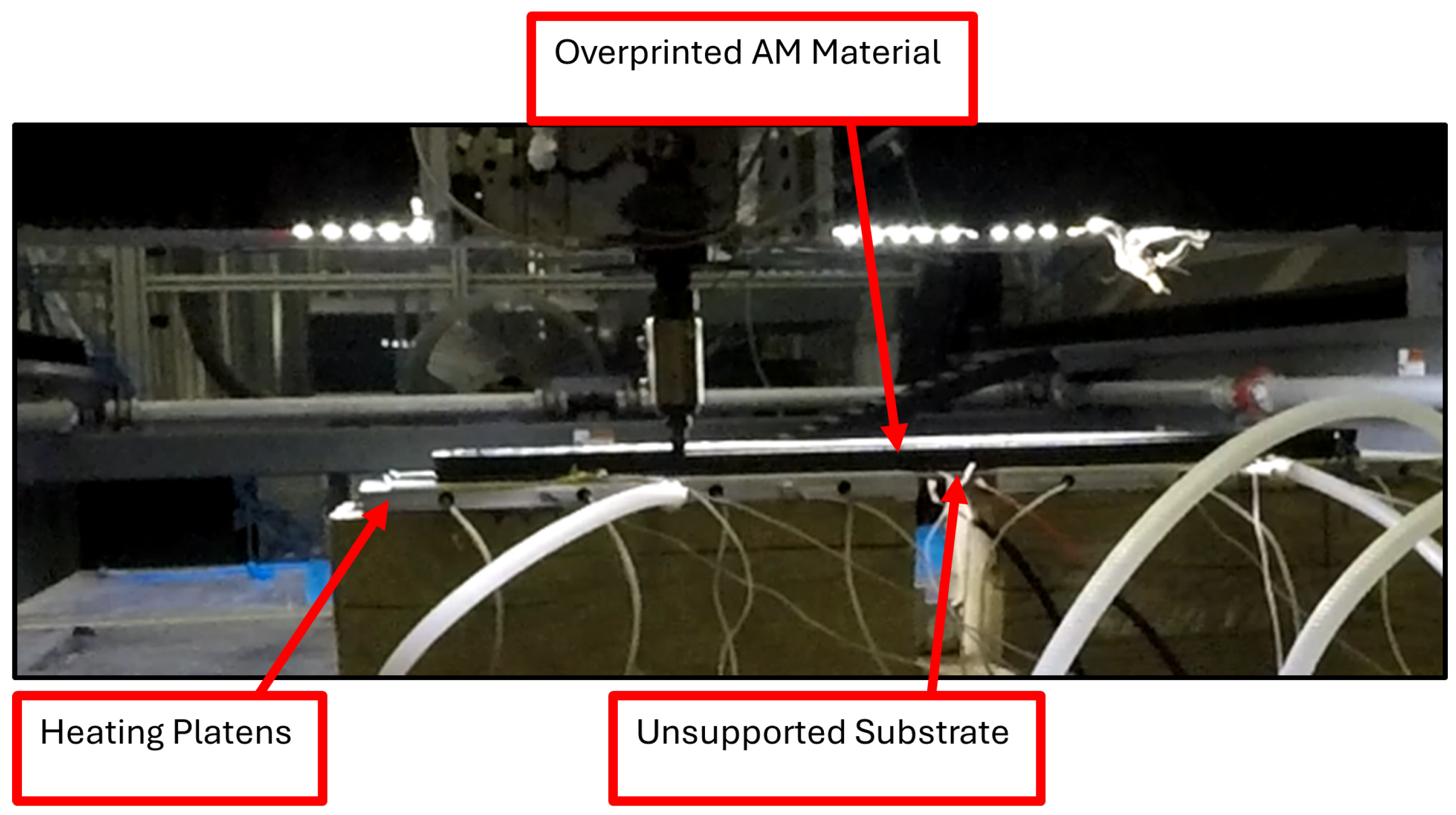
The heating platens were arranged so that the gap between them created the required unsupported span, allowing them to serve as both supports and vacuum hold-down points for the CFRTP substrate. Additionally, adhesive-backed strip heaters were used to heat the middle unsupported sections of each substrate panel. All heating devices were configured to seek the same CFRTP top surface temperature (
), as determined for previous case studies. Temperatures were tracked using thermocouples placed at strategic locations on the CFRTP substrate and heated platens. The deflection of the CFRTP at the midspan of the unsupported section was tracked using a string potentiometer.
Figure 17 shows a print in progress, and
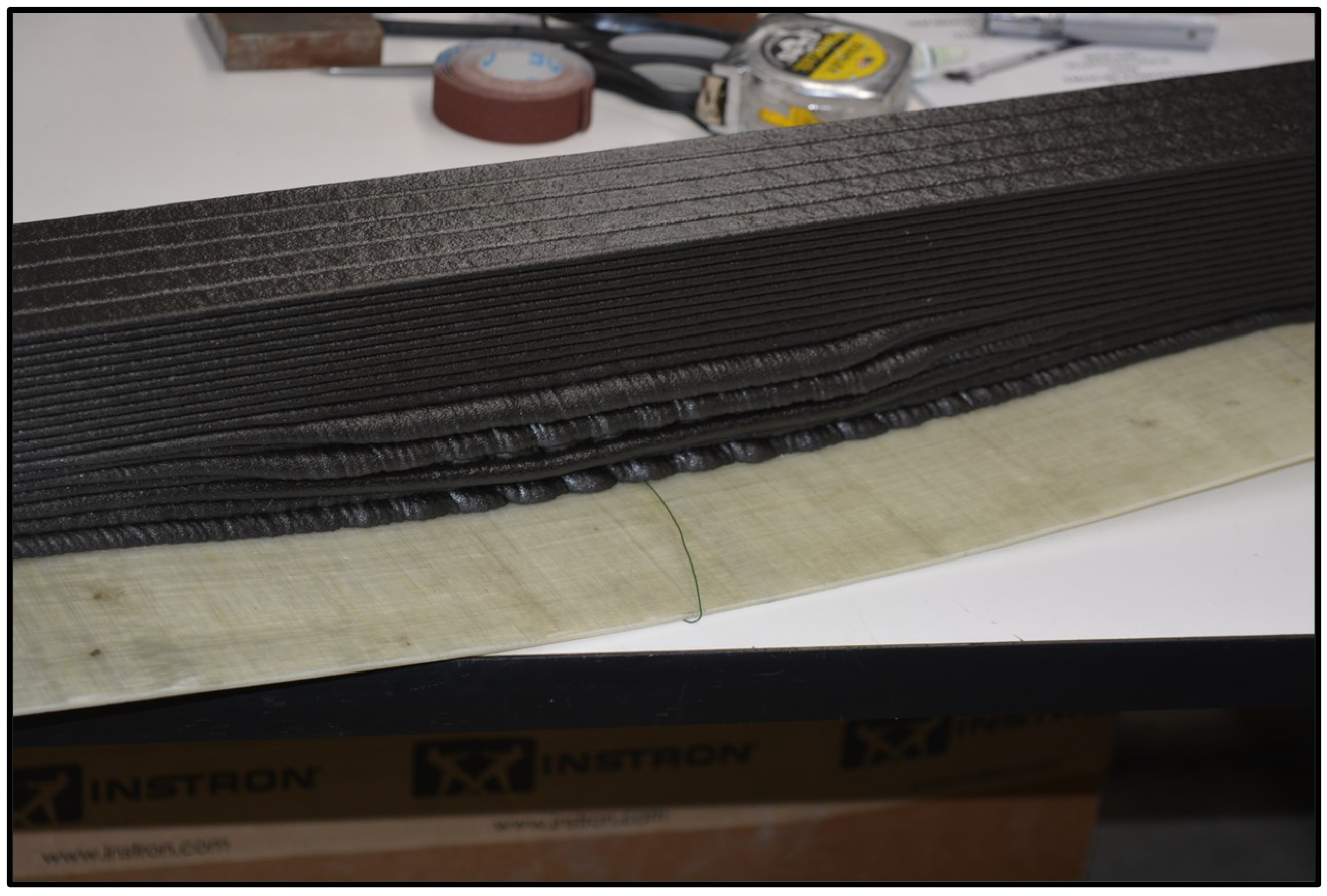
Figure 18 demonstrates the deformation in the final part due to the deflection of the unsupported section. It should be noted that this deflection during print was significant, up to 20 mm for the longest unsupported span. While this deflection would be excessive for the production of beams, it could be planned for when using this technique to support a section of a larger print.
To apply this technique for supporting overhung sections in larger prints, several challenges must be addressed. First, the CFRTP must be securely affixed to the existing print. This is difficult because welding may be compromised by the heating required to promote bonding of the overprinted material. Second, the CFRTP itself must be heated to enable bonding. While this was achieved in the experiment using strip heaters, such an approach would be too labor-intensive and slow for practical use. A non-contact heating system would be necessary to provide localized heat as material is extruded. This method would also avoid heating the entire substrate at once, reducing the risk of heat deflection. Existing systems that use infrared heating to control layer temperatures could potentially be adapted for this purpose, enabling substrate heating at the optimum bond temperature without external intervention. Combined with robotic placement of CFRTP, this approach could deliver structural reinforcement with minimal disruption to the printing process.
Following manufacture, each specimen was tested under four-point bending as in previous case studies so that the quality of the resulting beams could be compared with those printed under more ideal circumstances.
5.2. Discussion of Results
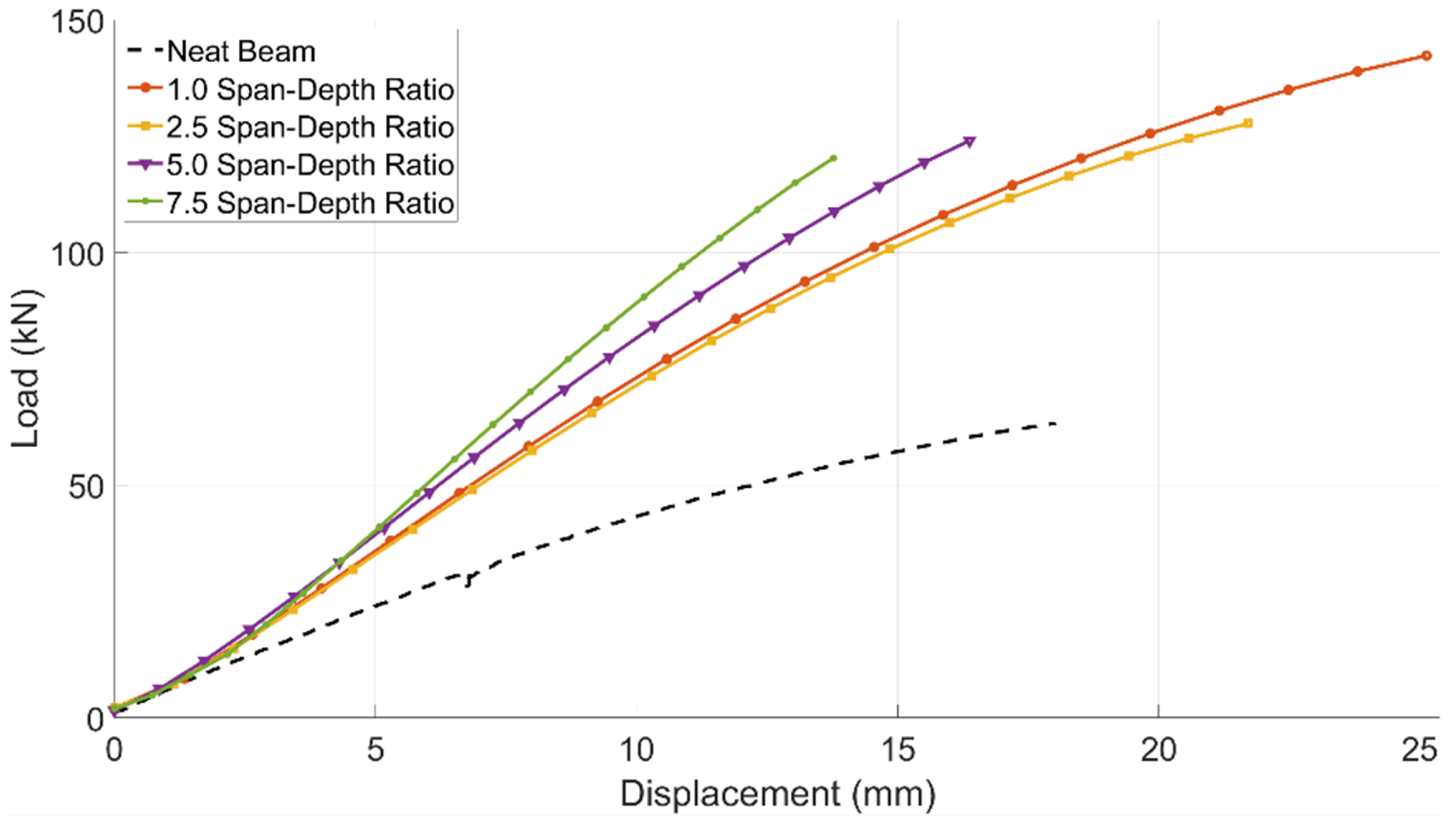
The load displacement curves from the beam bending tests are shown in
Figure 19. All the beams printed with unsupported CFRTP span retained stiffness and strength exceeding that of the unreinforced (neat) beam.
Table 7 demonstrates that, while the amount of unsupported span does affect the final strength of the member, these members retain a strength greater than that of an unreinforced member. Overall, the findings of this experimental case study provide strong evidence that a section of CFRTP can effectively serve as a substrate for LAAM to print overhang structures with minimal additional support. Despite observed deformations (3, 4, 13, and 21 mm of deflection for the 1, 2.5, 5, and 7.5 span ratios, respectively), the results indicate that a substantial span can be achieved without compromising the structural integrity of the final component. Notably, even the largest span tested exhibited significantly higher strength compared to an equivalent member manufactured without a CFRTP substrate. It is expected that additional strategies based on geometric or support changes could be devised to further mitigate these deformations. These findings suggest that integrating CFRTP as a supporting element in LAAM could enhance the feasibility of printing complex geometries while maintaining high mechanical performance.
6. Conclusions and Recommendations
The experiments presented in this study set out to demonstrate the concept that continuous fiber-reinforced thermoplastics (CFRTPs) can be effectively integrated into large-area additive manufacturing (LAAM) to enhance both structural performance and design flexibility.
The first case study demonstrated that CFRTP can reliably bond with LAAM-produced structures. In addition, it laid the groundwork for determining the optimal processing parameters for ideal bond strength.
The second case study demonstrated that the addition of CFRTP can improve mechanical strength significantly (as much as 719% in some configurations). In addition, this case study highlights how integrating reinforcement can offer improved manufacturing flexibility by enhancing performance of inferior raster configurations.
The third case study showed how reinforcement can be leveraged to produce lightweight structures, as exemplified by a beam weighing 33% less carrying 60% more load. For LAAM, lightweighting not only improves final part performance but also decreases manufacturing time.
The final case study highlights how CFRTP can help to provide support for overhangs that would otherwise be unprintable with LAAM alone.
In addition to all these, the integration of customized structural members produced through continuous fiber manufacturing (CFM) further expands the process’s flexibility, allowing for the fabrication of more complex and optimized geometries. There are a number of important topics that warrant further investigation as this technique matures and is applied, notably the bonding behavior in a wider processing temperature range and the development of internal stresses/deformations due to uneven temperature fields from the overprinting process. It is clear, however, that this method shows significant promise toward improving the LAAM process.
Importantly, while not demonstrated directly in these experiments, equipment improvements will allow these benefits to be achieved with minimal disruption to the existing LAAM process, limited labor requirements, and strong potential for scalability. The method also remains compatible with other reinforcement and hybridization approaches, opening the possibility for future combinations of techniques to further enhance performance. While additional work is required to refine the process for specific applications, the findings presented here establish proof of concept for a versatile and scalable method to reinforce and stabilize LAAM structures. By reducing material usage, improving strength, and expanding design possibilities, this approach could significantly advance the fabrication of complex, high-performance structures.
As LAAM expands into industries ranging from housing to shipbuilding, the benefits of incorporating continuous-fiber reinforcement are significant. Lightweighting enables faster and more efficient boat construction, while the ability to print unsupported sections can transform housing applications: from simple elements like door headers that speed up production to complex architectural features that would otherwise be impossible to fabricate. Across all sectors, enhanced strength translates into parts that are lighter, more durable, and more cost-effective.
Author Contributions
Conceptualization, A.P.S., Z.D., C.S., W.G.D. and R.A.L.-A.; methodology, A.P.S., Z.D., J.S. and J.C.; formal analysis, P.B., A.P.S. and Z.D.; resources, C.S.; data curation, P.B., A.P.S. and Z.D.; writing—original draft preparation, P.B., A.P.S. and Z.D.; writing—review and editing, P.B., A.P.S., Z.D., J.S., J.C., C.S., W.G.D. and R.A.L.-A.; supervision, C.S.; project administration, C.S.; funding acquisition, C.S. All authors have read and agreed to the published version of the manuscript.
Funding
This research was sponsored by the U.S. Army Engineer Research and Development Center.
Data Availability Statement
The original contributions presented in this study are included in the article. Inquiries regarding raw data can be directed to the corresponding author.
Acknowledgments
This research was conducted in partnership with the University of Maine Advanced Structures and Composites Center. The authors express special thanks to the additive manufacturing and mechanical testing teams.
Conflicts of Interest
The authors declare no conflicts of interest. The funders had no role in the design of the study; in the collection, analyses, or interpretation of data; in the writing of the manuscript; or in the decision to publish the results.
References
- De Backer, W.; Bergs, A.P.; Van Tooren, M.J. Multi-axis multi-material fused filament fabrication with continuous fiber reinforcement. In Proceedings of the 2018 AIAA/ASCE/AHS/ASC Structures, Structural Dynamics, and Materials Conference, Kissimmee, FL, USA, 8–12 January 2018; p. 0091. [Google Scholar]
- Brooks, H.; Molony, S. Design and evaluation of additively manufactured parts with three dimensional continuous fibre reinforcement. Mater. Des. 2016, 90, 276–283. [Google Scholar] [CrossRef]
- Gong, K.; Liu, H.; Xu, H.; Coyne, J.; Cao, Z.; Fuenmayor, E.; Major, I. Optimizing process parameters of a material extrusion–based overprinting technique for the fabrication of tensile specimens. Int. J. Adv. Manuf. Technol. 2023, 127, 3513–3524. [Google Scholar] [CrossRef]
- Kelly, P.G.; Gallup, B.H.; Roy-Mayhew, J.D. Multiplanar continuous fiber reinforcement in additively manufactured parts via co-part assembly. Rapid Prototyp. J. 2023, 29, 64–73. [Google Scholar] [CrossRef]
- Mosleh, N.; Rezadoust, A.M.; Dariushi, S. Determining process-window for manufacturing of continuous carbon fiber-reinforced composite Using 3D-printing. Mater. Manuf. Processes 2021, 36, 409–418. [Google Scholar] [CrossRef]
- Parandoush, P.; Zhou, C.; Lin, D. 3D printing of ultrahigh strength continuous carbon fiber composites. Adv. Eng. Mater. 2019, 21, 1800622. [Google Scholar] [CrossRef]
- Singh, J.; Goyal, K.K.; Kumar, R.; Gupta, V. Influence of process parameters on mechanical strength, build time, and material consumption of 3D printed polylactic acid parts. Polym. Compos. 2022, 43, 5908–5928. [Google Scholar] [CrossRef]
- Wu, S.; Shan, Z.; Chen, K.; Wang, S.; Zou, A.; Sun, Q. Bending properties and failure behavior of 3D printed fiber reinforced resin T-beam. Polym. Compos. 2022, 43, 4556–4568. [Google Scholar]
- Zaldivar, R.; Witkin, D.; McLouth, T.; Patel, D.; Schmitt, K.; Nokes, J. Influence of processing and orientation print effects on the mechanical and thermal behavior of 3D-Printed ULTEM® 9085 Material. Addit. Manuf. 2017, 13, 71–80. [Google Scholar] [CrossRef]
- Zhuo, P.; Li, S.; Ashcroft, I.A.; Jones, A.I. Material extrusion additive manufacturing of continuous fibre reinforced polymer matrix composites: A review and outlook. Compos. Part B Eng. 2021, 224, 109143. [Google Scholar] [CrossRef]
- Austermann, J.; Kuscera, R.; Wipperfürth, J.; Hopmann, C.; Dahlmann, R. Influence of material modification and fillers on the dimensional stability and warpage of polypropylene in screw-extrusion-based large area additive manufacturing. Polym. Eng. Sci. 2023, 63, 1598–1612. [Google Scholar] [CrossRef]
- Choo, K.; Friedrich, B.; Daugherty, T.; Schmidt, A.; Patterson, C.; Abraham, M.A.; Conner, B.; Rogers, K.; Cortes, P.; MacDonald, E. Heat retention modeling of large area additive manufacturing. Addit. Manuf. 2019, 28, 325–332. [Google Scholar] [CrossRef]
- Liedtka, C. Life Cycle Analysis and Implications of 3D Printed Bio-Based Homes, a Preliminary Study. Bachelor’s Thesis, University of Maine, Orono, ME, USA, 2022. [Google Scholar]
- Roschli, A.; Duty, C.; Lindahl, J.; Post, B.; Chesser, P.; Love, L.; Gaul, K. Increasing interlaminar strength in large scale additive manufacturing. In Proceedings of the 2018 International Solid Freeform Fabrication Symposium, Austin, TX, USA, 13–15 August 2018. [Google Scholar]
- Alami, M.; Mokaddem, A.; Belkheir, M.; Rouissat, M.; Doumi, B.; Ziani, D. Improving the performance of hybrid biocomposite materials using epoxy, vinyl ester and polyimide polymer matrix: Comparative study. Appl. Eng. Lett. J. Eng. Appl. Sci. 2024, 9, 64–75. [Google Scholar] [CrossRef]
- Bukvić, M.; Milojević, S.; Gajević, S.; Đorđević, M.; Stojanović, B. Production Technologies and Application of Polymer Composites in Engineering: A Review. Polymers 2025, 17, 2187. [Google Scholar] [CrossRef]
- Zhao, K.; Cai, R.; Guo, S.; Yuan, H.; Fu, Y.; Araby, S.; Meng, Q. Mechanically robust, corrosion and impact resistance polyimide nanofiber/epoxy composite by mechanochemical fabrication. Polym. Compos. 2024, 45, 12092–12103. [Google Scholar] [CrossRef]
- Barbero, E.J. Introduction to Composite Materials Design, 2nd ed.; CRC Press: Boca Raton, FL, USA, 2011. [Google Scholar]
- McKeen, L.W. The Effect of Creep and Other Time Related Factors on Plastics and Elastomers; William Andrew: Norwich, NY, USA, 2014. [Google Scholar]
- McKeen, L.W. The Effect of Temperature and Other Factors on Plastics and Elastomers; William Andrew: Norwich, NY, USA, 2014. [Google Scholar]
- Ferry, J.D. Viscoelastic Properties of Polymers; John Wiley & Sons: Hoboken, NJ, USA, 1980. [Google Scholar]
- Xiao, Y.; Ishikawa, T. Bearing strength and failure behavior of bolted composite joints (part I: Experimental investigation). Compos. Sci. Technol. 2005, 65, 1022–1031. [Google Scholar] [CrossRef]
- Hart-Smith, L. Bolted Joints in Graphite-Epoxy Composites; Technical report; NASA: Washington, DC, USA, 1976. [Google Scholar]
- Crews, J., Jr. Graphite/Epoxy Laminate. Join. Compos. Mater. 1981, 749, 131. [Google Scholar]
- Peterson, E. Technical Challenges to Adopting Large Scale Additive Manufacturing for the Production. In Human Systems Engineering and Design III, Proceedings of the 3rd International Conference on Human Systems Engineering and Design (IHSED2020): Future Trends and Applications, Pula, Croatia, 22–24 September 2020; Springer Nature: Berlin/Heidelberg, Germany, 2020; Volume 1269, p. 15. [Google Scholar]
- Duty, C.; Failla, J.; Kim, S.; Smith, T.; Lindahl, J.; Kunc, V. Z-Pinning approach for 3D printing mechanically isotropic materials. Addit. Manuf. 2019, 27, 175–184. [Google Scholar] [CrossRef]
- Shang, J.; Zhang, W.; Liu, F.; Wang, S.; Tian, M.; Ding, X. Z-direction performance and failure behavior of 3D printed continuous fiber reinforced composites with sinusoidal structure. Compos. Sci. Technol. 2023, 239, 110069. [Google Scholar] [CrossRef]
- Ansari, A.A.; Kamil, M. Effect of print speed and extrusion temperature on properties of 3D printed PLA using fused deposition modeling process. Mater. Today Proc. 2021, 45, 5462–5468. [Google Scholar] [CrossRef]
- Kostopoulos, V.; Sarantinos, N.; Tsantzalis, S. Review of through-the-thickness reinforced z-pinned composites. J. Compos. Sci. 2020, 4, 31. [Google Scholar] [CrossRef]
- Zhuo, P.; Li, S.; Ashcroft, I.A.; Jones, I.A. Continuous fibre composite 3D printing with pultruded carbon/PA6 commingled fibres: Processing and mechanical properties. Compos. Sci. Technol. 2022, 221, 109341. [Google Scholar] [CrossRef]
- Jahangir, M.N.; Billah, K.; Lin, Y.; Roberson, D.; Wicker, R.; Espalin, D. Reinforcement of material extrusion 3D printed polycarbonate using continuous carbon fiber. Addit. Manuf. 2019, 28, 354–364. [Google Scholar] [CrossRef]
- Janssen, H.; Peters, T.; Brecher, C. Efficient production of tailored structural thermoplastic composite parts by combining tape placement and 3d printing. Procedia CIRP 2017, 66, 91–95. [Google Scholar] [CrossRef]
- Raspall, F.; Velu, R.; Vaheed, N.M. Fabrication of complex 3D composites by fusing automated fiber placement (AFP) and additive manufacturing (AM) technologies. Adv. Manuf. Polym. Compos. Sci. 2019, 5, 6–16. [Google Scholar] [CrossRef]
- Haviland, L. Mechanical Characterization of Automated Fiber Placement and Additive Manufacturing Hybrid Composites. Master’s Thesis, The University of Maine, Orono, ME, USA, 2023. [Google Scholar]
- Haller, J.C., Jr.; Clark, J.C.; Gayton, J.T.; Hunter, M.S.; Schanck, A.P.; Sheltra, C.A.; Davids, W.G.; Lopez-Anido, R.A.; Lapp, J.L. Novel Field-Manufacturing Methods for Long-Fiber Thermoplastic Composites. SAMPE J. 2025, 61, 30. [Google Scholar] [CrossRef]
- Chen, P. Design Optimization of Structural Part Using Extrusion-Based Additive Manufacturing Overprinted on a Fiber-Reinforced Thermoplastic Laminate. Master’s Thesis, The University of Maine, Orono, ME, USA, 2017. [Google Scholar]
- ASTM D3846-08; Standard Test Method for In-Plane Shear Strength of Reinforced Plastics. American Society for Testing and Materials: Conshohocken, PA, USA, 2015.
- Atzler, F.; Hümbert, S.; Voggenreiter, H. A Workflow for the Compensation of Substrate Defects When Overprinting in Extrusion-Based Processes. J. Manuf. Mater. Process. 2024, 8, 147. [Google Scholar] [CrossRef]
- Hümbert, S.; Atzler, F.; Voggenreiter, H. Mechanical characterisation of bond formation during overprinting of PEEK laminates. Materials 2023, 17, 161. [Google Scholar] [CrossRef]
Figure 1.
Plate heating setup.
Figure 1.
Plate heating setup.
Figure 2.
Test specimen orientations in printed part.
Figure 2.
Test specimen orientations in printed part.
Figure 3.
Diagram of ASTM D3846 specimen.
Figure 3.
Diagram of ASTM D3846 specimen.
Figure 4.
Broken shear specimen.
Figure 4.
Broken shear specimen.
Figure 5.
Longitudinal shear strength.
Figure 5.
Longitudinal shear strength.
Figure 6.
Transverse shear strength.
Figure 6.
Transverse shear strength.
Figure 7.
Top view of raster patterns. Top: ; Center: ; Bottom: Concentric.
Figure 7.
Top view of raster patterns. Top: ; Center: ; Bottom: Concentric.
Figure 8.
Beam in bending fixture.
Figure 8.
Beam in bending fixture.
Figure 9.
Hybrid, raster pattern specimen.
Figure 9.
Hybrid, raster pattern specimen.
Figure 10.
Hybrid, raster pattern specimen.
Figure 10.
Hybrid, raster pattern specimen.
Figure 11.
Hybrid, concentric raster pattern specimen.
Figure 11.
Hybrid, concentric raster pattern specimen.
Figure 12.
Typical shear failure.
Figure 12.
Typical shear failure.
Figure 13.
FEA predicted stress field in the reduced-4 profile.
Figure 13.
FEA predicted stress field in the reduced-4 profile.
Figure 14.
Dimension of various beam profiles.
Figure 14.
Dimension of various beam profiles.
Figure 15.
Lightweight beam configurations as-printed. (a) Full cross-section, (b) reduced-1, (c) reduced-2. (d) reduced-3, (e) reduced-4.
Figure 15.
Lightweight beam configurations as-printed. (a) Full cross-section, (b) reduced-1, (c) reduced-2. (d) reduced-3, (e) reduced-4.
Figure 16.
Load displacement response of the reduced cross-section beams.
Figure 16.
Load displacement response of the reduced cross-section beams.
Figure 17.
Printing setup.
Figure 17.
Printing setup.
Figure 18.
Representative specimen.
Figure 18.
Representative specimen.
Figure 19.
Load displacement curves for beams manufactured with an unsupported section.
Figure 19.
Load displacement curves for beams manufactured with an unsupported section.
Table 1.
Feed material properties from manufacturer datasheets.
Table 1.
Feed material properties from manufacturer datasheets.
| Property | AM Feedstock | Unidirectional
CFRTP Tape |
|---|
| Manufacturer | Techmer | Avient |
| Name | Carbon/PETG Electrafil1711 3DP | E-Glass/PETG IE5843.1 |
| Fiber Type | Carbon Fiber | E-Glass Fiber |
| Fiber Mass Content (FMC) | 20% | 58% |
| Specific Gravity | 1.40 | 1.92 |
| Longitudinal Tensile Strength (MPa) | 121 | 945 |
| Longitudinal Tensile Modulus (GPa) | 15.2 | 30.3 |
Table 2.
Experimental results.
Table 2.
Experimental results.
| Extrudate Temperature (°C) | Substrate Temperature (°C) | Longitudinal Shear Strength (MPa) | Coefficient of Variation | Transverse Shear Strength (MPa) | Coefficient of Variation |
|---|
| 200 | 80 | 11.6 | 19% | 19.7 | 12% |
| 200 | 130 | 22.5 | 11% | 20.8 | 33% |
| 220 | 80 | 14.1 | 34% | 18.1 | 15% |
| 220 | 130 | 23.5 | 11% | 21.5 | 5% |
Table 3.
Two-way ANOVA results.
Table 3.
Two-way ANOVA results.
| Source of Variation | Longitudinal | Transverse |
|---|
| (Melt) | 0.2467 | 0.8122 |
| (Substrate) | 0.0000 | 0.2321 |
| Interaction of and | 0.6530 | 0.5593 |
Table 4.
Test combinations.
Table 4.
Test combinations.
| Test Combination Trial | Raster Pattern Level | Level of Thickness |
|---|
| 1 | A | I |
| 2 | A | II |
| 3 | B | I |
| 4 | B | II |
| 5 | C | I |
| 6 | C | II |
Table 5.
Flexural moment at failure.
Table 5.
Flexural moment at failure.
| Raster Pattern | Flexural Moment at Failure: Neat LAAM Beam (N·m) | Flexural Moment at Failure: Hybrid Beam (N·m) | Increase (%) |
|---|
| 7380 | 12,000 | 62.5 |
| 781 | 6400 | 719 |
| Concentric | 7200 | 11,400 | 57.8 |
Table 6.
Flexural moment at failure of reduced cross-section beams.
Table 6.
Flexural moment at failure of reduced cross-section beams.
| Cross Section | Flexural Moment at Failure (N·m) | Specific Moment Capacity (N·m/kg) 1 | Change in Specific Capacity from Neat Beam |
|---|
| Neat Beam | 7199 | 936 | N/A |
| Full Section | 11,710 | 1521 | +63% |
| Reduced-1 | 11,165 | 1689 | +80% |
| Reduced-2 | 6177 | 1043 | +12% |
| Reduced-3 | 7563 | 1504 | +60% |
| Reduced-4 | 3663 | 882 | −6% |
Table 7.
Flexural moment at failure for beams printed on unsupported CFRTP.
Table 7.
Flexural moment at failure for beams printed on unsupported CFRTP.
| Unsupported Length (Span/Depth Ratio) | Flexural Moment at Failure (N·m) | Change from Neat Beam (%) |
|---|
| Neat Beam | 7199 | N/A |
| 1 | 16,266 | +126% |
| 2.5 | 14,595 | +103% |
| 5 | 14,178 | +97% |
| 7.5 | 13,743 | +91% |
| Disclaimer/Publisher’s Note: The statements, opinions and data contained in all publications are solely those of the individual author(s) and contributor(s) and not of MDPI and/or the editor(s). MDPI and/or the editor(s) disclaim responsibility for any injury to people or property resulting from any ideas, methods, instructions or products referred to in the content. |
© 2025 by the authors. Licensee MDPI, Basel, Switzerland. This article is an open access article distributed under the terms and conditions of the Creative Commons Attribution (CC BY) license (https://creativecommons.org/licenses/by/4.0/).



 ,
,