Article

Enhancing Reactive Powder Concrete Composite Performance Using Polypropylene and Waste Steel Fibers: A Comparative Study


by
Awad Jadooe
1,
Mushtaq Sadiq Radhi
1,
Zainab M. R. Abdul Rasoul
1,
Anmar Dulaimi
1,2,*,
Hugo Alexandre Silva Pinto
3,4,
Luís Filipe Almeida Bernardo
3,* and
Vitor Manuel Pissarra Cavaleiro
3
1
Department of Civil Engineering, College of Engineering, University of Kerbala, Karbala 56001, Iraq
2
School of Civil Engineering and Built Environment, Liverpool John Moores University, Liverpool L3 2ET, UK
3
GeoBioTec, Department of Civil Engineering, University of Beira Interior, 6201-001 Covilhã, Portugal
4
Department of Civil Engineering, School of Technology and Management, Polytechnic Institute of Guarda, 6300-559 Guarda, Portugal
*
Authors to whom correspondence should be addressed.
J. Compos. Sci. 2026, 10(5), 251; https://doi.org/10.3390/jcs10050251
Submission received: 20 April 2026 / Revised: 27 April 2026 / Accepted: 2 May 2026 / Published: 6 May 2026
(This article belongs to the Special Issue Sustainable Composite Construction Materials, 3rd Edition)

Abstract

One definition of environmental sustainability is one that permits the maintenance of long-term environmental quality while preventing the depletion or degradation of natural resources. In the realm of concrete production, engineers are becoming more interested in sustainable development, which includes using locally available resources and repurposing industrial and agricultural waste in building construction as a potential remedy for economic and environmental problems. The purpose of the study is to determine how various ratios of waste steel and polypropylene fibers affect the compressive strength, tensile strength, flexural strength and density of reactive powder concrete composite at different ages. According to the test results, Mix 6, which contains 100% waste steel fiber and 0% polypropylene fiber, improves the mechanical properties of reactive powder concrete by 29% in compressive strength, 47% in tensile strength, 29% in flexural strength, and 6.1% in density when compared to the reference mix. Reactive powder concrete’s waste steel fiber content has been shown to effectively reduce cracking and increase splitting tensile strength. Statistical analysis using ANOVA and Tukey HSD confirmed that fiber type has a significant effect on the compressive strength of RPC, with mixes containing higher proportions of waste steel fibers demonstrating superior performance.

1. Introduction

Reactive powder concrete (RPC) is primarily produced in response to the need for concrete with high strength and performance. A cementitious composite with extremely high strength and ductility is known as RPC [1,2,3]. The foundation of RPC is the notion that a material with fewer internal voids will be able to support more weight and demonstrate better structural performance overall. Cement production requires a significant quantity of energy and natural resources. Searching for substitute binders is essential due to the need to reduce CO2 emissions [4,5,6]. Steel fiber is essential to improve the ductility of RPC because it is a brittle construction material. Additionally, steel fiber is essential for reducing initial cracking, preventing the concrete layer from spalling, and increasing the strength. When steel fibers are added to concrete, the concrete’s mechanical properties improve under various loading conditions. Steel fiber significantly improves compressive strength while also successfully increasing tensile and flexural strength [7,8,9].
However, the concrete’s compressive strength is affected by the size of the steel fiber. For example, short steel fibers have a greater impact on compressive strength than long steel fibers [10,11,12]. According to Olivito et al. [13], the length of the fibers affects the tensile strength and post-cracking behavior, but it has no effect on the compressive strength. Additionally, the geometry of steel fibers affects both compressive strength and toughness at the same time. According to Ou et al. [14], the concrete’s modulus of elasticity and compressive strength are somewhat impacted by long hooked-end steel fiber. However, there was a discernible impact on the strain that matched the peak stress, particularly when 2% was added to the mixture. Additionally, Song and Hwang [15] found that adding hooked-end steel fiber with a hooked end to concrete up to 2% of the mixture’s volume significantly increases the concrete’s tensile and flexural strength. However, Nataraja et al. [16] investigated the addition of crimped steel fiber to concrete and found that it improves the concrete’s toughness without affecting its compressive strength. Steel fiber hybridization is essential for improving the mechanical qualities of concrete; prior research has shown that adding two or more varieties of steel fiber to concrete improves the concrete’s properties. Yu et al. [17] claim that the hybridization of short and long steel fibers improves workability and mechanical properties. However, compared to short steel fiber, long steel fiber has a greater impact on how the concrete behaves under impact stress. Fiber materials are known to improve the strength, durability, and ductility of concrete, hence resolving the issue of crack development. The majority of concrete reinforced with uniformly spaced polypropylene fibers behaves differently from ordinary concrete, more like a composite material with special properties [18]. Controlling the spread of cracks in the concrete matrix is made easier by the orientation of polypropylene fibers. By forming a “bridge” over the cracks that result from the application of load, fibers can strengthen the matrix and stop cracks from growing.
Some researchers have carried out investigations examining how adding more materials changes the characteristics of RPC. For example, they aimed to improve the bonding between fibers and paste and lower the cement content by substituting industrial waste. Concrete’s mechanical properties, whether or not it has fibers, are often affected by conditions that exist both during and after the setting time [19,20].
Two different types of steel fibers were proposed by some researchers to be added to concrete in order to utilize their individual functions and the engineering properties of concrete. The addition of two or more types of steel fiber to concrete is known as steel fiber hybridization [21]. In addition, the hybridization of steel and polypropylene fibers was examined by Mayhoub et al. [22]. Their findings demonstrated that steel fibers successfully increased the concrete’s strength while polypropylene enhanced its toughness and post-peak behavior. The impact of high-modulus steel fibers was investigated by Sanjuán and Andrade [23]. The findings showed that steel fibers increased the concrete’s strength. As a result, adding various fiber kinds to concrete affects its mechanical properties in different ways. Finding a steel fiber mix that maximizes the benefits of adding steel fibers to concrete is still being attempted. While the primary focus of utilizing waste metallic fibers is structural enhancement, their use may also provide sustainability benefits through material recovery and reduced demand for virgin steel production. Previous studies have reported that replacing conventional steel fibers with recycled steel sources can contribute to lower embodied energy and environmental impacts, depending on the collection, processing, and transport conditions [24]. However, a precise environmental quantification for the specific materials and mix design requires a dedicated life cycle assessment.
Recent studies have explored the structural performance of fiber-reinforced ultra-high-performance concrete (UHPC) systems incorporating advanced reinforcement techniques such as FRP grids and bars, particularly under flexural and fatigue loading conditions. These studies highlight the significant role of fiber type in enhancing mechanical performance and durability. However, limited research has focused on a controlled comparison between different fiber types, particularly polypropylene and waste steel fibers, within reactive powder concrete (RPC) matrices [25,26,27].
The enhancement of the flexural capacity of concrete composites using various fiber reinforcements has been extensively documented in the literature. Recent research has pushed these boundaries through innovative manufacturing techniques and hybrid reinforcement strategies. For instance, Sun et al. [28] explored the bending behavior of 3D-printed functionally graded concrete plates, demonstrating how the spatial distribution of materials and fibers can be tailored to optimize flexural performance. Similarly, Zeng et al. [29] investigated the flexural behavior of ultra-high-performance concrete (UHPC) composite plates, highlighting the synergistic effects of combining FRP grids with different types of dispersed fibers. While these studies represent significant advancements in optimizing fiber-reinforced composites, there remains limited research involving a systematic and controlled comparison between waste steel fibers and polypropylene fibers in reactive powder concrete under identical conditions, which limits understanding of their relative effectiveness in enhancing mechanical properties.
Several previous studies have examined fiber-reinforced concrete and hybrid fiber systems. However, many of these investigations considered either multiple fibers within the same mixture or one fiber type under different experimental conditions. In such cases, the individual influence of each fiber type is difficult to distinguish, particularly when mixture proportions, curing methods, and testing procedures are not consistent. In addition, limited attention has been given to the use of recycled waste steel fibers and their interaction with polypropylene fibers in RPC. Therefore, a clear and statistically supported comparison of these fiber types under consistent conditions remains limited.
The present study compares polypropylene fibers and recycled waste steel fibers within the same RPC mix composition, curing conditions, and testing methods. This allows the effect of fiber type to be assessed on a more consistent and direct basis. In addition, the use of recycled steel fibers contributes to material reuse and supports more sustainable construction practices. The findings of this study are expected to provide useful guidance for selecting suitable fiber combinations to improve the mechanical properties of RPC while also considering environmental benefits. Beyond this practical relevance, the study contributes to current knowledge by isolating the influence of fiber hybridization ratio under controlled conditions and statistically validating the significance of the observed mechanical responses.

2. Experimental Program

2.1. Materials

2.1.1. Cement

KERSTA ordinary Portland cement (Type I) was utilized in the experimental work. It was kept in airtight plastic containers to preserve its quality and keep it away from humidity. Ordinary Portland cement’s properties comply with Iraqi Standard No. 5:2019 [30]. The chemical and physical characteristics of the OPC are presented in Table 1 and Table 2, respectively.

2.1.2. Sand

Al-Akhaidher’s natural sand was used as the graded fine aggregate in concrete, which has a particle size that is suitable for a 4.75 mm sieve. Fine aggregate was tested in accordance with ASTM C33 [31] specifications.

2.1.3. Admixture with High-Range Water Reduction

This study used a high-range water-reducing additive called SikaViscocrete-5930. The SikaViscocrete-5930 was primarily created for applications that require high durability and performance. The admixture was supplied by Sika AG, headquartered in Baar, Switzerland. It conforms to ASTM C494 type G [32].

2.1.4. Silica Fume

The silica fume type used in the RPC mixtures was Megaadd MS (D) UAE. Typically, this type of incredibly fine pozzolanic material is produced as a byproduct of amorphous silica in electric furnaces. It was also known as condensed silica fume or micro silica. According to the results, there was agreement with ASTM C 1240 [33]. By chemically reacting with the calcium hydroxide in the cement paste, this product creates a calcium silicate hydrate gel that greatly increases strength and durability. The physical and chemical properties of this type of silica fume are shown in Table 3.

2.1.5. Waste Steel Fiber

Recycled steel fibers from industrial waste, such as steel scrap, are known as metallic fibers. These fibers effectively bridge cracks within the cement matrix because of their high tensile strength, high elastic modulus, and rough surface texture. Flexural strength, toughness, and post-cracking performance are all enhanced when waste steel fibers are added to concrete. Additionally, by recovering industrial waste materials and lowering the need for traditional steel fibers, their use promotes sustainability. The waste steel fiber utilized in this investigation is depicted in Figure 1. The mechanical and physical properties of the waste steel fibers depend on the source of the waste steel, as shown in Table 4. Four different fiber percentages of 25%, 50%, 75%, and 100% by volume of concrete were used from a 1% volumetric ratio. The waste steel fibers used in this study were obtained from industrial waste, and they were processed prior to use. Specifically, the fibers were cleaned and cut to approximately 13 mm lengths. The fibers exhibit uniform geometry, which may influence their dispersion and bonding behavior within the RPC matrix.
It should be made clear that the fibers used in this study are recycled binding wires commonly used in reinforced concrete construction. All fibers were manually cut to a uniform length of 13 mm to reduce variability in size. In terms of surface characteristics, the fibers have a relatively smooth surface. Additionally, they were visually inspected prior to mixing and found to be clean, with no noticeable contamination. Therefore, the potential effects of variability and contamination are considered to be minimal within the scope of this study.
The total fiber volume fraction was fixed at 1% in order to ensure a balance between mechanical performance and workability, as well as to enable a controlled comparison of the effect of fiber type and hybridization ratio without introducing additional variables related to fiber dosage. Because the waste steel fibers were sourced from recycled industrial waste, inherent uncertainties regarding their prior usage history, residual coatings, and mechanical consistency were anticipated. To mitigate this variability and improve general consistency, the raw waste was subjected to a pre-processing procedure prior to manual cutting. This included washing the scrap with a mild solvent to remove residual industrial oils/coatings and performing a visual inspection to discard excessively oxidized or geometrically irregular pieces. While this manual sorting cannot replicate the quality control associated with manufactured virgin fibers, it provides a practical baseline for improving geometric and surface consistency.

2.1.6. Polypropylene Fiber

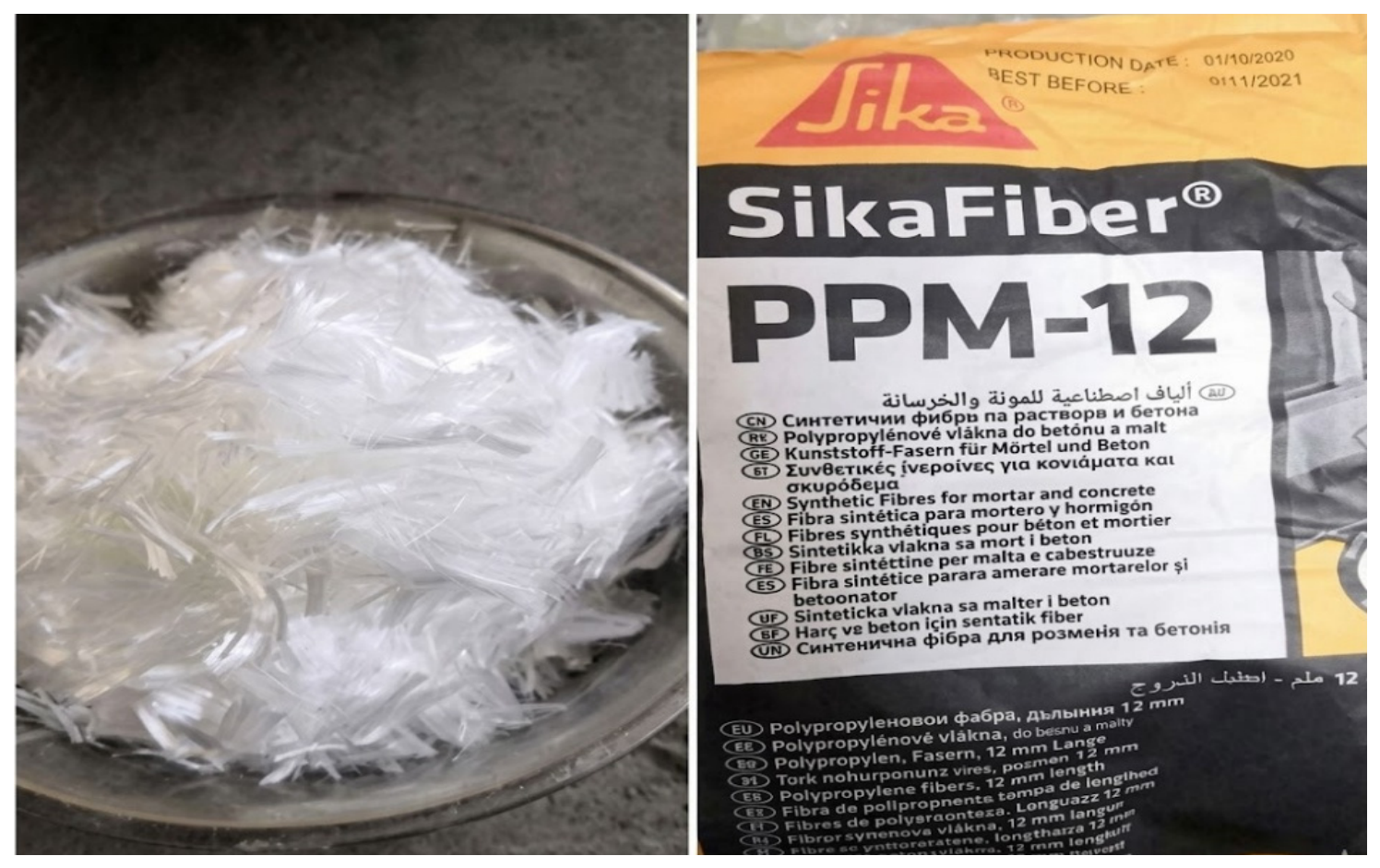
Polypropylene fiber is not a hydrophilic material; it resists chemicals, alkalis, and chloride and does not absorb water. In this study, discontinuous polypropylene fibers with dimensions of 12 mm in length and 34 microns in diameter were used. Four different fiber percentages of 25%, 50%, 75 and 100% by volume of concrete were used from a 1% volumetric ratio. The polypropylene fiber utilized in this investigation is depicted in Figure 2. The primary consideration in the selection of the polypropylene (PP) fibers utilized in this study was their ability to increase toughness and decrease cracking. Compared to steel or high-modulus fibers, PP fibers offer a number of benefits, such as decreased density, corrosion resistance, improved dispersion, and minimal impact on thermal properties. The mechanical and physical properties of the polypropylene fibers employed in this study, as provided by the manufacturer, are summarized in Table 5.

2.1.7. Concrete Mix Preparation

In this study, six concrete mixes were investigated. The compressive strength of RPC ranged from 60 to 65 MPa without waste steel and polypropylene fibers. Silica fume, cement, extremely fine sand, superplasticizer, and a low (W/C) ratio were all combined to create RPC. The concrete mix was made using the following weight-based proportions: 1 (cement), 1.1 (fine aggregate), 0.25 (silica fume) and (1% volumetric ratio of fiber) with a superplasticizer and a low (W/C) ratio of 0.18. Numerous mix proportions have been tested in order to achieve the necessary compressive and tensile strengths in accordance with some previous research [34,35,36,37,38,39].
To demonstrate the mixing process, silica fume was added to cement and mixed while dry for five minutes to ensure that the cement and powder particles were uniform. Very fine sand was then added and mixed for another five minutes. After that, half of the water that had been combined with the superplasticizer was added to the mixer, and it was mixed for two minutes. The remaining water, which also contained the superplasticizer, was then added and thoroughly mixed for roughly five minutes, or until the components had been well combined. Waste steel and polypropylene fibers were then added gradually to ensure even distribution and stirred for two to three minutes. About 20 min were spent on each cycle of mixing. The details of the mix proportions are shown in Table 6.

3. Results and Discussion

Concrete cubes, cylinders, and prisms made of waste steel and polypropylene fibers were tested and the results are presented and discussed. This study created and tested six mix designs to investigate the impact of fibers on concrete’s flexural strength as well as its compressive strength (at seven and twenty-eight days).

3.1. Impact of Polypropylene and Waste Fibers on Compressive Strength

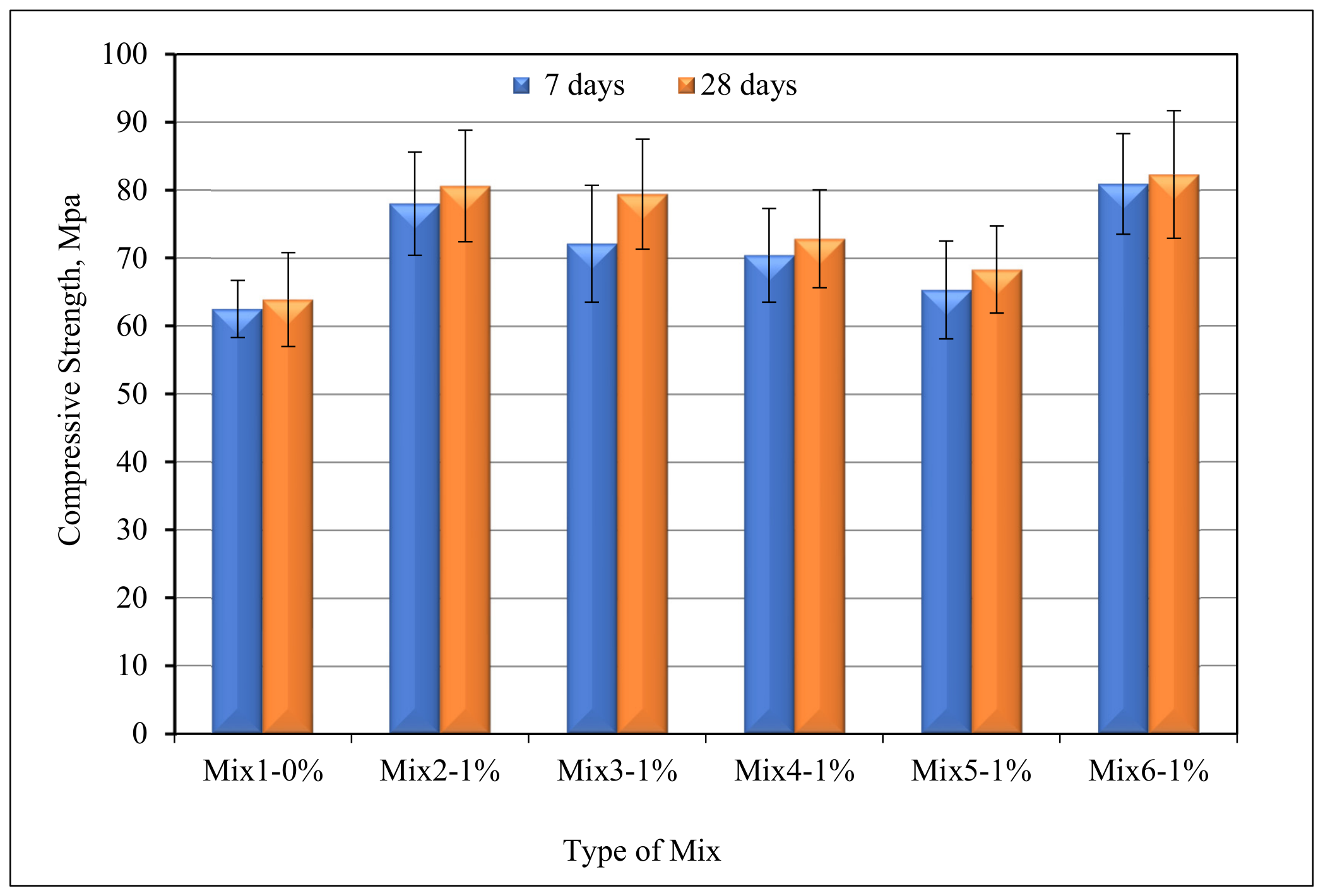
Waste fiber percentages have been varied from 75%, 50%, 25%, 0% and 100% by volume of the concrete, while polypropylene fiber percentages have been varied from 25%, 50%, 75%, 100 and 0% by volume of the concrete in order to examine the impact of these fibers on the compressive strength of concrete. The concrete’s compressive strength results for each cube are displayed in Table 4. Three identical cubes measuring 100 mm x 100 mm x 100 mm were measured for each mixing group, and the average value was recorded as the representative compressive strength. This table illustrates how the compressive strength of concrete is affected by the inclusion of waste fiber and polypropylene fiber. For mixes M6, M2, M3, M4, and M5, the largest increases in compressive strength during a 7-day period were 29%, 25%, 15%, 13%, and 4%, respectively. However, for mixes M6, M2, M3, M4, and M5, the greatest increases in compressive strength for age 28 days were 28%, 26%, 24%, 14%, and 7%, respectively. It is possible that the addition of metallic and polypropylene fibers to the concrete mix strengthened the bonds between its components, thus increasing the concrete’s compressive strength. However, the compressive strength decreased as the proportion of polypropylene fiber increased relative to waste steel fiber. This reduction can be attributed to the formation of non-contiguous fiber clusters, which render the concrete matrix’s resistance to crack development extremely weak. High percentages of polypropylene fibers may have a detrimental effect on the cement’s hydration process, which in turn makes the concrete extremely susceptible to crack formation. This is another explanation for the reduction in compressive strength for Mix 5.
Figure 3 shows the relationship between Mix 1 to Mix 6 that included waste steel and polypropylene fibers and the compressive strength at 7 and 28 days for M2, M3, M4, M5, and M6. According to the findings, Mix 6 with waste steel and polypropylene fibers had a higher compressive strength at this amount (100%WF + 0%PP). The reason for that is that, in concrete production, metallic fibers are typically found to outperform polypropylene fibers due to their enhanced tensile strength, stiffness, and ability to improve resistance to the spread of cracks. Metallic fibers provide more noticeable gains in flexural strength and toughness, even if polypropylene fibers have benefits like enhanced ductility and impact resistance. RPC gains greater compressive, tensile, and flexural strengths when steel fibers are added. Because of these improvements, RPC may be used in harsher environments, increasing its lifespan and lowering the frequency of repairs or replacements. After 28 days, the greatest compressive strength was 82.3 MPa. Ultimately, it can be observed that mixtures containing moderate to higher proportions of waste steel fibers (75–100%) exhibited comparable and slightly higher compressive strength within the investigated conditions. However, no definitive optimal range can be established from the present results. According to a number of studies [40,41,42,43,44], increasing the volume percentage of steel fibers improves the compressive strength of reactive powder concrete because of the crack-bridging effect and better stress transfer within the matrix. Our study yielded positive results, increasing the compressive strength by an average of 25%, as seen in Table 7. The findings of the compressive strength analysis show that adding polypropylene and waste steel fiber to concrete generally increases its strength. In particular, at both 7 and 28 days, mixes with a larger percentage of waste steel fiber showed the biggest increases in compressive strength, especially Mix 6 (100% WSF, 0% PP). Higher quantities of polypropylene without enough leftover steel fiber seem to be less effective at increasing compressive strength. These results imply that discarded steel fiber is essential for improving the mechanical characteristics of the concrete mixtures under investigation. The increase in strength may be associated with fiber bridging and possible improvements in fiber–matrix interaction, as commonly reported in the literature. However, this interpretation is not supported by direct microstructural evidence in the present study. The reduction in strength at higher polypropylene fiber contents may be associated with possible reductions in workability and less uniform fiber dispersion. However, fresh-state properties were not measured in the present study, and this interpretation remains hypothetical within the scope of the present study. Reactive powder concrete typically exhibits high workability, with reported slump values in the range of 260–280 mm and slump flow up to 490 mm. However, the incorporation of fibers may reduce flowability due to increased internal friction and interaction between fibers and the cement matrix, which may influence fiber dispersion and mechanical performance as reported in previous studies [45].

3.2. Impact of Polypropylene and Waste Steel Fibers on Splitting Tensile Strength

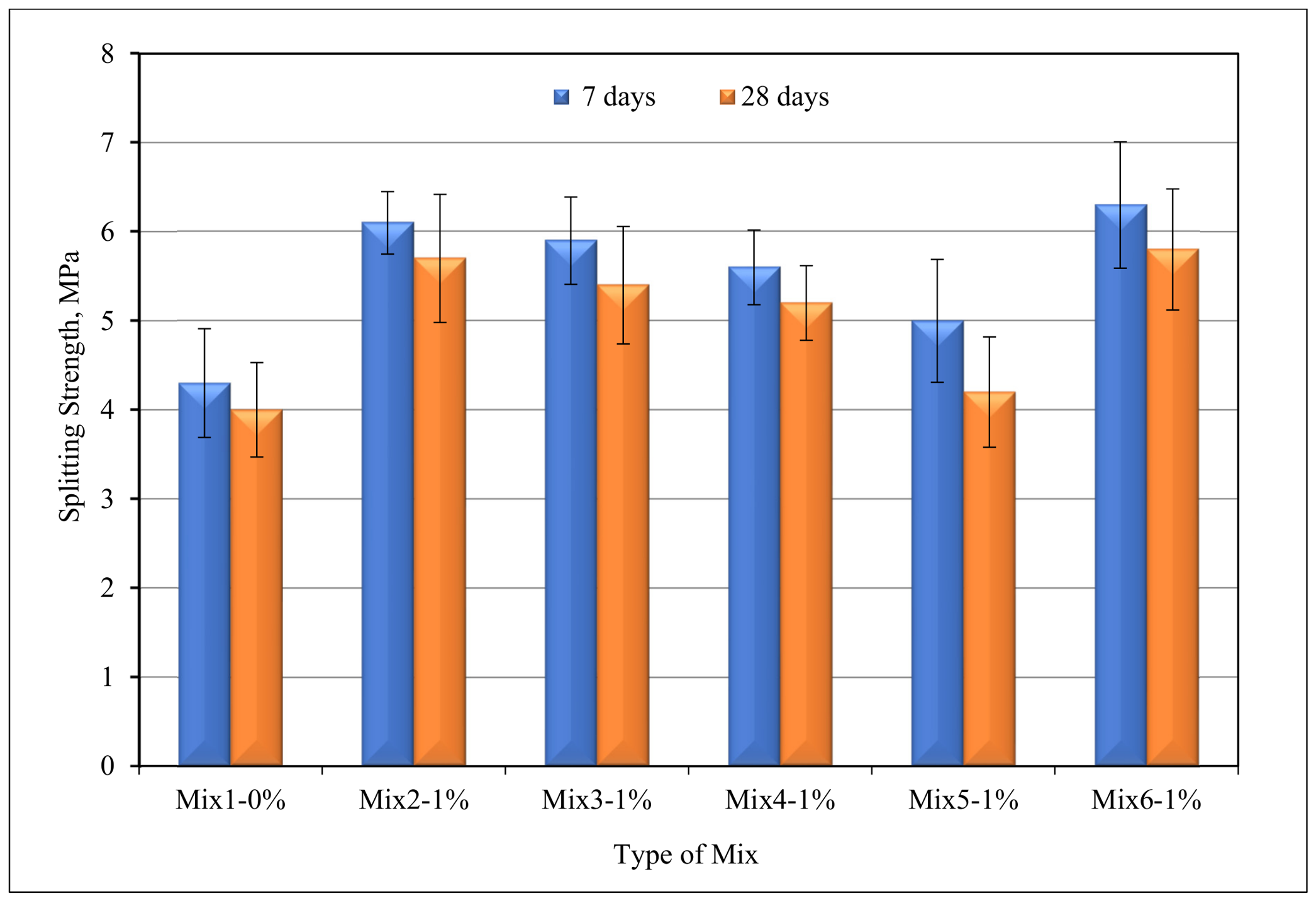
For each mixture group, three identical cylinders with dimensions 100 mm × 200 mm were tested, and the average value was recorded as the representative splitting tensile strength. Compared to reference Mix 1, the addition of waste steel fibers and low polypropylene fiber contents (0–25%) increased the 7- and 28-day splitting tensile strength by about 45% and 53%, respectively. Figure 4 indicates that waste steel fiber contents above 50% in Mix 2, Mix 3, and Mix 6 may represent an effective volume threshold that positively influences splitting tensile strength. However, when more than 50% polypropylene fibers were added to Mix 4, the 7- and 28-day splitting tensile strength decreased by roughly 15% and 16%, respectively, due to the mass of non-contiguous fibers, which weakened the concrete matrix’s resistance to crack formation.
All things considered, it seems that the addition of waste steel fibers and modest dose rates of polypropylene fiber greatly increases the splitting tensile strength. Because larger quantities of fibers interfere with the cohesiveness of the concrete matrix, higher dosage rates of polypropylene reduce the splitting tensile strength of the concrete matrix. The reduction in splitting tensile strength at higher polypropylene fiber dosages can be attributed to fiber agglomeration, reduced workability, and increased porosity within the concrete matrix. Since fresh-state properties were not measured in the present study, possible effects related to workability, fiber dispersion, or entrapped air should be regarded as interpretative hypotheses requiring further experimental verification. Excessive fibers tend to cluster and disrupt the homogeneity of the matrix, leading to poor compaction and weak interfacial zones that reduce the tensile load-carrying capacity of the concrete [46,47,48,49]. It was also indicated that the splitting tensile strength of concrete in Mixes 6, 2, and 3 increases when waste steel fibers are added up to around 50%, and with a low percentage of polypropylene. The proportion of fibers in the mix must be carefully chosen, and they must be evenly dispersed. In contrast to low quantities of fibers, the bridging mechanism of waste steel and polypropylene fibers increases tensile strength. However, after a certain ratio, it weakens the binding between concrete ingredients, causing rapid failure. In addition, the use of waste steel fibers at high volume percentages can significantly increase the matrix tensile strength, in addition to providing benefits for serviceability and crack control. These results are consistent with the findings of Muhammad and Mohammed [50]. The findings of the splitting tensile strength investigation show that adding discarded steel and polypropylene fibers to concrete generally increases its tensile strength. In instance, at both 7 and 28 days, mixes with a larger percentage of waste steel fiber showed the biggest increases in splitting tensile strength, especially Mix 6 (100% WSF, 0% PPF). When polypropylene fiber is utilized in larger amounts without enough scrap steel fiber, it seems to be less successful in increasing tensile strength. These results imply that discarded steel fiber is essential for improving the mechanical characteristics of the concrete mixtures under investigation, especially their tensile strength. Concrete’s splitting tensile strength is typically found to be a fraction of its compressive strength. The splitting tensile strength in our findings is within the usual range for concrete, ranging from roughly 6% to 8% of the compressive strength. In the presence of certain fiber types, mixes that performed well in splitting tensile strength also tended to perform well in compressive strength, suggesting a positive link between these two qualities.
The reduction in tensile strength observed with increasing PP fiber content (Figure 4) must be interpreted within the parameters of the hybrid fiber mixture design. Because the total fiber volume fraction was kept constant across the test specimens, an increase in the PP fiber dosage resulted in a proportional reduction in the waste steel fiber content. Waste metallic fibers generally possess a significantly higher elastic modulus and yield strength than polymeric fibers, making them more effective in load transfer and crack bridging within the concrete matrix. Consequently, replacing part of the steel fiber content with PP fibers may reduce the composite’s overall tensile strength. This interpretation is based on the comparative mechanical response of the tested mixtures, since no direct microstructural or dispersion-related characterization was performed in the present study.

3.3. Impact of Polypropylene and Waste Steel Fibers on the Density of Concrete

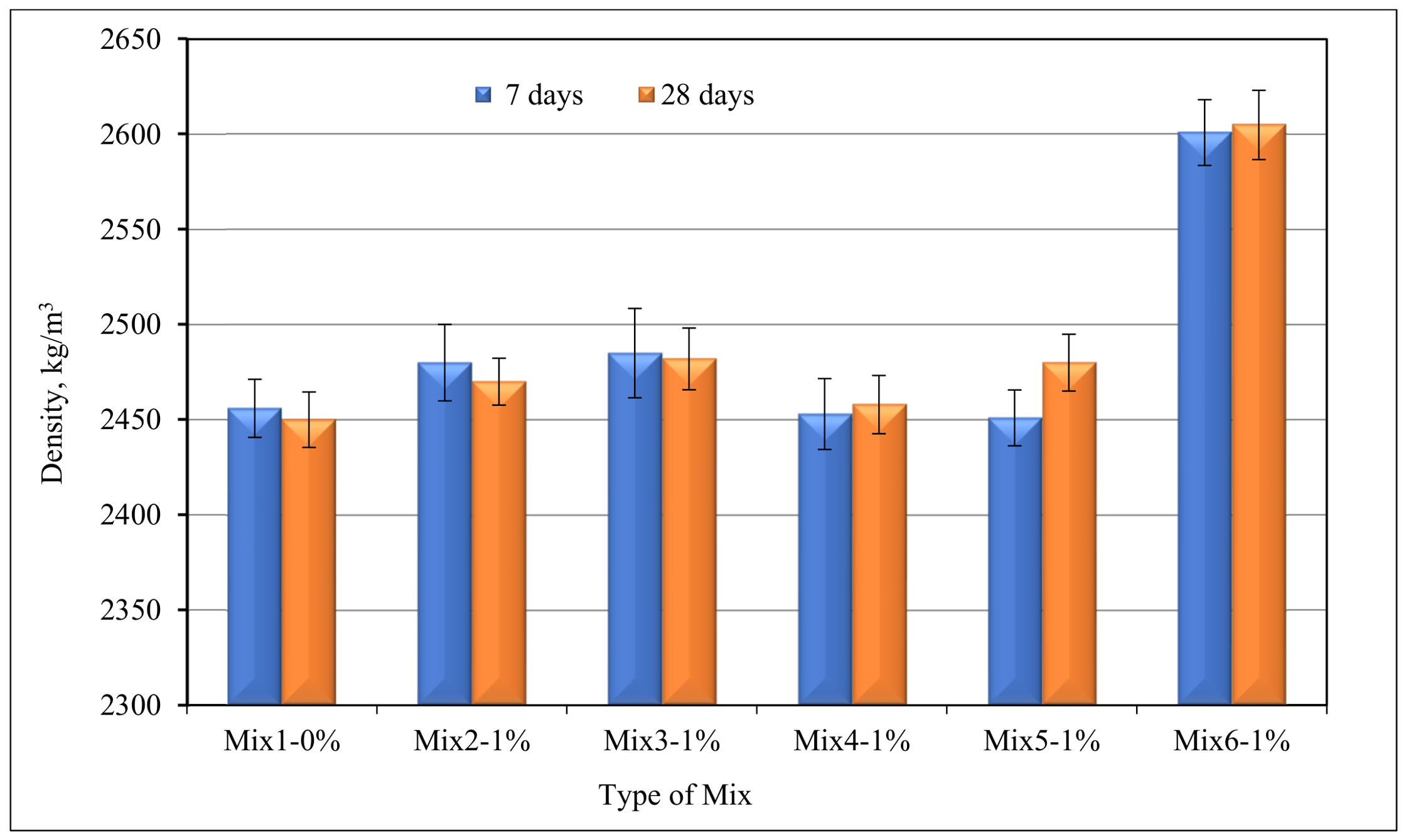
The ratio of mass to total volume occupied was used to determine the apparent density for hardened samples. Densities increased with varying percentages for 7 and 28 days when waste steel and polypropylene fibers were added to the reactive powder concrete. Figure 5 shows how adding waste steel fiber and polypropylene fiber to concrete affects its density. The greatest gains in density of concrete for the age 7-day period were 6.2%, 0.98%, 1.18%, 0.08%, and 0.98% for mixes M6, M2, M3, M4, and M5, respectively. However, the highest gains in density for age 28 days were 6.1%, 0.98%, 1.18%, 0.08%, and 0.98% for mixes M6, M2, M3, M4, and M5, respectively.
Additionally, adding polypropylene fibers caused the bulk densities of the samples to decrease even more. The bulk density of reactive powder concrete increased with decreasing polypropylene fiber content. This behavior can be attributed to the low density of polypropylene fibers and their tendency to entrain air and disrupt particle packing within the matrix. Reducing the fiber dosage improves workability and compaction, resulting in a denser microstructure and higher bulk density [48,49,51], whereas lowering the percentage of polypropylene fibers in the mixes caused the bulk densities to increase, with Mix 6 increasing by 6.1% above the reference sample. This increase can be attributed to the mechanical role of waste steel fibers within the matrix. These fibers enhance the composite behavior by bridging microcracks, delaying crack initiation and propagation, and improving stress transfer across the matrix. In addition, their presence may contribute to a denser and more confined internal structure by limiting crack growth and reducing the development of micro voids, which results in improved overall performance. However, this interpretation remains hypothetical in the absence of direct microstructural evidence. This outcome concurs with previous research [52,53].
The thorough comparative investigation makes it abundantly evident that waste steel fibers are very successful in raising the density of concrete and improving its splitting and compressive tensile strengths. Although they have a less noticeable effect on strength than discarded steel fibers, particularly when utilized alone, polypropylene fibers also provide a good contribution. Mixes with a high percentage of waste steel fibers, especially Mix 6 (100% WSF), showed the best performance across all characteristics. For engineers and material scientists who want to create high-performance fiber-reinforced concrete for uses demanding exceptional strength in both compression and tension while also taking density into account, these discoveries are essential.
It should be noted that this study is limited to short-term mechanical properties and does not encompass durability-related aspects such as shrinkage, permeability, freeze–thaw resistance, or fiber corrosion. These factors are essential for a comprehensive assessment of RPC performance, particularly in sustainable applications. Therefore, further investigations are required to evaluate the long-term durability and environmental impact of the proposed mixtures.

3.4. Impact of Polypropylene and Waste Steel Fibers on Flexural Strength

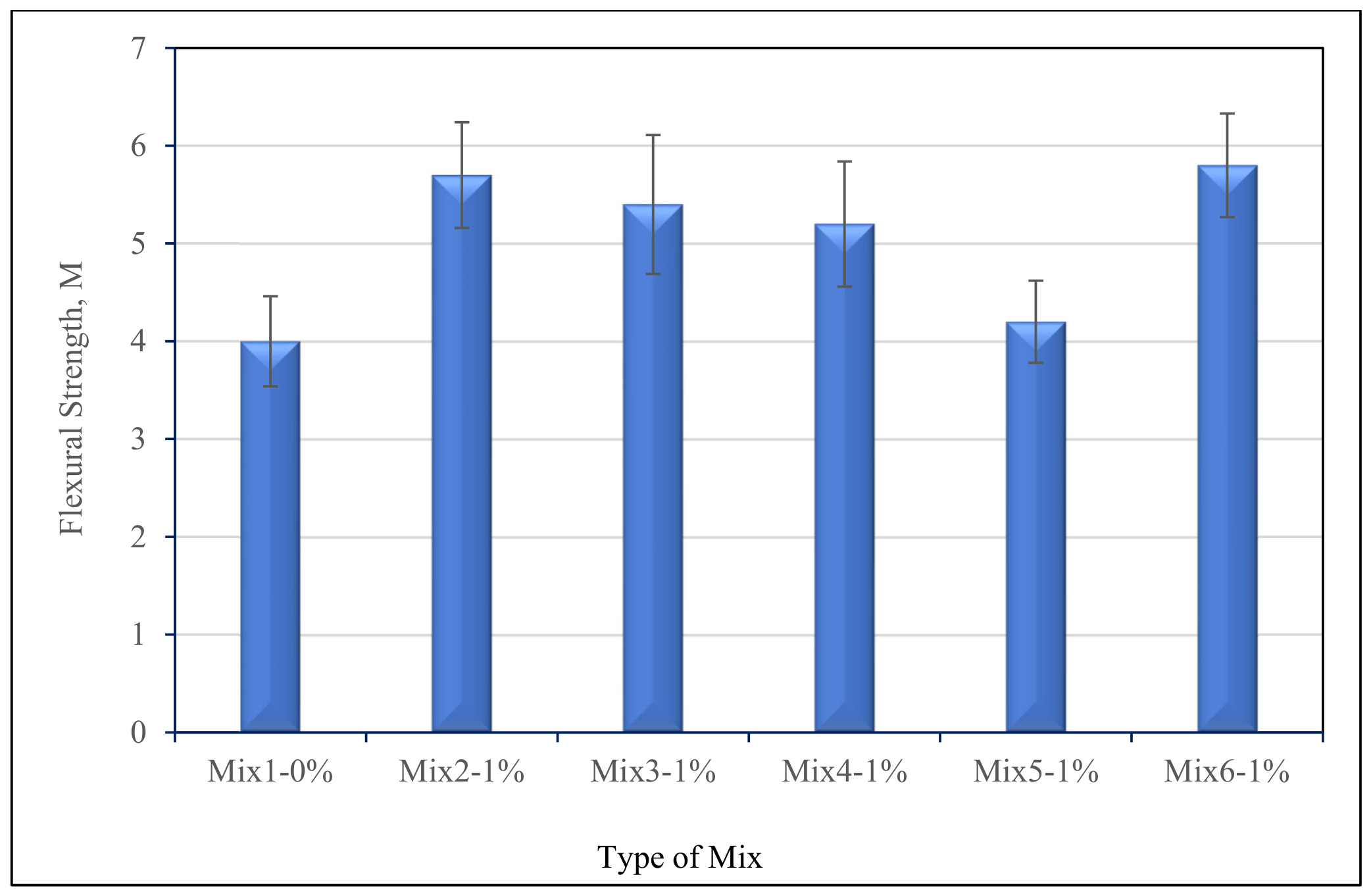
For each mixture group, three identical prisms with dimensions 100 mm x 100 mm x 500 mm were tested, and the average value was recorded as the representative flexural strength. Figure 6 provides a summary of how the percentages of waste steel and polypropylene fibers affect flexural strength. It was observed that as the percentage of waste steel fibers increased by more than 25%, the flexural strength increased as well, and the percentage of polypropylene fiber decreased, as shown in Mix 6 and Mix 2. For Mix 3 and Mix 6, the results indicated that the optimal percentages of waste steel and polypropylene fibers were 75% WF + 25% PP and 100% WF + 0% PP, which resulted in flexural strengths that were 29% and 15% higher, respectively, than the reference mix without any fibers. This suggests that the waste steel fiber percentage and flexural strength are directly positively correlated.
The addition of waste steel and polypropylene fiber to concrete may have improved its ductility, which in turn may have contributed to the increase in flexural strength. This is due to the behavior of a fiber–concrete composite element that prevents brittle failure. However, the flexural strength tends to decrease when the amount of waste steel fiber increases beyond the proportion corresponding to 25% polypropylene fiber. It can be said that waste steel fibers have had a major role in minimizing the width of cracks. The ability of fibers to “bridge” through cracks and increase concrete resistance to cracking is a plausible explanation. Concrete’s service life can be greatly extended by stopping waste steel fibers from spreading cracks. Adding extra waste steel fiber to RPC significantly improves flexural strength and toughness because steel fibers may assist load redistribution and crack control during bending. These findings concur with [54,55,56].

3.5. General Interpretation of Mechanical Performance

The overall results indicate a consistent positive relationship between increasing waste steel fiber proportion and the measured mechanical performance, particularly for compressive and flexural strength. In contrast, increasing polypropylene fiber content was more closely associated with crack-control benefits than with load-bearing capacity. Within the investigated range, mixtures containing 75–100% waste steel fibers showed the highest overall structural performance, suggesting that fiber stiffness and bonding characteristics play an important role in RPC reinforcement efficiency.

4. Statistical Assessment of Fiber Type and Curing Age Effects

To assess the effect of the considered variables and their potential synergistic effects, a two-way ANOVA (Analysis of Variance) with Replication was accomplished using Microsoft Excel. This statistical methodology was nominated to simultaneously examine the influence of two independent factors, characterized by fiber type and curing age, and also their combined interaction effects. This approach is dependable with current tendencies in experimental research, for example, those discussed by Fediuk et al. [57] and Hama et al. [58], which highlight that assessing interaction effects is crucial for taking the intricacy of materials responses that single-factor analyses frequently overlook. The ANOVA output demonstrates a significant effect across all sources of variation, as labeled in Table 8. Main effects of curing age: These factors verified the most considerable influence on the dependent variable, with a particularly high F-statistic of 120.06 (p ˂ 0.001). The point that the F- value enormously surpasses the critical value (Fcrit = 4.26) designates that the variances between curing age groups are perfect and not due to random error. Main effect of fiber type: The difference between mix type was likewise statistically significant (Fs = 448.38, p ˂ 0.001). This proves that the dissimilar mix type independently impacts the results. Interaction effect: A critical outcome is the substantial interaction between mix type and curing age (Fs = 10.39, p ˂ 0.001). This recommends that the impacts of the mix-type factor are not even but change depending on the curing age level they are associated with. The practically nil p-values (for example, 5.58 × 10⁻¹¹) for curing age provide an overwhelming indication to reject the null hypothesis. From a practical view, the domination of the curing age factor suggests it is the main driver of the experimental results. Conversely, the existence of substantial interaction means that any optimization of the procedure must study both factors simultaneously rather than in separation.
To detect the definite differences between the six Mixes, a Tukey HSD (Honestly Significant Difference) post hoc test was conducted following the ANOVA analysis. This test permits a reliable paired assessment between fiber types while maintaining statistical precision by controlling for various evaluation errors. The post hoc evaluations, as summarized in Table 9, display separate performance stages among the fiber mixes at 28 days. Mixes 6, 2, and 3 (group A) attained the uppermost compressive strength without a substantial statistical difference among them, indicating their higher effectiveness in improving the concrete matrix. On the other hand, a major decrease in strength was perceived for Mixes 4, 5, and 1, which belong to distinct statistical groups (B, C, and D). Definitely, Mix 1 exhibited the lowest mean value, significantly differing from all mixes by a margin beyond the HSD value of 1.48. These outcomes verify that the choice of fiber type is a vital influence on compressive strength.

5. Conclusions

Following laboratory testing and comparison with the reference RPC mixture, the following conclusions are drawn:
  • The study provides additional insight into the use of recycled waste steel fibers as a sustainable alternative to conventional steel fibers and their role in hybrid fiber systems under controlled experimental conditions.
  • Within the investigated conditions, waste steel fibers were observed to improve load-carrying capacity, while polypropylene fibers contributed to ductility and crack control. This suggests that fiber type selection should depend on the desired performance.
  • Mixes with higher waste steel fiber content achieved up to 28% strength improvement over the control mix. This trend may be associated with improved crack control and load transfer within the matrix.
  • Splitting tensile strength improved with fiber incorporation, with the best results observed for mixtures containing approximately 50% waste steel fiber combined with lower polypropylene content. This observation indicates that hybridization can enhance tensile performance.
  • Flexural strength improved significantly with fiber incorporation, with the highest values observed for mixes containing 75% and 100% waste steel fibers, showing increases of 29% and 15%, respectively.
  • The incorporation of waste steel and polypropylene fibers led to a slight increase in the dry density of RPC, with the highest increase of approximately 6.1% observed in mixes containing higher proportions of waste steel fibers.
  • The statistical evaluation (ANOVA and Tukey HSD) confirmed that fiber type significantly affects compressive strength. Mixes with higher waste steel fiber content formed the top performance group, while other mixes exhibited statistically lower strength levels.
In light of the obtained results in this study, the following recommendations and limitations are highlighted:
  • Based on the results obtained in this study, the choice of fiber type in RPC should depend on the intended application. Mixtures with a higher proportion of waste steel fibers may be more appropriate where greater load resistance and flexural capacity are required. In contrast, polypropylene fibers may be beneficial when improved crack control and ductility are desired. The use of combined fiber systems may offer a practical balance between strength and serviceability requirements.
  • While this study provides valuable insights into the synergistic effects of hybridizing waste metallic and polypropylene fibers, the experimental scope was limited to a fixed total fiber volume fraction of 1%. This dosage was selected to isolate the influence of the hybridization ratio on the mechanical properties of the concrete. Consequently, the study does not identify the optimal total fiber dosage, and broader dosage ranges should be investigated in future studies.
  • While this study provides valuable insights into the synergistic effects of hybridizing waste metallic and polypropylene fibers, the experimental scope was limited to a fixed total fiber volume fraction of 1%. This dosage was selected to isolate the influence of the hybridization ratio on the mechanical properties of the concrete. Therefore, the conclusions are limited to the investigated dosage level and should not be directly generalized to other fiber contents without further experimental validation. Consequently, the study does not identify the optimal total fiber dosage, and broader dosage ranges should be investigated in future studies.
  • Considering that fiber type and content play a crucial role in the performance of fiber-reinforced UHPC systems, further research is recommended to explore a wider range of fiber combinations and volume fractions in RPC, as well as their influence on flexural, fatigue, and long-term behavior.
  • This study focuses on short-term mechanical properties and does not address durability aspects such as shrinkage, permeability, freeze–thaw resistance, or fiber corrosion. Future research is recommended to investigate the long-term durability and environmental performance of RPC mixtures.
  • It should be noted that fresh-state properties such as slump flow, workability, rheology, and fiber dispersion were not measured in this study. These parameters could significantly influence the observed mechanical behavior and should be investigated in future research.
  • Microstructural characterization (e.g., SEM, ITZ analysis, and porosity assessment) was not performed in the present study. Therefore, the proposed mechanisms related to crack bridging, fiber–matrix interaction, and internal matrix densification should be interpreted as indirect explanations based on macroscopic behavior. Future studies are encouraged to include detailed microstructural analysis.
  • While the use of waste metallic fibers may offer sustainability advantages, a quantitative life cycle assessment (LCA) or embodied carbon analysis was beyond the scope of the present mechanical investigation.
  • The current study focused on empirical, comparative evaluations supported by statistical analysis rather than the formulation of theoretical or predictive analytical models. Future research should address these gaps by conducting broader parametric studies on varying fiber volume fractions and utilizing the resulting datasets to develop robust analytical frameworks capable of predicting the mechanical response of these specific hybrid composites.

Author Contributions

Conceptualization, A.J., M.S.R. and Z.M.R.A.R.; methodology, A.D., H.A.S.P., L.F.A.B. and V.M.P.C. software, A.J. and M.S.R.; validation A.J., A.D., H.A.S.P., L.F.A.B. and V.M.P.C.; formal analysis, A.J., M.S.R., Z.M.R.A.R., A.D., H.A.S.P., L.F.A.B. and V.M.P.C.; investigation, A.J., M.S.R. and Z.M.R.A.R.; resources, A.D., H.A.S.P., L.F.A.B. and V.M.P.C.; data curation, A.J., M.S.R. and Z.M.R.A.R.; writing—original draft preparation, A.J., M.S.R., Z.M.R.A.R., A.D., H.A.S.P., L.F.A.B. and V.M.P.C.; writing—review and editing, A.J., M.S.R., Z.M.R.A.R., A.D., H.A.S.P., L.F.A.B. and V.M.P.C.; supervision, A.D. and L.F.A.B.; project administration, A.D.; funding acquisition, A.D., H.A.S.P., L.F.A.B. and V.M.P.C. All authors have read and agreed to the published version of the manuscript.

Funding

The authors acknowledge the support by the GeoBioTec Research Unit, through the strategic projects UID/04035/2025 (https://doi.org/10.54499/UID/04035/2025, accessed on 30 April 2026), funded by the Fundação para a Ciência e a Tecnologia, IP/MCTES through national funds (PIDDAC). Funding for the period 2025–2029.

Institutional Review Board Statement

Not applicable.

Informed Consent Statement

Not applicable.

Data Availability Statement

The authors declare that the data supporting the findings of this study are available within the paper.

Acknowledgments

The experimental techniques were carried out at the Construction Materials Laboratory of the University of Kerbala. The authors would like to thank the staff for their help.

Conflicts of Interest

The authors declare no conflicts of interest.

References

  1. Cheyrezy, M.; Maret, V.; Frouin, L. Microstructural analysis of RPC (Reactive Powder Concrete). Cem. Concr. Res. 1995, 25, 1491–1500. [Google Scholar] [CrossRef]
  2. Alsaad, A.J.; Radhi, M.S.; Taher, M.J. Eco-friendly Utilizing of Iron Filings in Production Reactive Powder Concrete. IOP Conf. Ser. Mater. Sci. Eng. 2019, 518, 022051. [Google Scholar] [CrossRef]
  3. Radhi, M.S.; Abdul Rasoul, Z.M.R.; Ridha Mahmmod, L.M. Utilization of Pulverized Local Wastes for Production Sustainable Reactive Powder Concrete. IOP Conf. Ser. Mater. Sci. Eng. 2019, 518, 022052. [Google Scholar] [CrossRef]
  4. Collepardi, S.; Coppola, L.; Troli, R.; Collepardi, M. Mechanical properties of modified reactive powder concrete. ACI Spec. Publ. 1997, 173, 1–22. [Google Scholar]
  5. Alsaedy, S.M.; Aljalawi, N. The effect of nanomaterials on the properties of limestone dust green concrete. Eng. Technol. Appl. Sci. Res. 2021, 11, 7619–7623. [Google Scholar] [CrossRef]
  6. Huynh, T.-P.; Ngo, S.-H.; Nguyen, V.-D. A Modified Reactive Powder Concrete Made with Fly Ash and River Sand: An Assessment on Engineering Properties and Microstructure. Period. Polytech. Civ. Eng. 2024, 68, 1031–1039. [Google Scholar] [CrossRef]
  7. Nasr, M.S.; Hasan, Z.A.; Abed, M.K.; Dhahir, M.K.; Najim, W.N.; Shubbar, A.A.F.; Habeeb, Z.D. Utilization of high volume fraction of binary combinations of supplementary cementitious materials in the production of reactive powder concrete. Period. Polytech. Civ. Eng. 2020, 65, 335–343. [Google Scholar] [CrossRef]
  8. Tuama, W.K.; Kadhum, M.M.; Alwash, N.A.; Al-Khafaji, Z.S.; Abdulraheem, M.S. RPC Effect of Crude Oil Products on the Mechanical Characteristics of Reactive-Powder and Normal-Strength Concrete. Period. Polytech. Civ. Eng. 2020, 64, 422–429. [Google Scholar]
  9. Khaleghi, R.; Shokoohfar, A.; Farokhzad, R.; TahamouliRoudsari, M. Experimental Investigation of High-performance Fiber-reinforced Cementitious Composite and its Effect on RC Beams by Numerical Method. Period. Polytech. Civ. Eng. 2025, 69, 45–59. [Google Scholar] [CrossRef]
  10. Xia, H.; Wang, W.; Shi, Z. Mechanical properties of reactive powder concrete with ultra-short brass-coated steel fibres. Mag. Concr. Res. 2015, 67, 308–316. [Google Scholar] [CrossRef]
  11. Salam, A.; Room, S.; Iqbal, S.; Mahmood, K.; Iqbal, Q. An experimental study of bond behavior of micro steel fibers added self-compacting concrete with steel reinforcement. Period. Polytech. Civ. Eng. 2020, 64, 1144–1152. [Google Scholar] [CrossRef]
  12. Hendi, S.I.; Aljalawi, N.M.F. Behavior of reactive powder concrete reinforced with hybrid fibers containing sustainable materials. Eng. Technol. Appl. Sci. Res. 2024, 14, 13878–13882. [Google Scholar] [CrossRef]
  13. Olivito, R.S.; Zuccarello, F.A. An experimental study on the tensile strength of steel fiber reinforced concrete. Compos. Part B Eng. 2010, 41, 246–255. [Google Scholar] [CrossRef]
  14. Ou, Y.-C.; Tsai, M.-S.; Liu, K.-Y.; Chang, K.-C. Compressive behavior of steel-fiber-reinforced concrete with a high reinforcing index. J. Mater. Civ. Eng. 2012, 24, 207–215. [Google Scholar] [CrossRef]
  15. Song, P.S.; Hwang, S. Mechanical properties of high-strength steel fiber-reinforced concrete. Constr. Build. Mater. 2004, 18, 669–673. [Google Scholar] [CrossRef]
  16. Nataraja, M.C.; Dhang, N.; Gupta, A.P. Stress–strain curves for steel-fiber reinforced concrete under compression. Cem. Concr. Compos. 1999, 21, 383–390. [Google Scholar] [CrossRef]
  17. Yu, R.; Spiesz, P.; Brouwers, H.J.H. Static properties and impact resistance of a green Ultra-High Performance Hybrid Fibre Reinforced Concrete (UHPHFRC): Experiments and modeling. Constr. Build. Mater. 2014, 68, 158–171. [Google Scholar] [CrossRef]
  18. Mashrei, M.A.; Sultan, A.A.; Mahdi, A.M. Effects of polypropylene fibers on compressive and flexural strength of concrete material. Int. J. Civ. Eng. Technol. 2018, 9, 2208–2217. [Google Scholar]
  19. Danha, L.S.; Khalil, W.I.; Al-Hassani, H.M. Mechanical properties of reactive powder concrete (RPC) with Various Steel Fiber and Silica Fume Contents. Eng. Technol. J. 2013, 31, 3090–3108. [Google Scholar] [CrossRef]
  20. Tan, H.; Yuan, P.; Sun, D.; Fan, X.; Wang, C.; Liu, J. Ratio of water to cement and supplementary cementitious materials on mechanical and impact resistance properties of reactive powder concrete. Sci. Rep. 2025, 15, 7480. [Google Scholar] [CrossRef]
  21. Al-Tikrite, A.; Hadi, M.N.S. Influence of steel fibres on the behaviour of RPC circular columns under different loading conditions. Structures 2018, 14, 111–123. [Google Scholar] [CrossRef]
  22. Mayhoub, O.A.; Nasr, E.-S.A.R.; Ali, Y.A.; Kohail, M. The influence of ingredients on the properties of reactive powder concrete: A review. Ain Shams Eng. J. 2021, 12, 145–158. [Google Scholar] [CrossRef]
  23. Sanjuán, M.Á.; Andrade, C. Reactive powder concrete: Durability and applications. Appl. Sci. 2021, 11, 5629. [Google Scholar] [CrossRef]
  24. Biswas, W.K.; Zhang, X.; Matters, C.; Maboud, M. Techno-Eco-Efficiency Assessment of Using Recycled Steel Fibre in Concrete. Sustainability 2024, 16, 3717. [Google Scholar] [CrossRef]
  25. Wu, D.; Wu, W.; Fu, C.; Zhao, J.; Lin, H. Experimental study on the flexural performance of FRP grid-reinforced ultra-high-performance concrete I-beams with different steel fiber contents. J. Reinf. Plast. Compos. 2025, 44, 2462–2475. [Google Scholar] [CrossRef]
  26. Mahaini, Z.; Abed, F.; Alhoubi, Y.; Elnassar, Z. Experimental and numerical study of the flexural response of Ultra High Performance Concrete (UHPC) beams reinforced with GFRP. Compos. Struct. 2023, 315, 117017. [Google Scholar] [CrossRef]
  27. Meng, W.; Khayat, K.H.; Bao, Y. Flexural behaviors of fiber-reinforced polymer fabric reinforced ultra-high-performance concrete panels. Cem. Concr. Compos. 2018, 93, 43–53. [Google Scholar] [CrossRef]
  28. Sun, H.-Q.; Zeng, J.-J.; Hong, G.-Y.; Zhuge, Y.; Liu, Y.; Zhang, Y. 3D-printed functionally graded concrete plates: Concept and bending behavior. Eng. Struct. 2025, 327, 119551. [Google Scholar] [CrossRef]
  29. Zeng, J.-J.; Zeng, W.-B.; Ye, Y.-Y.; Liao, J.; Zhuge, Y.; Fan, T.-H. Flexural behavior of FRP grid reinforced ultra-high-performance concrete composite plates with different types of fibers. Eng. Struct. 2022, 272, 115020. [Google Scholar] [CrossRef]
  30. IQS No. 5; Iraqi Standard for Concrete Aggregates. Iraqi Central Organization for Standardization and Quality Control: Baghdad, Iraq, 2019; p. 18.
  31. ASTM-C33-18; Standard Specification for Concrete Aggregates. American Society for Testing and Materials: West Conshohocken, PA, USA, 2019. [CrossRef]
  32. ASTM-C494-19; Standard Specification for Chemical Admixtures for Concrete. American Society for Testing and Materials: West Conshohocken, PA, USA, 2019.
  33. ASTM-1240-20; Standard Specification for Silica Fume Used in Cementitious Mixtures. American Society for Testing and Materials: West Conshohocken, PA, USA, 2020.
  34. Radhi, M.S.; Rasoul, Z.M.R.A.; Alsaad, A.J. Mechanical Behavior of Modified Reactive Powder Concrete with Waste Materials Powder Replacement. Period. Polytech. Civ. Eng. 2021, 65, 649–655. [Google Scholar] [CrossRef]
  35. Rasoul, Z.S.; Juoi, J.M.; Al-Abbas, B.H. Mechanical Properties and High Temperature Performance of Sustainable Reactive Powder Concrete Containing Waste Glass. J. Adv. Res. Appl. Mech. 2023, 112, 149–161. [Google Scholar] [CrossRef]
  36. Taher, M.J.; Alsaad, A.J.; Radhi, M.S. Comparability Study on the Effects of Curing Approaches on the Mechanical Behaviours of Reactive Powder Concrete. IOP Conf. Ser. Mater. Sci. Eng. 2020, 671, 012141. [Google Scholar] [CrossRef]
  37. Al-Abbas, B.; Rasoul, Z.M.R.A.; Hasan, D. Ductility and shape effect of steel tube column filled with reactive powder concrete. Results Eng. 2024, 24, 103523. [Google Scholar] [CrossRef]
  38. Hameed, M.; Almayah, A.A.; Naser, K.Z. A State of the Art on Composite Steel-Reactive Powder Concrete Structures. Civ. Eng. Sci. Technol. J. 2025, 1, 77–83. [Google Scholar]
  39. Jadooe, A.; Muhammed, S.H.; Al-Khafaji, A.G.A. The flexural response of hybrid beams strengthened with fiber polymer rebars. Pollack Period. 2025, 20, 8–15. [Google Scholar] [CrossRef]
  40. Algburi, A.H.M.; Sheikh, M.N.; Hadi, M.N.S. Mechanical properties of steel, glass, and hybrid fiber reinforced reactive powder concrete. Front. Struct. Civ. Eng. 2019, 13, 998–1006. [Google Scholar] [CrossRef]
  41. Zhang, Y.; Wu, B.; Wang, J.; Liu, M.; Zhang, X. Reactive powder concrete mix ratio and steel fiber content optimization under different curing conditions. Materials 2019, 12, 3615. [Google Scholar] [CrossRef]
  42. Karatas, M.; Gunes, A. Engineering Properties of Self-Compacting Concrete Produced by Polypropylene and Steel Fiber. Period. Polytech. Civ. Eng. 2015, 59, 95–102. [Google Scholar] [CrossRef][Green Version]
  43. Hasan, S.S. Effect of using waste fibers on the strength properties of sustainable reactive powder concrete. Kufa J. Eng. 2024, 15, 95–107. [Google Scholar] [CrossRef]
  44. Li, H.; Liu, G. Tensile properties of hybrid fiber-reinforced reactive powder concrete after exposure to elevated temperatures. Int. J. Concr. Struct. Mater. 2016, 10, 29–37. [Google Scholar] [CrossRef]
  45. Ibrahim, Y.; Hasan, A.; Maroof, N. Effects of polypropylene fiber content on strength and workability properties of concrete. Polytech. J. 2019, 9, 3. [Google Scholar] [CrossRef]
  46. Han, C.; Pang, J.; Hu, S.; Yang, C. Study on static and dynamic mechanical properties and microstructure of silica fume-polypropylene fiber modified rubber concrete. Sci. Rep. 2024, 14, 12573. [Google Scholar] [CrossRef] [PubMed]
  47. Li, P.; Huang, M.; Shang, Y.; Kuang, Y.; Xiong, G.; Tang, X. Study on mechanical properties of coarse-fine polypropylene fiber blended concrete. Buildings 2025, 15, 2971. [Google Scholar] [CrossRef]
  48. Alhozaimy, A.M.; Soroushian, P.; Mirza, F. Mechanical properties of polypropylene fiber reinforced concrete and the effects of pozzolanic materials. Cem. Concr. Compos. 1996, 18, 85–92. [Google Scholar] [CrossRef]
  49. Yin, S.; Tuladhar, R.; Shi, F.; Combe, M.; Collister, T.; Sivakugan, N. Use of macro plastic fibres in concrete: A review. Constr. Build. Mater. 2015, 93, 180–188. [Google Scholar] [CrossRef]
  50. Mohammed, A.A.; Mohammed, I.I. Effect of fiber parameters on the strength properties of concrete reinforced with PET waste fibers. Iran. J. Sci. Technol. Trans. Civ. Eng. 2021, 45, 1493–1509. [Google Scholar] [CrossRef]
  51. Al-Mulla, I.F.; Al-Rihimy, A.S. The effect of the hydrophilic and hydrophobic behavior of polymeric fibers on some properties of reactive powder concrete. Eng. Technol. Appl. Sci. Res. 2025, 15, 21691–21694. [Google Scholar] [CrossRef]
  52. Abid, M.; Zeb, S.; Shah, M.K.; Muhammad, S.; Bashir, M.O.; Almujibah, H.; Elshekh, A.E.A.; Onyelowe, K.C. Enhancing Mechanical Performance and Microstructure of Reactive Powder Concrete Through Optimization of High-temperature Curing Regimes. Case Stud. Constr. Mater. 2025, 23, e05069. [Google Scholar] [CrossRef]
  53. Amiri Shiri, A.A.; Darbhanzi, A. Experimental study on the elevated temperature performance of composite reactive powder concrete with polypropylene fiber-a case study. J. Build. Pathol. Rehabil. 2025, 10, 67. [Google Scholar] [CrossRef]
  54. Ge, L.; Zhang, Y.; Feng, Z.; Li, H. Study on the mechanical and microscopic properties of steel fiber reinforced reactive powder concrete under different curing methods. J. Build. Eng. 2023, 76, 107436. [Google Scholar] [CrossRef]
  55. Su, C.; Wu, Q.; Weng, L.; Chang, X. Experimental investigation of mode I fracture features of steel fiber-reinforced reactive powder concrete using semi-circular bend test. Eng. Fract. Mech. 2019, 209, 187–199. [Google Scholar] [CrossRef]
  56. Alogla, K.; Rasheed, L.S. Effect of the location of reactive powder concrete layer on the behaviour of hybrid deep beams. Int. J. Struct. Eng. 2023, 13, 368–385. [Google Scholar] [CrossRef]
  57. Fediuk, R.; Makarova, N.; Qader, D.N.; Kozin, A.; Amran, M.; Petropavlovskaya, V.; Novichenkova, T.; Sulman, M.; Petropavlovskii, K. Combined effect on properties and durability performance of nanomodified basalt fiber blended with bottom ash-based cement concrete: ANOVA evaluation. J. Mater. Res. Technol. 2023, 23, 2642–2657. [Google Scholar] [CrossRef]
  58. Hama, S.M.; Al Ani, H.K.K.; Alfahdawi, I.H. ANOVA statistical analysis for determining the optimum contain of waste powders in concrete. Salud Cienc. Tecnol. Conf. 2024, 3, 852. [Google Scholar] [CrossRef]
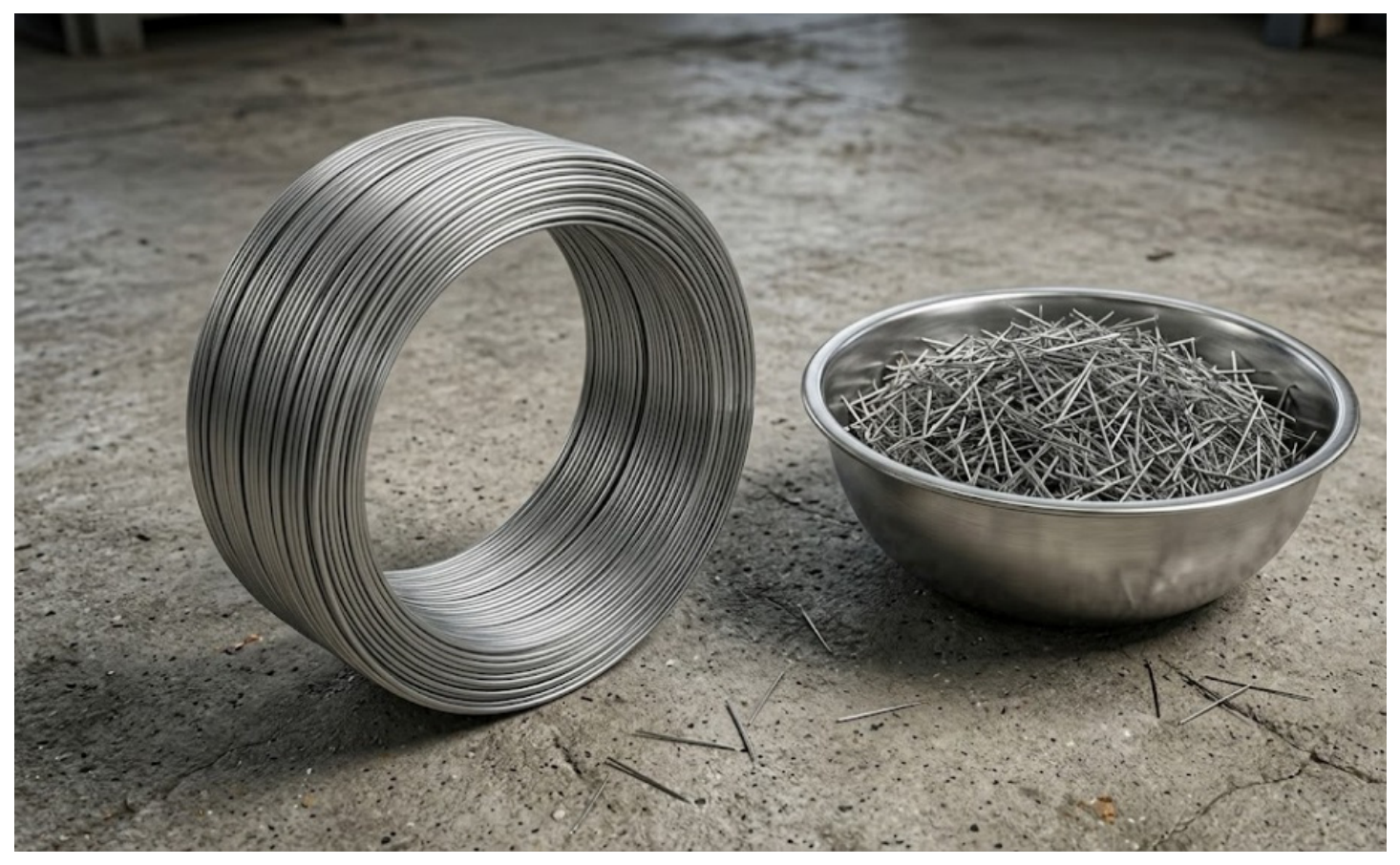
Figure 1. Metallic waste steel fiber used in this study.
Jcs 10 00251 g001
Figure 2. Polypropylene fibers utilized in this investigation.
Jcs 10 00251 g002
Figure 3. Impact of polypropylene and waste steel fibers on the compressive strength of concrete after 7 and 28 days.
Jcs 10 00251 g003
Figure 4. Impact of polypropylene and waste steel fibers on the splitting tensile strength of concrete after 7 and 28 days.
Jcs 10 00251 g004
Figure 5. Impact of polypropylene and waste steel fibers on the density of concrete after 7 and 28 days.
Jcs 10 00251 g005
Figure 6. Impact of polypropylene and waste steel fibers on the flexural strength after 28 days.
Jcs 10 00251 g006
Table 1. Chemical composition of ordinary Portland cement.
Components (%)Test ResultsIraqi Standard Limits (No. 5/2019) [30]
CaO62.82-
SiO220.65-
Al2O34.91-
Fe2O33.61-
MgO2.37≤5.0
SO31.89≤2.8% if C3A ≥ 5%
Na2O0.35-
K2O0.5-
L.S.F0.930.66–1.20
Insoluble Residue (IR)0.441.5%
Table 2. Physical properties of ordinary Portland cement.
TestsTest ResultsIraqi Standard Limits
(No. 5/2019) [30]
Fineness (Blaine), (m2/kg)335≥235
Initial Setting Time (min)129≥45
Final Setting Time (min)209≤600
Compressive Strength (MPa)(2 days)22.9≥20.0
(28 days)47.4≥42.5
Table 3. Properties of silica fume.
PropertyTest ResultsLimit of Specification Requirements
ASTM C–1240 [33]
ColorGrey powder-
Density (kg/m3)600(500–700)
Specific gravity2.25(2.1–2.4)
Chemical properties -
SiO287.685.0 (minimum)
Moisture content (%)0.83.0 (maximum)
Loss of ignition3.86.0 (maximum)
Physical properties
Specific surface (m2/gm)2115 (minimum)
Percent retained on 45 µm NO (325) (%)710 (maximum)
Table 4. Properties of waste steel fibers.
PropertyValueUnit
SourceRecycled industrial waste-
Surface TextureSmooth-
GeometryStraight-
ColorMetallic gray-
Fiber typeMonofilament-
Length13mm
Diameter0.22mm
Aspect ratio (L/d)30–80-
Density (specific gravity)7.8g/cm3
Tensile strength680MPa
Elastic modulus200GPa
Table 5. Properties of the polypropylene fibers.
PropertyValueUnit
Fiber typeMonofilament-
Length12mm
Diameter34µm
Aspect ratio (L/d)350–550-
Density (specific gravity)0.92g/cm3
Tensile strength320–480MPa
Elastic modulus3–4GPa
Table 6. Mix proportions of concrete mixes (kg/m3).
Percentage of Fiber 1%Super
Plasticizers,
%
W/C
Ratio
Silica FumeFine AgeCementMix
Waste Steel Fiber (WSF)Polypropylene
Fiber (PPF)
0040.18220970880Mix 1-0%
(0% WSF + 0% PPF)
65.72.240.18220970880Mix 2-1% (75% WSF + 25% PPF)
43.84.440.18220970880Mix 3-1%
(50% WSF + 50% PPF)
21.96.640.18220970880Mix 4-1%
(25% WSF + 75% PPF)
08.840.18220970880Mix 5-1%
(0% WSF + 100% PPF)
87.6040.18220970880Mix 6-1%
(100% WSF + 0% PPF)
Control mixMix 1-0%
75% waste steel fiber and 25% polypropylene fiberMix 2-1%
50% waste steel fiber and 50% polypropylene fiberMix 3-1%
25% waste steel fiber and 75% polypropylene fiberMix 4-1%
0% waste steel fiber and 100% polypropylene fiberMix 5-1%
100% waste steel fiber and 0% polypropylene fiberMix 6-1%
Table 7. The impact of polypropylene and waste steel fibers on the compressive strength of concrete.
Average Compressive Strength (MPa)Mix Type
28 Days7 Days
63.963.862.561.8Mix 1-0%
(0%WSF + 0%PPF)
64.162.8
63.962.9
80.68178.076.5Mix 2-1%
(75%WSF + 25%PPF)
81.578.9
79.478.6
79.478.972.171.9Mix 3-1%
(50%WSF + 50%PPF)
79.972.9
79.471.5
72.87370.469.4Mix 4-1%
(25%WSF + 75%PPF)
73.270.8
72.371.1
68.368.965.364.6Mix 5-1%
(0%WSF + 100%PPF)
68.265
67.866.3
82.382.580.981.3Mix 6-1%
(100%WSF + 0%PPF)
81.281.6
83.379.8
Table 8. A two-way ANOVA (Analysis of Variance) for compressive strength.
ANOV: Two-Factor with Replication
Source of VariationSum of
Squares
Degrees of FreedomMean SquareF-Statisticp-ValueF_Crit
Fiber Type1546.285309.26448.381.12 × 10−242.62
Curing Age82.81182.81120.065.58 ×10−114.26
Interaction Effect35.8357.1710.392.21×10−52.62
Within-Group Error16.55240.69
Total1681.4735
Table 9. Tukey HSD post hoc assessment of compressive strength results at 28 days.
Mix IDFiber TypeMean Strength (MPa)Standard DeviationStandard ErrorTukey
Grouping
Mix 6(100%WSF + 0%PPF)82.331.060.61A
Mix 2(75%WSF + 25%PPF)80.631.100.63A
Mix 3(50%WSF + 50%PPF)79.40.500.29A
Mix 4(25%WSF + 75%PPF)72.830.470.27B
Mix 5(0%WSF + 100%PPF)68.300.560.32C
Mix1(0%WSF + 0%PPF)63.930.150.09D
Disclaimer/Publisher’s Note: The statements, opinions and data contained in all publications are solely those of the individual author(s) and contributor(s) and not of MDPI and/or the editor(s). MDPI and/or the editor(s) disclaim responsibility for any injury to people or property resulting from any ideas, methods, instructions or products referred to in the content.