3.2. Thermal Characteristics of PHB/PVP Compositions Before and After Ozonolysis
An effective way to assess the state of amorphous and crystalline phases of polymers and their mixtures is to combine dynamic and structural research methods. The combination of structural and dynamic methods allows for a more complete assessment of the structural evolution of the PHB/PVP mixture. To form matrices with specified properties, it is necessary to establish the relationship between the composition of the mixture of ultrafine PHB/PVP fibers and their morphology and structural organization.
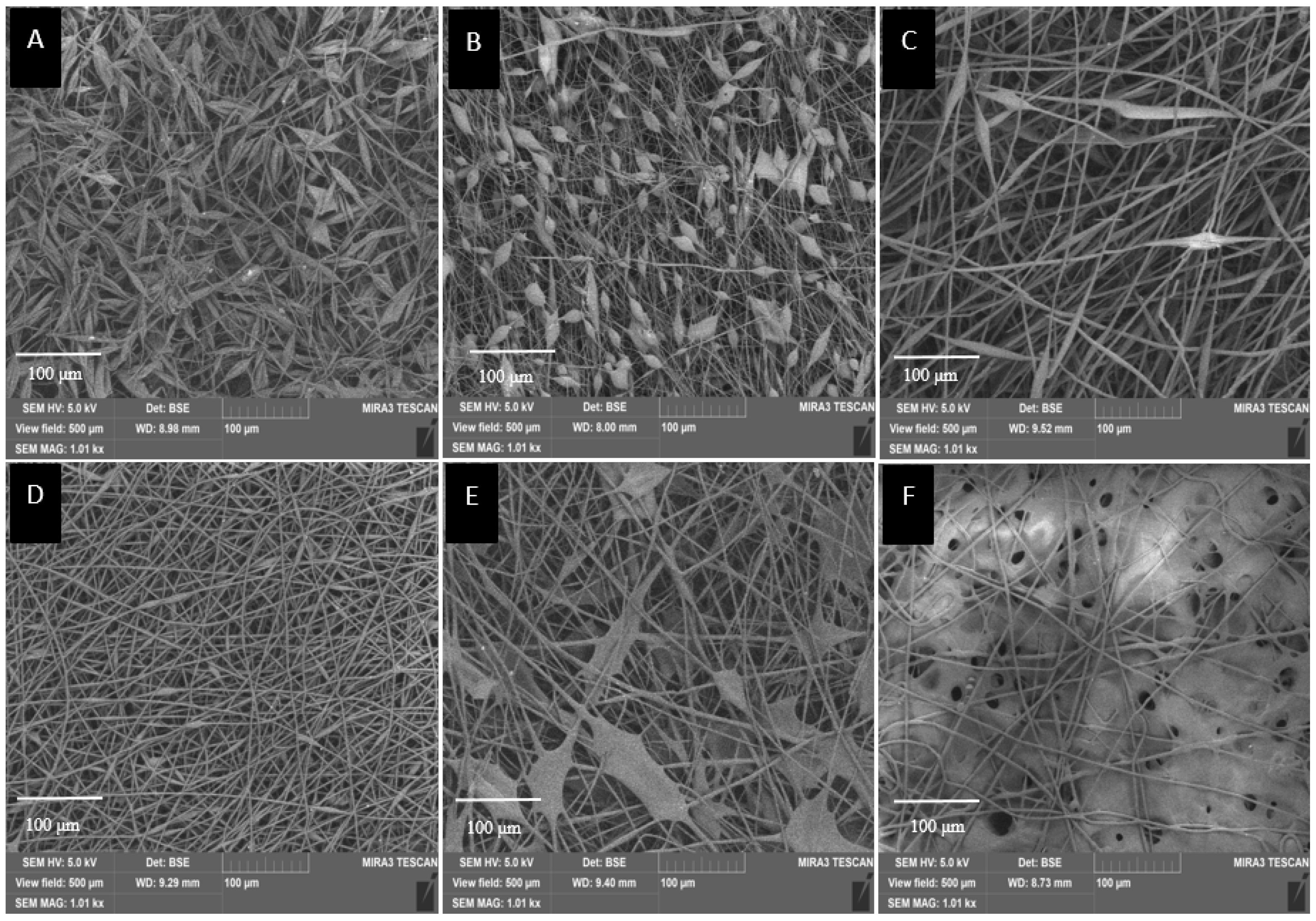
Figure 1.
Micrographs of nonwoven fibrous materials based on PHB–PVP mixtures: 100:0—(A); 91:9—(B); 65:35—(C); 50:50—(D); 30:70—(E); 0:100—(F).
Figure 1.
Micrographs of nonwoven fibrous materials based on PHB–PVP mixtures: 100:0—(A); 91:9—(B); 65:35—(C); 50:50—(D); 30:70—(E); 0:100—(F).
The study of processes occurring in polymers and polymer mixtures under the influence of ozonolysis is very important from the point of view of practical use, since polymer products are exposed to aggressive factors in the environment. It is known that various types of external influences on polymers are powerful initiators of physical and chemical processes in polymer materials. However, the effect of such an active oxidant as ozone on the morphology and behavior of products obtained on the basis of these biopolymers remains insufficiently studied at present.
When mixing two polymers, PHB and PVP, along with changes in the morphology of the fiber material, changes in their thermophysical and structural–dynamic characteristics should be expected.
In this work, the crystalline phase of ultrathin PHB fibers in a binary PHB/PVP composition was studied by DSC both before and after ozonolysis.
For example,
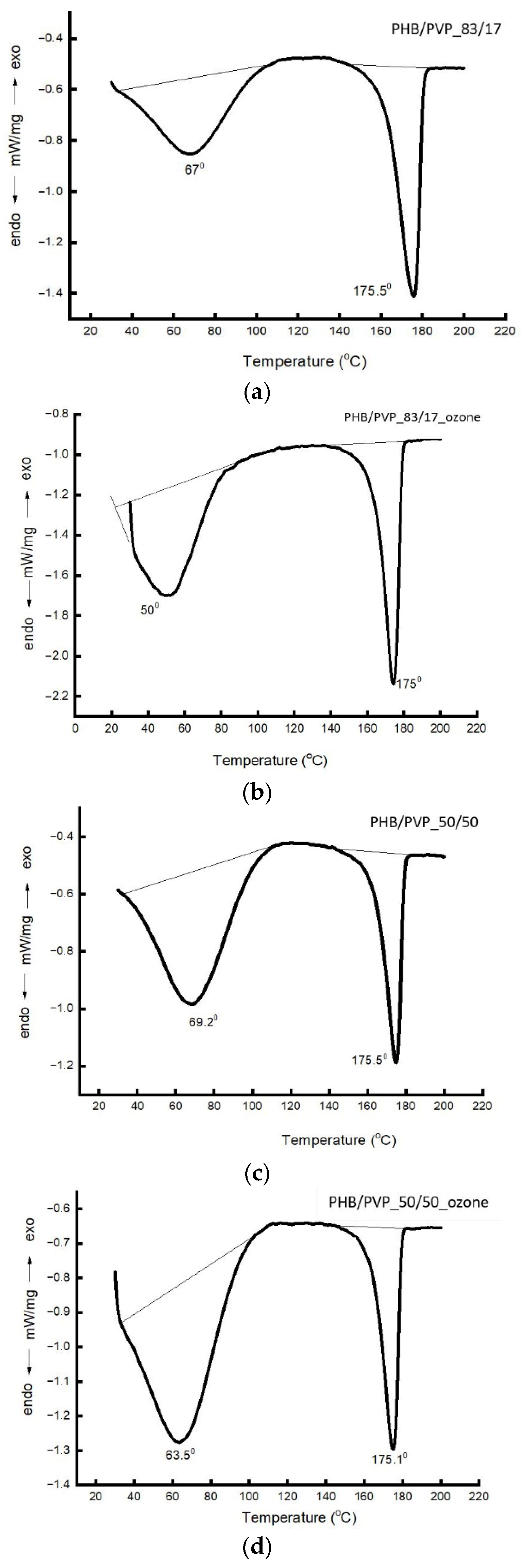
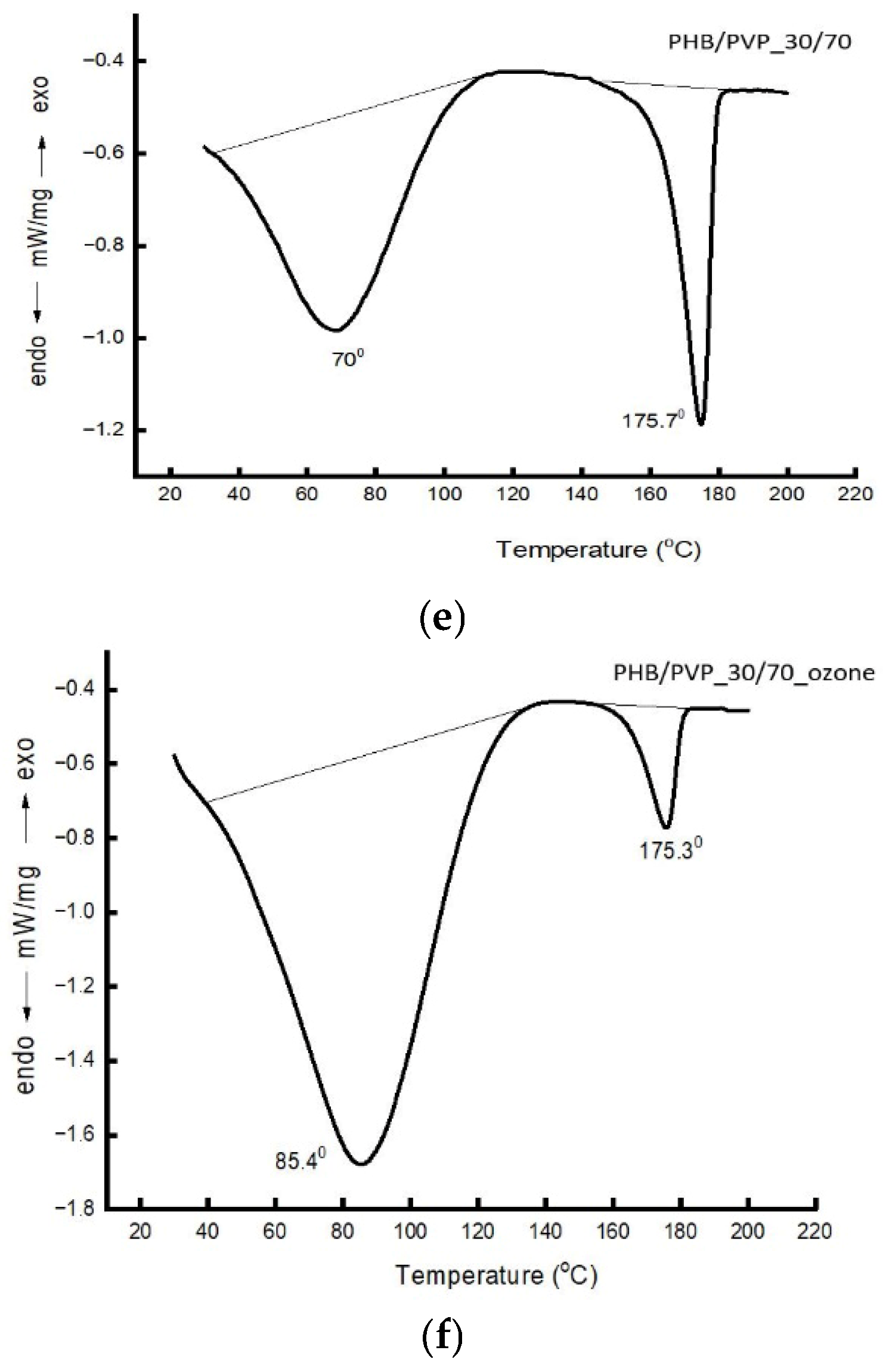
Figure 2 shows thermograms of heating compositions with a ratio of 83/17, 50/50, and 30/70% (PHB/PVP) for binary systems before and after ozonolysis. A series of DSC thermograms for samples of different compositions showed that in all mixed compositions of fiber material (with the exception of compositions 100/0, 97/3, 95/5, and 0/100 PHB/PVP), both before and after ozonolysis, there are two peaks on the DSC thermograms. The first peak corresponds to the cleavage of hydrogen bonds, and the second peak corresponds to the melting of the PHB homopolymer.
Table 1 presents data on PHB crystallinity (χ), enthalpy (∆H), hydrogen bond cleavage temperature (T
h), and melting temperature of the PHB crystalline fraction (T
m) as a function of system composition before and after ozonolysis.
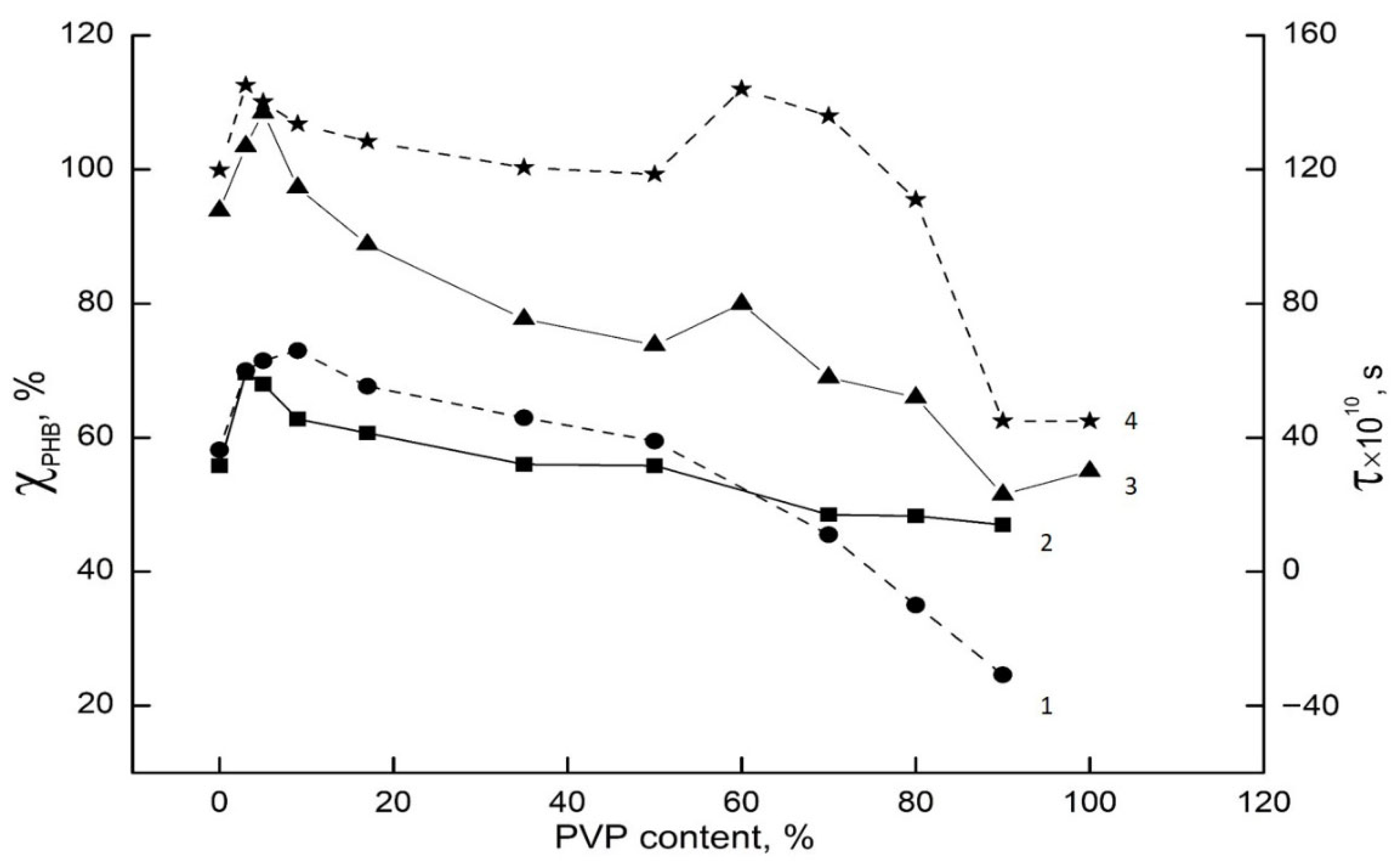
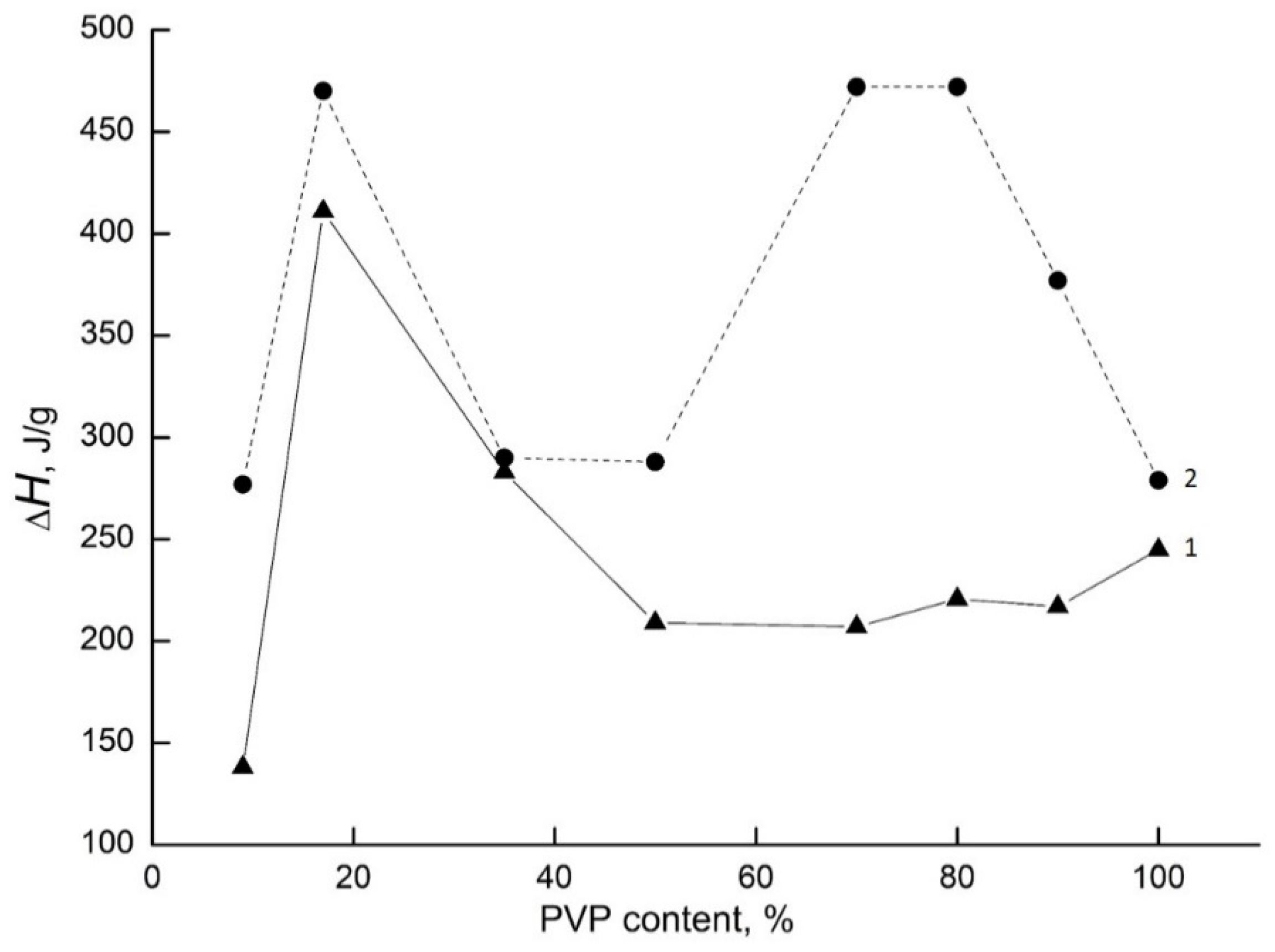
Figure 3 shows the dependencies of χ PHB and enthalpy (∆H) of hydrogen bond destruction on the composition of the system before and after ozonolysis.
Let us consider the binary system PHB/PVP before ozonolysis. Easily crystallizable PHB exhibits an asymmetric endothermic melting peak (Tm) at 176.7 °C, indicating a fairly wide distribution of crystallites in terms of both the size and degree of perfection. The degree of crystallinity of PHB in a mixture with a PVP content of up to 5% increases (from 55.8 to 69.8%), and when a higher PVP content of up to 50% is present in the system, it begins to decrease sharply (to 48.3%). The “crystallinity–mixture composition” curve includes a break in the range of compositions of 50/50% PHB/PVP, and when there is a higher PVP content in the mixture, the crystallinity of PHB changes rather weakly (
Figure 3).
At low concentrations of PVP in the structure of ultrafine fibers, this polymer is distributed in the form of tiny particles, which are centers of crystallization due to the intermolecular interactions between the components of the mixture, which causes a significant increase in χ. At higher concentrations of PVP, the molecules segregate into particles of sufficient size to form a crystalline structure and can no longer act as crystallization centers, but form a dispersed phase with the formation of interphase layers. The presence of intermolecular interactions between PHB and PVP molecules and the formation of an increasing proportion of interphase layers with increasing PVP concentration in the system prevents PHB crystallization in the fiber. Therefore, as the PVP concentration increases, the degree of PHB crystallinity decreases.
The melting point of PHB is 176.4 °C, and in mixed compositions of ultrathin fibers it is ~175 °C. As the PVP content increases, the shift in Tm values to lower temperatures is due to the influence of its molecules on the crystallization process of biopolyester, since there is an intermolecular interaction between polymers. With an increase in the content of PVP in the mixture, a change in the melting point of PHB, as well as its crystallinity, towards lower values is observed. This change indicates that the crystalline phase of PHB becomes less perfect in the binary mixture under study. During crystallization, polyvinylpyrrolidone molecules act as a steric obstacle to the ideal packing of polyester molecules in crystallites and also form hydrogen bonds, and the higher the PVP content, the greater this effect (
Figure 3).
If we assume that hydrogen bonds are formed only in PVP, then the dependence of ∆H on the composition will be a straight line parallel to the
x-axis. However, such a dependence is observed only in the range from 50 to 100% PVP, and the concentration of hydrogen bonds remains practically unchanged (
Figure 4). When the concentration of PHB in the system increases from 50 to 83%, a sharp increase in ∆H is observed, and with higher concentrations of PHB in the mixture, this parameter decreases sharply. When PHB is added to the composition, a new type of polymer interaction appears, which results from the formation of hydrogen bonds between the PVP and PHB groups. We assume that when PHB is added to the composition its interaction with PVP molecules can destroy the previously formed hydrogen network in PVP. Earlier, we noted that phase inversion occurs in the 50/50% composition range. In the range from 50 to 100% PVP, the continuous phase is the hydrophilic PVP polymer, in which a network of hydrogen bonds is mainly formed. In compositions with a high PVP content, when PHB becomes the dispersed phase and the contact with PVP molecules is sharply reduced, the proportion of hydrogen bonds between PVP and PHB is sharply reduced. However, with an increase in the PHB fraction from 50 to 83% in the system, the enthalpy of hydrogen bond cleavage increases sharply (
Figure 4), indicating the formation of hydrogen bonds between PVP and PHB groups.
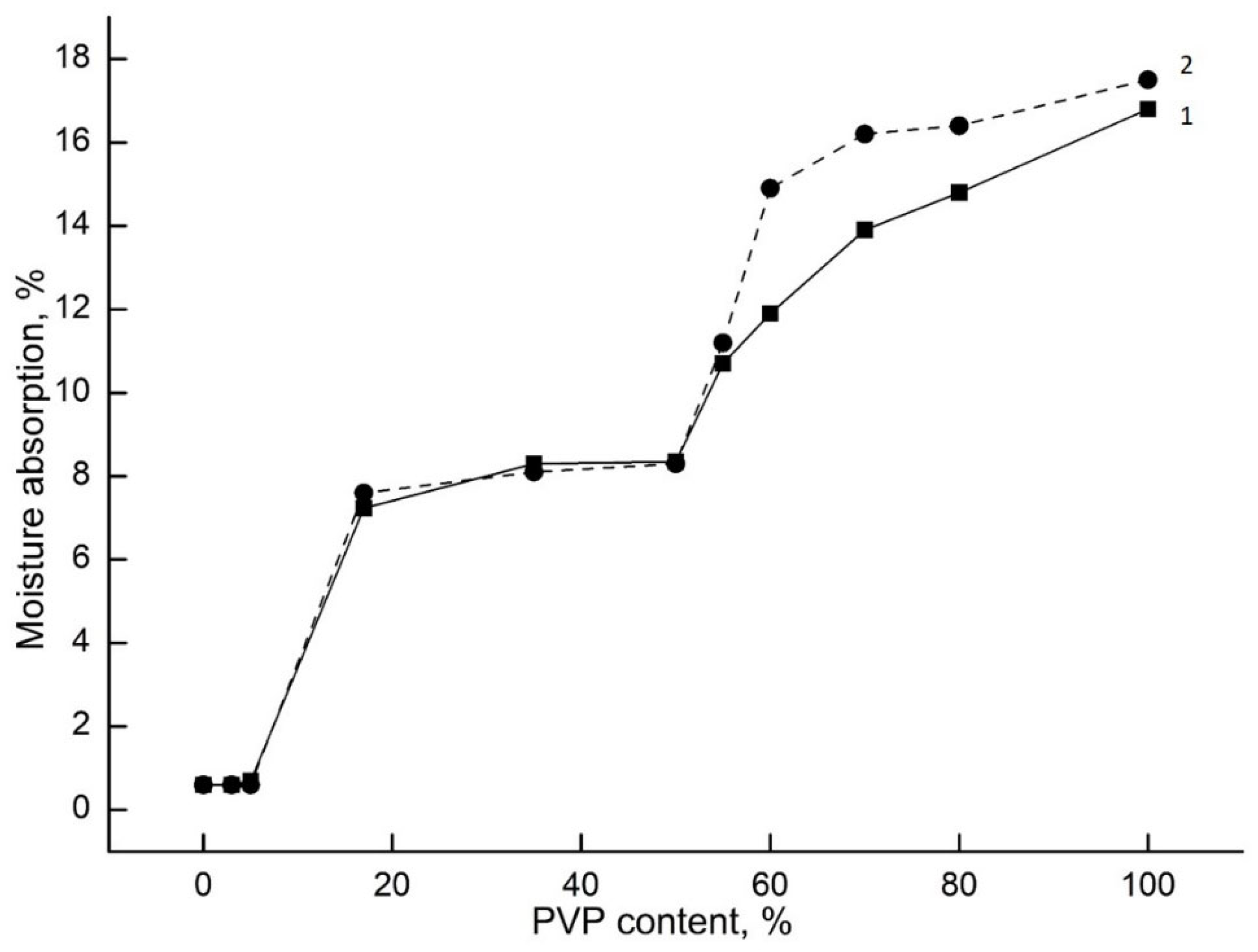
A characteristic feature is the fact that moisture absorption by the system begins at precisely 83% PHB in the composition (
Figure 5). It is the presence of water molecules in the system that causes the formation of hydrogen bonds, as confirmed by an experiment using a binary composition of 30/70% PHB/PVP. While the endotherms of heating in this mixture had two melting peaks during the first scan, no hydrogen bond cleavage peaks were observed during the second scan, which indicates that hydrogen bonds are formed only when water molecules are present in the system. The maximum formation of such bonds occurs in compositions of precisely 83/17% PHB/PVP and is due, in our opinion, to the fine distribution of the PVP phase in the system when there is a high number of contact points between the two polymers, and the result of such an interaction is a sharp increase in ∆H. The peak position of the DSC curve corresponding to the cleavage of hydrogen bonds decreases from 80.1 to 54 °C with an increase in the concentration of PHB in the composition, which indicates a weaker interaction during the formation of hydrogen bonds, and also indicates the formation of such a bond between the PHB and PVP groups (
Table 1). The DSC curves also show that the temperature range for the destruction of hydrogen bonds lies within a wide range of 30–120 °C.
The results obtained, such as the thermal characteristics of the PHB/PVP system and the nature of their changes depending on the composition of the components, enable us to draw a preliminary conclusion that there is a certain range of polymer concentrations (50/50% range), through which the transition is accompanied by a phase inversion. It is in the 50/50% concentration range that the geometric parameters of the composition fibers change dramatically (
Figure 1). If a strong and dense network of hydrogen bonds is formed in the initial PVP, with a high content in mixed compositions, which holds water molecules well, then when more than PHB molecules are introduced at a rate of over 50%, there is a sharp increase in ∆H, reflecting the formation of additional hydrogen bonds during the interaction between PVP and PHB molecules. Although this interaction appears to be weaker than the energy of PVP hydrogen bonds, it can nevertheless also lead to a change in the free volume in the system, which in turn should affect the molecular dynamics of macromolecules; this will be analyzed further using the EPR method.
Thus, the obtained dependencies of thermal characteristics indicate that when PHB is mixed with PVP (up to 9%), the crystal structure of PHB becomes more perfect, and the proportion of crystallites increases as a result of the additional crystallization of the smallest PVP particles. At higher PVP concentrations (9–50%), the fiber structure undergoes changes, PVP molecules segregate into larger formations and form a discrete phase in the PHB structure, interphase layers are formed, and the degree of crystallinity decreases due to intermolecular interactions between PVP and PHB molecules. In the range of 17–100% PVP in the mixture, a network of hydrogen bonds is formed.
Now let us consider the effect of ozonolysis on the thermophysical properties of the ultrathin fibers under study. When biomedical materials are used, ozone affects their structure alongside the mechanical and thermal influences. Firstly, ozone is formed during the operation of powerful electrical devices that support the vital functions of patients during surgical operations, as well as during therapy or monitoring in hospitals. Secondly, in some specific cases, ozone continues to be used for the sterilization of medical devices. Despite the daily contact of this aggressive compound with polymers, the effect of such an active oxidant as ozone on their morphological and structural characteristics remains an understudied area of polymer materials science.
The effect of ozonolysis at a temperature of 22 °C on the structure of PHB/PVP fibrous material has been studied. An amorphous–crystalline system always strives for a minimum amount of free energy. This process is facilitated when intermolecular interaction decreases (the structure loosens at elevated temperatures, during destruction, etc.). Loose amorphous areas relax to a supercooled melt state, and crystalline areas relax to a minimum free energy by changing their dimensions, primarily their longitudinal dimensions. ΔG = ΔH − TΔS.
Ozone oxidation affects the polymer structure in two ways. Two parallel and opposite processes occur: an increase in chain rigidity and an increase in their flexibility. The tendency of a macromolecule to straighten and reorient or to curl into a ball is determined by the conformational criterion β* = h/L = √2/k (where h is the average distance between the ends of the chains, L is the contour length of the chain, and k is the number of segments). Chains with β > β* tend to reorient, while macromolecules with β < β* tend to adopt a tangle conformation. It is known that the following are oxidized at a high rate: (1) loops on end surfaces are oxidized at the highest rate due to their high stresses and, having large values of β, are straightened under the influence of ozone; (2) under conditions where steric hindrances are partially removed, chains with a high degree of straightness adopt more straightened conformations; (3) as a result of the strengthening of intermolecular interactions during the formation of oxygen-containing groups in the side chains during ozonolysis, the coefficient β increases, and the degree of chain-straightening increases. All these processes cause an increase in the degree of crystallinity χ. At the same time, the processes of macromolecule destruction and their transition to a sufficiently folded conformation take place.
The
Table 1 and
Figure 3 and
Figure 4 show the data for χ PHB, enthalpy (ΔH), and hydrogen bond-breaking temperature (TBD) for the system composition after ozonolysis.
As can be seen from
Figure 3, after ozonolysis for 25 min, the proportion of the crystalline fraction in compositions with PHB content of up to 50% increases. Moreover, in PHB and a system with 3% PVP, χ increases by ~3%, and at a higher concentration of PHB in the mixture, by ~12%. This difference is explained by the presence of interphase layers in mixed compositions with a lower packing density compared to the homopolymer, where the chains are oxidized at an increased rate and a more intensive process of polymer chain pre-orientation takes place. A decrease in the proportion of crystalline formations also increases the accessibility of amorphous polymer regions to ozone exposure. Similar results were obtained when studying the effect of ozonolysis on the structure of ultrathin PHB/PLA fibers [
14,
16].
In the 50/50% composition range, phase inversion occurs, and when the PVP content exceeds 50%, this hydrophilic polymer becomes the continuous phase in the system, while PHB becomes the discrete phase. In this concentration range, the opposite pattern is observed: the proportion of the crystalline fraction decreases sharply and reaches 24.6% in compositions with a PVP content of 90% (
Figure 3). It can be assumed that as the concentration of PHB in the system decreases, its distribution is carried out by increasingly finer formations, and ozone increasingly destroys PHB, resulting in a sharp decrease in the proportion of crystallites. It is important to note that if, in a system with a PHB content of up to 50%, this polymer is in an oriented state, then in a system with a concentration of less than 50%, this polymer is in an isotropic state with a low content of dense structures based on oriented chains, which causes a sharp decrease in the degree of crystallinity in the mixture during ozonolysis.
An unusual pattern is observed with the concentration of hydrogen bonds in mixtures of the studied polymers after ozone exposure. When PVP is added at a rate of up to 50%, the enthalpy of destruction of these bonds in the fibers has a pronounced maximum at a PHB/PVP ratio of 83/17% both before and after ozonolysis. It is at this ratio of components that the sorption of water molecules into the system is observed, as shown in
Figure 5. As in the initial samples, the formation of hydrogen bonds occurs not only in PVP, but also between PHB and PVP groups. With an increase in PVP concentration, the proportion of such bonds decreases (
Figure 3). However, in compositions with a higher PVP content (>50%), a sharp jump in the enthalpy of hydrogen bond cleavage is observed in the system, which provides a reason to believe that a high proportion of bonds are formed between the PVP and PHB groups, since the enthalpy of destruction in PVP almost did not change after ozonolysis. It can be assumed that in PHB, due to the breakage of the main chain during ozonolysis, there is a decrease in the average molecular weight, which leads to an increase in segmental mobility due to the removal of conformational restrictions and, as a result, a high concentration of hydroxyl groups is formed and the probability of hydrogen bond formation increases (
Figure 4).
If the enthalpy of hydrogen bond destruction in the initial samples (50 < PVP < 100%) is in the range of 244–210 J/g, then after ozonolysis it shows a wider range of values, from 230 to 472 J/g. In the range 0 < PVP < 50%, the nature of the change in ΔH hydrogen bond-breaking before and after ozonation is identical, but the enthalpy values needed to break these bonds after ozonolysis are higher (
Table 1,
Figure 3). As noted earlier, a characteristic feature of the presented dependencies (in the range 0 < PVP < 50%) is that the maximum value of ΔH occurs at 17% PVP. It is at a ratio of 93/17% PHB/PVP that the system begins to sorb water (
Figure 5), the source of hydrogen bond formation. Moreover, after ozonolysis, compositions with a PVP content >50% have a higher moisture absorption rate than the initial systems, which contributes to an increase in the concentration of hydrogen bonds (
Figure 4).
With a decrease in the concentration of PVP, the temperature peak in hydrogen bond rupture and enthalpy shift to the lower temperature regions. Thus, 100% PVP forms a dense network of hydrogen bonds that hold water molecules. After the introduction of PHB into the compositions, a decrease in enthalpy is observed, which leads to a decrease in the concentration of such bonds and, consequently, a decrease in the integral heat of their rupture. The effects that we observe regarding changes in the structural features of the PHB mixture/PVP will probably lead to a change in the segmental mobility of polymers. These changes will be further analyzed by the EPR method.
The position of the DSC curve after ozonolysis, which is responsible for the destruction of hydrogen bonds and shifts from 71 to 58 °C with an increase in the proportion of PHB in the system. The DSC curves show that the destruction of hydrogen bonds at low PVP concentrations in the system occurs in the range from 30 to 90 °C, while when there is higher PVP content in the mixture (>50%), this process occurs in a wider range—from 40 to 140 °C.
Thus, the study of the structural features of fibrous material systems has shown that both the crystalline fraction and the concentration of hydrogen bonds tend to change significantly during the formation of PHB/PVP fibrous material. The ozone oxidation of ultrathin PHB/PVP fibers has a strong effect on the fiber structure and is accompanied by significant changes.
The obtained dependencies of thermal characteristics indicate that, both before and after ozone oxidation in mixtures of PHB with PVP up to 9%, the crystal structure of PHB becomes more perfect, and the proportion of crystallites increases as a result of the additional crystallization on the smallest PVP particles. At higher concentrations of 9 < PVP < 50%, the fiber structure undergoes changes and crystallinity decreases sharply as PVP molecules segregate into larger formations and form a discrete phase in the PHB structure, alongside the formation of voluminous interphase layers due to the strong intermolecular interaction between the components of the mixture. Ozone oxidation for up to 25 min leads to an increase in the degree of crystallinity of PHB compared to unoxidized polymers in the concentration range 0 < PHB < 50% and, most significantly, in samples 9 < PVP < 50%, since oxidation in loose interphase layers proceeds at a higher rate. It is the presence of such interphase formations that contributes to the more intense oxidation compared to the initial polymers, with a predominance of pre-orientation processes and, as a result, pre-crystallization.
There is a certain concentration range of 50/50% during which the transition is accompanied by phase inversion, i.e., the continuous phase of PHB transitions into the dispersed phase. The opposite picture is observed at a PHB concentration < 50%, when ozonolysis of the fiber causes a sharp decrease in the degree of PHB crystallinity. In such mixtures, PHB is a discrete phase and is in an isotropic state. Destruction processes prevail in such a system, accompanied by a decrease in the degree of crystallinity, which is more significant at lower PHB concentrations in the composition due to the increasingly fine distribution of PHB in the mixture structure. Extreme dependencies of the concentration of hydrogen bonds on the composition of the system have been obtained. The dependence of the enthalpy of hydrogen bond cleavage in the initial systems on the composition has one extremum at a ratio of 83/17% PHB/PVP, and after ozone oxidation, two extrema in the range of 83/17% and 30/70% PHB/PVP. This can be explained by the destruction of PVP and PHB chains and the accumulation of terminal hydroxyl fragments and, as a result, the intensive formation of hydrogen H-bonds.
The enthalpy of hydrogen bond-breaking in PVP after ozonolysis changed very little. The observed effects of the structural features of the PHB/PVP mixture’s composition should change the segmental mobility of polymers; this will be analyzed further using the EPR method.
3.4. Dynamic Characteristics of the Amorphous Phase of Mixed Compositions of PHB/PVP Fiber Material Before and After Ozonolysis
In partially crystalline polymers, the structure of amorphous regions is largely determined by the influence of their crystalline phase. Consequently, mixing highly crystalline (PHB) and non-crystallizing (PVP) polymers changes not only the degree of crystallinity of the biopolyester, but also the molecular dynamics in the amorphous regions. To study molecular mobility, the EPR method was used with the stable nitroxide radical TEMPO, which acts as a molecular probe.
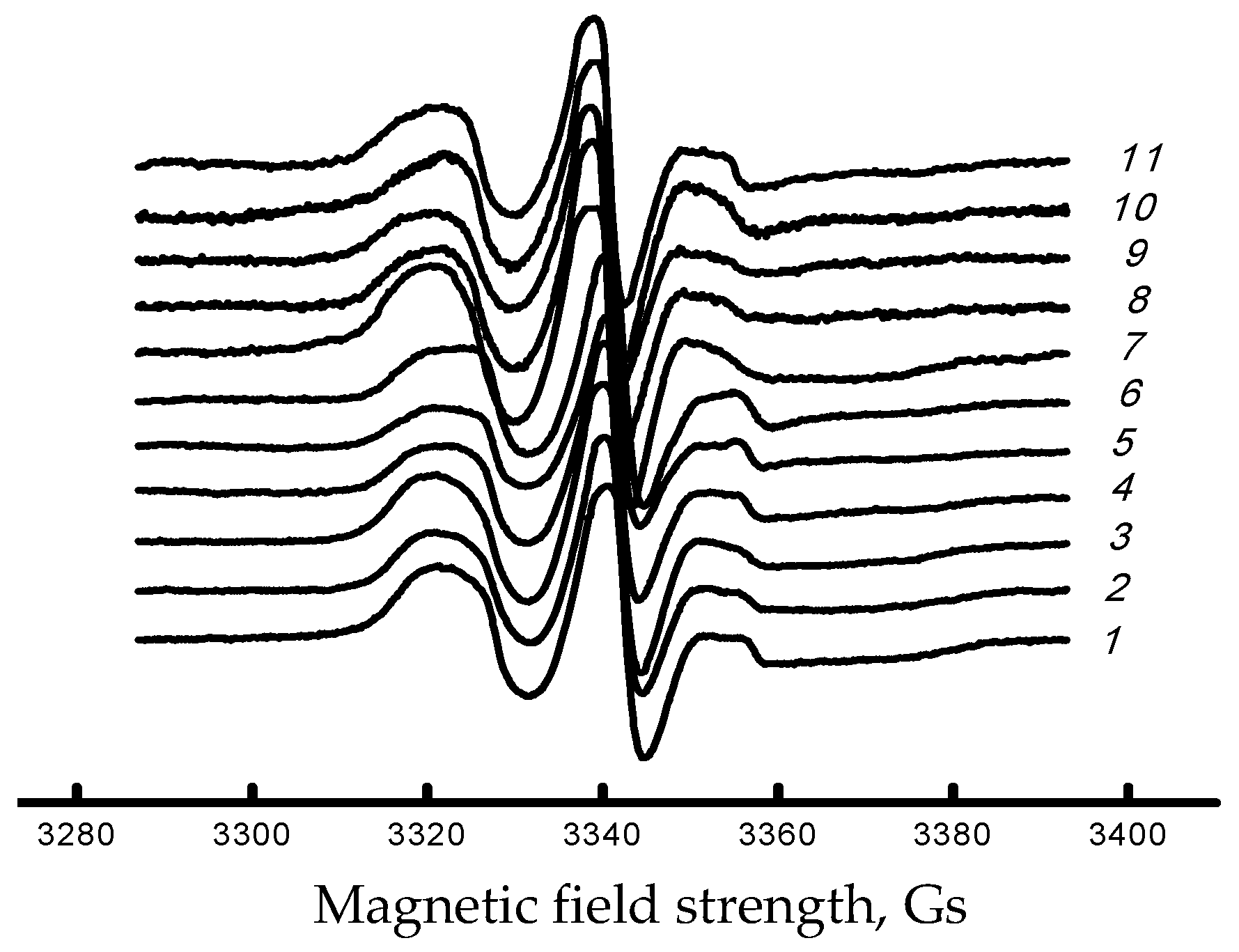
Let us consider the influence of the PHV/PVP mixture composition on the dynamics of polymer molecules. It is known that the amorphous phase is a set of structures characterized by different packing densities and macromolecule conformations and, accordingly, different molecular dynamics of polymer chains. The EPR spectra of the radical in the PHB matrix and in mixed compositions have a complex appearance (see, for example,
Figure 8), due to the distribution of paramagnetic molecules by rotational mobility [
47,
48]. The software [
49] allows for one to take into account the anisotropy of the rotational mobility of radicals, the continuous (log-normal) distribution of paramagnetic molecules by rotational diffusion coefficients, and the high-frequency, low-amplitude oscillations of molecules near the equilibrium position—quasi-libration. It is known that the amorphous phase is a set of structures characterized by different packing densities and different molecular dynamics of polymer chains. The EPR spectrum is a superposition of the spectra of radicals located in different regions of the amorphous phase which, therefore, have different mobilities.
The correlation time was determined from the characteristics of the EPR spectra. The EPR spectra of the radical in the matrices of the PHB homopolymer and the PHB/PVP binary system represent a superposition of two spectra corresponding to two populations of radicals with characteristic correlation times of τ1 and τ2 (where τ1 characterizes molecular mobility in denser amorphous regions (slow component) and τ2 in less dense ones (fast component), which is due to the heterogeneous structure of amorphous regions and the different distribution of the probe radical due to the rotational mobility in the polymer matrix (
Figure 8).
Previously, in order to determine the rotational mobility characteristics of probe molecules, a computer simulation of EPR spectra was performed using the BrDistr program [
49]. It should be noted that computer modeling of the EPR spectra of low-molecular dopants in polymers in the rotational correlation time range of 10
−7–10
−8 s is a very costly procedure. In addition, the specificity of this work is related to the qualitative analysis of changes in radical mobility depending on composition and external influences, rather than the interpretation of the exact values of rotational mobility parameters. For this reason, we needed to introduce a parameter that would qualitatively characterize the rotational mobility of radicals and be sufficiently sensitive to small changes in the shape of the spectrum. In [
49], it is shown that the greatest difference in the spectra is observed in the region of high-field and low-field components, so we chose the characteristic rotational correlation time, calculated using the well-known formula presented earlier (1), as the spectrum shape parameter.
The change in crystallinity causes a change in the density of chain packing and their conformation in amorphous regions and, as a result, an increase (or decrease) in molecular dynamics τ.
Let us consider the influence of the PHB/PVP mixture composition and ozonolysis time on the dynamics of polymer molecules.
Figure 8 shows the EPR spectra of the TEMPO nitroxyl radical in PHB/PVP samples.
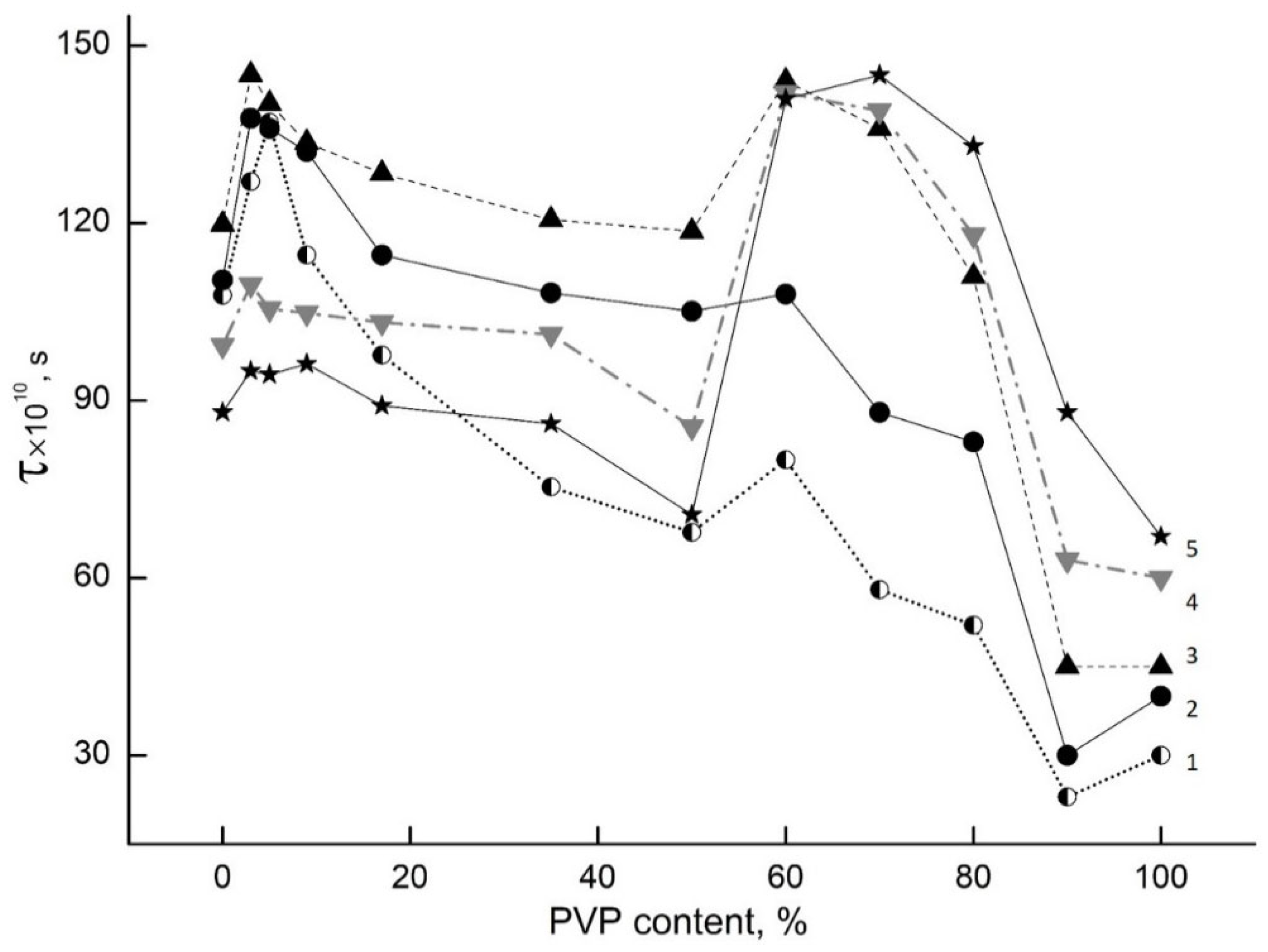
Figure 9 shows the dependence of correlation times τ on the composition of the mixture at different ozone oxidation times. The data obtained by the EPR method demonstrate the effect of ozonolysis duration on molecular dynamics in PHB/PVP fibers.
Let us consider the change in τ in mixed compositions in a binary mixture of PHB/PVP. It is known that the polymer components of a crystallizing system mutually influence both the crystallization processes and the amorphous component, leading to changes in diffusion-transport characteristics, the effect of oxidation/ozonolysis, hydrolysis, and the thermal stability of composite films and fibers [
14,
16,
25,
33,
34,
36,
49,
50]. The structure of PHB is characterized by high rigidity; therefore, τ has fairly high values (~107.8 × 10
−10 s). The dependence of the correlation time on the composition is extreme. An increase in the concentration of PVP to 5% causes a significant increase in this parameter. It is in this range that the proportion of crystalline regions in the composition increases, which is accompanied by an increase in the proportion of straightened chains in amorphous interlayers. As a result, the molecular dynamics in the intercrystalline regions slow down.
A further increase in PVP concentration, up to 50%, is accompanied by an increase in molecular dynamics, which correlates well with the data presented in the previous section on the degree of crystallinity. In the PVP concentration range from 9 to 50%, interphase, fairly loose layers are formed, which lead to an increase in molecular dynamics (averaged over the entire amorphous phase). Parallel to the processes of the growth and destruction of crystalline structures, hydrogen bonds are formed, which strengthen intermolecular interactions and, as a result, slow down molecular dynamics. However, experimentally, there is an increase in molecular dynamics, which indicates the predominance of processes that loosen the amorphous phase.
It is at a ratio of precisely 17/83% PHB/PVP that moisture absorption and the formation of a network of hydrogen bonds begin. Since a strong decrease in τ is experimentally observed in the composition range 9 < PHB < 50%, it can be assumed that the effect of loosening the structure of the mixture prevails over the increase in the rigidity of the system due to the formation of hydrogen bonds.
The characteristic point of the compositions (50/50%) is clearly visible on the curves in
Figure 6. The nature of the change in the thermal and dynamic characteristics of the PHB/PVP binary system depending on the composition of the polymer components allows us to conclude that there is a certain concentration range, 50/50%, at which transition is accompanied by phase inversion, i.e., when the continuous PHB phase turns into a dispersed one. With a higher PVP content in the mixture (more than 50%), when the continuous phase is the hydrophilic PVP polymer, the dependence of τ on the composition of the system also has a pronounced maximum at a ratio of 40/60% PHB/PVP, which indicates the predominant influence of hydrogen bond network formation over decompaction processes on molecular dynamics. The dependence of τ on the composition of the system is extreme. When 60% PVP is added to the composition, a slowdown in molecular dynamics is observed compared to the 50/50% mixture, and with a further increase in the PVP content, the correlation time begins to gradually decrease (
Figure 9).
As noted earlier, at a PVP concentration > 50%, when this hydrophilic polymer is a continuous phase, rapid moisture absorption begins (
Figure 4) and a network of hydrogen bonds forms, resulting in a slowdown in the molecular dynamics of chains in the amorphous phase. The glassy dense network of the PVP polymer prevents the effective penetration of radicals into its amorphous structure, which is confirmed by the downward curve of the radical concentration with an increase in the proportion of PVP in the system, as shown in
Figure 9.
Let us consider the effect of ozonolysis on the dynamics of macromolecules in a mixture. First, let us consider the effect of the degree of oxidation on molecular dynamics in the concentration range 0 < PHB < 50%. It is important to note that in this concentration range, PHB is in an oriented state with a high proportion of chains in a straightened conformation. During ozone oxidation, two opposite processes occur simultaneously: chain destruction followed by an increase in molecular dynamics, and the accumulation of oxygen-containing groups on the side chains of the polymer, accompanied by an increase in intermolecular interaction and an increase in chain stiffness, followed by a slowdown in segmental mobility. The rupture of straightened chains, which are reoriented in the process, also leads to an increase in τ. Another aspect leading to an increase in τ is the rupture and straightening of chains at the end surfaces of crystallites (due to the highest stresses being found at the end surfaces of crystallites). All these components cause an increase in τ during the ozonolysis of the system.
Figure 8 shows the dependence of correlation time τ on the composition of the mixture at different ozone oxidation times. The mixtures were exposed to ozonolysis for 15, 25, 50, and 80 min. The ‘correlation time–composition’ curve includes a gap in the range of compositions 50/50% PHB/PVP. Let us consider the nature of these dependencies in the range 0 < PHB < 50%. Oxidation causes an increase in the correlation time in polymers after ozonolysis for 15 and 25 min for all compositions in this concentration range, which indicates a slowdown in molecular dynamics, i.e., the process of increasing the proportion of straightened chains in the amorphous regions of the fiber and the formation of a network of hydrogen bonds as a result of the oxidation of side groups and subsequent cross-linking prevails.
Similar patterns have been identified, as shown earlier, in the dependence of χ on the composition of the mixture in this concentration range. It can be concluded that ozonolysis of the system in a short time interval contributes not only to an increase in the degree of crystallinity, but also to an increase in the density of amorphous regions, an increase in the proportion of straightened macromolecule segments, an increase in chain rigidity and, as a result, a slowdown in molecular dynamics. The results obtained indicate the predominance of physical cross-linking and macromolecule orientation processes over destruction processes.
With a longer oxidation time in the mixture’s composition, there is a tendency for τ to decrease. Consequently, with an oxidative exposure of 0–25 min, processes involving the straightening of macromolecules and an increase in their rigidity predominate. During longer ozonolysis periods, destruction processes become more intense, prevailing over pre-orientation processes and being accompanied by an increase in molecular dynamics. The data in the
Table 1 show that the formation of a network of hydrogen bonds occurs mainly in PVP, without significantly affecting segmental dynamics in the concentration range 0 < PHB < 50%.
Data on radical concentration in samples were obtained (
Figure 9). Both before and after ozonolysis, the radical concentration decreases sharply, despite a significant increase in molecular dynamics, which indicates a loosening of the amorphous structure. This can be explained by the glassy state of PVP when the radical is mainly concentrated in the PHB and in the interphase layers. After ozonolysis, the radical concentration in the presented range significantly decreased, which is explained by an increase in the degree of crystallinity in this interval of polymer compositions. It is important to note that the ‘radical concentration–mixture composition’ curve also experiences a break.
In the concentration range 50 < PVP < 100%, the continuous phase is the hydrophilic polymer PVP. If biopolyester is a hydrophobic polymer and moisture absorption is characterized by fairly low indicators in the range from 0 to 50%, then at PVP concentrations above 50%, these indicators increase sharply, especially after ozonolysis of the system, which contributes to the formation of hydrogen bonds, which, in turn, compact the structure of amorphous regions (
Figure 4). After ozonolysis for 25 min, moisture absorption increases (by ~20%), the concentration of low-molecular fragments increases and, as a result, an additional network of hydrogen bonds is formed, not only in PVP, but also between PHB and PVP groups, resulting in increased chain stiffness in the fiber, as evidenced by the increase in correlation time. It is characteristic that in PVP, the concentration of hydrogen bonds after ozone oxidation changed extremely little.
The previous section showed that after ozonolysis for 25 min, the concentration of crystalline areas of biopolyester after ozonolysis decreased sharply in the range of 50 < PVP < 100%, which indicates destruction not only in amorphous areas, but also in crystalline formations. It is important to note that at a concentration of PHB < 50%, this polymer is in an isotropic state. As a result of ozonolysis, a large number of low-molecular-weight fragments of PHB and PVP chains are formed in the system, which leads to an increase in segmental mobility due to the removal of conformational restrictions. As a result, the concentration of hydrogen bonds increases sharply (
Figure 3) and the density of the network of these bonds increases (
Figure 6). The intensity of growth τ in this concentration range increases significantly with increasing duration of ozonolysis (
Figure 8). It should also be noted that the structure of biopolyester in the range 50 < PVP < 100% is in an isotropic state and the pre-orientation processes are minimal after oxidation; therefore, the destruction processes cause an increase in the molecular dynamics of low-molecular fragments with a high concentration of hydroxyl groups, which in turn causes an increase in the intensity of hydrogen bond formation. This is particularly evident in fibers with a sufficiently high concentration of biopolyester (40–30%).
In the range of compositions exceeding 50% PVP, the radical concentration after ozone oxidation becomes higher compared to unoxidized fibers, which is probably due to the predominance of processes increasing the proportion of amorphous areas.
Thus, the ozonolysis of PHB/PVP blends showed that short ozone exposure times (up to 25 min) on the structure of fibrous material (0 < PVP < 50%) lead to an increase in the density of amorphous areas of the polymer, which is due to the processes of pre-orientation and the intermolecular physical cross-linking of chains. With longer exposure times to ozonolysis, processes leading to the loosening of amorphous regions and, as a result, to an increase in molecular dynamics, prevail, and these changes are caused by the predominance of destruction processes in the amorphous phase of the fiber. In the range 50 < PVP < 100%, throughout the entire ozonolysis time interval, the correlation time increases, which indicates an increase in chain rigidity due to the formation of an extensive network of hydrogen bonds after the destruction of macromolecules.
As the duration of fiber material oxidation increases, so does the concentration of hydrogen bonds and, as a result, molecular dynamics slow down more noticeably.
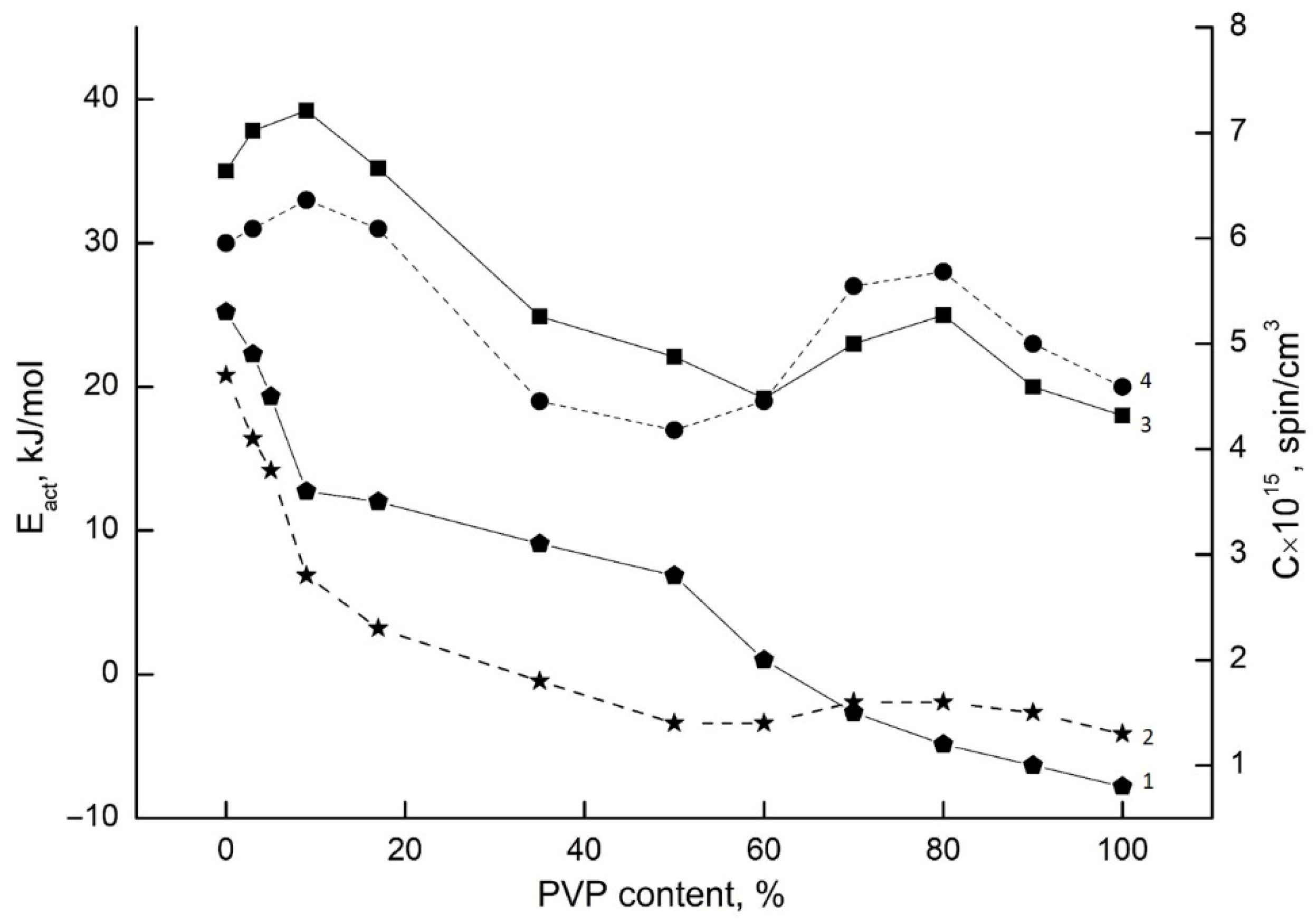
Additional information on the dynamic behavior of PHB/PVP systems of various compositions was obtained by studying the temperature dependence of the radical rotation rate and determining the corresponding activation energies Eτ. The equilibrium concentration of the radical (C) adsorbed in samples of fibers of equal mass was calculated using WIN-EPR SIMFONIA software, version 1.2, is a product from Bruker. This dependence is shown in
Figure 10.
A characteristic feature of Eτ as a function of the percentage content of PVP in PHB is a sharp increase in this parameter with small additions of PVP to the PHB structure (
Figure 10). Such a sharp jump in the values of the probe rotation activation energy when small concentrations of PVP are introduced is probably associated not only with an increase in the crystallinity of the system (increase in specific melting enthalpy, see
Table 1), but also with a change in the state of the intercrystalline polymer phase, where, as previously reported, an increase in the content of denser areas was observed. With an increase in the concentration of polyvinylpyrrolidone in the composition, the Eτ values decrease, and at a PVP concentration of more than 50%, there is a sharp increase in this parameter due to the formation of a denser amorphous structure (formation of a network of hydrogen bonds). After ozone oxidation for 25 min, an increase in Eτ values is observed.
The obtained dependencies correlate well with the previously obtained dependencies, τ, χ, on the composition of the mixture.
The nature of the temperature dependencies varies depending on the composition of the mixture. In systems with a high concentration of PHB, the correlation time of the radical at the initial stage of heating the polymer to 40 °C increases, which indicates the thawing of increasingly dense amorphous regions.
Thus, an increase in the concentration of PVP in the mixture to 9% (when the degree of crystallinity increases and molecular dynamics decreases) causes an increase in the activation energy of the radical. Changes in the activation energy of probe rotation upon the introduction of PVP are associated with a change in the state of the intercrystalline amorphous interlayer. The increase in activation energy can be explained by the formation of a denser amorphous phase in the mixture due to the formation of crystallites on polyvinylpyrrolidone particles. With a higher PHB content in the mixture, a decrease in this parameter is observed, and in the region of 50/50% PHB/PVP compositions, similarly to the previously presented patterns, χ, ΔH, τ, Cpaд, there is a break in this dependence.





 ,
,