
Systematic Review

The Impact of Sports Drink Exposure on the Colour Stability of Restorative Materials: A Systematic Review

1
Department of Conservative Dentistry, Poznan University of Medical Sciences, 60-812 Poznan, Poland
2
Doctoral School, Poznan University of Medical Sciences, 60-812 Poznan, Poland
3
Student’s Scientific Group, Department of Conservative Dentistry, Poznan University of Medical Sciences, 60-812 Poznan, Poland
4
Department of General Dentistry, Medical University of Lodz, 92-213 Lodz, Poland
*
Author to whom correspondence should be addressed.
J. Compos. Sci. 2026, 10(2), 74; https://doi.org/10.3390/jcs10020074 (registering DOI)
Submission received: 30 December 2025 / Revised: 21 January 2026 / Accepted: 22 January 2026 / Published: 1 February 2026
(This article belongs to the Section Biocomposites)

Abstract

Sports drinks are becoming increasingly popular, especially among young, physically active individuals. The influence of acidic drinks on dental restorative materials, including composites and glass ionomers, is an important concern in conservative dentistry. Acidic conditions can cause material degradation, which may reduce their longevity and clinical performance. We aimed to examine the effect of sports drink exposure on the colour stability of composite and glass ionomer materials. This systematic review was conducted based on records published from 1 January 2005 to 31 December 2024, according to the PRISMA statement guidelines, using the databases PubMed, Scopus, Web of Science, and Embase. Based on the established inclusion and exclusion criteria, 17 studies were selected for this review, of which 12 were included in a meta-analysis. The meta-analysis demonstrated a statistically significant increase in colour change (ΔE) for microhybrid composites and nanocomposites after immersion in sports drinks for one month (SMD = 3.04; 95% CI: 0.67 to 5.41, and SMD = 3.00; 95% CI: 1.08 to 4.92, respectively). No such significant differences were observed for nanohybrid materials (SMD = 1.64; p-value = 0.579). Despite the findings of this systematic review, the extent of material degradation observed in in vitro studies cannot be directly translated to clinical oral conditions, as factors such as salivary buffering capacity and variable exposure to sports drinks influence outcomes.

1. Introduction

Dental erosion is a progressive and irreversible process involving the loss of hard dental tissues due to acid exposure from non-bacterial sources. This demineralisation initially affects the enamel and, if left untreated, may progress into the underlying dentin, compromising the structural integrity of teeth [1,2]. Acids can originate from intrinsic and extrinsic sources [3]. Among the most common extrinsic causes of dental erosion are acidic dietary products, such as carbonated beverages, fruit juices, and sports drinks, which are frequently consumed by physically active individuals [4,5]. Moreover, frequent intake of sports drinks during physical exercise considerably elevates the risk of enamel erosion [6,7]. However, intrinsic factors, especially medical conditions associated with recurrent vomiting, can also play a significant role in dental erosion. These include various physiological and pathological conditions, such as pregnancy, eating disorders, like bulimia and anorexia, chronic alcoholism, and gastroesophageal reflux disease (GERD) [8,9].
Sports drinks were initially formulated to maintain hydration and replenish electrolytes and carbohydrates lost during physical activity, thereby supporting athletic performance. However, their frequent consumption has been increasingly associated with erosion-related tooth wear [10,11]. The acidic content of these products can lead to irreversible damage not only to dental hard tissues but also to restorative materials used in dentistry, especially when combined with mechanical abrasion or improper oral hygiene habits [12,13].
In restorative dentistry, aesthetic durability is just as crucial as mechanical properties, especially to patients [14]. Composite resins and glass ionomer cements (GICs) are commonly used materials in clinical practice. However, both materials can undergo physical and chemical changes when exposed to acidic environments, leading to compromised function and appearance. One of the primary aesthetic concerns is colour stability, which is essential for long-term success and patient satisfaction. Discolouration may result from pigment absorption, matrix degradation, or surface roughness, which increases susceptibility to staining [15,16,17].
Composite resins are widely used due to their favourable mechanical and aesthetic properties [18]. However, they remain susceptible to discolouration, particularly when exposed to acidic and chromogenic substances. Factors such as the composition of the resin matrix, type and size of filler particles, degree of polymerisation, and surface finish significantly influence their colour stability [19,20]. Glass ionomer cements, while less aesthetically advanced, are also prone to acid-induced degradation and extrinsic staining due to their inherently porous structure and lower resistance to chemical challenges. The presence of synthetic pigments and acids in sports and energy drinks may promote both surface and internal staining through adsorption and absorption mechanisms, which may ultimately necessitate the replacement of restorations [21,22].
Given the growing popularity of acidic beverages, such as sports drinks, especially among young, active individuals, it is essential to understand their potential effects on restorative materials [7]. A previous systematic review assessed the impact of exposure to sports drinks on the surface roughness parameters of dental restorative materials [12]. Therefore, the present systematic review aims to address whether exposure to sports drinks affects the colour stability parameters of dental restorative materials.

2. Materials and Methods

2.1. Search Strategy and Data Extraction

Our systematic review was conducted based on records published from 1 January 2005 to 31 December 2024, according to the Preferred Reporting Items for Systematic Reviews and Meta-Analyses (PRISMA) statement guidelines [23] and PRISMA Checklist, using the databases PubMed, Scopus, Web of Science, and Embase. The search queries are presented in Table 1.
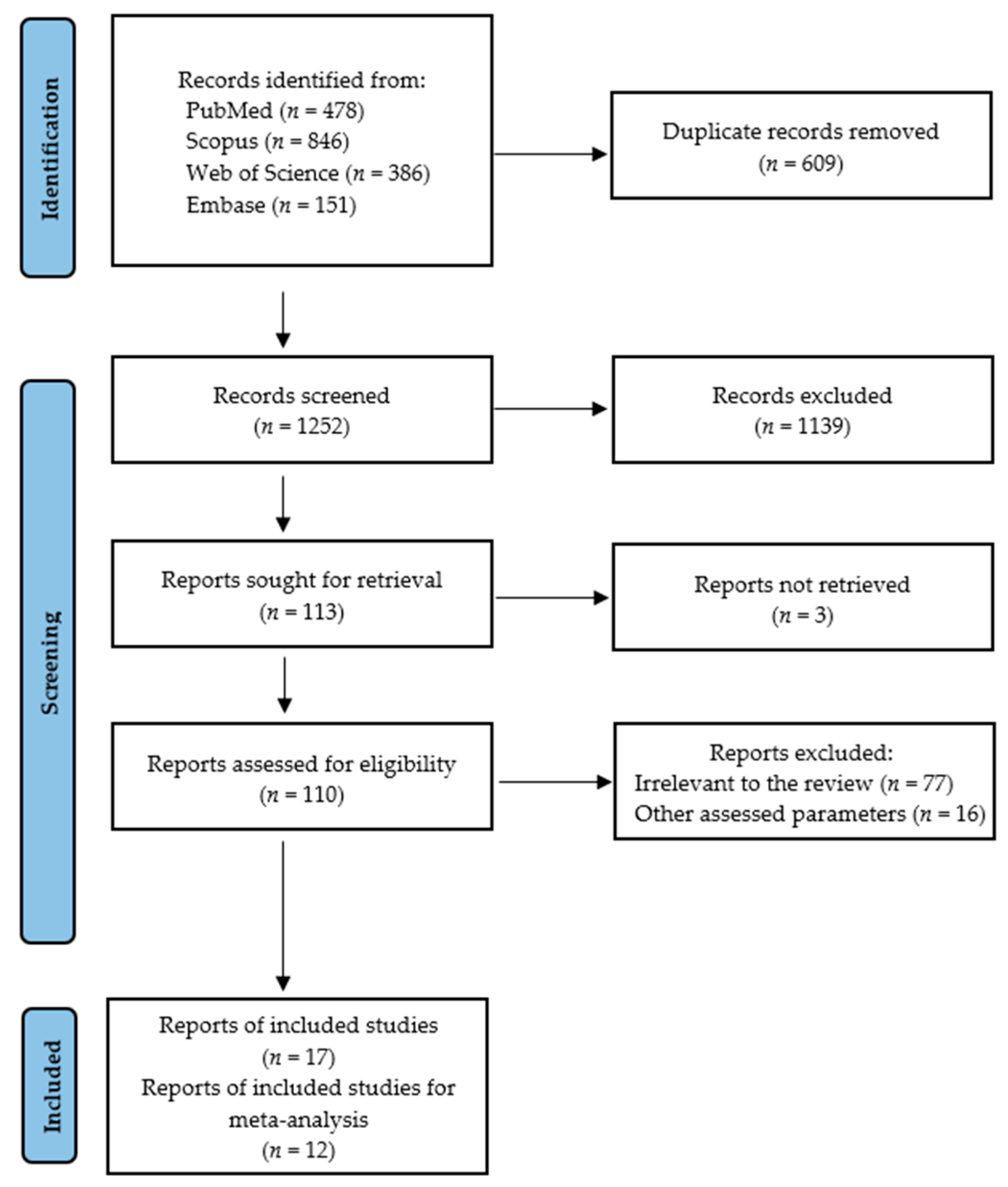
The records were screened by title, abstract, and full text by two independent investigators. Duplicates were identified using the Zotero reference manager (version 7.0.30) and, after each verification by the researchers, were removed. Among the included studies, a manual assessment of clustered articles was also performed in order to exclude them if necessary. The studies included in this review matched all the predefined criteria according to PICOS (Population, Intervention, Comparison, Outcomes, and Study design), as presented in Table 2. We excluded studies that did not meet the above criteria, with particular emphasis on studies irrelevant to our review and those assessing changes in parameters other than colourimetric ones after exposure to sports drinks. A detailed search flowchart is shown in Figure 1 in the Section 3. The study protocol was registered in the International Prospective Register of Systematic Reviews, PROSPERO (CRD420251002440). This systematic review is a continuation of a previous one about roughness parameters [12].
Table 2. Inclusion and exclusion criteria according to PICOS.
ParameterInclusion CriteriaExclusion Criteria
PopulationDental composite or glass ionomer samplesSamples from other dental materials
InterventionExposure to sports drinks 
ComparisonNot applicable 
OutcomesDetermined colourimetric parametersDetermined other technical or mechanical parameters
Study designIn vitro studiesOther original articles, literature reviews, case reports, letters to the editor, conference reports
Published after 1 January 2005Not published in English

2.2. Data Synthesis and Analysis

All studies that included an assessment of colourimetric parameters in numerical or graphical form were included in the qualitative analysis, regardless of the exposure period. The quantitative analysis included twelve studies that presented numerical data on colourimetric changes (ΔE) in dental restorative materials resulting from exposure to sports drinks. A subgroup meta-analysis was conducted based on the type of restorative material, separately for three exposure durations: 1 day, 1 week, and 1 month (the most frequently reported time points). The standardised mean differences were calculated and presented graphically using forest plots. Due to study heterogeneity confirmed by the I2 values, random-effects models were applied. Egger’s test was used to assess publication bias. A significance level of alpha = 0.05 was set for all analyses. All analyses were conducted using Statistica 13.3 software (StatSoft, Cracow, Poland).

2.3. Quality Assessment and Critical Appraisal for the Systematic Review of Included Studies

The risk of bias in each individual study was assessed using the “Study Quality Assessment Tool” issued by the National Heart, Lung, and Blood Institute within the National Institute of Health [24]. These questionnaires were answered by two independent investigators, and any disagreements were resolved by discussion between them.

3. Results

Based on the predefined search criteria, seventeen studies were included in this systematic review as part of the qualitative analysis—Figure 1. Of these, twelve studies were included in the meta-analysis, excluding studies that did not report numerical ΔE data or reported data for exposure times other than the selected 1 day, 1 week, and 1 year.
Detailed information on their methodologies and key findings is presented in Table 3.

3.1. One-Day Exposure

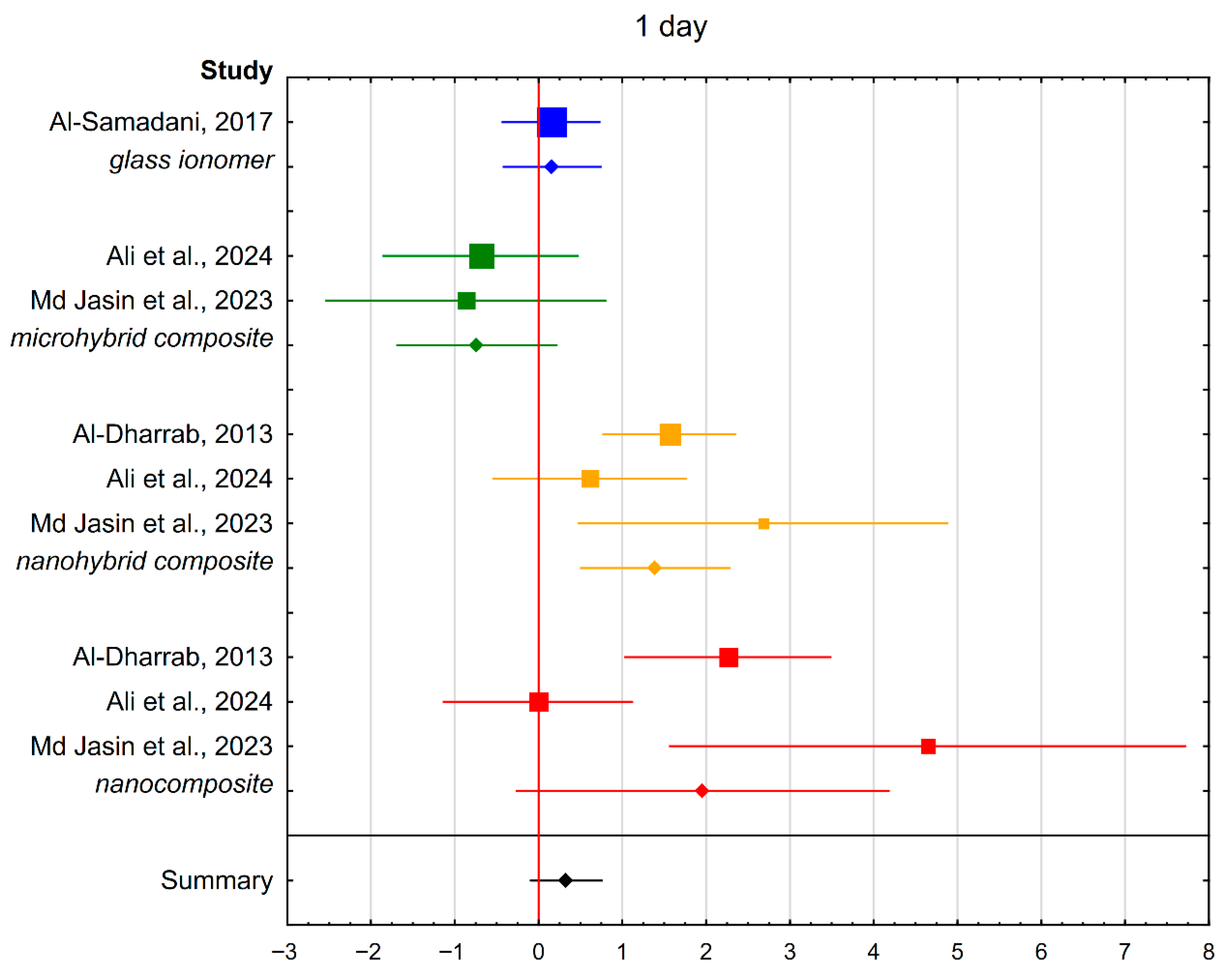
The meta-analysis of colourimetric changes (ΔE) after one-day exposure to sports drinks demonstrated a small, non-significant overall effect (SMD = 0.32; 95% CI: −0.10 to 0.75; p-value = 0.138) under a random-effects model (Figure 2, Table 4). Subgroup analysis revealed significant differences between material types (intergroup comparison, p-value = 0.006).
For glass ionomer materials, only one study was available, showing a non-significant effect (SMD = 0.16; p-value = 0.602). Microhybrid composites exhibited a non-significant pooled effect (SMD = −0.74; p-value = 0.128). In contrast, nanohybrid composites demonstrated a statistically significant increase in ΔE (SMD = 1.39; 95% CI: 0.49 to 2.28; p-value = 0.002). Nanocomposites showed a moderate but non-significant pooled effect (SMD = 1.95; p-value = 0.086). Egger’s test did not indicate publication bias (p-value = 0.344).

3.2. One-Week Exposure

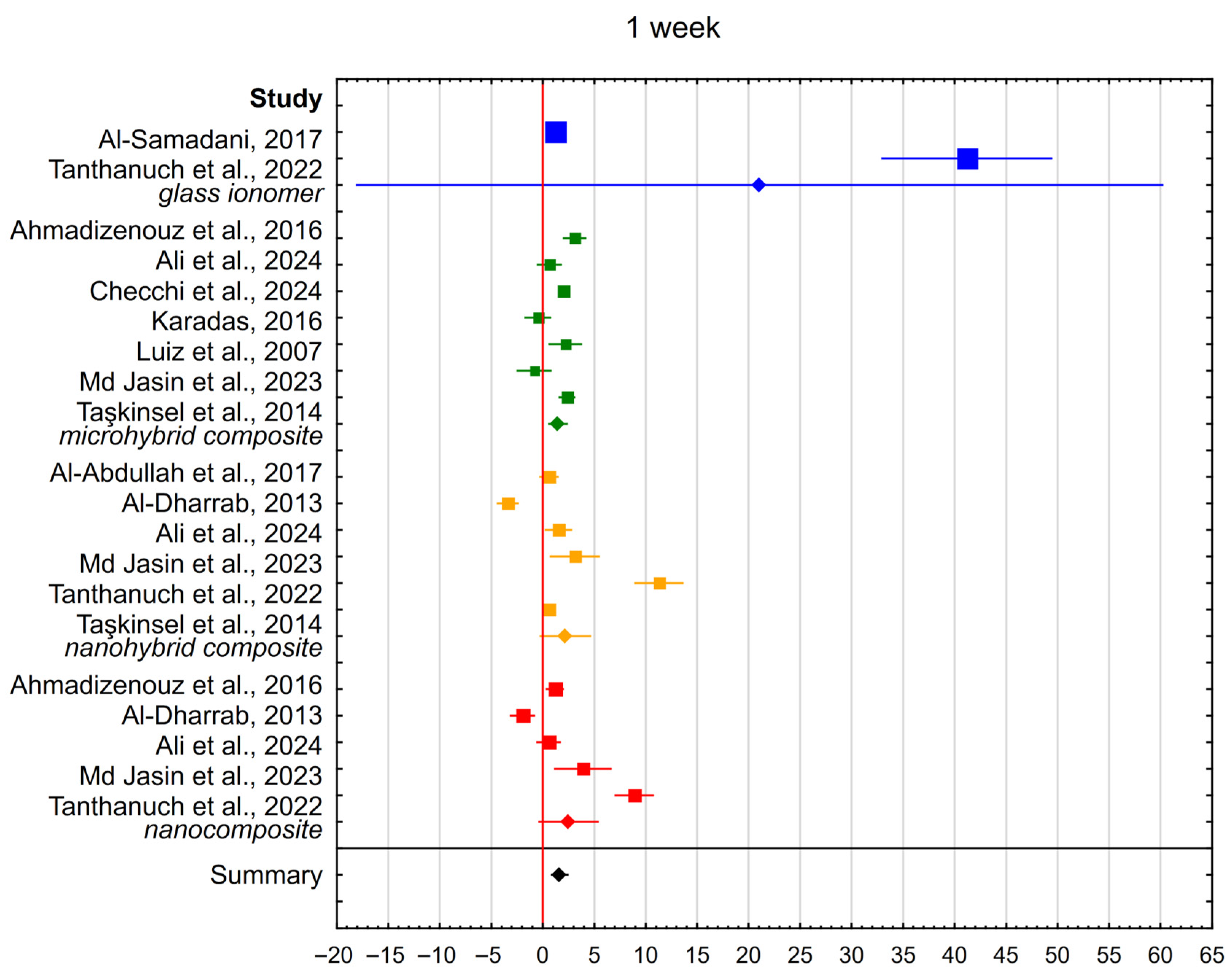
Following one-week exposure, the pooled analysis revealed a statistically significant increase in colour change (SMD = 1.60; 95% CI: 0.80 to 2.41; p-value < 0.001) (Figure 3, Table 5). Subgroup comparisons did not show significant differences between material types (p-value = 0.658).
The pooled effect for glass ionomer materials was large but not statistically significant due to high variability (SMD = 21.03; p-value = 0.293). Microhybrid composites demonstrated a significant increase in ΔE (SMD = 1.44; 95% CI: 0.54 to 2.33; p-value = 0.002). Nanohybrid composites and nanocomposites showed non-significant pooled effects (p-value = 0.087 and p-value = 0.095, respectively). No evidence of publication bias was detected (Egger’s test, p-value = 0.160).

3.3. One-Month Exposure

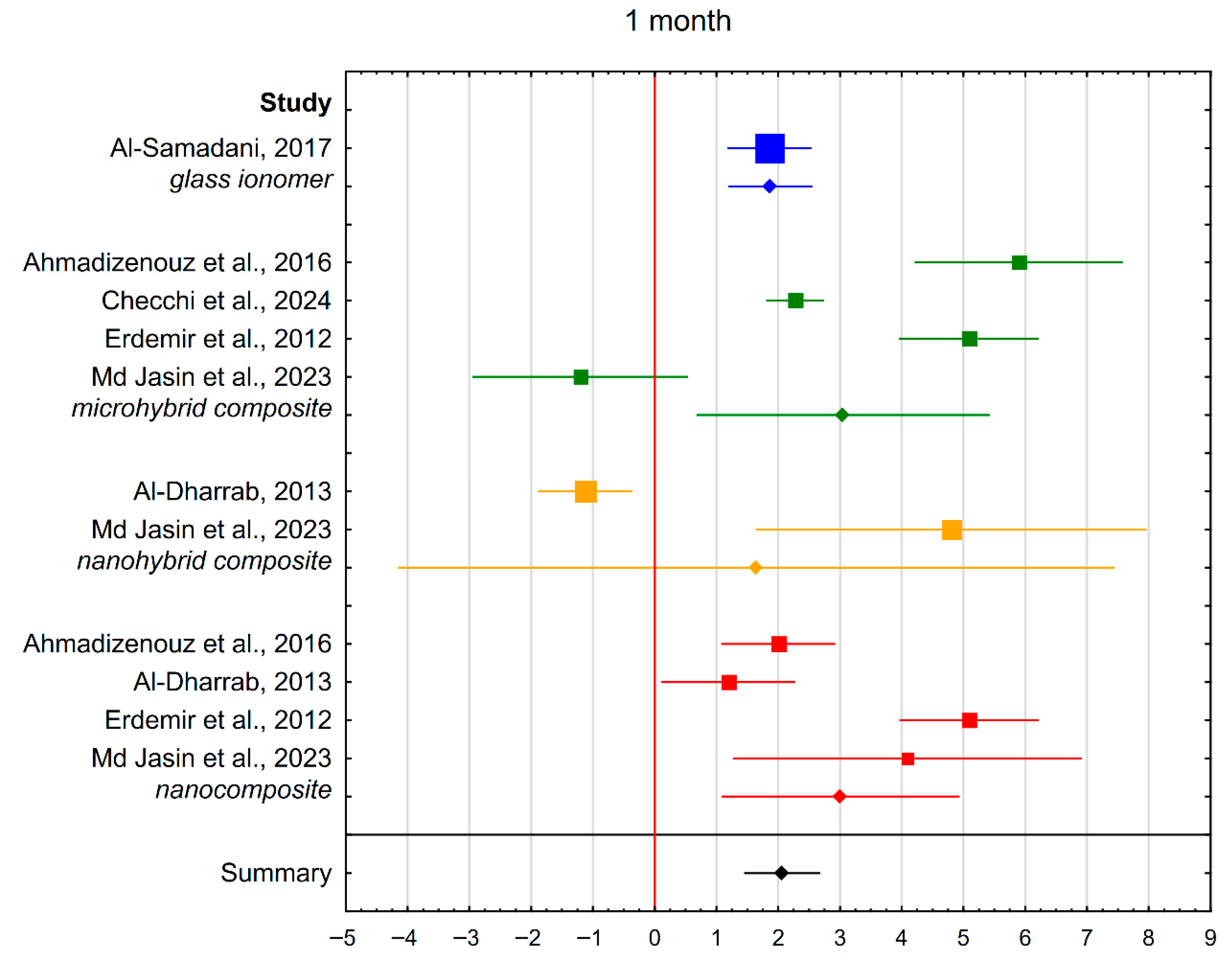
After a one-month exposure, the overall pooled effect indicated a significant increase in colour change (SMD = 2.06; 95% CI: 1.45 to 2.67; p-value < 0.001) (Figure 4, Table 6). No statistically significant differences were observed between material subgroups (intergroup comparison, p-value = 0.590).
For glass ionomer materials, a single study showed a large and statistically significant effect (SMD = 1.87; p-value < 0.001). Microhybrid composites exhibited a significant pooled increase in ΔE (SMD = 3.04; 95% CI: 0.67 to 5.41; p-value = 0.012). The pooled effect for nanohybrid composites was not statistically significant (SMD = 1.64; p-value = 0.579), whereas nanocomposites showed a significant and substantial increase in colour change (SMD = 3.00; 95% CI: 1.08 to 4.92; p-value = 0.002). Egger’s test did not reveal evidence of publication bias (p-value = 0.450).

3.4. Quality Assessment and Critical Appraisal for the Systematic Review of the Included Studies

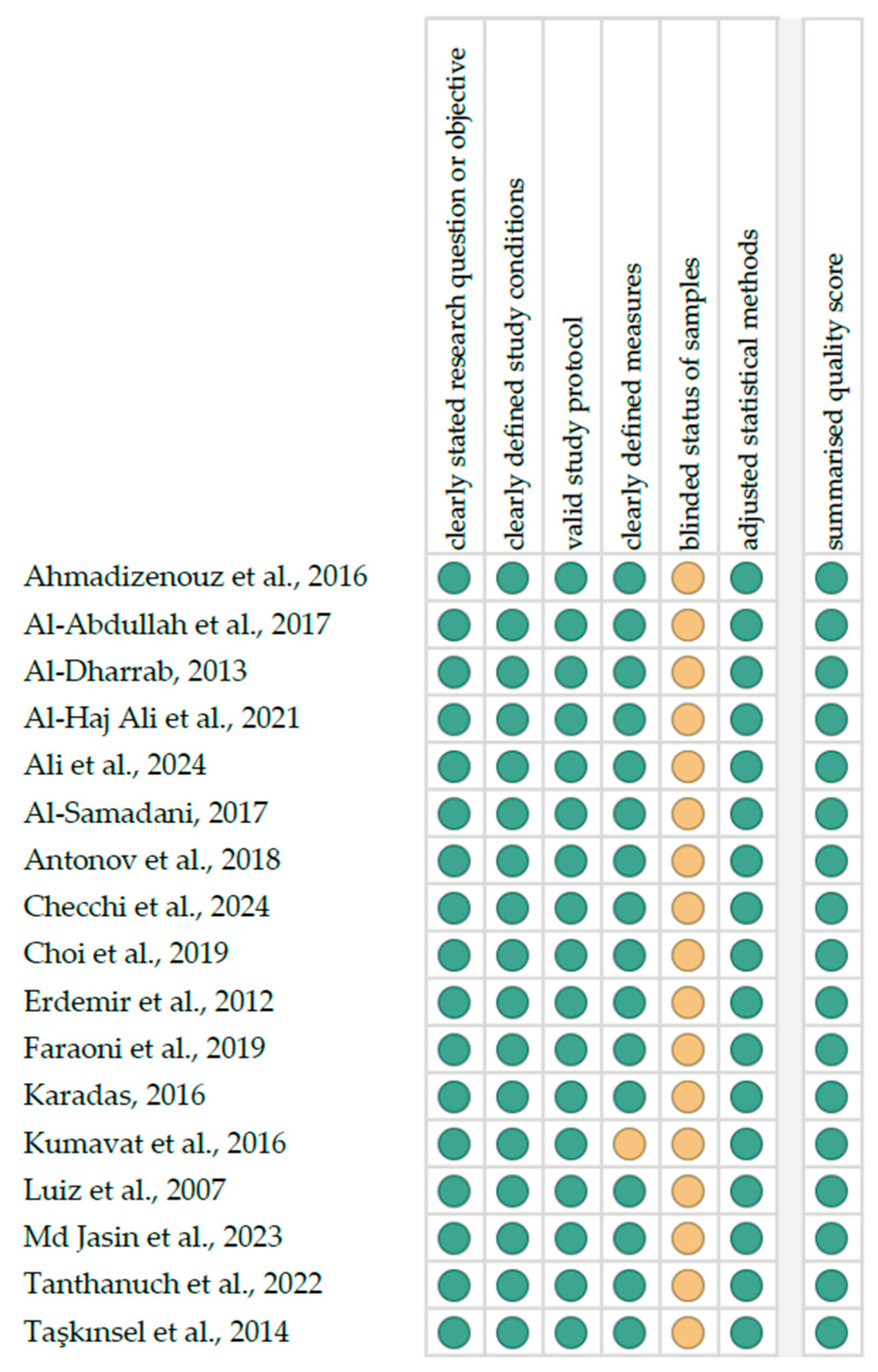
Figure 5 reports the summarised quality assessment. The most frequently encountered risk of bias was the absence of data regarding the blinding of samples. Critical appraisal was summarised by adding up the points for each criterion of potential risk (points: 1—low, 0.5—unspecified, and 0—high). All studies were classified as having “good” quality (≥85% total score).

4. Discussion

An exposure-dependent increase in colourimetric change was observed, with effect sizes increasing from one day to one week and reaching the highest values after one month of exposure. While material-dependent differences were evident after one-day exposure, these differences became less pronounced with longer exposure durations, suggesting a dominant influence of exposure time on ΔE values.

4.1. Narrative Synthesis of Findings

A ΔE of approximately 3.3–3.7 is widely accepted as the threshold for clinically perceptible colour change, and values above this range are often considered clinically unacceptable in dental restorative materials.
The studies included in this systematic review examined various composite materials. In the research conducted by Ahmadizenouz et al. [25], Filtek P90 (silorane), Filtek Z250 (microhybrid), and Filtek Z350XT (nanocomposite) were tested. Material samples were exposed to sports drinks for 5 min daily and then stored in artificial saliva for the rest of the day. Assessment of colour change was performed after 7 and 30 days. There were significant differences in the colour change of each material after immersion in Red Bull and Hype sports drinks. Between the tested materials, the highest ∆E values after 1 month of immersion were observed in Filtek Z250 and reached 2.58 ± 0.33 for Hype, 2.60 ± 0.22 for Red Bull, and 1.51 ± 0.25 for artificial saliva, with p-value < 0.001.
Another study regarding the properties of Filtek Z250 composite resin was performed by Choi et al. [32]. Material samples were exposed to Hot6 energy drink for 3 h per day for 5 days. For the rest of the time, the samples were stored in distilled water. Colour stability was measured after 1 day and 5 days of submersion. After 5 days, the colour changes between the control group and the Hot6 drink were significant.
Jasin et al. [37] also investigated the properties of similar composite resins. In their study, samples of Filtek Z250, Filtek Z250 XT (nanohybrid), and Filtek Z350 XT were immersed in 100Plus energy drink for 28 days, with artificial saliva serving as a control. Colour assessment was performed after the 1st, 7th, 14th, 21st, and 28th day of exposure. A slight, gradual change in colour was observed in all composite resins. All immersion groups had a significantly altered colour of the tested composite materials. Furthermore, the nanohybrid composite, Filtek Z250 XT, was found to be more resistant to discolouration due to immersion in an energy drink, with colour reflectance values of 1.99 ± 0.03, 1.95 ± 0.01, 1.95 ± 0.00, 1.93 ± 0.04, and 1.91 ± 0.03, respectively, for days 1, 7, 14, 21, and 28.
In the research conducted by Al-Dharrab [27], the properties of Filtek Z250 XT, Filtek Z350 XT, and Tetric EvoCeram (nanohybrid) were evaluated. Samples were immersed in three test solutions (Red Bull, Bison, Power Horse) and distilled water as a control. The immersion protocol lasted for 1, 7, 30, and 60 days. No significant differences were observed after immersion in Red Bull. On the other hand, immersion in Bison and Power Horse drinks resulted in substantial differences after periods of 1, 7, 30, and 60 days for each material, with p-values of <0.001 for Bison and p = 0.003 for Power Horse. A significant colour difference was observed in the control group between the materials after 60 days.
The properties of Filtek Z250, Filtek Z350 (nanocomposite) and Tetric N-Ceram (nanohybrid) were tested in the study published by Al-Haj Ali et al. [17]. Material samples were exposed to Red Bull energy drink and distilled water as a control for 15 days. Each tested material exhibited clinically unacceptable discolouration after immersion in Red Bull (ΔE > 3.3), with mean ΔE values of 7.49 (Filtek Z250), 6.47 (Filtek Z350), and 3.65 (Tetric N-Ceram). Exposure to energy drinks resulted in intermediate mean ΔE values of 5.87 ± 2.43. On the other hand, immersion in distilled water yielded clinically acceptable results, with ΔE values of 3.03 ± 1.00.
Ali et al. [28] also conducted a study on the properties of composite resins. In their research, a sample of four different materials (Filtek Z250, Filtek One Bulk-Fill (nanocomposite), Tetric N-Ceram, ACTIVA (bioactive restorative material)) was exposed to Monster Energy drink for durations of 1 day, 1 week, and 2 months. Distilled water served as the control. Material samples were divided into two groups: 2 mm thick and 4 mm thick. After 2 months of exposure, all submerged materials exhibited clinically unacceptable discolouration (ΔE > 3.3), with the greatest observed in the 2 mm thick Filtek Z250 samples (ΔE = 10.33 ± 0.57). After 1 week of exposure, a colour change higher than 3.3 was observed in the 2 mm thick samples of Tetric N-Ceram and Filtek One Bulk-Fill.
Another study on the properties of Tetric N-Ceram was conducted by Al-Abdullah et al. [26]. In their research, material samples were exposed to Red Bull energy drink and protein supplement solution for 7 days. The control group consisted of samples submerged in deionised water. The assessed ΔE values after exposure reached 3.51 ± 2.475 for deionised water, 5.4 ± 3.107 for Red Bull, and 63.45 ± 12.562 for protein supplement. The researchers also tested mixed exposure for one subgroup, where samples were submerged first in the energy drink for 7 days and then in the protein supplement for the next 7 days. The colour change values in this group were 69.71 ± 13.427. The colour change was remarkably high and clinically unacceptable with immersion in the protein supplement alone and with combined immersion in the energy drink and protein supplement.
Composite resins, such as Tetric N-Ceram and G-aenial (microhybrid), were tested in the study by Kumavat et al. [35]. Samples were immersed in Red Bull energy drink for 28 days. Colour assessments were obtained on the 7th, 14th, and 28th day. ΔE values for each exposure time reached, respectively, 0.9/1.27/1.72 for Tetric N-Ceram and 0.81/1.8/3.75 for G-aenial. Tetric N-Ceram tended to be more resistant to energy drinks than G-aenial, especially after the 7th day. The colour change value after the 28th day for the G-aenial samples was clinically unacceptable.
Erdemir et al. [14] evaluated the colour change of four composite materials after 1 month and 6 months of exposure to Powerade, Red Bull, and Burn energy drinks. Samples of Filtek Supreme (nanocomposite), Filtek Z250, Clearfil Majesty Posterior (nanocomposite), and Clearfil APX (microhybrid) were immersed in solutions for 2 min daily and stored in distilled water for the rest of the period. The control group consisted of samples submerged in distilled water. The colour changes observed in all four resin composites differed significantly across all four tested solutions during both time periods. The lowest ΔE values were consistently observed in the Clearfil Majesty Posterior samples, whereas the highest ΔE values were observed in the Clearfil APX samples.
The properties of Clearfil APX were also tested by Taşkınsel et al., as well as the properties of Cavex Quadrant Universal LC (nanohybrid) [20]. Samples 8 mm in diameter and 2 mm thick were prepared and exposed to Buzzer and Powerade energy drinks three times a day (for 5 min) for 7 days. Distilled water served as the control. The highest level of mean colour change was observed in Clearfil APX (3.5 ± 0.9 for Powerade and 3.3 ± 0.5 for Buzzer), and the lowest mean colour change was observed in Cavex composite (2.5 ± 0.6 for both energy drinks). The mean ΔE values in the control group were 2.5 ± 0.7 for Cavex and 2.0 ± 0.4 for Clearfil. The values obtained for Clearfil APX after exposure to the energy drinks were clinically unacceptable.
In the next study, Faraoni et al. [33] examined Filtek Z350XT, Beautifil II (nanohybrid), and Premisa (nanohybrid) composite resins. Specimens were exposed to a degradation process in an isotonic drink for 5 min, 4 times a day, with 1 h intervals. Among the cycles, the specimens were immersed in artificial saliva at 37 °C. The control group was kept in artificial saliva. These procedures were repeated for 15 days. The highest ΔE values were observed in the Beautifill II group (6.25 ± 4.78 for the isotonic drink group). The other composite resins demonstrated an insignificant difference in ΔE (0.44 ± 1.94 for Premisa and 0.27 ± 1.27 for Filtek Z350XT). Filtek Z350 XT and Beautifil II exhibited a higher colour change compared to Premisa, which showed better stability in immersion in various solutions.
The subject of flowable composite resins was analysed by Karadas et al. [34]. In their research, four flowable composites (G-aenial Universal Flo (flowable), Filtek Ultimate (flowable), Esthelite Flow Quick (flowable), and Clearfil Majesty ES Flow (flowable)) were tested and compared with one composite in paste (Filtek Z250). The study model consisted of samples immersed in Red Bull energy drink and distilled water (control group) for 7 days. The specimens were incubated at 37 °C. The statistical analysis showed that the highest staining (ΔE) was found for G-aenial Universal Flo in the Red Bull solution (2.59 ± 1.18). The colour changes caused by Red Bull in each tested composite were not statistically different from those with distilled water. Among all tested materials, Filtek Z250 turned out to be the most resistant composite to Red Bull, with ΔE values of 0.87 ± 0.43.
In the research conducted by Antonov et al. [30], the properties of Gradia Direct (microhybrid) composite resin were assessed. Material samples were immersed for 7 days and incubated at 37 °C to simulate the oral environment. The results were determined for four energy drinks, namely, Red Bull, Burn, Energi-S, and Guarana Kick, and compared with a distilled water control group. Staining in the energy drinks slightly altered the colour coordinates, but it did not affect the lightness. The most pronounced colour changes, with ∆E = 2.7, were observed for the Burn energy drink. Guarana Kick proved to be the least staining solution, with ∆E = 0.4. The mean values of colour change for Red Bull and Energi-S were 2.4 and 2.6, respectively.
ONEshade (microhybrid) and Olico XP (microhybrid) composite resins were analysed by Checchi et al. [31]. The specimens were divided into two groups: one polymerised for 30 min and the other for 80 min. The material samples were exposed to Monster Energy drink for 7 and 30 days. Artificial saliva served as the control group. The greatest ΔE = 3.2 ± 1.0 was observed after 30 days for ONEshade polymerised for 80’’. The results showed that all specimens, regardless of the curing time, underwent a certain amount of colour change.
In the study conducted by Luiz et al. [36], the properties of Charisma (microhybrid) composite resin were examined. Prepared specimens were exposed to a Gatorade sports drink for a duration of 7 days. Samples immersed in distilled water served as the control group. The obtained ∆E values were 0.8 ± 0.2 after 24 h and 0.6 ± 0.3 after 7 days. These ∆E values indicated that the colour changes were not appreciable by the human eye (∆E < 1), meaning that the observed changes were clinically acceptable.
Tanthanuch et al. [19] evaluated the properties of Filtek One Bulk Fill and Premise composite resins. Prepared samples were exposed to Sponsor and M-150 sports drinks for 7 and 14 days. The control group consisted of specimens immersed in distilled water. Filtek One Bulk Fill was more resistant to the tested solutions. After immersion, Sponsor’s ΔE values were 1.80 ± 0.02 (7d) and 2.30 ± 0.03 (14d), compared to those of Premises, which were 2.15 ± 0.13 (7d) and 2.71 ± 0.02 (14d). Similar results were obtained in the M-150 group, with ΔE values of 1.44 ± 0.05 (7d) and 2.01 ± 0.09 (14d) for Filtek, compared to Premises, with values of 2.04 ± 0.06 (7d) and 2.57 ± 0.06 (14d).
The same study also analysed the properties of Ketac Universal glass ionomer restorative material [19]. For colour change, Ketac Universal statistically exhibited greater colour value changes than both resin composites. The ΔE values for Sponsor were 3.16 ± 0.07 after 7 days and 4.59 ± 0.06 after 14 days. The ΔE values for M-150 were, respectively, 4.17 ± 0.06 and 5.52 ± 0.04. Those values were clinically unacceptable. The glass ionomer restorative material showed the greatest degradation among the tested materials.
Another study on glass ionomer restorative materials was conducted by Al-Samadani [29]. In the research, three materials (Ionofil Plus AC, GC EQUIA, and Ketac Molar) were exposed to Code Red, Red Bull, and Power Horse energy drinks. The control group consisted of specimens immersed in distilled water. Samples were immersed in drinks for 1 day, 1 week, and 1 month at 37 °C. All specimens were re-immersed in fresh solutions at each interval. The highest ∆E was recorded for GC EQUIA in the Red Bull group (∆E = 0.984) after 1 week, and the lowest was recorded for GC EQUIA in the Code Red group (∆E = 0.072) after 1 week. All tested materials revealed an increase in total colour difference over time; however, this was clinically acceptable.

4.2. Technical Implications of Material Compositions and Properties

Resin composites are widely used in contemporary dentistry due to their favourable aesthetic and mechanical properties. However, their long-term colour stability continues to be a clinical challenge. Evidence suggests that exposure of composite restorations to carbonated beverages and other commonly consumed beverages can cause significant colour alterations [38]. Discolouration remains a leading cause of aesthetic failure. It is a frequent reason for the replacement of restorations in visually critical areas, resulting in additional time and financial burdens for both patients and clinicians [20].
A wide range of beverages, including red wine, coffee, tea, fruit juices, and cola-based soft drinks, possess significant staining potential when they come into contact with resin composites [38]. This vulnerability is particularly relevant given the increasing demand for highly aesthetic restorative outcomes. Although modern materials have been designed to resemble natural teeth, composite resins still tend to discolour over time. Consequently, restorative materials must not only replicate the initial shade accurately but also preserve their optical properties throughout clinical service [14]. Accurate evaluation of colour change is complicated by several variables that influence it, including translucency, opacity, lighting conditions, light scattering behaviour, and the limitations of human visual perception [26].
Multiple material-related and environmental factors determine the susceptibility of composite resins to discolouration. These include the chemical composition of the monomer system, the degree of conversion (DC), the hydrophilicity of the resin matrix, and the type, morphology, and volume fraction of filler particles. Additionally, the composition, pH, and chromogenic characteristics of staining agents significantly influence the extent of colour change [25,27].
Water sorption plays a central role in the discolouration and degradation of resin-based composites. Materials capable of absorbing water can also accumulate fluids that contain pigment, facilitating the diffusion of stains into the resin matrix. Water serves as a transport medium, enabling chromogenic molecules to penetrate the organic phase of the composite. Excessive water sorption can compromise the longevity of the restoration by expanding and softening the matrix, promoting hydrolysis of the silane coupling agent, and initiating the formation of microcracks. These microcracks or interfacial gaps between the filler and matrix create pathways for pigment penetration, which explains why materials with higher resin content tend to show reduced resistance to photodegradation and moisture-induced discolouration [14,25].
Filler-related parameters, particularly filler size, volume fraction, and chemical composition, strongly influence surface quality and resistance to staining. Composites with smaller filler particles typically achieve smoother surfaces after finishing and polishing, reducing retention of external pigments. Likewise, materials with higher inorganic filler loading generally display improved colour stability, as they absorb less water and are less susceptible to matrix–filler debonding or hydrolytic degradation. By contrast, composites with lower filler content or larger particles absorb more water at the interfacial zone, increasing the risk of staining over time [14]. Despite these trends, differences in particle size and resin–matrix chemistry among microhybrid and nanofilled materials may lead to unexpected outcomes in colour stability. Smaller filler particles tend to produce smoother surfaces and fewer voids after polishing, which limits stain accumulation. These structural and compositional distinctions account for the variable discolouration patterns observed across composite categories [14,25].
Furthermore, hydrophilic monomers promote greater water uptake, increasing the chance that pigments can diffuse into the composite. In contrast, hydrophobic monomers limit fluid sorption and improve colour stability. Matrices containing UDMA or other hydrophobic dimethacrylates exhibit reduced water absorption and solubility. In contrast, Bis–GMA-based systems necessitate the incorporation of more hydrophilic diluent monomers, such as TEGDMA, to decrease viscosity, which inadvertently enhances water sorption. Composites combining hydrophobic monomers with high filler loads benefit from reduced water penetration at the matrix–filler interface, whereas materials with more hydrophilic matrices or lower filler contents are more susceptible to hydrolytic breakdown, microcrack formation, and pigment accumulation. Yet, monomer type alone cannot predict colour stability, as other factors, besides filler content or matrix types, also matter [14,34,37].
Silorane-based composite resins present lower water sorption compared to methacrylate-based composites (UDMA/Bis-GMA). The reduced water sorption of silorane is mainly due to the presence of hydrophobic siloxane groups in its composition and the effective interaction between the organic matrix and the filler particles. Quartz and yttrium fluoride particles contained in Filtek P90 show better resistance to matrix destruction induced by water than the zirconia/silica fillers commonly used in methacrylate-based resins. UDMA- and Bis-GMA-based composites present higher polymerisation shrinkage, leading to microcracking, creating retention areas for colourants, and exposing the matrix to water [25].
Microhybrid composites, such as Filtek Z250, despite having almost the same resin matrix compositions (Bis-GMA, Bis_EMA, UDMA) as nanofilled Filtek Supreme, showed higher discolouration due to bigger filler particle sizes. Smaller particle sizes allow for obtaining a smoother surface after polishing, which can reduce matrix penetration and colorant retention [14]. Taşkınsel et al. compared microhybrid Clearfil APX, with filler particle sizes of 0.02–17 μm and 71% by volume, with nanohybrid Cavex Quadrant Universal-LC, with 0.02–2 μm sized particles and 60% by volume. Both materials exhibited colour changes after 7 days of immersion. Despite lower filler capacity, the nanohybrid composite showed better resistance to staining solutions due to a smaller particle size [20].
Colour changes in nanohybrid composites are mostly related to their filler composition and structure. The group representative material Filtek Z250 XT contains triethylene glycol dimethacrylate (TEGDMA), a hydrophilic monomer that increases water absorption. As a result, water and colour pigments can penetrate the matrix or filler–matrix interface, increasing susceptibility to discolouration caused by the oral environment [28,37]. On the other hand, the absence of TEGDMA, paired with a high filler content, is most likely the reason for a higher resistance to staining of the Tetric N-Ceram composite [28].
Nanocomposites such as Clearfill Majesty Posterior and Filtek Supreme demonstrated lower discolouration than microhybrid composites across all solutions after both 1-month and 6-month immersion periods. This is likely due to their smaller particle size and compositional variations, leading to a smoother material surface and reduced staining. The variation in filler size between resin composites may explain why nanofilled materials exhibited lower surface roughness values than microhybrid composites. During finishing and polishing procedures, the removal of smaller filler particles in nanocomposites tends to create smaller surface defects than those observed in microhybrids [14].
The flowable composites tested by Karadas et al. [34] discoloured much more than the microhybrid Filtek Z250. The lower filler content present in flowable materials makes these materials vulnerable to water sorption. A higher resin matrix content is expected to be more susceptible to dye penetration from staining solutions.
Surface characteristics after finishing and polishing also significantly influence staining behaviour. Materials with higher surface roughness are more prone to pigment retention, promoting discolouration. Finishing refines the restoration’s contour, while polishing reduces roughness created during finishing. Although some studies have reported a minimal influence of polishing techniques on colour stability, others indicate that surface treatment affects discolouration outcomes. The tendency of a composite to stain depends partly on filler characteristics, as the detachment of inorganic particles can create voids that increase surface roughness and facilitate the accumulation of stains. Smaller filler particles in nanofilled systems generally result in smoother surfaces after polishing, thereby reducing susceptibility to extrinsic staining. Moreover, the polishing sequence plays a vital role, as a more intricate polishing procedure enhances the smoothness of the composite, allowing it to function effectively in the oral environment. In addition, it improves both the durability and aesthetic appearance of composite materials. The silanisation of filler particles may also influence discolouration due to the high water sorption potential of certain silane formulations [25,27,34,39,40].
We can conclude that composites with lower filler contents tend to present poor colour stability. Materials with larger filler particles show a tendency for higher discolouration than smaller particles. Differences in filler size among resin composites may enable nanofilled materials to achieve lower surface roughness than their microhybrid counterparts. During finishing and polishing, the removal of smaller filler particles in nanocomposites is likely to result in smaller surface voids compared with microhybrids. Another reason for lower resistance to colour changes is the use of hydrophilic monomers, such as TEGDMA, which increases water sorption. This process enables matrix penetration and results in staining [14,20,28,34].
On the other hand, colour stability of glass ionomer restorative materials is essential for achieving durable aesthetic outcomes; however, their inherent susceptibility to discoloration remains a major clinical limitation that often requires replacement. Glass ionomers are particularly vulnerable in acidic environments: low-pH conditions promote dissolution of glass filler particles, surface degradation, and increased roughness, all of which facilitate pigment retention and intensify staining. Given that many energy drinks are acidic, prolonged exposure may accelerate erosion of both dental hard tissues and glass-ionomer-based restorations [29].
The colour change in these materials is influenced by their structural composition, storage temperature, and the pH of the staining solutions. Materials that originate from an acid–base reaction possess a superficially less-cross-linked outer layer that is more prone to chemical interaction and pigment uptake. This explains why glass-hybrid materials demonstrate more pronounced discolouration compared to resin-based composites [22]. The increased surface porosity in these materials provides retention sites for external pigments, thereby enhancing both adsorption and absorption of chromogens [19].

4.3. Strengths and Limitations

This review provides a comprehensive synthesis of the existing evidence on the effects of sports drinks on the colour stability of restorative materials; however, several limitations must be considered when evaluating the robustness of its conclusions. One major limitation was the considerable heterogeneity among the experimental designs of the included studies. There was a wide variation in terms of immersion protocols, sample sizes, and beverage compositions, which limited the comparability of outcomes and the generalisability of the results. The authors rightly note that the most significant methodological challenge was accurately simulating the oral cavity environment. Several factors observed under clinical conditions, including the buffering action of saliva, dietary behaviours, oral hygiene practices, and patient-related variables, cannot be adequately simulated in in vitro studies [17,22,38]. Saliva’s primary defence against acid is its ability to act as a buffer, neutralising acids and keeping a stable pH of around 6.8–7.4. The quality of saliva and its buffering capacity rely on ontogenetic predispositions, such as organic composition, salivary flow, and production rate. The natural ageing of dental composites in the mouth, along with the absence of tooth brushing in in vitro studies, can influence the degree of discolouration observed in different materials and solutions. Differences in the thickness of clinical composite restorations compared to the flat, easily accessible surfaces of composite discs may also affect the outcomes. Furthermore, factors such as dietary habits, oral hygiene, and other patient-specific variables could not be accounted for or assessed. As a result, the staining effects of sports beverages in the oral environment would likely take a longer time to become apparent [7,14,17,22].
We also observed substantial variation in exposure durations, immersion protocols, and different control group liquids among studies, resulting in a lack of standardised immersion conditions. In some studies, material samples were continuously exposed to energy drinks [17,28,34,37], while in others, exposure consisted of sets of daily immersions followed by immersion in distilled water or artificial saliva for the rest of the day [14,19,25,35]. The duration of ageing periods varied from 1 day [27,28,37] to even 6 months [14]. Distilled water was commonly used among researchers as a control group medium [17,27,28,34]; however, in some studies, the researchers decided to implement artificial saliva as a control group [25,31,33,37]. In some studied sample materials, incubation at 37 °C was performed during the immersion protocol to mimic the temperature inside the oral cavity [29,33,34], while in other studies, the incubation temperature was not addressed.
Differences in testing protocols may influence results in many ways. Mixed immersion protocols (test drink swapped with control drink) could result in higher water-induced matrix degradation but lower staining potential compared to continuous exposure to test drinks. The use of artificial saliva in mixed protocols may weaken the staining ability of the tested beverages due to its buffering capacity. Some studies used artificial saliva as a control instead of distilled water, which could also lead to changes in the vulnerability of the tested materials. Incubation of samples at 37 °C compared to room temperature storage may lead to differences in results based on different solubility and different carbonation due to the temperature range. The researchers tested many staining solutions varying in composition. Although the pH values of these drinks were similar, differences in the used ingredients, such as the amount of sugar and/or sweetener, citric and/or other acids, caffeine, preservatives, vitamins, and colourants, reflect the obtained results.
Moreover, most studies used the conventional CIELAB ΔE*ab formula, which may overestimate clinically relevant colour differences compared with more perceptually accurate methods, such as CIEDE2000. The use of different spectrophotometers across the included studies may have introduced additional methodological heterogeneity.

4.4. Clinical Implications and Future Research Directions

To improve the clinical relevance of future research, it is essential to adopt standardised experimental protocols that more accurately simulate the dynamic intraoral environment. This includes incorporating factors such as intermittent exposure to staining agents, thermal cycling, mechanical wear, and the use of saliva substitutes. Additionally, longitudinal in vivo studies and well-designed randomised controlled clinical trials are strongly recommended to confirm the clinical significance of material degradation observed in laboratory settings.
Although this study concentrates on sports drinks, comparing their effects with those of other commonly consumed acidic beverages, such as citrus juices and carbonated soft drinks, would offer a more comprehensive assessment of dietary risks. Including such comparisons would expand the applicability of the present findings and better reflect real-world dietary patterns, thereby supporting more effective preventive dental care strategies.
We recommend that clinicians check material compositions and detailed parameters such as filler volume, particle size, and implemented matrix resin. Nanofilled composites with smaller particles and higher filler volume presented better resistance to sports drinks with lesser colour changes than microhybrid materials. Composites made with hydrophobic dimethacrylate matrices tend to absorb less water and show lower solubility, while hydrophilic monomers like TEGDMA may negatively affect the structural strength of composites due to greater tendencies of water sorption. Nanofilled composites can be applied in aesthetic zone restorations due to better colour stability, while microhybrid composites can be used in the functional zone, where better mechanical resistance is more expected than a perfect aesthetic effect. Glass ionomer materials are not recommended as final restorations due to their high surface degradation and increased roughness, resulting in poor mechanical resistance and colour stability. It is also recommended to carefully polish restorations to achieve a smooth structure and minimise matrix penetration, as well as retention of colourants.

5. Conclusions

Within the limitations of the current systematic review, we can conclude the following:
Prolonged exposure to sports drinks causes a clear, time-dependent increase in the colour change of dental restorative materials, with exposure duration being the dominant factor in discolouration.
Short-term (one-day) exposure does not produce statistically significant overall discolouration; however, early material-dependent differences indicate variable initial susceptibility.
After one week and one month of exposure, colour changes become significant and more pronounced across materials.
Composite resins, particularly microhybrid and nanocomposite types, demonstrate greater colour instability during extended exposure compared with glass ionomer materials.
Over longer exposure periods, the influence of material composition diminishes, suggesting that sustained contact with acidic sports drinks outweighs inter-material differences.
These findings highlight the need for careful material selection and patient dietary counselling, especially for individuals who frequently consume sports drinks, to maintain long-term aesthetic outcomes of restorations.

Supplementary Materials

The following supporting information can be downloaded at https://www.mdpi.com/article/10.3390/jcs10020074/s1, Reference [23] is cited in the supplementary materials.

Author Contributions

Conceptualisation, F.P. and K.N.; methodology, F.P. and K.N.; formal analysis, F.P. and K.N.; investigation and data curation, F.P., W.M. and K.N.; writing—original draft preparation, F.P. and W.M.; writing—review and editing, K.B. and K.N.; visualisation, K.N.; supervision, K.N. All authors have read and agreed to the published version of the manuscript.

Funding

This research received no external funding.

Data Availability Statement

No new data were created or analysed in this study.

Conflicts of Interest

The authors declare no conflicts of interest.

References

  1. Kanzow, P.; Wegehaupt, F.J.; Attin, T.; Wiegand, A. Etiology and Pathogenesis of Dental Erosion. Quintessence Int. 2016, 47, 275–278. [Google Scholar] [CrossRef] [PubMed]
  2. Donovan, T.; Nguyen-Ngoc, C.; Abd Alraheam, I.; Irusa, K. Contemporary Diagnosis and Management of Dental Erosion. J. Esthet. Restor. Dent. 2021, 33, 78–87. [Google Scholar] [CrossRef]
  3. Inchingolo, A.M.; Malcangi, G.; Ferrante, L.; Del Vecchio, G.; Viapiano, F.; Mancini, A.; Inchingolo, F.; Inchingolo, A.D.; Di Venere, D.; Dipalma, G.; et al. Damage from Carbonated Soft Drinks on Enamel: A Systematic Review. Nutrients 2023, 15, 1785. [Google Scholar] [CrossRef]
  4. Schmidt, J.; Huang, B. Awareness and Knowledge of Dental Erosion and Its Association with Beverage Consumption: A Multidisciplinary Survey. BMC Oral Health 2022, 22, 35. [Google Scholar] [CrossRef]
  5. Søvik, J.B.; Skudutyte-Rysstad, R.; Tveit, A.B.; Sandvik, L.; Mulic, A. Sour Sweets and Acidic Beverage Consumption Are Risk Indicators for Dental Erosion. Caries Res. 2015, 49, 243–250. [Google Scholar] [CrossRef]
  6. Nijakowski, K.; Walerczyk-Sas, A.; Surdacka, A. Regular Physical Activity as a Potential Risk Factor for Erosive Lesions in Adolescents. Int. J. Environ. Res. Public Health 2020, 17, 3002. [Google Scholar] [CrossRef]
  7. Nijakowski, K.; Zdrojewski, J.; Nowak, M.; Podgórski, F.; Surdacka, A. Regular Physical Activity and Dental Erosion: A Systematic Review. Appl. Sci. 2022, 12, 1099. [Google Scholar] [CrossRef]
  8. Picos, A.; Chisnoiu, A.; Dumitrasc, D.L. Dental Erosion in Patients with Gastroesophageal Reflux Disease. Adv. Clin. Exp. Med. 2013, 22, 303–307. [Google Scholar] [PubMed]
  9. Lan, Z.; Zhao, I.S.; Li, J.; Li, X.; Yuan, L.; Sha, O. Erosive Effects of Commercially Available Alcoholic Beverages on Enamel. Dent. Mater. J. 2023, 42, 236–240. [Google Scholar] [CrossRef]
  10. Khan, K.; Qadir, A.; Trakman, G.; Aziz, T.; Khattak, M.; Nabi, G.; Alharbi, M.; Alshammari, A.; Shahzad, M. Sports and Energy Drink Consumption, Oral Health Problems and Performance Impact among Elite Athletes. Nutrients 2022, 14, 5089. [Google Scholar] [CrossRef] [PubMed]
  11. Antunes, L.S.; Veiga, L.; Nery, V.S.; Nery, C.C.; Antunes, L.A. Sports Drink Consumption and Dental Erosion among Amateur Runners. J. Oral Sci. 2017, 59, 639–643. [Google Scholar] [CrossRef]
  12. Podgórski, F.; Musyt, W.; Nijakowski, K. The Impact of Sports Drink Exposure on the Surface Roughness of Restorative Materials: A Systematic Review. J. Compos. Sci. 2025, 9, 234. [Google Scholar] [CrossRef]
  13. Fernández, C.E.; Silva-Acevedo, C.A.; Padilla-Orellana, F.; Zero, D.; Carvalho, T.S.; Lussi, A. Should We Wait to Brush Our Teeth? A Scoping Review Regarding Dental Caries and Erosive Tooth Wear. Caries Res. 2024, 58, 454–468. [Google Scholar] [CrossRef]
  14. Erdemir, U.; Yıldız, E.; Eren, M.M. Effects of Sports Drinks on Color Stability of Nanofilled and Microhybrid Composites after Long-Term Immersion. J. Dent. 2012, 40, e55–e63. [Google Scholar] [CrossRef] [PubMed]
  15. Sarac, D.; Sarac, Y.S.; Kulunk, S.; Ural, C.; Kulunk, T. The Effect of Polishing Techniques on the Surface Roughness and Color Change of Composite Resins. J. Prosthet. Dent. 2006, 96, 33–40. [Google Scholar] [CrossRef]
  16. Ergücü, Z.; Türkün, L.S.; Aladag, A. Color Stability of Nanocomposites Polished with One-Step Systems. Oper. Dent. 2008, 33, 413–420. [Google Scholar] [CrossRef] [PubMed]
  17. Al-Haj Ali, S.N.; Alsulaim, H.N.; Albarrak, M.I.; Farah, R.I. Spectrophotometric Comparison of Color Stability of Microhybrid and Nanocomposites Following Exposure to Common Soft Drinks among Adolescents: An in Vitro Study. Eur. Arch. Paediatr. Dent. 2021, 22, 675–683. [Google Scholar] [CrossRef]
  18. Yadav, R.; Meena, A.; Patnaik, A. Biomaterials for Dental Composite Applications: A Comprehensive Review of Physical, Chemical, Mechanical, Thermal, Tribological, and Biological Properties. Polym. Adv. Technol. 2022, 33, 1762–1781. [Google Scholar] [CrossRef]
  19. Tanthanuch, S.; Kukiattrakoon, B.; Thongsroi, T.; Saesaw, P.; Pongpaiboon, N.; Saewong, S. In Vitro Surface and Color Changes of Tooth-Colored Restorative Materials after Sport and Energy Drink Cyclic Immersions. BMC Oral Health 2022, 22, 578. [Google Scholar] [CrossRef] [PubMed]
  20. Taşkinsel, E.; Özel, E.; Öztürk, E. Effects of Sports Beverages and Polishing Systems on Color Stability of Different Resin Composites. J. Conserv. Dent. 2014, 17, 325–329. [Google Scholar] [CrossRef]
  21. Faris, T.M.; Abdulrahim, R.H.; Mahmood, M.A.; Mhammed Dalloo, G.A.; Gul, S.S. In Vitro Evaluation of Dental Color Stability Using Various Aesthetic Restorative Materials after Immersion in Different Drinks. BMC Oral Health 2023, 23, 49. [Google Scholar] [CrossRef]
  22. Kose, H.D.; Giray, I.; Boyacioglu, H.; Turkun, L.S. Can Energy Drinks Affect the Surface Quality of Bioactive Restorative Materials? BMC Oral Health 2024, 24, 1011. [Google Scholar] [CrossRef]
  23. Page, M.J.; McKenzie, J.E.; Bossuyt, P.M.; Boutron, I.; Hoffmann, T.C.; Mulrow, C.D.; Shamseer, L.; Tetzlaff, J.M.; Akl, E.A.; Brennan, S.E.; et al. The PRISMA 2020 Statement: An Updated Guideline for Reporting Systematic Reviews. BMJ 2021, 372, n71. [Google Scholar] [CrossRef]
  24. Study Quality Assessment Tools|NHLBI, NIH. Available online: https://www.nhlbi.nih.gov/health-topics/study-quality-assessment-tools (accessed on 7 November 2024).
  25. Ahmadizenouz, G.; Esmaeili, B.; Ahangari, Z.; Khafri, S.; Rahmani, A. Effect of Energy Drinks on Discoloration of Silorane and Dimethacrylate-Based Composite Resins. J. Dent. 2016, 13, 261–270. [Google Scholar]
  26. Al-Abdullah, A.S.; Al-Bounni, R.S.; Al-Omari, M. Color Stability of Tetric® N-Ceram Bulk Fill Restorative Composite Resin after Immersion in Different Drinks. J. Adv. Oral Res. 2017, 8, 34–41. [Google Scholar] [CrossRef]
  27. Al-Dharrab, A. Effect of Energy Drinks on the Color Stability of Nanofilled Composite Resin. J. Contemp. Dent. Pract. 2013, 14, 704–711. [Google Scholar] [CrossRef] [PubMed]
  28. Ali, S.A.-H.; Alsedrani, R.; Alharbi, N.; Farah, R.; Alharbi, E.; Alkhuwaiter, S. Impact of Carbonated Beverages on Color Stability and Home Bleaching Efficacy of BulkFill Composite Resins. Pediatr. Dent. 2024, 46, 277–284. [Google Scholar] [PubMed]
  29. Al-Samadani, K.H. Glass Ionomer Restorative Materials Response to Its Color Stability with Effect of Energy Beverages. World J. Dent. 2017, 8, 255–261. [Google Scholar] [CrossRef]
  30. Antonov, M.; Lenhardt, L.; Manojlović, D.; Milićević, B.; Dramićanin, M.D. Discoloration of Resin Based Composites in Natural Juices and Energy Drinks. Vojnosanit. Pregl. 2018, 75, 787–794. [Google Scholar] [CrossRef]
  31. Checchi, V.; Forabosco, E.; Della Casa, G.; Kaleci, S.; Giannetti, L.; Generali, L.; Bellini, P. Color Stability Assessment of Single- and Multi-Shade Composites Following Immersion in Staining Food Substances. Dent. J. 2024, 12, 285. [Google Scholar] [CrossRef]
  32. Choi, J.-W.; Lee, M.-J.; Oh, S.-H.; Kim, K.-M. Changes in the Physical Properties and Color Stability of Aesthetic Restorative Materials Caused by Various Beverages. Dent. Mater. J. 2019, 38, 33–40. [Google Scholar] [CrossRef]
  33. Faraoni, J.J.; Quero, I.B.; Schiavuzzo, L.S.; Palma-Dibb, R.G. Color Stability of Nanohybrid Composite Resins in Drinks. Braz. J. Oral Sci. 2019, 18, e191601. [Google Scholar] [CrossRef]
  34. Karadas, M. The Effect of Different Beverages on the Color and Translucency of Flowable Composites. Scanning 2016, 38, 701–709. [Google Scholar] [CrossRef]
  35. Kumavat, V.; Raghvendra, S.S.; Vyavahare, N.; Khare, U.; Kotadia, P. Effect of Alcoholic and Non-Alcoholic Beverages on Color Stability, Surface Roughness and Fracture Toughness of Resin Composites: An in Vitro Study. IIOAB J. 2016, 7, 48–54. [Google Scholar]
  36. Luiz, B.K.M.; Amboni, R.D.M.C.; Prates, L.H.M.; Roberto Bertolino, J.; Pires, A.T.N. Influence of Drinks on Resin Composite: Evaluation of Degree of Cure and Color Change Parameters. Polym. Test. 2007, 26, 438–444. [Google Scholar] [CrossRef]
  37. Md Jasin, N.; Roslan, H.; Mohamad Suhaimi, F.; Omar, A.F.; Bahoudela, N. Influences of Different Solutions on the Colour Stability and Microhardness of Contemporary Light Cured Composites: An in Vitro Study. JUMMEC 2023, 2023, 291–298. [Google Scholar] [CrossRef]
  38. Barbosa, G.F.; Cardoso, M.B. Effects of Carbonated Beverages on Resin Composite Stability. Am. J. Dent. 2018, 31, 313–316. [Google Scholar]
  39. Lehmann, A.; Nijakowski, K.; Jankowski, J.; Donnermeyer, D.; Ramos, J.C.; Drobac, M.; Martins, J.F.B.; Hatipoğlu, Ö.; Omarova, B.; Javed, M.Q.; et al. Clinical Difficulties Related to Direct Composite Restorations: A Multinational Survey. Int. Dent. J. 2025, 75, 797–806. [Google Scholar] [CrossRef] [PubMed]
  40. Lehmann, A.; Nijakowski, K.; Jankowski, J.; Donnermeyer, D.; Palma, P.J.; Drobac, M.; Martins, J.F.B.; Pertek Hatipoğlu, F.; Tulegenova, I.; Javed, M.Q.; et al. Awareness of Possible Complications Associated with Direct Composite Restorations: A Multinational Survey among Dentists from 13 Countries with Meta-Analysis. J. Dent. 2024, 145, 105009. [Google Scholar] [CrossRef]
Figure 1. PRISMA flow diagram presenting the search strategy.
Jcs 10 00074 g001
Figure 2. Forest plot showing the standardised mean difference (SMD) for colourimetric ΔE following one-day exposure to sports drinks, stratified by type of dental restorative material [27,28,29,37].
Jcs 10 00074 g002
Figure 3. Forest plot showing the standardised mean difference (SMD) for colourimetric ΔE following one-week exposure to sports drinks, stratified by type of dental restorative material [19,20,25,26,27,28,29,31,34,36,37].
Jcs 10 00074 g003
Figure 4. Forest plot showing the standardised mean difference (SMD) for colourimetric ΔE following a one-month exposure to sports drinks, stratified by type of dental restorative material [14,25,27,29,31,37].
Jcs 10 00074 g004
Figure 5. Quality assessment, including the main potential risk of bias (risk level: green—low, yellow—unspecified, red—high; quality score: green—good, yellow—intermediate, red—poor) [14,17,19,20,25,26,27,28,29,30,31,32,33,34,35,36,37].
Jcs 10 00074 g005
Table 1. The search queries for selected databases.
DatabaseSearch Query
PubMed(“soft drink” OR “sport drink” OR “sports drink” OR “sport beverage” OR “sports beverage” OR “fruit juice” OR “isotonic beverage” OR “energy beverage” OR “isotonic drink” OR “energy drink”) AND (“dental material” OR “restorative material” OR “composite” OR “glass-ionomer” OR “compomer”)
ScopusTITLE-ABS-KEY ((“soft drink” OR “sport drink” OR “sports drink” OR “sport beverage” OR “sports beverage” OR “fruit juice” OR “isotonic beverage” OR “energy beverage” OR “isotonic drink” OR “energy drink”) AND (“dental material” OR “restorative material” OR “composite” OR “glass-ionomer” OR “compomer”))
Web of ScienceTS = ((“soft drink” OR “sport drink” OR “sports drink” OR For Web of Science: TS = ((“soft drink” OR “sport drink” OR “sports drink” OR “sport beverage” OR “sports beverage” OR “fruit juice” OR “isotonic beverage” OR “energy beverage” OR “isotonic drink” OR “energy drink”) AND (“dental material” OR “restorative material” OR “composite” OR “glass-ionomer” OR “compomer”)); “sport beverage” OR “sports beverage” OR “fruit juice” OR “isotonic beverage” OR “energy beverage” OR “isotonic drink” OR “energy drink”) AND (“dental material” OR “restorative material” OR “composite” OR “glass-ionomer” OR “compomer”))
Embase(“soft drink”: ti,ab,kw OR “sport drink”: ti,ab,kw OR “sports drink”: ti,ab,kw OR “sport beverage”: ti,ab,kw OR “sports beverage”: ti,ab,kw OR “fruit juice”: ti,ab,kw OR “isotonic beverage”: ti,ab,kw OR “energy beverage”: ti,ab,kw For Embase: (“soft drink”: ti,ab,kw OR “sport drink”: ti,ab,kw OR “sports drink”: ti,ab,kw OR “sport beverage”: ti,ab,kw OR “sports beverage”: ti,ab,kw OR “fruit juice”: ti,ab,kw OR “isotonic beverage”: ti,ab,kw OR “energy beverage”: ti,ab,kw OR “isotonic drink”: ti,ab,kw OR “energy drink”: ti,ab,kw) AND (“dental material”: ti,ab,kw OR “restorative material”: ti,ab,kw OR “composite”: ti,ab,kw OR “glass-ion omer”: ti,ab,kw OR “compomer”: ti,ab,kw). OR “isotonic drink”: ti,ab,kw OR “energy drink”: ti,ab,kw) AND (“dental material”: ti,ab,kw OR “restorative material”: ti,ab,kw OR “composite”: ti,ab,kw OR “glass ionomer”: ti,ab,kw OR “compomer”: ti,ab,kw)
Table 3. Detailed characteristics of the included studies.
StudyTest GroupControl GroupTest MaterialsTest BeveragesControl BeverageExposure ProtocolExposure DurationOutcome MeasureEvaluation MethodsMain Findings
Ahmadizenouz et al., 2016 [25]6030Composites (n = 60): Filtek Z250 (n = 30), Filtek Z350 XT (n = 30); Silorane (n = 30): Filtek P90 (n = 30)Red Bull (n = 30), Hype (n = 30)Artificial saliva5 min daily, then stored in artificial saliva7 days, 30 days∆ESpectrophotometer (Vita Easyshade, Vident, Brea, CA, USA)The Filtek Z250 composite showed the highest ∆E irrespective of the solution at both time points. After seven days and one month, the lowest ∆E values were observed in the Filtek Z350XT and Filtek P90 composites immersed in artificial saliva, respectively.
Al-Abdullah et al., 2017 [26]2010Composites: Tetric N-Ceram (n = 30)Red Bull (n = 10), Zero Carb ISOPURE (n = 10)Distilled waterContinuous exposure7 days∆ESpectrophotometer (Color Eye 7000A)The colour change of the N-Ceram Bulk Fill composite specimens ∆E occurred by immersion in the energy drinks; protein supplement solution after seven days was found to be statistically significant.
Al-Dharrab, 2013 [27]18060Composites: Filtek Z250 XT (n = 80), Filtek Z350XT (n = 80), Tetric EvoCeram (n = 80)Red Bull (n= 60), Bison (n= 60), Power Horse (n= 60)Distilled waterContinuous exposure1, 7, 30, 60 days∆EColorimeter (Konica Minolta CR-400/410; Minolta Co., Osaka, Japan)The colour change ∆E caused by the energy drinks was significantly different for all tested materials at all four times except in the Red Bull group. The highest total colour difference ∆E was found in the Red Bull group after 60 days.
Al-Haj Ali et al., 2021 [17]1818Composites: Filtek Z250 (n = 12), Filtek Z350 (n = 12), Tetric N-Ceram (n = 12)Red Bull (n = 18)Distilled waterContinuous exposure15 days∆EVITA EasyShade spectrophotometer (VITA Zahnfabrik GmbH, Bad Säckingen, Germany)Significant change in colour values and total colour (ΔE > 3.3) was observed in the composite materials after immersion in the soft drinks compared to immersion in distilled water (ΔE < 3.3). The highest mean values were those of Filtek Z350, being significantly different from the rest of the materials.
Ali et al., 2024 [28]1818Composites: Filtek Z250 (n = 12), Filtek One Bulk Fill (n = 12), Tetric N-Ceram (n = 12)Monster Energy (n = 18)Distilled waterContinuous exposure1 day, 1 week, 2 months∆EVITA EasyShade spectrophotometer (VITA Zahnfabrik GmbH, Bad Säckingen, Germany)All tested composite resins exhibited unacceptable discolouration (ΔE > 3.3) after two months in carbonated beverages. Filtek One Bulk Fill and Filtek Z250 displayed the most significant discolouration, particularly when immersed in the malt drink.
Al-Samadani, 2017 [29]4515Glass ionomers: GC Equia (n = 20), Kerac Molar (n = 20), Ionofil Plus AC (n = 20)Red Bull (n = 15), Code Red (n = 15), Power Horse (n = 15)Distilled waterContinuous exposure1 day, 1 week, 1 month∆EColourimeter (Konica Minolta CR-400/410; Minolta Co., Osaka, Japan)The energy beverages affected the colour stability of the tested GI restorative materials with increasing aging time. The effect on the colour stability of GI was influenced by factors, such as the type of solution and the presence of acids causing erosion.
Antonov et al., 2018 [30]20n/aComposites: Gradia Direct (n = 20)Red Bull (n = 5), Guarana Kick (n = 5), Energi-s (n = 5), Burn (n = 5)n/aContinuous exposure7 days∆ESpectrophotometer Thermo Evolution 600 (Thermo Fisher Scientific, Waltham, MA, USA)Change in colour and fluorescence appeared differently with various solutions due to different chemical composition and concentration of colourant species in the different beverages. Solutions with higher optical absorption induced higher total colour change.
Checchi et al., 2024 [31]6060Composites: ONEshade (n = 60), OlicoXP (n = 60)Monster Energy (n = 60)Artificial salivaContinuous exposure7 days, 30 days∆EVITA EasyShade spectrophotometer (VITA Zahnfabrik GmbH, Bad Säckingen, Germany)Single-shade composites showed statistically significant differences in colour change from the energy drink than the multi-shade composites, showing a higher discolouration potential. The polymerisation time did not have significative effects on colour stability.
Choi et al., 2019 [32]55Composites: Filtek Z250 (n = 10)Hot6 (n = 5)Distilled water3 h daily, then stored in distilled water5 days∆ESpectrophotometer (CM3500-d, Minolta, Tokyo, Japan)For the resin composite after the 5th day, the colour changes between the water of the control group and the energy drink of the experimental group were significant.
Erdemir et al., 2012 [14]8428Composites: Filtek Z250 (n = 28), Filtek Supreme (n = 28), Clearfil Majesty Posterior (n = 28), Clearfil APX (n = 28)Red Bull (n = 28), Powerade (n = 28), Burn (n = 28)Distilled water2 min daily, then stored in distilled water1 month, 6 months∆ESpectrophotometer (Color Eye 7000; Gretag-Macbeth, NY, USA)All the test solutions used in the study caused greater discolouration than the clinically acceptable level of threshold (∆E < 3.3) over the 6-month evaluation period except for Clearfil Majesty Posterior immersed in distilled water (2.91 ± 0.28). The effect of each solution on the colour stability of the composite materials depended on the type of solution, exposure time, and composition of the composite material.
Faraoni et al., 2019 [33]1010Composites: Filtek Z350 XT (n = 20)Gatorade (n = 10)Artificial saliva4 × 5 min daily, then stored in artificial saliva15 days∆ESpectrophotometer (Color guide 45/0, PCB 6807 BYK-Gardner GmbH, Geretsried, Bavaria, Germany)The lemon flavour isotonic drink was the solution that most affected the specimens, making them clearer, which was a statistically significant difference from the other solutions studied.
Karadas, 2016 [34]2525Composites: Filtek Z250 (n = 10), G-aenial Universal Flo (n = 10), Filtek Ultimate (n = 10), Esthelite Flow Quick (n = 10), Clearfil Majesty ES Flow (n = 10)Red bull (n = 25)Distilled waterContinuous exposure7 days∆ESpectrophotometer (VITA Easyshade Advance, Zahnfabrik, Bad Säckingen, Germany)The colour changes were significantly different among the composite materials after immersion in beverages. Filtek Ultimate and Esthelite Flow Quick exhibited less discolouration than G-aenial Universal Flo and Clearfil Majesty ES Flow. No significant difference was found between Filtek Z-250 and either Filtek Ultimate or Esthelite Flow Quick.
Kumavat et al., 2016 [35]20n/aComposites: G-aenial (n = 10), Tetric N-Ceram (n = 10)Red Bull (n = 20)n/a10 min daily, then stored in distilled water7, 14, 28 days∆ESpectrophotometer, Spectrolino (Gretag Macbeth AG, Germany)The UDMA-based composite (G-aenial) presented higher discolouration in the energy drink than the Bis GMA-based composite (Tetric N-Ceram).
Luiz et al., 2007 [36]55Composites: Charisma (n = 10)Gatorade (n = 5)Distilled waterContinuous exposure7 days∆ESpectrophotometer (Konica Minolta colorimeter, Japan)For the composite specimens immersed in the sports drink, the ∆E values indicated that the colour changes were not appreciable by the human eye (∆E < 1).
Md Jasin et al., 2023 [37]3010Composites: Filtek Z250 (n = 10), Filtek Z250XT (n = 10), Filtek Z350 XT (n = 10)100Plus (n = 30)Artificial salivaContinuous exposure1, 7, 14, 21, 28 days∆EQE65000 Spectrometer (Ocean Optic, Dunedine, FL, USA)There was a significant difference in discolouration between all three types of composite resins when immersed in all solutions regardless of the pH values.
Tanthanuch et al., 2022 [19]9648Composites: Filtek One Bulk Fill (n = 48), Premise (n = 48); Glass ionomers: Ketac Universal (n = 48)Sponsor (n = 48), M-150 (n = 48)Distilled water5s in test beverage followed by 5s in artificial saliva—repeated x24, then stored in artificial saliva; repeated daily7 day, 14 days∆ESpectrophotometer (ColorQuest XE, Hunter Associates Laboratory, Inc., Reston, VA, USA)After immersion, the glass ionomer restorative material had statistically more colour changes than the others. The energy drink groups statistically caused more surface and colour changes than the sports drink groups.
Taşkınsel et al., 2014 [20]6432Composites: Clearfil APX (n = 48), Cavex Quadrant Universal (n = 48)Powerade (n = 32), Buzzer (n = 32)Distilled water3 × 5 min daily, then stored in distilled water7 days∆ESpectrophotometer (Vita Easyshade, Vident, Brea, CA, USA)Significant differences were found between the mean ∆E values of the groups after seven days of immersion. The highest level of the mean colour change was observed in the Clearfil APX specimens immersed in Powerade (∆E = 3.5 ± 0.9).
Table 4. Meta-analysis results for colourimetric ΔE following one-day exposure to sports drinks, stratified by type of dental restorative material [27,28,29,37].
StudySMDSE−95CI+95CIp-ValueWeight [%]
Al-Samadani, 20170.160.30−0.430.740.602100.00
glass ionomer0.160.30−0.430.740.602100.00
Ali et al., 2024−0.690.59−1.850.480.24967.37
Md Jasin et al., 2023−0.860.85−2.530.810.31332.63
microhybrid composite−0.740.49−1.700.210.128100.00
Al-Dharrab, 20131.570.400.772.36<0.001 *51.10
Ali et al., 20240.620.59−0.541.770.29735.12
Md Jasin et al., 20232.681.130.484.890.017 *13.78
nanohybrid composite1.390.460.492.280.002 *100.00
Al-Dharrab, 20132.270.631.033.50<0.001 *37.88
Ali et al., 20240.000.58−1.131.13>0.99938.58
Md Jasin et al., 20234.651.571.577.730.003 *23.55
nanocomposite1.951.14−0.274.180.086100.00
Summary (random effects)0.320.22−0.100.750.138 
Intergroup comparison    0.006 * 
Egger’s test    0.344 
* significant difference/effect.
Table 5. Meta-analysis results for colourimetric ΔE following one-week exposure to sports drinks, stratified by type of dental restorative material [19,20,25,26,27,28,29,31,34,36,37].
StudySMDSE−95CI+95CIp-ValueWeight [%]
Al-Samadani, 20171.270.320.641.89<0.001 *50.55
Tanthanuch et al., 202241.234.2232.9649.50<0.001 *49.45
glass ionomer21.0319.98−18.1360.180.293100.00
Ahmadizenouz et al., 20163.150.562.054.25<0.001 *14.59
Ali et al., 20240.700.59−0.471.870.23914.20
Checchi et al., 20242.040.221.602.48<0.001 *17.90
Karadas, 2016−0.410.64−1.660.840.52213.69
Luiz et al., 20072.240.810.663.820.006 *11.81
Md Jasin et al., 2023−0.790.85−2.450.870.35311.37
Taşkinsel et al., 20142.410.391.643.18<0.001 *16.44
microhybrid composite1.440.460.542.330.002 *100.00
Al-Abdullah et al., 20170.670.46−0.231.570.14317.43
Al-Dharrab, 2013−3.330.52−4.36−2.31<0.001 *17.31
Ali et al., 20241.590.660.292.880.017 *17.00
Md Jasin et al., 20233.161.220.765.560.010 *15.26
Tanthanuch et al., 202211.331.208.9913.68<0.001 *15.36
Taşkinsel et al., 20140.680.310.071.300.030 *17.65
nanohybrid composite2.151.26−0.314.620.087100.00
Ahmadizenouz et al., 20161.240.420.422.060.003 *21.05
Al-Dharrab, 2013−1.900.60−3.07−0.730.002 *20.69
Ali et al., 20240.630.59−0.531.790.28920.70
Md Jasin et al., 20233.951.401.206.700.005 *17.94
Tanthanuch et al., 20228.940.967.0510.82<0.001 *19.62
nanocomposite2.461.47−0.435.350.095100.00
Summary (random effects)1.600.410.802.41<0.001 * 
Intergroup comparison    0.658 
Egger’s test    0.160 
* significant difference/effect.
Table 6. Meta-analysis results for colourimetric ΔE following one-month exposure to sports drinks, stratified by type of dental restorative material [14,25,27,29,31,37].
StudySMDSE−95CI+95CIp-ValueWeight [%]
Al-Samadani, 20171.870.341.192.54<0.001 *100.00
glass ionomer1.870.341.192.54<0.001 *100.00
Ahmadizenouz et al., 20165.900.854.237.58<0.001 *23.89
Checchi et al., 20242.280.231.822.74<0.001 *26.86
Erdemir et al., 20125.100.573.976.22<0.001 *25.58
Md Jasin et al., 2023−1.200.89−2.940.540.17623.67
microhybrid composite3.041.210.675.410.012 *100.00
Al-Dharrab, 2013−1.120.39−1.87−0.360.004 *53.48
Md Jasin et al., 20234.811.611.657.960.003 *46.52
nanohybrid composite1.642.96−4.157.430.579100.00
Ahmadizenouz et al., 20162.010.471.102.92<0.001 *27.82
Al-Dharrab, 20131.200.550.122.280.029 *27.14
Erdemir et al., 20125.100.573.986.22<0.001 *26.95
Md Jasin et al., 20234.101.441.286.920.004 *18.09
nanocomposite3.000.981.084.920.002 *100.00
Summary (random effects)2.060.311.452.67<0.001 * 
Intergroup comparison    0.590 
Egger’s test    0.450 
* significant difference/effect.
Disclaimer/Publisher’s Note: The statements, opinions and data contained in all publications are solely those of the individual author(s) and contributor(s) and not of MDPI and/or the editor(s). MDPI and/or the editor(s) disclaim responsibility for any injury to people or property resulting from any ideas, methods, instructions or products referred to in the content.