
Article

The Effect of Recommendations on Wine Tourism Destination Loyalty
by
Diego Gómez-Carmona
,
Ismael Traba Outes
*,
Serafín Cruces-Montes
,
Pedro Pablo Marín Dueñas
and
José Miguel Mota Macías
University Institute of Research in Social Sustainable Development (INDESS), Faculty of Social Sciences and Communication, University of Cádiz, 11406 Jerez de la Frontera, Spain
*
Author to whom correspondence should be addressed.
Urban Sci. 2026, 10(5), 264; https://doi.org/10.3390/urbansci10050264
Submission received: 25 March 2026 / Revised: 22 April 2026 / Accepted: 26 April 2026 / Published: 12 May 2026

Abstract

Urban tourism destinations increasingly rely on specialized segments such as wine tourism. However, limited research examines how electronic word-of-mouth (e-WOM) and personal recommendations jointly influence destination loyalty through experiential and relational pathways in urban settings. This study develops and tests an integrative model linking e-WOM to destination loyalty through experience, trust, and satisfaction as mediating mechanisms, grounded in social exchange theory and expectancy-disconfirmation theory. Data were collected from 326 tourists visiting Jerez de la Frontera (Spain) via intercept surveys at transportation terminals and analyzed using structural equation modelling with maximum likelihood estimation and bootstrapping. All nine hypothesized relationships were positive and significant, collectively accounting for 89.3% of the variance in destination loyalty. Satisfaction emerged as the strongest predictor of loyalty, far exceeding the direct effects of experience and trust, while e-WOM exerted the strongest influence on experience. Indirect effects confirmed that e-WOM influences loyalty through experience and trust pathways. This research provides the first model integrating pre-visit communication influences with experiential and relational constructs to explain destination loyalty in an urban context. Findings indicate that urban destinations should prioritize visitor satisfaction as the primary loyalty driver, while strategically managing digital reputation and ensuring alignment between online recommendations and actual destination experiences.

1. Introduction

In recent years, wine tourism has experienced remarkable growth, with a global market size estimated at 46.47 billion dollars in 2023, projected to reach 106.74 billion by 2030 at a compound annual growth rate of 12.9%. Europe leads the sector, accounting for over 51% of global revenue, with Spain, Italy and France as the main destinations [1]. These figures are encouraging for a country like Spain, one of the leading destinations in this industry, where the growing appreciation of the quality and diversity of Spanish wines has favoured an increase in the popularity of wine tourism. Specifically, 3,036,878 people visited the wineries and wine museums associated with Wine Routes in Spain during 2024, a 2.22% increase over the previous year, generating a record economic impact of over 112 million euros according to the report by the Spanish Association of Wine Cities [2]. The data shows that the most visited Wine Routes during 2024 were Marco de Jerez, Ribera del Duero and Penedès [2]. These wine routes are articulated through urban centres such as Jerez de la Frontera, Logroño or Aranda de Duero, which serve as gateways, accommodation hubs and service providers for wine tourists [3,4]. Also, the urban development of wine-related agro-towns, as mentioned, has resulted in many wineries being located within town centres. Consequently, on many wine routes, wine tourism has become an urban tourist activity. The growth of the wine tourism sector in these urban destinations has been remarkable, and local authorities and wineries have worked together to enhance the tourist experience, offering activities such as wine tastings, vineyard visits, and gastronomic pairings [5].
Current work on wine tourism has been approached from different perspectives (e.g., geopolitical, landscape, development and management) [6]. However, researchers have tried to delve deeper into the motives that lead wine tourists to visit [7]. Other studies delve into the knowledge of wine tourism activities and the effect that these activities generate on tourists or wine consumers [5,8]. In addition, online wine tourism activities (e.g., virtual tastings) have increased during the pandemic, prompting research on the virtual wine tourism experience [9]. The work by Canovi and Pucciarelli [10] explored winery owners’ perceptions and attitudes toward the use of social networks.
Similarly, research by Haller, Plotkina and Vo-Thanh [11] analyses the objectives wineries have for using social networks and identifies the factors contributing to their use. Works that analyze companies’ communications need to consider what consumers think; consequently, it is not easy to know tourists’ tastes and preferences, and even less to predict their behaviour. Considering this aspect, the work of Gómez-Rico et al. [12] analyzed the effect of brand communication and brand image as determinants of the intention to visit wineries. Network users generate content about wine tourism destinations, wines, and restaurants in wine routes. This content can be in the form of images, text or short videos. Researchers analyze responses and interactions to these contents to understand users’ subsequent behaviour and identify critical attributes. In the literature, some studies analyze recommendations from the social networks of a wine tourism route. These analyses identify the combination of food and wine, landscapes, and the history of the villages along the routes as the most critical factors for the success of the wine tourism route [13]. The content generated in networks and subsequently consulted by other users is called e-WOM (electronic word-of-mouth); its analysis allows tourists to obtain information during the different stages of decision-making; this improves knowledge about the destination, generating confidence in what it can offer them [14]. In the case of leisure travel, three key stages are identified: the information search, the evaluation of alternatives and finally, the trip purchase [15].
At each of these stages, the company has the opportunity to deliver a memorable consumer experience, which plays a crucial role in improving tourist satisfaction [16]. Customer satisfaction is achieved when their experience at the tourism destination meets or exceeds their expectations, while dissatisfaction occurs when those expectations are unmet, consistent with the expectancy-disconfirmation framework [17,18]. The literature has shown works that study wine tourist satisfaction, demonstrating that satisfied customers exhibit higher spending on their holiday trips, exert a higher valuation of indigenous products and demonstrate long-term destination loyalty [5,19]. According to previous work, maintaining high satisfaction requires managing tourists’ expectations and motivations [20,21]. Studies that have analyzed the determinants of tourist satisfaction examine factors such as winery size, quality of service and price of wine tastings [22], service quality at wine festivals [23], motivation, wine knowledge [24], winery attributes [25], staff interactions, wine tasting, COVID-19 measures, and tasting room ambience [26]. However, more is needed to understand how recommendations from friends, family, or social networks can affect the travel experience, satisfaction, perceived trust, and even loyalty to the tourism destination. In this context, the integrated effect of digital and personal communication on tourist loyalty remains a research gap that has not yet been addressed in depth, particularly in urban tourism destinations, where specialized tourism segments, such as wine tourism, act as key attractors [27,28]. Therefore, it is essential to understand each stage of the tourism service, as each stage can be influenced to improve the level of satisfaction [29]. Moreover, a satisfied tourist can attract other tourists through recommendations, thereby enhancing the growth of the tourism destination [30]. Recent studies have examined individual pathways, such as the effect of e-WOM on destination trust [31] or the chain mediation between experience quality, satisfaction and loyalty [32], yet no integrative model has been proposed for urban wine tourism contexts.
Considering the research gap mentioned above and the scarcity of studies on destination loyalty in urban settings where wine tourism constitutes the primary attraction, this research aims to develop an integrative model considering the effect of recommendations from friends, family and social network comments on trust, experience and satisfaction as direct and indirect determinants of destination loyalty. Given that demand for wine tourism arises from wine tourists’ expectations, perceptions, motivations and experiences [33], and that such expectations are shaped by information from social networks and experience [34], the present study integrates various theories to explain tourist satisfaction and loyalty, using the city of Jerez de la Frontera as a case study.

2. Literature Review and Hypothesis Development

Specifically, the authors draw on social exchange theory [35,36], which posits that loyalty arises from a process of social exchange in which individuals develop a strong attachment to a destination based on the benefits derived from that exchange. Such benefits encompass social interactions within specific networks, rewarding personal experiences and emotional satisfaction. In urban tourism destinations with a strong wine tourism vocation, visitors establish meaningful relationships with the destination and its overall offer, and their loyalty is strongly influenced by the perceived benefits and costs of their experiences [37]. Along with this theory, the theory of disconfirmation of expectations is integrated; this model is based on the comparison between the customer’s previous expectations and the actual perception of the services or products purchased. This theory has previously been used to explain the process of customer satisfaction formation based on their initial expectations [18,38].

2.1. The Effect of Recommendations on Experience

Social exchange theory conceptualizes social impact as a function of relational strength, immediacy and the number of sources involved in an interaction. In wine tourism, the primary sources of information consulted by tourists before travel are family, friends, websites and social networks [39]. Given the intangible nature of tourism products, the evaluation of alternatives in the initial decision-making phase is strongly influenced by communication. At this point, the direct experience of other consumers, information, opinions and recommendations derived from social networks acquire significant relevance for potential travellers [40]. The wine tourist can create a pre-visit experience of the destination through published content [41,42]. During the information search, consumers develop an expectation about the destination, which is reinforced by the trust they place in the source of the message, be it acquaintances, social networks or websites [43,44]. This influence is even more significant in tourism, where social networks affect tourists’ emotions and experiences [45,46]. When evaluating alternatives, consumers rely on social networks [15] and previous experiences of friends and family. In the purchase phase, an entire interaction with the brand materializes [47] as consumers select and purchase their ideal tour package. As a result of this process, a positive or negative attitude emerges, which is often shared on social media [48] and can influence the decision of other potential travellers. Consistency of these comments or likes from others in the pre-and post-trip stages is likely to enhance experiential value, which, in turn, is expected to lead to increased intention to revisit the destination [49]. The work of Tung, Cheung and Law [50] demonstrated that the effects of personal interactions following a travel experience can positively or negatively influence future travellers’ evaluations. In addition, Yoon & Uysal [51] research examined the effect of recommendations from friends, family and other close sources on confidence when planning a trip. The authors suggest that comments from close people can influence travellers’ expectations before their trip and can lead to a satisfactory experience during their stay at the destination. In the same vein, sources such as word-of-mouth can provide the tourist with a broader knowledge of the destination and its offer.
Tourism relies more on the experience this destination can offer them [14]. Based on the above, the authors propose the following research hypotheses.
H1: 
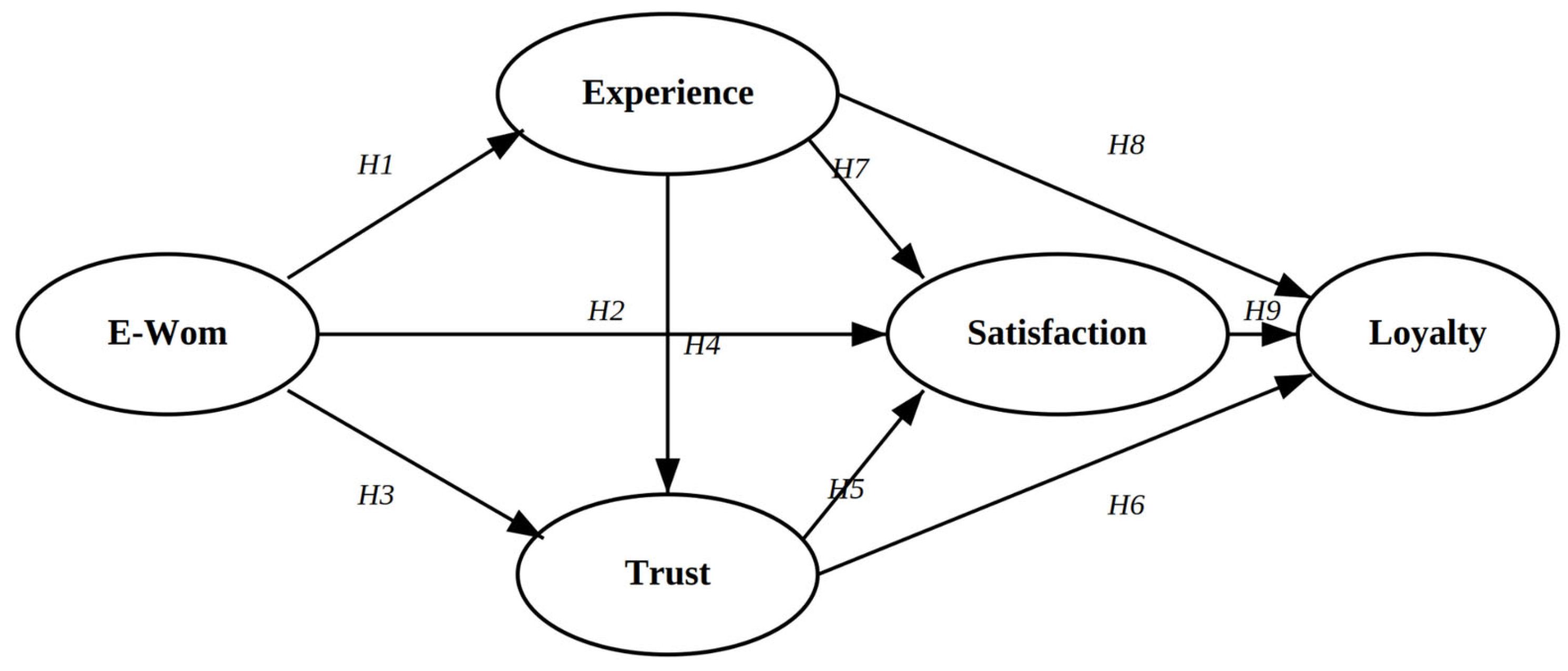
Recommendations from friends, family and social networks influence the wine tourism experience.

2.2. The Effect of Recommendations on Satisfaction

In the expectancy-disconfirmation model, predictive expectancy is an experience-based prediction or anticipation of what is likely to happen. Recommendations are a key factor in increasing user satisfaction, as they provide more accurate and varied suggestions [52]. In tourism, this anticipatory mechanism is particularly relevant because the intangible nature of the service makes consumers heavily dependent on external information to form expectations before consumption [31]. During the initial phase of the decision-making process, online communication strongly influences the consumer’s desire to visit a destination. With increasing activity on social media, consumers’ search, reading and trust behaviours have significantly changed [53]. During the information search, the consumer develops expectations about the destination, which is reinforced by their trust towards social networks and online media [43]. After engaging in purchase behaviour and experiencing interaction with the destination, travellers compare their actual travel experiences with their prior expectations [17]. Recent research by Pop et al. [40] demonstrated that trust in influencer-created content on social media has a significant positive impact on post-purchase satisfaction. The authors indicate that if prior expectations are met, consumers feel comfortable with the influencer-recommended purchase decision and are satisfied with their travel experience. This fact demonstrates that by sharing their opinions and experiences through positive or negative social media posts, network users influence other consumers’ satisfaction [47]. Previous literature has shown that electronic word-of-mouth causes positive effects on satisfaction similar to that of traditional word-of-mouth and influencer marketing [40,54,55,56]. Therefore, the authors pose the following research hypothesis:
H2: 
Recommendations from friends, family and social networks impact wine tourists’ satisfaction during the trip.

2.3. The Effect of Recommendations on Trust, Satisfaction and Loyalty

The influence of online reviews and their effects on consumer behaviour have been studied in the tourism sector. Specifically, the valence of reviews, negative reviews in networks to establish improvement strategies for hotel services, the attitude towards hotels based on comments on social networks, and the effect that these comments have on hotel sales have been analyzed [57,58]. In the information-seeking phase, tourists rely on recommendations from friends, family and opinion leaders. In addition, tourists consider online reviews generated by other tourists more credible [59]. The credibility and authenticity of reviews can build travellers’ trust and ensure informed decision-making in the travel planning and experience process. In tourism, trust has been identified as a critical concept for the industry [60]. Destination trust refers to a visitor’s willingness to have confidence in a tourism destination’s ability to deliver on its advertised functions [54]. From a practical point of view, destination trust provides tourists who choose a particular destination with the assurance that service delivery will be transparent, reliable, and free of risks and complications [57]. Once the experience is lived, the traveller can evaluate their expectations and form a subjective judgement of satisfaction or dissatisfaction. The tourists’ confidence can be reinforced during the wine tourism experience.
At that moment, information gathered from friends, family and networks is also evaluated and can enhance or reduce confidence in the destination. Trust in the destination plays a crucial role in reducing tourists’ perceptions of risk and uncertainty [61]. Tourists tend to be more inclined to visit destinations that they perceive as trustworthy and safe [40,62]. Recent empirical evidence supports this reasoning. Vidosavljevic and Đurić [31] confirmed that e-WOM positively influences tourists’ trust and that trust, in turn, positively affects their intention to visit a destination, with trust also acting as a moderator that strengthens the overall relationship between digital recommendations and visit intention. These findings confirm that trust operates as a key factor linking recommendations to tourist satisfaction [63,64] and loyalty [65], while also influencing other travel behaviours [60,66]. Nevertheless, there is still a lack of research exploring the integrated impact of personal and digital recommendations on trust, satisfaction and loyalty within a single model [57].
H3: 
Recommendations from friends, family and social networks influence wine tourists’ confidence during the trip.
H4: 
The wine tourists’ experience will influence confidence.
H5: 
Wine tourists’ confidence will influence satisfaction.
H6: 
Wine tourists’ trust will influence loyalty to the destination.

2.4. The Effect of Experience on Trust, Satisfaction and Loyalty

The effect of experience on trust has been demonstrated in several contexts, for example, Shukla, Misra and Singh [67], studied this relationship when presenting products. Xingyuan, Li and Wei [68] revealed that experience influences the trust generated towards mobile communications and international brands [69]. In the tourism context, visitor experience has been identified as crucial in forming trust towards tourism destinations [70]. This experience is set to be a central focus in current tourism research and management [71,72]. The importance of experience extends beyond building a positive destination image; it directly impacts visitor satisfaction and loyalty [73]. From a management perspective, experience provides an indispensable framework for designing and offering tourism services, allowing destinations to stand out and gain a significant competitive advantage [74,75]. The synergy between experience and destination becomes a fundamental aspect, as tourism is defined as an industry driven by memorable experiences [76], where the destination and its attractions are essential to creating value for tourists and visitors who seek to enjoy their time [77,78].
These relationships between experience, satisfaction and loyalty can be theoretically grounded in social exchange theory. According to Revilla, Moure and Marfil [79], social exchange theory is used in the interpretation of tourism as a domain of social behaviour by considering the costs and benefits of destination choice or any selection related to the vacation or tourist experience, which provides the theory with great explanatory power in the realm of tourist attitudes. From this perspective, the tourism experience represents the core benefit that the visitor receives through the exchange with the destination. When tourists perceive that the experiential benefits obtained during their stay outweigh the costs incurred, a positive evaluation of the exchange emerges, which manifests as satisfaction. In turn, sustained satisfaction with the exchange fosters a commitment to maintaining the relationship with the destination, expressed as loyalty through the intention to revisit and recommend. This theoretical reasoning has recently been supported by Deng, Wang and Ma [32], who adopted a social exchange theory perspective to construct a chain mediation model linking tourist motivation, experience quality, tourist satisfaction, and tourist loyalty in the context of sports tourism. Their findings confirmed that experience quality and tourist satisfaction exert both independent and chain mediation effects on loyalty, indicating that the experiential benefit derived from the tourist-destination exchange must be positively evaluated to translate into a sustained commitment. These findings reinforce the applicability of social exchange theory to the formation of trust (H4), the relationships between experience and satisfaction (H7) and between experience and loyalty (H8).
There are several studies on tourist satisfaction [80,81]. Satisfaction is usually described as a cognitive evaluation that arises from comparing expectations and perceived performance experience [18]. Some previous work has studied the relationship between tourism experience and wine tourist satisfaction. Relevant research supports the idea that the winery and vineyard experience quality is closely related to tourist satisfaction [82]. These studies found that offering high-quality experiences is critical in ensuring wine tourists’ satisfaction and willingness to return in the future [83]. Specifically, Carlsen [84] showed that the quality of the destination experience significantly impacted wine tourist satisfaction.
On the other hand, Getz and Brown [85] identified critical success factors for wine tourism regions, emphasizing the importance of offering engaging experiences to ensure tourist satisfaction. By analyzing the wineries and vineyards visited by a group of tourists, Charters and Ali-Knight [86] found that the quality of the experience strongly influenced tourist satisfaction. This tourism experience and satisfaction drive tourists’ motivations to visit wineries [83]. The positive experience of visiting a winery generates satisfaction and increases the intention to repeat the visit [87]. Overall, it can be said that an enriching and rewarding experience at wineries and vineyards significantly contributes to tourist satisfaction and their desire to repeat the experience [83,86,87]. Therefore, the authors posed the following research hypotheses:
H7: 
The wine tourist experience will influence satisfaction.
H8: 
The wine tourist experience will influence destination loyalty.

2.5. The Effect of Satisfaction on Loyalty

Loyalty to a tourist destination comprises behavioural and attitudinal dimensions [88]. The behavioural dimension refers to repeat visits to the destination. In contrast, the attitudinal dimension is the tourist’s willingness and continued commitment to the destination, usually manifested through the intention to repeat the visit on future occasions and to recommend it to other travellers [89]. This paper focused exclusively on the attitudinal dimension of loyalty, which is recognized as a reliable and meaningful measure [90]. This loyalty is based on the tourist’s previous satisfaction and positive experience in the place [81,82,91]. Several studies in different parts of the world have explored the relationship between satisfaction and loyalty; for example, in the New Zealand wine region, Carlsen and Charters [92] investigated the relationship between satisfaction and loyalty. Their findings indicated that wine tourists’ satisfaction with the wine tourism experience positively influenced their intention to repeat the visit. Research by Ramos, Cuamea, and Galván-León [93] found that those tourists who experienced higher satisfaction during their visit to wineries and vineyards showed a higher intention to return to the destination. Similarly, recent work on promoting regional tourism events found a relationship between wine tourist satisfaction and loyalty to the region [94]. In addition, work was conducted in the Ningxia region of China, where the authors also found that wine tourist satisfaction contributed to the formation of loyalty to the wine destination [95].
H9: 
Wine tourist satisfaction will influence wine destination loyalty.
Based on the literature review, we propose the model designed in Figure 1:

3. Materials and Methods

3.1. Measurement Development

In order to meet the objectives of this research, a methodology structured in three phases was designed. The first phase comprised a series of in-depth interviews with the experts of the research team (4 academics). The team reviewed the methodology and measurement scales proposed and adapted to achieve the objectives of the work. Once the methodology had been reviewed by the panel of experts, in the second phase, an online survey was conducted, structured in three thematic sections: the first section included questions of approximation to the research object aimed at confirming coherence and interest. The second section grouped the items selected to achieve the proposed objectives and extracted the constructs of the behavioural model. The third section included questions of classification to analyze the socio-demographic profile of respondents, as well as questions on relevant variables (including the travel tool used for booking). Before starting the sampling, in the third methodological phase, a pre-test was conducted with a group of Spanish consumers. This system allowed us to improve the wording and design, introduce changes to refine the questionnaire before data collection and define the approximate response time. The level of acceptance of the proposed scales, as well as their dimensionality, reliability, and validity, was also examined. Finally, the proposed improvements were included, resulting in a questionnaire with 40 items.
The measurement instruments used in this study were adapted from previous studies. Specifically, five items were used to measure recommendations [96,97], trust [98,99], experience [100] and satisfaction [34]. Finally, the destination loyalty scale was adapted using four measurement items [101]. The 24 questions corresponding to the conceptual theoretical model defined above can be found in Appendix A.

3.2. Sampling and Data Collection

This paper collected a sample of tourists over 18 who have undertaken wine tourism activity in the city of Jerez de la Frontera (Spain). Convenience sampling was used, given the emerging nature of wine tourism in Spain [5] and the lack of a reliable sampling frame from which to conduct probability sampling [102]. Several research assistants were trained to use an intercept approach. They asked every third person leaving the train, bus, and airport [103] whether they were visiting the destination for wine tourism. All participants gave informed consent before answering the survey. This study was conducted in accordance with the ethical principles established by the Spanish Law 14/2007 on Biomedical Research and the Decree 8/2020 of the Junta de Andalucía, which regulates bioethical bodies.
Research participants were entered into a prize draw to win a pack of bottles of wine. The reward obtained by entering a prize draw often improves response rates without undermining the goodness of the data obtained [104]. A total of 343 responses were obtained, of which 326 were valid, after eliminating surveys with very short response times or partial responses. Details of the sample are shown below (Table 1).
Data were analyzed using structural equation modelling (SEM), a multivariate statistical method that enables the simultaneous examination of relationships between observed indicators and latent constructs [105]. SEM operates in two stages. In the first stage, the measurement model is assessed through confirmatory factor analysis to verify that the observed indicators reliably and validly measure the underlying latent constructs. In the second stage, the structural model is estimated to test the hypothesized causal relationships among these constructs, yielding standardized path coefficients that indicate the direction and magnitude of each relationship [106]. SPSS version 26 was used to assess the validity and reliability of the measurement scales in the first stage, and AMOS 20 was used to estimate the structural model and test for causal relationships in the second stage.

4. Results

Recommendations from social networks (e-Wom) were considered the only exogenous variable in the model; experience, trust, satisfaction and loyalty were considered endogenous variables. This technique distinguishes between the measurement model and the structural model. It considers the measurement errors and the model’s estimation.

4.1. Capability and the Measurement Elements’ Validity

All scales presented appropriate psychometric properties and met the reliability criteria. Specifically, internal consistency, measured by Cronbach’s alpha statistic (see Table 2), was above 0.8 in all cases [107]. A confirmatory factor analysis tested the convergent (assessed by item factor loadings) and divergent validity of the constructs. After removing one of the items from the loyalty construct, since its explanatory power was low (R2 < 0.5), all factor loadings of the observed variables were more significant than (β > 0.7) and significantly different from zero, indicating adequate measurement by the latent variables [108]. The composite reliability and variance extracted from all the constructs of the model presented values above (0.7), which are limits recommended by previous literature [109].

4.2. Adjustments to the Overall Model

After analyzing the initial measurement scales’ reliability and validity, the authors evaluated the hypotheses drawn from the literature. Structural equation modelling (SEM) was used. Given the absence of normality in the distribution of the variables, evidenced by Mardia’s coefficient (321.847) and the critical ratio (CR = 82.247). The model was estimated for a significance level of 95% using the maximum likelihood method and bootstrapping with 500 iterations [110]. The choice of maximum likelihood is justified given its relevance in small samples, as opposed to generalized or weighted least squares alternatives, as argued by West, Finch, and Curran [111]. Bootstrapping iterations report the Bollen-Stine corrected p-value to test the null hypothesis related to model adequacy, and through resampling, a correction for the standard error inherent in the variables under analysis is achieved. Table 3 shows the overall settings:
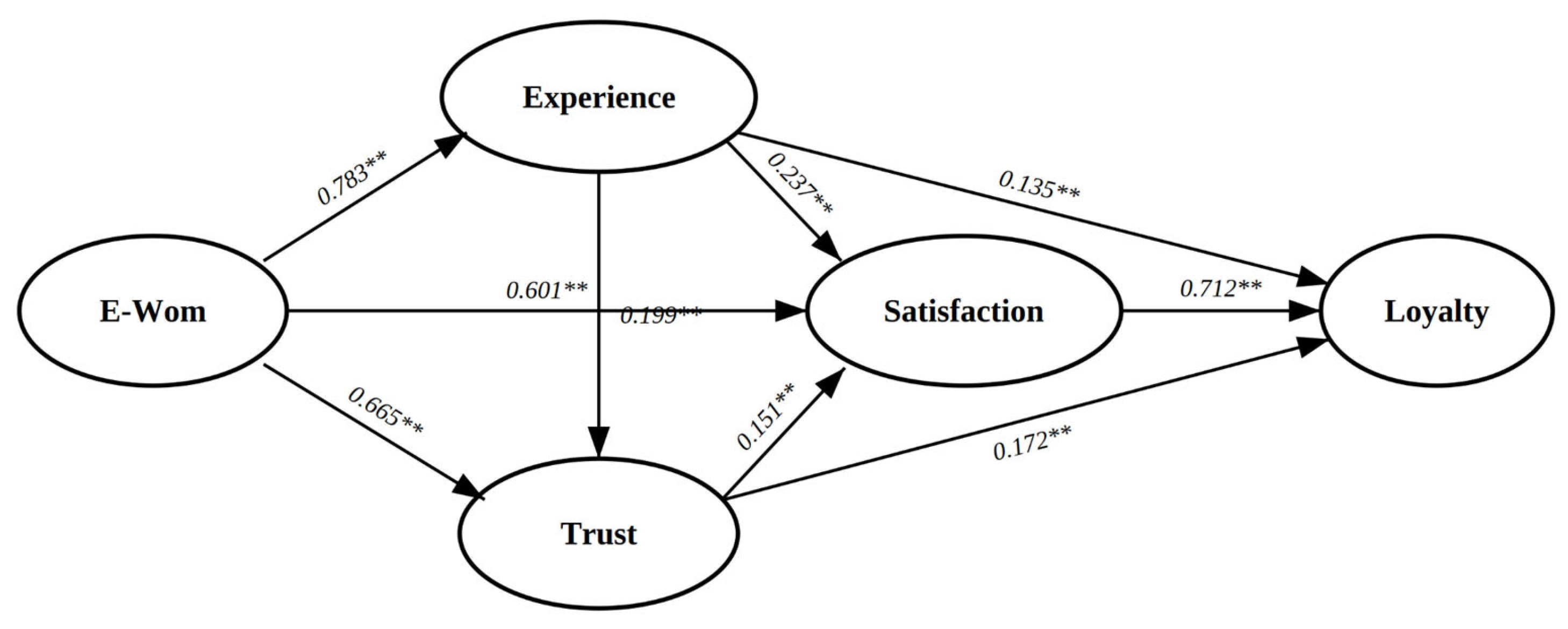
Once the hypotheses raised by the proposed model had been evaluated, the result obtained was reflected in the following graph (see Figure 2). The graph shows the standardized coefficients for the behavioural model measuring loyalty to the wine tourism destination.
Among the sample of tourists, all the relationships established between the predictor variables are positive and significant and explain 89.3% of the variance of loyalty to the wine tourism destination. Specifically, there is a direct effect of experience (β = 0.237), satisfaction (β = 0.712) and trust (β = 0.172) on loyalty. In addition, there is an indirect effect of E-Wom (β = 0.828), experience (β = 0.233) and trust (β = 0.103) on the loyalty of wine tourists to the destination.

4.3. Hypothesis Testing

The study’s findings and the verification of the hypotheses are detailed below. Regarding Hypothesis H1, which postulated that there is an effect of e-wom on tourists’ destination experience, the coefficient measuring this relationship was found to be significant and positive (β = 0.783, p < 0.05). This is because travellers need to know it prior to booking a destination. Enotourism tourists seek information on social networks, travel tools and destination blogs. This search tends to help them learn about the destination before travelling [112] and enhances their experience. This suggests that the more online information tourists collect, the better their experience at the destination [113]. Therefore, it can be said that there is empirical evidence to contradict Hypothesis H1.
Concerning Hypothesis H2, which proposed that recommendations from friends, family and social networks impact wine tourism satisfaction during the trip, the coefficient relating these two variables was found to be (β = 0.601, p < 0.05). According to research by Narangajavana et al. [34], social influence has a progressive impact on satisfaction. This effect was demonstrated by Bohlmann et al. [114] by integrating the effect of social influence into the dynamic models of satisfaction. The results support this effect by testing Hypothesis H2.
Regarding Hypothesis H3, the study found an effect of recommendations from friends, family and social networks on the wine tourist’s confidence during the trip. Specifically, a positive and significant relationship was established (β = 0.665, p < 0.05). Previous research indicated that third-party recommendations are well-valued by travellers and can improve trust [115]. This information helps plan wine tourism destinations by informing about winery visits, tastings or vineyard visits [5] and experiences of other tourists that facilitate decision-making [45].
The data allowed us to test Hypothesis H4, which supported the effect of experience on wine tourism confidence. The study found a positive and significant relationship (β = 0.199, p < 0.05) that partially explains the formation of tourist confidence. This finding aligns with other works confirming the effect of experience on Trust [69,116]. These results oppose the results achieved by Filieri et al. [62], who found that the experience level of the recipient was not a significant predictor of trust when studying the impact of online hotel bookings on users’ trust.
The findings demonstrated a significant causal relationship between trust and satisfaction (β = 0.151, p < 0.05). These findings confirmed Hypothesis H5. These results are consistent with the work of Chang [117], which analyses the impact of trust in tour guides on satisfaction and purchase intention. In the same way, it was shown that there is a causal relationship between trust and loyalty (β = 0.172, p < 0.05). This confirms Hypothesis H6. These findings support those of Camilleri & Filieri [118], who reached similar conclusions in their analysis of tourists’ testimonials about hotel companies, and Su, Hsu, and Swanson [65], who demonstrated that loyalty to the tourism destination stems from overall destination satisfaction and trust. These relationships could be theoretically justified because the trust tourists have in the wine tourism destination could directly lead to their satisfaction with that destination. Furthermore, the findings supported the mediating role of satisfaction in the relationship between trust and destination loyalty.
The data allowed us to test hypothesis H7, which posited a relationship between wine tourism experience and destination satisfaction (β = 0.237, p < 0.05). This relationship reinforces the findings of Bruwer et al. [23], who found that higher satisfaction improved wine brand loyalty. Similarly, Quadri-Felitti & Fiore [29] found an effect of educational and aesthetic experience on satisfaction with the winery visit; however, they did not find support for the entertainment and escapist experience. In the case of creative tourism, Suhartanto et al. [118] also found no direct effect between the quality of creative tourism experiences and tourist satisfaction.
The uncovered effect of experience on destination loyalty (β = 0.135, p < 0.05) contrasted with Hypothesis H8. These findings are consistent with those reported by San Martin, Collado, and Rodriguez del Bosque [119], who demonstrated a direct effect of experience on destination loyalty by analyzing a group of tourists visiting Spain. Moreover, the results align with Quadri-Felitti and Fiore [29], who found a relationship between aesthetic experience and winery loyalty.
Finally, it was observed that the satisfaction of tourists visiting the wine tourism destination significantly impacts loyalty to the destination (β = 0.712, p < 0.05). This result supported Hypothesis H9 and aligns with the results achieved by Camilleri and Filieri [120], predicting online users’ satisfaction and loyalty levels with review sites. Furthermore, the findings align with Quadri-Felitti & Fiore [29], who identified a mediating effect of satisfaction on the relationship linking experience and loyalty towards the wine tourism destination.

5. Conclusions

This research reinforces the social exchange theory and the expectancy-disconfirmation model, integrating key factors to explain loyalty to an urban tourism destination where wine tourism acts as the primary attractor. The authors found no previous studies linking the variables analyzed as a whole. Therefore, this is the first behavioural model that relates prior recommendations to experience, satisfaction, trust and loyalty in an urban tourism destination with a strong wine tourism vocation. The results of the analyses using SPSS Amos 26 confirmed the reliability and validity of the scales used.
The findings reveal that recommendations exert the strongest direct influence on experience across all paths in the model, indicating that what tourists read, hear and share before travelling substantially configures how they perceive and evaluate their stay. In urban destinations, where visitors access information through a high density of digital touchpoints, this result suggests that the pre-visit information environment is not merely a precursor to the experience but a constitutive part of it. For destination managers, this implies that managing the digital narrative of the city is as critical as managing the physical offer. Recommendations also significantly shape satisfaction by setting expectations that, when met or exceeded, lead to positive evaluations. However, inflated or misleading content can distort expectations and erode satisfaction regardless of the actual quality of the visit.
Trust is influenced by both recommendations and, to a lesser extent, by experience itself. This dual formation, partly built before the visit through personal and digital sources, partly consolidated during the stay, reveals that trust in an urban destination is a cumulative construct requiring consistency between what is communicated online and what is delivered on the ground. A single poorly managed negative review can damage trust in the destination as a whole, particularly in digitally dense urban environments where information travels rapidly.
The most consequential finding concerns the role of satisfaction. Satisfaction emerges as the dominant predictor of loyalty, far exceeding the direct effects of both experience and trust. This means that experience and trust, while necessary, are insufficient on their own to generate loyalty; they must translate into overall satisfaction with the visit for the tourist to develop the intention to return and recommend the destination. For urban destinations competing to retain specialized tourism segments, this is critical: loyalty is not built on a single memorable attraction but on the cumulative satisfaction derived from the entire destination experience, accommodation, gastronomy, heritage, services and the specific niche offer. Destination managers must therefore adopt an integrated approach, ensuring that all dimensions of the urban tourist experience converge toward satisfaction, rather than relying solely on the appeal of the core attraction.
From a theoretical standpoint, these findings extend social exchange theory and expectancy-disconfirmation theory in the specific context of urban wine tourism. The dominance of satisfaction over experience and trust as a predictor of loyalty suggests that, in destinations where wine tourism is embedded within a complex urban offer, the cognitive evaluation of the overall exchange outweighs the direct influence of experiential or relational factors. This positions satisfaction not merely as an outcome variable but as the central mechanism through which the perceived benefits of the tourist-destination exchange translate into sustained commitment. Regarding trust, the finding that it is shaped both prior to and during the visit extends the expectancy-disconfirmation framework by showing that expectation formation is not confined to a single pre-purchase moment but operates as a cumulative process fed by multiple information sources. Whether affective dimensions of the experience, such as emotional attachment or tourist happiness, could alter this hierarchy remains an open question that the limitations and future directions of this research address below.

6. Limitations and Future Research

This study has several limitations. The data were collected through convenience sampling in a single urban destination, which constrains the generalisability of the findings. The cross-sectional design does not capture how the proposed relationships evolve over the course of the tourist journey. Furthermore, loyalty was measured exclusively in its attitudinal dimension (intention to revisit and recommend); the behavioural dimension (actual repeat visitation) was not captured, which limits the extent to which the findings can predict real return behaviour.
These limitations, together with the findings, open several directions for future research. First, replicating the model in other urban wine tourism destinations would test whether the identified pathways hold across different settings. More importantly, comparing the model’s performance in urban versus rural wine tourism contexts would clarify whether the integration of wine tourism within a broader urban offer alters the relative strength of the pathways, which constitutes the distinctive contribution of this study. Second, longitudinal designs could trace the cumulative formation of trust identified in this study, examining how pre-visit trust built through digital and personal sources interacts with the on-site experience and whether one source can compensate for the weakness of the other. Third, decomposing the recommendation construct into personal and digital dimensions and distinguishing between positive and negative valence would clarify whether these sources exert differential effects on trust and satisfaction. Fourth, introducing moderating variables such as wine expertise, visit frequency, age, or digital competence would identify the boundary conditions under which each pathway operates. Finally, the cognitive dominance of satisfaction over experiential and relational factors in shaping loyalty raises the question of whether incorporating affective constructs, such as tourist happiness [121] or place attachment, would reveal emotional pathways to loyalty that complement or challenge the hierarchy identified in this study.

7. Management Recommendations

Based on the above findings, the following recommendations are directed at destination managers, municipal tourism offices and wine tourism operators.
Regarding the management of digital recommendations, destinations should actively engage with influencers and content creators to enhance visibility, while ensuring that user-generated content remains authentic and aligned with the real offer. A dedicated monitoring system for online reviews across platforms is essential, with protocols for responding to both positive and negative feedback. Posting real-time content while tourists are engaged in destination activities can serve as an effective strategy to attract new visitors. Recommendations from friends and family remain highly influential due to their perceived genuineness; fostering experiences that visitors want to share organically, memorable moments that enable the “perfect profile picture”, amplifies the destination’s reach beyond paid communication.
Regarding the alignment between digital communication and the actual experience, destinations should strive to ensure that what is promoted online through images, descriptions and reviews closely corresponds to what visitors will encounter. Clear and transparent communication prevents the distortion of expectations that, as findings demonstrate, can erode satisfaction even when the destination delivers a quality experience. The analysis of data from recommendations and reviews is a valuable source of feedback for identifying gaps between communicated promises and delivered experiences.
Given that satisfaction is the primary driver of loyalty, tourism operators and local authorities should adopt an integrated approach to the visitor experience. This means coordinating not only the wine tourism offer (tastings, vineyard visits, gastronomic pairings) but also the complementary urban services, accommodation, cultural heritage, gastronomy, transport and public spaces, that collectively shape the tourist’s overall evaluation. Personalizing the experience to individual preferences, from tailored wine recommendations to itineraries that integrate the destination’s cultural and gastronomic assets, can significantly increase satisfaction. The ageing wine tourism audience offers opportunities for companies that adapt their facilities and digital interfaces to visitors with reduced mobility or vision.
Regarding communication and engagement strategies, designing narratives that explain the history of the destination, share sustainable practices or highlight unique regional features can create deeper emotional connections with visitors. Engagement strategies such as newsletters, special offers and invitations to events after the visit can strengthen the tourist’s sense of belonging. Companies and local authorities should communicate their sustainable practices and environmental responsibility, particularly to younger segments. Finally, implementing regular measurement systems to evaluate satisfaction and loyalty is essential for continuous improvement and evidence-based destination management.

Author Contributions

Conceptualization, D.G.-C., S.C.-M., P.P.M.D. and J.M.M.M.; Methodology, D.G.-C., J.M.M.M. and I.T.O.; Software, J.M.M.M.; Validation, S.C.-M.; Formal analysis, J.M.M.M.; Investigation, I.T.O. and P.P.M.D.; Data curation, S.C.-M. and J.M.M.M.; Writing—original draft, D.G.-C., S.C.-M., P.P.M.D. and J.M.M.M.; Writing—review & editing, I.T.O. and S.C.-M.; Visualization, I.T.O.; Supervision, D.G.-C., I.T.O., S.C.-M., P.P.M.D. and J.M.M.M.; Project administration, I.T.O. and J.M.M.M. All authors have read and agreed to the published version of the manuscript.

Funding

This research received no external funding.

Institutional Review Board Statement

This study is waived for ethical review as this study did not require approval from the University of Cádiz Ethics Committee, given that Law 14/2007 on Biomedical Research (Head of State, 2007) limits this requirement to research involving invasive procedures or human biological samples—circumstances that do not apply to a survey on wine tourism; a criterion that the institution itself includes in the definition of the scope of its Bioethics Committee by University of Cádiz.

Informed Consent Statement

Informed consent for participation was obtained from all subjects involved in the study.

Data Availability Statement

The raw data supporting the conclusions of this article will be made available by the authors on request.

Acknowledgments

This study was conducted with financial support from the Economy, Innovation, Science, and Employment Division of the Andalusian Regional Government (Research Projects 2024-095/PVA/I+D+I FEDER JUNTA ANDALUCIA/PR).

Conflicts of Interest

The authors declare no conflicts of interest.

Appendix A

Table A1. Survey.
Table A1. Survey.
RecommendationsStrongly DisagreeStrongly Agree
Recommendations about Jerez from my acquaintances meet my expectations①②③④⑤
I feel safe in Jerez thanks to the recommendations of my acquaintances①②③④⑤
The recommendation of my acquaintances to visit Jerez guaranteed my satisfaction①②③④⑤
Social networks offer a real tourist value of Jerez that I can’t get from other official tourism websites①②③④⑤
Social networks offer valuable information about Jerez to plan my trips①②③④⑤
Trust
The information on wine tourism destinations offered by my acquaintances is authentic①②③④⑤
The information on wine tourism destinations offered by my acquaintances is true①②③④⑤
The information on wine tourism destinations offered by social networks is authentic①②③④⑤
The information on wine tourism destinations offered by social networks is true①②③④⑤
Information prior to the wine tourism trip is genuine①②③④⑤
Experience
The service I received in Jerez during my holiday is excellent.①②③④⑤
The experience of my holiday in Jerez is good.①②③④⑤
The holiday experience in Jerez is exactly what I wanted.①②③④⑤
The holiday in Jerez was well worth it.①②③④⑤
Overall, I enjoyed my holiday in Jerez very much.①②③④⑤
Satisfaction
Overall, I am satisfied with my trip to Jerez.①②③④⑤
I am satisfied that the information offered by my acquaintances really helped me improve my travel experience in Jerez.①②③④⑤
I am satisfied with the information offered by the networks really helped me to improve my travel experience in Jerez.①②③④⑤
I am delighted with my travel experience in Jerez.①②③④⑤
I have no regrets about visiting Jerez.①②③④⑤
Loyalty①②③④⑤
I intend to visit Jerez again①②③④⑤
I will probably visit Jerez again①②③④⑤
I will recommend Jerez to others①②③④⑤
I will encourage others to visit Jerez①②③④⑤

References

  1. Grand View Research. Wine Tourism Market Size, Share & Trends Analysis Report by Service, by Tourist Type, by Booking Mode, by Region, and Segment Forecasts, 2024–2030; Grand View Research: San Francisco, CA, USA, 2024; Available online: https://www.grandviewresearch.com/industry-analysis/wine-tourism-market-report (accessed on 20 March 2026).
  2. ACEVIN. Informe de Visitantes a Bodegas y Museos del Vino. Rutas del Vino de España, Año 2024; Asociación Española de Ciudades del Vino—Observatorio Turístico de Rutas del Vino de España: Alcázar de San Juan, Spain, 2025. Available online: https://url.uca.es/NFuoU (accessed on 20 March 2026).
  3. Ashworth, G.J.; Page, S.J. Urban Tourism Research: Recent Progress and Current Paradoxes. Tour. Manag. 2011, 32, 1–15. [Google Scholar] [CrossRef]
  4. Pearce, D.G. An Integrative Framework for Urban Tourism Research. Ann. Tour. Res. 2001, 28, 926–946. [Google Scholar] [CrossRef]
  5. Gómez-Carmona, D.; Paramio, A.; Cruces-Montes, S.; Marín-Dueñas, P.P.; Montero, A.A.; Romero-Moreno, A. The Effect of the Wine Tourism Experience. J. Destin. Mark. Manag. 2023, 29, 100793. [Google Scholar] [CrossRef]
  6. Gómez, M.; Pratt, M.A.; Molina, A. Wine Tourism Research: A Systematic Review of 20 Vintages from 1995 to 2014. Curr. Issues Tour. 2019, 22, 2211–2249. [Google Scholar] [CrossRef]
  7. López-Guzmán, T.; García, J.R.; Rodríguez, Á.V. Review of the Scientific Literature on Wine Tourism in Spain. Cuad. Tur. 2013, 32, 171–188. [Google Scholar]
  8. Robertson, J.; Ferreira, C.; Botha, E. The Influence of Product Knowledge on the Relative Importance of Extrinsic Product Attributes of Wine. J. Wine Res. 2018, 29, 159–176. [Google Scholar] [CrossRef]
  9. Wen, H.; Leung, X.Y. Virtual Wine Tours and Wine Tasting: The Influence of Offline and Online Embodiment Integration on Wine Purchase Decisions. Tour. Manag. 2021, 83, 104250. [Google Scholar] [CrossRef]
  10. Canovi, M.; Pucciarelli, F. Social Media Marketing in Wine Tourism: Winery Owners’ Perceptions. J. Travel Tour. Mark. 2019, 36, 653–664. [Google Scholar] [CrossRef]
  11. Haller, C.; Plotkina, D.; Vo-Thanh, T. Social Media Use of Small Wineries in Alsace: Resources and Motivations Analysis. Sustainability 2021, 13, 8149. [Google Scholar] [CrossRef]
  12. Gómez-Rico, M.; Molina-Collado, A.; Santos-Vijande, M.L.; Molina-Collado, M.V.; Imhoff, B. The Role of Novel Instruments of Brand Communication and Brand Image in Building Consumers’ Brand Preference and Intention to Visit Wineries. Curr. Psychol. 2023, 42, 12711–12727. [Google Scholar] [CrossRef]
  13. Barbierato, E.; Bernetti, I.; Capecchi, I. Analysing TripAdvisor Reviews of Wine Tours: An Approach Based on Text Mining and Sentiment Analysis. Int. J. Wine Bus. Res. 2021, 34, 212–236. [Google Scholar] [CrossRef]
  14. Setiawan, P.Y.; Purbadharmaja, I.B.P.; Widanta, A.A.B.P.; Hayashi, T. How Electronic Word of Mouth (e-WOM) Triggers Intention to Visit Through Destination Image, Trust and Satisfaction. Online Inf. Rev. 2021, 45, 861–878. [Google Scholar] [CrossRef]
  15. Chen, C.H.; Nguyen, B.; Klaus, P.P.; Wu, M.S. Exploring Electronic Word-of-Mouth (eWOM) in the Consumer Purchase Decision-Making Process. J. Travel Tour. Mark. 2015, 32, 953–970. [Google Scholar] [CrossRef]
  16. Pizam, A.; Tasci, A.D. Experienscape: Expanding the Concept of Servicescape with a Multi-Stakeholder and Multi-Disciplinary Approach. Int. J. Hosp. Manag. 2019, 76, 25–37. [Google Scholar] [CrossRef]
  17. Robinson, V.M.; Schänzel, H.A. A Tourism Inflex: Generation Z Travel Experiences. J. Tour. Futures 2019, 5, 127–141. [Google Scholar] [CrossRef]
  18. Oliver, R.L. A Cognitive Model of the Antecedents and Consequences of Satisfaction Decisions. J. Mark. Res. 1980, 17, 460–469. [Google Scholar] [CrossRef]
  19. Williamson, J.; Hassanli, N. It’s All in the Recipe: How to Increase Domestic Leisure Tourists’ Experiential Loyalty to Local Food. Tour. Manag. Perspect. 2020, 36, 100745. [Google Scholar] [CrossRef]
  20. Baker, D.A.; Crompton, J.L. Quality, Satisfaction and Behavioural Intentions. Ann. Tour. Res. 2000, 27, 785–804. [Google Scholar] [CrossRef]
  21. Chen, C.F.; Chen, F.S. Experience Quality, Perceived Value, Satisfaction and Behavioral Intentions for Heritage Tourists. Tour. Manag. 2010, 31, 29–35. [Google Scholar] [CrossRef]
  22. Charters, S.; Fountain, J.; Fish, N. “You Felt Like Lingering…” Experiencing “Real” Service at the Winery Tasting Room. J. Travel Res. 2009, 48, 122–134. [Google Scholar] [CrossRef]
  23. Bruwer, J.; Coode, M.; Saliba, A.; Herbst, F. Wine Tourism Experience Effects of the Tasting Room on Consumer Brand Loyalty. Tour. Anal. 2013, 18, 399–414. [Google Scholar] [CrossRef]
  24. Prayag, G.; Disegna, M.; Bruwer, J. Do Satisfied Cellar Door Visitors Want to Revisit? Linking Past Knowledge and Consumption Behaviors to Satisfaction and Intention to Return. Tour. Anal. 2021, 26, 211–224. [Google Scholar] [CrossRef]
  25. Shin, S.; Nicolau, J.L. Identifying Attributes of Wineries That Increase Visitor Satisfaction and Dissatisfaction: Applying an Aspect Extraction Approach to Online Reviews. Tour. Manag. 2022, 91, 104528. [Google Scholar] [CrossRef]
  26. Davis, T.J.; Gomez, M.I. The COVID-19 Pandemic, Customer Satisfaction and Sales Performance in Wine Tasting Rooms in the Finger Lakes Region of New York State. Int. J. Wine Bus. Res. 2022, 34, 173–189. [Google Scholar] [CrossRef]
  27. Stylos, N.; Vassiliadis, C.A.; Bellou, V.; Andronikidis, A. Destination Images, Holistic Images and Personal Normative Beliefs: Predictors of Intention to Revisit a Destination. Tour. Manag. 2016, 53, 40–60. [Google Scholar] [CrossRef]
  28. Chen, C.F.; Phou, S. A Closer Look at Destination: Image, Personality, Relationship and Loyalty. Tour. Manag. 2013, 36, 269–278. [Google Scholar] [CrossRef]
  29. Quadri-Felitti, D.L.; Fiore, A.M. Destination Loyalty: Effects of Wine Tourists’ Experiences, Memories, and Satisfaction on Intentions. Tour. Hosp. Res. 2013, 13, 47–62. [Google Scholar] [CrossRef]
  30. Gunasekar, S.; Das, P.; Dixit, S.K.; Mandal, S.; Mehta, S.R. Wine-Experienscape and Tourist Satisfaction: Through the Lens of Online Reviews. J. Foodserv. Bus. Res. 2022, 25, 684–701. [Google Scholar] [CrossRef]
  31. Vidosavljevic, J.; Đurić, N. eWOM as a Key Factor in Consumer Intent to Visit a Destination: The Moderating Role of Trust. Hotel Tour. Manag. 2025, 13, 65–80. [Google Scholar] [CrossRef]
  32. Deng, Y.; Wang, X.; Ma, C. The Impact of Sports Tourism Motivation on Tourist Loyalty: The Chain Mediation Effect of Experience Quality and Tourist Satisfaction. Int. J. Tour. Res. 2024, 26, e2769. [Google Scholar] [CrossRef]
  33. Hall, C.M.; Mitchell, R. Wine Tourism in the Mediterranean: A Tool for Restructuring and Development. Thunderbird Int. Bus. Rev. 2000, 42, 445–465. [Google Scholar] [CrossRef]
  34. Narangajavana Kaosiri, Y.; Callarisa Fiol, L.J.; Moliner Tena, M.Á.; Rodríguez Artola, R.M.; Sánchez García, J. User-Generated Content Sources in Social Media: A New Approach to Explore Tourist Satisfaction. J. Travel Res. 2019, 58, 253–265. [Google Scholar] [CrossRef]
  35. Homans, G.C. Social Behavior as Exchange. Am. J. Sociol. 1958, 63, 597–606. [Google Scholar] [CrossRef]
  36. Emerson, R.M. Power-Dependence Relations. Am. Sociol. Rev. 1962, 27, 31–41. [Google Scholar] [CrossRef]
  37. Bruwer, J.; Alant, K. The Hedonic Nature of Wine Tourism Consumption: An Experiential View. Int. J. Wine Bus. Res. 2009, 21, 235–257. [Google Scholar] [CrossRef]
  38. Castañeda, J.A.; Frías, D.M.; Rodríguez, M.A. The Influence of the Internet on Destination Satisfaction. Internet Res. 2007, 17, 402–420. [Google Scholar] [CrossRef]
  39. Statista. El Enoturismo en el Mundo—Datos Estadísticos. 2022. Available online: https://es.statista.com/temas/9763/el-enoturismo-en-el-mundo/ (accessed on 20 March 2026).
  40. Pop, R.A.; Săplăcan, Z.; Dabija, D.C.; Alt, M.A. The Impact of Social Media Influencers on Travel Decisions: The Role of Trust in Consumer Decision Journey. Curr. Issues Tour. 2022, 25, 823–843. [Google Scholar] [CrossRef]
  41. Gretzel, U.; Jamal, T. Conceptualising the Creative Tourist Class: Technology, Mobility, and Tourism Experiences. Tour. Anal. 2009, 14, 471–481. [Google Scholar] [CrossRef]
  42. Tussyadiah, I.P.; Fesenmaier, D.R. Mediating Tourist Experiences: Access to Places via Shared Videos. Ann. Tour. Res. 2009, 36, 24–40. [Google Scholar] [CrossRef]
  43. Hudson, S.; Thal, K. The Impact of Social Media on the Consumer Decision Process: Implications for Tourism Marketing. J. Travel Tour. Mark. 2013, 30, 156–160. [Google Scholar] [CrossRef]
  44. Chu, S.C.; Kim, Y. Determinants of Consumer Engagement in Electronic Word-of-Mouth (eWOM) in Social Networking Sites. Int. J. Advert. 2011, 30, 47–75. [Google Scholar] [CrossRef]
  45. Hays, S.; Page, S.J.; Buhalis, D. Social Media as a Destination Marketing Tool: Its Use by National Tourism Organisations. Curr. Issues Tour. 2013, 16, 211–239. [Google Scholar] [CrossRef]
  46. Zeng, B.; Gerritsen, R. What Do We Know About Social Media in Tourism? A Review. Tour. Manag. Perspect. 2014, 10, 27–36. [Google Scholar] [CrossRef]
  47. Lemon, K.N.; Verhoef, P.C. Understanding Customer Experience Throughout the Customer Journey. J. Mark. 2016, 80, 69–96. [Google Scholar] [CrossRef]
  48. Kang, M.; Schuett, M.A. Determinants of Sharing Travel Experiences in Social Media. J. Travel Tour. Mark. 2013, 30, 93–107. [Google Scholar] [CrossRef]
  49. Bigné, E.; Chatzipanagiotou, K.; Ruiz, C. Pictorial Content, Sequence of Conflicting Online Reviews and Consumer Decision-Making: The Stimulus-Organism-Response Model Revisited. J. Bus. Res. 2020, 115, 403–416. [Google Scholar] [CrossRef]
  50. Tung, V.W.S.; Cheung, C.; Law, R. Does the Listener Matter? The Effects of Capitalisation on Storytellers' Evaluations of Travel Memories. J. Travel Res. 2018, 57, 1133–1145. [Google Scholar] [CrossRef]
  51. Yoon, Y.; Uysal, M. An Examination of the Effects of Motivation and Satisfaction on Destination Loyalty: A Structural Model. Tour. Manag. 2005, 26, 45–56. [Google Scholar] [CrossRef]
  52. He, X.; Liu, Q.; Jung, S. The Impact of Recommendation System on User Satisfaction: A Moderated Mediation Approach. J. Theor. Appl. Electron. Commer. Res. 2024, 19, 448–466. [Google Scholar] [CrossRef]
  53. Sigala, M.; Christou, E.; Gretzel, U. (Eds.) Social Media in Travel, Tourism and Hospitality: Theory, Practice and Cases; Ashgate Publishing: Farnham, UK, 2012. [Google Scholar]
  54. Hu, H.; Zhang, D.; Wang, C. Impact of Social Media Influencers’ Endorsement on Application Adoption: A Trust Transfer Perspective. Soc. Behav. Pers. 2019, 47, 1–12. [Google Scholar] [CrossRef]
  55. Lou, C.; Yuan, S. Influencer Marketing: How Message Value and Credibility Affect Consumer Trust of Branded Content on Social Media. J. Interact. Advert. 2019, 19, 58–73. [Google Scholar] [CrossRef]
  56. Abubakar, A.M.; Ilkan, M. Impact of Online WOM on Destination Trust and Intention to Travel: A Medical Tourism Perspective. J. Destin. Mark. Manag. 2016, 5, 192–201. [Google Scholar] [CrossRef]
  57. Su, L.; Yang, Q.; Swanson, S.R.; Chen, N.C. The Impact of Online Reviews on Destination Trust and Travel Intention: The Moderating Role of Online Review Trustworthiness. J. Vacat. Mark. 2022, 28, 406–423. [Google Scholar] [CrossRef]
  58. Boo, S.; Busser, J.A. Meeting Planners’ Online Reviews of Destination Hotels: A Twofold Content Analysis Approach. Tour. Manag. 2018, 66, 287–301. [Google Scholar] [CrossRef]
  59. Sparks, B.A.; Perkins, H.E.; Buckley, R. Online Travel Reviews as Persuasive Communication: The Effects of Content Type, Source, and Certification Logos on Consumer Behavior. Tour. Manag. 2013, 39, 1–9. [Google Scholar] [CrossRef]
  60. Su, L.; Lian, Q.; Huang, Y. How Do Tourists’ Attribution of Destination Social Responsibility Motives Impact Trust and Intention to Visit? The Moderating Role of Destination Reputation. Tour. Manag. 2020, 77, 103970. [Google Scholar] [CrossRef]
  61. Zheng, D.; Luo, Q.; Ritchie, B.W. The Role of Trust in Mitigating Perceived Threat, Fear, and Travel Avoidance After a Pandemic Outbreak: A Multigroup Analysis. J. Travel Res. 2022, 61, 581–596. [Google Scholar] [CrossRef]
  62. Filieri, R.; Alguezaui, S.; McLeay, F. Why Do Travelers Trust TripAdvisor? Antecedents of Trust Towards Consumer-Generated Media and Its Influence on Recommendation Adoption and Word of Mouth. Tour. Manag. 2015, 51, 174–185. [Google Scholar] [CrossRef]
  63. Olson, N.J.; Ahluwalia, R. When Sharing Isn’t Caring: The Influence of Seeking the Best on Sharing Favorable Word of Mouth About Unsatisfactory Purchases. J. Consum. Res. 2021, 47, 1025–1046. [Google Scholar] [CrossRef]
  64. Tseng, A. Why Do Online Tourists Need Sellers’ Ratings? Exploration of the Factors Affecting Regretful Tourist E-Satisfaction. Tour. Manag. 2017, 59, 413–424. [Google Scholar] [CrossRef]
  65. Su, L.; Hsu, M.K.; Swanson, S. The Effect of Tourist Relationship Perception on Destination Loyalty at a World Heritage Site in China: The Mediating Role of Overall Destination Satisfaction and Trust. J. Hosp. Tour. Res. 2017, 41, 180–210. [Google Scholar] [CrossRef]
  66. Wang, X.; Tajvidi, M.; Lin, X.; Hajli, N. Towards an Ethical and Trustworthy Social Commerce Community for Brand Value Co-Creation: A Trust-Commitment Perspective. J. Bus. Ethics 2020, 167, 137–152. [Google Scholar] [CrossRef]
  67. Shukla, M.; Misra, R.; Singh, D. Exploring Relationship Among Semiotic Product Packaging, Brand Experience Dimensions, Brand Trust and Purchase Intentions in an Asian Emerging Market. Asia Pac. J. Mark. Logist. 2022, 35, 249–265. [Google Scholar] [CrossRef]
  68. Xingyuan, W.; Li, F.; Wei, Y. How Do They Really Help? An Empirical Study of the Role of Different Information Sources in Building Brand Trust. J. Glob. Mark. 2010, 23, 243–252. [Google Scholar] [CrossRef]
  69. Sahin, A.; Zehir, C.; Kitapçı, H. The Effects of Brand Experiences, Trust and Satisfaction on Building Brand Loyalty; An Empirical Research on Global Brands. Procedia-Soc. Behav. Sci. 2011, 24, 1288–1301. [Google Scholar] [CrossRef]
  70. Kumar, V.; Kaushik, A.K. Destination Brand Experience and Visitor Behavior: The Mediating Role of Destination Brand Identification. J. Travel Tour. Mark. 2018, 35, 649–663. [Google Scholar] [CrossRef]
  71. Hu, Y.; Xu, S. Memorability of a Previous Travel Experience and Revisit Intention: The Three-Way Interaction of Nostalgia, Perceived Disappointment Risk and Extent of Change. J. Destin. Mark. Manag. 2021, 20, 100604. [Google Scholar] [CrossRef]
  72. Rather, R.A.; Hollebeek, L.D. Customers’ Service-Related Engagement, Experience, and Behavioral Intent: Moderating Role of Age. J. Retail. Consum. Serv. 2021, 60, 102453. [Google Scholar] [CrossRef]
  73. Li, T.; Liu, F.; Soutar, G.N. Experiences, Post-Trip Destination Image, Satisfaction and Loyalty: A Study in an Ecotourism Context. J. Destin. Mark. Manag. 2021, 19, 100547. [Google Scholar] [CrossRef]
  74. Stienmetz, J.; Kim, J.J.; Xiang, Z.; Fesenmaier, D.R. Managing the Structure of Tourism Experiences: Foundations for Tourism Design. J. Destin. Mark. Manag. 2021, 19, 100408. [Google Scholar] [CrossRef]
  75. Kim, S. Extraordinary Experience: Re-Enacting and Photographing at Screen Tourism Locations. Tour. Hosp. Plan. Dev. 2010, 7, 59–75. [Google Scholar] [CrossRef]
  76. Chirakranont, R.; Sakdiyakorn, M. Conceptualizing Meaningful Tourism Experiences: Case Study of a Small Craft Beer Brewery in Thailand. J. Destin. Mark. Manag. 2022, 23, 100691. [Google Scholar] [CrossRef]
  77. Chang, A.Y.P.; Hung, K.P. Development and Validation of a Tourist Experience Scale for Cultural and Creative Industries Parks. J. Destin. Mark. Manag. 2021, 20, 100560. [Google Scholar] [CrossRef]
  78. Shaykh-Baygloo, R. Foreign Tourists’ Experience: The Tri-Partite Relationships Among Sense of Place Toward Destination City, Tourism Attractions and Tourists’ Overall Satisfaction—Evidence from Shiraz, Iran. J. Destin. Mark. Manag. 2021, 19, 100518. [Google Scholar] [CrossRef]
  79. Revilla, R.G.; Moure, O.M.; Marfil, L.L. Social Exchange Theory. In Encyclopedia of Tourism; Jafari, J., Xiao, H., Eds.; Springer: Cham, Switzerland, 2024. [Google Scholar] [CrossRef]
  80. Alegre, J.; Cladera, M. Analysing the Effect of Satisfaction and Previous Visits on Tourist Intentions to Return. Eur. J. Mark. 2009, 43, 670–685. [Google Scholar] [CrossRef]
  81. Eusébio, C.; Vieira, A.L. Destination Attributes’ Evaluation, Satisfaction and Behavioural Intentions: A Structural Modelling Approach. Int. J. Tour. Res. 2013, 15, 66–80. [Google Scholar] [CrossRef]
  82. Cohen, E.; Ben-Nun, L. The Important Dimensions of Wine Tourism Experience from Potential Visitors' Perception. Tour. Hosp. Res. 2009, 9, 20–31. [Google Scholar] [CrossRef]
  83. Bruwer, J.; Johnson, R. Place-Based Marketing and Regional Branding Strategy Perspectives in the California Wine Industry. J. Consum. Mark. 2010, 27, 5–16. [Google Scholar] [CrossRef]
  84. Carlsen, J. Assessing Service Quality at Wineries and Cellar Doors Through Service Mapping. Int. J. Wine Bus. Res. 2011, 23, 271–290. [Google Scholar] [CrossRef]
  85. Getz, D.; Brown, G. Critical Success Factors for Wine Tourism Regions: A Demand Analysis. Tour. Manag. 2006, 27, 146–158. [Google Scholar] [CrossRef]
  86. Charters, S.; Ali-Knight, J. Who Is the Wine Tourist? Tour. Manag. 2002, 23, 311–319. [Google Scholar] [CrossRef]
  87. Park, J.Y.; Bufquin, D.; Back, R.M. When Do They Become Satiated? An Examination of the Relationships Among Winery Tourists’ Satisfaction, Repeat Visits and Revisit Intentions. J. Destin. Mark. Manag. 2019, 11, 231–239. [Google Scholar] [CrossRef]
  88. Jones, T.; Taylor, S.F. The Conceptual Domain of Service Loyalty: How Many Dimensions? J. Serv. Mark. 2007, 21, 36–51. [Google Scholar] [CrossRef]
  89. Li, X.; Petrick, J.F. Examining the Antecedents of Brand Loyalty from an Investment Model Perspective. J. Travel Res. 2008, 47, 25–34. [Google Scholar] [CrossRef]
  90. Bianchi, C.; Pike, S.; Lings, I. Investigating Attitudes Towards Three South American Destinations in an Emerging Long Haul Market Using a Model of Consumer-Based Brand Equity (CBBE). Tour. Manag. 2014, 42, 215–223. [Google Scholar] [CrossRef]
  91. da Costa Mendes, J.; Oom do Valle, P.; Guerreiro, M.M.; Silva, J.A. The Tourist Experience: Exploring the Relationship Between Tourist Satisfaction and Destination Loyalty. Tourism 2010, 58, 111–126. [Google Scholar]
  92. Carlsen, J.; Charters, S. (Eds.) Global Wine Tourism: Research, Management and Marketing; CABI: Wallingford, UK, 2006. [Google Scholar]
  93. Ramos, K.; Cuamea, O.; Galván-León, J.A. Wine Tourism: Predictors of Revisit Intention to Micro, Small and Medium Wineries on the Valle de Guadalupe Wine Route, Mexico. Int. J. Wine Bus. Res. 2020, 32, 22–40. [Google Scholar] [CrossRef]
  94. Teixeira, S.J.; Ferreira, J.J.; Almeida, A.; Parra-Lopez, E. Tourist Events and Satisfaction: A Product of Regional Tourism Competitiveness. Tour. Rev. 2019, 74, 943–977. [Google Scholar] [CrossRef]
  95. Zhan, X.; Shi, X. Delineating Wine Tourism Experiences in Ningxia, China: A Supply-Demand Perspective. Int. J. Contemp. Hosp. Manag. 2024, in press. [Google Scholar] [CrossRef]
  96. Sugathan, P.; Ranjan, K.R. Co-Creating the Tourism Experience. J. Bus. Res. 2019, 100, 207–217. [Google Scholar] [CrossRef]
  97. Lam, J.M.; Ismail, H.; Lee, S. From Desktop to Destination: User-Generated Content Platforms, Co-Created Online Experiences, Destination Image and Satisfaction. J. Destin. Mark. Manag. 2020, 18, 100490. [Google Scholar] [CrossRef]
  98. Delgado-Ballester, E. Applicability of a Brand Trust Scale Across Product Categories: A Multigroup Invariance Analysis. Eur. J. Mark. 2004, 38, 573–592. [Google Scholar] [CrossRef]
  99. Fotis, J.; Buhalis, D.; Rossides, N. Social Media Use and Impact During the Holiday Travel Planning Process. In Information and Communication Technologies in Tourism 2012; Fuchs, M., Ricci, F., Cantoni, L., Eds.; Springer: Vienna, Austria, 2012; pp. 13–24. [Google Scholar] [CrossRef]
  100. Sedera, D.; Lokuge, S.; Atapattu, M.; Gretzel, U. Likes—The Key to My Happiness: The Moderating Effect of Social Influence on Travel Experience. Inf. Manag. 2017, 54, 825–836. [Google Scholar] [CrossRef]
  101. Sun, X.; Chi, C.G.Q.; Xu, H. Developing Destination Loyalty: The Case of Hainan Island. Ann. Tour. Res. 2013, 43, 547–577. [Google Scholar] [CrossRef]
  102. Liébana-Cabanillas, F.; Singh, N.; Kalinic, Z.; Carvajal-Trujillo, E. Examining the Determinants of Continuance Intention to Use and the Moderating Effect of the Gender and Age of Users of NFC Mobile Payments: A Multi-Analytical Approach. Inf. Technol. Manag. 2021, 22, 133–161. [Google Scholar] [CrossRef]
  103. Gursoy, D.; Kendall, K.W. Hosting Mega Events: Modeling Locals’ Support. Ann. Tour. Res. 2006, 33, 603–623. [Google Scholar] [CrossRef]
  104. Sauermann, H.; Roach, M. Increasing Web Survey Response Rates in Innovation Research: An Experimental Study of Static and Dynamic Contact Design Features. Res. Policy 2013, 42, 273–286. [Google Scholar] [CrossRef]
  105. Bagozzi, R.P.; Yi, Y. Specification, Evaluation, and Interpretation of Structural Equation Models. J. Acad. Mark. Sci. 2012, 40, 8–34. [Google Scholar] [CrossRef]
  106. Byrne, B.M. Structural Equation Modeling with Mplus: Basic Concepts, Applications, and Programming; Routledge: New York, NY, USA, 2013. [Google Scholar] [CrossRef]
  107. Malhotra, N.K.; Nunan, D.; Birks, D.F. Marketing Research; Pearson: Harlow, UK, 2020. [Google Scholar]
  108. Hair, J.F., Jr.; Anderson, R.E.; Tatham, R.L.; Black, W.C. Multivariate Data Analysis with Readings; Prentice Hall: Englewood Cliffs, NJ, USA, 1995. [Google Scholar]
  109. Nunnally, J.C. Psychometric Theory—25 Years Ago and Now. Educ. Res. 1975, 4, 7–21. [Google Scholar]
  110. Liébana-Cabanillas, F.; Sánchez-Fernández, J.; Muñoz-Leiva, F. Antecedents of the Adoption of the New Mobile Payment Systems: The Moderating Effect of Age. Comput. Hum. Behav. 2014, 35, 464–478. [Google Scholar] [CrossRef]
  111. West, S.G.; Finch, J.F.; Curran, P.J. Structural Equation Models with Nonnormal Variables: Problems and Remedies. In Structural Equation Modeling: Concepts, Issues, and Applications; Hoyle, R.H., Ed.; Sage: Thousand Oaks, CA, USA, 1995; pp. 56–75. [Google Scholar]
  112. Muñoz-Leiva, F.; Hernández-Méndez, J.; Gómez-Carmona, D. Measuring Advertising Effectiveness in Travel 2.0 Websites Through Eye-Tracking Technology. Physiol. Behav. 2019, 200, 83–95. [Google Scholar] [CrossRef]
  113. Bangsawan, S.; Marquette, C.J.; Mahrinasari, M.S. Consumer Restaurant Experience, Electronic Word of Mouth and Purchase Intention in the Indonesian Restaurant Industry. J. Glob. Bus. Adv. 2017, 10, 613–630. [Google Scholar] [CrossRef]
  114. Bohlmann, J.D.; Rosa, J.A.; Bolton, R.N.; Qualls, W.J. The Effect of Group Interactions on Satisfaction Judgments: Satisfaction Escalation. Mark. Sci. 2006, 25, 301–321. [Google Scholar] [CrossRef]
  115. Turcotte, J.; York, C.; Irving, J.; Scholl, R.M.; Pingree, R.J. News Recommendations from Social Media Opinion Leaders: Effects on Media Trust and Information Seeking. J. Comput. Mediat. Commun. 2015, 20, 520–535. [Google Scholar] [CrossRef]
  116. Suryaningsih, I.B.; Nugraha, K.S.W.; Sukmalangga, A.Y. Reflection of Customer Experience and Destination Image of Tourist Trust Through Satisfaction Mediation. Hasanuddin Econ. Bus. Rev. 2020, 4, 1–6. [Google Scholar] [CrossRef]
  117. Chang, K.C. Examining the Effect of Tour Guide Performance, Tourist Trust, Tourist Satisfaction, and Flow Experience on Tourists’ Shopping Behavior. Asia Pac. J. Tour. Res. 2014, 19, 219–247. [Google Scholar] [CrossRef]
  118. Suhartanto, D.; Brien, A.; Primiana, I.; Wibisono, N.; Triyuni, N.N. Tourist Loyalty in Creative Tourism: The Role of Experience Quality, Value, Satisfaction, and Motivation. Curr. Issues Tour. 2020, 23, 867–879. [Google Scholar] [CrossRef]
  119. San Martín, H.; Collado, J.; Rodríguez del Bosque, I. An Exploration of the Effects of Past Experience and Tourist Involvement on Destination Loyalty Formation. Curr. Issues Tour. 2013, 16, 327–342. [Google Scholar] [CrossRef]
  120. Camilleri, M.A.; Filieri, R. Customer Satisfaction and Loyalty with Online Consumer Reviews: Factors Affecting Revisit Intentions. Int. J. Hosp. Manag. 2023, 114, 103575. [Google Scholar] [CrossRef]
  121. Králiková, A.; Kubát, P.; Ryglová, K. Happiness Perception in Wine Tourism Destinations and Its Impact on Tourists' Satisfaction and Loyalty. Eur. J. Tour. Res. 2025, 39, 3902. [Google Scholar] [CrossRef]
Figure 1. Proposed model.
Urbansci 10 00264 g001
Figure 2. Result of the proposed structural model. ** p < 0.05.
Urbansci 10 00264 g002
Table 1. Socio-demographic characteristics of the sample.
VariableFrequencyPercentage
Gender
Man17453.37
Woman15246.62
Age
18–2431
25–343310.12
35–446018.40
45–5412538.34
55–6510532.20
Level of education
Uneducated5717.48
Primary education9529.14
Secondary education8325.46
University studies9127.91
Monthly income
No income31.27
Less than €950267.97
Between 950 and 1200 €206.13
Between 1201 and 1500 €8225.15
Between 1501 and 1800 €10532.20
Between 1801 and 2100 €4714.68
Between 2101 and 2400 €216.44
Between 2401 and 3000 €164.90
More than €300061.84
Source: Made by authors.
Table 2. Analysis of convergent validity and internal consistency.
Relationship Between ConstructsCoefficient Standardizedα Cronbach’sReliability
Composed
Variance
Extracted
E-WomEw10.880.930.930.74
Ew20.881
Ew30.836
Ew40.841
Ew50.864
ExperienceExp10.8510.930.930.74
Exp20.884
Exp30.89
Exp40.883
Exp50.838
TrustTr10.7770.920.920.71
Tr20.865
Tr30.879
Tr40.859
Tr50.886
SatisfactionSat10.8270.940.930.73
Sat20.83
Sat30.831
Sat40.845
Sat40.864
LoyaltyLy10.9040.940.940.81
Ly20.876
Ly30.93
Ly40.88
Source: Made by authors.
Table 3. Overall model settings.
NSQDFCMIN/DFp-ValueGFICFITLIIFIRMSEA
Model Fit421.4902431.7350.0000.9060.9770.9740.9770.048
Source: Made by authors.
Disclaimer/Publisher’s Note: The statements, opinions and data contained in all publications are solely those of the individual author(s) and contributor(s) and not of MDPI and/or the editor(s). MDPI and/or the editor(s) disclaim responsibility for any injury to people or property resulting from any ideas, methods, instructions or products referred to in the content.