1. Introduction
Ecuador is one of the world’s 17 megadiverse countries, boasting exceptional biological and cultural richness that establishes it as a pivotal player in global conservation efforts. Almost 19.4% of the country’s land is protected within 80 designated areas of the National Protected Areas System (SNAP), demonstrating a legal and ethical dedication to safeguarding natural heritage and ecosystem services for current and future generations [
1]. As well as their ecological functions, these protected areas are essential spaces for environmental education. Direct engagement with nature in such settings has been shown to support cognitive, emotional and psychomotor development [
2,
3,
4,
5,
6,
7].
Institutionally, the SNAP treats communication, education and public participation as core strategic pillars. These align with international commitments such as the Convention on Biological Diversity [
8], which, under Article 13, mandates public awareness, and the Kunming-Montreal Global Biodiversity Framework [
9], which identifies education and participation as essential to achieving global targets. The Ramsar Convention’s CECoP Programme further supports this by promoting context-specific communication and education strategies for critical ecosystems [
10,
11]. At a domestic level, Ecuador’s Constitution [
12] and the Organic Environmental Code [
13] recognize environmental education as a vital part of decentralized environmental management, linking it directly to sustainable tourism and environmental interpretation [
13,
14]. The National Environmental Education Strategy (ENEA) prioritizes CEPA plans within protected areas and related conservation initiatives [
15]. SNAP’s 2022–2032 Strategic Plan builds on these foundations by integrating participatory management, interculturality, and gender equity as core principles of inclusive governance [
14].
Despite these regulatory and programme advances, structural barriers continue to hinder the effective implementation of CEPA initiatives. The broader socio-environmental crisis, driven by development models that disregard ecological limits, often manifests in protected areas as conflicts over extractive industries, invasive species, pollution and livestock grazing. These pressures compromise ecological integrity [
16,
17,
18]. In order to address these issues, CEPA plans must actively shift attitudes, foster shared responsibility and strengthen local governance networks [
19,
20,
21,
22]. However, there is still a significant knowledge gap: while research consistently highlights the potential of environmental education to link conservation with human well-being, few studies have explored how to design and implement context-sensitive CEPA plans in regions with high ecological and cultural diversity.
Southern Ecuador is an example of such a region. Although the region is home to several Ramsar sites and biosphere reserves, it also experiences intense socio-environmental conflicts. This study focuses on Yacuri National Park, a protected area in the Andes within this landscape. The Park is best known for its glacial lake system, which was recognized in 2011 as the Yacuri Lacustrine System Ramsar Site and spans 27,762 hectares. The Park also serves as the core zone of the Podocarpus-El Cóndor Biosphere Reserve, which was established in 2007, and it now lies within the newly established Podocarpus-Yacuri Connectivity Corridor.
Despite its rich biodiversity, which includes emblematic species such as the spectacled bear (
Tremarctos ornatus) and the mountain tapir (
Tapirus pinchaque), the park is under increasing pressure from human activities, including mining, illegal fishing, unregulated grazing and pollution [
23,
24]. Past educational interventions have been unsuccessful, primarily because they lacked systemic, intercultural and participatory approaches adapted to local socio-ecological realities [
23,
25]. Consequently, community adoption of conservation practices remains low, highlighting the limited impact of fragmented initiatives.
Addressing these challenges requires an integrated approach to governance and education. Participatory governance redistributes decision-making power, addresses historical imbalances and incorporates local knowledge into territorial planning [
26,
27]. Environmental co-management supports this model by formally sharing responsibilities between state agencies and local communities, thereby ensuring that conservation strategies reflect local realities. Participatory environmental education further strengthens these efforts by facilitating dialogue between scientific and traditional knowledge, ultimately promoting active ecological citizenship [
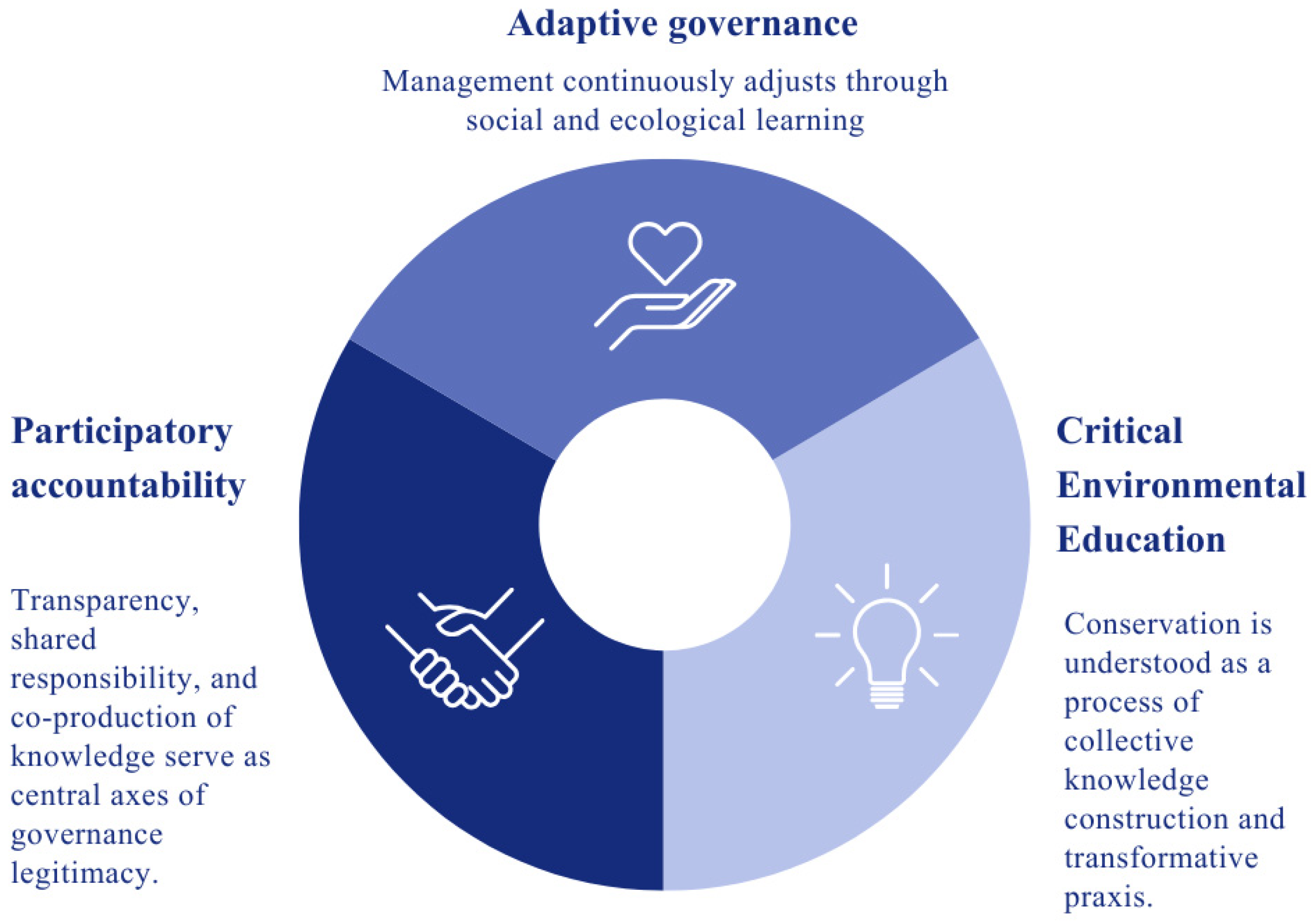
28]. Together, these pillars form the theoretical and practical basis for a CEPA plan that encourages shared territorial responsibility and adaptive management, moving beyond mere regulatory compliance.
The aim of this study is to develop a site-specific CEPA plan that is aligned with the guidelines of Ecuador’s Ministry of Environment and Energy (formerly MAATE) [
29] and is based on social participation, interculturality and environmental governance. To achieve this, we will first identify local CEPA needs and operational management priorities in response to prevailing socio-environmental pressures. The resulting co-designed framework will integrate scientific, managerial and local knowledge in order to strengthen participatory governance and improve the park’s adaptive capacity. Beyond Yacuri National Park, the proposed methodology offers a replicable model for other Ecuadorian protected areas that are facing similar socio-ecological dynamics. In doing so, it will support the effective implementation of national and international commitments to conservation, environmental education and inclusive governance.
2. Materials and Methods
2.1. Study Area
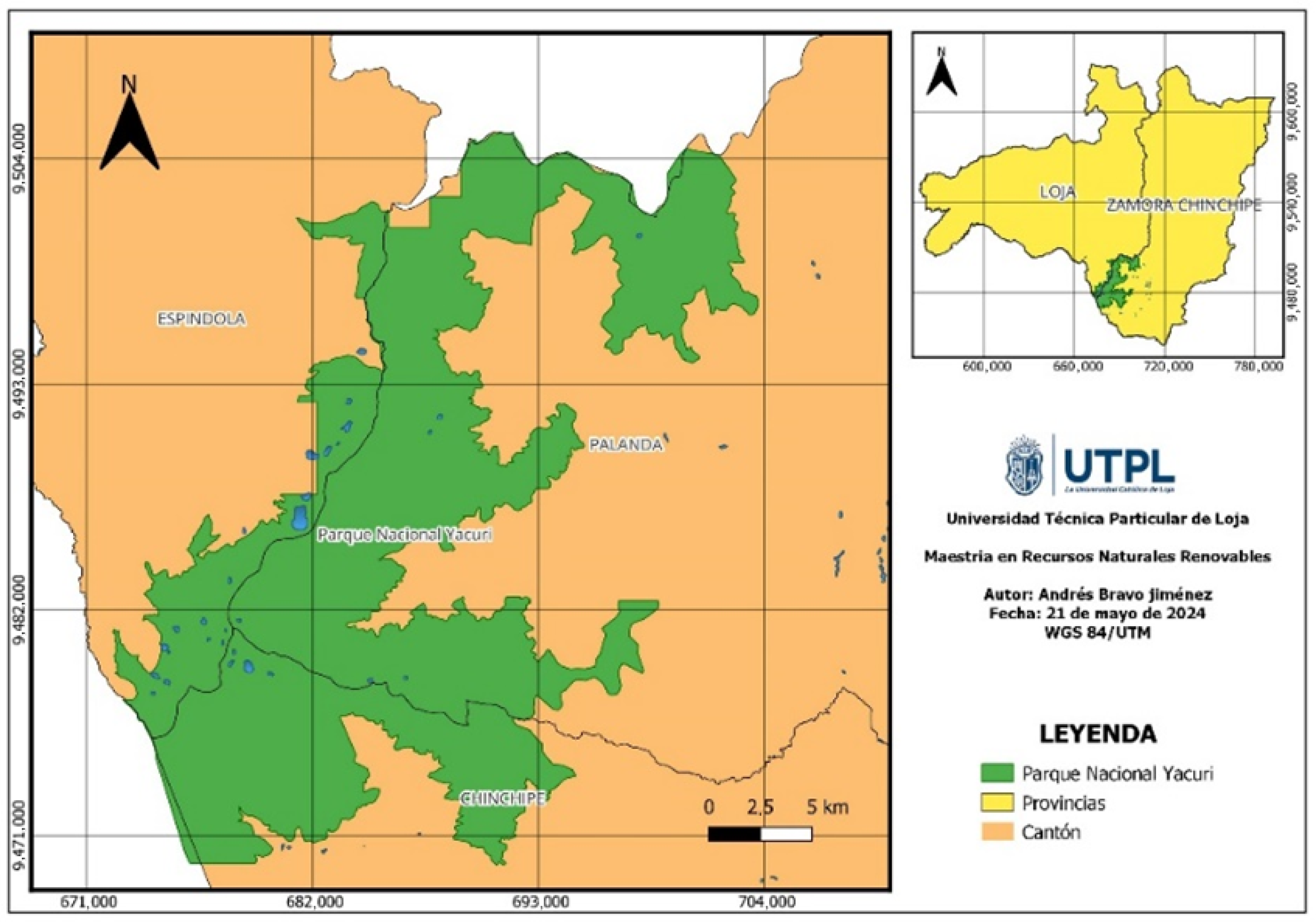
Yacuri National Park (YNP) is located in southern Ecuador, spanning the cantons of Espíndola (in Loja province) and Chinchipe and Palanda (in Zamora Chinchipe province) (see
Figure 1). The Park covers 43,600 hectares. The Park ranges in altitude from 2120 to 3880 m above sea level and features a cold, humid climate with average temperatures ranging from 8 °C to 16 °C, and up to 3500 mm of rainfall during the peak rainy months. In addition to its role as a biodiversity refuge, YNP serves as a vital cross-border biological corridor linking Ecuador and Peru, thereby enhancing regional ecological connectivity [
30,
31].
Conservation priorities are organized using coarse and fine filters to maintain ecosystem integrity. The coarse filters encompass the glacial lagoon system (48 water bodies), the páramo ecosystems (54.3% of the park) and the montane forests (34.8%). Fine filters target three keystone mammal species: the mountain tapir (
Tapirus pinchaque), the spectacled bear (
Tremarctos ornatus) and the Andean guanta (
Cuniculus taczanowskii) [
23].
2.2. Methodological Approach
This study employed a qualitative design based on participatory action research (PAR). PAR generates applied knowledge through direct collaboration with local stakeholders to address context-specific challenges [
32]. This approach was selected for its capacity to integrate knowledge production with environmental decision-making, enabling the co-construction of contextually relevant CEPA strategies. The research adopted a descriptive-exploratory design to characterize the communication, education, and participation needs of park managers and local stakeholders, thereby establishing an empirical basis for a contextualized CEPA plan. Following the guidelines of the Methodological Manual for CEPA Technical Plans [
29], the study was structured into three phases:
Two co-design workshops were conducted with seven Yacuri National Park (YNP) staff members: the park director, who is responsible for strategic and administrative oversight, and six park rangers, who are responsible for ecological monitoring, community liaison and threat response in the northern and southern sectors. The sessions used participatory techniques, such as collaborative concept mapping, multi-criteria prioritization matrices and facilitated brainstorming, to encourage open discussion and integrate operational insights into conservation planning. This iterative process systematically captured essential inputs for the CEPA plan’s core components (
Figure 2). Although formal sociodemographic profiles were not collected, the participants effectively represented both strategic and operational governance levels, ensuring that institutional priorities informed the planning framework.
Stakeholders were selected using purposive snowball sampling. The process began with two initial participants: the YNP administrator for the eastern region and the president of the Jimbura Parish Council. Both were chosen for their formal decision-making authority and recognized community standing. Subsequent participants were identified through referrals, with a deliberate effort made to include diverse perspectives from the institutional, civil society, private sector and community sectors. The final sample comprised nine individuals, including a municipal environmental unit head, an NGO technician, a community programme representative, a local resident, an ecological organization president, a tourism operator and a mining company representative. Interviews continued until theoretical saturation was reached, which was defined as three consecutive sessions yielding no new thematic codes. To counteract potential homophily bias, divergent viewpoints were intentionally included, notably from the Osos Negros mining company, whose operational interests conflict with conservation goals. The interviews explored the perceptions of stakeholders regarding socio-environmental pressures, their roles in threat mitigation, their expectations regarding institutional and behavioral change, and the potential for partnerships to implement CEPA plan.
All participants were informed of the study’s objectives, how the data would be used, that participation was voluntary, and that confidentiality would be guaranteed. Consent was verbal and confirmed through active engagement and a shared review of preliminary findings. In accordance with Ecuadorian regulations, this research did not involve biomedical interventions, vulnerable populations or the appropriation of ancestral knowledge and therefore did not require formal ethics committee approval.
Secondary documents were systematically reviewed in order to contextualize the empirical data and verify institutional alignment. Selection was based on four criteria: (i) direct territorial or jurisdictional relevance to YNP; (ii) formal status as a binding management or planning instrument; (iii) explicit references to conservation threats, governance mechanisms, or CEPA mandates; and (iv) current operational validity. The reviewed corpus included the YNP Management Plan [
23], the Colambo-Yacuri Conservation Area Management Plan [
33], and the Espíndola Canton Land Use and Development Plan [
30].
2.3. Data Analysis
Data analysis followed a systematic, iterative process. Workshop notes and interview transcripts were anonymised and transcribed verbatim. Qualitative analysis employed a hybrid coding strategy. An initial deductive codebook was developed from the MAATE [
29] and organised into six categories: (1) actor types, (2) threats to conservation values, (3) expected changes, (4) strategic partnerships, (5) operational resources and (6) monitoring and evaluation systems. This was followed by inductive open coding to capture emerging themes outside the initial framework. Methodological triangulation integrated the three data sources. Workshop outputs were cross-referenced with interview transcripts to identify convergences and divergences between managerial and stakeholder perspectives. Meanwhile, documentary analysis provided the institutional context for interpretation. To enhance credibility and reflexivity, preliminary findings were presented to the park ranger team at a validation workshop. Participants reviewed, refined or challenged the interpretations, thereby ensuring analytical coherence and institutional legitimacy.
3. Results and Discussion
3.1. Stakeholder Mapping and Target Group Identification
The participatory design of the CEPA plan for the YNP reveals a complex, multiscale governance structure. Rather than serving as a simple administrative list, the stakeholder mapping exercise highlights asymmetries in power, knowledge production and conservation incentives.
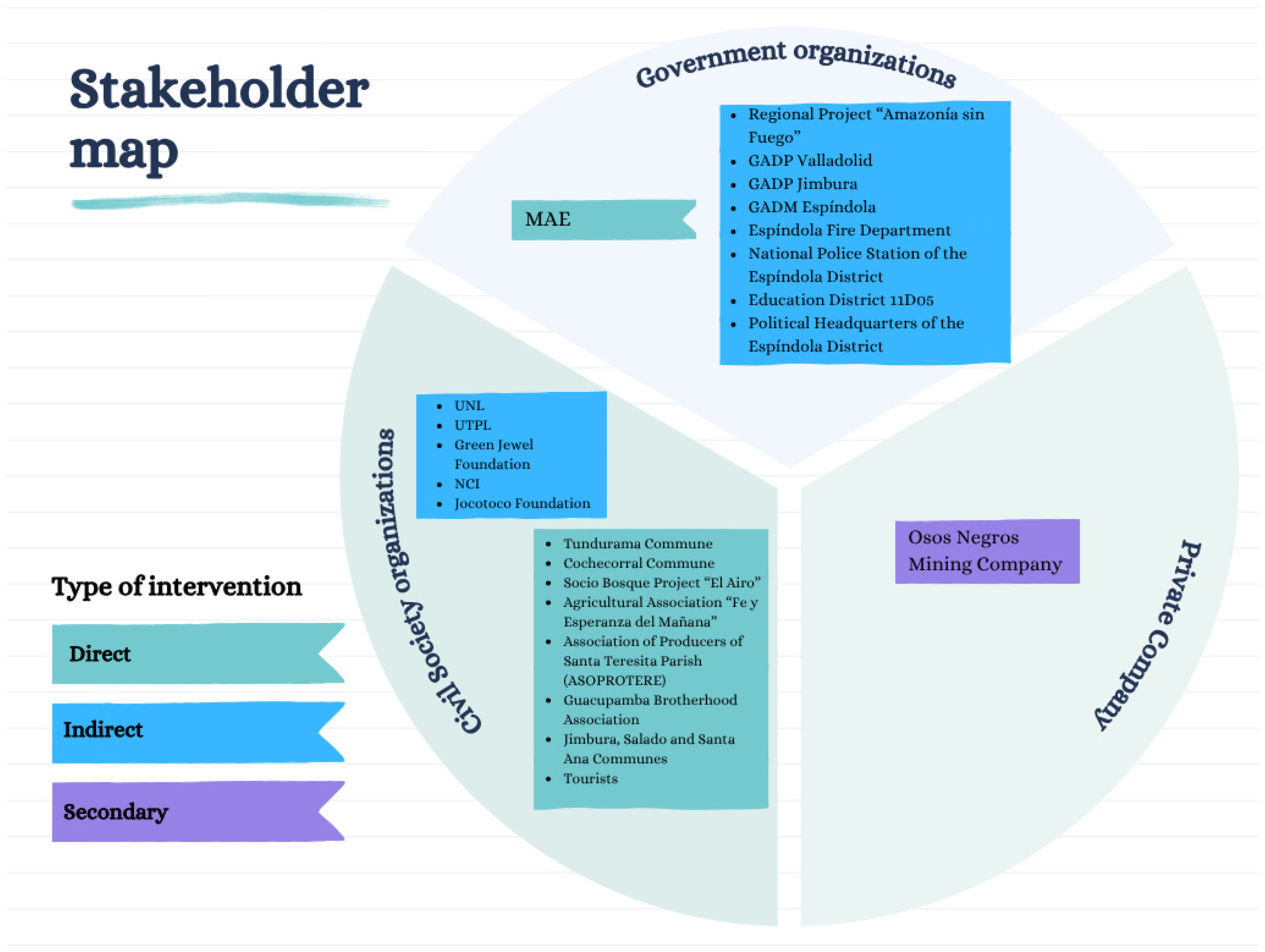
The exercise identified 24 key stakeholders from national institutions, local governments, civil society, academia and the private sector (
Table S1 and
Figure 3). Notably, 71% of these actors operate at the local level, indicating that conservation outcomes depend primarily on local socio-ecological dynamics rather than top-down directives.
Institutional analysis reveals a significant discrepancy between formal authority and operational capacity. While the Ministry of Environment and Energy holds national jurisdiction and strategic interest, its direct management is limited by logistical and financial constraints. In contrast, Decentralized Autonomous Governments (GAD Valladolid, Jimbura and Espíndola) and local security agencies perform indirect technical functions such as capacity building and logistical support, yet demonstrate a strong commitment to conservation. This reflects a broader pattern in Andean protected areas, where subnational actors bridge the gap between national policy and local implementation, yet remain excluded from formal decision-making processes [
27]. Without explicit mechanisms for inter-institutional knowledge exchange and joint planning, these structural gaps will likely perpetuate governance inefficiencies.
Civil society has become the primary driving force behind conservation efforts. Local municipalities (Tundurama and Cochecorral) and producer associations directly manage monitoring initiatives, community brigades (BRICOM) and sustainable livelihood projects. Their active participation confirms a de facto co-management model, which is consistent with evidence that community-led initiatives improve ecological resilience when they are institutionally supported and when non-material ecosystem benefits are recognized [
34,
35]. Academic and NGO partners (e.g., UNL, UTPL, Green Jewel, Nature and Culture, Jocotoco) primarily occupy advisory or research roles, engaging to a moderate extent. While this arrangement is valuable, it risks reinforcing a top-down knowledge transfer model unless local ecological knowledge is recognized as being equal to scientific expertise within participatory frameworks [
36,
37].
The private sector is represented solely by the mining company Osos Negros, which highlights a critical governance tension. Despite operating near the protected area with high potential for ecological impact, the company shows limited interest in conservation. This mismatch between the magnitude of the company’s impact and its willingness to engage exposes a systemic vulnerability in participatory planning. Research on socio-ecological conflicts shows that excluding private actors increases polarization around conservation. However, structured dialogue combined with corporate environmental responsibility frameworks can redirect extractive practices towards landscape-scale sustainability [
38,
39].
Given these dynamics, the CEPA plan is structured as a differentiated participation matrix rather than a uniform outreach campaign. Direct operational actors (e.g., communities and producer associations) require participatory learning and two-way knowledge exchange. Advisory institutions benefit from co-production platforms that formalize the integration of traditional knowledge. The private sector requires conflict-mediated dialogue and transparent monitoring frameworks to mitigate ecological externalities. This tailored approach addresses a well-documented flaw in environmental management. CEPA initiatives often default to one-way information delivery rather than fostering behavioral change and critical environmental citizenship [
27,
40].
Beyond the case of the YNP, this mapping provides a replicable analytical framework that links stakeholder profiles to CEPA strategies in high-biodiversity, conflict-prone Andean landscapes. By connecting governance asymmetries, knowledge hierarchies and sectoral incentives to tailored education and participation strategies, the approach shifts participatory governance from descriptive cataloguing towards dynamic, equity-centred planning. As GIZ GmbH [
41] notes, effective conservation requires aligning stakeholder influence with coordinated participatory frameworks, a principle operationalized here through a goal-oriented, evidence-based CEPA plan. Integrating CEPA as a core governance mechanism rather than an additional element strengthens the socio-ecological feedback loops that are essential for long-term biodiversity resilience [
22,
36,
40,
42].
3.2. Prioritized Threats to Conservation Values
Seven anthropogenic threats were identified and prioritized based on severity, spatial extent and impact on conservation values (
Table 1). These are not isolated pressures; they are interconnected symptoms of structural trade-offs where historical land use, livelihood dependencies and governance gaps converge.
The introduction of rainbow trout (Oncorhynchus mykiss) to glacial lagoons in aquatic ecosystems disrupts food webs through predation and competition with endemic species. Poor solid waste management in popular tourist areas (e.g., Lagunas Negras) reflects a mismatch between recreational infrastructure and the area’s ecological carrying capacity.
This issue is consistent with the documented challenges in Latin American mountain protected areas, where the growth of tourism outpaces environmental governance and visitor education, resulting in the cumulative degradation of soil and water [
34]. In terrestrial ecosystems, agricultural expansion, unregulated grazing and seasonal burning fragment montane forests and páramo. Rooted in subsistence economies and historical land tenure patterns, cause soil degradation and compaction. This reduces water infiltration and compromises the provision of hydrological regulation services. This is consistent with evidence showing how livestock pressure and unmanaged tourism degrade ecosystem services in Andean watersheds [
35,
43].
From a sociocultural perspective, the illegal extraction of native flora (e.g., Wax palms are used on Palm Sunday during Holy Week and medicinal plants) reveals the conflict between cultural identity, livelihood security and conservation. This pressure directly threatens associated bird species (Leptosittaca branickii and Ognorhynchus icterotis) and disrupts mutualistic ecological interactions. Similarly, human–wildlife conflicts involving species such as the spectacled bear, mountain tapir and Andean guanta arise when local economic security clashes with conservation goals, generating negative perceptions and increasing the risk of retaliation.
These dynamics highlight a recurring governance challenge: when environmental pressures are perceived as external impositions rather than shared responsibilities, regulatory compliance decreases and socio-ecological conflicts escalate [
38,
40]. Local actors frame these threats within cultural and survival contexts, thus challenging conservation models that are based solely on regulatory restrictions. Literature on participatory management in the Global South shows that prescriptive bans often ignore local ecological knowledge and productive dependencies, resulting in social illegitimacy and poor long-term compliance [
35,
36].
3.3. Desired Changes and Strategic Actions of CEPA Plan
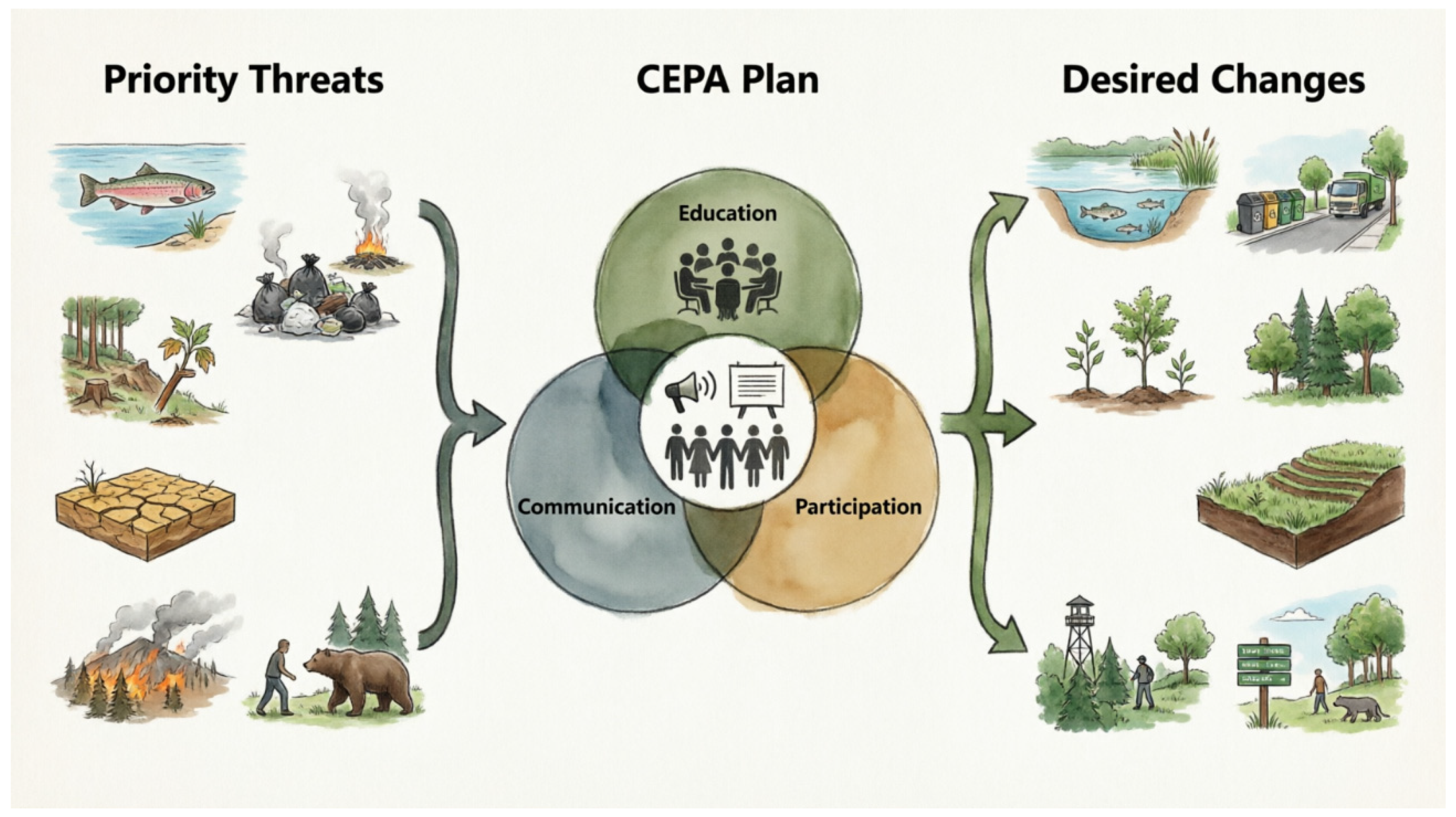
Analysis of the co-constructed strategies (
Figure 4,
Table S2) reveals a multidimensional intervention model that integrates education, communication and participation in order to address priority threats through structural and cultural levers [
18,
19]. Moving beyond isolated awareness campaigns, the plan operates within a collective praxis framework that aligns local ecological knowledge, institutional capacity and sociocultural norms in order to drive legitimate and sustainable behavioral change. The fifteen strategic actions are grouped into three interdependent components: (1) environmental education (capacity building, curriculum integration, conflict mitigation); (2) environmental communication (interpretive infrastructure, contextualized messaging, participatory theatre); and (3) environmental participation (BRICOM brigades, waste co-management, joint biodiversity monitoring).
The synergy between these components shows that achieving conservation effectiveness in Andean ecosystems requires a deliberate alignment of ecological objectives, procedural equity and cultural recognition [
7,
19]. Concrete interventions translate participatory assessments into operational governance mechanisms. Examples of this include replacing prohibitive measures with community monitoring of rainbow trout and native species and incorporating the EEPE (Teaching Ecology in the Schoolyard) methodology into local curricula. The Integrated Solid Waste Management System (GIDS) combines physical infrastructure with experiential learning, positioning tourists as active co-stewards. This is consistent with evidence that environmental education can have direct ecological impacts when it incorporates localized actions, cross-sector partnerships and measurable behavioral outcomes [
38].
In culturally sensitive contexts such as the ritual harvesting of wax palms, the plan replaces regulatory coercion with symbolic negotiations that preserve cultural significance while alleviating extractive pressure. This recognizes that viable socio-economic alternatives are essential for biological protection [
20,
44]. Similarly, agroecological transitions involving fire-free techniques, early warning systems and strengthening of BRICOM, alongside participatory mitigation of human–wildlife conflicts, shift the logic of retaliation towards sustainable coexistence. This positions farmers as knowledge generators and central actors in risk governance.
This model represents a paradigm shift from ‘conservation for’ to ‘conservation with and by’ communities, institutionalizing co-management and distributing ecological responsibility across territorial networks [
41,
45]. It addresses the limitations of CEPA implementation in Latin America, where participation is often restricted to diagnostic phases without procedural continuity or real influence on decision-making [
27,
34]. Unlike traditional regional approaches that rely on one-way communication and instrumental training, the YNP plan consolidates dialogic exchanges, intercultural pedagogies and pathways to long-term co-governance.
By explicitly linking community actions to verifiable ecological indicators, the plan overcomes the ‘research–implementation gap’ identified in the literature. It demonstrates that localized, action-oriented approaches increase the likelihood of achieving measurable conservation outcomes [
35,
38]. Translating participatory assessments into formalized co-management roles, such as BRICOM, joint monitoring and curriculum adaptation, offers a validated, transferable framework that connects CEPA policy mandates with implementation in complex neotropical territories. Ultimately, conservation legitimacy and resilience in diverse sociocultural landscapes depend not on disseminating information, but on institutionalizing procedural equity, intercultural dialogue and ecological co-responsibility [
18,
20,
46].
3.4. Strategic Alliances for CEPA Plan Implementation
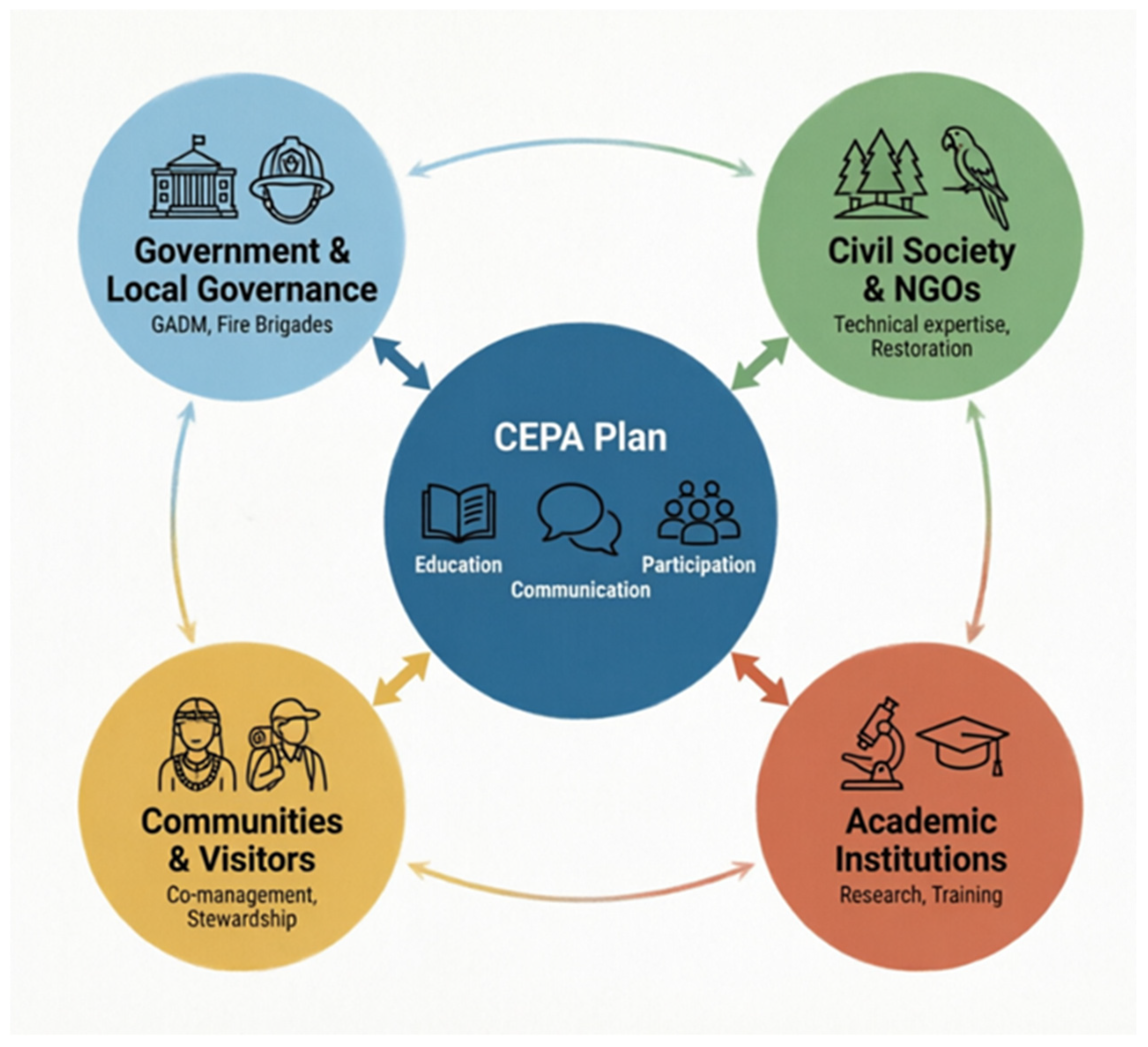
The operational viability and long-term sustainability of the CEPA plan depend on a polycentric governance network established through collaboration (
Figure 5). Participatory mapping reveals a functional architecture in which institutional capacities, local ecological knowledge and educational resources are distributed across five interdependent sectors: local government; civil society; academia; community actors; and visitors. This configuration moves beyond conventional consultation by embedding shared-responsibility governance into conservation management, thereby aligning with the IUCN’s principles of equitable and participatory conservation [
19].
Public entities (e.g., GADM Espíndola and the parish governments of Jimbura and Santa Teresita) provide institutional frameworks, logistical infrastructure and territorial coordination. However, their effectiveness depends on synergies with civil society organizations (e.g., Nature and Culture International, Amazonia sin Fuego), which provide technical expertise in areas such as ecological restoration, invasive species control and fire prevention. This functional complementarity is consistent with the finding that CEPA initiatives only succeed when communication and education shift from one-way dissemination to interactive, co-designed action [
40]. Within the park, academic institutions transform the protected area into a living laboratory, fostering evidence-based curricula, educator training and volunteer mobilization. As Ardoin et al. [
38] observe, environmental education programmes that incorporate localized action and cross-sector partnerships are far more likely to generate quantifiable conservation outcomes and adaptive management capacity.
At a fundamental level, local communities transition from being passive beneficiaries to becoming co-managers and knowledge mediators. Their active involvement in biodiversity monitoring, planting native species, fire prevention and waste management reinforces the idea that participatory governance is most effective when based on local ecological knowledge and territorial identity [
35]. However, participatory assessments reveal a structural asymmetry: community participation is concentrated in the formulation and implementation phases, with limited influence on long-term monitoring, evaluation and adaptive decision-making. This mirrors findings that participation in environmental planning is initially strong but systematically weakens during the control and monitoring phases [
27]. To address this, co-monitoring protocols, transparent feedback loops and participatory budgeting must be institutionalized to prevent participation fatigue and sustain governance legitimacy. Visitors can be strategically positioned as conservation allies rather than extractive consumers through interpretive education and voluntary financing mechanisms (e.g., eco-fees and donations). This aligns with decentralized governance models where external actors internalize conservation costs while expanding protection beyond territorial boundaries [
26]. However, their integration must be carefully regulated to avoid the commodification of cultural and natural heritage, which is a documented risk when educational outreach prioritizes tourism revenue over ecological carrying capacity.
3.5. Resource Assessment and Budget Estimate
The participatory assessment reveals a structural mismatch between the transformative goals of the CEPA plan and its current operational capacity. This resource gap goes beyond logistical constraints and reflects a systemic institutional deficit. Without addressing this issue, participatory environmental governance will remain theoretical. The discrepancy between sophisticated regulatory frameworks and actual investment in operational capacity mirrors patterns observed in protected areas across Latin America, where strategic planning often precedes the allocation of human and financial resources [
43,
47].
Human capital and territorial decentralization: Current YNP staffing levels (one administrator and eleven rangers across two provinces) severely restrict decentralised management. This centralized model restricts ongoing stakeholder participation and adaptive monitoring, which is a recurring constraint in Andean conservation [
40]. Effective CEPA implementation requires territorial institutional anchoring. Hiring two provincial coordinators and a CEPA specialist would reconfigure the governance structure to facilitate two-way communication, co-design and continuous evaluation. These mechanisms are essential for linking education to tangible conservation outcomes [
38,
48]. Without decentralised technical staff, participation risks becoming fragmented and losing influence over daily operations [
27].
Infrastructure, operational capacity and social capital: The absence of an institutional presence in the ecologically sensitive eastern sector creates a governance void that hinders monitoring and the building of trust with remote communities. Furthermore, 60% of the vehicle fleet and technical equipment is obsolete, which compromises operational safety, especially when working with BRICOM brigades. These material constraints confirm that community participation in conservation depends heavily on reliable logistical support and safe working conditions. The technical prerequisites for effective CEPA strategies are establishing a new eastern checkpoint and renewing operational equipment [
38].
Pedagogical transition: from information to transformation. Reliance on static, one-way materials (e.g., brochures) contradicts the participatory and contextual approach of the plan. Evidence shows that transformative environmental education requires interactive tools to stimulate critical thinking and empower communities [
40]. Incorporating travelling environmental theatre, interpretive signage, simulation workshops and contextualized educational kits is consistent with studies demonstrating that situated, action-oriented learning significantly increases local ecological knowledge and the adoption of pro-environmental practices [
35,
38]. This shift redirects educational investment towards co-producing culturally relevant materials and redefines communities as active knowledge contributors rather than passive recipients.
Budget allocation and structural funding gaps: The CEPA plan is designed for a five-year implementation period. Based on priority interventions, the estimated budget for the first year is
$19,000.00 (see
Table S3), which supplements the existing annual allocation of
$9620.58 for CEPA activities. These funds will cover temporary technical facilitation, the co-production of educational materials, BRICOM capacity building, logistical support and critical equipment maintenance. While modest, this allocation marks the beginning of the transition from regulatory planning to effective governance. However, the combined funding level highlights a persistent structural deficit, and chronic underfunding remains a systemic constraint across Andean protected areas. Long-term viability will require securing external co-financing, formalizing multi-level partnerships and integrating the CEPA framework into municipal and provincial planning instruments. Empirical evidence confirms that participatory environmental education achieves sustained impact and scalability only when supported by diversified, predictable funding mechanisms [
27,
48].
3.6. Design of the Monitoring and Evaluation System
The CEPA plan’s monitoring and evaluation system goes beyond the mere verification of compliance by incorporating participatory governance, adaptive learning and accountability into its operational design. In line with MAATE guidelines [
29], the model uses a hierarchical indicator structure comprising process, outcome and impact to track medium- and long-term socio-ecological transformations. Rather than serving as a summative control tool, the system functions as a diagnostic mechanism that explicitly links educational interventions to verifiable changes in conservation practices, institutional capacity and territorial management.
This design addresses the recurring criticism that many CEPA initiatives priorities quantitative metrics (e.g., attendance and material distribution) over structural changes to environmental attitudes, the integration of local knowledge and community decision-making capacity [
27,
38].
The system operationalizes this approach using a standardized ordinal scale (0 = not achieved; 1 = partially achieved; 2 = largely achieved; 3 = fully achieved) (
Table S4). This scale is diagnostic, not evaluative; it identifies implementation barriers, optimizes resource allocation and triggers strategic adjustments. Score validity is ensured through methodological triangulation among documentary sources, participatory assessments, and socio-ecological records (
Table 2), guaranteeing analytical rigor and contextual relevance.
This multiple-verification framework mitigates the overreliance on quantitative attendance indicators, which is common in Latin American CEPA evaluations. Their uncritical use in these evaluations often obscures the dynamics of tokenistic participation and institutional fragmentation [
35,
40]. By integrating qualitative community evidence with biophysical and institutional variables, the system adheres to contemporary mixed-methods evaluation standards. This allows for the simultaneous capture of direct conservation impacts (e.g., reduced wildfires and hydrological recovery) and indirect socio-institutional effects (e.g., strengthened local governance and the revaluation of traditional ecological knowledge) [
38,
43].
The core component of the system is the annual feedback and adaptation cycle (
Figure 6), which formalizes continuous learning and adaptive co-management. Monitoring results are consolidated and deliberated in multidisciplinary public forums involving park authorities, indigenous communities, local governments and academic stakeholders.
This collective review transforms the CEPA plan into a dynamic governance instrument that overcomes the rigidity of static administrative documents. Structured iteration addresses a critical regional limitation: the interruption of citizen participation after the diagnostic or formulation phases, which marginalizes communities during the monitoring and evaluation process [
27,
48]. By embedding community assessment and adaptive review into institutional routines, the model operationalizes the principles of territorial environmental governance, in which intercultural deliberation, interest negotiation and shared responsibility drive sustainable ecosystem management [
43,
47].
This study demonstrates that a CEPA plan co-developed through Participatory Action Research (PAR) is more effective than traditional one-way approaches. According to Burgos-Ayala et al. [
40], this methodology encourages two-way communication and co-management by integrating local ecological knowledge, procedural equity and territorial co-responsibility. The resulting framework has been validated and can be replicated in Andean landscapes characterized by high biodiversity and socio-environmental conflict. This approach aligns with calls to explicitly articulate socio-ecological systems in decision-making processes [
36].
However, operational viability is still limited by structural deficits. Shortages of decentralized technical staff, obsolete equipment and budgetary limitations reflect a discrepancy between regulatory frameworks and institutional investment, a pattern that has been documented in the context of decentralized environmental management [
48]. Furthermore, community participation is concentrated in the diagnostic and implementation phases, which reduces its influence on monitoring and adaptive decision-making. This is consistent with the findings of Sánchez Taquiba et al. [
27], who demonstrate that although initial participatory conditions may be favorable, control and monitoring mechanisms are consistently weaker, highlighting a disconnect between participatory design and subsequent implementation.
To ensure model sustainability, targeted interventions are required: (1) institutionalize diversified, stable funding to ensure operational continuity; (2) formalize feedback and co-participation cycles to prevent social fatigue and preserve local agency during evaluations; (3) guarantee procedural equity in multilevel governance by explicitly including historically underrepresented groups in deliberative spaces [
34,
47]; (4) regulate tourism using instruments that safeguard ecosystem carrying capacity and link cultural service valuation to conservation criteria [
43]; and (5) establish structured dialogues with extractive actors to align operations with conservation goals, mitigate conflicts and strengthen socio-ecological resilience [
36]. Scalability depends on articulating social legitimacy, environmental justice and adaptive management.
Despite its participatory and context-specific design, the study has methodological limitations inherent to qualitative, exploratory research. While the sample achieved theoretical saturation, this limits generalization to other Andean regions. Furthermore, the research is confined to the co-design and diagnostic phases without longitudinal implementation or quantitative baseline data to empirically validate medium- or long-term impacts. These limitations indicate that, although the model is conceptually replicable, future studies employing mixed-method designs, longitudinal follow-up and quantifiable socio-ecological indicators with external validation are required to confirm its transferability and operational effectiveness.
4. Conclusions
This study demonstrates that a CEPA (Communication, Education and Public Participation in the Environment) plan, which is co-designed through Participatory Action Research, can effectively replace top-down informational campaigns with a collaborative co-governance model. The framework fosters intercultural dialogue and shared territorial responsibility by integrating park authorities, local communities, and academic partners. Targeted interventions, including community fire brigades (BRICOM), culturally adapted alternatives to wax palm harvesting, participatory waste management and experiential tourism education, shift power dynamics and position residents as active co-managers. This transition establishes the social legitimacy that is essential for long-term conservation.
However, operational viability is still limited by structural deficits, which highlight the ongoing discrepancy between national conservation mandates and actual institutional investment. To ensure sustained impact, diversified funding, formalized community-led monitoring, inclusive decision-making platforms and structured dialogue with the extractive and tourism sectors are required. Ultimately, this framework provides a replicable, equity-centred methodology for Andean protected areas. It demonstrates that effective biodiversity conservation requires collaborative governance and adaptive management rather than regulatory coercion alone.