Systematic Review

Artistic Interventions as Urban Planning Tools: A Systematic Review of Community-Based Cultural Tourism in Cities

by
Pichamon Hanchotiphan
and
Kittichai Kasemsarn
*
School of Architecture, Art and Design, King Mongkut’s Institute of Technology Ladkrabang (KMITL), Bangkok 10520, Thailand
*
Author to whom correspondence should be addressed.
Urban Sci. 2026, 10(2), 79; https://doi.org/10.3390/urbansci10020079 (registering DOI)
Submission received: 11 November 2025 / Revised: 23 January 2026 / Accepted: 25 January 2026 / Published: 2 February 2026

Abstract

Urban planners increasingly recognize artistic interventions as strategic tools for cultural tourism development and city revitalization. However, systematic understanding of their function as planning instruments remains limited. This systematic review examines how community-led artistic interventions facilitate authentic cultural heritage tourism and aims to develop a framework for sustainable development. Following PRISMA guidelines, this research analyzed 75 peer-reviewed articles (2015–2025) from Scopus and ScienceDirect. Bibliometric analysis identified eight thematic clusters that highlight the need to integrate urban spatial contexts, community networks, and participatory governance. Synthesizing these findings, the study proposes the Arts-led Cultural Interaction and Sustainable Community Development framework. This framework operationalizes the relationship between urban planning processes and community participation, establishing artistic interventions as essential instruments for fostering community ownership and resilience. The results provide evidence-based guidelines for municipal strategies to leverage creative practices for sustainable tourism without compromising cultural authenticity or increasing gentrification pressures.

1. Introduction

Cities worldwide struggle to preserve cultural heritage while developing tourism. Current trends in tourism focus on meaningful experiences that connect travelers with local cultures [1,2,3,4]. These cultural exchanges help build sustainable societies and address economic challenges in communities facing population decline [5,6].
Artistic interventions are creative practices that address social challenges through community participation [7,8]. Examples such as the Setouchi Triennale in Japan, and the Silo Art Trail in Australia show that art creates shared experiences and promotes cultural exchange [4,9,10]. These projects help revitalize local communities, boost local economies, and encourage interaction between tourists and local residents [5]. However, although the role of art in promoting cultural heritage tourism has been demonstrated in many case studies, systematic investigation of the processes through which collaborative art projects facilitate authentic cultural exchange remains limited. Three research problems emerge from the existing literature.
  • Outcome-focused rather than process-oriented research: Current research tends to focus primarily on economic impacts or visitor satisfaction metrics [4], with insufficient examination of how community-led artistic initiatives contribute to cultural preservation and heritage transmission. Most studies emphasize outcomes rather than processes, failing to analyze the mechanisms through which resident-controlled art activities maintain cultural authenticity while accommodating tourism development [5].
  • Inadequate understanding of community relationships: Existing research does not adequately address the complex interactions among environmental contexts, community relationships, collaborative methodologies, and development outcomes. The integration of artistic interventions within community-controlled heritage management frameworks requires systematic analysis to identify effective processes that ensure genuine cultural exchange while preserving community agency in cultural representation [11,12].
  • Cultural commodification and authenticity loss: Challenges persist in integrating art into community contexts sustainably without leading to the commodification of culture or the loss of authenticity that often arises from externally driven projects lacking genuine community involvement [10]. This research responds to the need for a comprehensive understanding of collaborative art processes that enable authentic tourist–resident interactions without compromising heritage integrity or community empowerment.
Moreover, recent studies highlight that urban branding increasingly relies on cultural and creative tourism, with artistic interventions fostering distinctive place identities, particularly for younger generations [13]. In addition, the integration of digital arts and interactive installations has become a pivotal strategy for enhancing urban experience and promoting social inclusion in smart cities [14].
In response to the issues outlined above, this systematic review examines how community-led artistic interventions function as urban planning tools to facilitate authentic cultural heritage tourism. Specifically, the study addresses the following objectives:
  • To systematically analyze the current state of research on artistic interventions in urban planning and their impact on community participation (2015–2025).
  • To identify key thematic clusters and gaps in the integration of creative practices within urban development strategies.
  • To develop a theoretical framework—the Arts-led Cultural Interaction and Sustainable Community Development (ACSC) framework—that operationalizes the relationship between artistic interventions and sustainable urban planning.
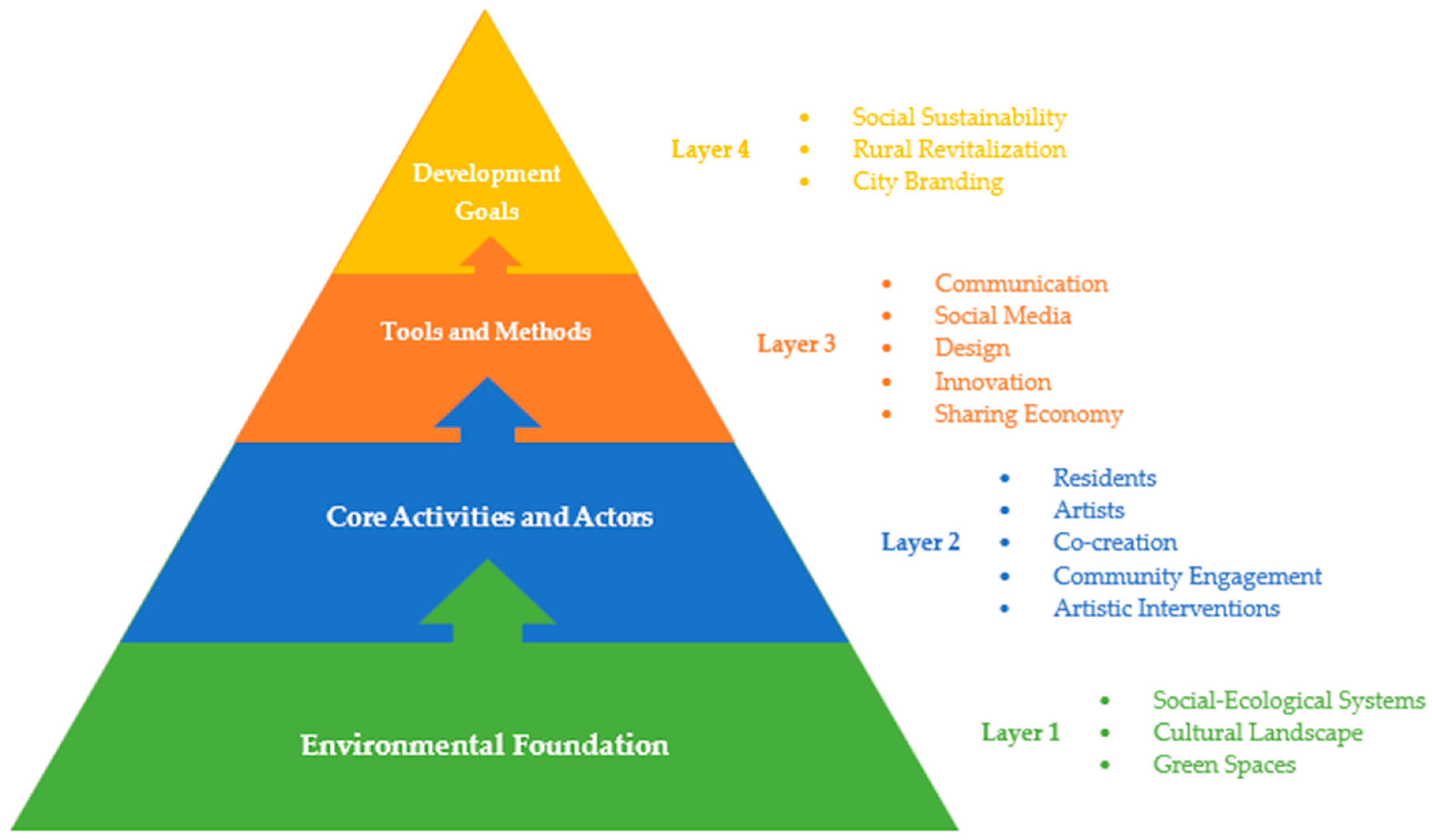
By achieving these objectives, this review seeks to provide evidence-based guidelines for municipal strategies to leverage creative practices without compromising cultural authenticity. Finally, the ACSC framework advances existing knowledge in three ways. First, it integrates eight thematic clusters into a single operational model, whereas previous studies examined these themes separately. Second, it positions artistic interventions as urban planning tools rather than cultural activities alone. Third, it provides a four-layer structure (environment, actors, tools, and goals) to guide practical implementation for municipal planners.

2. Conceptual Background

To provide a foundation for the systematic literature review, this section defines the core concepts of artistic interventions, community-based cultural tourism (CBCT), and urban planning tools, and theorizes their interrelationships. Understanding these concepts is essential to justify the selection of search terms and the analytical framework used in this study.

2.1. Artistic Interventions as Urban Planning Tools

In the context of urban studies, artistic interventions go beyond mere decoration. They are defined as intentional creative actions, ranging from temporary installations and performances to permanent public art, aimed at transforming the physical or social dynamics of a space [15,16]. Traditionally, urban planning relied on “hard” infrastructure; however, contemporary scholars argue for the inclusion of “soft” tools, such as art, to address social inclusion and spatial regeneration [17]. As urban planning tools, artistic interventions function as catalysts for placemaking, turning underutilized spaces into vibrant hubs that reflect local narratives and foster social cohesion [18,19].

2.2. Community-Based Cultural Tourism

CBCT differs from mass tourism in that it centers on local control and management of tourism resources [20]. The core objective of CBCT is not solely economic gain but also the preservation of local heritage and the strengthening of community identity. Success in CBCT depends heavily on “authenticity” and “local participation” [21,22]. Therefore, any external intervention, such as urban planning or art, must align with community values to be sustainable.

2.3. Theoretical Interrelationships: Art, Planning, and Tourism

The intersection of these three domains creates a specific mechanism for revitalization. The theoretical literature suggests that when artistic interventions are strategically employed as urban planning tools within a CBCT framework, they serve a dual function:
  • Internal function: They visualize and reinforce local identity, making intangible heritage tangible for the community [23].
  • External function: They act as branding signals that differentiate destinations in the global tourism market [24,25].
However, a critical gap remains in understanding “how” these interventions can be effectively integrated without leading to gentrification or the commodification of culture.

3. Methods

3.1. Literature Review Methodology

This study employed a systematic literature review methodology following established PRISMA guidelines [26]. The investigation used Scopus and ScienceDirect as the primary databases, selected for their comprehensive coverage of tourism studies, urban planning research, art and cultural heritage research, and community development literature. The temporal scope encompassed publications from 2015 to 2025 to ensure contemporary relevance. Both databases were last searched in August 2025.
As illustrated in Table 1, the inclusion and exclusion criteria were developed to collect and assess literature related to artistic activities that promote sustainable cultural tourism, with an emphasis on the relationship between tourists and local communities. Although the primary focus of this study is urban contexts, selected rural case studies were included to illustrate fundamental principles of asset-based community development. These rural examples provide clear, isolated evidence of how large-scale artistic interventions can successfully repurpose obsolete infrastructure and foster community identity. The underlying mechanisms serve as foundational models that can be adapted, with appropriate modifications for scale and density, to complex urban environments.
The core search string combined: TITLE-ABSTR-KEY (“Art” AND “Community” AND “Tourist” AND “Interaction” AND “Local”). This specific combination of keywords was strategically chosen to ensure high precision in identifying literature that explicitly bridges artistic practice, community engagement, and tourist interaction. While broader search terms might yield a larger volume of general tourism studies, this targeted string ensured that the retrieved articles specifically addressed the multi-dimensional relationship between local communities and visitors through art. This approach aimed to capture research spanning cultural tourism management, community development, visual arts, and social interaction studies, presented in Table 2.
The methodology employed the PRISMA framework [27], using its three-flow diagram and theory-based components, as depicted in Figure 1. The search process identified 75 articles from the combined databases. To minimize bias, two reviewers independently screened titles and abstracts against the eligibility criteria. Full-text articles were then retrieved and assessed independently by both reviewers. Data extraction was conducted using a standardized form and included study objectives, methodological approach, key findings related to authenticity in digital cultural tourism, and theoretical frameworks employed. Any disagreements regarding article inclusion were resolved through discussion and consensus, with a third senior researcher consulted if consensus could not initially be reached.
Quality Assessment: To ensure methodological rigor, a quality assessment was performed on the 75 selected articles. Two reviewers independently evaluated each article based on three criteria: (1) clarity of research objectives regarding art and tourism, (2) adequacy of the methodology in capturing community–tourist interactions, and (3) relevance of findings to urban planning contexts. Studies lacking empirical data or theoretical depth were excluded during the full-text review phase. Discrepancies in quality grading were resolved through discussion and consensus.
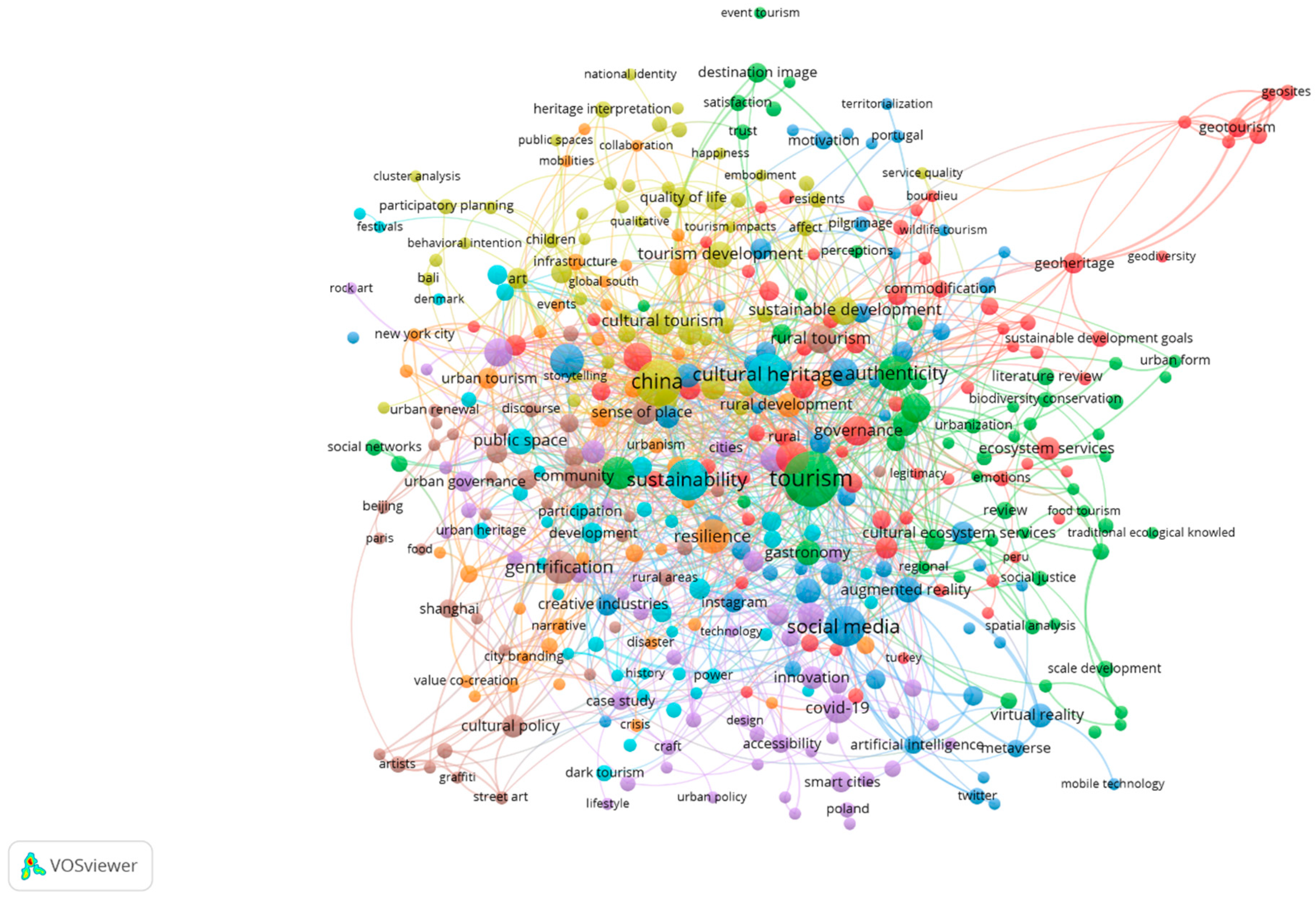
Two reviewers independently screened the titles and abstracts of identified records against the eligibility criteria. Full-text articles were then retrieved and independently assessed by both reviewers. Data extraction was conducted using a standardized form and included study objectives, geographical context, types of artistic interventions, community engagement mechanisms, and key findings related to sustainable cultural tourism outcomes. Bibliometric analysis was initially performed using VOSviewer (version 1.6.20) to visualize keyword co-occurrences. The “association strength” normalization method was applied to accurately reflect relationships between terms. Of 7357 keywords, those occurring at least four times were selected to generate the network map. The software automatically identified eight clusters based on network density. The authors then conducted a qualitative content analysis of the keywords within each cluster to assign descriptive labels that accurately reflect the thematic focus of the underlying research articles.

3.2. Systematic Literature Review

The VOSviewer bibliometric analysis of 75 publications identified eight distinct thematic clusters representing interconnected research domains that address challenges and opportunities in art-mediated cultural tourism. Table 3 presents the eight clusters along with their associated keywords. Each cluster encompasses specific research areas that collectively inform the development of the ACSC framework by establishing relationships among environmental contexts, stakeholder roles, methodological approaches, and sustainable development outcomes.

3.3. Case Studies

Five case studies were purposively selected from the 75 publications, prioritizing data richness and the representativeness of key clusters identified in the bibliometric analysis. The inclusion criteria ensured that these examples demonstrated: (1) geographical diversity across different cultural contexts, (2) methodological variation showcasing multiple research approaches, (3) intervention scale ranging from festivals to community programs, and (4) an explicit focus on art-mediated tourist–resident interactions with documented outcomes. These cases provide empirical validation of the ACSC framework components, as presented in Table 4.

3.4. Data Analysis

Qualitative data from the included studies were analyzed using an inductive thematic analysis approach following Braun and Clarke’s phases [29]. Initial codes were generated from the abstracts, results, and discussion sections of the studies. These codes were then grouped into potential themes and iteratively reviewed against the VOSviewer bibliometric clusters to ensure consistency. This triangulation between bibliometric mapping and manual thematic coding allowed for the refinement and validation of the eight distinct thematic clusters presented in the results.

4. Results

Two researchers conducted a content analysis of all 75 publications through independent reading and collaborative discussion to identify thematic patterns and conceptual relationships [30]. Combined with VOSviewer bibliometric analysis, this approach identified eight distinct thematic clusters, presented in Table 3. These clusters represent the key research domains that shape community-based artistic interventions in urban cultural tourism contexts.
  • Cluster 1: Community Engagement/Cultural Landscape
This cluster examines community participation and cultural contexts in art-mediated tourism. These elements establish the social foundation of the ACSC framework by ensuring authentic community involvement and cultural integrity in artistic interventions. Understanding community engagement patterns and cultural landscape preservation is essential for developing the framework’s focus on resident-centered co-creation and sustainable cultural tourism.
Background: Community engagement enables local people to participate in tourism planning and benefit sharing [31,32]. Cultural landscapes are areas where human activities create distinctive land-use patterns and cultural practices that reflect community identity [33]. Together, community engagement and cultural landscape preservation create authentic tourism experiences that protect heritage while generating economic benefits for residents [34].
Analysis: Current engagement models often lead to cultural commodification [5,10] and selective cultural presentation [4,9], while power imbalances limit community participation to superficial consultation rather than actual decision-making [11].
Synthesis: Studies show mixed results regarding engagement effectiveness. Nishinaka et al. [4] found positive resident attitudes in island communities, whereas urban studies report resistance linked to gentrification fears. These findings suggest that community size and density influence engagement success, highlighting the need for more research on engagement models in high-density urban areas.
Urban Contextualization: Urban contexts present unique challenges for community engagement, including high population density, cultural diversity, and complex governance structures. Artistic interventions in cities must navigate multiple stakeholder groups while addressing spatial constraints and competing land uses. Successful urban applications often employ digital platforms and public space activations to reach diverse populations who are frequently excluded from cultural planning processes.
However, critical examination reveals that “participation” can become tokenistic, reducing community involvement to symbolic gestures without redistributing decision-making power [35]. Power asymmetries between well-funded external agencies and local residents often result in top-down agendas that prioritize aesthetic outcomes over community needs. Without mechanisms to ensure “citizen control,” engagement processes may inadvertently reinforce existing social hierarchies rather than empower the community.
Framework Connection: The ACSC framework leverages artistic interventions to facilitate community engagement while preserving cultural landscapes. Collaborative art enables residents to control narratives and visitor interactions [10,36]. Qu & Zollet [9] further demonstrate that art communicates place-based knowledge while maintaining community agency.
  • Cluster 2: Social–Ecological Systems/Green Spaces
This cluster addresses environmental contexts within art-mediated cultural tourism. These elements form the environmental foundation of the ACSC framework by providing venues for artistic expression while ensuring ecological sustainability. Examining social–ecological systems is crucial for understanding how artistic interventions can respect natural contexts and promote environmental awareness through cultural exchanges.
Background: Social–ecological systems are frameworks in which human communities and natural environments function as interconnected units [37,38]. Sustainable tourism requires understanding interactions between human activities and the environment [39,40]. Green spaces provide ecosystem services and serve as venues for community interaction and cultural expression [41,42,43]. Integrating social–ecological thinking with green space management supports sustainable tourism that protects the environment while enabling community engagement [44].
Analysis: Tourism development poses significant ecological risks, including green space degradation [45] and infrastructure-induced habitat fragmentation and pollution [46,47], often driven by strategies that prioritize short-term economic gains over sustainability and local knowledge [37].
Synthesis: The literature reveals a gap between theory and practice. While scholars emphasize ecological integration [9], few studies measure actual environmental outcomes. Most focus on social benefits while neglecting biodiversity or ecosystem health. This imbalance limits evidence-based planning for green space interventions.
Urban Contextualization: Urban social–ecological systems face pressures from limited green space, heat island effects, and fragmented ecosystems. Artistic interventions in urban green spaces serve dual functions: as venues for cultural expression and as strategies for ecological preservation. Cities increasingly integrate art installations in parks, waterfronts, and urban forests to enhance both cultural tourism and environmental awareness while addressing sustainability challenges inherent to dense metropolitan areas.
Framework Connection: The ACSC framework positions artistic interventions as tools for communicating ecological knowledge. Art enables tourists to understand environmental relationships through experiential learning [48]. Community-controlled projects promote conservation awareness through culturally authentic storytelling [49].
  • Cluster 3: Communication/Social Media
This cluster focuses on communication mechanisms and digital platforms in art-tourism promotion. These tools support the ACSC framework’s goal of expanding cultural interactions beyond physical boundaries through effective storytelling and community representation. Understanding communication strategies is vital for developing framework components that bridge tourists and communities while maintaining authentic cultural narratives.
Background: Communication transmits cultural knowledge between community members and visitors, enabling mutual understanding [50,51,52]. Social media platforms facilitate user-generated content and interaction across geographical boundaries, transforming tourism promotion [53,54]. These platforms allow direct communication between tourists and locals before, during, and after visits [55,56]. Combining communication strategies with social media creates opportunities for authentic cultural representation and community empowerment [57].
Analysis: While social media often drives stereotypical, superficial cultural consumption and limits community agency [36,58,59], targeted multimedia applications effectively counter this. Innovative methods significantly increase youth interest in heritage (mean = 4.56/5) [60] and successfully overcome barriers like archaic language (mean = 4.36/5) [61].
Synthesis: Research on digital platforms shows mixed results. Li et al. [28] demonstrate social media’s value for mapping tourist–resident interactions, but other studies warn that algorithmic promotion can distort cultural representation. The field lacks consensus on balancing visibility with authenticity in digital communication strategies.
Urban Contextualization: Urban environments generate dense digital networks where social media amplifies the reach and impact of artistic interventions. Cities leverage high-connectivity infrastructure and widespread smartphone use to create interactive digital experiences linking physical art installations with online platforms. Urban artistic interventions increasingly employ geolocation technologies, augmented reality, and real-time social media integration to enhance tourist engagement while enabling community storytelling across multiple digital channels.
Framework Connection: The ACSC framework positions social media as a tool for community-controlled storytelling. Digital platforms enable residents to share cultural meanings while preserving authenticity and facilitating direct artist–tourist dialogue [62].
  • Cluster 4: Co-creation/Residents
This cluster addresses collaborative creation processes between tourists and community members. Co-creation represents a core mechanism of the ACSC framework, generating authentic cultural experiences through shared artistic activities. Analyzing resident-centered approaches is fundamental to ensuring communities maintain ownership and control over their cultural representation within the framework’s sustainability goals.
Background: Co-creation is a collaborative process in which tourists and community members jointly design and deliver cultural tourism experiences [63,64,65]. Residents possess knowledge of local traditions and community values, forming the foundation for authentic tourism content [12,66]. Their participation ensures cultural accuracy and provides visitors with genuine learning opportunities [67,68]. Combining co-creation with resident-centered approaches empowers communities while delivering authentic experiences [69]. Table 5 illustrates this evolution.
Table 5 illustrates the theoretical concepts ranging from basic participatory approaches to comprehensive collaborative value-generation processes, highlighting community agency and multi-stakeholder engagement in cultural heritage tourism. Key contributions include:
Multi-actor Value Generation: Co-creation extends beyond dyadic company–customer interactions to include multiple stakeholders (suppliers, visitors, residents, DMOs, entrepreneurs), integrating resources throughout exchange processes [64,70].
Innovation for Sustainability: Co-creation serves as a key instrument for addressing sustainability challenges, enabling tourism SMEs to collaborate with local stakeholders in generating socio-cultural sustainability benefits for rural destinations [71].
Participative Experience Creation: Co-creation provides an effective means of creating meaningful interpretive experiences at cultural tourism sites, allowing tourists and providers to engage creatively with heritage representations and develop emotional connections to cultural and archaeological heritage [72].
These foundations establish co-creation as essential for community-controlled cultural heritage tourism development, requiring collaborative mindsets, sustained stakeholder involvement, resource integration, and parity-based partnerships to achieve authentic cultural exchange and heritage preservation.
Analysis: Top-down tourism planning frequently marginalizes residents by prioritizing investor interests and commodifying local culture [5,11,66]. Moreover, power imbalances limit community involvement to superficial consultation, undermining genuine co-creation and equitable benefit sharing [73].
Synthesis: Co-creation studies highlight mutual benefits, yet power imbalances persist. Moayerian et al. [5] show successful community ownership in small towns, whereas urban co-creation often prioritizes tourist experiences over resident interests. Key unresolved questions remain: Who controls the creative process, and how are economic benefits distributed? These issues warrant further investigation.
Urban Contextualization: Urban co-creation benefits from concentrated creative industries, educational institutions, and diverse skill pools. Metropolitan areas offer infrastructure such as workshops, maker spaces, and cultural venues that facilitate tourist–resident artistic collaboration. High urban density encourages spontaneous creative encounters, while institutional networks support structured co-creation programs connecting visitors with local artists and community groups.
Framework Connection: The ACSC framework positions co-creation as a core mechanism for community ownership. Artistic projects that incorporate resident knowledge produce unique experiences that reflect authentic community values while meeting tourism quality standards [74].
  • Cluster 5: Design/Innovation
This cluster explores creative methodologies and innovative approaches in art-mediated tourism. Design and innovation strengthen the effectiveness of artistic interventions within the ACSC framework by offering creative problem-solving strategies. Understanding these processes is crucial for developing framework components that address community needs while preserving cultural integrity.
Background: Design is a problem-solving process that shapes products and environments to enable meaningful cultural interactions [75,76]. Human-centered design ensures tourism offerings reflect community values while meeting visitor needs [77]. Innovation introduces new ideas and technologies that enhance cultural tourism without compromising heritage [74,78]. Digital platforms and interactive media create opportunities for cultural engagement across geographical boundaries [79]. Combining design with innovation produces culturally responsive tourism that balances tradition with modern presentation [67].
Analysis: External design and commercial pressures often prioritize technology over cultural accuracy, leading to cultural homogenization [67,69,77]. This lack of local understanding imposes frameworks that marginalize traditional knowledge and fail to support community practices [74,76].
Synthesis: The literature highlights a tension between innovation and authenticity. Manzini [75] advocates human-centered design that respects cultural contexts, while Kramsch [77] cautions that technology-driven solutions can override local needs. Although studies agree that innovation enhances visitor experience, they differ in the extent of community involvement. Most research focuses on successful cases, leaving failures underexplored. A critical gap remains: How can communities assess which innovations preserve rather than dilute cultural integrity? Comparative studies across varying levels of technology adoption are needed.
Urban Contextualization: Urban design innovation emerges from concentrated creative clusters, research institutions, and technology hubs typical of cities. Metropolitan contexts enable cross-sector collaboration among artists, technologists, and urban planners, fostering experimental approaches to cultural tourism. Cities serve as testbeds for artistic interventions that integrate smart city technologies, sustainable materials, and adaptive designs tailored to urban spatial constraints.
Framework Connection: The ACSC framework positions design as a community-driven process. Resident participation in design decisions ensures that solutions reflect community values while integrating modern technologies that enhance accessibility without compromising cultural integrity [75,78].
  • Cluster 6: Artistic Interventions/Social Sustainability
This cluster focuses on intentional artistic projects that promote sustainable community development. Artistic interventions constitute the action-oriented core of the ACSC framework, acting as catalysts for social sustainability by creating economic opportunities and reinforcing cultural identity. Examining this cluster is essential to ensure the framework supports long-term community well-being.
Background: Artistic interventions are creative practices that address social challenges and foster community engagement through collaboration among artists, residents, and stakeholders [65]. Art transcends language and cultural barriers, facilitating emotional connections [7]. Social sustainability emphasizes equitable benefit distribution, community empowerment, and long-term well-being in tourism [11,80,81,82]. Integrating artistic interventions with social sustainability supports community-controlled tourism that strengthens social cohesion and cultural identity [12,83]. Table 6 illustrates this progression.
Table 6 illustrates that artistic interventions range from aesthetic enhancement projects to recognized mechanisms for urban innovation, citizen empowerment, and social sustainability in cultural tourism. Key contributions include:
Urban Innovation: Artistic interventions act as catalysts for urban transformation by creating opportunities for new forms of engagement and enabling experimental ideas, though they may unintentionally contribute to gentrification and citizen exclusion [84].
Citizen Empowerment: Artistic interventions in public spaces allow residents to pursue shared interests and take direct action in shaping their environment, effectively turning everyday living into a conscious artistic practice [85].
Political and Social Functions: A typology identifies five types of interventions based on goals and techniques: (1) Aestheticization for beautification, (2) Social Communication for community cohesion, (3) Breaching Experience for critical reflection, (4) Protest for challenging power structures, and (5) Utopian Experimentation for exploring alternative visions [86].
Emotional Well-Being Enhancement: Engagement with artistic interventions in urban environments reduces anxiety, stress, and negative mood, with improvements linked to aesthetic quality, including beauty and meaningfulness [87].
These theoretical foundations position artistic interventions as multifunctional tools for social sustainability. They require careful attention to community agency, power dynamics, and long-term social impacts to prevent unintended consequences while fostering authentic cultural exchange and community development.
Analysis: Externally driven artistic interventions often prioritize aesthetics and short-term promotion, risking cultural commodification and a lack of community ownership [67,88,89]. Conversely, multimedia approaches demonstrate positive outcomes, significantly enhancing youth engagement with cultural heritage (history: mean = 4.72/5; literature: mean = 4.53/5) [60].
Synthesis: Studies show contradictory findings regarding social sustainability outcomes. Froidevaux [85] demonstrates that artistic interventions can empower citizen movements, while Cappeller [84] cautions that the same interventions may contribute to gentrification and exclusion. Hoop et al. [86] identify five intervention types with distinct goals, yet no research evaluates their comparative effectiveness for sustainability. The field also lacks longitudinal studies, as most research captures only short-term impacts (1–2 years), leaving long-term community effects largely unknown. Future studies should track interventions over 5–10 years to assess their true sustainability outcomes.
Urban Contextualization: Urban Contextualization: Urban artistic interventions must navigate complex regulatory frameworks, public safety requirements, and multiple approval processes unique to city governance. Metropolitan areas offer diverse venues—from streets and plazas to abandoned buildings and transport infrastructure—for artistic expression. Cities enable large-scale installations and festivals while balancing concerns about gentrification, commercialization of public spaces, and equitable cultural representation across neighborhoods.
Crucially, pursuing social sustainability through art involves a paradox: while artistic interventions enhance the urban environment, they often drive up property values and living costs, creating displacement pressures for low-income residents and original local artists—a phenomenon described as being a “victim of its own success” [90]. True social sustainability cannot be achieved if interventions physically displace the very communities they aim to serve.
Framework Connection: The ACSC framework frames artistic interventions as community-driven tools for promoting social sustainability. Participatory planning ensures cultural authenticity [11], while integrating art with community development objectives supports economic empowerment, cultural preservation, and environmental stewardship [12,80].
  • Cluster 7: City Branding/Rural Revitalization
This cluster examines art’s role in shaping place identity and driving economic development. These elements support the ACSC framework’s development goals by showing how artistic initiatives can generate sustainable economic benefits while preserving local cultural identity. Understanding place branding mechanisms is crucial for applying the framework across diverse geographical contexts.
Background: City branding develops distinctive place identities through marketing to attract tourists and investors while fostering community pride [91]. Branding strategies highlight unique cultural assets and historical narratives that differentiate destinations [1,36]. Rural revitalization addresses economic decline and population loss by promoting sustainable tourism and preserving cultural heritage [6,92]. These approaches prioritize local resources and community empowerment [93,94]. Integrating city branding with rural revitalization creates place-based tourism that leverages heritage assets while ensuring local benefits [95].
Analysis: City branding often sacrifices authenticity for external appeal, leading to cultural commodification and economic dependence [36,96]. Similarly, rural revitalization frequently imposes external agendas, lacking genuine community participation and failing to ensure equitable benefit distribution [6,92].
While the Silo Art Trail operates in a low-density rural setting, its core strategy—transforming obsolete industrial infrastructure into cultural landmarks—is directly applicable to urban adaptive reuse projects. However, key differences must be noted: unlike rural interventions focused primarily on countering depopulation, similar projects in high-density urban areas must navigate stricter zoning regulations and mitigate displacement risks due to rising property values. Thus, while the revitalization mechanism is transferable, impact management requires a more robust policy framework in urban settings.
Synthesis: Research highlights a fundamental tension in city branding. Zenker et al. [96] show that branding simplifies complex local realities, while Orum [91] argues that strategic branding is essential for economic survival. Rural and urban contexts reveal different patterns: Potter et al. [10] find that rural branding succeeds when community-responsive, whereas urban studies report more top-down approaches. A key unresolved question remains: Should branding prioritize resident identity or tourist appeal? Few studies explore cases where communities rejected branding initiatives, limiting understanding of resistance factors.
Urban Contextualization: Urban destination branding through art addresses competition among global cities for cultural tourism markets. Metropolitan areas use artistic interventions to differentiate neighborhoods, create distinctive cultural quarters, and establish creative city credentials. Urban branding strategies integrate artistic activities with broader city marketing campaigns, leveraging cultural events and installations to enhance international visibility and tourist appeal.
While city branding enhances global visibility, it carries inherent risks of “artwashing,” where aesthetic improvements mask socio-economic inequalities or sanitize complex local histories for tourist consumption. This strategic commodification can simplify local culture and alienate residents. A critical challenge in city branding is ensuring that cultural heritage is not exploited and that the brand narrative remains authentic to the lived experiences of the community, rather than merely catering to the tourist gaze.
Framework Connection: The ACSC framework positions branding as a community-controlled process. Go [36] and Hall [93] show that collaborative artistic projects enable communities to guide cultural representation. Woods [6] and Telfer & Sharpley [95] demonstrate that integrating art with community development ensures branding contributes to holistic well-being.
  • Cluster 8: Artists/Sharing Economy
This cluster examines the role of artists as cultural mediators and the function of sharing economy platforms in art-tourism interactions. Within the ACSC framework, artists act as bridges between communities and tourists, while sharing economy mechanisms provide accessible platforms for cultural exchange. Understanding these relationships is essential for developing framework components that promote fair economic exchange and authentic cultural appreciation.
Background: Artists act as cultural mediators, possessing specialized knowledge of local traditions that enables authentic cultural transmission between communities and visitors [8,97]. They translate complex local narratives into accessible formats while preserving cultural integrity [98]. Sharing economy platforms facilitate resource sharing and direct interaction between locals and tourists [99,100,101]. Integrating artists with sharing economy platforms connects creative practitioners directly with visitors while maintaining community control [102].
Analysis: Market pressures and sharing economy platforms often reduce artists to mere service providers, compromising artistic freedom and cultural accuracy [2,100]. Consequently, artistic practices are commodified for transactional efficiency rather than authenticity, often without fair compensation [101].
Synthesis: This cluster is the least explored of all eight. While Gibson [97] identify artists as cultural mediators, few studies investigate their economic conditions within tourism contexts. The sharing economy literature [99,100] primarily focuses on platforms like Airbnb, with limited attention to artist-specific applications. Key gaps remain: How do sharing economy models impact artists’ income stability? Do these platforms empower or exploit local creatives? Molz [2] highlights pressures toward standardization, yet empirical evidence on artists’ experiences is scarce. This cluster warrants urgent research attention.
Urban Contextualization: Urban sharing economies benefit from high population density, advanced digital infrastructure, and diverse creative communities that facilitate peer-to-peer artistic exchanges. Cities support platforms connecting tourists with local artists for workshops, studio visits, and cultural experiences while navigating regulatory challenges in informal creative economies. Metropolitan areas show higher adoption of artist-sharing platforms due to concentrated demand, technological accessibility, and established creative entrepreneurship ecosystems.
Framework Connection: The ACSC framework positions artists as cultural authorities. Smith & Diekmann [98] demonstrate that artist-led programming allows creative practitioners to control cultural exchange, maintain artistic integrity, and ensure fair compensation while generating long-term community benefits.

5. Development of the Arts-Led Cultural Interaction and Sustainable Community Framework

The ACSC framework provides a structured approach for implementing artistic interventions within urban planning contexts, addressing the specific challenges and opportunities of city-based cultural tourism. It bridges the gap between conventional tourism development and community-controlled cultural representation by establishing clear operational relationships among environmental contexts, social actors, methodological tools, and development objectives, as illustrated in Figure 2.
The eight clusters are organized into four functional layers presented in Figure 3. Clusters 1 and 2 form Layer 1 (Environmental Foundation), defining where interventions occur. Clusters 1, 4, 6, and 8 form Layer 2 (Core Activities and Actors), identifying who participates. Clusters 3, 5, and 8 form Layer 3 (Tools and Methods), explaining how communities implement interventions. Clusters 6 and 7 form Layer 4 (Development Goals), specifying the desired outcomes. Some clusters appear in multiple layers, reflecting their multifunctional roles.
  • Layer 1: Environmental Foundation
The foundational layer of the ACSC framework (Figure 3) defines the spatial and ecological contexts for artistic interventions. It encompasses interconnected components that determine where and under what conditions activities take place, ensuring both environmental sustainability and cultural appropriateness before human engagement begins.
Social–Ecological Systems (Cluster 2): Integrated frameworks in which human communities and natural environments function as interconnected units, influencing sustainable development through reciprocal relationships [37,38]. These systems provide the ecological context for artistic interventions, ensuring that creative activities respect natural boundaries while promoting environmental awareness.
Cultural Landscape (Cluster 1): Spatially defined areas where human-environment interactions have produced distinctive land-use patterns and cultural practices, reflecting historical processes and community identity [33]. Cultural landscapes serve as both inspiration and venue for artistic activities, providing authentic contexts that enhance visitors’ understanding of place-based heritage.
Green Spaces (Cluster 2): Vegetated areas that provide ecosystem services and serve as venues for community interaction and cultural expression within tourism contexts [41]. Green spaces function as accessible locations for artistic interventions, highlighting community-environment relationships.
These components define where artistic interventions take place and the environmental conditions required. The foundational layer addresses the questions of “where” interventions occur and “what” environmental factors must be considered, providing essential context for stakeholder engagement and collaborative processes.
  • Layer 2: Core Activities and Actors
The second layer of the framework (Figure 3) identifies the human actors and collaborative processes essential for authentic cultural exchange. It defines who participates in artistic interventions and how they collaborate, positioning community agency and decision-making authority as central principles.
Residents (Cluster 4): Community members who possess intimate knowledge of local traditions, cultural practices, and historical narratives that form authentic tourism content [12,66]. Residents are primary stakeholders, ensuring cultural accuracy and safeguarding heritage integrity throughout tourism development.
Artists (Cluster 8): Cultural mediators with specialized knowledge of local traditions and creative practices, enabling authentic cultural transmission between communities and visitors [8,97]. Artists interpret complex cultural narratives and present them in accessible formats while maintaining authenticity.
Co-creation (Cluster 4): Collaborative processes in which tourists and community members actively design and deliver cultural tourism experiences through shared knowledge integration [63,64]. Co-creation transforms traditional service interactions into partnerships that generate meaningful, shared experiences.
Community Engagement (Cluster 1): Active collaboration among organizations and community groups to address issues affecting well-being through knowledge exchange and resource sharing [31]. Community engagement ensures participatory decision-making and local ownership in tourism development.
Artistic Interventions (Cluster 6): Purposeful applications of creative practices designed to address social challenges and foster positive cultural change through collaborative participation [65]. Artistic interventions leverage art’s capacity to transcend barriers and promote empathetic understanding across diverse cultural groups.
This layer answers “who” participates and how collaboration occurs, highlighting the framework’s emphasis on community ownership and authentic cultural exchange.
  • Layer 3: Tools and Methods
The third layer (Figure 3) provides enabling mechanisms that enhance, rather than replace, human interaction. It addresses how communities implement artistic interventions by identifying tools and methodologies that expand reach, improve communication, and facilitate cultural exchange while maintaining community control over representation and narrative construction.
Communication (Cluster 3): Core processes through which cultural knowledge and tourism experiences are transmitted between community members and visitors, fostering mutual understanding [50,51]. Communication mechanisms support authentic relationship building and effective cultural transmission.
Social Media (Cluster 3): Digital platforms that enable user-generated content and interactive engagement across geographical boundaries, transforming tourism promotion [53,55]. Social media facilitates direct communication while allowing communities to maintain control over cultural representation.
Design (Cluster 5): Systematic problem-solving processes that integrate aesthetic and functional considerations to create products facilitating meaningful cultural interactions [75,76]. Design methodologies ensure the development of culturally responsive tourism experiences.
Innovation (Cluster 5): The deliberate introduction of novel ideas and technologies that enhance value creation within cultural tourism contexts while preserving heritage integrity [74,78]. Innovation enables contemporary presentation methods that maintain authenticity.
Sharing Economy (Cluster 8): Digital platform-mediated systems that facilitate resource sharing and direct interactions between local providers and consumers [99,100]. Sharing economy mechanisms promote authentic cultural engagement while ensuring community economic benefits.
This layer addresses “by what means” communities implement artistic interventions, providing practical mechanisms for translating community visions into tourism experiences while maintaining cultural authenticity.
  • Layer 4: Development Goals
The framework’s outcome layer (Figure 3) defines the measurable objectives that artistic interventions seek to achieve. It specifies what the framework accomplishes and provides evaluation criteria for assessing whether community-led artistic activities deliver intended sustainable development outcomes.
Social Sustainability (Cluster 6): Development approaches that prioritize equitable benefit distribution, community empowerment, and long-term social well-being within tourism contexts [11,80]. Social sustainability ensures that tourism activities strengthen, rather than undermine, local social structures.
Rural Revitalization (Cluster 7): Comprehensive strategies addressing economic decline in non-urban areas through sustainable tourism and community capacity building [6,92]. Rural revitalization leverages local resources while preserving cultural authenticity.
City Branding (Cluster 7): Strategic processes that create distinctive place identities through coordinated marketing initiatives while fostering community pride [91]. City branding harnesses cultural assets to enhance destination awareness while ensuring authentic local representation.
This layer addresses “what” the framework achieves, providing communities and practitioners with clear criteria to evaluate whether artistic interventions meet sustainable development objectives.

6. Discussion

In the earlier phase (2015–2018), the literature was dominated by Cluster 5 (Design/Innovation) and Cluster 7 (City Branding/Rural Revitalization). Studies from this period primarily treated artistic interventions as “hard” planning tools for physical regeneration and destination branding. A notable shift occurs from 2019 onward, with attention moving toward “soft” infrastructure. Recent publications (2020–2025) highlight a rise in keywords associated with Cluster 4 (Co-creation/Residents) and Cluster 6 (Artistic Interventions/Social Sustainability). This trend suggests that the field is moving away from top-down, aesthetic-driven planning toward bottom-up, participatory approaches that emphasize community resilience and social inclusion.
Artistic interventions are increasingly recognized as critical for achieving Sustainable Development Goals. In cultural tourism, when aligned with local cultural assets, they can significantly enhance public leadership in sustainability initiatives [103]. Public art projects have also been shown to promote urban renewal by fostering community trust and mitigating the negative impacts of rapid infrastructure development [104].
However, this shift toward participatory, bottom-up paradigms necessitates careful consideration of the practical complexities involved. To implement these evolving themes effectively, the proposed ACSC framework must address inherent risks and contextual nuances, as outlined in the following sections.

6.1. Critical Challenges: Navigating Power Dynamics and Displacement Risks

Implementing the ACSC framework requires awareness of potential negative externalities. As the analysis indicates, artistic interventions are not inherently benign; without strict adherence to community sovereignty, they risk becoming instruments of cultural exploitation and gentrification.
  • A primary risk is the co-optation of local culture to fuel real estate speculation. To mitigate this, the framework must be paired with anti-displacement policies, ensuring that economic benefits from art tourism directly support residents—for example, through affordable housing protections or community land trusts.
  • The framework also emphasizes avoiding tokenism. Governance structures should explicitly prioritize local voices, transferring decision-making authority over funding, aesthetic choices, and narrative construction from external experts to community councils. Addressing these power dynamics is crucial for ensuring that community-controlled tourism is substantive rather than merely rhetorical.

6.2. Translating Rural Insights to High-Density Urban Contexts

The review highlights that successful artistic interventions often transcend the rural–urban divide, yet their application requires context-specific adaptation.
  • Rural interventions frequently use monumental scale to create destination awareness across expansive landscapes. Urban interventions, by contrast, must navigate spatial scarcity and visual clutter. Translating rural insights to cities therefore involves shifting the focus from “monumentality” to “connectivity,” using art to weave together fragmented urban fabrics rather than standing in isolation.
  • Rural revitalization typically aims to attract external visitors to stimulate local economies (economic focus). Urban artistic planning, however, often prioritizes social cohesion among dense, diverse populations (social focus). While the form of art may be similar, success metrics differ: rural projects measure success by visitor numbers, whereas urban projects should emphasize resident retention and the strength of community networks. Furthermore, operationalizing social sustainability in the context of artistic interventions requires moving beyond purely qualitative indicators. In practice, researchers and practitioners should integrate quantitative metrics to measure these outcomes effectively. This could include tracking community participation rates in local art initiatives, measuring the distribution of economic benefits within the community, and utilizing Social Network Analysis (SNA) to map the strengthening of social cohesion and local stakeholder connectivity. By combining these quantitative tools with traditional qualitative assessments, future initiatives can provide a more comprehensive, measurable, and objective evaluation of social sustainability.

7. Conclusions

This systematic literature review addressed three critical research problems in cultural heritage tourism: the predominance of outcome-focused research that neglects collaborative processes, insufficient understanding of systemic relationships among components, and the risks of cultural commodification in implementation. Analysis of 75 publications identified eight interconnected thematic clusters, revealing that effective cultural interactions require the systematic integration of environmental contexts (Social–Ecological Systems/Cultural Landscapes), community actors (Residents, Artists), collaborative processes (Co-creation/Community Engagement), supportive tools (Communication/Social Media/Design Innovation), and targeted interventions (Artistic Projects) to achieve sustainable development outcomes. The synthesis demonstrates that collaborative art projects act as catalysts for cultural preservation when grounded in community-controlled processes rather than externally imposed interventions. Case studies from successful initiatives, including the Setouchi Triennale and Silo Art Trail, provide empirical validation of community-led approaches that strengthen cultural identity while generating sustainable economic benefits.
The ACSC framework represents a theoretical advancement in heritage management literature by positioning artistic interventions as community-driven mechanisms for achieving sustainable cultural tourism. Its four-layer structure provides operational guidance for implementing collaborative art projects while ensuring community ownership of cultural representation and heritage preservation outcomes.
This research makes four primary contributions to cultural heritage management and urban science: (1) the systematic identification of interconnected components essential for artistic interventions in tourism development, (2) a theoretical framework integrating community empowerment principles with heritage management practices, (3) an evidence-based foundation for policy recommendations supporting community-controlled cultural tourism initiatives, and (4) evidence-based strategies for cities seeking to balance heritage preservation with sustainable tourism development. The framework addresses the critical gap between conventional tourism development and authentic community representation by establishing clear operational relationships among stakeholders, processes, and sustainable outcomes.
While the proposed ACSC framework provides a robust conceptual foundation for understanding the intersection of artistic interventions and community branding, it remains primarily theoretical at this stage. A critical next step for future research is the empirical validation of this framework. Subsequent studies should apply the ACSC model to real-world case studies across diverse cultural and geographic contexts. Such empirical testing will not only assess the framework’s practical applicability but also help refine its components, ensuring that it effectively captures the dynamic realities of community-based cultural tourism.

7.1. Practical Implications

  • Academic Research and Higher Education
Universities should foster interdisciplinary research that integrates art with heritage management and tourism studies. Curricula should include methodologies for community-based artistic interventions, emphasizing resident empowerment and collaborative design.
  • Cultural Tourism Authorities
Tourism agencies should prioritize community ownership over traditional visitor satisfaction metrics. Authorities should fund community-led artistic initiatives rather than externally imposed projects. Marketing efforts should highlight authentic storytelling controlled by local community members.
  • Urban Planners
The framework provides urban planners with guidelines for integrating artistic interventions into city development. Planners can use the eight clusters to assess cultural assets and design participatory processes for heritage districts.
  • Urban Tourism Management
Tourism managers can apply the framework to create authentic experiences while minimizing commodification. It offers guidance for community-based initiatives that enhance both visitor satisfaction and resident quality of life.

7.2. Study Limitations

This review has several limitations. First, relying solely on Scopus and ScienceDirect may have excluded relevant regional or interdisciplinary studies from other platforms. Second, restricting the timeframe to 2015–2025 omits foundational research. Third, the chosen search keywords may have overlooked studies using alternative terminology. Fourth, including only English-language publications potentially excludes valuable non-English research. Finally, the ACSC framework remains theoretical and has not yet been empirically tested.

7.3. Future Research

  • Future research should examine the intersection of Cluster 8 and Cluster 6, focusing on how sharing economy platforms affect the long-term financial resilience of local artists.
  • A disconnect was observed between Cluster 3 (Communication, Social Media) and Cluster 2 (Social–Ecological Systems). Researchers should explore how digital platforms can be used not only for promotion but also for monitoring and preserving urban green spaces and ecological assets in high-traffic tourist areas.
  • There is a need for robust metrics to quantify the social sustainability outcomes identified in Cluster 6, moving beyond qualitative descriptions toward standardized indicators suitable for policy evaluation.

Supplementary Materials

The following supporting information can be downloaded at: https://www.mdpi.com/article/10.3390/urbansci10020079/s1, Table S1: PRISMA 2020 Checklist.

Author Contributions

Conceptualization, P.H.; review and analysis, P.H. and K.K.; writing—original draft preparation, P.H.; writing—review and editing, P.H. and K.K. All authors have read and agreed to the published version of the manuscript.

Funding

This research was supported by Doctor of Philosophy Program in Multidisciplinary Design Research, School of Architecture, Art, and Design, KMITL, Thailand.

Institutional Review Board Statement

Not applicable.

Informed Consent Statement

Not applicable.

Data Availability Statement

The original contributions presented in this study are included in the article/Supplementary Materials. Further inquiries can be directed to the corresponding author.

Acknowledgments

During the preparation of this manuscript, the authors used Gemini 1.5 Pro (Google) for the purposes of improving readability and English language editing and sent to proof reading (native English). The authors have reviewed and edited the output and take full responsibility for the content of this publication.

Conflicts of Interest

The authors declare no conflicts of interest.

References

  1. Richards, G.; Wilson, J. Developing creativity in tourist experiences: A solution to the serial reproduction of culture? Tour. Manag. 2005, 27, 1209–1223. [Google Scholar] [CrossRef]
  2. Molz, J.G. Travel Connections; Taylor & Francis: London, UK, 2012. [Google Scholar] [CrossRef]
  3. Woosnam, K.M.; Norman, W.C.; Ying, T. Exploring the Theoretical Framework of Emotional Solidarity between Residents and Tourists. J. Travel Res. 2009, 48, 245–258. [Google Scholar] [CrossRef]
  4. Nishinaka, M.; Masuda, H.; Frochot, I. Exploring the perceptions and attitudes of residents at modern art festivals: The effect of social behavior on support for tourism. J. Destin. Mark. Manag. 2023, 30, 100818. [Google Scholar] [CrossRef]
  5. Moayerian, N.; McGehee, N.G.; Stephenson, M.O. Community cultural development: Exploring the connections between collective art making, capacity building, and sustainable community-based tourism. Ann. Tour. Res. 2022, 93, 103355. [Google Scholar] [CrossRef]
  6. Woods, M. Rural Geography: Processes, responses and experiences in rural restructuring. Rural. Geogr. 2004, 21, 375–377. [Google Scholar] [CrossRef]
  7. Dissanayake, E. Art and intimacy: How the arts began. Choice Rev. Online 2000, 38, 38–1947. [Google Scholar] [CrossRef]
  8. Dicks, B. Culture on Display: The Production of Contemporary Visitability; Open University Press: Maidenhead, UK, 2004; Available online: http://ci.nii.ac.jp/ncid/BA66952575 (accessed on 12 June 2025).
  9. Qu, M.; Zollet, S. Neo-endogenous revitalisation: Enhancing community resilience through art tourism and rural entrepreneurship. J. Rural. Stud. 2022, 97, 105–114. [Google Scholar] [CrossRef]
  10. Potter, E.; Johanson, K.; Molan, D. Activating rural infrastructures in regional communities: Cultural funding, silo art works and the challenge of local benefit. J. Rural. Stud. 2024, 106, 103239. [Google Scholar] [CrossRef]
  11. Dredge, D.; Jamal, T. Progress in tourism planning and policy: A post-structural perspective on knowledge production. Tour. Manag. 2015, 51, 285–297. [Google Scholar] [CrossRef]
  12. UNESCO. UNESCO Universal Declaration on Cultural Diversity|UNESCO. 2 November 2001. Available online: https://www.unesco.org/en/legal-affairs/unesco-universal-declaration-cultural-diversity (accessed on 12 June 2025).
  13. Wang, S.; Imbaya, B.; Matiku, S.; Nthiga, R.; Rop, W. Community-Based Tourism: Global perspectives, benefits, challenges, and research frameworks for sustainable development. Events Tour. Rev. 2025, 8, 36–51. [Google Scholar] [CrossRef] [PubMed]
  14. Vujko, A.; Knežević, M.; Arsić, M. The future is in sustainable urban tourism: Technological innovations, emerging mobility systems, and their role in shaping smart cities. Urban Sci. 2025, 9, 169. [Google Scholar] [CrossRef]
  15. Kwon, M. One Place After Another; MIT Press: Cambridge, MA, USA, 2002. [Google Scholar] [CrossRef]
  16. Zebracki, M. Engaging geographies of public art: Indwellers, the ‘Butt Plug Gnome’ and their locale. Soc. Cult. Geogr. 2012, 13, 735–758. [Google Scholar] [CrossRef]
  17. Landry, C. The Creative City; Taylor & Francis: London, UK, 2012. [Google Scholar] [CrossRef]
  18. Courage, C. Arts in Place; Taylor & Francis: London, UK, 2017. [Google Scholar] [CrossRef]
  19. Kent, F.; Jackson, B. Zealous nut: A conversation with Project for Public Spaces founder Fred Kent. J. Urban Regen. Renew. 2016, 9, 211. [Google Scholar] [CrossRef]
  20. Hall, D.; Richards, G. (Eds.) Tourism and Sustainable Community Development; Taylor & Francis: London, UK, 2002. [Google Scholar] [CrossRef]
  21. Tosun, C. Limits to community participation in the tourism development process in developing countries. Tour. Manag. 2000, 21, 613–633. [Google Scholar] [CrossRef]
  22. Wang, N. Rethinking authenticity in tourism experience. Ann. Tour. Res. 1999, 26, 349–370. [Google Scholar] [CrossRef]
  23. Grodach, C. Art spaces in community and economic development: Connections to neighborhoods, artists, and the cultural economy. J. Plan. Educ. Res. 2010, 31, 74–85. [Google Scholar] [CrossRef]
  24. Kavaratzis, M. From city marketing to city branding: Towards a theoretical framework for developing city brands. Place Brand. 2004, 1, 58–73. [Google Scholar] [CrossRef]
  25. Evans, G. Hard-branding the cultural city–from Prado to Prada. Int. J. Urban Reg. Res. 2003, 27, 417–440. [Google Scholar] [CrossRef]
  26. Liberati, A.; Altman, D.G.; Tetzlaff, J.; Mulrow, C.; Gøtzsche, P.C.; Ioannidis, J.P.A.; Clarke, M.; Devereaux, P.J.; Kleijnen, J.; Moher, D. The PRISMA statement for reporting systematic reviews and meta-analyses of studies that evaluate health care interventions: Explanation and elaboration. Ann. Intern. Med. 2009, 151, W-65–W-94. [Google Scholar] [CrossRef]
  27. Page, M.J.; McKenzie, J.E.; Bossuyt, P.M.; Boutron, I.; Hoffmann, T.C.; Mulrow, C.D.; Shamseer, L.; Tetzlaff, J.M.; Akl, E.A.; Brennan, S.E.; et al. The PRISMA 2020 statement: An updated guideline for reporting systematic reviews. BMJ 2021, 372, n71. [Google Scholar] [CrossRef]
  28. Li, D.; Zhou, X.; Wang, M. Analyzing and visualizing the spatial interactions between tourists and locals: A Flickr study in ten US cities. Cities 2018, 74, 249–258. [Google Scholar] [CrossRef]
  29. Braun, V.; Clarke, V. Using thematic analysis in psychology. Qual. Res. Psychol. 2006, 3, 77–101. [Google Scholar] [CrossRef]
  30. Paul, J.; Criado, A.R. The art of writing literature review: What do we know and what do we need to know? Int. Bus. Rev. 2020, 29, 101717. [Google Scholar] [CrossRef]
  31. Ramkissoon, H.; Weiler, B.; Smith, L.D.G. Place attachment and pro-environmental behaviour in national parks: The development of a conceptual framework. J. Sustain. Tour. 2011, 20, 257–276. [Google Scholar] [CrossRef]
  32. Du Cros, H. A new model to assist in planning for sustainable cultural heritage tourism. Int. J. Tour. Res. 2001, 3, 165–170. [Google Scholar] [CrossRef]
  33. Scott, G.; Rajabifard, A. Sustainable development and geospatial information: A strategic framework for integrating a global policy agenda into national geospatial capabilities. Geo-Spat. Inf. Sci. 2017, 20, 59–76. [Google Scholar] [CrossRef]
  34. Selman, P. Community participation in the planning and management of cultural landscapes. J. Environ. Plan. Manag. 2004, 47, 365–392. [Google Scholar] [CrossRef]
  35. Arnstein, S.R. A ladder of citizen participation. J. Am. Inst. Plan. 1969, 35, 216–224. [Google Scholar] [CrossRef]
  36. Go, F.M. City branding: Theory and cases. Place Brand. Public Dipl. 2011, 7, 218–222. [Google Scholar] [CrossRef]
  37. Berkes, F.; Folke, C.; Colding, J. Linking social and ecological systems: Management practices and social mechanisms for building resilience. Choice Rev. Online 1998, 36, 36–0288. [Google Scholar] [CrossRef]
  38. Ostrom, E. A General Framework for Analyzing Sustainability of Social-Ecological Systems. Science 2009, 325, 419–422. [Google Scholar] [CrossRef]
  39. Pilgrim, S.; Pretty, J.; Adams, B.; Berkes, F.; De Athayde, S.F.; Dudley, N.; Hunn, E.; Maffi, L.; Milton, K.; Rapport, D.; et al. The intersections of biological diversity and cultural diversity: Towards integration. Conserv. Soc. 2009, 7, 100. [Google Scholar] [CrossRef]
  40. Plieninger, T.; Bieling, C.; Fagerholm, N.; Byg, A.; Hartel, T.; Hurley, P.; López-Santiago, C.A.; Nagabhatla, N.; Oteros-Rozas, E.; Raymond, C.M.; et al. The role of cultural ecosystem services in landscape management and planning. Curr. Opin. Environ. Sustain. 2015, 14, 28–33. [Google Scholar] [CrossRef]
  41. World Health Organization. World Health Statistics 2016: Monitoring Health for the Sustainable Development Goals SDGs; World Health Organization: Geneva, Switzerland, 2016. [Google Scholar]
  42. Carmona, M. Public Places Urban Spaces; Taylor & Francis: London, UK, 2021. [Google Scholar] [CrossRef]
  43. Thompson, C.W. Activity, exercise and the planning and design of outdoor spaces. J. Environ. Psychol. 2013, 34, 79–96. [Google Scholar] [CrossRef]
  44. Douglas, O.; Lennon, M.; Scott, M. Green space benefits for health and well-being: A life-course approach for urban planning, design and management. Cities 2017, 66, 53–62. [Google Scholar] [CrossRef]
  45. Fennell, D.A. Tourism Ethics; Channel View Publications, Ltd.: Bristol, UK, 2006. [Google Scholar] [CrossRef]
  46. Miller, G.; Twining-Ward, L. Monitoring for a sustainable tourism transition. In Surrey Open Research Repository (University of Surrey); CABI Publishing: Wallingford, UK, 2005; Available online: https://openresearch.surrey.ac.uk/esploro/outputs/book/Monitoring-for-a-sustainable-tourism-transition/99513714402346 (accessed on 3 July 2025).
  47. Redman, C.L.; Grove, J.M.; Kuby, L.H. Integrating Social Science into the Long-Term Ecological Research (LTER) Network: Social Dimensions of Ecological Change and Ecological Dimensions of Social Change. Ecosystems 2004, 7, 161–171. [Google Scholar] [CrossRef]
  48. Pretty, J.N. Agri-culture: Reconnecting people, land and nature. Choice Rev. Online 2003, 40, 40–4609. [Google Scholar] [CrossRef]
  49. Jeanrenaud, S.; Adams, W. Transition to Sustainability: Towards a Humane and Diverse World; IUCN: Gland, Switzerland, 2008. [Google Scholar] [CrossRef]
  50. Morris, R.E.; Schramm, W. The process and effects of mass communication. Am. Cathol. Sociol. Rev. 1955, 16, 138. [Google Scholar] [CrossRef]
  51. Baran, S.J. Introduction to Mass Communication: Media Literacy and Culture. 2008. Available online: http://ci.nii.ac.jp/ncid/BA80217754 (accessed on 6 July 2025).
  52. Setiawan, A.R. Tourism and Intercultural Communication: A theoretical study. J. Komun. 2023, 17, 186–195. [Google Scholar] [CrossRef]
  53. Kaplan, A.M.; Haenlein, M. Users of the world, unite! The challenges and opportunities of Social Media. Bus. Horiz. 2009, 53, 59–68. [Google Scholar] [CrossRef]
  54. O’Reilly, T. What is Web 2.0: Design Patterns and Business Models for the Next Generation of Software. MPRA Paper. 2007. Available online: https://ideas.repec.org/p/pra/mprapa/4578.html (accessed on 18 July 2025).
  55. Xiang, Z.; Gretzel, U. Role of social media in online travel information search. Tour. Manag. 2009, 31, 179–188. [Google Scholar] [CrossRef]
  56. Gretzel, U.; Sigala, M.; Xiang, Z.; Koo, C. Smart tourism: Foundations and developments. Electron. Mark. 2015, 25, 179–188. [Google Scholar] [CrossRef]
  57. Munar, A.M.; Jacobsen, J.K.S. Motivations for sharing tourism experiences through social media. Tour. Manag. 2014, 43, 46–54. [Google Scholar] [CrossRef]
  58. Liu, Y.; Zhang, R.; Yao, Y. How tourist power in social media affects tourism market regulation after unethical incidents: Evidence from China. Ann. Tour. Res. 2021, 91, 103296. [Google Scholar] [CrossRef]
  59. Hudson, S.; Thal, K. The impact of social media on the consumer decision Process: Implications for tourism marketing. J. Travel Tour. Mark. 2013, 30, 156–160. [Google Scholar] [CrossRef]
  60. Kasemsarn, K. Applying Classic Literature to Facilitate Cultural Heritage Tourism for Youth through Multimedia E-Book. Heritage 2024, 7, 5148–5173. [Google Scholar] [CrossRef]
  61. Kasemsarn, K.; Sawadsri, A. Universal Design for Learning (UDL) in Heritage Education: A Multimedia Approach to ‘Phra Aphai Mani’. Heritage 2024, 7, 5907–5931. [Google Scholar] [CrossRef]
  62. Tussyadiah, I.P.; Fesenmaier, D.R. Mediating tourist experiences. Ann. Tour. Res. 2009, 36, 24–40. [Google Scholar] [CrossRef]
  63. Prahalad, C.K.; Ramaswamy, V. The future of competition: Co-creating unique value with customers. Choice Rev. Online 2004, 41, 41–6635. [Google Scholar] [CrossRef]
  64. Vargo, S.L.; Lusch, R.F. Institutions and axioms: An extension and update of service-dominant logic. J. Acad. Mark. Sci. 2015, 44, 5–23. [Google Scholar] [CrossRef]
  65. Pine, B.J.I.; Gilmore, J.H. The experience economy: Work is theatre & every business a stage. Choice Rev. Online 1999, 37, 37–2254. [Google Scholar] [CrossRef]
  66. Wang, Y.; Fesenmaier, D.R. Collaborative destination marketing: A case study of Elkhart county, Indiana. Tour. Manag. 2006, 28, 863–875. [Google Scholar] [CrossRef]
  67. Bennett, M.J. Basic Concepts of Intercultural Communication: Selected Readings. 2013. Available online: http://ci.nii.ac.jp/ncid/BA38876763 (accessed on 9 August 2025).
  68. Jamal, T.; Camargo, B.A. Tourism governance and policy: Whither justice? Tour. Manag. Perspect. 2017, 25, 205–208. [Google Scholar] [CrossRef]
  69. UNCTAD. Creative Economy Outlook 2024; UNCTAD: Geneva, Switzerland, 2024; Available online: https://unctad.org/publication/creative-economy-outlook-2024 (accessed on 15 August 2025).
  70. Dickinger, A.; Kolomoyets, Y. Value co-creation in tourism living labs. J. Bus. Res. 2024, 183, 114820. [Google Scholar] [CrossRef]
  71. Maziliauske, E. Innovation for sustainability through co-creation by small and medium-sized tourism enterprises (SMEs): Socio-cultural sustainability benefits to rural destinations. Tour. Manag. Perspect. 2023, 50, 101201. [Google Scholar] [CrossRef]
  72. Ross, D.; Saxena, G. Participative co-creation of archaeological heritage: Case insights on creative tourism in Alentejo, Portugal. Ann. Tour. Res. 2019, 79, 102790. [Google Scholar] [CrossRef]
  73. Woosnam, K.M. Using Emotional Solidarity to Explain Residents’ Attitudes about Tourism and Tourism Development. J. Travel Res. 2011, 51, 315–327. [Google Scholar] [CrossRef]
  74. Hjalager, A. 100 innovations that transformed tourism. J. Travel Res. 2013, 54, 3–21. [Google Scholar] [CrossRef]
  75. Manzini, E. Design, When Everybody Designs; MIT Press: Cambridge, MA, USA, 2015. [Google Scholar] [CrossRef]
  76. Norman, D. The Design of Everyday Things; Vahlen: Munich, Germany, 2016. [Google Scholar] [CrossRef]
  77. Kramsch, C. The multilingual subject. Int. J. Appl. Linguist. 2006, 16, 97–110. [Google Scholar] [CrossRef]
  78. Tidd, J.; Bessant, J.; Pavitt, K. Managing Innovation: Integrating Technological, Market and Organizational Change; University of Maribor Digital Library (University of Maribor): Maribor, Slovenia, 1997; Available online: https://dk.um.si/IzpisGradiva.php?id=28226 (accessed on 7 September 2025).
  79. Bennett, M.J. Constructing the capacity for viable multicultural organizations. In Relational Economics and Organization Governance; Springer Nature: Cham, Switzerland, 2024; pp. 147–164. [Google Scholar] [CrossRef]
  80. United Nations. Transforming Our World: The 2030 Agenda for Sustainable Development. 2015. Available online: https://sdgs.un.org/2030agenda (accessed on 16 September 2025).
  81. Okazaki, E. A Community-Based Tourism Model: Its conception and use. J. Sustain. Tour. 2008, 16, 511–529. [Google Scholar] [CrossRef]
  82. Cheer, J.M.; Belhassen, Y.; Kujawa, J. The search for spirituality in tourism: Toward a conceptual framework for spiritual tourism. Tour. Manag. Perspect. 2017, 24, 252–256. [Google Scholar] [CrossRef]
  83. Scheyvens, R. Promoting Women’s Empowerment Through Involvement in Ecotourism: Experiences from the Third World. J. Sustain. Tour. 2000, 8, 232–249. [Google Scholar] [CrossRef]
  84. Cappeller, R. Artistic interventions for urban innovation. Cities 2024, 147, 104792. [Google Scholar] [CrossRef]
  85. Froidevaux, S. “60×60”: From architectural design to artistic intervention in the context of urban environmental change. City Cult. Soc. 2013, 4, 187–193. [Google Scholar] [CrossRef]
  86. Hoop, M.; Kirchberg, V.; Kaddar, M.; Barak, N.; De Shalit, A. Urban artistic interventions: A typology of artistic political actions in the city. City Cult. Soc. 2022, 29, 100449. [Google Scholar] [CrossRef]
  87. Mikuni, J.; Dehove, M.; Dörrzapf, L.; Moser, M.K.; Resch, B.; Böhm, P.; Prager, K.; Podolin, N.; Oberzaucher, E.; Leder, H. Art in the city reduces the feeling of anxiety, stress, and negative mood: A field study examining the impact of artistic intervention in urban public space on well-being. Wellbeing Space Soc. 2024, 7, 100215. [Google Scholar] [CrossRef]
  88. Giovanardi, M.; Lucarelli, A.; Pasquinelli, C. Towards brand ecology. Mark. Theory 2013, 13, 365–383. [Google Scholar] [CrossRef]
  89. Manyara, G.; Jones, E. Community-based tourism Enterprises development in Kenya: An exploration of their potential as avenues of poverty reduction. J. Sustain. Tour. 2007, 15, 628–644. [Google Scholar] [CrossRef]
  90. Grodach, C.; Foster, N.; Murdoch, J. Gentrification, displacement and the arts: Untangling the relationship between arts industries and place change. Urban Stud. 2016, 55, 807–825. [Google Scholar] [CrossRef]
  91. Orum, A.M. The Wiley Blackwell Encyclopedia of Urban and Regional Studies; Wiley: Hoboken, NJ, USA, 2018. [Google Scholar] [CrossRef]
  92. Lane, B. Sustainable rural tourism strategies: A tool for development and conservation. J. Sustain. Tour. 1994, 2, 102–111. [Google Scholar] [CrossRef]
  93. Hall, C.M. Tourism and Social Marketing; Routledge: London, UK, 2014. [Google Scholar] [CrossRef]
  94. Phillip, S.; Hunter, C.; Blackstock, K. A typology for defining agritourism. Tour. Manag. 2009, 31, 754–758. [Google Scholar] [CrossRef]
  95. Telfer, D.J.; Sharpley, R. Tourism and Development in the Developing World; Routledge: London, UK, 2015. [Google Scholar] [CrossRef]
  96. Zenker, S.; Braun, E.; Petersen, S. Branding the destination versus the place: The effects of brand complexity and identification for residents and visitors. Tour. Manag. 2016, 58, 15–27. [Google Scholar] [CrossRef]
  97. Gibson, J. Creating Selves; Taylor & Francis: London, UK, 2017. [Google Scholar] [CrossRef]
  98. Smith, M.K.; Diekmann, A. Tourism and wellbeing. Ann. Tour. Res. 2017, 66, 1–13. [Google Scholar] [CrossRef]
  99. Belk, R. You are what you can access: Sharing and collaborative consumption online. J. Bus. Res. 2013, 67, 1595–1600. [Google Scholar] [CrossRef]
  100. Cheng, M.; Zhang, G. When Western hosts meet Eastern guests: Airbnb hosts’ experience with Chinese outbound tourists. Ann. Tour. Res. 2019, 75, 288–303. [Google Scholar] [CrossRef]
  101. Tussyadiah, I.P. Factors of satisfaction and intention to use peer-to-peer accommodation. Int. J. Hosp. Manag. 2016, 55, 70–80. [Google Scholar] [CrossRef]
  102. Botsman, R.; Rogers, R. What’s Mine Is Yours: The Rise of Collaborative Consumption. 2010. Available online: http://ci.nii.ac.jp/ncid/BB04496306 (accessed on 2 October 2025).
  103. Ramaano, A.I. Toward tourism-oriented community-based natural resource management for sustainability and climate change mitigation leadership in rural municipalities. J. Humanit. Appl. Soc. Sci. 2024, 7, 107–131. [Google Scholar] [CrossRef]
  104. Zhou, Y.; Sanz-Hernández, A.; Hernández-Muñoz, S.M. Artistic Interventions in Urban Renewal: Exploring the social impact and contribution of public art to sustainable urban development goals. Societies 2024, 14, 204. [Google Scholar] [CrossRef]
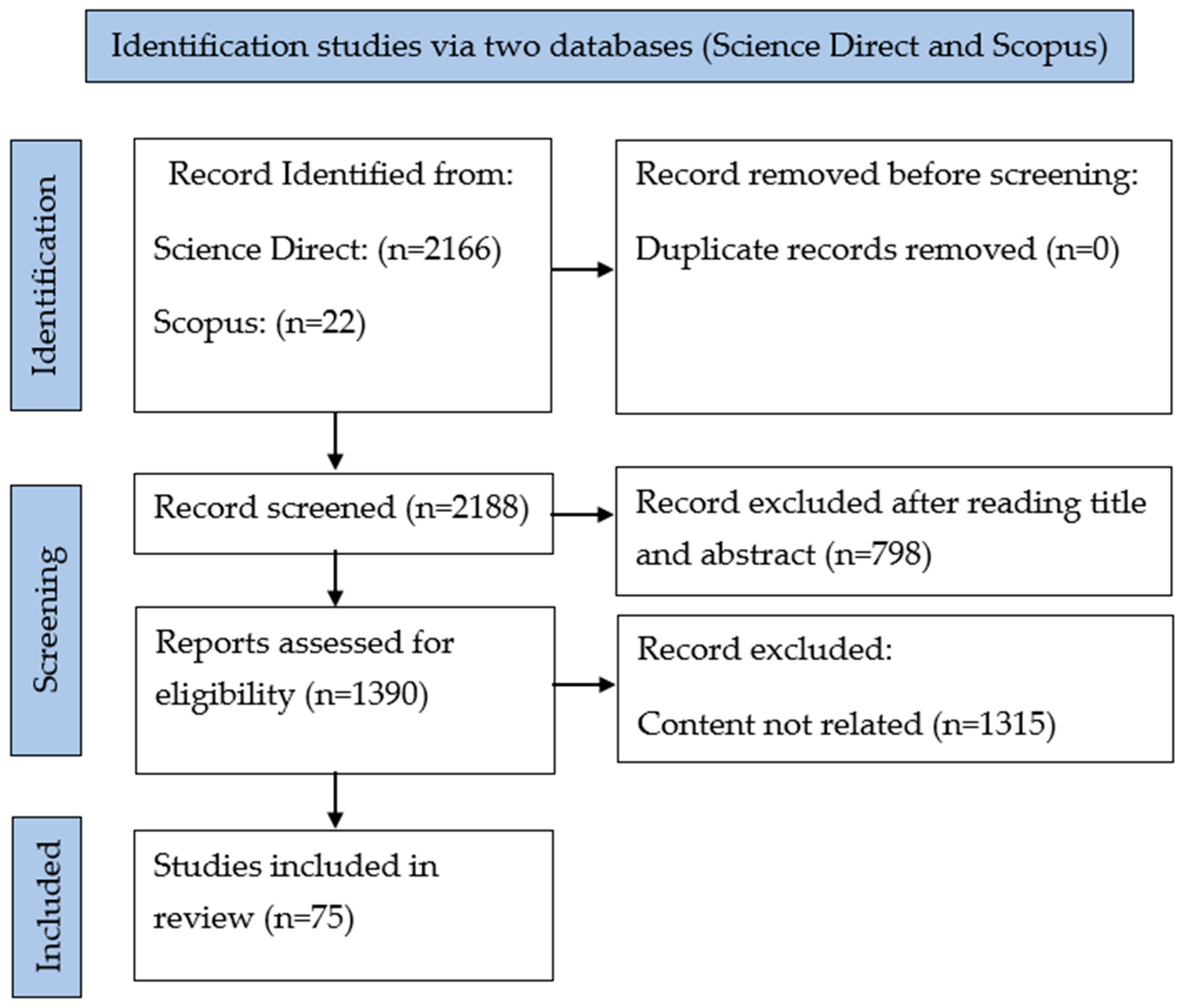
Figure 1. The PRISMA flow diagram with PRISMA 2020 Checklist in Supplementary Materials.
Urbansci 10 00079 g001
Figure 2. Keyword co-occurrence (each color represents a cluster).
Urbansci 10 00079 g002
Figure 3. The Arts-led Cultural Interaction and Sustainable Community Development framework.
Urbansci 10 00079 g003
Table 1. Inclusion and Exclusion Criteria.
InclusionExclusion
Peer-reviewed journal articlesNon-peer-reviewed sources (e.g., blogs, non-reviewed reports)
Publications in EnglishNon-English publications
Journals and conference papersWorking papers and organizational websites
Categories: Social sciences; arts and humanitiesCategories outside the selected fields.
Table 2. Search Term (Titles, Abstracts, and Keywords) From the Database.
DatabaseSearch Term (Titles, Abstracts, and Keywords) 2020–2025Total
ScienceDirectArt, Community, Tourist, Interaction, Local2166
Scopus22
Table 3. Selected Keywords in Each Cluster.
ClusterKeywords
1Community Engagement/Cultural Landscape
2Social–Ecological Systems/Green Spaces
3Communication/Social Media
4Co-creation/Residents
5Design/Innovation
6Artistic Interventions/Social Sustainability
7City Branding/Rural Revitalization
8Artists/Sharing Economy
Table 4. Comparative Analysis of Artistic Activities for Sustainable Cultural Heritage Tourism.
Journals/AuthorsDetailsFramework Connection
Activating rural infrastructures in regional communities: Cultural funding, silo art works, and the challenge of local benefit [10]City-centric rural cultural policy often fails to meet local needs. This study, using narrative inquiry, analyzes Australian rural silo art (e.g., Silo Art Trail) to understand its economic, social, and cultural impacts on revitalization, aiming to inform context-responsive policy. It reveals that diverse creative objectives yield varied outcomes.Validates Clusters 6–7 (Artistic Interventions/Rural Revitalization) by showing how public art transforms rural infrastructure into cultural assets. Supports community-responsive approaches yielding outcomes dependent on local engagement levels.
Exploring the perceptions and attitudes of residents at modern art festivals: The effect of social behavior on support for tourism [4]Tourism research often overlooks resident social behaviors. This study surveyed 1207 residents on 12 Japanese islands following the 2016 Setouchi Triennale to understand perceptions of tourism and inform strategic planning. Results categorized residents into four exchange/support groups: high positive, high exchange/low support (due to negative experiences), smallest/negative, and low exchange/high support (economic understanding).Provides empirical evidence for Clusters 1 and 4 (Community Engagement/Co-creation) through resident attitude analysis. Identifies four resident response categories, validating the importance of community perspectives in art-mediated tourism development.
Neo-endogenous revitalization: Enhancing community resilience through art tourism and rural entrepreneurship [9]Global rural communities face decline, with limited research on cultural revitalization via arts festivals. This mixed-methods study on Setouchi Triennale islands explored how socially engaged art revitalizes communities, focusing on neo-endogenous mechanisms and small business roles. It found external art festivals spark diverse internal community responses, and successful revitalization requires long-term collaborative creativity between external art development and internal community operations.Supports Clusters 2 and 6 (Social–Ecological Systems/Social Sustainability) by examining how art festivals create community development mechanisms. Demonstrates external art initiatives sparking internal community responses and long-term collaborative relationships.
Community cultural development: Exploring the connections between collective art making, capacity building, and sustainable community-based tourism [5]Many industrial cities lack community-led sustainable tourism practices, risking resource extraction. This research explored cultural processes via interviews in Central Appalachia to develop a community representation model and policy approaches fostering shared identity. Findings confirm that community culture development enhances tourism potential and sustainability through increased local participation, partnerships, ownership, and dialogue.Validates Clusters 4 and 6 (Co-creation/Artistic Interventions) by confirming that community culture development enhances tourism through increased local participation and ownership. Emphasizes collective art making and capacity building for sustainable tourism.
Analyzing and visualizing the spatial interactions between tourists and locals: A Flickr study in ten US cities [28]Urban tourism creates shared spaces, but tourist–resident interaction patterns are unclear. This study used Flickr data (YFCC100M) in 10 major US cities to map spatial patterns and interactions. Results: tourists outnumbered residents 3–8×, yet residents uploaded more photos (NYC, San Francisco led). Photo volume correlated with attractions, and activity density varied significantly across urban areas for both groups.Supports Clusters 3 and 5 (Communication/Innovation) by demonstrating digital platform applications for mapping tourist–resident interactions. Validates systematic analysis approaches for understanding collaborative processes in cultural tourism contexts.
Table 5. Theories and Concepts Supporting Co-creation for Cultural Heritage Preservation.
Theories and AuthorsDetails
Value Co-creation [64]
  • Co-creation involves multiple actors integrating resources and participating in service exchange. It forms the foundation for markets and contributes to mutual well-being.
Value Co-creation in Tourism Living labs [70]
  • Tourism is an ecosystem where stakeholders (suppliers, visitors, residents, DMOs, entrepreneurs) co-create valuable experiences through a collaborative mindset and parity-based partnerships.
Co-creating in Innovation for Sustainability [71]
  • Co-creation is a key instrument for innovation and addressing sustainability challenges. Tourism SMEs collaborate with local stakeholders to generate socio-cultural sustainability benefits.
Participative Co-creation [72]
  • Co-creation is an effective means of creating meaningful interpretive experiences at cultural tourism sites, allowing tourists and providers to engage creatively with heritage.
Table 6. Theoretical Foundations of Artistic Interventions in Cultural Heritage Tourism.
Theories and AuthorsDetails
Artistic Interventions for Urban Innovation [84]
-
Artistic interventions act as catalysts for urban transformation by creating new forms of engagement. However, they may contribute to gentrification and citizen exclusion.
Artistic Intervention as Citizen Empowerment [85]
-
Artistic interventions in public spaces empower residents to pursue shared interests and take direct action in shaping their environment.
The Typology Theory of Political Artistic Interventions [86]
-
Five types of interventions: (1) Aestheticization for beautification, (2) Social Communication for community cohesion, (3) Breaching Experience for critical reflection, (4) Protest for challenging power structures, (5) Utopian Experimentation for alternative visions.
Artistic Intervention for Urban Emotional Well-Being [87]
-
Interaction with artistic interventions reduces anxiety, stress, and negative mood. Improvements are associated with aesthetic quality, including beauty and meaningfulness.
Disclaimer/Publisher’s Note: The statements, opinions and data contained in all publications are solely those of the individual author(s) and contributor(s) and not of MDPI and/or the editor(s). MDPI and/or the editor(s) disclaim responsibility for any injury to people or property resulting from any ideas, methods, instructions or products referred to in the content.