
Article

Urban Air Quality Under Local Emissions and Long-Range Transport: A Dual City European Analysis

by
Fernanda Oduber
1,*,
Elwira Zajusz-Zubek
2,
Catia Gonçalves
1,
Carlos Blanco-Alegre
1,
Estela D. Vicente
3 and
Roberto Fraile
1
1
Department of Applied Chemistry and Physics, Faculty of Biological and Environmental Sciences, University of León, Vegazana Campus s/n, 24071 Leon, Spain
2
Department of Air Protection, Faculty of Energy and Environmental Engineering, Silesian University of Technology, 44-100 Gliwice, Poland
3
Department of Environment and Planning, Centre for Environmental and Marine Studies (CESAM), University of Aveiro, 3810-193 Aveiro, Portugal
*
Author to whom correspondence should be addressed.
Urban Sci. 2026, 10(2), 105; https://doi.org/10.3390/urbansci10020105
Submission received: 15 December 2025 / Revised: 26 January 2026 / Accepted: 5 February 2026 / Published: 9 February 2026

Abstract

This study compares air quality in two European cities with contrasting characteristics during July–October 2024: Leon (Spain) and Gliwice (Poland). Concentrations of PM10, PM2.5, particulate matter chemical composition, and trace gases were analysed alongside meteorological data. The results show that both cities were influenced by local emissions, primarily from traffic, as well as by Saharan dust transport events. Leon, located closer to North Africa, experienced an intense dust intrusion episode with a PM10 peak of 116 µg m−3, whereas Gliwice reached 62 µg m−3. The comparison revealed differences in aerosol intensity and composition, which are determined by geographic location and atmospheric conditions. This analysis highlights the importance of integrating local and regional data to understand urban aerosol dynamics in Europe.

1. Introduction

The relationship among air quality, public health, climate change, and environmental sustainability has led to growing scientific and societal interest in urban and suburban environments [1]. Particulate matter (PM), particularly PM10 and PM2.5, is a significant air pollutant whose atmospheric presence has been linked to adverse health effects, including respiratory and cardiovascular diseases, as well as increased premature mortality [2,3].
The composition and concentration of atmospheric aerosols are determined by a combination of local sources, such as road traffic, biomass combustion, industrial activity, and domestic heating, as well as regional or long-range sources, including the transport of mineral dust from arid regions [4,5]. Saharan dust intrusions are a significant atmospheric phenomenon in Europe, as they can alter particulate concentrations, even in areas far from North Africa [6,7].
During the summer and early autumn, favourable meteorological conditions, such as atmospheric stability, intense solar radiation and air circulation patterns, lead to the accumulation of pollutants and the transport of dust-laden air masses from the Sahara to Europe [8]. These events increase PM10 and PM2.5 concentrations and alter the chemical composition of aerosols. Recent studies have shown that dust intrusions from the Sahara not only negatively affect air quality, but also aggravate respiratory and cardiovascular diseases. Linares et al. (2021) [9] analyzed nine Spanish regions during the pandemic and concluded that the advection of mineral particles from the Sahara not only raises PM levels but also contributes to the severity of COVID-19. On the other hand, Georgakopoulou et al. (2024) [10] report that Saharan dust episodes transport mineral particles capable of travelling long distances and affecting respiratory health in southern Europe, with documented increases in the incidence and exacerbations of asthma and chronic obstructive pulmonary disease during these episodes. Similarly, a 2025 study shows that Saharan dust intrusions significantly increase the particle load over large areas of Europe, including France, Germany, Austria, and Eastern Europe, reinforcing the role of mineral dust as a key modulator of atmospheric phenomena [11].
In addition to meteorological factors and emission sources, geographical location and urban characteristics play a key role in atmospheric aerosol dynamics. Previous studies have shown that southern European cities, such as those located in the Iberian Peninsula, are more exposed to Saharan dust intrusions due to their proximity to North Africa and the influence of southern atmospheric circulation patterns [4,7]. León (Spain) has been the subject of research highlighting the impact of natural (mineral dust, bioaerosols) and anthropogenic (traffic, heating) sources on particulate matter composition [12,13]. On the other hand, cities in central and eastern Europe, such as Gliwice (Poland), present a different situation. Although they are farther away from the origin of Saharan dust, they can be affected by long-range transport events under specific atmospheric conditions, such as subsidence or cyclonic flows [14,15]. In addition, these regions tend to have higher industrial and traffic densities, which increase local pollutant loads, particularly during summer and autumn [16].
In this comparative context, during the summer, Leon records greater increases in PM during episodes of long-distance transport, especially under conditions conducive to dust intrusions and weather typical of the Iberian Peninsula. By contrast, Gliwice represents a Central European environment, with higher PM levels linked to local emissions (traffic, industry, heating).
Although numerous studies have examined these characteristics separately, no previous study has compared these two cities, which are approximately 2000 km apart. Furthermore, although remote sensing studies confirm that Saharan dust can reach Central Europe under specific atmospheric conditions, there is a lack of research quantifying its impact on cities such as Gliwice and comparing it with the effects of this type of phenomenon in cities closer to the natural source, such as Leon. This gap limits our understanding of how aerosol transport effects vary across European urban contexts.
In this context, the present study aims to analyse and compare the dynamics of summer air quality in two European cities that differ in their geographical and climatic characteristics: Leon and Gliwice. Both cities share a suburban environment and urban structure that allows the combined influence of local emissions and long-range transport phenomena to be assessed.
A parallel sampling campaign was conducted in Leon and Gliwice between July and October 2024 to investigate PM10 variability and the atmospheric response of two European urban environments to local pollution conditions and long-range dust transport events. This comparative framework allows the evaluation of differences in aerosol levels and temporal behaviour between the two cities. It also contributes to improving understanding of atmospheric processes that affect public health and to strengthening air pollution monitoring and mitigation strategies.

2. Methodology

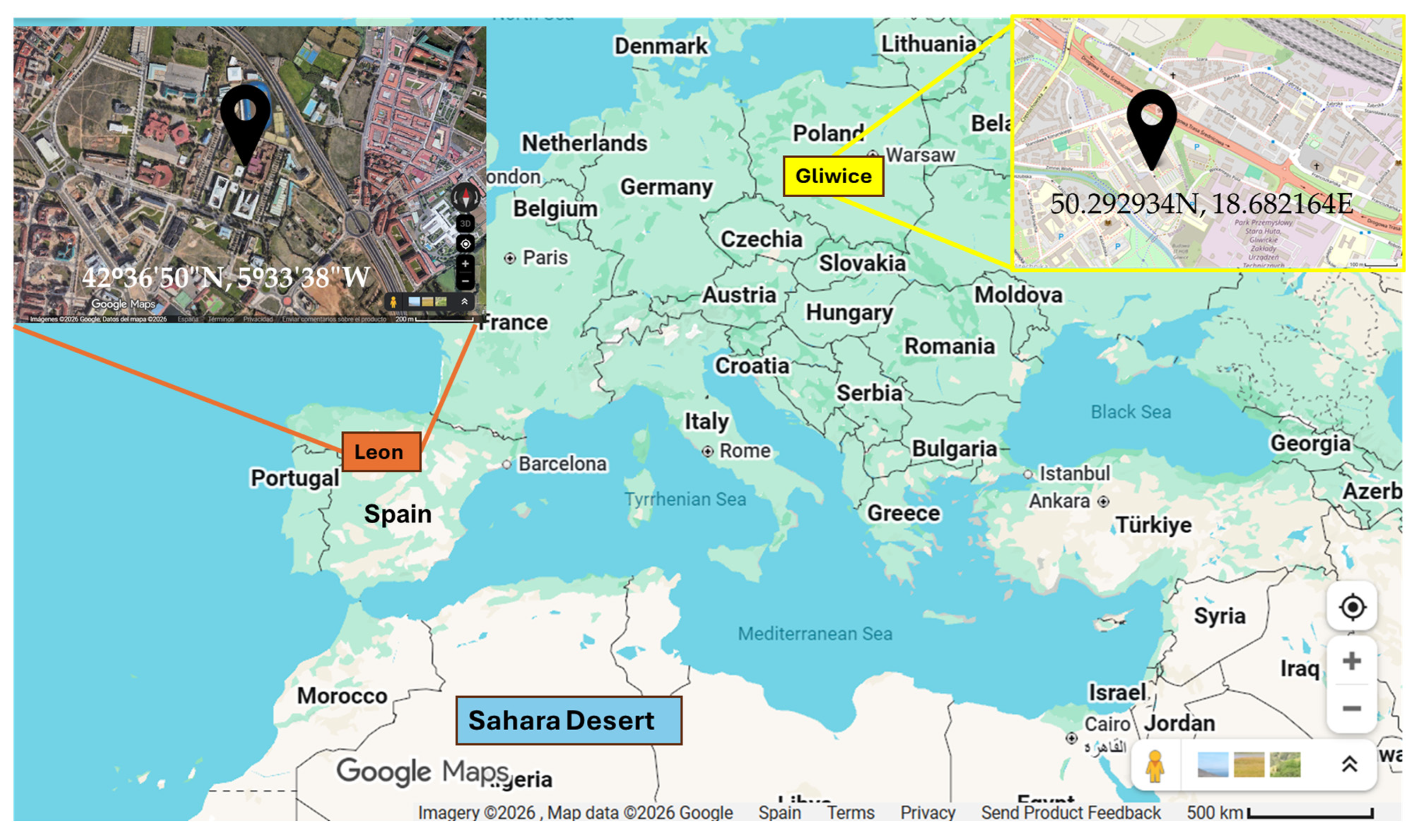
The sampling campaign was conducted in parallel between 17 July and 31 October 2024, in Leon (Spain) and Gliwice (Poland). Figure 1 shows the locations of the sampling sites and the Sahara Desert.

2.1. León, Spain

The collection of atmospheric particulate matter in Leon took place on the roof of the Faculty of Veterinary Sciences at the University of León (42°36′50″ N, 5°33′38″ W; 846 m above sea level) about 12 m above ground level. This site is classified as a suburban area located in the north-eastern sector of the urban area (see Figure 1) and is considered representative of suburban background conditions. Leon city is located in the north-west of the Iberian Peninsula (42°36′ N, 5°35′ W; 838 m a.s.l.) and is characterised by relatively homogeneous topography and continental weather conditions. According to data published by the Spanish National Statistics Institute (INE) for 2024 (www.ine.es (accessed on 25 July 2025)), the municipality had a population of 122,970.
Regarding emission source configuration, Leon is primarily residential, with no industrial facilities that emit large quantities of pollutants. Consequently, the atmospheric aerosol load is dominated by emissions from road traffic and domestic heating systems, especially during cold periods when atmospheric stability and increased heating fuel use favour the accumulation of pollutants on surfaces [12]. The sampling point is located in an urban area with constant traffic on surrounding roads, including two nearby bus stops. The surrounding area is occupied by university students, who vacate it during the summer months. A primary school is approximately 400 m away, and a health centre, with a continuous flow of pedestrians and vehicles on weekdays, is approximately 700 m away. The city centre of León is located southwest of the sampling point. To the east, approximately 200 m away, runs the city’s ring road, a busy thoroughfare that connects to several major access roads to the city centre.
PM10 samples were collected every 48 h starting at 1200 UTC, using a high-volume sampler (CAV-A/Mmb by MCV, SA, Barcelona, Spain, flow accuracy ≤ 2%) equipped with 150 mm-diameter quartz filters, on specifically selected days within the sampling months. A total of 8 samples were collected, following a design intended to capture conditions representative of the study period. Furthermore, meteorological parameters, including temperature, relative humidity, precipitation, and wind speed and direction, were recorded by an automatic weather station (Davis VANTAGE PRO2, Davis Instruments, Hayward, CA, USA) about 4 m from the PM sampling equipment.
Quartz fibre filters were used for PM10 gravimetric determination. Filters were conditioned for 48 h at 20 ± 1 °C and 50 ± 5% relative humidity before and after sampling, and PM10 mass was determined using a calibrated electronic semi-micro balance (Mettler Toledo, XPE105DR, Greifensee, Switzerland) with a sensitivity of ±0.00001 g. In addition, portions of the same filters were used to quantify organic carbon (OC) and elemental carbon (EC) using a thermo-optical method developed at the University of Aveiro (Portugal), following the procedures described by [17]. The uncertainty analysis of the concentrations determined showed values between 5% and 10%.
Water-soluble inorganic ions (Na+, K+, Ca2+, Mg2+, NH4+, Cl, SO42−, NO3 and NO2) were determined using solutions obtained from the aqueous extraction of filters. Each filter was eluted with 6 mL of ultrapure deionised water to obtain an extract for chromatographic analysis. Ionic concentrations were quantified by ion chromatography using a Thermo Scientific Dionex™ ICS-5000 (Thermo Fisher Scientific Inc., Waltham, MA, USA) device, operated under standard conditions, to separate anions and cations in the aqueous phase. Additionally, a separate portion of the quartz filters was used to quantify sugar compounds. This analysis was also performed by ion chromatography using the same ICS-5000 system, following the methodology described by [18]. The measured concentrations had uncertainties of 5–10%.
As complementary information, time-series data on air pollutants (PM2.5, PM10, SO2, NO2, NO, and CO) were obtained from the Castilla y León air quality monitoring network (http://www.medioambiente.jcyl.es/ (accessed on 10 May 2025)). These data were obtained from the LE01 urban traffic station, which is located in a residential area on Avenida San Ignacio de Loyola (42°36′14″ N, 05°35′14″ W), approximately 2.7 km southwest of the sampling point. This station is equipped with certified automatic analysers for the continuous monitoring of pollutants and provides a representative record of exposure conditions associated with urban mobility and road traffic. To determine PM, the network uses automatic methods equivalent to the gravimetric method established in standard EN 12341 [19], applying the mandatory correction factors when non-gravimetric methods are used. Campaigns are carried out using high-volume collectors with daily filters for the MCV CAV-A/M, equipped with PM10 heads and 15 cm-diameter filter holders. The sampling flow rate is 30 m3/h, in accordance with European regulations. This method involves the daily collection of a filter, which is subsequently analysed (weighed) at the Regional Environmental Quality Laboratory. Measurements are also taken in the same cabin using automatic PM10 equipment. The analytical equipment used is approved, and to guarantee maximum data reliability, the Network has a quality management system based on the ISO 9001:2015 standard [20]. During the second half of 2024, on-site calibration was carried out under ENAC (National Accreditation Entity) accreditation. To determine atmospheric gases, the reference methods mandatory in Spain according to Directive 2008/50/EC [21] are used: NO2/NOx: Chemiluminescence, SO2: UV Absorption, O3: UV Photometry, CO: Non-Dispersive Infrared Absorption (NDIR).

2.2. Gliwice, Poland

In Gliwice, sampling was conducted on the campus of the Silesian University of Technology (Gliwice, Konarskiego 20 B, 50.292934 N, 18.682164 E; Figure 1). According to the latest data from the Główny Urząd Statystyczny (GUS), the population of Gliwice, Poland, in 2023 was 169,915. The distance from the sampling point to the nearest housing estate was about 12 m. The following roads are in the vicinity of the measurement point:
  • from the northeast, at about 500 m—road DW902,
  • from the northwest, at about 450 m—road DW901,
  • in the west direction, at approximately 600 m—road DK78.
Approximately 600 m north of the sampling point, extensive railway infrastructure associated with Gliwice railway station, a central transport hub, is present. The area immediately surrounding the sampling site is a consolidated urban environment characterised by service buildings, a shopping centre and various multi-family residential complexes.
Data on atmospheric aerosol quality were obtained from measurements made using a mobile air pollution laboratory. The mobile laboratory is built on a Ford Transit chassis. It is equipped with: SO2—T100/Teledyne API analyzer (Teledyne API, San Diego, CA, USA), NOx—T200/Teledyne API analyzer (USA), O3—T400/Teledyne API analyzer (USA), CO—T300/Teledyne API analyzer (USA), CO2—T360/Teledyne API analyzer (USA), Teledyne API (USA), PM10/PM2.5 BAM1020 particle meter, WS 500 (Lufft/OTT HydroMet, Kempten, Germany) weather station, Envimet (Envimet Services Sp. z o.o., Kraków, Poland) intake services, Envimet Services calibration system, Envimet Services data logger with display and Envimet Services power supply system (Germany). This method enables on-site, real-time monitoring of air quality, providing valuable information on pollutants and weather conditions (i.e., wind velocity, temperature, relative humidity) in the study area.
The PM10 samples were collected from July to August 2024. PM10 samples were collected during 7-day sampling sessions, yielding a total of 14 samples. Blank filters were also included and stored within the sampling area. The samples have been collected with the Sequential Low Volume PM10 Sampler PNS 18T-DM 3.1 (Comde-Derenda GmbH, Stahnsdorf, Germany) at a flow rate of 2.3 m3 h−1, complying with EN 12341 The PM10 sampler was factory calibrated and verified in accordance with the manufacturer’s specifications and the requirements of EN 12341. The sampler inlet was installed at 1.5 m above ground level, corresponding to the human breathing zone. PM10 was collected continuously on high-purity quartz microfiber filters (QM-A, Whatman, Cytiva, Little Chalfont, UK). Quartz fibre filters were conditioned before and after sampling at 20 ± 1 °C and 50% ± 5% relative humidity for 48 h and subsequently, weighed using a calibrated microbalance (MXA5/1, RADWAG, Radom, Poland) with a readability of 1 μg. Blank filters were used to assess background contamination and weighing stability. All reported PM10 mass concentrations were above the relevant detection limits.
PM10 filter samples were microwave-digested in HNO3/H2O2 and diluted to 50 mL. Elements (Al, Cd, Co, Cr, Cu, Fe, Hg, Mg, Mn, Na, Ni, Pb, Sb, Se, Zn) were determined by Inductively Coupled Plasma–Optical Emission Spectrometry, ICP–OES [22,23] using a PerkinElmer Avio 200 (Waltham, MA, USA). Due to lower detection requirements, Pb was analysed by Inductively Coupled Plasma–Mass Spectrometry, ICP–MS [23] on a PerkinElmer ELAN 6100 DRC-e (Waltham, MA, USA) using the same digest solutions. Accuracy and potential matrix effects were evaluated using NIST SRM 1648a and matrix spikes. The LOD and LOQ for ICP-OES were around 0.1% and 0.1%, respectively, while for ICP-MS they were around 0.0005% and 0.005% respectively.
The analysis of organic carbon (OC) content was conducted using a thermal-optical carbon analyser for organic and elemental carbon (EC), manufactured by Sunset Laboratory Inc. (Tigard, OR, USA). For each series of actual samples, a field blank (blank sample) was analysed to verify the presence of OC. The limits for carbon analysis are between 5% and 10%.

2.3. Additional Data

The LOD and LOQ have been calculated from the standard deviation of the blank and the slope of the calibration curve, using 3σ/slope for the LOD and 10σ/slope for the LOQ [24].
Statistical data processing was performed using IBM SPSS Statistics v.24 (Armonk, NY, USA) and procedures appropriate for non-normal distributions. The nonparametric Kruskal–Wallis [25] test was applied to assess significant differences between the analysed groups, followed by Dunn [26] test. The correlation between atmospheric pollutant concentrations and meteorological parameters was assessed using Pearson’s parametric rank correlation method at the p < 0.05 significance level.
The origins of the air masses associated with the studied episodes were determined using backward trajectories. Three altitude levels representative of the lower and middle layers of the atmosphere were selected: 500, 1500 and 3000 m above ground level (agl). Daily 72 h trajectories were generated for each level. These trajectories were obtained using the HYSPLIT (Hybrid Single-Particle Lagrangian Integrated Trajectory) model [8,27,28], developed and maintained by the Air Resources Laboratory (ARL) of the National Oceanic and Atmospheric Administration (NOAA), a U.S. government agency. The dust forecast was obtained from the Spanish State Meteorological Agency, AEMET, (SDS-WAS) daily dust products portal (https://dust.aemet.es/ (access on 25 July 2025)) [5].
Additionally, R software v.4.5.1 (with the Openair package) was used for the statistical analysis of PM10 concentrations [29,30]. To calculate the PSCF (Potential Source Contribution Function), HYSPLIT back trajectories were combined with the daily PM10 series. High PM10 episodes were defined using the 60th percentile, and a flexible ±1-day window was applied between the arrival of the trajectories and the observed concentrations. To reduce the influence of cells with limited data, Polissar-type weighting [31] was applied, and the final weighted PSCF map was generated.

3. Results and Discussion

3.1. Meteorological Considerations

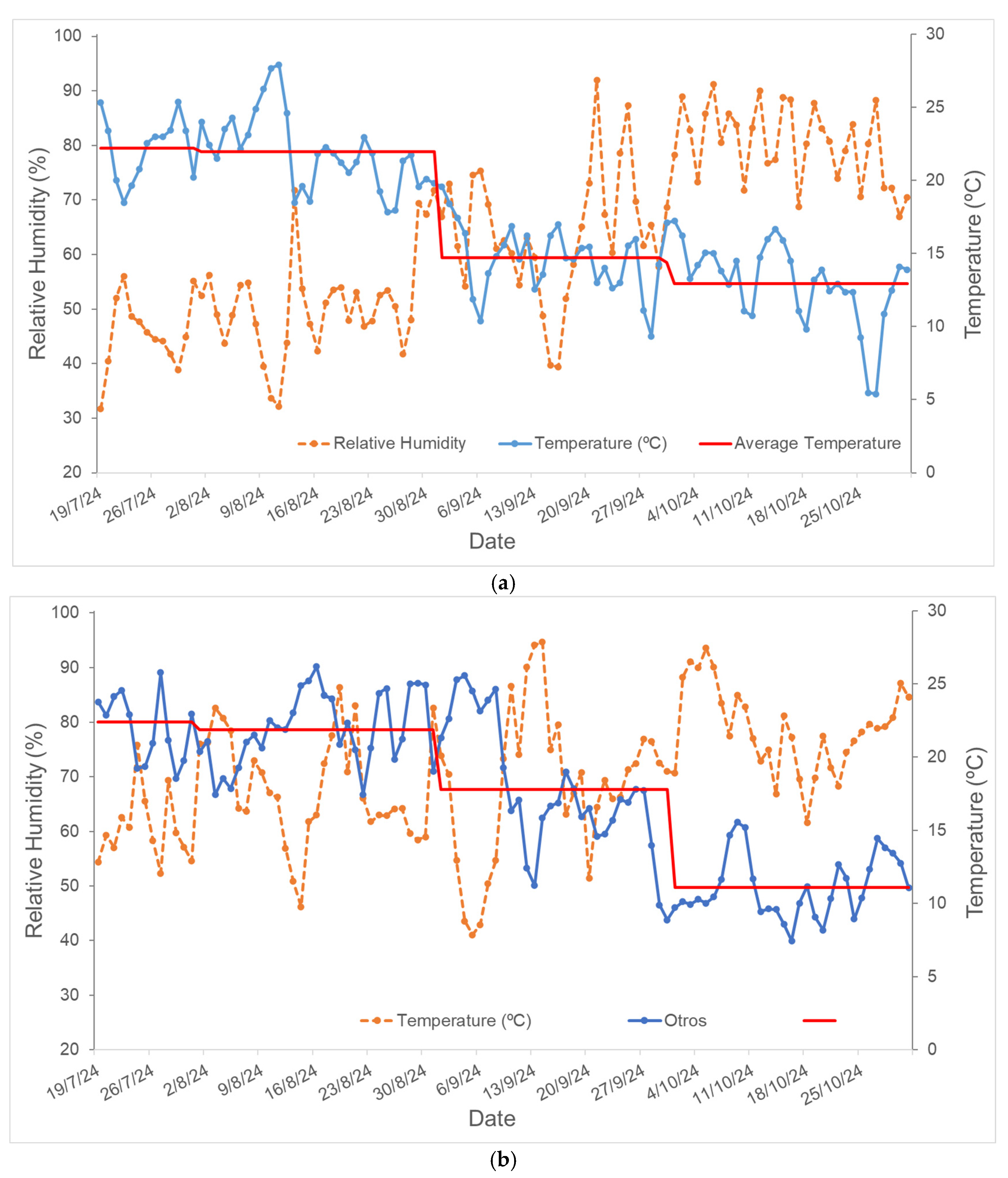
During the sampling period, the mean temperature in Leon was 17 ± 5 °C. The highest temperature, 28 °C, was observed in August, and the lowest, 5 °C, in October. The mean temperature was 22 ± 3 °C in August 15 ± 2 °C in September, and 13 ± 3 °C in October (Figure 2a). Relative humidity ranged from 92% on 21 September to 32% on 11 August.
In Gliwice, the mean temperature during the sampling period was 18 ± 5 °C, comparable to that recorded in León during the same period. The maximum temperature of 26 °C was observed in August, whereas the minimum temperature was 7 °C in October. The mean temperature in August was 22 ± 2 °C, in September it was 18 ± 4 °C, and in October it was 11 ± 2 °C (Figure 2b). The relative humidity ranged between 41% and 95% (both in September).
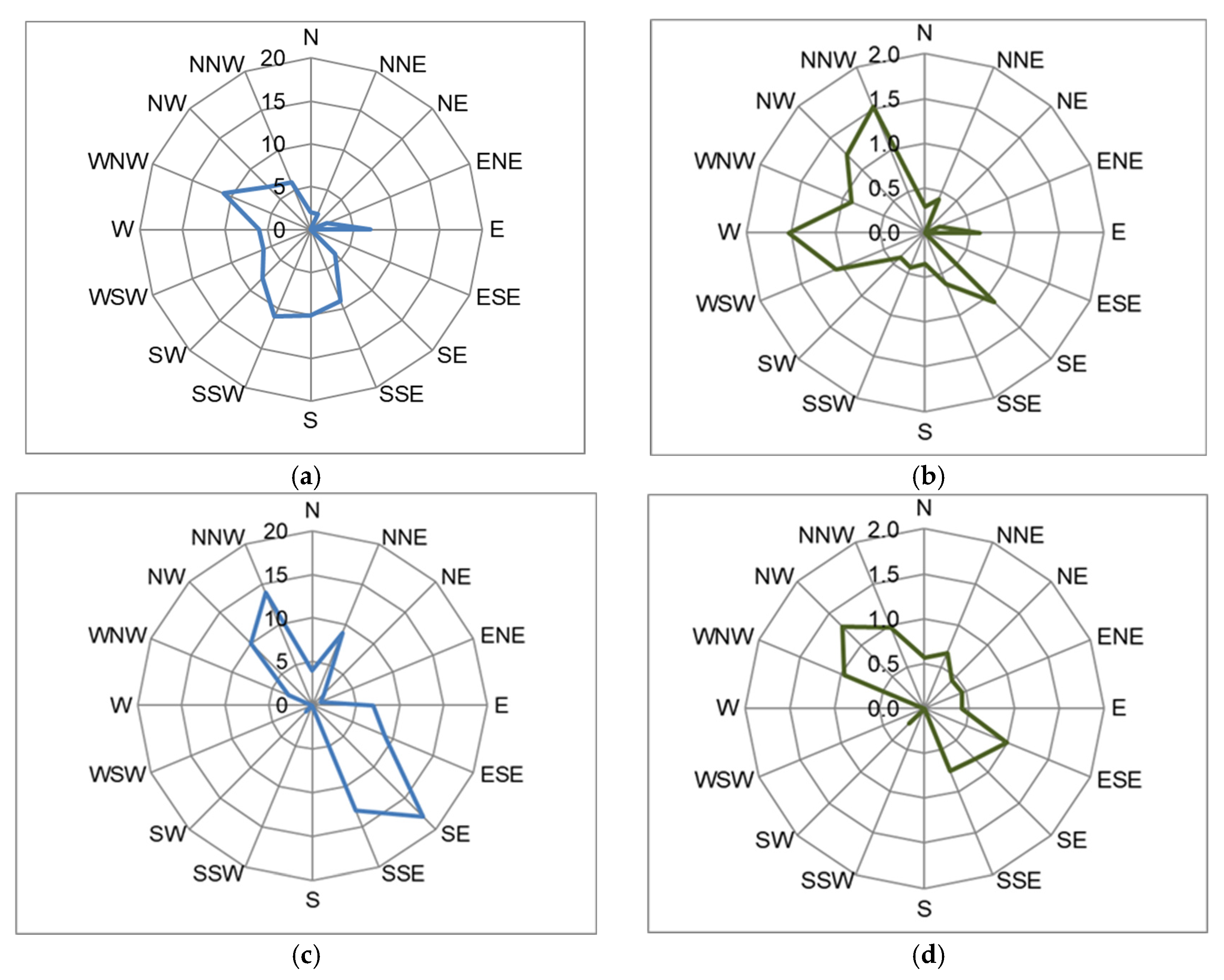
As is customary in Leon during the sampling period, winds originate from the third and fourth quadrants, i.e., the predominant directions are around SSW and WNW (Figure 3a). From W and NNW, the most intense winds blow, while those from the first quadrant are remarkably light (Figure 3b). Furthermore, in Gliwice, winds originate from the second and fourth quadrants, with predominant directions toward SE and NNW (Figure 3c). The most intense winds blow from NW and ESE (Figure 3d).

3.2. Atmospheric Aerosols

Table 1 presents the average concentrations of particulate matter (PM) and atmospheric gases in the cities of Leon (Spain) and Gliwice (Poland) for the entire sampling period and by month.
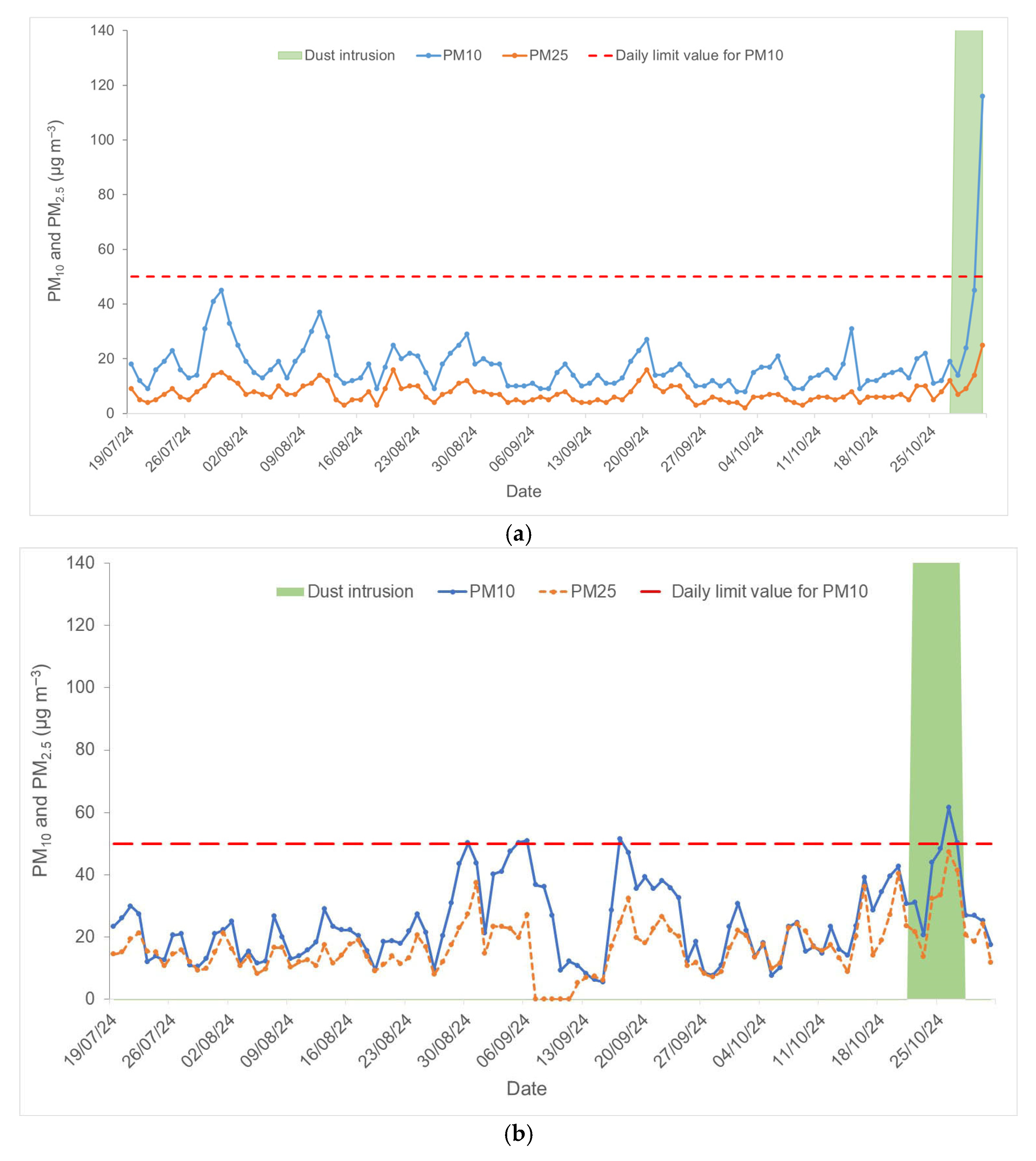
The mean daily PM10 value in Leon was 18 ± 12 µg m−3, and the mean PM2.5 concentration was 7 ± 3 µg m−3 (Table 1). Comparable results were observed in previous works, with a mean annual PM10 mass concentration of 23 ± 8 µg m−3 [12]. PM10 and PM2.5 concentrations differ significantly across months (p < 0.05). PM10 concentrations ranged from 8 µg m−3 (1 and 2 October) to 116 µg m−3 (31 October), being the only day in which the daily PM10 limit of 50 µg m−3 was exceeded (Figure 4a) due to an intrusion of dust from the Sahara that reached the northwest of the peninsula.
The carbonaceous fraction shows a mean OC concentration of 18 ± 5 µg m−3, while EC concentration was 1.8 ± 0.8 µg m−3 (Table 1). During the summer in Leon, road traffic emissions decrease, and OC emissions are attributed to bioaerosol emissions [12,13]. The concentration of mannitol and glucose (mean concentrations of 0.16 ± 0.05 µg m−3 and 0.3 ± 0.3 µg m−3, respectively) are positively correlated (p < 0.05), confirming that they have a common origin, emitted as primary biogenic aerosol particles [18,32,33]. Sulphate and calcium concentrations (mean concentrations of 0.8 ± 0.4 µg m−3 and 0.3 ± 0.1 µg m−3, respectively) are positively correlated (p < 0.05), suggesting that there is a contribution from dust source emissions. During the summer, the arrival of dust from Saharan outbreaks and soil resuspension is more frequent, thereby increasing concentrations of these elements [12]. Nitrate concentration (mean of 0.2 ± 0.1 µg m−3) is positively correlated with levoglucosan and mannosan concentrations (mean of 0.03 ± 0.01 µg m−3 and 0.04 ± 0.02 µg m−3, respectively). The presence of these anhydrosacharides is usually associated with biomass-burning emissions [34,35], originating from events that are more frequent in the northwest of the Peninsula during the summer months.
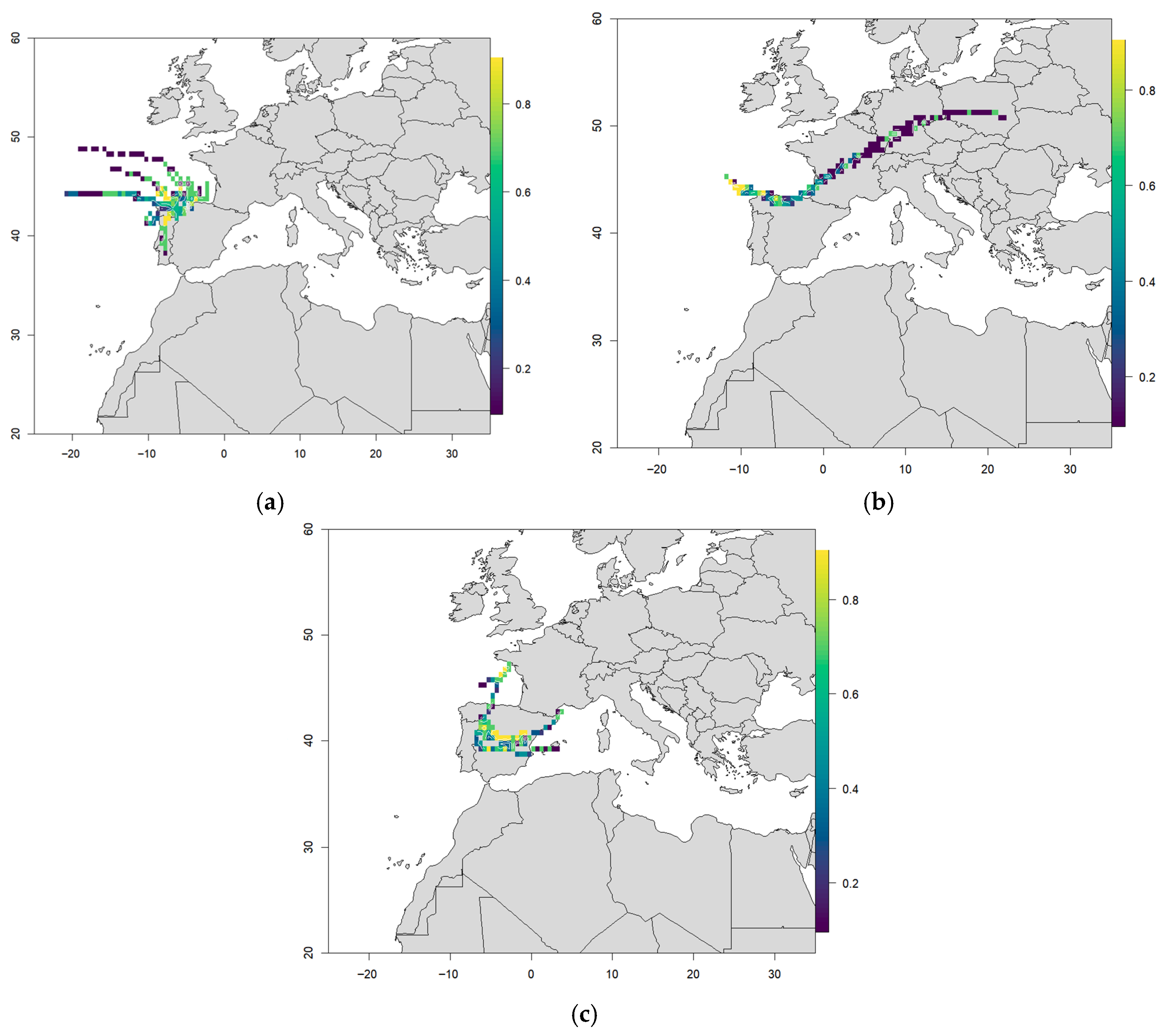
The PSCF maps in Figure 5 were produced to identify probable source regions contributing to PM10 levels in Leon. In August, the PSCF showed dominant trajectories, with PM10 probabilities greater than 0.8 from the Atlantic and the northwest of the peninsula (Figure 5a), consistent with greater influence from marine aerosols and local biogenic sources. In September, air masses from western and central Europe produced maximum probabilities of 0.6 (Figure 5b), typical for this time of year. Finally, in October, the PSCF identified source regions in the south of the peninsula (Figure 5c), confirming that the most intense episode recorded (31 October) was associated with a Saharan intrusion.
In Gliwice (Poland), the mean PM10 concentration was 24 ± 12 µg m−3, and that of PM2.5 was 18 ± 8 µg m−3, values consistent with previous studies and slightly higher than those recorded in Leon. These differences are statistically significant between the two cities (p < 0.05). This result is particularly relevant, as the new regulations approved in 2024 [36] set stricter 2030 limits (PM2.5: 10 µg m−3; PM10: 20 µg m−3), meaning that the average concentrations observed in Gliwice would already exceed the future legal limits. The maximum PM10 concentration was observed on October 26, at 62 µg m−3, exceeding the permitted daily limit value for PM10 (Figure 4b) due to an intrusion of Saharan dust into Poland. This limit was also exceeded on September 6 and 16. The minimum PM10 concentration was recorded on 15 September at 6 µg m−3. PM10 concentrations show no significant differences across months, whereas PM2.5 concentrations show significant differences (p < 0.05).
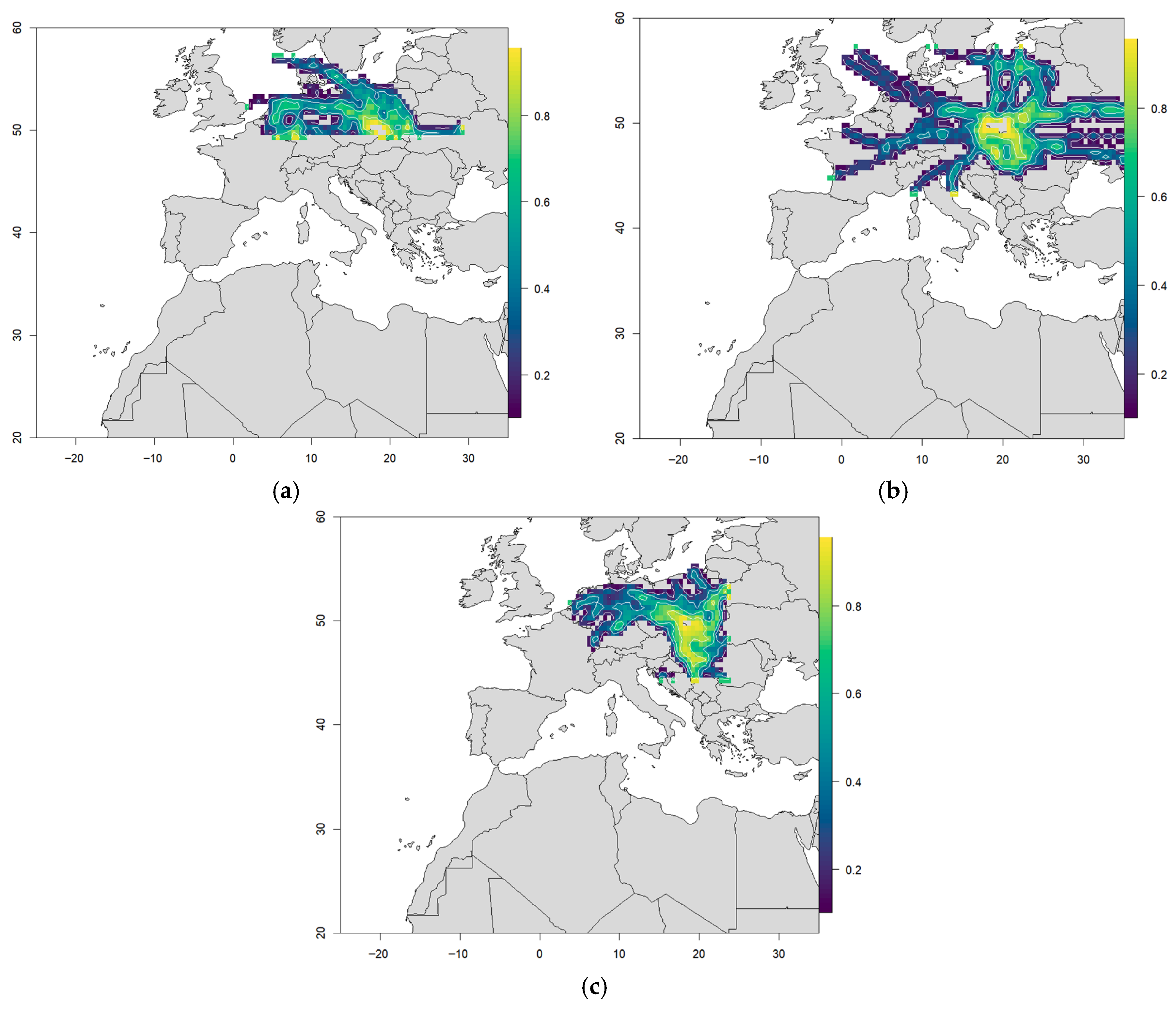
The PSCF maps for Gliwice (Figure 6) show that, during August and September, PM10 episodes were dominated by air masses from western and central Europe. In October, the PSCF indicates a majority contribution from central Europe, with no clear signal of transport from North Africa. Although the PSCF does not identify a dominant Saharan corridor in October, the exceptional episode on October 26, when 62 µg m−3 was reached, was associated with a one-off intrusion of Saharan dust affecting Poland. This behaviour explains why October has a single significant peak that is not represented as a dominant pattern in the monthly PSCFs.
The mean OC concentration was 7 ± 4 µg m−3, while the mean EC concentration was 1.5 ± 0.6 µg m−3. A higher organic-to-elemental carbon ratio in the air indicates a predominance of natural or secondary sources over direct combustion sources, which may reflect an atmosphere less affected by fossil-fuel-intensive human activities [37]. Higher OC concentrations were observed between 26 August–2 September (7.8 µg m−3), between 2–9 September (8.6 µg m−3), between 16–23 September (12.8 µg m−3), between 14–21 October (14.3 µg m−3) and between 21–28 October (15.6 µg m−3). The increase in OC concentrations coincides with an increase in PM10 concentrations (Figure 5b), likely due to long-range transport. Additionally, an increase of more than 50% in the concentrations of Al (mean concentration 0.4 ± 0.3 µg m−3), Fe (mean concentration 0.6 ± 0.4 µg m−3), and Mg (mean concentration 0.2 ± 0.1 µg m−3) was recorded during these days. The strong positive correlation (p < 0.05) among these elements suggests a common origin, typically associated with natural sources such as mineral dust.
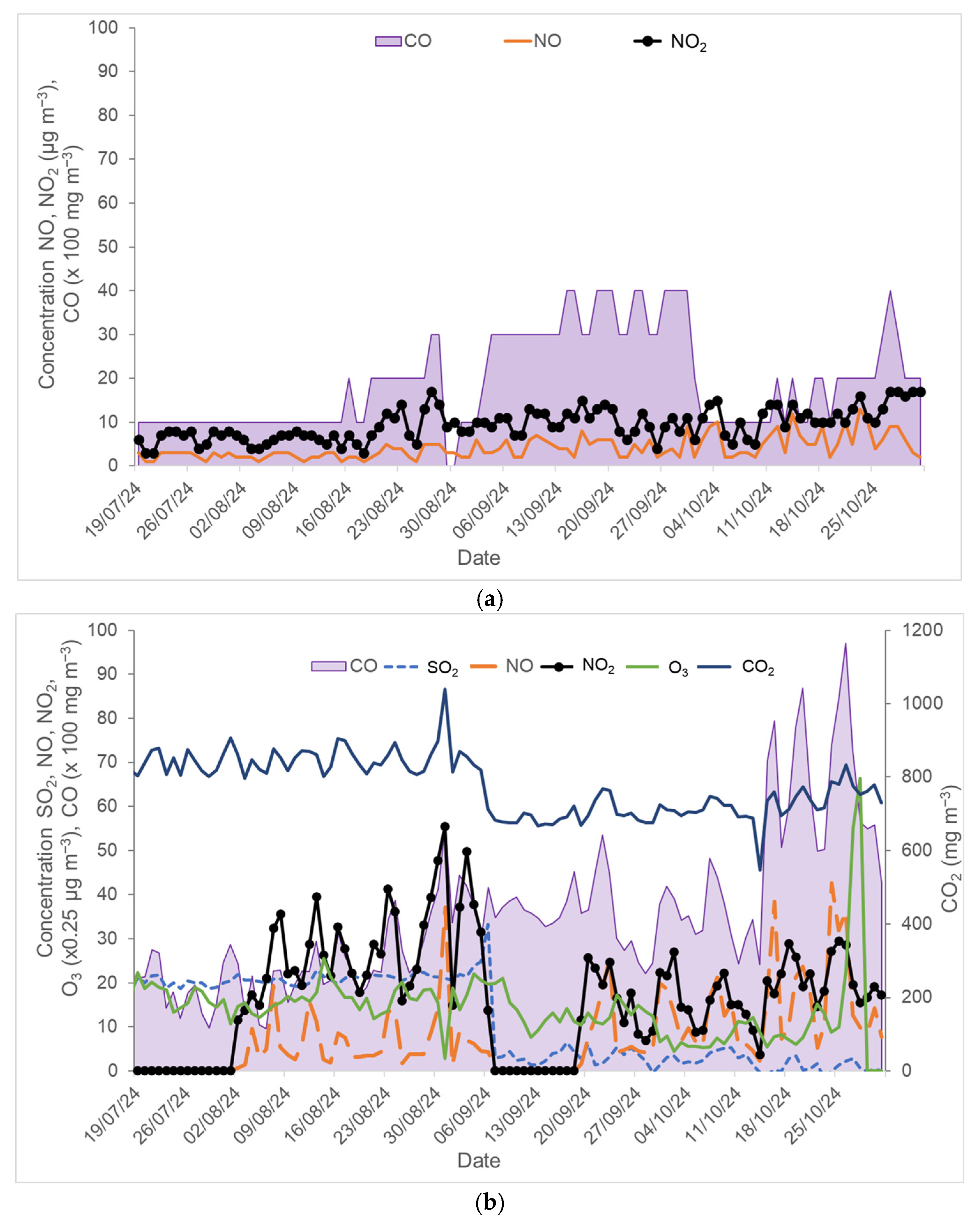
In Leon, the concentrations of gaseous pollutants increased in September and October compared to August (Figure 7a). Furthermore, the concentrations of these pollutants are positively correlated (p < 0.05), suggesting a common origin, likely to be the burning of fossil fuels. Emissions from the traffic source increased during these months due to the end of the holiday season and the start of the school term [13].
The evolution of gaseous pollutant concentrations in Gliwice shows higher concentrations of SO2, NO2, O3 and CO2 in August (Figure 7b). These pollutants are positively correlated (p < 0.05). Emissions of SO2, NO2, and CO2 are linked to the combustion of fossil fuels and industrial processes, and these pollutants are attributable to emissions from nearby roads and the vicinity of the Gliwice railroad station. On the other hand, SO2 and NO2 contribute to the formation of secondary aerosols, which are more frequent during summer, when solar radiation is stronger. Furthermore, NO2 is crucial for the formation of tropospheric ozone, a secondary pollutant; thus, increases in atmospheric NO2 concentration have contributed to increases in O3 concentration [38,39].

3.3. Long-Range Transport Episodes

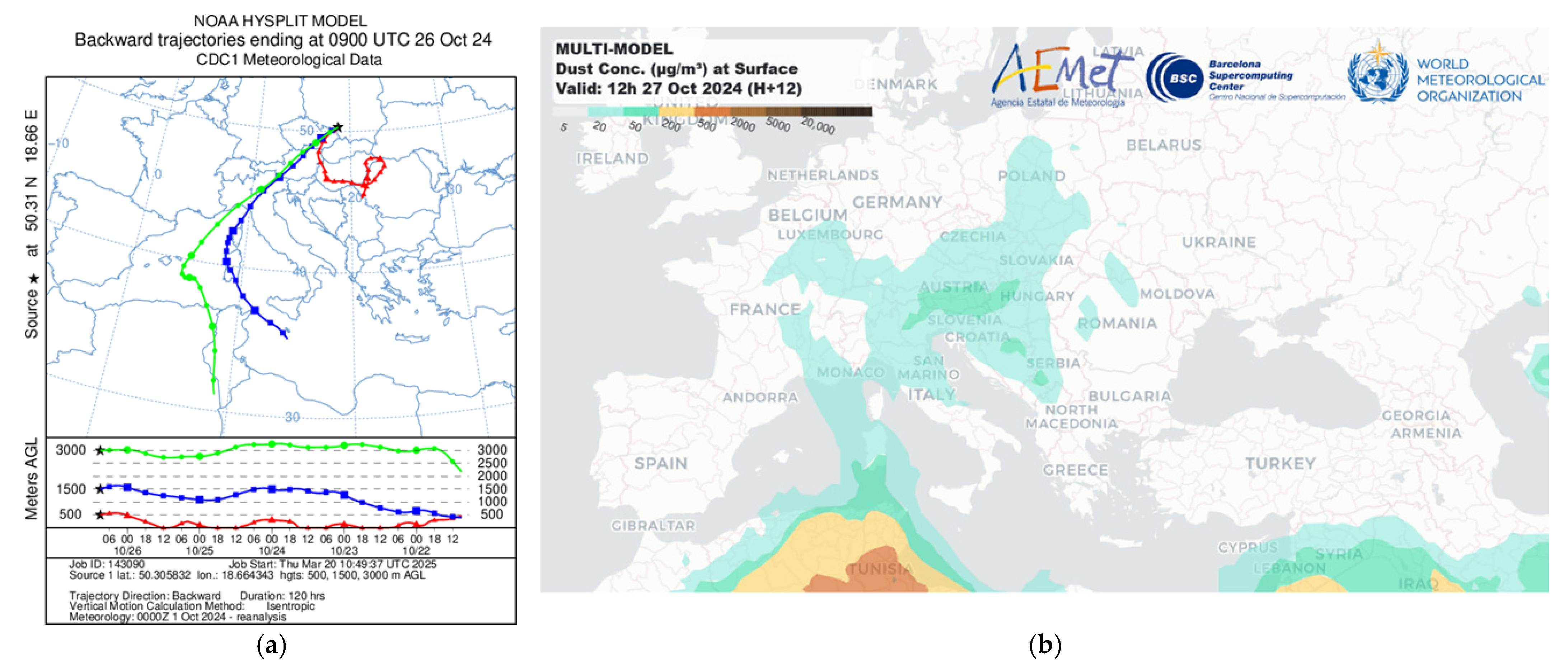
Between 22 and 27 October 2024, the long-range transport of Saharan dust towards Poland was observed, with a significant contribution at mid and upper-atmospheric levels (1500–3000 m). This dust subsequently descended to the surface. Back-trajectory analysis shows that, at 3000 m above ground level (agl), the air comes from the southwest, passing through the central Mediterranean and North Africa (Figure 8a). This could imply the presence of either Saharan dust or drier air. The dust concentration map (Figure 8b) shows low but detectable concentrations in southern Poland, including the Gliwice region. This resulted in the daily PM10 limit being exceeded on 26 October 2024 (PM10 concentration of 62 µg m−3). Furthermore, data extracted from the AEMET daily dust products portal (dust.aemet.es) shows how Dust Optical Depth (DOD) evolved at the Warsaw_UW station during the last week of October 2024. 26 and 27 October stand out as having the highest DOD values, reaching up to 0.15, indicating a higher dust concentration in the atmosphere. The remaining days (25, 28–31 October) exhibit low values near zero. The increases in Al (77%), Mg (22%), Na (19%), and Fe (30%) concentrations confirm the dust contribution to PM10 during 21–28 October 2024.
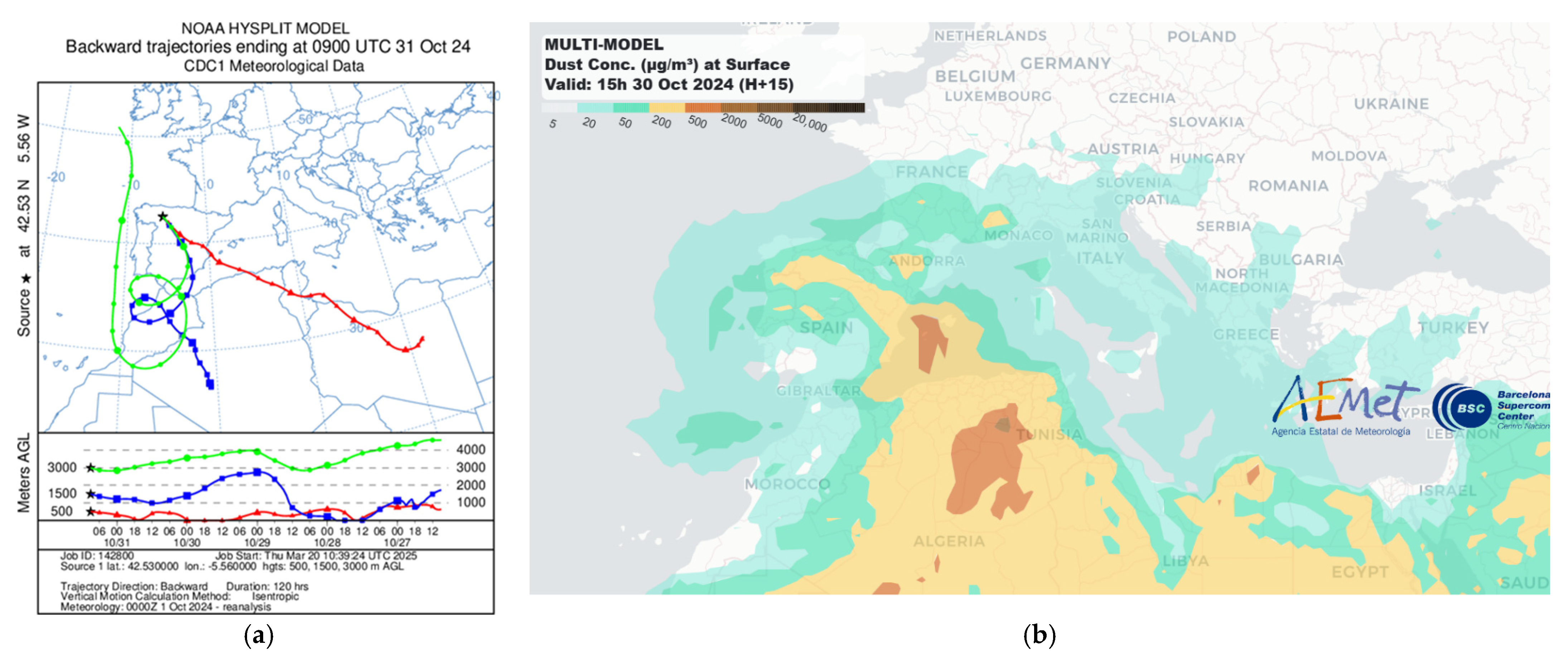
Leon city was also affected by a long-range transport event in late October 2024. The back trajectories for 31 October over Spain show a complex mixture of locally recirculating air in the lower atmosphere and Atlantic maritime air at higher altitudes (Figure 9a). There is also a surface layer of East African origin that could affect air quality or trigger unusual meteorological conditions. The three trajectories show that the air that reached north-west Spain on 31 October came from the south, with components extending into North Africa and the western Mediterranean. The trajectory at 3000 m (agl) is the most extensive, indicating air transport from more distant regions, potentially including the Sahara. The 500 m and 1500 m (agl) trajectories also show a southern origin, suggesting that Saharan dust may have been transported at distinct atmospheric levels. Figure 9b shows a map of Spain with surface dust concentrations. It shows that on the afternoon of 30 October, Leon was directly influenced by the core of the Saharan dust intrusion event. The surface concentration was higher than on previous days, as evidenced by the rise in PM10 concentration observed between 30 and 31 October 2024 in the city of Leon (peaking at 116 µg m−3). DOD data from the AERONET network indicates a progressive increase in aerosol loading since 28 October, peaking on the 30th at approximately 0.25, corresponding to high atmospheric opacity due to dust.
Although both cities were exposed to the same atmospheric phenomenon of African origin, the intensity, impact, and local conditions varied significantly. Air mass trajectories indicated transport from North Africa, although in Gliwice, the dust travelled through higher layers for longer periods. In both cities, the recommended daily threshold for PM10 concentration was exceeded, indicating potential health risks, particularly for vulnerable populations. León experienced a more pronounced effect, with PM10 concentrations exceeding the permitted limit by more than double, suggesting a higher surface dust load. In Gliwice, PM10 concentration reached 62 µg m−3, exceeding the daily limit (50 µg m−3), but at a lower intensity than in Leon. Leon is located on the Iberian Peninsula, close to North Africa. Its location facilitates the direct arrival of Saharan dust-laden air masses, especially when low-pressure systems in the Atlantic generate southerly flows. Gliwice, by contrast, is located in Central Europe, much farther from the Sahara. For dust to reach this region, specific atmospheric conditions are required, such as high-altitude transport and cyclonic circulation that carries the dust towards northern and eastern Europe.
It is important to note that the broader European atmospheric context supports interpreting these late October events not as isolated anomalies but as part of a wider seasonal pattern. The air quality assessment carried out by the European Environment Agency in 2024 [40] highlights that Europe experienced persistent exceedances of PM standards in 2022–2023, with dust-related episodes playing a significant role, particularly in southern and central regions. These assessments place the July–October 2024 sampling period within a few months characterised by increased susceptibility to long-range dust intrusions due to increased atmospheric instability and air-mass exchanges between the Mediterranean and Africa.
In addition, the CAMS Air Quality Assessment for 2024 [41] reports that the continent experienced its hottest summer on record, followed by notable pollution episodes in late summer and early autumn. These conditions favour the uplift and long-distance transport of Saharan dust, especially during transitions from warm to colder regimes, precisely the period when the intrusion events studied occurred. This is consistent with the atmospheric patterns reconstructed in this study and suggests that the dust episode that affected León and Gliwice corresponds to an intensification of broader seasonal anomalies rather than a sporadic phenomenon.

4. Conclusions

This comparative study, conducted between July and October 2024, examined the seasonal dynamics of air quality in two European suburban environments with contrasting geographical, climatic, and socioeconomic conditions: Leon (Spain) and Gliwice (Poland). The results demonstrate that concentrations of particulate matter (PM10 and PM2.5) and trace gases in both cities are influenced by local sources, such as road traffic and industrial activity, as well as by long-range transport. However, these processes are not independent of the urban context. The interaction between Saharan dust intrusions and local emissions is particularly relevant in urban and suburban areas, where urban configuration and mobility patterns determine the dispersion, accumulation, and transformation of atmospheric aerosols. In both León and Gliwice, the combination of anthropogenic emissions typical of urban environments and transboundary contributions produces air quality scenarios whose intensity and persistence are influenced by urban development and planning decisions.
During the study period, the mean PM10 concentration in Leon was 18 ± 12 µg m−3, which was lower than the concentration recorded in Gliwice (24 ± 12 µg m−3). Concentrations in Gliwice were more consistent with several instances of the daily threshold being exceeded. The aerosol chemical composition in Leon reflected the strong influence of biogenic sources, evidenced by a high OC/EC ratio (10) and positive correlations between OC, mannitol, and glucose. Additionally, the contribution of aerosols from forest fires, which are frequent in northwestern Spain during the summer, was identified, as evidenced by correlations among nitrate, levoglucosan, and mannosan. By contrast, an apparent influence of industrial and traffic emissions was observed in Gliwice, with positive correlations among SO2, NO2, O3, and CO2 indicating the presence of dominant anthropogenic sources.
Evidence suggests that local emission sources significantly influence aerosol concentrations in both cities, linked to fossil-fuel combustion associated with road traffic, particularly prevalent during September and October.
Both cities were affected by the Saharan dust intrusion event recorded at the end of October, although with different intensities. Due to its closer proximity to North Africa, Leon experienced a higher surface dust load, with PM10 concentrations reaching up to 116 µg m−3. Although further away, Gliwice also recorded a deterioration in air quality, with a maximum of 62 µg m−3. These cases demonstrate Saharan dust’s ability to affect regions far from its source and underscore the importance of monitoring, modelling, and prediction systems to anticipate such events and mitigate their impact on public health.
This analysis shows that the same atmospheric phenomenon can have different impacts depending on geographic location, local meteorological conditions, and aerosol transport intensity. Integrating physicochemical, meteorological, and atmospheric modelling data is essential for understanding the dynamics of atmospheric dust and its influence on air quality across European regions.
This study shows that the same atmospheric phenomenon can manifest itself in very different ways, depending on geographical location, local weather conditions, and the intensity of aerosol transport. The combination of physicochemical information, meteorological data, and atmospheric modelling is essential for understanding the processes that govern dust movement and its impact on air quality across different regions of Europe.
The atmospheric anomalies recorded between July–October 2024 suggest that the episodes analysed are part of a regional dynamic characterised by more efficient transport of Saharan dust to mid-latitudes. In a global warming scenario—which favours warmer summers and the persistence of meridional circulations on the continent—it is plausible that the frequency and intensity of these intrusions will increase in the future. This context reinforces the need to consider climate change as a modulating factor in mineral dust pollution.
On the other hand, there remains a significant gap in quantifying the specific effects of intrusions on public health in cities far from the emission source, such as Gliwice. To make progress in this area, studies would be needed that extend sampling to winter and even annual periods.
Overall, the results underscore that urban air quality depends not only on local emissions management but also on regional transport phenomena. Models capable of anticipating episodes of Saharan intrusion are essential to minimise their health impacts, especially among the most vulnerable groups. Thus, mitigation strategies must integrate both local measures—aimed at controlling traffic, industry, and domestic combustion—and a precise understanding of cross-border contributions if the air quality standards established by the European Union are to be met.

Author Contributions

Conceptualization, methodology, formal analysis, investigation, visualization, writing—original draft preparation, project administration, funding acquisition, F.O.; conceptualization, funding acquisition, validation, methodology, project administration, writing—review and editing, E.Z.-Z.; methodology, investigation, writing—review and editing, C.G., C.B.-A. and E.D.V.; supervision, investigation, visualization, writing—original draft preparation, R.F. All authors have read and agreed to the published version of the manuscript.

Funding

The sampling campaign was funded by the Ministry of Universities, Royal Decree 1059/2021 of 30 November, regulating the direct granting of various subsidies to universities participating in the “European Universities” project of the European Commission and European Education and Culture Executive Agency, Project: 101004049—EURECA-PRO—EAC-A02-2019/EAC-A02-2019-1.

Institutional Review Board Statement

Not applicable.

Informed Consent Statement

Not applicable.

Data Availability Statement

The datasets presented in this article are not readily available because the data are part of an ongoing study. Requests for access to the datasets should be directed to the corresponding author.

Acknowledgments

This work was supported by the Faculty of Energy and Environmental Engineering, Silesian University of Technology (statutory research). Estela Vicente acknowledges the research contract under the Scientific Employment Stimulus (DOI: 10.54499/2022.00399.CEECIND/CP1720/CT0012) from the FCT—Fundação para a Ciência e a Tecnologia. Dust data and images were provided by the WMO Barcelona Dust Regional Center and the partners of the Sand and Dust Storm Warning Advisory and Assessment System (SDS-WAS) for Northern Africa, the Middle East and Europe. We want to thank Ana I. Calvo and the PID2023-152799OB-I00, funded by MICIU/AEI/10.13039/501100011033 and by FEDER, EU project, for their support in the use of sampling equipment. During the preparation of this manuscript, the author used Grammarly software (v1.2.226.1810) to check grammar and spelling.

Conflicts of Interest

The authors declare no conflicts of interest.

Abbreviations

The following abbreviations are used in this manuscript:
AEMETState Meteorological Agency, Spanish acronym
aglAbove ground level
AlAluminum
CdCadmium
COCarbon Monoxide
CoCobalt
CO2carbon dioxide
CrChromium
CuCopper
DODDust Optical Depth
ECElemental carbon
ESEEast–Southeast
FeIron
HgMercury
LODLimit of Detection
LOQLimit of Quantification
MgMagnesium
NaSodium
NENorth-East
NiNickel
NNWNorth–northwest
NONitric Oxide
NO2Nitrogen dioxide
NOXNitrogen Oxides
NWNorth-west
O3Ozone
OCOrganic carbon
PbLead
PM10Particles that are 10 microns or less in diameter
PM2.5Particles that are 2.5 microns or less in diameter
PSCFPotential Source Contribution Function
SbAntimony
SESouth-East
SeSelenium
SO2Sulfur Dioxide
SSWSouth-Southwest
WWest
ZnZinc

References

  1. World Health Organization (WHO). Air Pollution. Available online: https://www.who.int/health-topics/air-pollution#tab=tab_1 (accessed on 16 January 2024).
  2. Pope, C.A.; Dockery, D.W. Health effects of fine particulate air pollution: Lines that connect. J. Air Waste Manag. Assoc. 2006, 56, 709–742. [Google Scholar] [CrossRef] [PubMed]
  3. Lelieveld, J.; Evans, J.S.; Fnais, M.; Giannadaki, D.; Pozzer, A. The contribution of outdoor air pollution sources to premature mortality on a global scale. Nature 2015, 525, 367–371. [Google Scholar] [CrossRef]
  4. Querol, X.; Pey, J.; Pandolfi, M.; Alastuey, A.; Cusack, M.; Pérez, N.; Moreno, T.; Viana, M.; Mihalopoulos, N.; Kallos, G.; et al. African dust contributions to mean ambient PM10 mass-levels across the Mediterranean Basin. Atmos. Environ. 2009, 43, 4266–4277. [Google Scholar] [CrossRef]
  5. Basart, S.; Nickovic, S.; Terradellas, E.; Cuevas, E.; García-Pando, C.P.; García-Castrillo, G.; Werner, E.; Benincasa, F. The WMO SDS-WAS Regional Center for Northern Africa, Middle East and Europe. E3S Web Conf. 2019, 99, 04008. [Google Scholar] [CrossRef]
  6. Rodríguez, S.; Querol, X.; Alastuey, A.; Kallos, G.; Kakaliagou, O. Saharan dust contributions to PM10 and TSP levels in Southern and Eastern Spain. Atmos. Environ. 2001, 35, 2433–2447. [Google Scholar] [CrossRef]
  7. Pey, J.; Querol, X.; Alastuey, A.; Forastiere, F.; Stafoggia, M. African dust outbreaks over the Mediterranean Basin during 2001–2011: PM10 concentrations, phenomenology and trends, and its relation with synoptic and mesoscale meteorology. Atmos. Chem. Phys. 2013, 13, 1395–1410. [Google Scholar] [CrossRef]
  8. Stein, A.F.; Draxler, R.R.; Rolph, G.D.; Stunder, B.J.B.; Cohen, M.D.; Ngan, F. Noaa’s hysplit atmospheric transport and dispersion modeling system. Bull. Am. Meteorol. Soc. 2015, 96, 2059–2077. [Google Scholar] [CrossRef]
  9. Linares, C.; Culqui, D.; Belda, F.; López-Bueno, J.A.; Luna, Y.; Sánchez-Martínez, G.; Hervella, B.; Díaz, J. Impact of environmental factors and Sahara dust intrusions on incidence and severity of COVID-19 disease in Spain. Effect in the first and second pandemic waves. Environ. Sci. Pollut. Res. Int. 2021, 28, 51948–51960. [Google Scholar] [CrossRef]
  10. Georgakopoulou, V.E.; Taskou, C.; Diamanti, A.; Beka, D.; Papalexis, P.; Trakas, N.; Spandidos, D.A. Saharan dust and respiratory health: Understanding the link between airborne particulate matter and chronic lung diseases (Review). Exp. Ther. Med. 2024, 28, 460. [Google Scholar] [CrossRef]
  11. Brennan, K.P.; Wilhelm, L. Saharan dust linked to European hail events. Atmos. Chem. Phys. 2025, 25, 10823–10836. [Google Scholar] [CrossRef]
  12. Oduber, F.; Calvo, A.I.; Castro, A.; Blanco-Alegre, C.; Alves, C.; Calzolai, G.; Nava, S.; Lucarelli, F.; Nunes, T.; Barata, J.; et al. Characterization of aerosol sources in León (Spain) using Positive Matrix Factorization and weather types. Sci. Total Environ. 2021, 754, 142045. [Google Scholar] [CrossRef]
  13. Oduber, F.; Castro, A.; Calvo, A.; Blanco-Alegre, C.; Alonso-Blanco, E.; Belmonte, P.; Fraile, R. Summer-autumn air pollution in León, Spain: Changes in aerosol size distribution and expected effects on the respiratory tract. Air Qual. Atmos. Health 2018, 11, 505–520. [Google Scholar] [CrossRef]
  14. Viana, M.; Querol, X.; Alastuey, A.; Cuevas, E.; Rodríguez, S. Influence of African dust on the levels of atmospheric particulates in the Canary Islands air quality network. Atmos. Environ. 2002, 36, 5861–5875. [Google Scholar] [CrossRef]
  15. Putaud, J.-P.; Raes, F.; Van Dingenen, R.; Brüggemann, E.; Facchini, M.-C.; Decesari, S.; Fuzzi, S.; Gehrig, R.; Hüglin, C.; Laj, P.; et al. A European aerosol phenomenology-2: Chemical characteristics of particulate matter at kerbside, urban, rural and background sites in Europe. Atmos. Environ. 2004, 38, 2579–2595. [Google Scholar] [CrossRef]
  16. Zajusz-Zubek, E.; Korban, Z. Analysis of Air Pollution Based on the Measurement Results from a Mobile Laboratory for the Measurement of Air Pollution. Int. J. Environ. Res. Public Health 2022, 19, 13474. [Google Scholar] [CrossRef] [PubMed]
  17. Alves, C.A.; Lopes, D.J.; Calvo, A.I.; Evtyugina, M.; Rocha, S.; Nunes, T. Emissions from light-duty diesel and gasoline in-use vehicles measured on chassis dynamometer test cycles. Aerosol Air Qual. Res. 2015, 15, 99–116. [Google Scholar] [CrossRef]
  18. Oduber, F.; Calvo, A.; Castro, A.; Alves, C.; Blanco-Alegre, C.; Fernández-González, D.; Barata, J.; Calzolai, G.; Nava, S.; Lucarelli, F.; et al. One-year study of airborne sugar compounds: Cross-interpretation with other chemical species and meteorological conditions. Atmos. Res. 2021, 251, 105417. [Google Scholar] [CrossRef]
  19. EN 12341:2024; Ambient air—Standard Gravimetric Measurement Method for the Determination of the PM10 or PM2,5 Mass Concentration of Suspended Particulate Matter. European Committee for Standardization (CEN): Brussels, Belgium, 2024.
  20. ISO 9001:2015; Quality Management Systems. Requirement. International Organization for Standardization: Madrid, Spain, 2015. Available online: https://www.une.org/encuentra-tu-norma/busca-tu-norma/norma?c=N0055469 (accessed on 20 January 2026).
  21. European Directive. Directiva 2008/50/CE: Concerning Ambient Air Quality and a Clean Atmosphere in Europe; European Union: Brussels, Belgium, 2008. [Google Scholar]
  22. ISO 11885:2009-09; Water Quality—Determination of Selected Elements by Inductively Coupled Plasma Optical Emission Spectrometry (ICP-OES). International Organization for Standardization: Geneva, Switzerland, 2009.
  23. UNE-EN 14385:2025; Stationary Source Emissions—Determination of the Total Emission of As, Cd, Cr, Co, Cu, Mn, Ni, Pb, Sb, Tl and V. European Union: Brussels, Belgium, 2025.
  24. Zhang, F.; Zhao, J.; Zhang, X. Estimation of relative standard deviation related to limit of detection and limit of quantitation. Prod. Manag. Process Control 2023, 104, 36–40. [Google Scholar]
  25. Kruskal, W.H.; Wallis, W.A. Use of Ranks in One-Criterion Variance Analysis Author (Kruskal-Wallis Test). J. Am. Stat. Assoc. 1952, 47, 583–621. [Google Scholar] [CrossRef]
  26. Dunn, O.J. Multiple Comparisons Using Rank Sums. Technometrics 1964, 6, 241–252. [Google Scholar] [CrossRef]
  27. Draxler, R.R. Hysplit (Hybrid Single-Particle Lagrangian Integrated Trajectory) Model Access via NOAA ARL Ready; NOAA Air Resources Laboratory: Silver Spring, MD, USA, 2013. Available online: https://www.ready.noaa.gov/HYSPLIT.php (accessed on 25 July 2025).
  28. Rolph, G.; Stein, A.; Stunder, B. Real-time Environmental Applications and Display sYstem: READY. Environ. Model. Softw. 2017, 95, 210–228. [Google Scholar] [CrossRef]
  29. Carslaw, D.C.; Ropkins, K. Openair—An r package for air quality data analysis. Environ. Model. Softw. 2012, 27–28, 52–61. [Google Scholar] [CrossRef]
  30. Carslaw, D. The Openair Manual Open-Source Tools for Analysing Air Pollution Data; King’s College London: London, UK, 2015; p. 287. [Google Scholar]
  31. Polissar, A.V.; Hopke, P.K.; Harris, J.M. Source Regions for Atmospheric Aerosol Measured at Barrow, Alaska. Environ. Sci. Technol. 2001, 35, 4214–4226. [Google Scholar] [CrossRef] [PubMed]
  32. Medeiros, P.M.; Conte, M.H.; Weber, J.C.; Simoneit, B.R.T. Sugars as source indicators of biogenic organic carbon in aerosols collected above the Howland Experimental Forest, Maine. Atmos. Environ. 2006, 40, 1694–1705. [Google Scholar] [CrossRef]
  33. Rathnayake, C.M.; Metwali, N.; Jayarathne, T.; Kettler, J.; Huang, Y.; Thorne, P.S.; O’SHaughnessy, P.T.; Stone, E.A. Influence of rain on the abundance of bioaerosols in fine and coarse particles. Atmos. Chem. Phys. 2017, 17, 2459–2475. [Google Scholar] [CrossRef]
  34. Vicente, E.D.; Alves, C.A. An Overview of Particulate Emissions from Residential Biomass Combustion; Elsevier Ltd.: Amsterdam, The Netherlands, 2018. [Google Scholar] [CrossRef]
  35. Sharma, S.K.; Sharma, A.; Saxena, M.; Choudhary, N.; Masiwal, R.; Mandal, T.K.; Sharma, C. Chemical characterization and source apportionment of aerosol at an urban area of Central Delhi, India. Atmos. Pollut. Res. 2016, 7, 110–121. [Google Scholar] [CrossRef]
  36. European Parliament; Council of the European Union. Directive (EU) 2024/2881 on Ambient Air Quality and Cleaner Air for Europe; European Union: Brussels, Belgium, 2024. [Google Scholar]
  37. Chi, X.G.; Di, Y.A.; Dong, S.P.; Liu, X.D. Determination of organic carbon and elemental carbon in atmospheric aerosol samples. Environ. Monit. China 1999, 15, 11–13. [Google Scholar]
  38. Dickerson, R.R.; Kondragunta, S.; Stenchikov, G.; Civerolo, K.L.; Doddridge, B.G.; Holben, B.N. The impact of aerosols on solar ultraviolet radiation and photochemical smog. Science 1997, 278, 827–830. [Google Scholar] [CrossRef]
  39. Struckmeier, C.; Drewnick, F.; Fachinger, F.; Gobbi, G.P.; Borrmann, S. Atmospheric aerosols in Rome, Italy: Sources, dynamics and spatial variations during two seasons. Atmos. Chem. Phys. 2016, 16, 15277–15299. [Google Scholar] [CrossRef]
  40. Europe’s Air Quality Status 2024|Publications|European Environment Agency (EEA). Available online: https://www.eea.europa.eu/en/analysis/publications/europes-air-quality-status-2024 (accessed on 23 January 2026).
  41. CAMS Assessment Report on European Air Quality 2024|Copernicus. Available online: https://atmosphere.copernicus.eu/node/1330 (accessed on 23 January 2026).
Figure 1. Locations of the sampling cities and the Sahara Desert. Leon (Spain) and Gliwice (Poland) are represented in orange and yellow, respectively. The black dots correspond to the sampling sites, marked along with their geographic coordinates. Maps from ©2026 Google.
Urbansci 10 00105 g001
Figure 2. Temperature and relative humidity during the sampling period in (a) Leon, Spain, and (b) Gliwice, Poland. The red line indicates the mean monthly temperature.
Urbansci 10 00105 g002
Figure 3. Daily frequencies of wind direction and mean wind speed (in m s−1) during the sampling period: (a) and (b) in Leon, Spain; (c) and (d) in Gliwice, Poland.
Urbansci 10 00105 g003
Figure 4. Evolution of particulate matter (PM10 and PM2.5) concentration during the sampling period in (a) Leon, Spain, and (b) Gliwice, Poland. The green shaded area shows the dust intrusion event.
Urbansci 10 00105 g004
Figure 5. Weighted PSCF maps values obtained from daily PM10 measurements in Leon for the months of (a) August, (b) September, and (c) October.
Urbansci 10 00105 g005
Figure 6. Weighted PSCF maps values obtained from daily PM10 measurements in Gliwice for the months of (a) August, (b) September, and (c) October.
Urbansci 10 00105 g006
Figure 7. Gas concentration evolution during the sampling period in (a) Leon, Spain, and (b) Gliwice, Poland.
Urbansci 10 00105 g007
Figure 8. (a) HYSPLIT back trajectories at 500, 1500 and 3000 m (agl) on 26 October 2024 at 09UTC (the star indicates the sampling point) and (b) dust forecast on 27 October 2024 at 12UTC (https://dust.aemet.es/ (access on 25 July 2025)).
Urbansci 10 00105 g008
Figure 9. (a) HYSPLIT back trajectories at 500, 1500 and 3000 m (agl) on 31 October 2024 at 00UTC (the star indicates the sampling point) and (b) 31 October 2024 at 15UTC (https://dust.aemet.es/ (access on 25 July 2025)).
Urbansci 10 00105 g009
Table 1. Mean daily particulate matter (PM) and atmospheric gas concentrations (± standard deviation) in Leon, Spain and Gliwice, Poland.
PollutantAugustSeptemberOctoberTotal
LeonGliwiceLeonGliwiceLeonGliwiceLeonGliwice
PM10 (µg m−3)19 ± 622 ± 1014 ± 428 ± 1519 ± 1927 ± 1318 ± 1224 ± 12
PM2.5 (µg m−3)8 ± 315 ± 66 ± 317 ± 87 ± 422 ± 107 ± 318 ± 8
SO2 (µg m−3)1.0 ± 0.221 ± 11.0 ± 0.27 ± 91.02 ± 21.0 ± 0.112 ± 10
NO (µg m−3)3 ± 17 ± 74 ± 25 ± 76 ± 315 ± 104 ± 38 ± 9
NO2 (µg m−3)8 ± 326 ± 1110 ± 213 ± 1412 ± 418 ± 69 ± 416 ± 13
O3 (µg m−3) 63 ± 15 56 ± 16 45 ± 56 57 ± 33
CO (mg m−3)0.1 ± 0.10.2 ± 0.10.3 ± 0.10.4 ± 0.10.2 ± 0.10.5 ± 0.20.2 ± 0.10.3 ± 0.2
CO2 (mg m−3) 855 ± 47 720 ± 60 728 ± 49 779 ± 79
OC (µg m−3)20 ± 5 5 ± 120 ± 27 ± 313 ± 710 ± 518 ± 57 ± 4
EC (µg m−3)1.9 ± 0.51.0 ± 0.32 ± 11.5 ± 0.51.6 ± 1.02.0 ± 0.51.8 ± 0.81.5 ± 0.6
Disclaimer/Publisher’s Note: The statements, opinions and data contained in all publications are solely those of the individual author(s) and contributor(s) and not of MDPI and/or the editor(s). MDPI and/or the editor(s) disclaim responsibility for any injury to people or property resulting from any ideas, methods, instructions or products referred to in the content.